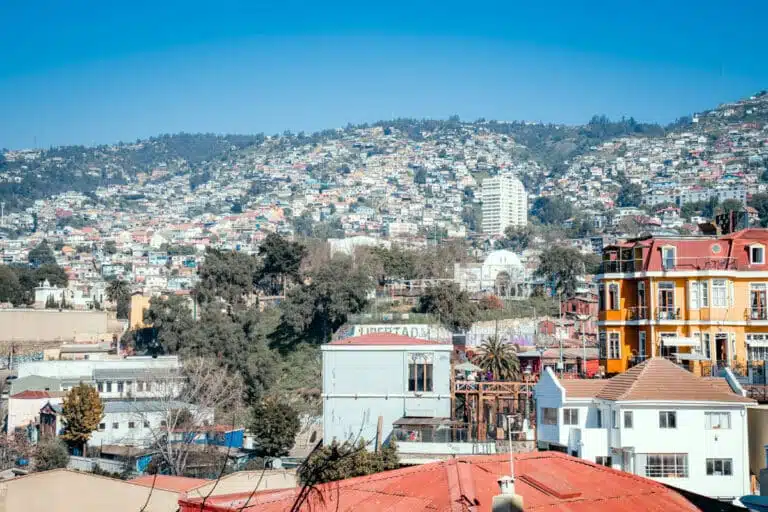
Ready to plan the perfect Chile itinerary? From the stunning Torres del Paine to the Atacama, plan an epic Chile trip with this guide.
There are a lot of amazing locations in South America, but Chile ranks right up at the top as my favourite. Why? Oh, just the combination of dramatic natural landscapes giving way to some of the best stargazing, hiking and wine-tasting anywhere in the world.
Then there’s the capital city of Santiago, with its rich history and culture that makes it a perfect city break. Colonial architecture and a thriving arts scene make a nice contrast when you’re preparing for an epic trek or trip to the desert.
I’ve been to Chile four times now, and every time it blows my mind. I’ve hiked the W Trek in Torres del Paine on my own, spent a week driving a campervan around the Atacama, and most recently spent a July travelling solo from Santiago up to the desert and back down through the Elqui Valley. On that last trip I spent nights slack jawed as the Milky Way lit up the night sky, freezing mornings as geysers erupted into life right before my eyes, and feasted on delicious food and even better wine. It was nothing short of incredible.
So with everything that Chile offers, how can you plan an itinerary that puts together the best things to do and places to stay in a tidy 10-day package? Not to worry.

This itinerary takes in Chile’s big three: two days in Santiago, four in Torres del Paine for a condensed version of the W Trek, and four in the Atacama Desert. It draws on all four of my trips, from the street art and wineries of my first proper stay in Santiago to the refugios I slept in on the W. If you have more time, there’s a two-week version with the Elqui Valley at the end, plus a one-week version. So sit back, relax, and start making your travel plans to this incredible country.
Some links in this article may be affiliate links, which means we may receive a small commission, at no additional cost to you, if you decide to purchase through one of my recommended partners.
My 10-day Chile itinerary
Here’s how the 10 days break down:
- Day 1: Santiago
- Day 2: A day trip to the coast or the Maipo Valley
- Day 3: Fly south to Puerto Natales, the gateway to Torres del Paine
- Days 4 to 6: Torres del Paine and the three-day W Trek
- Day 7: Fly north to Calama and transfer to San Pedro de Atacama
- Days 8 to 10: The Atacama Desert, flying home from Calama on day 10
Got a little longer? Add two days in Patagonia to hike the full W, or see the two-week version below for the Elqui Valley.
Days 1 to 2: Santiago and a day trip
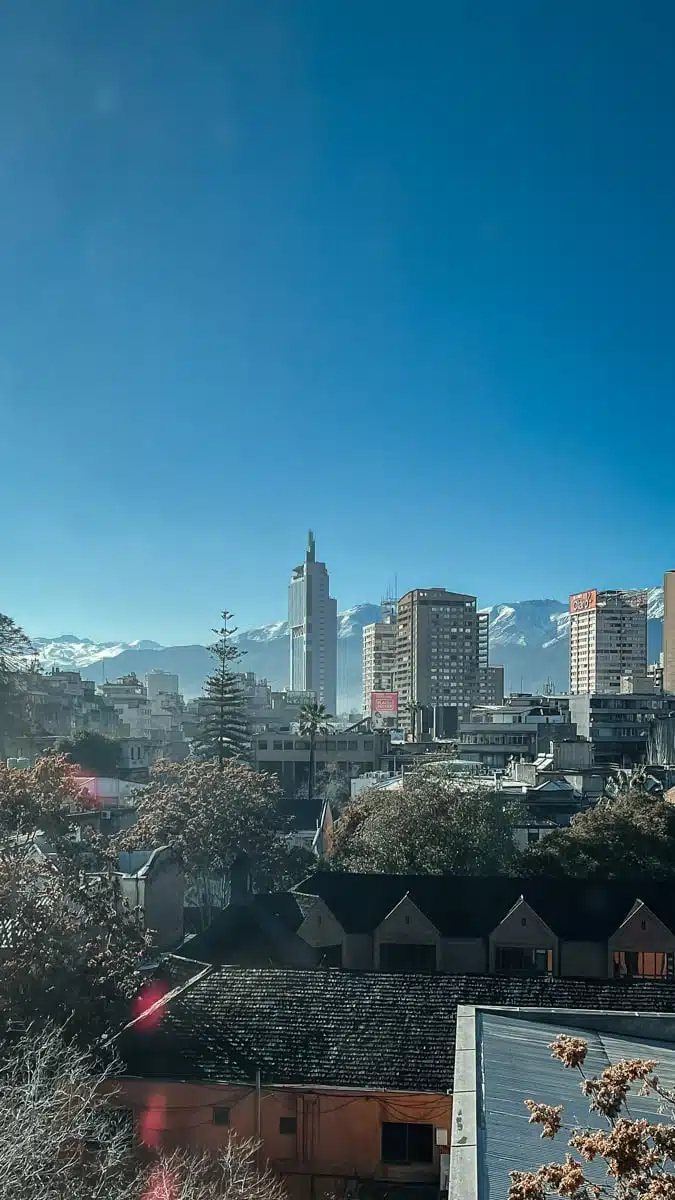
Santiago is a fascinating place to visit. Even though I’d been to Chile three times before, my July trip was my first time in Santiago, and I loved it. I spent four nights in the city, using it as a base for two day trips as well as exploring the city itself.
There’s a slight edge to the city, but most locals are friendly and willing to talk to you about the complex history and thriving art scene. Street art is most prominent in the neighbourhoods of Bellavista and Barrio Yungay. I booked a street art tour with a local guide, Alejandro, and ended up being the only person on it. He took me around Bellavista and then to Yungay, which you won’t find in many guidebooks. The work there is much more outspoken and political, in keeping with the area’s left-wing roots. One of my favourites told a version of the creation story from Chiloé lore, involving two monsters.
You’ll also have plenty of historic sites to visit, like the Museo Chileno de Arte Precolombino and the truly stunning Neoclassical and Baroque architecture at the Metropolitan Cathedral of Santiago de Chile.
Remember: you’re in Chile. Arrive hungry and thirsty. Restaurants like Liguria and Bocanáriz offer hearty Chilean fare and house Carmenere that puts the best bottle back home in London to shame.

About ten people told me to book a table at Bocanáriz, from the concierge at my hotel to Alejandro. I’m glad I listened: it was easily one of the nicest meals I had in the city. Order one of the wine flights (I went for the White Wines of Chile flight and the Carmenere flight), and don’t skip the food. My tiradito and my steak and chips were both excellent. At Liguria in Lastarria (book ahead), the setting is all fringed lampshades and gilt, and the house carmenere was better than most of what you’ll find in London’s high-end restaurants. And at Chipe Libre, a pisco bar that celebrates the spirit from both sides of the Chile and Peru border, my oysters came Chilean style, with lime and a salsa of red onion, corn and peppers. I’m a convert.
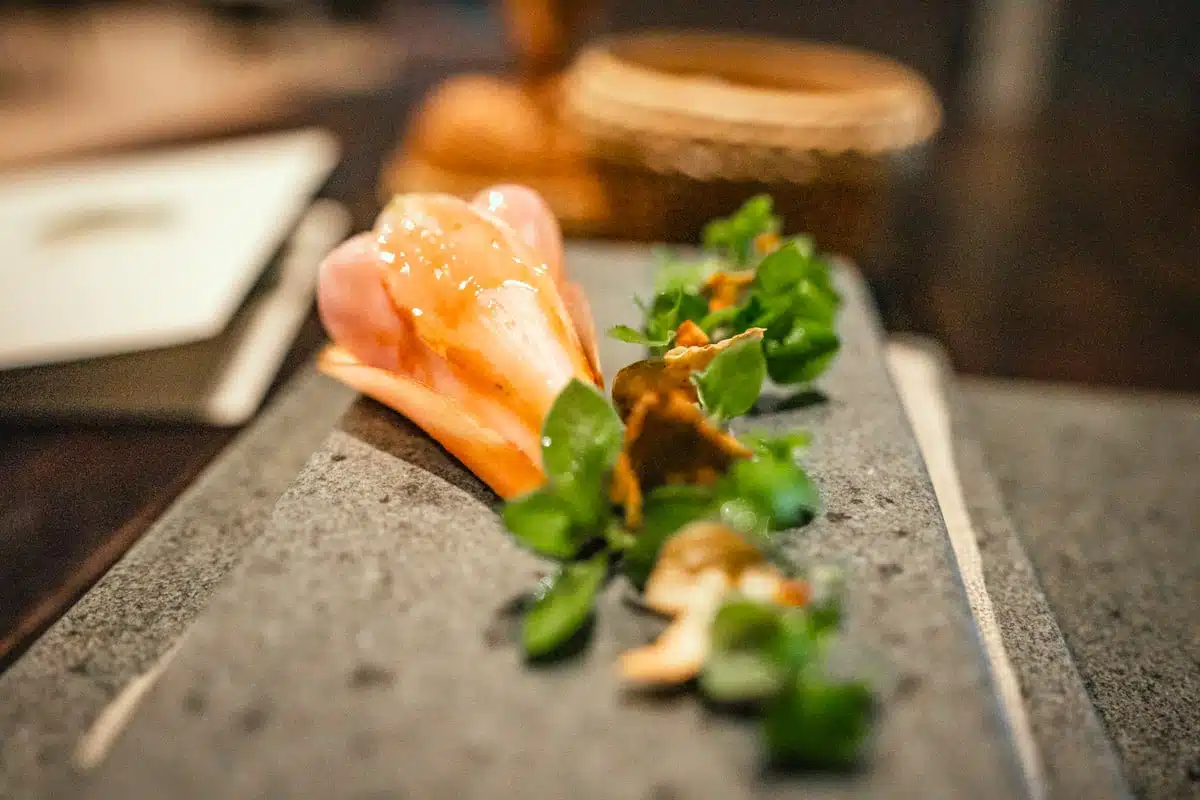
If you have a night in Santiago at either end of your trip, book a blow-out meal at Boragó, one of the best restaurants in South America. I saved it for the end of my trip. Course after course came out, each one playing with the elements and always with a little surprise. The mushroom chupe with a eucalyptus broth was the ultimate umami blast, and the final nitrogen-blasted meringue had me blasting smoke from my nose like Smaug. Pace yourself, as it’s a lot of food. The tasting menu now costs CLP 189,000, with a wine pairing at CLP 99,000, and you’ll need to book well ahead.
Day 1: things to do in Santiago
I packed most of the sights below into a single day, finishing with dinner at Bocanáriz. It’s a full day, but Santiago’s centre is compact enough to do it.
Spend an afternoon in Barrio Lastarria (and visit Santa Lucía Hill)
Start your 10-day trip to Chile in Barrio Lastarria at the 19th-century Castillo Hidalgo. It’s perched high up near the beautiful gardens and fountains of Santa Lucía Hill, the spot where Pedro de Valdivia founded the city in 1541. Go in through the ornate Neptune Terrace entrance and climb up to the fortress.
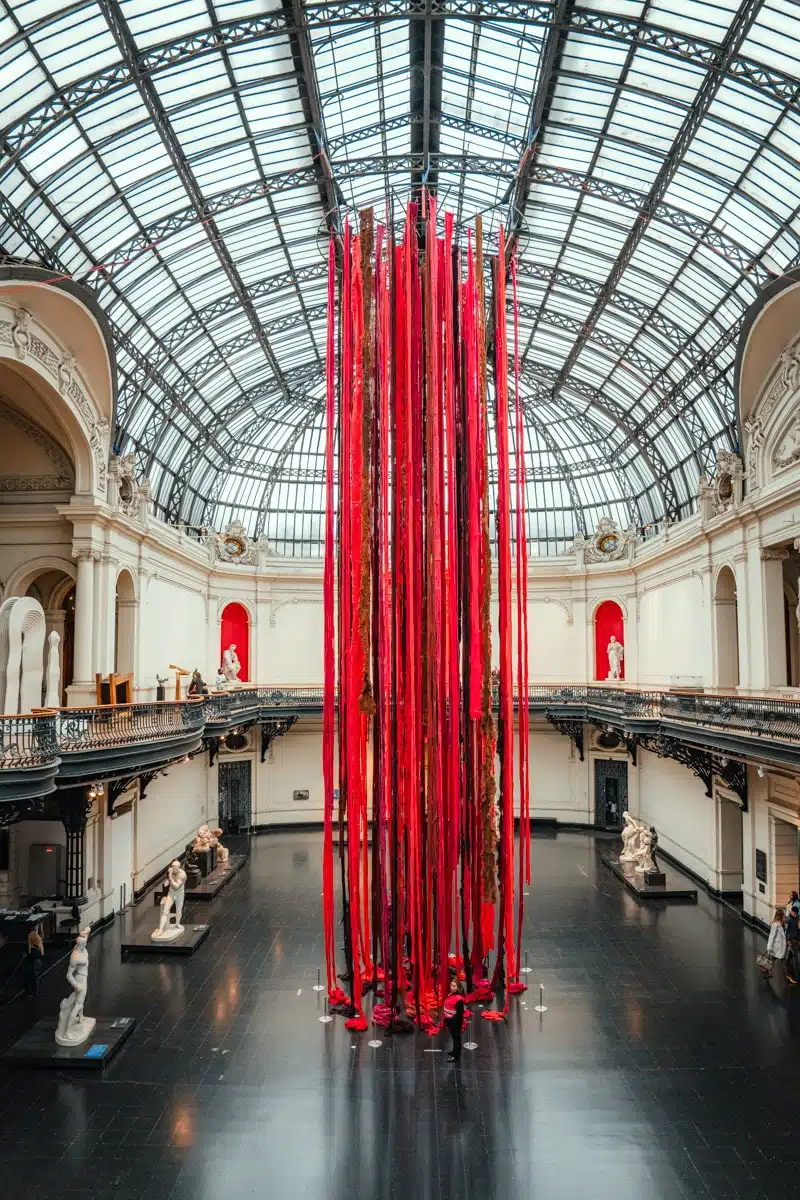
After you enjoy the city views, walk down to the Museo Nacional de Bellas Artes for the largest (and free) collection of South American and international artwork. When I went, I had to fill in an online form before going in. Bring some change for a locker if you’re carrying a bag, and don’t miss the basement, where the work takes a decidedly more modern bent.
Tour La Chascona

Another area you’ll want to explore on your Chile trip itinerary is Bellavista. Stop by La Chascona, where you’ll see the home of celebrated poet and politician Pablo Neruda.
Tickets are about CLP 9,500 (around £8) and the house museum is open Tuesday to Sunday. The audio guide was included when I went, and it’s the thing that brings the house to life as you explore the unique art and architecture of the home Neruda built for his lover (and eventually third wife) Matilde Urrutia. Look out for the bar shaped like a ship’s cabin where he received his guests. It’s compact, so plan on about an hour.
Lunch at Galindo

This no-frills bar and grill offers delicious and filling traditional Chilean cooking to help soak up a couple of local beers. It’s the kind of food people cook at home, at affordable prices.
Arrive with a voracious appetite for the Pichanga (two cuts of pork with goat cheese and olives) and Pastel de Choclo (a rich combo of creamed corn, meat, veggies, and olives). Be warned, it gets busy: I was shunted to the corner halfway through my meal so they could squeeze more people in. It’s cheap and cheerful though, and the pastel de choclo is about as traditional as Chilean food gets.
San Cristóbal Hill

Want the best views on your Chile itinerary in Santiago? Head to San Cristóbal Hill and ride the Funicular de Santiago, which celebrated its 100th birthday in 2025, to enjoy unmatched vistas from about 880 metres above sea level, around 300 metres above the city.
Grab a refreshing mote con huesillo (a non-alcoholic drink with barley and peaches) before taking a ride on the cable car to admire the views from above. Both normally run Tuesday to Sunday, and combined tickets for a cable car and funicular ride start at about CLP 3,800. You can hike up instead, but there have been armed robberies on the paths, so I’d stick to the funicular and cable car.
Head to Centro for sightseeing opportunities


Santiago’s Centro neighbourhood might not have the hipster chic of areas like Lastarria, but it is home to some of the city’s most important sights. It’s also a bit run down, and it’s where you need to watch your belongings most carefully.
Be sure to head to the Plaza de Armas and into Santiago’s glorious Cathedral. It might not look like much from the outside, but inside it’s a Neoclassical and Baroque extravaganza, with more gold than you might think tasteful.
After, make a beeline for the nearby Chilean Museum of Pre-Columbian Art, which is hands-down my favourite museum in the city. In fact, it might have been my favourite thing I did in Santiago full stop. Spread out over 12 galleries on several levels, the museum takes you on a journey through the Pre-Columbian peoples of South America, from intricate Andean textiles in a darkened, temperature-controlled room to striking jewellery. Give it at least a couple of hours. Entry for foreign visitors is about CLP 12,000.
Day 2: a day trip to the coast or the Maipo Valley
Santiago is surrounded by places worth a day trip, and on my July trip I did two: one to the coast and one to the vineyards. With one day to spare on this itinerary, pick the one that suits you. My day trips from Santiago guide has more options.
The coast: Casablanca, Viña del Mar and Valparaíso
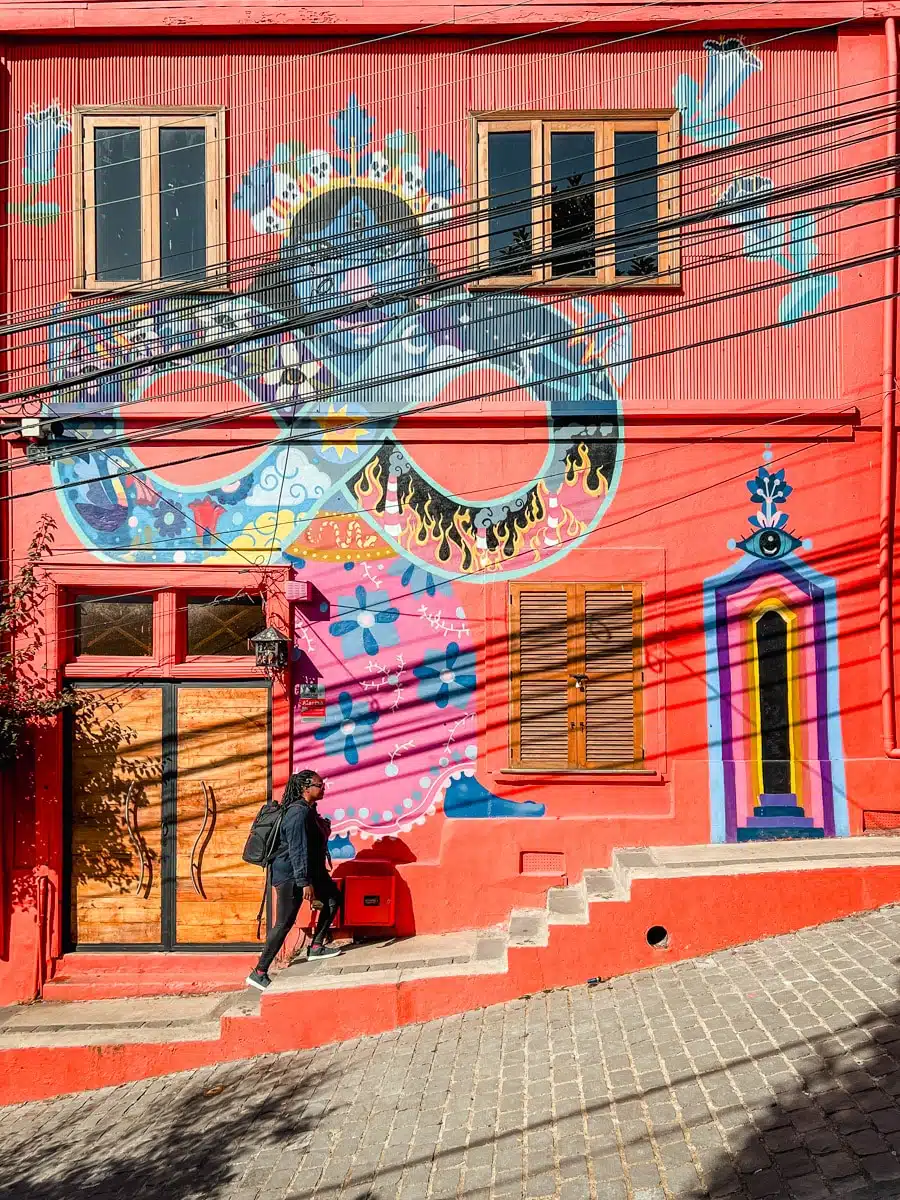
I joined a small-group coast tour that combined a winery in the Casablanca Valley with Viña del Mar and Valparaíso. It’s a long day, but it’s the easiest way to see all three. If you’d rather go it alone, buses run from Santiago to Valparaíso every 20 minutes or so and take about an hour and 40 minutes.
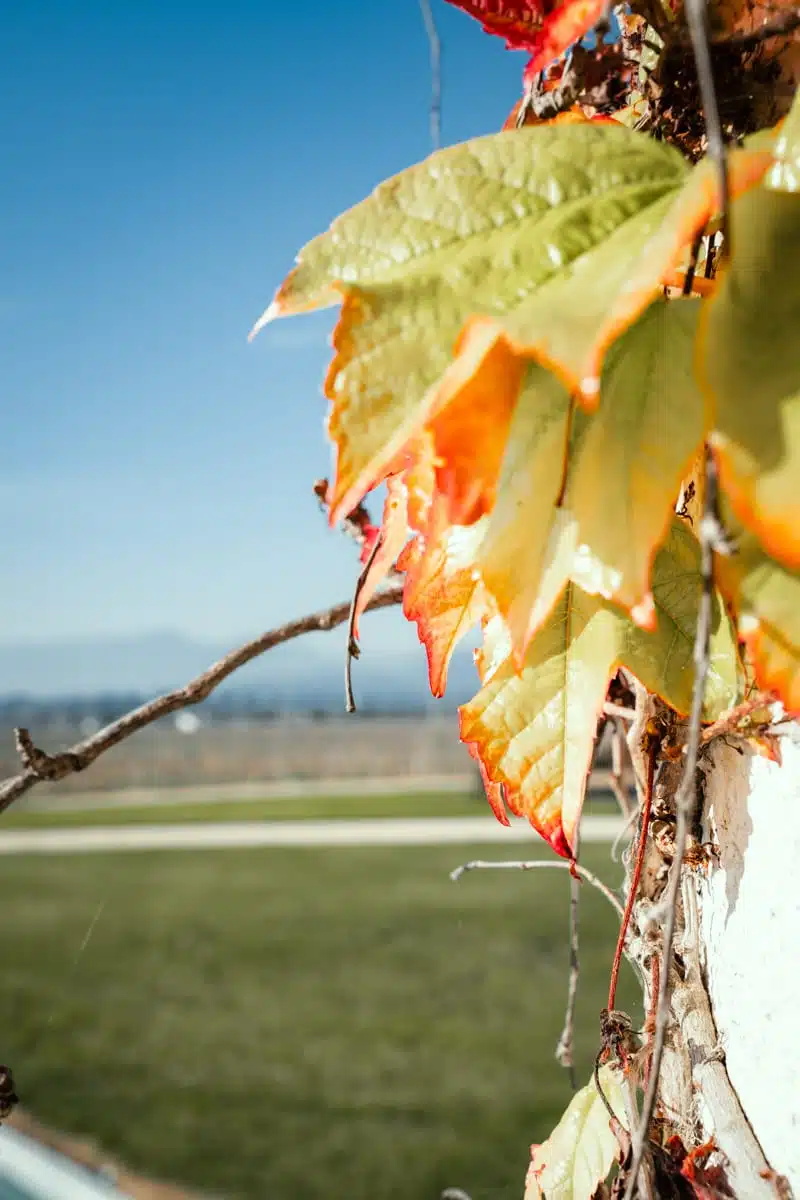
The Casablanca Valley sits between Santiago and the coast and is best known for crisp whites, especially chardonnay and sauvignon blanc. My stop was Casa Valle Viñamar, an award-winning winery with a short but engaging tasting that finished with a glass of its traditional-method Extra Brut. If you’re hungry, book a table at Macerado, its in-house bistro.
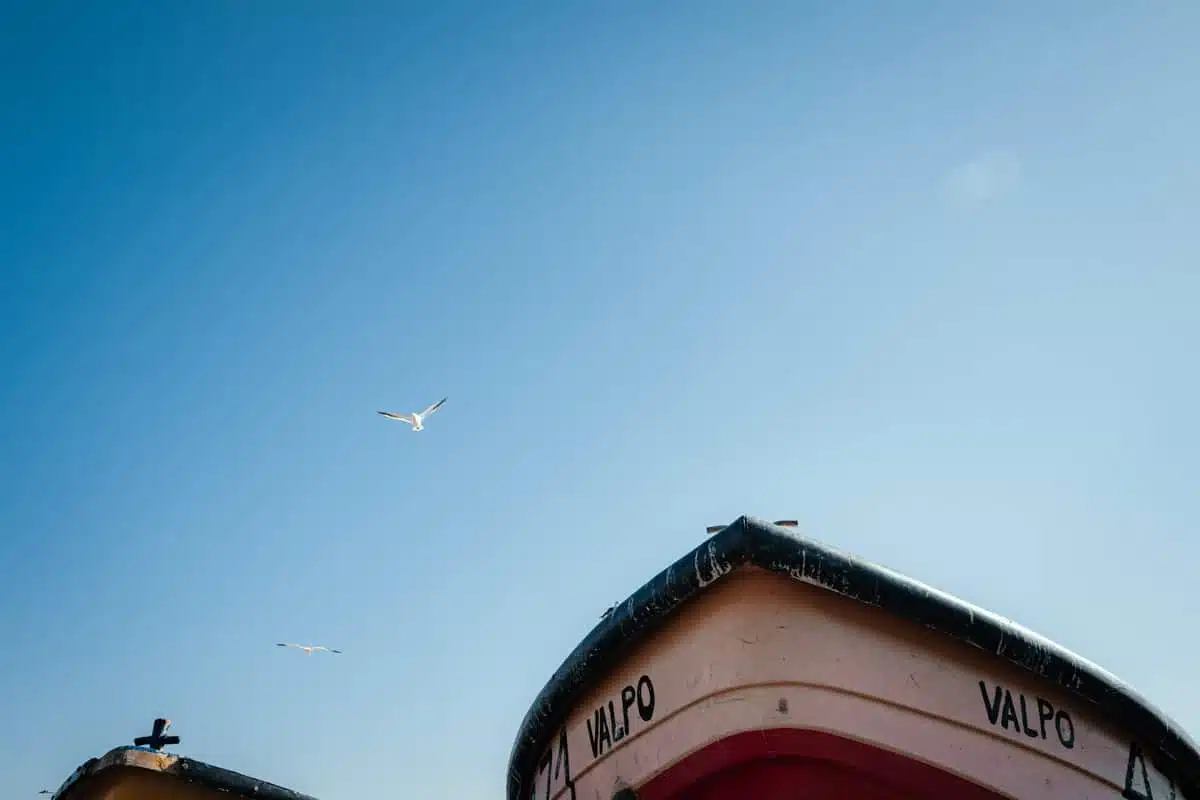
In Viña del Mar, see the famous flower clock at the foot of Cerro Castillo, made for the 1962 World Cup, and the Moai outside the Fonck Museum (the closest you’ll get to Easter Island without the five-hour flight). Then swing by the fish market, if only to see the giant sea lions, pelicans and seagulls hanging around waiting for their share of the catch. Sure it pongs a bit, and I spent the whole time terrified that a seagull was going to crap on me, but what’s life without a little danger?
Valparaíso was the highlight. Spend your time in its hillside neighbourhoods, especially Cerro Alegre and Cerro Concepción, riding the century-old ascensores (funiculars) and hunting down street art. Look out for the stairs leading up from Almirante Montt via Palma to Dimalow, which are covered in murals, and the famous piano stairs (expect to queue for a photo at busy times). Pablo Neruda’s house here, La Sebastiana, is even prettier than La Chascona. For lunch, I had an enormous empanada de pino (beef, raisins, olives and hard-boiled egg) at La Conquistada.
Or the wine: the Maipo Valley
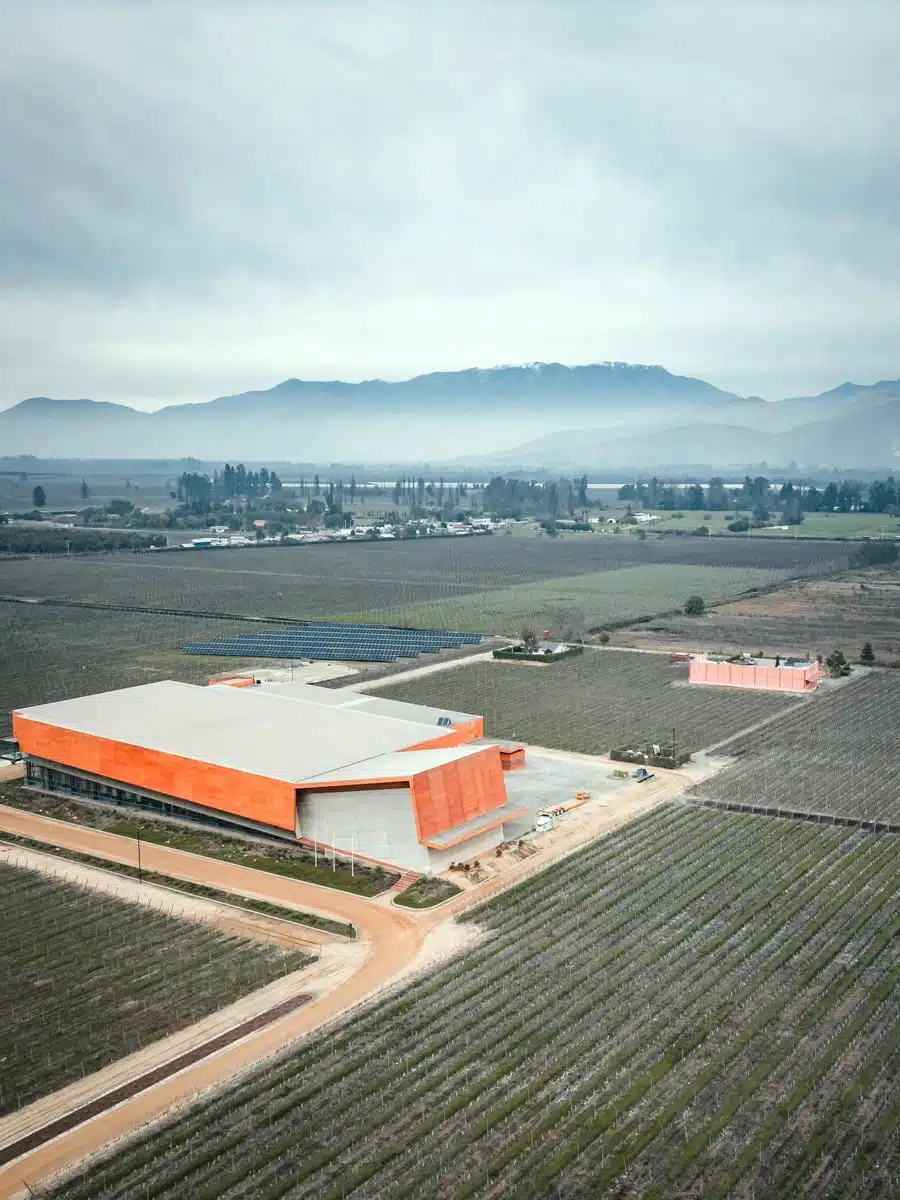
The Maipo Valley is less than an hour’s drive from Santiago, and cool mornings and hot afternoons make it one of Chile’s best wine regions. I went on a full-day small-group tour with a guide called Miguel, which visited a mix of boutique, mid-sized and large producers in the Isla de Maipo area. Read my Maipo Valley wine tasting guide for more wineries.
My favourite was Santa Ema, a mid-sized vineyard founded by a family of Italian descent, with a contemporary tasting room and excellent wines (I only wish I’d had space to bring some bottles home). La Quirinca, a former vineyard turned self-sufficient organic farm, was a lovely place for paired wines and nibbles, and lunch at Terramata, which specialises in Zinfandel, was a skirt steak that paired perfectly with the reds. Viña Undurraga, one of the oldest wineries in the valley, was my least favourite: the tour was too long and not particularly engaging, and the tasting felt rushed.
Getting to Santiago
Starting your Chile itinerary of 10 days in Santiago is easy. Fly into Santiago International Airport (SCL) and take a rideshare to your hotel. If you’d rather take a taxi, book and pay at one of the official taxi desks inside the arrivals hall rather than accepting a ride from anyone who approaches you.
Where to stay in Santiago

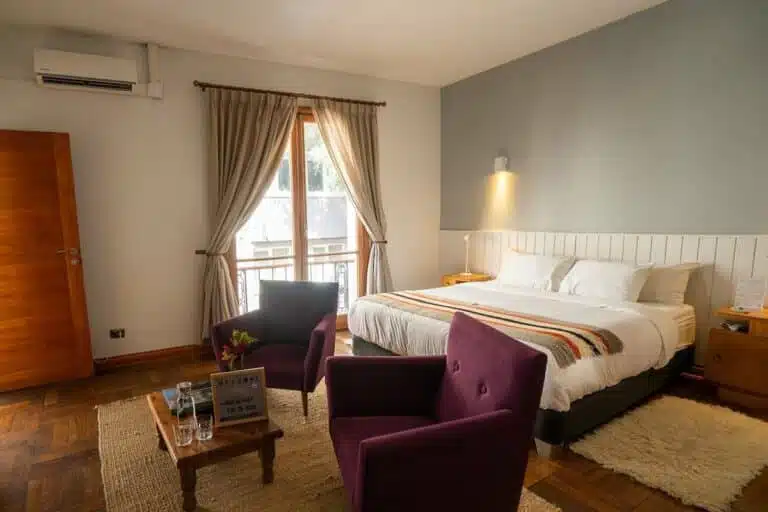
The Singular Santiago is a luxury five-star property with reasonable hotel rates in the heart of my favourite neighbourhood to stay in Santiago: Lastarria.
Super comfy rooms, a nice spa, and an outdoor rooftop terrace that’s perfect for chilling outside in the warmer summer months are a few reasons I love it. I stayed here at the end of my trip and had a massage at the spa on my last day in Chile. It was excellent, and the spa is open to non-guests too. The terrace was closed when I visited, as it shuts for the winter months.
For the first four nights of my trip I stayed at Hotel Cumbres Lastarria, a well-priced four-star a few minutes’ walk away. The staff were super-friendly and the rooms are a good size, but the breakfast was basic and exactly the same every day. After four mornings, I’d completely had enough of it. For more options, see my guide to the best places to stay in Santiago.
Check prices and availability for The Singular Santiago on Booking.com Alternatively, check all accommodations in Chile on Booking.com
Days 3 to 6: Torres del Paine
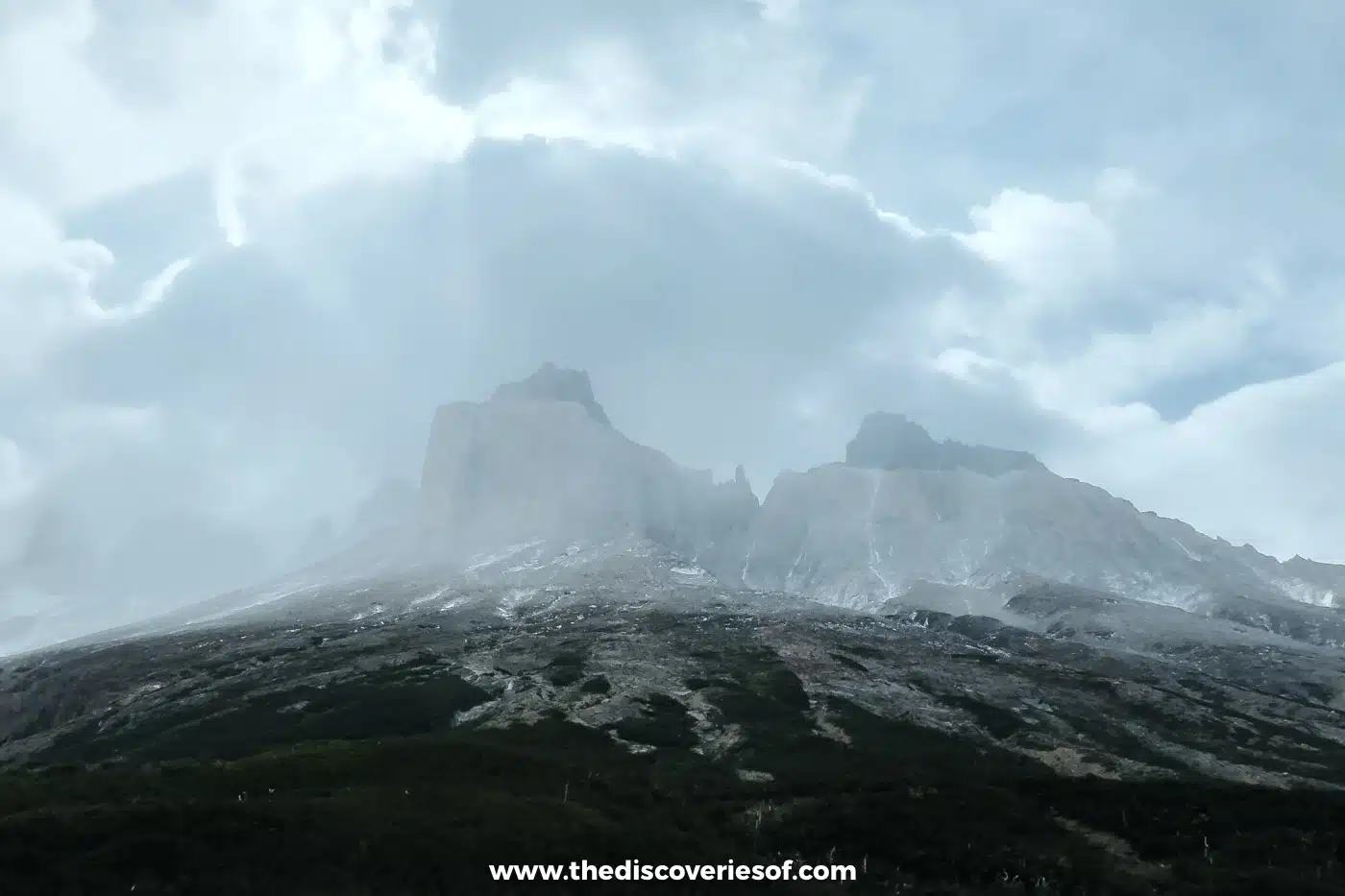
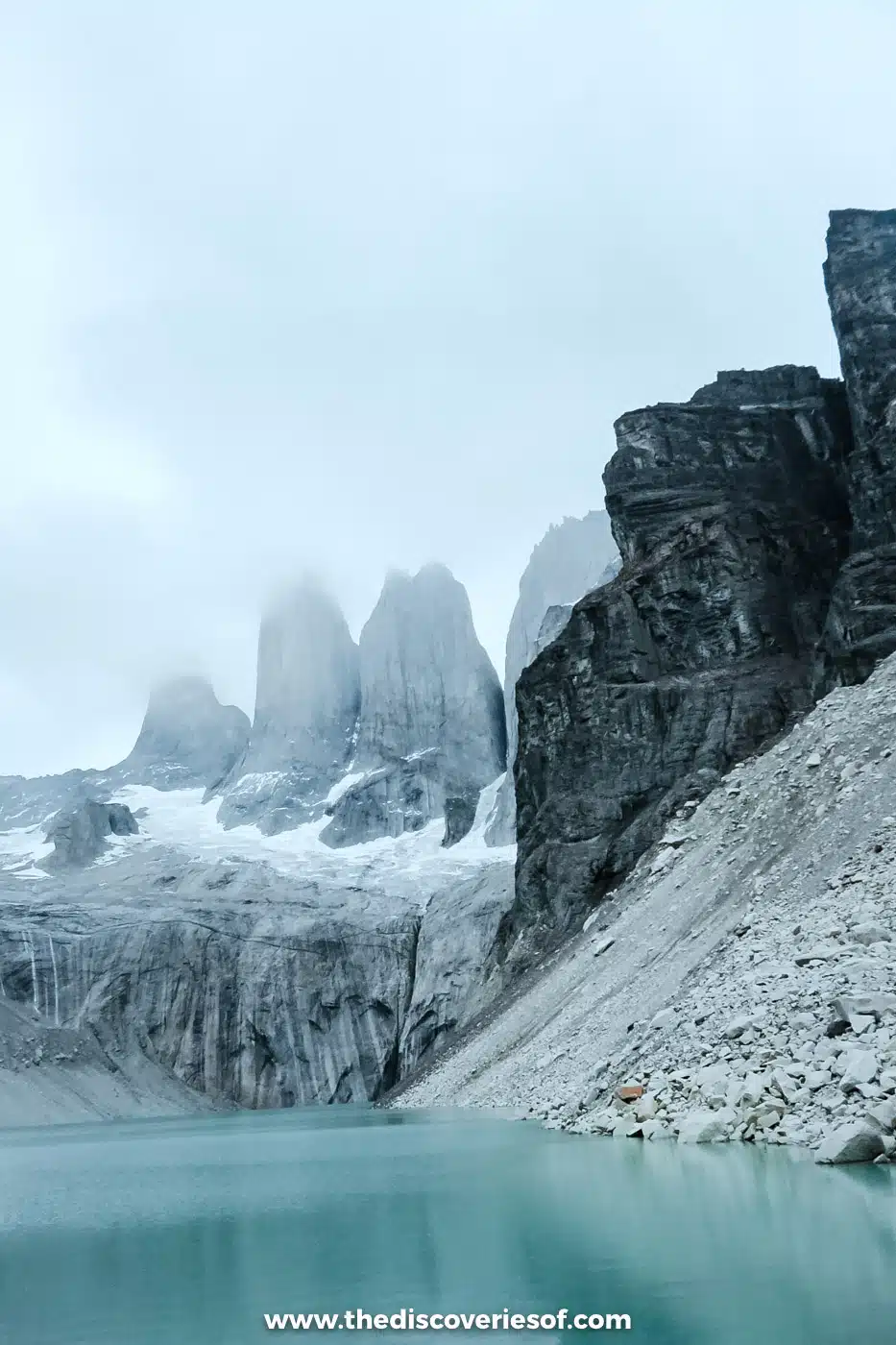
The rich green plains and hills moving slowly from the rivers and lakes to the dramatic Paine Massif mountains make Torres del Paine a memorable stop on your Chile itinerary. It’s a long way south of Santiago, almost at the bottom of the continent, so this part of the trip starts with a flight.
If you want to experience Patagonia on your trip to Chile, spend a few days hiking the glaciers, mountains, and valleys below and have chances to see wildlife like Andean condors, guanaco, pumas, and rheas.
You can rest up at a luxury hotel between sightseeing or take on the W Trek if you’re up for the challenge. The full W is around 80 km and takes four or five days. I hiked it on my own one austral summer, having fled the pervasive greyness of the British winter, and it’s still one of the most memorable things I’ve ever done. To fit it into 10 days, this itinerary uses the condensed three-day version from my W Trek guide, which skips Grey Glacier but still takes in the Torres themselves, the Francés Valley and Lake Pehoé. If you can spare two more days, hike the whole thing.
Here’s how the four days work:
- Day 3: Fly from Santiago to Puerto Natales (direct flights run in the summer season), or fly to Punta Arenas and take the bus to Puerto Natales, about three hours. Buy your food and your bus tickets to the park, and go to the free trekking talk at Erratic Rock.
- Day 4: Take the early bus to the park and the shuttle to the Welcome Centre. Hike up to Chileno, drop your bags and carry on to the Mirador Base Torres. Night at Chileno.
- Day 5: Hike from Chileno to Los Cuernos or Francés, along the shore of Lago Nordenskjöld. Night at Cuernos or Francés.
- Day 6: Climb the Francés Valley to Mirador Británico early, then walk on to Paine Grande, take the catamaran across Lake Pehoé to Pudeto and catch the bus back to Puerto Natales.
Not a camper? Stay at a hotel inside the park and use the same days for guided day hikes to the Torres, the Francés Valley and Grey Glacier. My guide to hikes in Torres del Paine has the best of them.
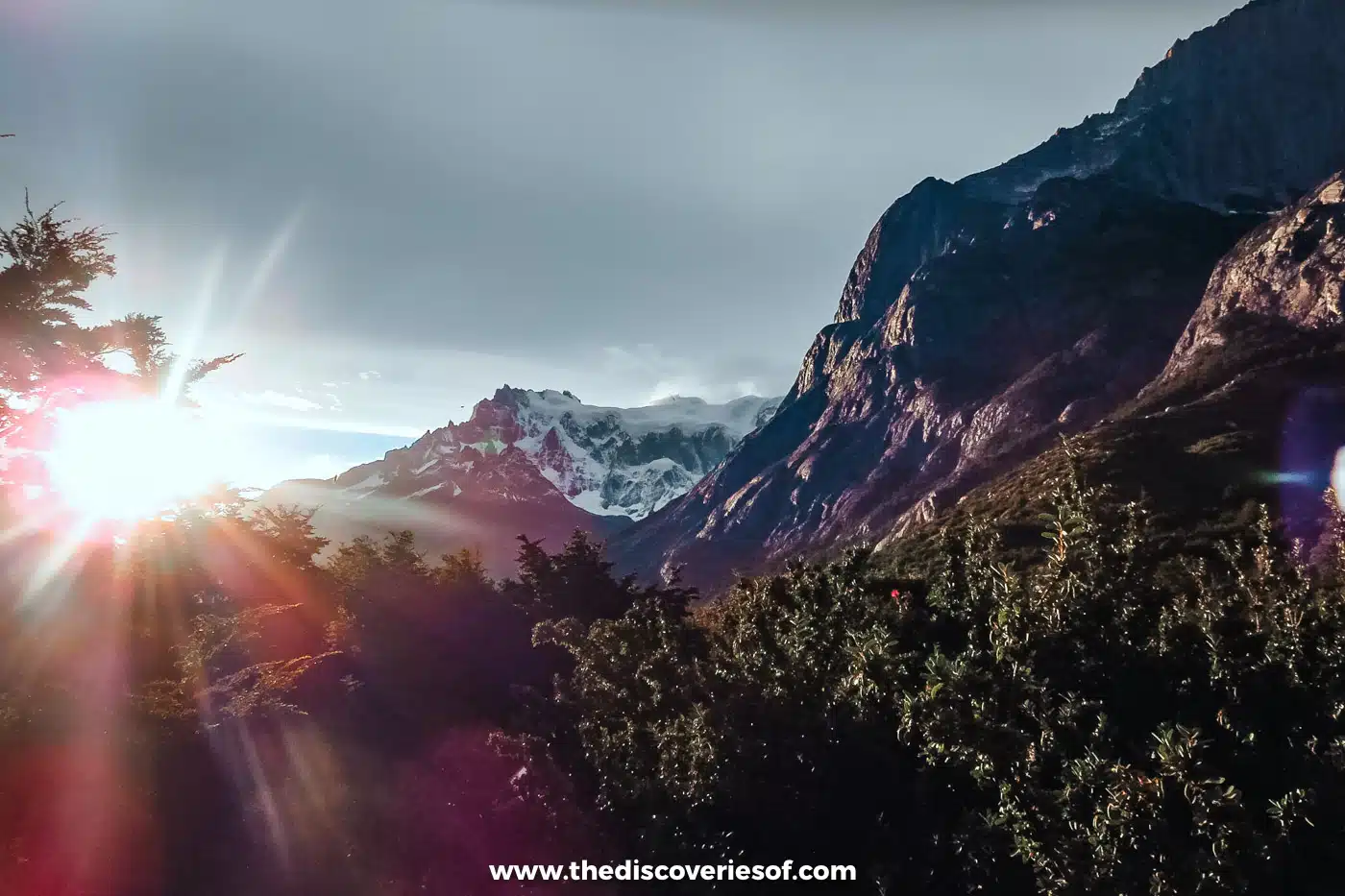
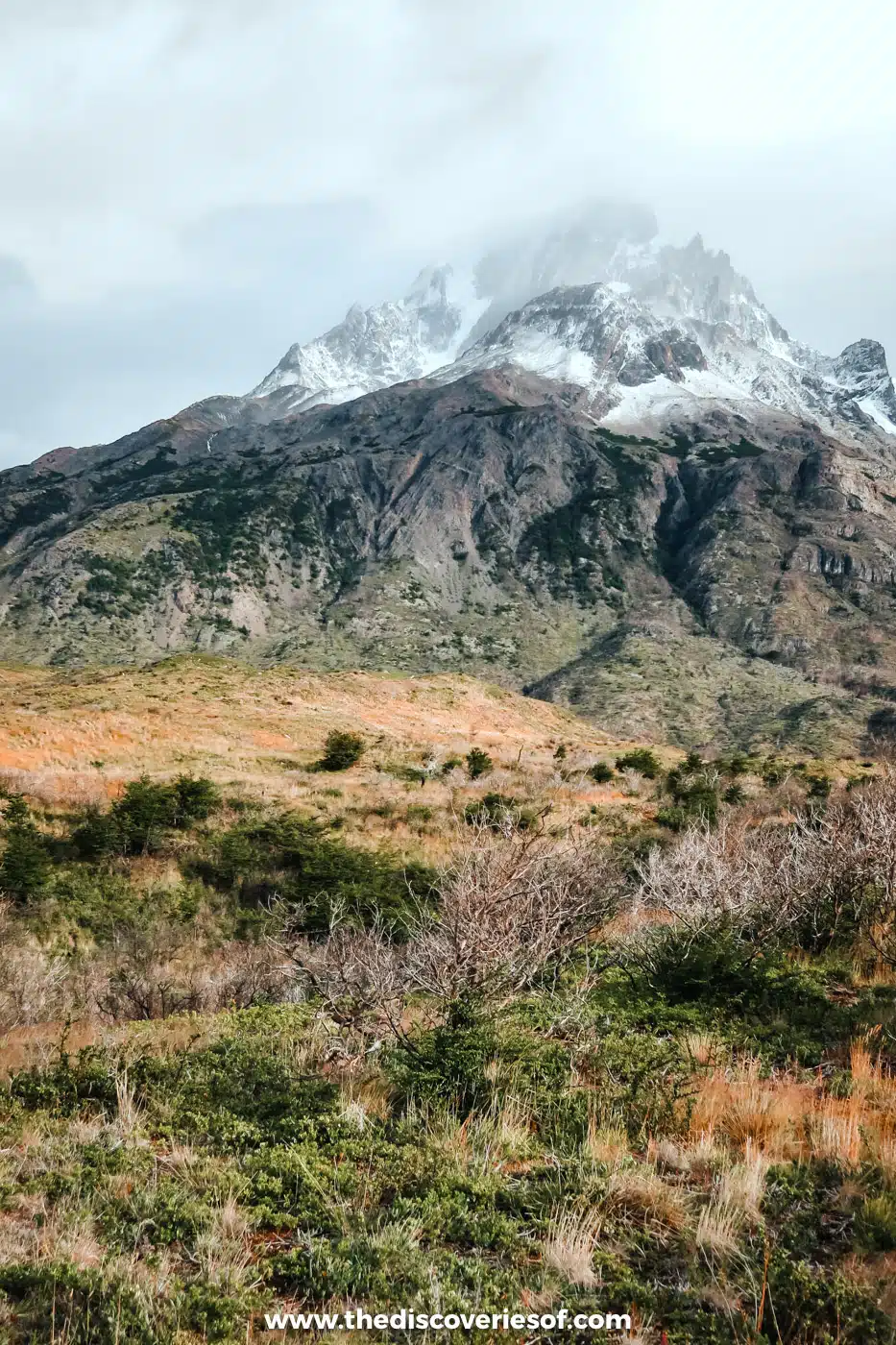
If you choose to do the W Trek, make sure you pack the right gear. I learned quickly that the weather can change from pleasant to downright terrifying in a matter of hours. At the free trekking talk at the Erratic Rock hostel in Puerto Natales, the guides warned about 80 km per hour winds and said that nobody bothers checking the forecast, because it changes so often. They weren’t joking.
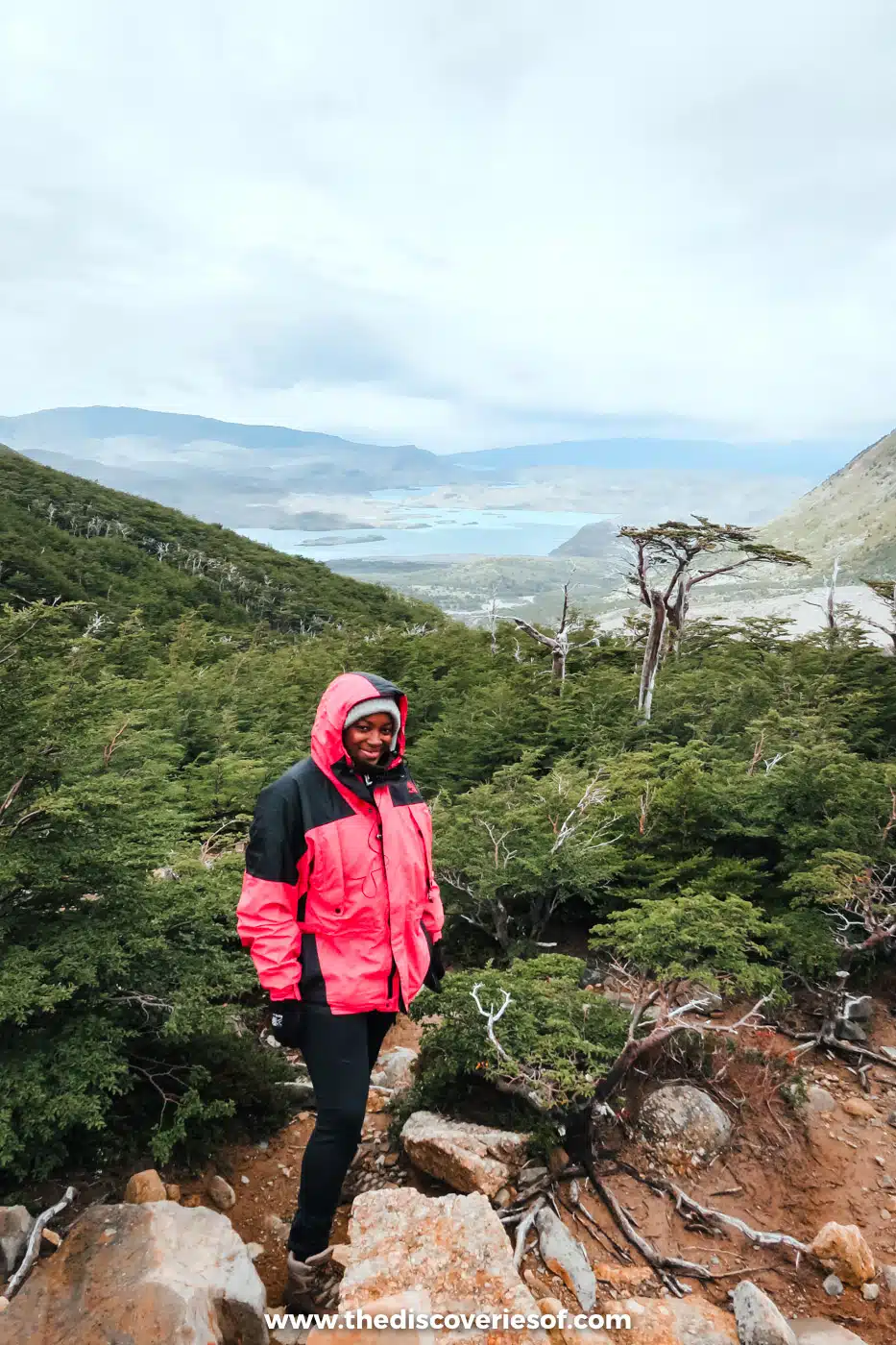
Bring layers!
If that all sounds a bit too epic, don’t worry. You can choose from many great tour guides to show you around on a day hike.
Things to do in Torres del Paine
The W Trek
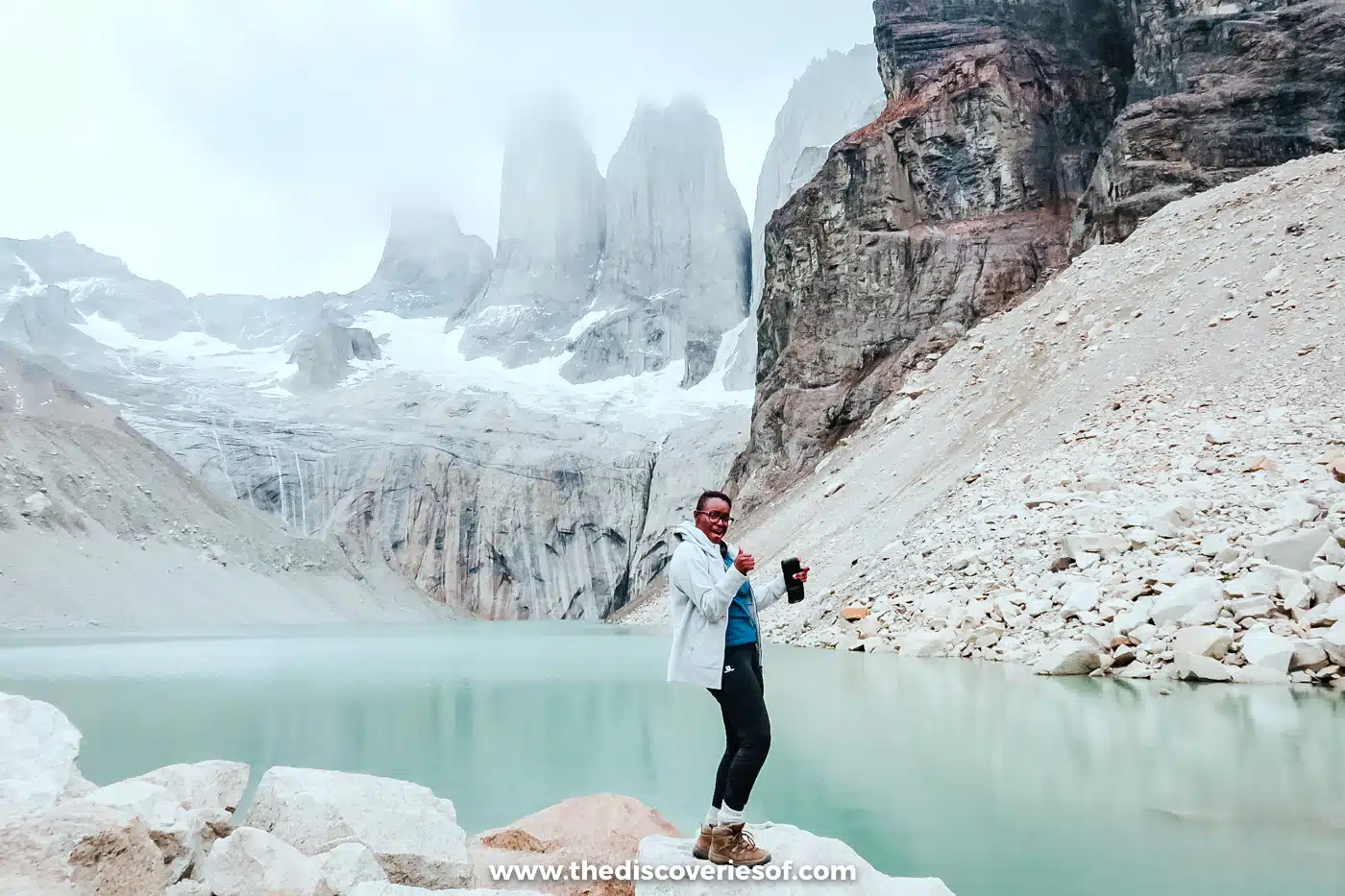
Hike some of the most iconic landmarks in Torres del Paine, including Lake Pehoé, Paine Grande, and the towering cliffs at Los Cuernos.
I recommend booking a guided group tour like this one if you don’t want to organise the trek yourself, as it includes transport, camping gear and your nights in the park. It runs over six days from Puerto Natales, so you’ll need to borrow a couple of days from elsewhere on this itinerary. I went self-guided over five days and hiked from west to east, the opposite way to the condensed route above, staying in the refugios at Grey, Paine Grande, Los Cuernos and Chileno, which saves the Torres themselves for the end. My advice: if the sky is clear when you reach Chileno, go straight up to the Torres. I did, scrambling over the boulders on the final section on my hands and feet, and the next morning was cloudy and grey.
Whichever way you do it, you must book every night in the park in advance, whether you’re in a refugio or a tent. Vertice runs the refugios and campsites at Grey and Paine Grande, and Las Torres Patagonia (formerly Fantástico Sur) runs Los Cuernos, Francés, Chileno and the Torres sector. The free CONAF campsites, such as Italiano, have been closed for overnight stays, so don’t plan around them. For December to February, book three to six months ahead.
Lake Pehoé
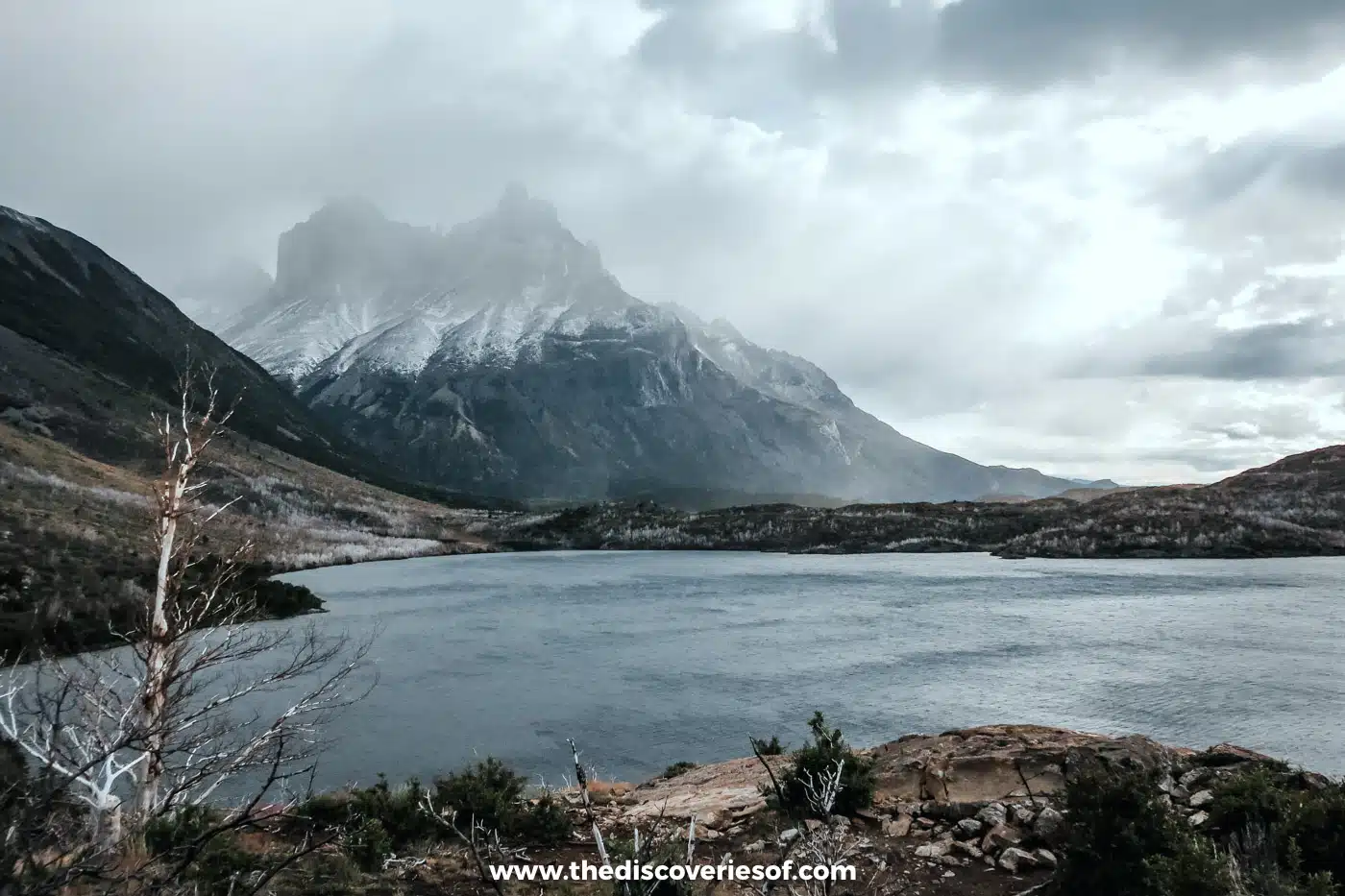
For one of the most dramatic scenes anywhere in Chile, head to Lake Pehoé. You’ll see the deep blue waters projecting an image of the Cuernos del Paine so unique, you’d better hope you brought a backup memory card. My trek started with the catamaran across the lake from Pudeto to Paine Grande, which takes about 30 minutes and costs about CLP 30,000 to 35,000 one way. On the condensed route, it’s how you leave the park.
Grey Glacier
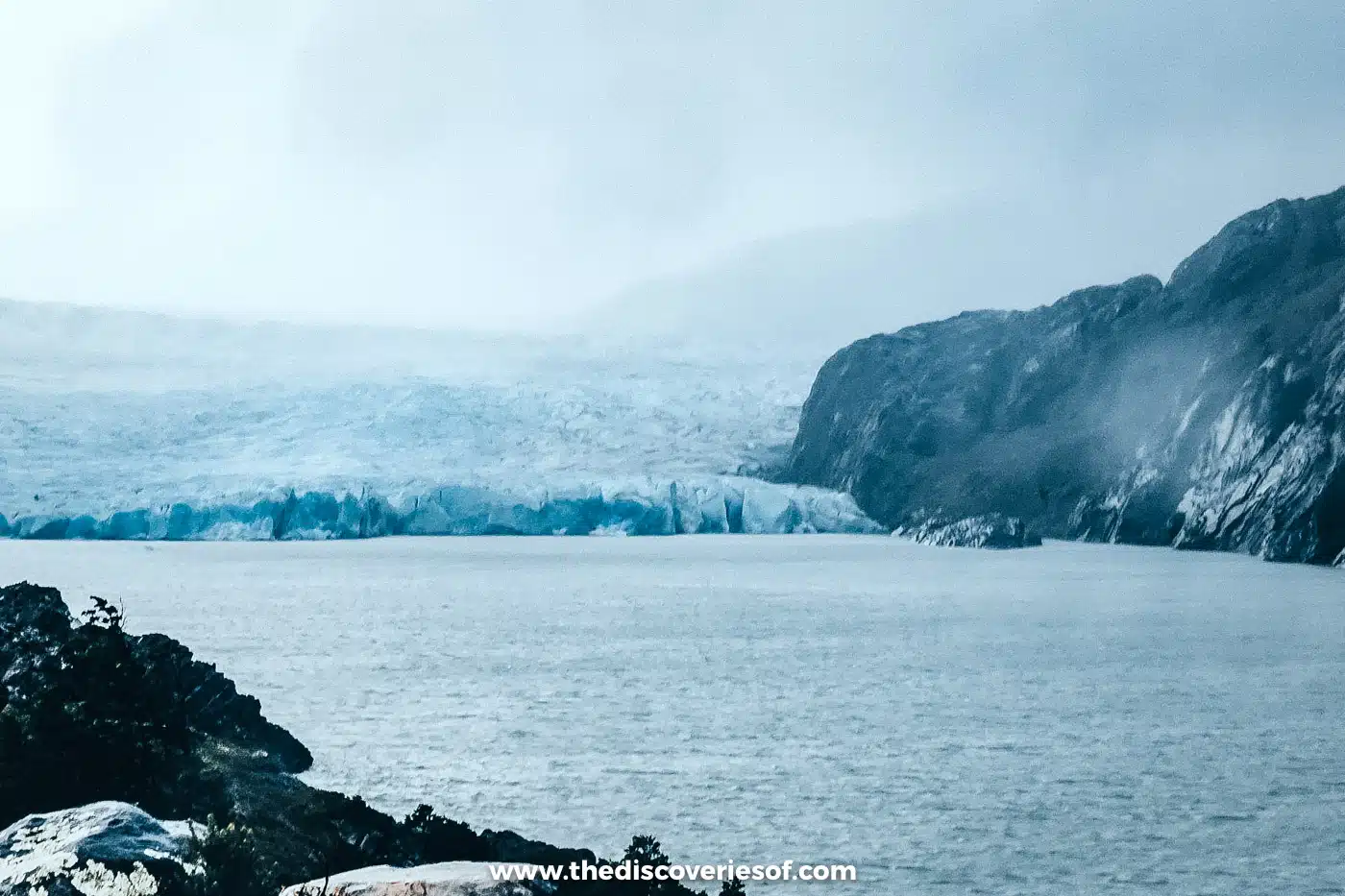
Grey Glacier is the most famous glacier in Torres del Paine. You’ll know why when you catch glimpses of it around the national park.
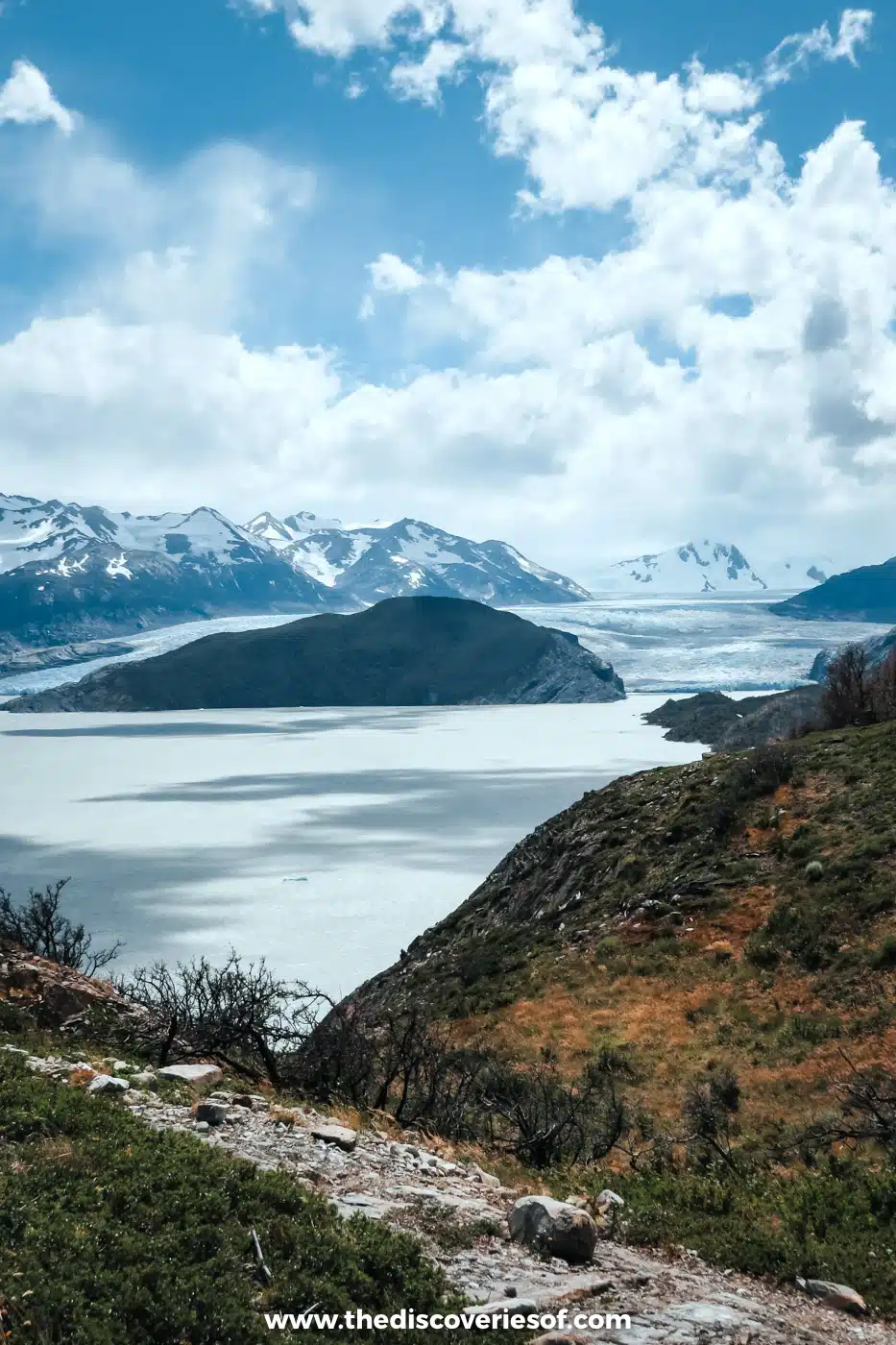
I recommend walking on the east side of Lago Grey, which allows you to get an up-close look to really take in the enormity of it all. Just don’t count on the weather. On the morning I planned to hike to the main glacier viewpoint, the wind was so strong that for every step I took forwards, I was blown two paces in the other direction. I settled for the nearer viewpoint, which is what you can see in that photo.
Frances Valley viewpoint
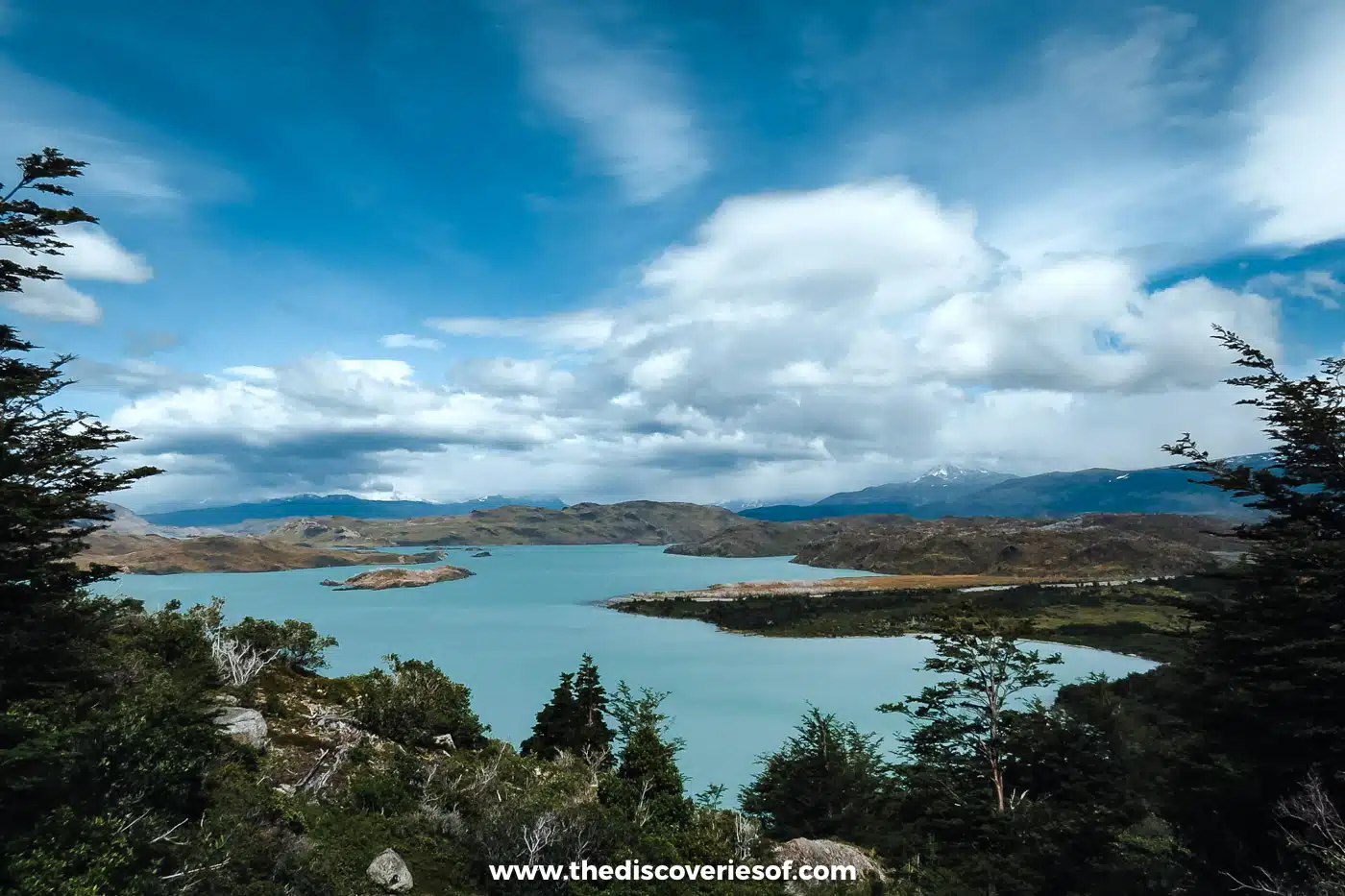
The tallest of the mountains in this national park, Paine Grande, towers over you at about 2,884 metres high. Frances Valley is the best place to see it.
I like this vantage point because you can also see Lago Nordenskjöld, which looks magnificent near the base of the massive mountains. On the W, this is the long day: mine was 28 km, with a steep climb up to Mirador Francés that was worth every step. I carried on to Mirador Británico, but the clouds rolled in before I got there, so if the view’s clear at Francés, make the most of it.
Getting to Torres del Paine
You’ll fly from Santiago to Punta Arenas Airport (PUQ), about three and a half hours, and then make your way to Torres del Paine via Puerto Natales, the nearest town to the park. Buses from Punta Arenas to Puerto Natales take about three hours, so take a morning flight. In season (roughly October to April), LATAM and Sky also fly direct from Santiago to Puerto Natales, which saves you that leg.
I’m not going to lie; it’s kind of a small nightmare. Buses to the park leave from Puerto Natales, with the main departures early in the morning (usually between 7am and 7.30am) and another in the early afternoon in season, so buy your ticket the day before and show up early. It’s about two hours to Laguna Amarga, the main entrance, and the buses carry on to Pudeto for the catamaran. Once there, be prepared for some long lines.
Park tickets are sold online only, through CONAF’s Pases Parques website, so buy yours before you go. For foreign visitors, a multi-day ticket costs about CLP 48,500 and a single-day ticket about CLP 32,400.
Where to stay in Torres del Paine
This beautiful five-star resort allows you to have some much-deserved R&R after a day of hiking, horseback riding, or photographing the Chilean Patagonia.
You’ll have first-rate views of the mountains, lakes, and rivers nearby. Pools, hot tubs, and luxury accommodations make this a perfect choice to bed down after a day full of adventure. If you’re doing the W Trek, spend the nights before and after it (days 3 and 6) in Puerto Natales instead.
Check prices and availability for explora Patagonia, all inclusive, on Booking.com Alternatively, check all accommodations in Chile on Booking.com
Days 7 to 10: the Atacama Desert


The Atacama Desert is home to over 10,000 years of human history in the expansive open space in northern Chile. The Incas and indigenous cultures before them called what’s now the driest non-polar desert in the world home.
Visiting the entire region is impossible over a few days, but adding the Atacama during your 10-day Chile itinerary is a must for some of the most incredible scenery and stargazing you’ll see anywhere. It’s also the perfect contrast to Patagonia, from glaciers to salt flats in a single day’s travel. I’ve been twice: once in a campervan, driving about 1,000 miles in a week, and again on my July trip, when I pushed the boat out and booked a private guide and driver.
I’ll paint you a quick picture. As you climb up from the basin, the landscapes change. Lava rivers, impossibly smooth from far away, are punctuated by rocks and occasional tufts of grass. As you get closer the colours reveal themselves as a kaleidoscopic world you’d bounce off if you fell from the sky.

Then as you continue to make your way up, you’ll see the Socaire village, with fields of rich agriculture (mainly quinoa and potatoes) watered through centuries-old irrigation channels that date back to the Incas.
Welcome to the Atacama Desert.
Here’s how I’d fit the highlights into four days:
- Day 7: Fly north to Calama, usually changing planes in Santiago, and transfer to San Pedro. It’s a long travel day, so keep the evening free.
- Day 8: Valle de la Luna at opening time, a lazy lunch, then float in Laguna Cejar in the afternoon and stay for sunset at Laguna Tebinquinche. Staying low on your first full day helps you adjust to the altitude. Go stargazing at night.
- Day 9: The high Altiplano: Lagunas Miscanti and Miñiques, Piedras Rojas and the village of Socaire, with the flamingos at Laguna Chaxa on the way back.
- Day 10: Sunrise at El Tatio and breakfast with the vicuñas on the way back, then transfer to Calama for an afternoon flight to Santiago and home.
With an extra day, add sunset at Ckamur. For a longer stay, my Atacama Desert itinerary has more detail.
Things to do in the Atacama Desert
Atacama Basin

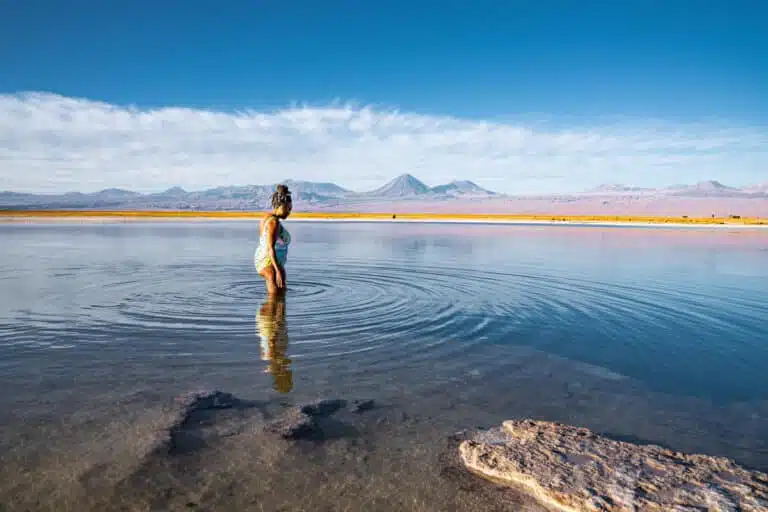
The driest place in the world, the basin is full of surprisingly varied landscapes, especially where the tamarugo woodland, with its cacti, trees, foxes, and owls, separates the desert from the salt flats and their blue lakes and pink flamingos. Laguna Chaxa is the place to see the flamingos, and Laguna Tebinquinche is where to go for sunset, when the lake reflects the sky so perfectly that it feels like you’re surrounded by molten lava.
El Tatio Geysers

Be warned, your morning at El Tatio Geysers is going to be both early and cold.
The geysers are most active at sunrise thanks to the rapidly changing temperatures, and it’s about a 1.5-hour drive from San Pedro up to around 4,300 metres. All that translates to a very early start: mine was 3am, and it was -15°C when I got there. It’s worth it though. Go early enough to catch the sky turning deep purple before dawn.
Seeing the smoke belching from the fumaroles in the biggest geyser field in South America is an unforgettable experience you cannot miss during your trip to the Atacama. The southern field has the most geysers and the northern field has the biggest fumaroles, so split your time between the two. As the sun rose and hit the steam, my guide, Rodolfo, called it nature’s fireworks, and I can’t think of a better description. Stick to the marked paths, and don’t rush straight back to San Pedro afterwards. I stopped for a picnic breakfast in a river valley a short drive away, with vicuñas and rheas for company and not another person in sight. Read more in my El Tatio Geysers guide.
Valle de la Luna

Visit the famous landscape known for magnificent natural works of art like the towering Amphitheatre and the Grand Dunes. Both are most brilliant when the sun sets, and paints the beige and off-white earth varying shades of pink, red, and purple.
You’ll need to buy tickets in advance here, on the official ticket page run by the indigenous communities who co-manage the valley with CONAF. Adult tickets cost CLP 10,800. The secret is out on this one. On my campervan trip I had the whole valley to myself at sunrise, but the current opening hours (9am to 5pm in winter) rule that out, so go at opening time for the quietest visit and head to the nearby Mirador de Kari for sunset. My Valle de la Luna guide has the details.
Piedras Rojas

The mineral-rich lake, where the red rocks play off the blue-green waters, snow-capped mountains, and billowing white clouds in the deep blue skies, is Piedras Rojas.
Go in the winter when the water levels are low (or if you’re lucky, the water is frozen) for the most visually stunning contrast of colours between the lake, rocks, and Volcano Capur nearby. When I went in July it was frozen, and from the shore it looked more like a piece of turquoise than water. The walk takes about an hour, because at over 4,000 metres you have to move slowly, on a path built by the local community. You pay for access at a kiosk in Socaire on the way.
Lagunas Miscanti and Miñiques

I missed these two lagoons on my first trip to the Atacama, which was a big mistake. Laguna Miscanti sits beneath the volcanoes it’s named after, and you climb over an outcrop of lava to reach Laguna Miñiques next door, a completely different colour even though its water comes from Miscanti. A combined ticket for the lagoons and Piedras Rojas costs about CLP 13,000 for foreign visitors. See my Lagunas Miscanti and Miñiques guide for more.
Float in Laguna Cejar
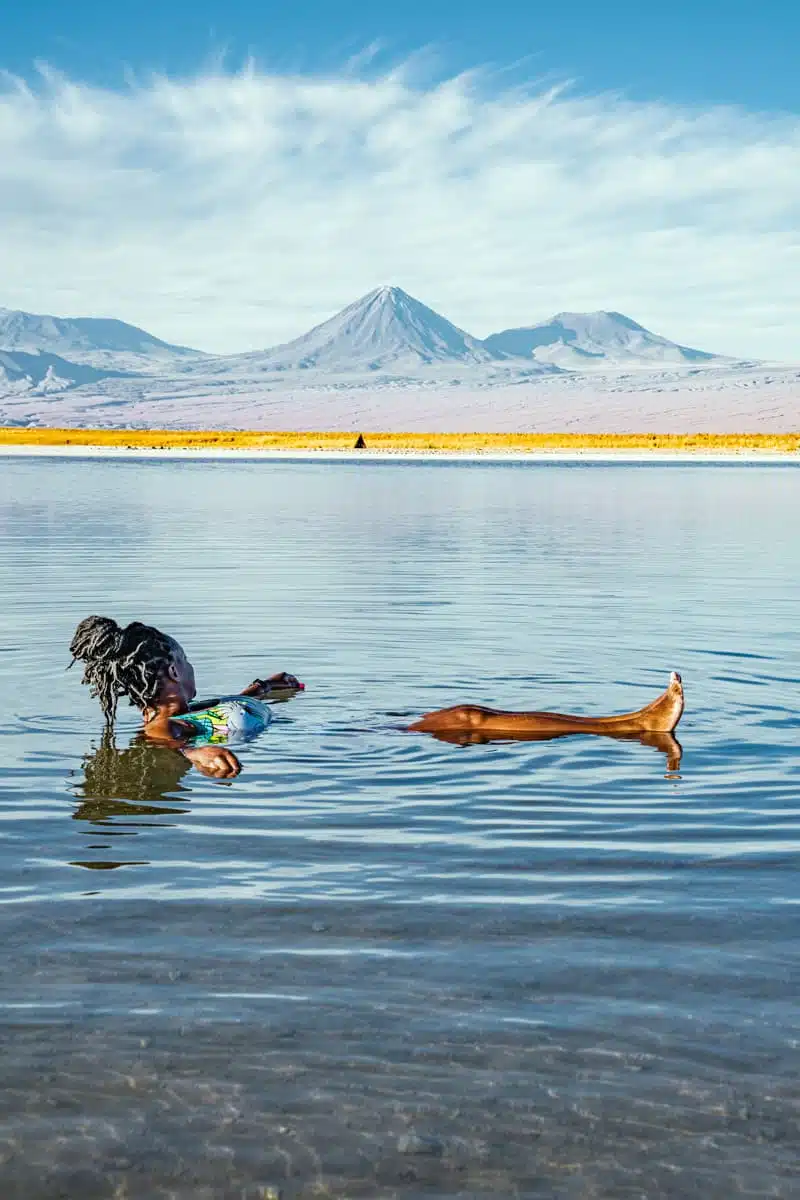

Floating in the salty environs of Laguna Cejar is a one-off experience you shouldn’t miss. While most of the salt lagoons in the Atacama are strictly on a look but don’t touch basis, Laguna Cejar is the exception.
Strip down to your swimmers and hop in to experience the lagoon’s surreal buoyancy as you bob on its surface. Don’t get your face wet though, it stings if it gets in your eyes. Entry costs about CLP 15,000, and afterwards, carry on to the neighbouring lagoon, which is a favourite with the local flamingos.
Toconao village
One of the oldest villages in the Atacama region, Toconao is worth a stop before or after your trip to the desert. It’s known for its traditional stone architecture and for wine: the Ayllu cooperative of local growers makes some of the highest-altitude wines in Chile here.
Ckamur
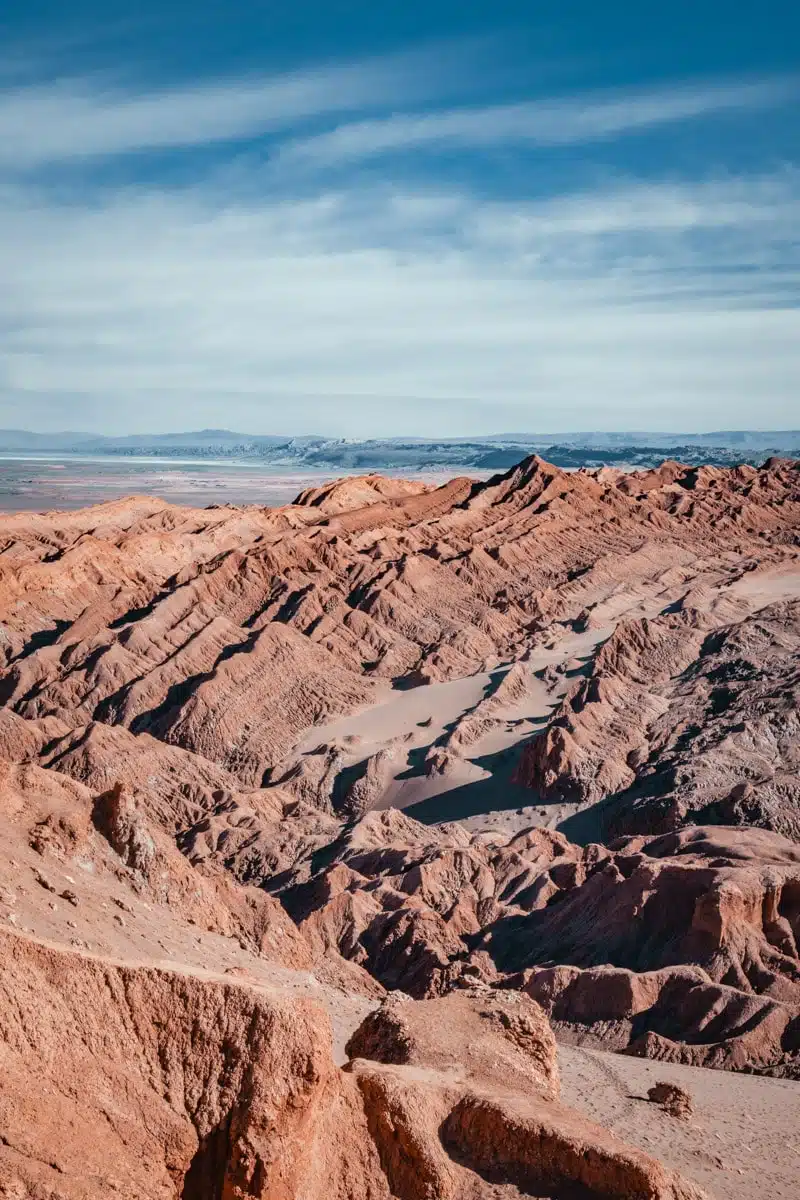
If you’re looking for a bit of a hidden gem, Ckamur is a relatively recent attraction in the mostly desolate Valle de la Muerte. It’s much quieter than the Valle de la Luna, and when I went it was free to enter.
If you recognise the stark rock formations casting shadows and blankets of colour over the dry desert landscape, you may remember them from The Mandalorian. What you won’t recognise is the Licancabur volcano poking up behind the valley: the filmmakers cut off the top so the location wasn’t so identifiable. Do the sunset hike up the ridge, then shuffle down its sandy side to the valley floor.
Stargazing
With its high altitude, dry air and minimal light pollution, the Atacama is one of the best places on the planet to see the stars. I chose my hotel partly because it has its own observatory, with two guided sessions every evening, and I took some of my best photos of the night sky there once the session had finished. If your hotel doesn’t have one, book a stargazing tour and wrap up warm.
Getting to the Atacama Desert
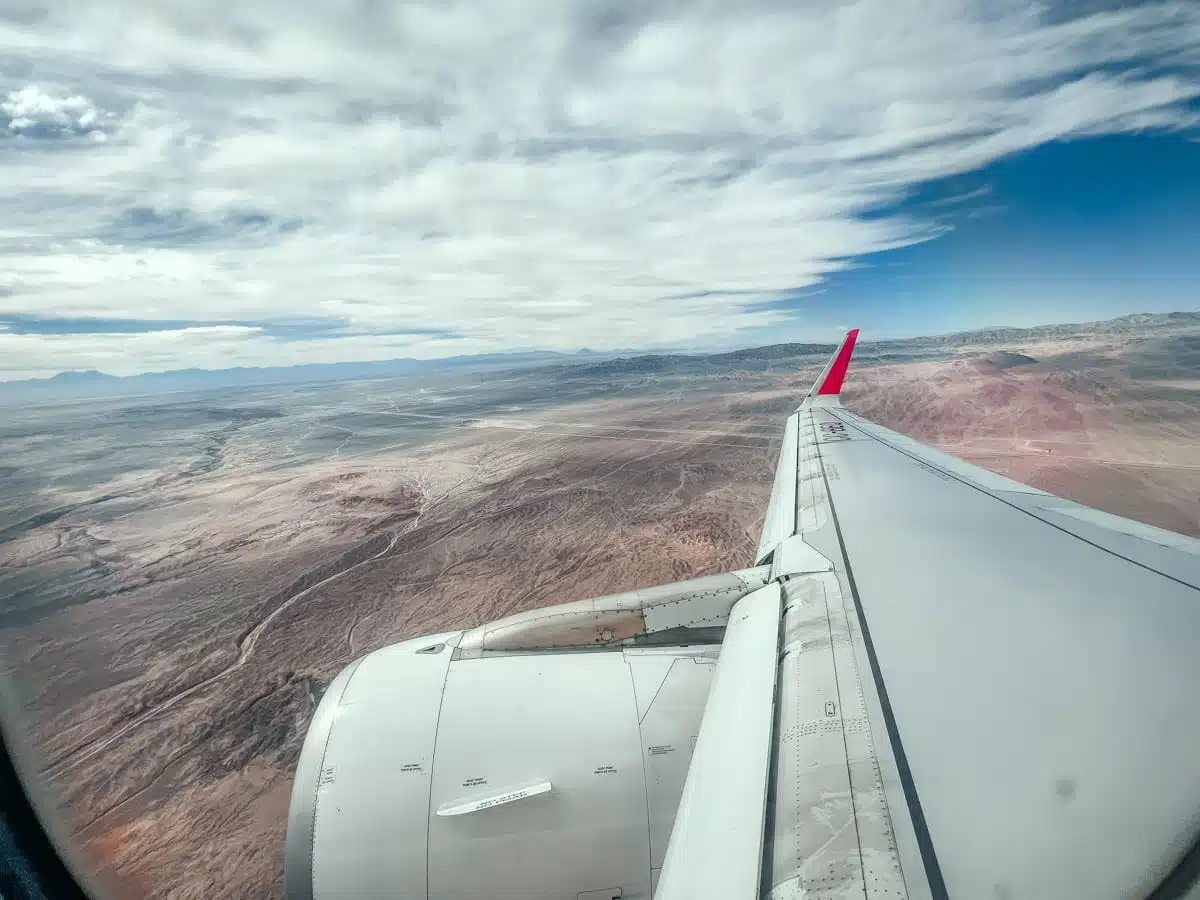
Fly into El Loa Airport (CJC) in Calama, about two hours and ten minutes from Santiago, before driving about an hour and a quarter to San Pedro de Atacama. There are lots of flights a day from Santiago, and shared shuttles meet the flights at Calama if you’re not hiring a car. Coming from Patagonia, you’ll usually need to change planes in Santiago, so take the earliest flight you can and expect to reach San Pedro in the evening.
Where to stay in the Atacama Desert
Nayara Alto Atacama is the perfect choice for your 10 days in Chile itinerary. Why? You’ll enjoy low-key luxury accommodations just outside San Pedro, in the Catarpe valley, where you can book all-inclusive packages.
I chose a package that included all meals, tours, and transportation, which was costly but a great value for convenience and quality. I paid for it myself, and it was worth it: my guide, Rodolfo, grew up in nearby Calama and there wasn’t anything he didn’t know about the region, and my driver, Eric, handled the rough roads with ease. My Catarpe room had one of the most comfortable beds I’ve ever slept in, there are six pools (two of them heated, which you’ll want in winter) and the 90-minute Ckautcha massage was wonderful. Read my full Nayara Alto Atacama review.
In San Pedro itself, eat at La Casona, which serves the best food in town, and have a cocktail at Karavan Restobar.
Check prices and availability for Nayara Alto Atacama on Booking.com Alternatively, check all accommodations in Chile on Booking.com
Other Chile itineraries
2-week Chile itinerary

Adding a trip to wine country on your Chile itinerary is never a bad idea, especially when you have two weeks in Chile. The Elqui Valley offers incredible wineries alongside some of the best stargazing in Chile.
I’d always been curious about the valley. It’s constantly described as mystical, enchanting and even supernatural, perhaps thanks to the whispers of UFOs, or the astronomers drawn by its 300-plus clear nights a year. On my July trip I based myself in the charming town of Vicuña, at Terral Hotel & Spa (it’s OK, with spacious rooms, if a bit on the basic side). The town is worth exploring for its central plaza, the striking red Church of the Immaculate Conception and the free Gabriela Mistral Museum, dedicated to the Nobel-winning poet who grew up in the valley.
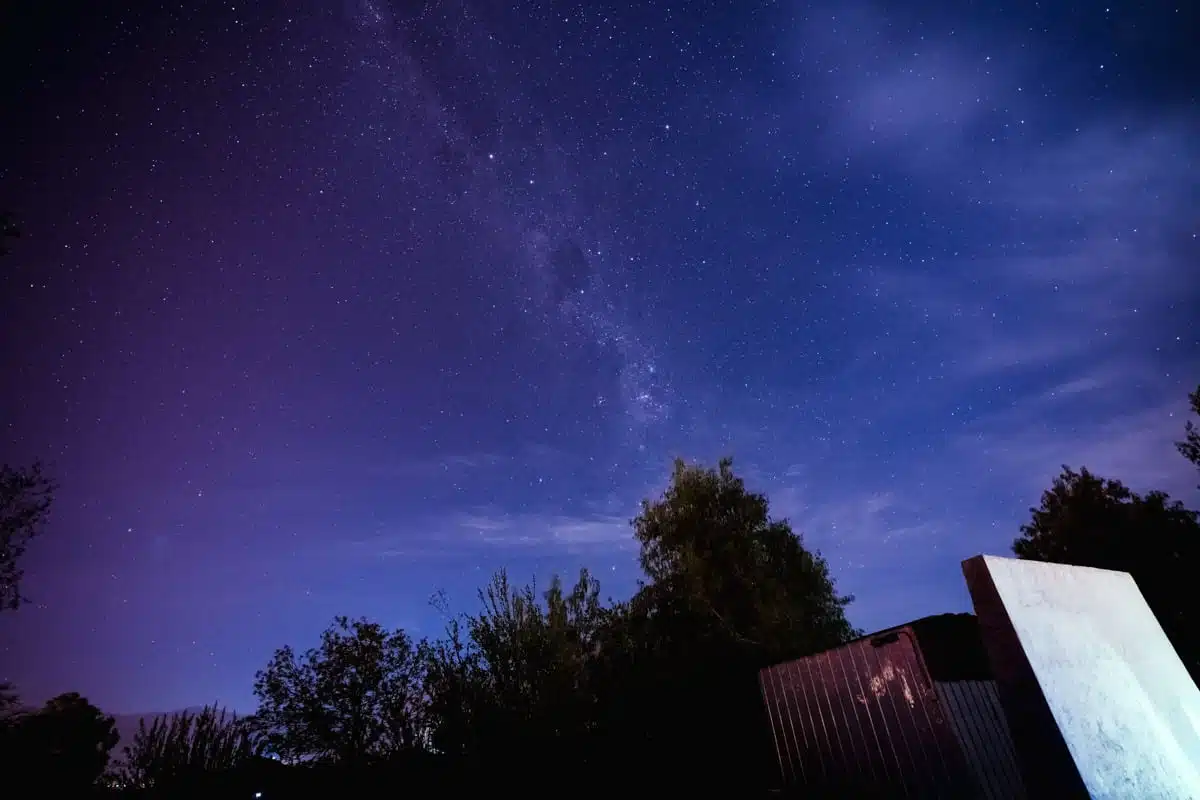
My top recommendation is to go stargazing at Centro Astronómico Alfa Aldea, just outside Vicuña. It’s a small-group session with a 3D video tour of the galaxies, guided telescope viewing and a glass of wine, and it was far more personal than the big observatory tours can be. By day, I toured the valley with a local guide: highlights were tasting Malbec and Grenache at Viña Alcohuaz below the Andes, touring Fundo Los Nichos near Pisco Elqui, which makes my favourite pisco in the area, and lunch at Solar Elqui Donde Martita in Villaseca, where the food is cooked using solar power.
Visit Cavas del Valle, a family-owned winery offering award-winning wine and special releases like a late harvest syrah. You can also take a boat trip to see the wildlife around Punta de Choros on the coast. To get to the valley from the Atacama, fly from Calama to La Serena (about an hour and 40 minutes on the direct flights), then take the bus to Vicuña, about an hour.
With two weeks, follow the 10-day route above, then add the Elqui Valley before heading back to Santiago:
- Days 1 to 3: Santiago, the coast and the Maipo Valley
- Days 4 to 7: Torres del Paine and the three-day W Trek
- Days 8 to 11: The Atacama Desert
- Days 12 to 13: The Elqui Valley
- Day 14: Santiago, with dinner at Boragó
Or skip the Elqui Valley and use the extra days in Patagonia to hike the full five-day W, the way I did. Four-day jeep tours to Bolivia’s Salar de Uyuni also leave from San Pedro de Atacama. I took one on my July trip, and my guide to the Bolivian salt flats covers what to expect.
7-day itinerary for Chile
If you have less time, you can still plan a week in Chile while still seeing many of my favourite locations over seven days. Pick either Patagonia or the desert, as trying to do both in a week means spending most of it in airports.
- Day 1: Santiago
- Day 2: A day trip to Valparaíso, or the Maipo Valley
- Days 3 to 6: Torres del Paine (or the Atacama)
- Day 7: Santiago
Map of my Chile route
Handy tips for planning your trip to Chile
Group tour or independent travel?
You can absolutely do everything on this 10-day itinerary while travelling solo. I did all of it on my own. Going by yourself allows you to enjoy stargazing, hiking, and sightseeing at your own leisure.
Even travelling independently, I booked a few things to take the logistics off my plate: two day tours from Santiago, a street art tour and an all-inclusive package with a private guide in the Atacama. That mix worked brilliantly.
But if you don’t want to handle the logistics at all, a group tour may be more your speed. G Adventures offers some excellent Chile itineraries, including a six-day trip to Patagonia on the W Trek that starts and ends in Puerto Natales, with three nights camping in the park.
When to go
Chile is so long that there’s always somewhere in season, but the regions on this itinerary peak at different times of year. Because the W Trek is at the heart of this route, plan around the trekking season in Patagonia, October to April. The shoulder months (October and November, March and April) also avoid the summer rains that can close the high roads in the Atacama. Read my guide to the best time to visit Chile for the month-by-month detail. In short:
- Santiago and the wine valleys: good all year. Summer (December to February) is hot and the harvest runs from about March to May. I went in July, when it was crisp and sunny, but some rooftop terraces close for the winter.
- Torres del Paine: the main hiking season runs from October to April, and December to February is the busiest stretch. From late April to mid-September, you can only hike the W and the Base Torres trail with an accredited guide, most refugios close, and in some winters the W closes completely in June and July.
- The Atacama Desert: a year-round destination. Days are warm and nights are very cold, especially in winter. On my July trip it was -15°C at El Tatio at dawn, and the lagoon at Piedras Rojas was frozen solid, which made for some of the most beautiful scenery of the trip. Summer rains in the high Andes (usually January and February) can close some of the high-altitude roads.
- The Elqui Valley: good all year, and the dry, clear winter skies are perfect for stargazing.
Getting around
Believe it or not, if you measure Chile from top to bottom, it’s nearly as long as the USA is from coast to coast.
So if you’re planning a holiday in more than one region (like this 10-day Chile itinerary), you’ll want to fly to one of the airports near your destination, and then hire a car or book a tour. LATAM, Sky and JetSMART all fly the domestic routes on this itinerary. The bus from Santiago to Calama takes about 23 hours and, when I went, the tickets weren’t much cheaper than flying, so I flew and paid about £100.
If you’re staying in Santiago, use Uber. Petty crime is common in Santiago, especially in the Centro district, and taxis may ask you to negotiate fares or straight up rip you off, which can get awkward and expensive. All of my hotels told me to use Uber, and it’s relatively cheap. Pickpocketing and bag snatching are the main risks, so keep your phone out of sight on the street and don’t carry more cash than you need.
Love this? Save and share on Pinterest
More Chile guides to read next
- The best things to do in Chile
- Hiking the Torres del Paine: what you need to know
- Unmissable things to do in Santiago
- What to do in the Atacama Desert
- Atacama Desert itinerary
- Hikes in Torres del Paine
- Elqui Valley travel guide
Discover the top things to do, insider tips and hidden gems in our Chile Travel Guides.
Read the guides →