
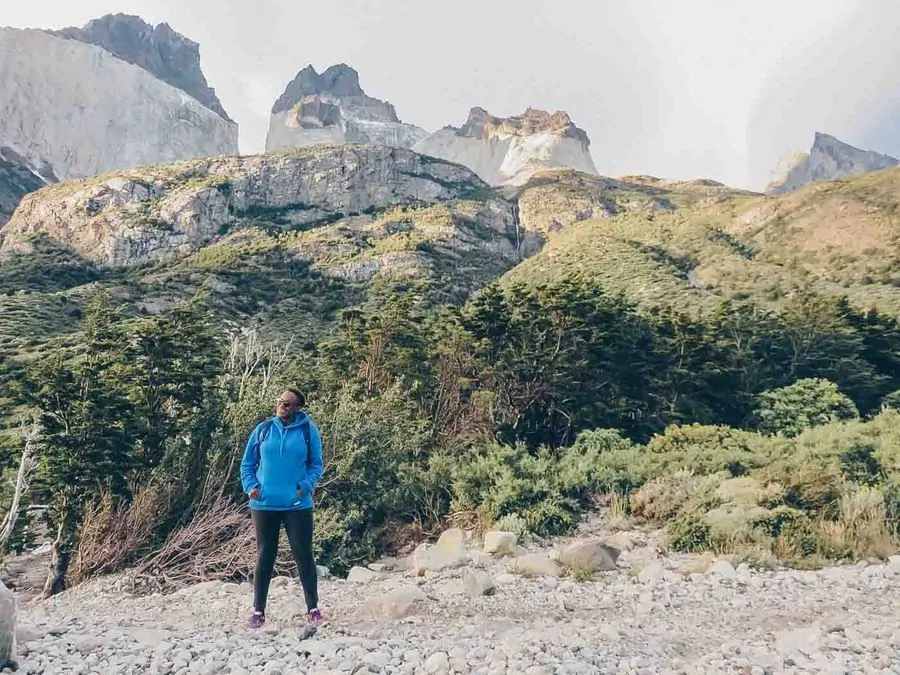

Hiking the W or O trek in Chile’s Torres del Paine National Park is at the top of many an adventurer’s bucket list. Planning a trip to the Torres del Paine and not sure what to pack? I’ve got you covered, with everything I learned about wind, cold and carrying it all on my own.
The Torres del Paine is a place of legend: soaring peaks, jewel-coloured lakes, stunning scenes and some of the best hiking you can find in Chile, South America. It’s hands-down one of the best things to do in Chile and should be at the top of your list if you’re planning a trip to Patagonia.
Hiking the W Trek in Torres del Paine National Park had been something of a lifelong dream, but it took four trips to South America before I finally got down to Patagonia, strapped on my hiking boots and set off to tackle the region’s best-known trek.
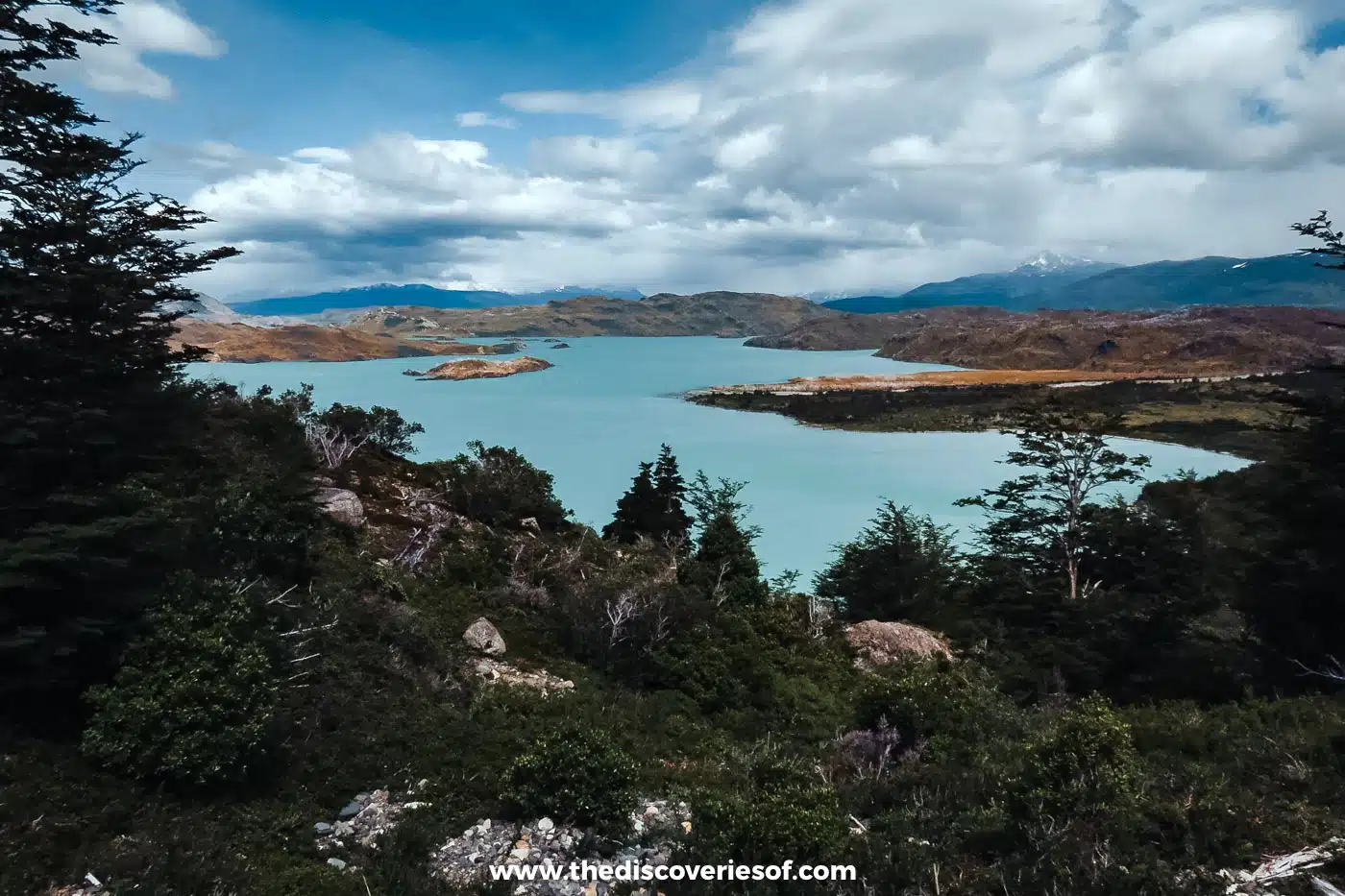
I loved my time in the Torres del Paine National Park and, without a doubt, the W trek was one of the best experiences I had on that trip to South America.
I’d wavered about whether I’d be able to do the hike solo, or whether I had enough time to complete the trek and still see more of Patagonia. In the end, I’m so glad I went. I hiked it on my own in January, the height of the austral summer, from west to east over five days, sleeping in the refugios at Grey, Paine Grande, Los Cuernos and Chileno.
Read more about my experience of hiking the W trek in Torres del Paine.
That said, preparing for the trek wasn’t the easiest of tasks. When you’re travelling for a long time (or even if you’re not) we all know that every kilogram counts.
Thanks to some savvy advice from friends and travellers, I think I got my W Trek packing just right: not too much, but enough stuff to keep me comfortable throughout the trip. I’ve written it in as much detail as possible to help you plan for your travels.
Some links in this article may be affiliate links, which means we may receive a small commission, at no additional cost to you, if you decide to purchase through one of my recommended partners.
Handy tips for your Torres del Paine packing list
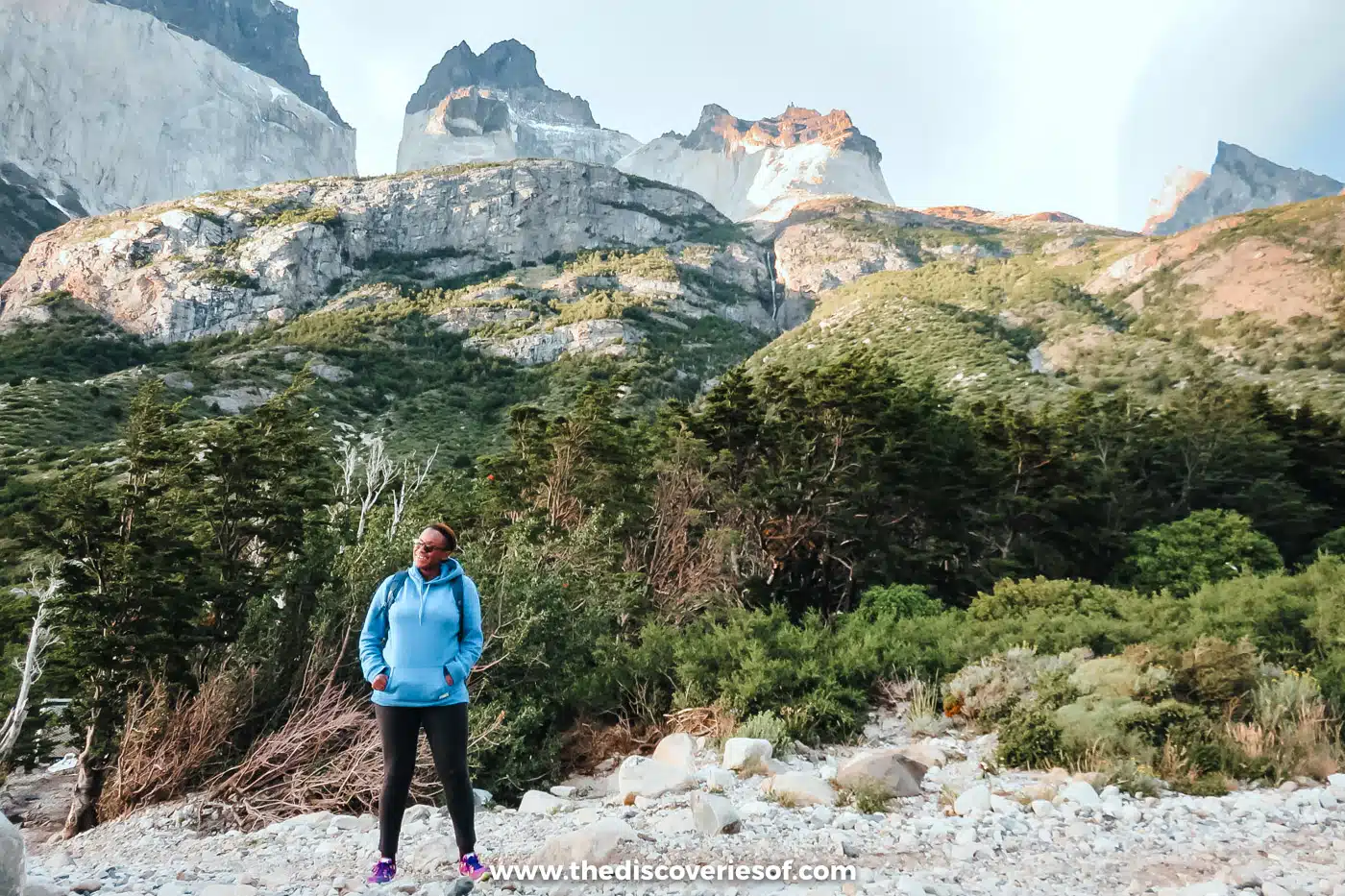
- Deciding what you need and what to bring is a tough call. The park has notoriously changeable weather conditions, meaning you need to come prepared for rain, hot sunshine, gale force winds and even snow in the course of one day (this actually happened to me while I was on the hike).
- I’ve assumed that you are going to be camping and eating your own food during your hike. If you’re not, you can cut out the camping kit and most of the food items and rejoice in the knowledge that your pack is going to be significantly lighter. I stayed in refugios, so I didn’t carry a tent or a stove.
- Leave anything you don’t need with you on the trek at your hostel in Puerto Natales. My hostel, The Singing Lamb (highly recommended), had huge lockers just for this purpose, as do most of the hostels in the town.
- You can bring your own camping gear, but I’d only recommend doing that if you are camping in other places in South America. If you’re just going to be camping on this trip, Erratic Rock in Puerto Natales has a fully-stocked rental outfit for you to rent your stuff from. The campsites run by Las Torres Patagonia also rent ready-pitched tents with a sleeping bag, mat and pillow.
- Don’t try to fly in with stove gas. Airlines don’t allow gas canisters in checked or hand luggage (LATAM lists compressed gases as banned in both), so buy your canister in Puerto Natales and bring only an empty, clean stove from home.
- Buy your park ticket before you go. Entry is sold online only, on CONAF’s Pases Parques site. Since 1 May 2026 foreign adults pay CLP 48,500 for a multi-day ticket (valid for up to 10 days in a row, which is the one you need for the W) or CLP 32,400 for a single day. Download the QR code and print a copy, as there’s no phone signal in most of the park.
What the wind and cold taught me on the W Trek
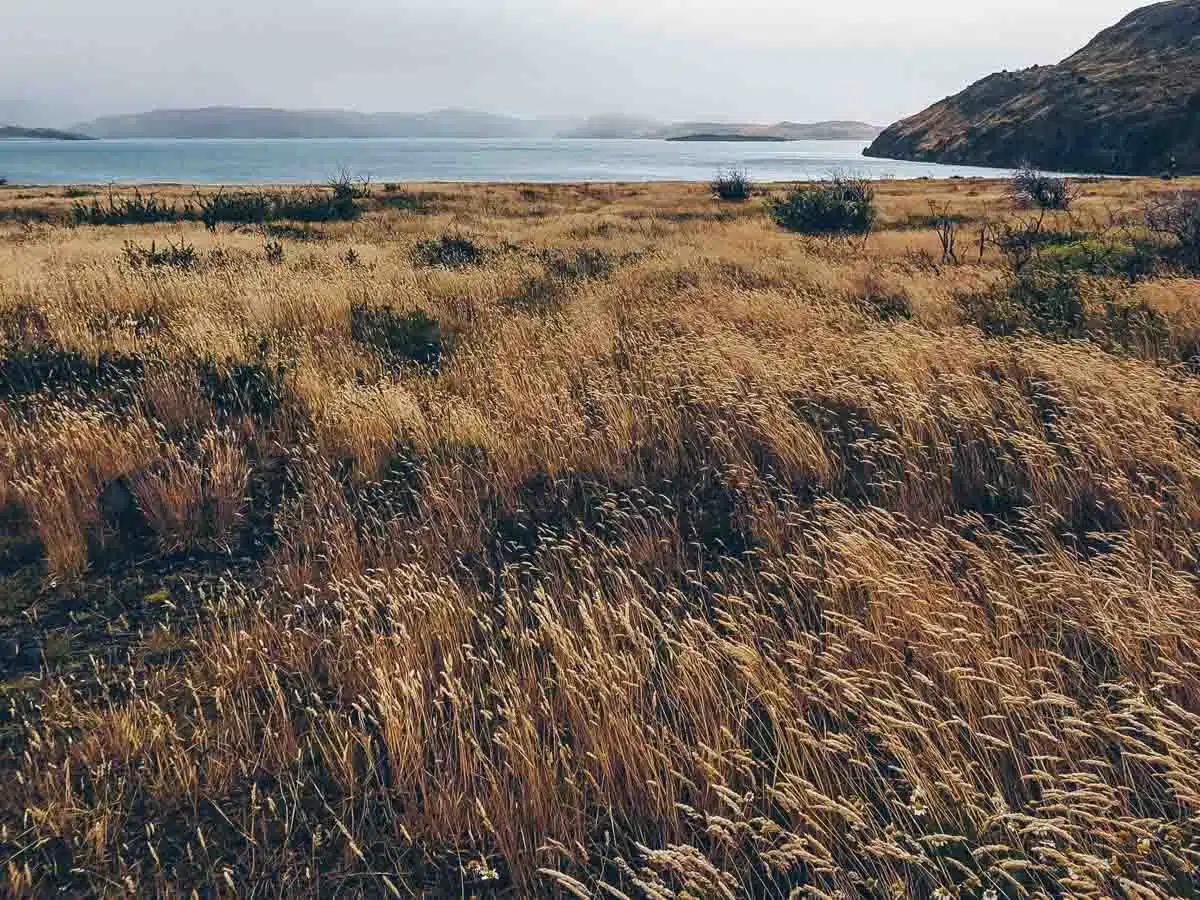
Before I set off, I went to the free talk at the Erratic Rock hostel in Puerto Natales. I’d been feeling fairly lighthearted and cheerful. Then I heard phrases such as “80km per hour winds” and “torrential rains” and started to feel that little bit less sure.
The main takeaway was that the weather in the park is so unpredictable that no one ever checks the weather forecast. What’s the point, when it can change from heavy rain to blazing sun, shift over to fierce winds and then again to snow in the course of one day? Which basically means packing (and carrying) kit for every feasible weather eventuality.
I also noticed that everyone else at the talk seemed to be in pairs or groups, busily discussing who would carry what. Hiking solo, there was no one to split the load with and no one to remember what I’d forgotten. If you’re going alone, write a list and tick it off before you leave town. You’ll be fine.
Rain and glasses. The moment I stepped off the catamaran on day one, it started raining, and it was windy and wet to the point my glasses were doing that comedy thing of being so wet I couldn’t see through them. If you wear glasses too, a peaked cap under your hood keeps most of the rain off the lenses.
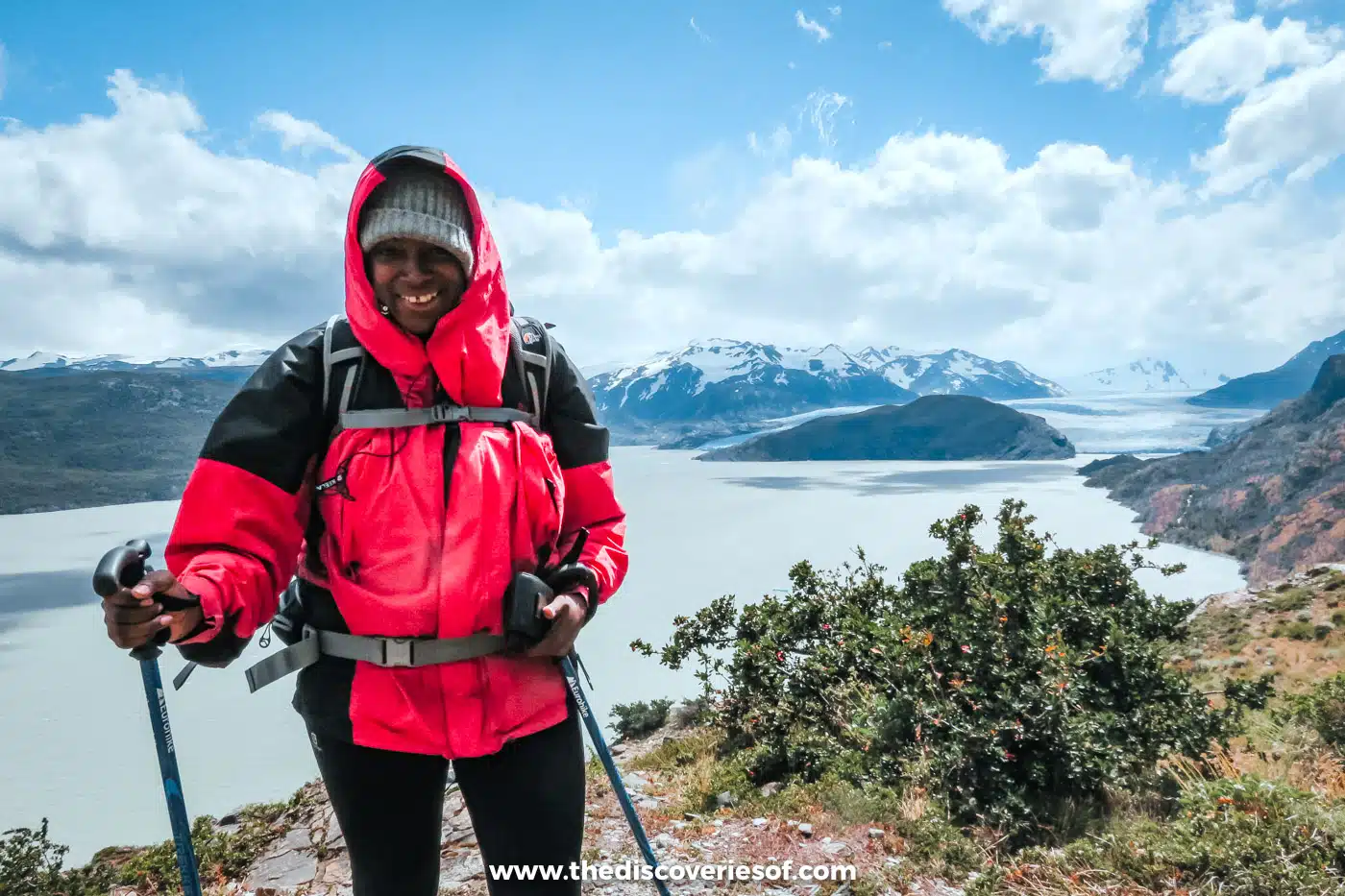
The wind on day two. The next morning dawned with heavy rain and winds so strong that I was continually being blown off my feet. I’d be walking in one direction and then be blown two paces in the other. I skipped the long walk to the Grey Glacier viewpoint and pushed on to Paine Grande, and even with my heavy pack on, the wind managed to blow me off course a few times. On days like that, what keeps you upright is a pack with a proper hip belt, a rain cover that’s strapped on rather than flapping about, and hiking poles (mine were in my hands all day). Pack everything inside it in dry bags, too.
The 28km day. Day three, Paine Grande to Los Cuernos via the Francés Valley, was about 28km with a steep climb in the middle. Of course, fate would have it that the day turned hot and clear: suncream oozed off my face as fast as I could put it on. By the time I reached Mirador Británico, the clouds had rolled in and I couldn’t see much at all. On a day like that you’ll be stripping off and piling on layers every hour or so, so keep your fleece and waterproof at the top of your pack, and carry more water and snacks than you think you need.
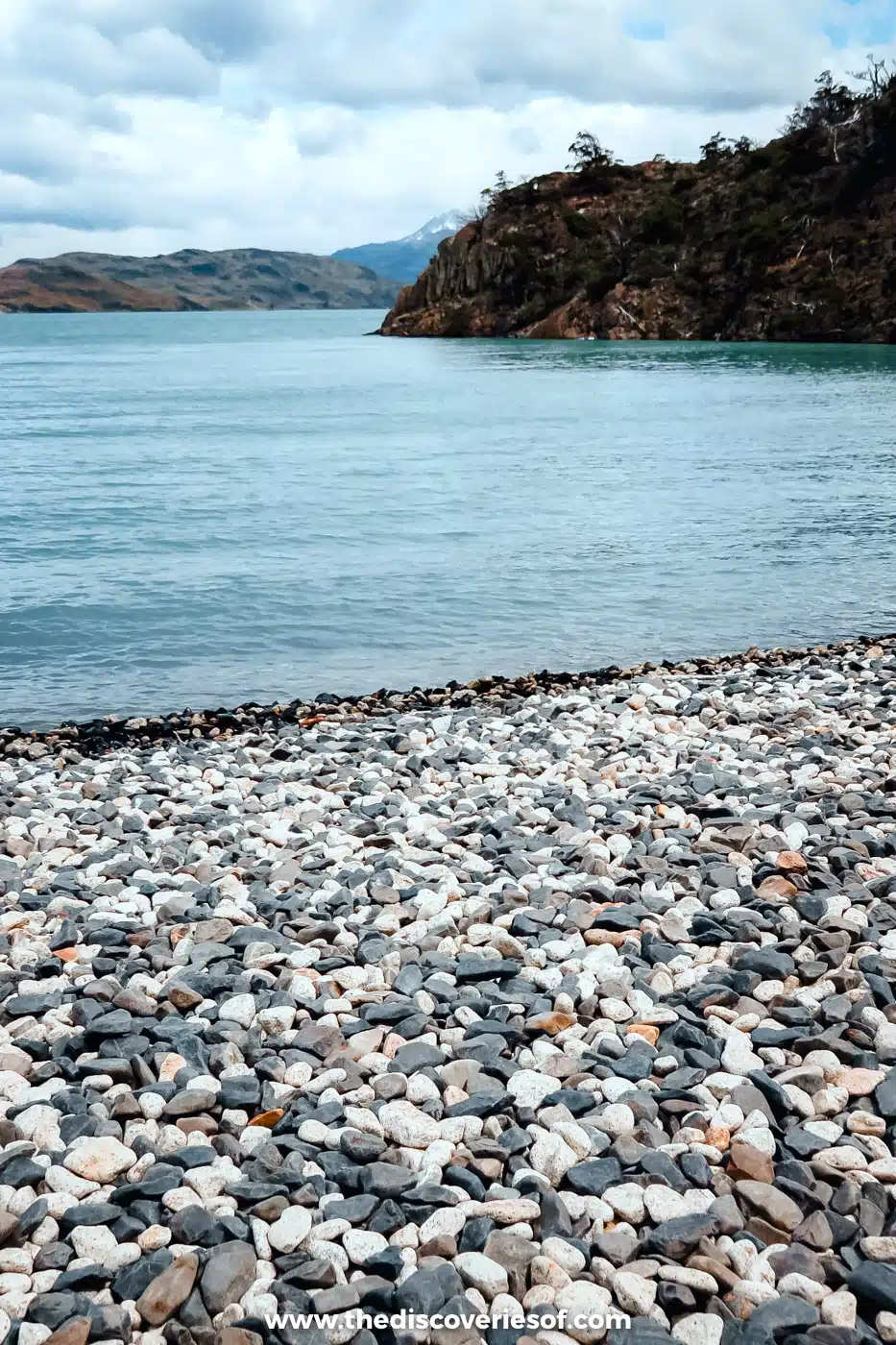
Feet in the lake. Late that afternoon, tired and increasingly convinced a puma was about to pounce on my aching limbs, I came across a small lakeside beach. I took off my boots and dipped my feet into the bracingly cold water, and it was exactly what I needed for the last push to the refugio. Keep a small quick-dry towel somewhere you can reach it. Swimming is banned in all of the park’s lakes, lagoons and rivers, so leave it at a paddle.
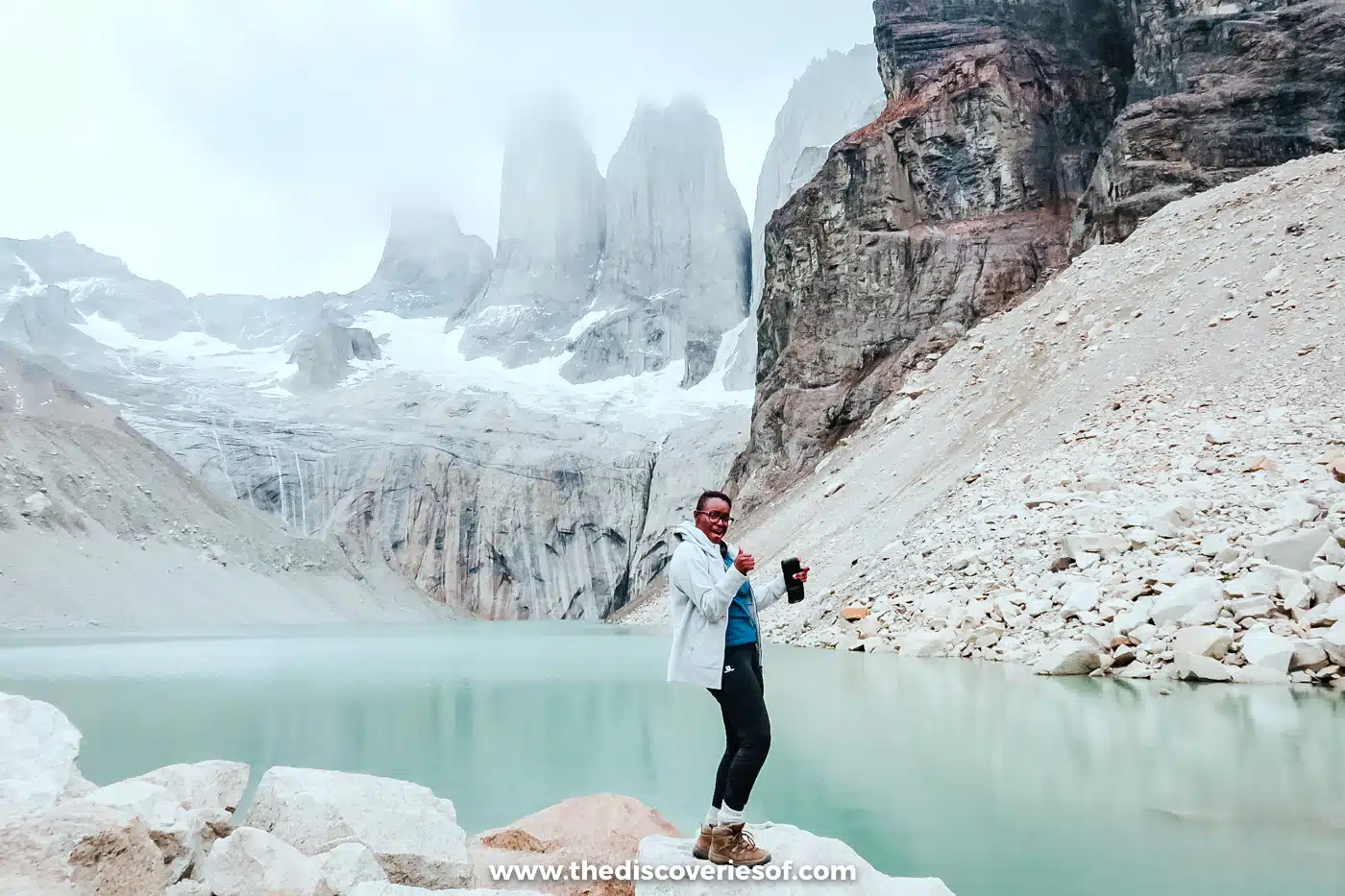
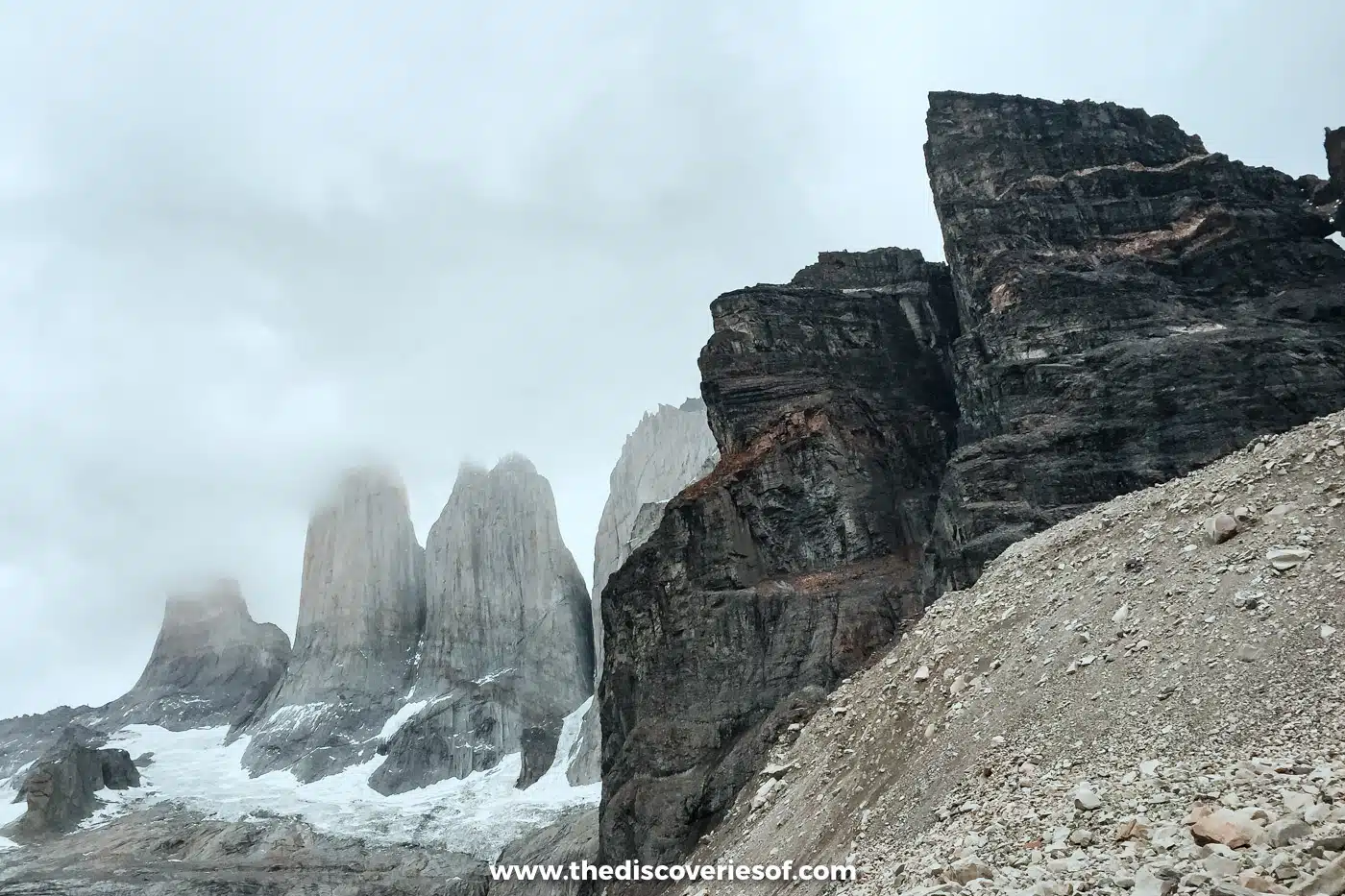
The boulder scramble to the Torres. On day four I dropped my pack at Chileno and went straight up to the Torres in the afternoon. The last section climbs above the treeline onto a field of boulders, and my poles were useless as there was nothing for them to grip onto. Before long I put them away and tackled it with my hands and feet. Bring poles that collapse small enough to strap to your daypack, and a pair of gloves that you don’t mind scraping on rock. I sat at the top for a few minutes before the weather turned grey, and it started to rain on the way down, so even on a sunny afternoon your waterproof belongs in your daypack.
Cold mornings. My last morning at Chileno was cloudy and rainy, and I snuggled further into my sleeping bag rather than face it. Nights in the park can drop close to freezing even in summer, so pack a warm layer to sleep in and a hat.
The wind here is no joke. In November 2025 five hikers died when a storm with winds of more than 190km/h hit the John Gardner Pass on the O Circuit. Stick to the marked trails, listen to the rangers and turn back if the conditions turn.
The Torres del Paine W Trek packing list
Backpack


I’d recommend packing as light as possible, so you don’t need a massive backpack. That said, if you’re camping, you’ll need to allow for your tent and sleeping bag, so pick a bag that has plenty of straps to attach stuff with. In the wind, a padded hip belt that takes the weight off your shoulders makes a huge difference to your balance.
If you’re going straight to the Torres del Paine, you’re best off with a small carry on backpack and a packable daypack.
The Lowe Alpine Cholatse 45 is a good option: it has hiking pole attachments, is lightweight, front opening (as well as top opening) and has a waterproof cover to keep your stuff dry if it rains. The women’s version is now sold as the Cholatse ND40:45.
I also use the Osprey Fairview (Farpoint for men), which is tough, stands up to the elements and lasts a very long time. The Osprey Fairview and Farpoint 70 come with a detachable 13 litre daypack that can be clipped to the back of your pack, or to the front harness to help with your balance.
Whatever you carry, line it with a big waterproof bag or use dry bags inside, as rain covers alone don’t keep out Patagonian rain blowing sideways.
Daypack


You’ll mostly be hiking with your main backpack on, apart from the day when you hike up to the Mirador Francés, when I recommend leaving your backpack at the ranger station at the bottom (I left mine at Campamento Italiano), and when you hike up to the Torres themselves.
I’d recommend bringing a small, foldable daypack to use on these days, unless your main backpack has a detachable daypack too. Pack it with your waterproof jacket, a warm layer, gloves, water, snacks, suncream and a head torch.
For the packable daypack, the Matador Freerain24 Backpack is a good choice if you have the money, as it’s fully waterproof, light and rolls up into a tiny bundle.
Lightweight tent
Can be hired in Puerto Natales
You need to tread a careful balance between making sure your tent is up to the task of keeping you snug and dry during the park’s notoriously unpredictable weather, and yet light enough for you to carry with ease.
The Snugpak Ionosphere 1 man tent is the best one man tent for camping that I’ve used. It’s pretty small and low but is really quick to pitch and only weighs around 1.5kg. It’s now sold as the Ionosphere IX.
Whatever tent you bring, use every guy line. The campsites have wooden platforms and sheltered pitches, but gusts come through with real force.
Four season sleeping bag
Can be hired in Puerto Natales
Don’t skimp on a sleeping bag: this, along with the tent, is going to be the thing that makes you warm and comfy in the night, setting you up for a good day’s hike the next day.
The Vango Venom I used to recommend here has been replaced by Vango’s Cobra range, and the Cobra 600, a down bag rated comfortable to -5°C, is a good-value option.
If you’re staying in refugios, you can usually choose between a simple bed, where you bring your own sleeping bag, and a made-up bed for a bit more. I carried my own sleeping bag on the W.
Roll mat
Can be hired in Puerto Natales
One thick enough to make it worth bringing and to stop you feeling like the princess in the princess and the pea.
Clothing
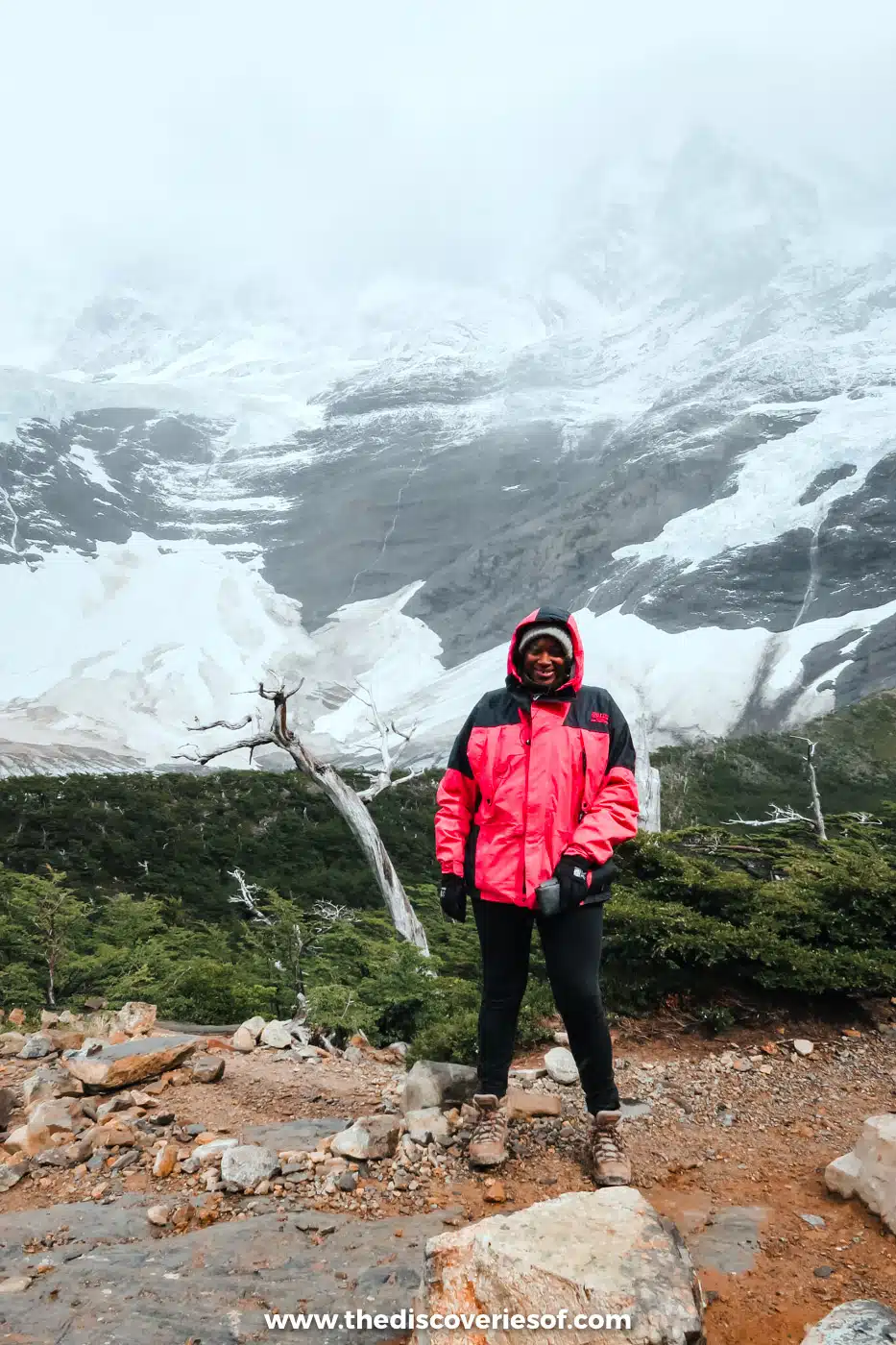
- Hard shell jacket. You’ll need a waterproof and windproof hard shell jacket; my guide to what to wear to see the Northern Lights explains how I layer underneath one for cold, windy places. The Patagonia Torrentshell 3L is good value and packs up into its own pocket so you can put it away when the sun is shining.
- Fleece jumper or hoodie: The North Face Women’s Osito does the trick for me.
- A packable down or synthetic insulated jacket for evenings and for sitting at the viewpoints, where the wind cuts straight through a fleece.
- Thermal base layer top.
- Hiking trousers or leggings.
- Hiking shorts (optional)
- Thermal bottoms (also good for sleeping in)
- Underwear
- Sports bras
- Hat with a brim, or a peaked cap if you wear glasses
- Sunglasses
- Woolly hat
- Waterproof gloves, plus a thin pair for scrambling
- Neck gaiter or buff (optional but really useful for keeping your neck warm in the wind)
- 3 pairs of hiking socks (don’t forget your base layer socks to help stop blisters)
- Hiking boots: I’ve had my Berghaus Expeditor AQ Ridge boots for a while and they’ve always been reliable as well as being lightweight. I hiked all across Patagonia, including on the W Trek, in them without any blisters or sore feet. Yep, you heard me right. No blisters. The current version is the Expeditor Ridge 2.0.
Toiletries
I know some people are perfectly comfortable going for days on the trail without bringing any toiletries but I’m not one of them and I’m guessing that you aren’t either.
If you are, feel free to skip this section and make sure you’re not sharing a tent with anyone along the way 🙂
- Toothbrush and toothpaste
- Eco-friendly soap (solid bars and shampoo mean less plastic to carry out)
- Dry shampoo
- High factor suncream (on the hot, clear climb into the Francés Valley I was reapplying constantly)
- Lip balm with sunblock
- Insect repellent
- A fast-drying travel towel (it’s on my list of travel gear essentials)
- Deodorant
- Toilet paper, plus a bag to carry used paper out with you
Food to pack for the Patagonia W Trek
If you’re staying in refugios, you can book full board (breakfast, dinner and a packed lunch to take with you) or single meals, and it’s best to book them when you book your beds. I ate dinner in the refugios’ communal dining areas each evening.
The food in the refugios is varied: my advice is to expect for it to be bland and then be pleasantly surprised if it turns out to have some flavour. Better than the other way round. Even if you are booking all your meals at the refugios, make sure that you bring some extra snacks to keep you going throughout the day.
If you’re not staying in refugios then it goes without saying that it’s completely up to you to make sure that you’ve brought enough food for the trip. You can only cook in the designated cooking areas at the campsites, and you can’t cook at all at Chileno, the refugio and campsite below the Torres, so book your meals there.
The people you meet on the trail are nice, but not so nice that they’re going to share their post-hike meal with you like it’s the last supper (some are though, ‘cos hikers are a lovely bunch overall).
The quantities that you will need of the food listed will vary depending on how many days you’re hiking in the park. Be generous to yourself. Fresh fruit, meat and dairy can’t come into Chile from Argentina, so if you’re arriving from El Calafate, do your food shop in Puerto Natales.
- Quick-cook oats (Oat So Simple’s a great choice) or oatmeal mixed with meal powder
- Dried pasta, couscous or rice (can bring boil in the bag instead)
- Ramen noodles
- Instant potatoes
- Instant packet soup
- Sachets of tuna in oil
- Salami or cured meat
- Nut butter
- Oatcakes or crackers
- Dried fruit and nuts
- Beef or vegetarian jerky
- Tea bags and coffee granules (this is a hike, not the end of the world: coffee is necessary)
Other essentials
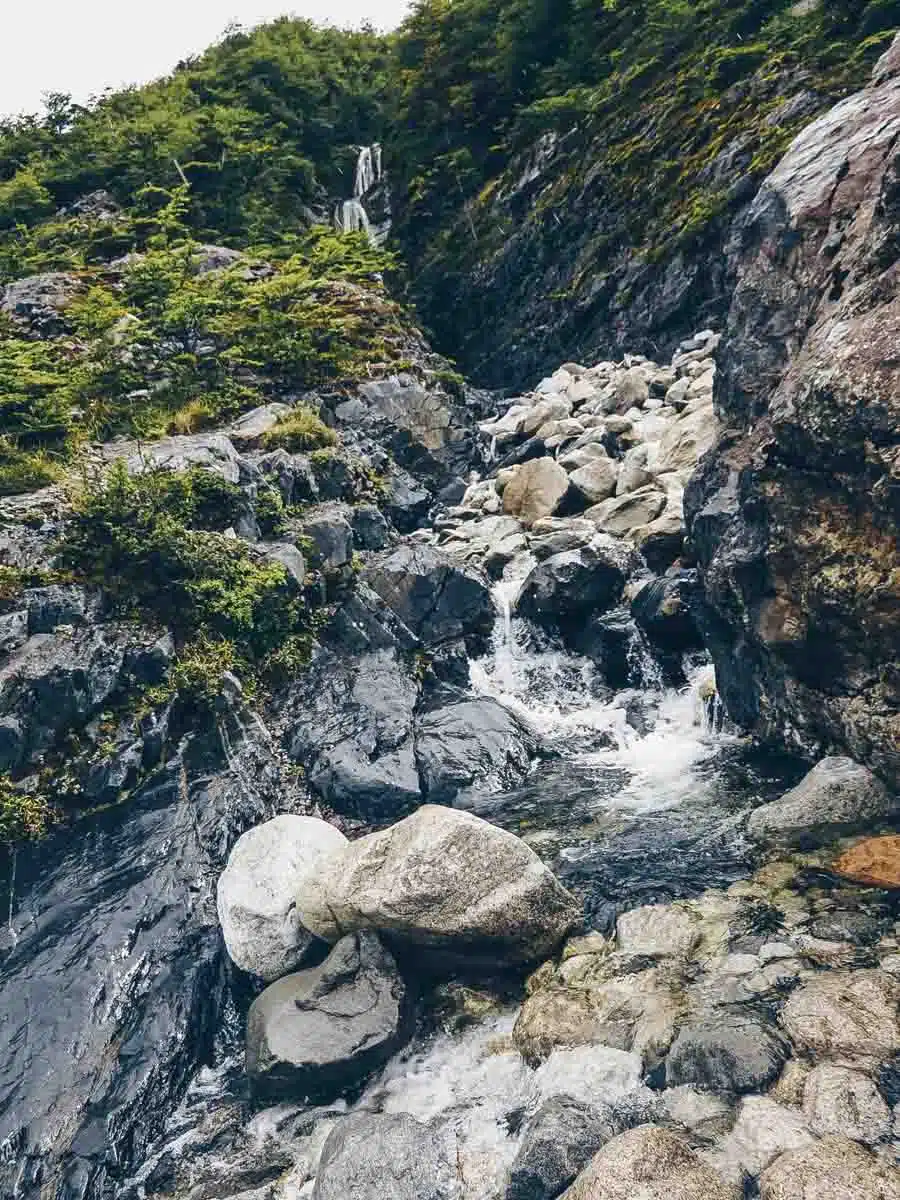
- Collapsible water bottle or water bladder: you’ll need to drink plenty on the hike, but there are lots of glacial streams for you to fill up from. On the flat stretch from Paine Grande towards the Francés Valley, I refilled my bottle at the glacial springs. Collect water upstream of the trails and as far from the camps as you can; every refugio and campsite also has drinking water. Purification tablets or a filter bottle are a sensible backup.
- Head torch (by the last night, the group of us were playing cards by the light of our head torches)
- Mess kit (can be rented from Erratic Rock)
- Camping stove (same as above), plus a gas canister bought in Puerto Natales
- Swiss army knife
- Camera (for all those awesome photos you are going to take) + spare battery or portable charger. I used to travel with a Sony a6500, which has since been discontinued. You can also read my travel gear guides here.
- Printouts of your park ticket QR code and your refugio or campsite confirmations. Rangers and refugio staff check them, and there’s no reliable signal to pull them up on your phone.
- Travel insurance details: make sure you have travel insurance.
- Cash (US dollars or pesos) and cards. Make sure you have enough cash for what you need, as there are no ATMs in the park and the card machines in the refugios aren’t that reliable.
- Duct tape
- Dry bags or plenty of reusable bags, and a sturdy bag for your rubbish. Everything you bring in, you carry out.
- Earplugs and an eye mask: there’s always someone in camp who snores really loudly, and the sunrise can be pretty early.
- First aid kit. Bringing a first aid kit might feel a bit OTT but can come in handy. At the very least make sure you have a few emergency painkillers, diarrhoea tablets (trust me on this one, you can save yourself a lot of difficulties), plasters and blister patches.
Looking for more travel inspiration? Read my full range of South America travel guides and tips
Optional items
- Kindle or book
- Playing cards
- Earphones (when the wind and rain set in on day two, I put my music on and trudged along)
- Hiking poles. These are optional, but I wouldn’t go without them. I’m somewhat of a klutz and notoriously unbalanced on descents, and mine were in my hands from the moment I stepped off the catamaran.
Park rules that affect what you pack
The rules in Torres del Paine are strict, and the rangers do enforce them. These are the ones that change what goes in your bag:
- Fires and stoves: Open fires are banned throughout the park under Chilean law, and you can only use a gas stove in the designated cooking areas at the campsites. Candles are banned too, so bring a head torch instead. Rangers have expelled visitors for lighting a stove in the wrong place, and people who start a fire can face fines or prison. Large parts of the park still show the scars of the fire that started in December 2011.
- Gas: You can’t fly with gas canisters, so buy one in Puerto Natales and carry the empty one back out.
- Water: You can drink from the park’s streams, but collect water upstream of the trails and away from the camps.
- Wildlife: There are no bears in Patagonia, so you don’t need bear spray or a bear canister. There are pumas, though, and I spent much of day three convinced one was about to pounce. Sightings on the trails are rare. If you do meet one, stay calm, don’t run, back away slowly while keeping eye contact, and make yourself look bigger by raising your arms or opening your jacket. Keep your tent zipped and your food in sealed containers so you don’t attract foxes or mice.
- Rubbish: Everything you bring in has to come out with you, including food scraps and toilet paper. Leaving rubbish is punishable by law.
- Swimming: Not allowed in any of the park’s lakes, lagoons or rivers.
- Drones: Banned.
- Daylight and cut-off times: In summer the trails open at 6am, and walking them after dark isn’t allowed. Some sections, such as the climb to the Torres, have afternoon cut-off times, so check them on the park map before you set out.
- Winter: Outside the summer season (roughly late April to mid-September), you can only hike the W and the Base Torres trail with an accredited guide, and parts of the W can close altogether.
What the refugios provide (and what they don’t)
If you’re staying in refugios rather than camping, you can leave the tent, mat, stove and most of the food at home. This is what to expect:
- Beds: Dorms of two to eight beds. Most refugios offer a simple bed, where you use your own sleeping bag, or a made-up bed with bedding, which costs more.
- Meals: You can book full board, including a packed lunch, at all the W refugios, or just some of your meals. Book them with your beds, especially from December to February.
- Cooking: Grey, Paine Grande, Francés, Los Cuernos and Central have cooking areas at their campsites. Chileno has none, so meals there need to be bought.
- Showers and water: Drinking water at every site and hot showers at most, so a small towel and toiletries are worth carrying.
- Operators: Grey and Paine Grande are run by Vertice Patagonia, and Francés, Los Cuernos, Chileno and Central by Las Torres Patagonia. You book each one directly, and you have to book every night before you arrive.
The complete Torres del Paine packing list at a glance
- Backpack with a hip belt
- Daypack
- Waterproof cover if your backpack doesn’t have one, plus a pack liner or dry bags
- A lightweight tent (if camping)
- Four seasons sleeping bag
- Roll mat (if camping)
- Collapsible water bottle
- Head torch
- Clothes + underwear, including a hard shell jacket, fleece, insulated jacket, hat and gloves
- Toiletries
- Bin bags
- Mess kit (if camping)
- Camping stove, and gas bought in Puerto Natales (if camping)
- Swiss army knife
- Hiking poles (optional, but I’d take them)
- Small first aid kit with any medicine you need
- Camera (for all those awesome photos you are going to take) + spare battery or portable charger
- Duct tape
- Earplugs and eye mask
- Park ticket QR code and confirmations of all bookings, printed
- Cash for the park
So there it is, the ultimate Torres del Paine packing list! I hope you have a brilliant trip and enjoy the experience as much as I did.
I’d love to hear your favourite parts of the trek or if there’s something that you think should be added to the list. Otherwise, happy hiking and have a great trip. Planning the rest of your trip? Check out my handy holiday packing list.
Read more South America travel guides
- Torres del Paine W Trek: a step-by-step guide to hiking the W in Patagonia
- Things to do in South America: the ultimate South America bucket list
- 2 week South America itinerary: six awesome itineraries to inspire your travels
- 22 extraordinary things to do in Chile, from Patagonia to the Atacama
- The ultimate guide to camping in Torres del Paine
- 10 days in Chile: the perfect Chile itinerary, from Santiago to Patagonia and the Atacama
Love this? Save and share on Pinterest
Discover the top things to do, insider tips and hidden gems in our Chile Travel Guides.
Read the guides →






Wow. Thanks for the list. I have backpacked, but it helps to hear it from someone who’s been there. Based on your pictures, I’m going to need those warm layers.
Hey Mike – you’re really welcome! Have an absolutely brilliant time and yep, bring layers 🙂