
South America
Bolivia travel guide
White-washed desert salt flats, cities framed by sky-high mountains, and high-altitude lakes that defy expectations for the most seasoned travellers. Explore the dramatic natural landscapes, culture and architecture of this landlocked gem in South America with this Bolivia travel guide.
Destinations

Julianna BarnabyTravel and culture writer
I couldn’t believe my eyes the first time I went to Bolivia.
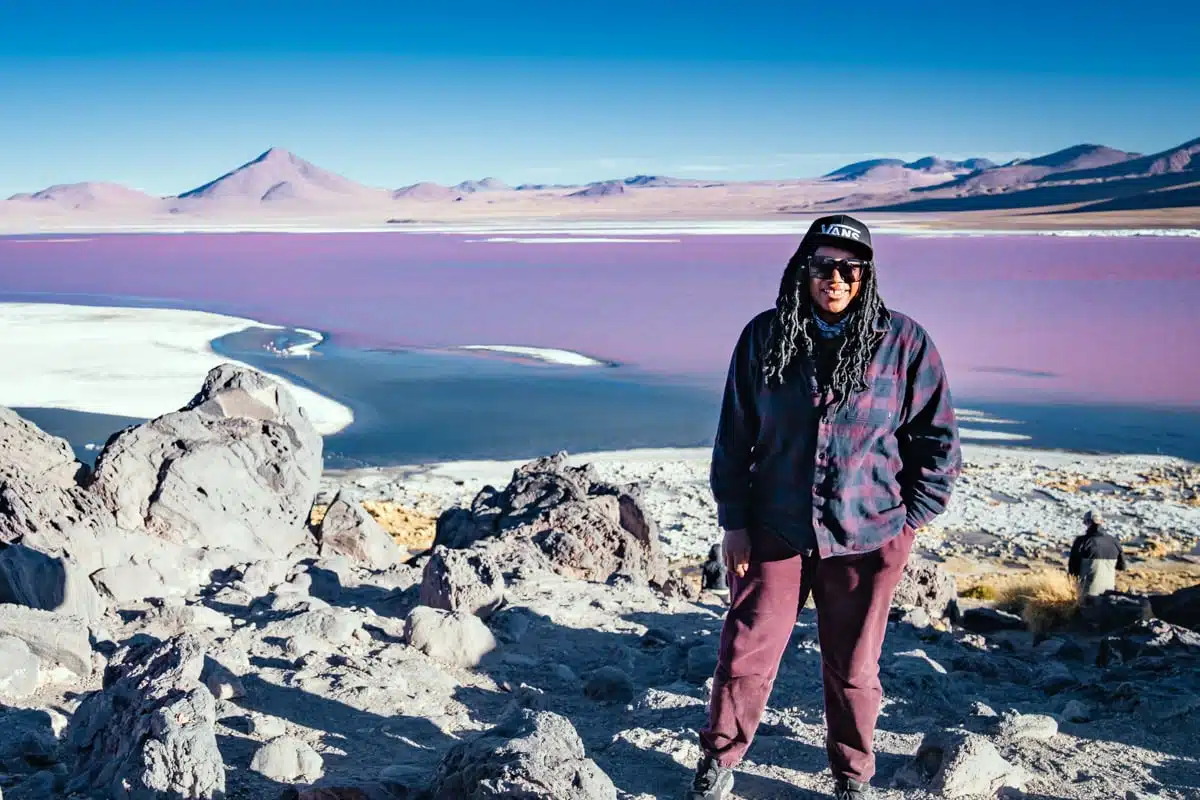
“This is real?” was my first thought when seeing the ruby-red Laguna Colorada, snow-white salt flats at Salar de Uyuni, and multi-colored “fins” protruding from the high desert at Quebrada de Palala.
Fast forward a few years (and several visits) later, and I still can never quite believe the surreal dreamscape that is Bolivia.
When people think of Bolivia, they tend to think of the incredible salt flats and possibly the dizzying heights of La Paz. In reality, it’s much more diverse than that.
The witch markets, beautiful colonial architecture and diverse indigenous cultures are only a few of the many things that stand out while visiting Bolivia.
Ready to learn more? This Bolivia travel guide will walk you though where to visit and what to do when you visit this amazing country in South America.

 When’s The Best Time to Visit The Bolivia Salt Flats?
 Laguna Verde Bolivia: A Practical Guide To Visiting Bolivia’s Green Lake
 Bolivia’s Landscapes: Surreal Spots You Need to Visit
When to go
Plan your trip to Bolivia for May or October to avoid large crowds and make the most of your visit with generally excellent weather.
Uyuni Salt Flats – April and May can offer both the mirror effect from the rain, and dry desert landscapes.
Lake Titicaca – May through September.
Amazon Rainforest – May to October.
Getting there and around
- Skyscanner for Flights to Bolivia Travel Destinations
- Compare Rental Car Prices for Your Bolivia Trip with Holiday Autos
- Book a Ride With Todo Turismo for Private or Shared Buses from La Paz to Salar de Uyuni
- Omio for Trains, Buses, and Flights
- Airport Transfers in Bolivia via Booking.com
- G Adventures for Multi-Day Guided Trips
- Trans Copacabana for Bus Travel to Several Well Known Sites When You Travel Bolivia
The easiest way to get around Bolivia is by bus (or cable car in La Paz). You can hire a car or motorcycle, but road conditions outside major cities are generally not ideal and the driving style is… erratic at best, downright dangerous at worst.
Stick with a reputable bus company like El Dorado, Todo Tourismo, or Trans Copacabana.
Local public transportation is typically around 1.75 to 20 BOB (Bolivianos) (£.20 to £5.50 or $.25 to $3), whereas bus tickets from La Paz to Salar de Uyuni are typically around 150 BOB (£17 or $22).
Where to stay
La Paz
When you travel in Bolivia, experience indigenous culture, colonial architecture, and stunning views of Mt. Illimani in La Paz. Stay at the Ritz Apart Hotel for 5-star service and comfortable suites centrally located.
Sucre
Sucre is quieter but boasts architectural gems like Iglesia de San Lázaro and the beautiful town square Plaza 25 de Mayo. I like the 18th-century architecture and location of Parador Santa Maria La Real hotel.
Copacabana
Located right on Lake Titicaca, Copacabana is ideal when travelling to Bolivia. Meet friendly locals and check out colonial landmarks like the Basilica of Our Lady of Copacabana before spending a night or two at Hotel La Cupula.
Rurrenabaque
Want to see the Amazon for a lot less than you will in Brazil? Head to Rurrenabaque, where many fly in for direct access to the famous rainforest. La Islade los Tucanes, is a nice place to bed down with an outdoor pool and restaurant on-site.
Salar de Uyuni

Santa Cruz de la Sierra

La Paz

Tours
Know before you go
Top things to do
Salar de Uyuni (Bolivia Salt Flats)
You have probably seen many a photograph of the Salar de Uyuni. Yet nothing can quite prepare you for the vast expanse of gleaming white that assaults your senses the first time you see it.
Visit the expansive 9,000 square kilometre salt flats in Salar de Uyuni on a guided tour or hire a car.
The salt-flat desert was a prehistoric lake, long dried up and now whiter than the clouds above. It’s truly like no other place. Combine the whitewashed desert with the crowds of flamingos at Laguna Colorada or Incahuasi Island’s Trichocereus cacti-covered hills, and you’ll have an IG reel for the ages.
Spent a Few Days in La Paz
The bustling city beneath the Altiplano Plateau of the Andes boasts Andean Baroque architecture at the Basilica of San Francisco, delicious Bolivian cuisine at gems like El Vagón del Sur, and the incredibly unique Witches Market. You may find witch doctors, ingredients for casting spells, and (hopefully) good fortune.
Take a ride on Mi Teleférico, the ubiquitous cable cars you’ll find scattered around over two dozen stations throughout La Paz. It’s an excellent mode of transportation up the many hills, where you can see the ancient colonial city from above.
Colourful Lakes of the Bolivian Altiplano
The Bolivian Altiplano is a seemingly endless plateau 4,000 metres high that’s home to several stunningly colourful lakes.
Laguna Colorada’s blood-red tinted waters make for an impressive sight.
The contrasting waters of the Laguna Verde (green lake) and Laguna Blanca (white lake) derive their colours from the high concentration of minerals contained in the lakes – so steer clear of swimming in any (you’re not allowed to anyway).
Admire the Architecture in Sucre
Visit the capital of Bolivia, Sucre. Whitewashed buildings and quiet squares come together to form Bolivia’s prettiest city – it’s no wonder that it was named as a UNESCO Heritage Site in 1991.
While it’s not quite as bustling as the city centre of La Paz, it’s worth visiting for its laid-back people and beautiful architecture.
Sucre Cathedral (Cathedral Basilica of Our Lady of Guadalupe) is the most famous building, with its towering pagoda and silver Cruz de Carabuco.
Explore the Amazon Rainforest
You can access the Amazon Rainforest from a couple of locations throughout Bolivia. My favourite is Rurrenabaque.
Choose from the jungles or wetlands at Pilón Lajas Reserve or Parque Nacional Madidi, either way, I strongly recommend a guided tour like this one.
Visit the Jesuit Missions of Chiquitos
Take a walk back in time when you visit the 17th and 18th-century missions across Bolivia. The UNESCO sites feature six missions renowned for their colonial architecture and Indigenous influences.
Bike Down Yungas Road
Yungas Road wraps around the Andes Mountains from La Paz to Coroico with dramatic twists, turns, and unprotected drops into the jungle below.
Also known as Death Road, you’ll know why it’s so famous with Bolivia travel blogs when you plunge down 1,200 metres on a bike on this guided tour.
Suggested itineraries
Amazon Rainforest
5 Days
La Paz – Rurrenabaque –Madidi National Park – Santa Rosa – Yacuma River
Delve into the heart of the Amazon Rainforest with this itinerary.
Salar de Uyuni and Altiplano
3 – 5 Days
Uyuni Salt Flats – Aguas Calientes – Laguna Colorada – Salvador Dalí Desert – Laguna Verde – San Pedro de Atacama
See the wonders of the Bolivian altiplano – where otherworldly landscapes reign supreme.
Bolivia Road Trip
3 Weeks
La Paz – Lake Titicaca – Parque Nacional Madidi – Santa Ana – Parque Nacional Noel Kempff Mercado – Gran Chaco National Park Kaa-Iya – Sucre – Uyuni
Hit up the country on an epic road trip and see places that many other tourists miss.
Jesuit Missions of Chiquitos
4 – 5 days
San Francisco Javier – Concepción – Santa Ana – San Rafael– San Miguel – San Jose
See the UNESCO world heritage missions in this quiet section of the country.
Hidden Bolivia
Explore Ancient Ruins on Lake Titicaca
Ancient ruins on a lake? Yes. Visit Isla del Sol from Copacabana on a guided tour or a local ferry for archaeological gems like the stone labyrinth of Roca Sagrada and incredible views from the Inca Stairs.
Spanning the border between Peru and Bolivia, Lake Titicaca is more than just a large lake. It’s small traditional villages, challenging mountain treks, small islands and undiscovered nooks.
Hike in Valle de La Animas
Head to the otherworldly rock formations on the hiking trails at Valle de La Animas. Located near the small town of Ovejuyo, it’s best to take a guided tour, as there are several paths, and it’s in a remote location with fewer tourists than other spots in this Bolivia travel guide.
Wildlife Tour at Parque Nacional Amboro
Joining the Andes Mountains, Amazon Rainforest, and lowlands of Gran Chaco, the diversity of wildlife is stunning. Go on an overnight adventure for birdwatching (800 species) and a chance to spot spectacled bears and jaguars.
Rurrenabaque
Head to Rurrenabaque and explore the jungles and waterways on a 3-day tour via 4WD, guided hikes, or canoeing down the Beni River.
Dishes and drinks to try
Dishes to try
Arroz con Queso – Popular side dish made with rice and semi-firm cheese.
Salteña – Pastry stuffed with meat, vegetables, and broth.
Sopa de Mani – Hearty soup made with peanuts, vegetables, and meat.
Pique a lo Macho – French fries with numerous toppings, including hot dogs, sliced beef, eggs, hot peppers, ketchup, and mustard.
Drinks to try
Singani – A brandy made with white Muscat of Alexandria grapes.
Costs and budgeting
Expect to spend between £60 and £125 ($77 and $160) per day per person in Bolivia on a mid-range basis. Add £110 to £260 ($140 to $331) if you’re travelling on a luxury basis.
Average Daily Costs
- Hotel
- Mid-Range – £24 to £39 ($30 to $50) per night.
- Luxury – £78 to £118 ($100 to $150) per night.
- Food – £2.35 to £9.40 ($3 to $12) per meal.
- Local Public Transport – £.20 to £5.50 ($.25 to $3) per ticket.
- Attractions – £1.18 to £3.15 ($1.50 to $4) for tickets.
- Tours – £16 to £78 ($20 to $100) per tour.
Safety, health and tipping
Safety
Bolivia is typically a very safe country to visit, especially over the past several years. But you’ll want to research the political climate before you go, as Bolivia does have times when conflict arises.
Stick with a group, especially at night.
Health
You’ll need to stay up to date with vaccines and get immunised for yellow fever before beginning your Bolivia travels.
Most visitors will want to largely avoid drinking tap water (or even eating freshly washed produce), and when you purchase a bottle of water, be sure that it’s fully closed.
Tipping
I generally recommend tipping up to 10% for good restaurant service and 5 to 10% to tour guides and personal drivers you hire for the afternoon.
Practical tips and info
Tips for travelling
- Bolivia sits at a high altitude, averaging around 1,200 metres above sea level (much higher in some places).
- Carry local currency (the Boliviano) with you, especially when you visit more remote locations where cards are not accepted.
- Travellers from the USA and many other countries need to apply for a visa to enter Bolivia.
- Many Bolivia travel destinations have limited luxury hotel options but offer excellent affordability and convenience.
- With over 36 different Indigenous cultures, there is a large diversity of traditions and customs you can learn more about in the many villages and towns you visit on your Bolivia trip.
How to see the best for free
Want some handy Bolivia travel advice? There are many ways to see this incredible country for free once you’ve arranged travel and transportation from place to place.
One example? Take a free tour with Guru Walk, where Bolivian travel experts will walk you through the cobbled streets and colonial architecture in La Paz.
Or set off on your own, and explore Mirador Killi Killi and Valle de las Animas, which are both technically open to the public and free (although there are some recent rumours of locals charging a fee).
Packing
Packing for your Bolivia trip? Don’t forget…
-
- Osprey Daylite Daypack – Bolivia travel tips 101: bring a lightweight backpack for exploring the incredible mountains, deserts, and rainforests.
- Bug Spray – Ideal for hiking, especially in the Amazon Rainforest.
- Tropicfeel Monsoon – Lightweight, water-resistant shoes for hiking or sightseeing.
- The Carry-On – A durable, hardshell suitcase for travelling the country.
- Passport and Documents – Passport, travel itinerary, and hotel receipts.
Travel insurance
Visiting Bolivia is full of outdoor adventure in some of the most dramatic nature you’ll find anywhere in the world.
As such, I strongly recommend adding full medical coverage and emergency evacuation services when visiting Bolivia, especially if you plan to hike in the Andes or Amazon Rainforest. I use AXA Travel Insurance.
Suggested guidebooks
- Rough Guides: The Rough Guide to Bolivia
- Lonely Planet Guidebooks: Lonely Planet Bolivia 10
- National Geographic: Adventure Travel Map of Bolivia
Interesting facts
- Bolivia technically has two capital cities: Sucre and La Paz – one is the constitutional capital and the other is the administrative.
- There are at least 36 Indigenous cultures found throughout Bolivia.
- Lake Titicaca is widely considered the “Birthplace of the Incas.”
- Nearly ⅓ of Bolivia is in the Andes Mountains, including La Paz, which sits at over 3,600 metres.
Handy phrases
There are over three dozen languages spoken in Bolivia, many of which are indigenous languages. However, Spanish is the most common, with Aymara and Quechua being the next most frequently spoken. I’ve covered some handy spanish phrases below.
Hello – Hola
Yes – Sí
No – No
Please – Por Favor
Thank You – Gracias
How Much Is – Cuánto es
Time zone
There is only one time zone in Bolivia – Bolivia Time (UTC – 4). Daylight savings time is not currently observed in any part of Bolivia.
Electricity and adapters
Bolivia uses Type A and Type C plugs. Purchase a universal travel adaptor like this one that works well in nearly any country, including Bolivia.
Map
Insider tips, straight to your inbox
All Bolivia guides
 Salar de Uyuni: A Complete Guide to Visiting the Bolivia Salt Flats
 10 Days in Bolivia: The Perfect Bolivia Itinerary
 18 Amazing Places to Visit in Bolivia
 When’s The Best Time to Visit The Bolivia Salt Flats?
 Laguna Verde Bolivia: A Practical Guide To Visiting Bolivia’s Green Lake
 Bolivia’s Landscapes: Surreal Spots You Need to Visit
Follow me on Instagram for travel inspiration, tips and guides.