
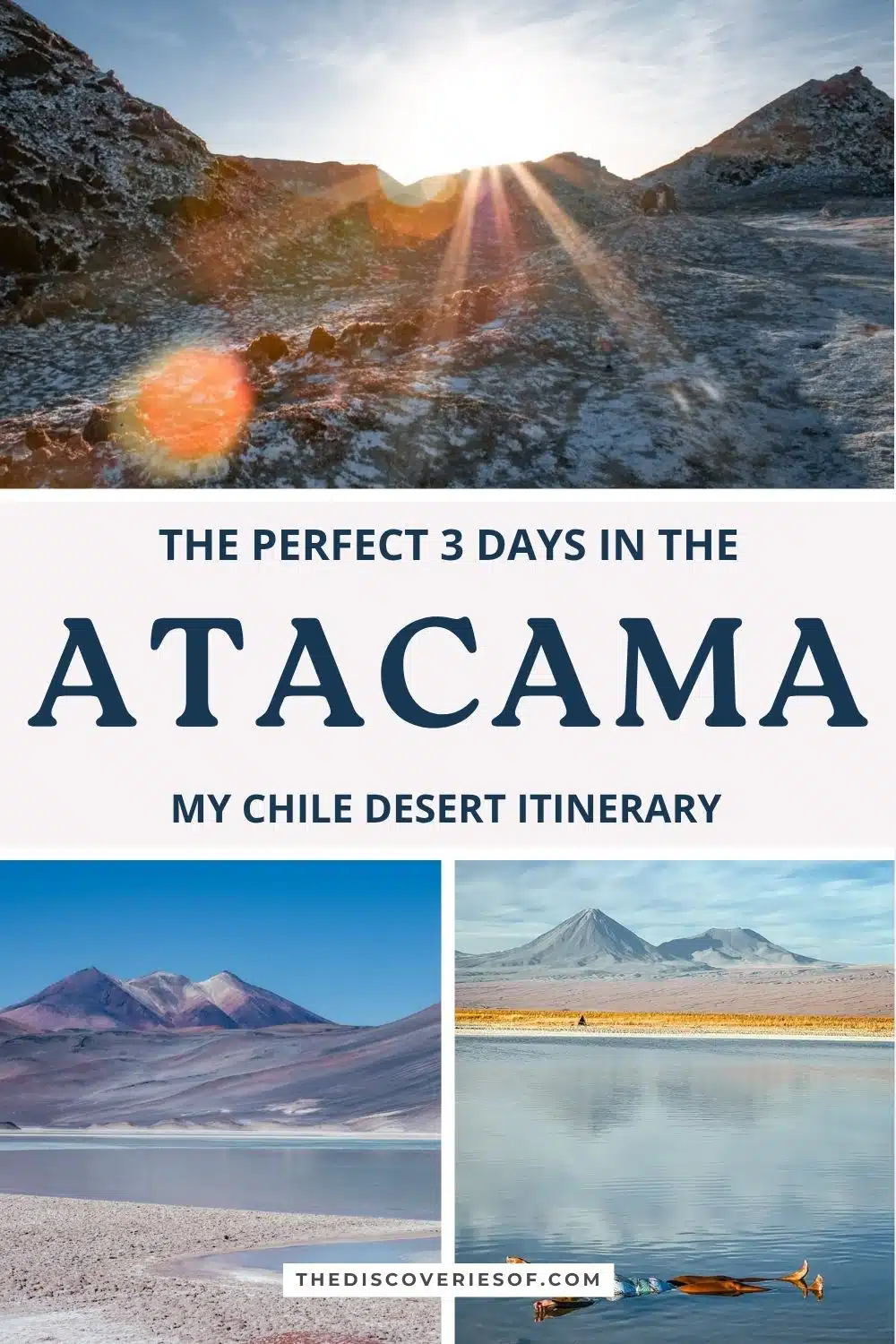
How should you spend 3 days in the Atacama Desert? Plan a mind-blowing trip with this Atacama Desert itinerary, discovering the best of this high-altitude desert along the way.
The Atacama Desert covers about 105,000 square kilometres (around 40,000 square miles) of northern Chile, a stretch of surprisingly varied landscapes that shift from the otherworldly peaks of the Cordillera de Sal to the petrified lava flows and purple-red volcanoes of the High Altiplano.
In other words, the driest non-polar desert in the world is surprisingly picturesque. If you think of a desert and picture endless sand dunes with the occasional cactus, think again. The Atacama is all bright blue lagoons, flamingos, crusted salt flats, steaming geysers and some of the clearest night skies on the planet.
I’ve been to Chile four times, and the Atacama Desert has drawn me back twice. The first time, I hired a campervan and spent a week driving about 1,000 miles around the region, eating my meals off a rusty table under the open sky. The second time, in July, in the depths of the southern winter, I stayed at Nayara Alto Atacama and booked the option with a private guide and driver. My guide, Rodolfo, grew up in nearby Calama and knew every corner of the region like the back of his hand.
I also know how tricky it is to fit everything into a short amount of time. This is the route I’d recommend for three days: it starts low on the salt flat, heads up to the high lagoons on day two and saves El Tatio for the final sunrise, so you acclimatise as you go. Along the way, I’ve added what I learned on both trips, plus everything you need to know to plan the perfect trip.
Some links in this article may be affiliate links, which means we may receive a small commission, at no additional cost to you, if you decide to purchase through one of my recommended partners.
My 3-day Atacama itinerary at a glance
- Day 1: Laguna Chaxa, a float in Laguna Cejar, Valle de la Luna or sunset at Ckamur, dinner at Karaván and stargazing (around 2,300 to 2,500 metres).
- Day 2: The High Altiplano: Socaire, Lagunas Miscanti and Miñiques, Piedras Rojas and Toconao (up to about 4,200 metres).
- Day 3: Sunrise at El Tatio, Puritama hot springs, the Guatín canyon hike and dinner at La Casona (about 4,300 metres at the geysers).
Atacama Desert itinerary
Day 1
Trying to fit everything into 3 days in the Atacama Desert? Start low. Day one stays on and around the Salar de Atacama, the great salt flat south of San Pedro, at roughly the same altitude as the town.
Top tip: Work your way up in altitude each day so you can acclimatise to the higher elevations. Save the El Tatio geysers for last.
See the flamingos at Laguna Chaxa
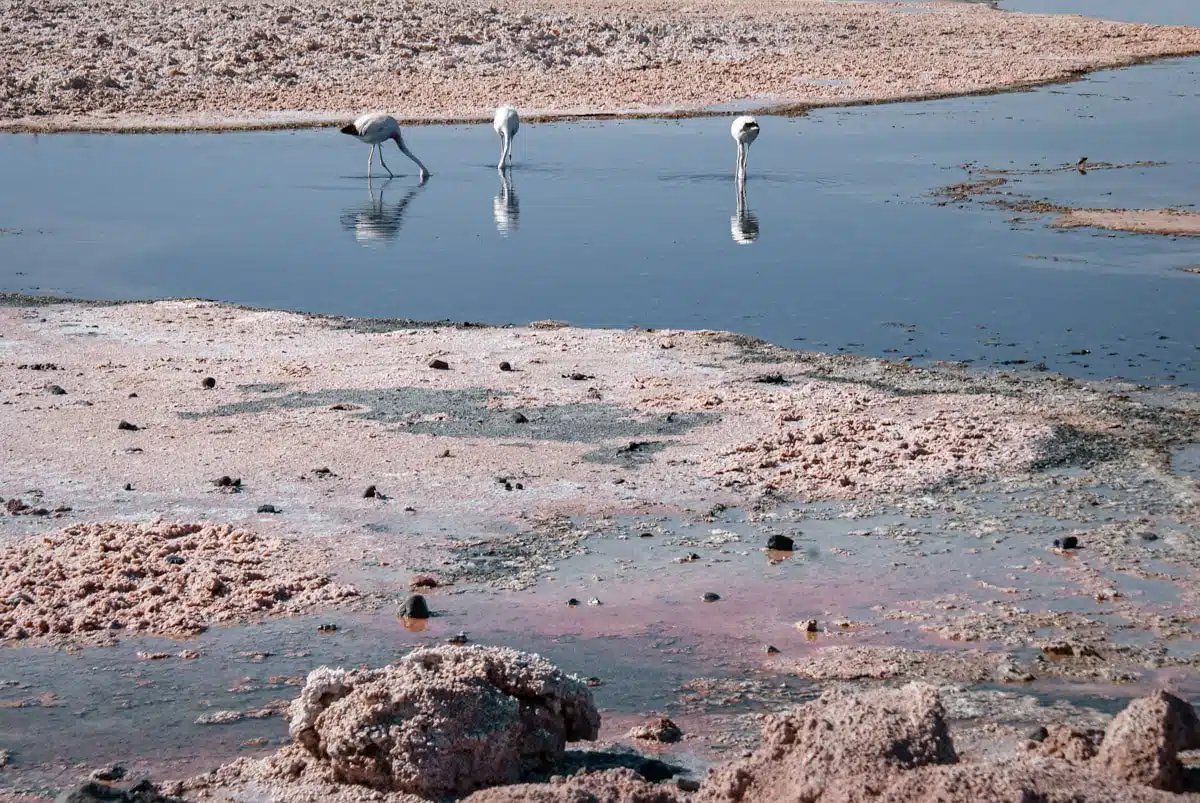
Laguna Chaxa is one of the Atacama’s most beautiful spots: a stunning expanse of salty water framed by volcanoes on one side and the red hues of the salt range on the other. It’s part of the Los Flamencos National Reserve, about an hour’s drive south of San Pedro.
It’s also home to one of the biggest populations of flamingos in the Atacama. Contrary to popular belief, flamingos aren’t born pink: they turn that colour thanks to their algae-heavy diet, which is why the young ones are white. Because Laguna Chaxa is full of their favourite food, you’ll find Chilean, Andean and James flamingos (the smallest and pinkest) here, particularly in winter, when many fly down from the higher, colder lakes.
I stopped off at Chaxa bright and early on my road trip. A path cuts through a pale white landscape of salt crust, flanked by small saline pools where the flamingos gather until you get too close for comfort, at which point they stalk off to the next pool to carry on feeding. Chaxa is run by the Toconao community, and tickets (around CLP 14,000 for foreign visitors) are sold online in advance.
Take a swim at Laguna Cejar
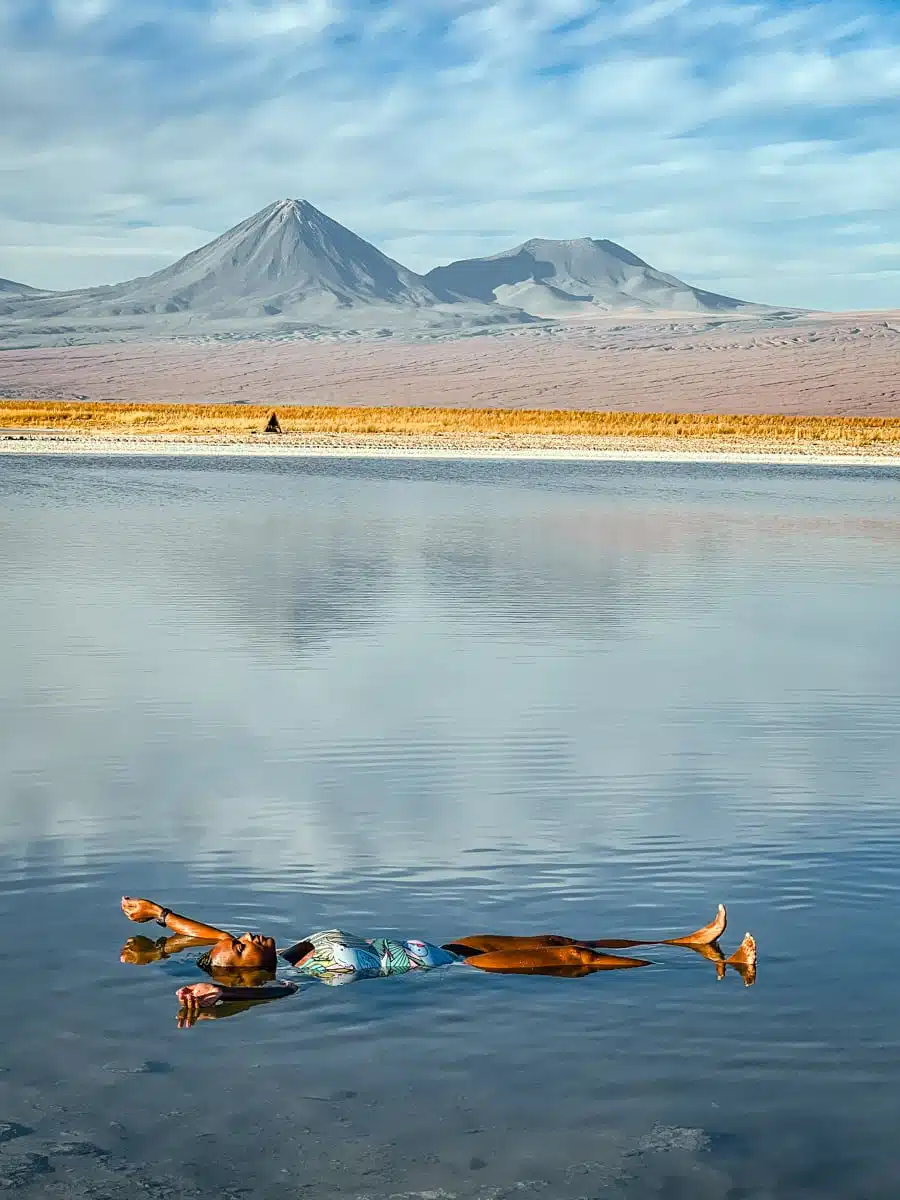

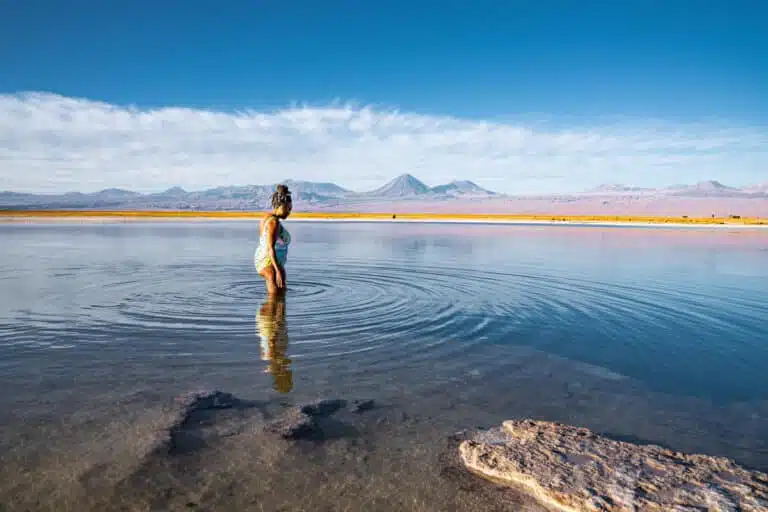
You can’t dive in at most of the salt lagoons in the Atacama, but pack your swimsuit for Laguna Cejar.
This was my very first stop in July, and a crazy experience I’d been hyped to try. Swimming in this mineral-rich, salty water, you’ll feel featherlight as you float. If you’ve ever wanted to swim in the Dead Sea, this is about as close as it gets: you’ll never make it down to the bottom, no matter how hard you try. My top tip? Don’t get your face wet. The salt stings if it gets in your eyes.
Strictly speaking, the swimming happens in Laguna Piedra, the smaller lagoon in the Cejar complex, as Cejar itself is protected. Do carry on past it to see the neighbouring lagoon, which is a favourite with the local flamingos. Entry is CLP 15,000 for adults, sold online for a set date and time slot, and the site has been closing on Tuesdays, so check before you plan your day around it. Bring a towel, plenty of fresh water to rinse off and a warm layer, as the desert air cools fast once you’re out of the water.
Save this stop for the drive back from Laguna Chaxa, when temperatures warm up a bit in the early afternoon, or take a guided tour that combines Cejar with the Ojos del Salar and sunset at Laguna Tebinquinche.
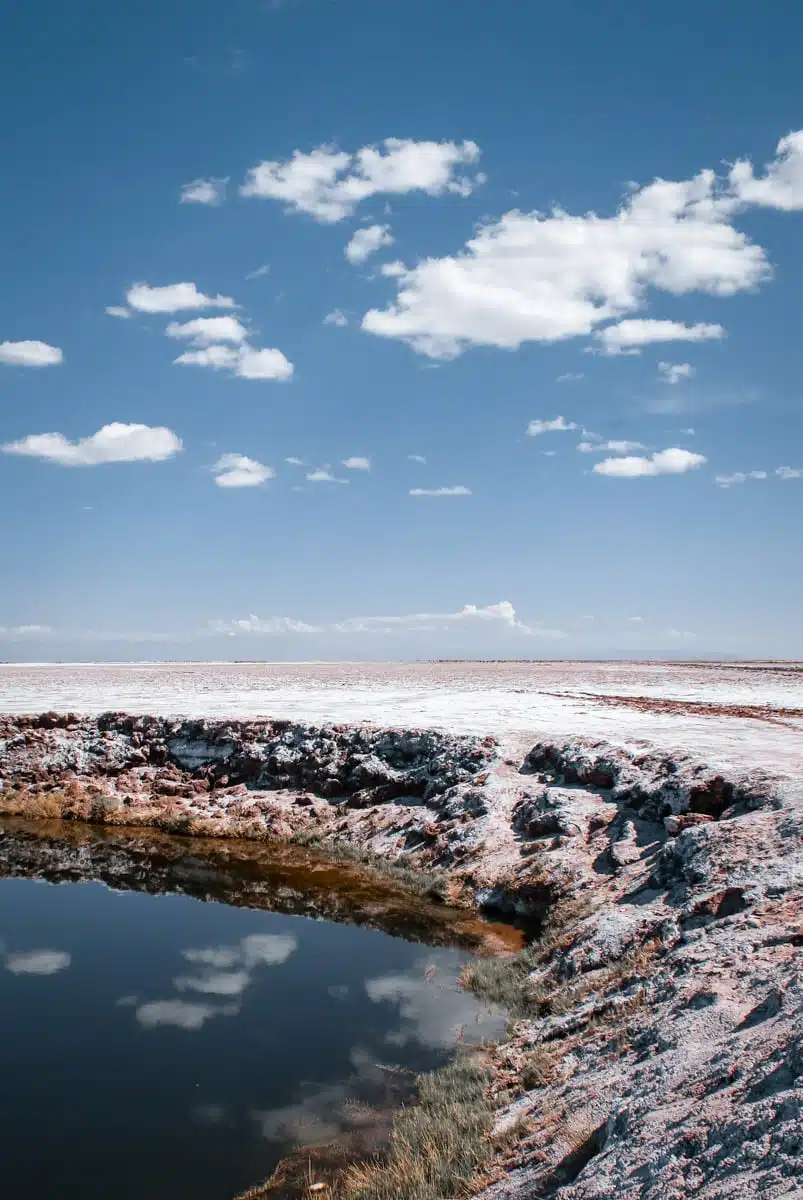
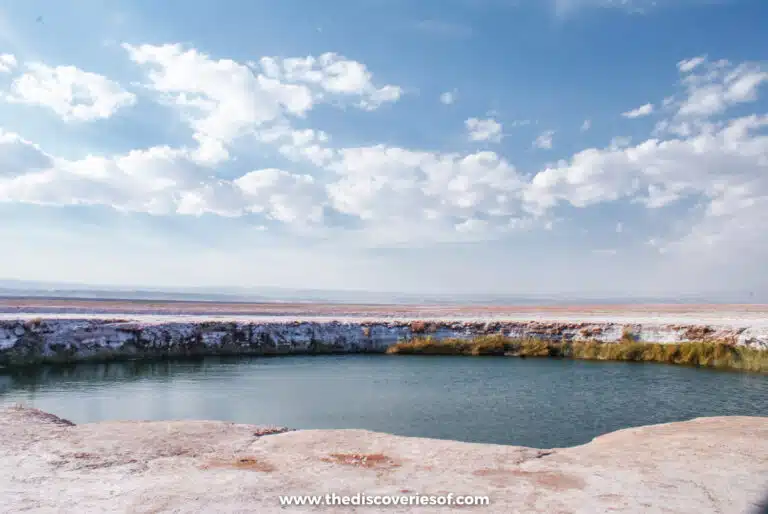
If you’re in the area with time to spare, it’s a short drive on to the Ojos del Salar, two perfectly round pools sitting in the middle of the salt flat like a pair of eyes, and to Laguna Tebinquinche, a large saltwater lake that makes a good alternative to Ckamur at sunset.
As the sun goes down, the vast surface of the lake catches the fiery sky so completely that it feels like being surrounded by molten lava, changing moment by moment. On my road trip, I stayed on afterwards, sitting on the banks with a glass of wine as one by one the stars and planets appeared, until it was impossible to believe the scenery in front of me was real.
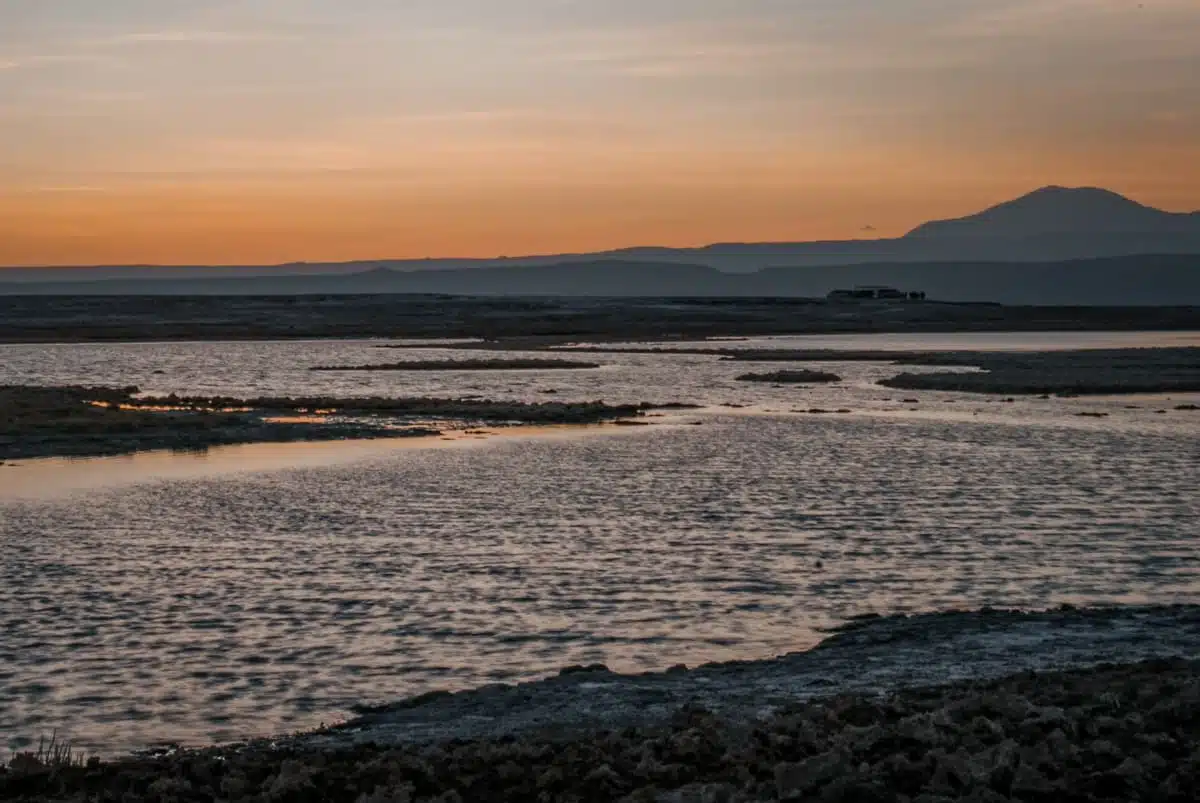
The lake sits on land managed by the Coyo community, which charges a small entry fee (around CLP 6,000).
Valle de la Luna, or sunset at Ckamur

The Valle de la Luna is the Atacama’s headline attraction, and it’s very much on the tour bus trail. When I visited on my road trip, I went at dawn rather than sunset, paid the fee, breezed through the entrance and found myself completely alone as the light crept across the eerie rock formations.
Things work differently now. The valley is run by local Atacameño communities together with CONAF, and tickets (CLP 10,800 for adults) are sold online in advance for a specific date. You can only go in by car or bike, not on foot. Cars are let in from 8am to 4pm and the reserve closes in the late afternoon, so neither a sunrise nor a sunset inside the valley is possible any more. If you want to fit it in, go first thing in the morning, before the crowds, and before driving down to Laguna Chaxa. For more, read my guide to Valle de la Luna.

For sunset, I’d head to lesser-known Ckamur, in the Valle de la Muerte, instead. It was my answer to the crowds in July: the sharp rock formations here light up in shades of orange, pink and purple at dusk, minus the tour groups. It was free to enter when I visited, and you can hike, cycle or go quad biking. For sunset, you can hike up the ridge of one of the peaks, then shuffle down its sandy side to reach the valley floor again.
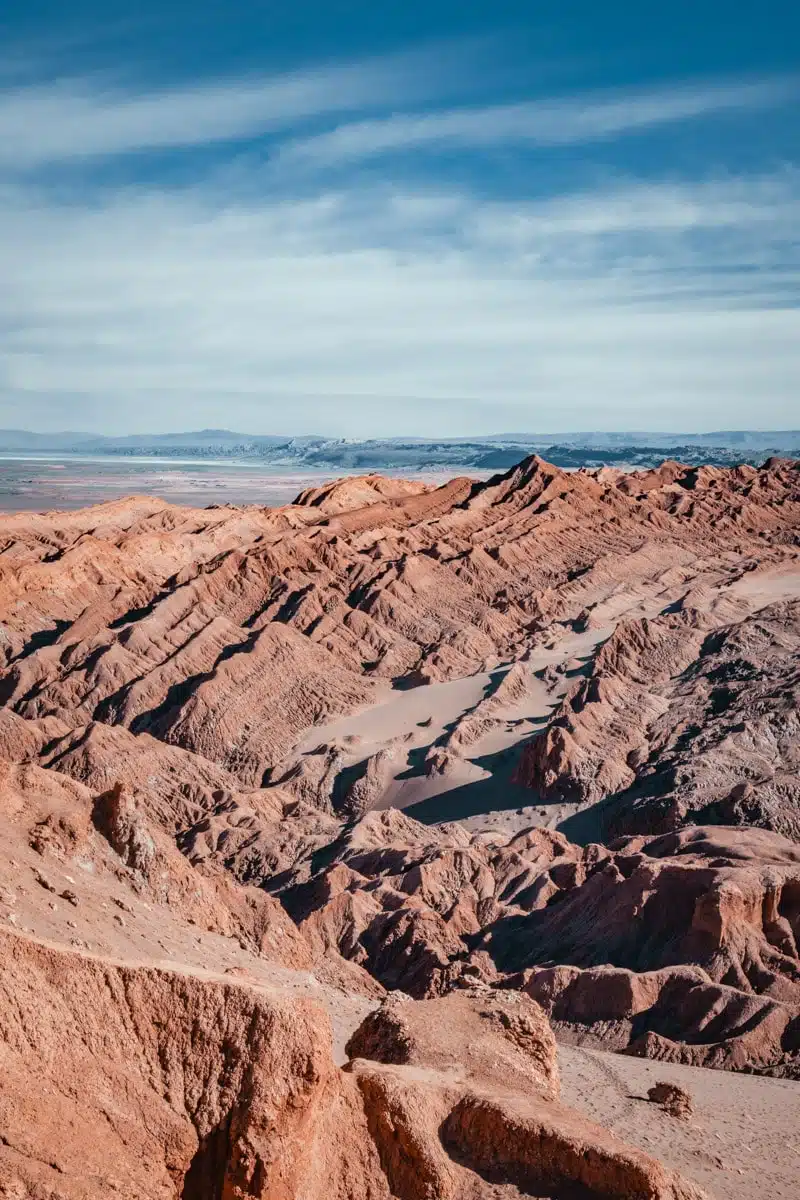
If the scenery looks familiar, that’s because Ckamur was used as a filming location for The Mandalorian. What you won’t recognise is the iconic Licancabur volcano poking up behind the valley: the filmmakers cut off the top of it so the location wasn’t so identifiable. Look in the right place and you can still see the remains of the old salt mine, where miners blasted the rock to reach the minerals within.
Dinner at Karaván Restobar

Karaván Restobar is a laid-back restaurant and bar on Caracoles, San Pedro’s main street, that specialises in fresh, healthy food and freshly made cocktails in a pared-back setting, with a few nods to the desert in the minimalist decor.
One of the things that has really changed in San Pedro since my first visit is how much fresh, contemporary food there is, and Karaván is a good example. There’s lots of variety, with some great vegan and vegetarian choices, and the sandwiches are big enough to satisfy your craving for a hearty meal after a day in the desert. The cocktails are excellent: try the Andes Tonic, made with Chilean gin, pineapple and orange juice and rosemary syrup.
Take a stargazing tour
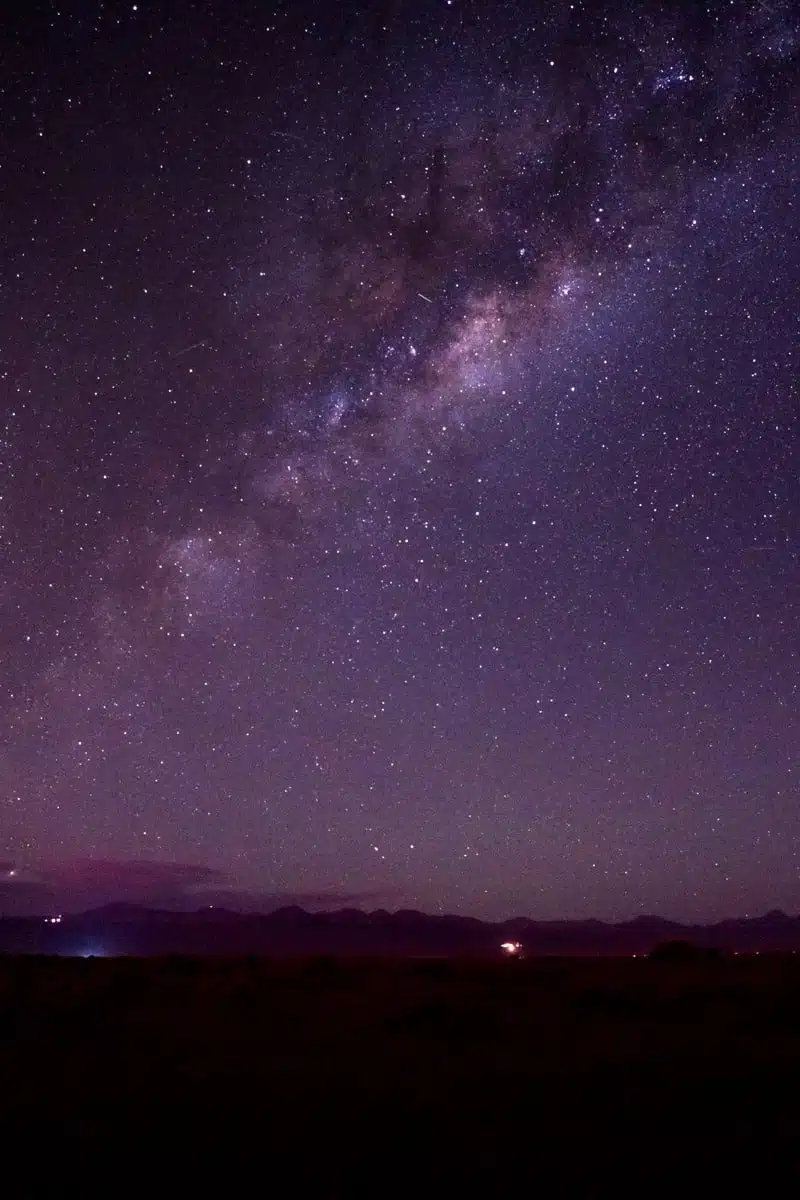
End the first night of your trip under the stars. The Atacama’s altitude, dry air and lack of light pollution make it one of the best places on the planet for stargazing, and it’s the reason the region is home to some of the world’s most important observatories.

One of the reasons I chose Nayara Alto Atacama is its own observatory, which runs two guided sessions every evening for guests. You lie back on reclined seats under a blanket while the astronomer charts the constellations. Mine pointed out southern hemisphere constellations such as the Southern Cross, showed the group how to find the south celestial pole from it, and picked out colourful nebulae and ancient galaxies through the telescope. If you’re a photographer, stay on once the session finishes: I took some of my best photos of the Atacama skies there.
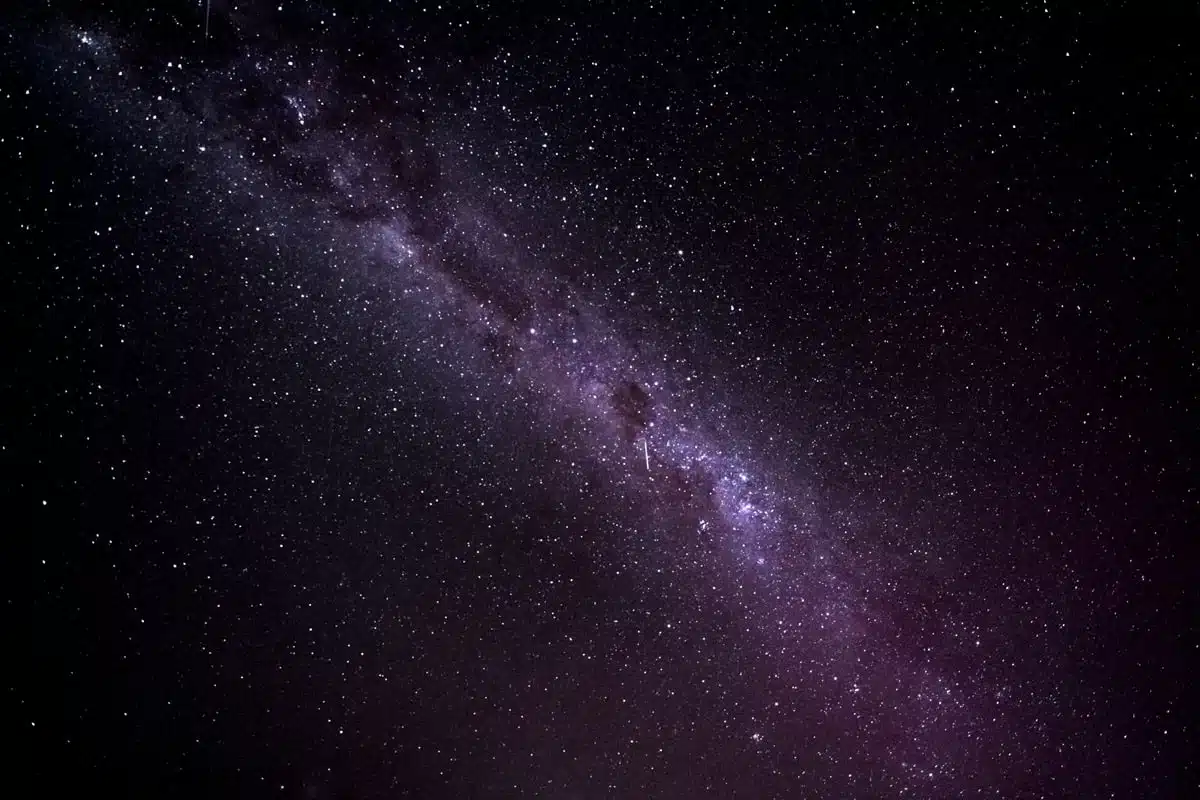
If your hotel doesn’t have an observatory, grab a spot on a guided tour with a local astronomer, who will walk you through the stars, constellations and galaxies through a powerful telescope, along with the way the Andean peoples read the same sky. On my road trip, I simply drove a few miles out of town into the Cordillera de Sal and watched the show on my own, which was magical, if slightly unsettling in the pitch dark.
Top tip: The winter months (roughly April to September) tend to bring the clearest skies, and the brightest part of the Milky Way is high in the evening sky in the middle of the year. It gets very cold after dark, so wrap up. For more, read my guide to stargazing in the Atacama.
Day 2
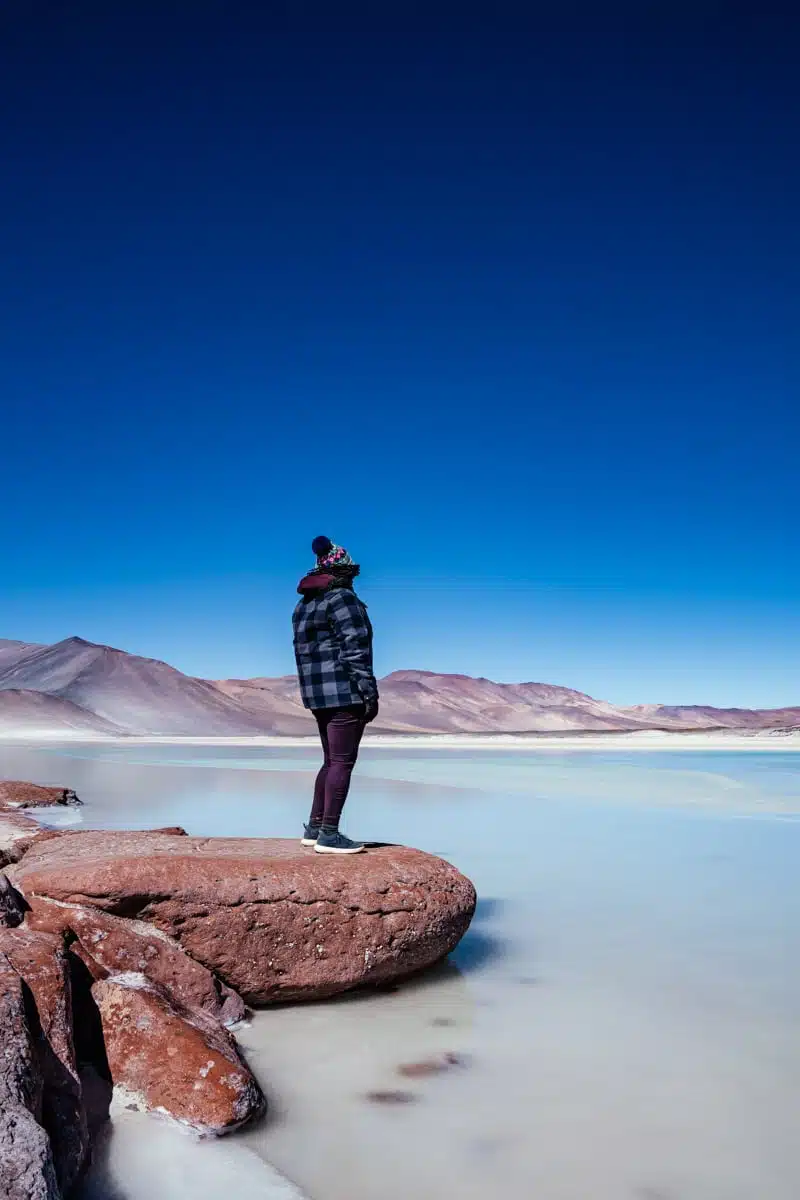
Now that you’ve started acclimatising, you can make your way up to the High Altiplano, where the lagoons sit at over 4,000 metres.
Today is going to be your longest day on the road, about 150 km and two and a half hours each way, so bring plenty of water and snacks and set off early. Tickets for Piedras Rojas and the Miscanti and Miñiques lagoons are now sold together online (around CLP 13,000 for foreign visitors), so buy them before you go.
As you climb, watch the landscape change: the grass disappears, replaced by lava flows that look impossibly smooth from a distance, and around 3,000 metres the terraced fields of Socaire appear. Keep an eye out for vicuñas on the way up, too.

Learn about life in the Atacama at Socaire
Stop at the small village of Socaire on the drive up to the lagoons. Home to a few hundred people, it’s known for its farming, especially quinoa and brilliant purple potatoes, grown on terraces watered by irrigation channels that go back centuries, to Inca times and beyond. One theory goes that these terraces, or andenes, gave the Andes their name.
Spend an hour here if you can, and see the little church, built of adobe with beams of chañar and cactus wood. Just outside the village, the Nacimiento canyon is a little oasis full of birds, and the source of Socaire’s water.
For lunch, Cocinería San Santiago serves local cooking made with fresh ingredients, some of them grown on site. It’s small, so check it’s open before you count on it.
Visit Lagunas Miscanti and Miñiques


If you want to see two of the most scenic Altiplano lakes, drive up to the High Altiplano or take this guided tour, which also takes in Piedras Rojas and Laguna Chaxa (park fees are paid separately).
I missed the Miscanti and Miñiques lagoons on my first trip to the Atacama. Big mistake. Luckily, I made it in July. Surrounded by the Miscanti and Miñiques volcanoes, the two lakes are a photographer’s dream: one brilliant blue, the other a dark, mysterious cerulean, both edged with bright yellow grass.
A path leads down to Laguna Miscanti, with sulphur crusting its edges, and from there you climb over an outcrop of lava to reach Laguna Miñiques. Although Miñiques is fed by Miscanti, it’s a completely different colour, because the water is filtered as it flows through the volcanic rock between the two. Read more in my guide to Lagunas Miscanti and Miñiques.
Top tip: Keep your eyes open for wildlife. It’s common to see vicuñas, the small, wild relatives of the llama that call this area home, but their coats blend so perfectly with the grass that you have to look carefully to spot them.
Hike to Piedras Rojas
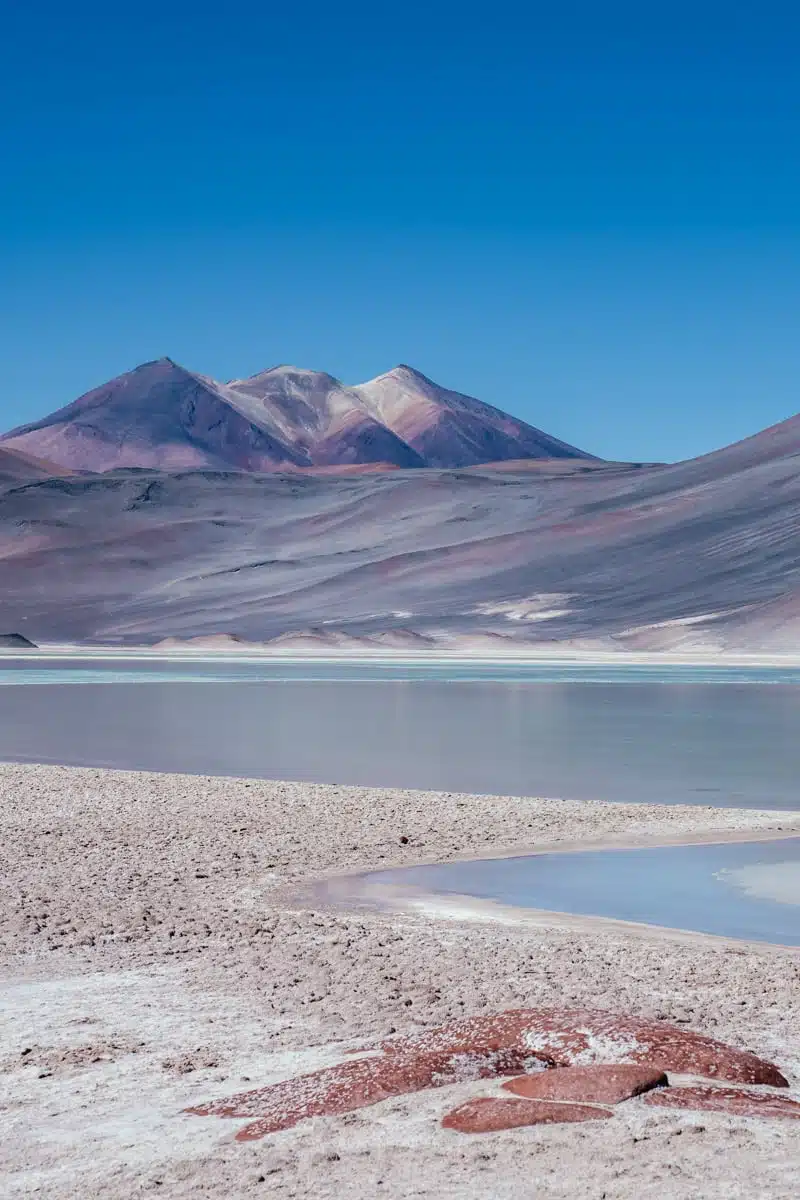
Sitting on the road that eventually leads to Argentina, the Piedras Rojas and the Salar de Talar are some of my favourite places in the Atacama.
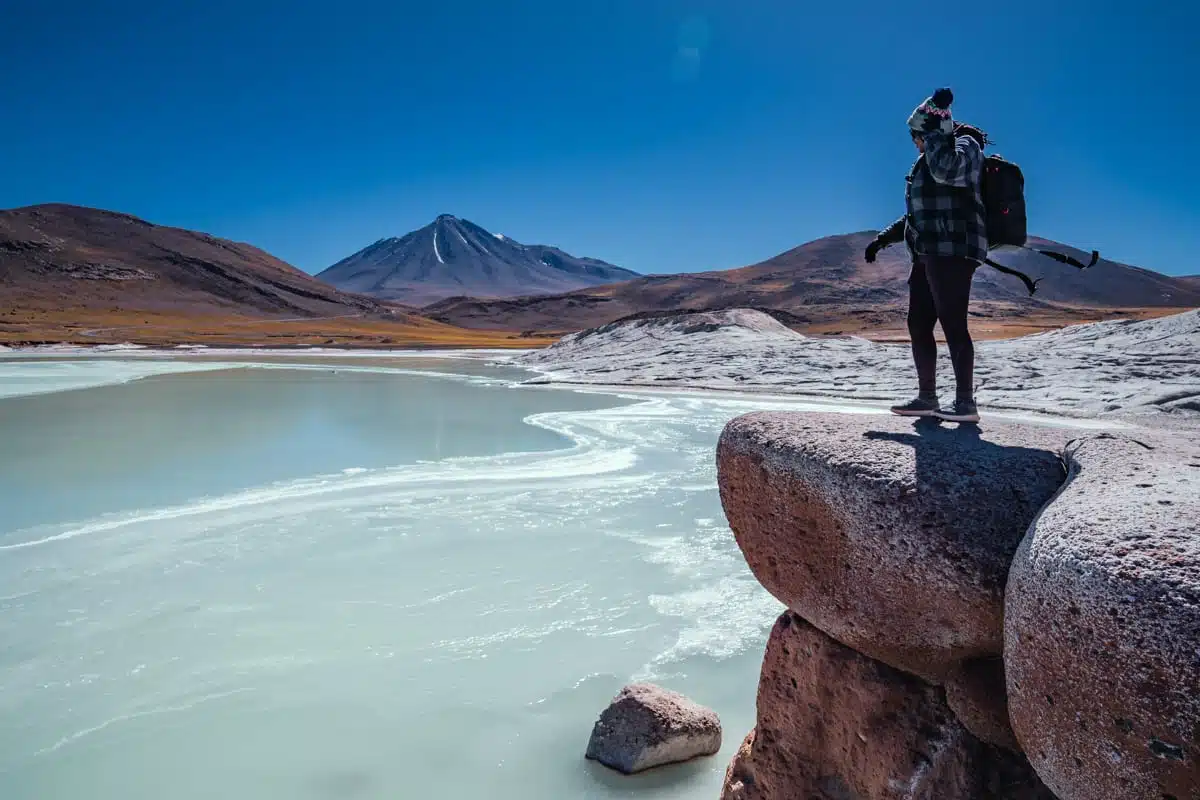
The high-altitude, mineral-laden Salar de Talar shows off surreal shades of blue and turquoise, with a veritable kaleidoscope of colours on the slopes of Volcán Capur behind. If the other volcanoes impress you with their size, this one wows with the rainbow cascading down its sides: brilliant white in places, purple and basalt grey in others.
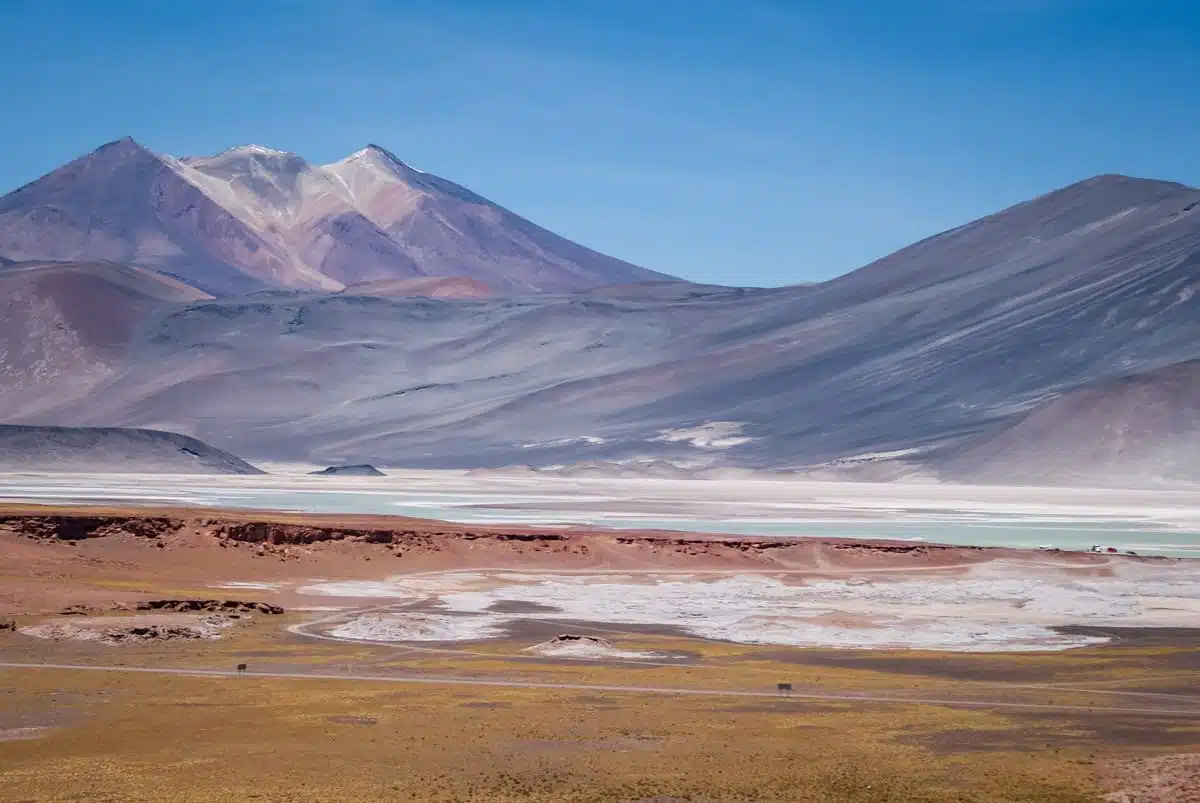
Hike to the lake’s edge via the Piedras Rojas, the red rocks that lead from the car park down to the water. On my first trip there was no marked path, and scrambling over uneven ground at 4,000 metres was hard work. The local community from Socaire has since built a marked path in exchange for paid access, and the walk now takes about an hour, mainly because you have to move slowly at this altitude. No matter: the ever-changing scenery will keep you occupied along the way.
When I went back in July, the lake was frozen, which made for a really cool contrast. Be sure to walk all the way down to the water: frozen, it looks more like a piece of turquoise than water. Winter is the time to see it at its brightest, too, as the water levels are lower and the minerals more concentrated.
On the way back from the lakes, I stopped for a Nayara picnic: Thai chicken curry, rice, quinoa and cauliflower soup with croutons, plus drinks and desserts. Luxury means different things to different people, but to me, there’s no greater indulgence than a stellar meal in the peace and quiet that only comes from being in the middle of nowhere. If you’re driving yourself, pack a picnic of your own, as there’s nowhere to eat up here.
See the ancient village of Toconao (and some of Chile’s highest vineyards)
Toconao is the last village before San Pedro on the drive back, about 38 km and half an hour from town, so it’s an easy stop towards the end of the day. One of the oldest villages in the region, it’s famous for its stonework, built from the pale volcanic stone quarried nearby, and its 18th-century church with a separate bell tower.
It’s also home to some of the highest vineyards in Chile, at around 2,400 metres. Grab a glass of wine or two from Ayllu, a cooperative of local Lickanantay growers: you can tour the winery or walk the vineyards with a tasting if you book ahead. If you have time to spare, the Quebrada de Jere, a green gorge just outside the village, is a lovely short walk.
Day 3
Now that you’re as acclimatised as you’ll get, it’s time for the drive north to the fabled El Tatio geysers, at about 4,300 metres above sea level. It’s around 90 km and an hour and a half from San Pedro, and the geysers are most active at sunrise, so this is an early one.
El Tatio geysers


Rise and shine: you’ll need to set your alarm very early for the best experience at the El Tatio geysers, whose name is often translated as “the crying grandfather”. It’s the biggest geyser field in the southern hemisphere, with more than 80 geysers and fumaroles.
On my July trip, my day started, as all good trips do, at 3am. I had the whole of the Milky Way spread out above me on the drive up and got to the field at about 4.30am, just as the first light was hitting it. It was -15°C. My British self is not made for those temperatures, but I’ll do it for views like that. I set up my tripod for a time-lapse and watched the sky turn from deep purple to gold as, one by one, the geysers and fumaroles came to life. I’d been before, on my road trip. Was it any less spectacular the second time? No.
Most guided tours aim to arrive around sunrise, and they’re great. But if you’re driving yourself, do yourself a favour and get there an hour or so beforehand: the run-up to sunrise, as the last stars fade and the sky turns purple, is just as magical as the sunrise itself. On my road trip, I slept in the hamlet of Guatín, part of the way up the road, to shorten the morning’s drive.
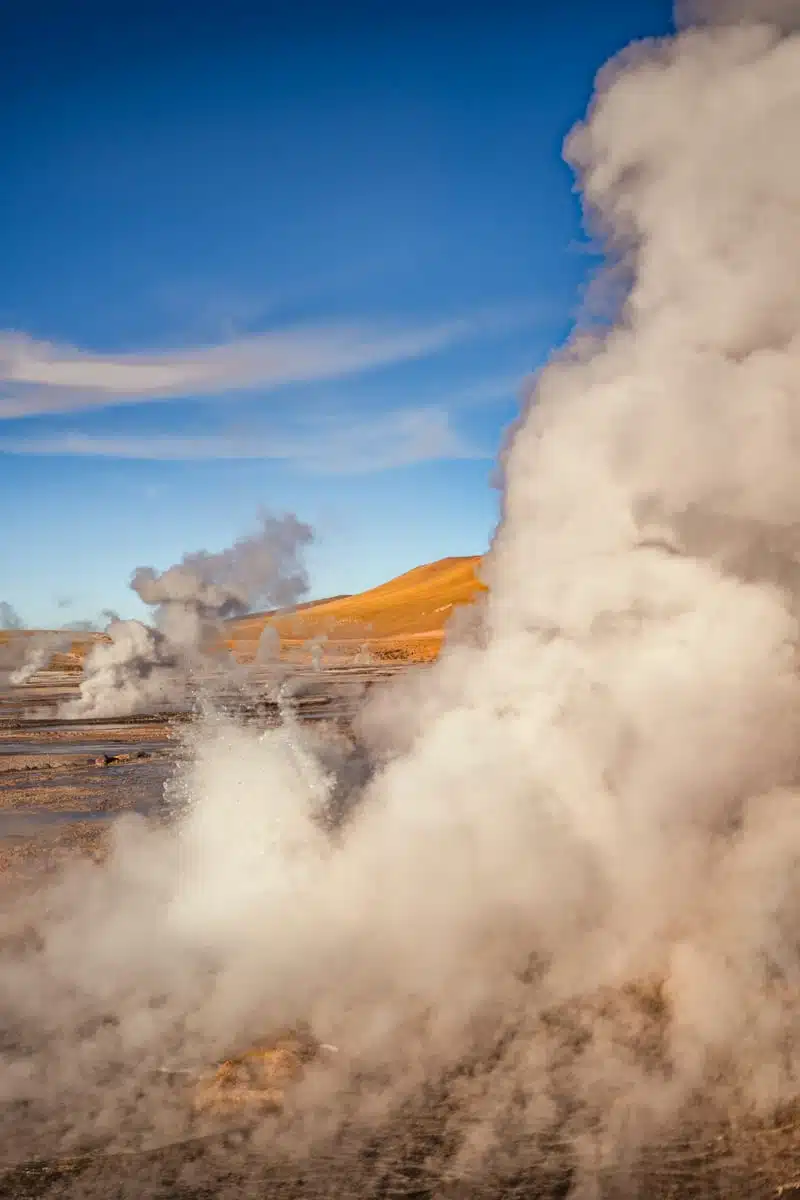
The field is split in two. The southern field has the most geysers, where water erupts out of the ground, while the northern field has the biggest fumaroles, where steam pours out instead, so split your time between both. Head to the southern field just as the sun comes over the Andes: as it catches the steam from one of the fumaroles, the minerals light it up in a rainbow of colours. Rodolfo called it “nature’s fireworks”, and I can’t think of a better way of describing it.
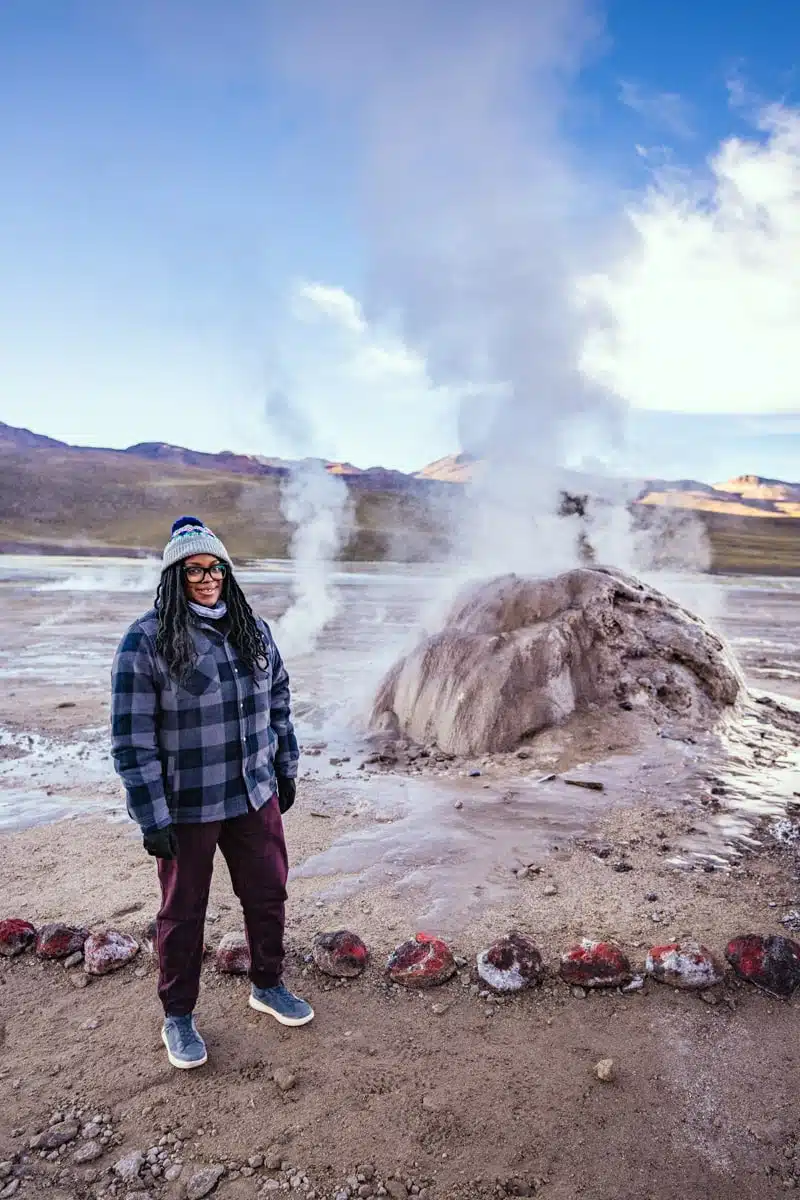
Entry costs CLP 15,000, which tours usually include. As the sun climbs and the air warms up, the field quietens down, so don’t linger too long expecting more of a show.

Whatever you do, don’t head straight back to San Pedro afterwards, as most people do. I assumed I was going back to town for breakfast, but Rodolfo had a trick up his sleeve. He drove me away from the crowds, a short distance from the geysers, to a river valley cut through by a crystal-clear stream, where I had a picnic breakfast with vicuñas grazing around me, and rheas too. There was nobody else there.
The road back from El Tatio is brimming with wildlife, from vicuñas and rheas to flamingos and coots, so take it slowly. If you’re booking a tour, look for one that includes breakfast out in the landscape rather than back in town.
Top tip: Dress for the cold (it was -15°C on my July morning): layers, a hat, a buff, gloves and thick-soled shoes. Stick to the marked paths and heed every warning about where you can and can’t go. There have been fatal accidents here, and the local communities who run the site are careful to close off dangerous areas. Read more in my guide to visiting El Tatio.
Puritama hot springs


Mornings are chilly at El Tatio, so why not thaw out at the Termas de Puritama on the way back? About 30 km from San Pedro, on the road to the geysers, eight natural pools step down a canyon, fed by warm, mineral-rich water.
The setting is surprisingly lush, with green grasses and red rocks butting up against the clear water, and wooden walkways linking the pools.
You can take a guided tour, or go independently. Places are limited and tickets often sell out, so book online in advance on the official Termas de Puritama site; entry is around CLP 38,000 for adults, in morning or afternoon sessions.
Guatín canyon hike

If you still have some energy left at the end of your three days, try the Guatín canyon hike.
Starting at the small hamlet of Guatín, where the Puritama and Purifica rivers meet to become the Vilama, it’s a mellow and scenic hike lined with towering candelabra cacti, some of them up to 7 metres tall. I hiked it on my road trip, on the way back down from the geysers, and it was the perfect foil to the crowds at El Tatio: just me, crunching along the riverbed, with cacti, pampas grass and dense riverside greenery all around.
Top tip: The full trek is quite long, and you’ll need to arrange for someone to pick you up at the end. Or just walk until you’re satisfied and turn back. I did the latter.
Dinner at La Casona
Save the best for last on your Atacama trip and eat at La Casona on Caracoles. In my experience, it serves the best food in town.
Go hungry and prepare to fill up on Chilean classics such as pastel de choclo, a rich bake of creamed corn and meat, or a seafood chupe.
It’s a casual spot but fills up fast, so go as early as possible or be prepared to wait.
Got more time? Add a day or two
If you can stretch your stay, these are the trips I’d add, in order of preference.
The high salt flats on the road to Argentina: On my road trip, I drove east along Ruta 27 to the Salar de Pujsa, the Salar de Tara and the Salar de Quisquiro, at up to 4,900 metres. The views were some of my favourite in the whole Atacama, and on the way back I caught a glimpse of Bolivia’s Laguna Verde through the volcanoes. You’ll need a 4×4 to leave the main road for the Salar de Tara.
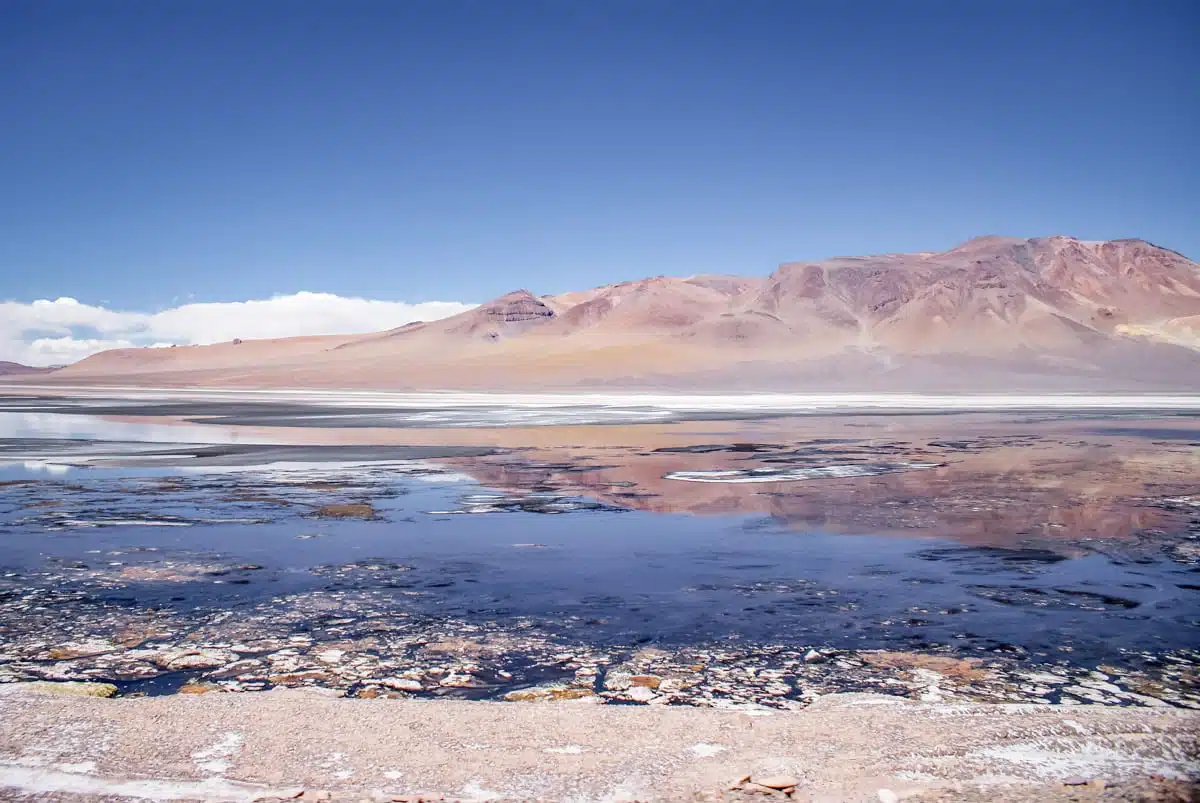
The Bolivian salt flats: On my July trip, I carried on from San Pedro on a four-day, three-night tour across the Bolivian Altiplano to the Salar de Uyuni. It was spectacular, but the first day was a rough one, and a night in a basic hostel at Huayllajara was one of the coldest of my life. Read my guide to visiting the Bolivian salt flats before you book.
Rainbow Valley and the Yerbas Buenas petroglyphs: About an hour’s drive from San Pedro, Rainbow Valley’s hills are streaked red, orange, green and yellow by different minerals. Combine it with the rock carvings at Yerbas Buenas nearby. Each charges around CLP 5,000, in cash, or join a Rainbow Valley and Yerbas Buenas tour.
Cerro Toco: If you want a summit, Cerro Toco (5,604 metres) is one of the few volcanoes near San Pedro you can climb without technical gear. Only attempt it after a few days at altitude, such as the end of this itinerary. Read how to hike Cerro Toco.
Atacama Desert itinerary map
The map below shows every stop in this itinerary, in order, plus the extra trips.
Handy tips for planning your Atacama Desert itinerary

Top tours for your Atacama trip
If you’re not hiring a car or staying somewhere with its own guides, these three tours cover the highlights of each day.
- San Pedro de Atacama: Etno-Astronomical Tour (day 1)
- Piedras Rojas, highland lagoons and Laguna Chaxa (day 2; park fees are paid separately)
- El Tatio geysers at sunrise, with breakfast (day 3; includes the entry fee)
What to pack for your Atacama trip
- You will be doing a lot of walking, so have a good pair of hiking boots, a scarf or buff for the dusty landscape, and a water bottle (or two) tucked away in your daypack. The air is extremely dry and you’ll be at altitude, so drink more than you think you need.
- Tech gadgets come in handy on any trip, but I like to bring a portable charger and travel adapter to keep my phone charged throughout the day. A GPS or compass is also a must if you’re driving yourself, as phone signal disappears quickly once you leave San Pedro.
- Warm clothes for sunrises and stargazing are a must. It was -15°C at El Tatio on my July trip, so pack layers, a hat, gloves and shoes with thick soles, as the ground at the geysers is so cold you can feel it through thin ones. You’ll also want a wide-brimmed hat, loose, lightweight clothing, sunglasses, high-factor sun cream and lip balm for the baking hot days.
- Bring swimwear and a towel for Laguna Cejar on day 1, and a red torch for stargazing.
Where to stay for your Atacama Desert trip
Nayara Alto Atacama


Stay just outside San Pedro de Atacama, in the Catarpe Valley, at Nayara Alto Atacama, my top pick for the best hotel in the area. It was my base for my July trip and I loved it.
I opted for the all-inclusive package with private excursions, and it was an incredible way to explore the Atacama: Rodolfo was a font of knowledge about the region’s geography and culture, and my driver, Eric, handled the tough roads with ease. It is expensive, and I paid for it myself, but because it covers your meals, drinks and tours, it works out better value than booking all of that separately. If you’d rather explore at your own pace, it’s the closest thing to having your own road trip without the driving.
I stayed in a Catarpe room, which had a private terrace and one of the most comfortable beds I’ve ever slept in. There are six small pools (two of them heated, which you’ll want in winter) and a spa, where I had a wonderful 90-minute Ckautcha massage with a heated herbal poultice. The hotel also has its own observatory, with two guided stargazing sessions every evening, so I highly suggest reserving a spot when you arrive. Check the current packages when you book. Read my full review of Nayara Alto Atacama.
Hotel Desertica

Walk in from the dusty, crowded streets of San Pedro de Atacama into the peace and quiet of Hotel Desertica, where the sun-drenched terrace and sleek pool welcome you with open arms from the scorching desert sun.
I spent a night here after a few days on the road in Bolivia, and it was exactly what I needed. Natural local materials, hardwoods and splashes of colour create an authentic Atacama look that so many hotels strive for, but few really pull off. Each room is a standalone circular turi, the restaurant is great, and although there are no in-house guides, the team will happily set up tours and transfers with local companies. Read my review of Hotel Desertica, or see my pick of the best hotels in the Atacama Desert for more options at every budget.
Quick info for your 3 days in the Atacama Desert
- Time zone: Chile’s mainland time, UTC-4 from April to early September and UTC-3 the rest of the year
- Currency: Chilean peso (CLP). Most park and lagoon tickets are now bought online by card, but carry some cash for the smaller community-run sites
- Plugs: types C and L
- Nearest airport: Calama (El Loa Airport, CJC), just over an hour’s drive from San Pedro
- Altitude: San Pedro sits at about 2,400 metres; this itinerary climbs to about 4,300 metres at El Tatio
- 5 must-see spots: Laguna Chaxa, stargazing at Nayara Alto Atacama, Piedras Rojas, Lagunas Miscanti and Miñiques, El Tatio geysers
- Top tip: when stargazing, use a red torch to minimise light pollution and keep your eyes accustomed to the dark.
Getting there and getting around
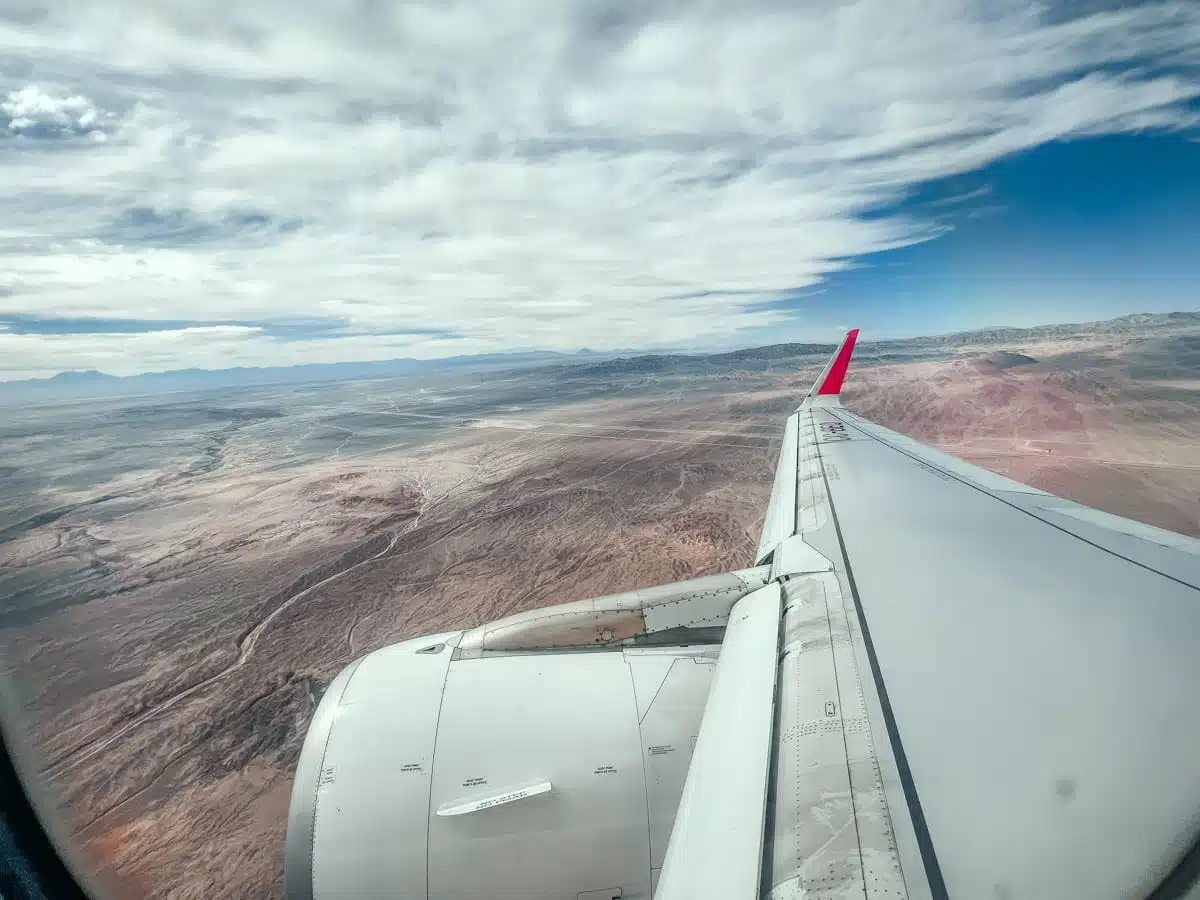
The quickest way in is to fly from Santiago to Calama, which takes about two hours. I paid around £100 for my flight; the bus takes about 23 hours, and the tickets aren’t much cheaper. Shared shuttles meet the flights for the hour-and-a-quarter transfer to San Pedro, or your hotel can arrange a private one.
Getting around is easiest with guided tours from San Pedro de Atacama or by hiring a car. Most tours pick you up from your hotel, and the bigger sights each have their own half-day or full-day trip. Driving yourself gives you far more freedom: on my first trip, a Chilean I met on the road persuaded me to hire a campervan rather than rely on tours, and it meant I often had even the busiest places to myself. You can hire a camper from Wicked South America, which has a depot in Calama. If you drive, fill up in San Pedro before heading for the high lagoons or the geysers, watch out for the trucks thundering along Ruta 27 towards Argentina, and take frequent rest breaks.
The third option is the one I chose in July: a hotel with its own guides. It’s the priciest way to do it, but it meant a custom route each day and none of the planning.
Altitude and when to go
Altitude is the thing that catches most people out. The advice I was given on my first trip still makes me smile: “Walk up like an old man and you’ll be able to come down like a young bull.” Take it slowly, drink plenty of water, go easy on the alcohol for the first night or two, and build up gradually, which is exactly how this itinerary is planned.
The Atacama is a year-round destination. Days are warm and nights are cold, especially in winter (roughly June to August), when the skies are at their clearest and the high lagoons are at their most colourful. The flip side is that heavy snow can close the highest sites, such as El Tatio and Piedras Rojas, for a day or two, so if you’re visiting in winter, leave a little slack in your plans.
3 days in the Atacama Desert: read next
- Things to do in the Atacama Desert
- Fancy hiking a volcano? Here’s what you need to know about the Cerro Toco hike
- How to spend one day in Santiago
- Explore Argentina with this 10-day itinerary
- Explore Chile with this 10-day itinerary
- The best things to do in Chile
- Why you need to visit El Tatio geysers
- Where to stay in the Atacama Desert
- My stay at Nayara Alto Atacama
- Visiting the Atacama? Use this handy map
Love this? Save and share on Pinterest
Discover the top things to do, insider tips and hidden gems in our Chile Travel Guides.
Read the guides →