Discover the best day trips from Santiago, Chile with this inspirational guide, from the colourful port of Valparaíso to the wineries of the Maipo and Casablanca valleys and the high Andes.
If you’re headed to Chile, you’ll likely end up flying into Santiago for some amount of time.
Santiago’s a stunner, a unique city that’s sandwiched between the coast and the mountains.
After taking some time to explore the city (here’s how to spend one day in Santiago), it’s worth taking one of the many Santiago day trips to explore the surrounding regions. It would be a shame to miss out on the incredible cultural and natural attractions in the areas surrounding Santiago! Most of the places below are within two or three hours of the city, so they slot easily into a longer Chile itinerary.
Whether you’re into Nobel prize-winning poets, lounging on the beach, sipping your way through wine country, or hiking through the mountains, there are plenty of unique Santiago day trips for any kind of traveller.
Want to learn more about the best day trips from Santiago? Read on for my top picks.
Some links in this article may be affiliate links, which means we may receive a small commission, at no additional cost to you, if you decide to purchase through one of my recommended partners.
The best day trips from Santiago
Valparaíso
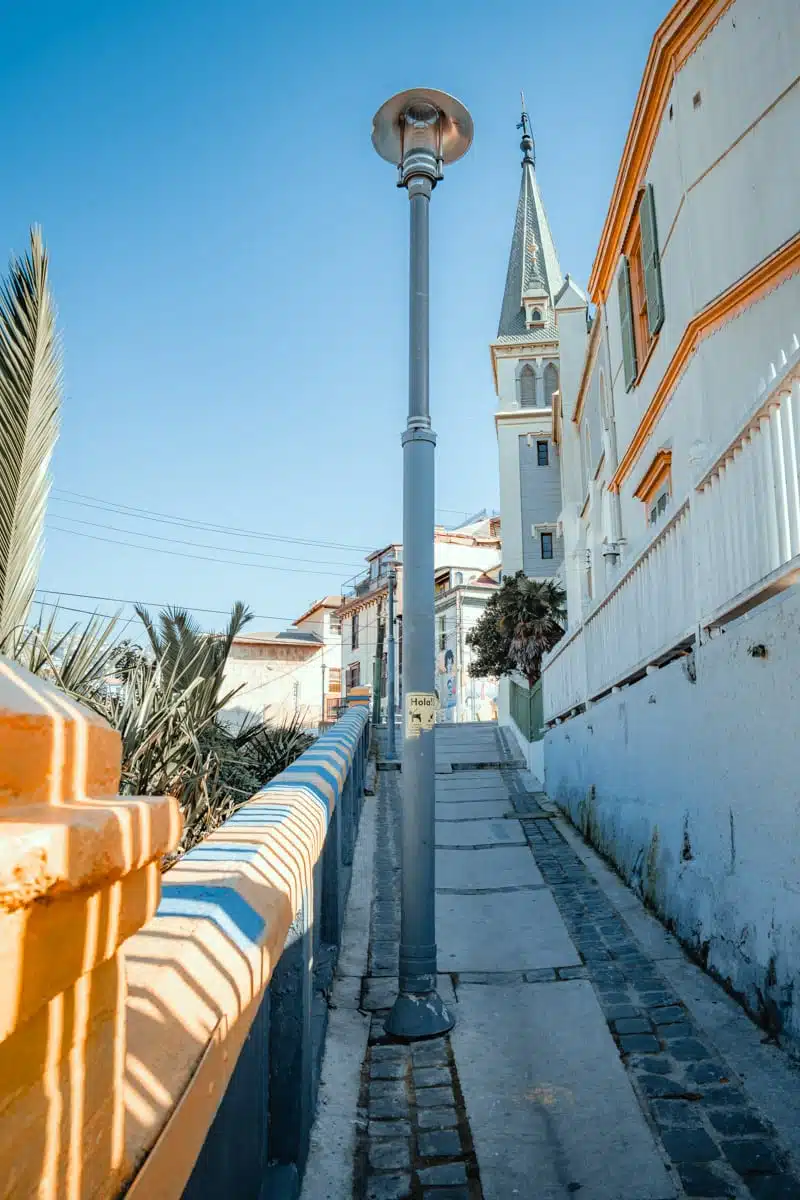
Distance from Santiago: 71.6 miles/115.2 km
Highlights: Pablo Neruda’s house, street art and local galleries, views from the hills
How to get there: Buses run all day from Santiago to Valparaíso, with Turbus, Pullman, Cóndor and others leaving every few minutes from Terminal Alameda and Terminal Pajaritos. It takes about 1 hour 45 minutes and costs roughly 4,500 to 6,500 CLP each way. You can also take a guided day tour from Santiago.
A charming seaside town wedged between a shipyard and a hill, Valparaíso (or lovingly named ‘Valpo’ by the Chileans) is one of the most wonderful day trips from Santiago.
Its significance as a port city and cultural hub in Chile earned its historic quarter recognition as a UNESCO World Heritage Site in 2003.
Valparaiso’s laid back streets boast beautiful boutiques and vibrant street art around every corner, especially on Cerro Alegre and Cerro Concepción, the two hills at the heart of the old town. If you’d rather skip the hassle of figuring out transportation and logistics, a day tour from Santiago with a local guide is also an easy and fun option. Most also stop in Viña del Mar and include a funicular ride.
While in Valparaiso, visit the Nobel prize-winning poet Pablo Neruda’s quaint home, La Sebastiana, which overlooks the sea atop Cerro Florida. It’s open Tuesday to Sunday (closed Mondays), and the audio guide is included in the ticket. Or, you can take one of the city’s century-old funiculars (ascensores), like the Ascensor Reina Victoria or Ascensor Concepción, up to the top and get lost wandering through the city’s winding alleyways and admiring colourful street art on the way down.
You can also take a guided walking tour to learn more about the city of Valparaiso and its historic and cultural significance. Small-group walks start from Muelle Prat, the pier in the lower town. While there, sample some fresh, delicious Chilean seafood at the Caleta Portales. For more ideas, see our full guide to the best things to do in Valparaíso.
Keep your phone and camera close in the lower town and around the port, where petty theft is common, and stick to the busier streets once it gets dark.
Extending your trip to Valparaiso
Book a room at the bold and colourful Winebox Hotel, which is one of Chile’s most beautiful and unique hotels perched on Cerro Mariposa with breathtaking views of the entire Valparaiso area. It’s built from recycled shipping containers, has a rooftop terrace for a glass of wine at sunset, and was a regional winner in the Great Wine Capitals’ Best Of Wine Tourism awards in 2025. Make sure to reserve early, as this hotel sells out fast! (Book Winebox hotel on Booking.com)
Viña del Mar, Reñaca, and Concón
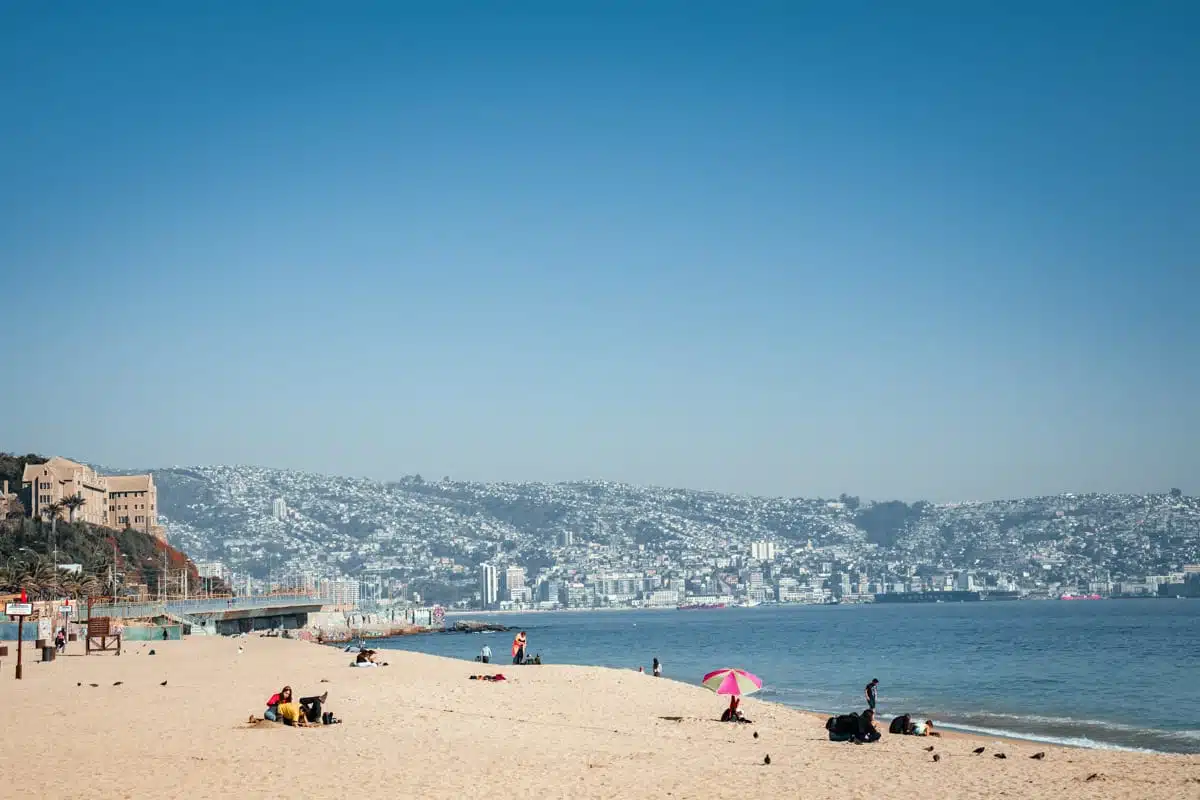
Distance from Santiago: 75.7 miles/121.8 km
Highlights: Beach, eating seafood on the water, Reloj de Flores, Castillo Wulff, the Moai at the Fonck Museum
How to get there: By bus, it takes about 1.5 to 2 hours and costs roughly 4,500 to 6,500 CLP to arrive in Viña del Mar from Santiago’s Pajaritos or Alameda bus terminals. You can also take a guided day tour from Santiago, which includes Viña del Mar.
As Valpo’s friendly neighbour, Viña del Mar is a classic beach town. The two cities run into each other, so it’s easy to see both in one day: the Merval metro train and local buses connect them in around 15 to 20 minutes.
With sparkling surf crashing alongside rocky cliffs, it’s the perfect place to catch some sun or simply enjoy the fresh sea air with a pisco sour in hand, while people-watching or tasting some fresh seafood dishes. Just bear in mind that the Humboldt Current keeps the Pacific chilly all year, even in summer.
Pair an afternoon in Viña del Mar with a morning in Valparaiso, or simply spend the day wandering this beach area.
Within Viña del Mar, you can visit the Reloj de Flores, a giant clock made of flowers that’s one of Viña del Mar’s most popular (albeit cheesy) attractions. It was planted for the 1962 World Cup, which Chile hosted. Alternatively, you can head to one of the local museums, like the Fonck Museum, which has an original Moai from Easter Island standing outside, or visit a real life castle, the Castillo Wulff, perched on the rocks above the sea.
If you want to get away from the crowded shores of Viña del Mar, head a bit farther up the coast in a local bus to the quieter towns of Reñaca and Concón. Here you can truly get a break from the energy of the city and enjoy the peace and tranquility of the Pacific Ocean. Concón is also known for its seafood empanadas and for the huge sand dunes on the edge of town.
Extending your trip to Viña del Mar
Book a private room or a dormitory bed at the NOT FOUND Hostel. This place is more like a boutique hotel and less like a bunkhouse full of stinky backpackers. Breakfast is also included! (Book NOT FOUND Hostel now on Booking.com)
Isla Negra

Distance from Santiago: 68.1 miles/109.6 km
Highlights: Pablo Neruda’s house
How to get there: Buses heading for El Quisco and San Antonio leave from Santiago’s Alameda and Pajaritos bus terminals and pass through Isla Negra on the way (ask the driver to let you off at the Neruda house). The trip takes about 2 hours and costs roughly 5,500 to 6,500 CLP. Alternatively, you can sign up for a guided group tour like this one to Isla Negra from Santiago, which includes a wine tasting (umm, count me in!).
If you haven’t quite had enough of Pablo Neruda in Santiago and Valparaiso, you’re in luck! His third home, open to the public, is a quick hop from Santiago in a small town called Isla Negra. It’s also where he’s buried, alongside his wife, Matilde Urrutia, on a terrace overlooking the ocean.
Many travellers claim that this is his most fascinating home, with very different decor and history than his other two homes. It’s packed with the things he collected, from ships’ figureheads to seashells and bottles, and it’s open Tuesday to Sunday with an audio guide.
While you can catch a public bus to Isla Negra, it’s recommended to go on a guided tour with an expert who can provide context on the history of Neruda’s home. A guided day tour from Santiago, like this one, is an excellent alternative to doing it yourself. Check whether the museum ticket is included before you book, as many tours leave it as an optional extra.
Outside of Neruda’s house, Isla Negra is also surrounded by a charming, seaside town with craggy rocks, offering a lovely place to spend a day and get some peace and quiet.
Alternatively, you can pair this day trip with the next one, visiting both Isla Negra and Pomaire on the same day.
Pomaire

Distance from Santiago: 40.8 miles/65.6 km
Highlights: Hand-crafted pottery, giant empanadas
How to get there: Buses from Santiago’s Terminal San Borja run frequently to the nearby town of Melipilla. From there, you can hop on a colectivo (shared taxi) or local bus onward to Pomaire, which takes about 15 minutes. There are also a handful of direct buses to Pomaire. For these, be sure to inquire at the bus station kiosk. By car, it’s about an hour from the city along Ruta 78.
Are you a fan of artisan goods, handmade pottery, and charming pastoral living? If so, Pomaire is one of the best Santiago day trips.
This town became an artisan hotspot because of natural clay deposits in the nearby land, causing the pottery industry to boom here.
Pomaire’s iconic pottery symbol? A reddish clay pig (chanchito de greda) often found in homes and restaurants, and said to bring good luck. It’s also the place to pick up the earthenware bowls that Chileans use to serve pastel de choclo.
If you’re getting hungry during your trip, Pomaire is also home to some of the biggest empanadas in Chile, with many restaurants serving them by the kilo! You can get them just about anywhere, but the ones at San Antonio Restaurant (San Antonio 298), a family restaurant that’s been serving them since the 1970s, are excellent. Share one with a friend, or come hungry and devour one all by yourself.
A day trip to Pomaire goes well with a morning in Isla Negra (above) or paired with exploring the nearby city of Melipilla. It’s busiest on weekends, when families from Santiago come for lunch.
Casablanca Valley

Distance from Santiago: 48.6 miles/78.2 km
Highlights: Wine tasting!
How to get there: The easiest way to get around Casablanca Valley is to rent a car and drive (responsibly). You can also book a guided wine tasting tour from Santiago that combines a winery in the Casablanca region with Valparaíso and Viña del Mar. There’s also an option to take a bus to Casablanca (most Valparaíso buses stop there), then simply visit the wineries by private taxi from there.
En route to Valparaíso from Santiago, you may see rows and rows of green vineyards. This is the Casablanca Valley, home to some of Chile’s best white wine vineyards famous for its Sauvignon Blanc, Chardonnay, and Pinot Noir wines. The valley’s cool ocean breezes and morning fog are what make those crisp whites possible. Located west of Santiago, visitors flock from all over Chile to hop from vineyard to vineyard on sunny days. There are several wineries in the Casablanca region, but some of the most famous/awesome include:
Matetic Vineyards | Address: Fundo el Rosario, Casablanca, Región de Valparaíso, Chile | Cost: Tours and tastings by reservation; small-group tours from Santiago start at around $110 USD
Casas del Bosque | Address: Hijuelas Nº 2 Ex Fundo, Sta Rosa, Casablanca, Región de Valparaíso, Chile | Cost: Several tours and tastings, from short tastings to premium tours; book ahead through the winery
Casa Valle Viñamar | Address: Ruta 68, Casablanca, Región de Valparaíso, Chile | Cost: Tastings and tours by reservation; known for its traditional-method sparkling wines and the Macerado bistro
However, if you’re planning on drinking, we recommend booking a full day tour from Santiago (like this one). On a tour, you can sample many wineries in the Casablanca region without worrying about transportation. Chile has a zero tolerance approach to drinking and driving, so if you do drive, make sure your designated driver sticks to water. For more on the wineries, see our guide to visiting the Casablanca Valley.
Extending your trip to Casablanca Valley
If you want to take a couple of days to see the different wineries, we suggest getting a hotel. For a splurge option, the Hotel Boutique BC Wine Casablanca is a beautiful, locally-owned hotel that can help you book wine tours.
Quintay
Distance from Santiago: about 70 miles/115 km
Highlights: A former whaling station, a sleepy fishing cove, seafood lunches
How to get there: Quintay is best reached by car or on a tour, about half an hour’s drive from Casablanca along a winding road to the coast. Public transport is limited to occasional local buses from Valparaíso and Casablanca, so it’s not an easy trip without your own wheels.
If you’ve already seen Valparaíso and want a quieter stretch of coast, Quintay makes an easy add-on to a day in the Casablanca Valley.
This tiny fishing village was once home to Chile’s largest whaling station, which operated from 1943 to 1964 and employed up to 1,000 people at its peak. Today, the old station on the edge of the cove is an open-air museum that tells the story of the whaling years and of whale conservation today (the signs are in Spanish).
Once you’ve explored the station, wander down to the caleta (fishing cove) for a plate of fresh fish or machas (razor clams) at one of the small seafood restaurants, then walk it off on the beaches and rocky trails just outside the village. Quintay is very quiet midweek outside of summer, so check that the museum is open before you go.
Maipo Valley

Distance from Santiago: 28.1 miles/45.2 km
Highlights: More wine tasting!
How to get there: Again, the easiest way to get around Maipo Valley is to rent a car and drive (responsibly). You can also book a guided Maipo valley tour from Santiago to the most famous vineyards in the Maipo Valley region. Concha y Toro, in Pirque, is also close enough to reach by metro to Las Mercedes on Line 4 and then a short taxi ride.
On the opposite side of Santiago, right next to the Andes Mountains, is the Maipo Valley, home to even more vineyards of both the red and white variety. As one of the most popular Santiago day trips for wine lovers, you can sample the amazing variety and flavours of Maipo Valley wines.
The famed Casillero del Diablo (of Concha y Toro Winery) is located here, as well as several other famous Chilean vineyards that specialise largely in Cabernet Sauvignon, the valley’s signature grape, along with Carmenère and other bold reds.
I’ve now been wine tasting in Maipo Valley twice: once on a big-bus tour to Concha y Toro, and again on Maipo Valley Wine Tours’ “Little Wine Bus,” a small-group day that took in three wineries, breakfast and a scenic lunch. You can read all about it in my guide to wine tasting in Maipo Valley.
To hop around and do a few tastings, we recommend you book a wine tasting tour that provides transportation directly from Santiago.
Some of the most popular/famous vineyards in Maipo Valley include:
Santa Rita | Address: Camino Padre Hurtado 695, Alto Jahuel, Buin, Región Metropolitana, Chile | Cost: Tours and tastings by reservation; check the website for current prices
Concha y Toro | Address: Avenida Virginia Subercaseaux 210, Pirque 9480092, Chile | Cost: From 50,000 CLP for the guided visit with four tastings and the Casillero del Diablo cellar (reservations required)
Vina Undurraga | Address: Camino a Melipilla 34, Talagante, Región Metropolitana, Chile | Cost: From 29,500 CLP for the one-hour Sibaris tour and tasting (reservations required)
Extending your trip to Maipo Valley
Maipo Valley is so close to Santiago that we’d recommend staying in Santiago and commuting each day. However, if you’d like to stay closer to the vineyards, you can book a room at La Calma de Rita, a centrally located lodge in Maipo Valley.
Colchagua Valley
Distance from Santiago: about 112 miles/180 km
Highlights: Big reds, the Colchagua Museum, the town of Santa Cruz
How to get there: Santa Cruz, the heart of the valley, is about 2.5 hours’ drive south of Santiago on Ruta 5. Buses run from Santiago’s Terminal Sur, but you’ll need a car, a driver, or a tour to get between the wineries once you’re there.
If you’re serious about Chilean wine, the Colchagua Valley is worth the longer drive. It’s Chile’s best-known red wine region, famous for Cabernet Sauvignon, Carmenère, Syrah, and Malbec, and its wineries range from small family estates to some of the most celebrated names in the country.
Base yourself around Santa Cruz, a pretty colonial-style town with a leafy main square. Just off the square, the Colchagua Museum has a surprisingly wide-ranging collection that runs from fossils to Chilean history.
It’s a long day there and back, so most travellers either join a winery tour from Santiago or stay a night or two in Santa Cruz. Book tastings ahead, especially on weekends and during the March harvest, when Santa Cruz hosts its grape harvest festival.
Valle Nevado

Distance from Santiago: 40.8 miles/65.7 km
Highlights: Skiing, snowboarding, cozying up by the fire and admiring the views
How to get there: The simplest way to get to Valle Nevado from Santiago is to rent a car and drive in from Santiago, but be warned: the road up through Farellones is narrow and steep, with dozens of hairpin bends. In the ski season, it runs one way on weekends and holidays (uphill from 8 AM to 1 PM, downhill from 3 PM to 8 PM), chains can be required when snow is forecast, and full-size buses aren’t allowed on it. If you prefer to take shared transportation, the ski shuttle SkiTotal leaves from Avenida Apoquindo in Las Condes, from around $27 USD round trip. Guided Valle Nevado and Farellones tours are another easy option if you just want to see the snow.
Whether you’re there to ski or simply to enjoy the scenery, a day trip to Valle Nevado (or “Snow Valley”) is definitely worth taking.
During the winter, Valle Nevado is perfect for beginners to advanced skiers who want to get some slope time. The season usually runs from mid-June to late September or early October, and it can stretch into November after a big snow year. Valle Nevado is the largest of the resorts above Santiago, and it shares the mountain with La Parva, El Colorado and Farellones, which is the most beginner-friendly of the four.
For non-skiers (or during the off-season), the mountain views here are some of the best in the region, and people come from all over the world to ski these slopes.
If you’re looking for a relaxing day in a stunning mountain lodge, Valle Nevado is one of the best day trips from Santiago no matter the season.
Extending your trip to Valle Nevado
Although pricey, there are several hotels connected to the Valle Nevado Ski Resort, like the Valle Nevado hotels right on the slopes. If you’re on a budget, we’d recommend looking for an apartment or off-site hotel in the area instead.
Portillo and Laguna del Inca
Distance from Santiago: about 100 miles/160 km
Highlights: A turquoise mountain lake, the famous yellow Hotel Portillo, the Caracoles switchbacks
How to get there: It’s about a 2.5 to 3 hour drive north to Los Andes and then up Ruta 60, the main road to Argentina, climbing the 29 hairpin bends of the Caracoles. You can also join a Portillo and Laguna del Inca day tour from Santiago, and SkiTotal runs ski shuttles to Portillo on some days in winter.
High in the Andes, close to the border with Argentina, Portillo is one of the most famous ski resorts in South America and has been welcoming skiers since 1949. Even if you don’t ski, it’s worth the trip for Laguna del Inca, a deep blue-green lake set right below the hotel and surrounded by jagged peaks.
In winter, it’s a classic ski day. In summer, the lake and the views are the draw, and the drive itself is half the fun, with stops for photos at the Salto del Soldado gorge and the top of the Caracoles.
Heavy snow can close this road (and the border crossing at Paso Los Libertadores) for days at a time, so check the road status the morning you go, and bring warm layers whatever the season, as the resort sits at around 2,900 metres.
Maipo Canyon

Distance from Santiago: 26.3 miles/42.3 km
Highlights: Hot springs, El Yeso Dam, hiking
How to get there: You can get to Maipo Canyon on Santiago’s public transit. Take the metro to Las Mercedes on Line 4, then hop on Metrobus 72 to San José de Maipo and on up the Cajón del Maipo. You can also take a colectivo (shared taxi) from Metro Las Mercedes. For El Yeso and the hot springs higher up the valley, you’ll need a tour or a car with good clearance.
If you’re reading through this list and wondering which day trips are good for nature lovers, you’ve finally arrived!
Maipo Canyon is a stunning mountainous gorge located just over an hour from Santiago.
In the Cajón del Maipo area, you can do all kinds of adventure activities with stunning views surrounding you.
It’s an outdoor lover’s paradise, with endless amounts of fresh air and beautiful trails to explore. You can get to the Cajón del Maipo area on public transportation, but if you want to do any serious hikes or adventure activities, we strongly recommend going with a tour.
A few of the most popular activities in the area include:
Hiking: The most popular hiking trail in Cajón del Maipo is the walk to El Morado Glacier, in the El Morado Natural Monument near Baños Morales.
El Morado Glacier | about 10 miles/16 kilometres round trip to Laguna El Morado | Open Tuesday to Sunday; tickets must be bought in advance on pasesparques.cl (9,300 CLP for foreign adults), and the last entry is at 12:30 PM. From May to September, snow usually limits the trail to the first section, as far as Aguas Panimávidas.
Termas Valle de Colina hot springs, at the foot of Volcán San José | Book guided tour here
Exploring El Yeso Dam | Book guided tour here | The reservoir now sits inside Parque El Yeso, run by Parque Cordillera. Entry is ticketed and booked in advance, the park closes for winter, the Laguna Negra trail can only be hiked with a certified guide, and swimming isn’t allowed, as the reservoir supplies Santiago’s drinking water.
White water rafting | Outfitters in San Alfonso and San José de Maipo run half-day trips on the Maipo River, and the rapids are at their best in the warmer months from spring to early fall.
Horseback riding | Book guided tour here
The road beyond San Gabriel is unpaved in places and can close after snow, rockfalls, or heavy rain, so check conditions before you set off. In winter, carry chains if you’re driving.
Extending your trip to Cajón del Maipo
All of these activities and more can be done as a day trip from Santiago, but if you’re interested in staying a few days in Cajón del Maipo, you can camp or book a local guesthouse nearby.
La Campana National Park
Distance from Santiago: about 75 miles/120 km
Highlights: The hike Charles Darwin made in 1834, Chilean palm forests, views from the Andes to the Pacific
How to get there: You’ll need a car or a tour. The park is about two hours from Santiago, near the town of Olmué, and the summit trail starts from the Granizo sector.
For a proper hike, head northwest to La Campana National Park, a UNESCO biosphere reserve between Santiago and the coast. Its big draw is the Andinista trail up Cerro La Campana (1,920 metres), the same climb Charles Darwin made in 1834. On a clear day, you can see from the Andes to the Pacific, and there’s a plaque marking his visit near the top.
The summit route is about 7 km each way and steep and rocky near the top, so it’s a full day. The summit trail opens Friday to Sunday and on public holidays from September to May, with only 40 places a day: book your pass in advance on pasesparques.cl, arrive between 8 AM and 9 AM to be allowed up, and plan to start back down by 2 PM. You’ll need at least two people in your group.
If you’d rather not climb, the Ocoa sector of the park protects one of the largest remaining forests of Chilean wine palms, with gentler trails among the trees.
Sewell Mining Town

Distance from Santiago: 91 miles/146.5 km
Highlights: Historic mining buildings and ghost town
How to get there: You cannot access Sewell Mining Town without being on an organised tour, since private vehicles cannot enter this protected area. Tours leave from Santiago and Rancagua, take around 11 hours from Santiago, and need to be booked several days in advance. Visitors must be between 7 and 75 years old.
High in the Andes lies Sewell Mining Town, which is now a historic ghost town and UNESCO World Heritage Site (since 2006) located just a few hours from Santiago high up in the Andes Mountains.
It’s fairly far from Santiago’s city centre, but is worth the trip, especially if you’re interested in historic landmarks.
Founded in 1906 by the American-owned Braden Copper Company, Sewell was built to house the workers of El Teniente, the world’s largest underground copper mine, at around 2,000 metres above sea level. At its peak in the 1960s, around 16,000 people lived here. After the mine was nationalized, families were moved down to Rancagua, and by the late 1970s the town was all but empty. The mine itself is still running, operated by the state-owned Codelco.
Inside the town are colourful houses, a main square, and old shops and businesses that now lie completely deserted. Because there are no roads in town, it’s all connected by staircases, so wear sturdy closed-toe shoes.
You can’t go to Sewell Mining Town on your own, but you can book a guided tour to Sewell that will bring you from Santiago to the town along with a guide who can teach you about the fascinating history of this place. Tours include entry to the mining museum inside the town.
It’s a unique and worthwhile place to visit, and is one of the most fascinating of all of the day trips from Santiago.
Day trips from Santiago, Chile: read next
- Cool things to do in Chile
- The ultimate South America travel bucket list
- 5 spectacular 2 week South America itineraries
- The best things to do in Santiago
- One day in Santiago, Chile: the perfect Santiago itinerary
- The best things to do in Valparaíso, Chile
- Visiting Casablanca Valley, Chile
- How to go wine tasting in Maipo Valley, Chile
- The perfect Chile itinerary
Love this? Save and share on Pinterest

Discover the top things to do, insider tips and hidden gems in our Chile Travel Guides.
Read the guides →