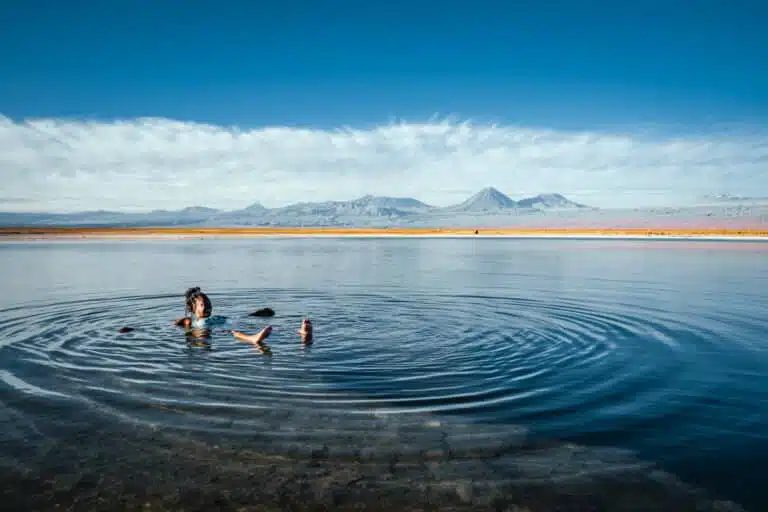
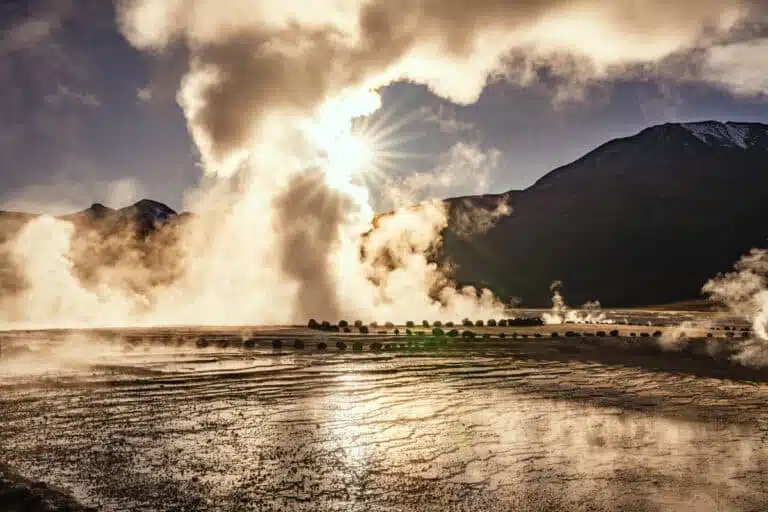
Four days, three nights, a string of coloured lagoons and the biggest salt flat on earth. Here’s my honest guide to the San Pedro de Atacama to Uyuni tour, from the border crossing and park fees to the bad first day and the freezing nights.
I’ve crossed the Bolivian altiplano twice. The first time was years ago, on a four-day trip from Tupiza that ended with sunrise on the Salar de Uyuni. The second was in July, on my fourth trip to Chile, when I left San Pedro de Atacama on a four-day loop with Cordillera Traveller that took me over the border, up to the salt flats and back again.
It wasn’t all plain sailing. My first day was, frankly, rubbish, and the night I spent at Huayllajara was one of the coldest of my life. But my guide, Walter, was absolutely brilliant, the rest of the tour was great, and the landscapes, from the blood-red Laguna Colorada to the flamingo-dotted lagoons and the endless white of the salar, are some of the most extraordinary I’ve seen anywhere in Bolivia.
If you’re planning the journey from San Pedro de Atacama to Uyuni, this is everything I wish I’d known before I booked: how the tours work, what they cost, what you’ll see each day, and how to cope with the altitude and nights far below freezing.
Some links in this article may be affiliate links, which means we may receive a small commission, at no additional cost to you, if you decide to purchase through one of my recommended partners.
The tour at a glance
- Route: San Pedro de Atacama, the Hito Cajón border, the Eduardo Avaroa reserve and the Salar de Uyuni, then either back to San Pedro or on to the town of Uyuni
- Length: four days and three nights for the return loop, or three days and two nights if you finish in Uyuni
- Price: shared tours from around US$300 to US$350 per person; private tours from around US$920 per person in a group of four
- On top: around 200 bolivianos per person in park and entry fees, paid in cash, plus a little extra for toilets and showers
- Altitude: most of the route is above 4,000 metres, topping out at around 4,900 metres at the Sol de Mañana geysers
- Best for: travellers who’ve already acclimatised in San Pedro and want to see the altiplano and the salt flats without arranging their own transport across a remote border
- My tour: four days and three nights with Cordillera Traveller, on a shared tour in July
How the tours from San Pedro work
Almost every operator in San Pedro sells a version of the same trip, and the format is the same whoever you book with. A minibus collects you from your hotel at around 6am and takes you up to the border, where you switch into a 4×4, usually a Toyota Land Cruiser carrying up to six passengers. Your driver normally doubles as your guide, and unless you pay extra, he’ll speak Spanish only. An English-speaking guide costs around US$50 per person with most operators and takes one of the seats, so the car then carries five.
There are three main versions. The four-day loop takes you to the salt flats and brings you back to San Pedro, which is the one to choose if you’re carrying on around Chile. The three-day trip finishes in the town of Uyuni, which works if you’re travelling on through Bolivia, by bus or train, to Potosí, Sucre or La Paz (my Bolivia itinerary has ideas). And if you’re coming the other way, you can start in Uyuni and finish in San Pedro instead.
Accommodation is basic, and it’s part of the experience. Expect a simple hostel near Laguna Colorada or in the village of Villa Mar on the first night, a salt hotel (with walls, and often bed bases, made from blocks of salt) on the second, and another simple hostel on the third. Rooms on shared tours are usually shared, though some operators now offer private rooms for a supplement of around US$40 per person. Electricity can go off overnight, hot showers usually cost extra and there’s next to no phone signal once you leave the border.
Shared tours start at around US$300 per person. Cordillera Traveller currently charges US$300 (CLP 285,000) for its shared four-day loop, and similar trips on GetYourGuide and Civitatis run from around US$320 to US$350. A private VIP version with Cordillera Traveller, staying in more comfortable hotels with an English- or French-speaking guide, costs US$2,600 for one or two people, or US$3,680 for three or four.
My tour with Cordillera Traveller
I booked my tour directly with Cordillera Traveller, whose office is on Calle Caracoles, San Pedro’s main street. When I booked, the shared four-day tour cost US$250 per person, with US$50 extra for an English-speaking guide and around US$40 in park fees on top. That covered the Land Cruiser, three nights’ accommodation and all my meals.
Before I set off, I’d spent three nights at Nayara Alto Atacama on the edge of town, visiting the high lagoons and the El Tatio geysers, so I’d already had a few days at altitude. I needed them.
I’ll be honest with you. There was a bit of a mess-up by the people in the office, which meant that I spent the first day of my four-day tour in a car with a local driver who drove like crazy, and there was no lunch at the lunch stop. My loop also ran the other way round from the classic route below: I was out on the salt flats by the end of the first day, and I saw Laguna Verde on the final morning, on the way back to the border.
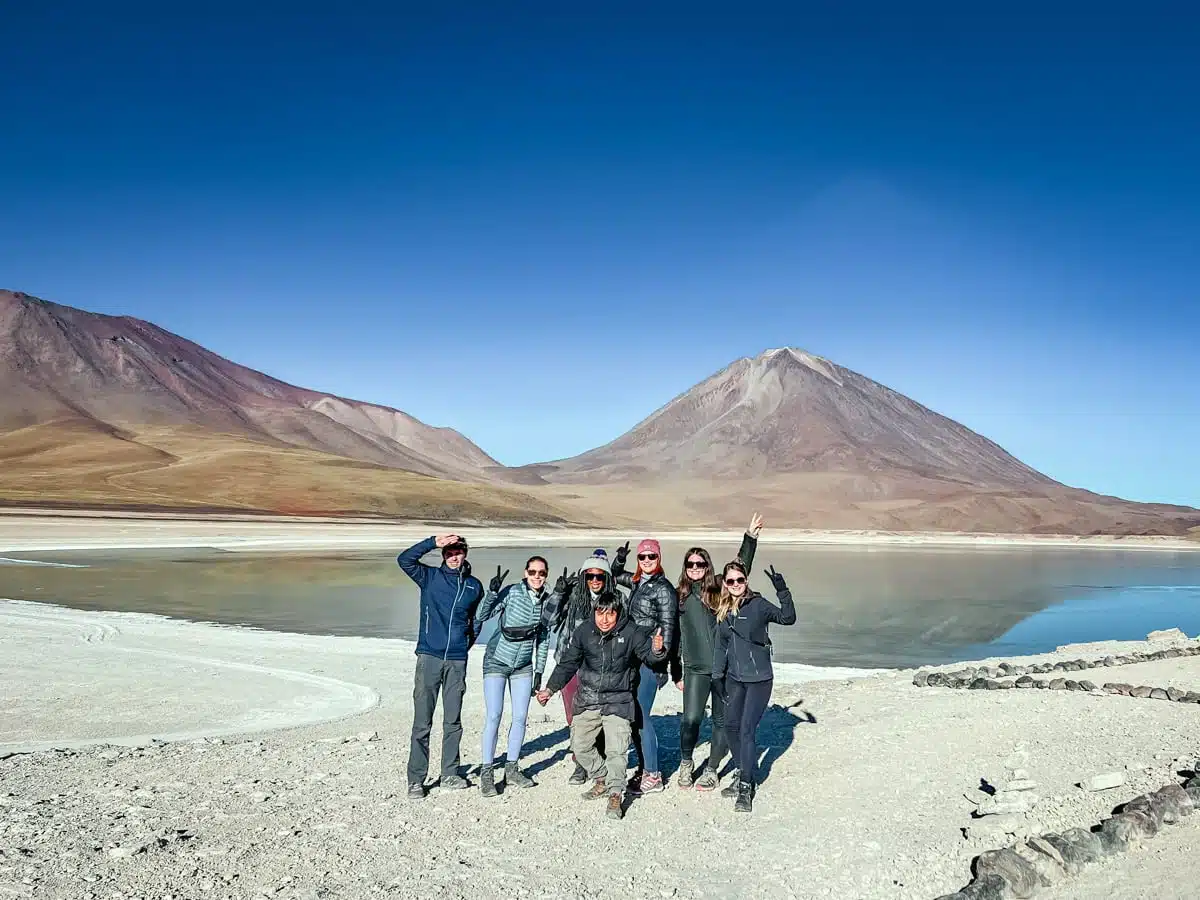
The first day was rough, but the rest of the tour was great, and my guide, Walter, was absolutely brilliant. By all accounts, none of the operators in San Pedro are particularly wonderful, so take this as an honest recommendation rather than an unreserved one, and read recent reviews before you book with anyone.
Whoever you choose, ask a few questions before you hand over any money. Is the English-speaking guide confirmed? Which lagoons does the second day include? Are the rooms shared, and is a sleeping bag provided? And what happens if the border closes?
Day 1: from the border to Laguna Colorada
Crossing at Hito Cajón
The first morning is a shock to the system. From San Pedro, at around 2,400 metres, the road climbs towards Licancabur and reaches the border at Hito Cajón, at around 4,480 metres, in under an hour. Your minibus stops for Chilean exit formalities, then you get your Bolivian entry stamp at the small post on the other side. Make sure you get that stamp, as you can be fined on the way out of Bolivia without one.
Many operators serve breakfast at the border while the drivers load the luggage onto the roofs of the 4x4s. Then you’re off on dirt tracks into the Eduardo Avaroa Andean Fauna National Reserve, where you pay the entrance fee (150 bolivianos for foreign visitors) in cash. Keep your ticket with you for the whole time you’re in the reserve, as there are checkpoints.
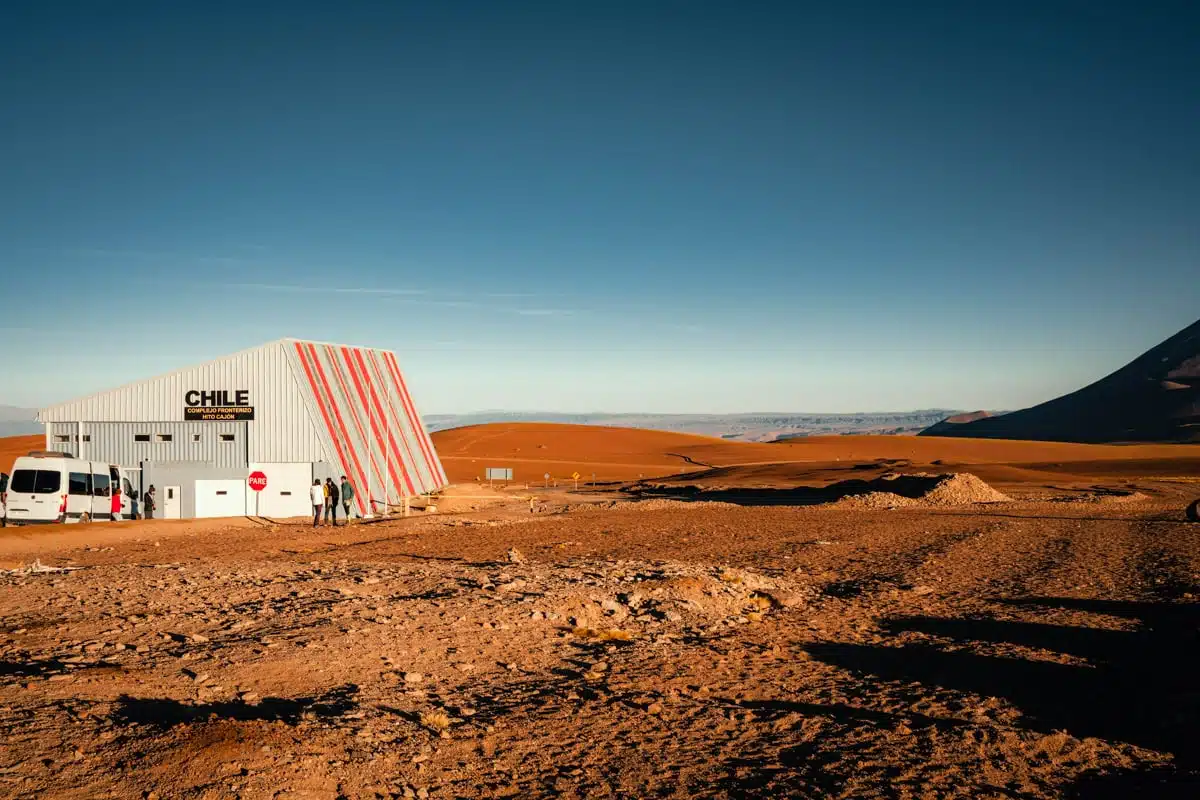
Hito Cajón can close after heavy snow, mostly between June and August, and storms during the altiplanic summer, between January and March, can also cause closures. When that happens, operators either wait, switch to the much longer Ollagüe crossing further north or cancel, so don’t book the tour on the last day of your trip.
Laguna Blanca and Laguna Verde
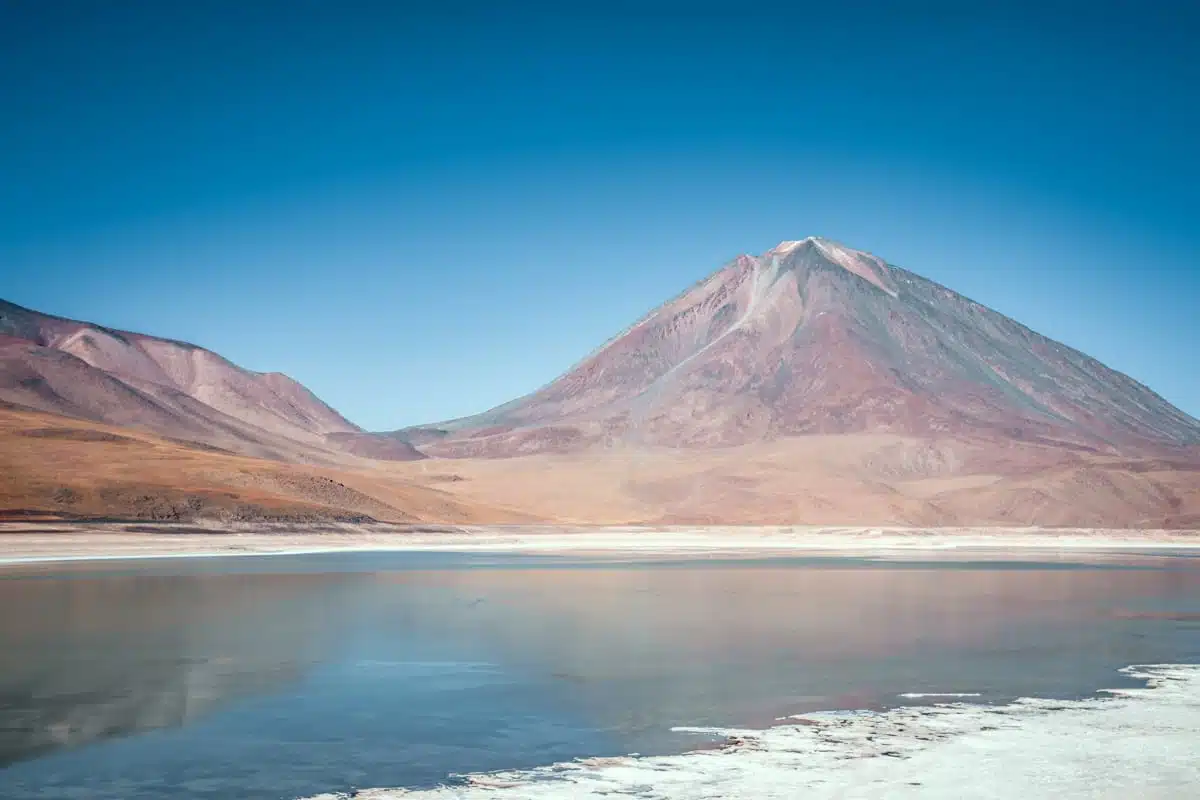
The first stops are a pair of lagoons sitting side by side beneath Licancabur, the near-perfect cone of a volcano that marks the border. Laguna Blanca, the white lagoon, gets its colour from borax and calcium, which also form the crust of salt around its shore.
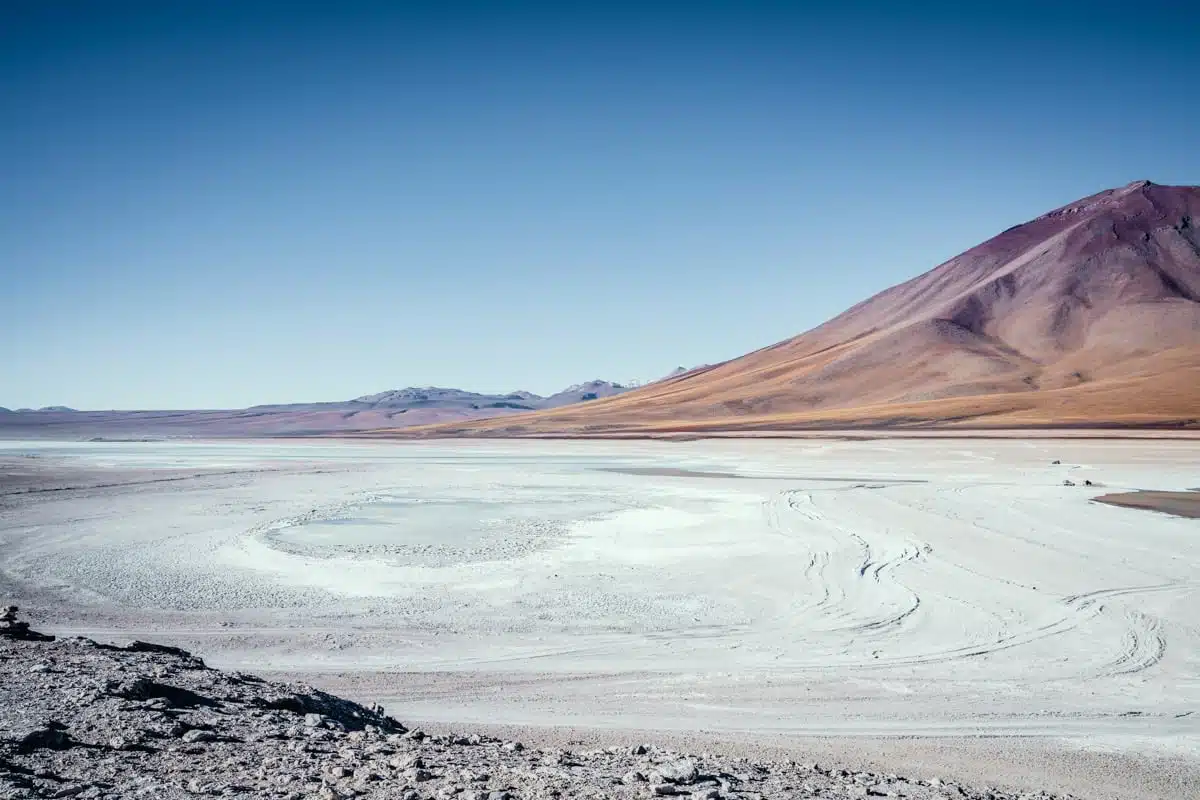
Right next door, Laguna Verde sits at around 4,300 metres. Minerals washed in from the soil beneath it, arsenic chief among them, give it its colour, which shifts from dark emerald to pale turquoise depending on how hard the wind is churning up the sediment. If it’s a still morning, you’ll see Licancabur reflected in the water. The altiplano is where the Andes are at their widest, and the region was home to pre-Columbian peoples long before the Inca reached it, which is why Licancabur has Inca ruins at its summit.
The Salvador Dalí desert
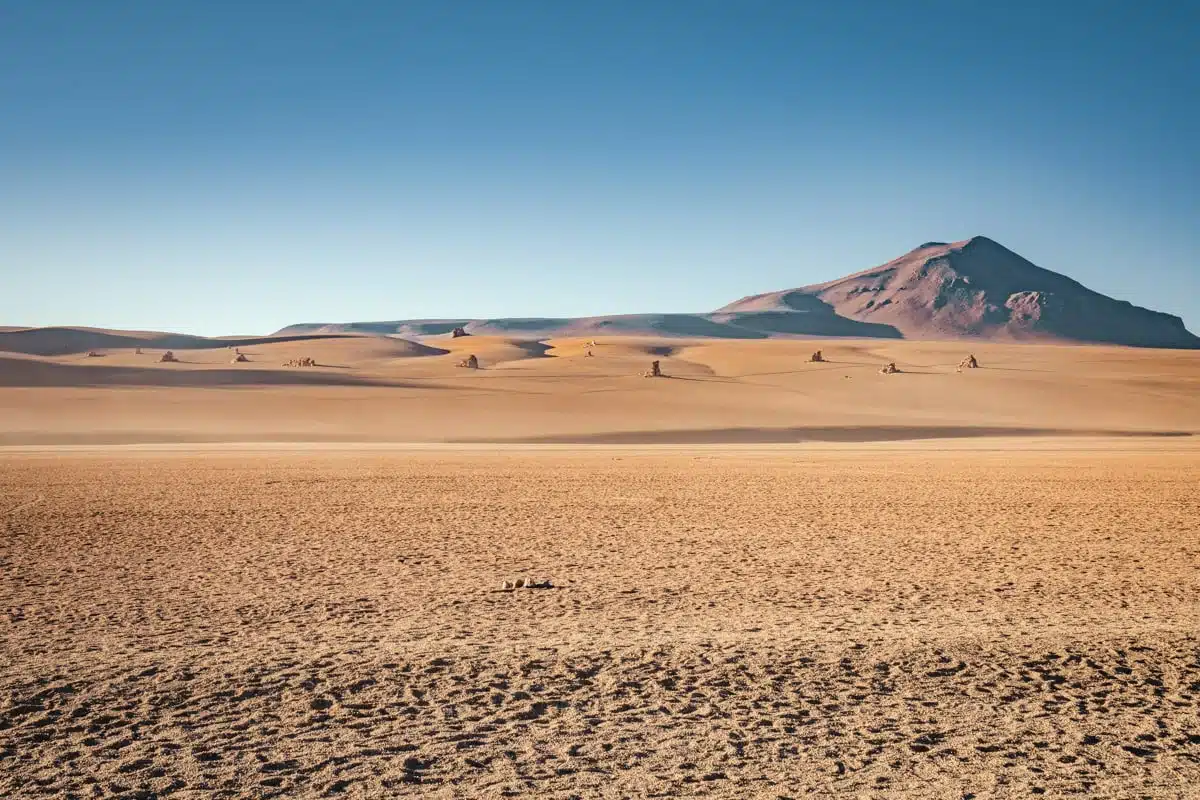
With its strange rock formations, wide stretches of sand and contrasting colours, it isn’t hard to see where this stretch of desert got its name. The landscape looks like one of Salvador Dalí’s surreal paintings, and at around 4,750 metres, the thin air only adds to the dreamlike effect. Dalí never came here, by the way.
Polques hot springs
Most tours stop at the Polques hot springs, a natural thermal pool at around 4,400 metres beside the Laguna Salada, for a soak. There’s a small extra fee of a few bolivianos, and basic changing rooms. Bring your swimwear and a quick-dry towel in your day bag, because getting changed is the hard part: the water is warm, but the wind isn’t.
On my first trip across the altiplano, from Tupiza, the hot springs were one of the most welcome stops of the whole tour. I changed into my swimwear as quickly as I could, plunged in and soaked with a view over the lake beside the pools.
Sol de Mañana geysers
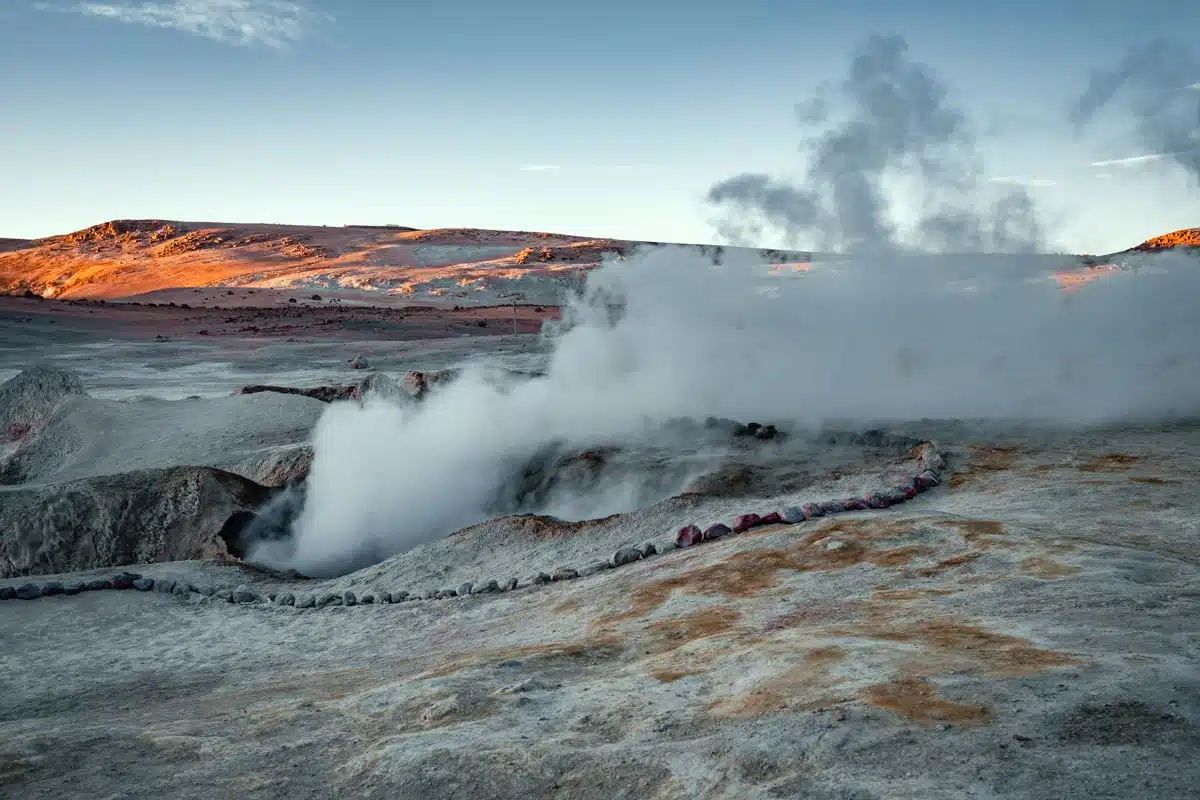
They might not get as much attention as the El Tatio geysers across the border in Chile, but the Sol de Mañana geysers are a cool sight with far fewer crowds. At around 4,900 metres, this is the highest point on the tour, a field of bubbling mud pots and steaming fumaroles where the sulphur can be a bit smelly. Take care, as the ground can be unstable and hot in places. Always follow your guide’s instructions and stay on the marked paths.
Laguna Colorada
Have you ever seen a blood-red lagoon? Laguna Colorada doesn’t look real, or if it does, it looks as if you’re seeing the world through infrared glasses. The colour comes from algae and the mineral-rich sediment in the water, and it changes in intensity and shade with the time of day and the weather. Bright white borax fringes the shore and covers several of the islands, and the contrast is unbelievable.
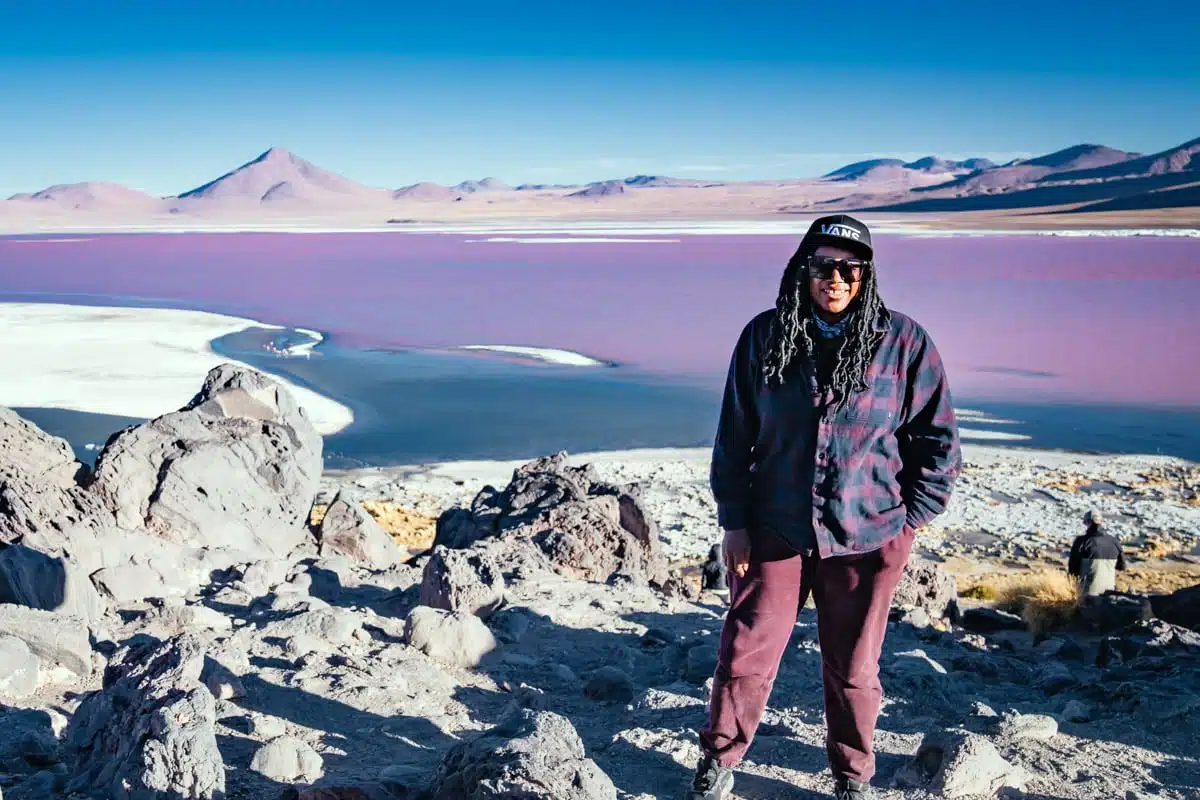
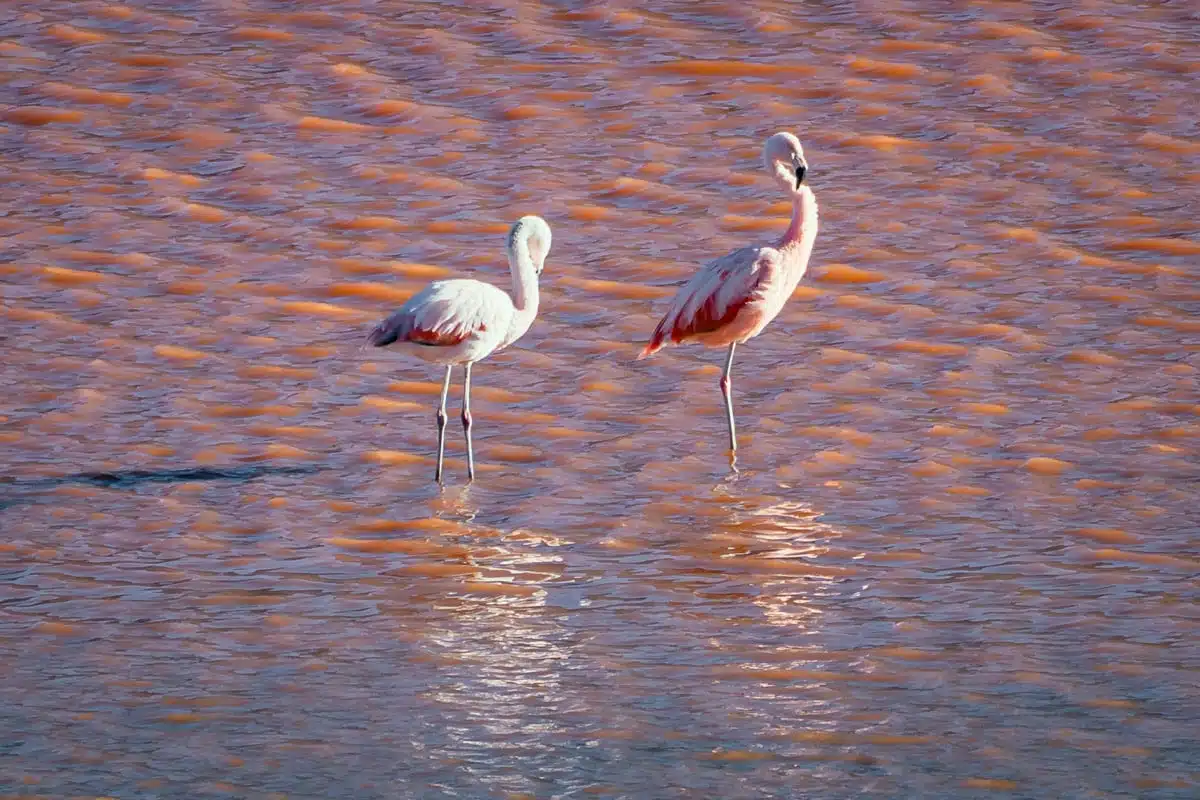
The lagoon sits at 4,278 metres, covers about 60 square kilometres and is less than a metre deep, which makes it perfect for flamingos. It’s one of the best places in the world to see them in their natural habitat, with all three Andean species (the Chilean, Andean and James’s flamingos) feeding here, and in the summer months there are thousands and thousands of them.
A night at Huayllajara
Most tours spend the first night in the hamlet of Huayllajara, beside Laguna Colorada, or drive on to Villa Mar. I stayed in a hostel at Huayllajara, and it was one of the coldest nights I’ve ever spent in my life, even with a sleeping bag. I lost my voice the next day, and it still hadn’t come back two weeks later.
On the plus side, you can hop into the thermal baths under the stars. Don’t pay for the wifi, though: it doesn’t work. Sleep in your thermals and hat, keep your phone and camera batteries in your sleeping bag so the cold doesn’t drain them, and drink plenty of water before bed.
Day 2: stone trees and the high lagoons
On the classic route, the second day heads north through a string of high lagoons towards the salt flats. Some operators now take an eastern route instead, through the rock formations of the Valle de Rocas and the villages of San Agustín and Julaca (Cordillera Traveller’s current shared itinerary is one of them), which swaps several of the lagoons below for canyons and villages. Check which way your tour goes if the flamingos matter to you.
Árbol de Piedra and the Siloli desert
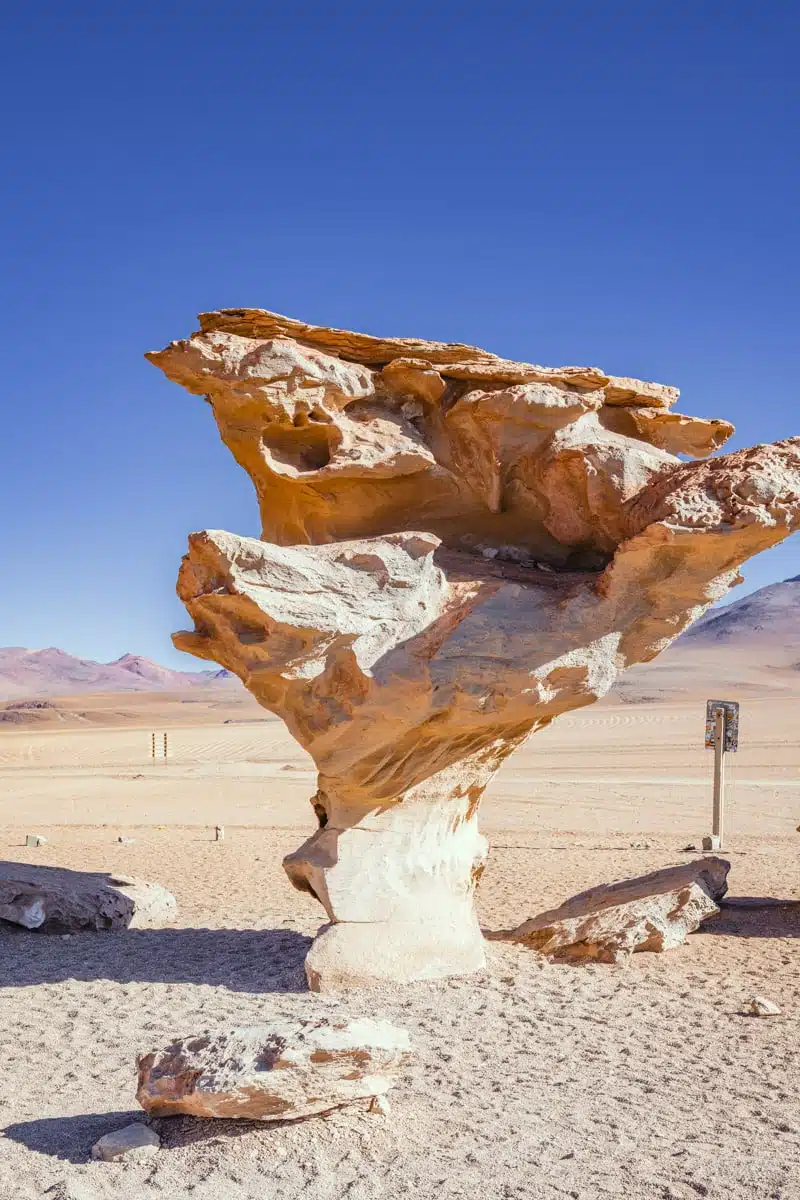
The Siloli desert is one of the most arid places in the world, and it’s best known for its weird rock formations. The most famous is the Árbol de Piedra, or stone tree, a block of volcanic rock about seven metres tall that wind and sand have worn into the shape of a tree over thousands of years, balanced on a narrow stem.
The flamingo lagoons
Next comes a run of smaller lagoons, each one a different colour, and most of them busy with flamingos. Laguna Honda is a bright turquoise. Laguna Chiarcota is one of the area’s lesser-known stops, but it’s a birdwatching haven with lots of flamingos and lovely views, and Laguna Cañapa and Laguna Hedionda are just as good for spotting them.
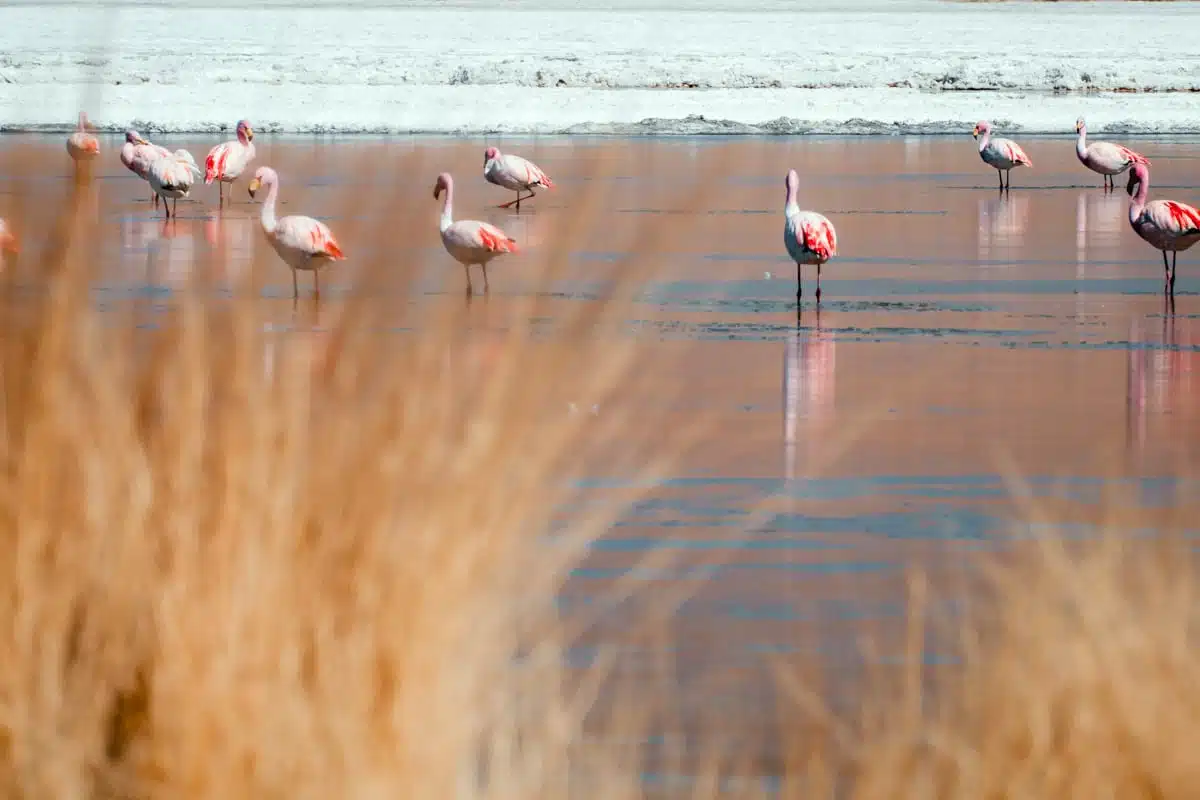
If your tour stops at Laguna Turquiri, there are no flamingos, but the turquoise colour framed by volcanoes more than makes up for it. Tempting as it is to walk down to the water’s edge, remember that it’s a steep pull back up, which is no easy feat at this altitude.
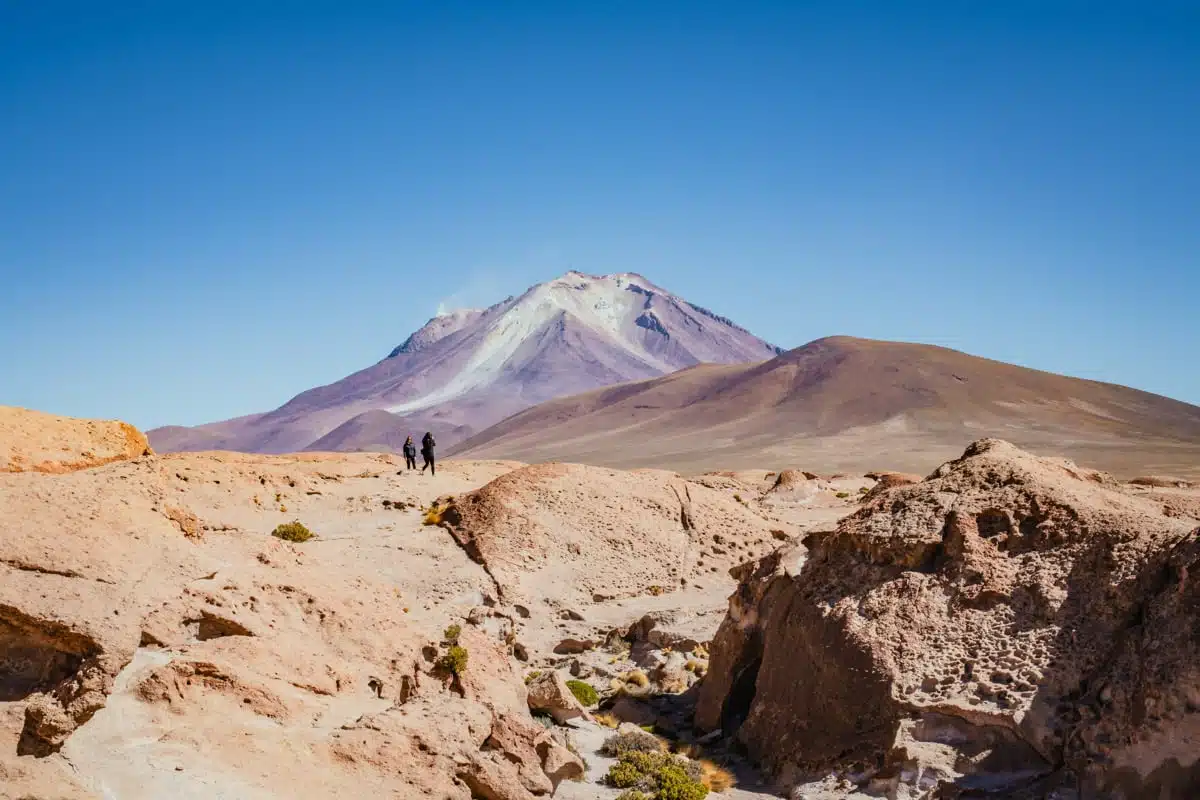
Ollagüe volcano
Right on the border between Bolivia and Chile, Ollagüe is an active stratovolcano. You can often see it smoking, as I did, which is both thrilling and the tiniest bit worrying at the same time. The viewpoint gives you panoramic views of the volcano and the salt flats below it.
Chiguana salt flat
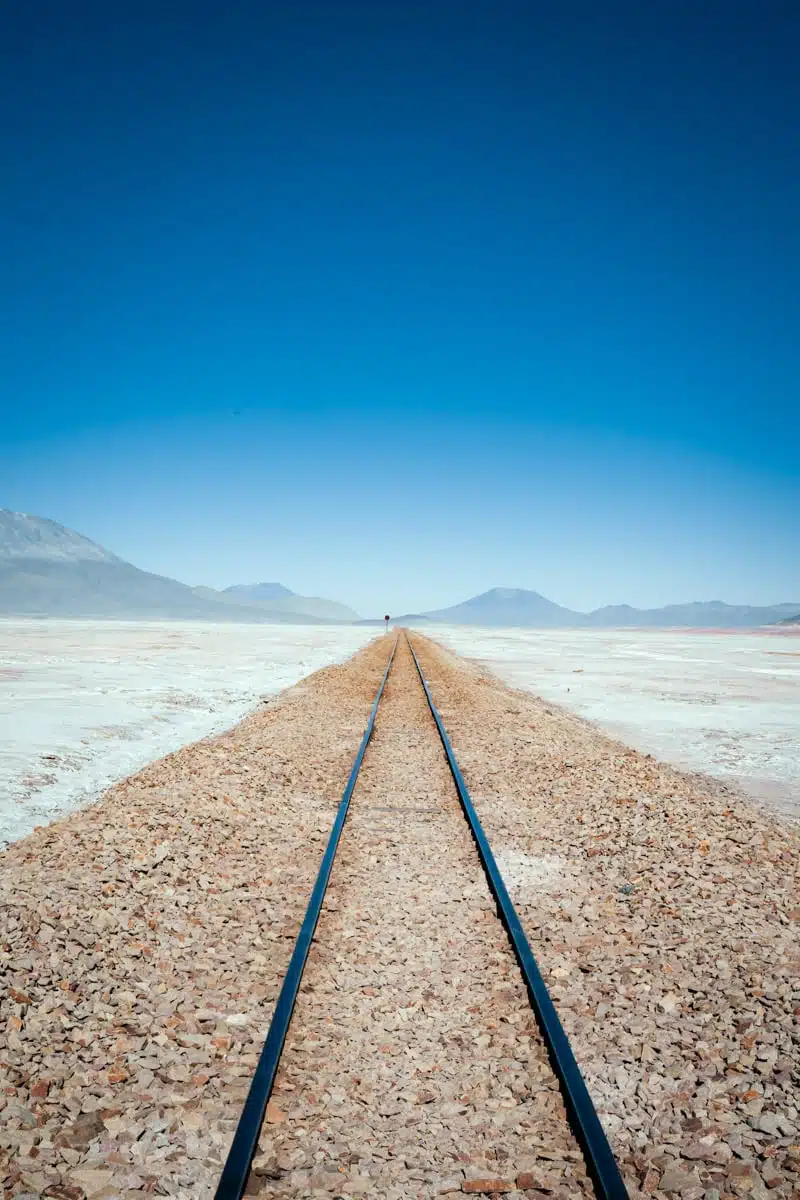
Although it’s just a short drive from the Salar de Uyuni, the Chiguana salt flat is nowhere near as famous, probably because the salt here is a dull orange crusted with white rather than the brilliant white of Uyuni. It’s much quieter, though, and it’s surrounded by volcanic hills. Look out for the railway line that seems to cut its way through nowhere, as it makes for some cool pictures.
A night in a salt hotel
The second night is usually spent in a salt hotel on the southern edge of the salar, in villages such as Colcha K or San Juan. They’re basic but more comfortable than the first night’s hostel, and on most shared tours you get a private room. My salt hotel was the Nuevo Amanecer in Atulcha, and it was the only night of the tour with a private room rather than shared bathrooms.
Day 3: the Salar de Uyuni
Out onto the salt
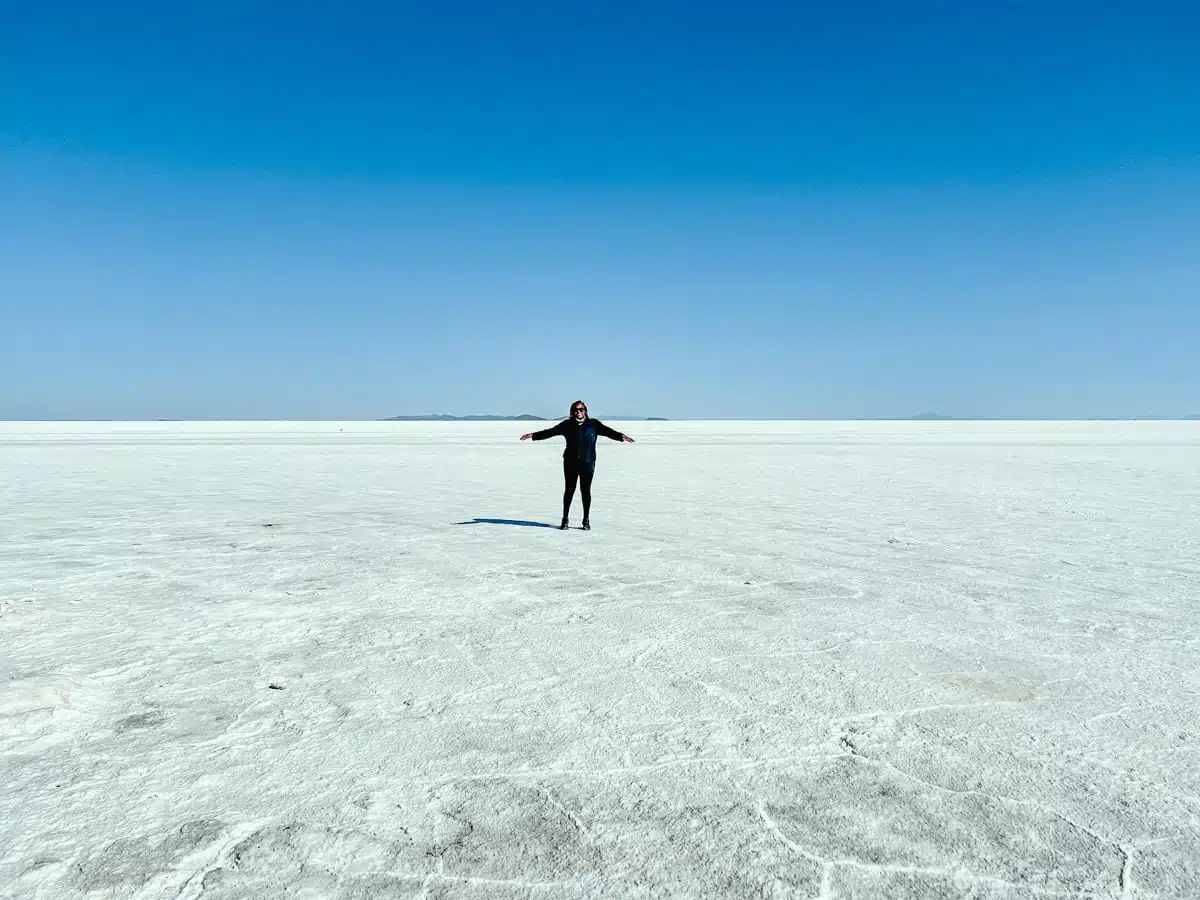
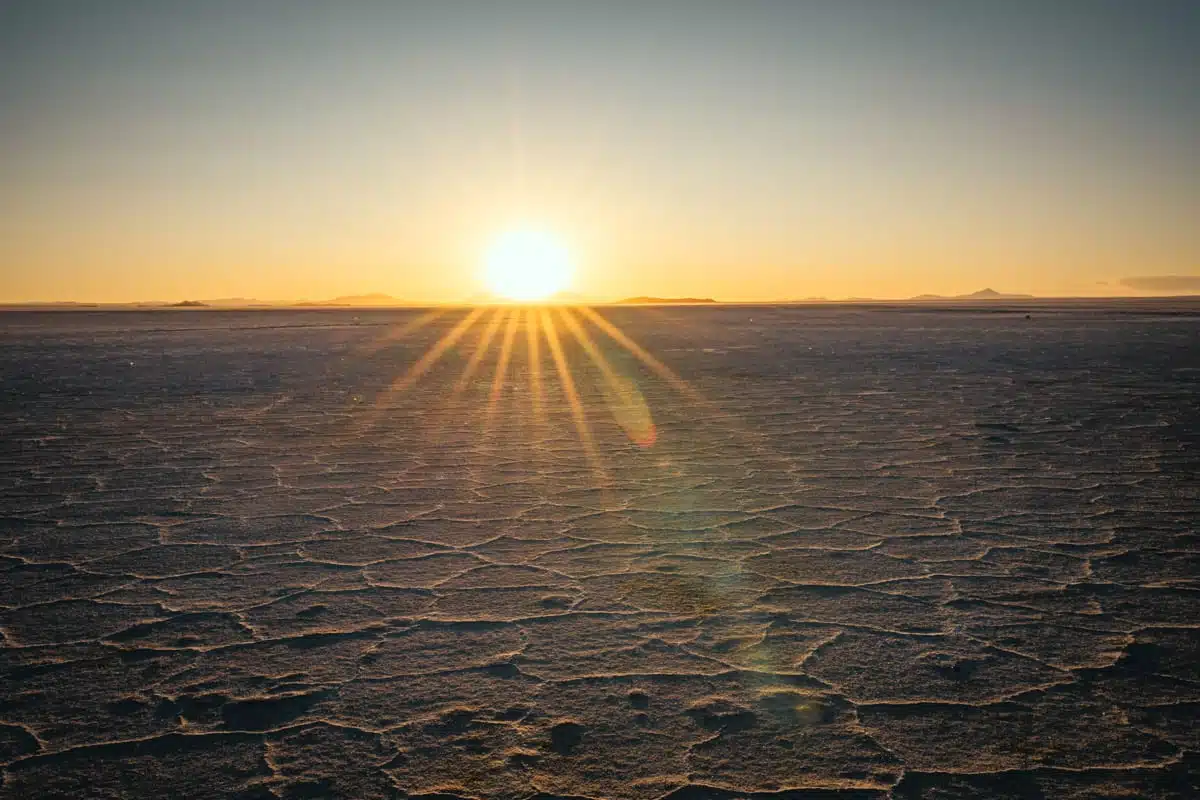
The Salar de Uyuni is the largest salt flat in the world, covering 10,582 square kilometres at an altitude of 3,656 metres. It’s the remnant of a prehistoric lake that dried up thousands of years ago, and the crust of salt forms the natural hexagons you’ll see stretching to the horizon. The sacred Tunupa volcano overlooks it, and the salt is so flat that it’s been used to calibrate satellites.
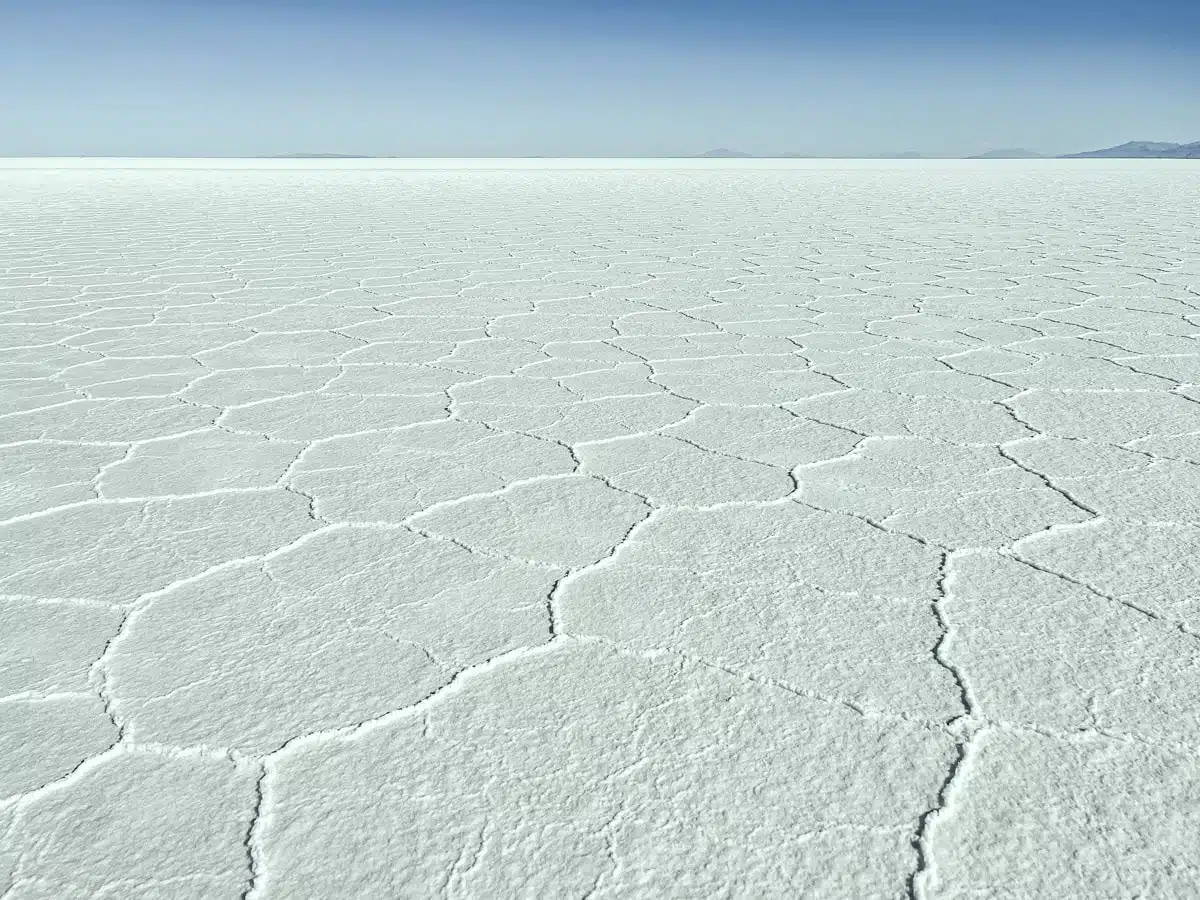
Depending on the weather and your operator, you’ll see either sunrise or sunset out on the salt, and both are spectacular. On my first trip, from Tupiza, I woke in what felt like the middle of the night and the sun rose with nobody else in sight. The cracks between the hexagons glowed orange, and as the light grew brighter, my guide warned everyone to put their sunglasses on to avoid snow blindness. Take that seriously.
Taking those ridiculously cheesy perspective pictures, where you’re being eaten by a dinosaur or climbing out of a backpack, is a must. I don’t make the rules. They’re also hugely fun to do, but wear tonnes of suncream, as you’ll be in the sun for a while.
Isla Incahuasi
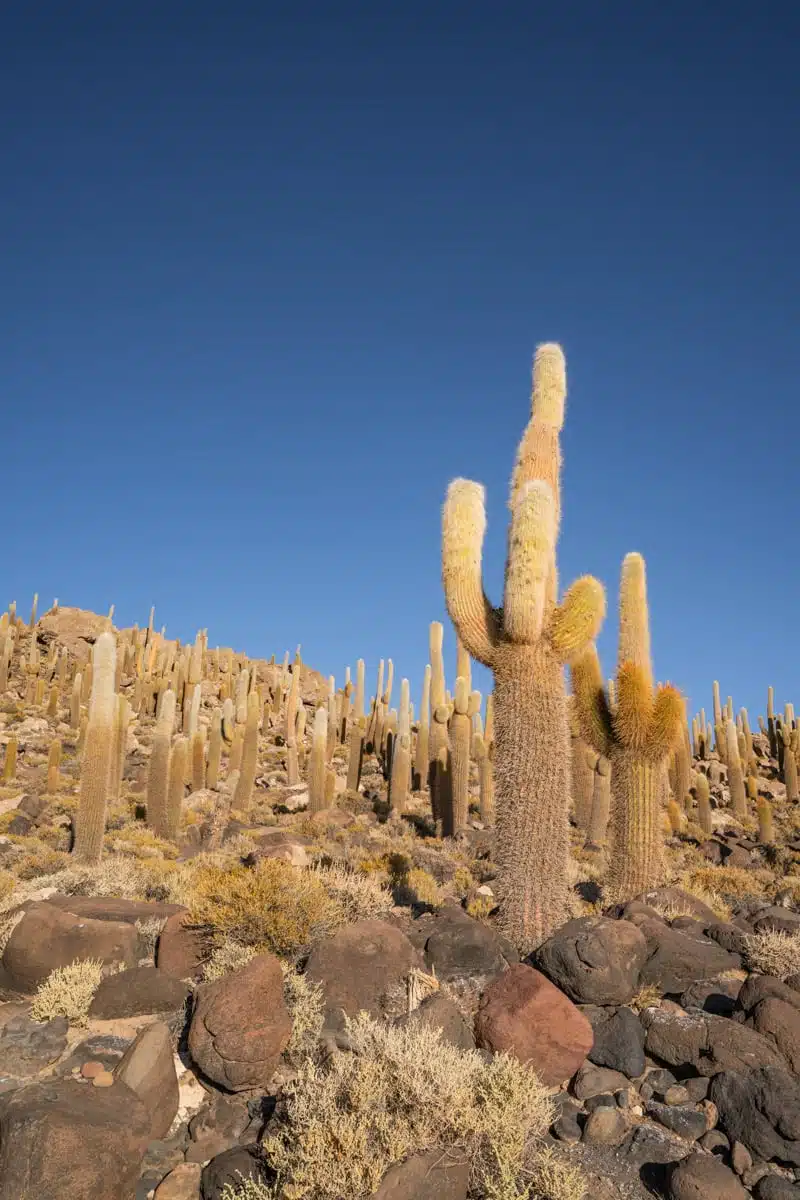
Rising out of the middle of the salar, Isla Incahuasi is a rocky outcrop covered in giant cacti, and the view of the salt flats from the top is breathtaking. You have to pay an entrance fee (30 bolivianos) to climb the island, and to use the toilet. Some tours stop at the similar Isla del Pescado, or Fish Island, instead, which is home to towering cacti and a few viscachas.
Playa Blanca and the flags
There are so many salt hotels in the area that it’s hard to believe one stands out, but Playa Blanca does. It was the only one right in the middle of the salt flats, and though you can no longer stay there, many tours stop for lunch inside. There’s a shop and toilets, too.
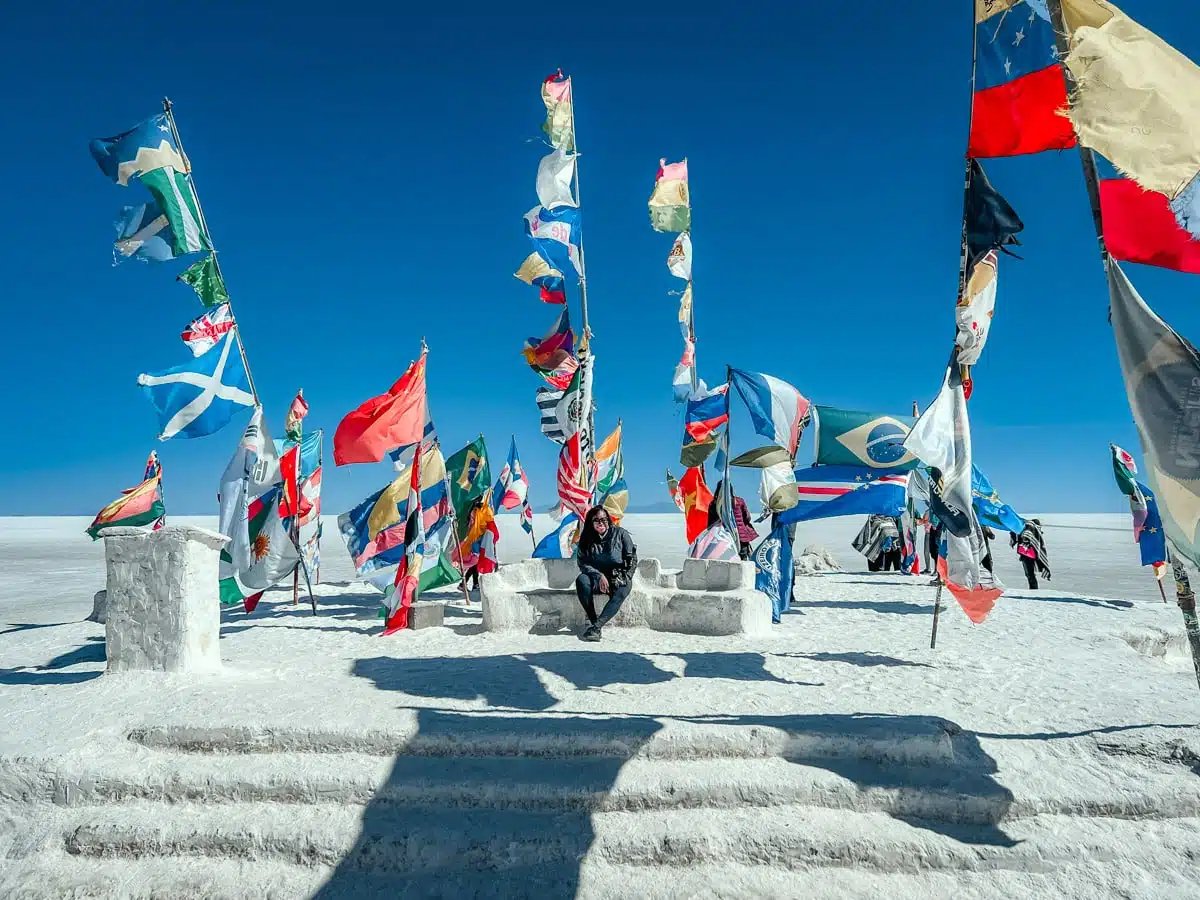
Next to it are the world flags, first planted when the Dakar Rally crossed the salar. Competitors tied their national flags to a row of flagpoles, and the collection has taken on a life of its own since then, with travellers adding their own. You’ll also find the big salt sculpture of the Dakar logo nearby.
Colchani
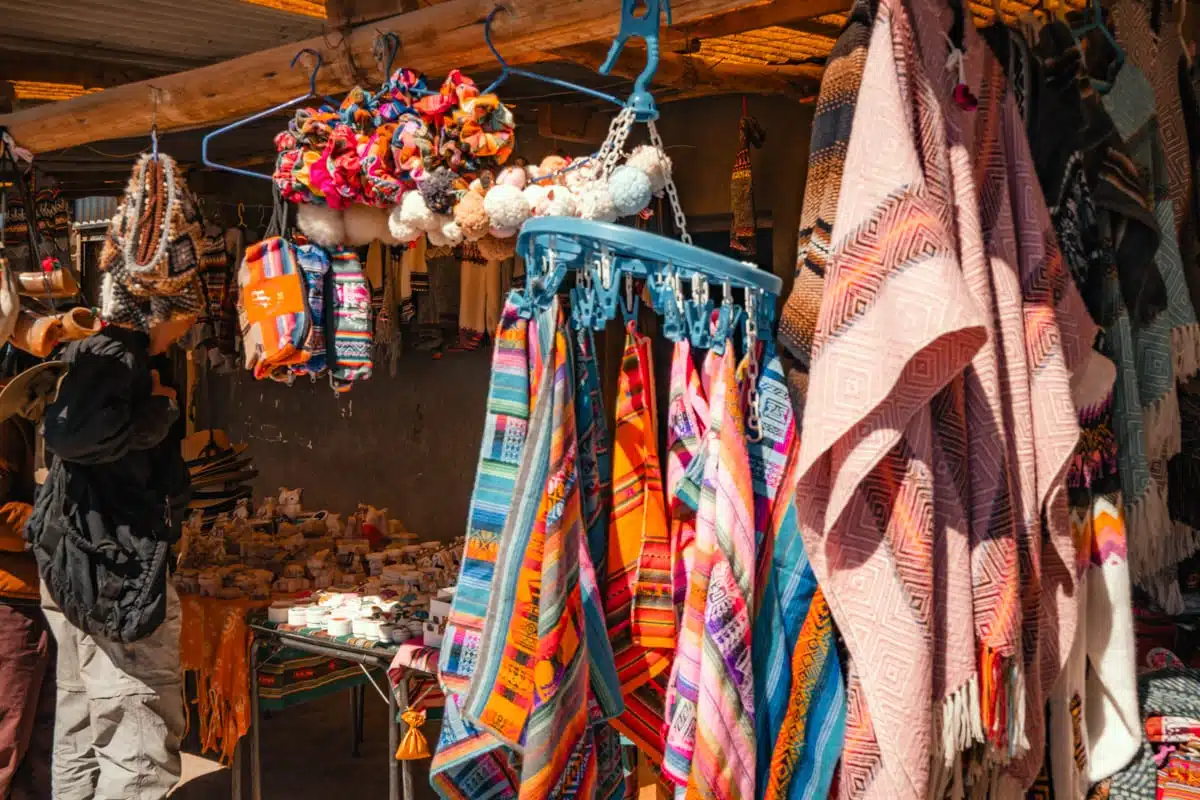
On the edge of the salar, the village of Colchani is where much of the salt is processed. There’s a market selling textiles and souvenirs, and a small salt museum where you can learn how the salt is harvested from the flats and packed.
The train cemetery
One of the odder attractions on the fringes of the salar, the train cemetery, about 3km outside the town of Uyuni, has become one of the region’s most popular stops. The locomotives once hauled minerals during Bolivia’s mining boom, many of them built in the UK in the late 19th and early 20th centuries for the British-backed railway to the Pacific. When the mining industry declined in the 1940s, the trains were left to rust, and the cemetery was born. It stands as a reminder of the country’s industrial history, and you’re free to wander among the wrecks and climb onto some of them.
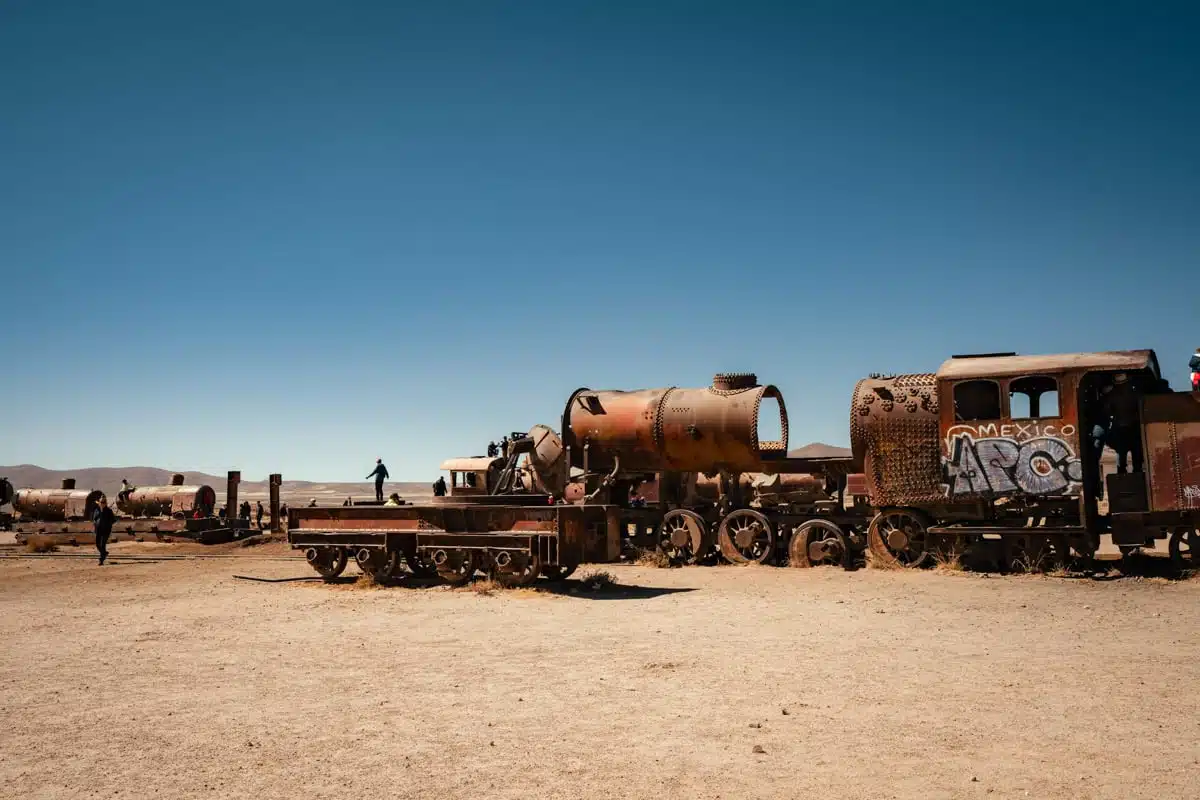
If you’re on a three-day tour, this is where you get out: tours finish in Uyuni in the middle of the afternoon. On the four-day loop, you’ll have a short break in town before driving about three hours south to Villa Mar for the last night.
Day 4: back to San Pedro
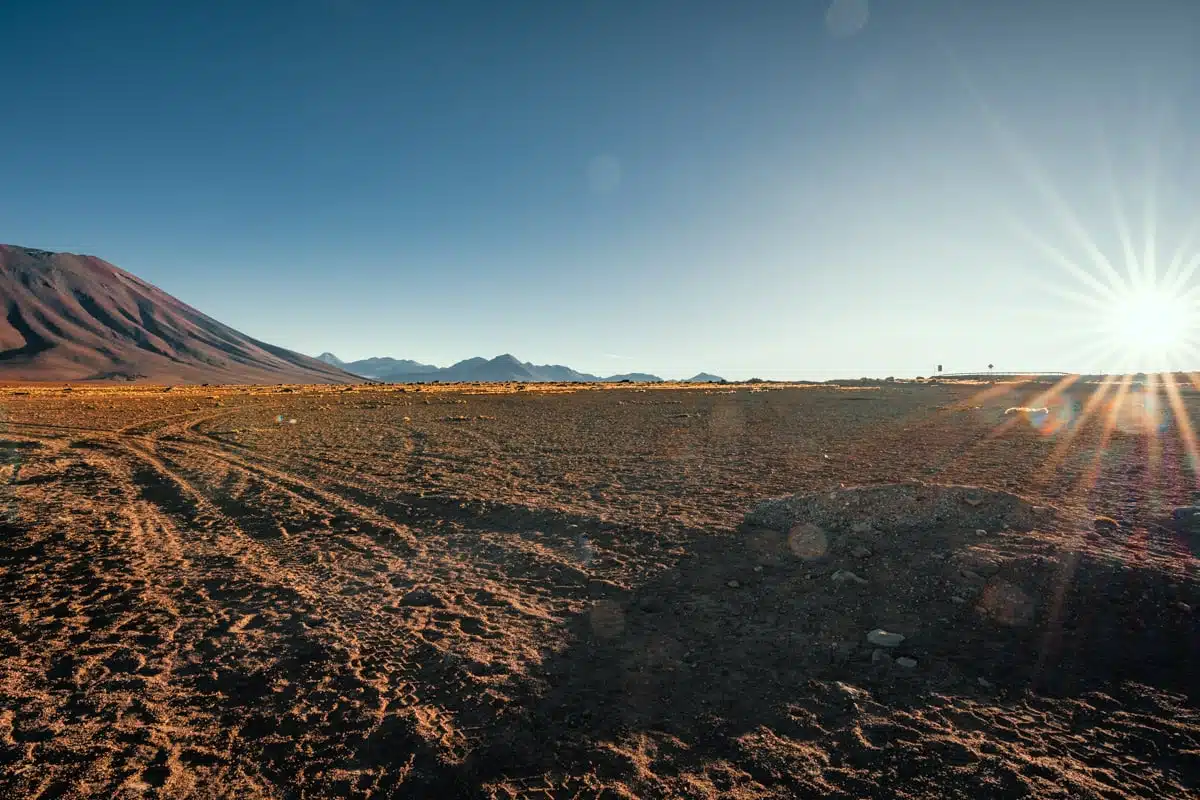
The last day is mostly driving. Cordillera Traveller’s loop leaves Villa Mar at 5am for a four-hour drive straight to the border, arriving at about 9am, then a minibus takes you down to San Pedro for around 1pm. The scenery on the way is still stunning, especially in the early morning light.
Chile’s agricultural inspectors check bags at the border, so finish any fresh fruit or meat in Bolivia and don’t try to bring coca leaves back with you: they’re illegal in Chile.
After four days on the road, I spent a night at Hotel Desertica, in one of its standalone circular rooms, and it was exactly what I needed. If you’d like more time in the desert, my Atacama Desert itinerary and guide to the best Atacama Desert tours will help you plan the rest of your stay.
Map
Booking your tour
You can often book in San Pedro a day or two ahead, but between June and September, and whenever you need an English-speaking guide on a fixed date, I’d book several weeks in advance. Agencies line Caracoles, so it’s easy to compare a few.
If you’d rather book online, this 4-day Uyuni salt flats tour follows a similar loop from San Pedro and back, from around US$352 with the Bolivian park fees included, though its guides speak Spanish only. Coming from Bolivia, this 3-day tour from Uyuni runs the route in reverse and finishes in San Pedro, from around US$450 with an English- or Spanish-speaking guide.
Handy tips for the tour
Entry rules
UK citizens can visit Bolivia for up to 90 days without a visa, and border officials sometimes stamp in 30 days, which still lets you stay for 90. US citizens no longer need a visa either, for stays of less than 90 days in a year: Bolivia dropped its tourist visa for Americans in December 2025. The same change removed it for several EU countries that used to need one, including Bulgaria, Malta and Romania, so EU passport holders can generally visit without a visa too. Your passport needs at least six months’ validity from the day you arrive, and the UK government also asks for two blank pages. Rules change, so check with the Bolivian embassy or consulate before you go.
You may be asked for proof of your first night’s accommodation, so keep a copy of your tour booking to hand. Coming back into Chile, UK, US and EU travellers can stay for up to 90 days without a visa.
Cash and fees
Bring bolivianos in cash. There are no cash machines on the route until you reach Uyuni, the park rangers won’t take cards or Chilean pesos, and change can be hard to come by, so get small notes from one of the exchange bureaux in San Pedro before you leave.
Expect to pay 150 bolivianos for the Eduardo Avaroa reserve, 30 bolivianos for Isla Incahuasi and a few bolivianos for the Polques hot springs, and some operators also list a border fee of around 15 bolivianos. On top of that, toilets cost a few bolivianos each and hot showers are extra, so I’d bring 300 to 400 bolivianos per person, plus a tip for your driver and guide.
Altitude
The altitude is the hardest part of this trip. Spend at least two or three nights in San Pedro first, ideally doing a day trip or two to the high lagoons or El Tatio, and don’t book the tour the morning after you arrive. Cordillera Traveller suggests a light dinner the night before, with no red meat or alcohol, and it doesn’t take people with high blood pressure, pregnant women or children under six. Drink lots of water, take it slowly at every stop and talk to your doctor about altitude medication before you travel.
When to go
The tours run all year. The dry months, from April to November, have the clearest skies, but June to August is the coldest time, with nights falling to -15°C or below near Laguna Colorada. Between January and March, rain can flood the salar and create the famous mirror effect, but it can also close the border or force your operator to change the route. My guide to the best time to visit the Bolivia salt flats goes into it season by season.
What to pack
Pack for every season in a single day: temperatures can range from the mid-20s in the afternoon sun to -20°C on a winter night. You’ll want:
- A warm sleeping bag rated to at least -10°C, or check that your operator rents one
- Thermals, like this SmartWool base layer, to sleep in as well as wear
- A down jacket, a windproof layer, gloves and a beanie hat
- Good sunglasses and plenty of the sunblock, as the glare off the salt is fierce
- A portable charger, as charging points are scarce and the cold drains batteries
- A head torch, toilet roll, hand sanitiser and wet wipes
- Swimwear and a quick-dry towel for the hot springs
- At least two litres of water, snacks and lip balm
Leave your big suitcase in San Pedro if you’re coming back, and take a soft bag that’s easy to strap onto the roof of a 4×4.
Read next
- Salar de Uyuni: a complete guide to visiting the Bolivia salt flats
- Laguna Verde, Bolivia: a practical guide to the green lake
- When’s the best time to visit the Bolivia salt flats?
- 10 days in Bolivia: the perfect Bolivia itinerary
- The best Atacama Desert tours
- The best things to do in the Atacama Desert
- Hotel Desertica review: boutique luxury in San Pedro de Atacama
Love this? Save and share on Pinterest

Discover the top things to do, insider tips and hidden gems in our Chile Travel Guides.
Read the guides →