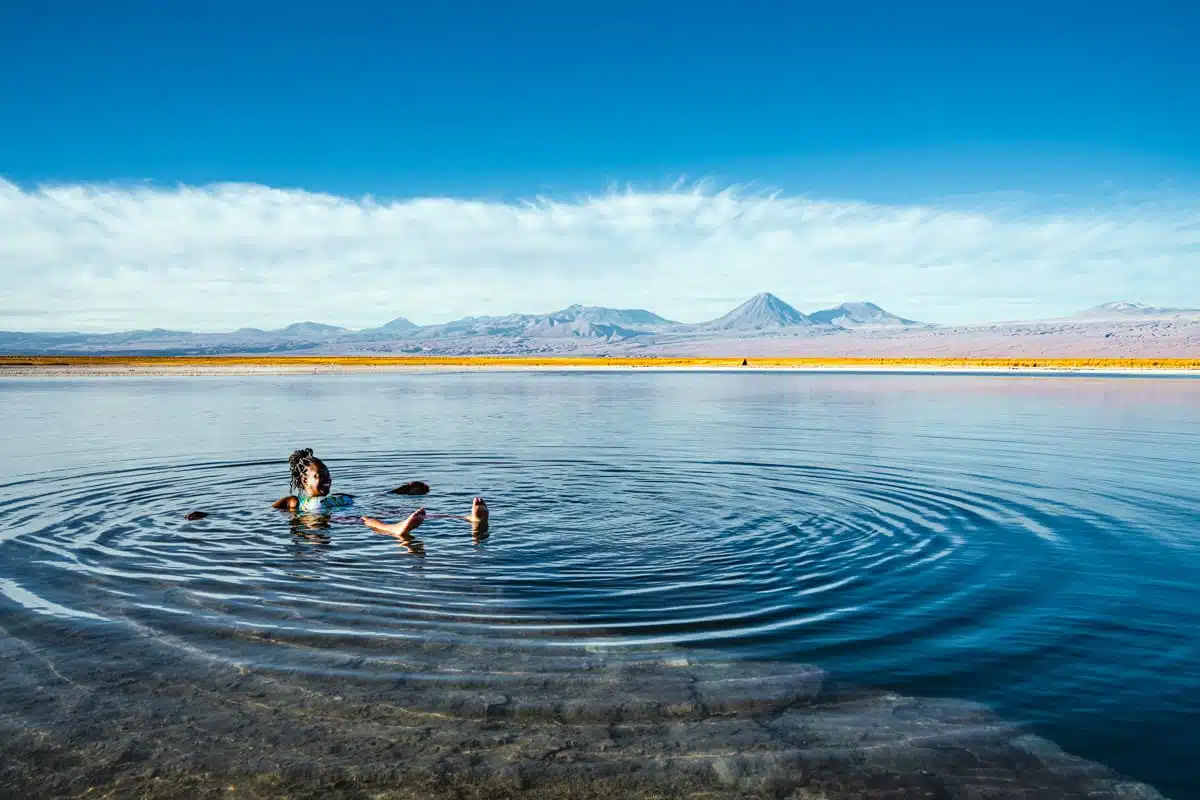
Floating on your back in a salt lagoon, with Licancabur reflected in the water around you, is one of the strangest and best things you can do in the Atacama. Here’s how to visit Laguna Cejar and Laguna Piedra from San Pedro de Atacama, from the online tickets and time slots to the swimming rules, the flamingos next door and what I learned on my first afternoon in the desert.
Laguna Cejar was the very first stop of my July trip to the Atacama. I’d flown up from Santiago to Calama, and instead of checking in and lying down, I got straight into the jeep and headed out onto the salt flat with my guide. By the afternoon, I was lying on my back in the water, toes pointing at the sky, completely unable to sink.
It was my second time in the Atacama. On my first trip, a February road trip in a campervan, I spent my first afternoon at the Ojos del Salar, two round pools a few kilometres further south. This time I wanted to float, and the lagoons at Cejar are the place to do it. It’s a little like the Dead Sea, except that the backdrop is a line of volcanoes and a salt flat that runs all the way to the horizon.
A lot has changed here in recent years. You now float in Laguna Piedra rather than in Laguna Cejar itself, tickets are sold online for a set time slot, and there are firm rules about sunscreen and how long you stay in the water. This is everything you need to know before you go.
Some links in this article may be affiliate links, which means we may receive a small commission, at no additional cost to you, if you decide to purchase through one of my recommended partners.
What is Laguna Cejar?
Laguna Cejar is a cluster of salt lagoons on the northern edge of the Salar de Atacama, the enormous salt flat that spreads south of San Pedro de Atacama. The lagoons sit at around 2,300 to 2,400 metres, about 28km by road from town, and they’re run by the Atacameño community of Solor (the Comunidad Atacameña de Solor), which sells the tickets, looks after the site and sets the rules.
Your ticket covers two lagoons that sit side by side. Laguna Piedra is the one you swim in. Laguna Cejar, right next door, is kept for the wildlife, with walkways and viewing areas along its shore, and it’s where you’ll find the flamingos. Most of the salt lagoons in the Atacama are off limits for swimming, so this is one of very few places in the region where you can get into the water at all.
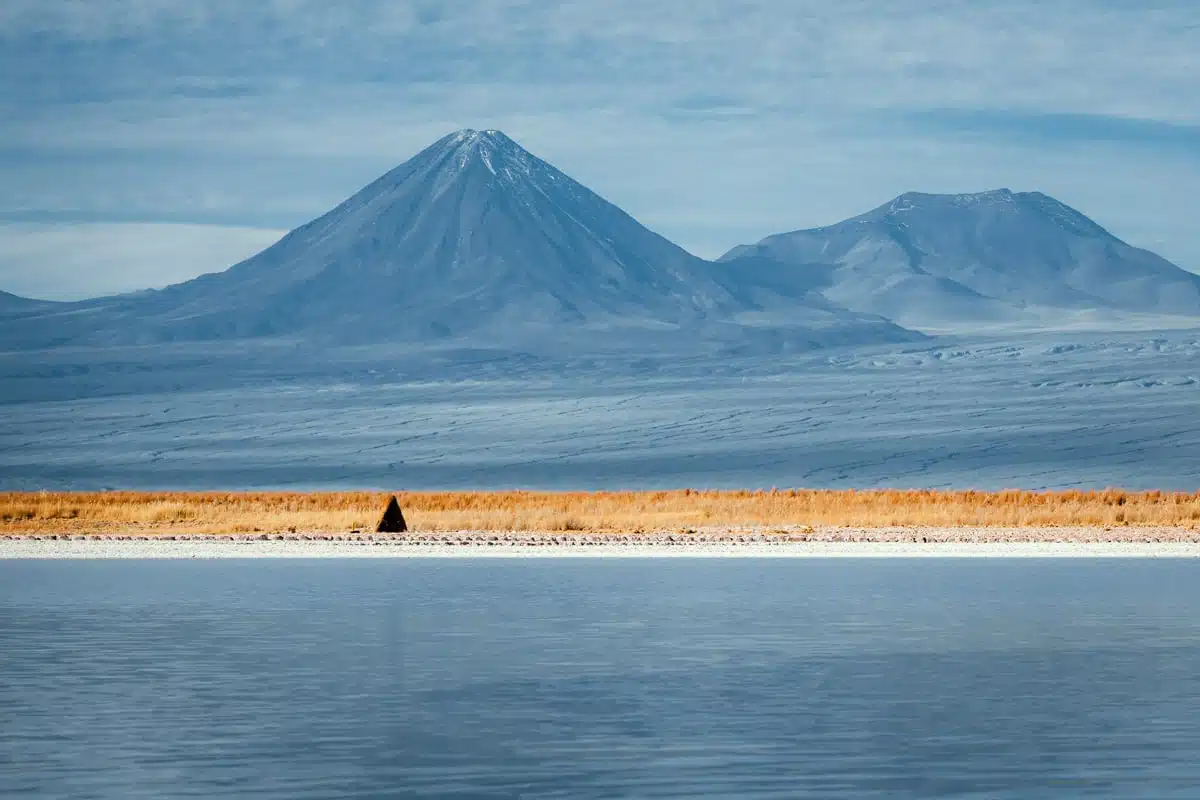
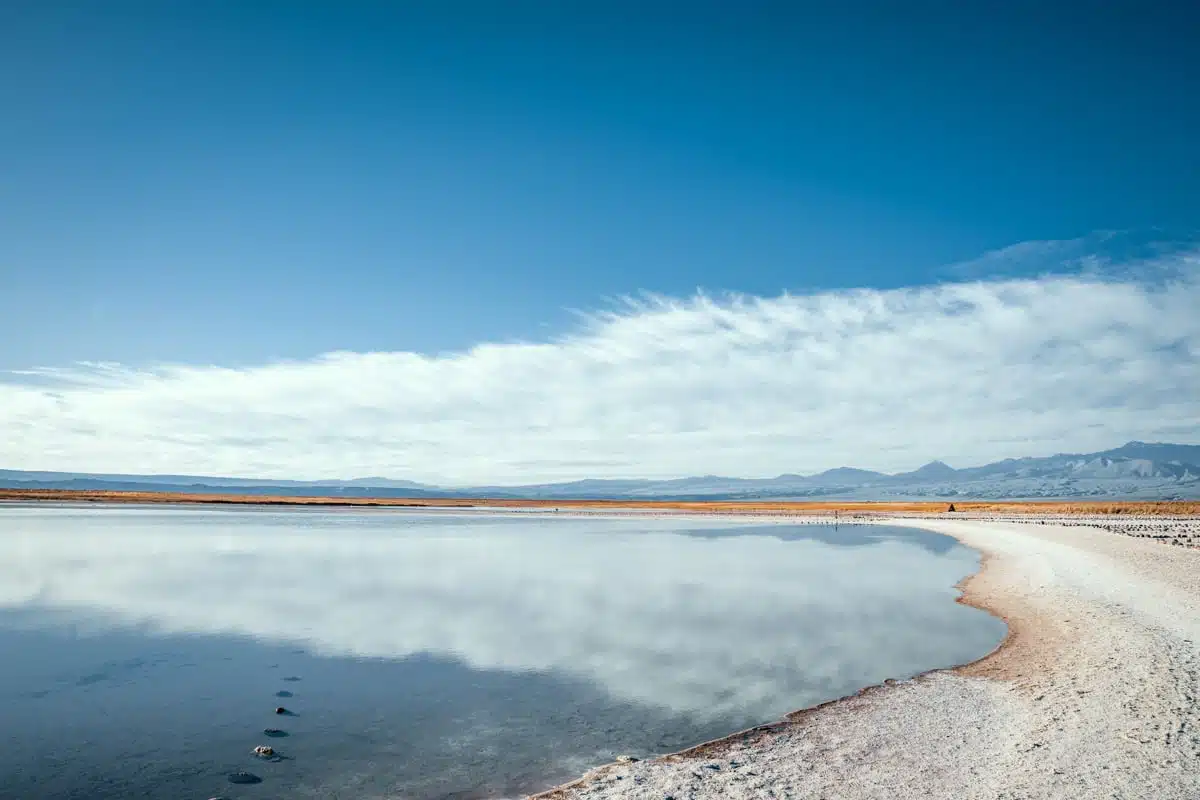
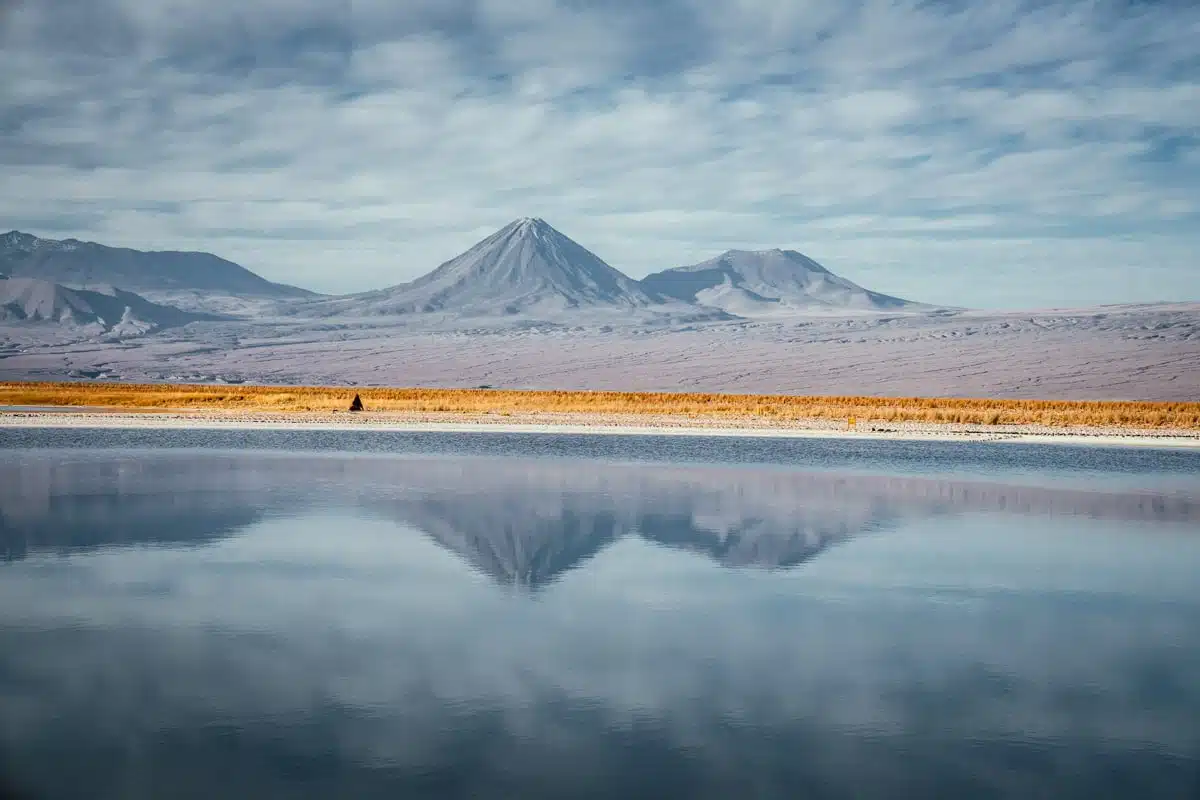
The setting is half the appeal. The perfect cone of Licancabur rises on the horizon, and on a still afternoon it’s mirrored almost perfectly in the water. Around the edges, the salt has dried into a crisp white crust, and beyond it a band of golden grass separates the lagoons from the pale, pinkish expanse of the salt flat.
Floating in Laguna Piedra
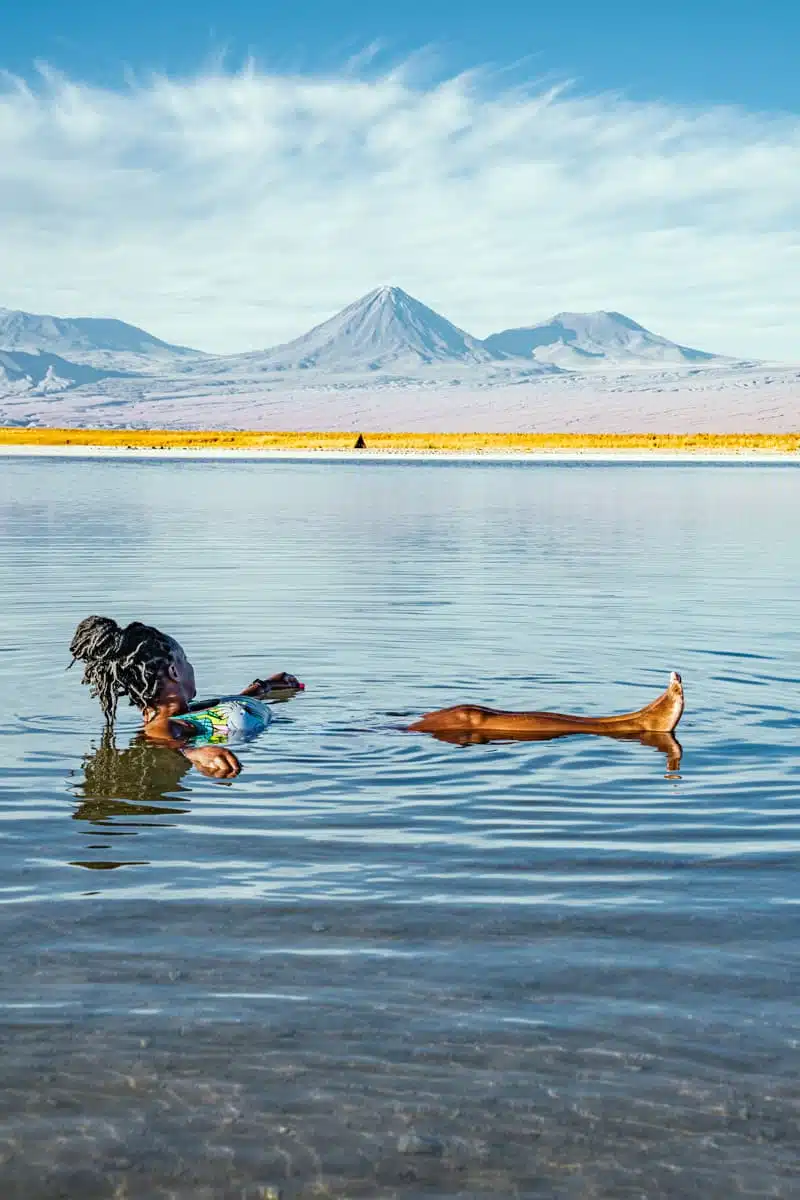
The water in Laguna Piedra is so salty that you simply can’t sink. You’ll never make it down to the bottom, no matter how hard you try. Strip down to your swimmers, wade in from the edge, lean back and let the salt hold you up. It’s a genuinely odd sensation at first: you feel weightless, and every small movement sends you drifting off in a direction you didn’t intend.
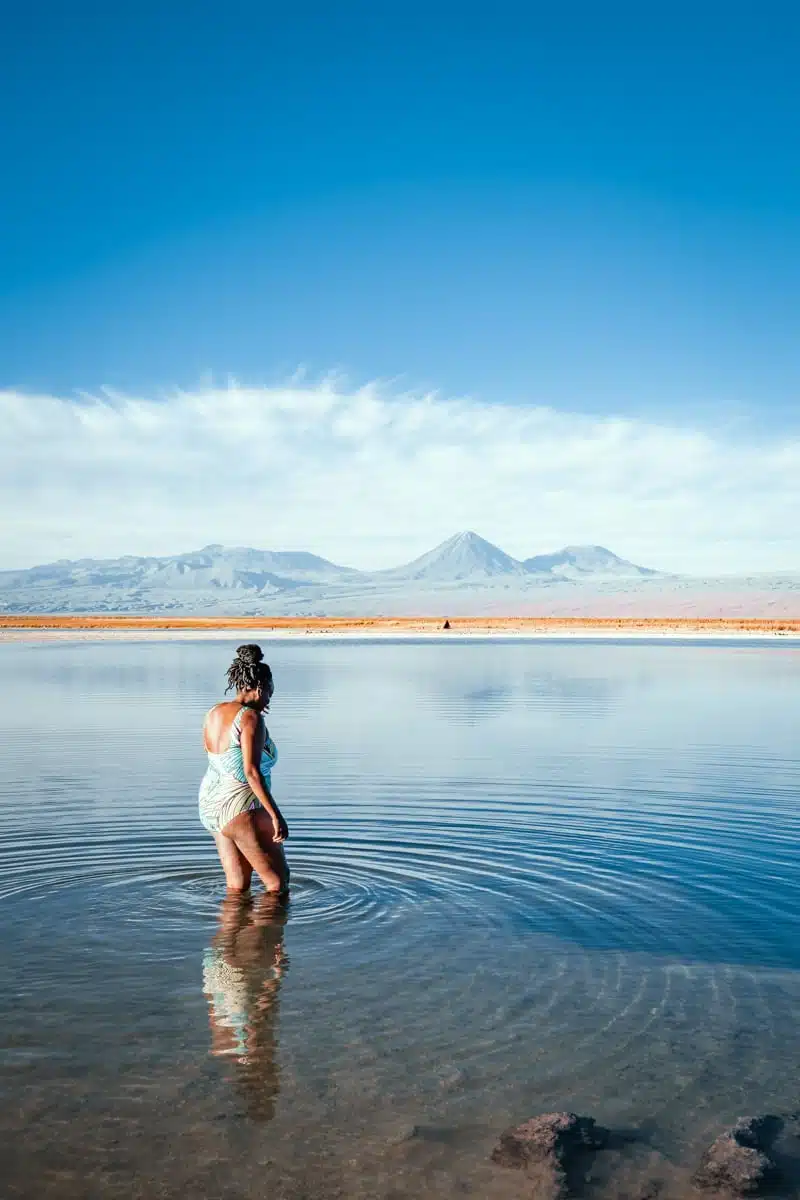
My top tip? Don’t get your face wet. The salty water stings if it gets in your eyes, so keep your head up and resist the urge to duck under or splash about. The community’s own rules say the same: never put your head under the water, and avoid any contact with your eyes.
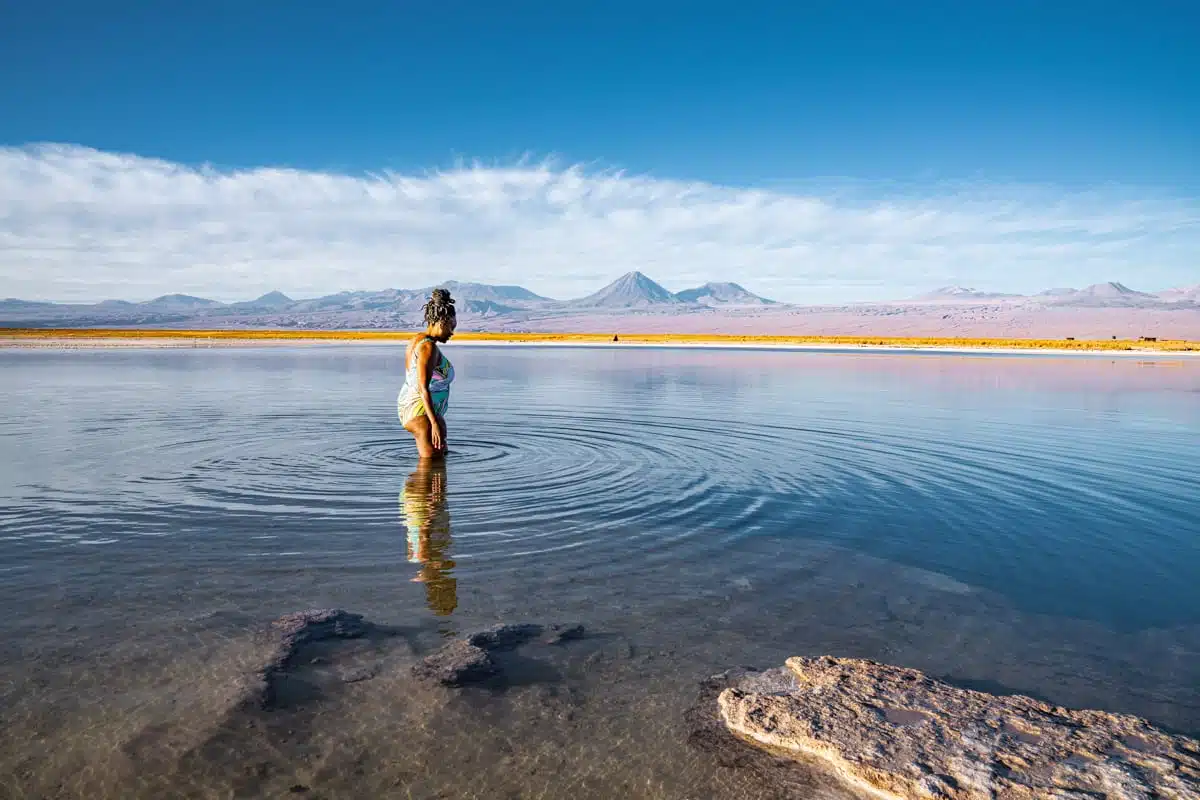
A few rules apply to everyone who swims:
- No sunscreen, oil or cream when you go in. The lagoon’s microscopic life is fragile, so the community asks swimmers not to wear any. Cover up with a hat and long sleeves on the way, and put your sunscreen on after you’ve showered.
- Keep it short. The community recommends no more than 20 minutes in the water.
- No children under six in the water. Health rules don’t allow bathing for under-sixes.
- Shower afterwards. There are changing rooms and showers for rinsing off the salt. You’re asked to keep your shower to about three minutes and not to use soap or shampoo.
Don’t skip that shower: the salt dries on your skin almost as soon as you’re out of the water. Bring a towel, something to wear on your feet over the sharp salt crust at the edge, and a big bottle of fresh water.
The flamingo lagoon next door
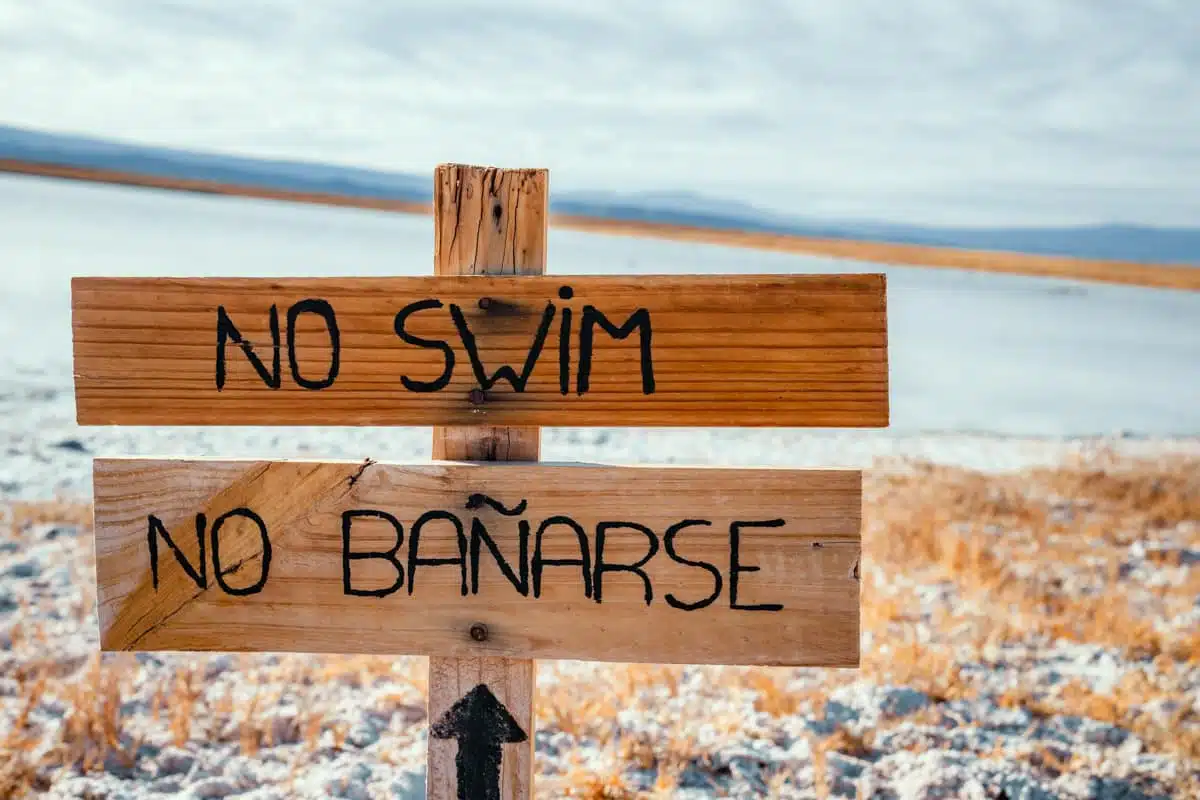
Don’t float and leave. Carry on past the swimming lagoon to Laguna Cejar itself, which is a favourite with the local flamingos. A hand-painted “No swim” sign marks the shore, and walkways lead along the edge so you can watch the birds without disturbing them.
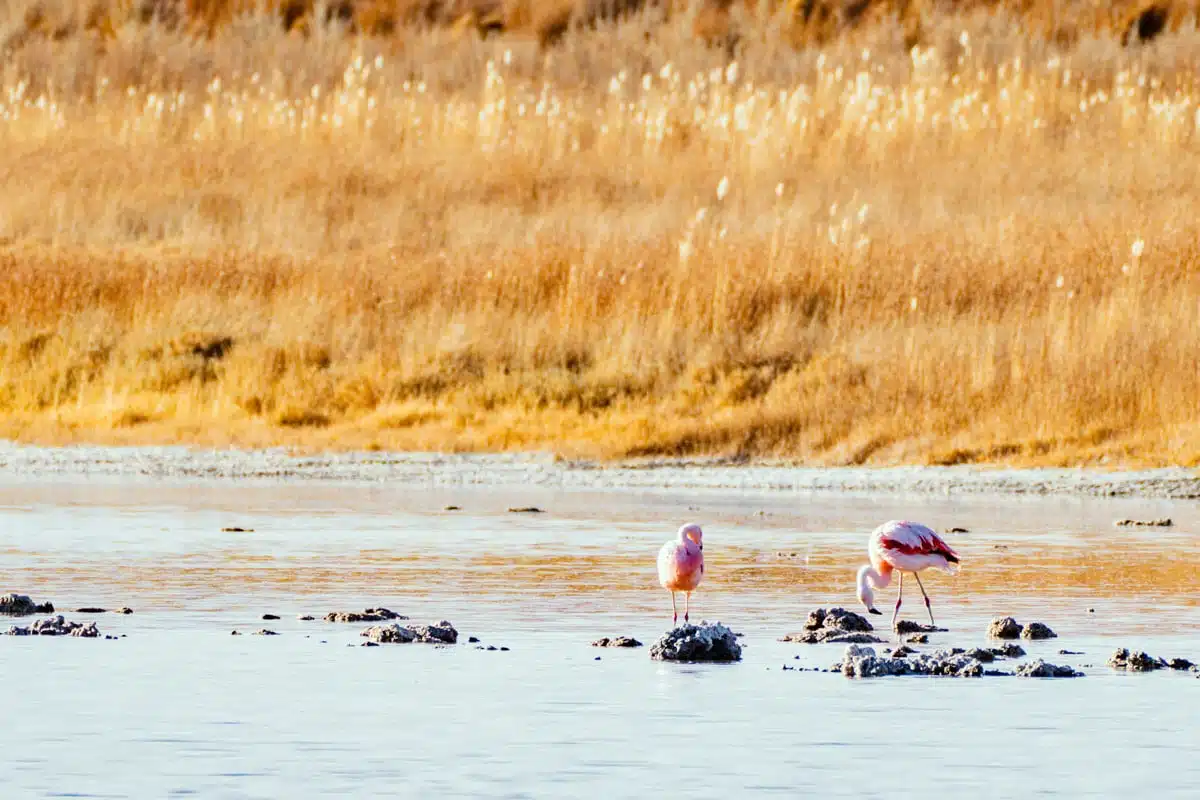
There are three species of flamingo in the Atacama: the James’s flamingo (the smallest and pinkest), the Andean flamingo and the Chilean flamingo. They aren’t born pink. The colour comes from the algae and tiny invertebrates they eat, which is why younger birds are pale. When I visited, a couple were feeding in the shallows, heads down, picking their way between the patches of salt.
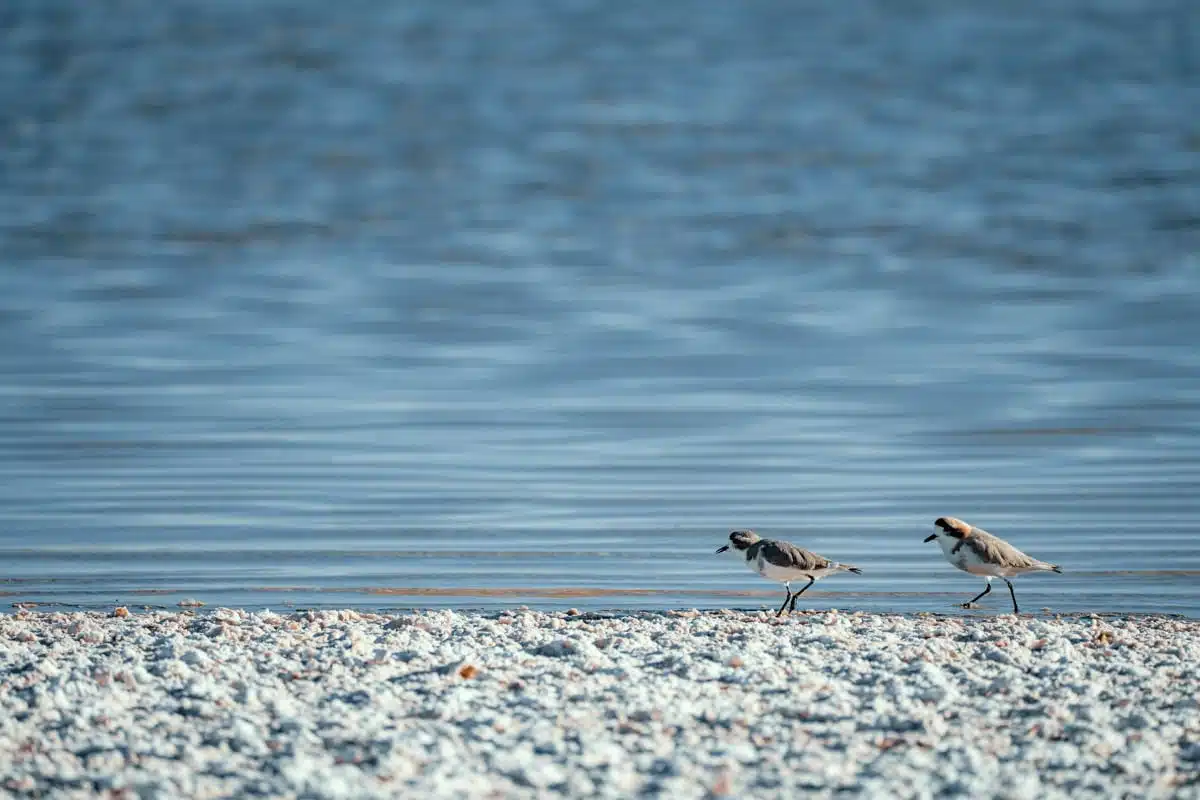
Look out for smaller birds along the shoreline too. I spotted a pair of little waders working their way along the salt crust at the water’s edge, almost invisible against the white.
Bring binoculars or a long lens if you have one, keep your voice down and stay on the walkways. Drones, pets and smoking aren’t allowed anywhere on the site.
Tickets, time slots and prices
Tickets are sold online through the Solor community’s official site, lagunacejar.com. You choose a date and a time slot, pay by card (Webpay or PayPal) and receive a QR code that’s scanned when you arrive, so there’s nothing to print. Don’t plan on turning up and buying a ticket at the gate.
- Adults (13 to 59): CLP 15,000
- Over-60s: CLP 10,000
- Children up to 12: CLP 5,000
- Atacameño indigenous visitors (with a Conadi certificate): CLP 3,000
Prices change, so check when you book. Your ticket is valid only for the date and time printed on it. Arrive 15 minutes early, and expect to spend about an hour on site from the time on your ticket. If you need to change your date, email the community as early as possible; changes are looked at case by case.
The lagoons have been closing on Tuesdays for maintenance, so plan around that. In extreme weather the community can also close the site at short notice. If that happens, it emails ticket holders and arranges a new date.
If you’re on a tour, check what the price includes. Some operators include the ticket, and others ask you to pay entry fees in cash to the guide on the day.
Getting there from San Pedro de Atacama
The lagoons are about 28km from San Pedro, a drive of 30 to 45 minutes. Head south out of town on Route 23 towards Toconao, then turn off at around kilometre 1118 and follow the signs. The last 8km or so is a well-maintained gravel road, and you don’t need a 4×4. Park only in the areas marked by the community, as the salt crust is fragile.
There’s no fuel on the way, and phone signal gets patchy after the first 12km or so, so fill up in San Pedro. There’s no public transport either: you’ll need a car, a taxi or a tour.
Cycling is possible if you’re experienced and fit. Allow an hour to an hour and a half each way, take at least three litres of water and a puncture repair kit, and expect a headwind on the way back.
I went with a private guide from Nayara Alto Atacama, where I stayed on the all-inclusive option with private excursions. At around 2,300 metres, the lagoons are one of the lower excursions from San Pedro, which is why they worked so well for my first afternoon. The community still recommends acclimatising for at least a day in San Pedro first, drinking plenty of water and avoiding alcohol the day before and during your visit.
Tours to the lagoons
Most half-day tours from San Pedro combine the lagoons with the Ojos del Salar and Laguna Tebinquinche. They usually run in the morning or the afternoon, and the afternoon tours are timed to end at Tebinquinche as the sun goes down.
This half-day tour run by Feel Atacama picks you up from your hotel in the afternoon, takes in Cejar, the Ojos del Salar and Tebinquinche, and finishes with a pisco sour at sunset. It lasts about four and a half hours with an English-speaking guide. Entry fees aren’t included: the listing puts them at CLP 21,000, paid in cash to the guide, so take pesos.
Do
Book the Cejar, Ojos del Salar and Tebinquinche sunset tour
For more ideas, see my guide to the best Atacama Desert tours.
Combining Cejar with the Ojos del Salar and Tebinquinche
The Ojos del Salar, two small, deep, almost perfectly round pools in the salt flat, are about 9km south of Laguna Cejar and free to visit. They were my first stop on my February road trip, and my guide to the Ojos del Salar covers how to find them and whether you should swim.
Laguna Tebinquinche, a couple of kilometres from the Ojos, is the classic place to end the day. It’s a vast, shallow salt lake, not one for swimming, and at sunset it captures the fiery sky so completely that it feels like you’re surrounded by molten lava, changing moment by moment. It’s on the Coyo community’s land, and entry costs around CLP 6,000 per adult, in cash.
When to go
The lagoons are open all year, Tuesdays aside. December to February is the busiest time in San Pedro, so book your slot early if you’re visiting then. I went in July, in the middle of the southern winter.
Whatever the season, the community says to expect around 25°C during the day and as little as 5°C at dawn and dusk, so dress in layers. If you’re planning to swim, a slot when the sun is high will feel a lot more inviting than one at either end of the day.
Map
Tips for visiting Laguna Cejar
- Book your slot online in advance at lagunacejar.com and keep the QR code on your phone.
- Wear your swimsuit under your clothes. There are changing rooms, but it saves time.
- Skip the sunscreen before you swim. Cover up instead, and put it on after your shower.
- Keep your face out of the water.
- Bring a towel, sandals or water shoes for the salt crust, fresh water and snacks, as nothing is sold on site.
- No drones, pets, smoking or alcohol.
Read next
- Visiting the Ojos del Salar
- The best things to do in the Atacama Desert
- My Atacama Desert itinerary
- The best Atacama Desert tours
- Where to stay in the Atacama Desert
- My Nayara Alto Atacama review
- Read all my San Pedro de Atacama and Atacama Desert guides
Love this? Save and share on Pinterest

Discover the top things to do, insider tips and hidden gems in our Chile Travel Guides.
Read the guides →