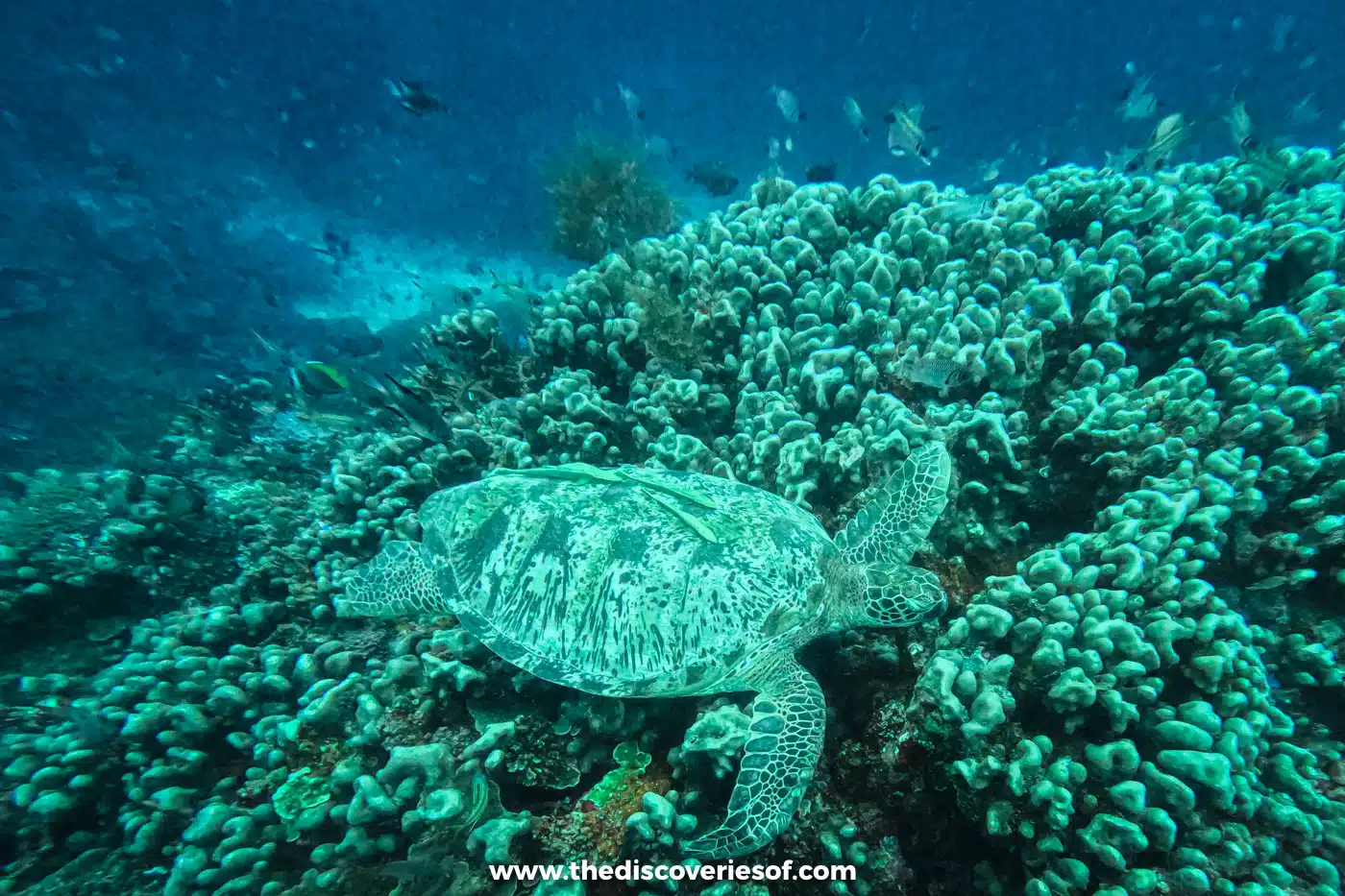
Turtles, coral gardens in full colour and huge balls of fish swirling all around you: diving in Raja Ampat lives up to the hype, but it takes more planning than most dive trips. This guide covers everything you need to know: dive resorts versus liveaboards, the main dive areas, the sites worth knowing, what you’ll see, what a dive day looks like, whether Raja Ampat suits beginner or rusty divers, costs, what to pack, when to go and how to stay safe, drawing on the 11 dives I did there after five years out of the water.
Raja Ampat sits at the heart of the Coral Triangle, and its reefs are some of the richest on the planet. I’d wanted to dive here for about ten years before I finally made it in May, when I spent a week at Papua Paradise Eco Resort on Birie Island and dived with its dive centre almost every day.
I’m not an advanced diver. I hadn’t been in open water for about five years before the trip, and my first dive went badly wrong. That’s exactly why I’ve written this guide: if you’re wondering whether you’re experienced enough for Raja Ampat, I’ve been there, and the answer is probably yes, with some care.
Some links in this article may be affiliate links, which means we may receive a small commission, at no additional cost to you, if you decide to purchase through one of my recommended partners.
Raja Ampat diving at a glance
- Water temperature: around 27°C to 30°C all year; a 3mm wetsuit is plenty for most people.
- Visibility: usually 10 to 30 metres, at its best from October to April. It was superb on most of my dives in May.
- Best time to dive: October to April, with January and February the peak. Seas are roughest from roughly June to September.
- Currents: common, and sometimes strong. They’re what bring the fish, but they’re the main thing that separates the easy sites from the advanced ones.
- Experience: Open Water divers can dive here, as dive centres match sites to ability. Advanced Open Water and around 30 to 50 logged dives will open up more sites.
- Nitrox: widely offered, and free at many resorts, including Papua Paradise.
- Insurance: dive insurance with evacuation cover is essential, and compulsory at most dive centres.
Dive resort, liveaboard or homestay?
The biggest decision when planning a dive trip to Raja Ampat is where you’ll sleep, because it decides which sites you can reach. There are three options.
| Dive resort | Liveaboard | Homestay | |
|---|---|---|---|
| What it is | A hotel with its own dive centre, boats and house reef, usually on a small island | A dive boat you live on for a week or more, moving between areas | A simple family-run guesthouse on an island, often with diving arranged through a local operator |
| Areas you can dive | Sites within day-trip range of your base, plus longer excursions (Mansuar and the Fam Islands from Birie, for example) | The widest range, including remote areas such as Misool in the south | Mostly the reefs near your island |
| Dives per day | Usually two to three boat dives, plus the house reef | Typically three to four | Varies; often two |
| Comfort | The most comfortable: proper rooms, spa, restaurant and a fixed base | Comfort varies with the boat; cabins are compact | Basic: simple rooms, shared meals, cold showers in some |
| Flexibility | High: dive when you like, take days off, snorkel instead | Low: the schedule is set for the whole boat | Medium, depending on your hosts |
| Non-divers | Well suited: snorkelling, spa, excursions | Less suited, though some boats take snorkellers | Good for snorkellers on a budget |
| Seasons | Open all year | Mostly October to April; many boats move elsewhere in the rougher months | Open all year |
| Best for | Rusty or newer divers, mixed groups, anyone who wants a comfortable base and rest days | Experienced divers who want to see as much of Raja Ampat as possible | Budget travellers and confident divers happy with simple living |
I chose a dive resort, and I’d recommend one to anyone getting back into diving or travelling solo. Being able to start on the house reef, choose my dives, take a day off and talk to the dive centre about my confidence level made a huge difference. A liveaboard makes more sense if you’re experienced and want to tick off the far-flung areas.
Raja Ampat’s main dive areas
Raja Ampat, “the four kings”, is named after its four largest islands: Waigeo, Batanta, Salawati and Misool. The diving is spread across a huge area, so it helps to know the main zones:
- The Dampier Strait, between Waigeo and Batanta, is the heart of Raja Ampat diving. Most resorts and homestays are here, around Kri, Mansuar and Gam, along with famous sites such as Cape Kri, Sawandarek, Manta Sandy and Blue Magic. Currents run strongly through the strait, which is why the fish life is so rich.
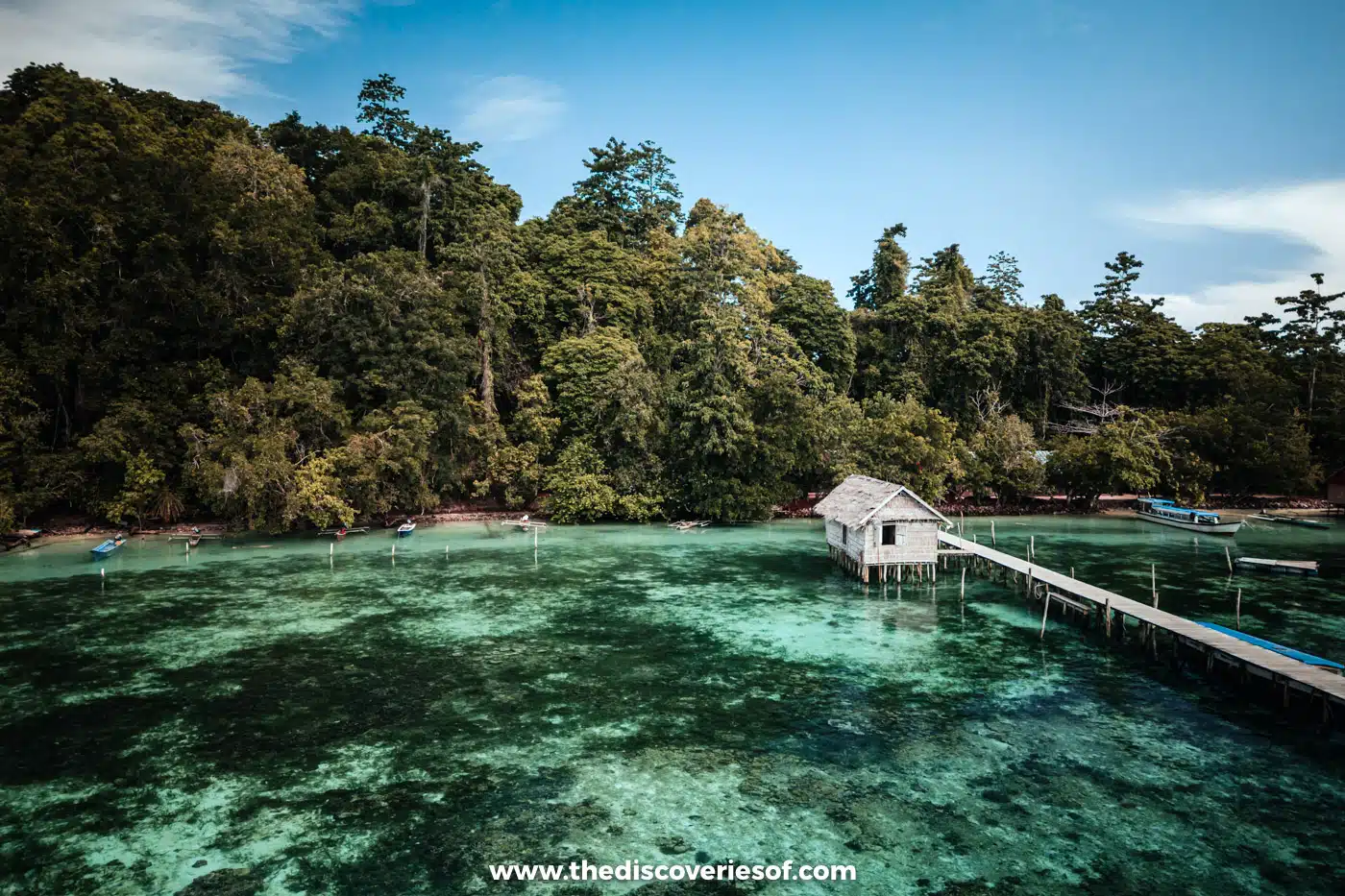
- Batanta and Birie, on the southern side of the strait, are quieter, with fewer boats. This is where I stayed, and the reefs around Birie were some of my favourites.
- The Fam Islands, to the west, are home to Melissa’s Garden and the Piaynemo viewpoint, usually visited on a full-day trip.
- Misool, in the far south, is known for soft corals and pinnacles, and is mostly dived from liveaboards or the few resorts there.
- Wayag, in the far north, is famous for its karst scenery and is usually reached by liveaboard or a long boat trip.
I dived the Dampier Strait, Birie and the Fam Islands, which is a realistic plan for a week at a resort.
The best dive sites I dived in Raja Ampat
Raja Ampat has hundreds of dive sites, and nobody dives them all. These are the ones I dived, with the depths and times from my dive log, what I saw and who each one suits.
Sawandarek, Mansuar
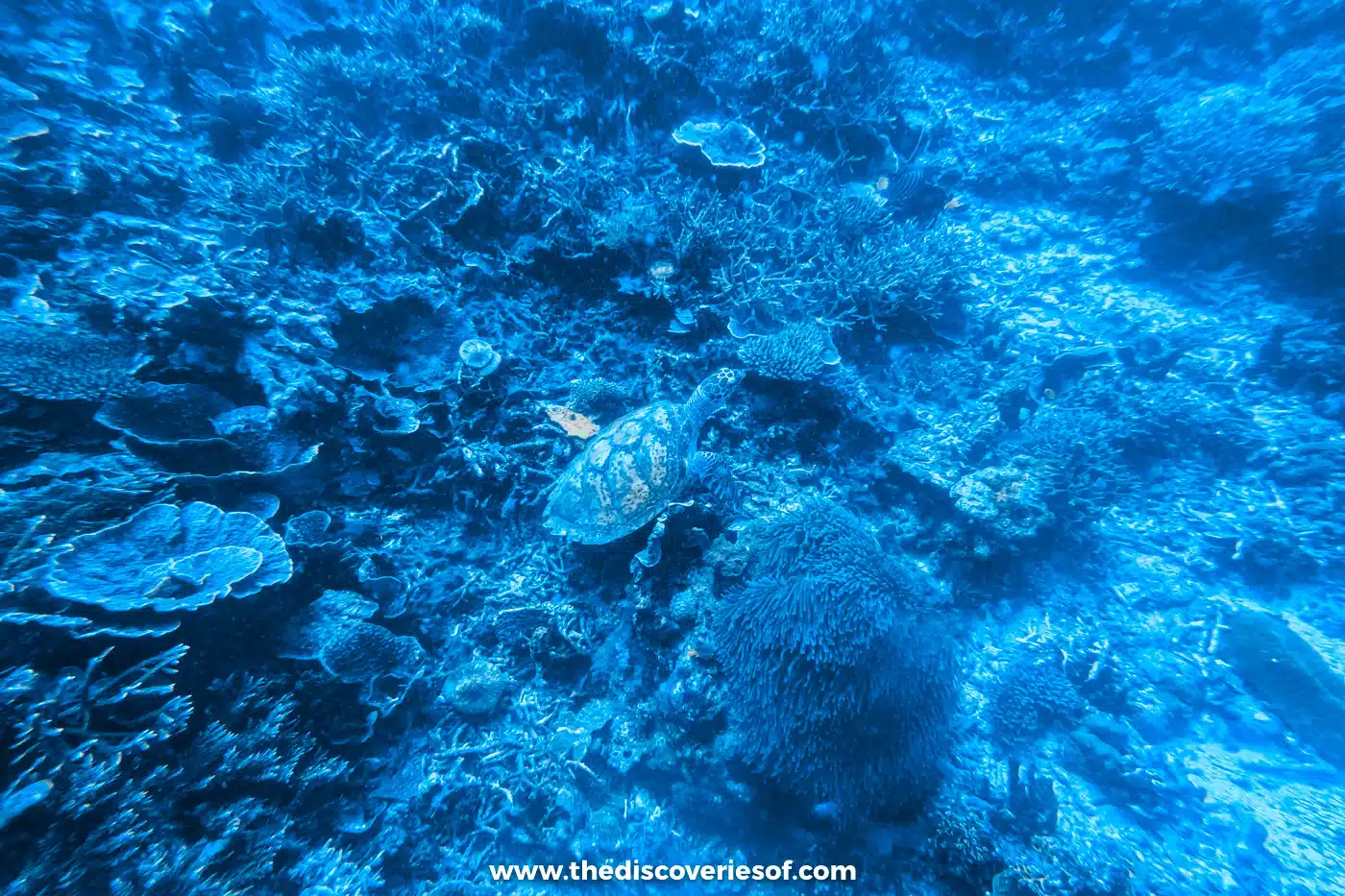
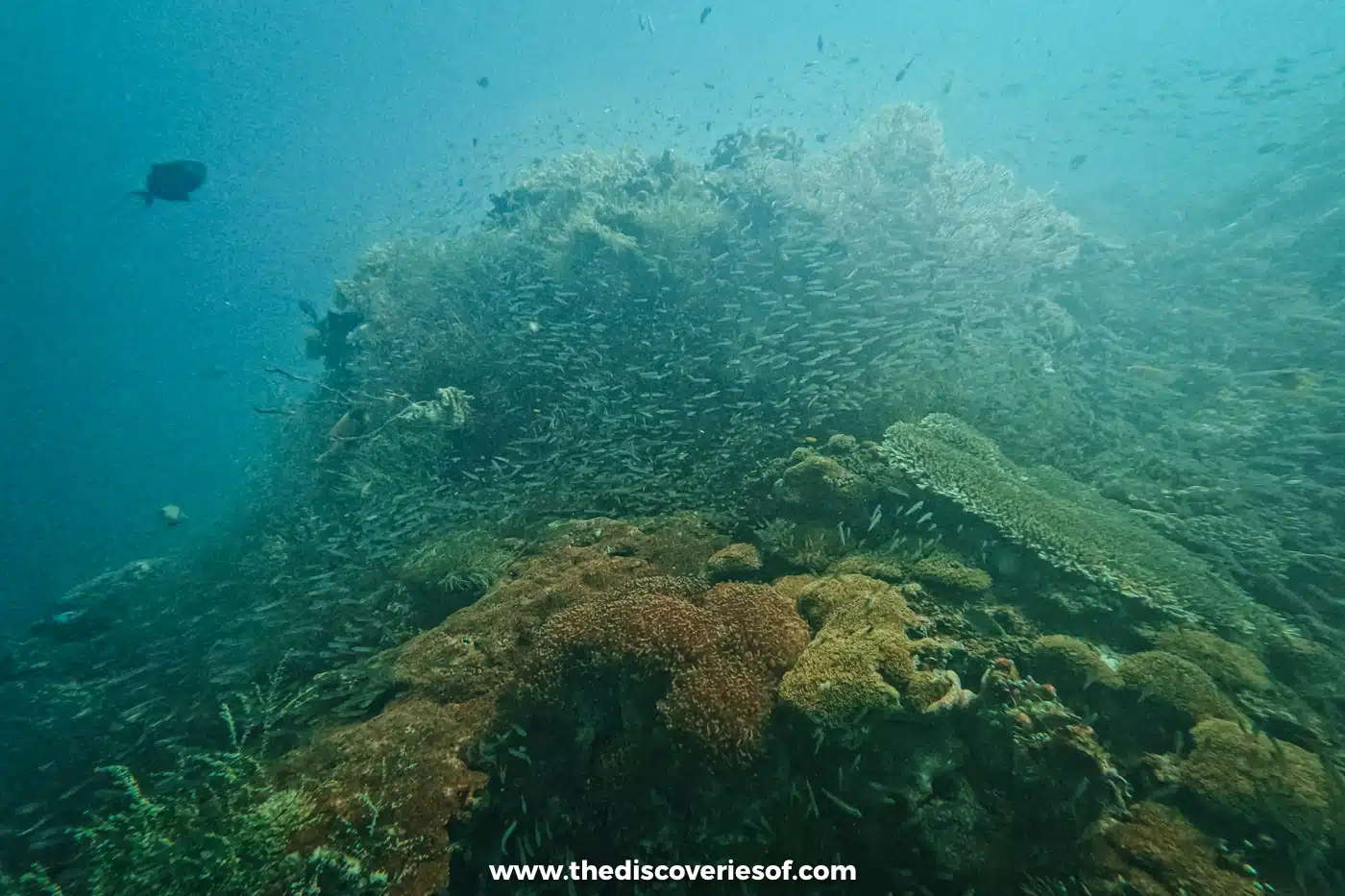
Sawandarek is a sloping reef off the village jetty on the south side of Mansuar, known for turtles, giant clams and schooling fish. I dived it twice in a row on the Mansuar day trip, because the first dive was so good that the guides took us straight back: 37 minutes with a maximum depth of 18 metres, then 39 minutes at up to 14 metres. At its shallowest the reef comes up to about five metres, so even your safety stop is full of colour.
It was my favourite dive of the whole trip. Between the two dives I logged turtles (four of them), barracuda, a Napoleon wrasse, batfish, yellow and black snapper, clouds of fusiliers, a blacktip reef shark and three huge black snapper that seemed as startled to see me as I was to see them. At one point I was surrounded by balls of fish.
Good for: most levels, in the right conditions. It’s a popular day trip from the resorts around the Dampier Strait.
Ransiwor, Mansuar
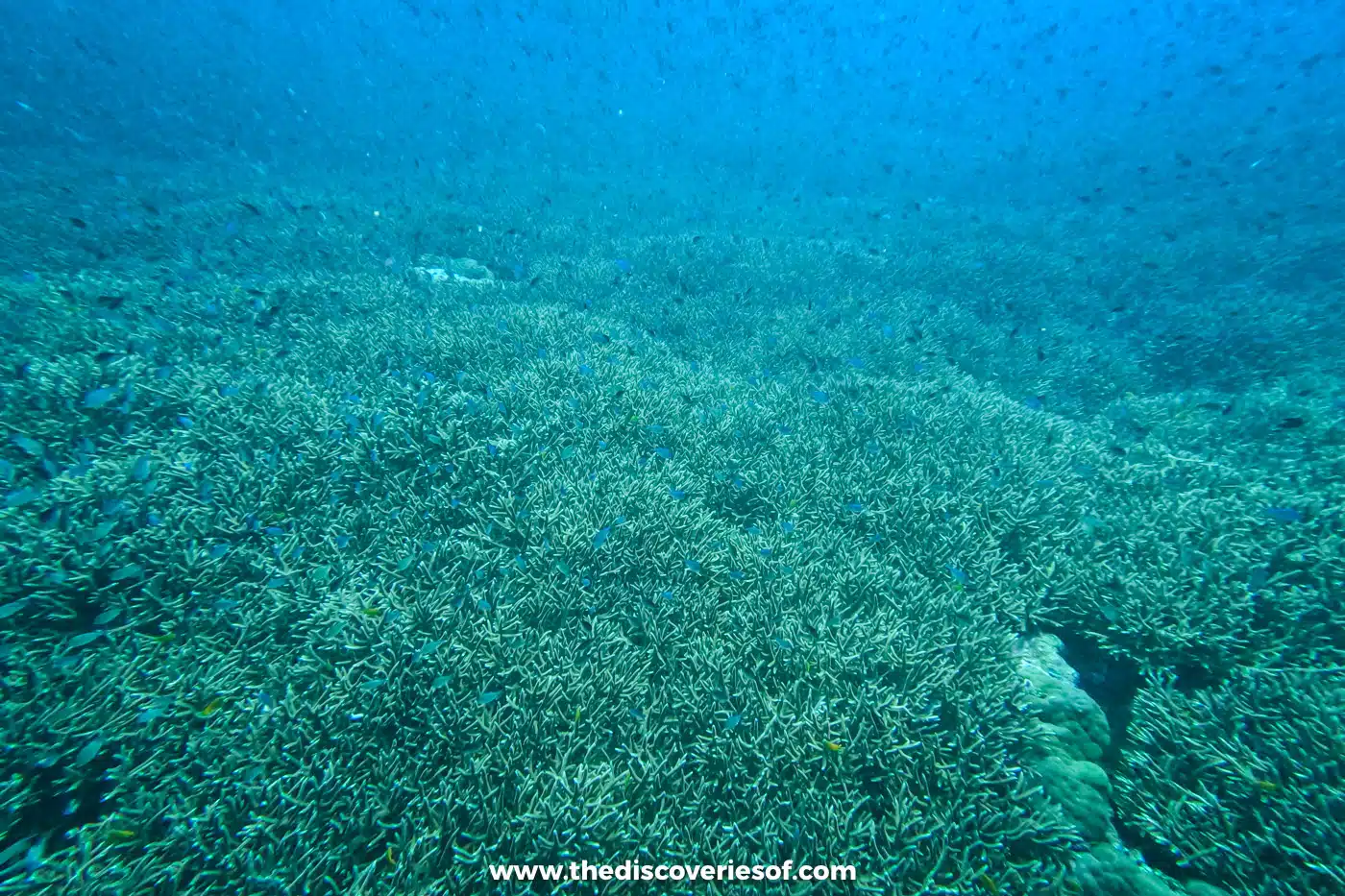
The third dive of my Mansuar day was Ransiwor, and it had the most extraordinary coral I’ve ever seen: a coral forest of so many types and colours that it felt like swimming through a kaleidoscope. It’s a long, gentle dive (42 minutes for me, at no more than 14 metres), working up the reef to four or five metres at the end. The fish life was different from Sawandarek too: black fusiliers, trevally, mackerel, jacks, another Napoleon wrasse and clouds of orange anthias.
Good for: all levels. Three dives in a day is a lot if you’re out of practice, but this one is gentle.
Melissa’s Garden, Fam Islands
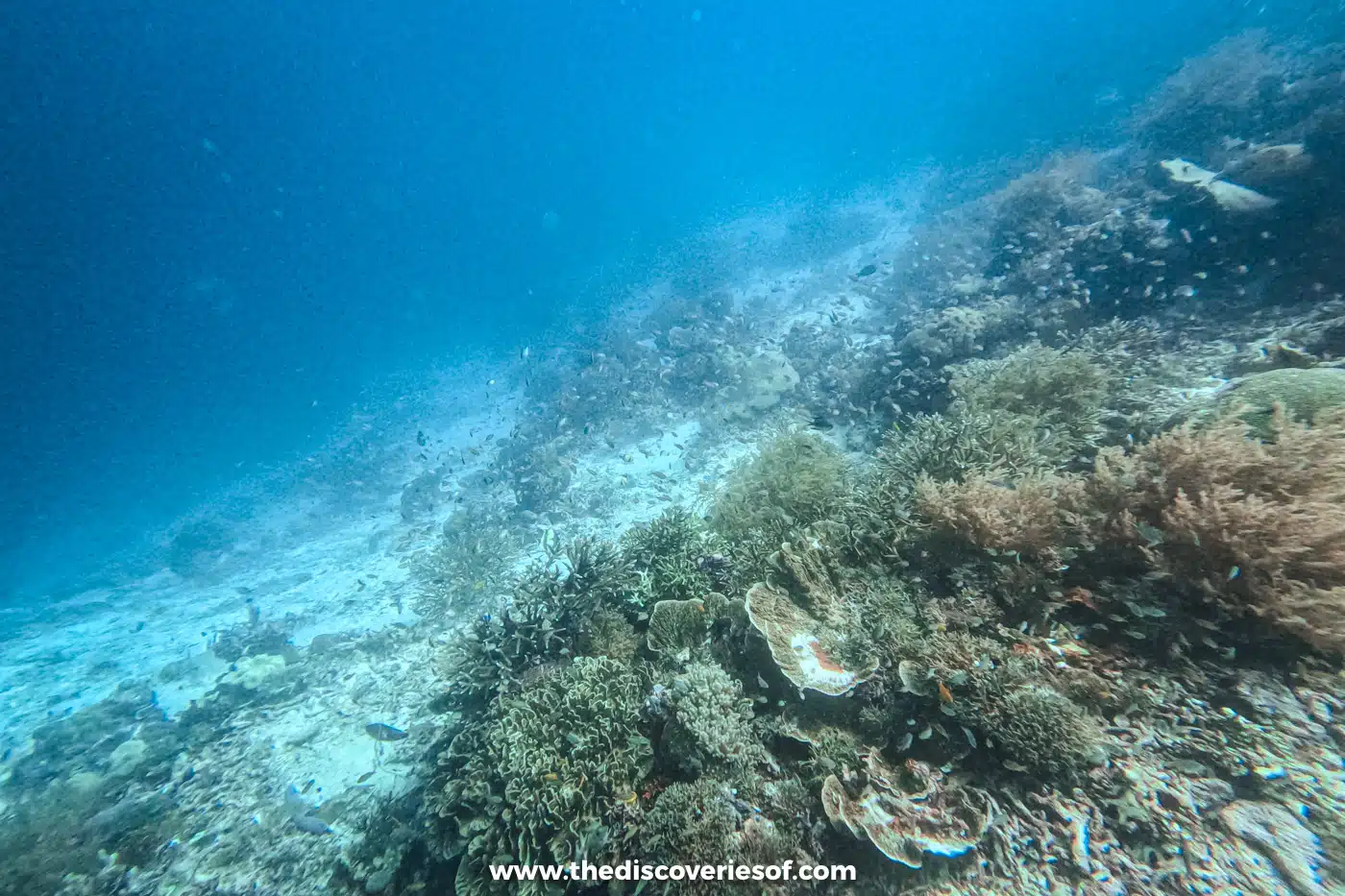
Melissa’s Garden is a hard-coral garden in the Fam Islands, and one of Raja Ampat’s best-known sites. It’s sheltered, and strong current is rare, which makes it one of the gentler famous dives. It was also my deepest dive of the trip, at 21 metres, for 30 minutes.
It’s usually combined with other Fam dives and the climb to the Piaynemo viewpoint on a full-day trip; from Papua Paradise, the boat ride took about 90 minutes each way.
Good for: all levels.
Fam Slope and Batu Rufus, Fam Islands
The other two Fam dives were a step up. Fam Slope (17 metres, 36 minutes) and Batu Rufus (15 metres, 27 minutes) had more current and steeper reef, with fusiliers, trevally, angelfish and a Napoleon wrasse. On one of them, I was finning hard just to stay still.
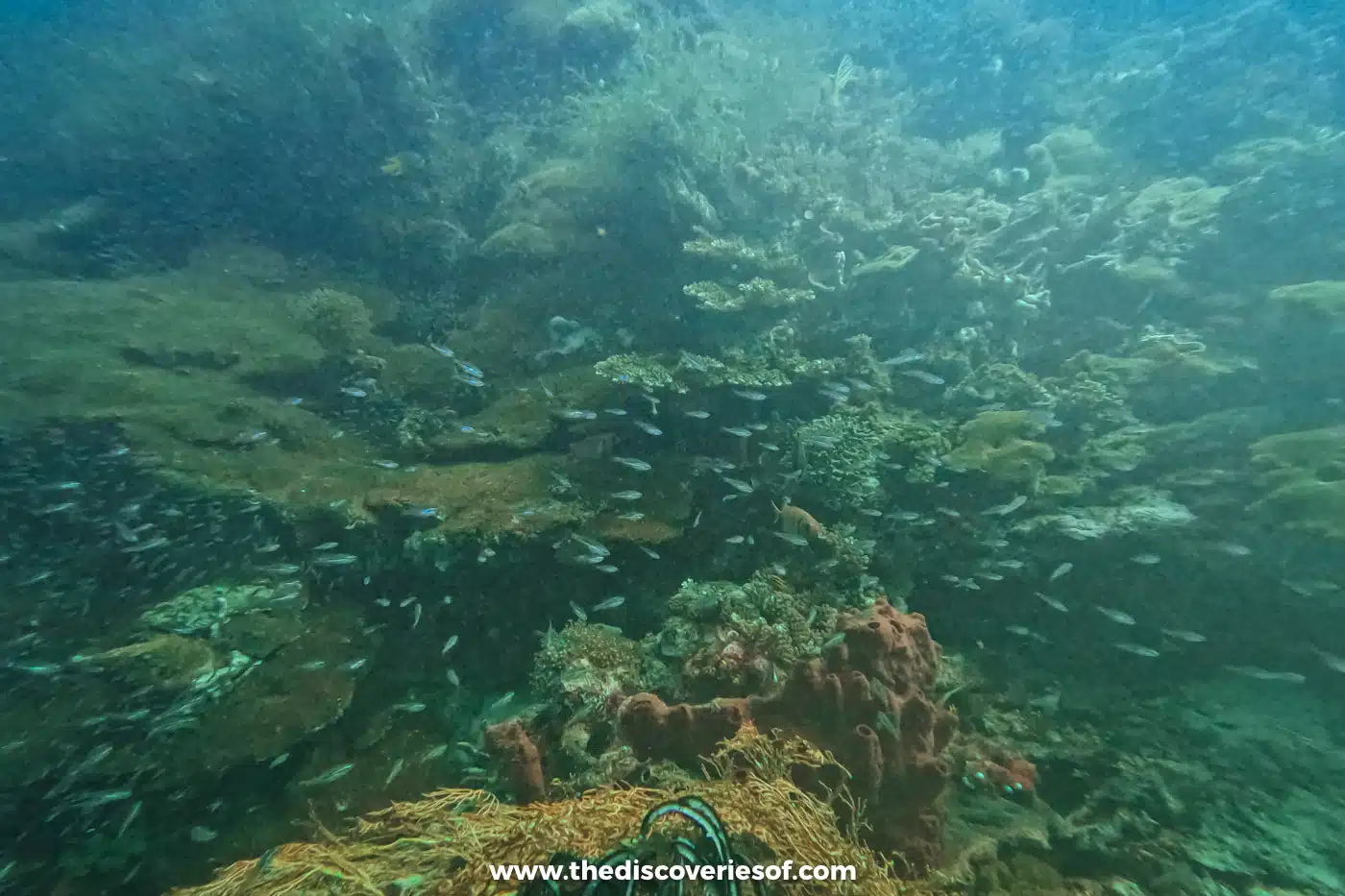
If walls make you nervous, focus on your buoyancy so you don’t bump the reef, and stay close to your guide. Mine, Welson, kept a close eye on me. I still found these dives much harder than Mansuar, and if I’m honest, I preferred the diving there. The trip is worth doing for the scenery alone, and my guide to Piaynemo and the Fam Islands covers the full day.
Good for: confident divers comfortable in current.
Around Birie: the house reef, Birie’s Corner, Sauyador and Arefi Garden
Don’t overlook the dives close to base. Birie has two house reefs, one on each side of the island, and the one in front of the bungalows (18 metres, 35 minutes) was one of the most wildlife-packed dives of my week: rays, a fairly big blacktip shark, shoals of fish and coral in amazing condition, including a tunnel of coral about 20 metres long that opened out onto a corner where the bigger fish hung out.
The short boat dives around the island were just as good:
- Birie’s Corner (15 metres, 33 minutes): huge shoals of fusiliers and trevally, angelfish, anemones and a giant clam.
- Sauyador (20 metres, 34 minutes): a tasselled wobbegong, a mobula ray, yellowtail fusiliers, anemonefish, a scorpionfish and turtles. There was a fair bit of current.
- Arefi Garden (17 metres, 42 minutes): a calm, gently sloping reef rammed with life, with four turtles, anemones, mackerel and angelfish. It was my last dive, and quite the send-off.
To see a wobbegong, swim down, hover just above the seabed and peek under the rocks.
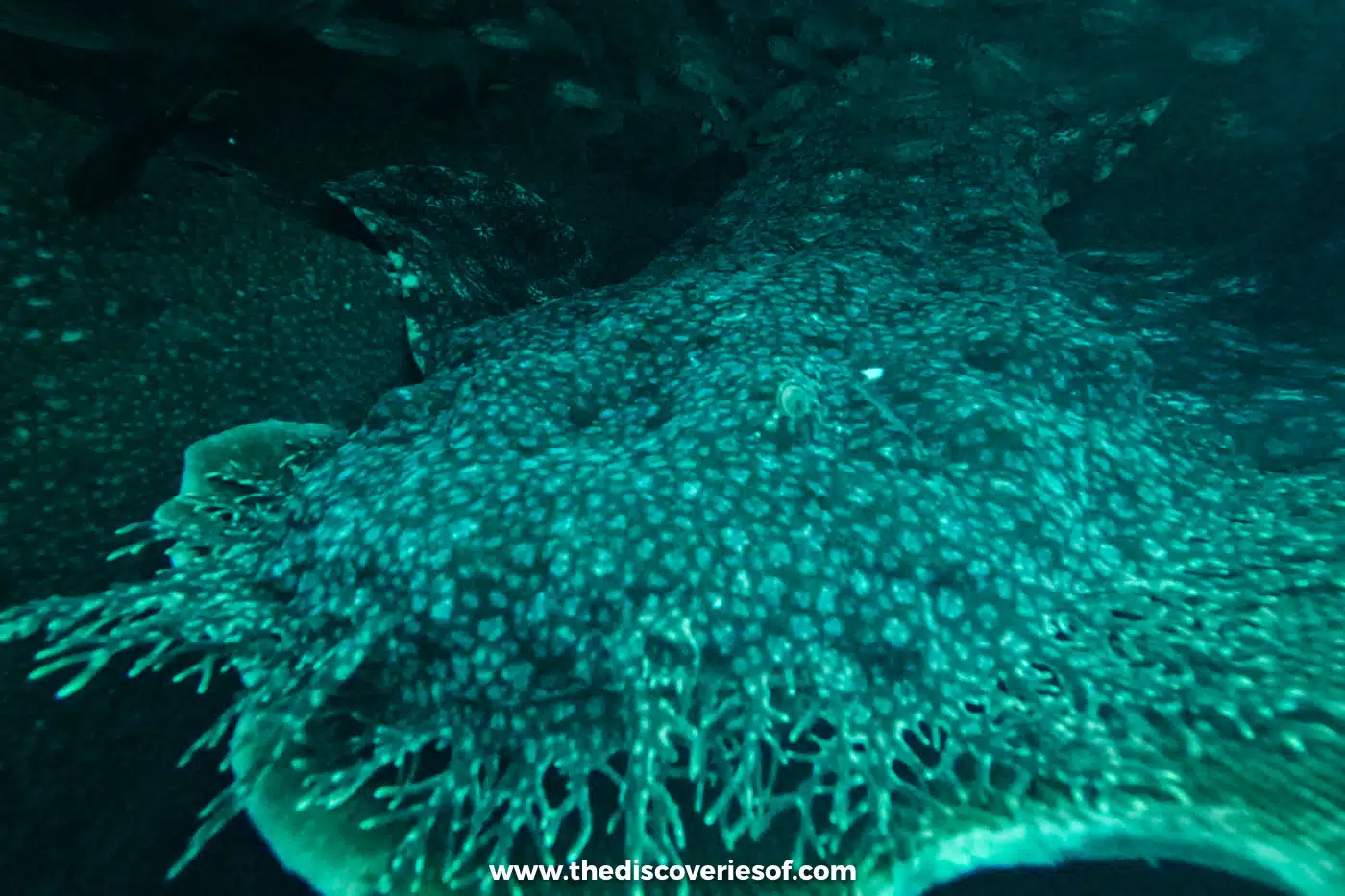
Good for: all levels, and snorkellers on the house reef.
Famous sites I didn’t dive
Raja Ampat’s best-known sites around the Dampier Strait include Cape Kri, Manta Sandy and Blue Magic. They’re known for big schools of fish and, at Manta Sandy and Blue Magic, manta rays, but they often have strong currents, and Blue Magic in particular is one for experienced divers. My dive centre decided the currents at Kri would be too strong for me that week, and I was happy to trust them. If these sites are why you’re going, ask your dive centre before you book whether they’re included and what experience they expect.
My Raja Ampat dive log
For anyone planning a similar week, this is the full log of my 11 dives with Papua Paradise’s dive centre.
| Dive | Site | Area | Max depth | Time | Highlights |
|---|---|---|---|---|---|
| 1 | My first dive | Near Birie | 19m | 28 min | Where I ran out of air (see below) |
| 2 | House Reef 1 | Birie | 18m | 35 min | Rays, blacktip shark, coral tunnel |
| 3 | Birie’s Corner | Birie | 15m | 33 min | Fusiliers, trevally, giant clam, angelfish |
| 4 | Sawandarek | Mansuar | 18m | 37 min | Turtles, barracuda, Napoleon wrasse, batfish, blacktip shark |
| 5 | Sawandarek | Mansuar | 14m | 39 min | Turtles, snapper, wrasse, fusiliers |
| 6 | Ransiwor | Mansuar | 14m | 42 min | Coral forest, anthias, jacks, Napoleon wrasse |
| 7 | Melissa’s Garden | Fam Islands | 21m | 30 min | Hard-coral garden |
| 8 | Fam Slope | Fam Islands | 17m | 36 min | Fusiliers, trevally, angelfish |
| 9 | Batu Rufus | Fam Islands | 15m | 27 min | Fusiliers, trevally, Napoleon wrasse |
| 10 | Sauyador | Near Birie | 20m | 34 min | Wobbegong, mobula ray, scorpionfish, turtles |
| 11 | Arefi Garden | Birie | 17m | 42 min | Turtles, anemones, mackerel, angelfish |
Top Tip
Ask the dive centre the night before which sites are planned and what the current is likely to be. Briefings are short, and it’s far easier to swap a dive for a calmer site, or a snorkel, before the boat leaves than once you’re out there.
What a dive day in Raja Ampat looks like
Dive days start early and finish by lunchtime unless you’re on a long excursion. At Papua Paradise, a local day ran like this:
- 8am: the boat leaves for two morning dives near the resort, with hot drinks and snacks on board between them.
- About 11.30am: back at the resort for lunch.
- 2.30pm: an optional afternoon dive.
- Dusk: an optional dusk or night dive.
Long excursions are different. The Mansuar and Fam Islands trips leave earlier (7.15am for the Fam Islands), include three dives and a packed lunch on the boat, and get back late afternoon. They’re tiring, especially on top of the heat, so I’d plan no more than two big excursion days in a week and keep a rest day between them.
On your first evening, expect a dive briefing and kit fitting. Your gear then lives in a crate that the crew load onto the boat for you each morning.
What you’ll see underwater
Raja Ampat is about variety more than any single headline species. Across my 11 dives I logged:
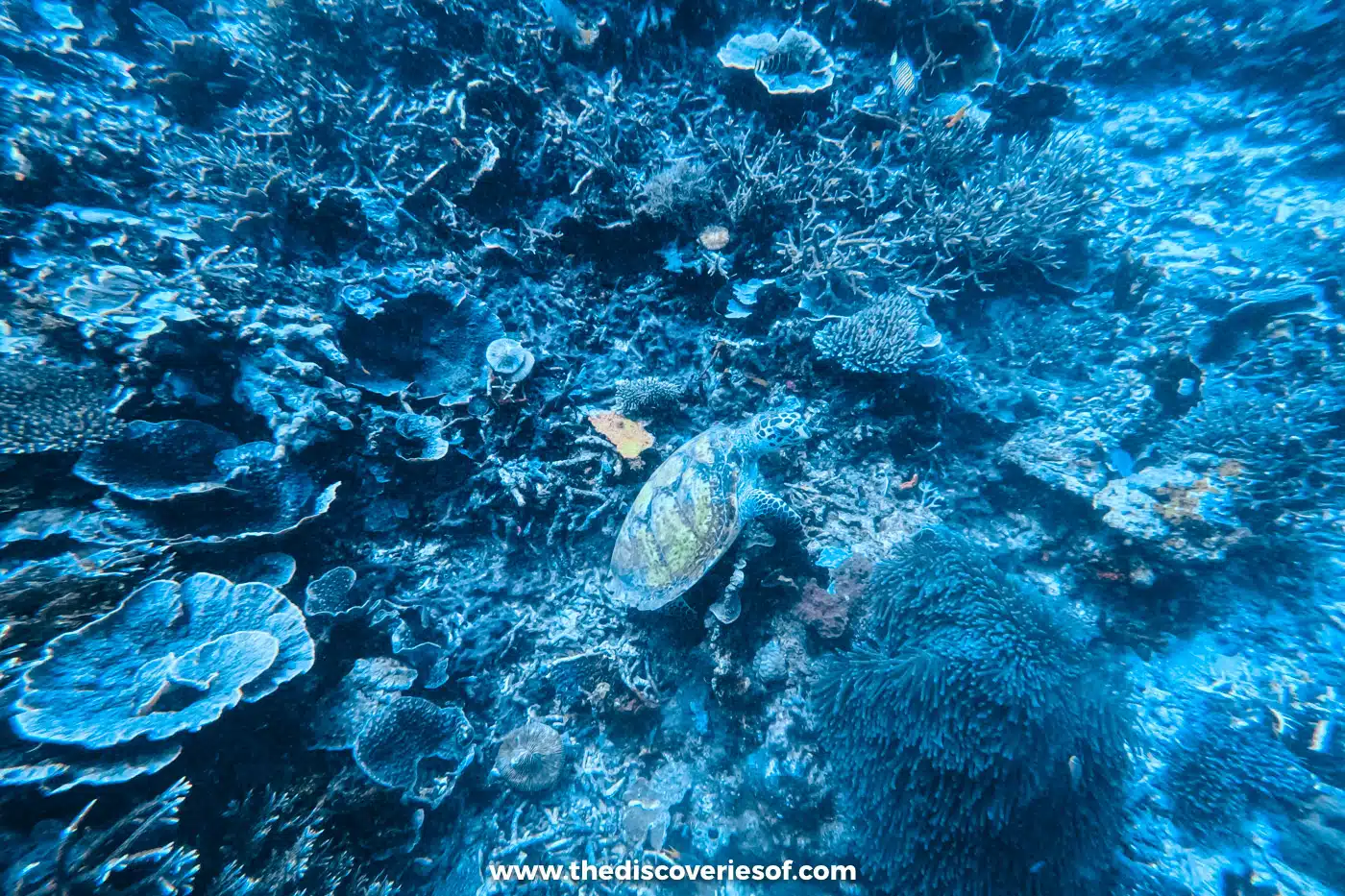
- Turtles on most days, four at a time at Sawandarek and at Arefi Garden.
- Sharks: blacktip reef sharks and a tasselled wobbegong.
- Rays: rays on the house reef and a mobula ray at Sauyador.
- Big fish: barracuda, Napoleon wrasse, trevally, jacks, mackerel and large snapper.
- Huge schools of fusiliers, the swirling balls of fish Raja Ampat is famous for.
- Reef life: batfish, angelfish, anemonefish, scorpionfish, anthias and giant clams.
- Coral in better condition than anywhere else I’ve dived.
Manta rays are seen all year round at cleaning stations such as Manta Sandy and Blue Magic, with a peak from roughly November to April. I didn’t dive either site, so I didn’t see them.
This is a taste of what it’s like down there, from my own footage:
Can beginner or rusty divers dive Raja Ampat?
Yes, with some care. Open Water divers can dive Raja Ampat, because the dive centres choose sites to suit each diver. You’ll get a lot more out of the trip with Advanced Open Water and some experience in current behind you, but there’s plenty to do without it. Before this trip, I genuinely wondered whether I should wait until I had far more dives behind me. I’m so glad I didn’t: diving every day was the best way to get my confidence back.
I qualified with PADI on Ko Tao years ago, but I’d only logged a dive or two every couple of years since, and diving has never felt completely natural to me. If you’re in the same boat, do a refresher before you go. I spent an evening practising my skills with an instructor at the bottom of a pool in London, but a pool is a long way from the open sea, so also ask for an easy check dive near your base on your first day.
What certification do you need?
- Open Water (or equivalent): enough for many sites, as long as you’re honest about your experience and the dive centre picks sites to suit. Most of my dives stayed at around 18 metres or shallower.
- Advanced Open Water: worth having for deeper sites, walls and the current-swept points of the Dampier Strait.
- Nitrox: a short course that pays off here, as nitrox is free at many resorts and gives you longer bottom times on repetitive dive days.
- Rusty? Book a refresher before you go, and a check dive when you arrive. Resorts with a PADI dive centre, such as Papua Paradise, also run courses, but they need booking in advance.
Why you need to be able to look after yourself
My first dive is the reason I’d tell anyone, however guided the dive, to be ready to get themselves out of trouble. I was going through my air faster than the rest of the group. When my dive computer warned me I had only a few minutes left, I signalled, but the guide was busy filming and the message didn’t get through. By the time I showed my gauge, I was under 50 bar. On the way up, the spare regulator I was given kept flooding, and I ran out of air completely a metre or two below the surface, so I came up faster than I should have. It was the most stressful minute and a half of my life.
The dive centre handled it well: an easy dive on the house reef the next morning, a different guide and a bigger tank. That dive turned the whole trip around. But the lesson stands. Every diver needs to be able to look after themselves, even with an experienced guide.
My safety checklist for rusty divers
- Watch your own air. Check your gauge often, and don’t rely on the guide to do it for you.
- Signal low air early and unmistakably. Show your gauge rather than describing a number.
- Agree a turn point before you descend. Settle on the pressure at which you’ll signal and head up, and stick to it.
- Know your buddy’s alternate air source. In your buddy check, find it and take a breath from it at the surface, so you know it works before you need it.
- Ask for a check dive somewhere easy, close to base, on day one.
- Ask for a bigger tank if you’re a heavy breather. It made a huge difference to me, and it’s a normal request.
- Speak up if you don’t feel safe. Asking for a different guide or buddy is completely reasonable.
It gets easier fast. By the Mansuar trip, two days later, my buoyancy was better and I was getting through my air far more slowly.
Choosing a dive centre and package
Check the dive centre’s rules and ratios before you book. At Papua Paradise, the dive centre is Gangga Divers, a PADI 5 Star centre, with a maximum of four divers per guide, a maximum depth of 30 metres, gloves banned, and a dive computer and dive insurance with evacuation cover both compulsory. You’ll also sign a medical statement.
Questions worth asking any dive centre before you book:
- How many divers per guide, and will I be grouped with divers of a similar level?
- Which sites are realistic for my certification and experience?
- Is nitrox included, and is gear rental extra?
- Which excursions cost extra, and how often do they run?
- What happens if the weather cancels a dive?
How much does diving in Raja Ampat cost?
Raja Ampat isn’t a cheap dive destination, mainly because everything has to come in by boat. Most resorts sell diving packages rather than single dives. Papua Paradise, for example, offers an unlimited diving package with up to four dive slots a day and free nitrox (around 32%), while longer trips such as Mansuar and the Fam Islands cost extra. Liveaboards usually price per trip, with most of the diving included.
To give you a real figure, my week at Papua Paradise cost about £2,350 as a solo traveller, all inclusive apart from diving, and the diving and extras added roughly another £1,000. On top of that, every foreign visitor pays the regency tourist levy and the marine park fee, which together come to about IDR 1.7 million to 2 million per person.
You can check availability at Papua Paradise for your dates.
Getting There
Most divers fly overnight from Jakarta to Sorong, then take a resort speedboat or the public ferry to Waisai. Resort boats leave Sorong in the early afternoon, so book a flight that lands in the morning. My guide to how to get to Raja Ampat covers flights, boats, visas and fees step by step.
What to pack for diving in Raja Ampat
- Your own dive computer. It’s compulsory at many dive centres, including Papua Paradise, and you’ll want one you know well.
- Your certification card, logbook and nitrox card, plus proof of dive insurance with evacuation cover.
- Mask and booties that fit, even if you rent the rest. Shake out your booties before you put them on: I found a cockroach in mine.
- A 3mm wetsuit or shortie. The water is warm, but you’ll be in it several times a day.
- A surface marker buoy (SMB) and whistle. With strong currents and lots of boats, they’re worth carrying on every dive.
- Reef-safe sun protection, a hat and a long-sleeved top for long days on open boats.
- A dry bag for your phone and camera on the boat.
- Cash in Indonesian rupiah for the entry fees and extras.
Diving responsibly in Raja Ampat
Raja Ampat’s reefs are in such good condition partly because they’re protected, and the marine park fee you pay helps fund that. Gloves are banned at Papua Paradise’s dive centre, and the simplest rule anywhere is not to touch anything. Work on your buoyancy (it really matters on the walls), keep your fins off the coral, and don’t take anything home, shells included.
When to go diving in Raja Ampat
October to April is the best time to dive, with the calmest seas and the best visibility, and January and February are the peak. From roughly June to September, south-easterly winds make the sea rougher, especially in July and August; some areas close, and even the resorts that stay open may cancel dives.
May, when I went, is a shoulder month: good but changeable. I had glorious weather for most of the week and excellent visibility.
Safety, insurance and flying
Raja Ampat is remote, and medical facilities are limited. In a serious emergency, evacuation is likely to be to Darwin in Australia, which is why dive insurance with evacuation cover is non-negotiable. Check that your policy covers the depths you plan to dive and nitrox.
Leave plenty of time between your last dive and your flight home. My last dives were two days before my flight from Sorong, and with the resort boats leaving early in the morning, a gap of at least a day is easy to build in.
Map
Read next
- 7 days in Raja Ampat: the perfect Raja Ampat diving itinerary from an island base
- Piaynemo and the Fam Islands: a day trip guide
- Papua Paradise Eco Resort review: a remote Raja Ampat dive resort
- How to get to Raja Ampat: flights, boats, visa and fees
- Is Raja Ampat worth it? My honest verdict
- Read all my Raja Ampat guides
Love this? Save and share on Pinterest

Discover the top things to do, insider tips and hidden gems in our Indonesia Travel Guide.
Read the guides →