Raja Ampat sits at the heart of the Coral Triangle, the richest stretch of reef on the planet. It’s also remote, with no public boats between the islands, so how you plan your week decides what you see.
I’d wanted to go for about ten years before I finally spent a week in May diving from Papua Paradise Eco Resort on Birie Island. I logged 11 dives, the most I’d ever done on a single trip, and had one serious scare along the way.
This is a diving itinerary first and foremost. It assumes you’ll base yourself on one island, at a dive resort or a homestay with a dive centre, and dive from day boats rather than a liveaboard. I’ve built it from my own week, reordered with hindsight, and it takes in turtles at Sawandarek, wall dives in the Fam Islands, the Piaynemo viewpoint and well over 100 hornbills flying home to roost at sunset.
Some links in this article may be affiliate links, which means we may receive a small commission, at no additional cost to you, if you decide to purchase through one of my recommended partners.
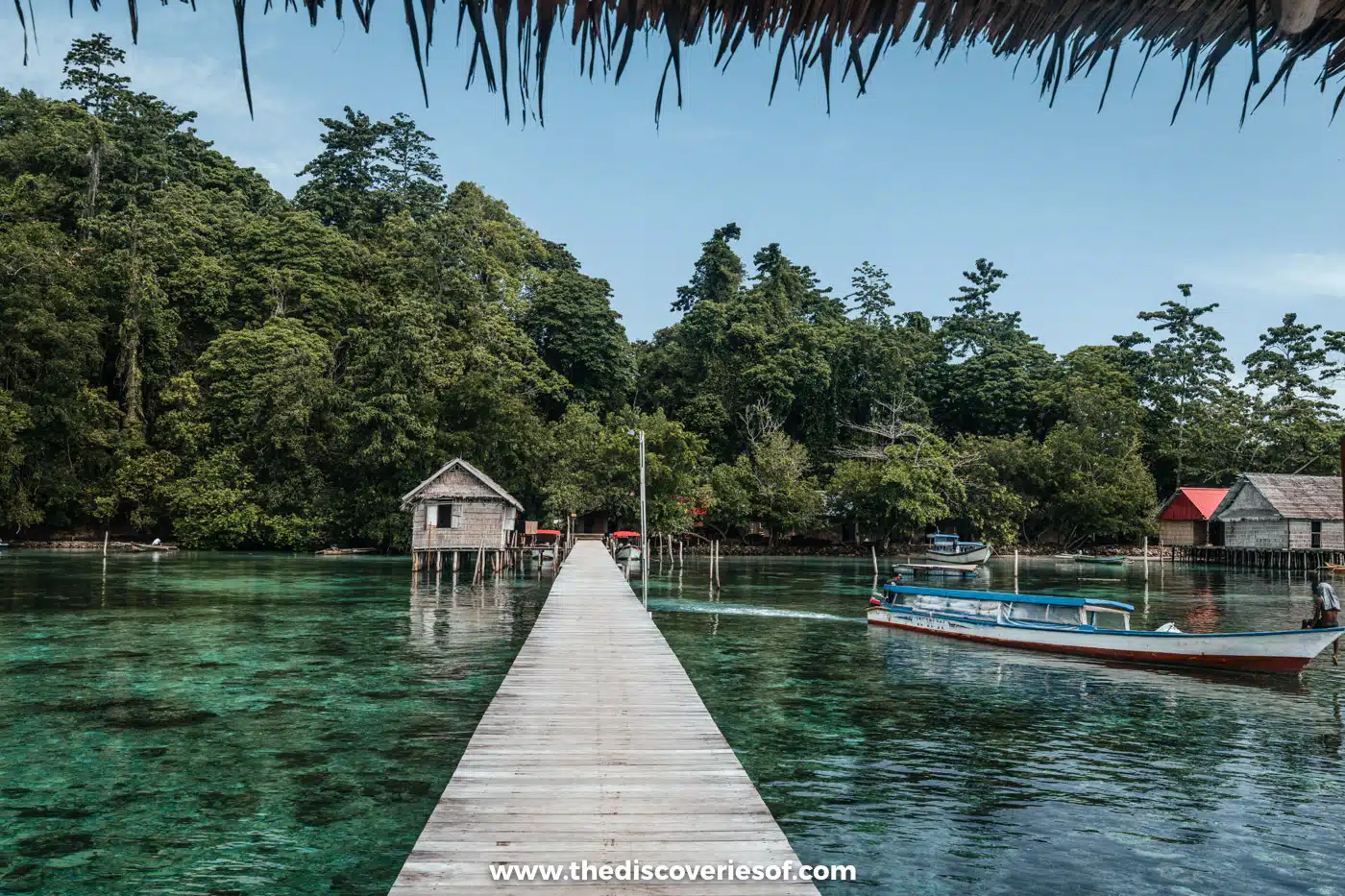
Raja Ampat itinerary
Raja Ampat means “four kings”, after a Papuan legend of seven eggs, four of which hatched into the kings of the four main islands: Waigeo, Batanta, Salawati and Misool. Around them lie more than 1,500 smaller islands, cays and shoals off the Bird’s Head peninsula of New Guinea, in Indonesia’s Southwest Papua province. The reefs hold around three quarters of the world’s known species of hard coral.
With no public boats between the islands, you can’t island-hop here. The easiest way to dive a lot of Raja Ampat in a week is to pick one base and let its dive centre take you out each day. This itinerary uses Birie Island, off Batanta, but the shape works from any dive resort in the area.
Here’s how the seven days break down:
- Days 1 to 2: fly overnight from Jakarta to Sorong, take the boat to Birie Island, then ease in on the house reef
- Day 3: a three-dive day trip to Mansuar and Sawandarek
- Day 4: a day out of the water, with a jungle walk, the spa and the hornbill sunset cruise
- Day 5: the Fam Islands, Melissa’s Garden and the Piaynemo viewpoint
- Days 6 to 7: local dives, a slow last day without diving, then the early boat back to Sorong the next morning
That adds up to around ten dives, with a rest day in the middle and a dry day before you fly. It isn’t quite the order I did things in: I got into trouble on my very first dive, and I’d always start on the house reef now.
For a glimpse of my week and a few tips on preparing for the trip, here’s my Instagram post on getting ready to visit Raja Ampat.
Days 1 to 2: Jakarta to Sorong and Birie Island
Getting to Raja Ampat is a journey in itself: mine went Singapore, Jakarta, Sorong and then a boat. Sorong is a port city on the western tip of New Guinea, and almost everyone arrives on a domestic flight from Jakarta or Makassar.
Sleep at the Jakarta airport hotel
Flights from Jakarta to Sorong leave around midnight, so if you’re connecting at Soekarno-Hatta, don’t spend the evening in the terminal. The Anara Airport Hotel is inside Terminal 3, and I booked a room for a few hours’ sleep before my flight. It’s cosy, and it’s a genuine recommendation: not sponsored, not hosted, and worth it for the sleep alone. Check prices for the Anara Airport Hotel on Booking.com.
Top Tip
Check in online for the Sorong flight. I assumed I had a seat assigned, and only found out at the airport that I didn’t.
Arrive in Sorong
Garuda’s GA682 leaves Jakarta at 00:10 and is scheduled into Sorong’s Domine Eduard Osok Airport at about 6.20am, and Batik Air has a daily flight at 00:30. Both are often retimed, so check when you book. Mine landed at about 6am to bright sunshine.
Resort boats don’t leave until the afternoon, so I booked a day-use room at a hotel close to the jetty the resort boat leaves from, had a nap (and cracked my phone screen, for good measure), then went for lunch.
Tickets
Every foreign visitor pays two fees. The regency tourist levy is IDR 1,000,000, and you register for it online through SIPARI before you arrive. The marine park fee is officially IDR 700,000 and valid for 12 months, though several operators report it has risen to IDR 1,000,000. Many resorts arrange both; otherwise, carry cash.
Getting to Birie Island
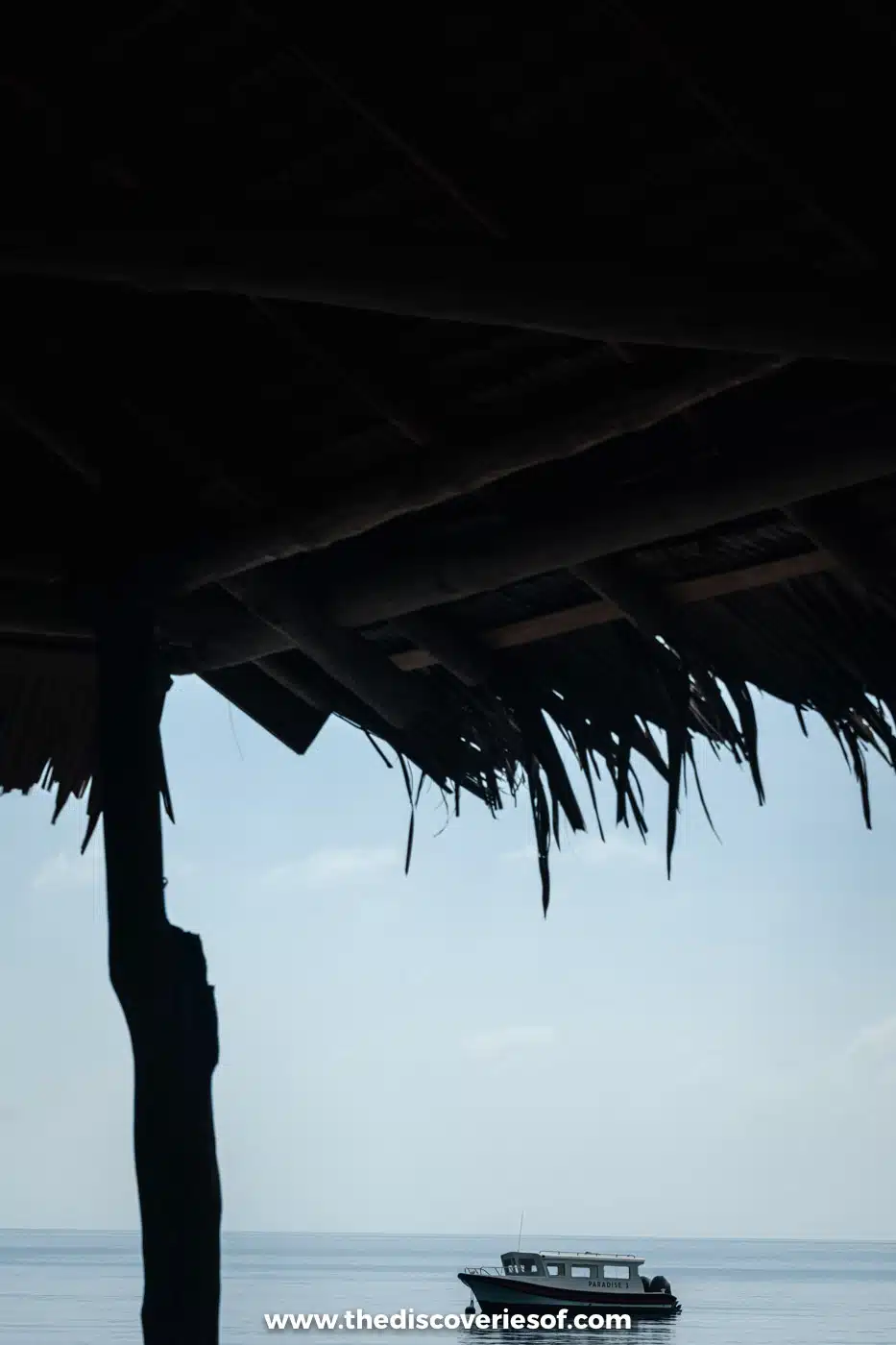
The Papua Paradise boat leaves Sorong at 2pm every day, after a 15-minute drive from the airport, so your flight needs to land by noon or you’ll spend a night in Sorong. The resort quotes about two hours; mine took about 90 minutes.
Getting There
Staying in a homestay instead? The Express Bahari ferry runs from Sorong’s Pelabuhan Rakyat harbour to Waisai on Waigeo in about two hours, leaving at 2pm daily with extra morning sailings on some days. Economy costs IDR 137,000 and VIP IDR 262,000, and your hosts meet you in Waisai by speedboat.
Settle in on Birie
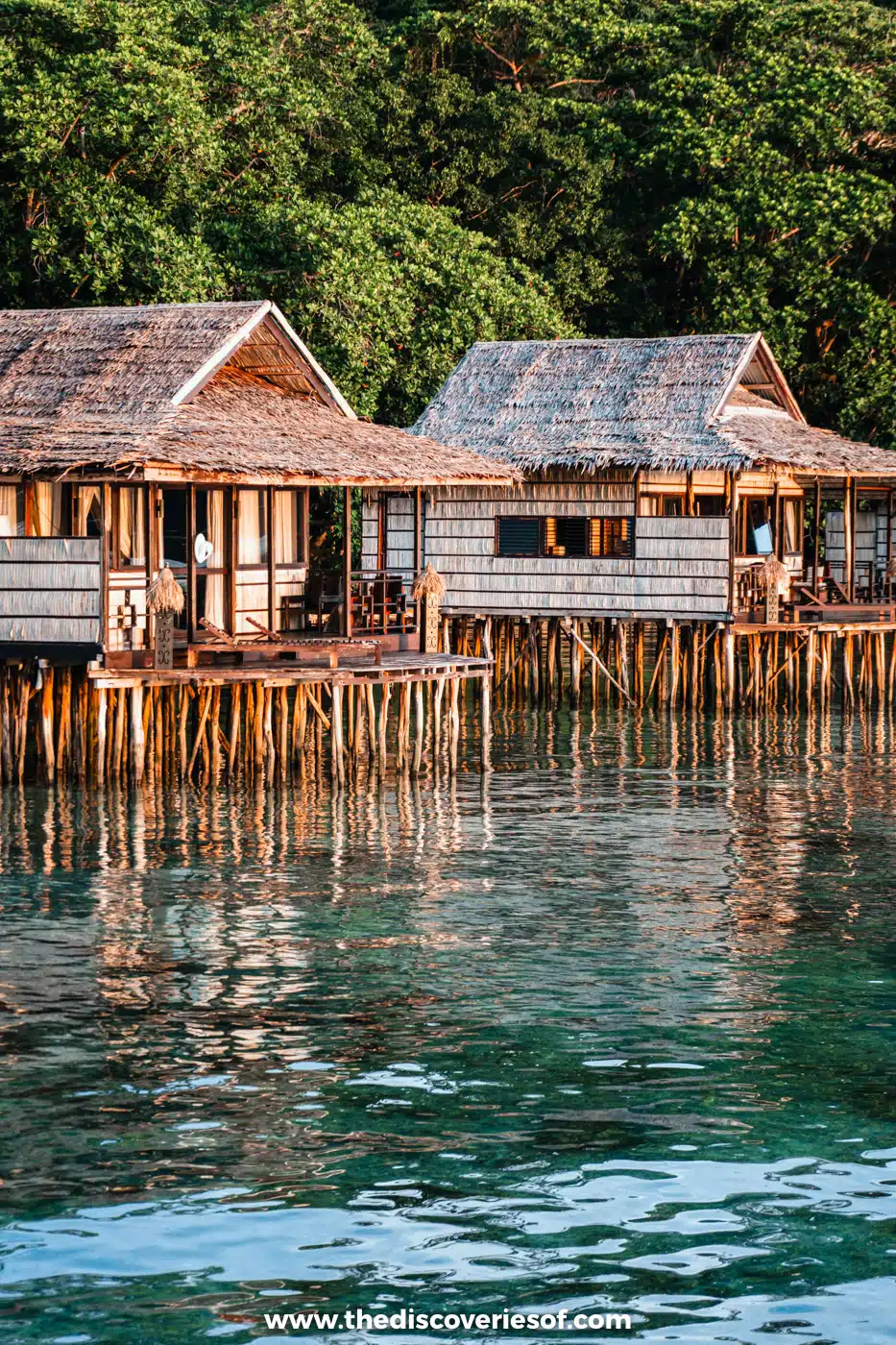
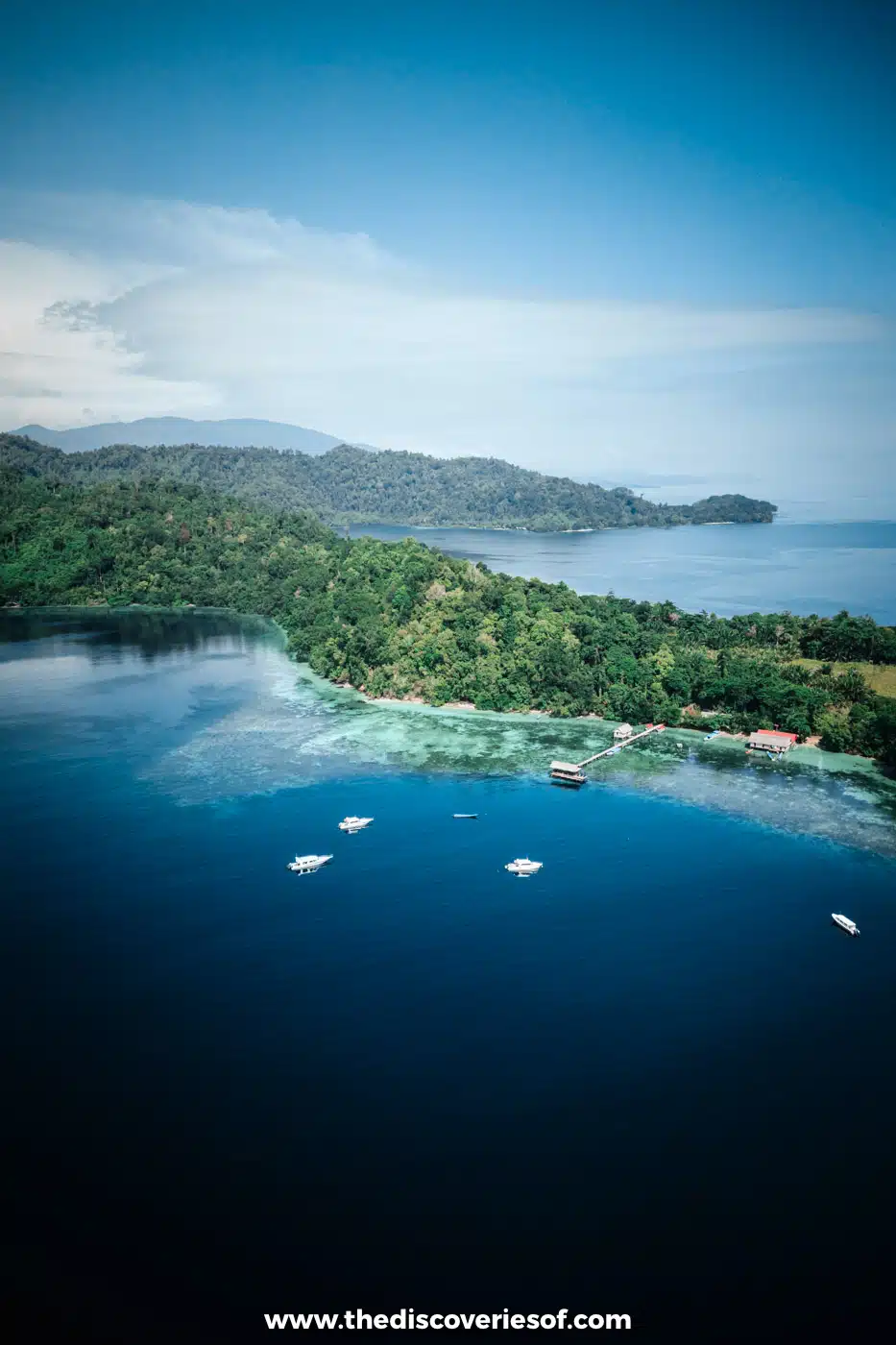
Birie is a small island off the coast of Batanta, in the Sagawin Strait. The bungalows at Papua Paradise stand on stilts over the water, eco-chic and spacious, and from my deck on the first evening I could already see fish below.
Use the first evening for your dive briefing and kit fitting, and be completely honest with the dive centre about your experience. I’d done a refresher in a deep swimming pool in London a few weeks earlier, but I hadn’t dived in open water for about five years.
Ease in on the house reef
This is the change I’d make with hindsight. On my very first dive, I ran out of air. I’d signalled that I was running low, but by pointing to the time left on my dive computer rather than showing my gauge, which by then read under 50 bar. The spare regulator I was given on the way up kept flooding, so I went back to my own, and it ran dry a metre or two below the surface. I came up far faster than I should have. It was the most stressful minute and a half of my life.
I tell this story as a warning, not to scare you off. Even on a guided dive, you’re responsible for your own air: watch your gauge, signal early and clearly, and know how to get yourself out of trouble.
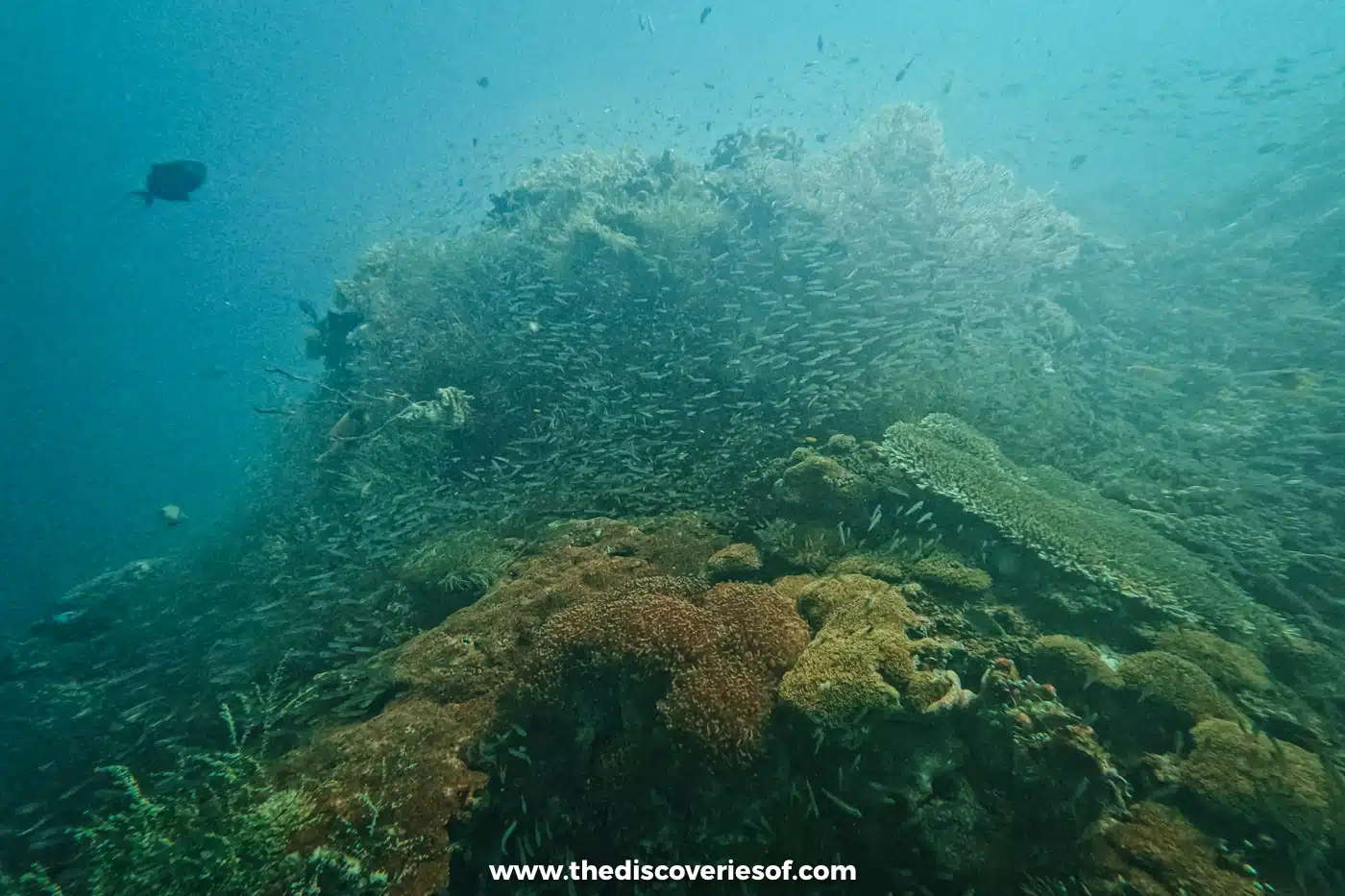
The next morning the dive centre put me on the house reef with a bigger tank and a different guide, and it turned my whole week around. Over 35 minutes, to a maximum of 18 metres, I swam through coral gardens in full colour and incredible condition, then about 20 metres down a tunnel of coral to a corner where the bigger fish gathered. I saw rays, a fairly big blacktip shark and so many fish that I didn’t know where to look. My second dive that morning, at Birie’s Corner, brought huge shoals of fusiliers, trevally, angelfish, anemonefish and a giant clam that only the guides’ eagle eyes could pick out.
Snorkel off the pier and claim a hammock
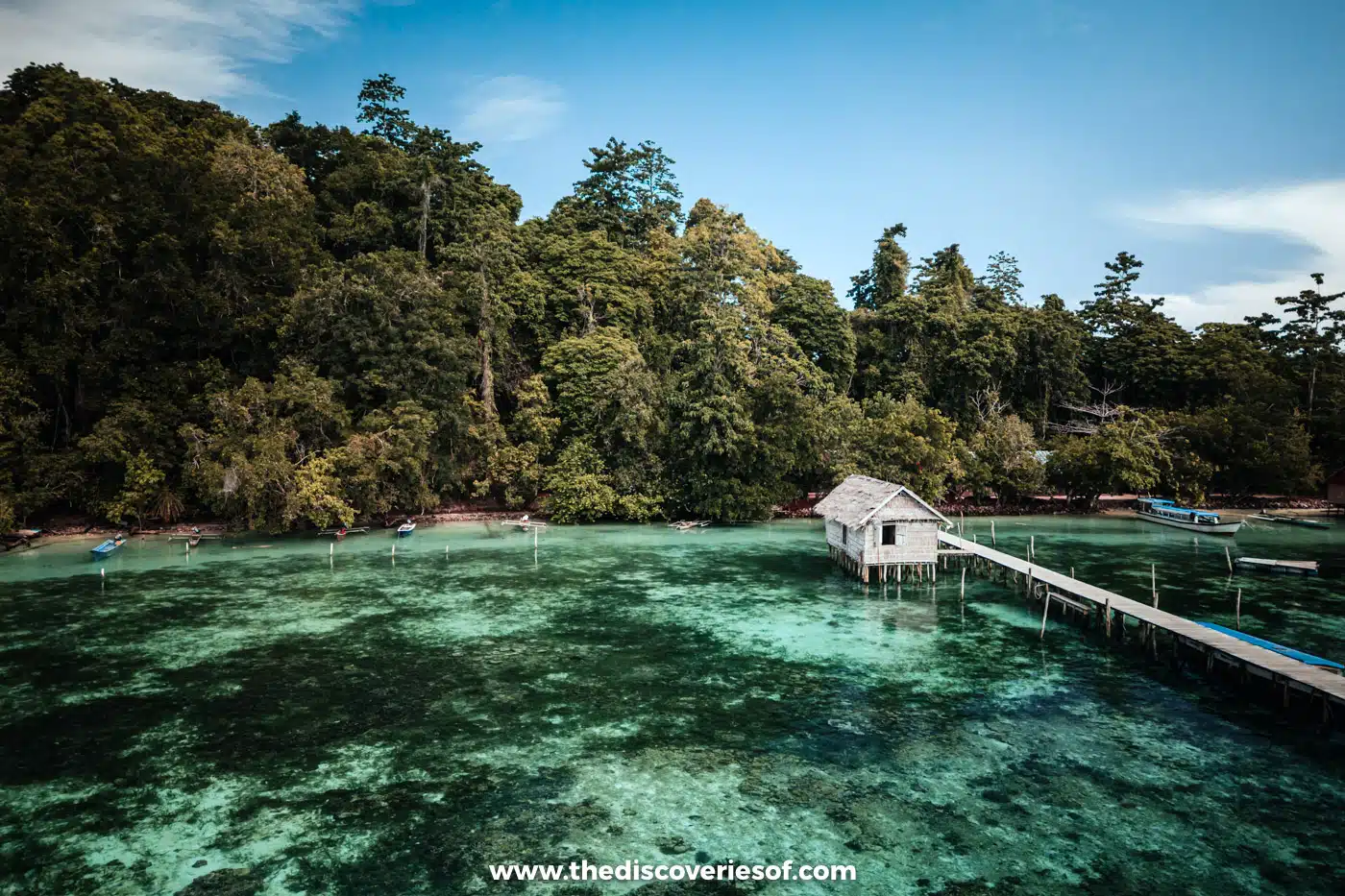
Two morning dives leave the afternoon free. Snorkelling on the house reef, straight off the pier, is free with the diving package, and after my dives, a hammock in the shade had my name on it.
Suggested stay: Papua Paradise Eco Resort
Papua Paradise (now marketed as Lotus Papua Paradise) has around 25 over-water bungalows, each with a two-tier veranda and daybed. Its PADI 5 Star dive centre, Gangga Divers, takes no more than four divers per guide, and nitrox is free on the unlimited diving package. My stay cost me about £2,350 on an all-inclusive basis, excluding diving, which added roughly £1,000 more with extras. I paid for it myself, and it’s where I’d stay again: remote, beautifully run and right above two house reefs. Read my full Papua Paradise Eco Resort review.
Check prices and availability for Papua Paradise Eco Resort on Booking.com. Alternatively, check all accommodation in Raja Ampat on Booking.com.
Day 3: Mansuar and Sawandarek
Mansuar is the island people picture when they think of Raja Ampat: jewel-green islands dotted across a turquoise sea. It sits in the Dampier Strait, the channel between Waigeo and Batanta, where currents carry nutrients through the reefs and feed some of the densest fish life in the region. Resorts across the area run day trips here.
Sawandarek is a small Papuan village on Mansuar’s south coast, its wooden jetty reaching out over the reef, and across Raja Ampat, villages like it depend on healthy reefs for both fishing and tourism.
My Mansuar trip was my first ever three-dive day, with a packed lunch on the boat, and I needn’t have worried.
Dive Sawandarek
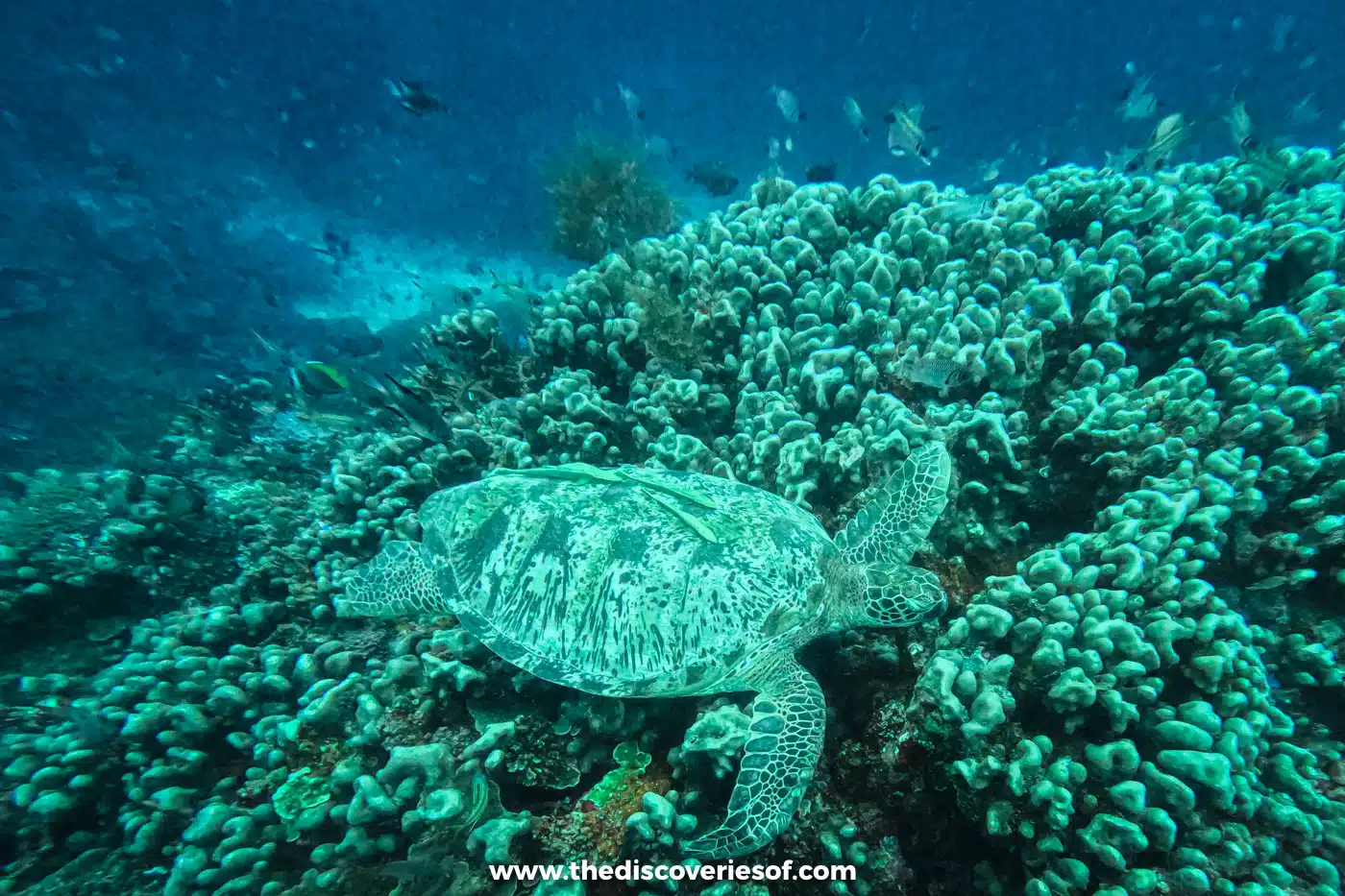
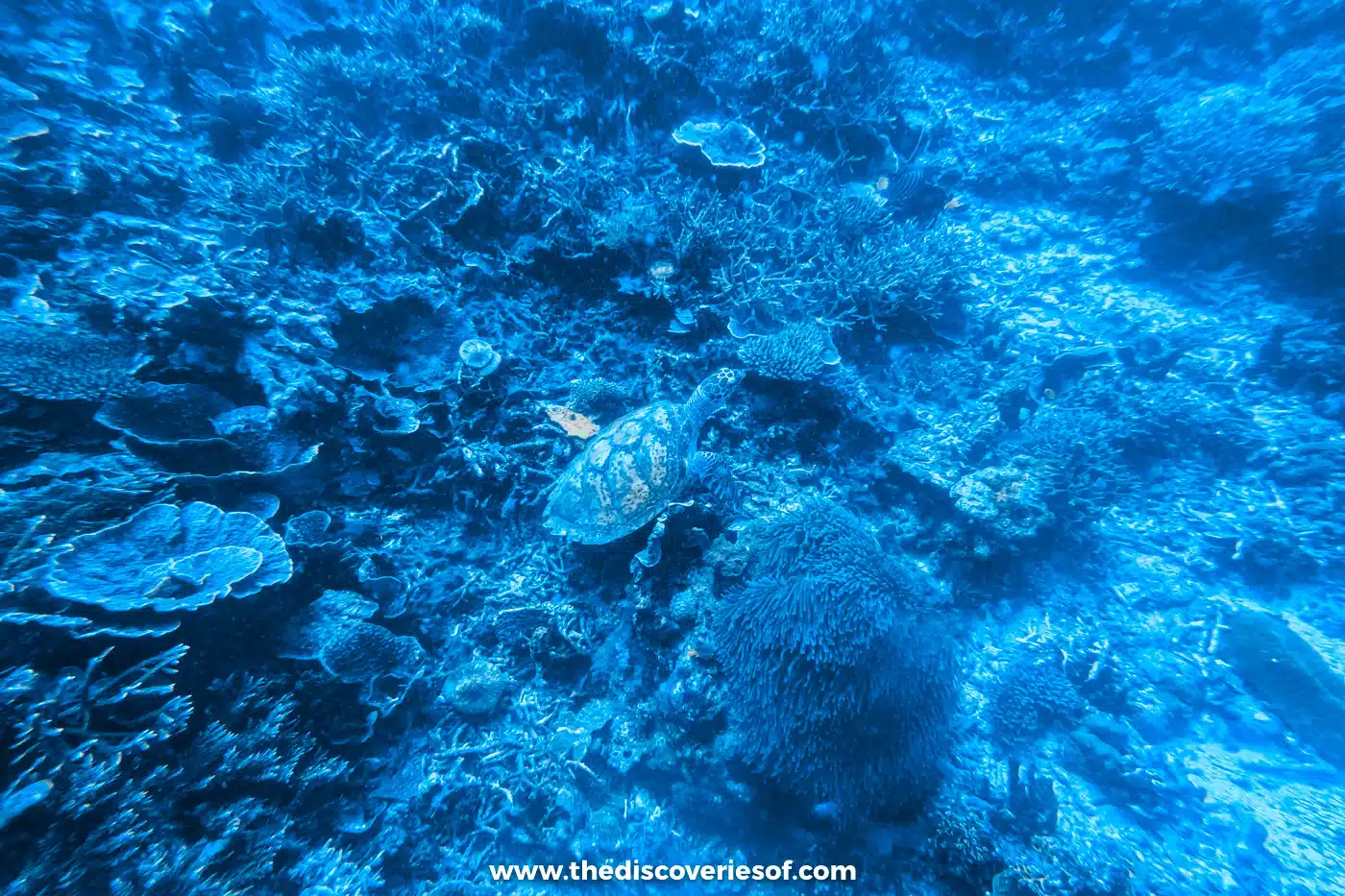
Sawandarek’s sloping reef runs out from beneath the village jetty, and it’s known for turtles, giant clams and schooling fish. It was my favourite dive of the week. On the first dive, to 18 metres, I saw turtles, barracuda, a Napoleon wrasse, batfish, yellow and black snapper and a blacktip shark, and at one point I was completely surrounded by huge balls of fusiliers. It was like swimming in a fish tank, so good that the guides took the boat back for a second, shallower dive to 14 metres, with three huge black snapper; over the two dives I saw four turtles.
Top Tip
Sawandarek’s reef rises to about five metres at its shallowest, so it works for snorkellers too. If someone in your group doesn’t dive, ask whether they can join the boat and snorkel.
Stop for lunch on the boat
The boat moves to a new spot for lunch and your surface interval. Papua Paradise packed a brilliant lunch, and it’s the best moment of the day to get a drone up, as I did.
Top Tip
Check your booties before you put them on. On one boat day, I slid my foot into mine and found a cockroach had moved in.
Swim through the coral forest at Ransiwor
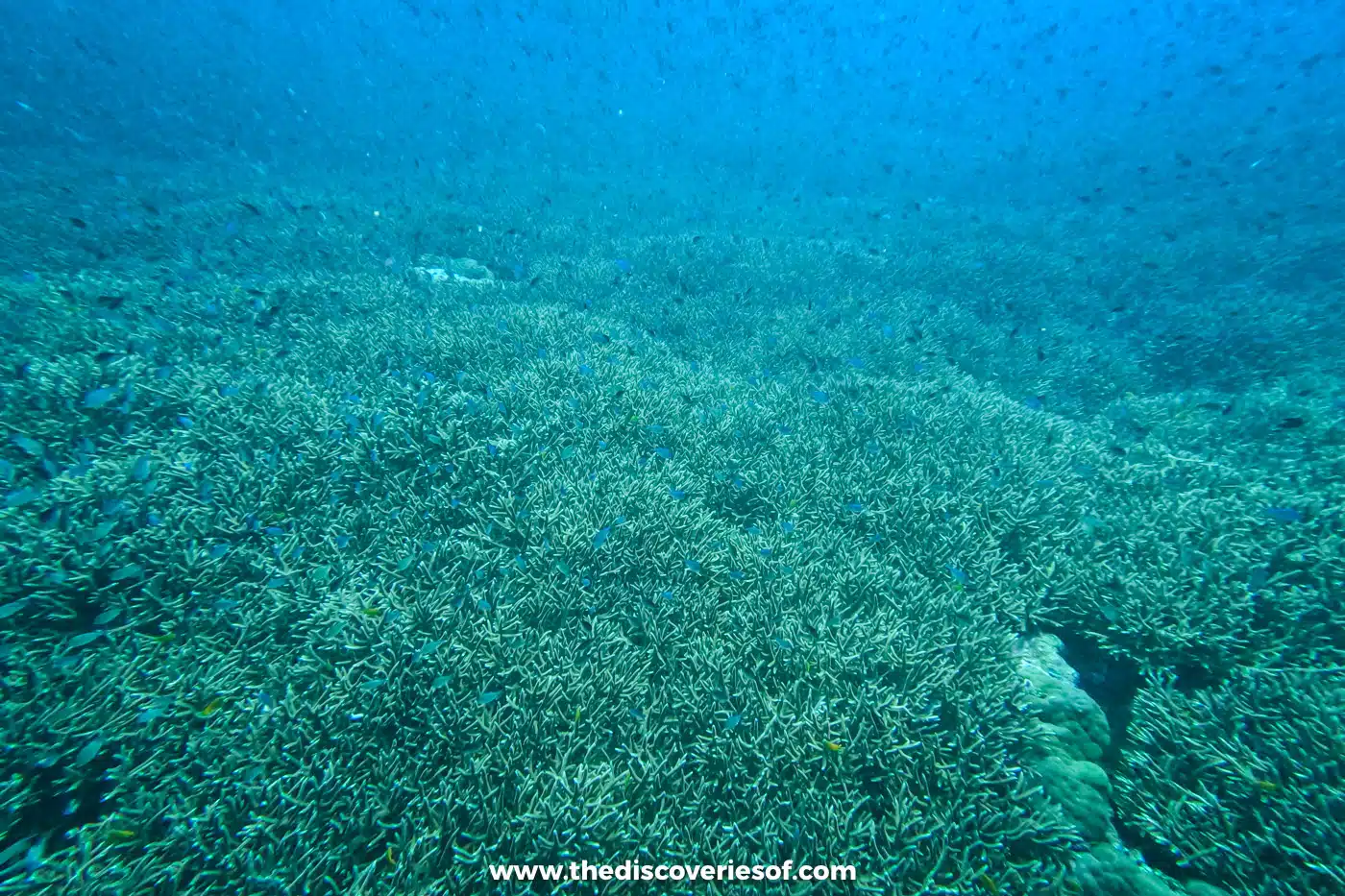
The third dive, at Ransiwor, had fewer fish than Sawandarek, though there were still black fusiliers, trevally, mackerel, jacks, anthias and another Napoleon wrasse. It was the coral that stopped me in my tracks: so many types and colours that it felt like swimming through a kaleidoscopic dream. I hadn’t imagined coral still looked like that anywhere in the world. Over 42 minutes I hovered between 14 metres and four or five metres, and by the end I finally felt in control of my buoyancy.
Day 4: a day out of the water on Birie Island
Build a rest day into the middle of your week. By the time I took mine, I’d logged six dives in three days, and the early starts and jet lag had caught up with me. Some of my favourite moments of the trip came on this day out of the water.
Walk across the island
Birie has two house reefs, one in front of the bungalows and another on the far side of the island, which you reach on a trail through the jungle. Hardly anyone else seemed to make it over there. It felt like a completely different place: a wide, almost lagoon-like strait between two islands, with clear cerulean water and fish leaping out of it. I took the drone and spare batteries, and got through all of them.
Book a spa treatment
Spa in Paradise bills itself as Raja Ampat’s only luxury spa. I had the traditional massage, a blend of Javanese and Balinese techniques with really firm pressure and great work on the pressure points. My neck and legs were tense after days of hauling dive kit, and I came out feeling like jelly.
Take the hornbill sunset cruise
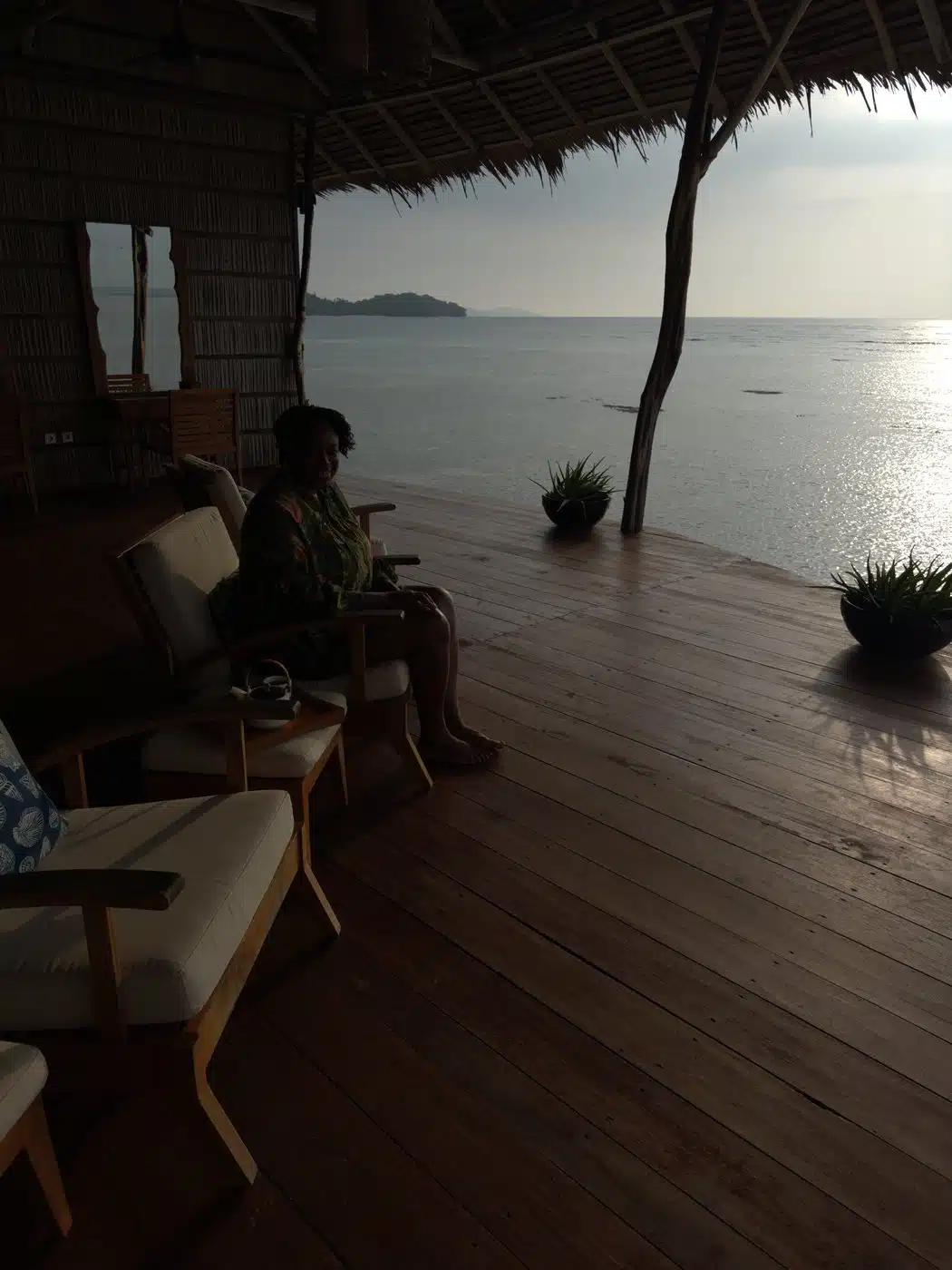
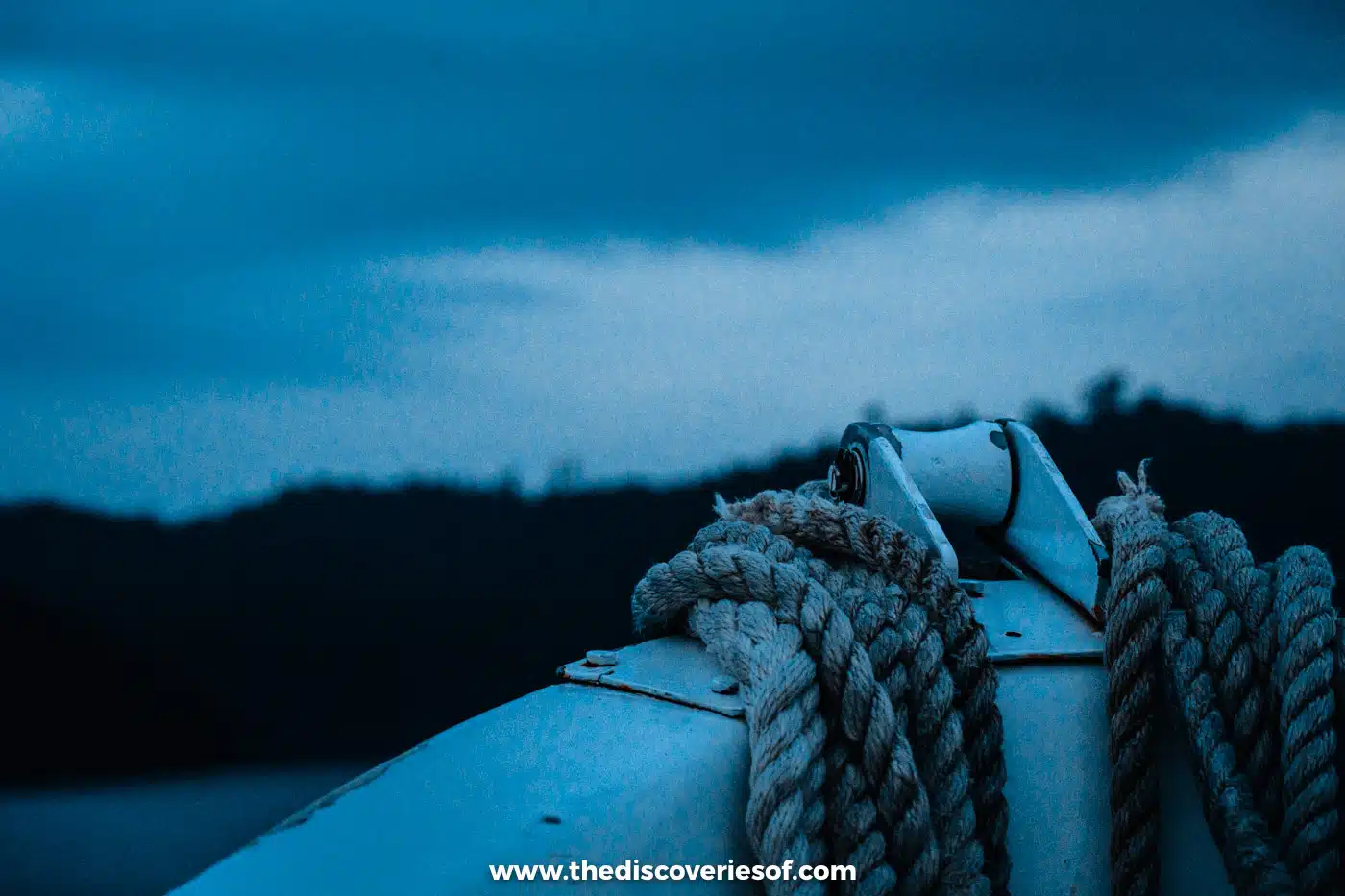
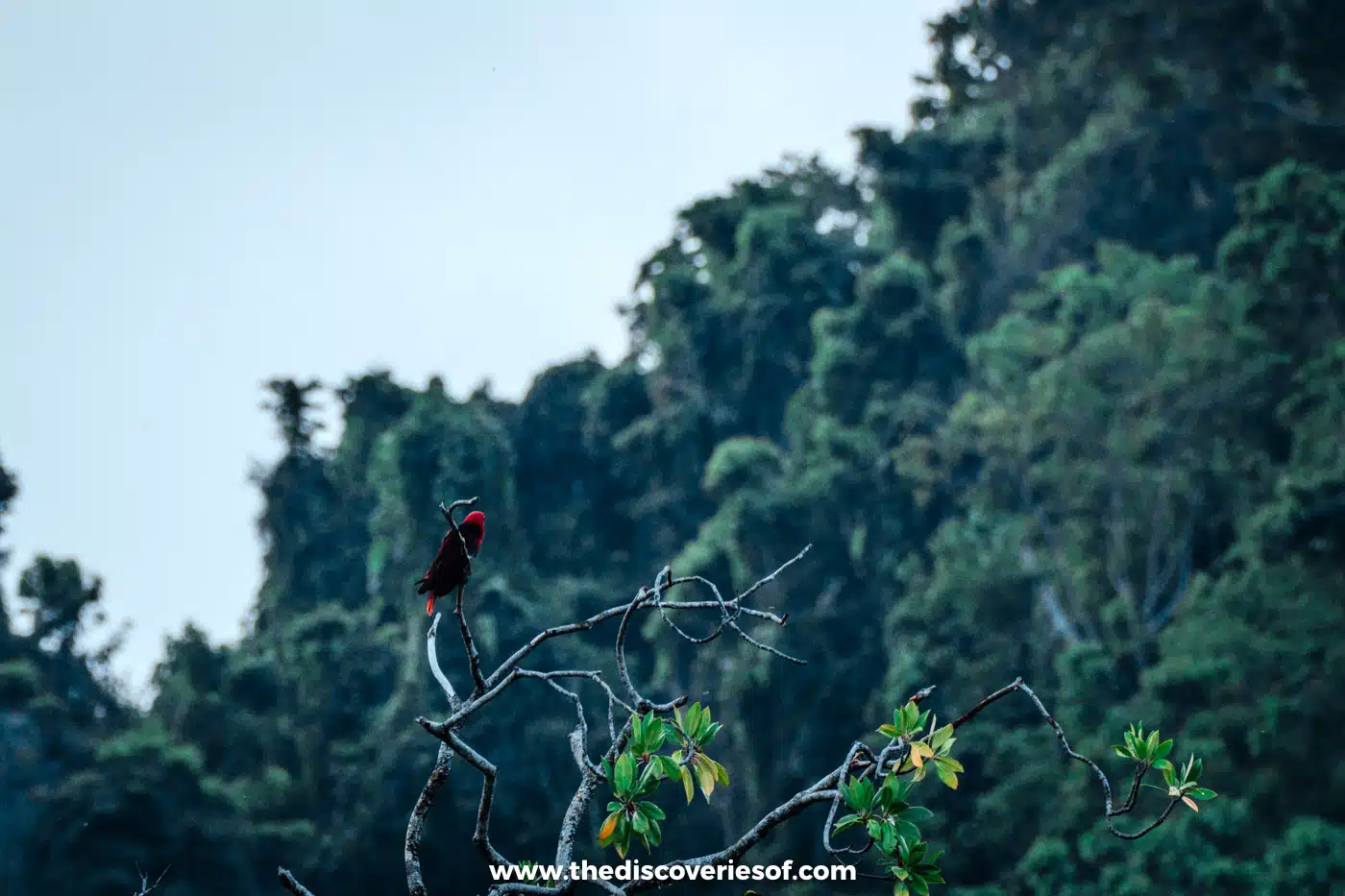
The resort’s sunset cruise into the mangroves was one of the highlights of my week. With the engine off, it was utterly peaceful, with parrots, cockatoos and pigeons in the trees and evening birdsong all around. Then the boat moved on to what the guides call Hornbill Island, where the hornbills roost after a day feeding in the jungle.
These are Blyth’s hornbills, the only hornbill species in New Guinea, and you hear their wingbeats before you see them. I’d been told recent cruises had seen 80 to 100. I saw well over 100, flying over raucous and loud as the sun went down, then settling into the trees for the night.
Take a long lens: I used a 100 to 400mm, and left my heavier 200 to 600mm at home.
Do
Book the hornbill sunset cruise through the resort. It takes about an hour, and mine went ahead with just me on board, so don’t let travelling solo put you off asking.

Day 5: the Fam Islands and Piaynemo
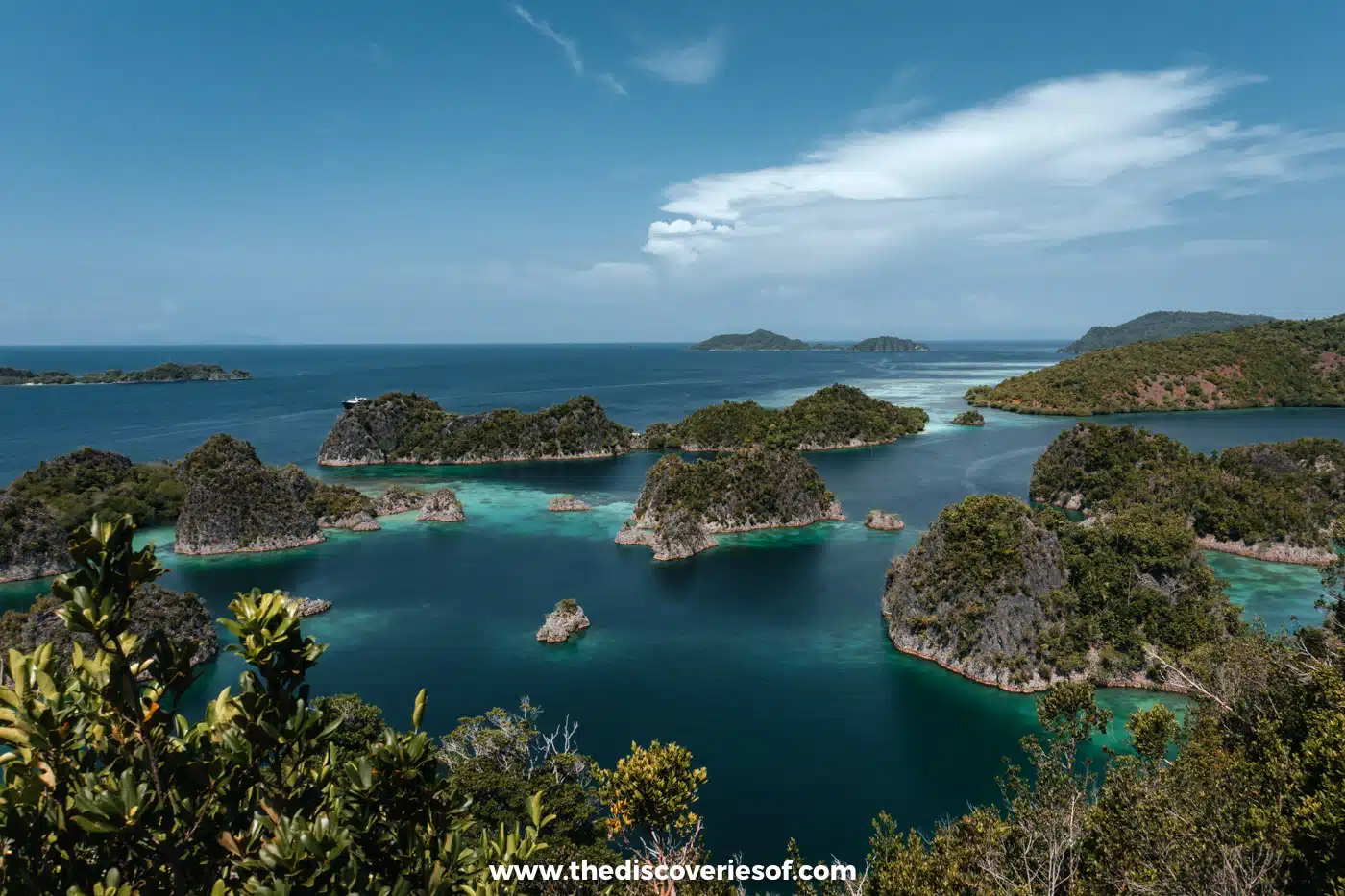
The Fam Islands are a cluster of small islands in western Raja Ampat, and Piaynemo, a tangle of jungle-topped limestone islets in turquoise lagoons, is part of the group. Its viewpoint is the one on every Raja Ampat postcard, and the reefs around the islands have some of the best visibility in the region.
Expect a long day. My boat left at 7.15am and the ride took 90 minutes each way, as it does from Waisai and the Dampier Strait resorts. It’s hot on the water, so I left my wetsuit off until the islands were in sight. The day ran like this: a first dive, an hour’s surface interval with snacks, a second dive, the climb to the viewpoint, lunch, a final dive and the long ride home in the late afternoon.
Dive Melissa’s Garden, Fam Slope and Batu Rufus
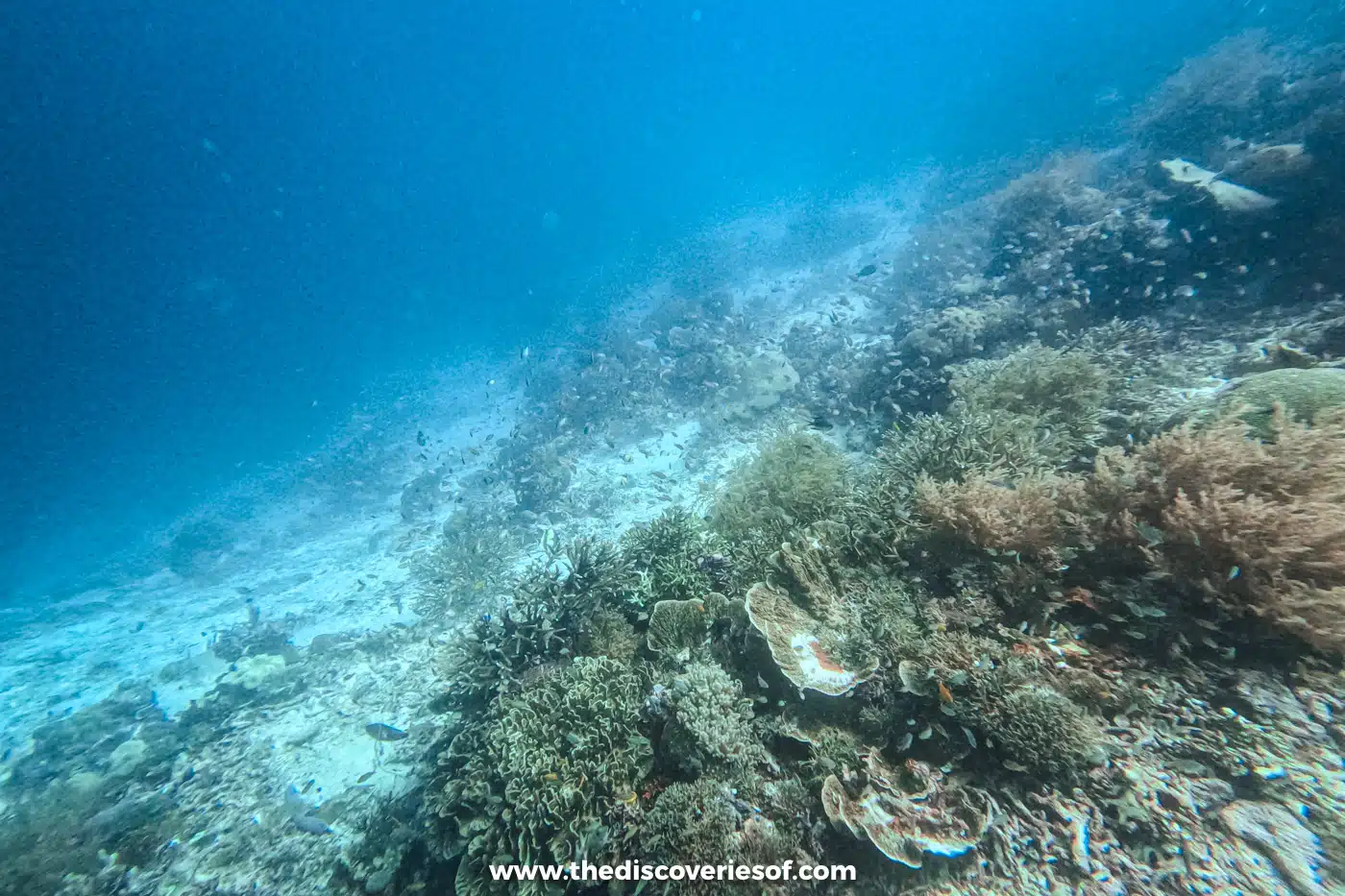
The diving ranges from the very gentle to the quite demanding. My first dive was Melissa’s Garden, a sheltered hard-coral garden where current is rare, which makes it one of the easier famous sites in Raja Ampat; I went down to 21 metres, my deepest of the week. Fam Slope, before the climb, and Batu Rufus, after lunch, were wall dives and drifts between the islands, with fusiliers, trevally, angelfish and a Napoleon wrasse. I found the walls nerve-racking, as I was worried about bumping the coral, and on Fam Slope the current was so strong that I was swimming flat out just to stay still. I kept fearing the next corner would bring a fresh burst of current and blow me off the wall into the deep blue.
My guide, Welson, was brilliant and kept an eye on me the whole time. Even so, I preferred Mansuar’s diving. Confident drift divers will love it; if you’re less experienced, ask which sites are planned before you book, and don’t feel bad about swapping a dive for a snorkel.
Do
At Papua Paradise, the Fam Islands trip is one of the long-range excursions that cost extra on top of the unlimited diving package, so check the surcharge when you book.
Climb to the Piaynemo viewpoint
The viewpoint is reached by a wooden staircase of around 300 steps, a 10 to 20 minute climb that’s a hot old slog at midday. Take water and a hat. I’d always assumed the famous view couldn’t look as good in real life as it does in photos. It looked better. The colour of the water was so intense I couldn’t work out how it was possible.
Days 6 to 7: local dives, a slow day and back to Sorong
After the Fam Islands, stay close to base. The boat dives near Papua Paradise were some of the best of my week, with brilliant visibility, and the short trips (out at 8am, back by about 11.30am) leave the afternoon free. Some of the guests I met had been back seven times, and by then I could see why.
Dive Sauyador and Arefi Garden
At Sauyador, down to 20 metres, the current was strong again, but I saw turtles, a mobula ray, scorpionfish, yellowtail fusiliers and a wobbegong, a carpet shark that lies curled up beneath the rocks. To find one, drop down, hover just above the seabed and peek underneath.
Arefi Garden was my favourite of the two: 42 minutes in completely calm water on a sloping reef crammed with life, with four turtles, mackerel, angelfish and tiny clownfish everywhere I looked. It was quite a send-off, and I came up feeling a little emotional.
Keep your last day dry
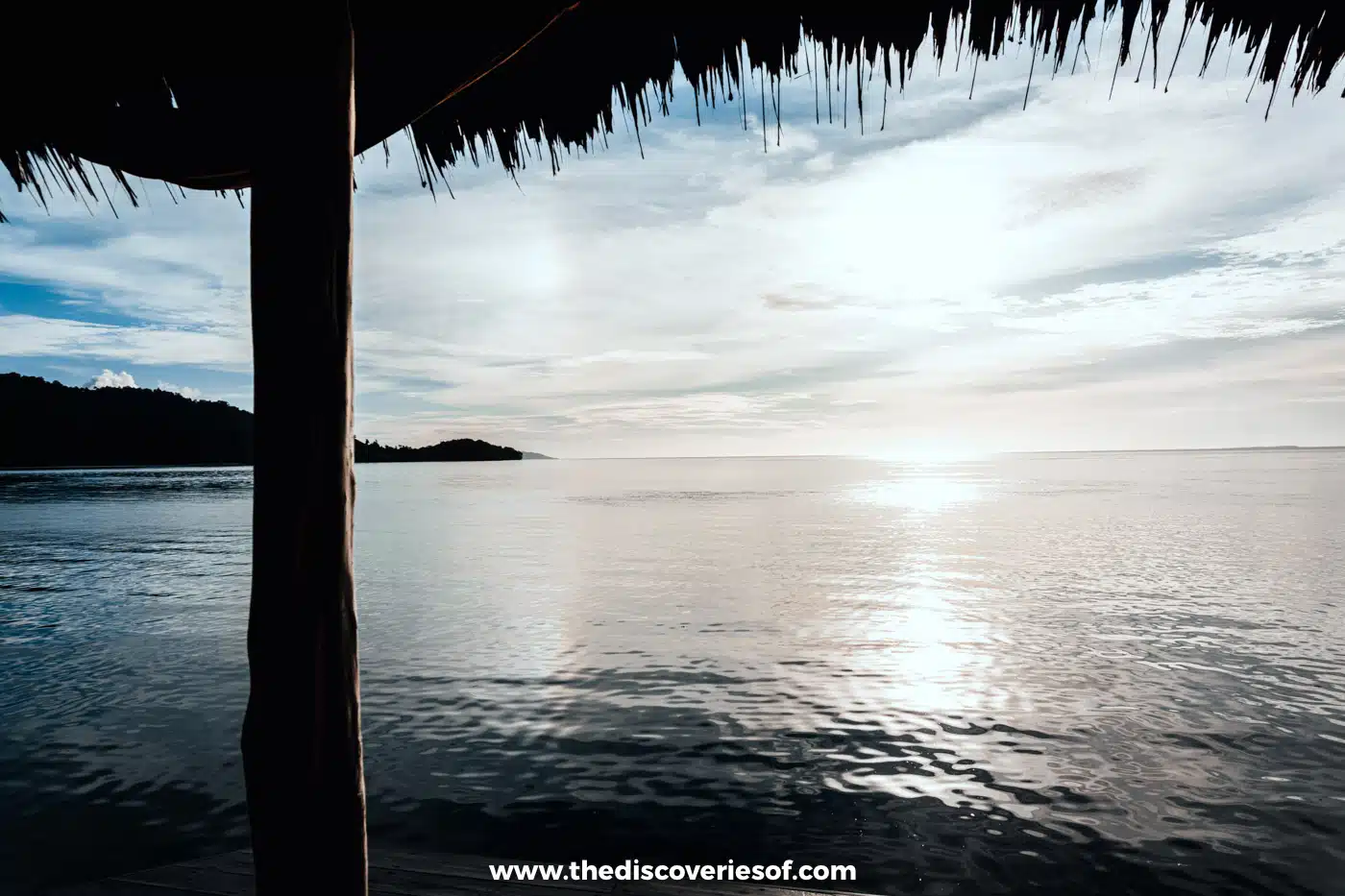
Leave a full day between your last dive and your flight. Most dive agencies recommend at least 18 hours after several days of repeat diving, and the boat back to Sorong leaves early, so dive on day 6 and keep day 7 for snorkelling, the spa, the hammock and one last sunset from your deck.
Getting back to Sorong
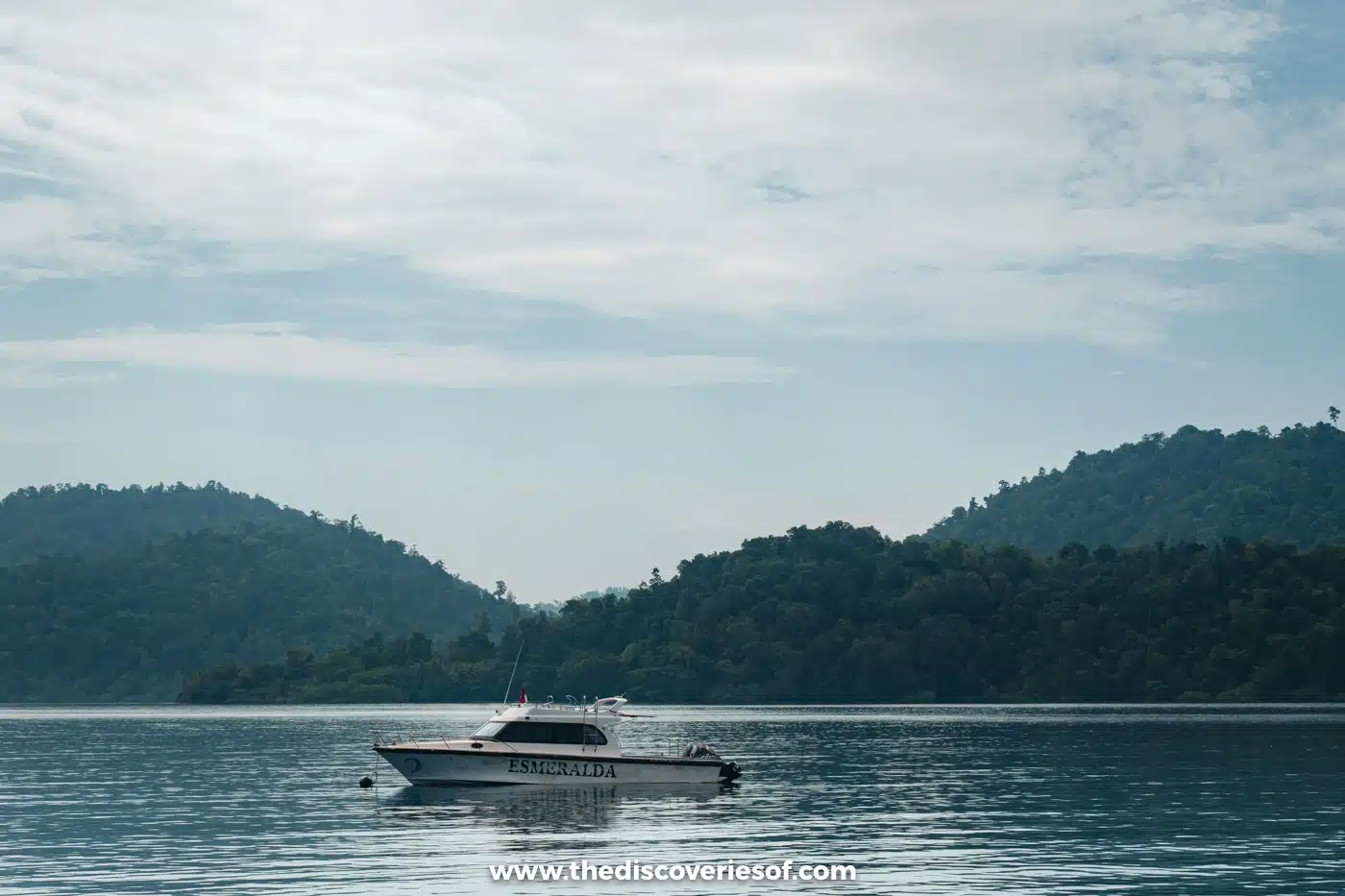
The Papua Paradise boat leaves Birie at 7am (mine went at 7.30am) and took about 90 minutes. The earliest flight you can make is around 10.30am, so for anything earlier, you’ll need a night in Sorong. I spent a night at the Aston Sorong, which cost me about £56 with breakfast, and flew back to Jakarta with Garuda the next day.
Top Tip
Fly out of Sorong the day after you leave the islands. It takes the pressure off the boat transfer and adds another day between your last dive and flying.
Have more time? Add these to your itinerary
I didn’t get to these, so this is what you need to know rather than what I saw.
Add Telaga Bintang to your Piaynemo day
Telaga Bintang, the Star Lagoon, sits right next to Piaynemo. Its second viewpoint, at the top of a slightly harder climb, looks down on a star-shaped lagoon among the islets. Many Fam Islands trips combine the two, but mine didn’t, so if you’d like both, ask before you book.
Dive the Dampier Strait manta sites
Experienced divers should add two or three days in the Dampier Strait. Manta Sandy, off west Mansuar, is a manta cleaning station. Blue Magic is an advanced site with strong currents, and Cape Kri, rated intermediate to advanced, is famous for the sheer number of fish species recorded there. Mantas are seen year round, peaking roughly from November to April. I skipped Kri because the dive centre thought the currents would be too strong for me; an Advanced Open Water certificate and 30 to 50 logged dives will make these sites far more enjoyable.
Join a liveaboard to Misool
Misool, in the far south of the archipelago, is famous for its soft corals and karst islands, and it’s too far from the Dampier Strait for a day trip. The easiest way to dive it is to finish your week on an island and then join a liveaboard from Sorong. Plan it for October to April, as Misool’s operators close in the rough season from June to September.
Handy tips for planning your 7 days in Raja Ampat
Top tips
- Be honest about your experience. Open Water divers can dive Raja Ampat, as dive centres match sites to ability, but strong currents are common. If you’re rusty, book a refresher or a check dive first.
- Sort your insurance. Many dive centres, including Papua Paradise’s, make a dive computer and dive insurance with evacuation cover compulsory. Medical facilities are limited, and serious cases are likely to be evacuated to Darwin.
- Carry cash in Indonesian rupiah for the entry fees and extras.
What to pack
- Your own dive computer and a 3mm wetsuit. The water is 27C to 30C. Leave your gloves at home: Papua Paradise’s dive centre bans them.
- A long lens for the hornbill cruise, and a drone with spare batteries.
- A dry bag and plenty of sun protection for long days on open boats.
Best time to visit
October to April is the best time to visit, with the calmest seas and the best visibility, and January and February are the peak months. South-easterly winds make the sea rough from roughly June to September, worst in July and August. May, when I went, is a shoulder month: good but changeable. I had bright, clear weather for most of my stay.
Getting around
There are no public boats between the islands, so you’ll get around on your resort’s or homestay’s speedboats. The only scheduled public service is the ferry between Sorong and Waisai. My guide on how to get to Raja Ampat covers flights, the ferry, visas and both entry fees in detail.
Raja Ampat itinerary: map
Read next
- Diving in Raja Ampat: the practicalities behind planning your dream diving trip
- Papua Paradise Eco Resort review: a remote Raja Ampat dive resort
- How to get to Raja Ampat: flights, boats, visa and fees
- Piaynemo and the Fam Islands: a day trip guide
- Is Raja Ampat worth it? My honest verdict
- Read all my Raja Ampat guides
Love this? Save and share on Pinterest

Discover the top things to do, insider tips and hidden gems in our Indonesia Travel Guide.
Read the guides →