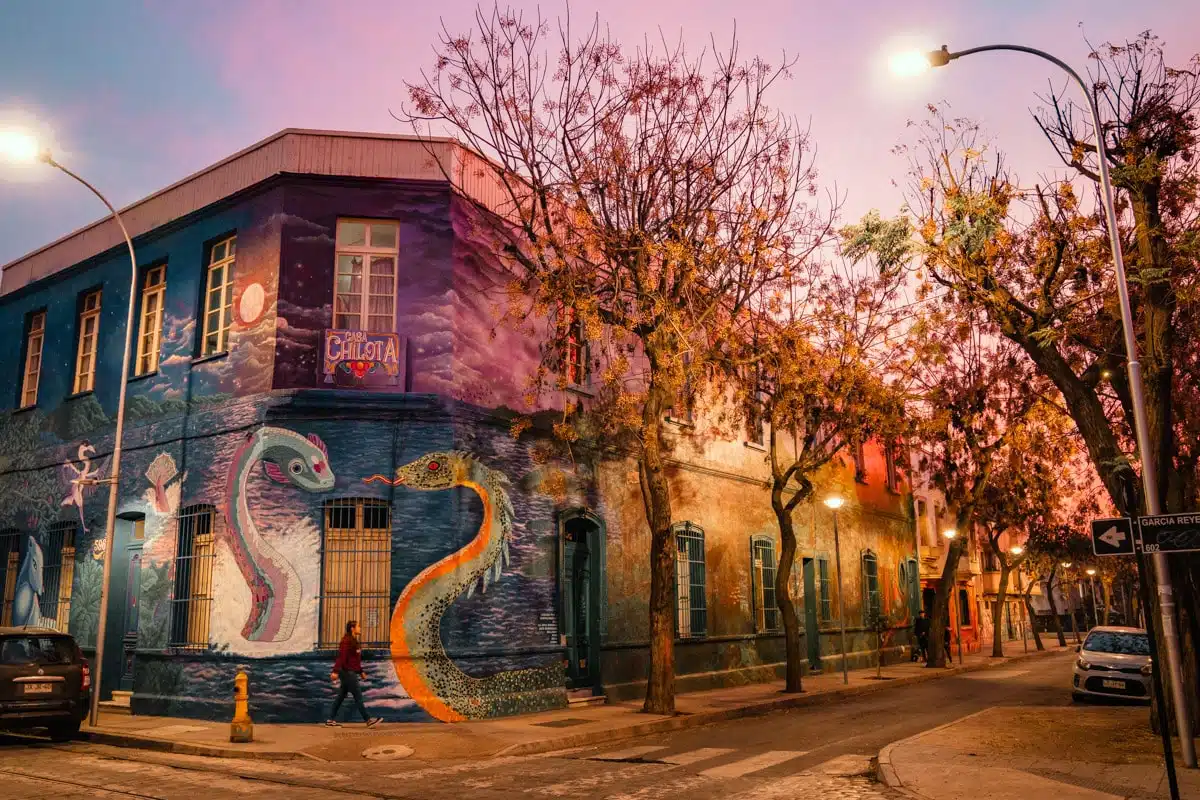

Murals of serpents, striking railway workers and long-limbed dreamers: this is the street art tour I took through Bellavista and Barrio Yungay on my first afternoon in Santiago, with the stories behind the pieces, how to book a tour today and how to walk the route yourself.
If you know me, you’ll know I’m obsessed with exploring local street art scenes, and Santiago’s looked so intriguing that I booked a tour for my very first afternoon in the city. It was July, the start of my fourth trip to Chile and, surprisingly, my first time in its capital.
My guide, Alejandro, was incredibly knowledgeable, and it turned out that I was the only person on the tour. He ran it anyway, and with just the two of us wandering from wall to wall, I got the stories behind every piece: who painted it, what it was saying and why it had ended up on that particular corner.
Santiago street art isn’t something that gets talked about a tonne, at least not compared with Valparaíso, but there’s a thriving scene that’s really focused on local artists, which means you get a lot of hyper-local references and political statements. You could see the murals by yourself, but you’d miss the context, and in Yungay especially, the context is everything.
Some links in this article may be affiliate links, which means we may receive a small commission, at no additional cost to you, if you decide to purchase through one of my recommended partners.
The tour at a glance
- Where: Bellavista, at the foot of Cerro San Cristóbal on the north bank of the Mapocho river, and Barrio Yungay, west of the city centre
- My tour: a walk with a local guide, Alejandro, who ran it for me alone, starting by Bellas Artes metro station in the afternoon and finishing in Yungay as it got dark
- Booking today: Alejandro’s Bellavista tour is listed on Airbnb Experiences from around €61 per person, and there are tip-based walking tours of Yungay
- Time needed: about two hours for Bellavista on its own, or an afternoon for both neighbourhoods
- Getting between them: metro Line 5 runs from Bellas Artes to Cumming and Quinta Normal, on the edge of Yungay
- Best time: afternoon, while it’s light; take an Uber back after dark
Bellavista
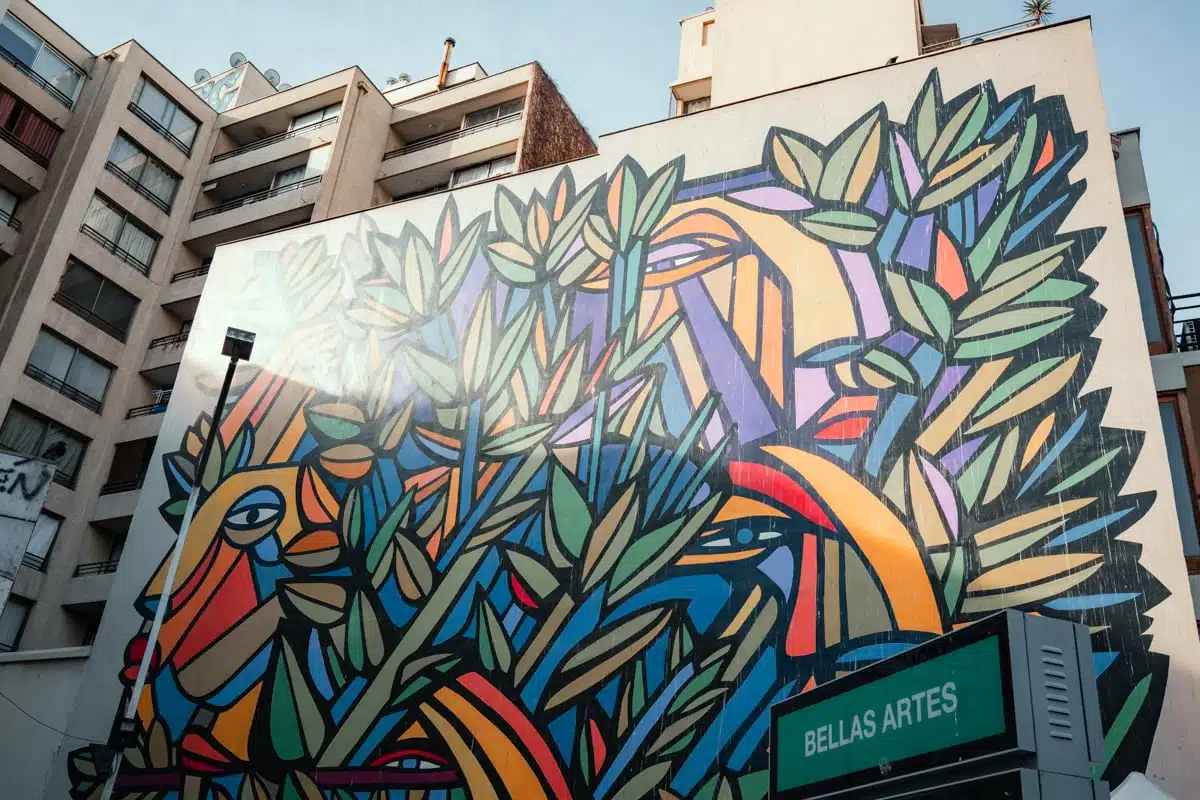
The tour kicked off by Bellas Artes metro station, on the edge of the Parque Forestal, where two large-scale murals loomed overhead, and it only got better from there. The station has form when it comes to big walls: Inti, one of Chile’s best-known muralists, has painted a pair of giant figures inspired by Andean dolls by its exit. Alejandro’s Bellavista tour now meets a few steps away, outside the Museo de Arte Contemporáneo.
From the park, it’s a short walk across the Pío Nono bridge into Bellavista. Squeezed between the river and the slopes of Cerro San Cristóbal, this is Santiago’s bohemian quarter, home to Pablo Neruda’s house, La Chascona, and to more murals than you could photograph in a day. You’ll find Bellavista in a lot of guidebooks, and the street art is a big part of the reason. Calle Loreto, Dardignac and Antonia López de Bello are all worth a wander.
Bellavista has a wide variety of pieces. Some are by up-and-coming artists, others by well-established names on the Santiago scene, and the walls change all the time as new work goes up over old.
Pigüan and Faya
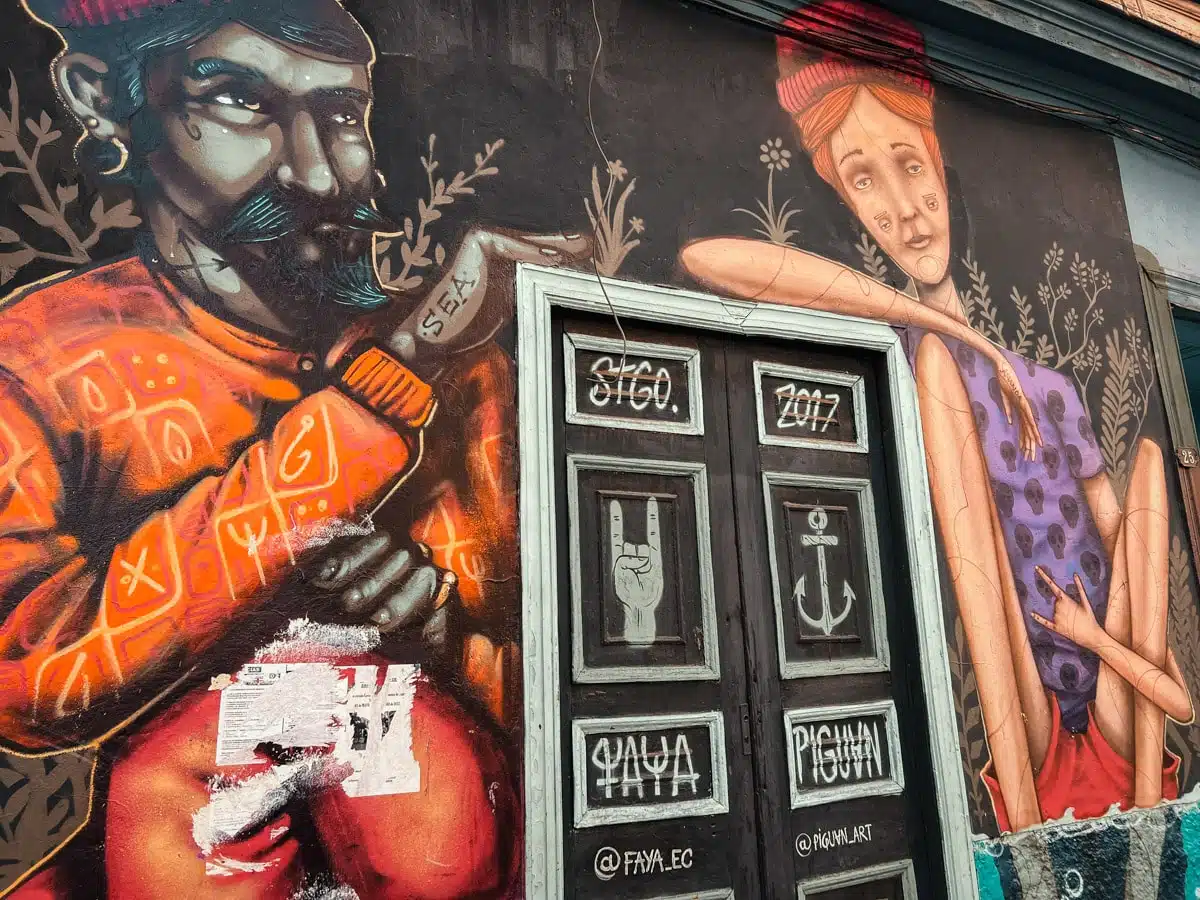
You see a lot of work by Pigüan in Bellavista, and once you’ve spotted the style, you’ll find it everywhere: eccentric characters drawn from popular imagination, often stretched across doorways and window frames. On this wall, Pigüan shares the space with Faya. A bearded figure with “sea” tattooed across his knuckles sits on one side of an old double door, a pale, red-capped woman lounges on the other, and the door panels in between are painted with the artists’ names, an anchor and a raised rock-and-roll hand.
Anis and Stfi
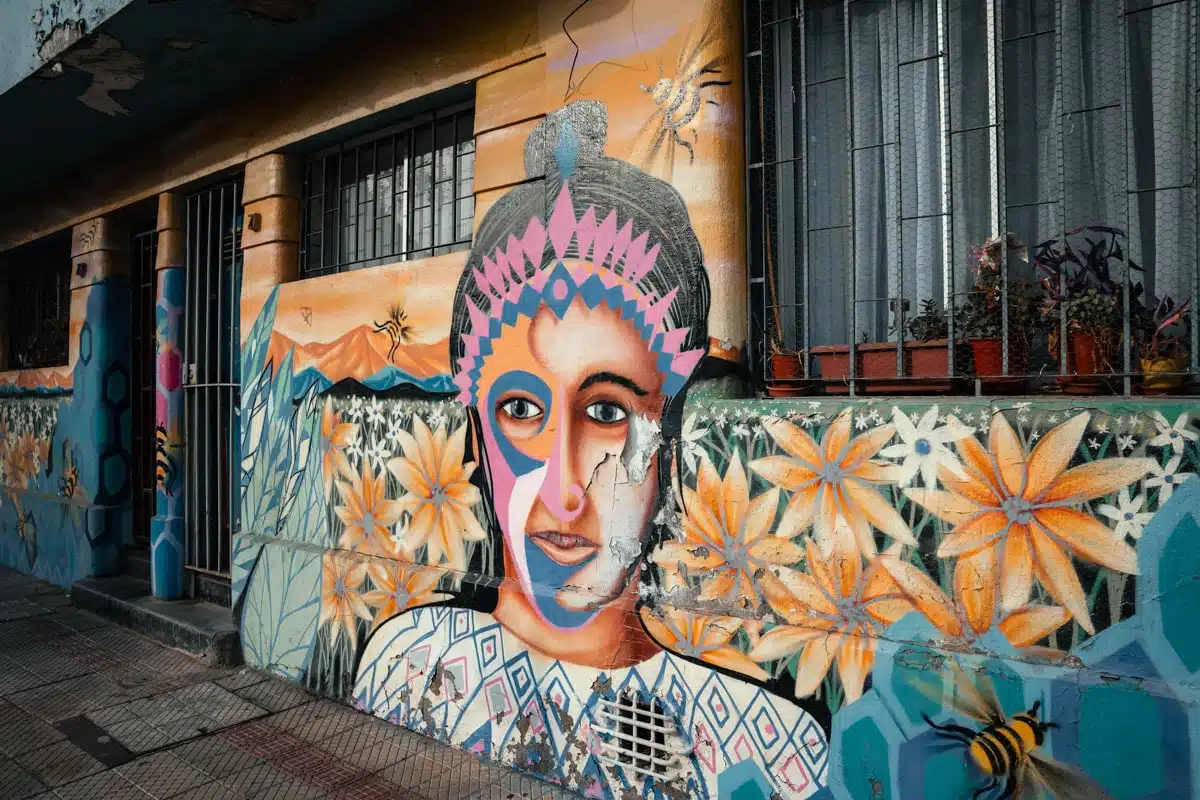
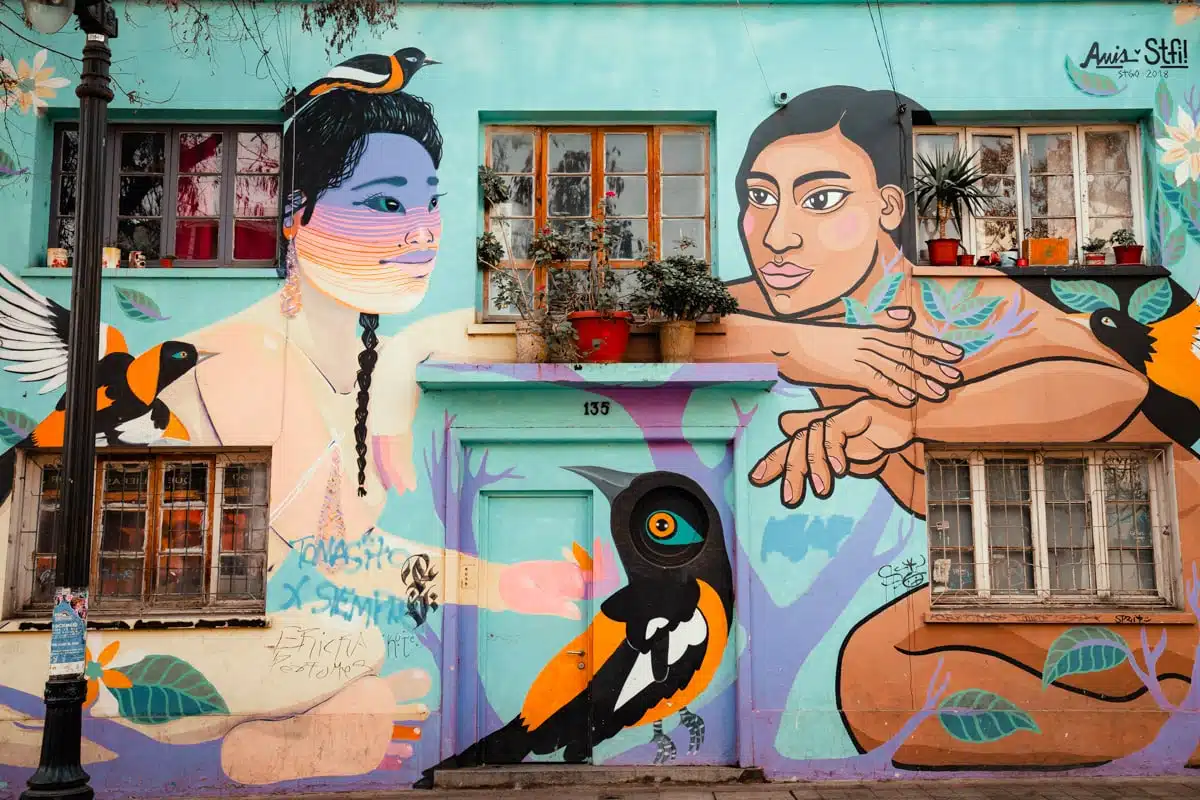
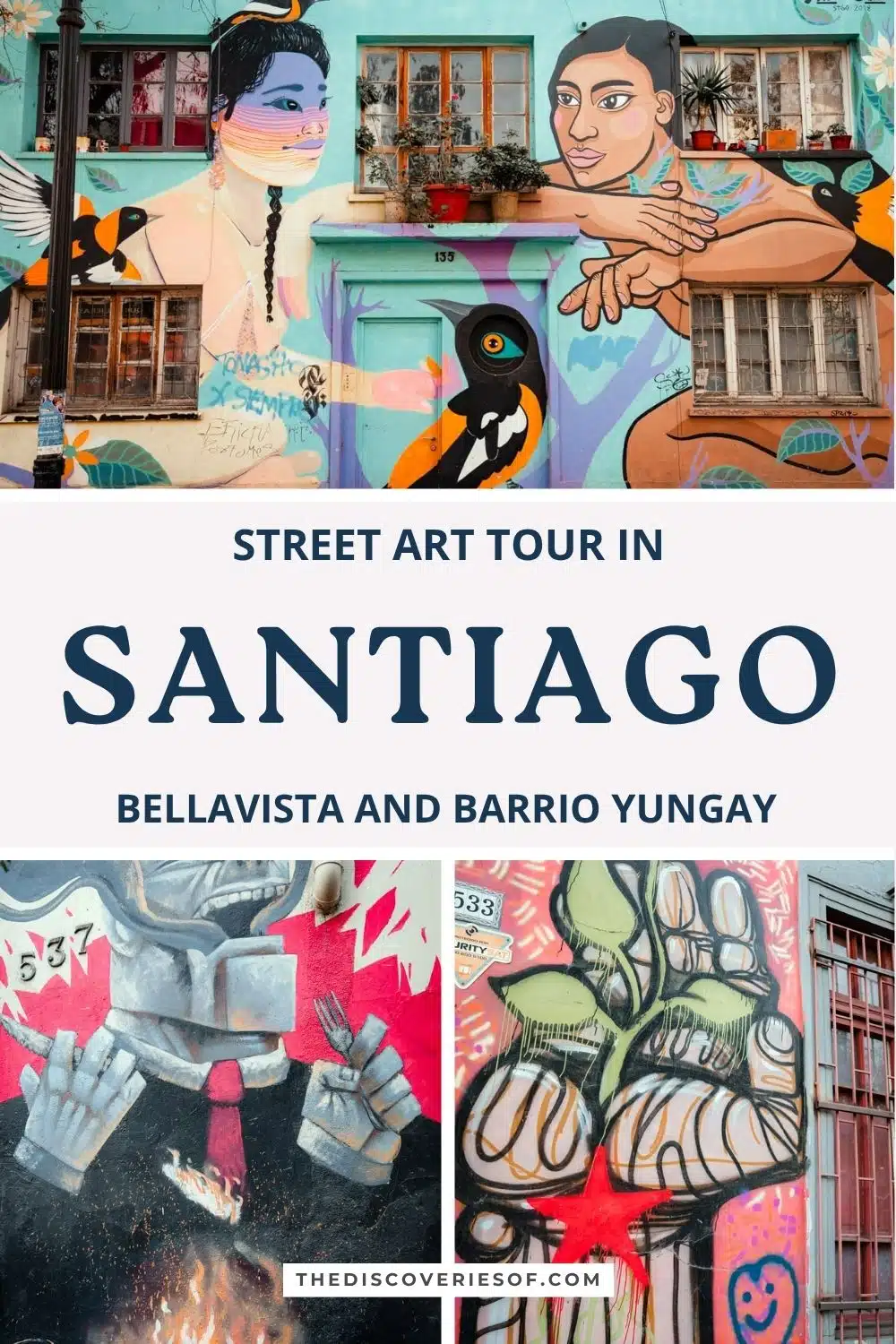
The turquoise wall at the top of this page is the work of Anis and Stfi, signed in 2018, and it’s typical of the gentler side of Bellavista: two women, one with a long plait, reaching across a house front while orange-and-black birds perch on the window frames. Pieces like this sit right next to much darker, stranger work, which is part of the fun of walking the neighbourhood.
More walls to look out for
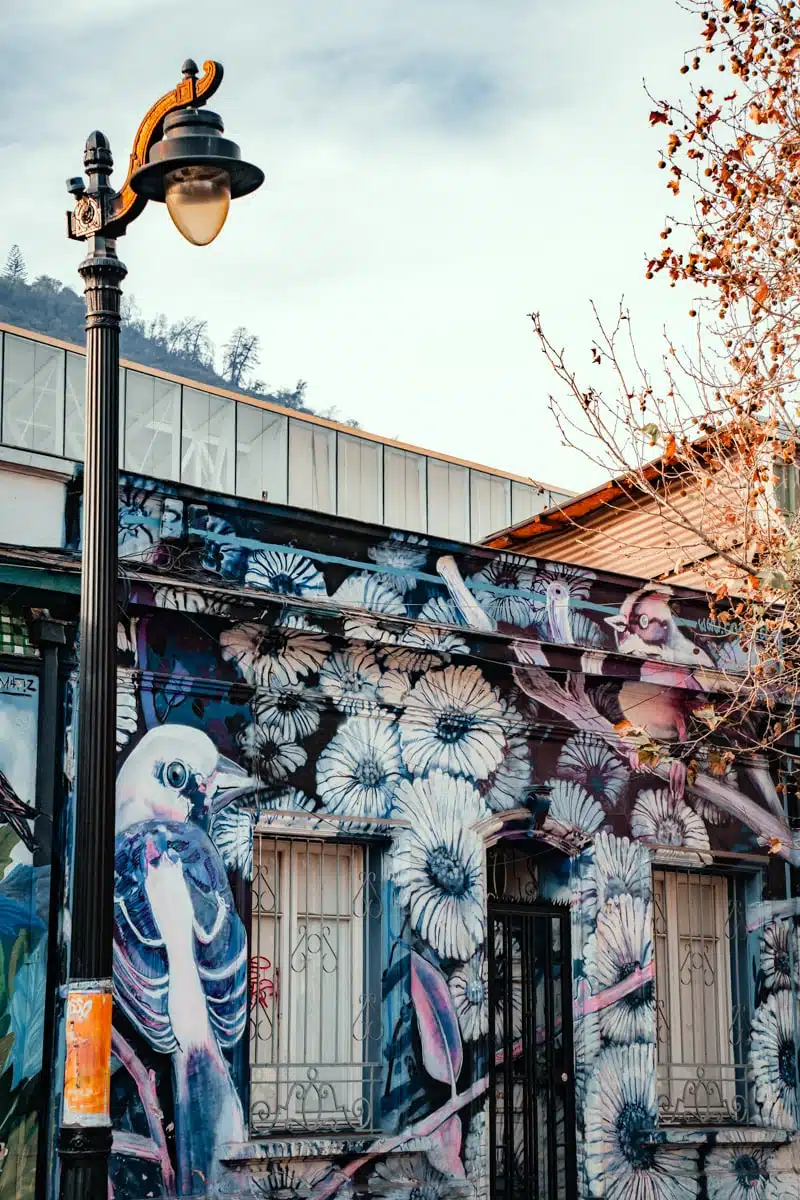
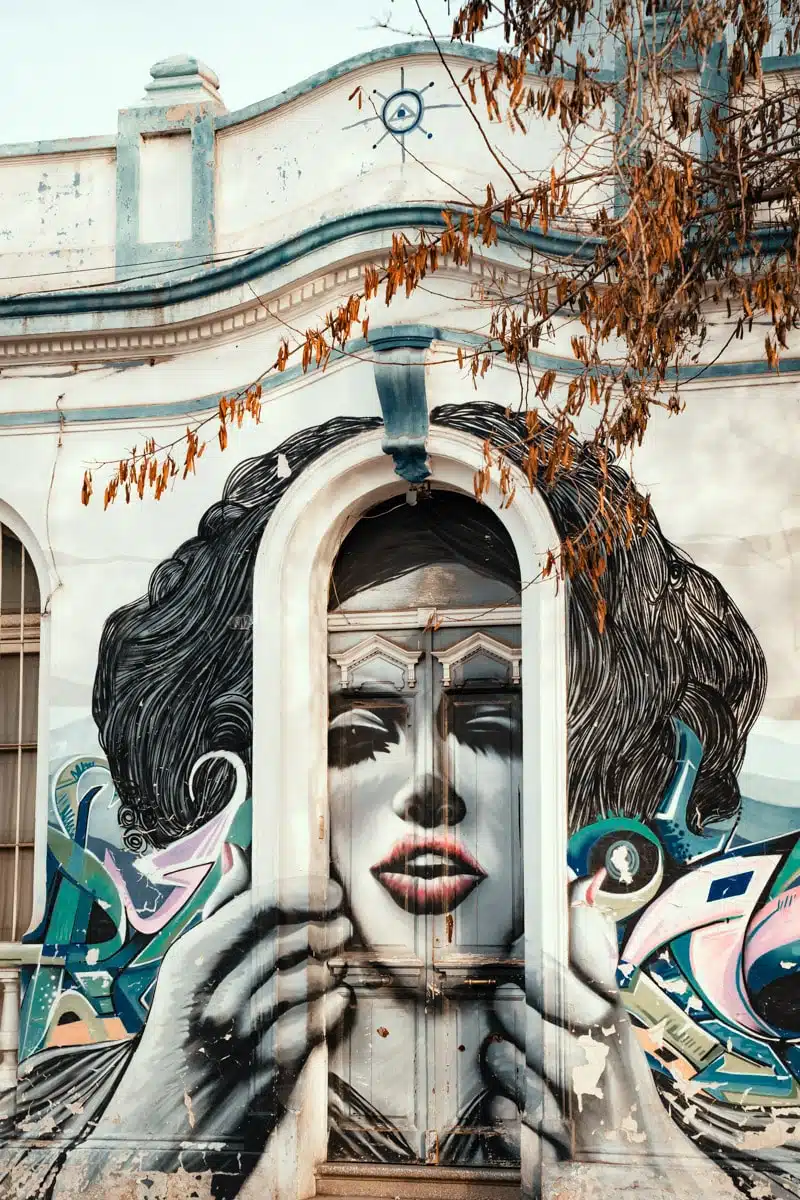
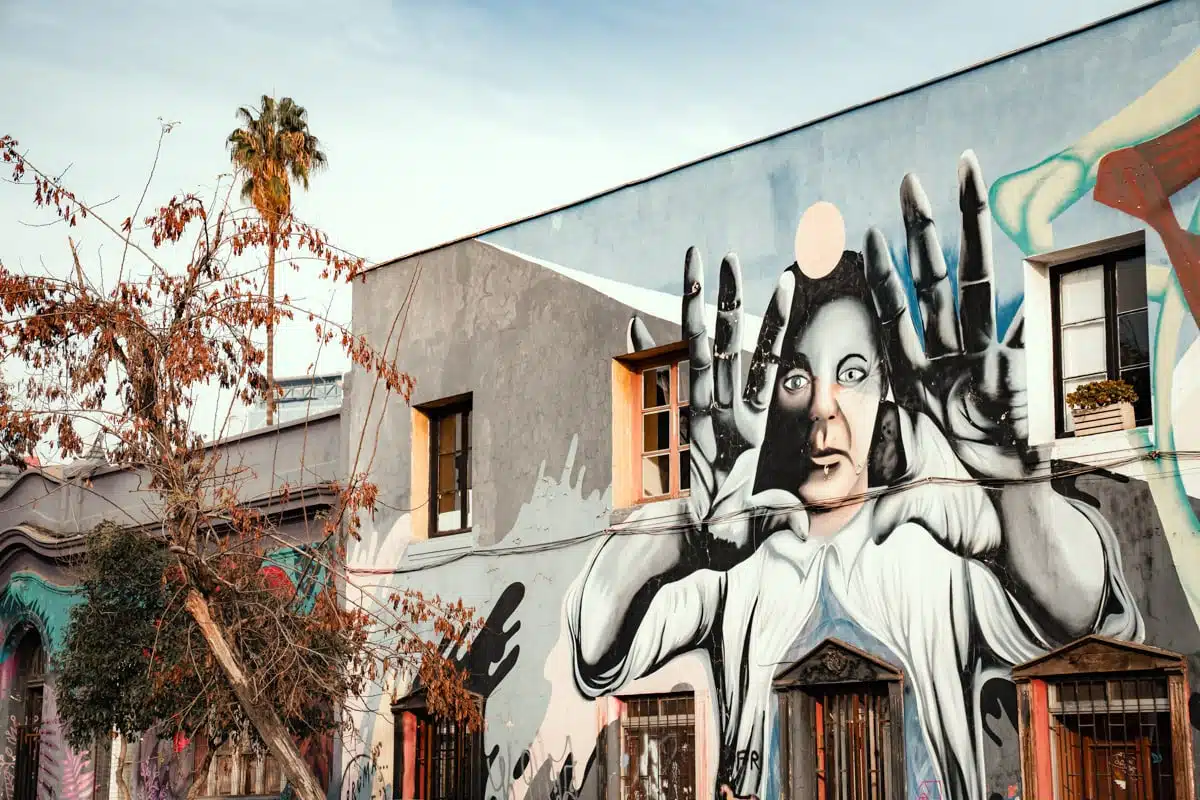
Some of the best murals in Bellavista cover entire houses, with windows and doors worked into the design rather than painted around. Look out for the bird and flower house above, the single-storey house where a woman’s face peers out from an arched window frame, and the black-and-white figure whose outstretched hands spread across two houses.
If you’re walking the neighbourhood around lunchtime, Restaurant Galindo has been serving classic Chilean home cooking since 1968. Order the pastel de choclo, a hearty bake of minced beef, chicken, onions and olives (beware, they aren’t stoned) under a crust of creamed corn, and go hungry. It gets busy, and I wasn’t overly excited about being shunted to the corner halfway through my meal so that more people could crowd in, but it’s cheap and cheerful.
A mural in progress
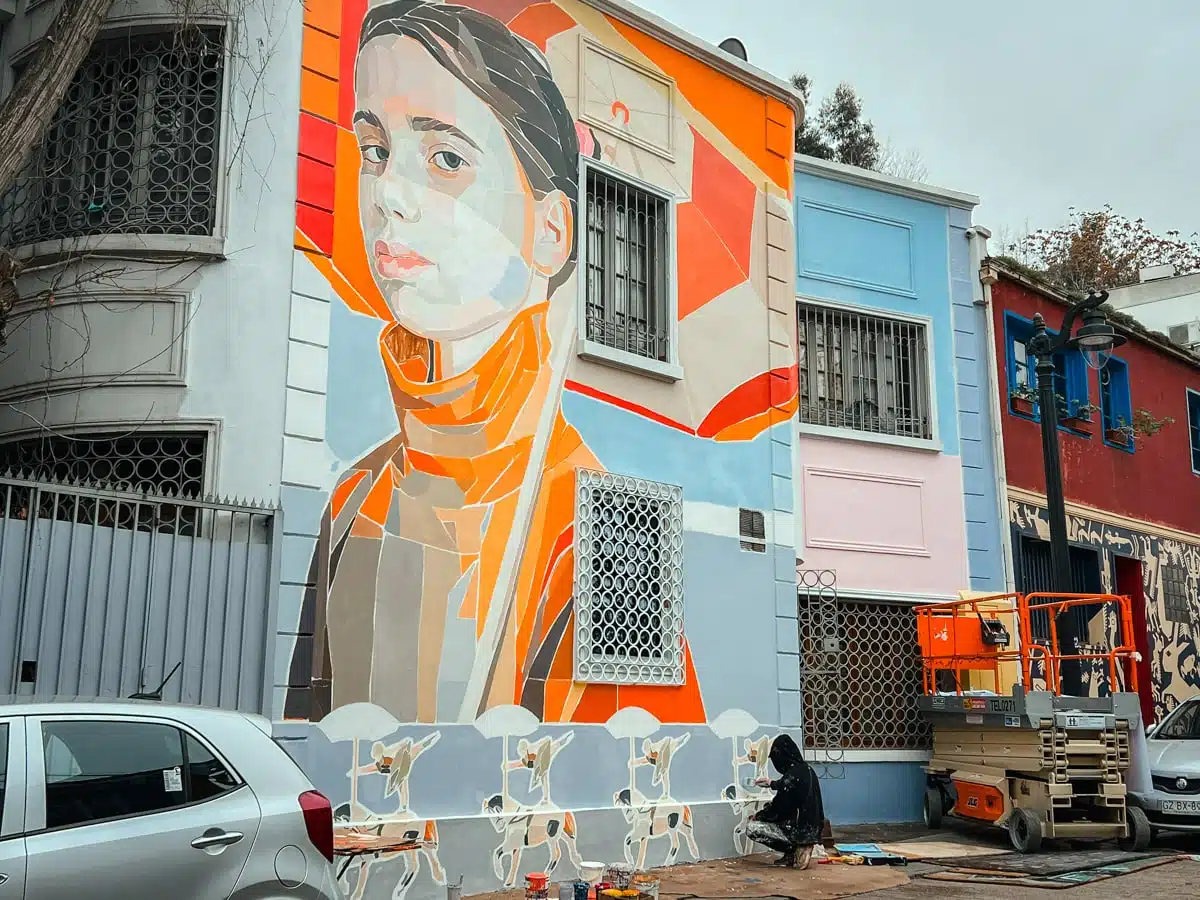
The scene here is very much alive. The day after my tour, I was back in Bellavista for La Chascona and lunch at Galindo, and I came across an artist halfway through a new piece, a woman in an orange scarf taking shape across the front of a pastel-painted house. If you see someone at work, it’s worth stopping to watch, but ask before you take their picture.
Barrio Yungay
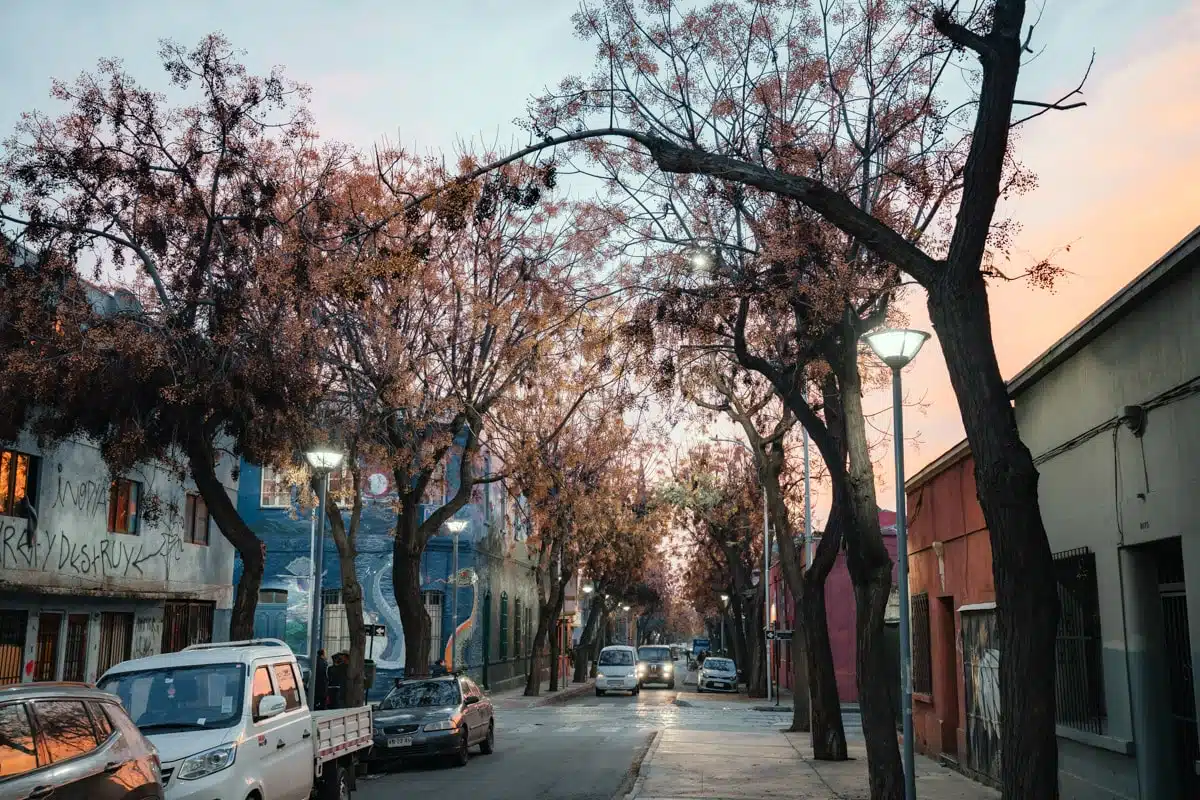
While you’ll find Bellavista in a lot of guidebooks, you won’t find Yungay in many, and the street art here is much more outspoken and political, in keeping with the area’s left-wing roots.
Yungay was founded in 1839 to mark Chile’s victory over the Peru-Bolivian Confederation at the Battle of Yungay, and it was the city’s first republican neighbourhood, laid out on a grid west of the centre. Wealthy families built mansions here first; later, middle- and working-class families moved in, and dozens of cités, rows of small houses around shared passages, went up between them. The neighbourhood fell into decline, and the 1985 earthquake left it in a bad way, but from the 1990s residents organised and it revived as one of the city’s cultural hubs. Today it’s a mix of faded mansions, students, artists and some of the most political walls in Santiago.
By the time I reached Yungay, the light was going, and the murals glowed under the street lamps against a pink sky.
Feminism, anarchy and pension protests
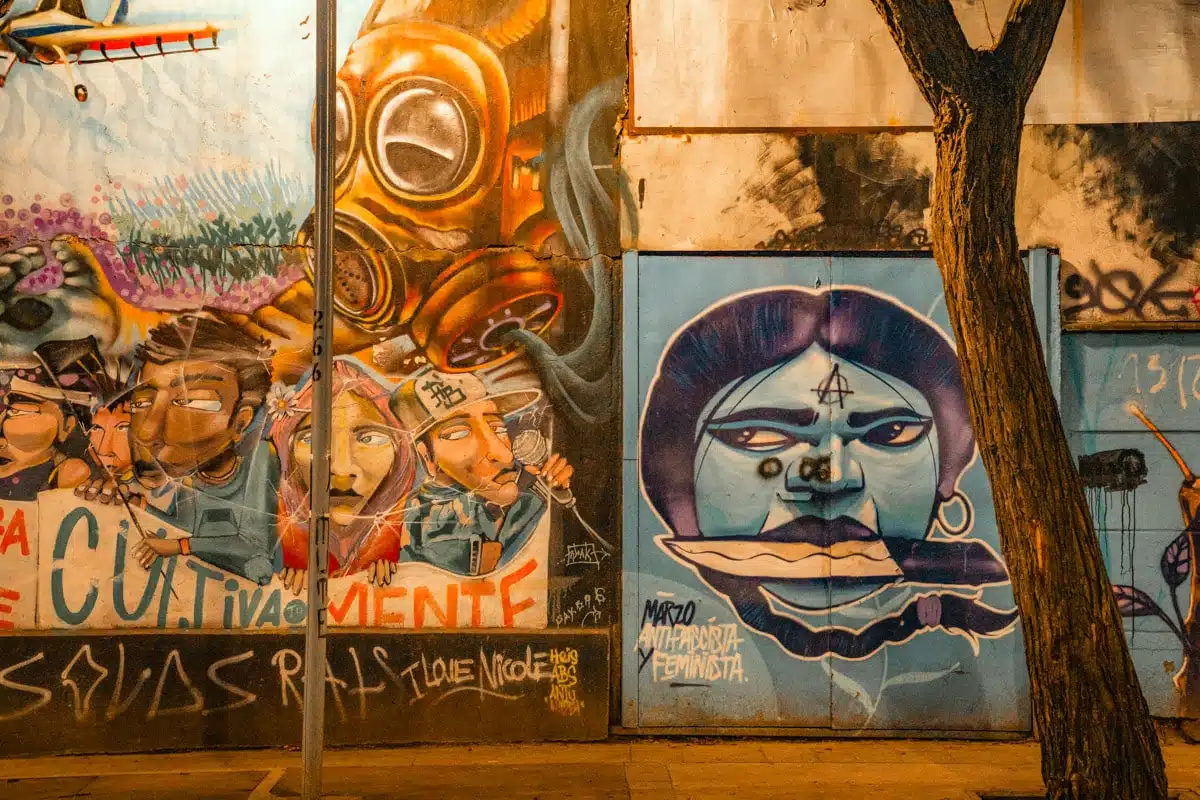
In Yungay, you’ll find pieces espousing feminism, indigenous heritage and even anarchy. One wall shows a woman with an anarchy symbol on her forehead, signed off as part of a feminist and anti-patriarchal March. Another, on a corner by an old railway building, shows railway workers marching with a banner, under a sign reading “No + AFP”. That’s the slogan of the movement against Chile’s private pension funds, the AFPs, and you’ll see it on walls all over the country.
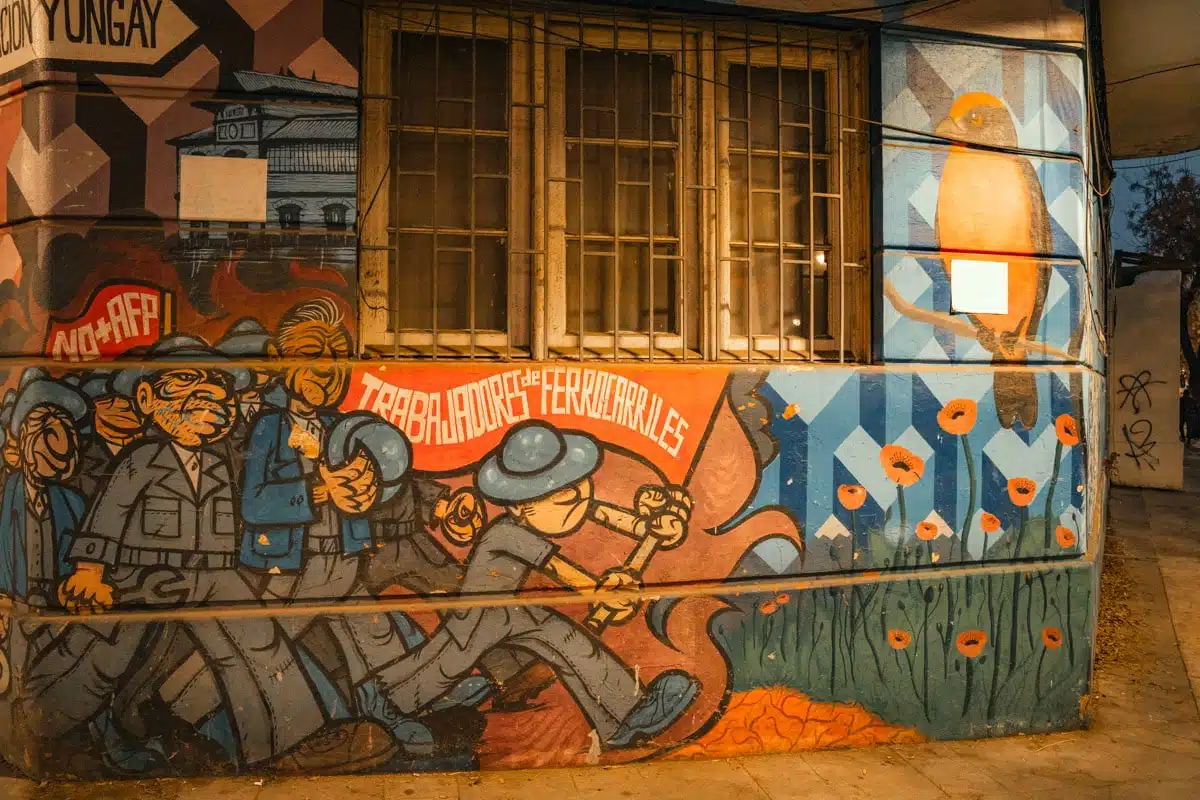
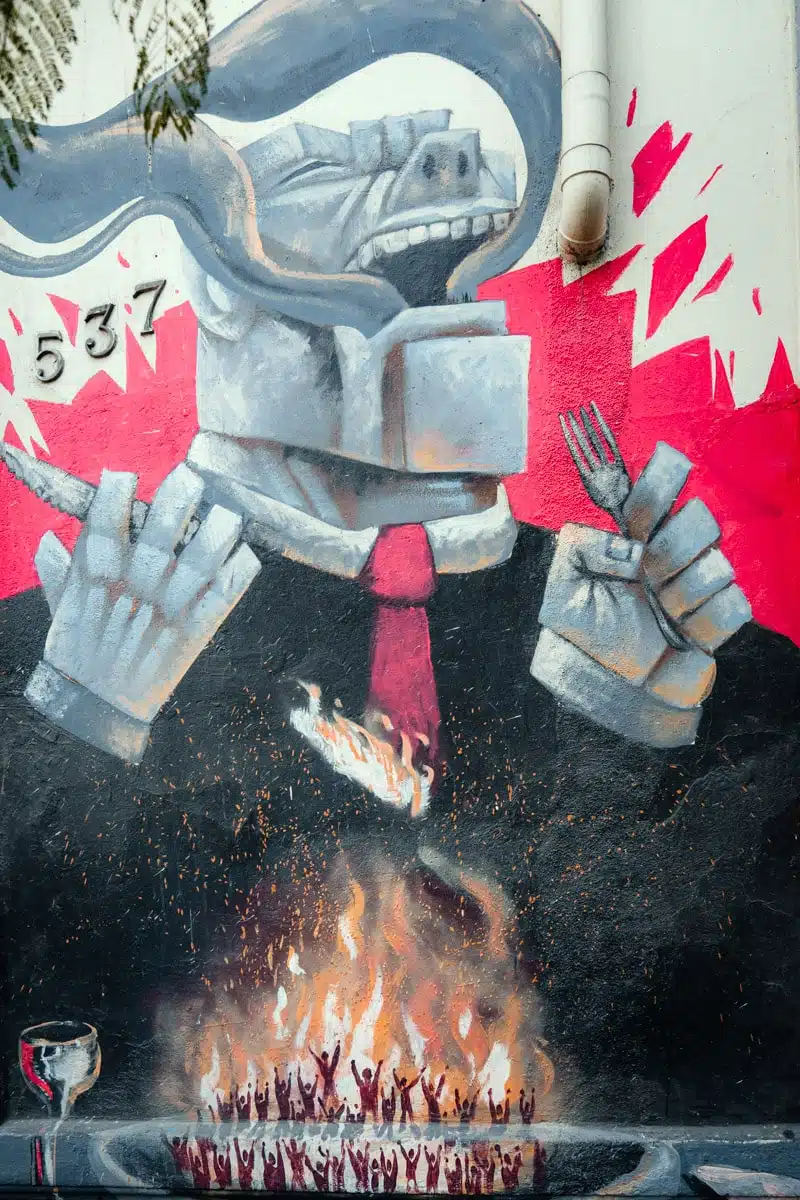
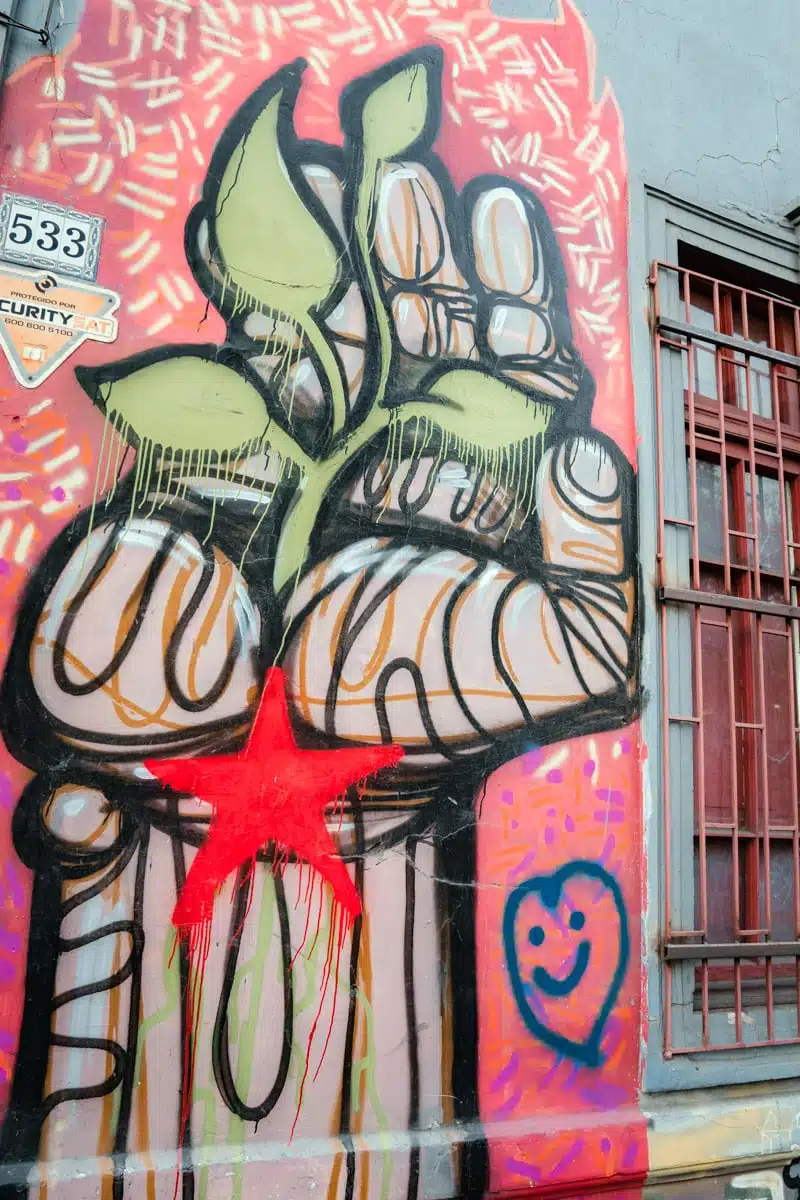
Not everything is angry, though. There are tamer pieces too, and some of the most striking walls in the neighbourhood are simply beautiful.
Café Brazil
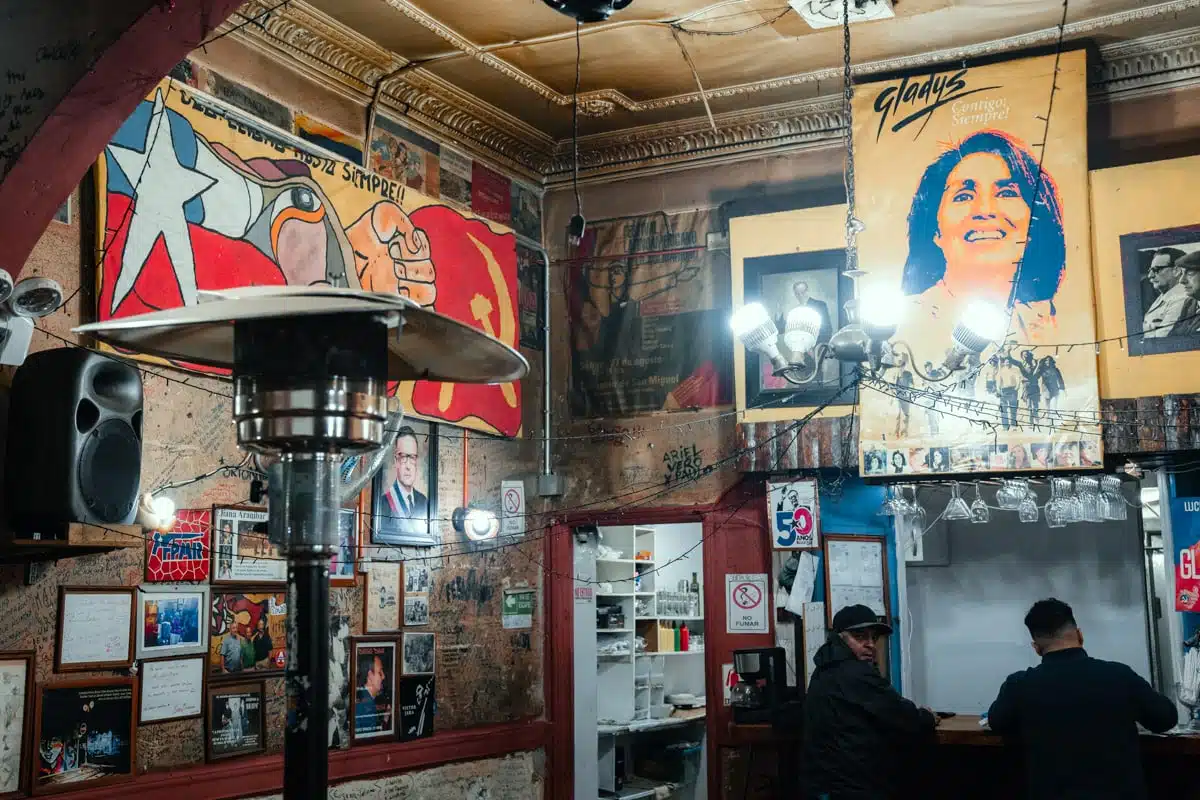
In Yungay, I also stopped by Café Brazil, a left-wing café decorated with images of left-wing figures such as Che Guevara. Take a look inside, but they also do fresh juices and decent coffee, so stay for a while if you have the time.
It’s also the best illustration of something that made the tour so interesting. Even though you see some of the same artists in both neighbourhoods, their work can differ substantially between the two. There’s one artist whose work you see all over Bellavista, but it’s only when you head into Yungay, and up to the second floor of Café Brazil, that you see the political message loud and clear.
The Chiloé creation mural
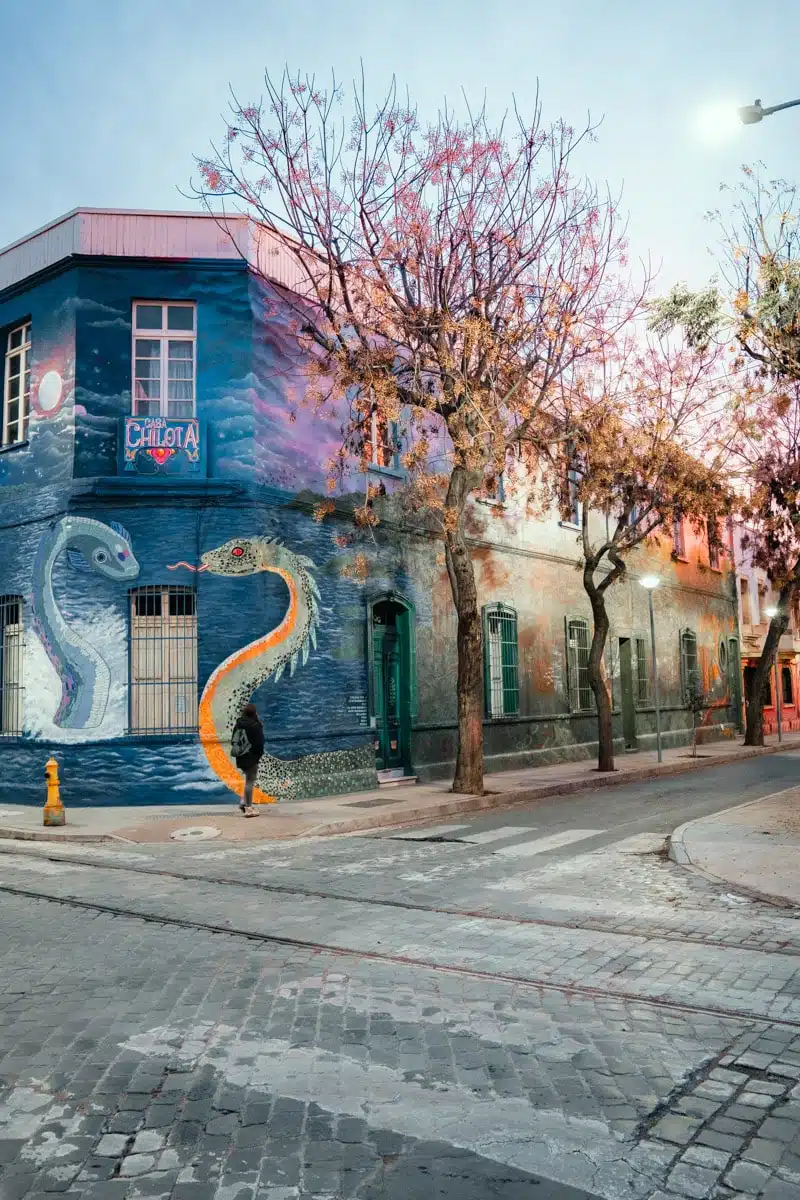
One of my favourites told a version of the creation story from Chiloé folklore, involving two monsters. In Chilote mythology, the two sea serpents, Tenten Vilu and Caicai Vilu, fought a titanic battle, and the islands of the Chiloé archipelago were created as a result. Here, they curl around the corners of a building signed Casa Chilota, one pale and rose-coloured, the other banded in orange and gold, with the moon and the sea behind them.
It’s a lovely reminder that Santiago’s murals pull in stories from the whole length of the country, not just the capital.
More street art to seek out in Santiago
Bellavista and Yungay are the best places to start, but they’re far from the only places to see murals in the city.
- Paseo Bandera: in the centre, a few blocks from the Plaza de Armas, Calle Bandera became a painted pedestrian street in 2017, in a project led by the artist Dasic Fernández. Around 3,300 square metres of the ground is painted, over about 400 metres.
- The GAM: at Plaza Oriente, outside the GAM cultural centre on the Alameda, there’s a mural by the Brigada Ramona Parra, painted without spray paint.
- Barrio Franklin: south of the centre, this is one of the newest street art areas in the city. Inti and Alejandro “Mono” González painted a 50-metre mural on Calle Placer at the Persa Víctor Manuel market, and there’s another Chiloé-inspired mural, by Daniel Marceli, on San Isidro.
- Museo a Cielo Abierto en San Miguel: in the San Miguel district, south of the centre, this open-air museum began around 2009 and has covered the walls of the Población San Miguel housing estate with dozens of huge murals.
- Valparaíso: if Santiago has a burgeoning street art scene, Valparaíso’s is fully fledged. It’s one of the best cities in Latin America for thought-provoking street art, and an easy day trip from the capital. My guide to things to do in Valparaíso covers the stair murals of Cerro Concepción.
How to book a Santiago street art tour
I booked my tour through Alejandro’s website, stgostreetart.com, but that address now redirects to a different company, Getaways Discoveries, which runs Santiago and Valparaíso street art tours of its own. Here’s how to book a similar tour today.
Alejandro’s Bellavista tour
Alejandro now runs his street art tour through Airbnb Experiences, as “Explore Santiago’s Street Art Scene Walking Tour”. It takes about two hours, focuses on Bellavista, runs in English and Spanish, and meets outside the Museo de Arte Contemporáneo in the Parque Forestal, a few steps from where my tour began. It costs from around €61 per person, and when I checked, it had a rating of 4.96 from 189 reviews. My tour also took in Yungay, so ask him whether he still covers both neighbourhoods if that’s what you’re after.
A tip-based walk in Yungay
Roots & Routes runs a tip-based walking tour of Yungay’s murals, street art and memory, bookable on GuruWalk. It takes about two and a half hours, runs in English and Spanish, and meets at the Quinta Normal metro exit, by the park. You pay what you think it’s worth at the end, but it needs at least four people to go ahead.
The Museum of Memory and its murals
To go deeper into the history behind Yungay’s political art, this Museum of Memory tour with a political analyst spends two hours at the Museo de la Memoria y los Derechos Humanos, then heads outside to the nearby street art on themes of memory and resistance, with a coffee stop. It runs in English and Spanish, from around US$65 per person.
Street art in Valparaíso
If you’re heading to the coast, this two-hour Valparaíso street art, funiculars and port tour runs for groups of up to six, from around US$28.
Walking the route yourself
If you’d rather go it alone, you can follow roughly the route I took in an afternoon.
- Start at Bellas Artes metro station (Line 5) and look up at the murals by the exit, then walk through the Parque Forestal, past the Museo Nacional de Bellas Artes and the Museo de Arte Contemporáneo.
- Cross the Pío Nono bridge into Bellavista. Wander Loreto, Dardignac and Antonia López de Bello, then loop up towards La Chascona at the foot of the hill.
- Stop for lunch at Galindo, or for a drink at Patio Bellavista, a courtyard of bars, restaurants and shops.
- Head back to Bellas Artes and take Line 5 west to Cumming or Quinta Normal for Yungay. It’s only a few stops.
- Explore Yungay around Plaza Yungay and the surrounding streets, then finish at the Museo de la Memoria y los Derechos Humanos, right next to Quinta Normal station.
Map
Tips for exploring the murals
- Go in daylight. Bellavista has had a tough few years, with bars and restaurants closing and theft gangs targeting tourists, and Yungay is quiet after dark. Keep your phone out of sight on the street.
- Combine the murals with the museums. The Museo de la Memoria y los Derechos Humanos is free and open Tuesday to Sunday from 10am to 6pm, and it does a great job of setting the context for so much of the political art you’ll see in Yungay. Neruda’s La Chascona costs 9,500 CLP with an audio guide and is open Tuesday to Sunday from 10am to 6pm; you can’t book ahead, so arrive early at weekends.
- Murals come and go. Walls get painted over all the time, so don’t be surprised if some of the pieces in my photos have changed. That’s half the fun.
- Ask before photographing people. Artists at work and residents sitting outside their homes are part of the scene, not part of the backdrop.
- Bring small notes. You’ll want cash for tips on tip-based tours and for coffee and juice stops along the way.
Read next
- The best restaurants in Santiago, Chile: where I ate on my trip
- 17 brilliant things to do in Santiago, Chile
- One day in Santiago, Chile: the perfect Santiago itinerary
- Where to stay in Santiago, Chile: the best areas and hotels
- The best things to do in Valparaíso, Chile: stair murals, Neruda and the hills
- 13 unforgettable day trips from Santiago, Chile
- 22 extraordinary things to do in Chile, from Patagonia to the Atacama
- 10 days in Chile: the perfect Chile itinerary
Love this? Save and share on Pinterest

Discover the top things to do, insider tips and hidden gems in our Chile Travel Guides.
Read the guides →