Santiago’s charms may be tucked away, but don’t skip it: the Chilean capital is filled with cool museums, gorgeous viewpoints, street art and restaurants. Delve into this guide to the best things to do in Santiago so you know where to look.
I’d been to Chile three times before I finally gave its capital the time it deserves. On my fourth trip, a month of solo travel in July, I started and finished in Santiago, and I came away a convert.
I based myself in Lastarria and spent my days hopping between museums, street art and some of the best food and wine I’ve had in South America. I toured Bellavista and Barrio Yungay with a local street art guide, fell hard for the Museo Chileno de Arte Precolombino, wandered through Pablo Neruda’s eccentric home, rode the cable car and funicular up Cerro San Cristóbal, took in the whole city from Sky Costanera and ended the trip with a 14-course blowout at Boragó. In between, I took day trips out to the wineries of the Maipo and Casablanca valleys and to the colourful port of Valparaíso.
This guide covers everything I did, plus the other sights that are well worth adding if you have the time. From busy food markets to the highest tower in South America, here’s how to spend your time in the city. If you’re short on time, start with this one day in Santiago itinerary, and if Santiago is the first stop on a bigger trip, this Chile itinerary will help you plan the rest.
Some links in this article may be affiliate links, which means we may receive a small commission, at no additional cost to you, if you decide to purchase through one of my recommended partners.
Amazing things to do in Santiago, Chile
If you only have a weekend in Santiago, you probably can’t do everything. Below are my highlights, along with a few hidden gems, to help you pick and choose what suits your trip.
Get your bearings on a free walking tour

If you like to get your bearings and some historical context before you start exploring properly, a free walking tour is a good way to start. The Free Tour Santiago Walking Tour is one of the longest-running.
The tours leave from the Metropolitan Cathedral on Plaza de Armas (Plaza de Armas metro station, Line 5) at 10am and 3pm every day and last for about four hours. There’s no need to book: just look for the guides in red “Free Tour” T-shirts. It works on a tips-only basis, so bring some cash to tip your guide at the end. Get there a little early and you can wander around Santiago’s bustling main square first.
On the tour, you’ll learn about the history of Chile and its people, and the natural and political events that made Santiago what it is today, as you pass landmarks like the Palacio de La Moneda, the old Congress building, Cerro Santa Lucía, and the Lastarria and Bellavista neighbourhoods.
Top tip: The afternoon tour heads towards Bellavista and Neruda’s house, La Chascona. From there, it’s a five-minute walk to the San Cristóbal funicular, so you can ride up to the top of the hill once the midday heat has passed.
Getting into the city: It’s easy to get from Santiago’s Arturo Merino Benítez International Airport (SCL) to the centre. Skip the touts in the arrivals hall and either use a shuttle or public transport. If you do want a taxi, pay for it at one of the official booths inside arrivals before you head out.
TransVIP runs shared shuttles from right outside the terminal. You usually don’t have to wait more than 10 minutes for one to fill up, and a shared ride to the city centre costs around 10,000 CLP per person.
If you’d rather take public transport, head to the bus pickup area and catch a Centropuerto or Turbus airport bus. It costs a few thousand pesos to Pajaritos or Los Héroes, where you can pick up the metro to your hotel.
Getting around: Santiago’s metro is clean, efficient and covers most of the areas you’ll want to visit. A ride costs between 735 and 895 CLP depending on the time of day (it’s most expensive at rush hour). You can now tap a contactless Visa or Mastercard straight onto the metro readers (check with your bank that yours works for transport), or buy a rechargeable bip! card at any station ticket office, which you’ll also need for the red city buses.
Outside of the metro, Uber is the best way to get around. It’s relatively cheap and better than taxis, as you don’t have to negotiate fares or worry about getting ripped off. All my hotels told me to use Uber. Cabify and DiDi work too. A law regulating ride-hailing apps was passed in 2023 but still hasn’t fully taken effect, so some drivers may ask you to sit in the front seat.
Santiago is also a walkable city. If you’re staying centrally and sticking to the main sights, you don’t need a car at all. Just keep an eye on your belongings, particularly in Centro, which is a bit run down in places. Petty crime is rife in the city, though it’s mostly non-violent, and crowded spots like Plaza de Armas and the markets are prime pickpocketing territory.
Explore Plaza de Armas and the cathedral

Santiago’s Centro neighbourhood might not have the hipster chic of areas like Lastarria, but it is home to some of the city’s most important sights. Plaza de Armas is where it all began: the Spanish conquistador Pedro de Valdivia laid out the city here in 1541, and the square is still the busy heart of the old centre, full of chess players, street performers and families lounging under the palm trees.
Sitting on one corner of the square, the Catedral Metropolitana was an easy sight to fit into my day, and it’s free to visit outside of mass. From the outside, it doesn’t look like much, but when I stepped inside I found a Neoclassical extravaganza, complete with more gold than you might think tasteful. Definitely worth a look.
Look out, too, for the Correo Central (the main post office, in a former governor’s palace) and the Municipalidad (city hall) along the edges of the square. The Museo Histórico Nacional, in the old Royal Audiencia building on the north side, closed in August 2026 for a major expansion that’s expected to take about three years, so you can only admire it from the outside for now.
From the square, make a beeline for the Museo Chileno de Arte Precolombino, a block away, or head to the Mercado Central for lunch (more on that below).
Discover the Museo Chileno de Arte Precolombino

The Museo Chileno de Arte Precolombino (Chilean Museum of Pre-Columbian Art) was 100% my favourite museum in Santiago. In fact, I think it might have been my favourite thing I did in the city, full stop. In other words, GO.
Some archaeological museums can be a total snooze, but this thoughtfully curated one is not only visually stunning, it also gives you an in-depth insight into the vibrant and complex cultures that flourished across Latin America before the Spanish conquest. Exhibits range from intricate Andean textiles, preserved in a specially darkened, temperature-controlled room, to ceramics, stone carvings and striking jewellery spanning around 5,000 years.
The building itself is a treasure too: the old Royal Customs House, completed in the early 1800s. The collection is spread over 12 galleries on several floors, including the downstairs gallery Chile antes de Chile (Chile before Chile), which focuses on the cultures of what’s now Chile, from the Mapuche to the Lickanantay people of the Atacama and Rapa Nui. It’s a brilliant primer if you’re heading on to the Atacama Desert.
Allow at least a couple of hours to see every inch and do it justice. The museum is at Bandera 361 and is open Tuesday to Sunday from 10am to 6pm. Foreign visitors pay more than residents (around 12,000 CLP for adults), and you can buy tickets online in advance.
Watch the changing of the guard at La Moneda
The Palacio de La Moneda is Chile’s presidential palace, and one of the most important buildings in the country’s history. The Italian architect Joaquín Toesca designed it in the late 18th century as the colonial mint (hence the name, which means “the coin”), and it later became the seat of government. On 11 September 1973, it was bombed during the military coup in which President Salvador Allende died.
The easiest way to see it is at the changing of the guard, a ceremony with mounted soldiers and a military band in the Plaza de la Constitución in front of the palace. It takes place every other day, at 10am on weekdays and usually 11am on weekends and holidays, though official events can move it at short notice. Get there 15 minutes early to grab a good spot.
Underneath the plaza on the south side of the palace, the Centro Cultural La Moneda hosts changing exhibitions and has a good craft shop and café. Free guided tours of the palace itself are booked online through the Chilean government, but slots are limited and hard to get, so try well before your trip.
Catch a bird’s eye view of the city
Santiago is ringed by mountains, and there are viewpoints all over the city to take them in. These are the best:
Cerro San Cristóbal

Rising around 300 metres above the city (its summit is about 860 metres above sea level), San Cristóbal is the place to go for epic views of Santiago and the towering Andes, and I made sure I went up. At the top, a 22-metre statue of the Virgin Mary (including its pedestal) looks out over the city.
There are two ways up without breaking a sweat: the funicular from Pío Nono street in Bellavista, or the cable cars. I rode both, and it’s worth trying both. Tickets are sold at telefericosantiago.cl and the ticket offices, and an adult fare runs to a few thousand pesos depending on the line and whether you buy a one-way or return ticket. The funicular and cable cars run Tuesday to Sunday and are closed on Mondays for maintenance.
The hill sits within the Parque Metropolitano, over 700 hectares of green space with the city zoo, a Japanese garden and two summer swimming pools. At the top, grab an ice-cold mote con huesillo from one of the stalls, walk up to the statue and watch the city from one of the overlook benches.
You can hike to the top using various paths, but there have been armed robberies on the routes, so be aware of your surroundings and exercise caution if you do. Stick to the main paved road, go during the day and go with other people. The UK government also warns that street robberies in Santiago are increasingly carried out at knife or gunpoint. If you’re cycling, keep to the speed limit on the descent: Parquemet has been cracking down on fast riders and has announced plans to make cyclists register.
Sky Costanera

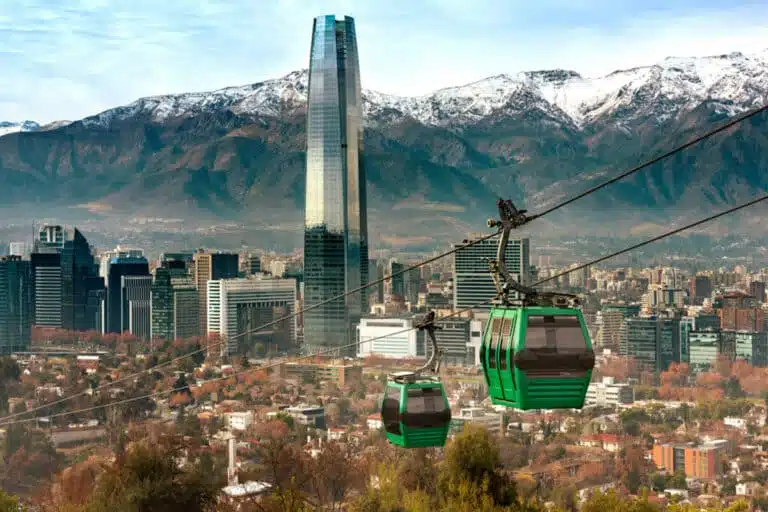
As the tallest skyscraper in South America (at a whopping 300 metres) and the second-tallest in Latin America, the Gran Torre Santiago is home to the highest viewpoint in the city, Sky Costanera, and I went up to see the view for myself.
Its 360-degree windows across floors 61 and 62 take in the entire city, the hills and the mountains. It’s pricey (adult tickets are 25,000 CLP, rising to 30,000 CLP for the popular sunset slot), but if you want the best city views in Santiago, or bragging rights, it’s worth it. It’s also a great place to sip a cocktail and soak up the views: the Sky 300 bar up there is sleek and sophisticated, its mixologists serve inventive cocktails, and you should try to grab a table by the (numerous) windows. It’s open daily from 10am to 10pm, and the closest metro stop is Tobalaba (Lines 1 and 4), about a 10-minute walk away.
Cerro Santa Lucía
You might think the much smaller Cerro Santa Lucía would pale in comparison to San Cristóbal and Sky Costanera, but this little hill in Lastarria is a gem, with winding, garden-laden paths and historic buildings leading up to yet another stunning city viewpoint.
It’s historically significant too: Pedro de Valdivia founded the city at the foot of the hill in 1541. I went in through the ornate entrance at the Terraza Neptuno, on Avenida Libertador Bernardo O’Higgins by Santa Lucía metro station (Line 1), and climbed up to the Castillo Hidalgo, a fort built in 1816. The architecture is a mishmash of styles, which is only part of its charm. It’s free to visit and open every day, though the hours vary by season.
Top tip: Avoid the viewpoints in the middle of the day and visit in the late afternoon instead, when the sun is low in the sky.
Visit the fascinating home of Pablo Neruda

You can barely stumble around Santiago without hearing a reference to Pablo Neruda, the poet and politician who won the Nobel Prize for Literature in 1971. La Chascona was his home in Santiago, and it was high on my list. In addition to his writing, he was deeply involved in politics and was close to President Salvador Allende.
La Chascona is one of Neruda’s three homes in Chile. The others are La Sebastiana in Valparaíso and his house at Isla Negra. He started building this one in 1953 as a secret hideaway for Matilde Urrutia, his mistress and later his third wife. “Chascona” is Chilean slang for someone with wild, tangled hair, a reference to Matilde’s mane of curly red hair.
During the 1973 coup, La Chascona was vandalised and flooded. Neruda died just days after the coup, and Matilde insisted on holding his wake here, among the mud and broken glass. She later restored the house, and it became a museum with the help of the Pablo Neruda Foundation.
The free audio guide (available in English) is what made my visit. It gives you a real insight into the life Neruda and Urrutia shared here: the Captain’s Bar, shaped like a ship’s cabin, where Neruda would receive his guests, and the private living quarters upstairs, adorned with images of them both. Without the guide, it wouldn’t be half as engaging, but with it, you feel like you’re stepping back in time to peek into their lives. The house is laden with seemingly random trinkets, secret corners and quirky art.
It’s compact, so plan to spend around an hour. La Chascona is open Tuesday to Sunday from 10am to 6pm (7pm in January and February), and entry costs around 9,500 CLP. You can’t book ahead and visitor numbers are limited, so arrive early on weekends.
Learn about Chile’s tumultuous history at the Museum of Memory and Human Rights

The Museo de la Memoria y los Derechos Humanos (Museum of Memory and Human Rights) examines the darkest period of Chile’s past: the military dictatorship of Augusto Pinochet, from 11 September 1973 until 1990.
For 17 years, Chileans were detained and tortured by the regime’s forces. More than 3,000 people were killed or disappeared, and many of the missing have still not been found to this day.
It’s all too easy to gloss over Chile’s turbulent history, but when I visited, I found this museum does a great job of setting the context and showing the scale of the loss and the human rights abuses that took place. It combines photographs and personal testimonies with interactive displays and art from the period, and it often hosts temporary exhibitions and talks on human rights and social justice. It isn’t one of the “fun” things to do in Santiago, but everyone should visit.
The museum is free and open Tuesday to Sunday from 10am to 6pm (last entry 5:30pm). It’s on Matucana, right next to Quinta Normal metro station (Line 5), so you can combine it with a wander around Quinta Normal park and the street art of Barrio Yungay.
Explore Santiago’s fabulous art scene
Santiago has long been home to a huge community of artists, musicians and writers, and you can see their work everywhere, from the walls of Bellavista to the city’s art museums.
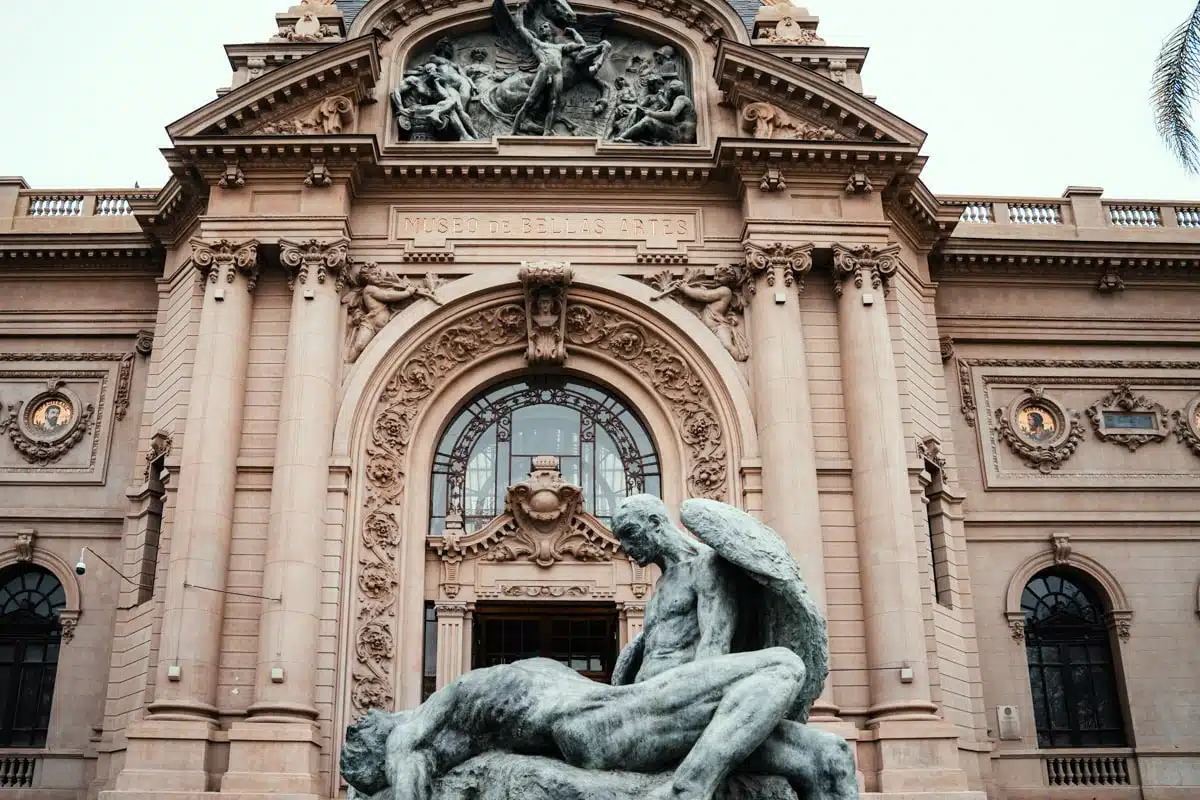
The Museo Nacional de Bellas Artes is another must-visit. It’s a gorgeous building, built for Chile’s centenary in 1910 with a glass-roofed central hall, on the edge of the Parque Forestal, and it holds some notable works. It’s free to enter: when I visited, you had to fill in a Google form first, but you no longer need to book. Bring some change for a locker if you have a bag with you, and don’t forget to pop down to the basement, where the work takes a decidedly more modern bent. It’s open Tuesday to Sunday from 10am to 6:30pm.
For contemporary art, I headed to the Museo de Artes Visuales in Lastarria, now run by the Universidad Católica as MAVI UC. It showcases contemporary art from Chile and Latin America, and its sleek, striking building, itself a work of art, is impossible to miss. There’s an ever-changing roster of temporary exhibitions, so no two visits are the same. It’s on Plaza Mulato Gil de Castro and is closed on Mondays. And if ancient art is more your thing, the Museo de Arte Precolombino is unmissable (see above).
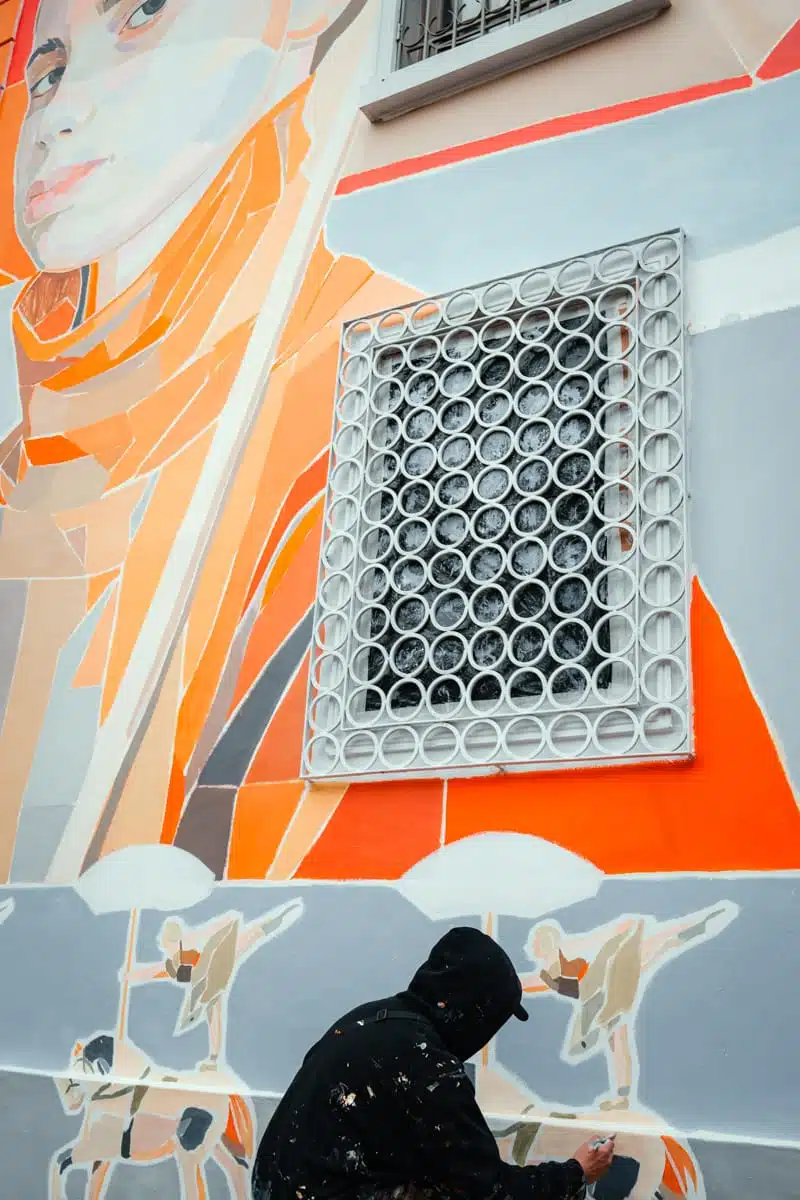
If you know me, you’ll know I’m obsessed with exploring local street art scenes, and Santiago’s is thriving. It isn’t talked about much, but the scene is focused on local artists, which means lots of hyper-local references and political statements. I booked a street art tour with a local guide, Alejandro, who knew the city incredibly well and the stories behind the works. He ran the tour even though it was just me. You could explore by yourself, but you’d miss the context. The company that ran it, Stgo Street Art, now trades as Getaways Discoveries and still runs tip-based tours.
The tour kicked off in Bellavista, beneath two large-scale murals, and it only got better from there. Bellavista has a wide variety of pieces, some by up-and-coming artists and others by well-established names on the Santiago scene, with a lot of work by Pigüan.
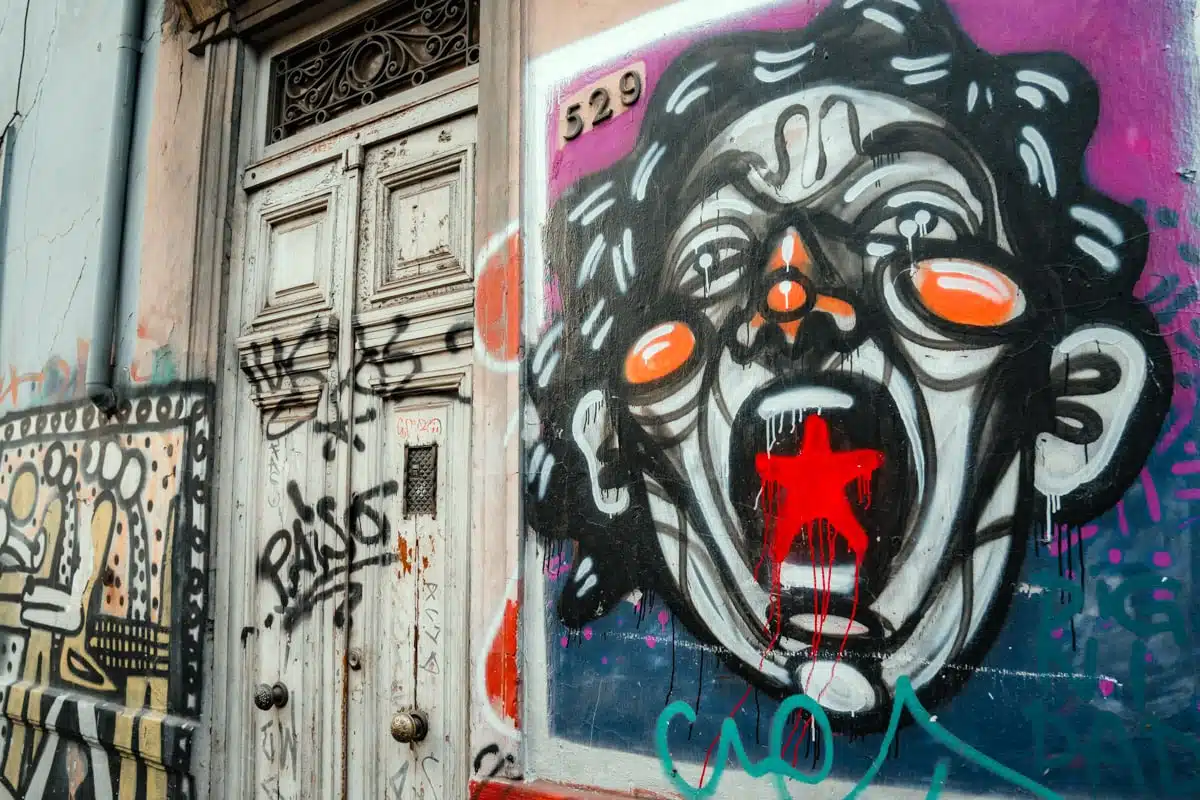
Then the tour moved on to Barrio Yungay. You’ll find Bellavista in a lot of guidebooks, but not Yungay, and the street art here is much more outspoken and political, in keeping with the area’s left-wing roots. Look out for pieces espousing feminism, indigenous heritage and even anarchy. There are tamer pieces too: one of my favourites told a version of the creation story from Chiloé folklore, involving two monsters. Alejandro also took me to Café Brasil, a left-wing café decorated with images of figures such as Che Guevara, which does fresh juices and decent coffee. What struck me most was how the same artists’ work could differ between the two neighbourhoods: it’s only in Yungay that their political message comes through loud and clear.
There’s more street art in Barrio Franklin, which has a whole dedicated installation.
Sample the best Chilean food
Chilean food is an entire cuisine that’s flown under the radar for far too long. It varies hugely depending on where you are in the country, but you can find great Chilean dishes right here in the capital.
Many Chilean dishes combine meat or seafood with corn or wheat and local vegetables, and there’s AMAZING seafood all over the country thanks to its skinny shape and miles and miles of coastline.
Here are some of the best dishes (and places to eat them) in Santiago:
Chorrillana at El Palacio de la Chorrillana
Chorrillana is to Chile as poutine is to Canada: a rich, savoury plate of chips that you’ll find almost anywhere that serves alcohol (yes, it’s bar food).
Traditional chorrillana is a mound of crispy chips topped with egg, sautéed onions and strips of beef, but there are plenty of variations, from spicy prawns to mushrooms with cheese.
There’s no better place in Santiago to try traditional chorrillana and its endless variations than El Palacio de la Chorrillana, at Pío Nono 201 in Bellavista. Portions are huge, so one plate easily feeds two or three people.
Pastel de choclo at Galindo

Pastel de choclo is about as traditional as Chilean food gets, so try it at least once while you’re in the city. It’s a hearty combination of chicken and pino (minced beef with onions, olives and hard-boiled egg) under a crust of creamed corn, baked and served bubbling hot in a clay dish. Beware: the olives aren’t stoned, and it’s very filling, so go hungry. It’s a summer dish, when the corn is in season, so you won’t find it on every menu in winter.
My guide Alejandro recommended Galindo in Bellavista as one of his favourite local eats, and it’s a good shout for traditional, home-style Chilean cooking at affordable prices to soak up a couple of local beers. It’s a Santiago classic, open since 1968, and it is popular, so it gets busy. I wasn’t overly excited about being shunted to the corner halfway through my meal so more people could crowd in, but it’s cheap and cheerful. It’s on Dardignac, a short walk from Baquedano metro station, and it’s open daily for lunch and dinner.
Seafood (paila marina and ceviche) at the Mercado Central

I went to the Mercado Central, Santiago’s historic fish market, and eating here is all about the seafood. It’s budget-friendly and a great way to dive headfirst into Chilean cuisine if Santiago is your first stop in the country. Order the paila marina (a rich seafood stew) or a plate of ceviche.
Skip the touristy spots on the outskirts of the market and head into the middle to rub shoulders with the locals. Visit in the morning to see the market at its best. You’ll often hear that the wrought-iron hall was designed by Gustave Eiffel, but it was actually the work of Chilean architect Fermín Vivaceta, and it opened in 1872. It opens at 6am and closes around 4pm (2pm on Sundays), so go for breakfast or lunch rather than dinner. Watch out for pushy waiters touting for the restaurants, and keep an eye on your belongings.
Fruit and cheap eats at La Vega Central
Just across the Mapocho River from the Mercado Central, La Vega Central is Santiago’s huge, chaotic produce market. It’s where locals do their grocery shopping, with mountains of avocados, chillies and seasonal fruit you may never have seen before (look out for lúcuma and chirimoya).
Tucked inside are dozens of tiny cocinerías serving cheap, hearty set lunches like cazuela (meat and vegetable stew), and the neighbouring Mercado Tirso de Molina has a food court with juices and Peruvian and Chilean dishes. La Vega opens before dawn and is busiest in the morning, so go early and bring cash.
Chilean classics at Liguria
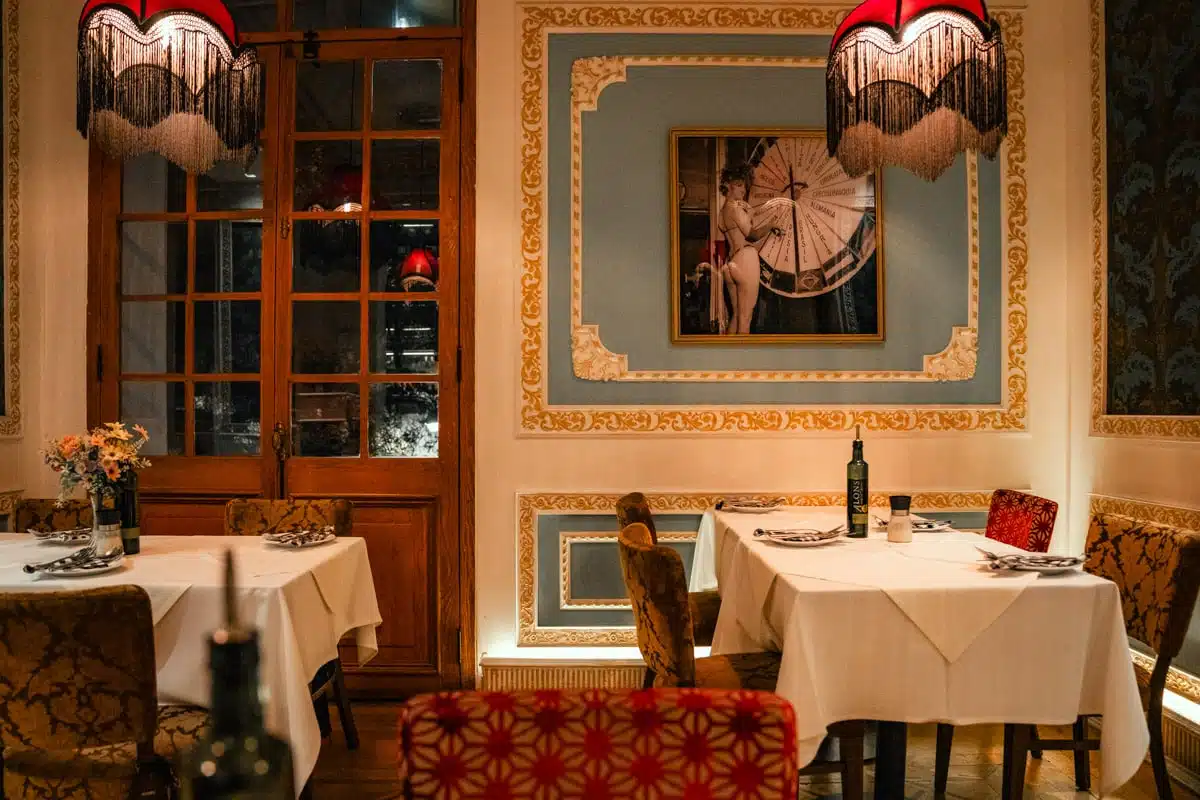
Liguria is one of the best-known restaurants in Santiago. There are a couple of branches around the city, but several locals told me to head to the one in Lastarria (on Merced), as it’s the best. It’s a decent option for traditional Chilean fare in a baroque setting: fringed lampshades and gilt on the cornices. The effect should be a bit much, but it pulls it off.
The menu is long and flits between Chilean classics, and there’s a healthy-ish mix of tourists and locals. My plancha wasn’t the most flavourful meal I’ve ever had, but it was good enough to pass muster. You know you’re in Chile, though, when the house Carmenere is better than most of what they pour in high-end restaurants at home in London. The cocktail list is long too: obviously try a pisco sour, but venture beyond it, as the bartenders have serious skills. Reserve ahead.
Machas a la parmesana at Casa Lastarria
Even if you don’t usually like clams, it’s worth tasting machas a la parmesana in Santiago. These local clams are topped with parmesan and herbs and baked until golden, and they go perfectly with a glass of Chilean Sauvignon Blanc. Casa Lastarria , at the bottom of Calle José Victorino Lastarria near Cerro Santa Lucía, is a good place to try them.
Empanada de pino

You can’t miss the little window shops all over Santiago serving up empanadas. There are tons of varieties, but the traditional Chilean kind is the empanada de pino.
Inside, you’ll find a steaming mix of beef, onions, spices, a hard-boiled egg and an olive (and sometimes raisins). Try them fresh and del horno, from the oven, rather than fried.
Completos
Completos might look like ordinary hot dogs, but they’re not. Chilean hot dogs come fully loaded with smashed avocado, mayonnaise, ketchup and spicy sauce. The most popular version, the completo italiano, is topped with avocado, tomato and mayo, the colours of the Italian flag. They’re a classic late-night snack.
Push the boat out at Boragó
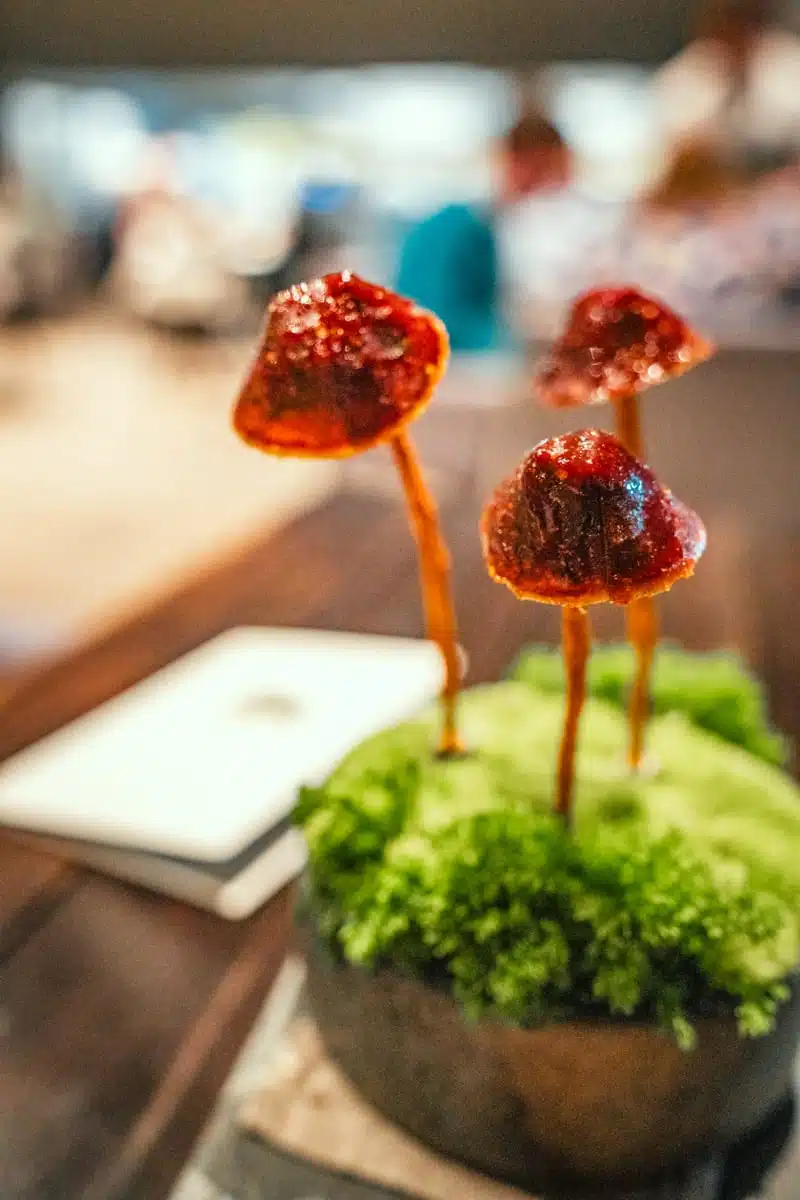
Before I caught my flight home, I had one more trick up my sleeve: a blowout meal at Boragó, regularly named one of the best restaurants in South America (it was sixth on the Latin America’s 50 Best Restaurants list in 2025). It takes a lot to make me really sit up and pay attention to a meal, but this one certainly did.
Chef Rodolfo Guzmán’s menu is built on ingredients gathered from across Chile, and course after course came out, each one playing with the elements and always with a little surprise. Highlights included a chupe, traditionally made with seafood but here made with mushrooms, an umami blast balanced by a delicate eucalyptus-bud broth. The ice brûlée with mussels was an inventive idea, but the ice made it very cold and clashed with the course before and the wine. To finish, a nitrogen-blasted lemon meringue: expect to make like a dragon when you eat it. I blasted smoke from my nose like Smaug.
The setting is a cavernous, contemporary space of clean lines and grey concrete in Vitacura. It looks very impressive, though it errs on the side of majestic rather than atmospheric. I walked away stuffed, verging on uncomfortably so: 14 courses, no matter how small and exquisite, is a lot, so pace yourself early on. The tasting menu now costs 189,000 CLP, plus 99,000 CLP for the wine pairing, which makes it one of the most expensive meals in Santiago. A trip to Boragó is as much about theatre as dinner, so don’t go expecting a simple, unfussy meal. Book ahead at borago.cl.
Sip on classic Chilean drinks
Chileans LOVE their national drinks, from pisco sours to fine wines, and there are bars everywhere in Santiago where you can try them. These are the most important ones to know:
Mote con huesillo on San Cristóbal

It isn’t alcoholic, but this “drink” deserves a spot on any list. A local favourite, especially in the heat of summer, mote con huesillo has just three ingredients: mote (cooked husked wheat), a sweet nectar made from dried peaches, and the rehydrated peach itself.
You eat it with a spoon to enjoy the chewy wheat in the peach juice, a bit like cereal with milk. You’ll find street carts selling it all over Santiago, but it tastes even better with a view at the top of Cerro San Cristóbal.
Wine at Bocanáriz

Chile is famous for its wine, with 6 main wine regions, from the Atacama in the north to the Austral region in the far south, and several subregions scattered along its length. Grapes to try include Carmenere, Sauvignon Blanc, Syrah and Pinot Noir.
About ten people told me to make sure I booked a table at Bocanáriz , from the concierge at my hotel to Alejandro, my street art guide. I’m glad I listened: it was easily one of the nicest meals I had in the city. It’s a wine bar and restaurant in one, and it’s stellar at both.
Book one of the wine flights. You can choose from ones focusing on specific varieties or classifications, or opt for a pan-Chilean flight. I went for the White Wines of Chile flight, as well as the Carmeneres flight. Servings are small, so you can try quite a few wines, and the servers talk you through the differences and standout details of each one, so you’re not going in blind. Opened in 2012 on Calle Lastarria, it has more than 300 Chilean wines by the bottle and dozens by the glass.
The food is impressive too. Most wine bars put on a platter of artisan cheese and leave it at that. Not Bocanáriz. There’s a selection of sharing-style tapas as well as heartier mains, and my tiradito with carrots and pea jus and my steak and chips set the bar high. Reservations are strongly recommended.
If you’d rather taste wine at the source, the Maipo Valley is within an hour of the city (see the day trips below).
Craft beer at José Ramón 277
Santiago has a growing number of small, independent craft brewers alongside the big Chilean beer brands. José Ramón 277 is a popular craft beer and sandwich bar on a quiet street in Lastarria, with beers ranging from IPAs to stouts and hearty sandwiches (veggie options included) to go with them.
Pisco sour at Chipe Libre
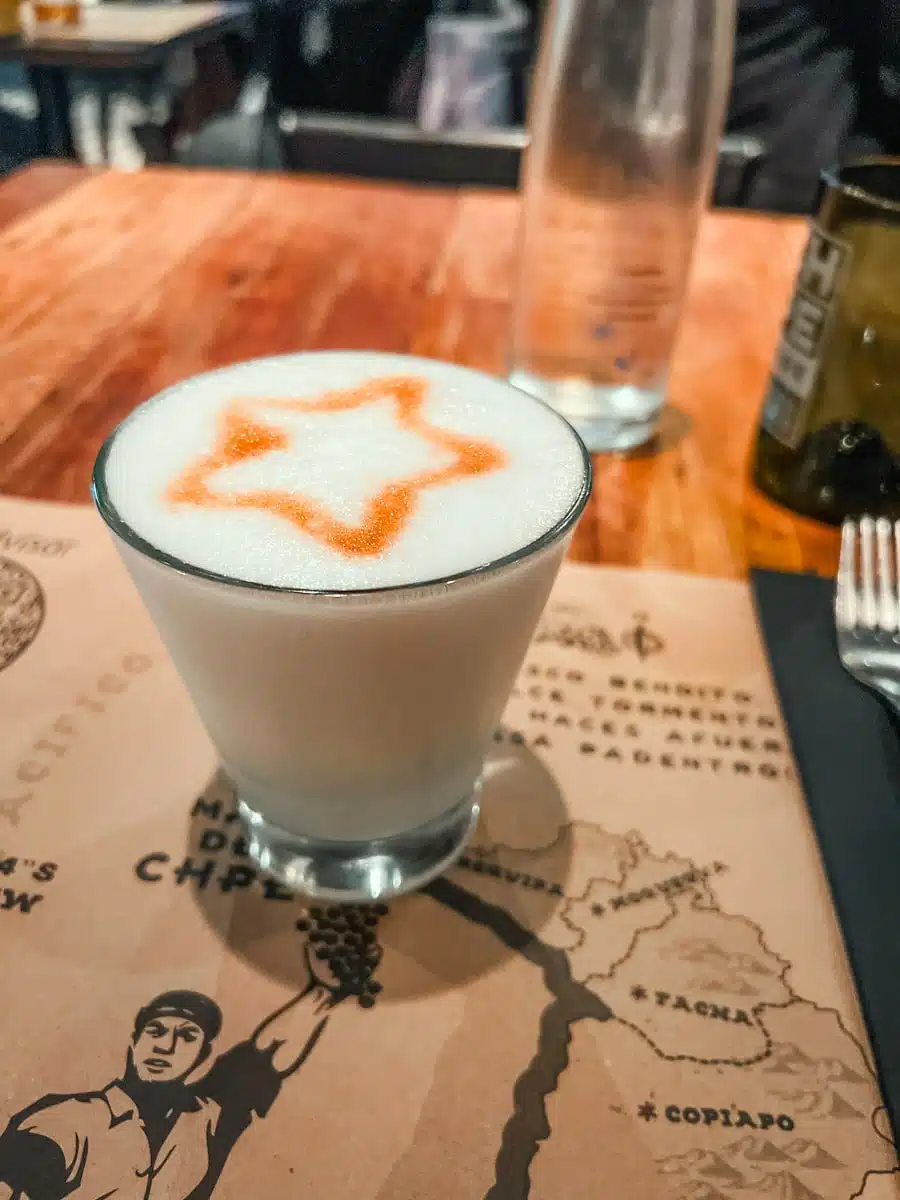
Raise the subject of pisco with any Peruvian or Chilean and things can get heated pretty quickly. Both nations claim to have invented the fiery grape brandy, lines have been drawn in the sand, and no one is ceding ground.
Chipe Libre (its full name is the República Independiente del Pisco, the Independent Republic of Pisco) on Calle Lastarria makes it clear that the origins of pisco aren’t its business, but celebrating the drink in its best forms from both sides of the border certainly is. You can try piscos from some of the best distilleries in Peru and Chile, and there’s an extensive cocktail list, but really, it would be rude not to go for a pisco sour. Chileans tend to make theirs without the frothy egg white, so the lime stands out more: try both styles and see which you prefer.
The food is great too. My platter of oysters came Chilean-style, with wedges of lime and a delicious salsa of red onion, corn and peppers. I’m a convert from a plain old squeeze of lemon for life.
Terremoto
Calling it Santiago’s pride and joy is a stretch, but bars here will try to persuade you to try a terremoto at least once.
It’s worth a sip, but BEWARE: the terremoto (“earthquake”) is strong. It’s a mixture of pipeño, a young, sweet white wine, and grenadine, topped off with a scoop of pineapple ice cream. The bar most associated with it is La Piojera, an old-school drinking den near the Mercado Central. People tend to love it or hate it, so give it a go and decide for yourself.
Wander around Santiago’s charming neighbourhoods
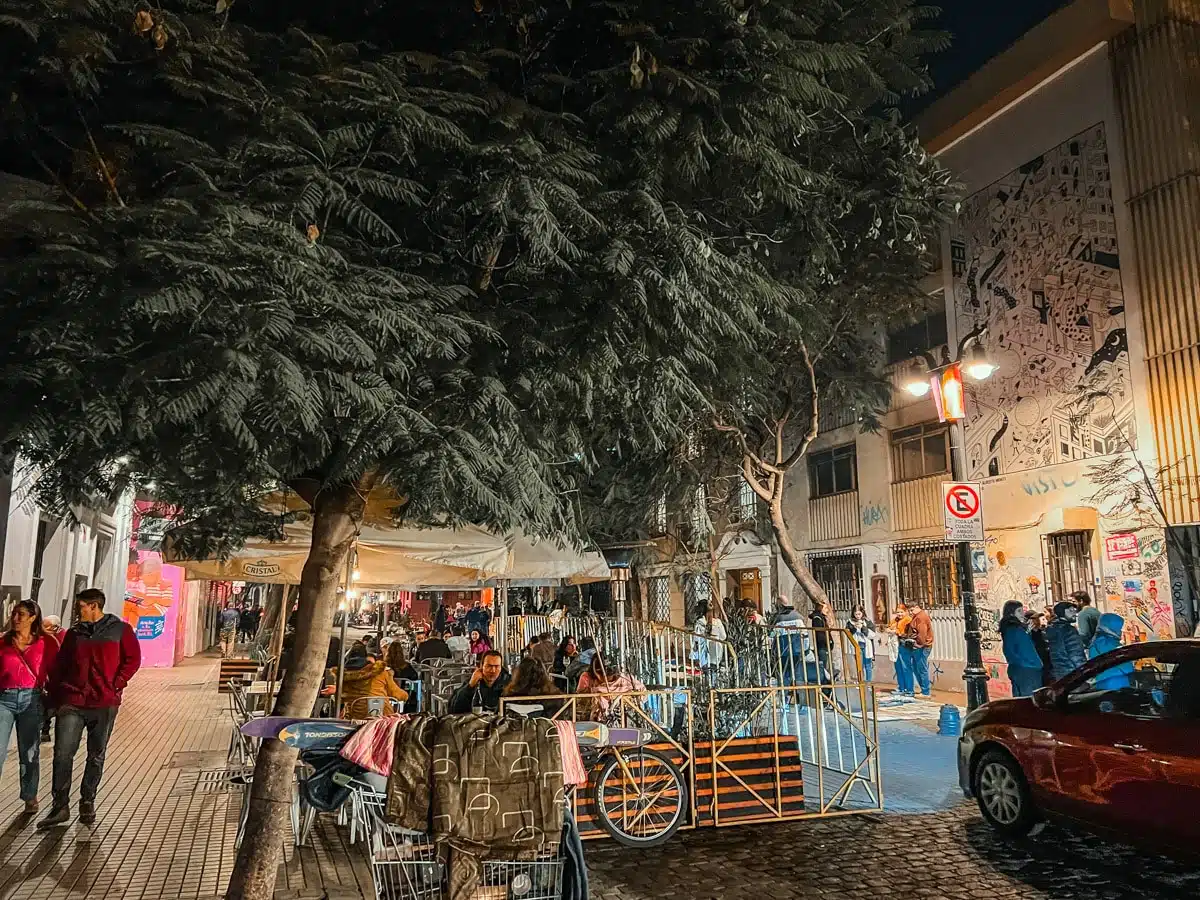
Santiago is a laid-back city. There aren’t a TON of big-ticket tourist attractions, but what it lacks in gimmicks it makes up for in brilliant neighbourhoods to explore on foot.
These are the neighbourhoods to stroll through for a coffee or a bite to eat, along with where to stay in each. For more options, see my guide to the best places to stay in Santiago.
Barrio Italia: One of the most charming neighbourhoods in Santiago, Barrio Italia is filled with colourful antique shops, design stores and good places to eat, and it’s a lovely place to spend an afternoon. For a place to stay nearby, Maison Italia 1029, is a brick-walled boutique hotel on Avenida Italia.
Lastarria: This is where I’d stay. Some of the city’s coolest boutique hotels are here, along with top restaurants, bars and a few sights, and it’s within easy walking distance of Bellas Artes and Centro. The pedestrianised Calle José Victorino Lastarria is lined with bars and open-air cafés, and Casa Lastarria has one of the prettiest terraces in the city. I browsed the neighbourhood’s street market, strung along the same street: it’s at its best on Sundays, but there are some stalls pretty much every day of the week, selling jewellery, art, beauty products and clothes from independent makers. It’s great for souvenirs, or even (whisper it) a little treat for yourself, and the stalls start thinning out around 7pm or 8pm.
I stayed at Hotel Cumbres Lastarria, a chic, well-priced four-star. The sizeable rooms are split into a bedroom with a desk area and a bathroom area, and the staff were super-friendly and helpful. It isn’t perfect: there’s no armchair for relaxing in the room, you get one set of water and coffee for your whole stay before they start charging (churlish for a four-star), and the breakfast was basic and exactly the same every day. After four mornings, I’d completely had enough of it. Still, for the location, it’s a solid pick. For the end of my trip, I moved to The Singular, a well-priced five-star with uber-comfortable rooms. For a budget option, Poker Hostal is nearby, and Hostal Forestal, sits on the edge of the Parque Forestal.
Bellas Artes: A busy shopping and hangout area around the Museo Nacional de Bellas Artes and the leafy Parque Forestal, on the banks of the Mapocho (usually more of a muddy stream than a river). It has a metro station (Line 5) and tons of cafés, restaurants and bars: grab a coffee and pastry at Café Triciclo on Santo Domingo. Casa Noble Boutique Hotel is the pick of the boutique hotels here: a giant old house turned hotel, with gorgeous decor and lots of natural light, on a quiet cul-de-sac. Read the full Casa Noble review.
Bellavista: Santiago’s bohemian nightlife and street art district, near La Chascona and Cerro San Cristóbal, with people out and about whatever the time of day. I headed to Patio Bellavista, a buzzing courtyard of bars, restaurants and shops with plenty of terrace space for eating outside, and it’s not to be missed. It’s a really cool spot to hang out for an afternoon or evening, and a good place to buy lapis lazuli. To stay here, Tinto Boutique Hotel, is a cosy, reasonably priced option with a pool, a restaurant and a popular bar. The Aubrey, a beautiful old mansion right next to the San Cristóbal funicular, closed in 2022. Bellavista is lively at night, so keep your wits about you in the bars and don’t leave drinks unattended.
Providencia: A cool, largely residential area around the Parque Metropolitano, with lots of shops, cheap eats and local bars. It’s further from the main sights, but it’s good value and gives you a look at everyday Santiago life. There are plenty of big chain hotels here, but the smaller boutique hotels and hostels are better value.
Vitacura: A smart residential area with brunch spots, Boragó and parks to walk around, including the Parque Bicentenario, with its lagoons and views of the Andes.
Barrio Yungay: One of the city’s oldest neighbourhoods, west of the centre, with faded mansions, outspoken street art and the leafy Plaza Yungay. It’s close to the Museum of Memory and Human Rights and Quinta Normal park.
Compare prices and check reviews for hotels in Santiago
Take a day trip from Santiago

Santiago is a great base for day trips, and I made the most of it, with a day in the winelands of the Maipo Valley and another out to the Casablanca Valley and the coast. There’s a whole guide to day trips from Santiago, but these are the ones I did.
The Maipo Valley: The Maipo Valley is just under an hour’s drive from the city, and its cool mornings and hot afternoons make it great wine country. I took a day tour with a guide, Miguel, that visited a mix of boutique, mid-sized and large wineries around Isla de Maipo. Santa Ema, a family winery founded by Italian immigrants, was my favourite, with excellent wines (including a Marselan) in a chic, contemporary tasting room. I only wish I’d had more space to bring some bottles home. The least enjoyable was Undurraga, one of the oldest and most traditional wineries in the valley: the wines were good, but the tour was too long and info-heavy, and the tasting felt rushed.
The Casablanca Valley and the coast: The Casablanca Valley, on the road to the coast, is best known for its crisp whites, particularly Chardonnay and Sauvignon Blanc. At Casa Valle Viñamar, a short but engaging tasting finished with a glass of its traditional-method Extra Brut, and the in-house Macerado bistro is worth booking for lunch.
In Viña del Mar, the flower clock (built for the 1962 World Cup) and the Moai outside the Fonck Museum are the big sights, but the fish market is the most fun: sure, it pongs a bit, but the sea lions, pelicans and giant seagulls waiting for their share of the catch are worth it. I spent the whole time terrified that a seagull was going to crap on me, but what’s life without a little danger?
Then on to Valparaíso, where the hillside neighbourhoods of Cerro Alegre and Cerro Concepción are a riot of colourful houses, century-old ascensores (funiculars) and some of the best street art in Latin America. Neruda’s house there, La Sebastiana, is even prettier than La Chascona, and the empanada de pino I had at La Conquistada was big enough to be a main course.
With more time, you can also:
- Hike or go rafting in Cajón del Maipo
- Visit Pablo Neruda’s third house at Isla Negra
- Go skiing at Valle Nevado, La Parva or El Colorado in winter
Read the complete guide to day trips from Santiago.
More ideas if you have extra time

Ride the cable cars over Parque Metropolitano

The funicular is the classic way up San Cristóbal, but the cable cars (teleférico) are the most fun. When I visited, there was just one line, which I rode: it runs from Avenida El Cerro near Pedro de Valdivia metro station in Providencia up to the summit, with the snow-capped Andes on one side and the skyscrapers of “Sanhattan” on the other.
A second line opened in February 2026 from the Pío Nono entrance in Bellavista, near the zoo, to the Plaza México station by the summit, taking about seven minutes. That makes it easy to go up one way and down another: for example, ride up from Bellavista and come down on the original line to Providencia, then walk on to Sky Costanera.
Both lines and the funicular run Tuesday to Sunday (closed Mondays), and combo tickets that mix them are sold online at telefericosantiago.cl. Go on a clear day, ideally after rain, when the smog lifts and the mountains look close enough to touch.
Unwind at the spa at The Singular

On my last day in Chile, I booked a spa treatment at The Singular, one of Lastarria’s smartest hotels and where I stayed at the end of my trip, and it was excellent: my one-hour massage cost about £50. The spa is open to non-guests, with a sauna and relaxation area as well as treatments, so it’s a great spot for some downtime, especially before a long flight home. Book ahead by email or online.
The hotel’s rooftop bar and restaurant is great for a quiet meal or cocktails with a view. The terrace was closed when I visited, as it shuts in the winter months, but it would be a great place to hang out in summer, when the outdoor pool is open too.
Pay your respects at the Cementerio General
Santiago’s main cemetery, founded in 1821, is far more interesting than it sounds. It’s like a small city of grand family mausoleums, tree-lined avenues and colourful working-class niches, and many of Chile’s presidents are buried here, including Salvador Allende.
Don’t miss the Memorial del Detenido Desaparecido y del Ejecutado Político, a long stone wall inscribed with the names of those killed or disappeared under the dictatorship. It’s a moving companion to the Museum of Memory and Human Rights.
The main entrance is a short walk from Cementerios metro station (Line 2), in Recoleta. The cemetery also runs evening guided tours on some dates, focused on its legends and history, which are popular with locals (in Spanish).
Celebrate fiestas patrias in September
If you can time your trip for mid-September, you’re in for a treat. Chile’s national holidays, the fiestas patrias, fall on 18 September (Independence Day) and 19 September (Army Day), and the whole city celebrates for the best part of a week.
Parks fill up with fondas, temporary party tents serving empanadas, anticuchos (meat skewers), chicha and terremotos, with live music and couples dancing the cueca, Chile’s national dance. The biggest are in Parque O’Higgins.
Just be aware that many museums, including La Chascona, Bellas Artes and the Museum of Memory and Human Rights, close on 18 and 19 September, and lots of shops and restaurants shut too.
Go skiing in the Andes
Santiago is one of the few capital cities in the world where you can be on the ski slopes in about an hour and a half. The resorts of Farellones, El Colorado, La Parva and Valle Nevado sit 35 to 60 kilometres up a famously winding road from the city, and the season usually runs from mid-June to September, depending on snowfall.
Valle Nevado is the biggest and best equipped, while Farellones is good for beginners and families. Further afield, Portillo, about three hours away near the Argentine border, is South America’s oldest ski resort.
If you don’t want to drive (chains are often required), shuttles and day tours leave Santiago early every morning in season, and you can hire all your gear in the city or at the resorts. Book ahead for July and August, when Chilean school holidays make the slopes their busiest.
Read next: more Chile guides
- Day trips from Santiago
- One day in Santiago itinerary
- Where to stay in Santiago
- Things to do in Valparaíso
- The perfect Chile itinerary
- The top things to do in Chile
- Hiking Torres del Paine’s W Trek: an in-depth guide
- South America landmarks you have to see
Love this? Save and share on Pinterest

Discover the top things to do, insider tips and hidden gems in our Chile Travel Guides.
Read the guides →