So you’re planning to visit the Valle de la Luna in Chile’s Atacama Desert? Excellent choice. Here’s everything you need to know for the perfect trip, from how the online-only tickets work to which trails and viewpoints are open right now.
There are few places on Earth as mesmerising as the Valle de la Luna in Chile. Once you get there, you won’t even feel like you’re on this planet.
I watched the sun rise over the valley on my campervan road trip through the Atacama, and I had the whole place to myself. Thanks to a slightly later-than-anticipated start, I drove in just as dawn began casting its light through the eerie shapes and weird rock formations, and by the time I’d parked and wandered, it was getting lighter by the second. Of everything I’ve seen on my four trips to Chile, that quiet half hour is still one of my favourite memories.
It’s not the type of destination that’s high on most people’s bucket lists. The idea of visiting one of the world’s most arid places, as opposed to the dreamy landscapes of the Mediterranean, is, well, a bit niche.
So why should you make visiting the Valle de la Luna a priority? Stick around to find out. A lot has changed since my visit, though. Tickets are now sold online only, the gates don’t open until 8am or 9am, and the most famous sunset viewpoint is closed for now, so I’ve set out exactly how it works today.
Some links in this article may be affiliate links, which means we may receive a small commission, at no additional cost to you, if you decide to purchase through one of my recommended partners.
Top Tip
Take a look at my top picks for things to do in the Atacama Desert to get an idea of the thrilling adventures that await you in this otherworldly destination.
Why visit the Moon Valley, Chile?

An easier question to answer would be: why not? There are many great things to do in the Atacama Desert, but if you ask me, this is up there as one of the best.
The Valley of the Moon in Chile is famous worldwide for its rugged landscape, featuring mountains, dunes, rock formations and salt sculptures.
The valley’s unique landscape is often compared to Mars. It’s so similar that scientists have tested a prototype Mars rover here, and NASA has trialled rover technology for future missions in the wider Atacama.
Perfect as a half-day trip or road trip stop, the valley’s biggest claim to fame is its sunsets, but if you go first thing in the morning, you’ll get the same great views minus the crazy crowds. You only need a few hours to hike through the area, catch some of the beauty, and move on to your next destination.
Visiting the Moon Valley is the perfect opportunity to live out all your space exploration dreams without ever leaving Earth. Sounds like a win to me.
What you need to know before you go
There are loads of facts you’ll probably want to know before trekking out there.
Where is the Valle de la Luna?

For starters, where is it? It’s about 8 miles (13 km) west of San Pedro de Atacama, a town in northern Chile, in the Cordillera de la Sal, the salt range that runs along the edge of the Salar de Atacama. The valley sits at over 2,500 metres, so take it easy if you’ve only just arrived.
It forms part of the Los Flamencos National Reserve in the Atacama Desert, one of the driest places on Earth. The reserve was created in 1990, and the valley itself was declared a nature sanctuary back in 1982.
What will you see when you get there?

Chile’s Valley of the Moon has a distinct landscape, born of strong winds, lack of water, and the transformation of salt lakes in the Earth’s crust. All of this shaped the geological features you see today.
Some features include dry lakes, salt flats, mountains, and caverns. It also has numerous salt sculptures, including the most famous in the valley, Las Tres Marías.
Another notable feature in the valley is its rock formations, like the Amphitheatre, a curved rock formation that looks like a crater on the moon. Lastly, there are colossal sand dunes extending for miles. Older guides also mention salt caves you can walk through, but they aren’t on the current list of open trails, so don’t count on going inside one.
When the sun rises and sets over this area, it colours it with stunning hues, starting with pink and orange and eventually turning into dark red. The Moon Valley is one of the most intriguing and diverse places on Earth because it has features similar to the moon’s surface, hence the name.
On the other hand, scientists believe that because of its aridness, it’s one of the closest places on Earth to the surface of Mars.
Trails and viewpoints open now

You can’t wander freely. A ranger checks you in at the reception, takes your details and explains the route, and then you drive between a handful of short, marked trails. Each one has its own last entry time, so start with the ones that close earliest.
- Mirador Duna Mayor: the classic view from above the valley’s huge sand dune. The trail runs one way, only two groups are allowed at the viewpoint at once, and you get ten minutes at the top. Allow about 40 minutes in all. Last entry is 5pm.
- Las Tres Marías: a short walk of around 15 minutes to the trio of eroded salt and clay figures that gave the valley its most famous photo. The trail closes at 5:30pm.
- Mirador Achaches: a lookout with wide views over the valley. Last entry is 4:30pm.
- Mina Victoria: the remains of an old salt mine, with a one-way trail and a 30-minute visit. Last entry is 5:30pm.
- Las Cornisas: the trail along the ledges, which closes at 4:30pm.
- Mirador de Ckari and the Piedra del Coyote: the clifftop viewpoint over the whole valley, where most tours watch the sunset, has been closed until further notice since late May 2026, first for a safety assessment after an earthquake and then for roadworks. Check the notice on the official website before you plan around it.
The Cordillera de la Sal itself stretches well beyond the ticketed valley. On my campervan trip I found a spot miles from the main road, in the shadow of the range, and watched the stars come out with no one else around. I’ll admit that sitting there in complete darkness was slightly unsettling, and every time the wind blew I glanced nervously over my shoulder. It was like I’d discovered a new planet, despite being less than half an hour from San Pedro.

Planning your visit to Chile’s Moon Valley
Tours to the valley

An organised tour comes with an expert local guide, and with the valley’s vast and tricky landscape, it’s better to have someone directing you.
My advice would be to opt for the Valle de la Luna sunset tour, where you’ll get to see the red and orange hues over this remarkable area. It takes about four and a half hours with hotel pick-up and drop-off, and it’s one of the best-reviewed tours in San Pedro. Check whether the CLP 10,800 entry fee is included for your booking date, and as the itinerary lists the Mirador de Ckari for sunset, ask where they’re going instead while it’s closed.
Visiting independently
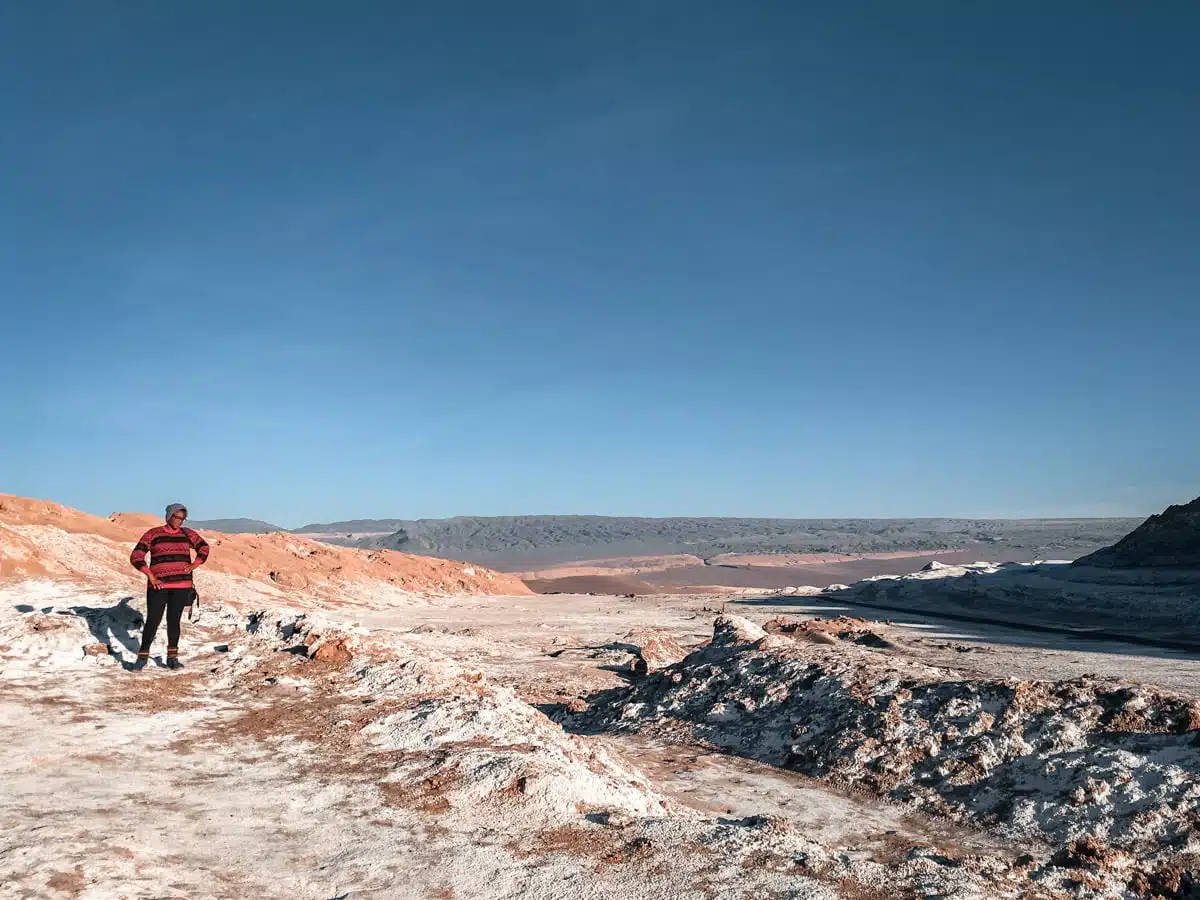
To explore without any time restraints, I recommend an independent visit. If you stay in San Pedro de Atacama, you’ll be just a 15-minute drive from the entrance.
You don’t need a 4×4. An ordinary hire car manages the short drive from town, and I drove straight in with my campervan, but go slowly on the sandy gravel inside, where the speed limit is 20 km/h. You can only enter by car, motorbike or bicycle: you can’t walk in.
On my road trip I paid the fee at the gate and breezed straight in. That’s no longer possible. Tickets are sold online only, on the official Valle de la Luna website, run by the Asociación Indígena Valle de la Luna, a group of six local communities (Coyo, Larache, San Pedro, Sequitor, Solor and Quitor) who co-manage the valley with CONAF. Your ticket is only valid for the date you choose, so book it before you go. Expect to pay CLP 10,800, just under £10, for adults and CLP 5,400 for children aged 11 to 17 and over-60s. Under-11s go free, as do Atacameño people and visitors with a disability certificate, who show it at reception. The ticket also covers the Mirador de Ckari when it reopens.
A few rules to know: there are no pets, drones, alcohol or smoking allowed, you must stay on the marked trails, and you can’t take rocks or salt away with you. Break the rules and you’ll be asked to leave without a refund.
Cycling into the valley

Cycling in is a popular alternative to driving, and you’ll find plenty of bike hire places in San Pedro. You need the same online ticket, and cyclists can only enter between 9am and 11am from September to March, or between 8am and 11am from April to August, and need to be out by mid-afternoon. You must wear a helmet, a reflective vest and proper shoes, and carry water. Bear in mind that it’s a hot, exposed ride back to town with very little shade.
Sunrise or sunset?
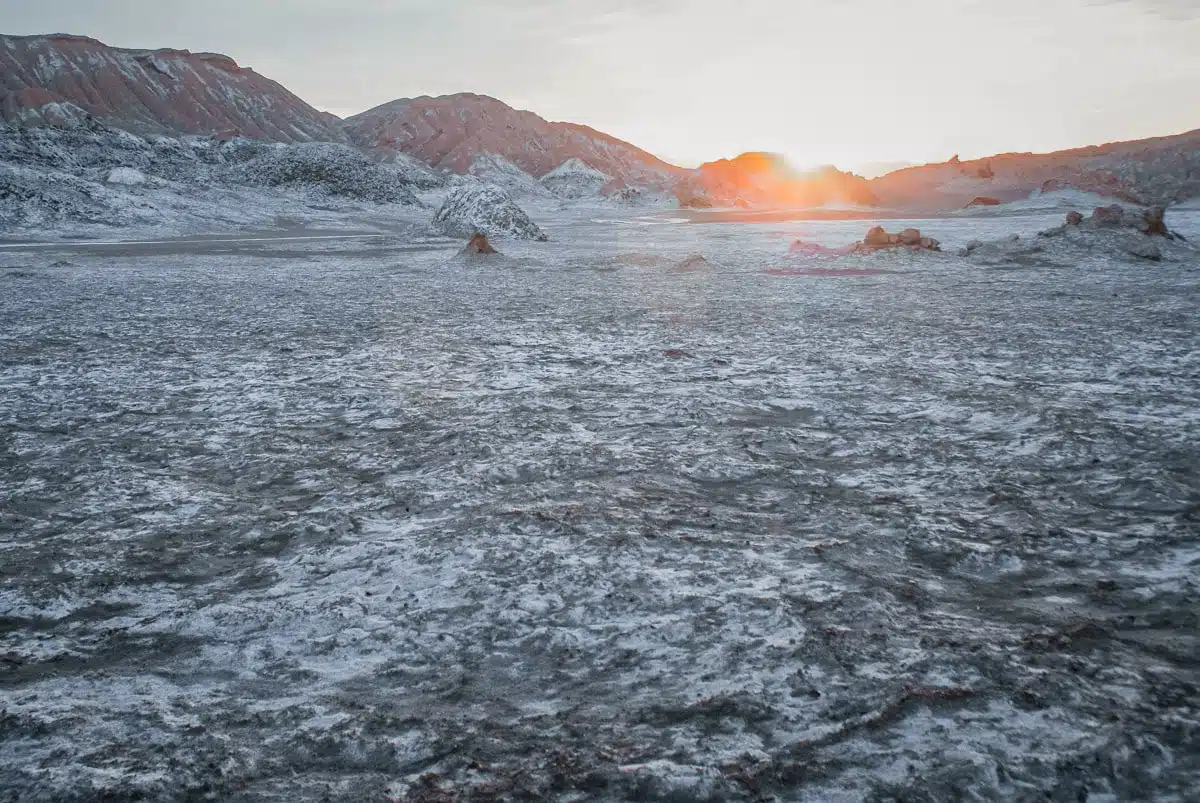
Going for sunrise rather than sunset is how I had the valley to myself. Pretty much all the tours go for sunset, and that hasn’t changed. What has changed is the opening hours: the gates now open at 8am or 9am, so a true sunrise visit like mine is no longer possible. Going at opening time is still the closest you’ll get, and it’s by far the quietest time to visit.
Sunset is trickier for now. The trails inside the valley close between 4:30pm and 5:30pm, so you won’t be inside for sunset, and the Mirador de Ckari, where tours usually go to watch it, is closed. My answer to the sunset crowds was Ckamur in the Valle de la Muerte next door, which was free and far quieter when I visited. Find it in my guide to the best things to do in the Atacama Desert.
Address
- San Pedro de Atacama, Antofagasta, Chile
Opening times and closures
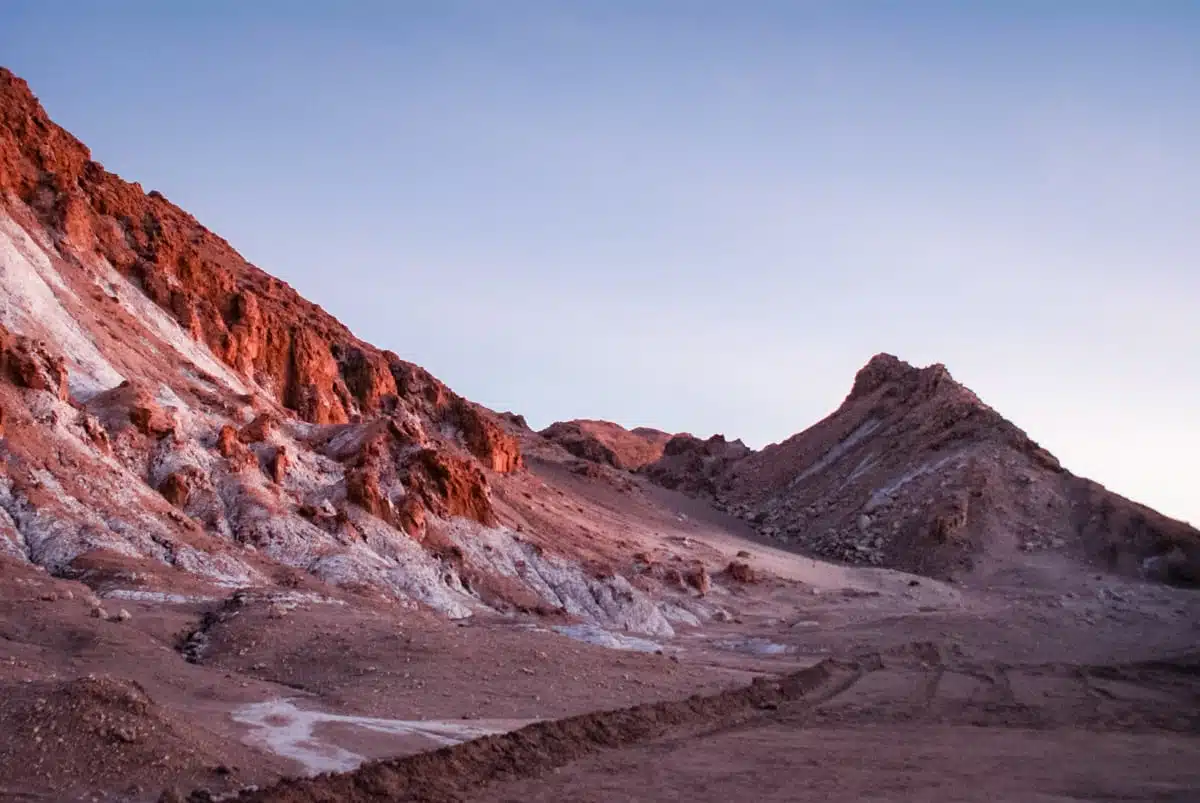
Opening time: 9am from September to March and 8am from April to August
Last entry: 5pm from September to March and 4pm from April to August. The individual trails close between 4:30pm and 5:30pm.
Mirador de Ckari: normally 10:30am to 7:30pm from September to March and 10:30am to 6pm from April to August, but closed until further notice.
The valley is open all year, but it does close on some days for staff training, and after rain or other bad weather when the roads aren’t safe. Check the notices on the official website the day before you go.
Where to stay nearby

Nayara Alto Atacama is a boutique lodge in the Catarpe Valley, about three miles from San Pedro, boasting six pools, an onsite restaurant, a spa, and 42 spacious rooms.
The rooms feature decor with a muted colour palette and natural materials that reflect the surrounding valley. During my most recent trip, I chose the Catarpe room, with a private terrace. The bed was one of the most comfortable I’ve ever slept in, and two of the pools are heated, which you’ll want in winter.
There are several boarding options, from B&B to all-inclusive packages with group or private tours. I went with the inclusive package with a private tour, which is a bit pricey, but it includes all meals, drinks, and tours. The lodge also has its own observatory, where I took some of my best photos of the Atacama skies.
What to pack
- Lots of water in a large water bottle. There’s nowhere to buy any inside.
- A good sunscreen, sunglasses, a wide-brimmed hat and lip balm, as the sun is fierce and the air very dry.
- Comfortable walking shoes or hiking boots.
- A lightweight jacket for cooler evenings, plus warm layers if you’re going first thing in winter, when mornings are cold.
- Your ticket, downloaded to your phone, as signal can be patchy.
Valle de la Luna map
Now you’ve explored the Atacama’s Moon Valley, read these
- Unmissable things to do in the Atacama Desert
- Staying at Nayara Alto Atacama
- The perfect 3-day Atacama itinerary
- Weird and wonderful facts about the Atacama Desert
- Stargazing in the Atacama: what you need to know
- My Atacama Desert map
- Where to stay in the Atacama Desert
- The best things to do in Chile
Love this? Save and share on Pinterest
Discover the top things to do, insider tips and hidden gems in our Chile Travel Guides.
Read the guides →