


A beach in the Outer Hebrides that could pass for the Caribbean, a wall built to mark the edge of an empire and a village in Wales that looks as if it was airlifted from the Italian Riviera. Britain packs more into a few hundred miles than most countries manage in a few thousand. These are the places to put at the top of your list.
It can be too easy to overlook the charms of your home country, right?
As a born and bred Londoner, I’ve spent most of my travelling life heading for the airport. But though I love seeing and exploring destinations around the world, over the last few years I’ve spent more time discovering different parts of the UK, and it keeps surprising me.
Some of these places are part of my own story. I spent three years at university in Oxford, walked the Thames Path from Oxford back to London, spent childhood summers in Cornwall and have gone back again and again since. Others I’ve been chasing for years: the white sand of the Hebrides, the basalt columns of the Giant’s Causeway and the far north of Scotland are the kind of places that make you wonder why you ever bothered with a long-haul flight.
Looking for UK bucket list ideas for your next trip? Here are 34 places you shouldn’t miss, from city breaks and royal palaces to wild beaches, mountains and island hops.
The ultimate UK bucket list
1. Take a trip to Oxford, the city of dreaming spires
Oxford is the UK’s most beautiful city, and no, I don’t give a toss what those folk down in Cambridge say.

Exploring the city of the dreaming spires is one of the UK bucket list ideas that you should go and do as soon as you can if you haven’t already.
I may be a bit biased (I went to Oxford University, studied at Keble and spent three glorious years with the city as my playground), but there are few places steeped in as much history and with as much charisma and charm as Oxford. The poet Matthew Arnold gave it the “dreaming spires” nickname in the 19th century, and it still fits on a misty morning.

Make sure that you visit Radcliffe Square, home to the much-photographed Radcliffe Camera, then climb the tower of the University Church of St Mary the Virgin next door for the best view in the city. Spend some time in the Botanic Garden, the oldest in Britain, and go punting on the River Cherwell: you can hire a punt from Magdalen Bridge Boathouse or the Cherwell Boathouse between spring and early autumn. Christ Church, the Ashmolean (free to enter) and the Covered Market are the other essentials for a first visit.
Read Next
2. Walk the Thames Path from the Cotswolds to London

The Thames Path follows the River Thames for about 185 miles, from its source in a field near Kemble in the Cotswolds all the way to the Thames Barrier in east London, passing through Oxford, Abingdon, Henley, Marlow, Windsor, Staines and the heart of London along the way.
It’s one of the UK’s most appealing long-distance paths, thanks to beautiful scenery and relatively flat terrain. Expect water meadows, lock-keepers’ cottages, rowing clubs and some of England’s prettiest bridges, with a riverside pub never far away.
You can walk the whole of the path, which takes around two weeks, or you can break it down into as many day-long segments as you have the time for. I walked the Oxford to London stretch a few years ago, which took about a week and a half, and it remains one of my favourite ways of seeing how the countryside slowly turns into the city.
There are plenty of campsites along the way (or bed and breakfasts if that all sounds a bit too back to basics) and quaint English pubs for you to rest and refresh. Trains run to most of the towns on the route, so it’s easy to walk a section and head home the same day.
3. See the State Rooms at Buckingham Palace

It’s the King’s official London residence and the headquarters of the monarchy. What more do I need to say?
Perched in a grand location at the end of The Mall, between St James’s Park and Green Park, Buckingham Palace is an essential stop for anyone visiting London.
Time your visit right and you can book tickets to see the State Rooms, which open to visitors for around ten weeks each summer. In 2026 they open from 9 July to 27 September, with adult tickets at about £33 when booked in advance. Inside, you’ll walk through the Throne Room, the Picture Gallery and the White Drawing Room, and finish in the palace garden.
Outside the summer opening, the Changing of the Guard is the free way to see the palace in full ceremony; it takes place on set days through the week, so check the schedule before you go.
Read Next
4. Climb Big Ben and tour the Houses of Parliament

Right, do you want the good news or the bad?
There isn’t any bad news anymore. The scaffolding that wrapped the Elizabeth Tower (Big Ben’s official name; strictly, Big Ben is the great bell inside) for five years came down in 2022, and the restored clock faces now shine in their original Prussian blue and gold.
Better still, you can go inside. Tours of the Elizabeth Tower climb 334 spiral steps to the belfry to stand beside the bell as it strikes. Tickets cost £35, visitors must be 11 or over, and they’re released on the UK Parliament website on the second Wednesday of each month for visits about three months ahead. They go fast.
The tower is attached to the Houses of Parliament, where you can book yourself onto a tour, watch a debate from the public galleries and get right to the murky heart of British politics. Guided tours (about £34 for adults) and audio tours run on Saturdays all year and on weekdays when Parliament is in recess.
Plus there are lots of gorgeous spots in London to discover.
Read Next
5. Soak up history in the British Museum

Love history? Love museums? You can’t miss the British Museum.
I’ll admit, the first time I visited the British Museum at the grand old age of seven (thanks, school), I thought it was a bit of a bore. In fact, I think you could have summarised my views as “eight million bits of old stuff and no toys”.
Thankfully, I’ve grown to appreciate the museum A LOT more as the years have gone by, and it’s now one of my favourite spots to spend the day in London.
Eight million objects dedicated to human history from around the world add up to one must-see spot on your British bucket list. Head for the Rosetta Stone, the Egyptian mummies, the Sutton Hoo treasure and the Lewis Chessmen, and look up as you cross the Great Court, where Norman Foster’s glass roof wraps around the old Reading Room. Entry to the permanent collection is free; the museum opens daily from 10am to 5pm, with later opening on Fridays.
Read Next
6. Discover Canterbury beyond the cathedral
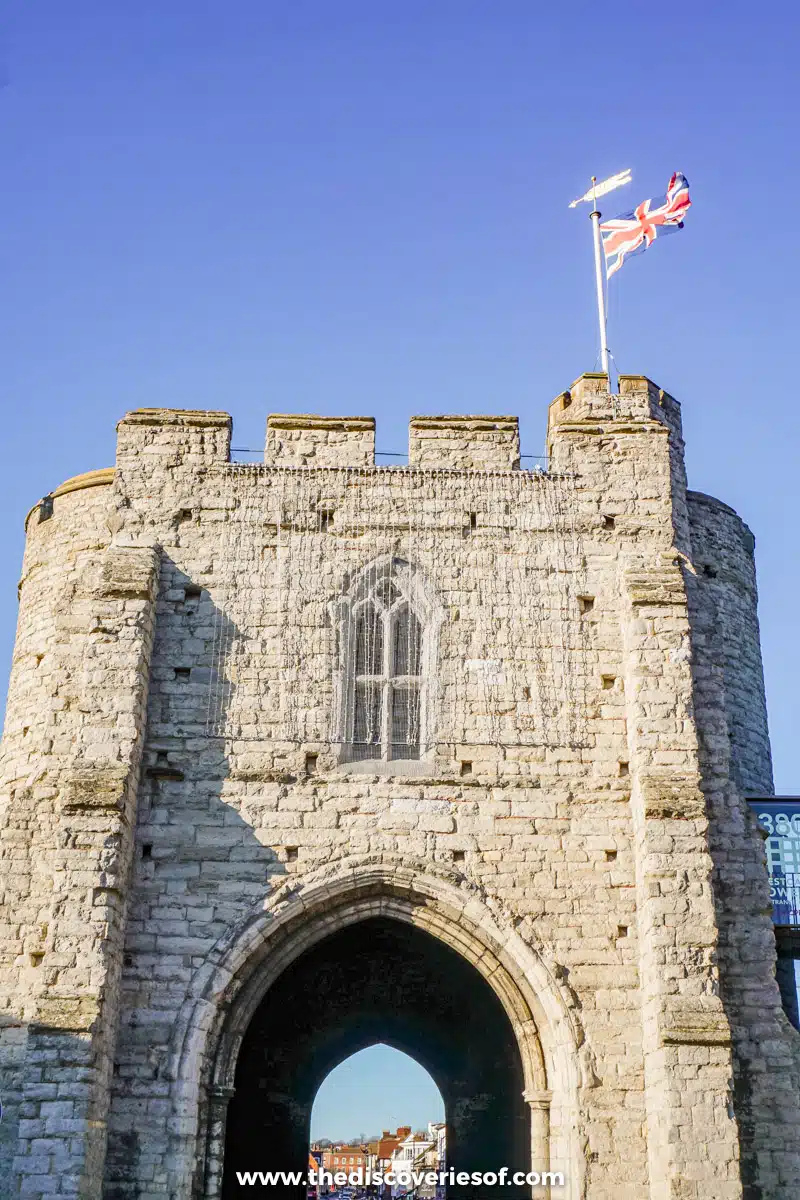
What do you know about Canterbury (other than the fact that it gave its name to Chaucer’s famous Canterbury Tales and it has a huge cathedral)?
Not much?
This small British city is full of history, intrigue and quaint spots, making it the perfect location for a day trip or long weekend from London. High-speed trains from St Pancras get you there in under an hour.
I’ll admit, I didn’t spend much time in Canterbury until a few years ago. Teenage school trips didn’t count (old buildings were the last thing I wanted to look at back then), and later visits were quick stops on the way to Whitstable. But once I gave it a proper day, one crisp, sunny December day in the lull after Christmas, I fell in love with the striking architecture, age-old pubs and independent shops, restaurants and markets at the heart of the city.
Start with Canterbury Cathedral, the mother church of the Anglican Communion and the site of Thomas Becket’s murder in 1170, and try to stay for Choral Evensong, which is free. Then climb the Westgate, walk the city walls, and take a punt or rowing boat along the Great Stour.
7. Get intellectual in Cambridge

I might have spoken slightingly of Cambridge earlier. The age-old rivalry between Oxford and Cambridge Universities practically demanded that I did so.
That said, the UK’s second-best university city is a pretty lovely place to spend a weekend.
Meander between the university’s prettier-than-possible colleges, perched on the edge of the River Cam, before hiring a punt and setting off along the Backs, a glass of Pimm’s and a dainty picnic in tow. Don’t skip King’s College Chapel, with the largest fan-vaulted ceiling in the world, or the Fitzwilliam Museum, which is free. If it’s your first time on a punt, a guided trip saves you a dunking and comes with stories about the colleges you’re gliding past.
Read Next
8. Find the Caribbean in Cornwall at Porthcurno Beach

I’m fully obsessed with Cornwall. I spent childhood summers there and, as an adult, keep finding excuses to go back to this beautiful part of the UK.
There’s so much to see in the area, including a number of spectacular beaches such as Porthcurno Beach.
Porthcurno is an award-winning beach about 3 miles east of Land’s End on the south coast of West Cornwall. It’s both a popular family beach, with a stream at the top that’s ideal for children wanting to paddle, and a place sought out by more experienced swimmers, who are attracted by its steeply shelving water.
With its fine, pale sand and clear turquoise water, it’s easy to see why some people describe it as paradise. Above the beach, the open-air Minack Theatre is carved into the cliff, so you can follow a day on the sand with a play staged against the sea, and the PK Porthcurno museum tells the story of the undersea telegraph cables that came ashore here.
Read Next
9. Fall for Falmouth, Cornwall’s creative harbour town
Full of maritime history and based around a picturesque harbour, Falmouth is one of Cornwall’s not-so-secret treasures.

Creative, quirky and artsy, this is one of my favourite spots in Cornwall thanks to its gorgeous natural setting and mix of cool art galleries, bars and restaurants.
Start your day with a visit to the National Maritime Museum Cornwall and Falmouth Art Gallery, before setting sail for a boat trip around the harbour or walking out to Pendennis Castle, Henry VIII’s fort on the headland.
Fuel up with a hearty lunch with harbour views at The Chainlocker before heading out of town to the absolutely gorgeous Trebah Garden, a subtropical ravine that runs down to its own beach on the Helford River.
Wind down the day with cocktails, cheese and charcuterie in the gloriously wacky Chintz Symposium. Beerwolf Books, a pub and bookshop in one, is my favourite place for a drink in town, and across the river in Penryn, the Famous Barrel has slightly more grit and plenty of charm.

Read Next
10. Learn to surf in Newquay

Newquay is Cornwall’s adventure sports playground. Situated bang on the South West Coast Path (more on that in a moment), the town is packed with surf beaches, beautiful hikes and yoga studios.
Locals love spending time outdoors, and who can blame them?
Newquay is blessed with year-round swells that make it one of the UK’s prime surfing spots, not to mention the miles of hiking and running paths leading straight out of town along the windswept coast. Fistral Beach is the big name, but Crantock, across the Gannel estuary, is quieter and just as lovely.
Book a class at a local surf school, spend some time exploring the town and walk the coast path to Crantock before settling in for a cocktail or two at Tom Thumb. I made a beeline for it the moment I arrived, and it’s still one of the best cocktail bars in Cornwall.
Read Next
11. Hike a stretch of the South West Coast Path

I said I’d come back to the South West Coast Path!
At 630 miles, the South West Coast Path is England’s longest National Trail, running from Minehead in Somerset around the coasts of Devon and Cornwall to South Haven Point on Poole Harbour in Dorset. Walk the whole thing and you’ll climb more than four times the height of Everest.
Whether you’re taking an afternoon stroll or hiking the entire route, you’ll be mesmerised by the views of the sea, the coast, its heritage and the wildlife around you. Short sections that make great day walks include Newquay to Crantock, Zennor to St Ives and Porthcurno to Land’s End.
12. Swim beneath the arch at Durdle Door

Durdle Door is a stunning natural limestone arch on the Jurassic Coast, England’s only natural World Heritage Site, between Swanage and Weymouth in Dorset. I’ve spent a lot of time in Dorset over the years, and this stretch of coast never fails to stop me in my tracks.
The arch sits on the Lulworth Estate, a short walk west of Lulworth Cove along the clifftop. Below it, a sloping shingle beach is fantastic for sunbathing and snorkelling, and it’s a perfect place for a day at the beach, bucket and spade ahoy. Come early or late in summer: the car park at the top fills quickly, the path down is steep and there are no lifeguards.
Read Next
13. Take the waters in Bath

Bath is small as British cities go, but it’s one of my favourite places outside London. The whole city is a UNESCO World Heritage Site, built from honey-coloured stone around the hot springs that the Romans turned into a temple and bathing complex nearly 2,000 years ago.
Start at the Roman Baths, where the green water of the Great Bath still steams, then walk past Bath Abbey to the Circus and the sweeping Royal Crescent. Jane Austen fans can follow her through the Assembly Rooms and the Jane Austen Centre, and no visit is complete without a Sally Lunn bun.
You can’t bathe in the Roman Baths themselves, but you can soak in the same naturally warm water. I stayed at The Gainsborough Bath Spa, whose Spa Village pools are fed by the thermal springs, and Thermae Bath Spa has a rooftop pool with views over the city’s rooftops to the hills.
Read Next
14. Head for the fells of the Lake District
It feels a bit like cheating to list a whole region as one of the must-try UK bucket list ideas, but when you visit the Lake District, you’ll understand why.

I love the Lake District, with its chocolate-box villages and towns that give way to wild landscapes on a near-unbelievable scale. It became a UNESCO World Heritage Site in 2017.
Spectacular landscapes, including England’s highest peak, Scafell Pike (978 metres), come complete with miles and miles of public footpaths that practically demand you whip out your hiking boots and go and explore. Be ready for the weather: when I climbed the Old Man of Coniston in August, I was well inside the clouds at the top, visibility was only a few metres and I was loath to leave the shelter of the summit cairn for long.
If hiking isn’t your thing, take a boat across Windermere or Ullswater, visit Beatrix Potter’s Hill Top or Wordsworth’s Dove Cottage in Grasmere, and stop for gingerbread on the way.
Read Next
15. Explore Edinburgh’s Old Town and castle

Scotland’s capital is one of the most dramatic cities in Europe. Edinburgh Castle sits on the plug of an extinct volcano, the Royal Mile runs downhill from its gates to the Palace of Holyroodhouse, and the Georgian New Town spreads out below. Together, the Old and New Towns are a UNESCO World Heritage Site.
I’m still not sure whether the views from the castle beat the views of it, but you need both. Book castle tickets online ahead of your visit to see the Honours of Scotland, the Scottish crown jewels, and time it for the One O’Clock Gun, then work your way down the Royal Mile via St Giles’ Cathedral and the closes and wynds that run off it.
Save energy for Arthur’s Seat, the 251-metre hill in Holyrood Park, which gives you the whole city and the Firth of Forth from the top. Visit in August for the Edinburgh Festival Fringe, or at New Year for the Hogmanay street party.
Read Next
16. Visit Balmoral and Royal Deeside

Set against the forested Cairngorms, it’s easy to see why the Royal Family have chosen Balmoral in Aberdeenshire as their escape from the demands of day-to-day life for more than 170 years.
Prince Albert bought the estate for Queen Victoria in 1852 and built the castle you see today, finished in 1856. Visiting is an absolute must on any UK bucket list for royal fans. The grounds, gardens and the Ballroom exhibition open from spring to early summer (in 2026, from late March to mid-August), and since 2025 short guided tours have taken small groups inside a handful of the castle’s rooms for the first time; they sell out fast.
I visited on an early summer trip to Aberdeenshire, and with my weakness for a grand castle in beautiful grounds, it was always going to be a highlight. Wandering around the grounds with the audio guide gives a unique insight into royal life past and present, and there was far more history to discover than I’d expected.
Even without its royal connections, Royal Deeside, the stretch of the River Dee around Balmoral, is full of treasures and hidden gems. There are castles, charming villages and a wealth of outdoor activities, all demanding to be explored. Take an early-morning walk through Ballater before the day-trippers arrive, as I did, to see its handsome granite streets at their best.
Read Next
17. Stroll beneath the Dark Hedges in Northern Ireland
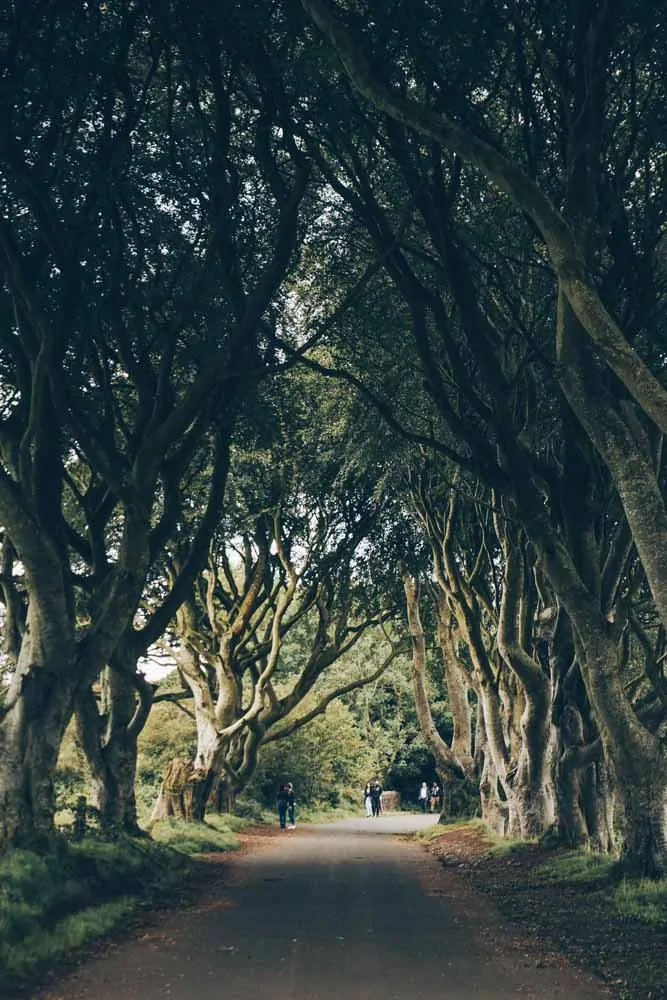
The Dark Hedges is a tunnel of beech trees on the Bregagh Road near Ballymoney in County Antrim.
James Stuart planted more than 150 beech trees here around 1775 to impress visitors on the way up to his new house, Gracehill. Today, the twisting, interlocking branches make it one of the most photographed natural sights in the UK, and Architectural Digest once placed it on its list of the most beautiful streets in the world.
Obsessed with Game of Thrones (OMG, who isn’t)? You might have noticed that the Dark Hedges are one of the many Northern Irish spots that crop up in the TV series (it’s the setting for the Kingsroad). I hunted down filming locations in almost every corner of Northern Ireland on my own trip, and this was the one that looked most like the screen.
Go soon, and go early. The road has been closed to traffic since 2017 to protect the trees, but they are reaching the end of their natural lives: a 2023 survey counted 86 left, and storms have brought down more since, including three in Storm Isha in 2024 and two in Storm Éowyn in 2025.
18. Step out onto the Giant’s Causeway

The Giant’s Causeway, on the north coast of County Antrim, is made up of about 40,000 basalt columns, most of them hexagonal, that step down into the sea like a giant’s staircase.
Science says they were formed by volcanic activity around 50 to 60 million years ago, as lava cooled and cracked. Legend has a better story: the columns are the remains of a causeway built by the giant Finn McCool so that he could cross to Scotland and fight his rival Benandonner.
Famed for its dramatic cliffs and fascinating history, it’s a UNESCO World Heritage Site and a must-see. Walking down to the stones is free; you pay for the National Trust visitor centre and its parking, and a shuttle bus runs down to the shore if you’d rather not walk the 1 km path. Combine it with the Carrick-a-Rede rope bridge and Dunluce Castle on the Causeway Coastal Route.
19. Stand among the stones at Stonehenge

Stonehenge, about 2 miles west of Amesbury in Wiltshire, is one of the wonders of the world and the best-known prehistoric monument in Europe.
An early henge monument was built here about 5,000 years ago, and the great stone circle followed around 2500 BC. The outer sarsens stand about 13 feet high, and the smaller bluestones were dragged from the Preseli Hills in Wales, roughly 150 miles away. How and why is still debated.
Tickets are timed and cheaper when booked online in advance (entry is free for English Heritage members). A shuttle bus runs from the visitor centre to the stones, about 1.5 miles away. Go at the summer or winter solstice, when the site opens for sunrise, or book a stone circle experience to step inside the circle outside normal hours.
20. Wander the honey-stone villages of the Cotswolds

The Cotswolds roll across six counties, from Oxfordshire to Gloucestershire, Wiltshire and Somerset, and they’re the England of postcards: honey-coloured stone villages, dry-stone walls, wool churches and village pubs with roaring fires.
Bibury’s Arlington Row is the classic photo, Bourton-on-the-Water has the little bridges over the River Windrush, Castle Combe is often called the prettiest village in England, and Burford and Chipping Campden are the handsome market towns. Add Blenheim Palace, the birthplace of Winston Churchill, just outside Woodstock, and it’s easy to fill a long weekend. A car makes life much easier here, as buses between the villages are infrequent.
21. See a play in Stratford-upon-Avon
The birthplace of Shakespeare and a pretty cute town to boot, there’s a reason that Stratford-upon-Avon makes its way onto so many visitors’ lists of places to see in the UK.
Now, I like wandering around Stratford-upon-Avon as much as the next person, but if you really want a UK bucket list idea worth remembering, book yourself a ticket for a play at the Royal Shakespeare Company (RSC).
Despite the name, the theatre stages plays by a range of playwrights (unsurprisingly, it’s pretty heavy on the Shakespeare though), featuring some of the darlings of the British stage. It’s always worth trying the box office for tickets on the day if you haven’t managed to book in advance, and the tower of the Royal Shakespeare Theatre has views over the town and the River Avon.
You can also visit Shakespeare’s family homes, from his birthplace on Henley Street to Shakespeare’s New Place and Anne Hathaway’s Cottage just outside town, while you’re there.
22. Spend a weekend in Brighton

Loud, proud and full of life, Brighton is only a hop, skip and a big jump away from London (read: about an hour on the train from Victoria).
But what a contrast. Where our capital can be a bit prim and proper, Brighton is the epitome of beachside cool.
Thriving independent shops in the Lanes and North Laine, the Palace Pier, the gloriously OTT Royal Pavilion built for George IV, tattoo parlours, cocktail bars and pubs.
If it’s not in Brighton, it’s not worth seeing. Or something like that.
Read Next
23. Stand on the white cliffs of the Seven Sisters
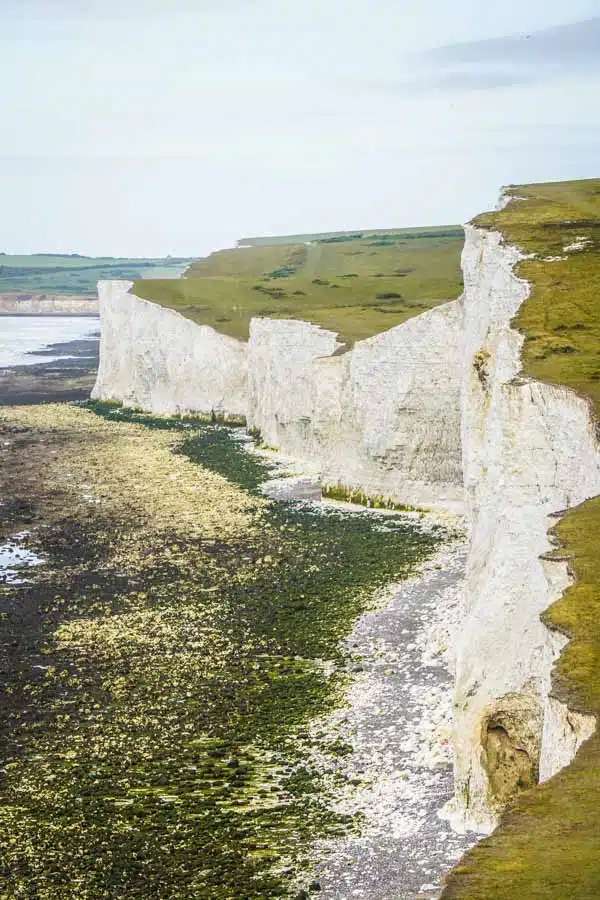
Forget the White Cliffs of Dover: for the most dramatic chalk on the English coast, head to the Seven Sisters, a run of white cliffs between Seaford and Eastbourne in the South Downs National Park.
The best views are from the coastguard cottages at Seaford Head, looking east across the mouth of the Cuckmere river, and from the National Trust’s Birling Gap, where steps lead down to the beach. The South Downs Way runs along the clifftops, and the walk from Cuckmere Haven to Birling Gap takes around two hours with plenty of ups and downs. Stay well away from the cliff edge and the base of the cliffs, as rockfalls here are frequent.
24. See the bluebells in Micheldever Wood, Hampshire

When it comes to bucket list ideas for the UK, Micheldever Wood should be at the top of your list in spring. It is truly one of the UK’s most beautiful sights, especially for the nature lovers among you.
So what makes it so special? Micheldever is a large, maturing beech wood near Winchester, which erupts in a stunning carpet of bluebells as far as the eye can see, usually from late April into early May.
Bring your camera along, you’re going to want to take a picture (or twenty).
Micheldever isn’t all bluebells, though. Take a walk through the woods and you might spot roe deer, as well as the remains of Bronze Age burial mounds and Iron Age farmsteads. Parking is free in the small car park on Northington Lane.
25. Island-hop around the Isles of Scilly

The Isles of Scilly are a collection of islands that lie about 28 miles off the tip of Cornwall.
There are five inhabited islands (St Mary’s, Tresco, St Martin’s, Bryher and St Agnes) and around 140 smaller islands and rocks to explore by boat.
The golden sands and clear, azure waters make beaches such as Great Bay on St Martin’s look more Caribbean than Cornish. Add the subtropical Tresco Abbey Garden, Bronze Age burial chambers, puffins and seals, and seriously good local seafood, and the Isles of Scilly are a place like nowhere else in England.
Getting there is part of the adventure: the Scillonian ferry sails from Penzance between spring and autumn, and small Skybus planes fly from Land’s End all year.
26. Walk the medieval walls of York
York has been a Roman fortress, a Viking capital and one of medieval England’s richest cities, and you can still see all of it. Its city walls are the longest medieval town walls in England, and you can walk most of the circuit for free.
Inside them, York Minster is one of the largest Gothic cathedrals in northern Europe, with the Great East Window, the largest expanse of medieval stained glass in the country. Then lose yourself in the Shambles, the overhanging timber-framed street of old butchers’ shops, and go underground at Jorvik to see the Viking city that was found beneath Coppergate.
27. Follow Hadrian’s Wall across northern England
Running across the width of northern England, walking (or even just seeing) Hadrian’s Wall should be firmly on your UK bucket list.
The wall marked the northern frontier of the Roman Empire. Building began in AD 122 on the orders of the Emperor Hadrian, and it ran for 73 miles, from Wallsend on the River Tyne to the Solway Firth, guarded by forts and milecastles for nearly 300 years. It’s now a UNESCO World Heritage Site.
That’s all very well and good, but why should you visit Hadrian’s Wall today?
Well, it’s a badly kept secret that the wall cuts its way through some of the UK’s most beautiful countryside, the perfect setting for the 84-mile Hadrian’s Wall Path, which most people walk in six or seven days. Short on time? Head for the central section, where Housesteads Roman Fort and the Roman Army Museum and Vindolanda, with its famous writing tablets, are within a few miles of each other. The site of the Sycamore Gap tree, felled illegally in 2023, is on this stretch too.
28. Visit Portmeirion, North Wales’ Italian fantasy

Portmeirion is a colourful and quaint village on the coast of Gwynedd, North Wales. The architect Sir Clough Williams-Ellis designed and built it between 1925 and 1975, with the Italian Riviera very much in mind.
While it may look like Positano, it actually overlooks the estuary of the River Dwyryd. Fans of the cult 1960s TV series The Prisoner will recognise it as “the Village”. Day visitors pay an admission charge, which Williams-Ellis introduced to stop the village being overrun.
The explosion of colours, dreamy Italian architecture and abundance of beautiful flowers and palms ensure that Portmeirion should be on your bucket list for Wales. You could even make a road trip to Anglesey and the village with the longest place name in Europe, Llanfairpwllgwyngyllgogerychwyrndrobwllllantysiliogogogoch!
29. Climb Yr Wyddfa in Eryri

Eryri, the national park also known as Snowdonia, is a mountainous corner of North Wales, and the view from the summit of Yr Wyddfa (Snowdon), the highest mountain in Wales at 1,085 metres, has been voted one of the best in the UK.
While some people think that Eryri is just a place for walkers wanting to climb Yr Wyddfa, there’s a multitude of other activities, from cycling and canoeing to fishing and zip lining, and plenty of photographers and artists come to immerse themselves in the spectacular scenery.
The Llanberis Path is the longest but gentlest route to the summit, while the Pyg and Miners’ tracks are shorter and steeper. Or let the Snowdon Mountain Railway take the strain: it climbs from Llanberis to the summit between spring and autumn, weather permitting.
30. Take a dip in the Fairy Pools on the Isle of Skye

The Isle of Skye has a lot of beautiful sights, but the Fairy Pools are something special.
Below the Black Cuillin in Glen Brittle, the River Brittle tumbles through a chain of crystal-clear pools, all connected by small waterfalls. The walk from the car park is about 1.5 miles (2.4 km), so allow two to three hours if you want to reach the upper pools and come back. Parking costs £6 for the day, and the toilets at the car park are the only ones on the route.
If you’re feeling adventurous, you should definitely take a dip in the pools, but bring a wetsuit. It’s cold! Arrive early in the morning or in the evening to avoid the crowds that build up from late morning.
Read Next
31. Find white sand on Luskentyre Beach, Isle of Harris

I know exactly what you’re thinking: how is this beach in Scotland?!
With its white sand and azure water, Luskentyre Beach regularly tops lists of the UK’s best beaches and definitely deserves a place on your bucket list.
So how exactly can you find this sandy paradise? Luskentyre is on the west coast of South Harris in the Outer Hebrides, and it stretches for around 3 miles from the dunes of the Luskentyre Banks towards the sands of Seilebost, with the mountains of North Harris behind.
Don’t be fooled by the colour of the water: the Gulf Stream softens the climate, but the sea is still bracing even in August, so a paddle may be as far as you get. Reach Harris by ferry from Uig on Skye to Tarbert, which takes about an hour and 40 minutes.
This is coastal scenery at its finest.
Read Next
32. Hear the sea in Fingal’s Cave, Isle of Staffa

Fingal’s Cave is a sea cave on the uninhabited volcanic island of Staffa, off the west coast of Mull in the Inner Hebrides.
Brought to wider attention by the naturalist Joseph Banks in 1772, the cave is made of the same kind of hexagonal basalt columns as the Giant’s Causeway, and the waves booming inside give it remarkable acoustics. In Gaelic it’s known as An Uamh Bhinn, the melodious cave. It inspired Felix Mendelssohn’s Hebrides Overture and has drawn everyone from Queen Victoria to Jules Verne and Pink Floyd.
Boat trips run from Fionnphort, Ulva Ferry and Tobermory on Mull, and from Oban, between spring and autumn. Weather permitting, you land on Staffa and follow a path along the columns to the mouth of the cave, and in early summer you’ll often find puffins nesting on the clifftops.
33. Road trip the North Coast 500

Forget Route 66, it’s all about the North Coast 500! What is the North Coast 500 (or the NC500 for those in the know)?
It’s a route of about 516 miles that loops around the coast of the northern Highlands from Inverness, taking in Applecross, Ullapool, Durness, John o’ Groats and Dornoch along the way.
Oh, and it also contains some of the most picturesque scenery in Europe. No biggie or anything.
Showcasing everything from secluded beaches to historic lochs, castles to wildlife, and mountains to artisan distilleries, you can see why the NC500 is so often named one of the best coastal road trips in the world. Allow at least five to seven days, book accommodation well ahead in summer, and be ready for long stretches of single-track road with passing places.
34. Ski, hike and spot reindeer in the Cairngorms

This is one for the hikers and skiers out there. The Cairngorms are a mountain range in the Highlands of Scotland, at the heart of the UK’s largest national park, and five of the six highest mountains in the UK are here.
In winter, skiers head for Cairngorm Mountain, Glenshee and the Lecht. In summer, the park is a playground for walkers, cyclists and wildlife watchers, with ospreys, red squirrels, reindeer (the UK’s only free-ranging herd) and the ancient Caledonian pine forest of Rothiemurchus.
The stunning mountain scenery and challenging terrain make the Cairngorms a perfect Alpine adventure playground, without the crowds or prices of their European counterparts.
Tips for planning your UK bucket list trips
- Book the big tickets early: Elizabeth Tower tours, the summer opening at Buckingham Palace, Balmoral’s castle tours and summer accommodation on the NC500, Skye and the Isles of Scilly sell out weeks or months ahead.
- Save on trains: book advance fares as soon as they’re released and look at a Railcard, which cuts a third off most fares.
- Pack for every season: even in summer, mountains, islands and coasts can turn cold and wet in an hour. In the Highlands, bring midge repellent from June to August.
- Use the National Trust and English Heritage: if you’ll visit several of their sites, membership can pay for itself quickly, and Historic Scotland and Cadw (in Wales) have their own passes.
- Hire a car for the wild places: cities are easy by train, but the Highlands, the Hebrides, the Cotswolds and much of Cornwall and Wales are far easier with your own wheels.
Map
Read next
- Brilliant things to do in the UK
- The best things to do in England
- UK road trip ideas
- The best beaches in the UK
- Walking in the Lake District
- Pretty Cotswolds villages and towns
- The perfect Cornwall road trip
- Brilliant day trips from London
- Where to stay in London
- The ultimate Europe bucket list
Love this? Save and share on Pinterest

Discover the top things to do, insider tips and hidden gems in our United Kingdom (U.K.) Travel Guide.
Read the guides →





Brilliant article! I never knew the UK had so many amazing places!
Thanks Andrew, really glad you enjoyed. Hope you have fun exploring them at some point!
UK, here I come. Thanks for sharing these destinations!
A real pleasure!
Great places!! Portmeiron looks beautiful! I would also add Puzzlewood in the Forest of Dean to this list – such a cool place & where Star Wars and Merlin have been filmed!
Great suggestion! Thank you – it’s high on my list to visit.
I’m a bad Brit, I haven’t been to half of these places and some of the ones that I had were visited when I was too small to really remember or appreciate them! I love Cornwall and Devon <3
Well, whenever you have the time to work through the list you’ll have lots to get on with! I love Cornwall and Devon too 🙂
Super selection! When making such a list, some places sadly get left off in the interests of brevity. My selection would add Yorkshire (lots of places there to choose) and just mention that Wiltshire is more than just Stonehenge – Avebury, Silbury Hill, Kennet longbarrow are only a short distance from Stonehenge. You have stimulated my wanderlust. I really must get to some of the more outlying places.
Thanks Trevor – great suggestions! It’s so hard to choose but love the place you’ve mentioned, I’ll add them to the next update.
I have always wanted to go to Stonehenge. I have planned twice but both the times the plan got canceled due to some reasons. Hopefully, I’ll make it there this time.
I totally hope so too. It’s a magical place.
Everyone must have the channel island of Jersey on their bucket list, its history, culture and overall beauty is unsurpassed anywhere in the UK, so much to see and do all within 45 sq miles, check it out you won’t be disappointed.
Hi David – love Jersey but I think it’s technically not a part of the UK, though it is one of the British Isles. I’m not splitting hairs here – I wrote a piece on Jersey, where I referenced it as part of the UK and brought down a world of ire from the locals. But yes, I’d totally recommend!
Hi Julianna,
We are going on a 6 week tour of the UK from South Africa in May. I’ve just read your blog and it has really crystallized and prioritized our ideas of where we must go of what we want to see.
I’ll be referring to your blog many more times for our departure. Thanks again, Neil
Hey Neil – I’m so glad to hear that it gave you some useful ideas and tips – I hope that you have a fantastic trip exploring the UK. It’s brilliant that you have such a decent chunk of time to spend here. Thanks and all the best, Julianna