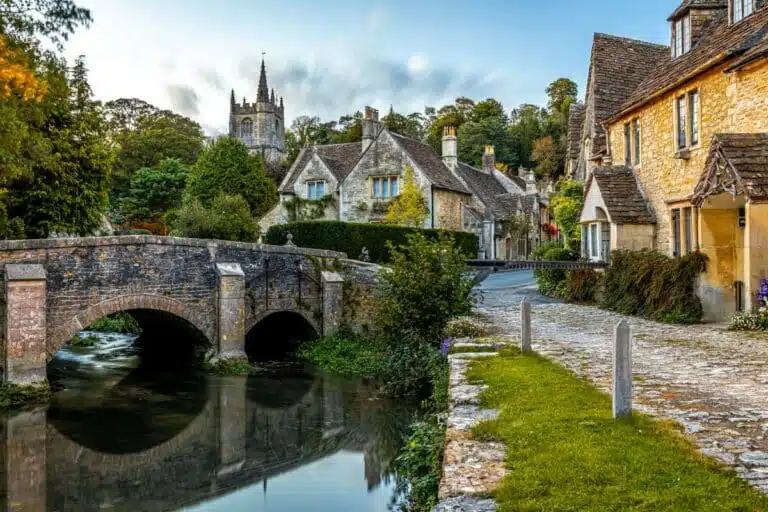
Heading to Canterbury but short on time? Here’s my hour-by-hour itinerary for one day in Canterbury, from the cathedral and the Westgate to a river trip, the city’s oldest pub and dinner, plus train times from London, ticket prices and where to eat.
What springs to mind when you think of Canterbury? I’ll bet it’s one of two things: Canterbury Cathedral or Geoffrey Chaucer’s famous Canterbury Tales.
If you haven’t been, this compact city is the perfect day trip from London, under an hour away on the high-speed train, and well worth a stop while you are travelling in the United Kingdom.
I’ve been to Canterbury a few times. First on school trips as a teenager, when I wouldn’t have been caught dead feigning interest in anything so clichéd as old buildings, and then a few times since, popping in on the way to nearby Whitstable and Herne Bay. It took a cold, bright day between Christmas and New Year, when I was itching to get away from my desk, for me to really do the city justice. Now I’m a convert, and I’ve been back for more day trips to dig deeper into what’s arguably one of the most historic cities in the UK.


The UNESCO World Heritage cathedral would be worth the trip alone, but add to that a maze of small alleyways, charming buildings and riverside perches and you’ll start to understand the appeal.
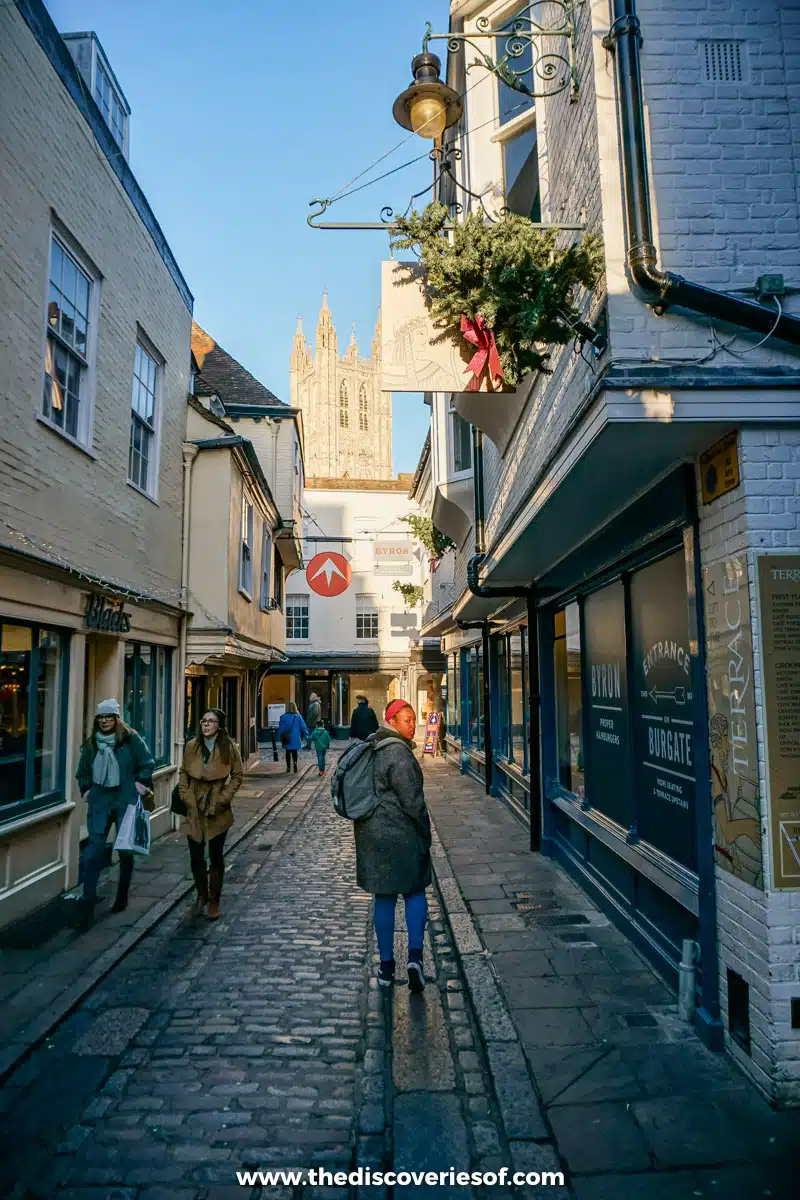
So what should you expect? Higgledy-piggledy medieval buildings and stout gates guarding the way into the centre. Walking around Canterbury is like stepping back in time.
It’s small enough that you can see the highlights on foot in a single day. Here’s how to ace your one day in Canterbury like a pro.
Some links in this article may be affiliate links, which means we may receive a small commission, at no additional cost to you, if you decide to purchase through one of my recommended partners.
Your day at a glance
- 9.30am: Arrive at Canterbury West
- 10am: Canterbury Cathedral
- 12.30pm: The Westgate
- 1pm: Lunch at The Refectory Kitchen
- 2pm: The Goods Shed
- 2.30pm: A trip on the River Stour
- 3.15pm: Greyfriars Chapel and the Franciscan Gardens
- 3.45pm: The Beaney House of Art & Knowledge
- 4.15pm: Canterbury Roman Museum
- 5pm: A wander through the old streets
- 6pm: A drink at The Parrot
- 7pm: Dinner
This works best from Tuesday to Saturday. On Mondays the Beaney and The Goods Shed are closed, and on Sundays the cathedral itself doesn’t open to visitors until 12.30pm.
One day in Canterbury itinerary
9.30am: arrive at Canterbury West
The fastest way in from London is the Southeastern high-speed train from St Pancras to Canterbury West, which takes about 55 minutes. Catch one at around 8.30am and you’ll be stepping off the train with plenty of time to walk to the cathedral for opening.
Canterbury West sits just outside the old city walls, about 15 minutes’ walk from the cathedral. Head down St Dunstan’s Street, through the Westgate and straight along St Peter’s Street and the High Street. It’s the prettiest way into the city, and you’ll get your bearings before the day really begins. There’s more on trains, fares and the other ways to get here in the practical tips at the end.
10am: Canterbury Cathedral
Cathedral House, 11 The Precincts, Canterbury CT1 2EH

You might as well start your day with the big hitters. Even from the outside, Canterbury Cathedral is a sight to behold, so much so that it’s often named the most striking cathedral in Europe (and we all know that Europe has some pretty strong cathedral game under its belt).
Intricately carved buttresses, naves and towers: the cathedral’s Romanesque-meets-Gothic architecture is a jaw-dropper.


You’ll enter the precincts through Christ Church Gate, the ornate Tudor gateway at the end of Mercery Lane. Look up as you pass under it: the carved angels and heraldry have recently been conserved, and the statue of Christ in the central niche is a modern replacement for the one destroyed in the 17th century.
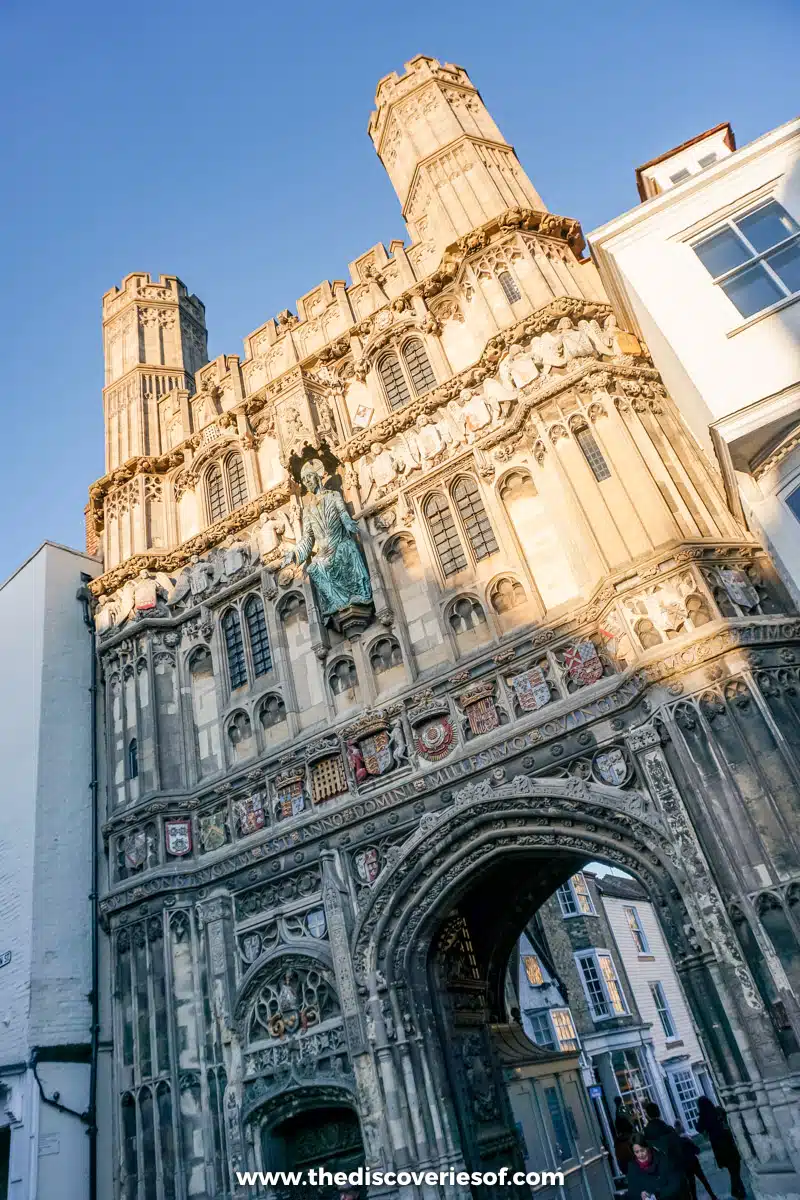
When I first visited properly, part of the cathedral was wrapped in scaffolding as a huge restoration project got going. That work has long since finished, and the stonework looks spectacular for it.
Unfortunately, there was a Christingle service on during that visit, which meant I didn’t get any pictures of the inside, though I did sneak in for a few festive carols. Services are worth knowing about: Choral Evensong is held at 5.30pm every day and is free to attend, so if you’d rather hear the choir than pay for sightseeing, that’s your window.
Canterbury Cathedral is brimming with history, and not all of it pleasant.
St Augustine founded the first cathedral here in 597, and it has been the seat of the Archbishop of Canterbury ever since. Perhaps most famously, the then-archbishop Thomas Becket was murdered here in 1170, which turned Canterbury Cathedral into one of Europe’s biggest pilgrimage destinations (hence why Chaucer’s pilgrims are heading to Canterbury in the Canterbury Tales). A candle marks the spot where his shrine stood in Trinity Chapel, and the Martyrdom, where he was struck down, is marked by a jagged sculpture of swords.
Don’t leave without seeing the crypt, the oldest part of the building, and the medieval stained glass. The Miracle Windows tell the stories of people said to have been healed at Becket’s tomb.
Do
Sightseeing tickets cost £18 from October to March, £19.50 from April to September and £21 on weekends in July and August. The good news is that your ticket works as an annual pass, so you can come back as often as you like for a year, and kids go free (terms apply). Book online for fast-track entry.
The cathedral is open from 10am to 5pm Monday to Saturday, and from 11.30am on Sundays (only the grounds and shop until 12.30pm). Last admission is at 4pm every day, and parts of the building can close for services, events or conservation work, so check the closures page before you go.
Your ticket includes free mini talks through the day, or you can hire the multimedia guide for £5 and meander around the cathedral and its grounds at your own pace. Allow at least two hours: it’s a big place, and the precincts and gardens are lovely in their own right.
12.30pm: the Westgate
1 Pound Ln, Canterbury CT1 2BZ

Built in 1380, the Westgate is the last of Canterbury’s medieval city gates still standing. Rising beside the River Stour, it’s the largest surviving medieval gateway in England.
It also served as the city jail for centuries, and you can still see the cells. Today, you get into the Westgate Towers Museum and Viewpoint through The Pound, a bar in the old police station next door. Inside, there are small exhibitions on the city’s defences and its prisoners, then a final climb up to the battlements for one of the best views over Canterbury’s rooftops to the cathedral.
Entry is only a few pounds, but opening hours are short (it has usually opened from midday to 4pm), so check before you go. If you don’t have time to climb it, carry on to lunch, which is a short hop away.
1pm: lunch at The Refectory Kitchen
The Refectory Kitchen, 16 St Dunstan’s Street, Canterbury, CT2 8AF


Looking for somewhere small and cosy with fabulous food to have your lunch? Look no further than The Refectory Kitchen.
This small, independent spot on St Dunstan’s Street serves breakfasts and brunches made with local produce, and it wins hands down when it comes to lunch options in the city.
Look, I’m a pretty basic woman. Put a good-looking burger on the menu and it’s going to be a tough call for me not to order it.
The Refectory Kitchen’s burgers were perfection. A juicy patty came paired with a cheese-smothered pickle, lettuce and chutney, all sandwiched between a homemade seeded burger bun. Add to that a side of crispy but fluffy chips and some dressed salad and you’ve got a pretty great lunch sitting right there.
Of course, the menu extends far beyond burgers, and it changes, so don’t hold me to that exact bun. These days it’s best known for its brunches: think pancakes, eggs royale, breakfast burgers and a good choice of vegan dishes, such as tofu scramble.
It doesn’t take reservations, so expect a short wait at weekends. If there’s a queue out of the door, The Goods Shed (your next stop) has a café and a restaurant too.
Food + drink
What sets The Refectory Kitchen apart is the emphasis on the best-quality ingredients, so each dish is bursting with freshness and flavour.
2pm: stock up on provisions at The Goods Shed
The Goods Shed, Station Rd West, Canterbury, CT2 8AN
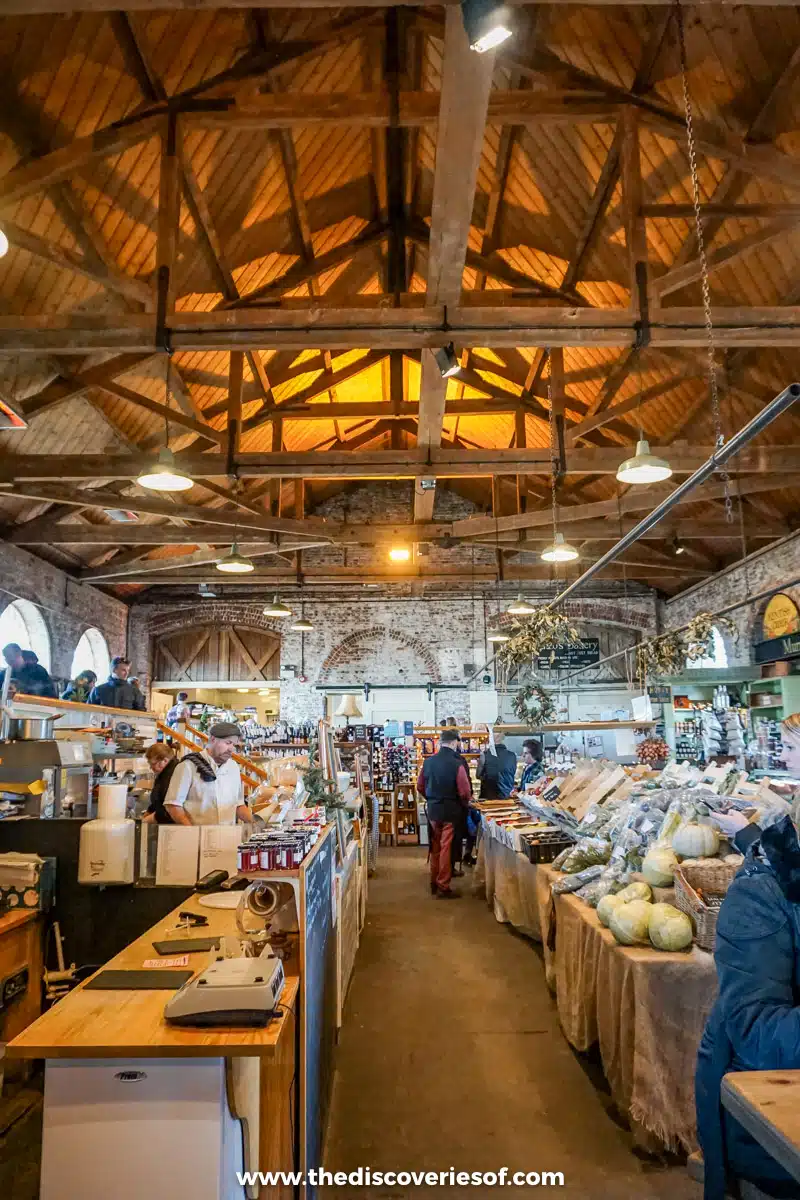
The Goods Shed is a shop, farmers’ market and restaurant rolled into one, all housed in a beautifully renovated railway warehouse next to Canterbury West station. Sounds good? It is.
The stalls include Cheesemakers of Canterbury (what these guys don’t know about cheese, quite frankly, isn’t worth knowing), Patriana Charcuterie, a butcher, a fishmonger, a veg stall, Docker for sourdough and craft beer, Wine Spot, Murrays General Stores for Kentish and European deli goods, and Gill’s Café for coffee and pastries.
Perfect for filling your bags with goodies from your Canterbury day trip to bring home with you. It’s also a handy place to finish the day, as it’s right by the station for your train back to London.
The market is open Tuesday to Saturday from 9am to 6pm and on Sundays from 10am to 4pm, and it’s closed on Mondays. The restaurant upstairs, which cooks with produce from the stalls below, serves lunch from Tuesday to Sunday and dinner from Tuesday to Saturday.
2.30pm: take a trip on the river
Float down the River Stour for 40 minutes or so, admiring the sights and getting all of the insider Canterbury info, history and a bit of gossip from your knowledgeable guide.
There are three operators to choose from, and all of them take you past places you can’t see from the street, from the backs of the medieval weavers’ houses to the low arches of the old bridges.
- Canterbury Historic River Tours: 45-minute guided trips from King’s Bridge on the High Street, next to the Old Weavers’ House. In summer it also runs relaxed evening trips.
- Canterbury Punting Company: 40- to 45-minute punting tours in hand-built punts, checking in at The Mooring café on Water Lane.
- Westgate Punts: trips of 30, 50 or 65 minutes from Westgate Bridge, heading out through Westgate Gardens and towards the nature reserve beyond.
Book online ahead in summer, as the boats are small and fill up. Make sure that you wrap up warm during the chillier months: you’re sitting still on the water and it gets cold quickly.
3.15pm: Greyfriars Chapel and the Franciscan Gardens
Franciscan Gardens, off 25 High St, Canterbury CT1 2BD
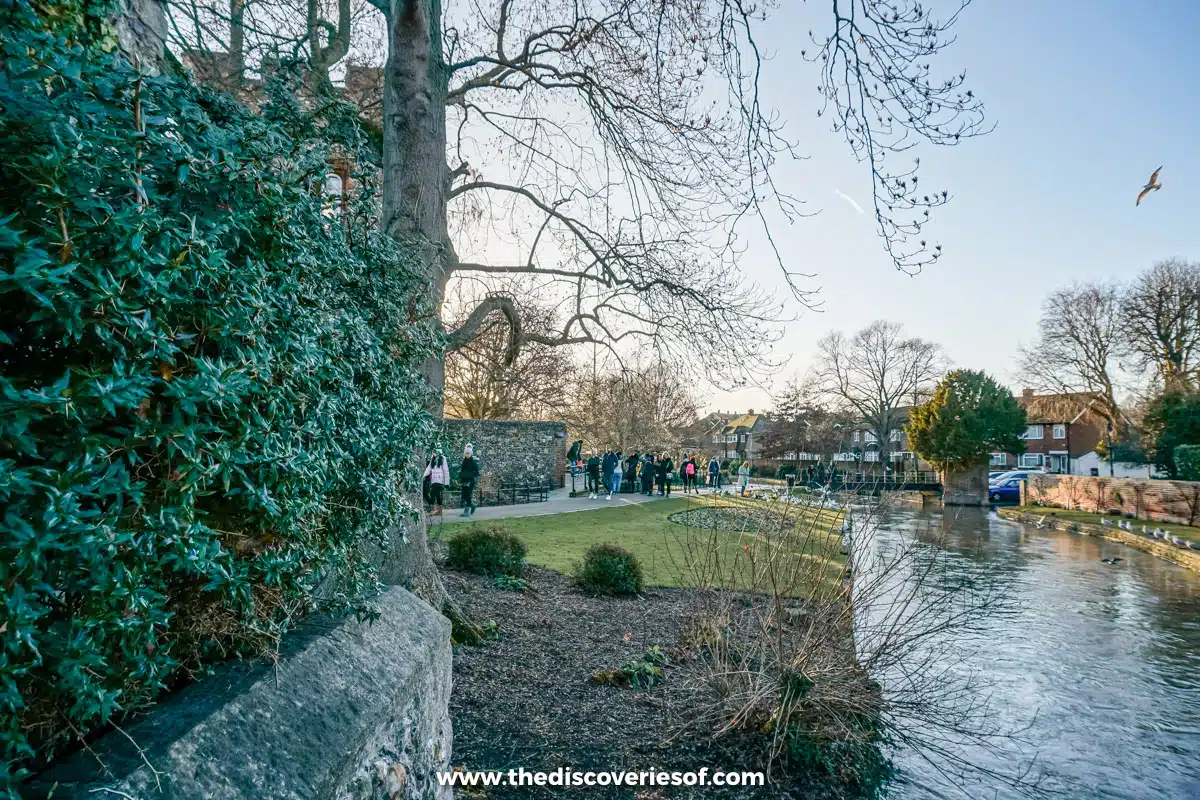
Perched over a branch of the River Stour, Greyfriars Chapel is the last surviving building of the first Franciscan friary in England, founded in 1224. Inside, the chapel’s cute, but the riverside setting is the draw here.
To be honest, it was 2°C on the day I visited, so there was no excess hanging around and posing in floaty dresses for me (not even for the ‘gram, not even).
In the summer it’s the perfect place to sit down and rest your feet (and maybe take a sneaky picture or two to show everyone how fabulous Canterbury really is). The chapel sits in the Franciscan Gardens, a quiet walled garden reached through a small entrance on the High Street near Eastbridge Hospital. Opening is seasonal and limited, and there’s a small charge that goes towards conservation, so check ahead.
3.45pm: the Beaney House of Art & Knowledge
18 High St, Canterbury CT1 2RA

I didn’t really know anything about the Beaney House of Art & Knowledge until it caught my eye as I was walking along Canterbury’s High Street.
The building is pretty unmissable, standing tall in red brick and mock-Tudor latticework with a dash of stained glass for extra pizzazz.
Curiosity might have killed the cat, but it’s also my middle name, so I couldn’t resist heading inside. It proved itself something of a find.
The Beaney House of Art & Knowledge is the city’s main library, art gallery and museum rolled into one. The galleries are organised into themed rooms and show work by artists including Anthony van Dyck, David Hockney and Thomas Sidney Cooper, the Canterbury painter famous for his cows. Look out for the ancient Egyptian mummified cat, Becket pilgrim badges and, in the Smallfilms Gallery, Bagpuss himself.
Entry is free. It’s open from 10am to 5pm Tuesday to Saturday and 11am to 4pm on Sundays, and closed on Mondays. It’s relatively small and centrally located, so you can slot it in wherever you have the time.
4.15pm: Canterbury Roman Museum
Longmarket, 11A Butchery Ln, Canterbury CT1 2JR
OK, I’m going to ‘fess up. I didn’t go to the Roman Museum because I was feeling a bit fagged, popped into a pub for a quick beer and got there after it closed (oops).
If you are more successful in your bid to see the Roman Museum, you’ll find a glimpse into Roman life in Canterbury 2,000 years ago, built around the remains of a Roman townhouse and its mosaic floors, which were uncovered after bombing in the Second World War.
It’s open daily from 10am to 5pm, but last admission is at 4.30pm, so don’t dawdle (learn from me). Tickets cost £11 for adults, £9 for concessions and £5.50 for children, and under-fives go free. You can buy on the door, but booking ahead guarantees entry.
5pm: a whirlwind walk


Much as there is to do in Canterbury, one of the real pleasures, as with many cities, is just taking some time to have a bit of a walk around.
Wend your way through the narrow alleys, peeking into small courtyards and medieval houses and popping into a shop or two. Mercery Lane and Butchery Lane, with the cathedral’s Bell Harry tower peeping over the rooftops, are the most photogenic, and the King’s Mile (Palace Street, The Borough and Northgate) is where you’ll find the best independent shops.
Don’t miss the curiously wonky Sir John Boys House on Palace Street, understandably called the “Crooked House” (it’s the one at the top of this section). It’s now the Catching Lives Bookshop, a second-hand bookshop that raises money for a local homelessness charity, so you can go inside and see just how lopsided it is.
You should also walk a stretch of the city walls, which still run around more than half of the old city. Climb up near Dane John Gardens for views over the rooftops. Canterbury Castle’s Norman keep, just beyond, has been closed for a council-led restoration that’s due to reopen it free of charge, with new walkways inside, once the work finishes, so check before you go.
6pm: a drink at The Parrot, the oldest pub in Canterbury
1-9 Church Ln, St Radigunds, Canterbury CT1 2AG

So you remember the bit where I said that I missed the Roman Museum being open because I got sidetracked by a pub? This was it. To help you avoid making the same mistake, I’ve put it near the end of your itinerary.
The Parrot’s building has been standing in the same spot since 1370, and today it pours real ales alongside wines and spirits, with Sunday roasts on the menu too.
The name is often linked to Chaucer, like so many things in Canterbury: the famed English poet has a good deal to say about chattering birds.
Snuggle in with a drink. There’s a courtyard for the summer (and the smokers), or grab a pew in the cosy, beamed interior.
If you’d rather try something brewed in the city, The Foundry on Stour Street is a brewpub that makes its own beers and spirits.

7pm: dinner
1-2 Sun St, Canterbury CT1 2HX
OK, so the day’s almost over. But all that walking, history and (ahem) drinking in old pubs will have left you a bit hungry.
When I first wrote this itinerary, I sent you to Deakins, a gastropub on Sun Street, just around the corner from Christ Church Gate. That building is now The Drapers Arms, which serves Asian-inspired street-food plates across two floors, with a rooftop terrace upstairs. It’s a fun, easy option before the train home.
If you’re after something more grown-up, these two come up again and again:
- Café du Soleil: Mediterranean food from a wood-fired oven in a restored former wool store, with a terrace by the river.
- Franc: a French restaurant on Northgate, with a walk-in wine bar downstairs and a set menu upstairs.
Got more time? Add these
If you have a little longer, stay the night or skip a couple of the stops above, these are the places I’d add next.
The Canterbury Tales
St Margaret’s Street, Canterbury CT1 2TG

Canterbury’s most famous book has its own attraction, and it relaunched in spring 2026 as an immersive experience after a million-pound makeover. You set off from a themed London inn, follow Chaucer’s pilgrims down the Old Kent Road and through the stories with projections, animatronics and special effects, and finish up in a themed bar.
Tickets are £27.95 for adults and £12.95 for children aged 6 to 12, and sessions run throughout the day, seven days a week. It’s pricey for what it is, but it’s the most fun way to get the stories into children (or anyone who never quite finished them at school). Chaucer himself stands on the corner of Best Lane and the High Street, just a few minutes away.
St Augustine’s Abbey
Longport, Canterbury CT1 1PF
St Augustine’s Abbey is the third part of Canterbury’s World Heritage Site and one of the most important early Christian sites in England. Augustine founded it in 598, a year after he arrived from Rome to convert the Anglo-Saxons, and it became the burial place of the early kings of Kent and archbishops of Canterbury. Henry VIII closed it in 1538, and what’s left is a wide, peaceful spread of ruins about ten minutes’ walk east of the cathedral.
It’s run by English Heritage, and adult tickets cost roughly £9 to £12 depending on the date (cheaper if you book online by the day before), with English Heritage members free. It’s open daily until the end of October, then at weekends only through the winter, apart from the February half-term, so check the dates before you go.
St Martin’s Church
North Holmes Road, Canterbury
A short walk beyond the abbey, St Martin’s is the oldest church in the English-speaking world still used for regular worship. Queen Bertha, the Christian wife of King Æthelberht of Kent, prayed here before Augustine arrived, and parts of the walls are built from reused Roman brick. It’s tiny, quiet and free to visit, but it’s only open at certain times, so check the church’s website first.
Eastbridge Hospital
25 High St, Canterbury CT1 2BD
Right beside King’s Bridge, this was a hospital in the medieval sense: a place where poor pilgrims to Becket’s shrine could sleep for the night. You can see the vaulted undercroft where they slept, the 12th-century refectory with its medieval wall painting, and the chapel upstairs. It opens on limited days after a long closure for repairs, so check ahead.
Whitstable
If you’ve got a long summer evening, or a second day, Whitstable is just seven miles away. The Crab and Winkle Way is a traffic-free walking and cycling route of about seven and a half miles that runs from Canterbury to the seaside. Reward yourself with oysters on the seafront at the other end.
Practical tips for your Canterbury trip
When to go
Canterbury is a year-round day trip. Summer brings the best weather for the river and the gardens, but also the biggest crowds and the highest cathedral prices. Winter is quieter and cheaper, and the city is lovely in the run-up to Christmas, when the cathedral is at its most atmospheric. Just wrap up warm.
Whenever you go, aim for a Tuesday to Saturday. On Mondays the Beaney and The Goods Shed are closed, and on Sundays the cathedral doesn’t open for sightseeing until 12.30pm.
Where to stay
So, it’s time to head home. Your one day in Canterbury is over and you’re feeling pretty sad, right? Well, why not stay over and make a weekend of it? Canterbury’s not short on boutique hotels and B&Bs for you to lay your head. Here are a few ideas.
ABode Canterbury
Bang in the middle of town, ABode’s High Street location is just part of its draw. Bed down in one of the 72 chic rooms and you’re guaranteed a comfortable night’s sleep in a stylish setting, a few minutes’ walk from the cathedral. It also does a Champagne afternoon tea in the bar if you fancy treating yourself.
The Falstaff
Bigger than it first appears, The Falstaff is a former coaching inn dating back to 1403, a stone’s throw from the Westgate and a few minutes’ walk from Canterbury West station. Decor-wise, it’s a case of olde English meets contemporary, with beamed ceilings and original features in many of the rooms.
Getting to and from Canterbury
Canterbury is well connected by road and train. I’ve focused on how to get there from London, but it’s relatively easy to reach from most major UK hubs.
Train
Canterbury has two stations, and which one you use depends on where you leave London from.
- From St Pancras: Southeastern’s high-speed trains run direct to Canterbury West in about 55 minutes. This is the quickest option by far, and it usually costs only a little more than the slower routes.
- From Victoria: trains run to Canterbury East in about 1 hour 30 minutes to 1 hour 40 minutes. Canterbury East is right by the city walls and Dane John Gardens.
- From Charing Cross: slower trains (also calling at Waterloo East and London Bridge) run to Canterbury West in about 1 hour 35 minutes to 1 hour 45 minutes.
Advance singles start from around £13 if you book early. Off-peak tickets are valid after 9.30am on weekdays and all day at weekends, and a railcard takes a third off most fares. If you travel off-peak on a weekday, you’ll arrive at around 10.30am, so just push the itinerary back by half an hour.
Coach
National Express runs coaches to Canterbury bus station from London Victoria Coach Station. It’s usually the cheapest option, but it takes around twice as long as the high-speed train.
Car
It’s an easy drive from London, following the A2 and M2 all the way, and it takes about an hour and a half. Parking in Canterbury itself can be difficult, so use one of the three park and ride sites (New Dover Road, Sturry Road and Wincheap). It costs £4 per car for the day, for up to six people, and buses run every 8 to 15 minutes into the centre.
Getting around
Once you’re here, walk. The old city inside the walls is compact, flat and easy to cross on foot in 15 minutes, and most of the streets around the cathedral are pedestrianised. Wear comfortable shoes, as many of the lanes are cobbled.
Read more UK travel guides
- The ultimate UK bucket list
- UK road trip ideas for your next adventure
- Brilliant things to do in the UK
- Brilliant day trips from London
Love this? Save and share on Pinterest

Discover the top things to do, insider tips and hidden gems in our United Kingdom (U.K.) Travel Guide.
Read the guides →