
Planning a trip to Dorset and not sure where to start? From Durdle Door and Corfe Castle to fossil hunting in Charmouth and the abandoned village of Tyneham, these are the best things to do in Dorset, with the parking, prices and opening times you need to plan your days.
Dorset is just beautiful. As someone who grew up on the outskirts of London, the first time I ventured down to Dorset as a teenager I absolutely fell in love. Who wouldn’t, when the county boasts spots like Durdle Door and Lulworth Castle?
It’s one of England’s most beautiful counties. Its coastline is the star of the show: a run of chalk arches, sheltered coves and fossil-packed cliffs that makes up most of the Jurassic Coast, England’s first natural World Heritage Site. Inland, there are thatched villages, Iron Age hillforts, ruined castles and grand country houses, plus a 180-foot chalk giant carved into a hillside.
I’m not the only one. Jane Austen loved it here and Thomas Hardy was obsessed with it, setting almost all of his novels in a lightly fictionalised version of the county he called Wessex. So what is it about Dorset that captures people’s imaginations? Spend a few days walking the clifftops and wandering its market towns and it’s easy to see why.
This guide covers the big-hitters, from Durdle Door to Brownsea Island, alongside quieter places such as the sculpture-filled Tout Quarry on Portland and the Pirate’s Graveyard, plus a few delightfully eccentric ones (knob throwing, anyone?). Each entry has the practical details you need, and there are tips and places to stay at the end.
The best things to do in Dorset
Walk down to Durdle Door
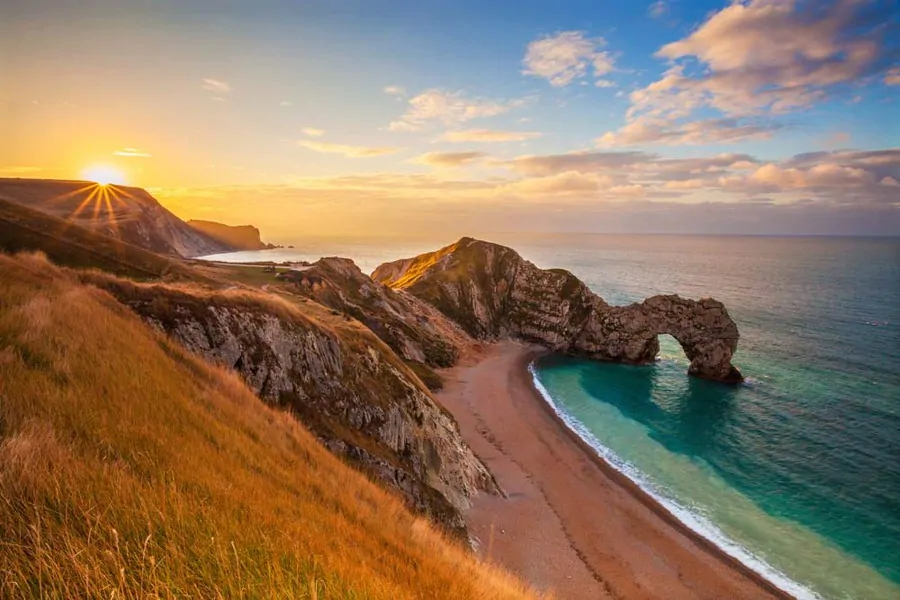
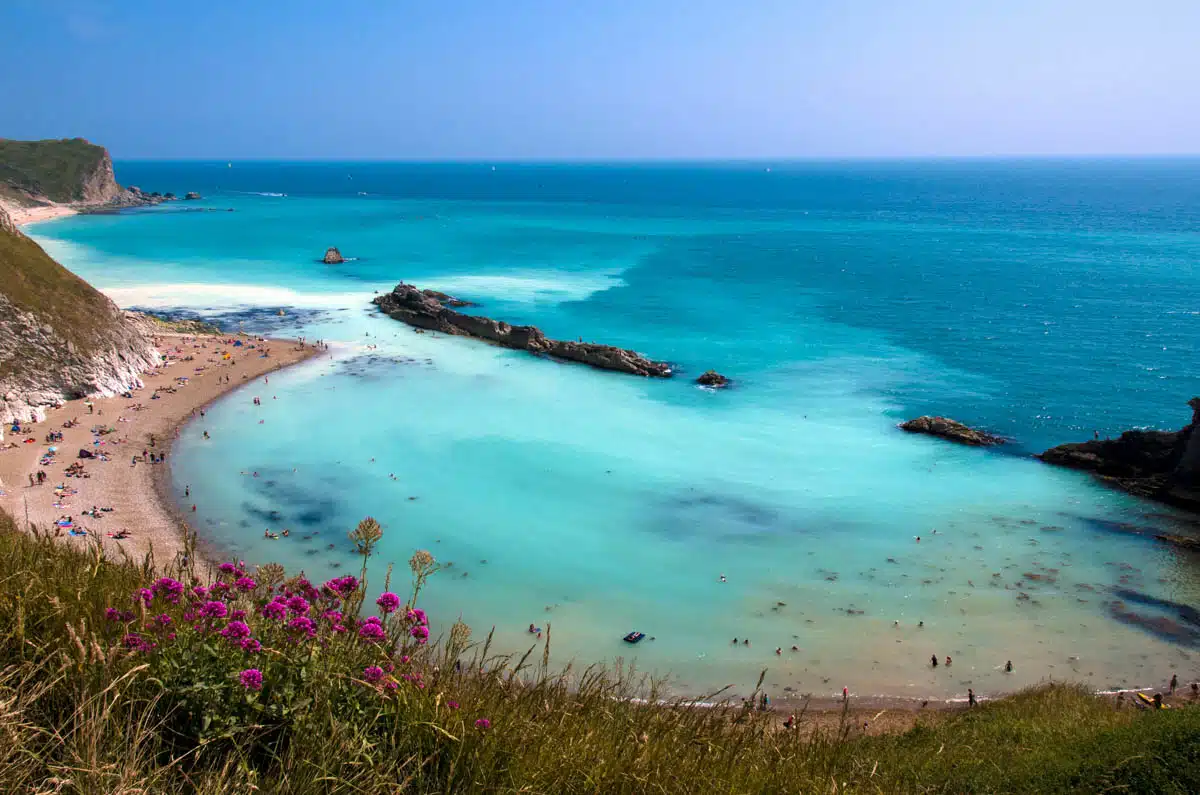
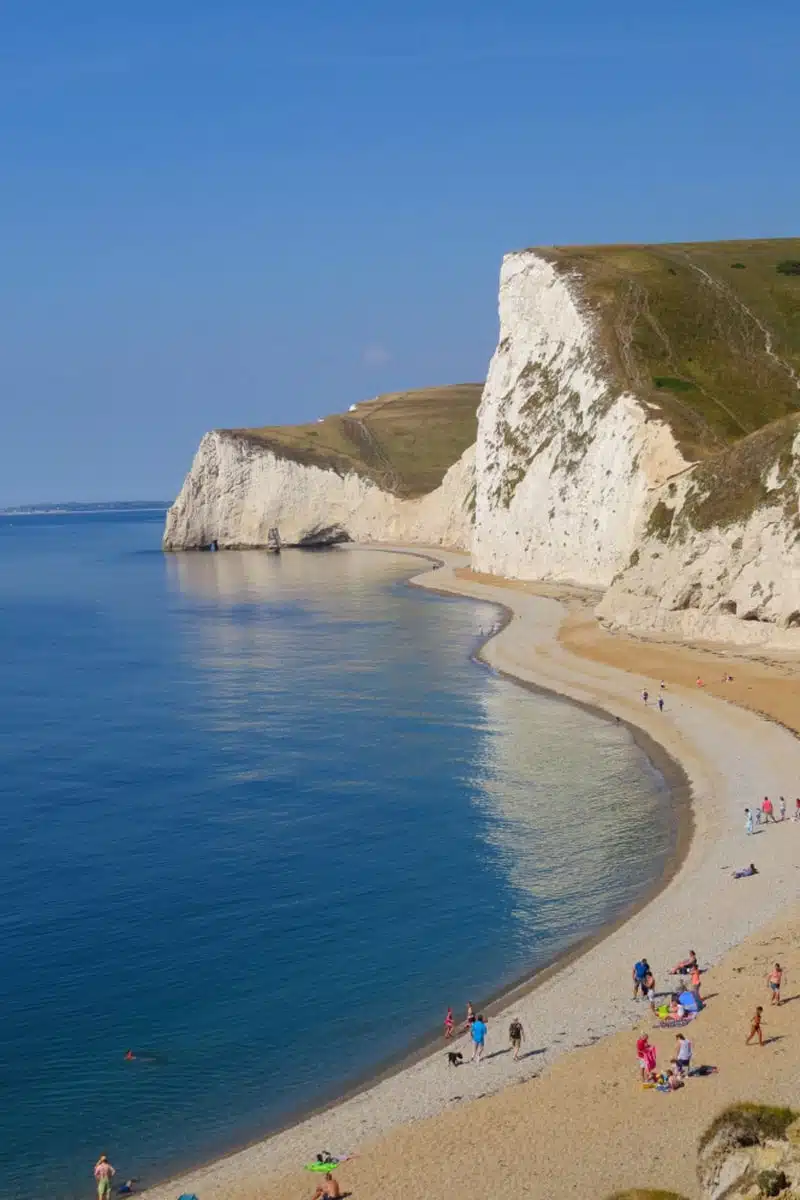
If there’s one picture that sums up the county, it’s Durdle Door: a natural limestone arch reaching out into the sea at the end of a long shingle beach. The sea punched through the Portland limestone here around 10,000 years ago, and the rock itself is more than 140 million years old.
Durdle Door is on the privately owned Lulworth Estate, and it’s open all year round. The main car park sits at the top of the cliff by Durdle Door Holiday Park (£15 for up to six hours or £25 for a full day), and from there a steep, rough path leads down to the beach in about 15 minutes. Steps lead down the other side of the headland to Man O’War Beach, a sheltered cove that’s often a little quieter. The beaches close at dusk, and the caves at the foot of the cliffs are off limits because of rock falls.
On a sunny summer weekend the car park can fill by mid-morning, so arrive early or walk over from Lulworth Cove.
Do
Don’t want to drive? The Lulworth Cove and Durdle Door mini-coach tour from Bournemouth takes in both on a six-hour trip, with time to walk between them.
Swim in the almost perfectly round Lulworth Cove
Just over a mile east of Durdle Door, Lulworth Cove is a near-circular bay of shingle and clear water, ringed by cliffs. It formed when the sea broke through the hard band of Portland and Purbeck limestone at its mouth and scooped out the softer clays and sands behind, and it’s one of the best places anywhere to see how the coast here was made.
The sheltered water is good for a swim or a paddle on a calm day, and the little village of West Lulworth has pubs, a café and an ice cream stop or two. The Lulworth Estate’s visitor centre by the car park explains the geology, and the car park costs £9 for up to three hours or £25 for a full day.
The walk between the cove and Durdle Door is one of the most popular stretches of the South West Coast Path: just over a mile each way, but steep, with a long climb over the shoulder of Hambury Tout. Allow around 30 minutes and wear proper shoes.
Read Next
Peer into Stair Hole
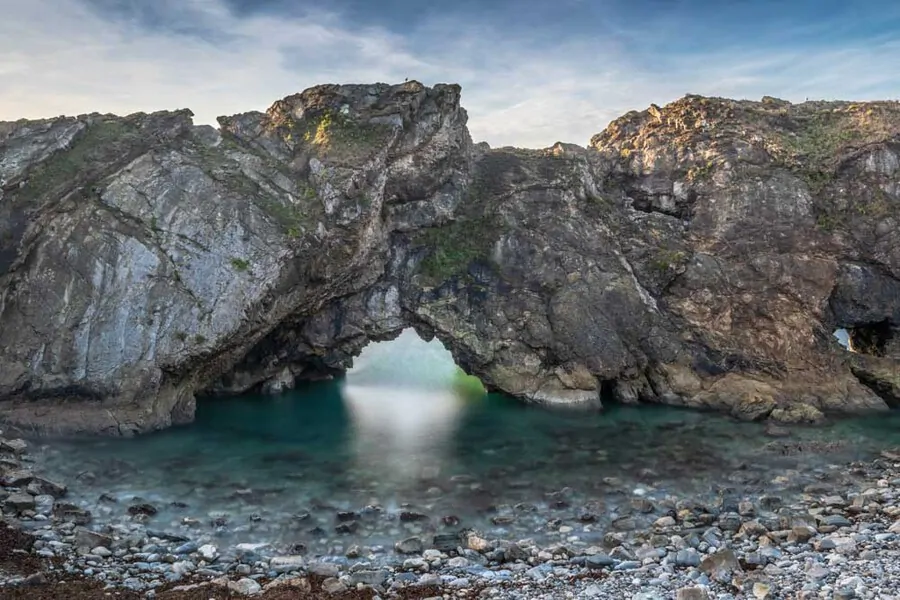
Just to the west of Lulworth Cove, Stair Hole is what the cove probably looked like in its early days: a small, sea-filled hollow where the waves have already broken through the outer wall of limestone in a series of arches and caves.
Look at the cliffs at the back and you’ll see the Lulworth Crumple, layers of Purbeck rock folded and twisted into tight zigzags by the same earth movements that pushed up the Alps. It’s one of the best-known geological sights on the Jurassic Coast.
A short path from the western side of the cove leads to the viewpoint above Stair Hole, and you can scramble down to the water at low tide. The rocks are slippery: I just recommend wearing some sturdy footwear so you don’t take a tumble. Kayak and paddleboard tours leave from Lulworth Cove in summer and often paddle through the arches.
Explore Lulworth Castle and its park
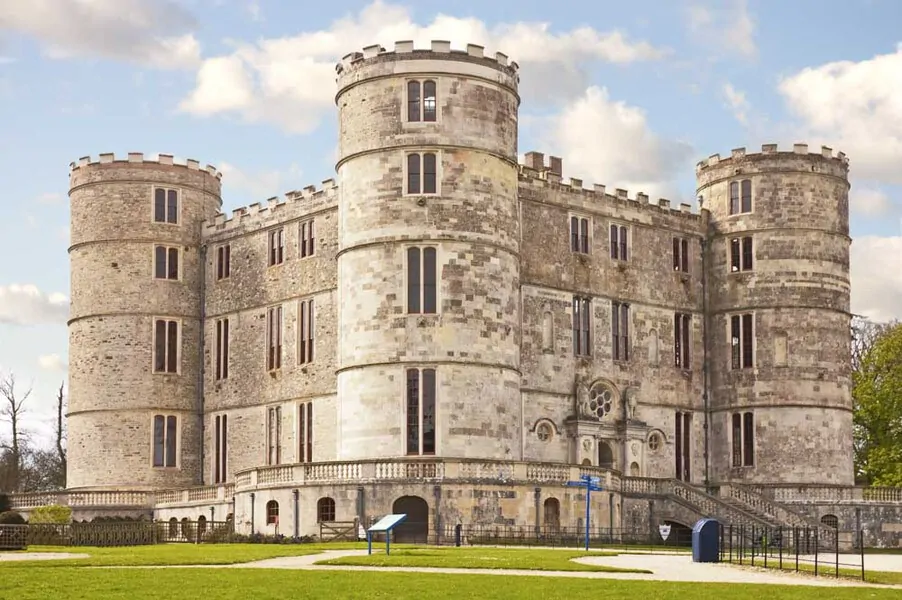
Lulworth Castle is one of the most romantic buildings in the south of England. It’s a “mock” castle, built in the early 17th century not as a fortress but as a hunting lodge to entertain royalty and aristocracy, and it was the seat of the Weld family for centuries.
A fire gutted the castle in 1929, and it stood as a shell until it was partly restored in a partnership with English Heritage. Today, you can look round the restored interior and its exhibitions and walk in the parkland, which has views towards the sea. Out in the grounds, St Mary’s Chapel was the first free-standing Catholic chapel to be built in England since the Reformation, and there’s a children’s playground.
The castle and park are open from Sunday to Friday, 10.30am to 5pm, closing for winter from Christmas Eve to the start of February. Tickets are sold online, and parking costs £4 for the day. The Castle Tearoom does a proper cream tea if you want to go full British.
Climb up to the ruins of Corfe Castle
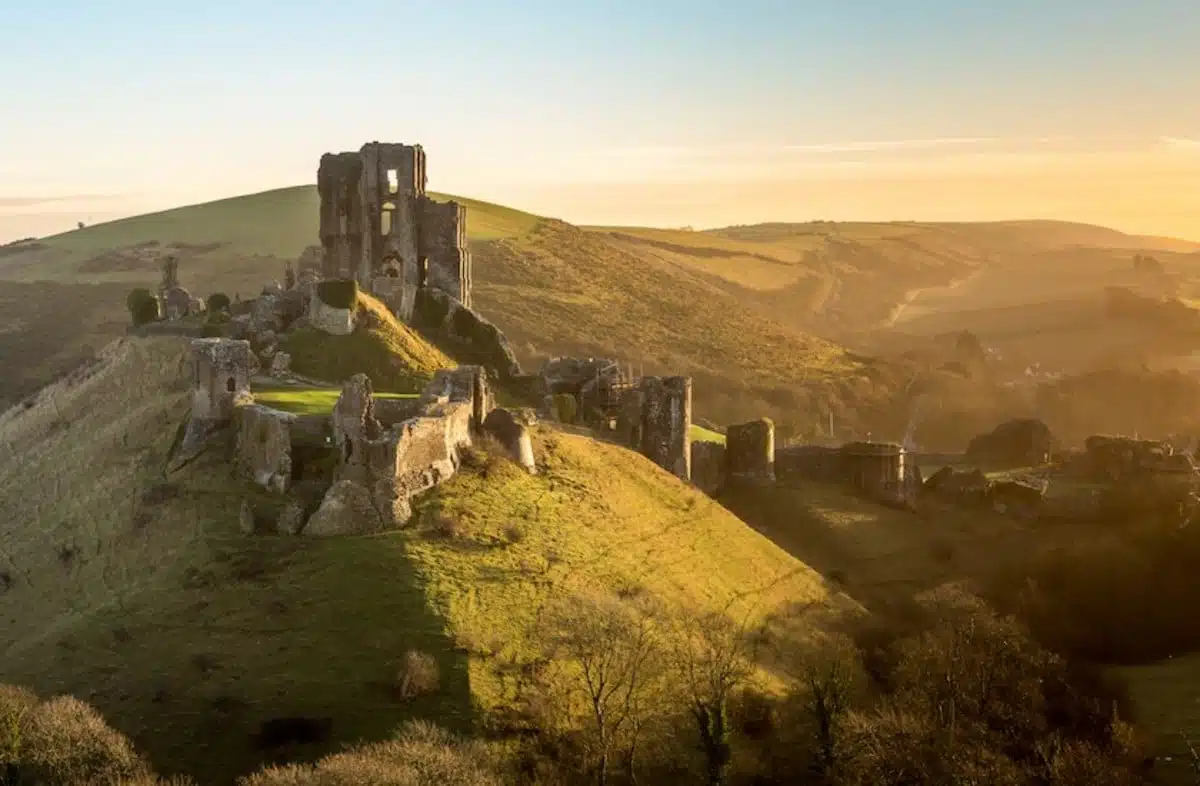
Rising out of a gap in the Purbeck Hills, the jagged ruins of Corfe Castle are one of the most dramatic sights in England. William the Conqueror established the castle, and over 1,000 years it was a royal fortress, a prison and a treasure store.
Now, if you’ve spent much time in the UK you’ll know that we’re not exactly lacking in ruined castles, but the fascinating backstory of this one makes it particularly special. The best part of its story comes from the English Civil War. Lady Mary Bankes held the castle for the King through two sieges, until it was finally taken in 1646 and deliberately blown up by Parliament so it could never be used again. The tumbled towers you see today are the result.
The castle belongs to the National Trust, and adult tickets cost £15 off-peak and £16 in the summer holidays (more with Gift Aid). Below the castle, the village is full of stone cottages and pubs, and the National Trust tearoom has close-up views of the ruins.
Do
The Jurassic Coast and Isle of Purbeck day tour from Bournemouth stops at Corfe Castle, Studland, Durlston, Lulworth Cove and Durdle Door in one day.
Ride a steam train on the Swanage Railway
The Swanage Railway is the most fun way to arrive at Corfe Castle. Steam and heritage diesel trains run along five and a half miles of restored line from Norden, past the castle and through the Purbeck countryside to the seaside town of Swanage, with some services running through from Wareham on the main line.
The views of Corfe Castle as the train pulls into the station are hard to beat, and the railway runs special events through the year, from Halloween trains to visiting locomotives.
Swanage itself is a good-natured Victorian resort with a sandy beach and a pier. Walk up to Durlston Country Park on the headland south of town to see the Great Globe, a 40-tonne stone globe carved in the 1880s, and look out for dolphins from the clifftops.
Walk out to Old Harry Rocks
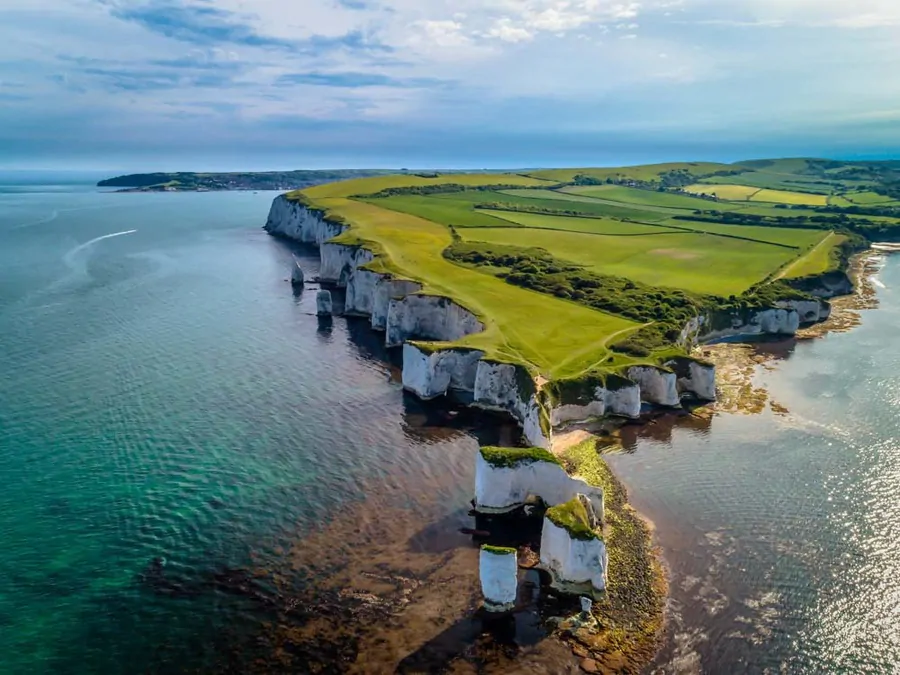
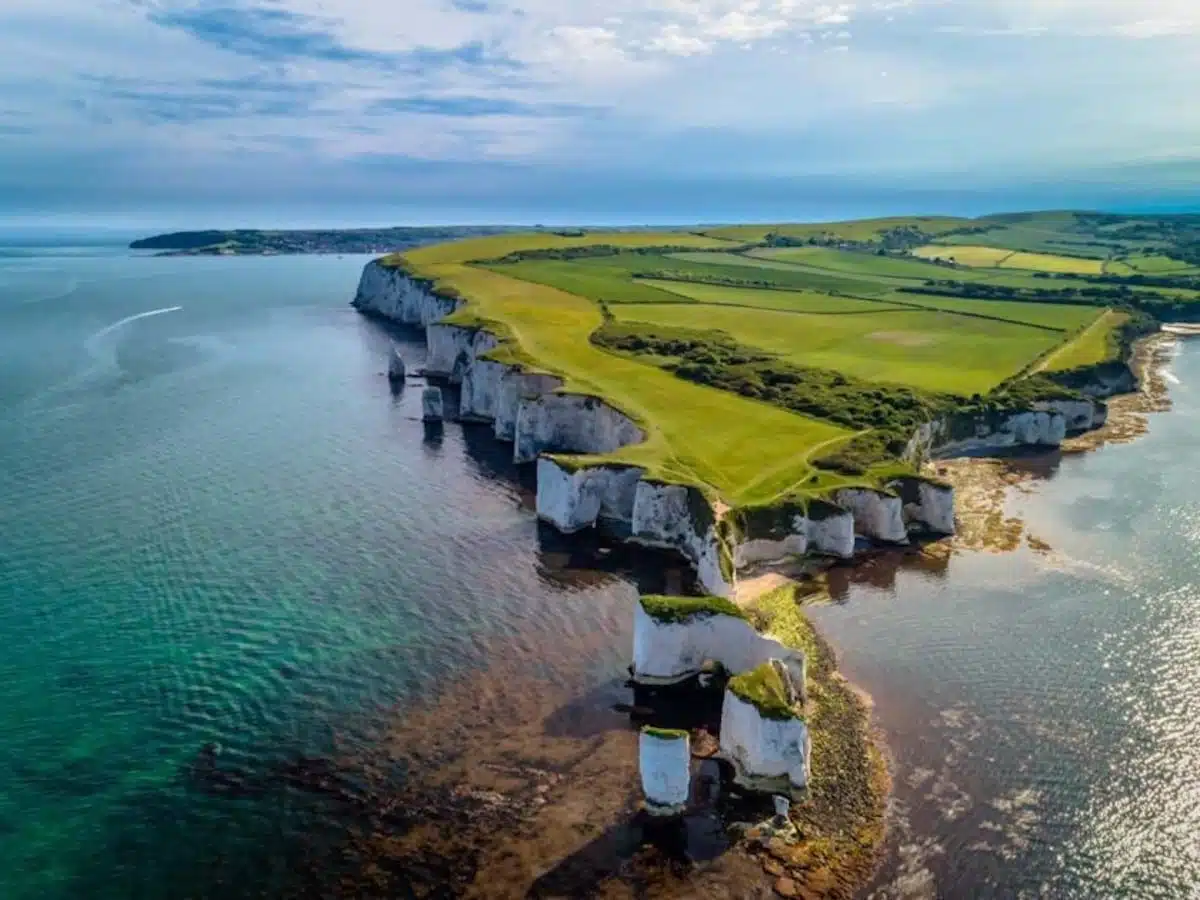
The chalk stacks of Old Harry Rocks mark the most easterly point of the Jurassic Coast. They stand off Handfast Point near Studland, stark white against the blue of the sea and the green of the clifftops, and they’re a magnet for photographers.
The easiest way to see them is to walk out from Studland village along the clifftop path, an easy stroll of under two miles each way. Keep well back from the edge: the chalk is crumbling all the time. Old Harry’s Wife, the stack beside him, has already been worn down to a stump.
You can also see them from the water. Boat trips run from Poole Quay and Swanage through the summer.
Do
The Jurassic Coast circular cruise from Poole sails past Sandbanks and Brownsea Island to Old Harry Rocks in two and a quarter hours.
Discover the Isle of Purbeck
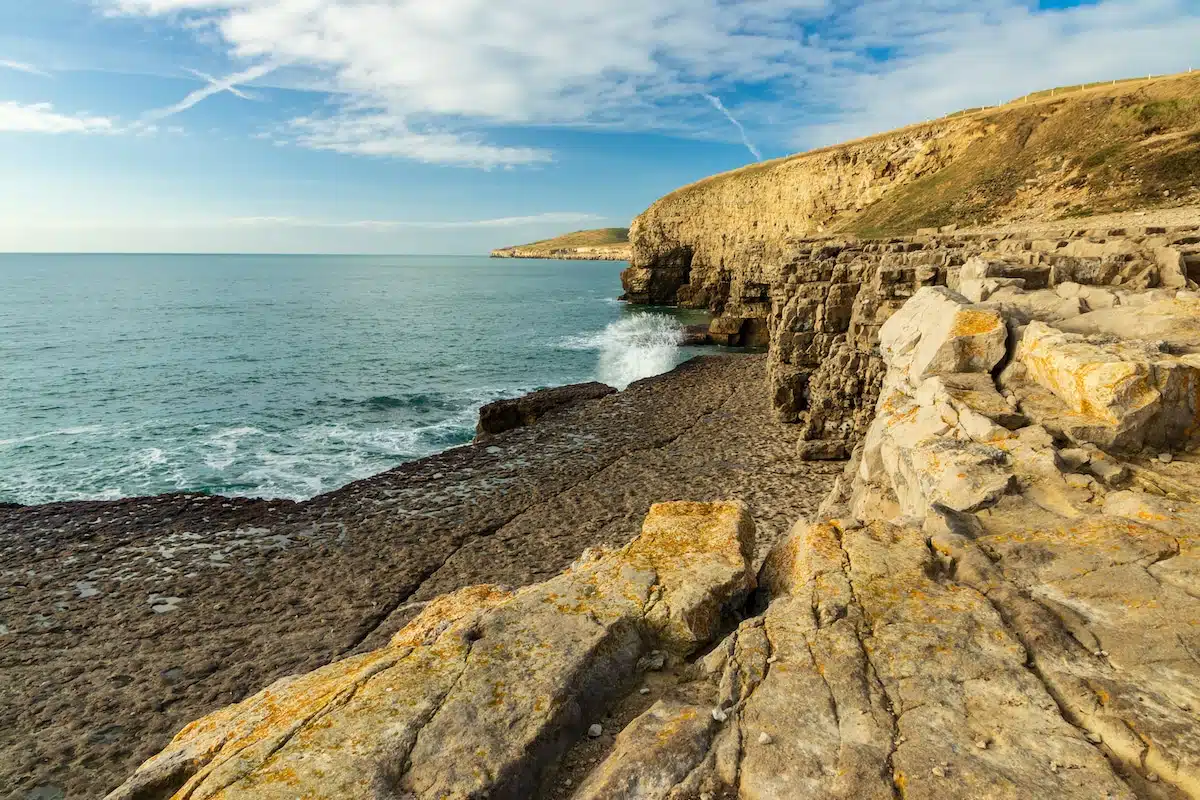
So, sorry to burst your bubble, but the Isle of Purbeck is not technically an island. It’s a peninsula, with the sea to the south and east and Poole Harbour and the River Frome to the north, so it’s surrounded by water on three sides: close enough, I guess?
It’s the most rewarding corner of the county for a short break. As well as Corfe Castle, Swanage and Old Harry Rocks, it has the National Trust’s Studland Bay, with four miles of sandy beaches backed by dunes and heathland, and Kimmeridge Bay, a rocky bay of ledges and rock pools that’s one of the best places for snorkelling on the Dorset coast. The Etches Collection in Kimmeridge village shows off fossils found along this stretch of coast.
Walkers can follow the coast path to Dancing Ledge, a flat shelf of old quarried rock just above the waves, and golfers can tee off at the Isle of Purbeck Golf Club, which has views over Poole Harbour.
Wander through Tyneham, the ghost village
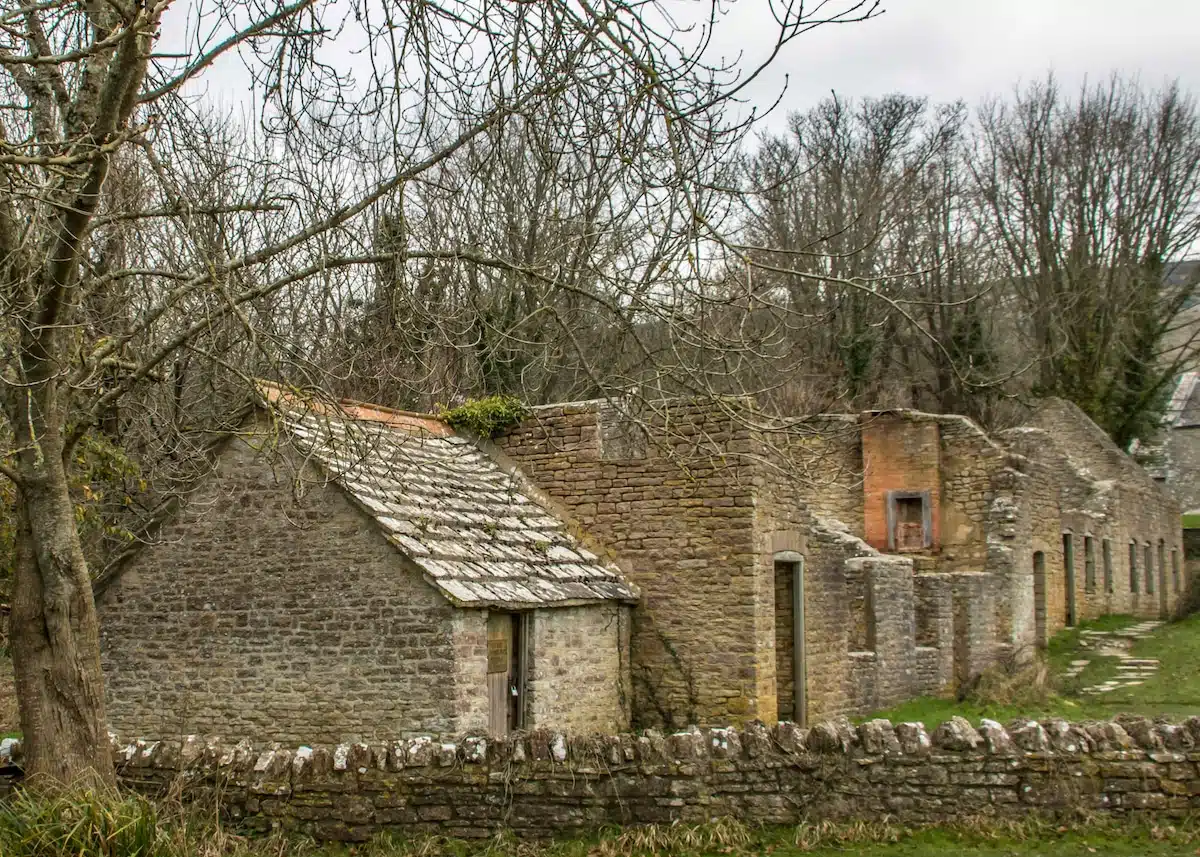
In November 1943, the 225 or so residents of Tyneham were told they had 28 days to leave their homes so the army could use the valley for training ahead of D-Day. They left a note on the church door asking the troops to treat the village with care, expecting to return when the war was over. They never did: the land is still part of the Ministry of Defence’s Lulworth Ranges.
Today, the roofless cottages, the restored schoolroom (with the pupils’ names still on the pegs) and St Mary’s Church make for a moving walk. I won’t lie, it’s a bit eerie, but it’s a great place to bring older kids along to. Look out for the replica of the village’s old telephone box.
Tyneham is only open when the army isn’t firing, which in 2026 means most weekends plus daily over Easter, from late July to the end of August and over Christmas. The village gate opens at 9am and closes at dusk, and the school and church exhibitions open from 10am to 4pm. Check the Lulworth Range access times before you go. From the village, a path leads down to the beautiful, empty curve of Worbarrow Bay.
Spot red squirrels on Brownsea Island
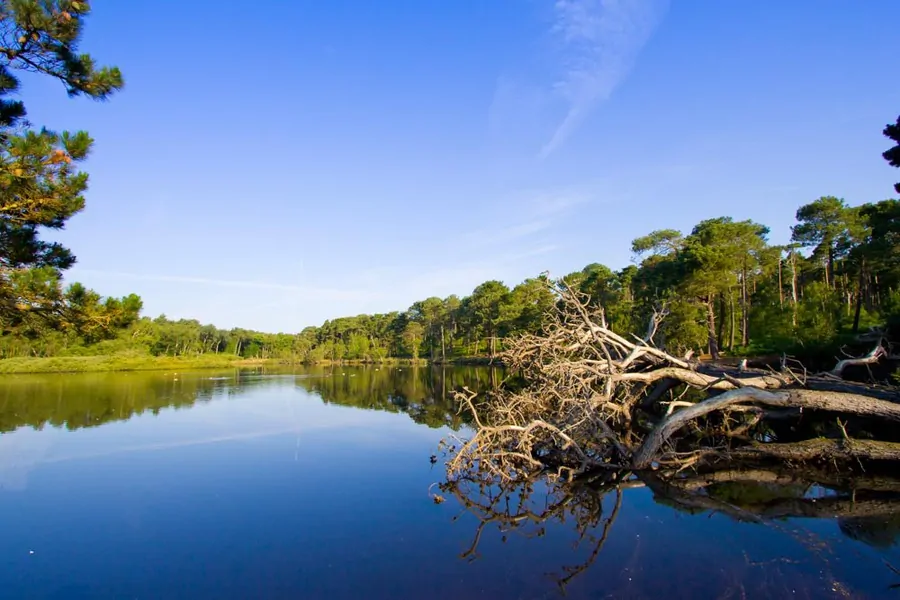
The largest island in Poole Harbour, Brownsea Island feels a world away from the mainland, even though you can see the yachts of Sandbanks from its shore. It’s one of the last strongholds of the native red squirrel in the south of England, and autumn is the best time to spot them, when they’re busy burying nuts.
The island is also the birthplace of Scouting: Robert Baden-Powell held his experimental camp here in 1907. Dorset Wildlife Trust runs a nature reserve on the island, where the lagoon draws avocets, spoonbills and other wading birds.
Ferries run from Poole Quay, and the crossing is paid separately from entry. National Trust admission costs £12 for adults (members only pay the ferry fare). The island is open seasonally from spring into autumn and closes in high winds. Dogs aren’t allowed, apart from assistance dogs.
Spend a day on the sand at Sandbanks
Sandbanks is a narrow spit of sand at the mouth of Poole Harbour, one of the largest natural harbours in the world. It’s home to one of the best beaches in all of Britain. If you don’t believe me, just ask the local estate agents: rich people are falling over themselves to secure a home nearby, and its waterfront homes are eye-wateringly expensive. I certainly don’t blame them. This wide, soft, Blue Flag stretch of sand on the sea side is enough to make you think you’ve popped up in the south of France.
On the harbour side, the water is calm and shallow, and it’s a hub for sailing, windsurfing and paddleboarding. There’s a small selection of shops, cafés and restaurants too.
From the tip of the spit, the Sandbanks chain ferry crosses the harbour mouth to Studland in a few minutes, which makes a handy shortcut into Purbeck. The ferry is cash-free, so have a card ready.
Hit the beach in Bournemouth
The coast is a big part of Dorset’s appeal, and Bournemouth Beach is its busiest stretch of sand. In fact, it’s a series of beaches running into one another for around seven miles, from the edge of Poole to Hengistbury Head, backed by a long promenade.
The beaches have Blue Flags, RNLI lifeguards in summer and plenty of cafés, beach huts and ice cream kiosks, plus two piers at Bournemouth and Boscombe. The section between the piers is the liveliest. For more space, head east towards Southbourne and Hengistbury Head, where a nature reserve covers the headland.
When the sun goes in, the Russell-Cotes Art Gallery and Museum, a flamboyant Victorian villa on the clifftop by the pier, is well worth an hour or two. Bournemouth is also a good jumping-off point for the New Forest, less than half an hour’s drive away.
Admire the view from Highcliffe Castle
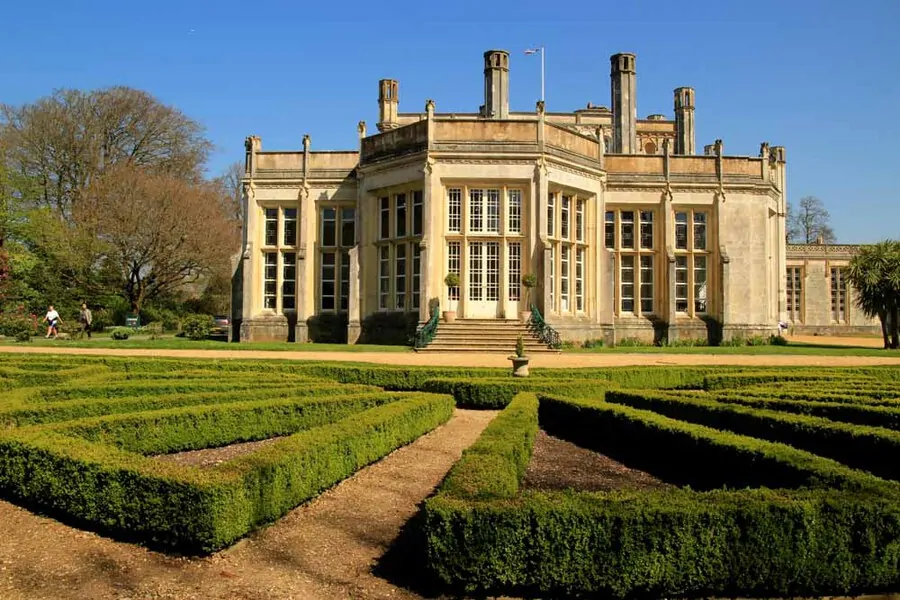
As you might have picked up from this list, the county isn’t short on a fancy castle or two. Few have a setting quite like Highcliffe Castle, on the clifftop above Christchurch Bay with views out to the Needles and the Isle of Wight.
It was built between 1831 and 1835 for the diplomat Lord Stuart de Rothesay, using carved medieval stonework shipped over from the ruined abbey at Jumièges and a grand house at Les Andelys in Normandy. The department store founder Gordon Selfridge rented it from 1916 to 1922. After fires and decades of neglect it was rescued by the council and restored, and it now looks like something a romance novelist cooked up (it’s a very popular wedding venue).
The castle is open from Sunday to Thursday, 10am to 4pm, and the clifftop grounds, which lead down to the beach, are free to wander.
Step inside Kingston Lacy
If I ever leave London and become horrendously wealthy, I plan to stake a claim for Kingston Lacy. This grand house is seriously impressive, the kind of country house that makes you want to give up your day job. This grand 17th-century mansion near Wimborne was built by the Bankes family after their home at Corfe Castle was blown up, and its rooms are filled with paintings by Rubens and Titian.
Much of what you see was the work of William John Bankes, an adventurer and collector who travelled through Egypt in the early 19th century. He brought back the Philae Obelisk, which now stands on the lawn and whose inscriptions helped scholars decipher hieroglyphs (see my guide to Philae Temple for where it came from). Bankes later had to flee England in a scandal and is said to have returned in secret to oversee work on the house.
When Ralph Bankes died in 1981, he left Kingston Lacy and Corfe Castle to the National Trust in the largest bequest in its history. Tickets cost £23 for adults (more with Gift Aid). Dogs on leads are welcome in the parkland and woodland, though not in the formal garden or the house, which makes it one of my picks for things to do with dogs in Dorset.
Meet Tiger 131 at The Tank Museum
The Tank Museum at Bovington is one of the best rainy-day options in the county, even if you don’t think tanks are your thing. It holds a collection of more than 300 armoured vehicles, from the very first tanks of the First World War to modern machines, and tells the stories of the crews who fought in them.
The star of the show is Tiger 131, a German Tiger I captured in Tunisia in 1943 and the only one in the world still in running order. In summer, the museum’s arena hosts live displays, and its big annual event, Tankfest, brings tanks from around the world rumbling round the track.
The museum is open from 10am to 5pm. It’s a short drive from Wareham, Lulworth and Corfe Castle, so it fits easily into a day in Purbeck.
Walk in the footsteps of Jane Austen in Lyme Regis
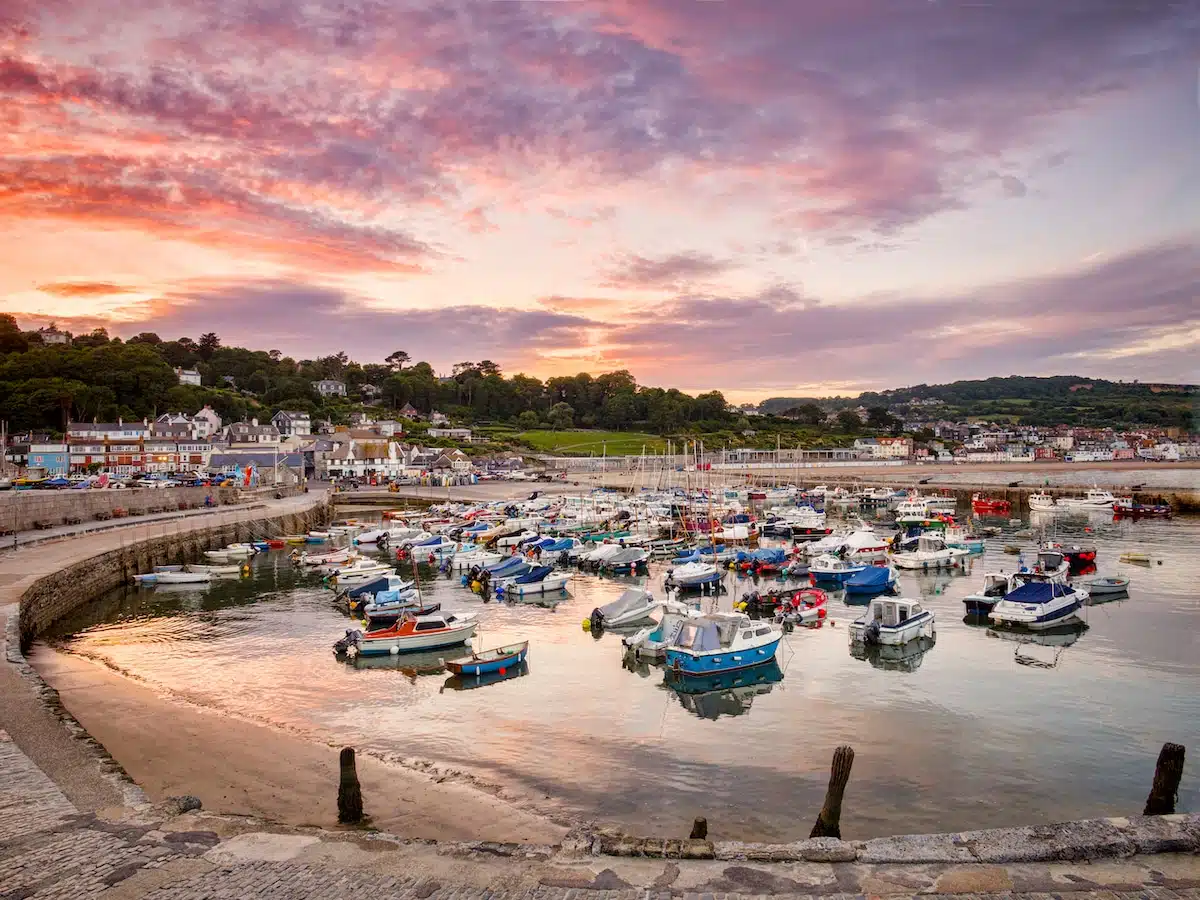
Now, I could tell you that Lyme Regis is beautiful, but I suspect you’ll put more weight on the words of Jane Austen. She visited in 1803 and 1804 and set some of the most dramatic scenes of Persuasion here, including Louisa Musgrove’s fall from the steps of the Cobb.
The Cobb, the curving stone harbour wall, is still the place to walk, with views back over the town and along the cliffs of Lyme Bay. Behind it, the steep streets are lined with independent shops, galleries and seafood restaurants, and the sandy Front Beach is good for families.
Whether you love Jane Austen’s novels or just trust her (or my) judgement on beautiful places, it’s a great option if you’re looking for where to go in Dorset.
Lyme is also the home of Mary Anning, the pioneering fossil hunter whose finds in the early 19th century changed what scientists understood about life on Earth. Look out for her statue on the seafront.
Get to know Mary Anning at the Lyme Regis Museum
I just love cute little local museums, and the Lyme Regis Museum is a beauty, in an eye-catching building on the seafront. It was built in 1901 on the site of Mary Anning’s family home, and it’s named after the Philpot family, whose Elizabeth Philpot was a fossil collector and a close friend of Anning.
Fittingly, the museum focuses on the fossils and geology of the Jurassic Coast, with ammonites, ichthyosaur remains and exhibitions about Anning’s life and discoveries. It also covers the town’s maritime history and its literary links, from Austen to John Fowles, the author of The French Lieutenant’s Woman, who was once the museum’s curator.
It’s a great option for a rainy day, and the museum runs guided fossil walks on the beach with local experts, which you can book online.
Hunt for fossils on Charmouth beach
Two miles east of Lyme Regis, the beach at Charmouth is the best place on the Jurassic Coast to find a fossil of your own. The crumbling grey cliffs of Black Ven and Stonebarrow are some of the most productive in Britain, and every tide washes out ammonites, belemnites and fragments of ancient reptiles onto the beach.
Start at the Charmouth Heritage Coast Centre by the beach car park, which is free to visit. It has displays of local finds, tells you what to look for and runs guided fossil hunts through the year.
The best time to search is on a falling tide after stormy weather, when fresh material has been washed out. Stick to the beach and the loose material on it, stay well away from the foot of the cliffs, which slip regularly, and check the tide times so you don’t get cut off. The coast path between Lyme Regis and Charmouth is diverted inland over the golf course because of the unstable cliffs.
Walk along Chesil Beach
Looking to enjoy a day at the beach in Dorset? Then I highly recommend making your way over to Chesil Beach. Now, it is a shingle (rocky) beach, which I know don’t get the same love as their sandy counterparts. However, this is a seriously excellent shingle beach, and it’s not just me who thinks so: it’s considered one of the most important shingle beaches in Britain.
Chesil Beach is one of the most remarkable stretches of coastline in Britain: a bank of shingle around 18 miles (29 kilometres) long, running from West Bay to the Isle of Portland. Behind it lies the Fleet, a shallow, tidal lagoon that’s home to wading birds and the famous swans of Abbotsbury.
I mean, that’s a staggering length, which you’ve got to admit is pretty epic. Don’t miss it when you’re penning your list of Dorset places to visit. The pebbles are graded by size along the beach, from pea-sized at the western end to as big as your fist at Portland. Local legend has it that smugglers landing at night could tell where they were just by the size of the stones.
The Chesil Beach Centre at Ferrybridge, at the Portland end, is the best place to start, with exhibits about the beach and the Fleet and walks along the lagoon. The beach shelves steeply and has strong currents, so it isn’t a place for swimming. Parts are fenced off in spring and summer to protect nesting birds.
Walk among the swans at Abbotsbury Swannery
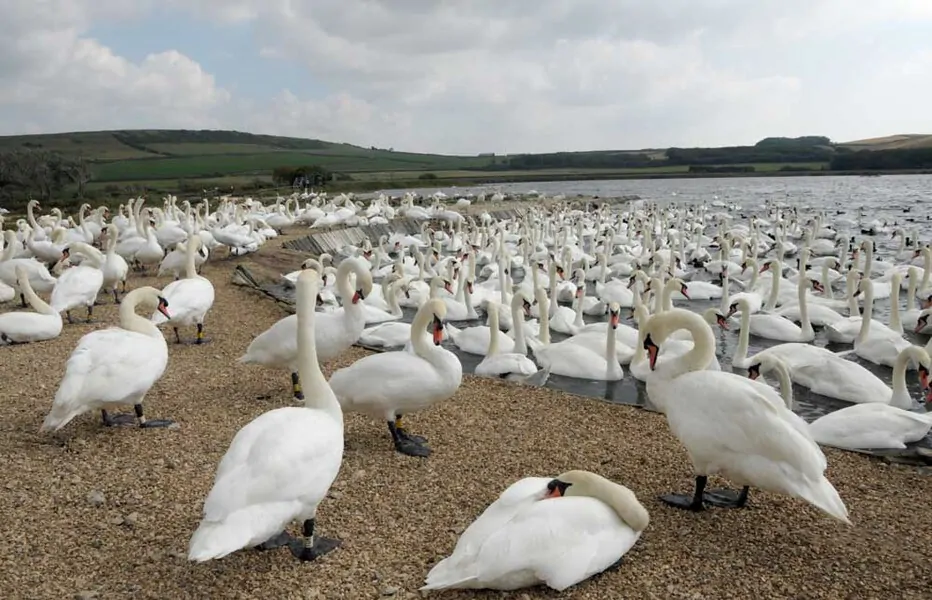
For something completely different, head to the Abbotsbury Swannery, the world’s only managed colony of nesting mute swans. Benedictine monks established it in the 11th century to raise swans for the table, and today around 600 swans live on this sheltered corner of the Fleet lagoon.
The best time to visit is from May to the end of June, when the cygnets hatch and you can walk right among the nests. Through the open season there’s a mass feeding every day, when hundreds of swans gather at once.
The Swannery opens from spring to the end of October. A combined ticket also covers the Abbotsbury Subtropical Gardens and the Children’s Farm, and the village itself, with its thatched cottages and St Catherine’s Chapel high on the hill above, is lovely.
Build sandcastles on Weymouth Beach
If you’re after a traditional bucket-and-spade day, Weymouth Beach is one of the best in the south of England. A long, gently curving arc of soft golden sand, it’s sheltered and shallow, which makes it a favourite with families.
The town became fashionable after King George III started holidaying here in 1789, and his statue still stands at one end of the Georgian seafront, while the brightly painted Jubilee Clock marks the middle. In summer, there are deckchairs, Punch and Judy shows and donkey rides on the sand.
Behind the beach, the old harbour is lined with pubs and seafood restaurants, and the views across the bay to Portland and along the Jurassic Coast make it a good place to finish a day’s walking.
Meet the fairy penguins at Sea Life Weymouth
Learn more about the world under the sea at Sea Life Weymouth, set in Lodmoor Country Park just outside the town centre. It’s a mix of indoor and outdoor zones, with sharks, sea turtles, seals and otters.
There are plenty of interesting and informative things to do here, but my personal favourite is visiting the fairy penguins, also known as little penguins. They’re the smallest penguins in the world (the only ones in Europe), and seriously cute. There’s also an outdoor splash zone with a pool, an adventure playground and a pirate-themed mini golf course, so it’s an easy win with kids.
Opening hours vary through the year, and there are extra events in the school holidays, so check the website before you go.
Explore the Isle of Portland
The Isle of Portland is a seriously cool place to visit. It’s a tied island, connected to the mainland only by Chesil Beach and the causeway road from Weymouth, and its rugged limestone plateau feels quite unlike anywhere else on the coast.
Portland stone has been quarried here for centuries and used in some of Britain’s most famous buildings, including St Paul’s Cathedral and the Cenotaph. At the island’s southern tip, Portland Bill has a red and white lighthouse built in 1906, where you can take a guided tour up the tower in season, and Pulpit Rock, a stack of stone you can (carefully) scramble up.
As well as a castle and a sculpture park in an old quarry (both below), the island is great for walking, with a coast path that loops right round it. Portland Harbour hosted the sailing events of the 2012 Olympics.
Defend the coast at Portland Castle
In the 1530s, Henry VIII built a chain of artillery forts along the south coast to protect England from a feared invasion by France and Spain. Portland Castle was one of them, built between 1539 and 1541 to guard the anchorage of Portland Roads, and it’s one of the best preserved.
English Heritage looks after it today. Inside, you can see the Tudor kitchen, the armoury and the gun decks, with interactive displays and an audio tour, and out in the Governor’s Garden there are sweeping views over Portland Harbour.
The castle is open daily from 10am to 5pm in season, and the Captain’s House tearoom serves lunches and cakes. Tickets are cheaper when you book in advance online.
Find the sculptures hidden in Tout Quarry
Quarrying isn’t usually associated with beauty, but on Portland, they’ve made the best of it. Tout Quarry, an abandoned stone quarry near the island’s west cliffs, has been turned into a sculpture park, with more than 60 works carved straight into the rock faces and boulders.
Artists have been working here since 1983, when the Portland Sculpture and Quarry Trust started inviting them to carve in the old workings. Part of the fun is hunting for the pieces among the piles of rubble and wild flowers. Look out for Still Falling, a falling figure carved into the rock by Antony Gormley.
Entry is free. The South West Coast Path now runs through the quarry because of erosion on the cliffs, so it’s easy to combine with a walk along the west side of the island.
Visit the Pirate’s Graveyard
On the east side of Portland, the ruins of St Andrew’s Church are better known by their creepier name: the Pirate’s Graveyard. The roofless church and its weathered gravestones sit on the slope above Church Ope Cove, beneath the ruined keep of Rufus Castle.
The nickname comes from the skulls and crossbones carved on some of the headstones. Historians think they were simply a common symbol of death rather than pirate graves, but local tales of smugglers using the cove keep the legend alive.
It’s an atmospheric spot, and the sea views are wonderful. The section of coast path above Church Ope Cove was closed in July 2025 because of falling rocks, with a signed diversion in place, so follow the signs on the ground.
Track down Thomas Hardy in Dorchester
If you don’t know who Thomas Hardy is, I recommend brushing up before a visit to Dorchester. The author of Far from the Madding Crowd and Tess of the d’Urbervilles is kind of a big deal around these parts, and Dorchester is the Casterbridge of his novels.
Just outside the town, Hardy’s Cottage at Higher Bockhampton is the thatched cottage where he was born, built by his great-grandfather, and where he wrote Under the Greenwood Tree and Far from the Madding Crowd. Park at Thorncombe Wood (there’s a charge) and walk 15 to 20 minutes through the woods. In town, Max Gate is the house he designed for himself and lived in from 1885 until he died in 1928. Both belong to the National Trust and cost £12 each for adults. Booking is recommended.
His statue stands at the top of High West Street, and the Dorset Museum has a gallery devoted to his life and work.
Browse the Dorset Museum and Art Gallery
In the centre of Dorchester, the Dorset Museum and Art Gallery (formerly the Dorset County Museum) is one of the oldest county museums in the country, founded in 1846. In fact, it replaced a pub: I guess I have to admit that’s better for your brain cells. Its Victorian Gothic galleries were joined by a major new extension after a redevelopment, and it’s now one of the best places to get to grips with the county’s history.
The collection spans everything from fossils and dinosaur footprints from the Jurassic Coast to Roman mosaics found in and around the town, and finds from Maiden Castle. The Hardy’s Dorset gallery covers the life and work of Thomas Hardy, the museum’s most famous connection.
It’s open daily from 10am to 5pm (last entry 4pm), and the café is a good spot for lunch.
Walk the ramparts of Maiden Castle
Don’t be fooled by the name: Maiden Castle isn’t a castle in the usual sense. It’s an Iron Age hillfort, and one of the largest and most complex in Europe, with its huge grassy ramparts covering an area the size of 50 football pitches on a hill two miles southwest of Dorchester.
The ramparts were begun about 2,400 years ago, but people were using the hilltop thousands of years before that, and archaeologists have found the remains of a Neolithic enclosure and the foundations of a Roman temple inside.
Walking the ramparts is a great way to spend an hour, with big views over the countryside. Maiden Castle is looked after by English Heritage, and it’s free to visit during daylight hours. The small car park gets busy at peak times.
See the Cerne Giant
Kids, look away now. It turns out drawing questionably clad figures on things is not a modern invention.
Case in point: the Cerne Giant, a club-wielding, entirely naked man cut into the chalk hillside above the village of Cerne Abbas. At 180 feet (55 metres) tall, he’s Britain’s largest chalk hill figure, and certainly one of the more memorable sights in the county.
For centuries nobody knew how old he was, with theories ranging from prehistoric to 17th-century political satire. A National Trust study of soil samples in 2021 suggested he was first cut in the late Saxon period, sometime between AD 700 and 1100.
The best view is from the viewing area in the National Trust car park. Access to the figure itself is restricted to protect it, but the village below, with its abbey ruins and old pubs, is worth a wander.
Stroll the gardens of Sherborne Castle
Don’t be fooled. Sherborne’s “new” castle is more than 400 years old. That’s pretty old if you ask me. Sherborne Castle was built in 1594 by Sir Walter Raleigh, who gave up on modernising the town’s medieval castle and built himself a new house next door instead. It has been the home of the Digby family since 1617.
The grounds were one of Capability Brown’s first commissions and survive largely as he designed them, with a lake and sweeping lawns. Across the water, the ruins of Sherborne Old Castle, built in the 12th century, are cared for by English Heritage.
The gardens are open every day except Mondays until 1 November, from £15, and the castle interior is seen on a timed tour, with castle and gardens tickets from £20. Autumn colour weekends and a pumpkin trail run at the end of the season.
Look up at the fan vaulting in Sherborne Abbey
Many of England’s great abbeys were ruined after Henry VIII’s Dissolution of the Monasteries, which is what makes Sherborne Abbey so special (and, unsurprisingly, Grade I listed). The townspeople bought the abbey church for their parish, and it survived intact.
It has been a place of worship since St Aldhelm founded a cathedral here in AD 705, though much of what you see today dates from the 15th century. The highlight is the honey-coloured fan vaulting of the nave and choir, some of the finest in England.
The abbey is open from 8am to 5pm Monday to Saturday and from 11am on Sundays (outside services). Entry is free, donations are welcome, and free guided tours are available. Sherborne itself is a handsome market town of golden stone, with good independent shops and cafés.
Climb Gold Hill in Shaftesbury
If Gold Hill looks familiar, that’s because this steep cobbled street lined with thatched cottages starred in the 1973 Hovis bread advert, directed by Ridley Scott, in which a boy pushes his bike up the hill. It has been one of England’s most photographed streets ever since.
Shaftesbury is one of the oldest and highest towns in England, perched on a hilltop on the northern edge of the county with views over the Blackmore Vale. At the top of Gold Hill, the small Gold Hill Museum tells the story of the town, and the nearby ruins of Shaftesbury Abbey mark the site of a nunnery founded by Alfred the Great in 888.
Allow a couple of hours to wander the high street and walk the Park Walk promenade for the views.
Wander the gardens at Forde Abbey
Out on the Somerset border, Forde Abbey began life as a Cistercian monastery in the 12th century. After the Dissolution it was turned into a private house, and it has been a family home ever since.
It’s a Grade I listed building, and far from being a dusty museum, it’s still lived in. Its 30 acres of award-winning gardens are the real draw, with lakes, a bog garden, a working kitchen garden and the Centenary Fountain, which sends a jet of water soaring above the lawns.
The gardens are open daily from March to the end of October (10am to 5pm), and the house opens from April to October on Tuesdays to Fridays, Sundays and bank holiday Mondays, from noon to 3.30pm. Tickets cost £19 for the house and gardens and £15 for the gardens only.
Join in the Dorset Knob Throwing
Yes, you read that correctly. Dorset Knob Throwing is a cheeky summer festival that involves hurling the county’s famous Dorset knobs, hard, dry, savoury biscuits about the size of a bread roll, as far as you can.
Bear with me on this one. As well as the main event (£1 for three throws), there’s knob painting, knob eating, a knob and spoon race and a guess-the-weight-of-the-big-knob competition (I’m not making this up, I swear). The record for the men’s throw stands at over 37 metres.
The event now takes place each summer alongside the Cattistock Countryside Show near Cattistock, in the Chilfrome valley north of Dorchester. In 2026 it was held on Sunday 19 July, with food stalls and entertainment alongside. Check the village website for next year’s date.
Tips for visiting Dorset
- How long to spend: a long weekend is enough for the Isle of Purbeck (Corfe, Studland, Lulworth and Durdle Door). Allow a week to work your way along the whole coast from Christchurch to Lyme Regis with a couple of days inland. An overnight trip from London is possible in summer, when the days are long.
- When to go: summer brings the best beach weather but also the crowds, and the coastal car parks fill by mid-morning at weekends. Late spring, early summer (before the school holidays) and September are quieter and often just as sunny.
- Getting there and around: trains from London Waterloo reach Bournemouth in about two hours, with the line continuing to Poole, Wareham, Dorchester and Weymouth. Buses link the main towns, but a car makes it much easier to reach the coves and villages. For more ideas, see my guide to the best UK road trips.
- Coast path safety: the cliffs on the Jurassic Coast are unstable and falls are common, so keep away from cliff edges and the foot of the cliffs, check the tide times before beach walks and follow any diversion signs on the South West Coast Path.
Where to stay in Dorset
The Isle of Purbeck makes the best base for a first visit, with Lulworth, Corfe Castle and Studland all within half an hour’s drive. The Lulworth Cove Inn is a pub with rooms a short walk from the cove, while Mortons Manor is an Elizabethan manor house in Corfe Castle village with views of the ruins. It’s also a fabulous destination for a self-catered holiday: Dorset Coastal Cottages has stylish properties in Lyme Regis, Lulworth and the Isle of Purbeck.
Map
Read next
- The best things to do in the New Forest
- The best beaches in the UK
- The best UK road trips
- The best things to do in England
- The best things to do in Cornwall
- The best things to do in Bath
- The ultimate UK bucket list
Love this? Save and share on Pinterest


Discover the top things to do, insider tips and hidden gems in our United Kingdom (U.K.) Travel Guide.
Read the guides →