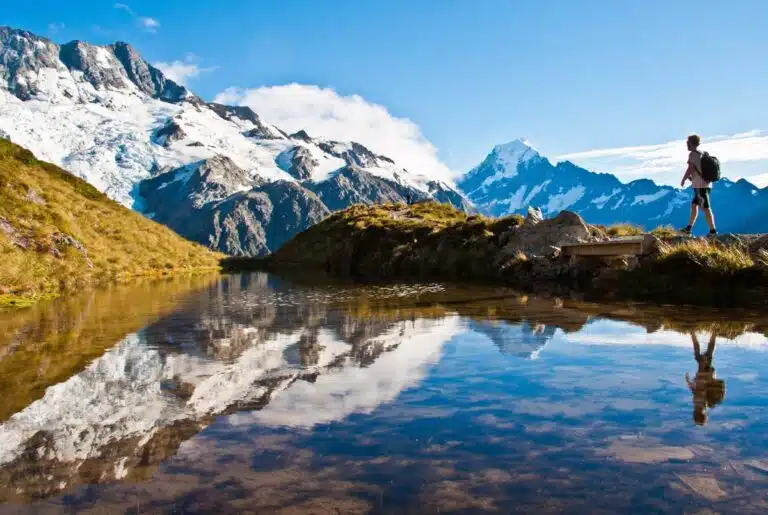
February is the month when winter either needs escaping or embracing. Here are 17 places that are at their best right now, from volcanic islands and the Nile to Arctic fjords, Georgian ski slopes and two of the world’s great carnivals.
February can be something of a bleak affair. In many parts of the world, it means cold temperatures and gloomy days, you know what I mean. However, play your cards right and February can be a great time to get away.
It’s also a month that pulls in two directions. Some years I want to swap the grey for proper sunshine; other years I want to lean right into winter, with snow underfoot and the Northern Lights overhead. So this list does both. Every place on it is one I’ve been to myself, though not always in February. For each one there’s why February in particular works, where to stay and the guide to read next. If you’re planning further ahead, my guides to the best places to visit in winter and winter sun destinations have different picks.
If it’s winter sun you’re after, start with the first and last sections, and see my guide to the best winter sun destinations in Europe for more. Festival dates move from year to year, so check them for your own trip.
Winter sun close to home
1. Lanzarote, Spain
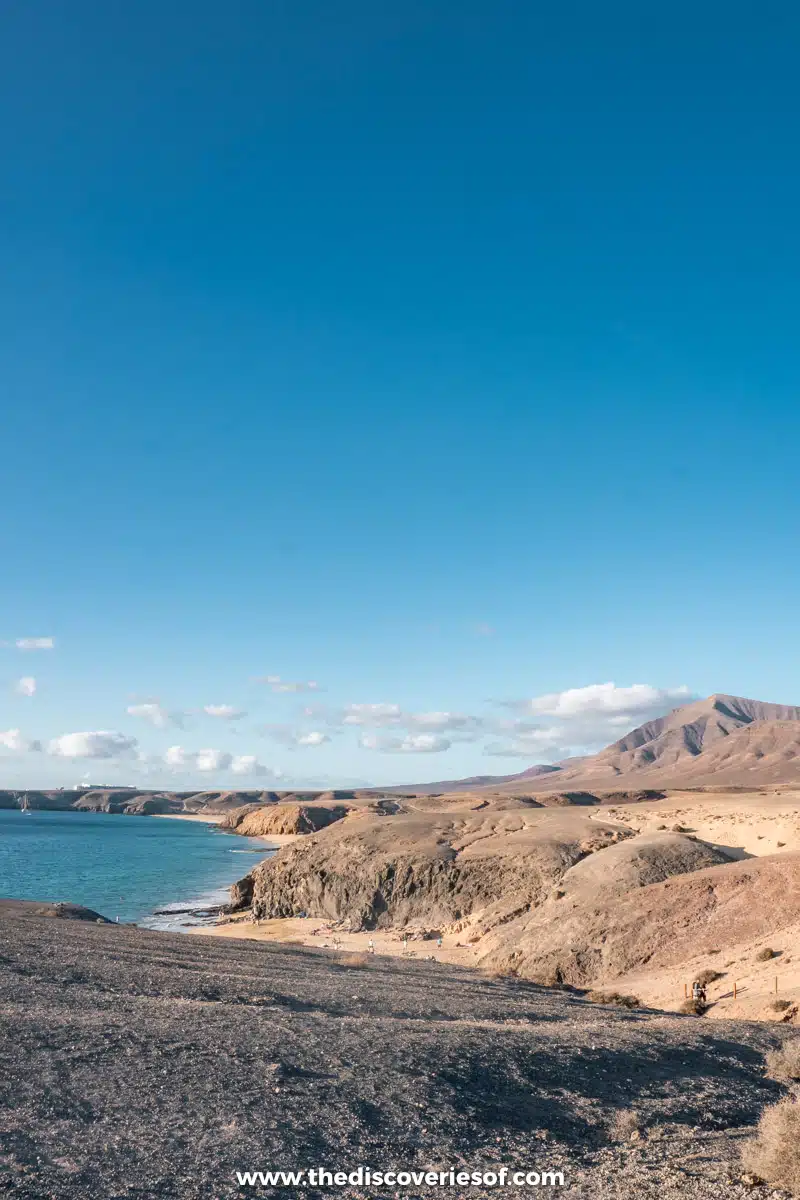
Lanzarote, the volcanic Canary Island off the coast of Africa, is known for its year-round sunshine, and in February that’s the whole point. Daytime highs sit in the low 20s, which is warm enough for the beach without being too hot for walking. It’s carnival season on the Canary Islands too, and Arrecife usually holds its parades in February, though the dates move each year with Lent.
This is a hiker’s paradise. One of my favourite hikes takes you through the Malpaís de la Corona Nature Reserve, with its black lava rock formations and beautiful views of the coast, and I also loved hiking the Caldera Blanca, which takes you straight into the heart of the island’s volcanic landscape. Then head to Timanfaya National Park, where most of the lava fields can only be seen on the park’s own coach route, or this Timanfaya day tour that adds the vineyards of La Geria.
Why it works: the closest reliable winter sun to the UK, about four hours’ flight away, with hiking weather and carnival season on top.
Stay: browse places to stay in Playa Blanca, a short drive from the Papagayo beaches.
2. The Algarve, Portugal

February in the Algarve isn’t beach-baking weather, but it’s sunny, mild and blissfully quiet, and from late January the almond trees inland burst into white blossom. It’s the perfect time to walk the clifftops, cycle the Ria Formosa lagoons and eat grilled fish in the sun without a summer crowd in sight.
I’ve been to both ends of the coast. I spent a week in the east, based in a villa in Quinta do Lago, cycling out to the lagoon, taking a boat to Ilha Deserta and browsing Loulé market. On another trip I stayed in Lagos in the west, where the cliffs and coves are at their most dramatic. Take a Ponta da Piedade cruise from Lagos to see the sea arches from the water.
Why it works: mild, sunny days, almond blossom and low-season prices.
Stay: Casa Mãe, a design hotel inside Lagos’s old walls.
Read next: The best things to do in the Algarve
3. Abu Simbel and the Nile, Egypt
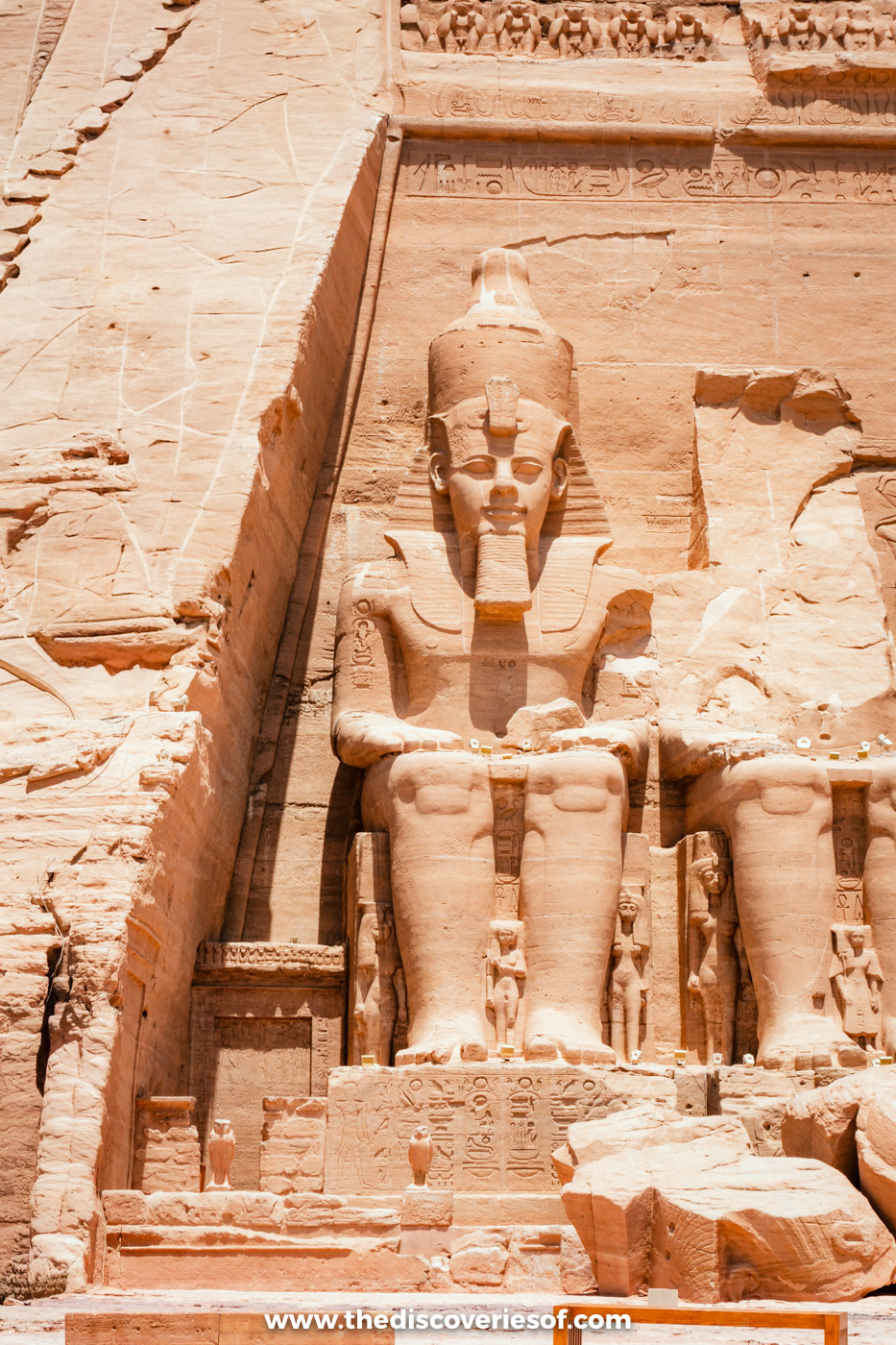
I spent a little over a week travelling from Cairo to Aswan and back up the Nile to Luxor on my first ever group tour, and it was one of my favourite trips ever. I crawled up a tunnel inside the Great Pyramid, rode the overnight sleeper train, slept on a felucca and floated over the Valley of the Kings in a hot air balloon. February is peak season for good reason: days in Luxor and Aswan are warm and dry, without the punishing heat of summer.
Time it right and you’ll see one of Egypt’s most extraordinary sights. On 22 February, the rising sun shines through the entrance of the Great Temple at Abu Simbel and lights up the statues in the inner sanctuary, something that happens only twice a year.
Tickets
Most people visit Abu Simbel on this day trip from Aswan with hotel pickup. In Luxor, book a sunrise hot air balloon ride over the West Bank: February is busy, so reserve a few days ahead.
Why it works: perfect sightseeing temperatures and the Abu Simbel sun festival.
Stay: browse places to stay in Luxor, on the East Bank for the temples or the West Bank for the tombs.
Read next: The best things to do in Egypt
Snow, skiing and the Northern Lights
4. Lofoten Islands, Norway

I’ve been to the Lofoten Islands twice, in October and again the following February. I wasn’t sure what to expect from coming in February, but those snowy peaks rising straight out of the sea were exactly what I’d come for. The weather was looking distinctly unpromising, but I got the drone up anyway and the view from above was insane.
February is also skrei season, when the Arctic cod arrive to spawn, the fishing harbours are at their busiest and the drying racks fill up. Lofoten is cloudier than Tromsø, so it’s more about the landscape than a guaranteed aurora, and the weather changes fast: on the last day of my February trip, it looked as if my flight home might be cancelled. There are worse places to be stuck. Out of Svolvær, this sea eagle safari to the Trollfjord gets you out on the water.
Why it works: snow-covered peaks, skrei season and a chance of the Northern Lights.
Stay: Thon Hotel Lofoten in Svolvær, where I stayed.
5. Finnish Lapland

February is deep winter in Finnish Lapland: the snow is at its thickest, the lakes are frozen solid and the skies are still dark enough for the aurora. It’s also the month the light comes back, with Rovaniemi going from about six hours of daylight at the start of the month to more than nine by the end, so you get proper days outside as well as long nights. Get outside and plough your way through the snow, whether that’s on a snowmobile, a husky sled or some good old snowshoes, then settle in for a toasty sauna at the end of it.
I’ve been totally obsessed with seeing the lights in Iceland and Lofoten, but I have to be honest, my experience in Rovaniemi in Finnish Lapland may very well have been my favourite yet. My trip was in March, timed for the spring equinox: I spent four nights in a glass-roofed Kammi suite at Apukka and watched a geomagnetic storm light up the whole sky. I also drove my own husky team, which you can do on this self-driven husky adventure at Apukka.
Why it works: the deepest snow of the year, returning daylight and long aurora nights.
Stay: Apukka Resort, where I stayed. Read my Apukka Resort review.
6. Gudauri, Georgia
I hadn’t skied since Trentino when I flew out to Georgia at the end of January on BA’s direct route from Heathrow to Tbilisi, and spent the first days of February on the slopes at Gudauri. It’s the country’s biggest ski resort, about two hours’ drive north of Tbilisi on the Georgian Military Road, with wide, open runs above the treeline climbing to around 3,300 metres. February is the heart of the season, with the deepest snow of the winter, and a ski trip here costs far less than one in the Alps.
I stayed at Hotel Marco Polo, right on the slopes, with an indoor pool and a bowling alley for the end of the day. Give yourself a night or two in Tbilisi either side: I did a tasting at the Wine Museum (Georgia has been making wine for around 8,000 years) and had dinner at Kartuli Sakhli, where the supra comes with live polyphonic singing.
Do
Book this Tbilisi food and drinks tour with 11 tastings for your night in the city, and lift passes, lessons and hire can all be sorted in the resort.
Why it works: peak ski season, the deepest snow of the winter and prices well below the Alps.
Stay: Hotel Marco Polo, where I stayed.
Read next: The best things to do in Tbilisi
7. Ottawa, Canada

Canada really knows how to embrace winter, and Ottawa does it best in February, during Winterlude. Over the first three weekends of the month, the city fills with ice sculptures, snow slides and events, and when it’s cold enough, the Rideau Canal Skateway opens as one of the longest skating rinks in the world.
My trip was in December, and if I’m being completely honest, I skipped the canal (I kinda, sorta hate skating and it wasn’t frozen enough anyway). But I loved the city in the cold: warming up in the Canadian Museum of History, eating my way round ByWard Market and trying the My Canadian Shake at Zak’s Diner, a combo of rye, maple syrup and caramel that was seriously good.
Why it works: Winterlude, a frozen canal and a city that throws itself into winter.
Stay: Lord Elgin Hotel, my favourite hotel in Ottawa.
Read next: Ottawa in winter
Carnival and festivals
8. Venice, Italy

Venice is cold and often misty in February, but that’s when it puts on its most famous party. Carnival runs for about two weeks up to Shrove Tuesday (9 February in 2027), with masked balls, costumed crowds in St Mark’s Square and the Flight of the Angel opening the celebrations. Outside Carnival, winter is when you’ll beat the (horrific) summer crowds and get a more authentic experience rubbing shoulders with the locals.
Wander into Dorsoduro or Cannaregio to escape the San Marco crowds, and don’t miss Burano across the lagoon. I love a weird bookshop, and Libreria Acqua Alta, where the books are piled into bathtubs and an old gondola, is one of the best.
Tickets
Make your own Carnival mask with a local artisan on this mask decoration workshop, or see the city from the water on a shared gondola ride. Hotels fill up fast during Carnival, so book early.
Why it works: Carnival, and quieter streets either side of it.
Stay: Baglioni Hotel Luna, steps from St Mark’s Square.
Read next: Venice in winter
9. Rio de Janeiro, Brazil

Carnival in Rio de Janeiro is the biggest party on earth, and it usually falls in February (in 2027, the days leading up to Ash Wednesday on 10 February). Once you enter the Sambadrome, you’ll witness thousands of performers and spectators, the line often blurred by elaborate costumes, song and dance. You’ve quite literally never seen anything like it. I certainly hadn’t.
Don’t just watch the parades. The street parties, or blocos, are where the locals celebrate, with more than 500 of them across the city. And it’s high summer, so you can recover on Copacabana or Ipanema the next morning.
Why it works: Carnival, plus hot, sunny beach weather.
Stay: Vila Galé Rio de Janeiro, close to the Santa Teresa blocos and the Sambadrome. Book at least six months ahead: prices can climb to five times the norm.
Read next: The best things to do in Brazil
10. Barcelona, Spain

I am completely obsessed with Barcelona, a love affair that started when I was 18 and was reignited by a month-long stint in the city. February is mild and sunny enough for long walks, and around 12 February the city celebrates its winter festival, the Festes de Santa Eulàlia, with human towers, giants and fire runs in the old town.
It’s also the best time to see the big sights without the summer queues. Book this guided tour of the Sagrada Família with tower access, then go up to Park Güell before sunset, when the colours are at their best.
Why it works: Santa Eulàlia and the big sights without the summer crowds.
Stay: browse places to stay in Barcelona, ideally in the Eixample or the Gothic Quarter.
Read next: The best things to do in Barcelona
Long-haul winter sun
11. Cape Town, South Africa

It’s no secret how much I love Cape Town. February is high summer, hot and dry, the best time for the beaches and the mountain, and it’s harvest time in the Cape Winelands, when the grapes come in at Stellenbosch and Franschhoek, under an hour’s drive from the city. Just watch out for the Cape Doctor, the strong southeasterly wind that can close the cable car.
On my first morning I hiked up Table Mountain via Platteklip Gorge on my own. Avoid my mistake and don’t do Kirstenbosch on the same day: I loved wandering between the gardens before plopping myself down for a picnic with a spectacular view, but my thighs hated me. With a few days more, use the city as a jumping-off point for the Garden Route, take this full-day Cape Peninsula tour to the penguins at Boulders Beach and Cape Point, or catch the harvest on this full-day wine tasting tour of the Winelands.
Why it works: peak summer sunshine, harvest season in the Winelands and no jet lag from the UK.
Stay: The Twelve Apostles Hotel, between the mountains and the sea, just south of Camps Bay.
Read next: The best things to do in Cape Town
12. Barbados

February is the height of the dry season in Barbados, with steady sunshine, highs in the high 20s and cooling trade winds. In the middle of the month, the west coast throws the week-long Holetown Festival, which marks the arrival of the first English settlers at Holetown on 17 February 1627 with parades, concerts and street food, and 2027 is its 400th anniversary.
I stayed at The Crane on the south-east coast, above the pink sand of Crane Beach, and my pick of its restaurants was L’Azure, for Bajan fine dining and the views from the terrace. St John’s Parish Church is one of my favourite places on the island, as much for the views as the church. To see more of the island in a day, book this Barbados island tour.
Why it works: the dry season and the Holetown Festival.
Stay: The Crane, where I stayed. Read my review of The Crane.
Read next: The best time to visit Barbados
13. Sri Lanka
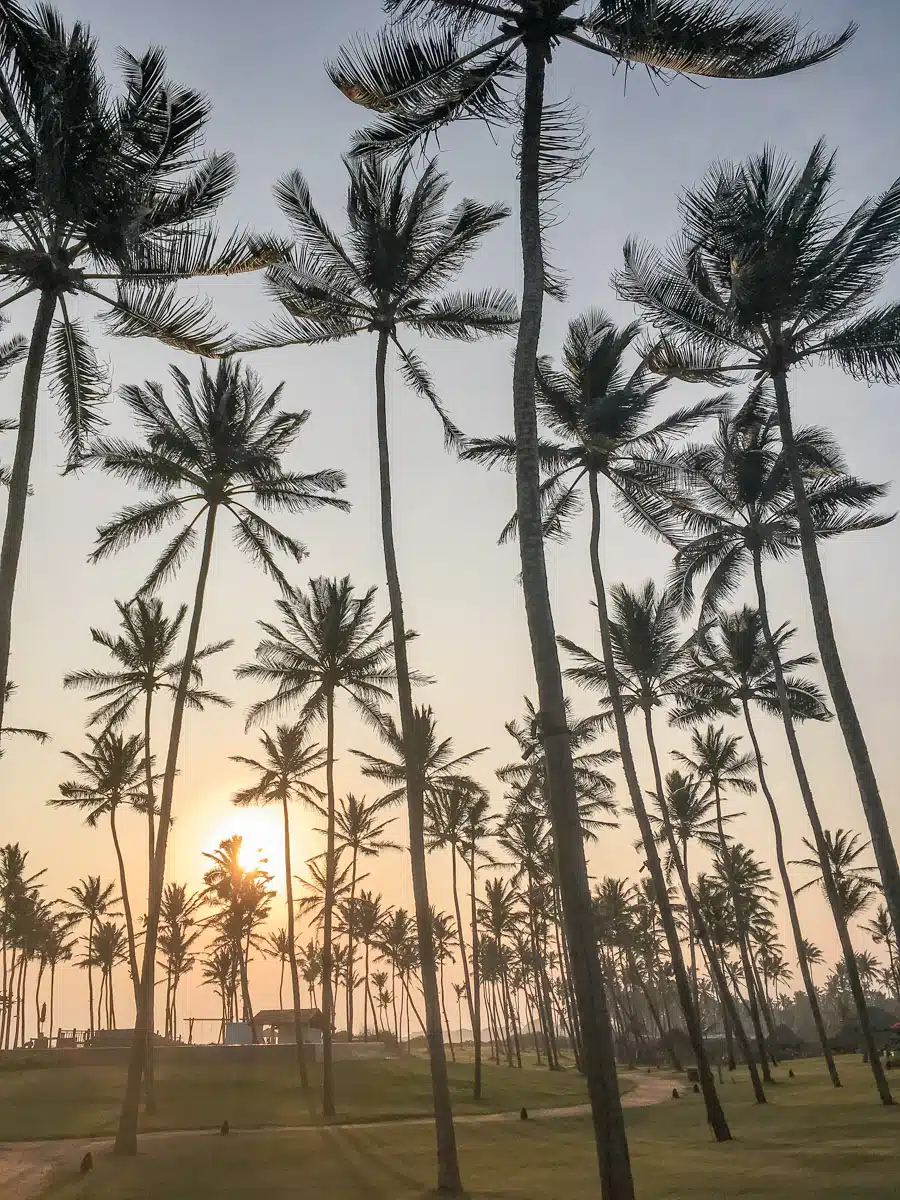
February is dry season on Sri Lanka‘s south and west coasts and in the hill country, which makes it one of the best months to see the whole island in one trip. It’s whale season off Mirissa, where blue whales pass close to the south coast, and in Colombo the Navam Perahera parades through the streets around Gangaramaya Temple at the February full moon, with drummers, dancers and hundreds of performers.
I went in December, on a trip that took me from the hill country down to the south coast, and finished at Tri on Koggala Lake, a short tuk-tuk ride from Ahangama and about 20km from Galle. For the whales, this two-day whale watching tour of southern Sri Lanka goes out from Mirissa, and the scenic train ride from Kandy to Ella is one of the great journeys of the hill country.
Why it works: dry season in the south and the hills, whales off Mirissa and the Navam Perahera.
Stay: Tri on Koggala Lake. Read my Tri Sri Lanka review.
Read next: The best things to do in Sri Lanka
14. Costa Rica

Costa Rica is a country like no other, home to volcanoes, rainforests and beaches, all in one. February is the heart of the dry season on the Pacific side, with sunny days, dry trails and the best conditions for wildlife spotting, and it’s the best time of year for the remote Osa Peninsula, where the rains make some trails hard going later in the year. My first trip was 14 days riding around different parts of the country on horseback, and it was just as incredible as I’d hoped it would be.
Head down to the Osa Peninsula for Corcovado National Park, where you’ll need a licensed guide. In my opinion, the best trail is the one towards Sirena Ranger Station, where you can spot extremely rare animals such as the Baird’s tapir. Further north, I love this Arenal Volcano, La Fortuna Waterfall and hot springs tour.
Why it works: dry season sunshine and the best wildlife spotting of the year.
Stay: Maquenque Eco Lodge, a rainforest lodge in the north of the country.
Read next: The best things to do in Costa Rica
15. El Nido and Coron, the Philippines
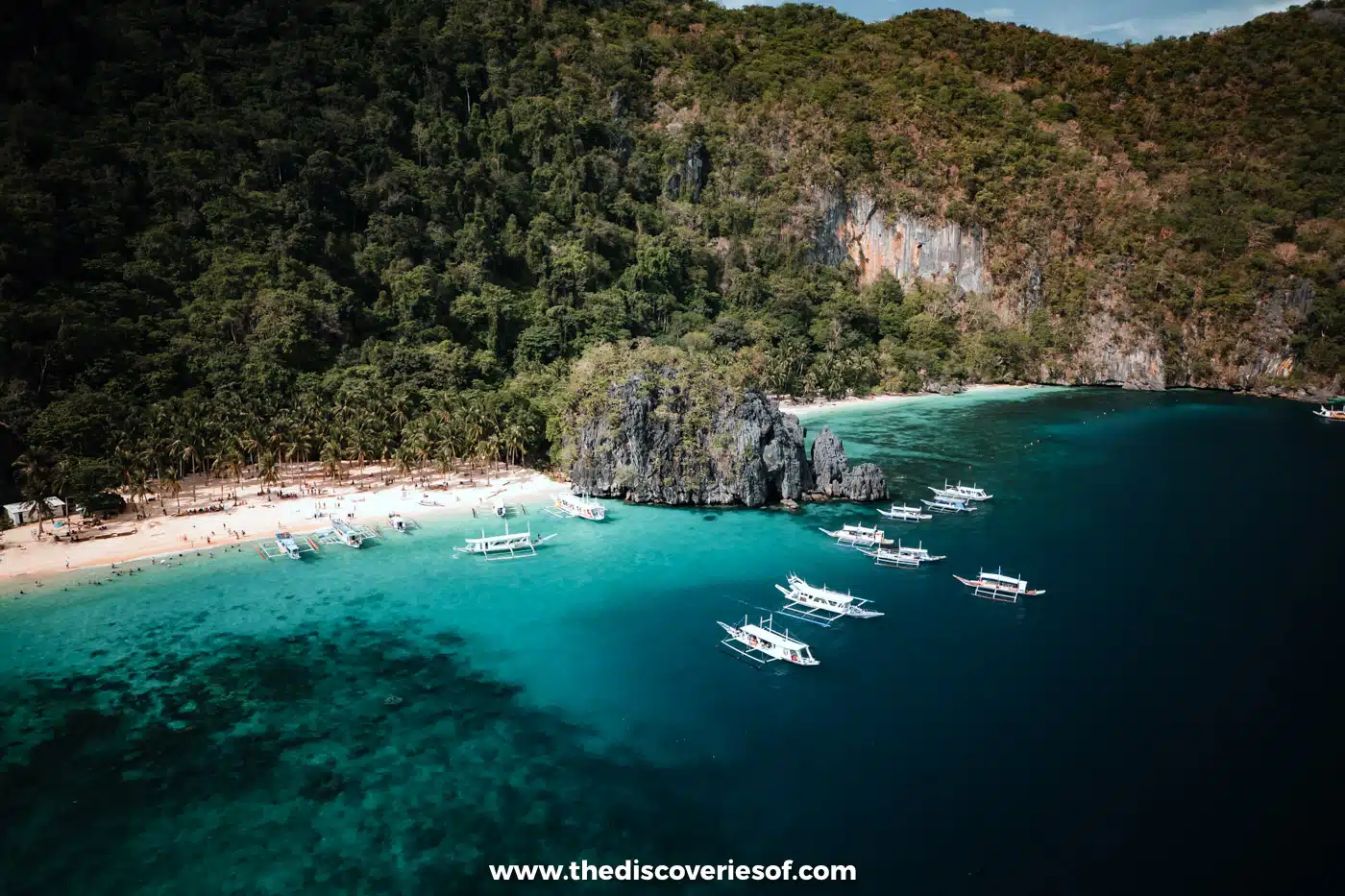
February is right in the dry season in Palawan, with calm seas, blue skies and the best conditions for island-hopping. In El Nido, I did Tours A and C through the lagoons and hidden beaches, and honestly, this place is paradise. Further north, Coron has wreck dives, Kayangan Lake and the Twin Lagoon, where I kayaked between the limestone cliffs.
Book El Nido Tour A for the Big and Small Lagoons, and this Kayangan Lake and Twin Lagoon boat tour in Coron.
Why it works: dry season, calm seas and some of the world’s best island-hopping.
Stay: H Hotel El Nido, where I stayed.
Read next: El Nido to Coron by ferry
16. Salar de Uyuni, Bolivia

The rainy season on the Salar de Uyuni runs from about January to March, and February is when a thin layer of water often turns the world’s largest salt flat into the world’s largest mirror, with the sky reflected so perfectly that the horizon disappears. The catch is that flooding can put parts of the salar, including Isla Incahuasi, out of reach, so tours stick to the edges when the water is high.
I’ve been to the salt flats twice. The first time, on a four-day trip from Tupiza, the 4×4 stopped in the pitch black, and as the sun’s first rays lit up the salt with no one else in sight, it was straight up one of my favourite travel moments. More recently I crossed over from San Pedro de Atacama in Chile, which is how I’d recommend doing it. Book this four-day Uyuni salt flats tour from San Pedro de Atacama, or, if you’re already in Uyuni, this two-day salt flats and Red Lagoon tour.
Why it works: the mirror effect, at its most likely in the rainy season.
Stay: browse places to stay in Uyuni for the nights either side of your tour.
Read next: The best time to visit the Bolivia salt flats
17. Torres del Paine, Chile
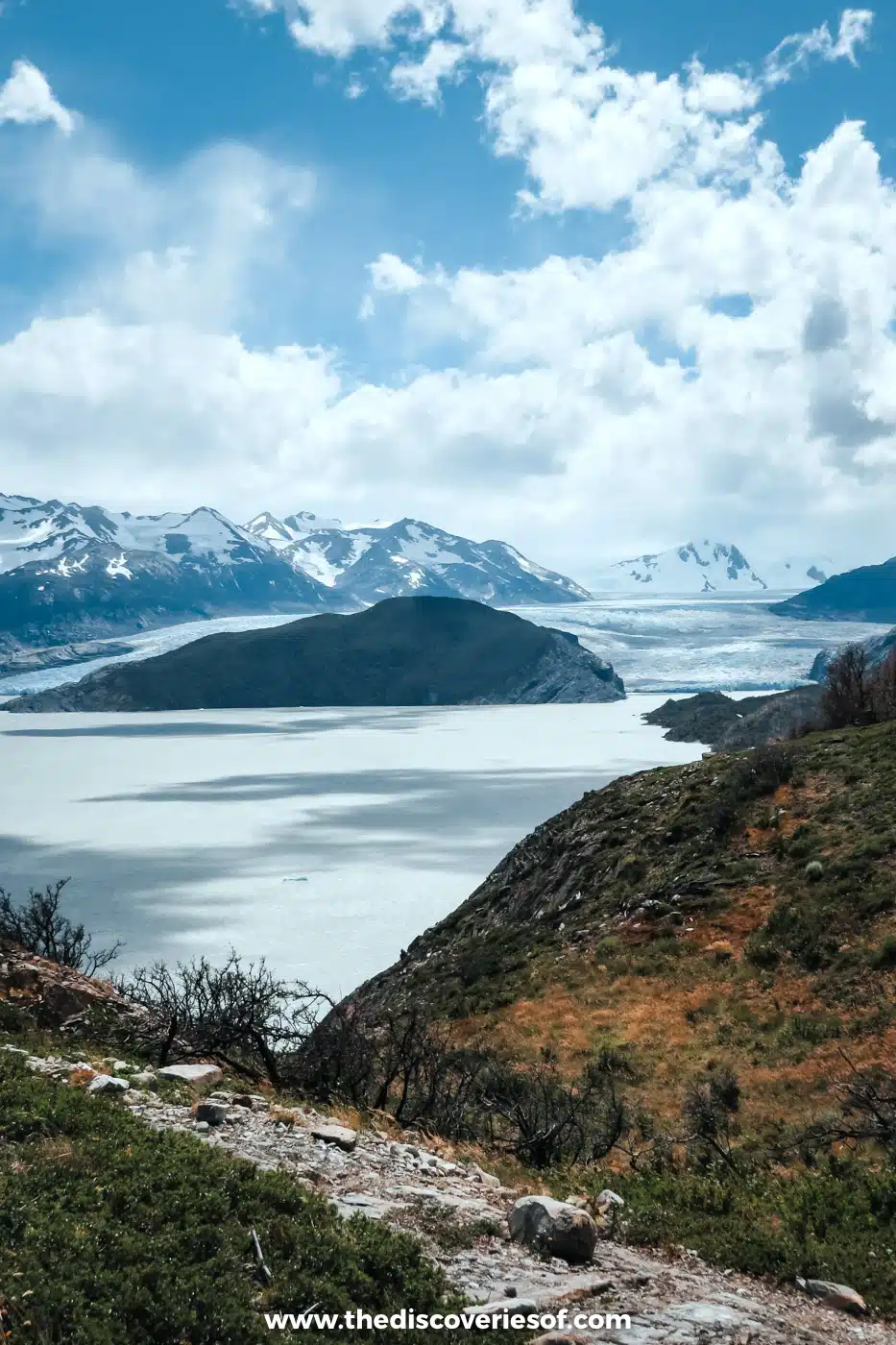
February is summer in Patagonia, with long days and the warmest weather for trekking. I hiked the W Trek on my own in January, having fled the pervasive greyness of the British winter, and it was the biggest hike I had done to date. Torres del Paine is basically what happens when you cram all of the beautiful things on earth into one national park.
Be ready for the wind, which can be fierce at this time of year, and pack for four seasons in a day. The refugios and campsites on the W Trek must be booked in advance, and February is the busiest month, so reserve them as early as you can.
Why it works: long summer days and the best trekking weather in Patagonia.
Stay: browse places to stay in Puerto Natales, the gateway town, for the nights either side of the trek.
Read next: Trekking the W in Torres del Paine
Tips for travelling in February
- Book ahead for peak season. Although you might think of February as off-season, it can be peak season in places like Cape Town, Lanzarote, Egypt and the Caribbean, and in the Arctic it’s one of the busiest months of the winter. Book ahead to ensure availability.
- Make the most of the quiet season. February is a great time to visit busier European cities: you won’t have the warm temperatures of the summer months, but you can seize the opportunity to escape the crowds.
- Watch the half-term week. UK school half-term falls in mid-February, when prices for ski resorts, Lapland and the Canaries jump (Georgia stays cheaper than the Alps even then). Go either side of it if you can.
- Check the carnival dates. Carnival is tied to Easter, so the dates in Venice and Rio change every year. In 2027, Shrove Tuesday is 9 February.
- Plan for the Northern Lights. Give yourself at least three or four nights in the Arctic so a cloudy spell doesn’t ruin your chances. Read when’s the best time to see the Northern Lights.
- Pack a layer. Even the winter sun spots, from Lanzarote to the Algarve, get chilly once the sun goes down.
Map
Read next
- The best places to visit in January
- The best places to visit in March
- The best winter sun destinations in Europe
- The best places to visit in winter
Love this? Save and share on Pinterest
Discover the top things to do, insider tips and hidden gems in our Tips & Thoughts.
Read the guides →