Reynisfjara is the most famous black sand beach in Iceland, and one of the most dangerous. Here’s what makes it so striking, how the wave warning lights work and how to plan your visit.
Reynisfjara black sand beach (often called Vik Beach) is one of Iceland’s most ridiculously striking landscapes: a sweep of jet-black sand running west from the village of Vík, backed by the basalt columns of Reynisfjall and watched over by the Reynisdrangar sea stacks.
If you read the site often, you’ll know that Iceland is one of those countries I just can’t get enough of. From the Northern Lights to off-the-beaten-path spots, it’s filled with places that stop you in your tracks.
I’d heard all the fuss about Vik Beach, and when I finally visited, I understood why. I came on a clear September day on my self-drive along the south coast, with blue sky over the cliffs and the Atlantic throwing white surf onto the sand. This vast beach, framed by dramatic cliffs and geometric columns, is, quite frankly, amazing.
It’s also a place to take seriously. Sneaker waves have killed several visitors here, and the beach itself changed shape in the storms of early 2026. Here’s what you need to know before you go.
Reynisfjara at a glance
- Where: on the south coast, about 10 minutes’ drive west of Vík along Route 215, and around 180km (about 2.5 hours) from Reykjavik
- Entry: free, but the car park charges ISK 1,000 per car, paid through the Parka app
- Safety: check the warning light at the entrance before you walk down. Yellow means keep well back from the water; red means the basalt columns and the Hálsanefshellir cave are closed
- Facilities: toilets and the Black Beach Restaurant at the car park, open all year
- Time needed: about an hour on the beach, or half a day with Dyrhólaey and Vík
- Best time: any time of year in daylight; puffins nest on the cliffs from about late April to mid-August
Why this beach is worth the drive
Iceland is a country known for its outstanding landscapes, and even amongst these, Reynisfjara stands out.
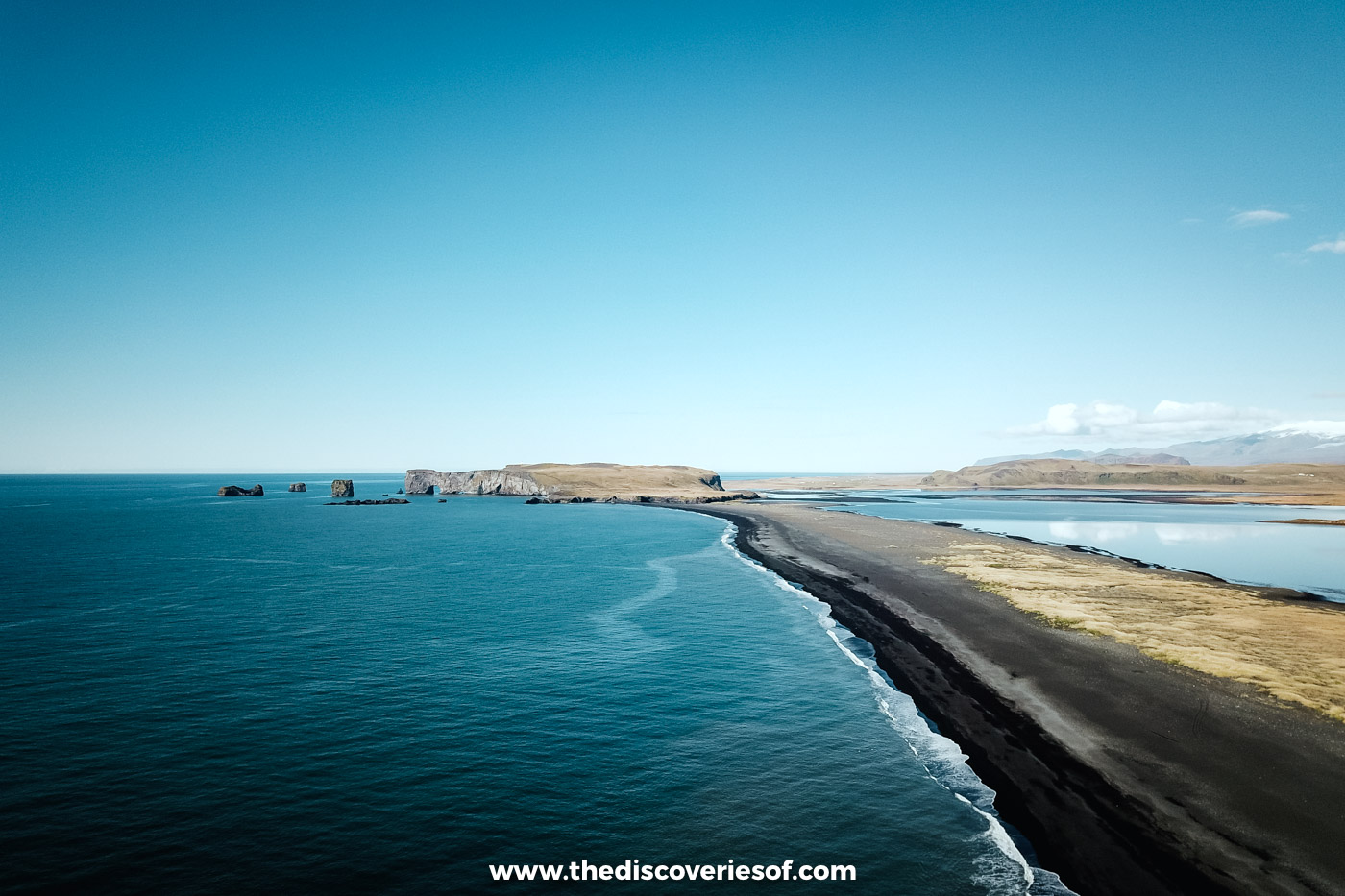
Maybe it’s the sheer size: the black sand stretches for several kilometres west from the foot of Reynisfjall mountain towards the arch of Dyrhólaey.
Maybe it’s the giant basalt stacks (officially called Reynisdrangar) that rise out of the sea at the eastern end of the beach, looming high like something straight out of another world.
Maybe it’s simply because it looks like this.
Whatever it is, it’s safe to say that no trip along the south coast is complete without stopping here.
The contrast is what gets me every time. I flew my drone to see the beach from a different angle, and from above, the foamy white line of the surf against the black sand is even more dramatic than it is from the shore. Iceland, I love you.
Why is the sand black?
Striking as Iceland’s black sand beaches are, you might wonder why they exist in the first place.
The answer is volcanic. The sand is made of tiny grains of basalt and volcanic glass, the cooled and shattered remains of lava and ash. Here, much of it comes from Katla, the powerful volcano hidden beneath the Mýrdalsjökull ice cap just to the north. Its eruptions, the last major one in 1918, sent ash, rock and huge glacial floods pouring down to the coast, and the Atlantic has been grinding that material into sand and smooth black pebbles ever since.
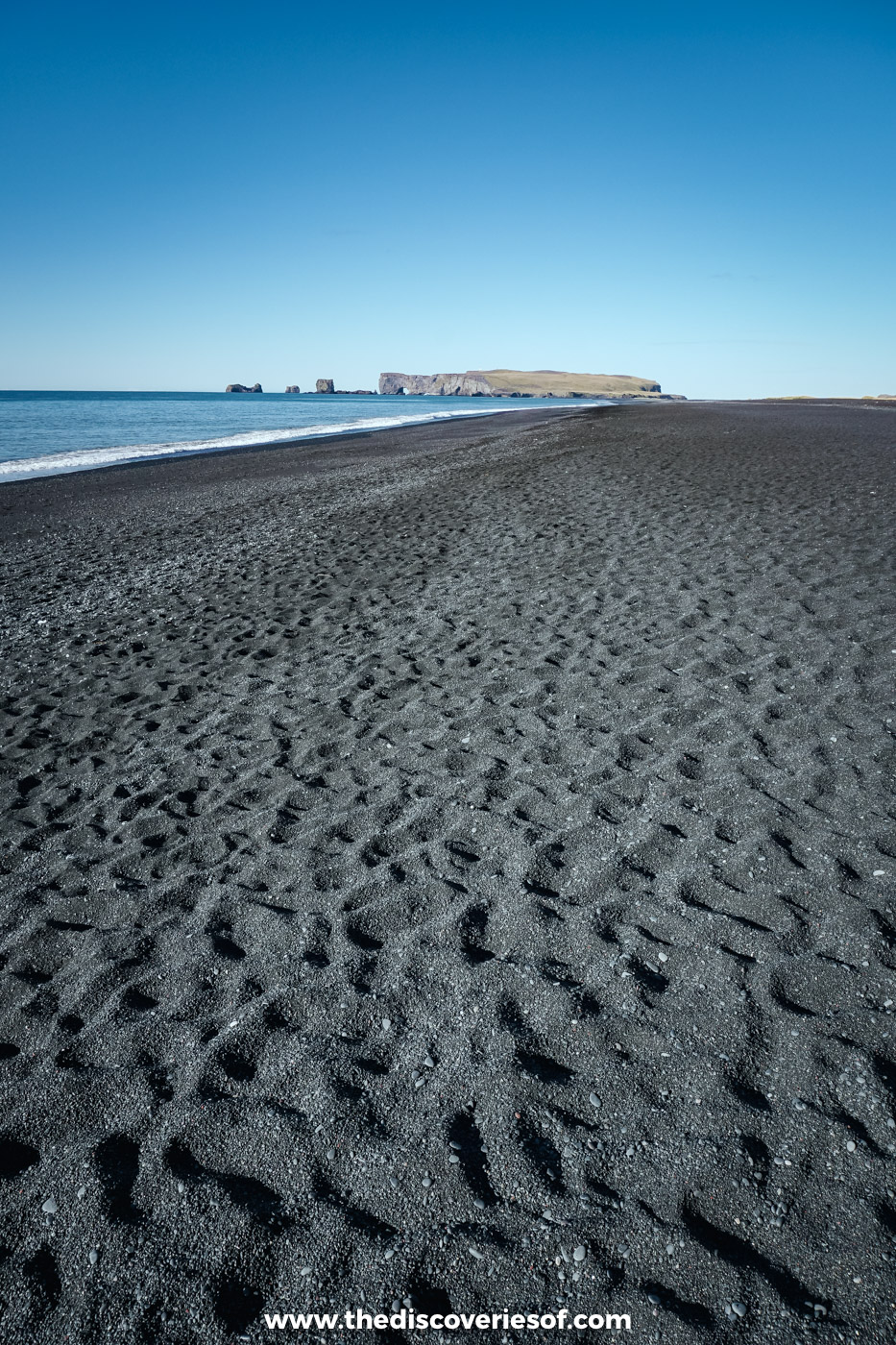
Most of Iceland’s volcanic rock is basalt, which is also what the crazy columns behind the beach are made of. The area is part of the Katla UNESCO Global Geopark, and the shoreline keeps changing: currents normally carry sand from west to east, but in the winter of 2026, unusually strong easterly winds reversed that, and storms stripped away so much sand that the beach dropped by more than two metres in places and boulders emerged that hadn’t been seen for years. Experts at the Icelandic Road and Coastal Administration expect the sand to return as the westerly winds come back, and by March it was already starting to build up again, but don’t be surprised if the beach looks different from older photos.
Where is Reynisfjara?
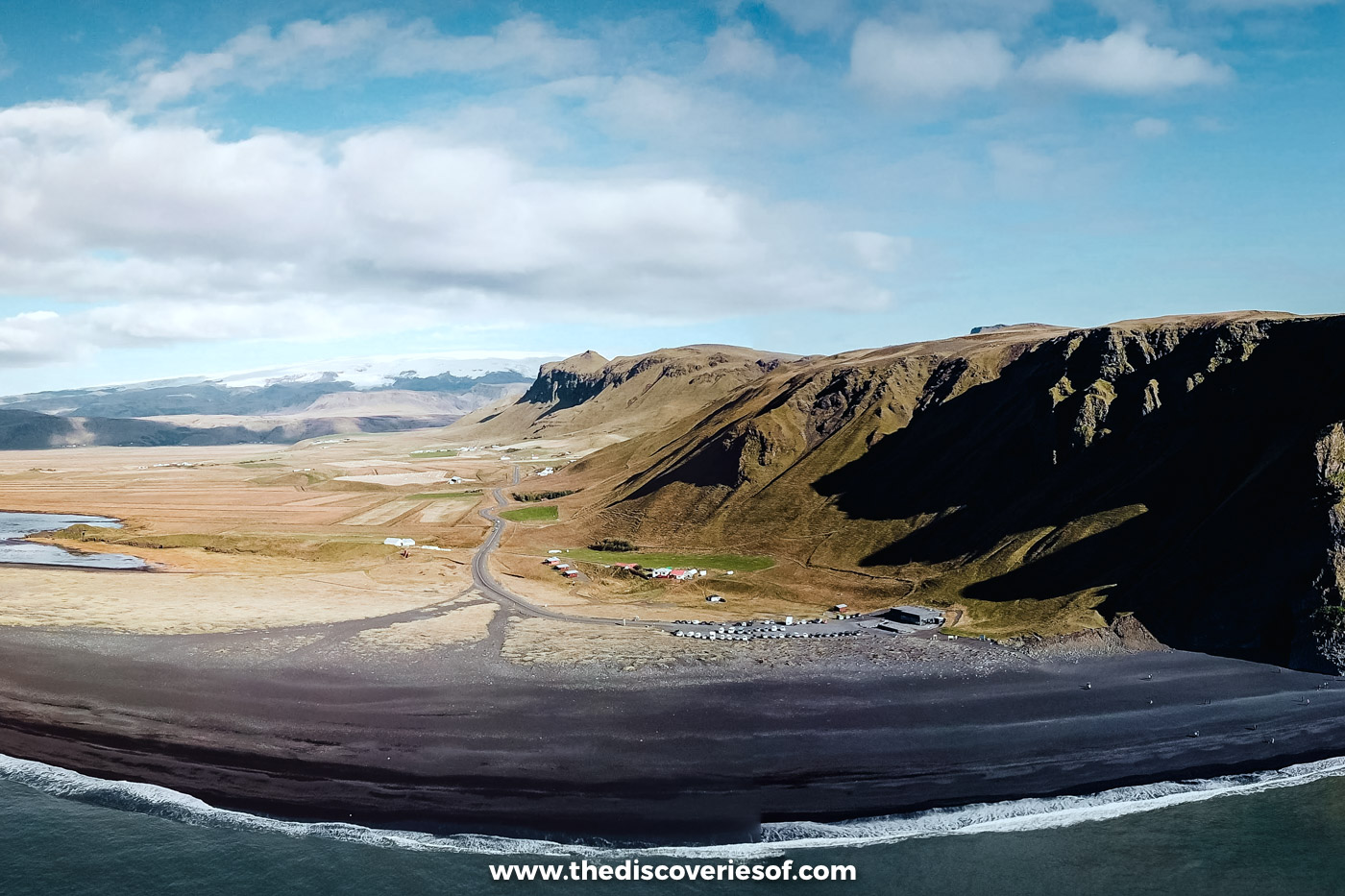
Reynisfjara is on the south coast of Iceland, just off the country’s famous Ring Road (Route 1). From Vík, drive west on Route 1 and turn south onto Route 215, which runs past the farms of Reynishverfi to the car park at the end of the road. The drive from Vík takes about 10 minutes.
It’s about two and a half hours from Reykjavik and an hour from Hella and Hotel Rangá, which makes it an easy addition to a day along the south coast with Seljalandsfoss and Skógafoss.
I’ve given more information on parking and getting here towards the end of this article.
Spot Eastwatch from Game of Thrones
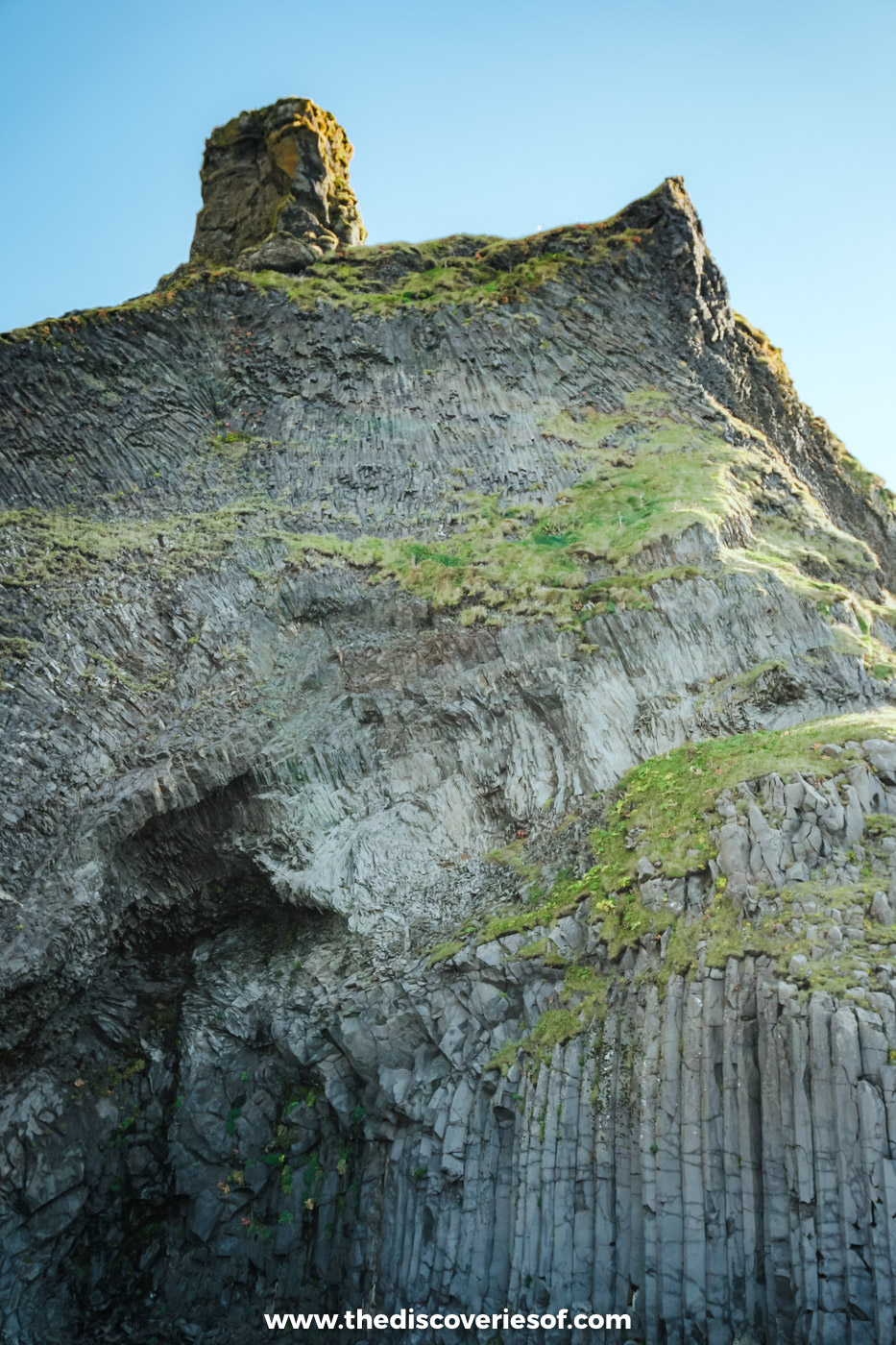
Look familiar? I knew there would be some beady-eyed Game of Thrones fans among you.
Reynisfjara stood in for Eastwatch-by-the-Sea, the Night’s Watch castle on the coast at the eastern end of the Wall, in season seven. Frequent readers will know that if I have one obsession, it’s Game of Thrones, so seeing Eastwatch in real life was a genuine thrill.
Iceland features heavily in the show and is a must-visit for anyone keen on seeing the filming locations in real life. The black sands around Vík also turned up as alien worlds in Rogue One: A Star Wars Story.
PS, don’t forget to check out the other awesome Game of Thrones destinations I’ve written about like Dubrovnik and the Real Alcazar of Seville.
Walk beneath the basalt columns of Garðar
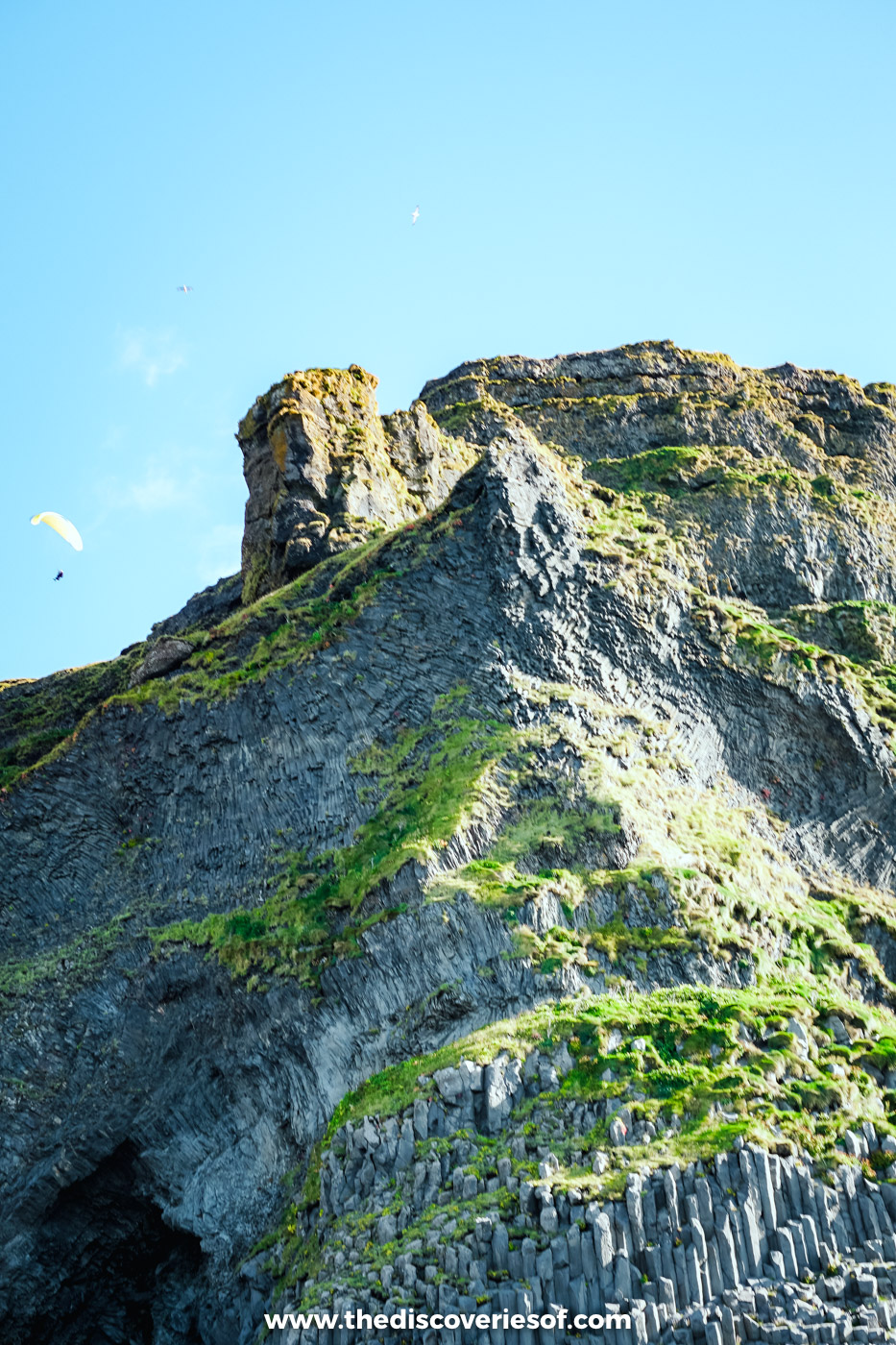
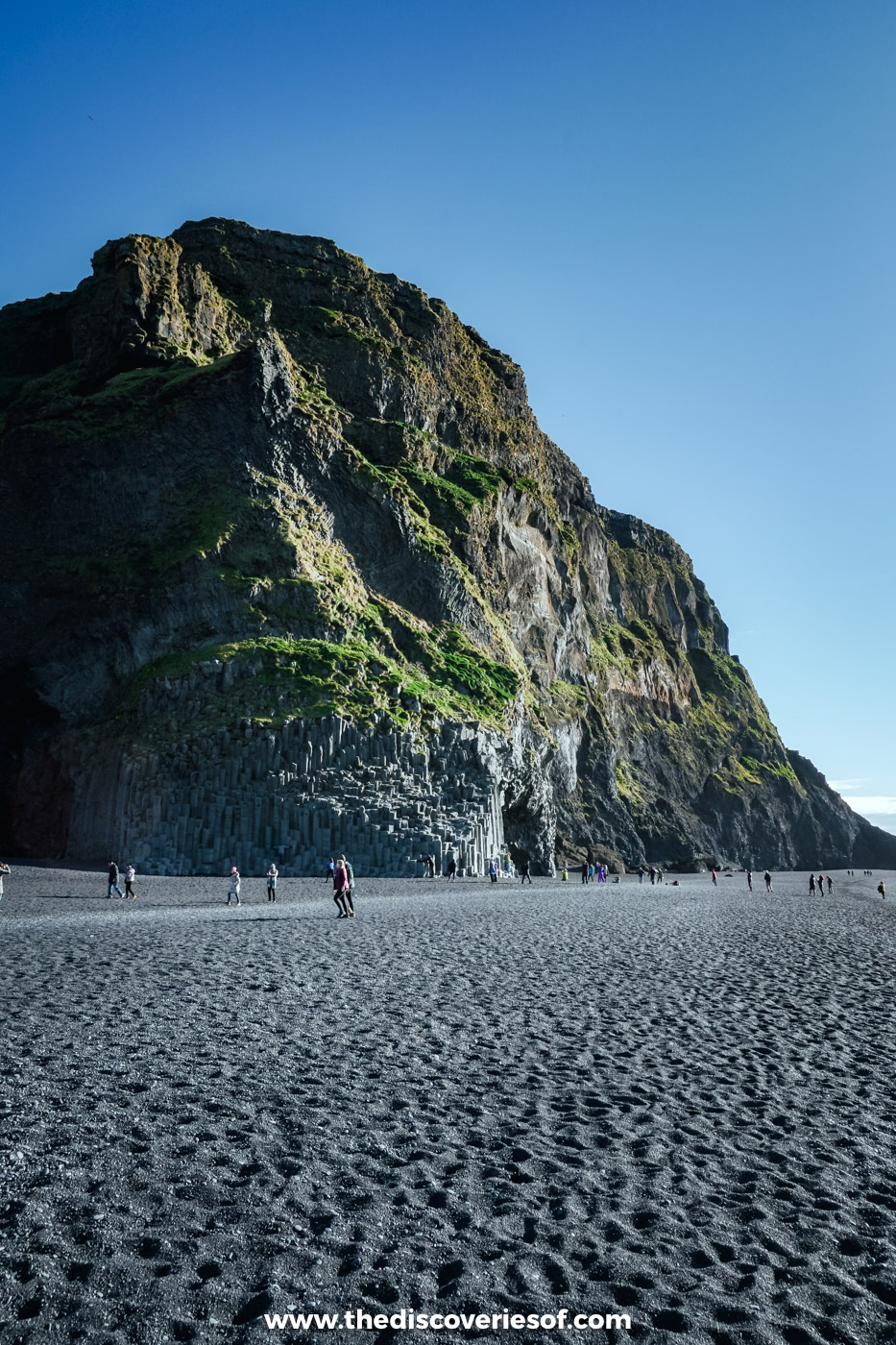
At the eastern end of the beach, where the sand meets the cliffs of Reynisfjall, the rock breaks into hundreds of near-perfect hexagonal columns. This stretch is known as Garðar. The columns formed when thick lava cooled slowly and contracted, cracking into these geometric pillars, and they rise in steps like a giant’s staircase or a church organ.
It’s the most photographed spot on the beach, and in calm conditions you’ll see people perched on the lower columns for photos. It’s also where many of the accidents have happened: the columns sit very close to the surf, and when the waves are up, the water surges right in among them. Check the warning light before you go, and never sit on the columns with your back to the sea.
Hálsanefshellir cave
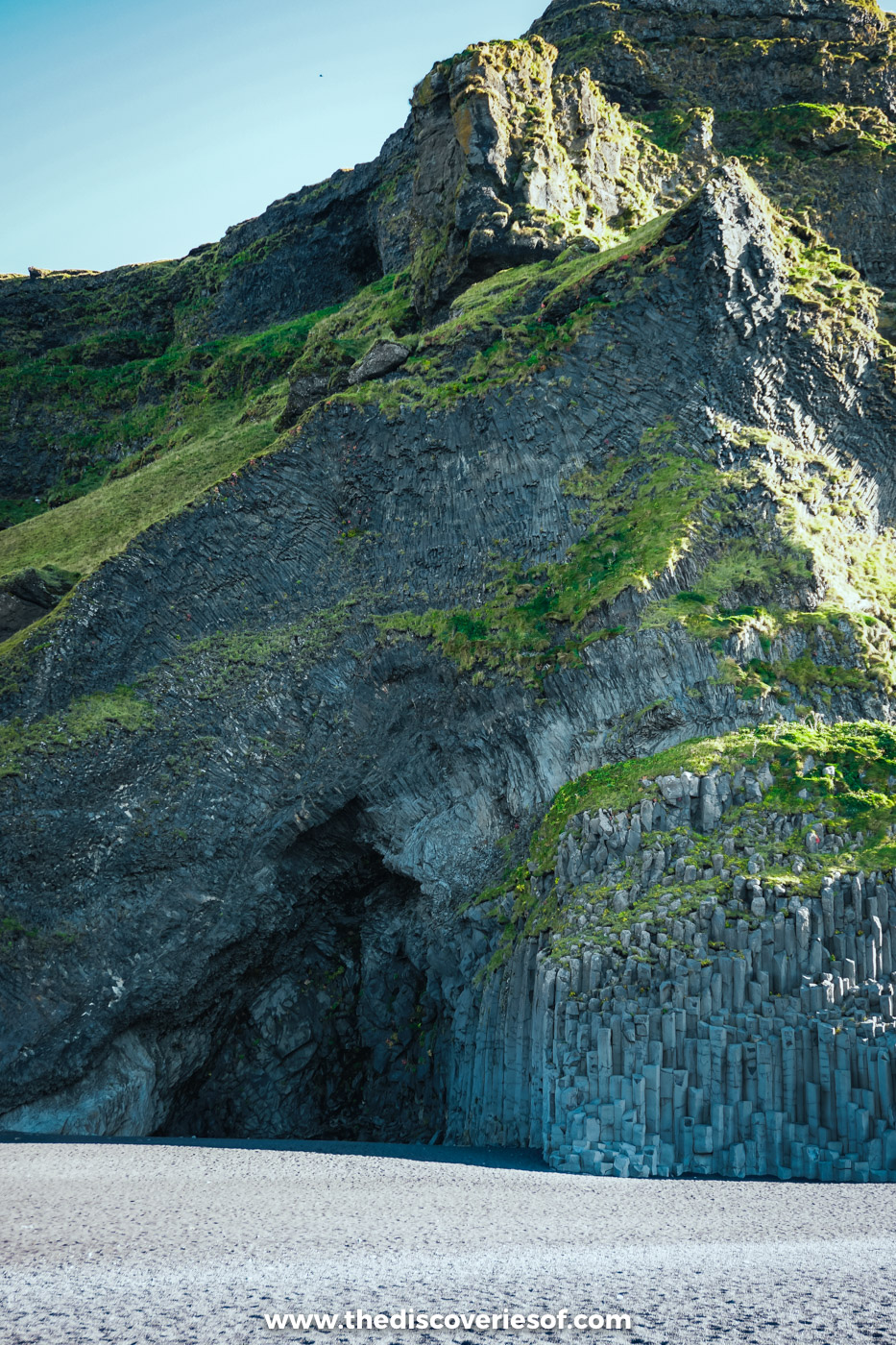
Just past the columns, the cliff opens into Hálsanefshellir, a tall sea cave lined with more basalt columns. The only way in is along the foot of the cliff, past the columns, which is exactly where the waves reach first. The cave is closed whenever the red light is showing, and since the storms of early 2026 it has often been cut off by the sea or blocked by rockfall from Reynisfjall, so treat it as a bonus if conditions allow, not a given.
The Reynisdrangar sea stacks
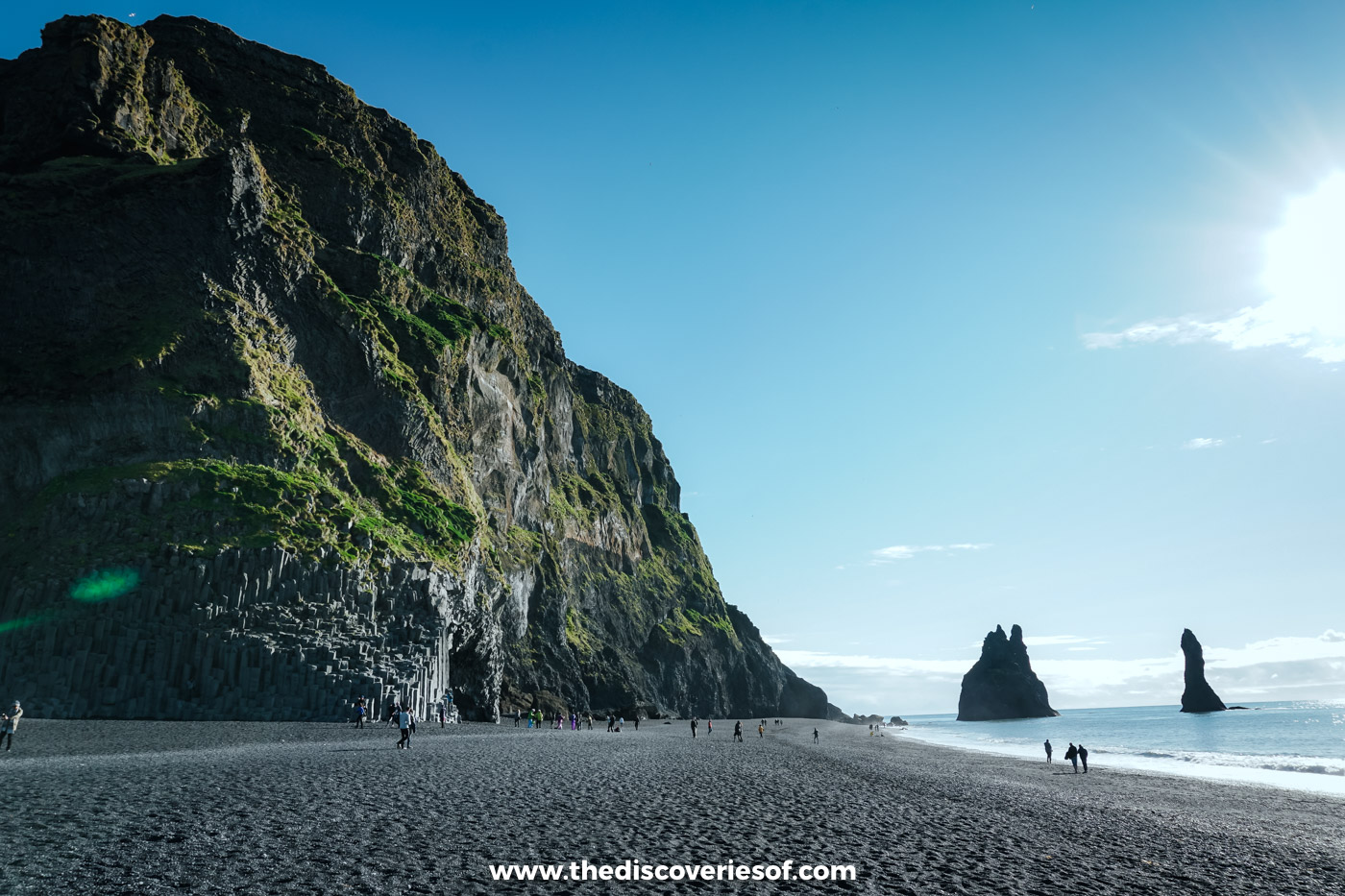
As I mentioned before, the Reynisdrangar sea stacks are one of the things that make this black beach so special. From the sand, they rise out of the surf just beyond the end of Reynisfjall, and the closer you walk towards the cliffs, the more the stacks seem to grow.
There’s much more to these stacks than meets the eye. They’re the subject of many a local folk tale, the best known being that they’re trolls who were caught by the sunrise and turned to stone. I’ve told that story, and shown them from the air, in my guide to the Reynisdrangar sea stacks.
Is Reynisfjara dangerous? Sneaker waves and the warning lights
Although the beach looks stunning, it has a dark history. At least six people have died here since 2007 after being caught by sneaker waves while standing on the beach or by the columns, most recently a nine-year-old girl in August 2025, and there have been at least a dozen serious rescues.
These Atlantic sneaker waves are forceful. They surge much further up the beach than the waves before them, often without warning, and they’re particularly dangerous because of the strong undertow and rip currents, which can drag people into freezing water in a matter of seconds.
There’s nothing in between this part of Iceland’s southern coast and Antarctica (I know, right!), so the swell builds in power and size over thousands of kilometres of open ocean.
How the warning lights work
A traffic-light system at the entrance to the beach is linked to the Icelandic Road and Coastal Administration’s wave forecast:
- Green: lower risk. Sneaker waves can still happen, so stay alert and keep your distance from the water.
- Yellow: moderate risk. Keep well back from the waterline (at least 30 metres is the usual advice), and some areas may be restricted.
- Red: high risk. The basalt columns and Hálsanefshellir cave are closed. Stay off the lower beach and enjoy the view from the top.
After the accident in August 2025, which happened while the light was yellow, the landowners, the police, the Icelandic Tourist Board, SafeTravel and the local rescue team agreed to lower the threshold, so the red light now comes on sooner.
Staying safe on the beach
- Face the sea at all times and never turn your back on the waves, even for a photo.
- Stay well above the wet sand line, and don’t be tempted to go into the water at all.
- Keep children close and hold their hands near the water.
- Respect closed areas and fences, and check SafeTravel for alerts on the day.
Phew, that was serious, but unfortunately completely necessary.
Birdwatching on the cliffs

You might have gathered by now that Reynisfjara is a photographer’s dream, and this is even more true if you’re hoping to snap photos of birds. The cliffs of Reynisfjall are home to a busy seabird colony.
Unfortunately, neither of my visits has coincided with the birdwatching season. But if you visit at the right time, you can see a number of birds, including puffins and Arctic terns.
Puffins are, without a doubt, the most popular amongst birders, with their bright beaks and comical walks. They nest in burrows on the grassy slopes and cliffs above the beach from about late April to mid-August, and you may spot them from the sand at the eastern end.
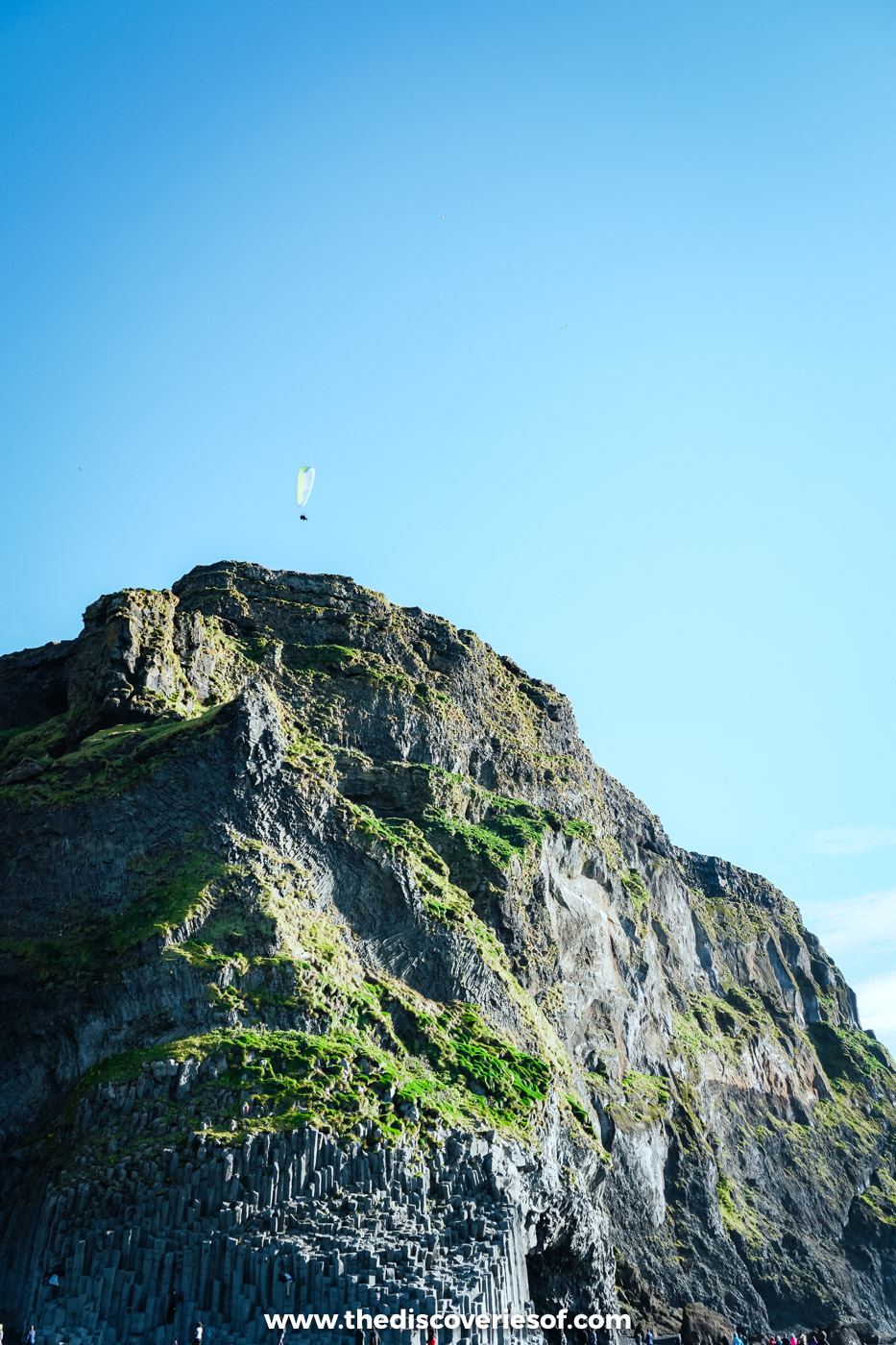
Kittiwakes are another common sight: keep an eye out for seagull-like birds with black legs rather than yellow. They nest on the cliff ledges along the beach, and you might spot them diving for fish. Fulmars ride the updraughts along the cliff face too. Bring binoculars.
Top tip: when you’re watching the birds, be respectful of the wildlife. Keep your distance and try not to disturb the birds or their nests.
Add Dyrhólaey and its giant arch
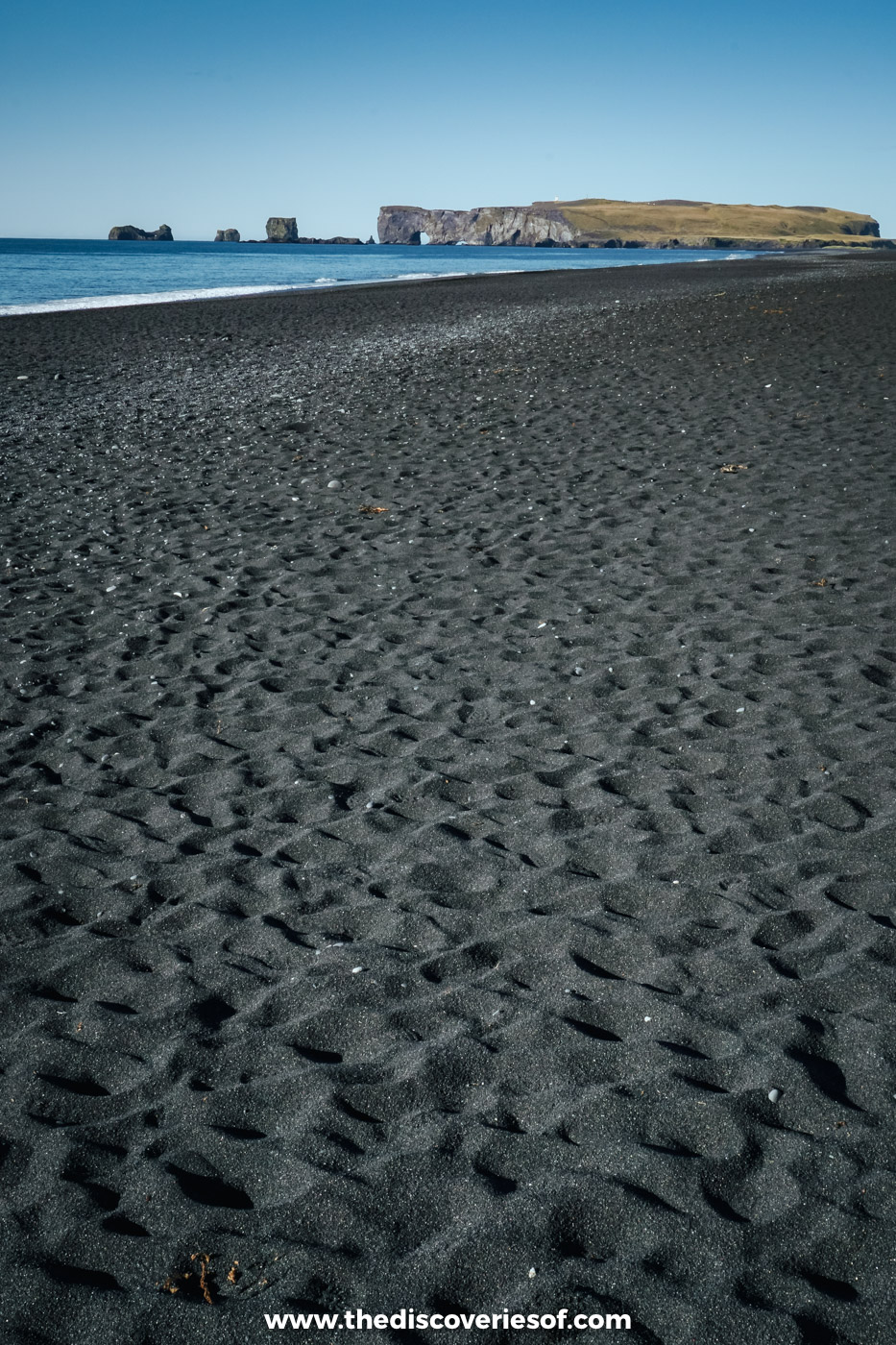
From Reynisfjara, you’ll see the headland of Dyrhólaey at the far western end of the beach, with its huge rock arch standing out into the sea. It’s about 120 metres high, and the lighthouse on top has views along the whole coast, back to Reynisdrangar in one direction and across to the glaciers in the other.
You can’t walk there along the beach. Drive back to Route 1 and take Route 218, a gravel road that climbs steeply to the upper car park by the lighthouse; allow about 20 minutes from the beach car park. Parking costs ISK 750 through the Parka app.
Dyrhólaey is a nature reserve, and parts of it close in spring to protect nesting eider ducks and Arctic terns. The Environment Agency can restrict access between 1 May and 25 June each year, and in recent years the headland has usually been open from 9am to 7pm in that period, with the upper area closed overnight. Check the signs at the turn-off. It’s one of the best places on the south coast to see puffins in summer, and the beach below the cliffs, Kirkjufjara, is closed after rockfalls and accidents.
Getting there, parking and tours
Driving there yourself
The beach is easy to visit without a guide or tour. It’s about 180km (112 miles) from Reykjavik along Route 1, around two and a half hours’ drive without stops, and Route 215 to the car park is paved. You can drive it in a hire car or campervan, and it works well as part of a day along the south coast or a road trip around the Ring Road.
You’ll need at least half a day to visit the beach from Reykjavik, but I’d suggest combining it with nearby sights such as Vík, Dyrhólaey, Seljalandsfoss and Skógafoss. On my own long day’s drive from Rangá to Jökulsárlón, I stopped at Skógafoss and Reynisfjara on the way east and Svartifoss on the way back, and it turned out to be one of the most memorable days of the whole trip.
Parking and facilities
There are two car parks at the end of Route 215, a short walk from the sand. Parking costs ISK 1,000 per car in the lower car park (a little less in the upper one if it’s open), and you pay through the Parka app, so download it before you arrive: signal can be patchy, and unpaid parking can bring a surcharge of up to ISK 5,000.
The Black Beach Restaurant sits right by the car park, with toilets, soup, cakes, coffee and traditional Icelandic dishes such as lamb and fish. It’s open all year, but check its opening times before you go, especially in winter.
Taking a tour
If you don’t want to drive, there are plenty of tours of the south coast from Reykjavik that stop here. These are well reviewed:
- Reykjavík: South Coast Waterfalls, Black Sand and Glacier Tour (about 10 hours, with waterfalls and a glacier stop)
- Full-Day South Coast, Black Beach and Waterfalls Tour (about 10.5 hours)
- South Coast and Glacier Hike from Reykjavik (about 12 hours, adding a guided glacier walk)
Tour stops at the beach are usually 30 to 45 minutes, which is enough for a walk to the columns but not much more.
Where to base yourself
Reynisfjara is a long way from Reykjavik, so staying nearby makes it far easier to see the beach early or late, when it’s quieter. The obvious option is to stay in or near Vík, but beware: it’s a very popular stop, and accommodation often books up months in advance, so book as far ahead as you can.
- Black Beach Suites aren’t in Vík itself (they’re about 7km west, a few minutes’ drive from the beach), but they offer striking design, lots of amenities and big views in self-contained studios and apartments.
- Hotel Rangá is nowhere near as close, but it’s my favourite hotel in the south of Iceland. It’s a great base for exploring the south coast, about an hour’s drive from the beach, and it’s where I watched the Northern Lights; read my Hotel Rangá review.
For more options along the coast, see my guide to where to stay in Iceland.
Other black sand beaches in Iceland
Reynisfjara is the famous one, but it’s far from the only one. These are worth knowing about.
Landeyjafjara
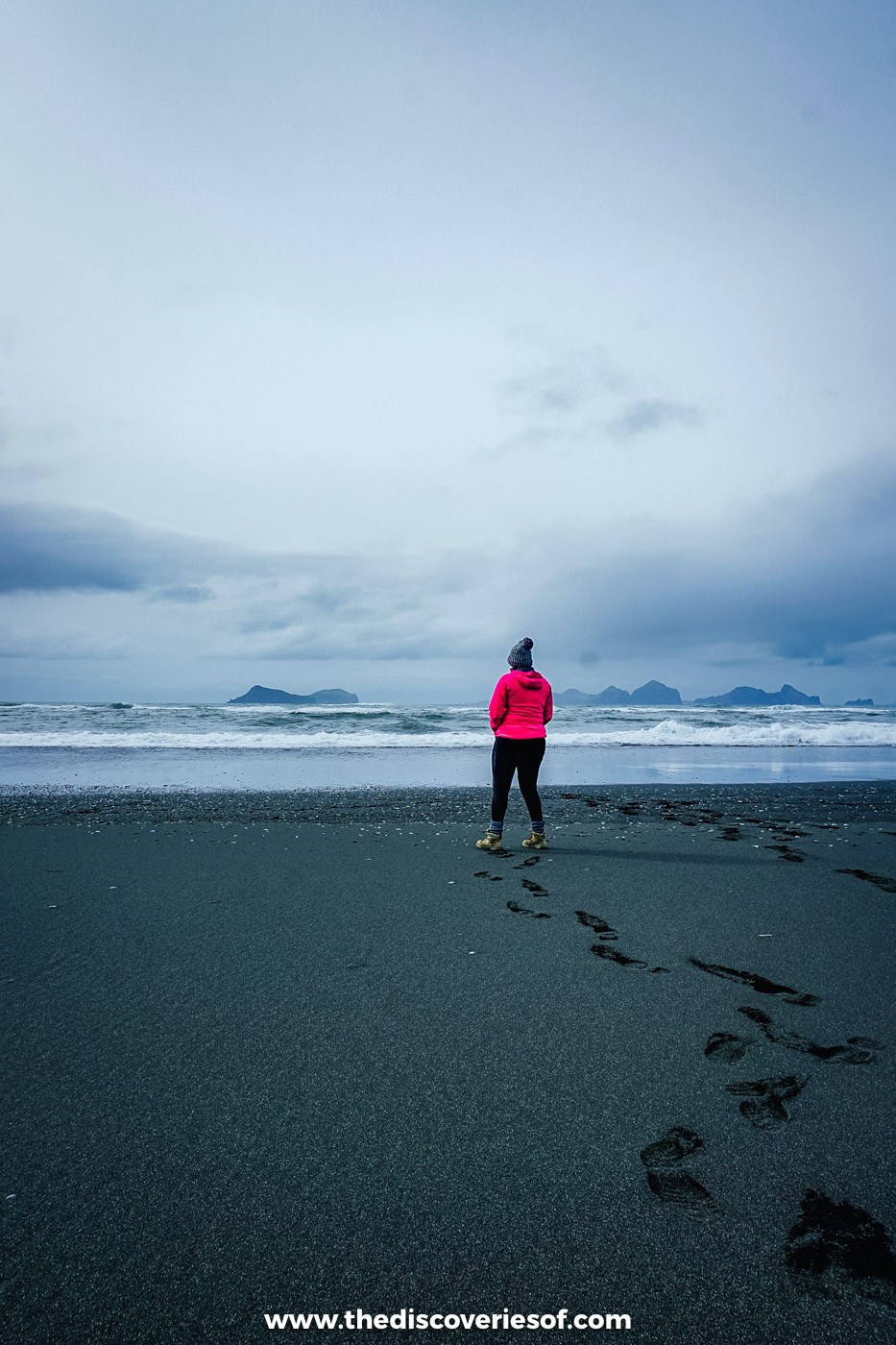
“We’re going to go on an adventure,” Addi from Midgard Adventure said as I hauled myself up into his super jeep. “It’s a secret Iceland beach that no one really visits.” He wasn’t exaggerating. After about 15 minutes of bouncing over dunes and splashing through streams, the black sand of Landeyjafjara opened out in front of me, with not another soul on it and the Westman Islands floating in the mist offshore.
Of all the black beaches I’ve seen in Iceland, this was my favourite, and getting there was half the thrill. It’s quieter than Reynisfjara but every bit as dramatic, with miles of surf-pounded coastline, flocks of birds overhead, and, if you’re lucky, seals bobbing just off the shore. I was lucky.
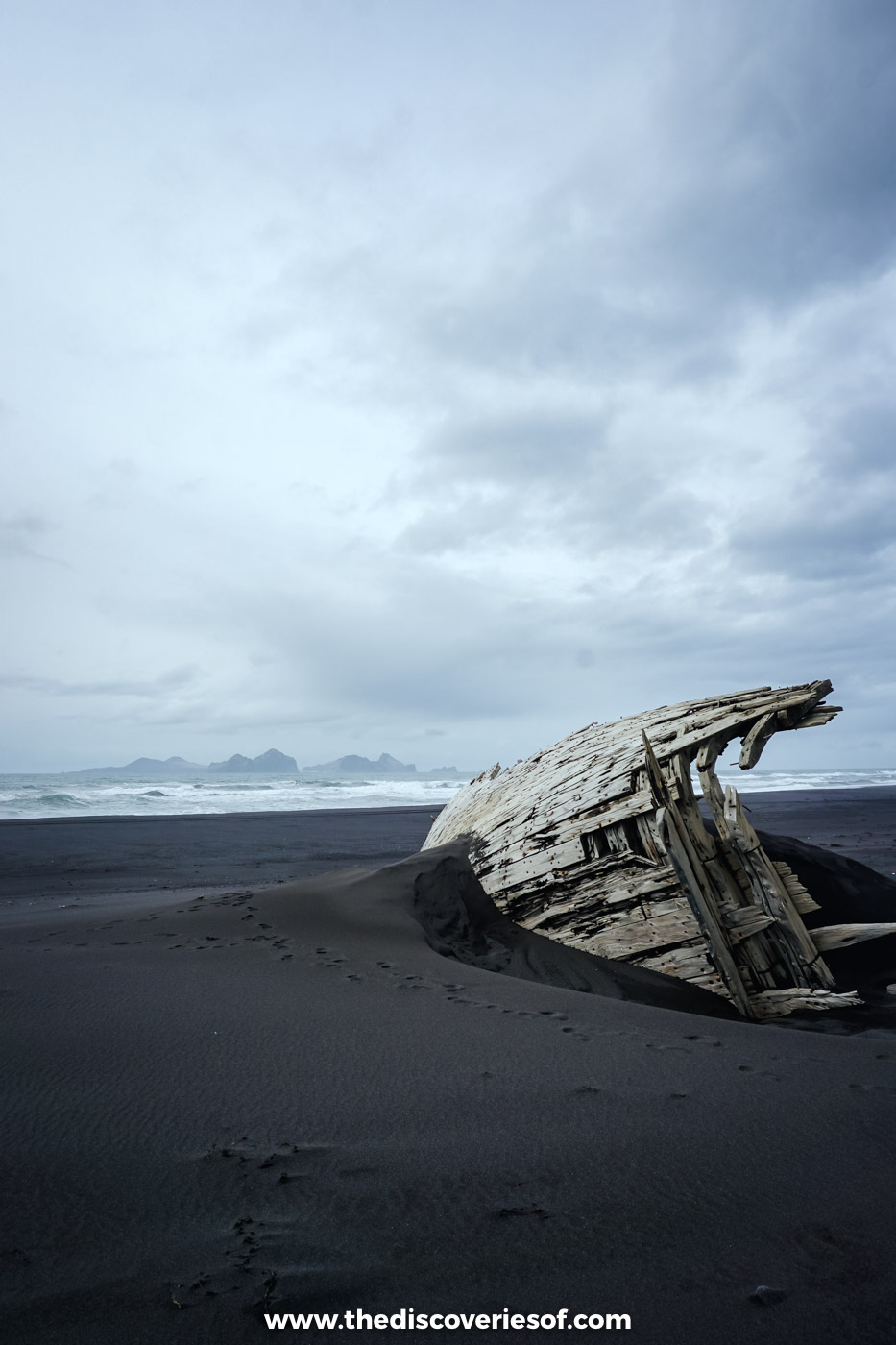
Much of the beach is only reachable by 4×4, so go with a guide, or drive to the ferry port at Landeyjahöfn (Route 254, about an hour and three quarters from Reykjavik) and walk from there. I’ve written more about the day in my guide to Iceland’s hidden gems.
Víkurfjara
Vík’s own beach runs east from the village, on the other side of Reynisfjall. It’s quieter than its famous neighbour, with a short walk from the village and a different angle on the sea stacks, and the same sneaker wave rules apply.
Diamond Beach
On the Breiðamerkursandur plain, across the road from Jökulsárlón glacier lagoon, chunks of glacier ice wash up on the black sand and glitter like jewels. It’s about two and a half hours’ drive east of Reynisfjara.
Djúpalónssandur
On the Snæfellsnes peninsula in the west, this black pebble beach is scattered with smooth “lava pearls” and the rusting remains of the British trawler Epine GY7, wrecked in 1948. Look for the old lifting stones that fishermen once used to test their strength.
Map
Read next
- Visiting the Reynisdrangar basalt sea stacks
- Iceland’s hidden gems: off the beaten path
- A guide to Jökulsárlón glacier lagoon
- The most beautiful waterfalls in Iceland
- Jaw-dropping landmarks in Iceland
- What to pack for Iceland
Love this? Save and share on Pinterest

Discover the top things to do, insider tips and hidden gems in our Iceland Travel Guide.
Read the guides →