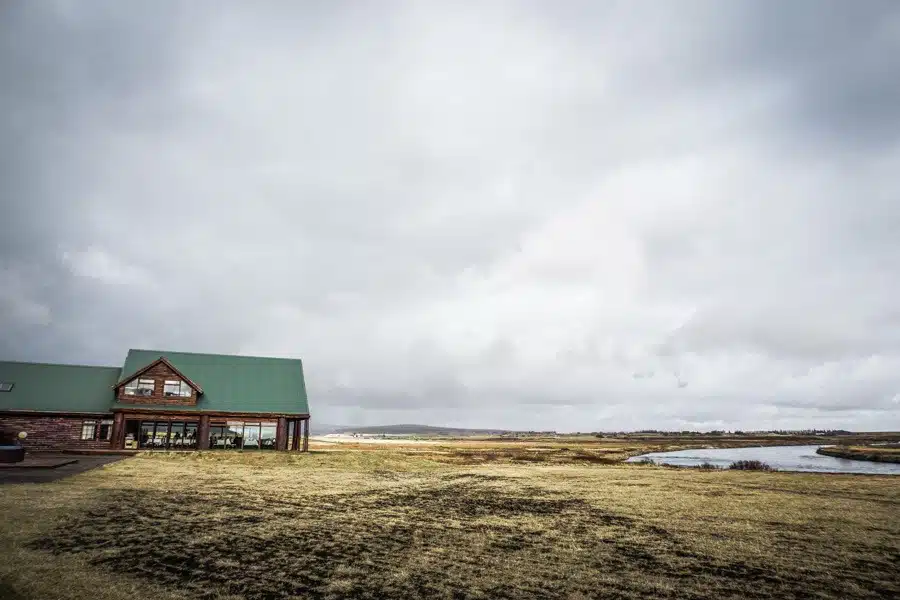
Thinking of booking Hotel Rangá for the Northern Lights? I’ve stayed twice, once in the light nights of May and once in September, when I watched the aurora two nights in a row. Here’s my honest review: the wake-up call, the observatory, the rooms, the food and how to get there.
Seeing the Northern Lights was on the first bucket list I ever wrote, aged nine. So when I finally planned a trip to see them, I didn’t leave much to chance. I went to Iceland in September, right around the autumn equinox, and I booked into the hotel that everyone I asked kept recommending: Hotel Rangá, a log-cabin-style lodge in the dark countryside of south Iceland.
It wasn’t my first time there. I’d stayed at Rangá a few months earlier, in May, when the nights are far too light for the aurora. I loved that trip, but there was one thing missing… the Northern Lights. So I went back.
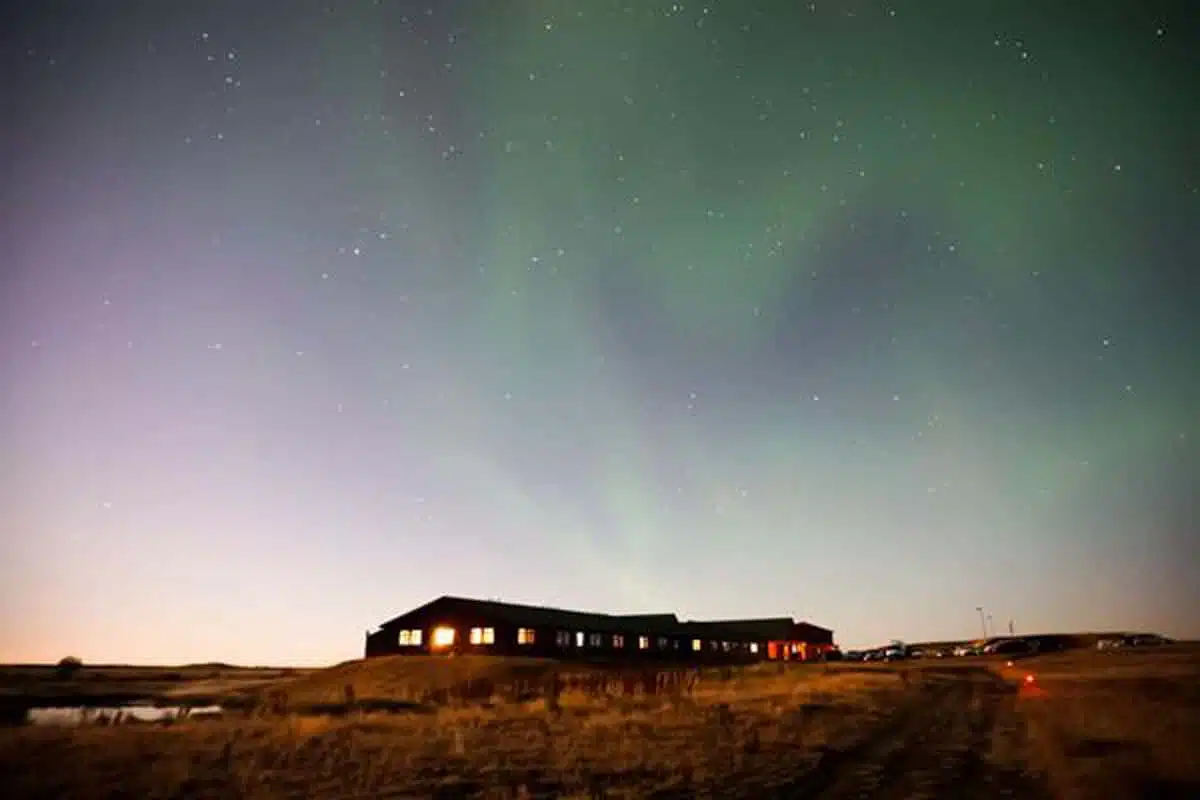
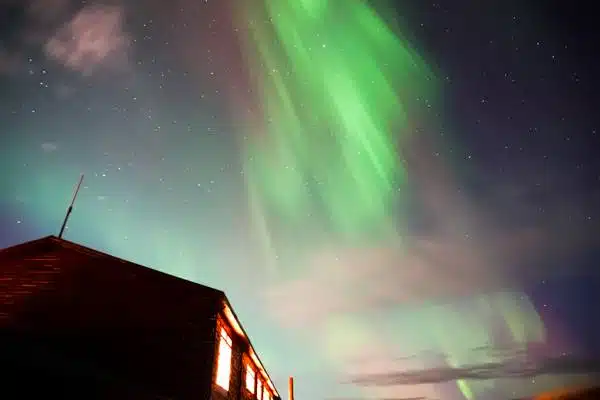
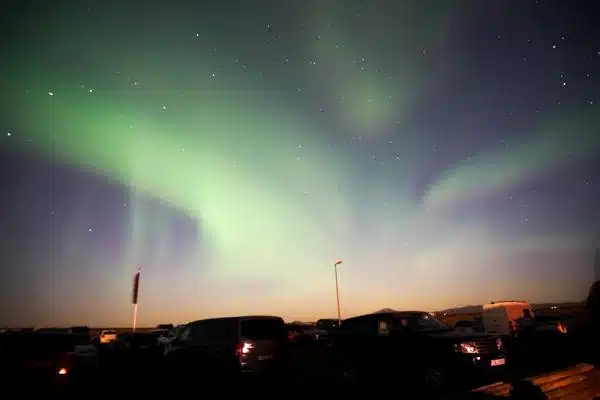
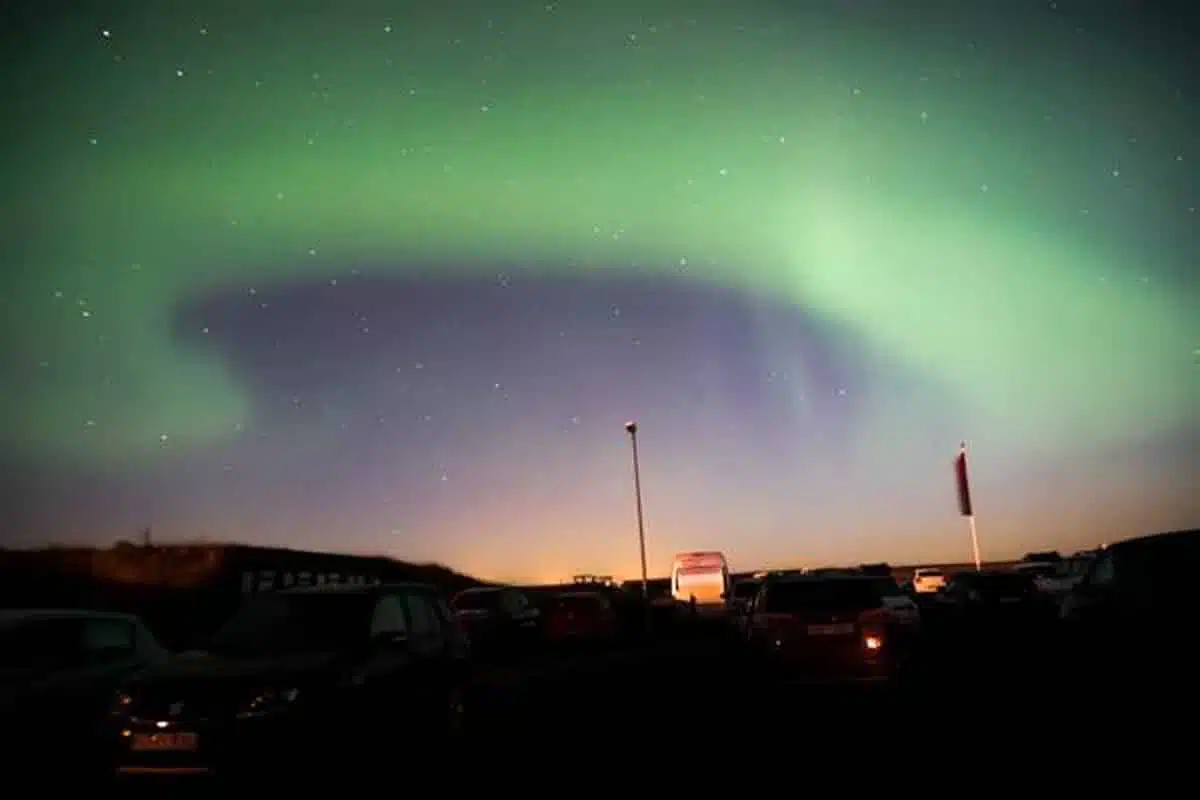
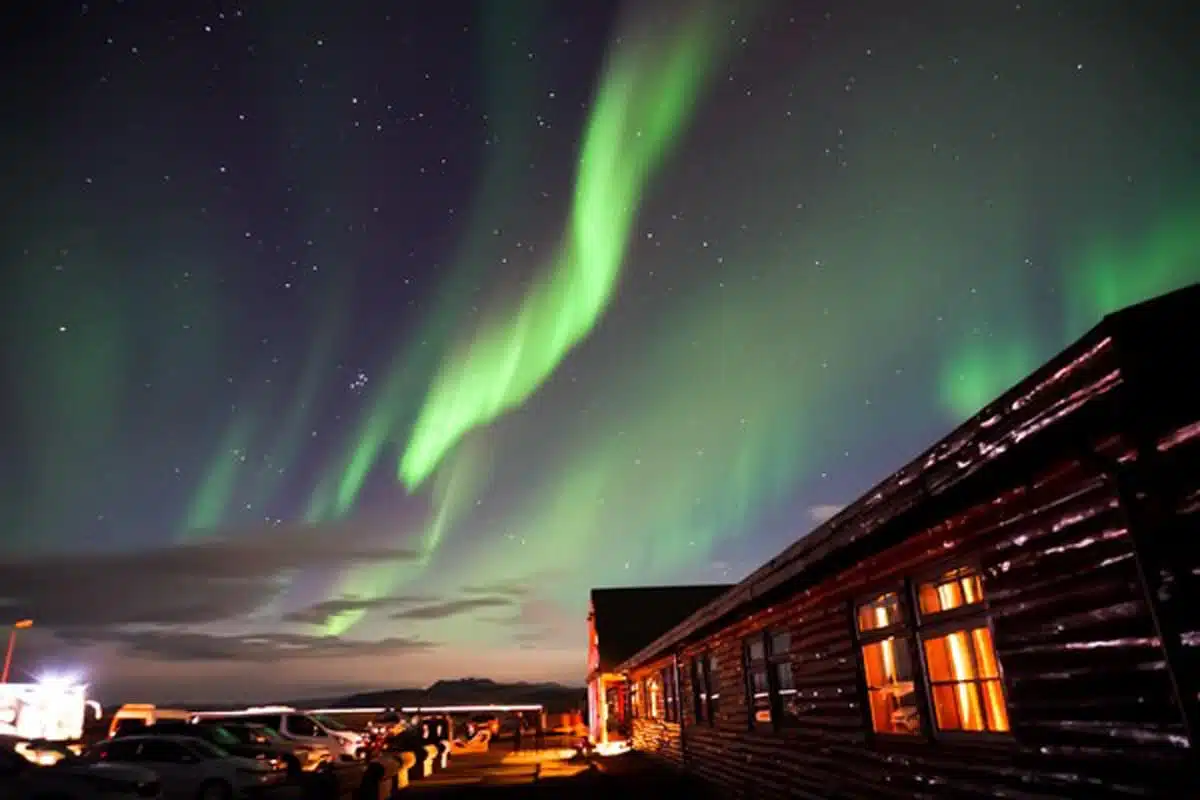
Did it work? I saw the Northern Lights not one, but two nights in a row. At one point the whole sky burst into a dancing parade of greens, pinks and yellows and my head almost exploded with wonder.
Some links in this article may be affiliate links, which means we may receive a small commission, at no additional cost to you, if you decide to purchase through one of my recommended partners.
Hotel Rangá at a glance
- Where: In open countryside on the banks of the Rangá river, about 8 km east of Hella in south Iceland. It’s around an hour and a half’s drive from Reykjavík and two hours from Keflavík Airport.
- Rooms: 52 rooms in five categories, from Standard rooms to continent-themed Master Suites, plus the Royal Suite.
- Best for: Northern Lights hunters who want dark skies without staying in the middle of nowhere, and anyone road-tripping the south coast.
- The aurora extras: A Northern Lights wake-up call, a private observatory with two serious telescopes, and outdoor hot tubs by the river.
- Awards: A four-star hotel, a member of Small Luxury Hotels of the World’s Considerate Collection and, since 2025, the holder of a Michelin Key.
- Price guide: Rates swing a lot with the season. At the time of writing, the hotel’s own site lists Standard rooms from around €430 a night, with packages that can work out cheaper per night.
- My verdict: My favourite hotel in the south of Iceland.
PS: Want to know how I plan a Northern Lights trip? Watch this video!
My two stays
My first stay was in May, as a guest of the hotel on its #KnowIceland trip. It was a whirlwind of the south: a superjeep over the sand dunes to a black sand beach that isn’t Vík, hiking and caving in Þórsmörk, a geothermal tomato farm and an evening at a Viking feast.
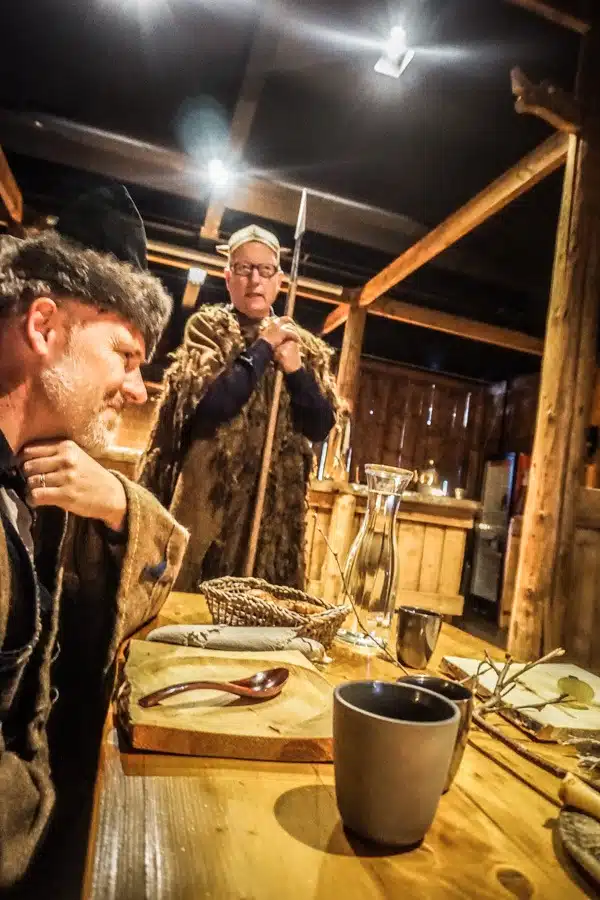
That Viking feast tells you a lot about this hotel’s sense of fun. The owner, Friðrik Pálsson, gave a speech in full Viking garb while an all-male Icelandic choir sang to us, wearing a collection of sweaters that gave me serious clothing envy. He also gave me my favourite summary of Iceland’s fickle weather: “Ask me about the weather in Iceland and I’ll say ask me in a minute.”
My second stay, in September, I paid for myself. This time I came for one thing, and I hired a car so I could explore the south coast by day and be back at Rangá for the lights at night.
Seeing the Northern Lights at Hotel Rangá
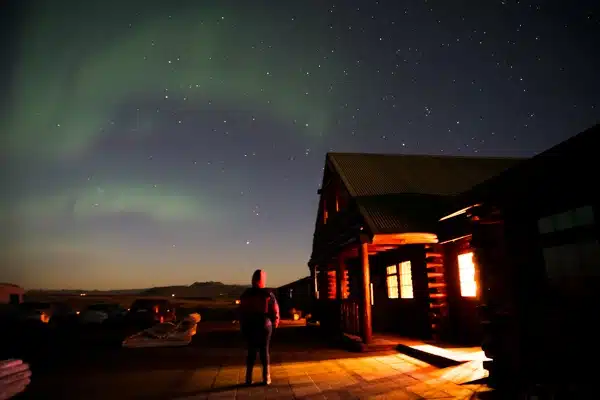
Rangá sits in an area of low light pollution, which means dark night skies and a great chance of seeing the aurora. The hotel also switches off its outside lights at night, so you’re not fighting a floodlit car park when the sky starts to glow.
But there are two other things that really make it stand out.
The Northern Lights wake-up call
Rangá was one of the first hotels in Iceland to offer an aurora wake-up call, back in 2005, and it’s still the thing people talk about.
What is this devilry, you ask? Simply tap the button on your in-room phone before you go to bed and the night staff will ring you if the Northern Lights come out to play. It beats standing for hours in the cold or sitting on a coach, right?
I can vouch for it. I will 100% acknowledge that as I get older, I need sleep in a way I didn’t in my teenage years, or even my twenties for that matter. After my first night of staying up nearly all night to watch the lights and then getting up early to go and explore, I was zonko.
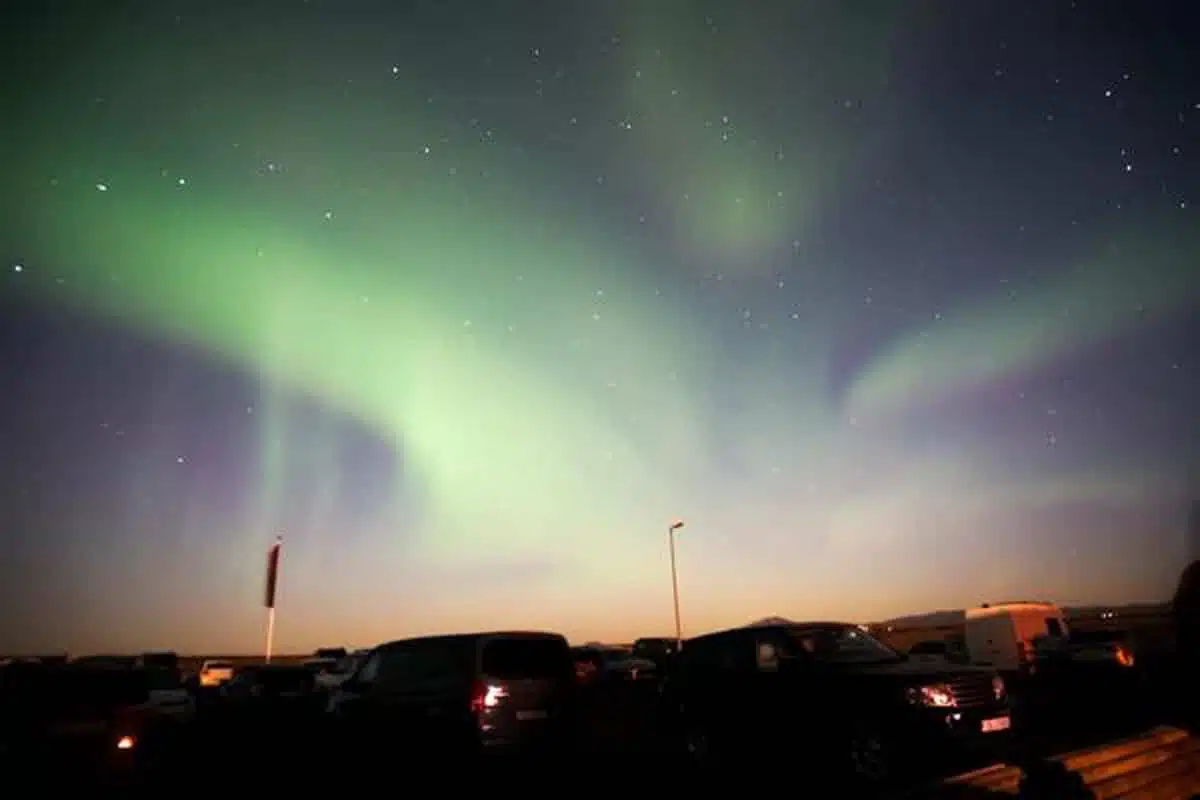
The next night, I watched the lights for a few hours until they faded at about 1am, then gracefully (and gratefully) went to bed after pushing the button. The phone rang a couple of hours later: the lights were back out and in action. I stumbled out, bleary-eyed and heavy-footed, and I was really glad I did, because it was a great show.
Even if I did trip myself up and gouge a section out of my shin #clumsy.
Top Tip
Keep your warm layers, hat and camera by the door before you press the button. When the phone rings at 3am, you want to be outside in two minutes, not hunting for your gloves.
The night the forecast got it wrong
One of my aurora nights was a Friday that both my aurora app and the Icelandic Met Office had forecast as the quietest of my stay. Instead, it turned into a geomagnetic storm with a Kp of 8.
That’s the real argument for staying somewhere like this. The aurora doesn’t keep office hours, and the forecasts are a guide, not a promise. If you’ve booked a tour from Reykjavík for one particular night, you’re stuck with that night. If you’re staying at Rangá, the sky over the hotel is your front row seat every night, and someone else is keeping watch. If you want to understand the forecasts anyway, my Northern Lights forecast guide explains how I read them.
The observatory
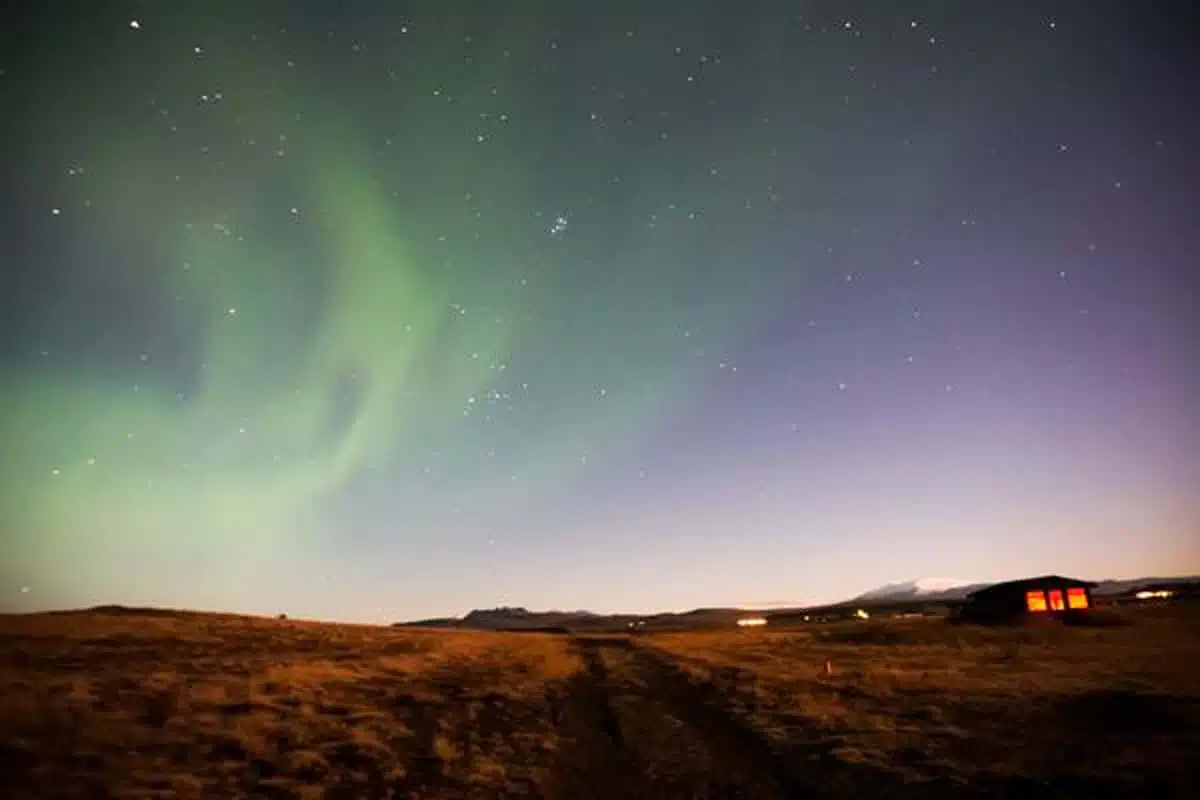
Can you spot the observatory?
The hotel has its own observatory, built in 2014 with a roll-off roof and two serious telescopes: a 14-inch Celestron and a TEC refractor. It opens on clear, dry nights from late September to the end of March, and the staff usually confirm by about 5pm whether it’s opening that evening.
A local astronomer guides you through the planets, constellations and galaxies overhead, which means there’s always something special to see even if the lights don’t make an appearance that evening (as long as it’s not too cloudy).
When I stayed, the astronomer was Sævar Helgi Bragason, who spent most nights for three-quarters of the year staring at Iceland’s night skies (what a job!). I spent a lot of time talking to him, and he agreed that the spring and autumn equinoxes are generally good times to see the Northern Lights in Iceland. Boom. That’s exactly why I’d timed my trip for September.
Top Tip
Non-guests can book observatory tours too, but they have to book ahead. If you’re staying, check with reception when you arrive.
The rooms and suites
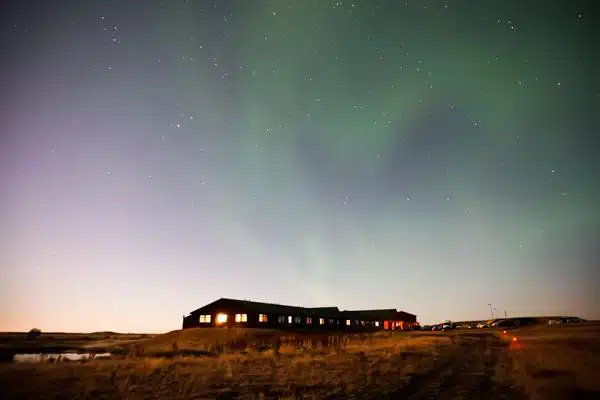
Rangá is built in a rustic log-cabin style, with wood-panelled rooms and a few tucked under the eaves. It started life in 1999 as a 21-room countryside retreat for horse lovers, and has grown in stages since Friðrik joined in 2003. Today there are five room categories:
- Standard rooms: The simplest option, with tea and coffee, bathrobes and slippers. Fine if you’ll mostly be outside looking up.
- Deluxe rooms: More space, wooden furniture and hand-painted murals by local artists.
- Deluxe Superior rooms: Marketed for families, and some have direct access to the hot tubs.
- Junior Suites: Themed after the continents and sleeping up to three. The Asian suite is a Japanese-style tatami room.
- Master Suites: The big continent-themed suites, sleeping up to four, including the Icelandic Suite and one with views of the Eyjafjallajökull glacier. Above them all sits the Royal Suite.
One thing to know: Rangá doesn’t have glass roofs or aurora cabins. You watch the lights from outside, from the hot tubs or from the observatory, not from your bed. If lying under a glass ceiling is the dream, look at the glass lodges in my guide to Northern Lights hotels in Iceland.
The hot tubs
Rangá’s outdoor hot tubs are geothermally heated and sit beside the river. On a clear night, they’re one of the best places in Iceland to wait for the aurora: you’re warm, you’ve got a view of the whole sky and you don’t have to stand around in the cold.
If you want to bathe like a local too, the swimming pools in Hella and Hvolsvöllur are each about five minutes’ drive away. On my first stay, I spent a couple of hours alternating between the pools and tubs in Hella and came out feeling like a million bucks.
Food and drink
Rangá Restaurant serves Nordic-inspired dishes made with seasonal Icelandic ingredients, with views over the river. In autumn, the hotel has run a wild game menu on some weekends in October and November, which is worth asking about if you’re going then. The bar is known for its whisky collection and Icelandic schnapps, and it’s a cosy place to wait for the call.
A money-saving tip from my September stay: the breakfast is excellent, and I made the most of it, so I only needed a small lunch while I was out exploring the south coast. In a country where lunch can cost a small fortune, that adds up. My guide to how expensive Iceland is has more ways to keep costs down.
If you’d like to recreate my Viking evening, the hotel can now arrange a Viking dinner in the Caves of Hella. Email ahead to book it.
Things to do from Hotel Rangá
The hotel is a brilliant base for south Iceland, because the big sights are an easy drive in either direction. Approximate drive times from the hotel:
- Seljalandsfoss: 20 minutes.
- Skógafoss: 50 minutes.
- Sólheimasandur (the black sand beach with the plane wreck): 1 hour.
- Reynisfjara black sand beach: 1 hour 10 minutes.
- Gullfoss and Geysir, on the Golden Circle: about 1 hour 10 minutes each.
- Jökulsárlón glacier lagoon and Diamond Beach: 3 hours.
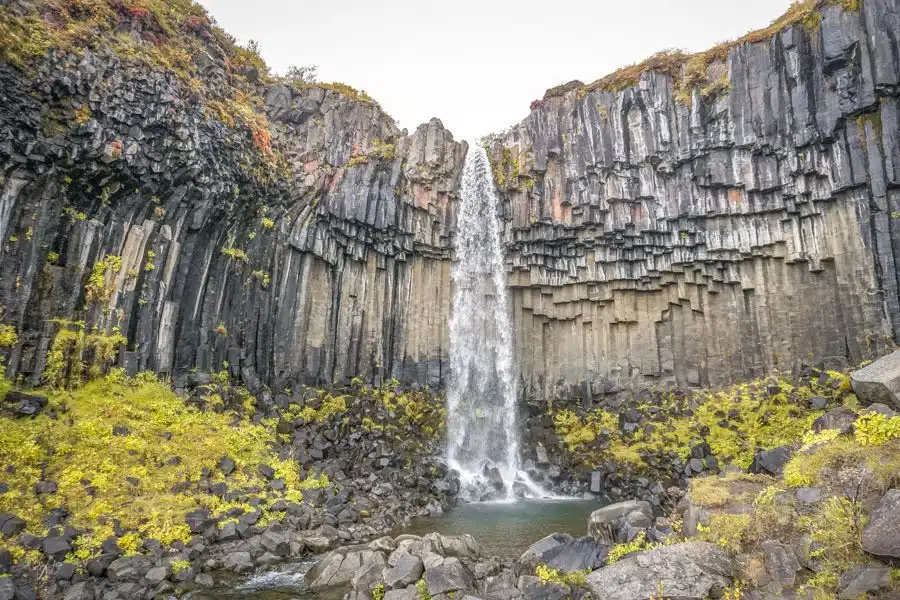
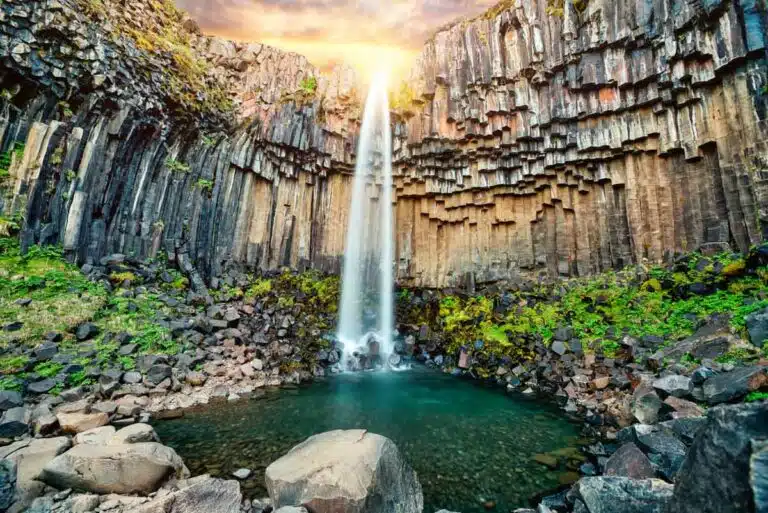
On my September trip, I drove all the way down to Jökulsárlón in a day, via Skógafoss, Svartifoss, Reynisfjara and the Reynisdrangar sea stacks. It’s a long day, but it was one of the most memorable of the trip, and there was hardly anyone about. Then I drove back to Rangá in time for the lights.
Closer to home, my May trip covered a lot of the area’s quieter corners: hiking and caving in Þórsmörk, Gluggafoss waterfall, a long hike near the volcano Hekla (followed by a very cosy lie-down in the moss), the LAVA Centre in Hvolsvöllur and Friðheimar, the geothermal tomato farm. You’ll find them all in my guide to Iceland off the beaten path.
The hotel can also book horse riding, superjeep tours, glacier walks, ice caves, snowmobiling and helicopter flights, and in summer it’s a well-known spot for salmon fishing on the river.
How to get there
By car: This is the easiest way by far, and the hotel recommends it too. From Keflavík Airport it’s about 140 km (two hours), and from Reykjavík about 96 km (an hour and a half). Follow Route 1 east through Selfoss and Hella. The hotel is on your right, about 8 km past Hella and roughly 600 m off the main road. Parking is free, and there are charging points for electric cars.
Transfers: There’s no scheduled hotel shuttle, but the hotel can arrange a private driver from the airport, a taxi or even a superjeep or helicopter, all at extra cost.
By bus: Public buses run from Reykjavík to Hella and Hvolsvöllur, but they’re not frequent, and you’d be without a car once you arrive. I wouldn’t rely on them.
Top Tip
If you’re driving in winter, check road.is for road conditions and safetravel.is for alerts before you set off each day. The south coast can go from calm to closed very quickly. My Iceland ring road guide has more on driving in Iceland.
When to stay for the Northern Lights
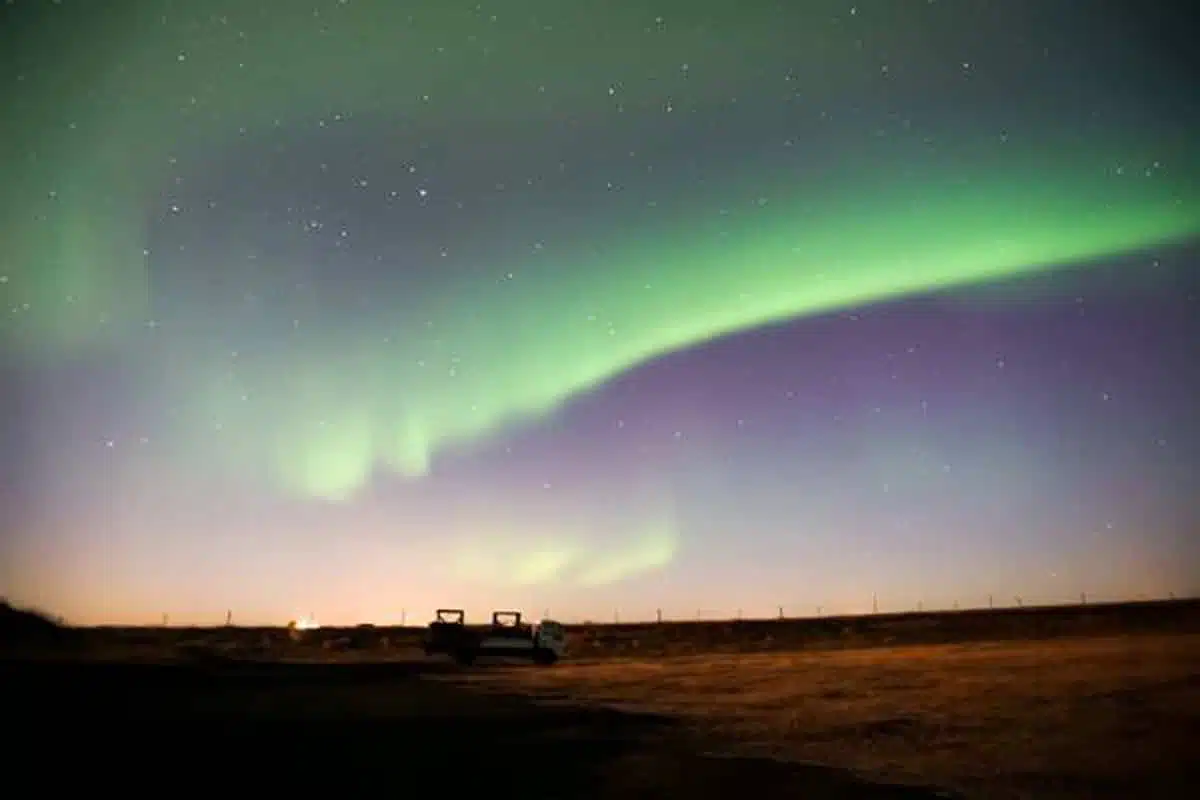
The Northern Lights season in Iceland runs from September to mid-April. The observatory opens from late September to the end of March. For the best odds, aim for the weeks around the equinoxes in late September and late March. Displays tend to be stronger then, the nights are already long and dark, and the weather is milder than in midwinter.
That’s exactly when I went. My guide to the best time to see the Northern Lights in Iceland goes into the science, and you’ll find more of my tips in how to see the Northern Lights.
Whenever you go, stay for at least three nights. Cloud is the real enemy in Iceland, and more nights mean more chances of a clear one. The equinox weeks book up early, so reserve as far ahead as you can.
The good and the not so good
What I loved:
- The wake-up call. It let me see the lights and still get some sleep.
- Dark skies right outside the door, with no need to drive anywhere at night.
- The observatory and the chance to talk to a real astronomer.
- The location: dark enough for the aurora, but an easy drive to the south coast’s big sights.
- The breakfast, and the hotel’s sense of fun (a Viking speech from the owner, no less).
What to know before you book:
- It’s expensive, like most of Iceland, and dinner and activities are extra.
- There are no glass roofs, so you watch the lights outside rather than from bed.
- You really need a car to make the most of it.
- The observatory only opens on clear, dry nights, so there’s no guarantee you’ll get inside.
Is Hotel Rangá worth it?
For me, yes. Rangá is my favourite hotel in the south of Iceland, and if you’re going to Iceland for the Northern Lights, I wouldn’t want to suggest you stay anywhere else.
It doesn’t have glass igloos. What it has is dark skies, a team that puts the aurora front and centre, a phone that rings when the sky lights up and an astronomer on hand when it doesn’t. Time your stay for the equinox, give yourself a few nights, press the button before bed and let the sky do its thing.
Read more Iceland and Northern Lights guides
- Northern Lights hotels in Iceland
- When’s the best time to see the Northern Lights in Iceland?
- Things to do in Iceland
- Iceland off the beaten path
- How to read a Northern Lights forecast
- Apukka Resort review
- ÆRA Tromsø hotel review
Love This? Save and Share on Pinterest

Discover the top things to do, insider tips and hidden gems in our Iceland Travel Guide.
Read the guides →