Wondering what to wear to see the Northern Lights? Here’s the layer-by-layer outfit I use for long, cold nights under the aurora in Norway, Finland and Iceland, plus what to wear on your feet and hands, the extras that make the biggest difference and how to dress for each destination.
I’m not going to sugar coat this one: you’re going to be cold.
Seeing the Northern Lights means being outside, at night, in the Arctic, often somewhere rural and exposed, and generally standing around for at least a couple of hours. There will be wind, there will be ice and there’s a good chance of snow. The aurora tends to be busiest between about 11pm and 2am, which also happens to be the coldest part of the night.
I’ve chased the lights in Iceland, in Rovaniemi in Finnish Lapland and in Tromsø in Norway, and seen them on all three trips. I’ve stood on a snowy shore at Oldervik watching the sky turn green, raced around Lapland on a snowmobile and stumbled out of a hotel in Iceland at 3am when the phone rang to say the lights were back. Being properly warm is what lets you stay out long enough for the good bit.
Some links in this article may be affiliate links, which means we may receive a small commission, at no additional cost to you, if you decide to purchase through one of my recommended partners.
The short answer
If you only read one section, make it this one. For a night out under the Northern Lights, you want:
- A base layer of merino wool, top and bottom.
- Two or three mid layers, such as a thermal top, a puffy down jacket and a thick wool jumper.
- A warm, windproof parka that covers your bottom.
- Insulated trousers, or leggings under hiking or ski trousers.
- Warm, waterproof boots with good grip, plus pull-on snow grips for icy ground.
- Wool socks, layered.
- A hat, a scarf or neck warmer and touchscreen thermal gloves.
- Hand warmers and a flask of something hot.
The Norwegians have a saying: there’s no bad weather, only bad clothing. They’re right. Come prepared and you’ll enjoy every minute.
How cold does it get?
It depends a lot on where you go. These are rough averages for the heart of winter, and remember that standing still at night feels a lot colder than walking around by day.
- Tromsø, Norway: Milder than you’d expect at nearly 70 degrees north, thanks to the Gulf Stream. In January and February, the average high is around -1°C and the average low around -6°C. It’s coastal, so it can be damp and windy, and the pavements are often icy.
- Rovaniemi, Finnish Lapland: A dry, deep inland cold. January averages a high of around -8°C and a low of around -14°C, and cold snaps can take it below -30°C.
- Iceland: Around freezing in Reykjavík in midwinter, but wind and rain are the real challenge. The weather changes in minutes, so waterproofs matter as much as warmth.
Don’t underestimate wind chill. On my Lyngen Alps road trip, it had been hovering around four degrees and felt completely normal, but as soon as the ferry got out into the fjord, the wind chill was mad. A breeze over open water or a bare hillside can make a mild night feel brutal.
Why layers beat one big coat
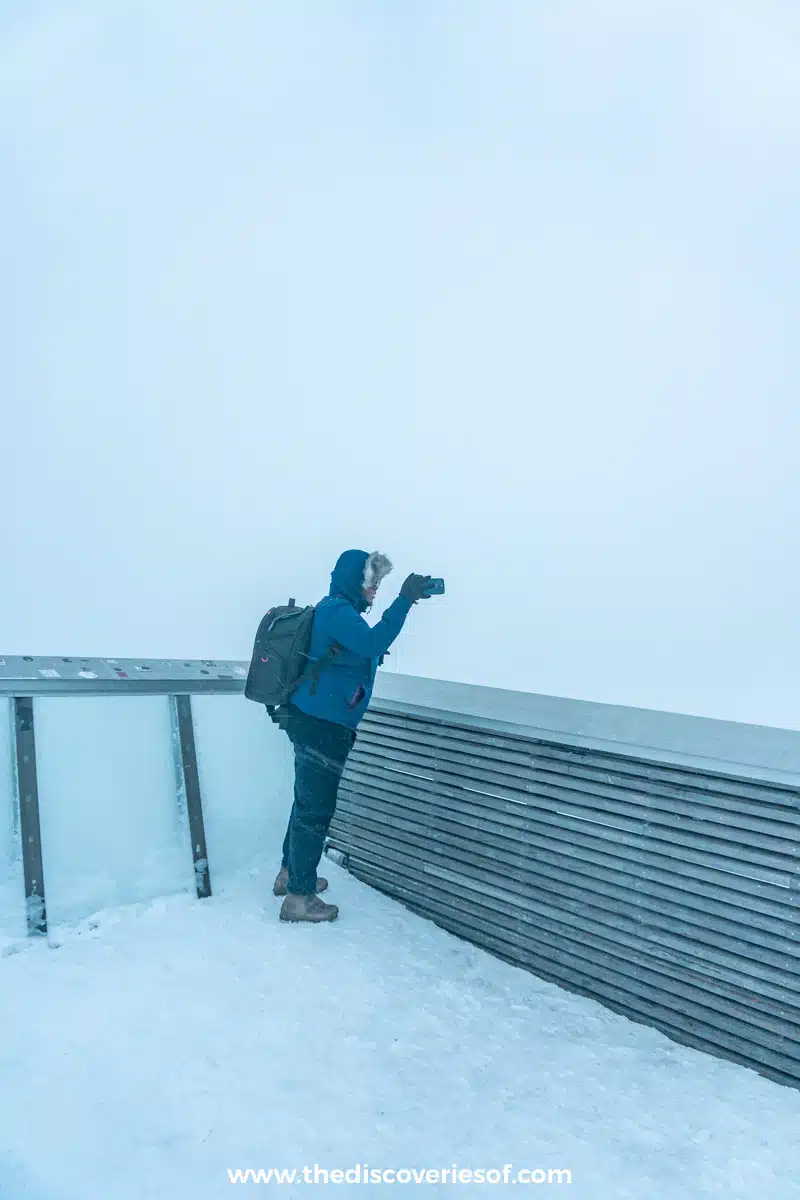
Layers trap warm air between them, and they let you adjust. You’ll be warm in the car or the tour bus, freezing after an hour of standing on the snow, and sweaty if you walk uphill to a viewpoint. With layers, you can open a zip or add a jumper instead of putting up with it.
The golden rule: avoid cotton next to your skin. Cotton holds sweat and gets cold and clammy fast. Wool and technical fabrics keep you warm even when you’re a bit damp.
Think of it as three parts:
- Base layer: Sits against your skin and moves sweat away. Merino wool is the gold standard, because it’s warm, soft and doesn’t smell after a few wears.
- Mid layers: Trap the heat. Fleece, a thermal top, a puffy down or synthetic jacket and a thick wool jumper all work, and you can wear more than one.
- Outer layer: Keeps out the wind, snow and rain. A long parka with a hood is ideal for standing still at night.
My seven-layer outfit for a night under the aurora
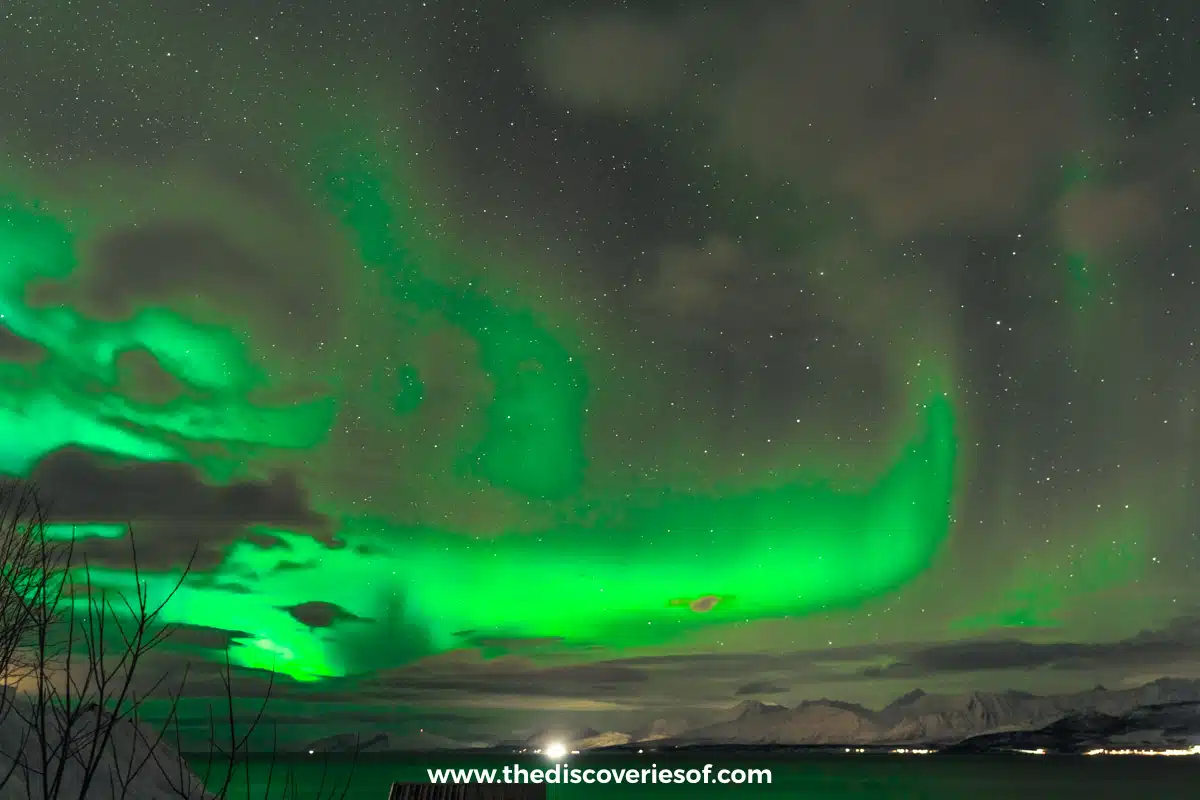
You might think I’m exaggerating, but this is the kind of outfit you need for a night out in the cold. Seven top layers isn’t over the top.
On top:
- Sports bra
- Sweat-wicking tank top or t-shirt, like these Prana sweat-wicking tank tops. They also make great t-shirts for women and men.
- Merino wool base layer, like this SmartWool base layer
- Quarter-zip thermal layer: a standard running thermal layer works really nicely for layering.
- Puffy down jumper: a compressible one packs down to nothing in your suitcase.
- Wool jumper: an Icelandic lopapeysa (the traditional wool jumper) is perfect, but any thick wool jumper will do.
- Parka: you’ll need a parka to seal the deal, like this one.
On your bottom half and extremities:
- Two pairs of leggings
- Hiking trousers
- A warm knit scarf
- A warm hat (beanie style is best)
- Thermal e-tip gloves
- Three layers of wool socks
Your bottom half
Your legs get cold surprisingly quickly when you’re standing still on snow. Jeans are a no: they’re cotton, they let the wind straight through and they’re miserable once they get wet.
My go-to is two pairs of leggings (a thermal pair and a regular pair) under hiking trousers. In Iceland, or anywhere you might be kneeling in the snow for photos or sitting on a snowmobile, swap the hiking trousers for waterproof or ski trousers. Thermal leggings should be warm but thin enough to layer other things on top.
If you run cold, a pair of insulated ski trousers over a base layer is the warmest option of all.
Boots and socks
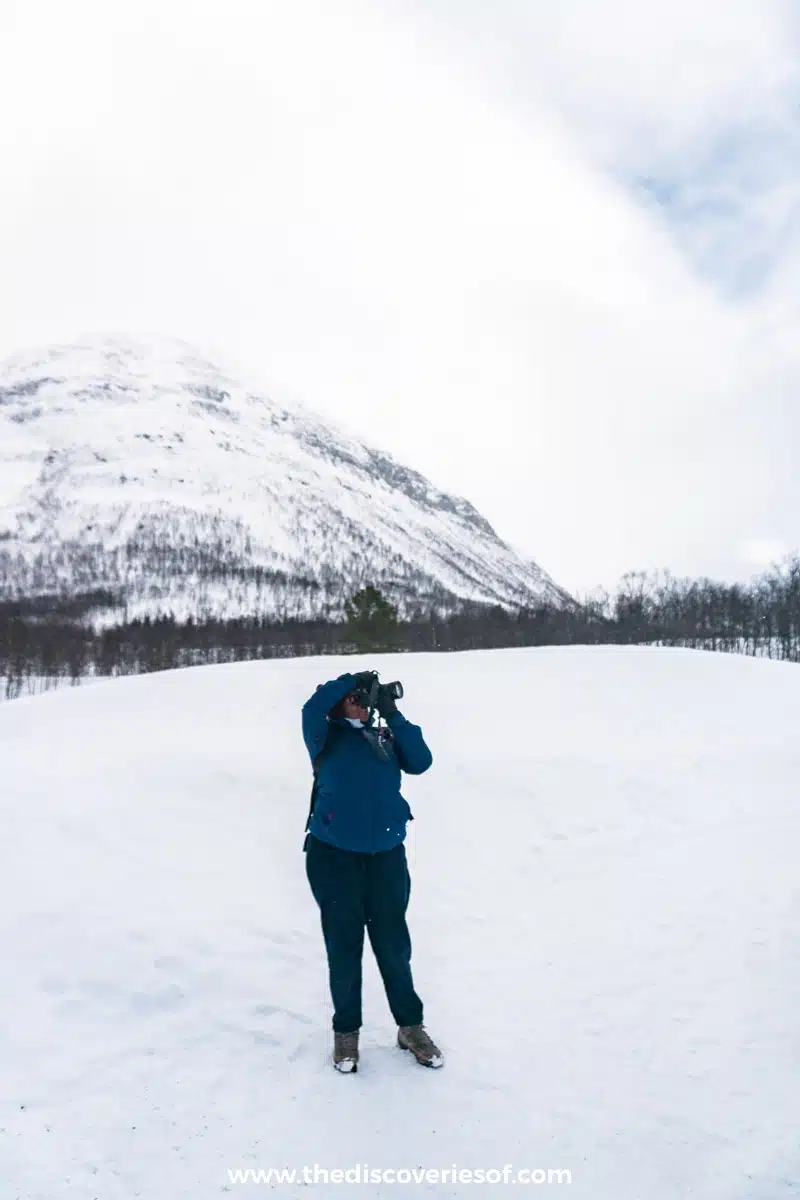
Boots: You need warm, waterproof boots with good grip. You’ll be walking on snow and ice, or standing in one place for hours, and cold, wet feet will end your night faster than anything. Insulated winter boots are best for Lapland’s deep cold. For Iceland and coastal Norway, sturdy waterproof hiking boots with room for thick socks also work.
Snow grips: Pack some pull-on snow grips (also called ice cleats or spikes) that slip over your boots. They’re really useful for stopping you landing on your backside on the ice, especially at viewpoints, car parks and rocky shores. They take up hardly any space in your bag.
Socks: I wear three layers of wool socks. Make sure your boots still fit comfortably with them on, though. If your boots are tight, they squash the warm air out and cut off circulation, and your toes get colder, not warmer. That’s a good reason to go up half a size when you buy winter boots.
Hands, head and neck
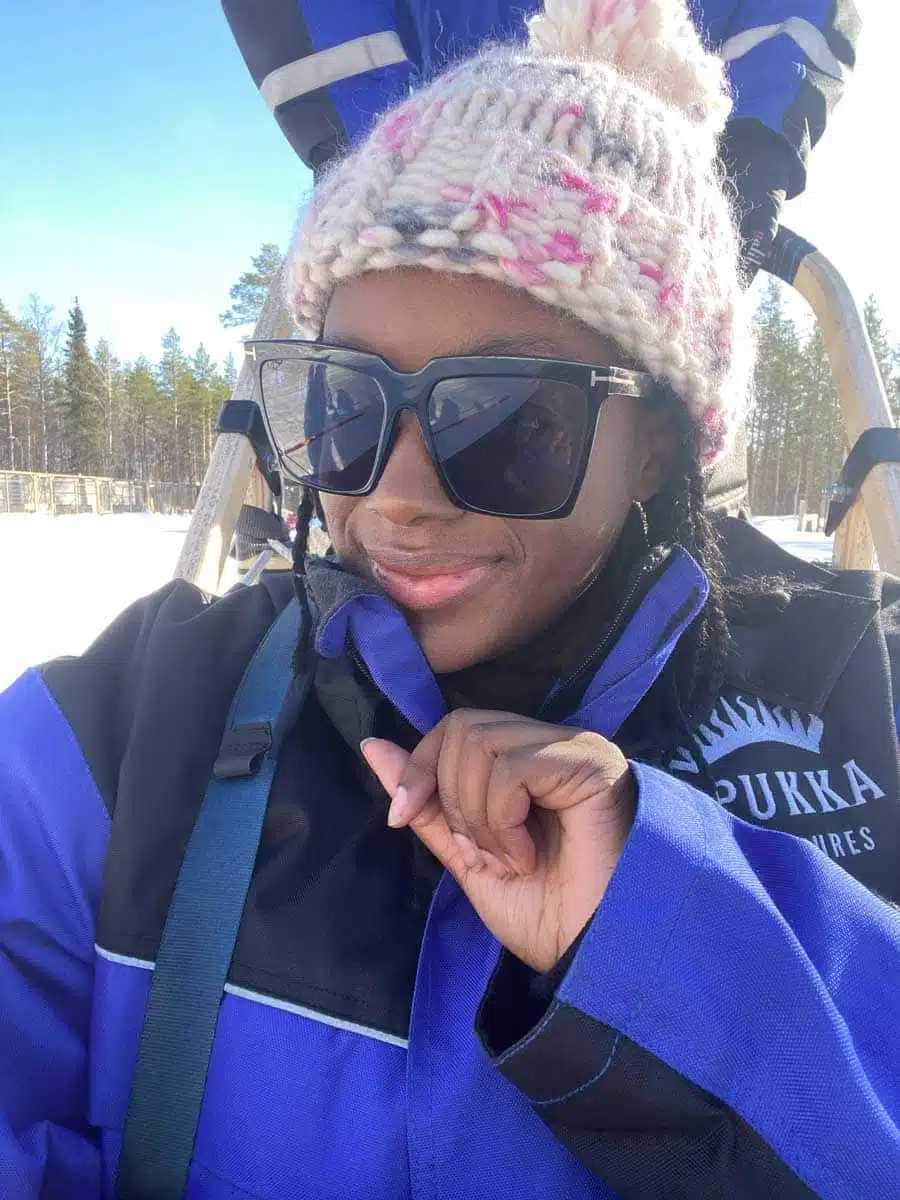
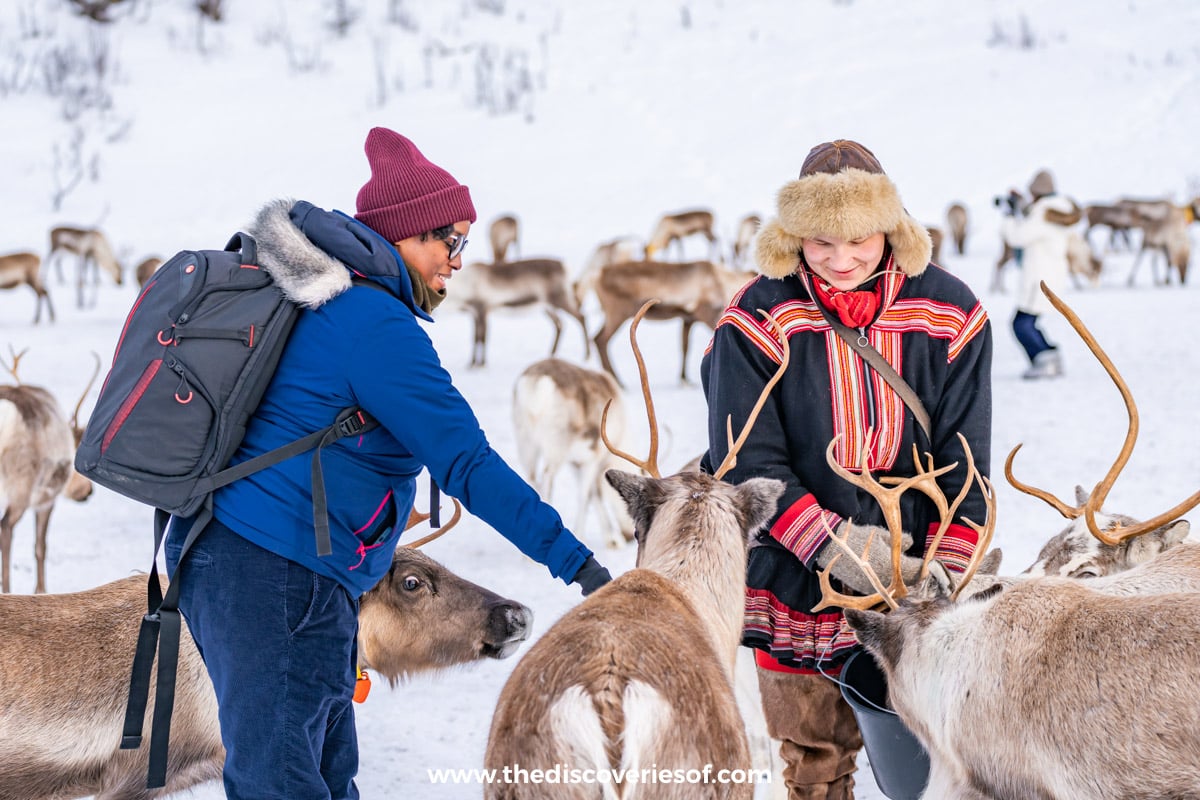
Gloves: Thermal e-tip gloves let you use your phone without taking them off, which matters when you’re checking the aurora app every five minutes. If you’re photographing the lights, try thin touchscreen gloves under a pair of warm mittens. You can slip a mitten off to change a camera setting, then put it straight back on.
Hat: A warm beanie that covers your ears. You lose a lot of heat through your head, and cold ears are miserable.
Scarf or neck warmer: A knit scarf or a fleece neck gaiter keeps the wind off your neck and can be pulled up over your face when it’s really biting.
The extras that make the biggest difference
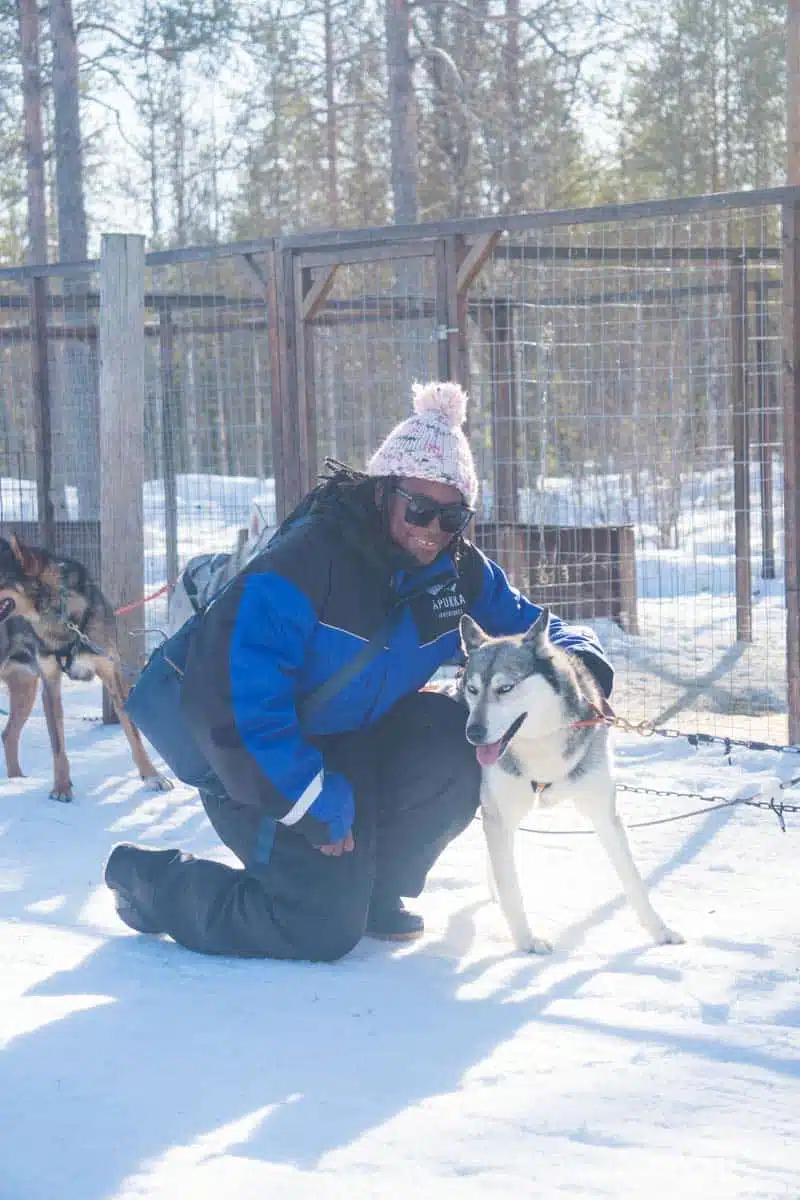
Hand warmers: Your feet and hands are going to be cold no matter how many layers you have on. So whatever you do, bring some self-heating hand warmers, so that your fingers and toes don’t feel like they’re falling off every time you spend more than a few minutes outdoors. Take it from me: pack the hand warmers. You can get toe warmers that stick inside your socks too.
A hot drink: Bring some hot tea or hot chocolate in a thermal mug (a Hydro Flask is perfect for this), so it will stay warm all night and you’ll have a burst of warmth whenever you need it. Trust me, you’ll thank me later for this one.
A head torch with a red light: Handy for finding your way across dark, icy ground without wrecking everyone’s night vision. I learned the hard way: on my second aurora night in Iceland, I tripped myself up in the dark and gouged a section out of my shin.
Spare batteries: The cold drains phone and camera batteries fast. Keep spares in an inside pocket, close to your body, and swap them as needed.
Snacks: You might be out for hours, often far from anywhere selling food. Pack something to keep you going.
Do Northern Lights tours give you warm clothes?
Many do, and it’s worth checking when you book. Most aurora tours provide a thermal suit (a big insulated all-in-one) to wear over your clothes, and some add boots, gloves and hats. This Tromsø Northern Lights chase, for example, includes thermal suits and hot drinks.
A thermal suit makes a huge difference, but don’t rely on it alone. The layers underneath are what keep you warm for hours. Wear your base and mid layers, and your own warm boots if you have them.
Some Northern Lights hotels lend winter gear too. At Apukka Resort in Lapland, guests get free use of thermal overalls and boots, which saves a lot of packing. If you’re staying somewhere like that, check what’s provided before you buy anything.
What to wear in a glass igloo or aurora cabin
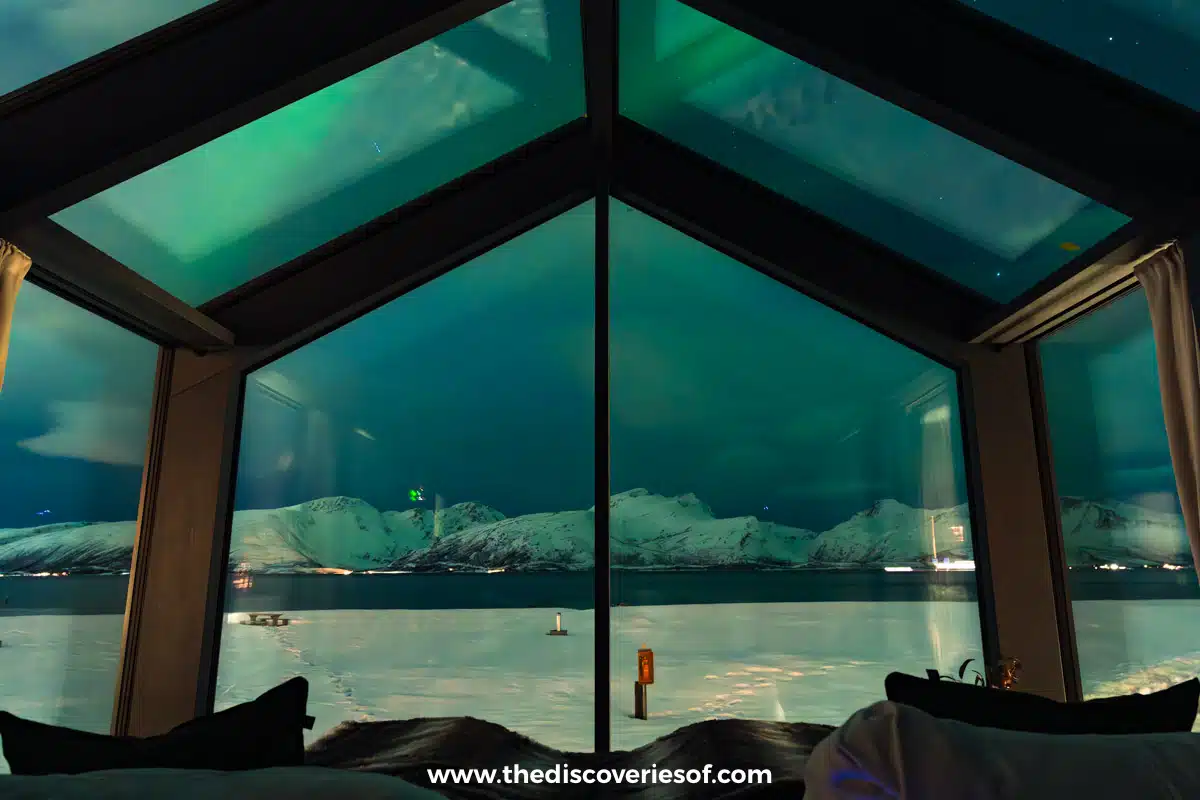
One of the joys of a glass cabin is watching the lights from the warmth of your bed. At ÆRA, outside Tromsø, I set my camera up on a tripod inside the cabin, and that’s how I caught the first faint glow.
But you’ll almost certainly want to go outside when the show gets going. The sky looks bigger, the colours are brighter without the glass and you can move around for photos. So keep your layers, boots, hat and gloves together by the door before you go to bed. When the sky lights up, you want to be outside in two minutes, not hunting for your other glove.
The same goes for any hotel with an aurora wake-up call. At Hotel Rangá in Iceland, I pressed the button before bed, and when the phone rang a couple of hours later, I stumbled out, bleary-eyed and heavy-footed.
How to dress for each destination
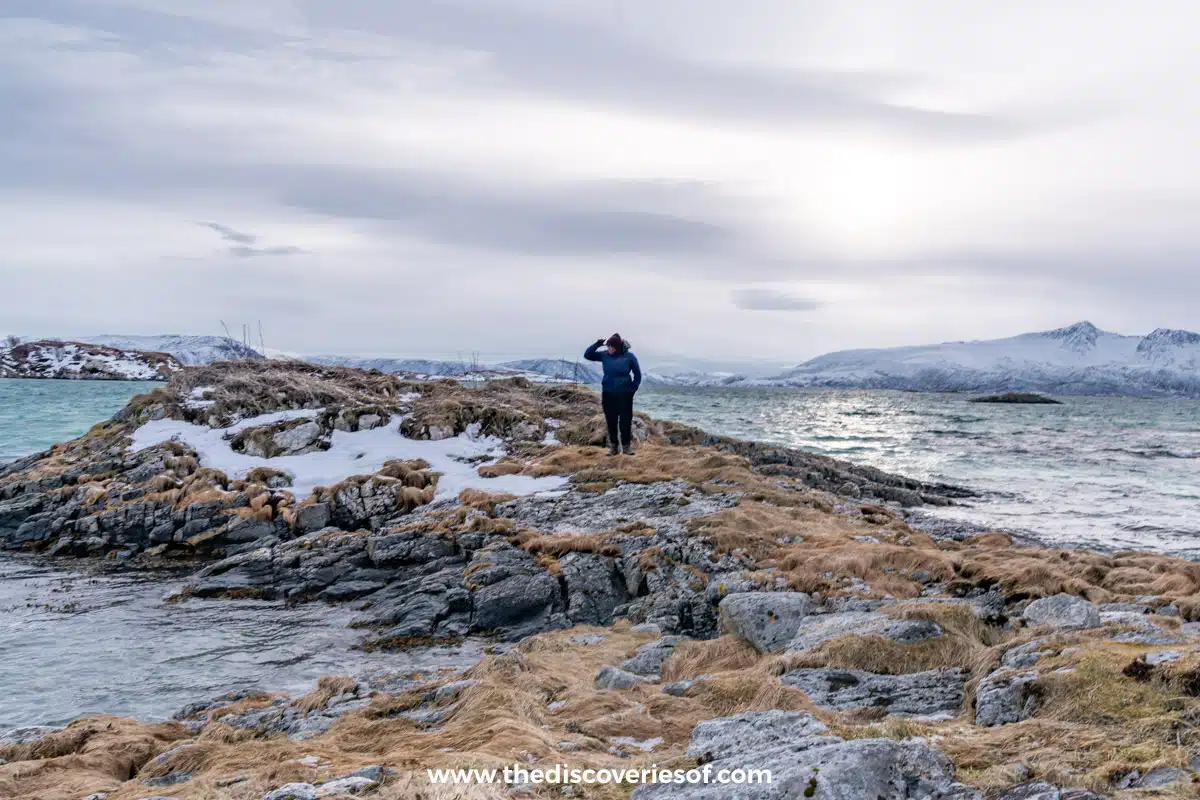
Norway (Tromsø, Lofoten and the north coast): Coastal, damp and windy, with lots of ice underfoot. Prioritise a windproof parka, waterproof boots and snow grips. You’ll be in and out of the car or the cold a lot, so layers you can add and remove easily are key.
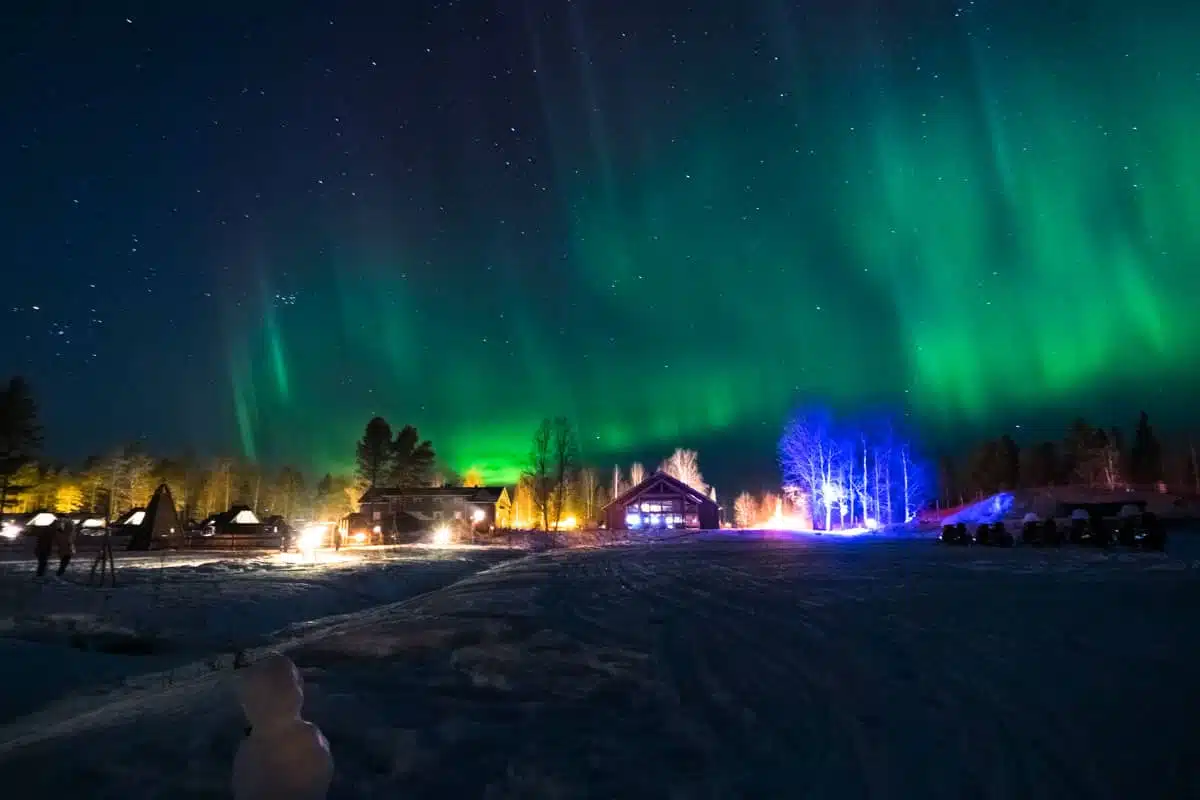
Finland and Swedish Lapland: Dry but deep cold, especially inland. Prioritise insulated boots, thick socks, mittens and an extra mid layer. Thermal overalls for activities are often provided.
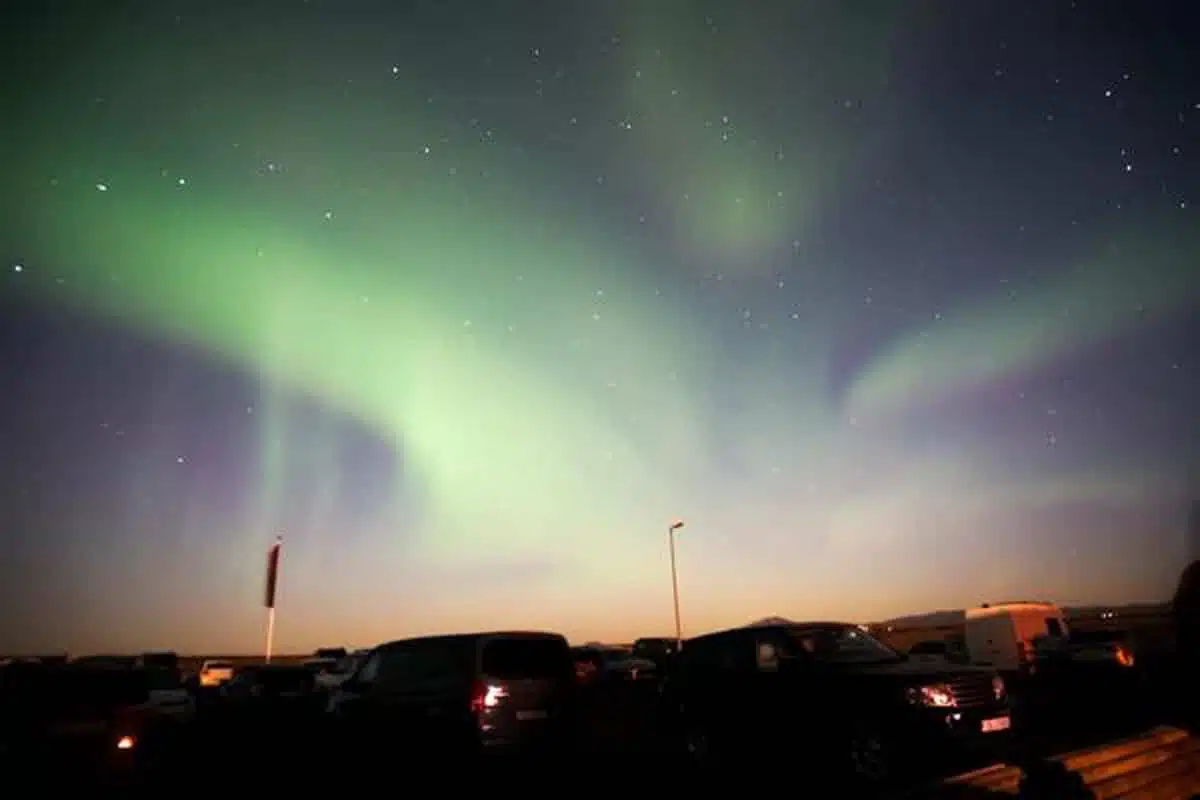
Iceland: Wet and wild, with fast-changing weather. Prioritise a waterproof jacket with a hood and waterproof trousers on top of your warm layers. Don’t forget a swimsuit for the geothermal pools, which are a lovely way to warm up after a night outside.
What to wear in autumn and early spring
The weeks around the equinoxes, in late September and late March, are some of the best times to see the Northern Lights. They’re also milder than midwinter.
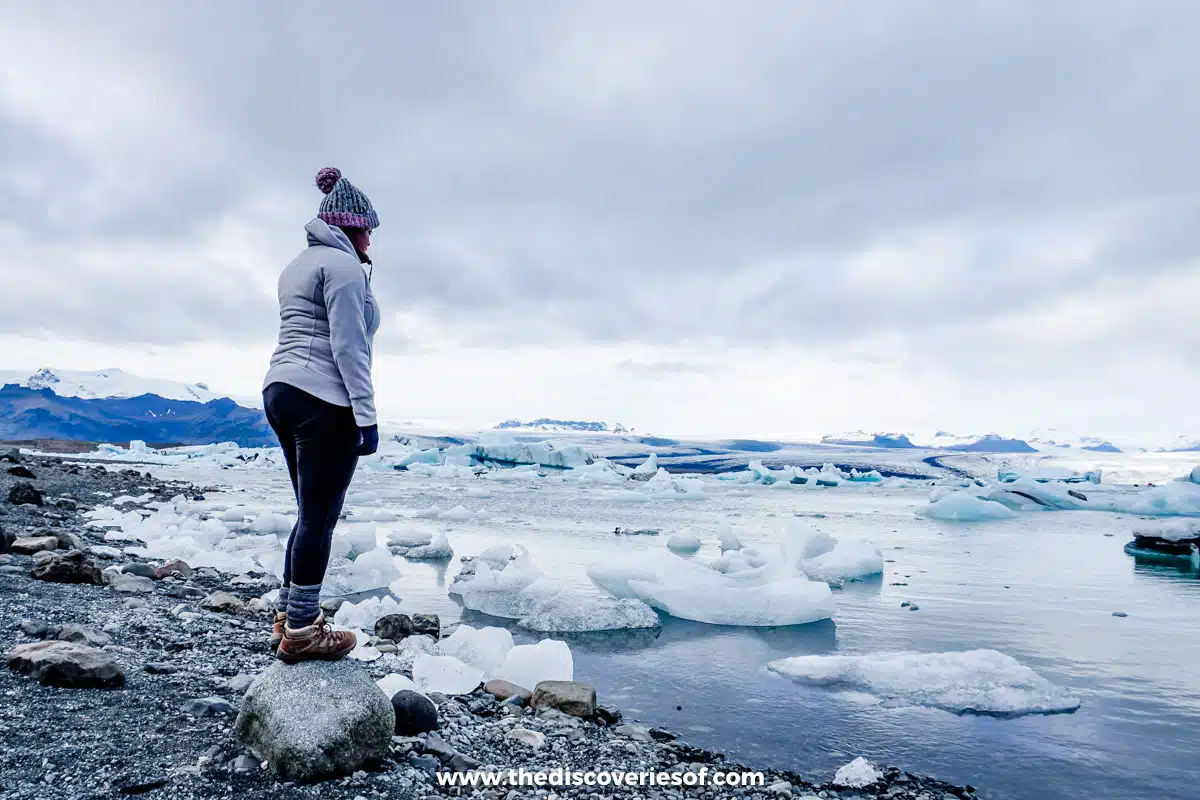
On my September trip to Iceland, a puffy jacket, a beanie and leggings were enough by day, as you can see in my photo at Jökulsárlón. Nights are a different story: the temperature drops as soon as the sun goes down and you’re standing still for hours, so pack proper layers, a waterproof shell and gloves. My February trip to Tromsø and March trip to Rovaniemi both had plenty of snow on the ground, so dress for full winter then.
If you’re going in autumn, you can usually swap the heaviest parka for a warm insulated jacket with a waterproof shell on top. Keep everything else the same.
Your Northern Lights packing checklist
- Merino base layer top and leggings
- Thermal mid layer and a fleece or puffy jacket
- Thick wool jumper
- Long, warm, windproof parka with a hood
- Hiking, waterproof or ski trousers
- Warm, waterproof boots with good grip
- Pull-on snow grips
- Wool socks (several pairs)
- Beanie, scarf or neck gaiter
- Touchscreen gloves, plus mittens if you’re taking photos
- Hand and toe warmers
- Thermal flask
- Head torch with a red light
- Spare batteries and a power bank
- Snacks
- Camera and tripod
- Swimsuit (for hot tubs and pools)
Northern Lights clothing questions
Can I wear jeans to see the Northern Lights? I wouldn’t. Denim is cotton, so it doesn’t insulate well and gets very cold once it’s damp. Wear thermal leggings under hiking or ski trousers instead.
Do I need snow boots or are hiking boots enough? For Lapland in midwinter, proper insulated snow boots are much warmer. For Iceland and coastal Norway, warm waterproof hiking boots with thick wool socks usually do the job. Either way, add snow grips for ice.
Should I buy a thermal suit? Probably not. Many tours and some hotels provide them. Invest in good base layers, boots and gloves instead, because you’ll use them every day of your trip.
What colour should I wear? It doesn’t matter for seeing the lights. If you’ll be in photos, a bright jacket stands out nicely against the snow and the night sky.
Read more Northern Lights guides
- How to see the Northern Lights: my top tips
- When’s the best time to see the Northern Lights?
- How to read a Northern Lights forecast
- Chasing the Northern Lights in Tromsø
- The best time to see the Northern Lights in Iceland
- Where to see the Northern Lights in Finland
- The definitive Iceland packing list
Love This? Save and Share on Pinterest
Discover the top things to do, insider tips and hidden gems in our Tips & Thoughts.
Read the guides →