

The temples of Abu Simbel are some of Egypt’s best-known landmarks, two rock-cut temples built by Ramses II on the edge of Nubia. Here’s what you’ll see, whether to go by road or by air, and how to time your visit.
Welcome to the land of the pharaohs, where ancient rulers carved momentous monuments to themselves and their gods. Few of them are as grand as the ones at Abu Simbel.
Look, I’ll level with you: a day trip here involves either a horrendously early start or a kind of early start, depending on whether you go by road or fly. Either way, don’t question it: it will be worth it.
I was emphatic that I was going to visit on my Egypt trip, and I’m so glad I did. It was an optional extra on the tour I took, and going felt like a no-brainer. Sure, the Great Temple feels a little bit like an ego-trip. But my god, it’s stunning. Honestly, I’m yet to meet a person who wasn’t awestruck by the sight of the temples.
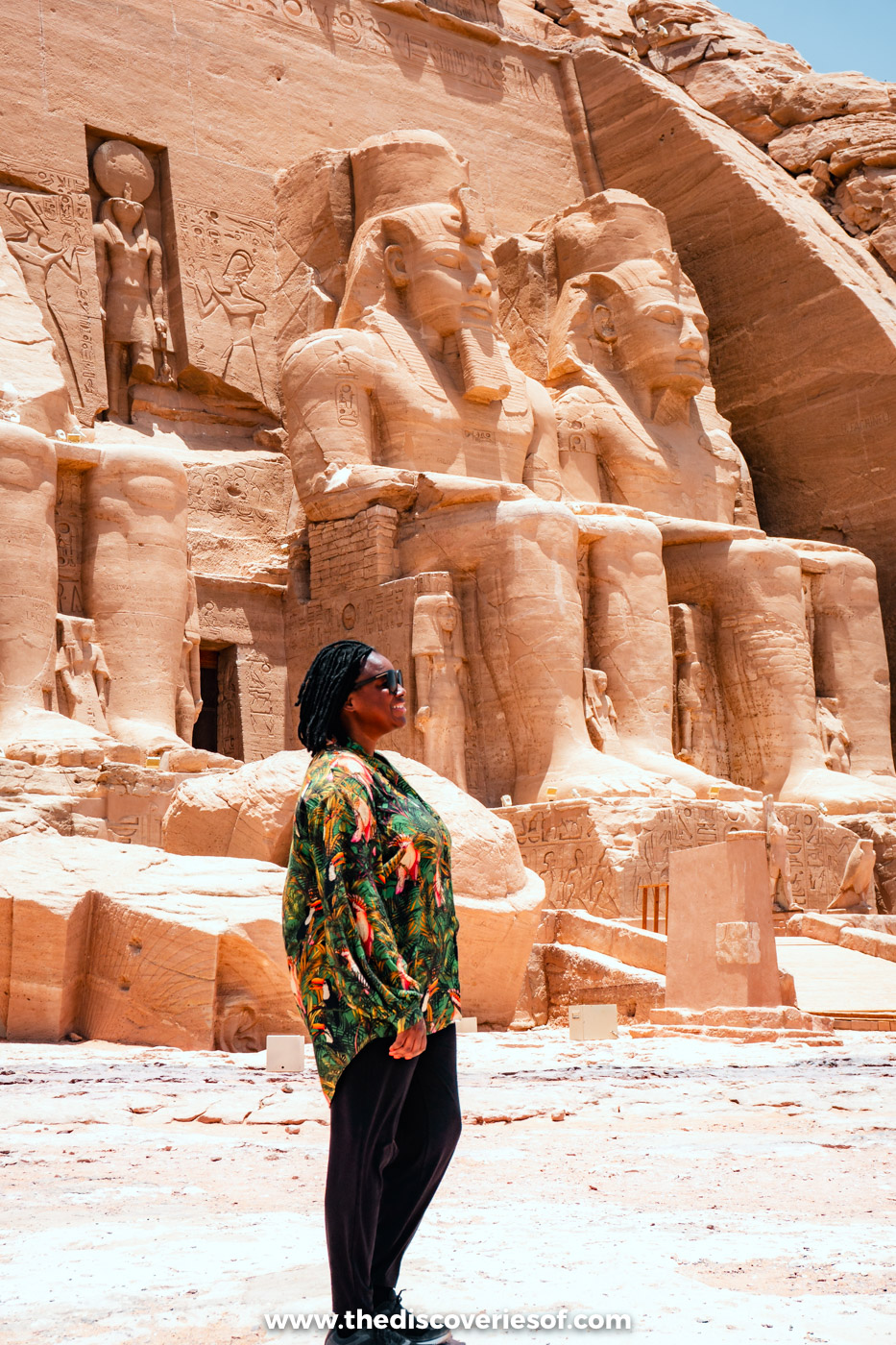
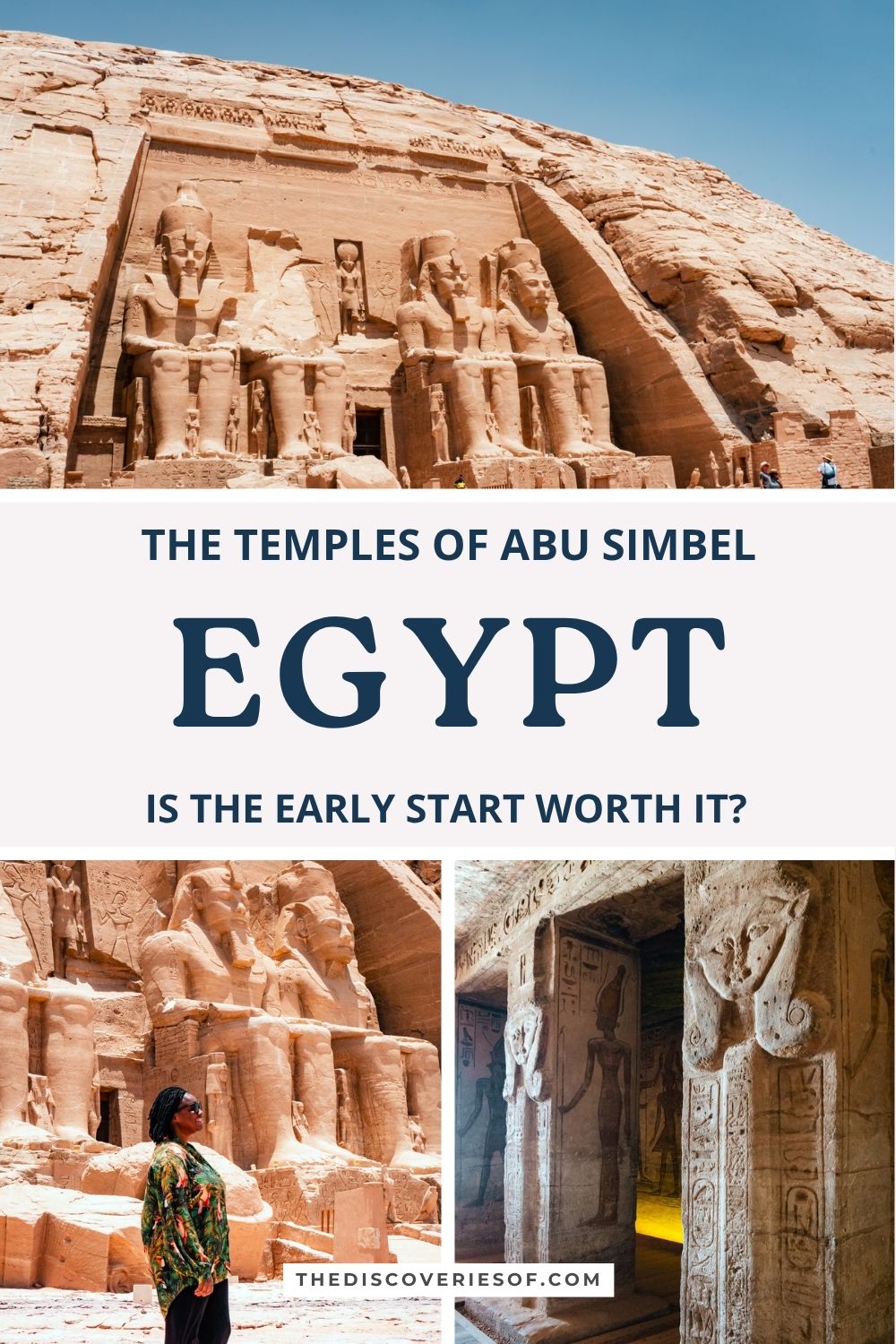
The not-so-humble Great Temple is carved into the mountainside, its facade emblazoned with four colossal figures of its maker, Ramses II (or Ramses the Great). Next to it stands a smaller but equally impressive temple, dedicated to the goddess Hathor and to Ramses’ much-loved wife, Nefertari. Together, they’re part of a UNESCO World Heritage Site in what used to be ancient Nubia, and one of the most spectacular sights you will ever lay eyes on.
I went in early June, the day after Philae, and spent a little over an hour exploring both temples. This guide covers what to see in each one, the sun festival, how the temples were saved from Lake Nasser, and how to plan the trip from Aswan.
At a glance
- Location: on the west bank of Lake Nasser, about 280 km south of Aswan and 40 km from the Sudanese border
- Getting there: about three and a half hours by road from Aswan, or a 45-minute flight
- Ticket: about 820 EGP for adults and about 445 EGP for students; more on the sun festival days
- Opening hours: daily from early morning (5am or 6am) until the late afternoon; check before you go
- Time needed: one and a half to two hours on site
- Best time: first thing, or the last hour or two before closing, when the day-trippers have gone
- Sun festival: 22 February and 22 October each year
Why visit Abu Simbel?
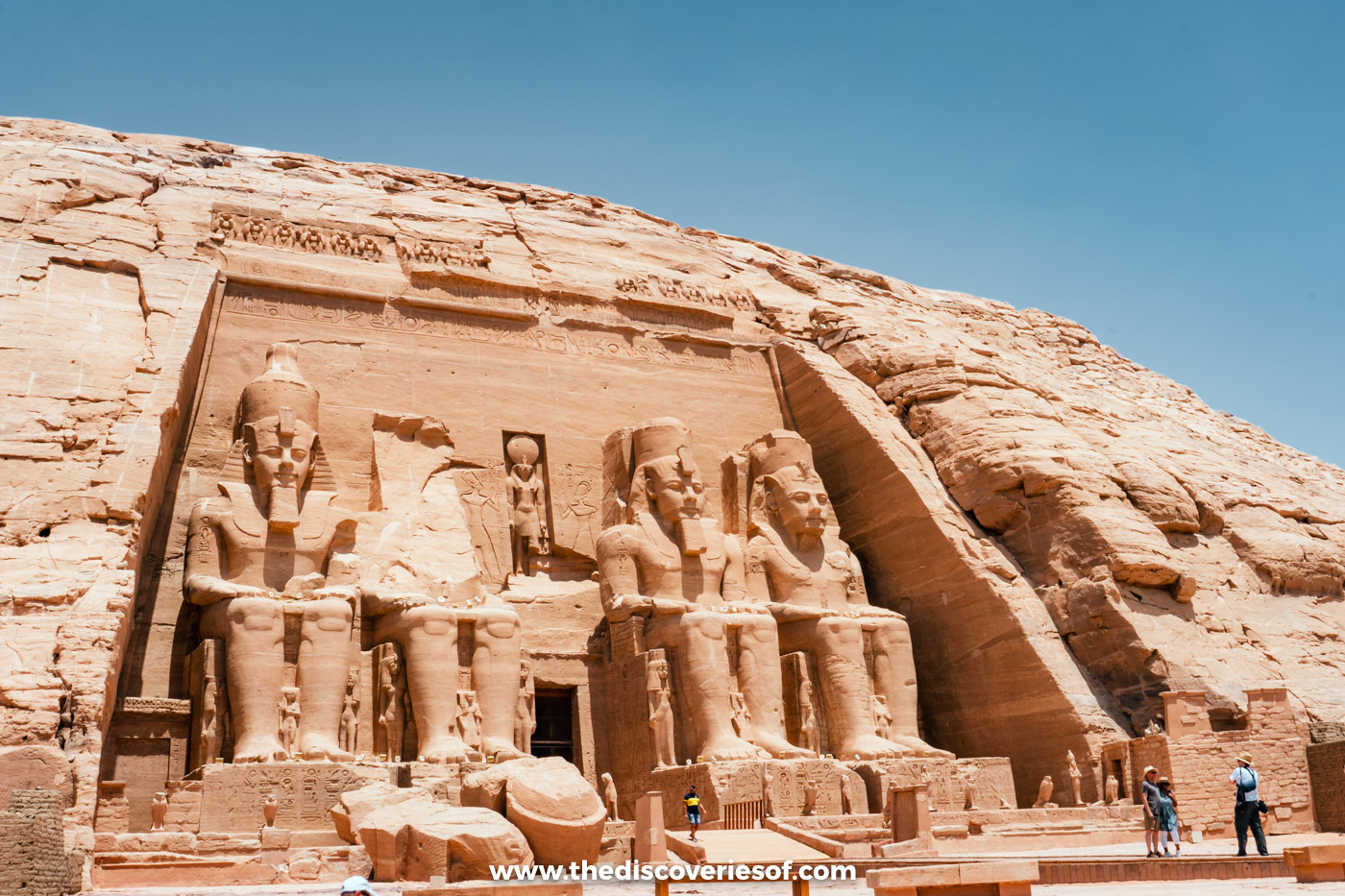
Why go all this way? How about to see one of the greatest pieces of ancient Egyptian architecture still standing?
Along with the Pyramids of Giza, Karnak and the Valley of the Kings in Luxor, it’s one of the country’s best-known sights, and I absolutely recommend adding it to your Egypt itinerary.
The site is made up of two magnificent temples, carved out of a sandstone cliff in the far south of the country. Ramses II built them around 1264 to 1244 BC, and their location was no accident. They sit on the old frontier with Nubia, where every trader, soldier and envoy heading north up the Nile would see them, a reminder of the pharaoh’s power. The spot was also sacred to Hathor, which is partly why the second temple is hers.
Today they look out over Lake Nasser, the vast reservoir created by the Aswan High Dam, which lies some 280 km to the north. And as you’ll find out below, they’re not quite where Ramses left them.
The Great Temple: Ramses’ monument to himself
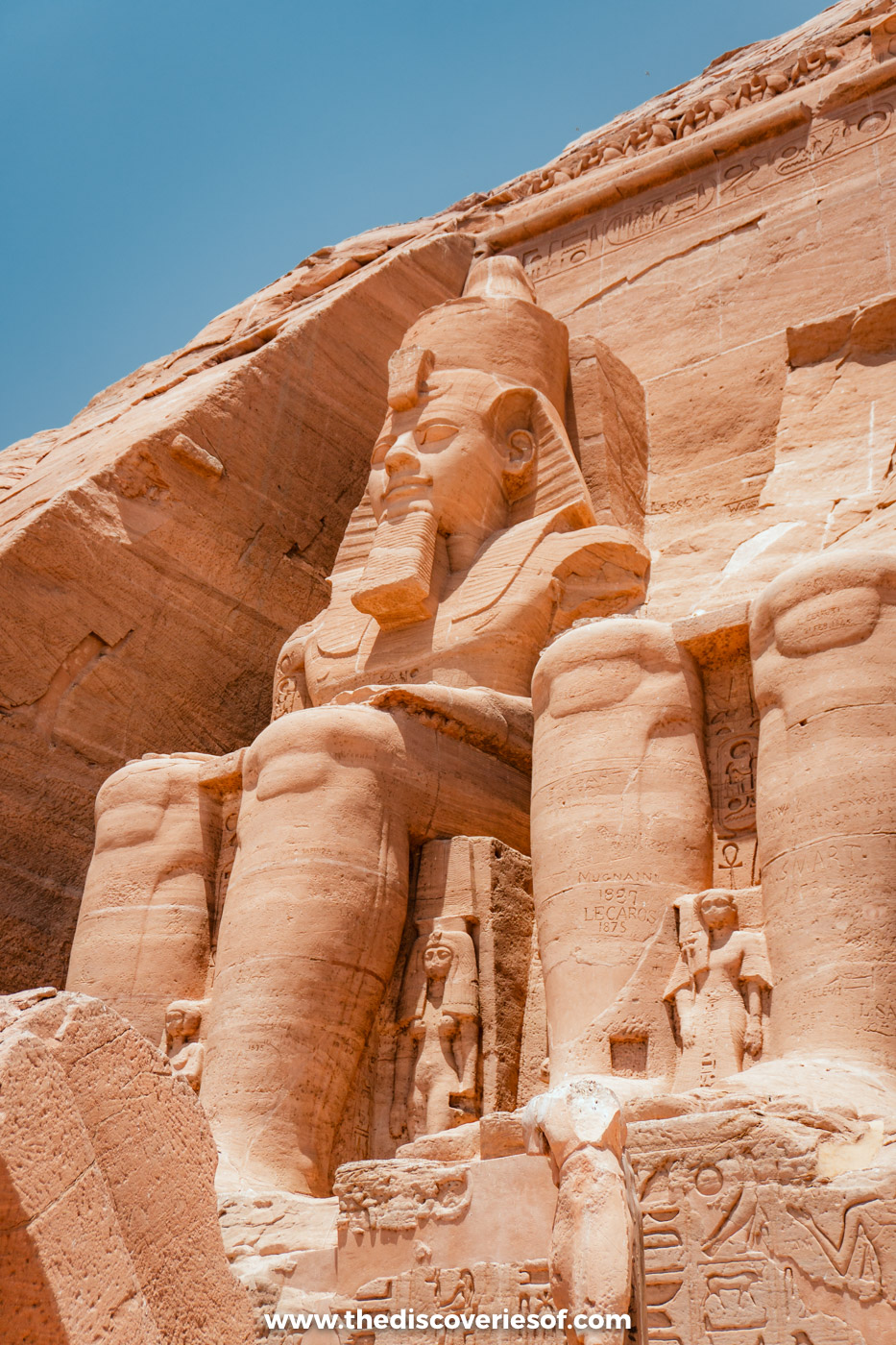
Descending the path from the visitor entrance, you turn the corner and catch a first glimpse of the Great Temple, until it reveals itself in its full glory.
We’re talking four colossal 20-metre statues of the king at the entrance, with smaller figures of his wife Nefertari, his mother Mut-Tuya and some of his children standing by their legs. One of the four lost its head and torso in an earthquake not long after the temple was finished, and the pieces still lie at its feet. Above the door, the king’s name is spelled out by a figure of the falcon-headed sun god Ra-Horakhty, and a row of baboons greets the rising sun along the top of the facade.
Ramses dedicated the temple to the gods Ra-Horakhty, Amun-Ra and Ptah, and to himself (of course), because if there’s one thing Ramses II did well, it was to crow about his own great deeds.
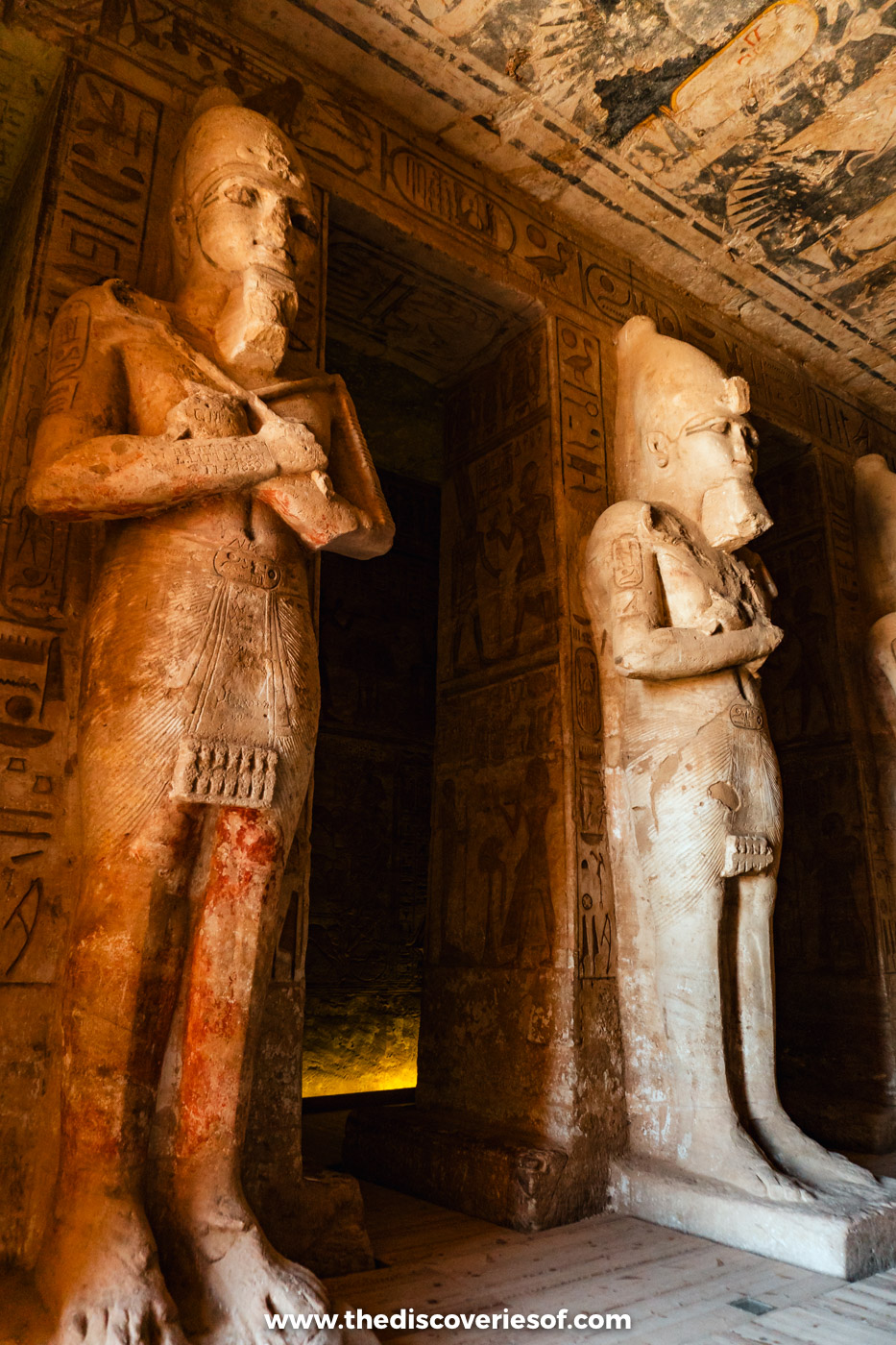
The inside is equally grand, with halls that get smaller as you go deeper into the rock. The first is lined with eight giant statues of Ramses as Osiris, god of the afterlife, and its walls show his campaigns, including his version of the Battle of Kadesh against the Hittites, the story forever frozen in sandstone. The walls are so crowded with his triumphs that you soon lose count. Beyond the halls and a series of side rooms lies the sanctuary, where the four gods sit side by side at the very back of the temple.
The giant faces of four Ramses staring down at you before you enter, the elaborate carvings inside: it’s impossible not to feel its grandeur. For the full story of the temple, including how Ramses built it and what to look for room by room, read my guide to the Great Temple of Ramses II.
The Temple of Hathor and Nefertari
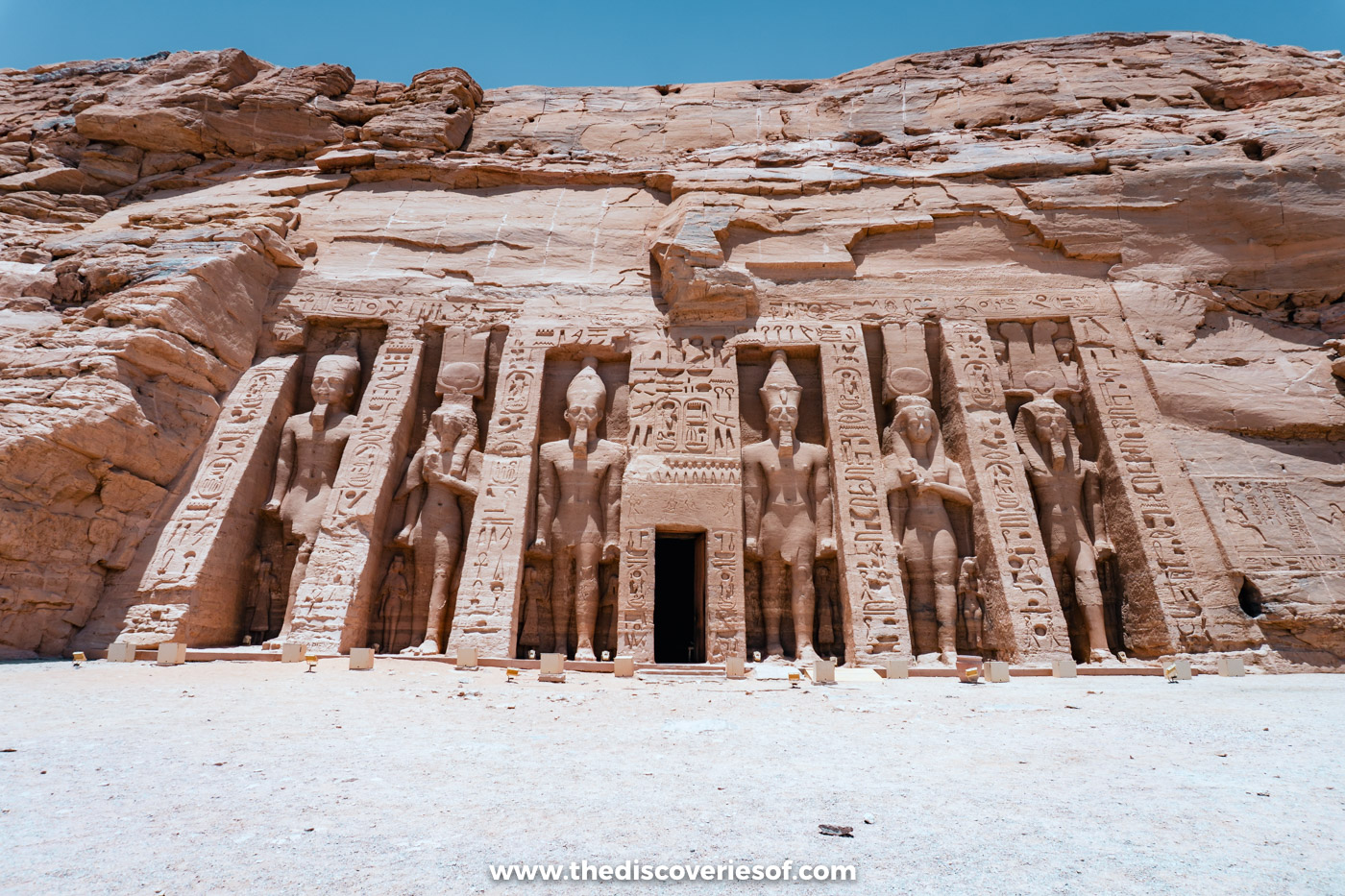
Don’t forget to spend some time in the smaller temple, often called the Small Temple, about 100 metres north of the Great Temple. It’s dedicated to the goddess Hathor and to Nefertari, Ramses’ favourite wife, and while it’s still emblazoned with Ramses’ face outside, inside it’s distinctly different to its neighbour.
A queen carved as tall as the king
Six standing statues, each just over 10 metres tall, guard the entrance: four of Ramses and two of Nefertari, each queen flanked by her husband. Look closely at the sizes. The queen is carved at the same height as the king, which is incredibly rare in Egyptian art, a sign of just how highly Ramses regarded her. Their children stand at their feet. The inscription on the facade says Ramses built the temple for his great royal wife Nefertari, “for whose sake the very sun does shine”.
That said, there are still more statues of Ramses than of the queen (look, Egyptologists didn’t nickname Ramses II “the great chiseller” for nothing, you know).
The hall of Hathor pillars
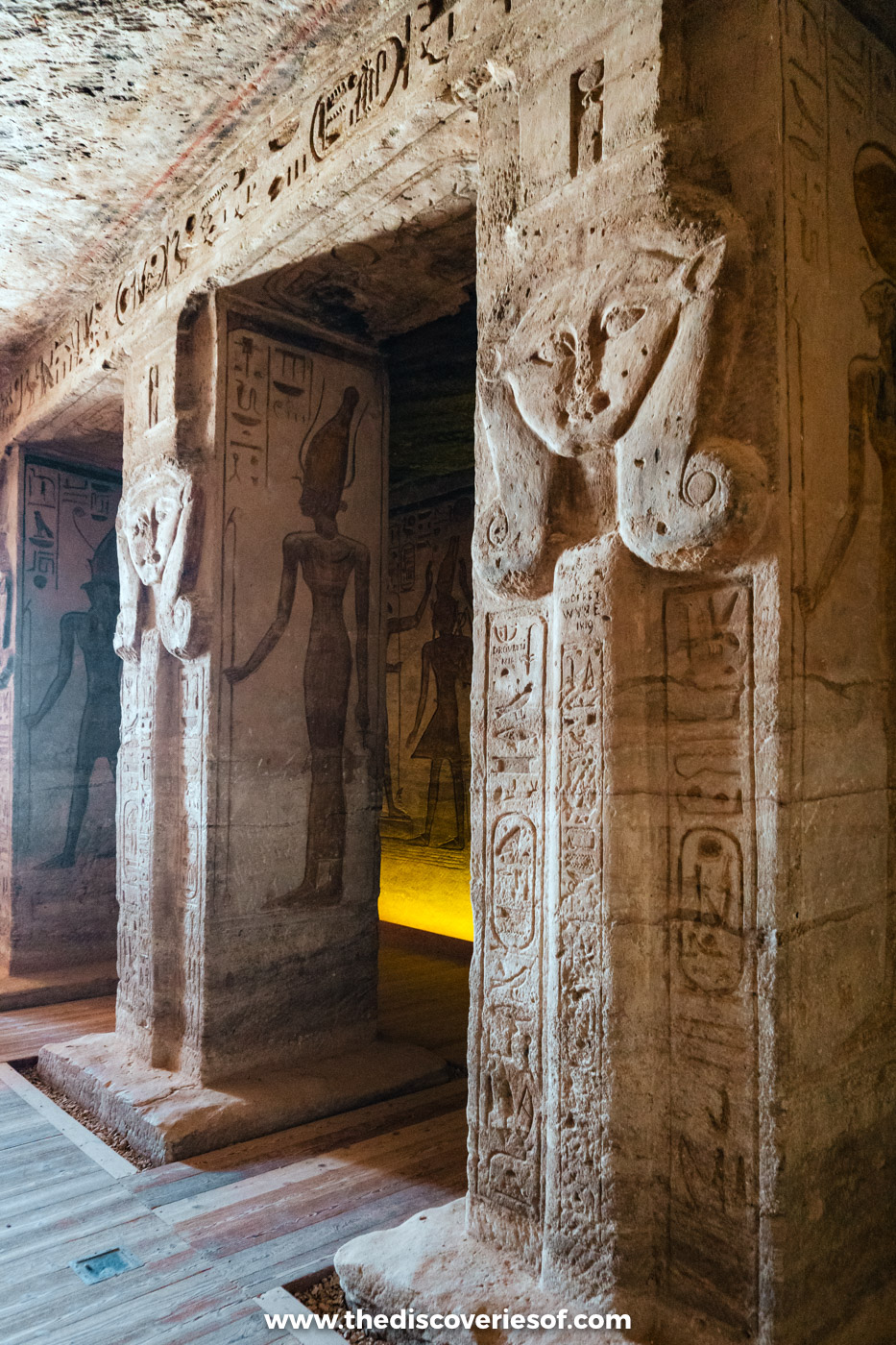
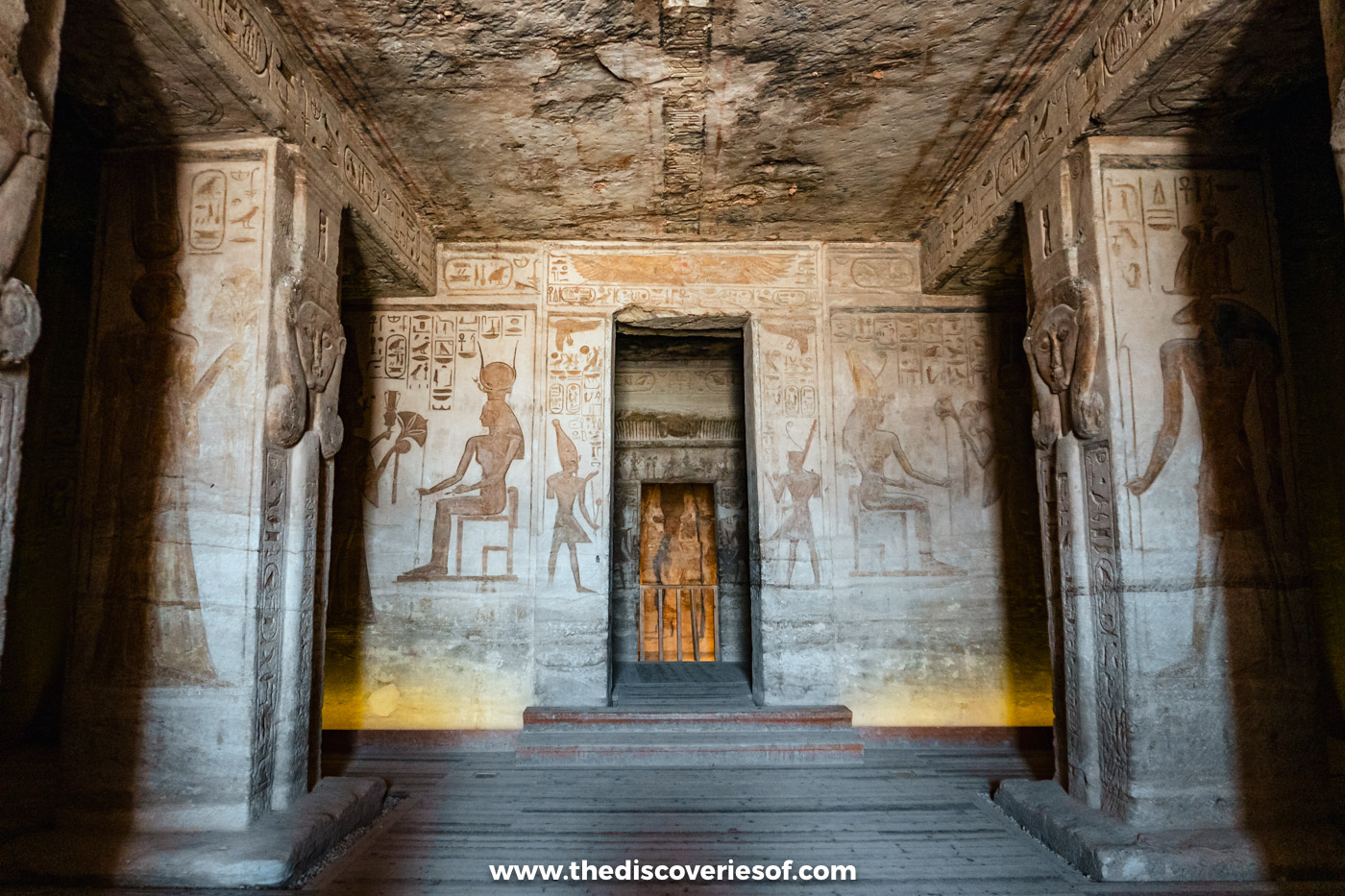
Just inside the entrance, the hypostyle hall has six square pillars, each topped with the face of Hathor, with her cow’s ears and heavy wig. Instead of the glories of Ramses in battle, the walls here mostly show religious ceremonies and offerings to the gods.
There’s one exception. Near the entrance, Ramses smites his enemies, with Nefertari standing behind him, and elsewhere she appears in her own right, making offerings to Hathor and to Isis, who crown her in one of the most beautiful scenes in the temple.
The sanctuary, where Hathor steps out of the rock
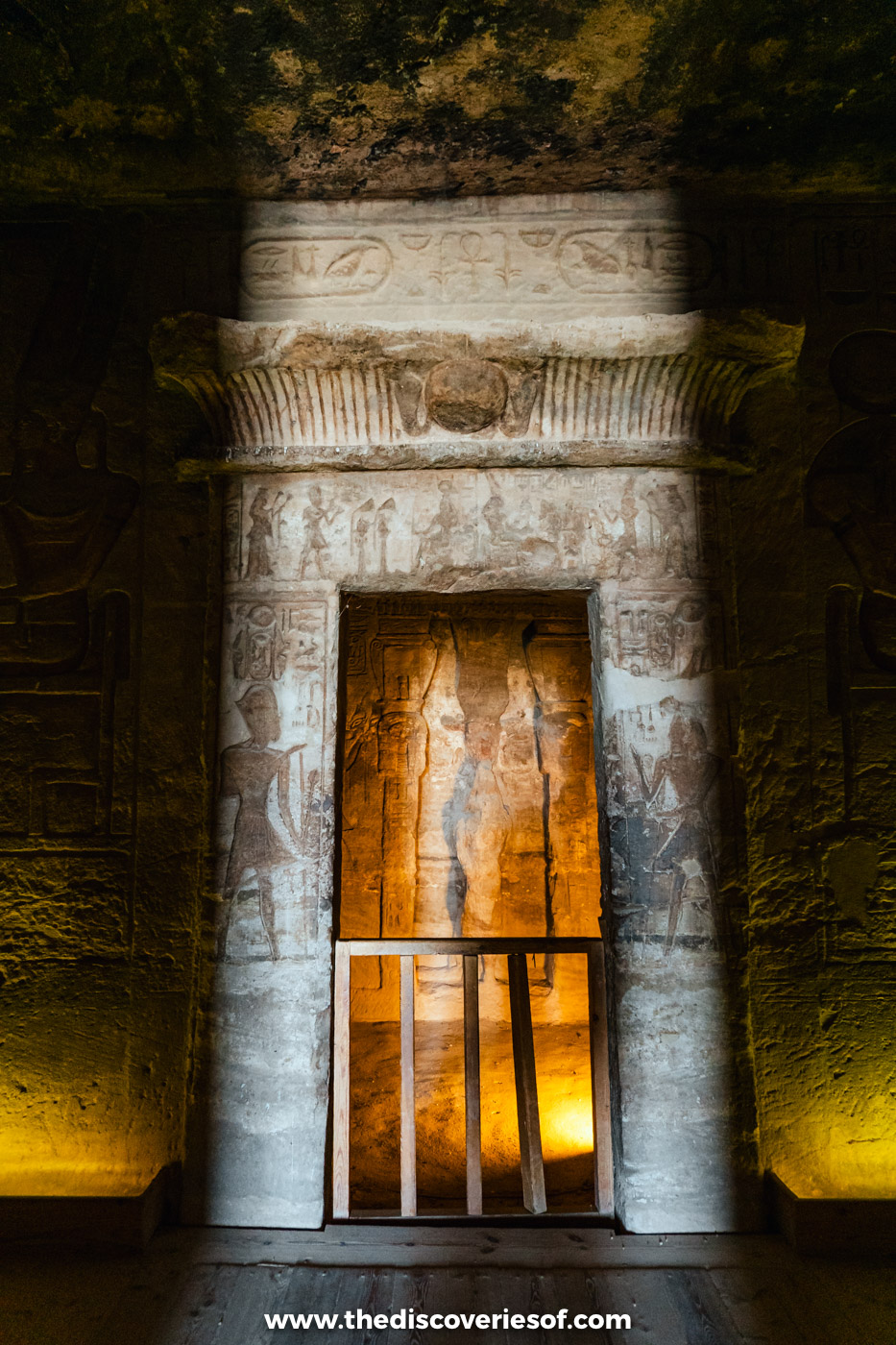
Delve deeper to the vestibule to see more carvings, including the king and queen offering flowers to Hathor, before venturing into the sanctuary. At the back, Hathor appears as a sacred cow, emerging from the rock to protect the king, who stands beneath her head. It’s a quiet, intimate end to the visit, and a lovely contrast to the bombast next door.
Top Tip
The Small Temple is usually much quieter than the Great Temple, so if the crowds are bad when you arrive, start here and go back to the Great Temple later.
The sun festival (22 February and 22 October)
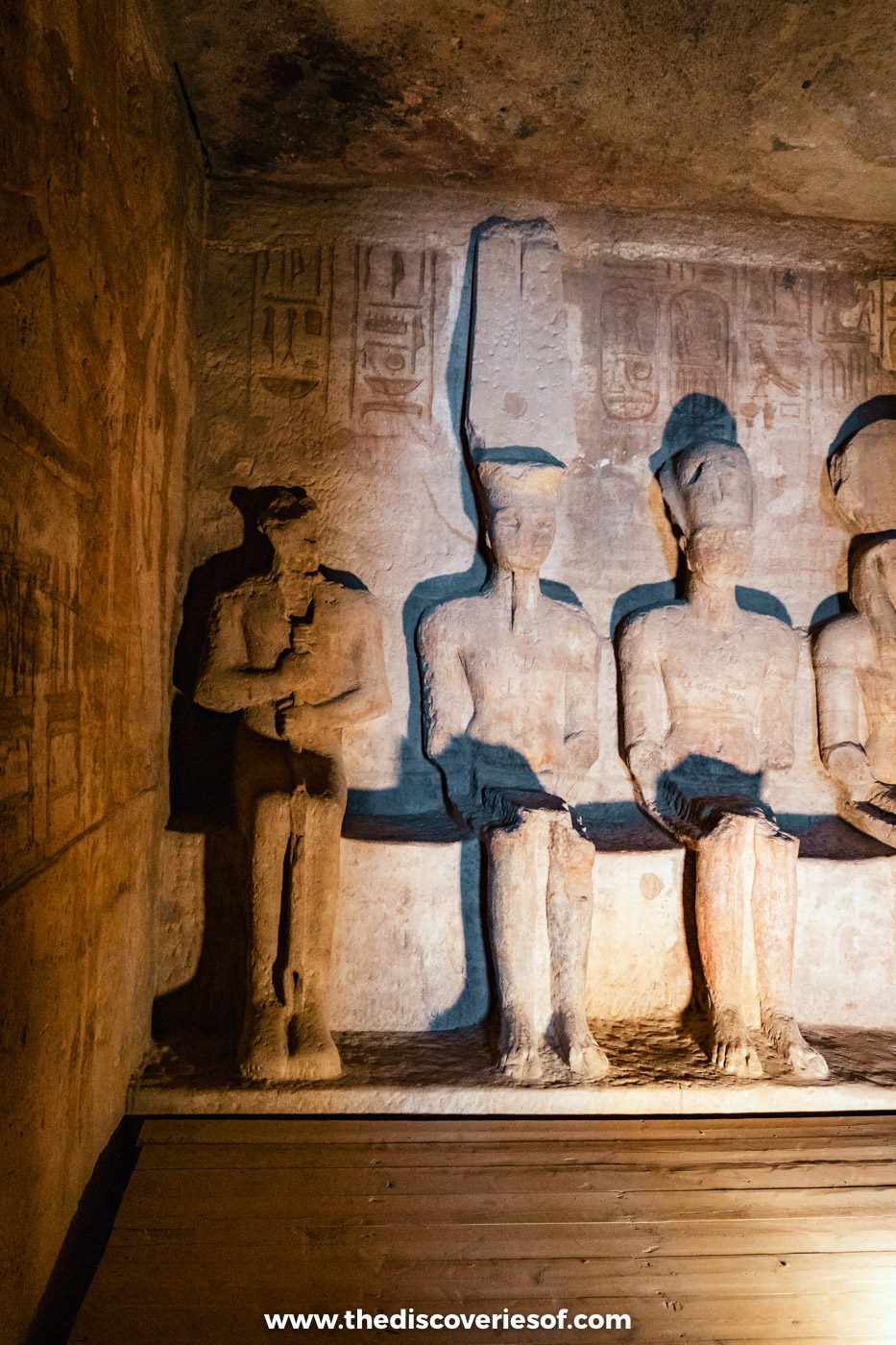
Each year, the sun festival takes place on 22 February and 22 October.
On these mornings, the rising sun shines straight through the entrance of the Great Temple and deep into the rock to light up the normally dark sanctuary. It bathes three of the four statues at the back, Ra-Horakhty, Ramses and Amun-Ra, in light for a few minutes, while Ptah, the creator god of Memphis and a god linked with the underworld, remains in shadow.
It’s often said that the dates mark Ramses’ birthday and his coronation, though there’s no ancient evidence for that, and they may simply have marked the seasons. The alignment has also shifted slightly: because the temple was moved, and over the centuries since it was built, the dates are thought to fall about a day later than they originally did.
To get the full effect, you need to arrive before sunrise and stand in crowds of several thousand people as you wait for the light to reach the sanctuary at around 6.30am. Tickets on festival days cost more (about 1,200 to 1,300 EGP), and festival tours sell out early. Afterwards, there’s traditional dancing, music and stalls loaded with food to celebrate.
Lost, found and moved: the temples’ story
Buried by the sand
Once the temples fell out of use, the shifting sands of the desert began to cover them. By the sixth century BC, the sand already reached the knees of the colossi: Greek mercenaries in the army of Psamtik II scratched their names into the leg of one of the statues in 591 BC, one of the oldest known Greek inscriptions anywhere. Over the centuries, the temples were swallowed up and largely forgotten.
Found again by Burckhardt and Belzoni
The Swiss explorer Johann Ludwig Burckhardt spotted the top of the Great Temple’s facade and the Small Temple in March 1813. William John Bankes tried to get in two years later, but it wasn’t until 1 August 1817 that the Italian explorer Giovanni Battista Belzoni and his team dug down to the entrance and became the first Europeans to enter the Great Temple.
Saving the temples from Lake Nasser
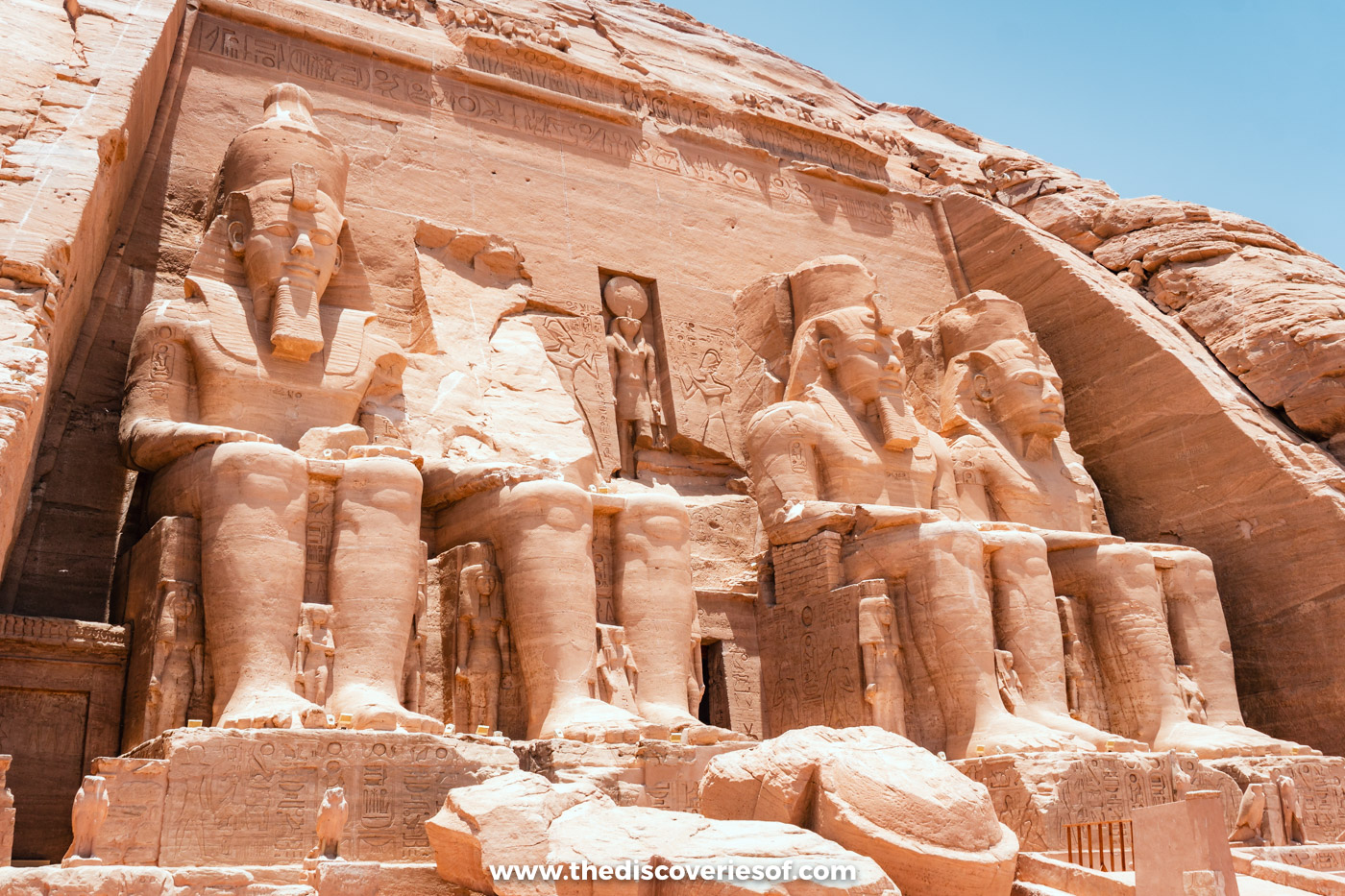
In the 1960s, near tragedy struck when the Aswan High Dam was built. The dam was a huge help for Egypt, providing irrigation and hydroelectricity, but the lake it created would have drowned both temples for good.
To save them, UNESCO and the Egyptian government launched one of the greatest feats of archaeological engineering ever attempted. Between 1964 and 1968, engineers cut both temples into 1,036 blocks, averaging around 20 tonnes each, and reassembled them like a jigsaw on higher ground, about 65 metres higher and 200 metres back from the river. The cliffs were rebuilt around them as an artificial hill, supported by huge concrete domes hidden inside the hill. It cost about US$40 million, with Egypt paying around half and nearly 50 countries contributing the rest, and the temples were reopened in September 1968.
Considering they also had to position the Great Temple just right for the sun to keep shining into its sanctuary twice a year, it’s an incredible achievement, and once you know, you can’t quite stop looking for the joins.
How to get to Abu Simbel: road or air?
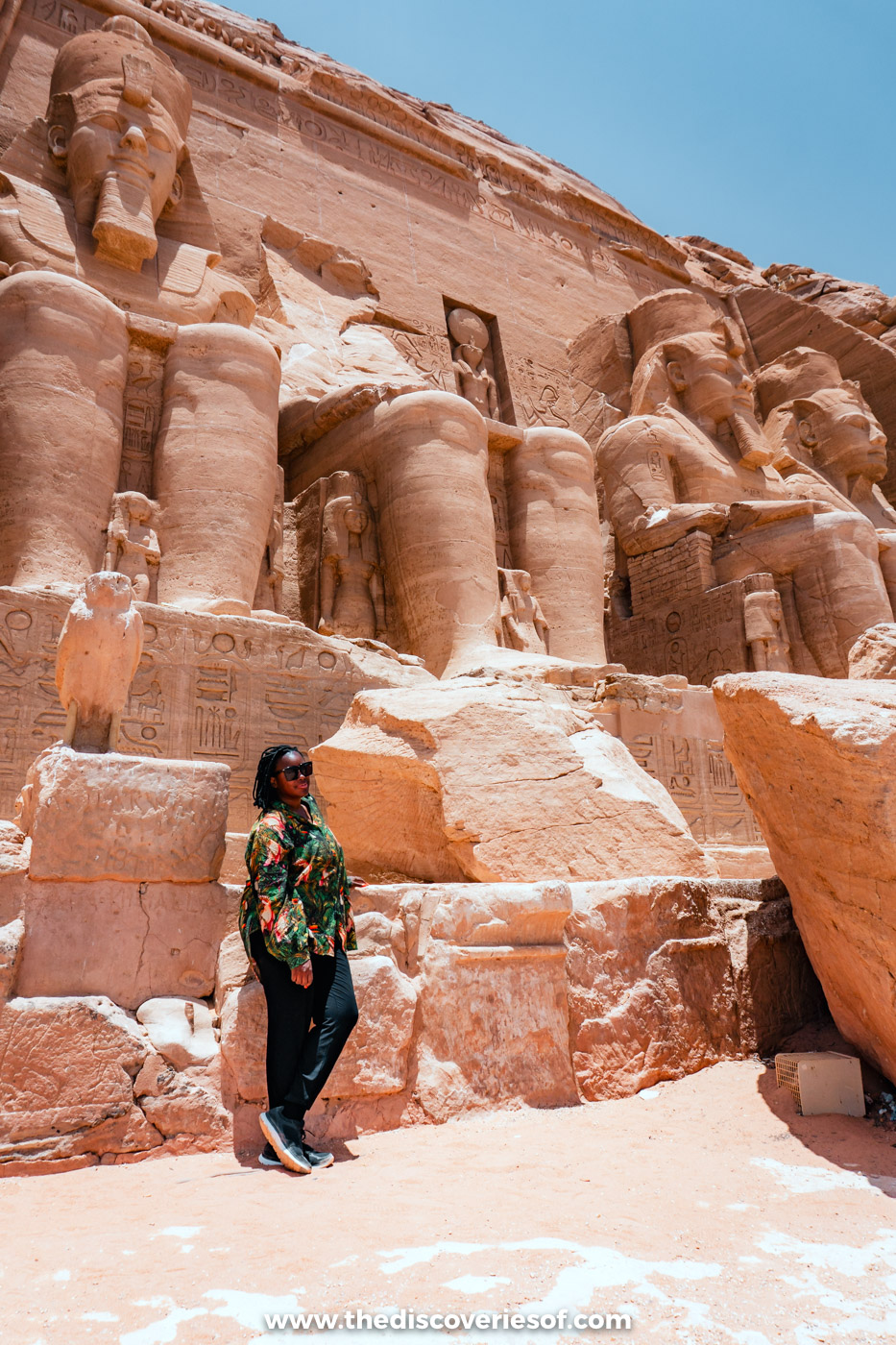
Most people visit on a day trip from Aswan, and there are two ways to do it: by road, which takes a lot longer, or by plane, which is more expensive.
By road
It’s about 280 km from Aswan, which is around three and a half hours each way through the desert. Most tours leave Aswan at around 4am to reach the temples soon after they open, and get back by early afternoon. That’s the horrendously early start.
The old police convoys have been replaced by checkpoints along the road, but tourist traffic still isn’t allowed on the desert highway overnight, so independent travellers need to plan around the road’s opening hours. There’s no railway this far south. A public bus runs from the city, but it’s slow and the return isn’t guaranteed on the same day, so it’s best if you’re planning to stay overnight.
The easiest way is on a tour. This day trip with hotel pickup is the most popular option, this group tour with a guide and entrance fees includes your ticket, and there’s also a private day trip with a guide and car.
By air
The quickest way is to fly. Flights from Aswan take about 45 minutes, and a shuttle bus takes you the 5 km from the airport to the temples and back. Return flights cost roughly 5,500 to 8,000 EGP depending on the day and how far ahead you book, and some routes connect from Cairo via Aswan. That’s the kind of early start. Check Skyscanner for flights.
On a Nile cruise
If you’re cruising on Lake Nasser, or taking a longer Nile cruise, the trip to the temples is often built in. This four-day Nile cruise from Aswan includes the day trip as well as a balloon flight in Luxor. See my guide to Nile cruises for more options.
Tickets, opening hours and staying overnight
Tickets and opening hours
A ticket for both temples costs about 820 EGP for adults and about 445 EGP for students. Bring a card and some cash: card payment at the ticket office has been hit and miss. Photos on your phone are fine; professional cameras and tripods need an extra permit.
The site opens early, at 5am or 6am, and closes in the late afternoon (around 5pm, a little later in summer). There’s also a sound and light show in the evenings, which projects the temples’ story onto the facades, for those staying overnight.
Address: Abu Simbel, Aswan Governorate, Egypt
Where to stay
Most visitors base themselves in Aswan, but staying overnight means you can see the temples at their quietest, late in the afternoon or first thing in the morning, and catch the sound and light show.
- Seti Abu Simbel Lake Resort: a short walk from the temples on the shore of Lake Nasser, with Nubian-style rooms, landscaped gardens and a pool.
- Eskaleh Nubian Ecolodge: a traditional Nubian-style lodge close to the village centre, about 2 km from the temples, with its own restaurant and garden.
- In Aswan: I stayed at the Obelisk Nile Hotel on the Corniche, a comfortable, affordable option with a pool. Alternatively, check all accommodation in Aswan, and see my guide to the things to do in Aswan.
Tips for visiting
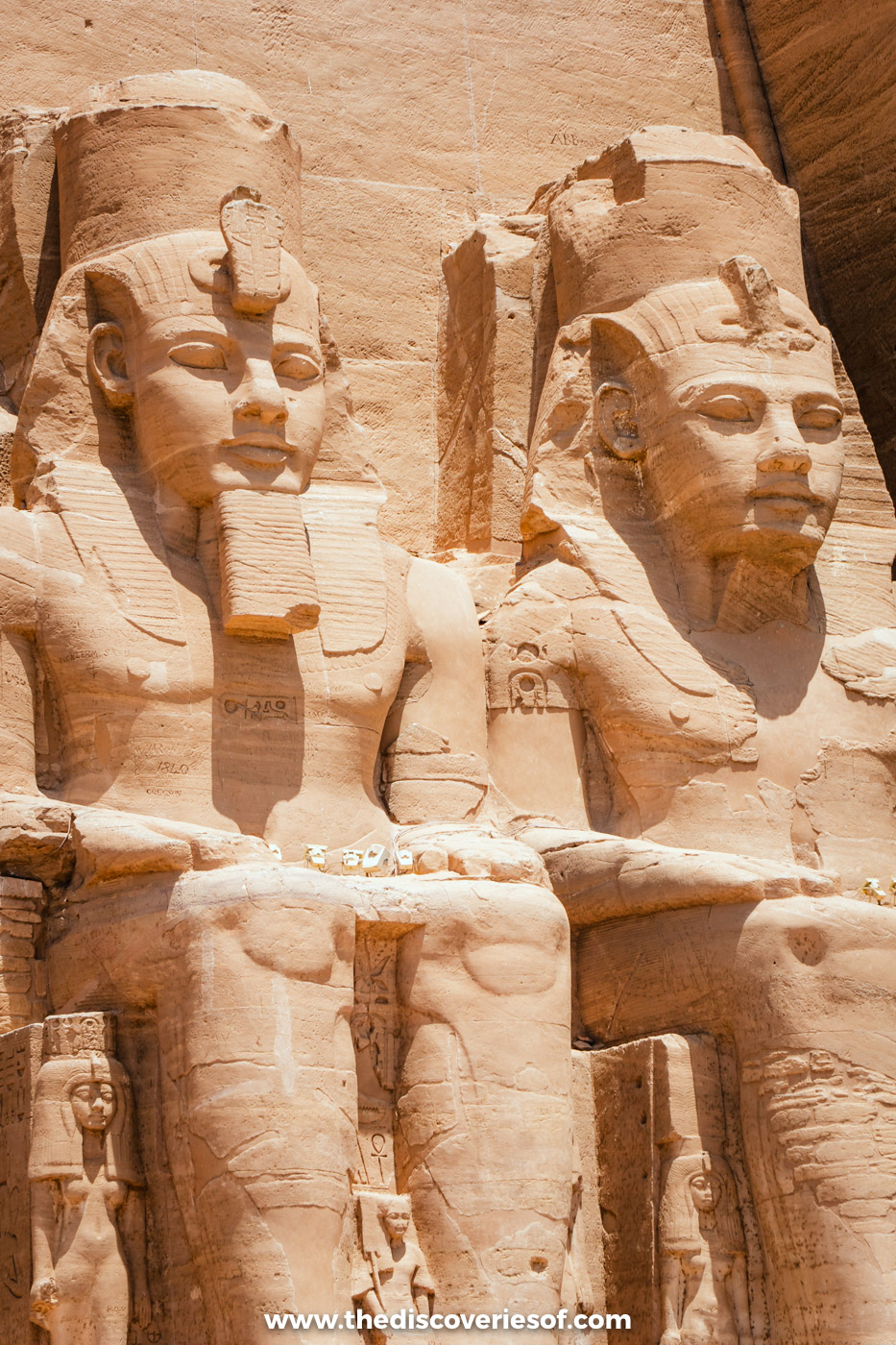
- Book a guide: if you can, go with a guide who can help you soak in all of the history inside these temples. As guiding inside is generally banned, expect your guide to talk you through everything before you go in.
- Go against the crowds: the tour buses arrive within an hour or so of each other in the morning. Head into the Small Temple first, or stay overnight and visit late in the afternoon.
- Prepare for the heat: the walk from the gate to the temples is almost entirely unshaded. Bring water, a hat and sunscreen, especially from May to September.
- Pack breakfast: on a road trip you’ll leave before hotel breakfast, and most hotels will make you a breakfast box if you ask the night before.
- Combine it with Aswan: allow at least three days in the city if you’re including this trip, with Philae Temple and the Nubian Museum on the other days.
Watch my Aswan video
Subscribe on YouTube and discover new destinations.
Map
Read next
- The Great Temple of Ramses II
- Things to do in Aswan: temples, Nubian culture and the Nile
- Philae Temple, Aswan: the Isis temple saved from the Nile
- The most incredible ancient Egyptian temples
- The step-by-step Egypt itinerary
- 20+ things you should know before travelling to Egypt
- What to wear in Egypt
- The best things to do in Egypt
- Egypt travel guide
Love this? Save and share on Pinterest

Discover the top things to do, insider tips and hidden gems in our Egypt Travel Guide.
Read the guides →




