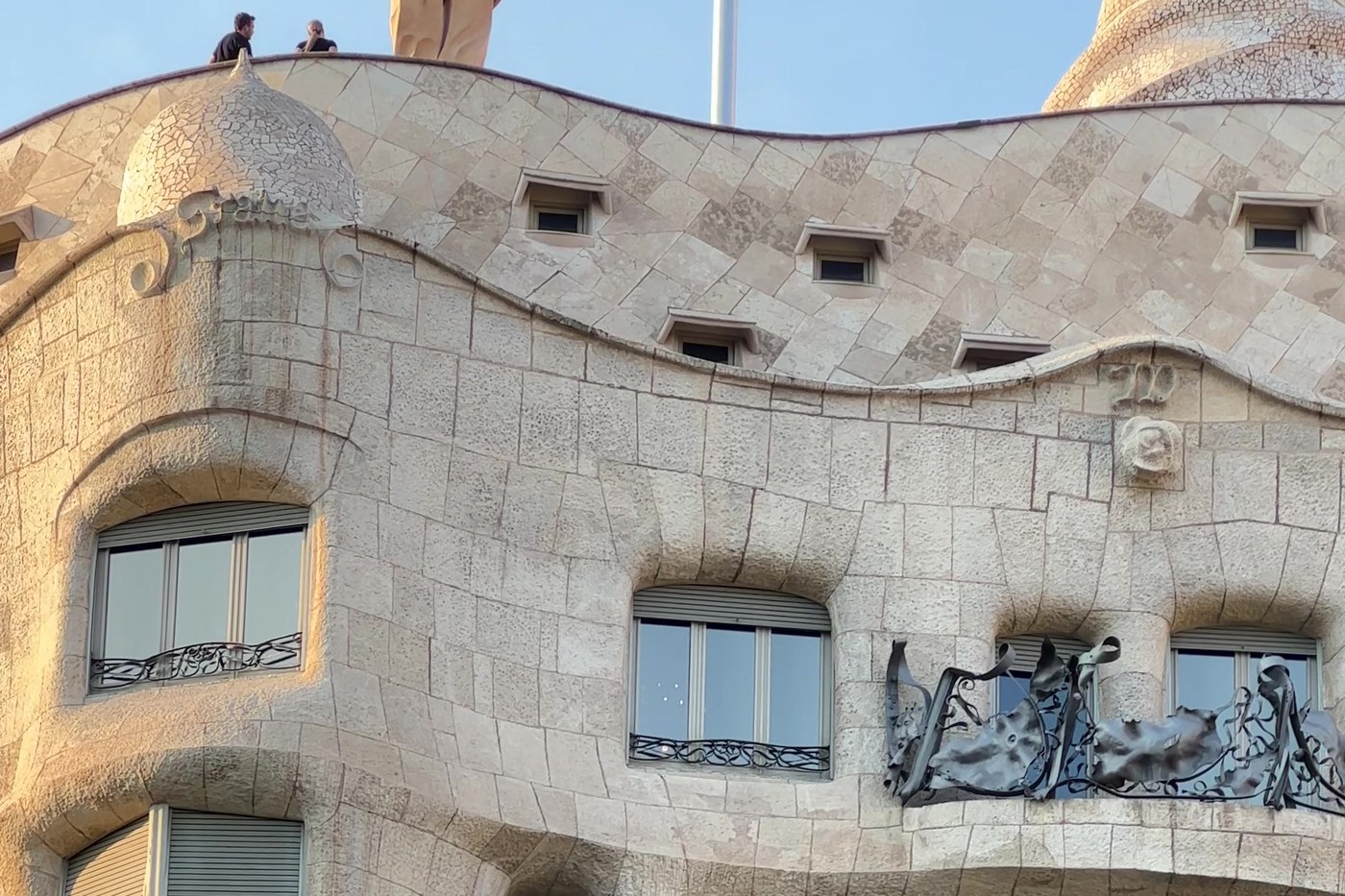

A façade like a cliff face, courtyards that open up to the sky, an attic like the inside of a whale and a rooftop guarded by stone warriors: here’s how to visit La Pedrera (Casa Milà), which ticket to book, and why it’s worth staying on for sunset.
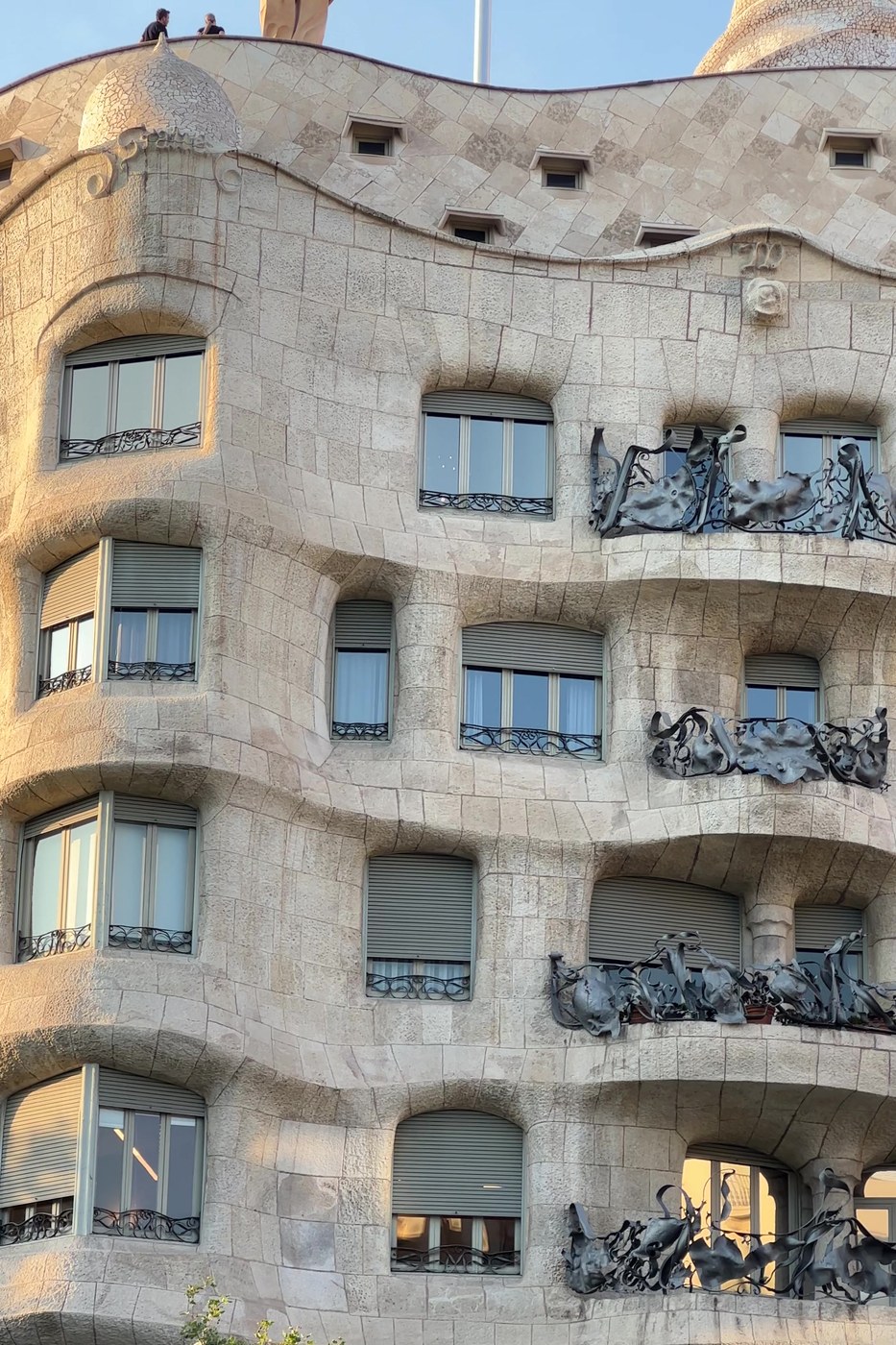
Gaudí’s Casa Milà, better known as La Pedrera, is one of the great sights of Passeig de Gràcia. Its rippling façade is one of the most recognisable sights in Barcelona, and inside, you can follow the building from its courtyards right up to the famous rooftop.
I lived in Barcelona for three months, and for part of that time my apartment looked straight across the road at Casa Milà, so its wavy stone front was the first thing I saw each morning. One June evening, I went round the whole building, from the courtyards to the roof, then stayed up there for a jazz concert as the sun went down over the city.
This guide covers what to see inside La Pedrera, which ticket to book, the best time to go and how to see it after dark.
La Pedrera at a glance
- What it is: Gaudí’s last civil building, an apartment block built between 1906 and 1912, and a UNESCO World Heritage Site.
- Where: Passeig de Gràcia 92, in the Eixample, where it meets Carrer de Provença.
- How long: about an hour and a half.
- Tickets: from about €25 online, depending on the time slot.
- Best time to go: first thing in the morning for the fewest crowds, or the late afternoon for golden light on the roof.
- Don’t miss: the warrior chimneys on the rooftop and the brick-arched attic.
A short history of Gaudí’s stone quarry
Casa Milà was built for the businessman Pere Milà and his wife, Roser Segimon, and it was the last civil building Gaudí completed before he devoted himself to the Sagrada Família.
Barcelona wasn’t sure what to make of it. Locals took one look at the undulating limestone front, without a single straight line, and dubbed it La Pedrera, the stone quarry. It was an insult at the time, and it’s been the building’s name ever since. Josep Maria Jujol, Gaudí’s long-time collaborator, created the wrought-iron balconies, tangled like strands of kelp.
Behind the stone, the building was radical. Instead of load-bearing walls, it stands on pillars and iron beams, so each apartment could be laid out however its owners liked. Today it belongs to the Fundació Catalunya La Pedrera, which runs the visits, and people still live in some of the apartments.
What to see inside La Pedrera
You begin at street level in one of the courtyards, ride the lift to the top of the building, then make your way back down via the attic and the tenants’ apartment, with a video guide filling in the story. The self-guided visit does a great job of explaining where Gaudí’s ideas came from.
The courtyards
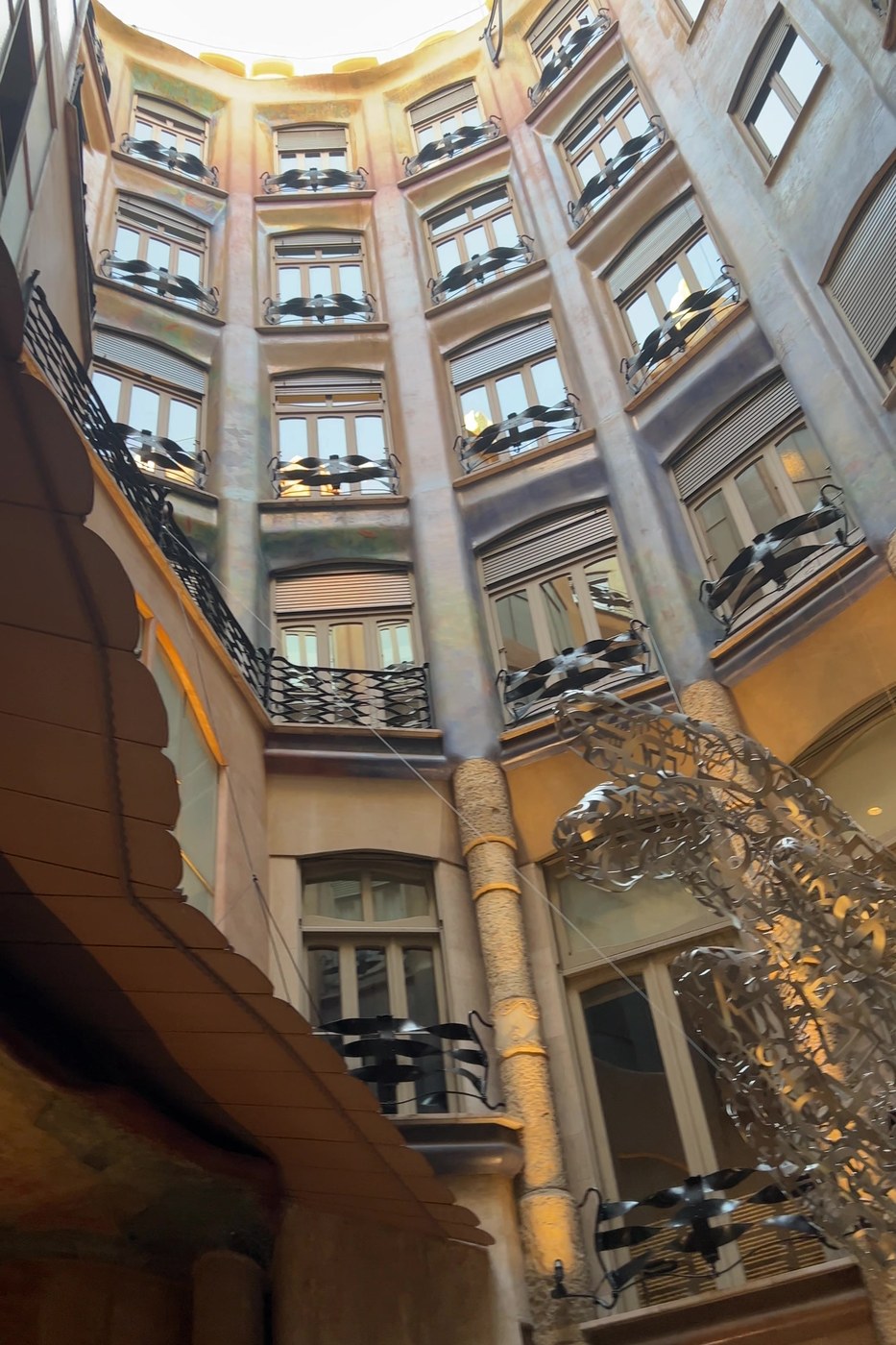
La Pedrera is built around two great courtyards, one on Passeig de Gràcia and one on Carrer de Provença, which bring light and air down into every apartment. Stand in the middle and look up: the walls curve around you to a ring of sky, lined with balconies and windows, and the entrance halls are painted with swirling murals.
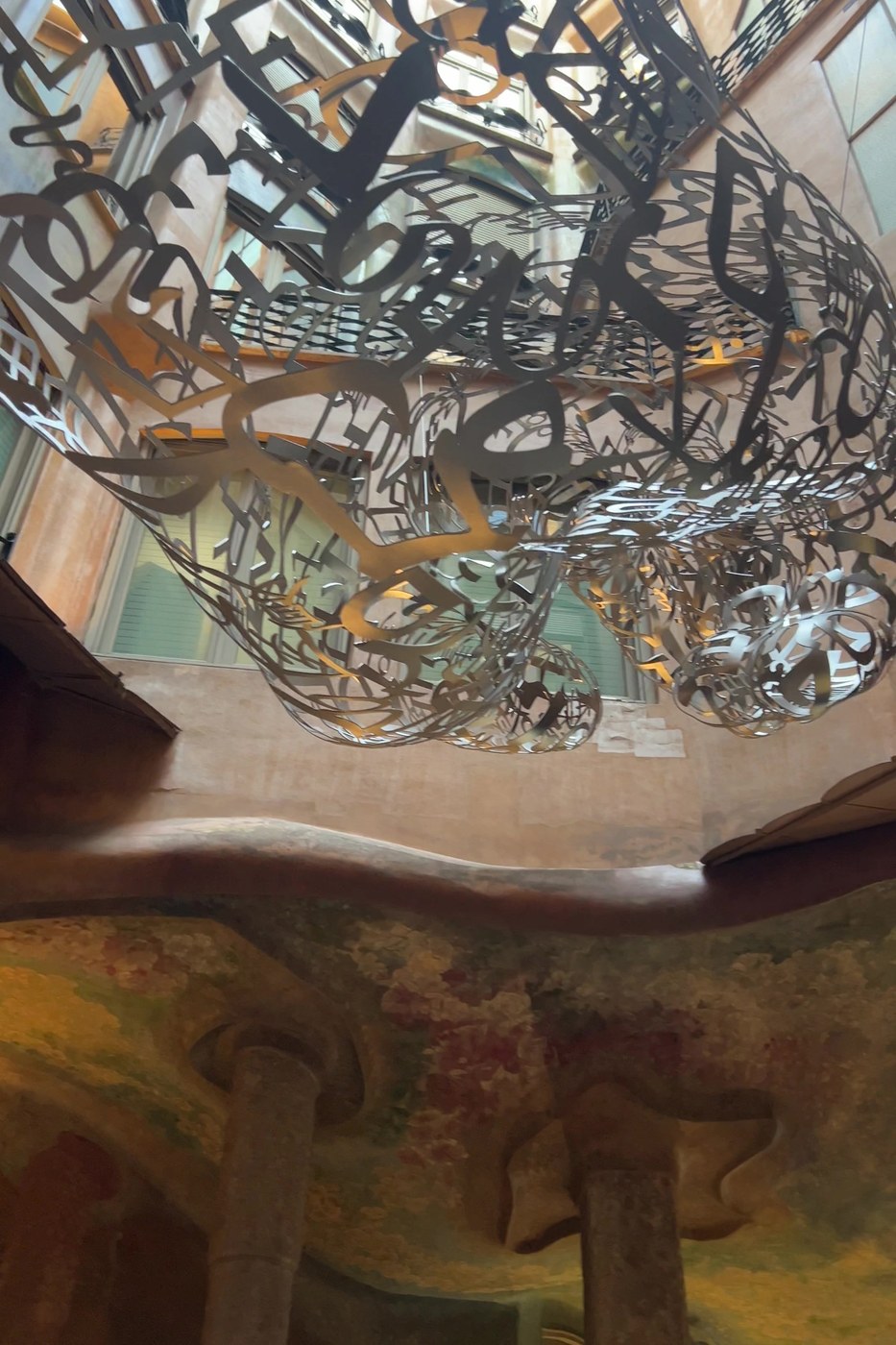
When I visited, a huge sculpture of steel letters hung over the courtyard as part of an exhibition, and in the evening light the whole space glowed gold.
The warrior rooftop
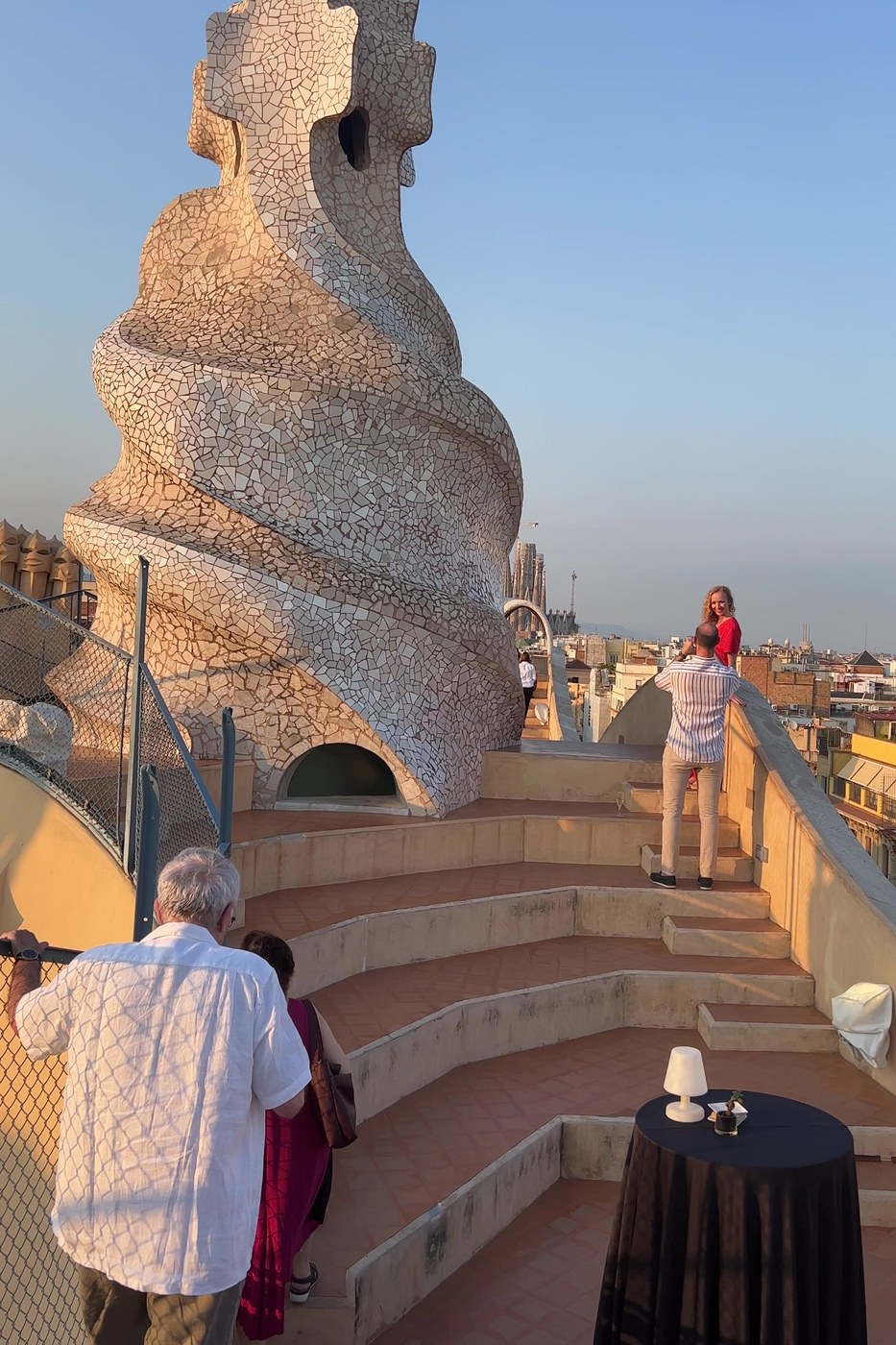
The roof is the highlight. It rises and falls in waves, with stairs and walkways winding between Gaudí’s chimneys and ventilation towers, some smooth and white, some covered in mosaic. They look like a crowd of helmeted warriors standing guard over the city, which is why it’s known as the warrior rooftop.
From the edge of the roof, you can see across the rooftops of the Eixample to the hills. Being up here as the sun goes down is something else: the light turns the stone pink, then gold.
The attic
Just below the roof is the attic, and it’s one of Gaudí’s most extraordinary spaces. It’s built from 270 brick arches, each a slightly different height, so walking through it feels like walking through the ribcage of a whale. Originally the building’s laundry and storage space, it now holds an exhibition on Gaudí’s life and work, with models and drawings that show how he took his ideas from nature.
The tenants’ apartment
One floor of the building is furnished as it would have been for a well-to-do Barcelona family in the early 1900s, with period furniture and fittings. It’s a fascinating glimpse of how the building was actually lived in, and of how unusual those curved, flowing rooms must have felt at the time.
La Pedrera after dark: rooftop jazz and night visits
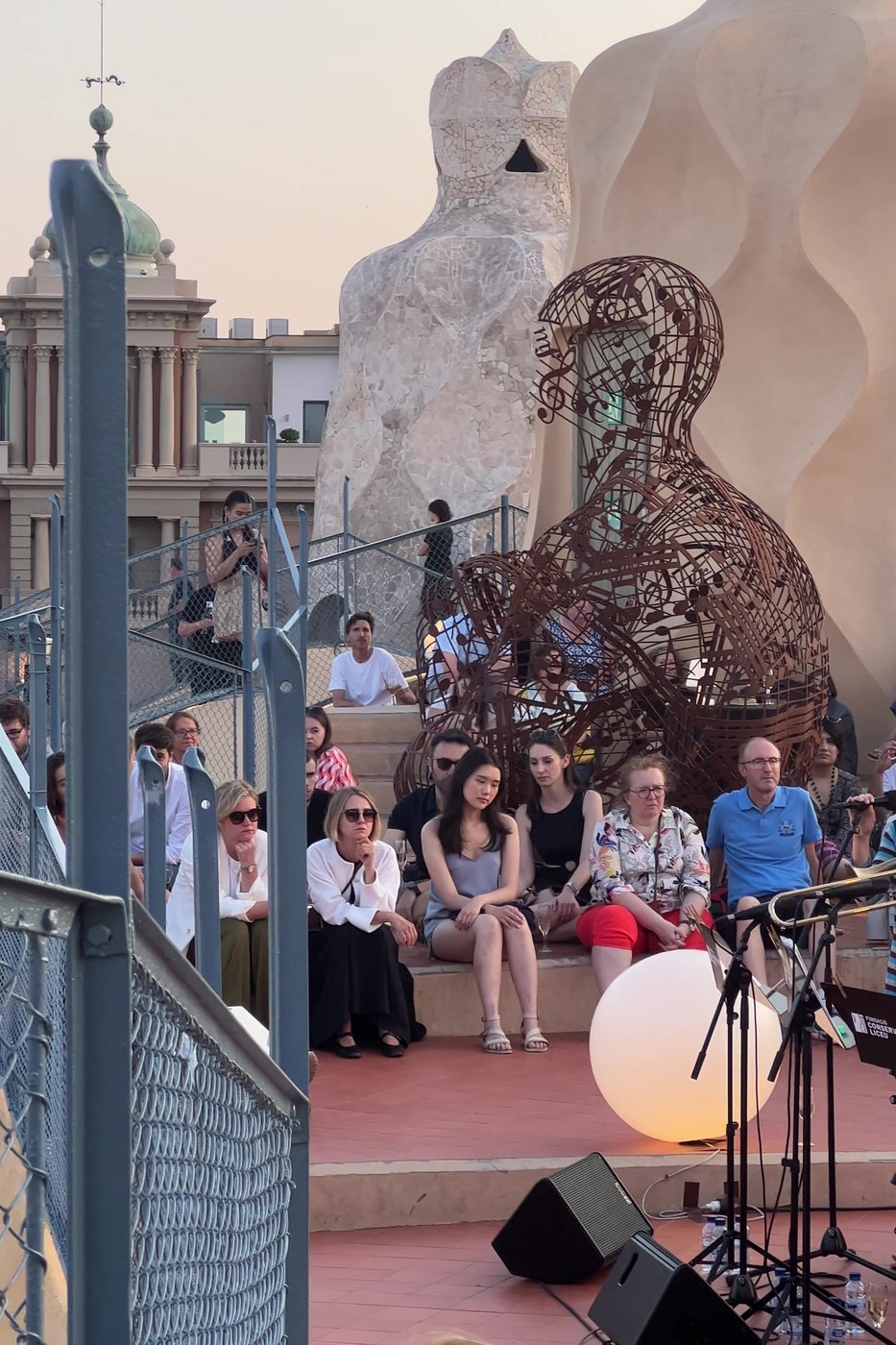
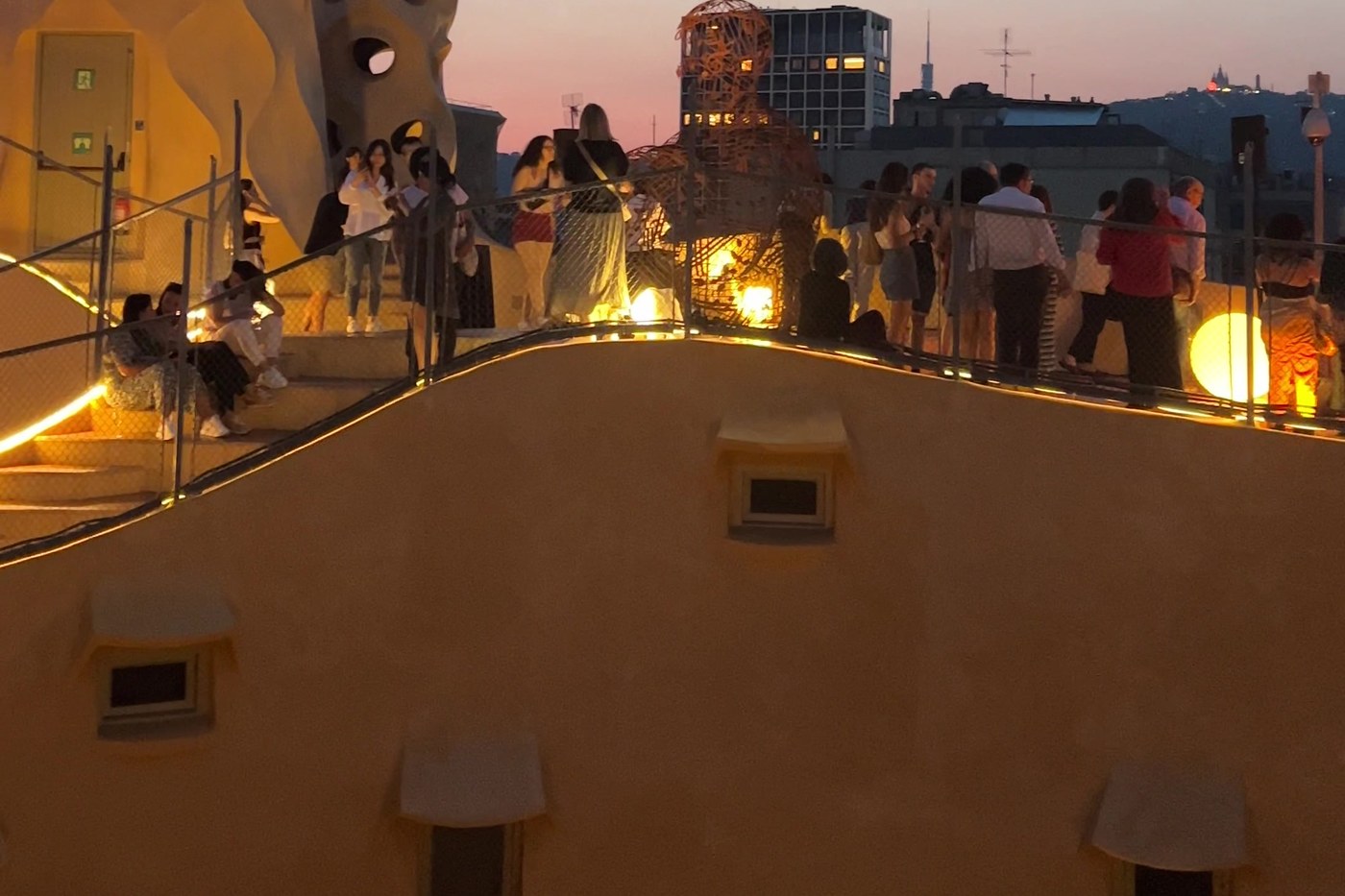
If you’re in Barcelona in early summer, try to catch one of the jazz concerts on the roof. I can’t think of many more unusual places to hear a live band. The night I went, the band played in the middle of the roof, with the chimneys around them and the city behind, and everyone sat on the steps and walkways to listen as the sky darkened and candles flickered on the tables.
The series is now called Talents Jazz, and it showcases young musicians from Barcelona’s music schools. In 2026, the concerts ran on Friday evenings from late May to the end of July, from 8pm to 10.15pm, and tickets (€42) included access to the attic and a glass of cava. Dates change each year, so check the La Pedrera website in spring, and book early, as they sell out.
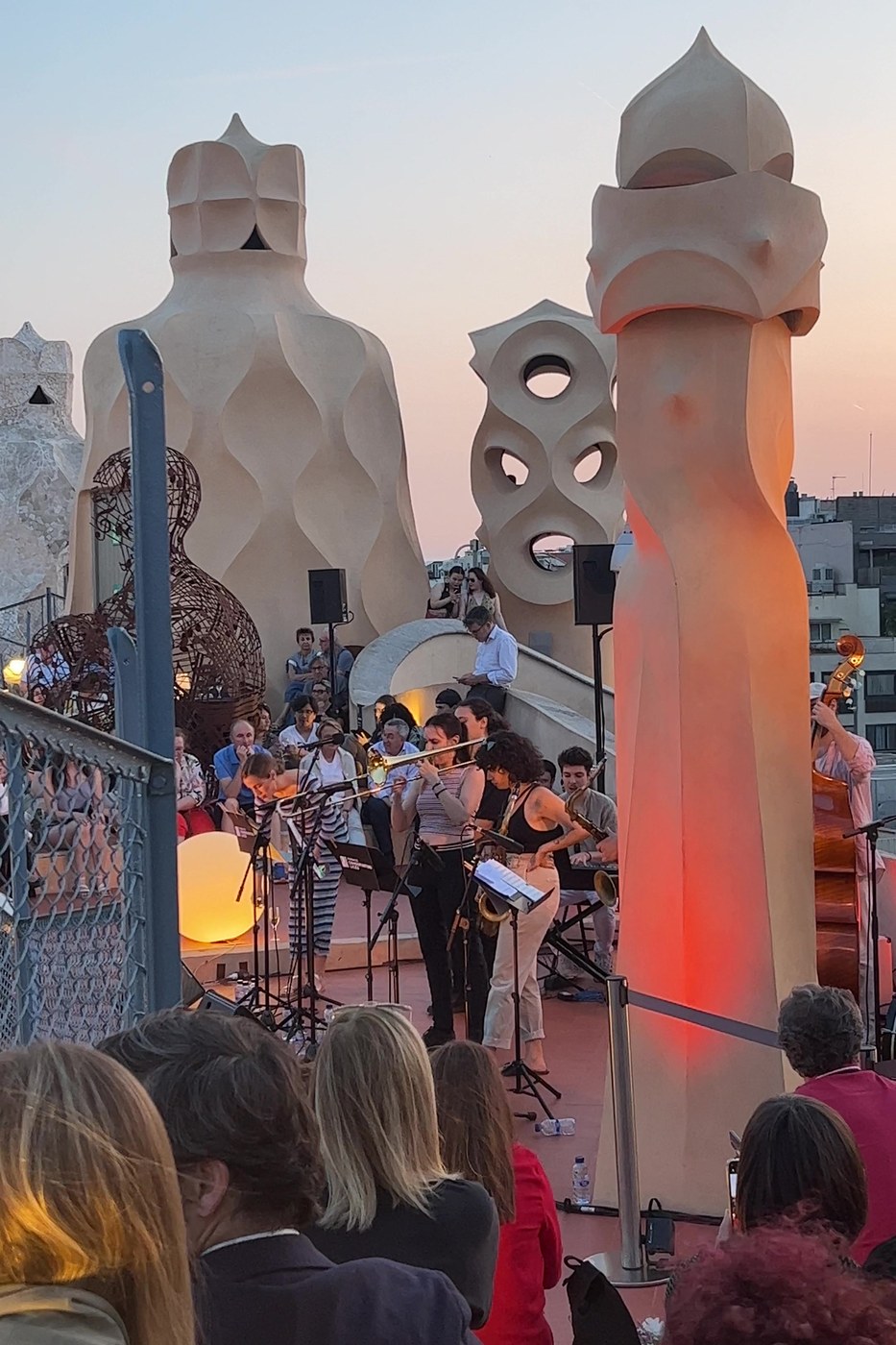
The rest of the year, the Night Experience is a guided evening visit with a light show projected onto the rooftop and a glass of cava.
La Pedrera tickets: which one to book
- Essential (about €29): the standard daytime visit, with the courtyards, attic, apartment and roof and a video guide. This is the one most people need.
- Sunset (about €25): the same visit in a late-afternoon slot. It’s a little cheaper, and on long summer evenings you get the best light on the roof.
- Night Experience (about €39.50): a guided evening tour with the rooftop light show and a glass of cava.
- Talents Jazz (about €42): a summer rooftop concert with access to the attic and a glass of cava.
Children under 12 go free, and there are reduced prices for 12 to 17s, over-65s and students. Tickets cost more at the door, and summer slots sell out, so book ahead on the official site.
Do
Prefer an expert? Book this guided visit to Casa Milà and Casa Batlló and tick off both Gaudí landmarks on the boulevard in one go.
Tips for visiting La Pedrera
- Go early or late: the middle of the day is the busiest time, so book the first or last slot for a calmer visit.
- Look up from the street first: cross to the opposite side of Passeig de Gràcia to see the whole façade before you go in.
- Pair it with a walk: my self-guided Modernisme walk passes La Pedrera between Casa Batlló and Casa Comalat.
Before you go
- Getting there: the nearest metro is Diagonal (L3 and L5), and Passeig de Gràcia station is a short walk away.
- Opening hours: daily from 9am to 8.30pm from late February to October, and to 6.30pm in winter, with night visits in the evenings. It closes on a handful of days a year, so check before you go.
- Accessibility: the courtyards and main floors are step-free, but the rooftop and attic mezzanine aren’t suitable for wheelchairs.
Map
Read next
- Gaudí’s Barcelona
- A self-guided Barcelona Modernisme walk
- Bellesguard, the Gaudí castle above Barcelona
- Casa Vicens, Gaudí’s first house
Love this? Save and share on Pinterest
Discover the top things to do, insider tips and hidden gems in our Spain Travel Guide.
Read the guides →