
A dragon-slaying saint, millions of red roses, book stalls running for kilometres and a government palace that opens its doors for the day: what Sant Jordi is, where to go in Barcelona on 23 April and how to make the most of it.
If you only time one Barcelona trip around a date in the calendar, make it 23 April. Sant Jordi, the feast of Saint George, Catalonia’s patron saint, is the day the whole city turns out to swap roses and books. Pavements fill with flower and book stalls, authors sit signing at folding tables, and everyone you pass seems to be carrying a single red rose.
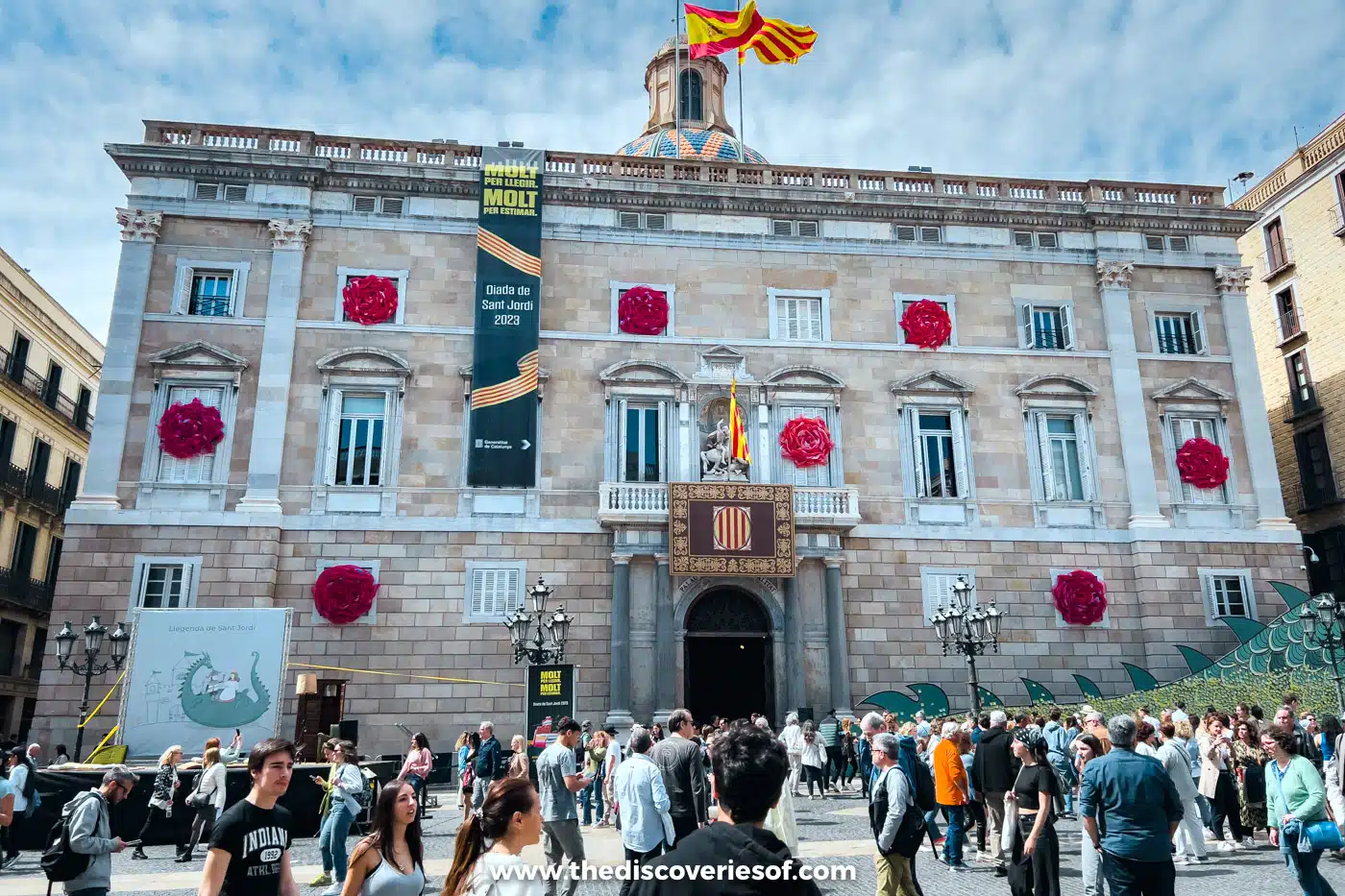
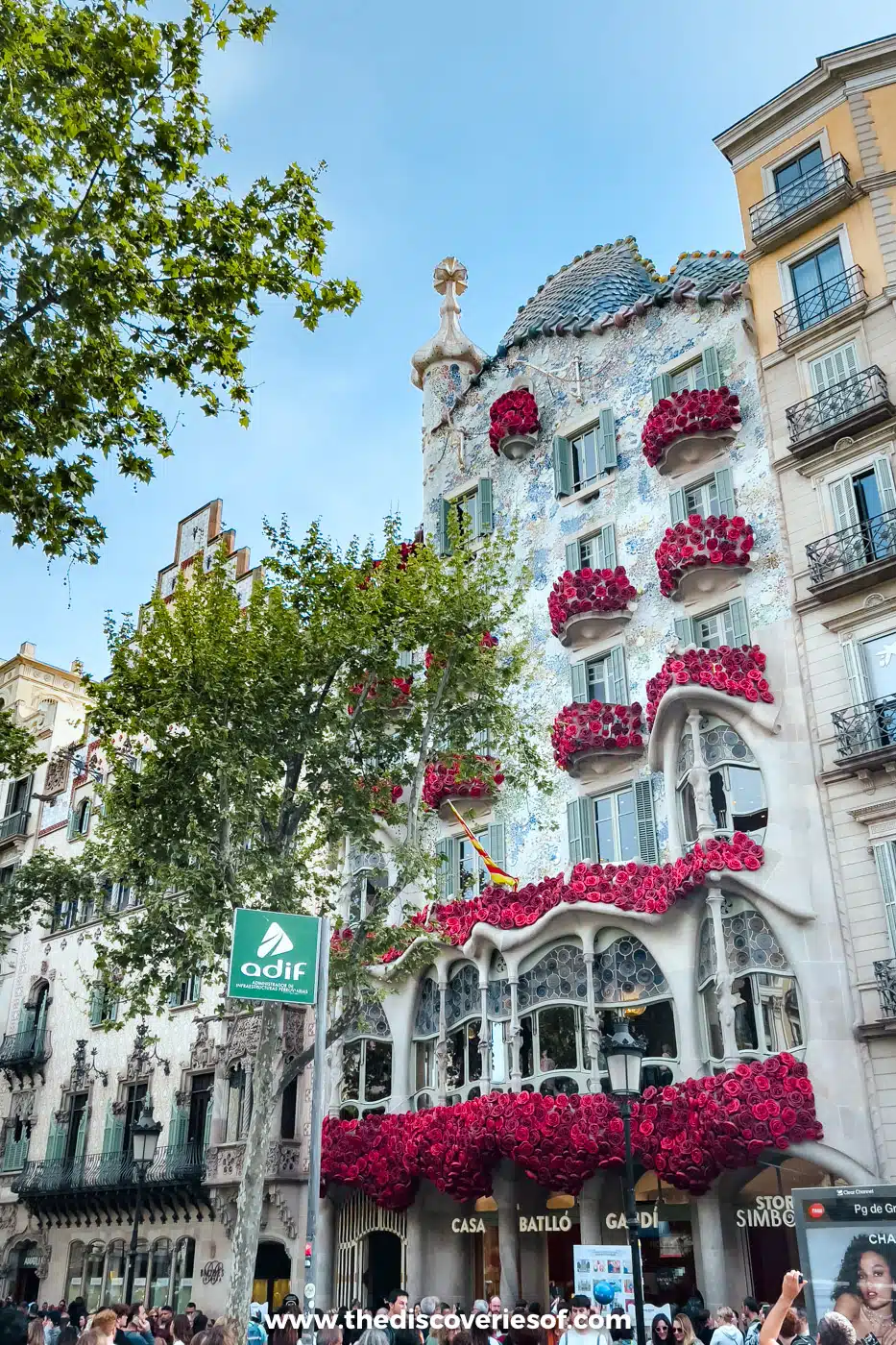
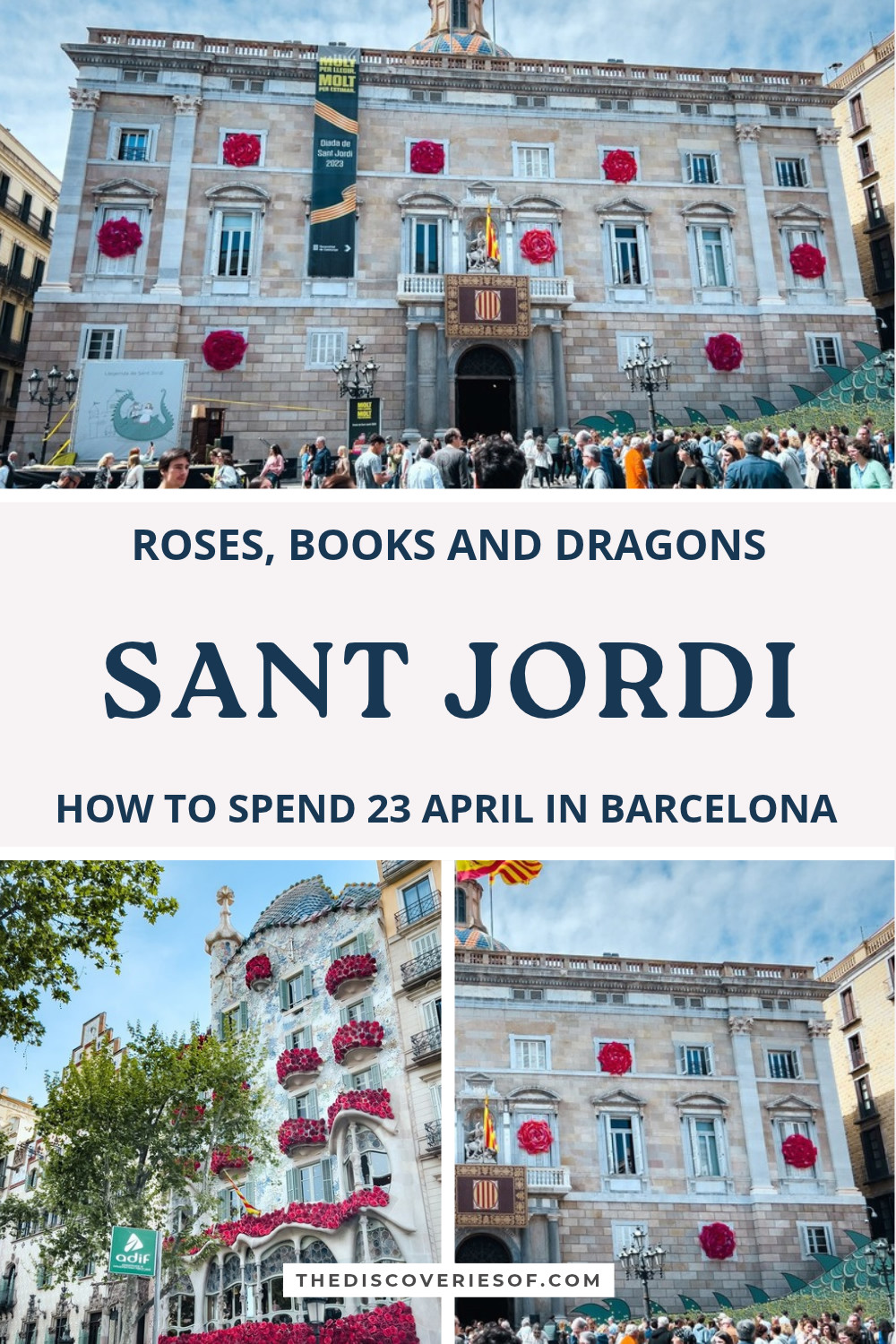
I lived in Barcelona for three months, and I happened to be in the city for Sant Jordi. It’s one of the loveliest days in the calendar: Casa Batlló’s balconies were dressed in roses, the Palau de la Generalitat was decked out in them, and Plaça de Sant Jaume was packed. By mid-afternoon, La Rambla was shoulder to shoulder with people browsing the stalls, under balconies hung with roses and red and yellow banners.
This guide covers what Sant Jordi is and where its traditions come from, the best places to go on the day, and the practical tips that will help you enjoy it rather than battle the crowds.
What is Sant Jordi?
Sant Jordi is Catalonia’s version of Saint George, the knight who killed the dragon. In the Catalan telling, a dragon was terrorising a town and demanding a sacrifice, and when the lot fell on the princess, Sant Jordi rode in, slew the beast and saved her. A rose bush grew from the dragon’s blood, and the knight picked a rose for the princess.
That’s where the roses come from. The tradition of giving a red rose on 23 April goes back centuries in Catalonia, and it’s often described as Catalan Valentine’s Day.
The books came later. In the 1920s, the Barcelona publisher Vicent Clavel proposed a day to celebrate books. It was first held in 1926, and in 1930 it moved to 23 April, the date in 1616 on which both Cervantes and Shakespeare died. The two traditions merged: the custom was once that men gave women a rose and women gave men a book, but today couples, friends and families swap both. In 1995, UNESCO made 23 April World Book and Copyright Day, inspired by Catalonia’s Sant Jordi.
It’s a huge day for books. In 2026, sales across Catalonia hit a record of about €27 million, with around 500 book stalls on the streets of Barcelona alone.
Top Tip
The traditional Sant Jordi rose is red, usually with a sprig of wheat and a ribbon in the red and yellow stripes of the Catalan flag. Plenty of stalls are run by schools and charities, so your rose can go to a good cause too.
When is Sant Jordi?
It’s always on 23 April. In 2027, it falls on a Friday.
It’s not a public holiday, so shops, offices and schools are open as normal, and locals pop out to the stalls before work, at lunchtime and in the evening. The stalls are out all day, from morning until evening, and the city is busiest in the early evening, when everyone finishes work at once.
Some of the celebrations start early. Casa Batlló is dressed in roses for three days, from 21 to 23 April, and many bookshops and florists set up stalls outside their shops on the 22nd.
How to spend Sant Jordi in Barcelona
Browse the book and rose stalls
The heart of Sant Jordi is a long, slow browse of the stalls. Every district has them, but the biggest stretch runs through the centre of the city. In 2026, works on La Rambla moved the main route to an almost unbroken run of around three kilometres from Gran de Gràcia, down Passeig de Gràcia and through Plaça de Catalunya and Portal de l’Àngel to the cathedral. Part of the Eixample around the Diagonal and Gran Via also becomes a car-free zone for the day.
The layout can change from year to year, so check the city council’s Sant Jordi page for the year’s map before you go.
See Casa Batlló in roses
Gaudí’s Casa Batlló on Passeig de Gràcia is the most photographed building of the day, and for good reason. Its façade is often read as the legend itself: the scaly roof is the dragon’s back, the cross on top is Sant Jordi’s sword and the skull-shaped balconies are the remains of the dragon’s victims. For three days, those balconies are filled with red roses, and the pavement in front fills with people taking photos.
Go early in the morning or late in the evening for a clearer view.
Do
Want to see inside too? Book a Casa Batlló ticket well ahead, as the days around Sant Jordi are among its busiest.
Visit the Palau de la Generalitat
Sant Jordi is one of the few days a year when the Palau de la Generalitat, the seat of the Catalan government on Plaça de Sant Jaume, throws its doors open to everyone. The building is decked out in roses, and inside you can see the Gothic courtyard, the orange tree patio and the chapel of Sant Jordi.
It’s popular, and in 2026 you had to register in advance for a slot. Check the Generalitat’s website a couple of weeks ahead.
Explore the open doors around the city
Plenty of other buildings open their doors on 23 April, many of them free. In 2026, the list included Barcelona City Hall, right across Plaça de Sant Jaume from the Generalitat, the Sant Pau Recinte Modernista, Gaudí’s Palau Güell, the Mies van der Rohe Pavilion and the Biblioteca de Catalunya. Some need booking ahead and some are first come, first served, so check each one before you go.
If your name is Jordi, Jorge or George, look out for special offers too: in 2026, the Sagrada Família let people celebrating their saint’s day in free (with a reservation).
Find a quieter Sant Jordi in Gràcia
For a more local feel, head up to Gràcia. The neighbourhood’s squares, especially Plaça de la Vila de Gràcia, fill with stalls of their own, and it’s a lovely place to browse and then stop for a drink on a terrace.
Get a book signed
Writers spend the day moving between stalls to sign their books, and the queues for the biggest names can stretch down the street. Publishers and bookshops post the signing schedules in the days before. Even if you don’t read Catalan, there are Spanish titles everywhere and English ones at some stalls, and a book bought on the day makes a lovely souvenir.
Beat the crowds: tips for the day
- Book your stay early: 23 April falls in spring, one of the busiest times of year, so book accommodation as early as you can. My guide to where to stay in Barcelona covers the best areas.
- Go early or late: the centre is calmer in the morning. Mid-afternoon to early evening is the busiest time on Passeig de Gràcia.
- Watch your bag: the crowds on Passeig de Gràcia and around the cathedral are prime territory for pickpockets.
- Expect closures: the central car-free zone and stall areas mean bus diversions and suspended Bicing bike-share stations. The metro is the easiest way around.
- Pack antihistamines: late April is pollen season, and plane trees line many of the streets with stalls.
- Plan the rest of your trip: see my 3-day Barcelona itinerary and my Barcelona travel tips.
Map
Read next
- Barcelona travel tips
- A Barcelona Modernisme walk
- The Gothic Quarter, Barcelona
- Things to do in Barcelona
Love this? Save and share on Pinterest

Discover the top things to do, insider tips and hidden gems in our Spain Travel Guide.
Read the guides →