
Leafy squares full of locals, Gaudí’s first house, a wine bar that labels its cheeses like a library and a street party that takes months to plan: the best things to do in Gràcia, Barcelona’s most village-like barrio.
Gràcia was its own town until 1897, when it was swallowed up by Barcelona, and more than a century later it still hasn’t quite accepted it. Walk up Passeig de Gràcia, past the last of the grand Modernista mansions, and the streets narrow, the buildings drop to three or four storeys and the city’s crowds thin out. Suddenly you’re in a place of small squares, corner bars, independent boutiques and neighbours chatting on their balconies.
I lived in Barcelona for three months, and Gràcia is home to one of my favourite spots in the city, Gaudí’s Casa Vicens, with Park Güell on the hill just above. It also has a restaurant I went back to more than once and a wine bar I wish I’d found sooner.
The best way to see it is on foot, with no fixed plan: wander its charming streets, pop into the local boutiques and stop whenever a terrace takes your fancy. This guide gives that wander some shape.
Why visit Gràcia?
The barrio is the antidote to the crowds of the old town. It’s a short metro ride (or a long, pleasant walk) from the centre, and it rewards you with a side of Barcelona that most first-time visitors never see: plazas where children play football while their parents linger over a vermouth, family-run shops that have been trading for generations, and a strong sense of community and Catalan identity. Look up and you’ll spot plenty of Catalan flags on the balconies.
It’s also one of the best bases for Gaudí. Casa Vicens is in the middle of the barrio, and Park Güell sits at its top edge, so you can easily combine the two in a day. Add an evening on the squares, and you’ve got one of the best days in the city.
The best things to do in Gràcia
Visit Casa Vicens, Gaudí’s first house
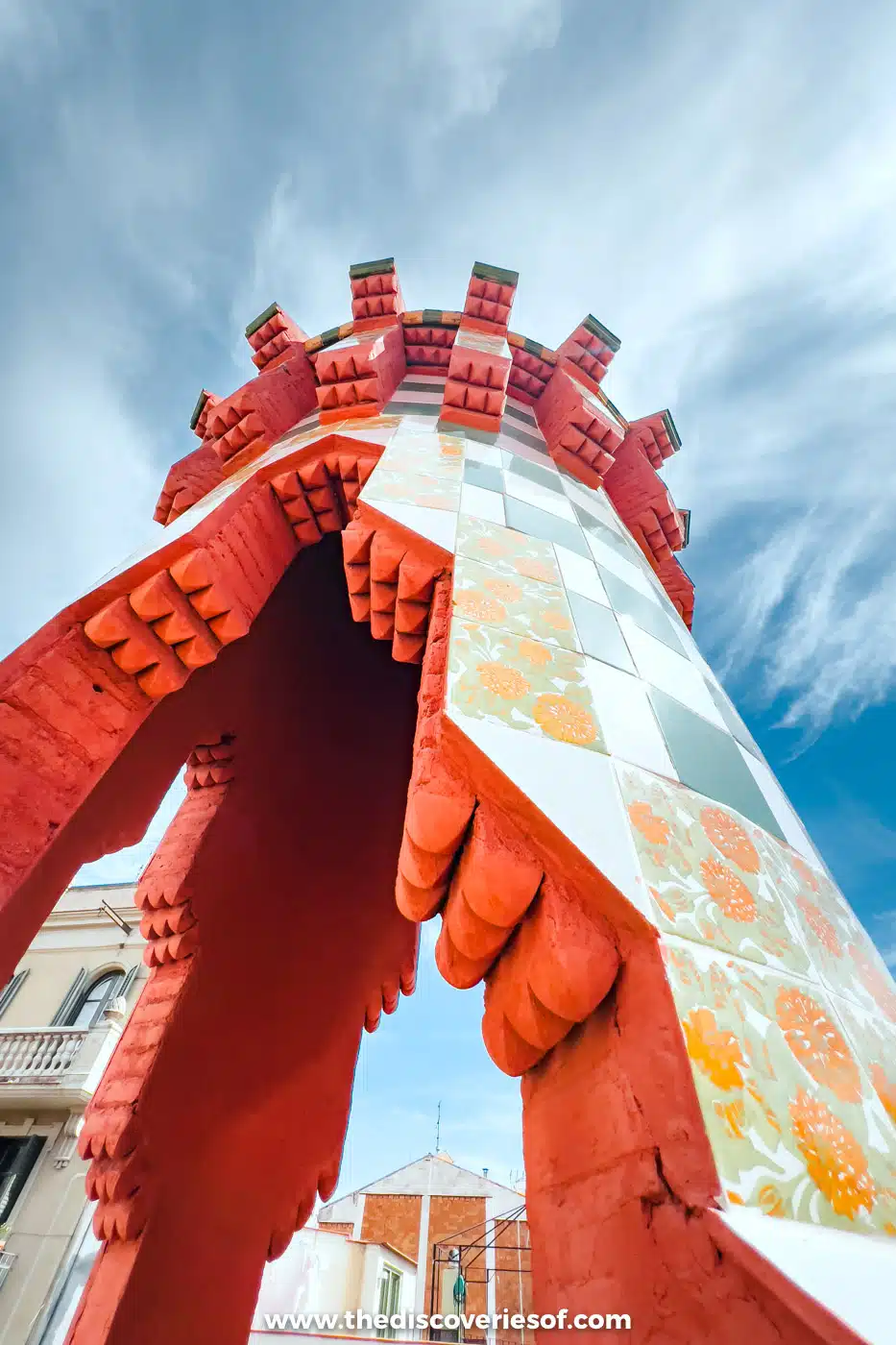
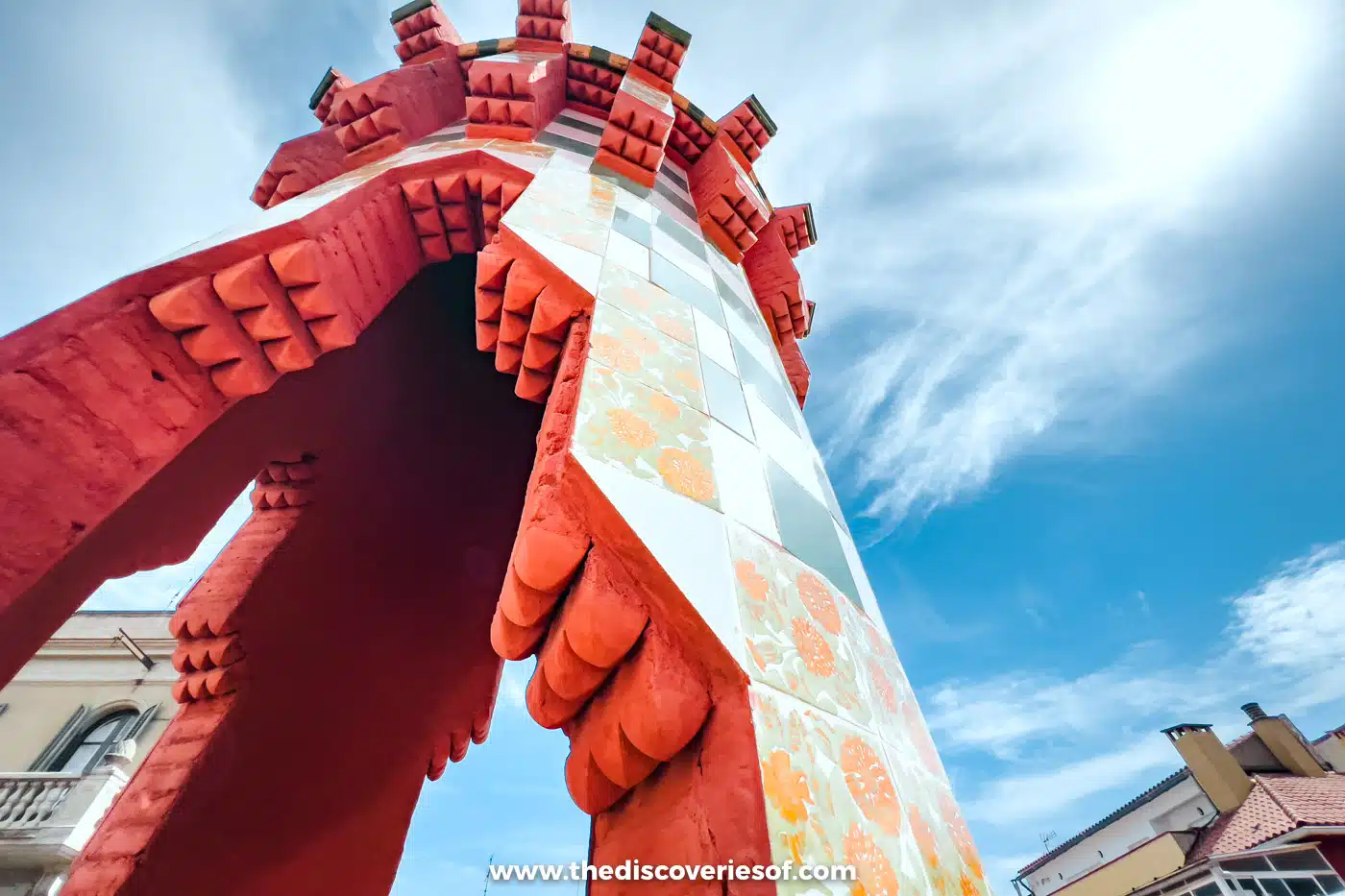
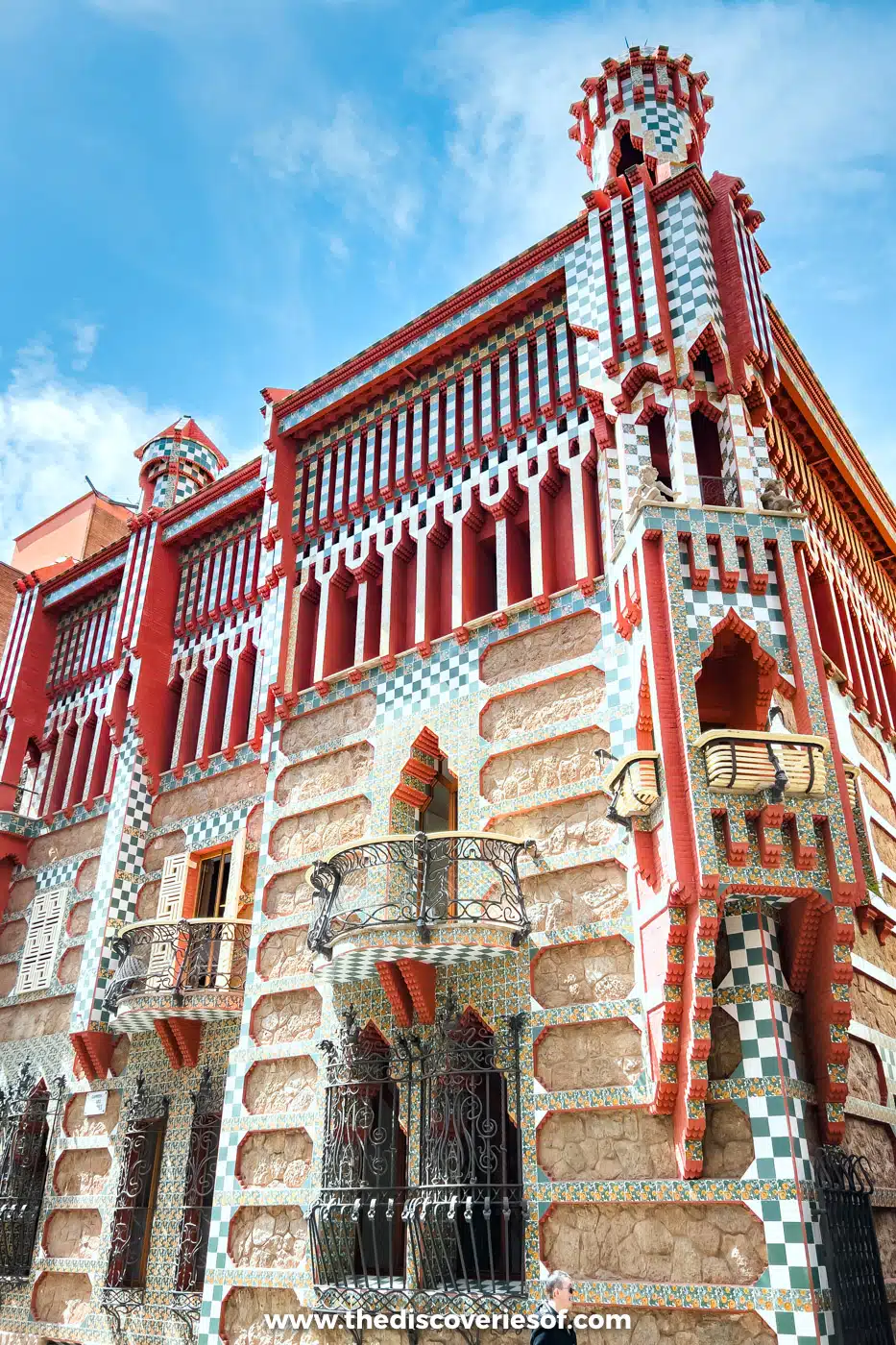
Long before the Sagrada Família, a 31-year-old Gaudí covered a summer house here in green and white tiles. Casa Vicens was one of his earliest commissions, a villa built as a private residence in what was then the separate village of Gràcia, and it only opened to the public in 2017.
It’s one of my favourite spots in the city. Because it’s nowhere near as well known as the Sagrada Família or Park Güell, it’s colourful but never as crowded, and you can usually buy a ticket on the door (it’s still worth booking ahead). Even this early in his career, you can see Gaudí’s signature use of colour, light and pattern everywhere, from the fan-palm railings outside (keep an eye out, as he used the same pattern later in Park Güell) to the dining room filled with painted birds and plants. Finish on the rooftop, up close with the tiled turrets.
General admission costs about €22, including an audio guide, and you can book a skip-the-line ticket here. My guide to Casa Vicens has everything you need to plan a visit.
Climb up to Park Güell
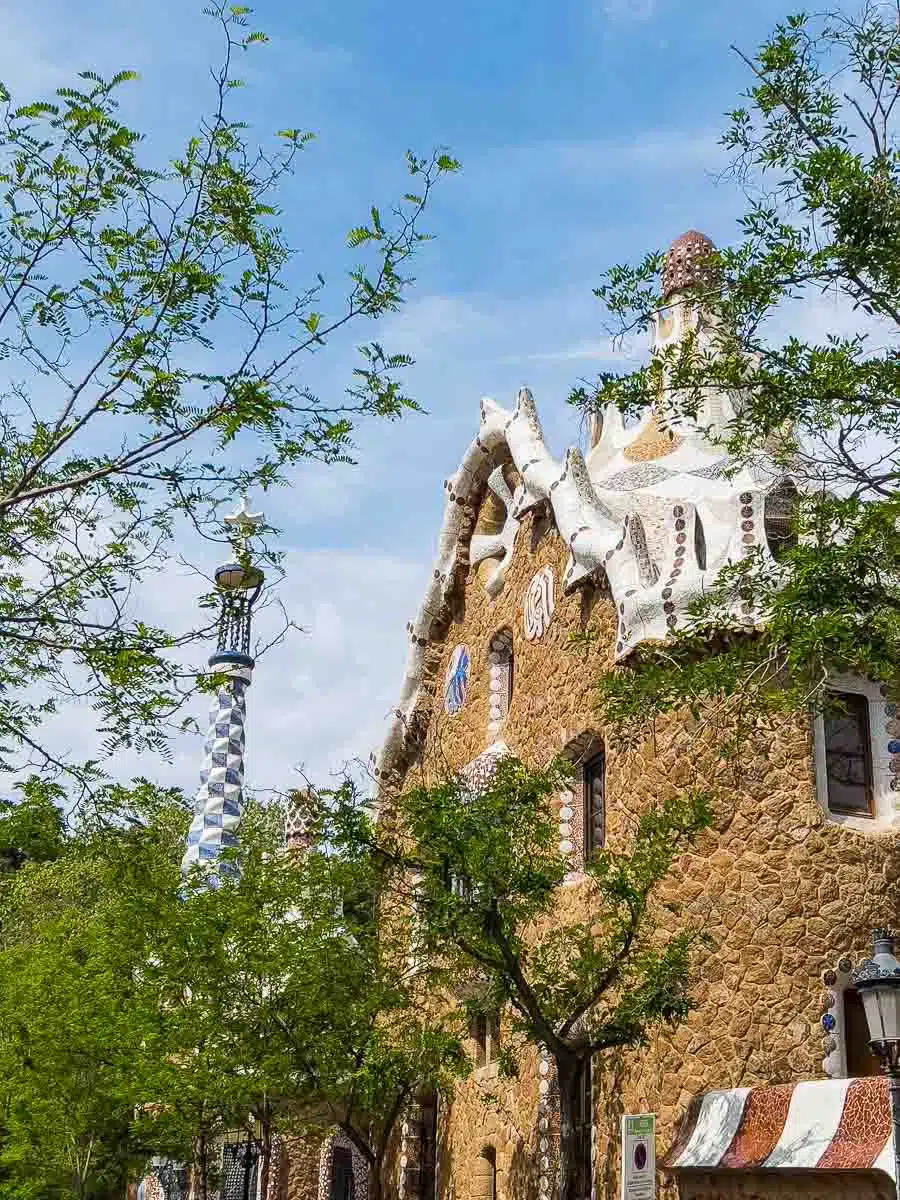
Gràcia sits just beneath one of Gaudí’s most iconic works, which makes a trip to Park Güell a no-brainer. Part park, part magical escape into a fairyland of mosaic-covered structures, grottos and pillar-filled halls, it’s bonkers, in the best way. The first time I visited, at 18, I was completely blown away, and several (and I mean several) years later, that still hasn’t changed.
The whole park is ticketed now, with timed slots that sell out days ahead in summer (general admission is €18), so book your Park Güell ticket before you go. Go first thing in the morning, then walk down the hill for lunch. My Park Güell guide has the details.
Wander the streets and the independent shops
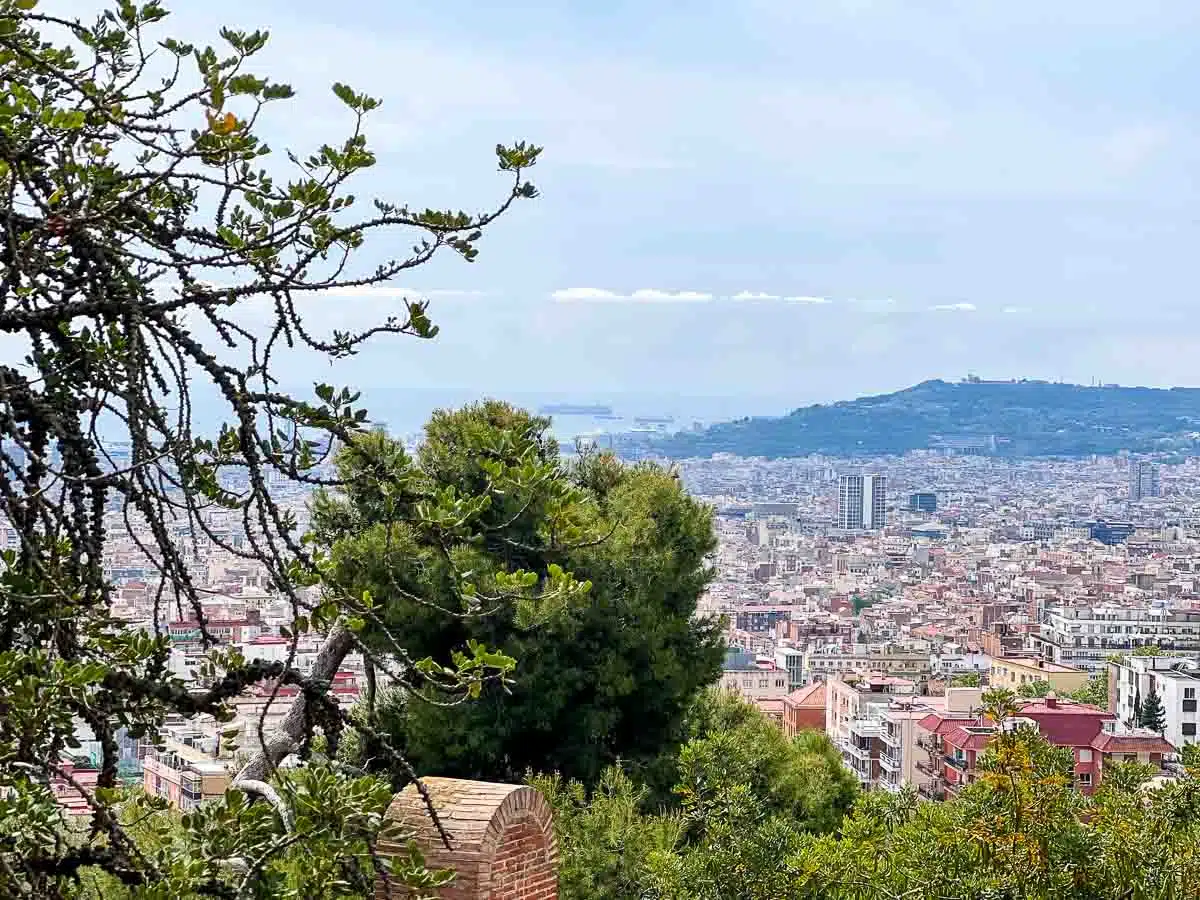
The joy of Gràcia is in its streets. Carrer de Verdi is the barrio’s liveliest, lined with small restaurants, bars and quirky shops, while Carrer de Torrijos and Carrer d’Astúries are good for independent fashion, design and vintage. Travessera de Gràcia and Carrer Gran de Gràcia are the main shopping streets, busier and more everyday. Don’t try to see everything: pick a direction, follow the side streets and let the barrio do the rest.
Have a drink on Plaça del Sol
The barrio has more than a dozen squares, and Plaça del Sol is the one that comes alive at night. Ringed by bars and café terraces, it’s a favourite meeting point for young locals, and on a warm evening it’s packed until late. Come for an early-evening vermouth on a terrace if you’d rather have a seat.
Linger in Plaça de la Virreina
A few streets east, Plaça de la Virreina is the prettiest and calmest of the squares, overlooked by the church of Sant Joan and lined with low houses that hint at Gràcia’s past as a village. Grab a table at one of the cafés or sit on the church steps, and watch the barrio go about its business. Next door, the leafy Plaça de la Revolució leads straight onto Carrer de Verdi.
See the clock tower in Plaça de la Vila de Gràcia
The old heart of the village is Plaça de la Vila de Gràcia, still home to the district’s town hall, a Modernista building by Francesc Berenguer, one of Gaudí’s assistants. In the middle stands the tall clock tower, a symbol of the barrio’s independent streak and of the rebellions that made its name in the 19th century. It’s the backdrop to many of Gràcia’s festivals.
Go underground at the Plaça del Diamant shelter
Plaça del Diamant gave its name to Mercè Rodoreda’s novel *La plaça del Diamant* (*In Diamond Square*), one of the great books of Catalan literature, and a statue of its heroine, Colometa, stands in the square. Beneath it lies a Civil War air-raid shelter that you can visit on a guided tour on Sunday mornings (at 11am, €3, mostly in Catalan, with a Spanish tour on the second Sunday of the month). You need to register in advance through the city council’s website.
Shop at the Mercat de la Llibertat
Every barrio in Barcelona has its market, and the prettiest here is the Mercat de la Llibertat, a Modernista hall from 1893 with a glazed-tile roof on an iron frame and Gràcia’s coat of arms in wrought iron by Francesc Berenguer. It’s very much a locals’ market, so it’s a great place to pick up picnic supplies, cheese and charcuterie without the tourist prices of La Boqueria. The barrio’s other big market, the Mercat de l’Abaceria, has just reopened in its original home after eight years in a temporary tent, with a colourful new roof.
Catch a film at the Verdi cinemas
The Verdi cinemas on Carrer de Verdi are an institution: they show independent European and international films in their original language with subtitles, so they’re one of the best places in the city to see a film if you don’t speak Spanish or Catalan. It’s a lovely, low-key way to spend a rainy evening, and there are plenty of bars nearby for a drink afterwards.
Drink wine at Viblioteca
I only found Viblioteca towards the end of my stay, which is a real shame, as I’m certain this sleek temple to wine would have become one of my go-to haunts. It’s a wine and cheese bar on Carrer de les Guilleries, with an extensive list of wines by the glass and far more by the bottle. Pair them with the stellar tapas, which range from tartares to a substantial selection of cheeses, handily labelled with their strength, the animal and the region they come from. It’s small and very popular, so book ahead. My guide to the best wine bars in Barcelona has more.
Book a table at Berbena
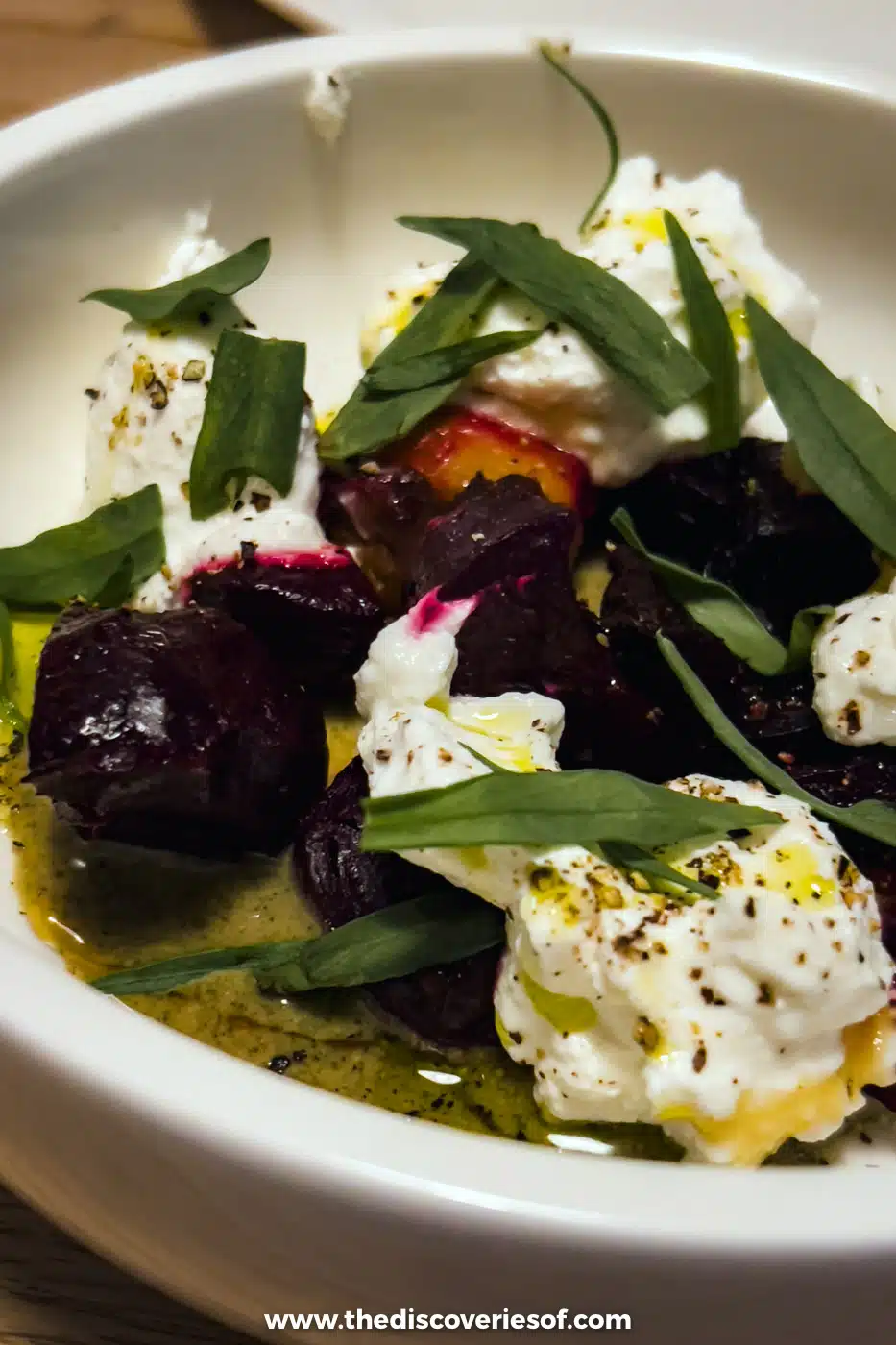
Berbena is a personal fave, and one I ate at more than once. If you’re looking for one of Barcelona’s best restaurants, you’d better book your table at Berbena pronto. Just above Avinguda Diagonal on Carrer de Minerva, it’s tiny, it has a Michelin Bib Gourmand, and there’s a reason it’s fiendishly difficult to get a table: it’s excellent through and through.
My favourite dishes were the duck gyoza in jus and the pickled beetroot with strawberry and olive oil. It feels like cheating to say the cheese was one of my favourites too, but they have an ever-changing roster from small producers. Ask nicely and they’ll do half portions, so you can try more. Dinner for two with drinks came to about €120.
Top Tip
Berbena opens for dinner from Monday to Friday and for lunch on Fridays only, and it’s closed at weekends. Book as far ahead as you can.
Look up at Casa Fuster
At the top of Passeig de Gràcia, where the boulevard meets the barrio, stands Casa Fuster, the last building Lluís Domènech i Montaner (the architect of the Palau de la Música Catalana) designed in Barcelona. Its white marble façade and slender columns are a great example of Modernisme away from the crowds of the Eixample. Today it’s a luxury hotel, and you can stop for a drink inside.
Time your trip for the Festa Major de Gràcia
If you’re in Barcelona in mid-August, don’t miss the Festa Major de Gràcia, the barrio’s week-long street party (in 2026, it runs from 15 to 21 August). Neighbours spend months turning their streets into elaborate themed installations, all made by hand and often from recycled materials, and compete for the title of best-decorated street. Add free concerts, human towers, correfocs (fire runs) and long tables in the street, and it’s one of the best festivals in the city. It gets very busy, so go early in the evening to see the decorations.
Tips for visiting Gràcia
- Getting there: take the metro to Fontana (L3) for the upper part of the barrio and Casa Vicens, or to Diagonal (L3, L5) and walk up from the top of Passeig de Gràcia. From Plaça de Catalunya, it’s about a 30-minute walk.
- Combine it with Park Güell: do the park first thing, then walk down the hill for lunch and Casa Vicens in the afternoon, finishing on the squares in the evening.
- Eat late: dinner rarely starts before 8.30pm here, and the squares are at their liveliest from about 9pm.
- Be respectful at night: This is a residential neighbourhood, and the squares have strict noise rules, so keep it down when you leave late.
- Where to stay: most visitors stay in the old town or the Eixample, but this is a lovely, quieter base. For a splurge, Hotel Casa Fuster is right on its edge. My guide to where to stay in Barcelona compares the areas.
Map
Read next
- Casa Vicens: a guide to Gaudí’s first house
- Park Güell: how to visit
- How to see Gaudí’s Barcelona
- The Gothic Quarter, Barcelona
- Things to do in Barcelona
- 3 days in Barcelona: the perfect itinerary
Love this? Save and share on Pinterest
Discover the top things to do, insider tips and hidden gems in our Spain Travel Guide.
Read the guides →