
Long before the Sagrada Família, a 31-year-old Gaudí covered a summer house in Gràcia with green and white tiles, fan palm railings and a Moorish smoking room. Here’s how to visit Casa Vicens, and what not to miss inside.
Casa Vicens is one of my favourite places in Barcelona, and it’s the Gaudí house I recommend to everyone. It was one of his earliest commissions, a villa built as a private residence in what was then the separate village of Gràcia, and it only opened to the public in 2017 after more than 130 years in private hands.
I lived in Barcelona for three months and loved visiting here. Because it’s nowhere near as well known as the Sagrada Família or Park Güell, it’s far calmer, and you can often buy tickets on the door. Even though it’s one of Gaudí’s first works, you can already see his signature use of colour, light and pattern, and it makes a brilliant first chapter before you see where he took those ideas next.
Why visit Casa Vicens
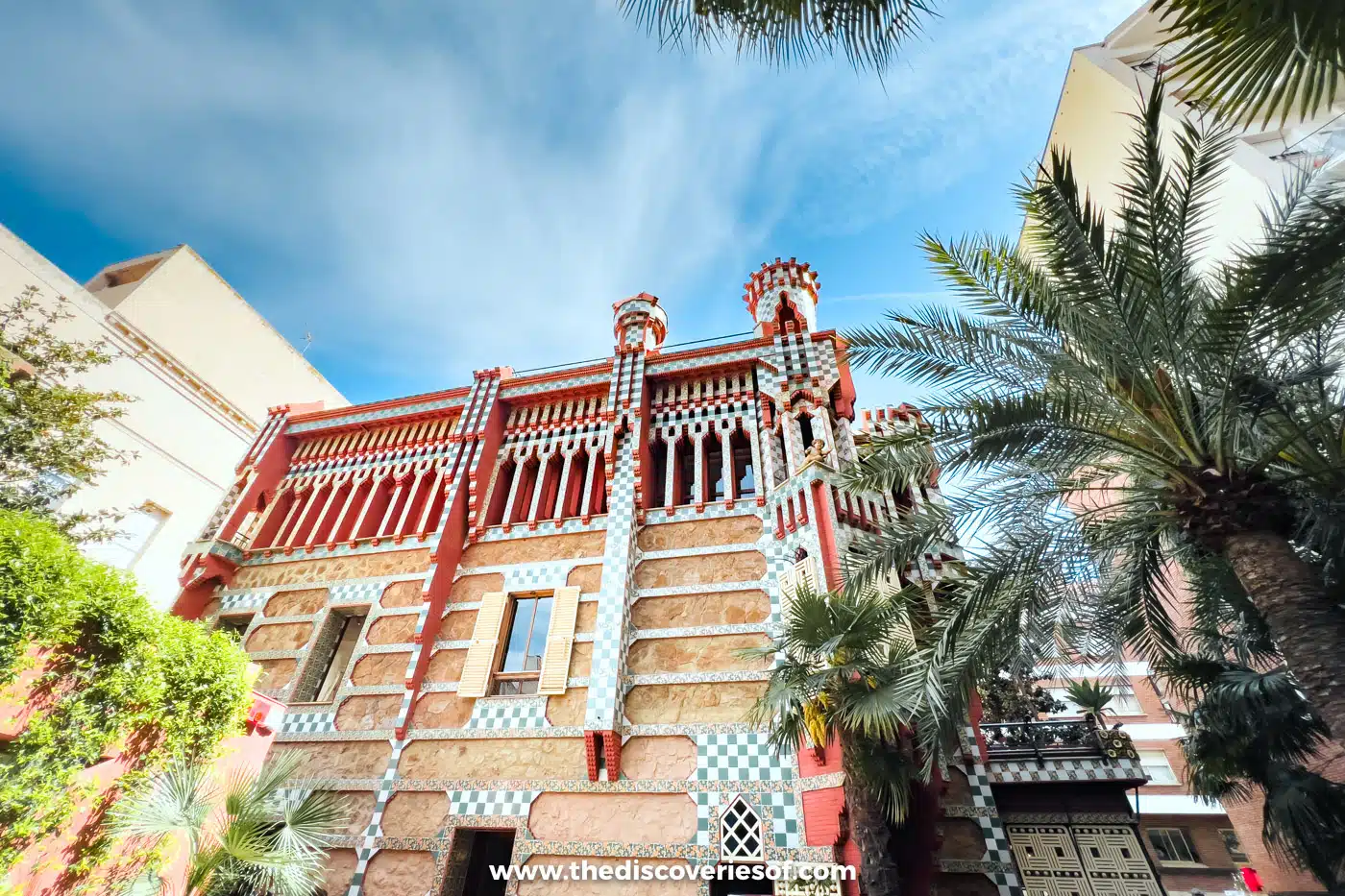
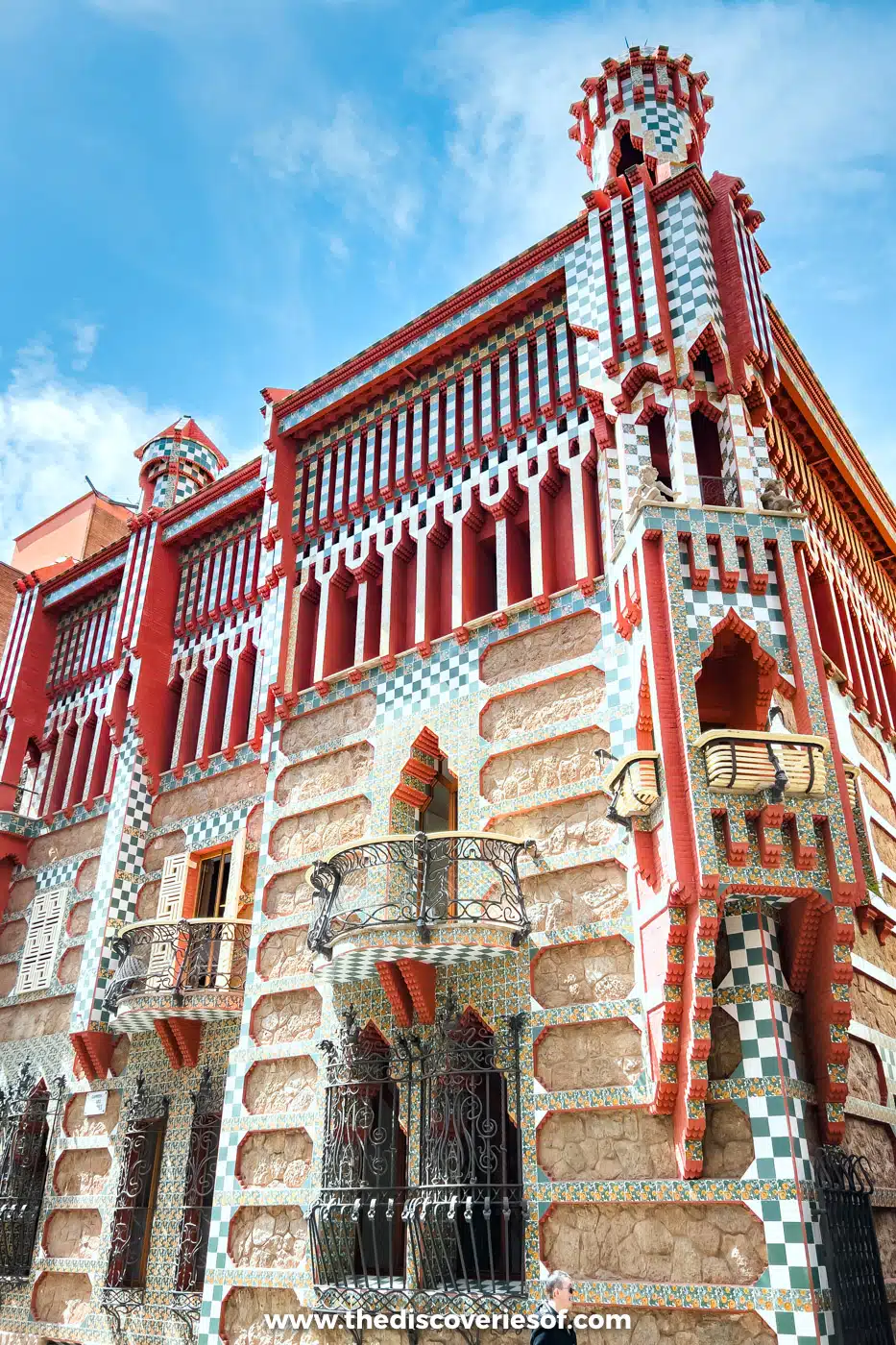
Casa Vicens is where Gaudí found his voice. He was in his early thirties when the stockbroker Manel Vicens i Montaner commissioned a summer house in 1883, and the result, finished in 1885, is like nothing else in the city: part Moorish palace, part Catalan country house, wrapped in brick, stone and thousands of glazed tiles.
It’s also a different experience from the big-name Gaudí sites. There’s no queue snaking down the street and no crush in the rooms, so you can take your time with the details. If you’re following the Gaudí trail around the city, this is the place to start: you’ll spot ideas here that he returns to at Park Güell and Casa Milà decades later.
What to see at Casa Vicens
The façade and the garden
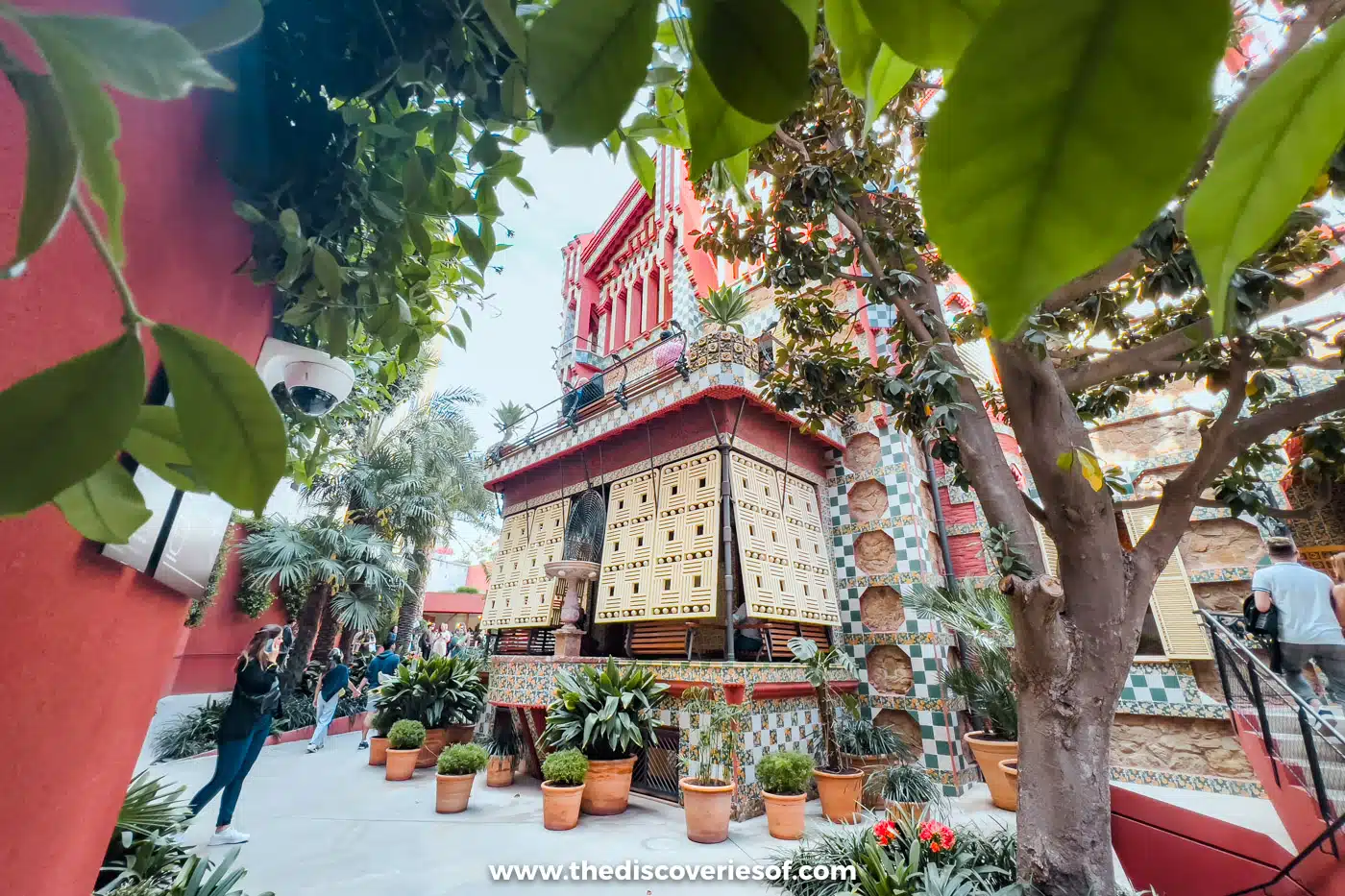
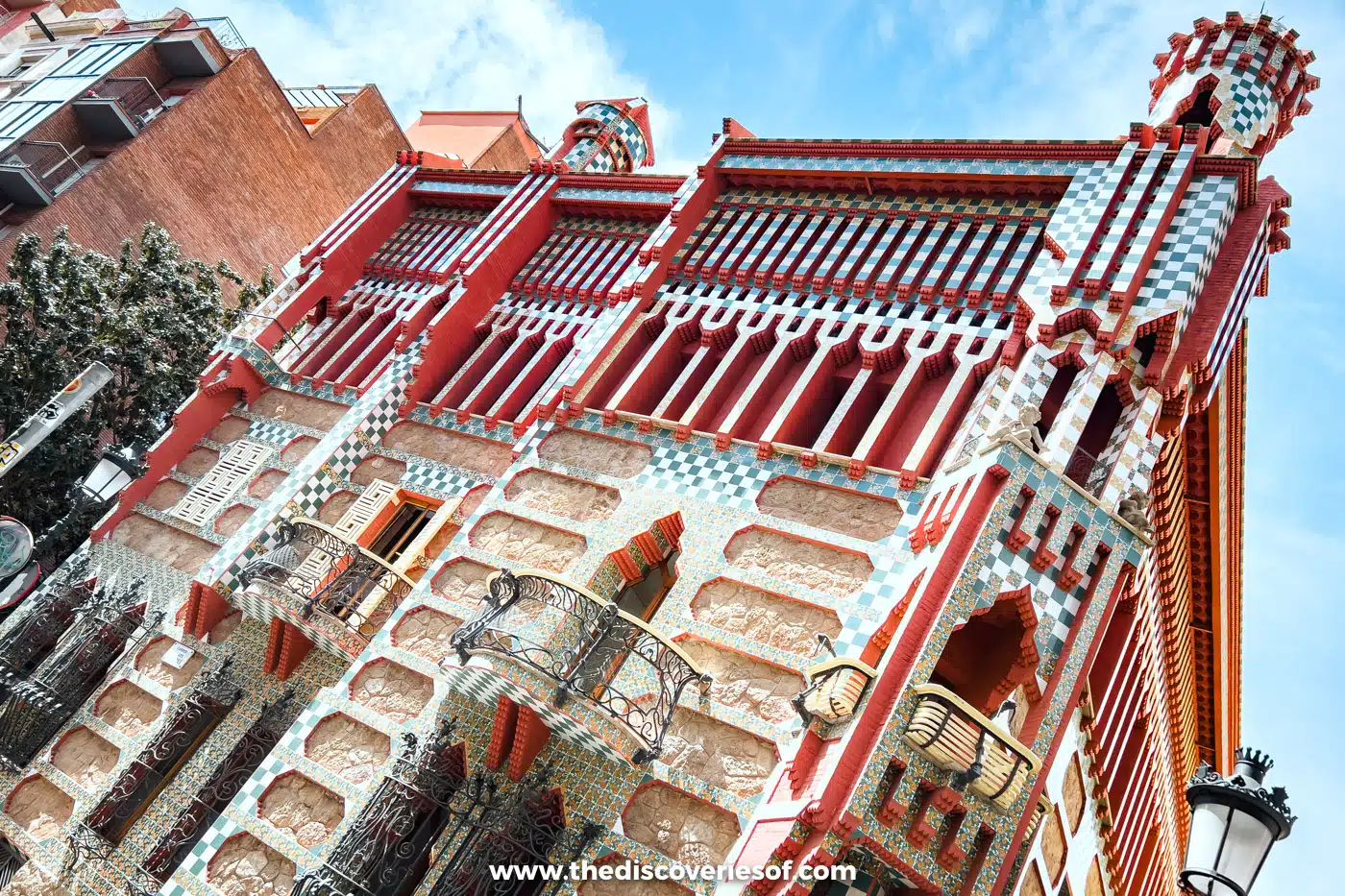
The exterior and garden are just as impressive as the interior. The bright red brick and tiled exterior is surrounded by fragrant plants like jasmine and lilies, as well as palm trees, whose fan-shaped leaves Gaudí used as the inspiration for the cast-iron fence. Keep an eye out during your trip, because you’ll see him use the same pattern much later at Park Güell.
Look closely at the tiles, too. The green and white chequerboard runs alongside tiles patterned with small yellow flowers, a nod to the plants that grew on the plot before the house was built.
The entrance hall
Gaudí takes what could have been a boring, small space and fills it with Modernist drama. It feels like a continuation of the garden, which was a deliberate move on his part: the boundary between inside and outside is meant to blur.
The dining room
The dining room shows a young architect who wasn’t afraid of bold statements. It’s filled with depictions of wildlife and plants, and furnished with pieces specially commissioned for the room.
The smoking room
Just off the main rooms, the small smoking room is the most exotic space in the house. Its ceiling is moulded into a Moorish-style honeycomb, a reminder of how much Gaudí borrowed from Islamic architecture at the start of his career.
The upper floors and the rooftop
The upper floors hold a permanent exhibition on the history of the house and its restoration, which is worth a look if you want to understand how much of what you see was painstakingly brought back.
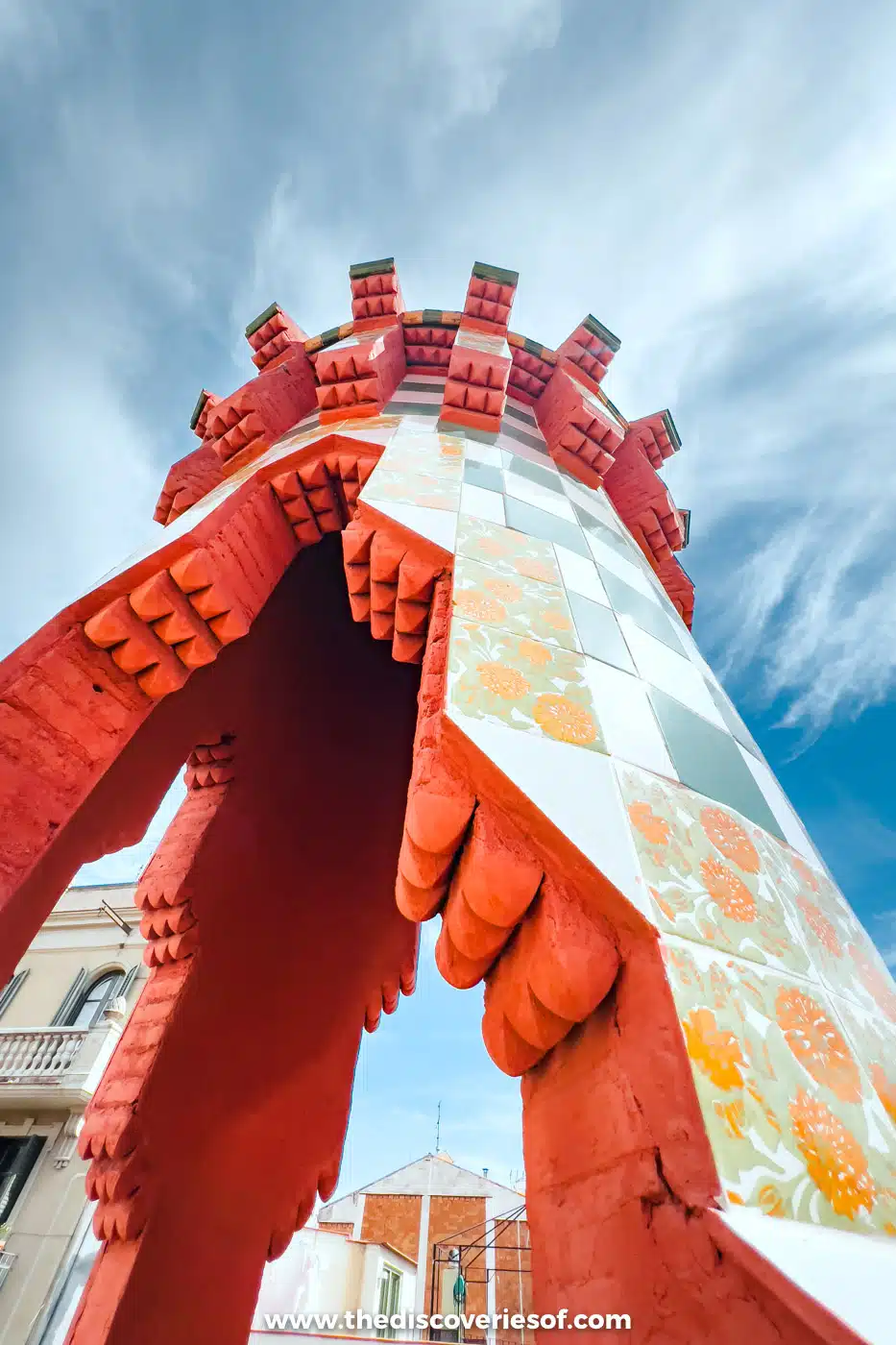
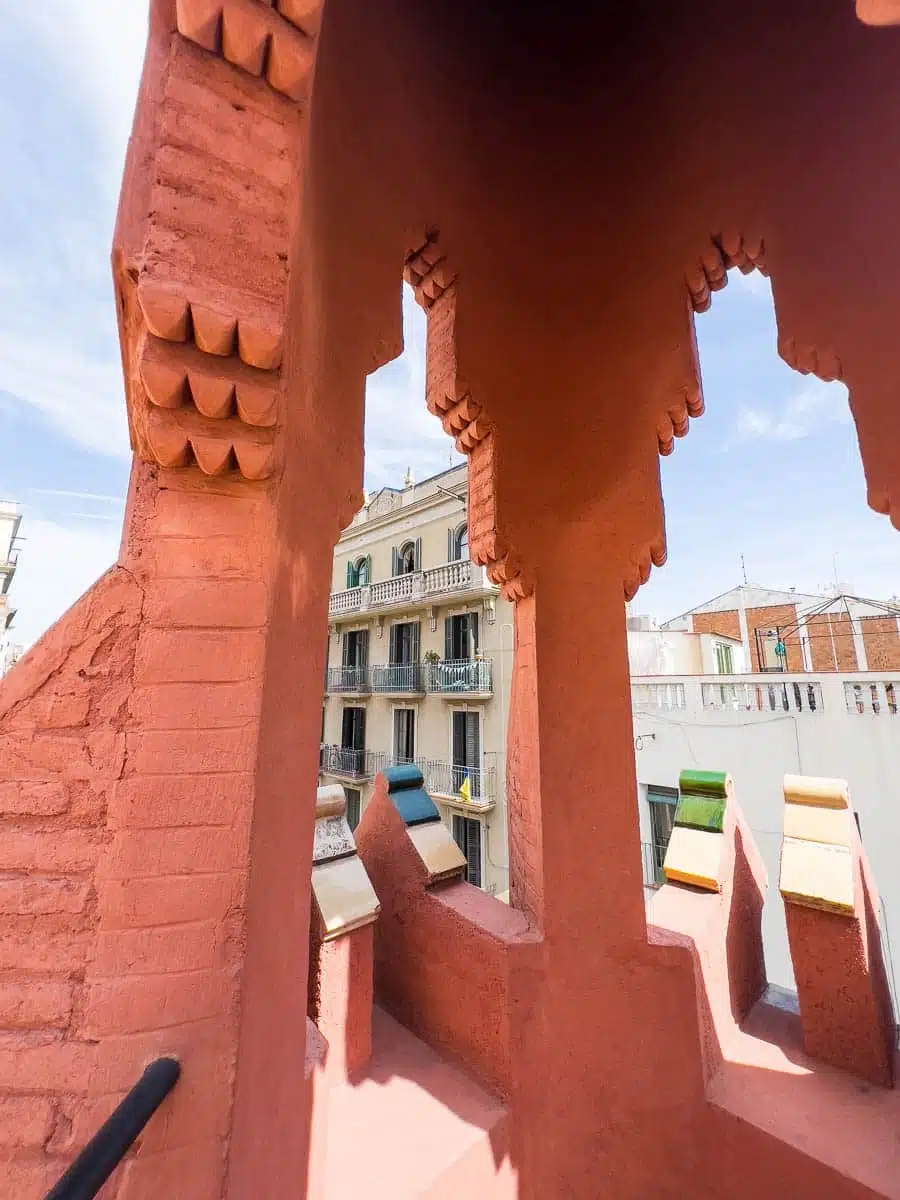
Be sure to pop up to the top floor too, with its rather curious mini tower. These days there’s not much of a view (when the villa was built, you would have been able to see hilltops and mountains before the surrounding buildings of Gràcia hemmed it in), but the rooftop terrace is the perfect way to finish your visit, up close with the turrets and tilework.
A short history of Casa Vicens
Casa Vicens was built between 1883 and 1885 as a summer house for Manel Vicens i Montaner, on what was then the edge of the village of Gràcia. In 1925 the architect Joan Baptista Serra de Martínez extended the house, and it stayed a family home for most of the 20th century.
It became part of UNESCO’s World Heritage listing for the works of Antoni Gaudí in 2005. A bank, MoraBanc, bought it in 2014, restored it over three years, and opened it as a museum on 16 November 2017. In 2026, the centenary of Gaudí’s death, it makes an especially good place to see where his story began.
Tickets and practical information
- Tickets: general admission costs about €22 and includes an audio guide in 16 languages on your phone (bring your own earphones). Guided tours are also available. Book a skip-the-line ticket here.
- Do you need to book? It’s one of the few Gaudí sites where you can usually buy a ticket on the door, but it’s still worth booking ahead for a set time, especially at weekends.
- Opening hours: open every day, until 6pm in winter and later from spring to autumn. Check the official site for the day you’re going.
- How long to spend: about an hour to see the house, garden and rooftop at an easy pace.
- Getting there: Casa Vicens is at Carrer de les Carolines 20, in Gràcia. The nearest metro stations are Fontana and Lesseps (both L3), each a few minutes’ walk away.
- Café: there’s a café on site if you need a breather.
Top Tip
Pair Casa Vicens with Gràcia and Park Güell. It sits in the middle of the barrio, a short walk from the cafés of Carrer de Verdi and Plaça de la Virreina, and Park Güell is about 20 minutes’ walk further up the hill.
Where Casa Vicens fits on the Gaudí trail
Casa Vicens is Gaudí at the very start of his career, and Casa Milà (La Pedrera) is the last civic building he worked on before devoting himself to the Sagrada Família, so visiting both is a nice bookend: you can see how his work evolved over his lifetime. In between come Casa Batlló, with its skeletal balconies, and the mosaic-covered fantasy of Park Güell, before you finish at the Sagrada Família.
Read next
- 49 things to do in Barcelona
- Park Güell: how to visit
- Visiting the Sagrada Família
- 3 days in Barcelona: the perfect itinerary
Love this? Save and share on Pinterest
Discover the top things to do, insider tips and hidden gems in our Spain Travel Guide.
Read the guides →