
A cable car over the rooftops, a fortress that spent centuries pointing its guns at the city, Miró’s best work and a mayor’s terrace with the finest view of the port. Here are the best things to do on Montjuïc, and how to fit them into one day.
Montjuïc is the hill that rises straight out of the sea at the south end of Barcelona, and it’s the city’s great escape. It’s wrapped in parks and gardens, topped by a 17th-century castle and dotted with museums, many of them built for the 1929 International Exhibition and the 1992 Olympics. You could spend a whole day here and still not see everything.
My favourite way to see it, from my time living in Barcelona, is to ride the cable car up to the castle, then hop off at the Mirador stop on the way back down and walk the rest of the hill through the gardens. This guide covers everything worth your time, how to get up and down, and the order that saves your legs.
The best things to do on Montjuïc
Ride the cable car
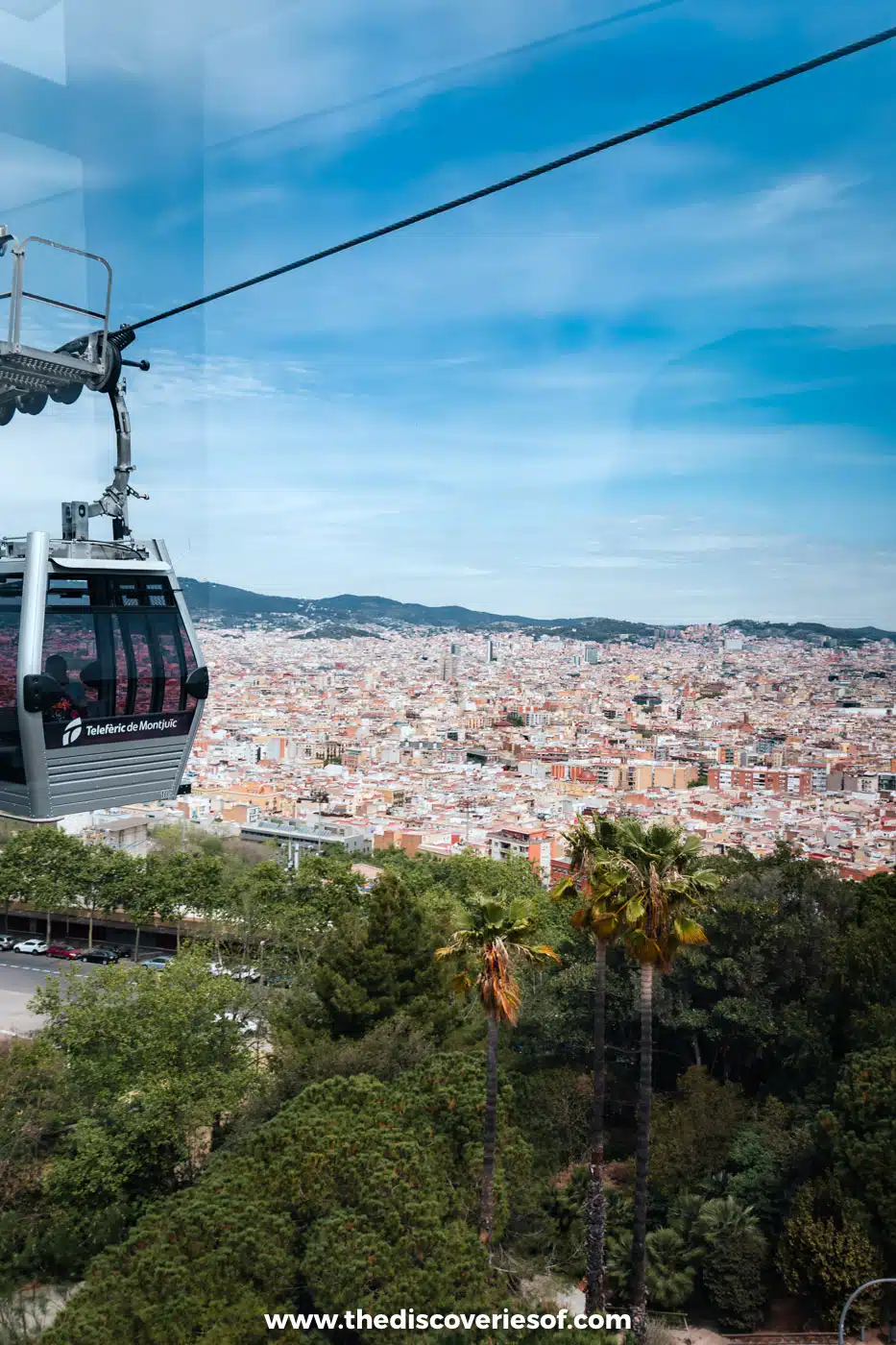
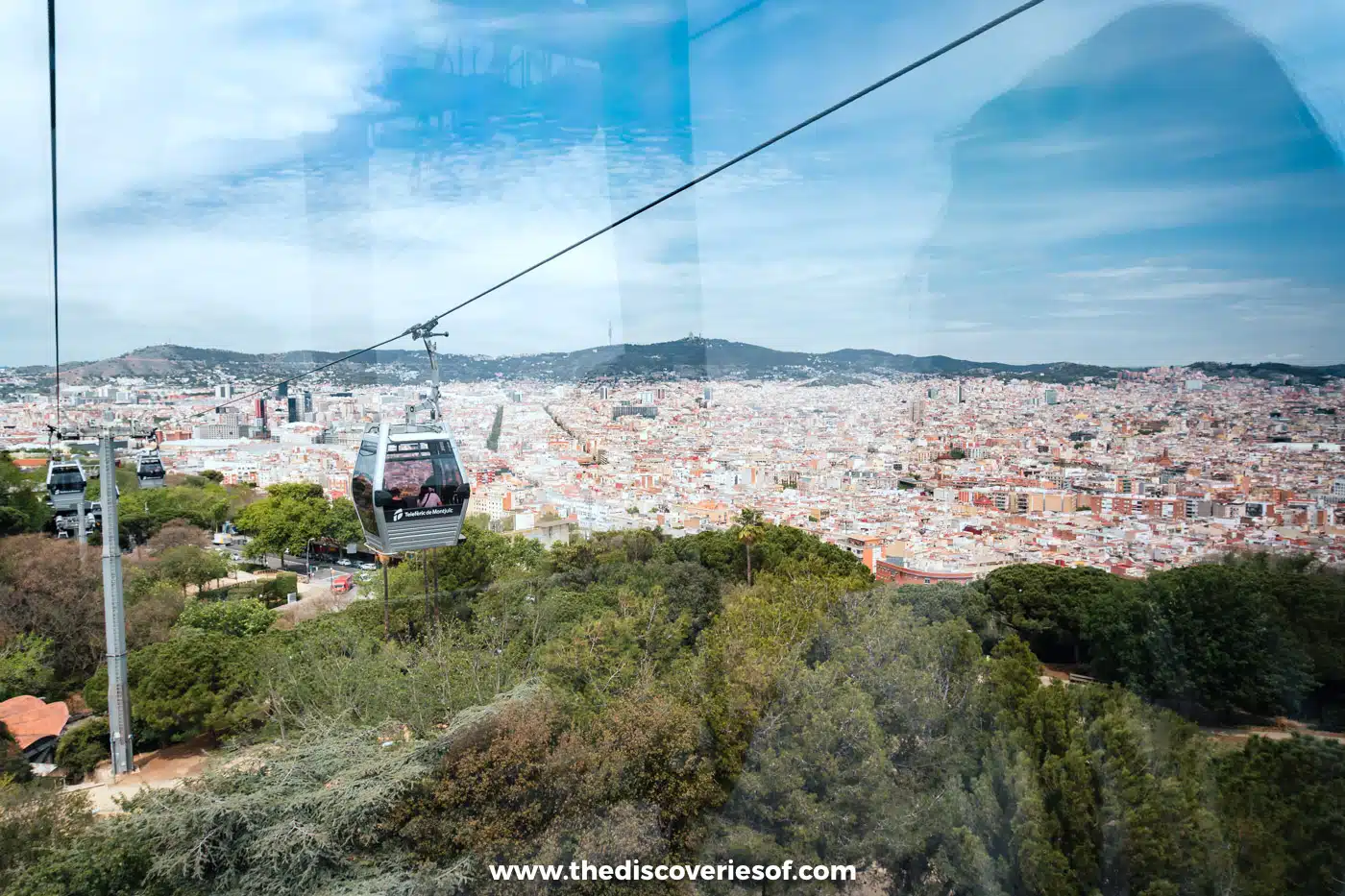
The Telefèric de Montjuïc is the most fun way up the hill, and I’d say it’s a must. Its little gondolas glide from the Parc de Montjuïc station, at the top of the funicular, over the trees to the castle, with the whole city spread out below and the Sagrada Família poking out of the grid in the distance.
There’s a stop halfway, at the Mirador, which is where I’d get off on the way down (more on that below). Buy a return ticket, or just ride up and walk down. Tickets are about 10% cheaper online.
Walk the ramparts of Montjuïc Castle
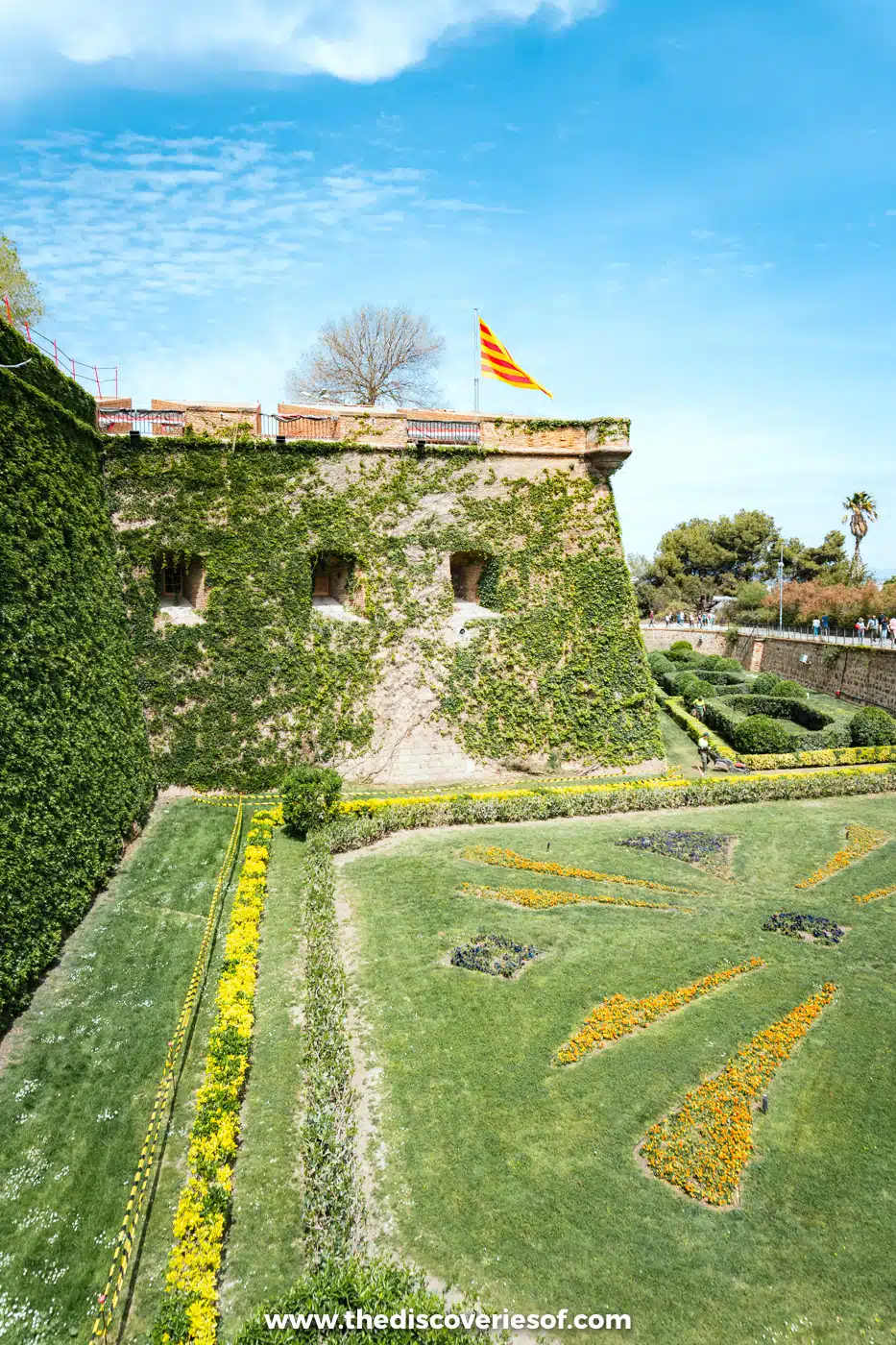
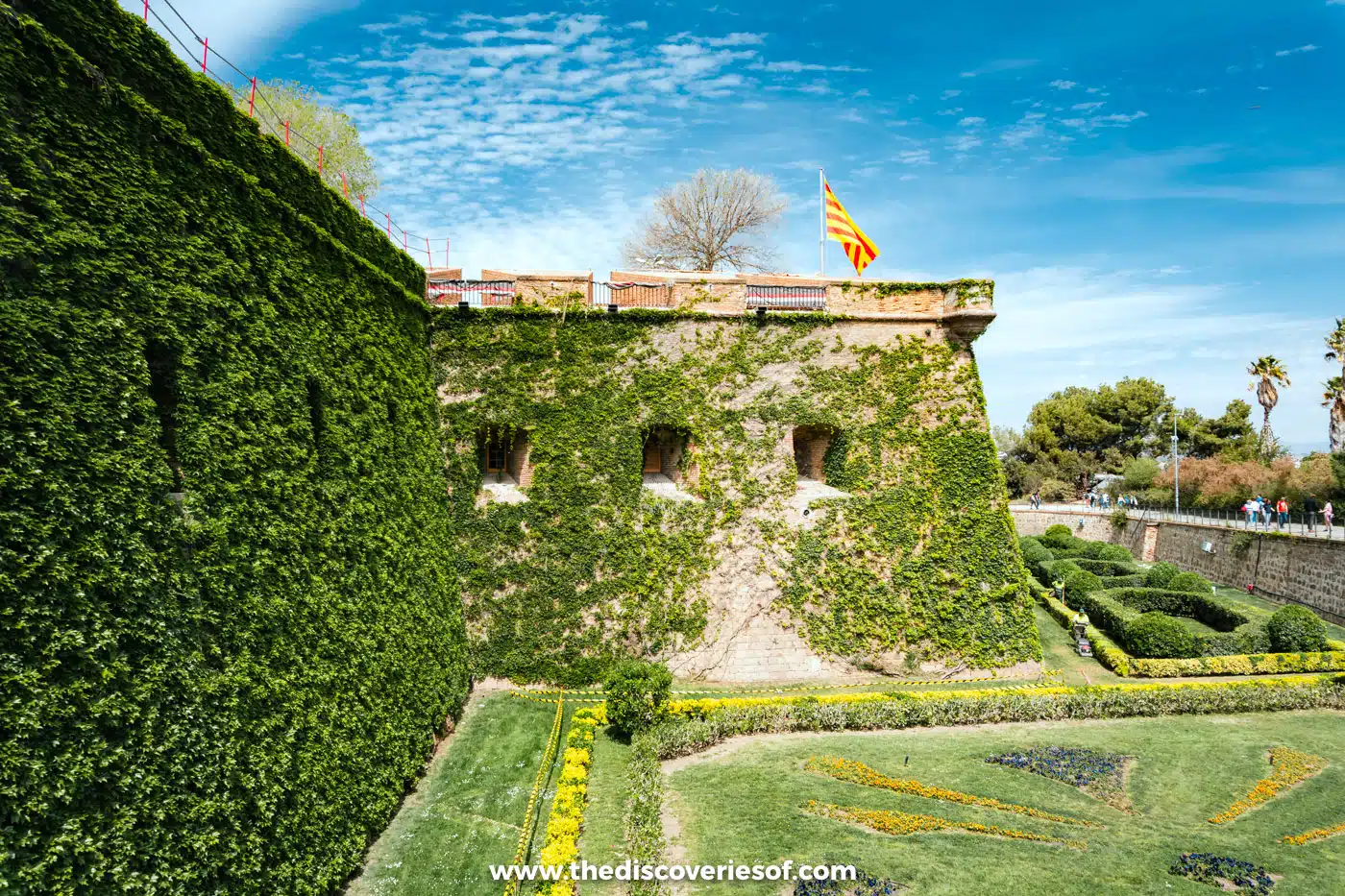
At the top of the hill, Montjuïc Castle is a star-shaped 17th-century fortress with a darker history than its views suggest. For most of its life it was used to keep the city in line rather than defend it: it bombarded Barcelona in the 19th century, and it served as a prison and a place of execution, most infamously for the Catalan president Lluís Companys in 1940.
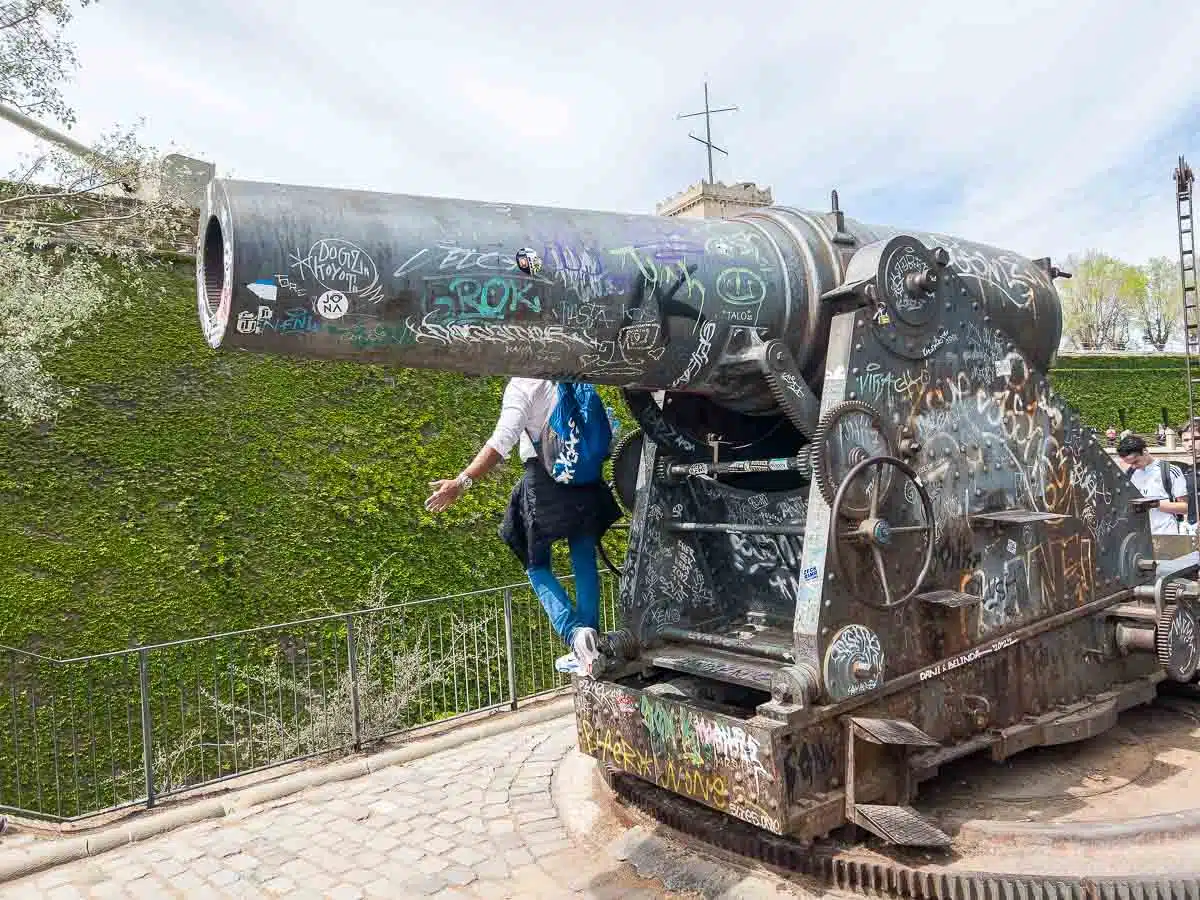
Today it’s a far happier place. You can walk the ramparts for views in every direction, from the port and the sea to Tibidabo, and the moat has been turned into gardens. The old cannons still point out to sea.
Tickets
Entry costs €12 (€8 reduced). It’s free on Sunday afternoons from 3pm and all day on the first Sunday of the month. It opens at 10am, closing at 8pm from March to October and 6pm from November to February.
Take in the view from the Mirador de l’Alcalde
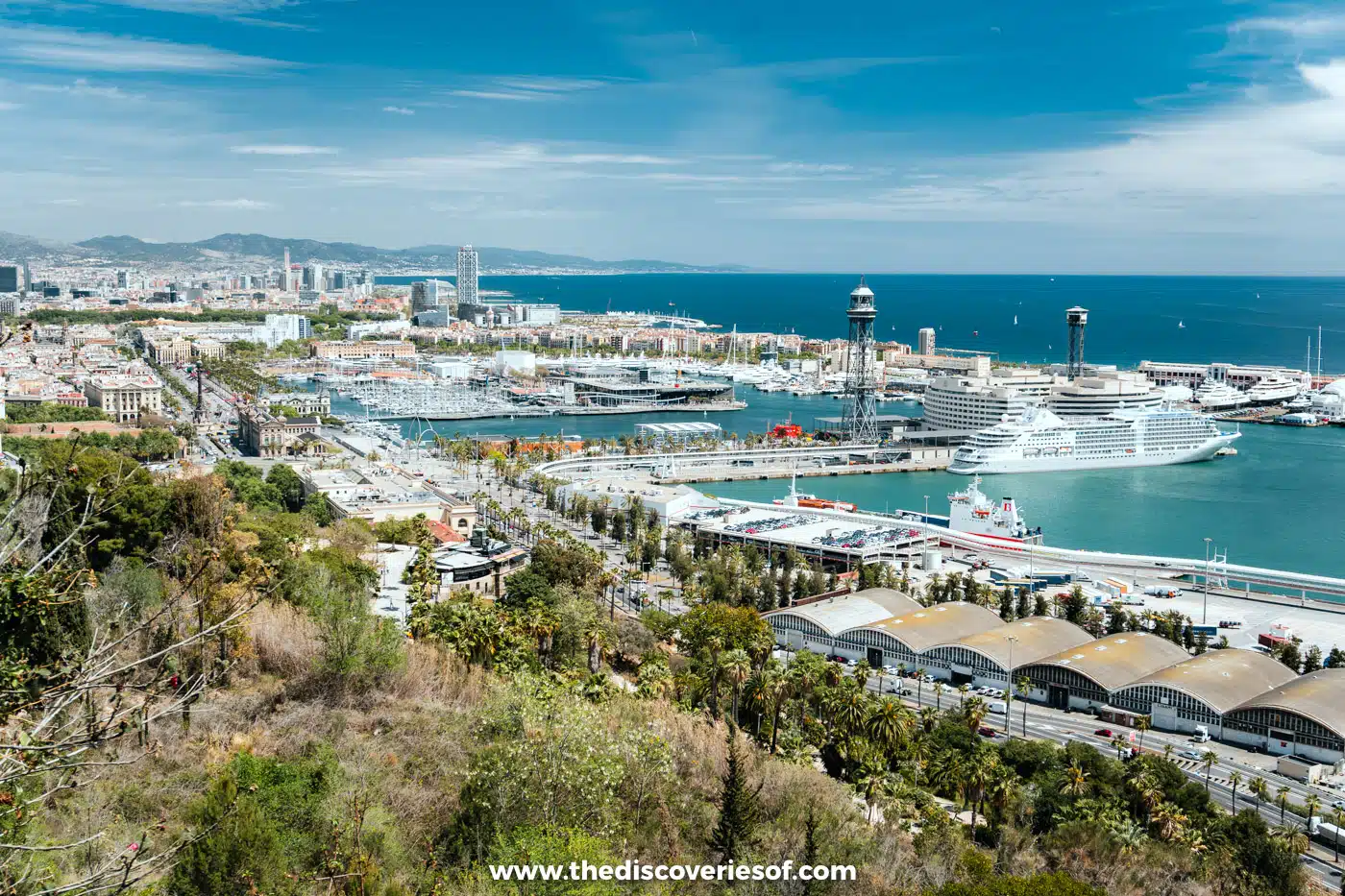
This is the stop I’d never skip. Get off the cable car at the Mirador stop on the way down and walk across to the Mirador de l’Alcalde, a series of terraced gardens with mosaic paths and one of the best views over the port, the cruise terminals and the sea.
There’s a kiosk where you can buy snacks and drinks (sangria, beer and the like) to cool off in the shade, and it’s a lovely place to sit for a while before you walk on down through the gardens.
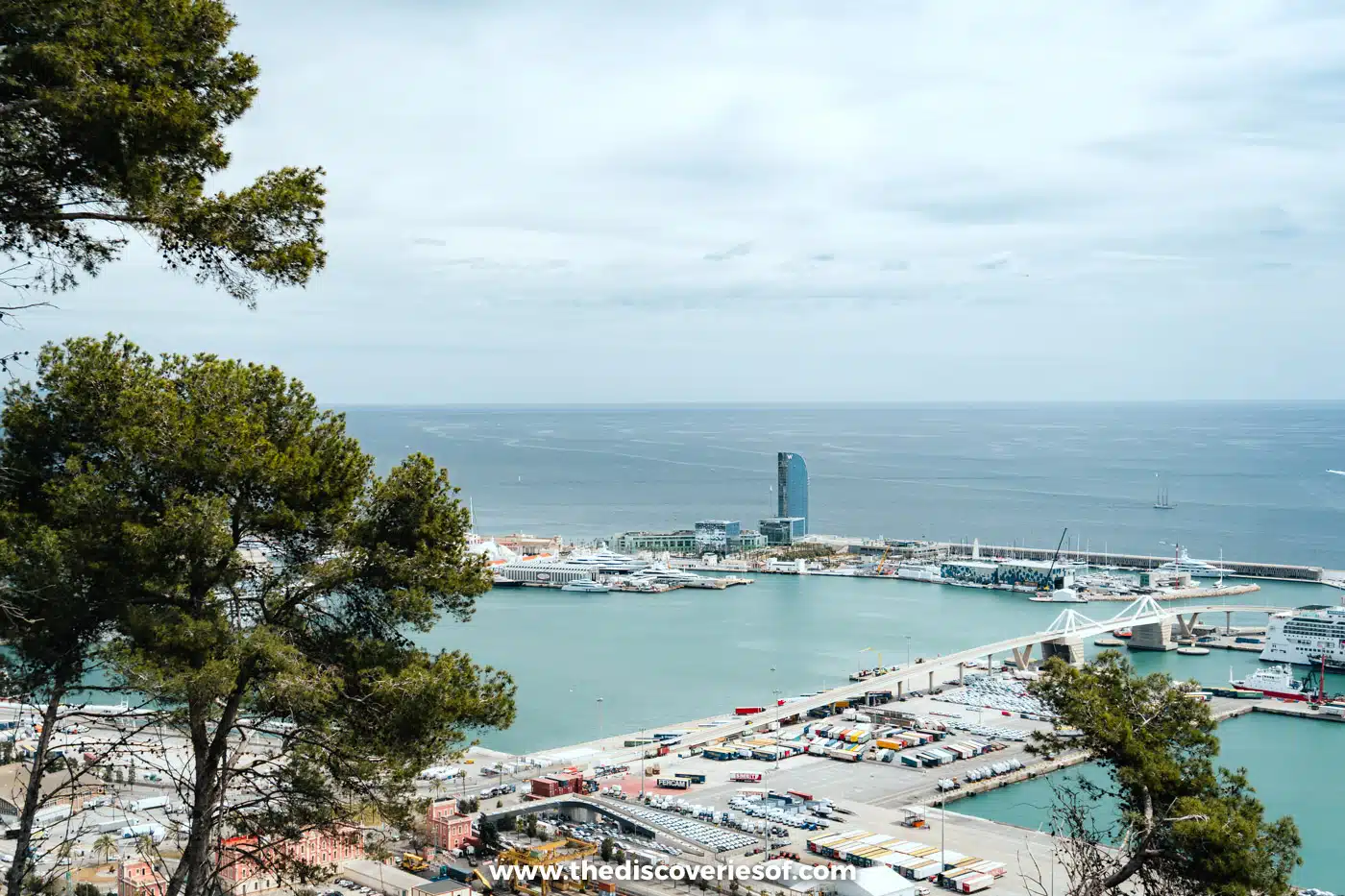
See the city from every side
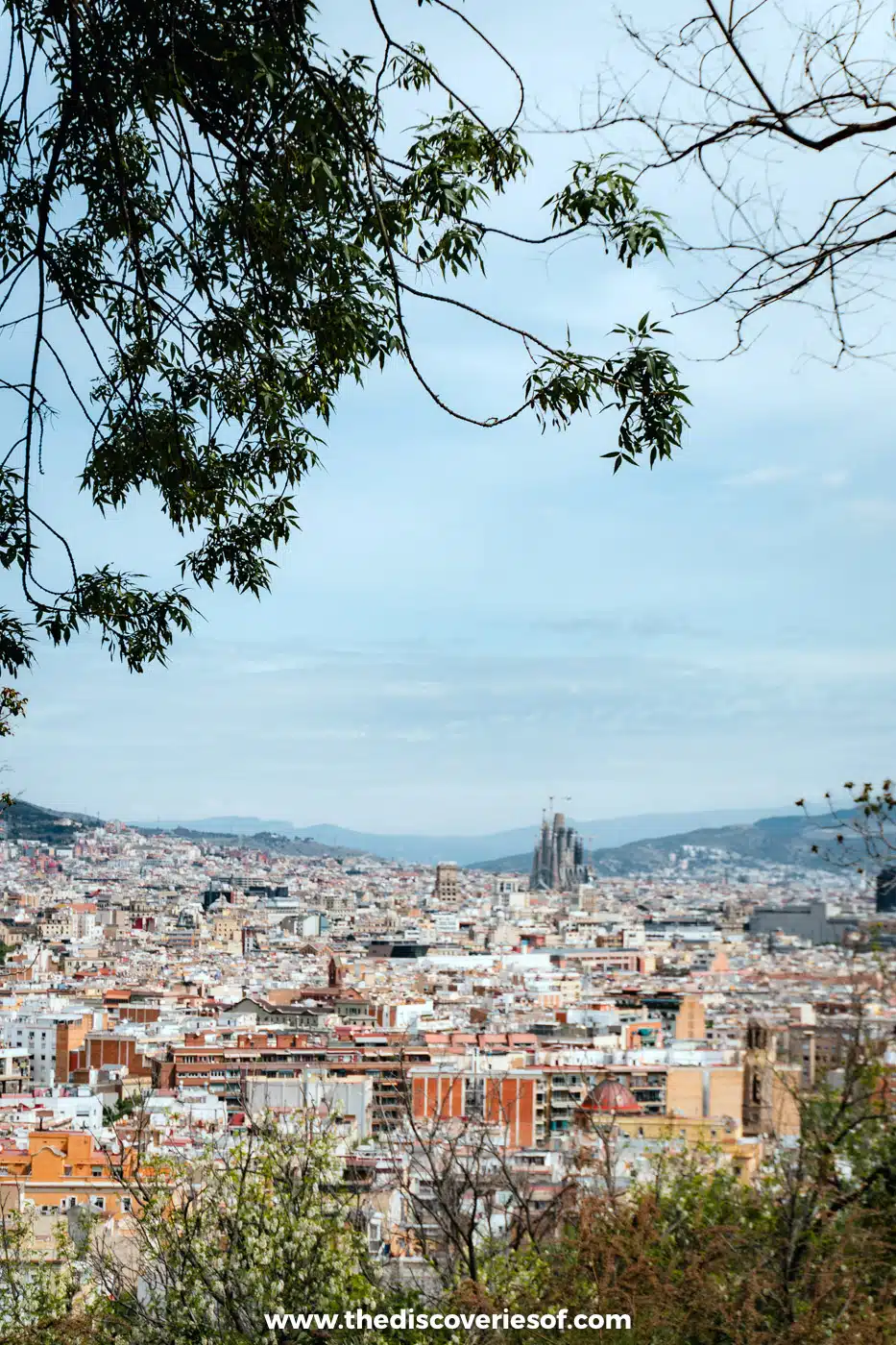
Wherever you walk on Montjuïc, there’s a view. From the castle you look north over the whole city, from the Mirador you look down on the port, and from the paths on the eastern slopes you see the W Barcelona and Barceloneta curving away along the coast. Bring a camera, and some patience for the gradients.
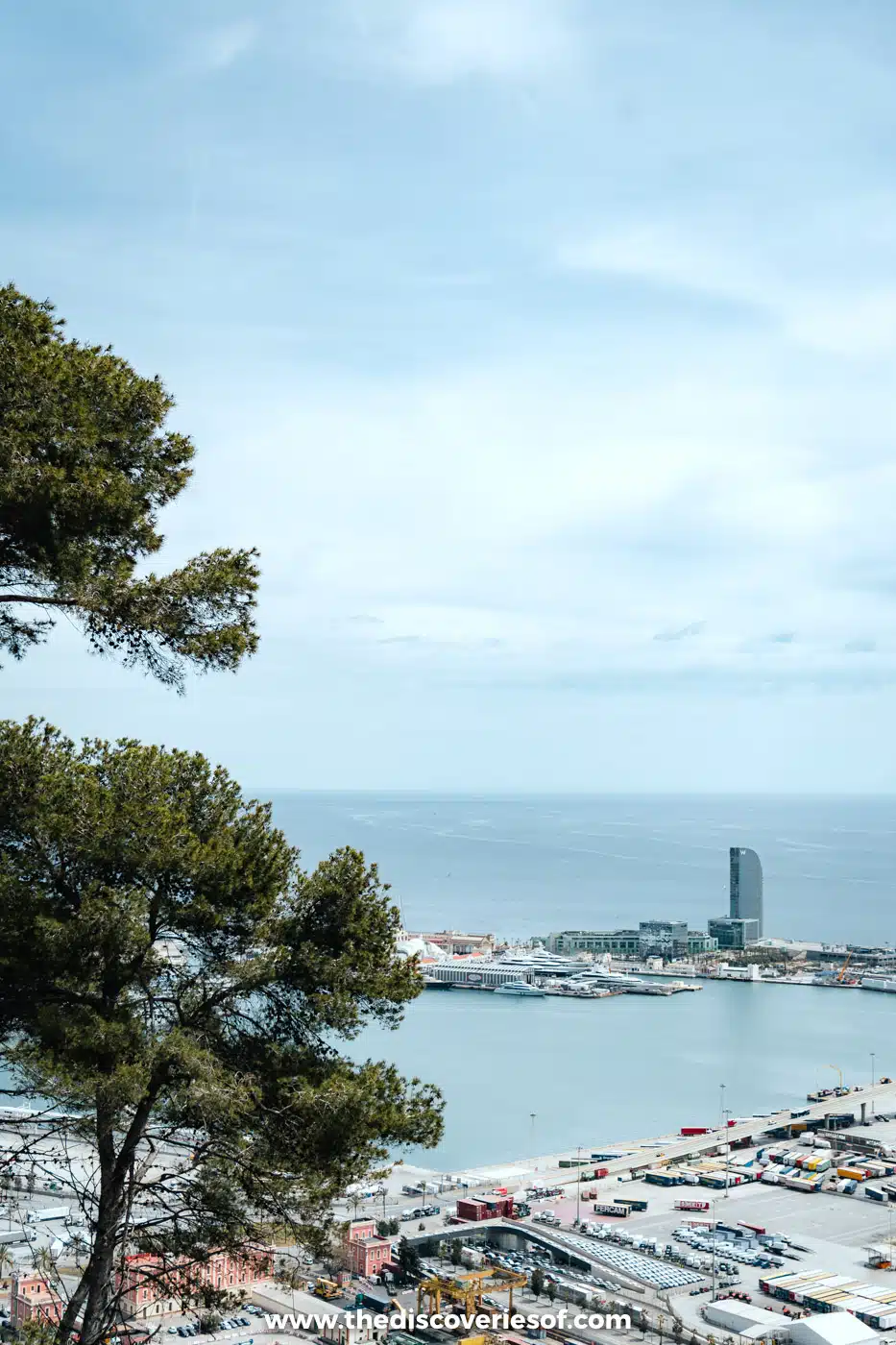
Find the street art on the lower slopes
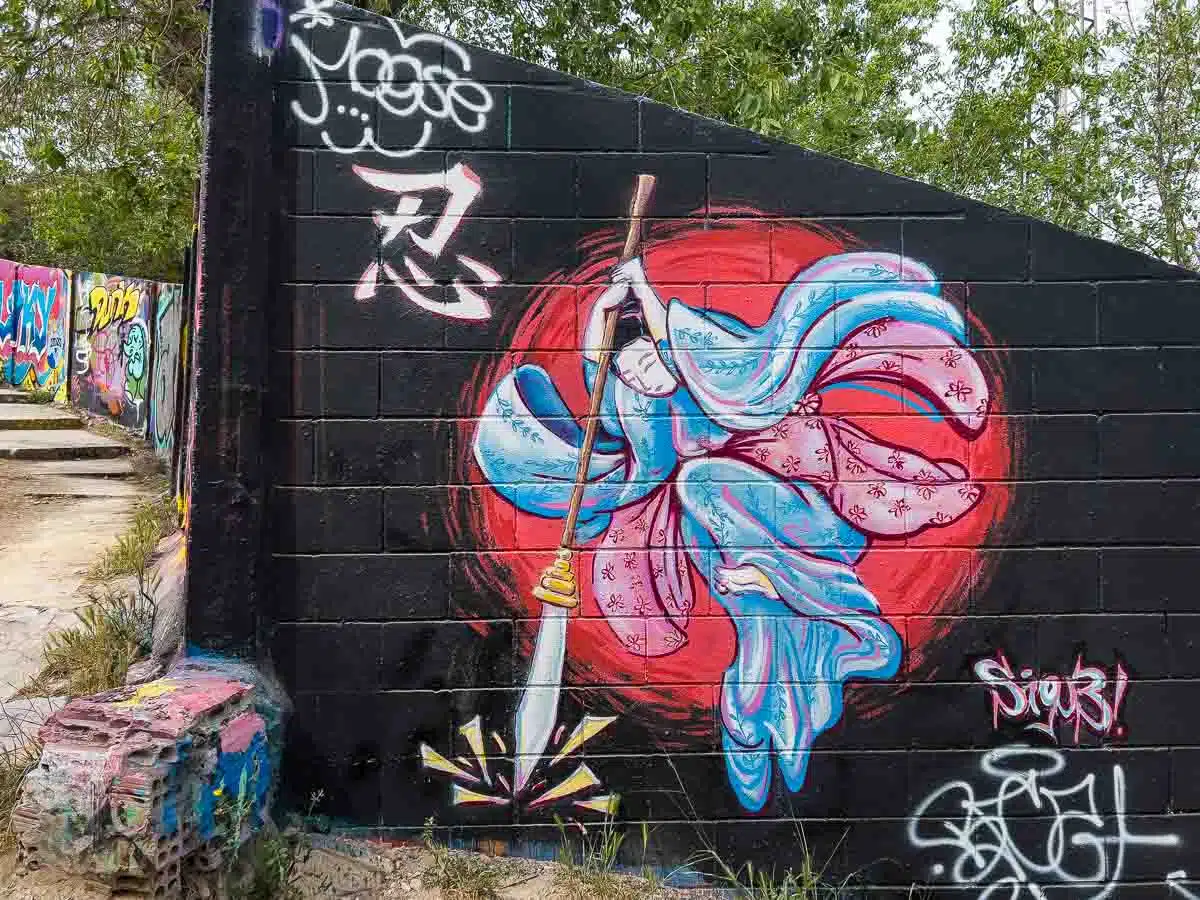
On the way up from Poble-sec, the walls around the lower slopes carry some big murals, including a giant squirrel and a samurai in a swirl of red. They’re a good excuse to break the climb, and a reminder that the legal walls of the Three Chimneys park are just at the bottom of the hill. My guide to Barcelona’s street art has the full route.
Stop for lunch with a view

Montjuïc isn’t short of places to eat, from kiosks to museum cafés to proper restaurants with terraces. I stopped for lunch on the hill (that’s my plate above). Whatever you choose, sit outside: eating with the city below you is half the point.
See Miró’s best work at the Fundació Joan Miró
The Fundació Joan Miró holds the largest collection of the artist’s work anywhere, in a bright white building designed by his friend Josep Lluís Sert that opened in 1975. It’s full of light, courtyards and terraces, so even if Miró isn’t your thing, the building and its roof garden are worth the visit. Book a skip-the-line ticket here.
Explore MNAC and the Palau Nacional
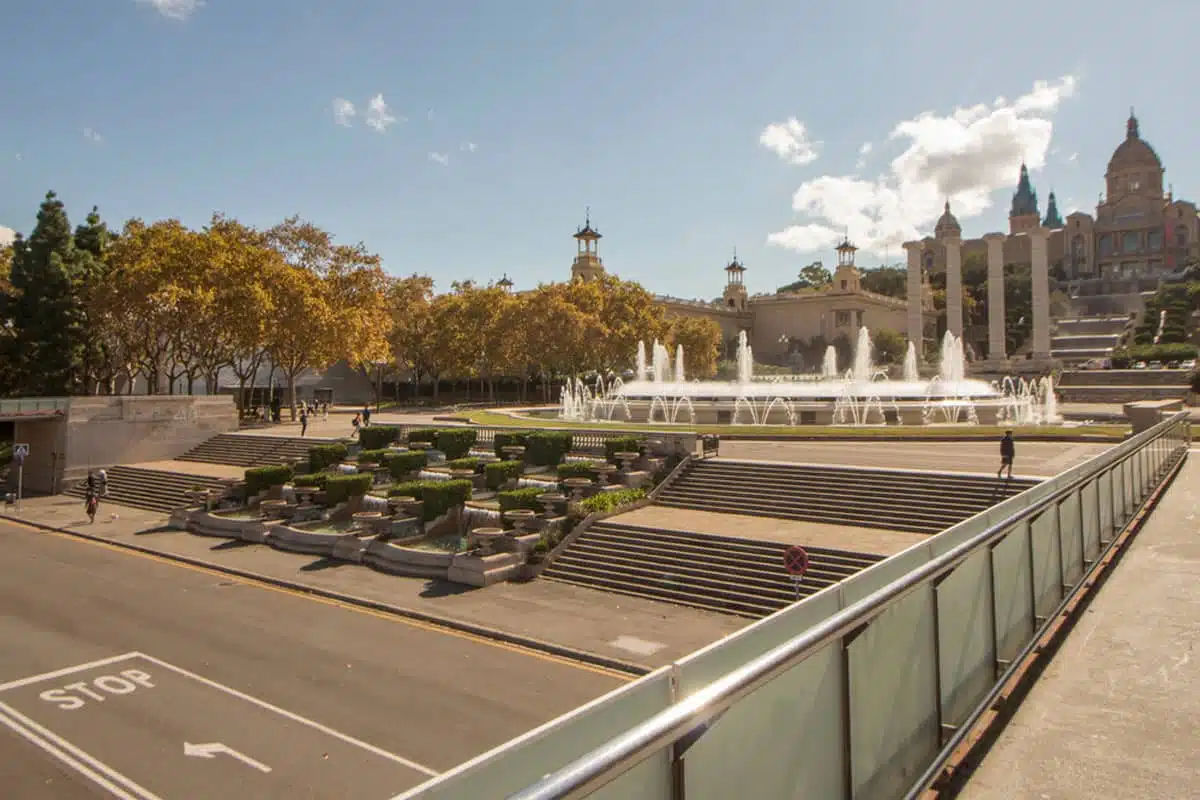
The domed Palau Nacional, built for the 1929 International Exhibition, is home to the Museu Nacional d’Art de Catalunya (MNAC), famous for its Romanesque frescoes rescued from little churches in the Pyrenees. Even if you skip the museum, climb the steps to its terrace for one of the classic views down Avinguda de la Reina Maria Cristina to Plaça d’Espanya. It’s free on Saturdays from 3pm and on the first Sunday of the month. Book your MNAC ticket here.
Watch the Magic Fountain
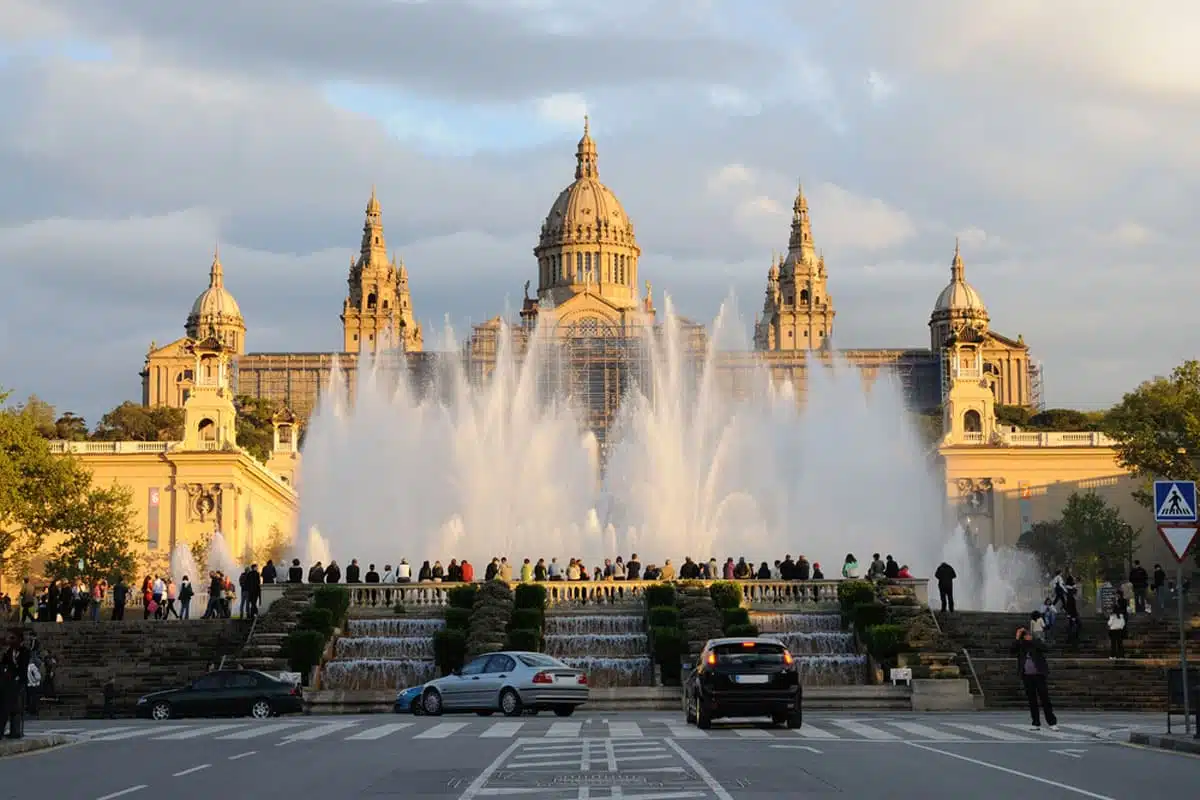
At the foot of the Palau Nacional, Carles Buïgas’s Magic Fountain, also built for 1929, puts on free shows of water, light and music. It was switched off for about three years during the drought, and the shows came back in September 2025. They run on Thursday, Friday and Saturday evenings, with shows at 8pm and 8.30pm from November to March and later times in summer, so check the schedule before you go.
Visit the Olympic Ring
Montjuïc was the heart of the 1992 Olympics, and the Olympic Ring is still there to explore: the Estadi Olímpic Lluís Companys, Arata Isozaki’s Palau Sant Jordi and Santiago Calatrava’s white communications tower, which looks like an athlete holding up the Olympic torch. The Olympic and Sports Museum is next to the stadium.
Wander through Poble Espanyol
Built for the 1929 exhibition as a showcase of Spanish architecture, Poble Espanyol is a village of replica buildings from every region of Spain, from Andalusian squares to Basque farmhouses, now filled with craft workshops, restaurants and a small art collection. It’s touristy, but fun, and good for families.
Find the modern classics: the Barcelona Pavilion and CaixaForum
Two buildings near Plaça d’Espanya are pilgrimage sites for architecture lovers. The Barcelona Pavilion, Mies van der Rohe’s German pavilion for 1929, was rebuilt in the 1980s and is still a masterclass in marble, glass and steel. Across the road, CaixaForum fills a Modernista textile factory by Josep Puig i Cadafalch with changing art exhibitions.
Get lost in the gardens
The hill is covered in gardens. The Jardins de Mossèn Costa i Llobera, on the slope facing the port, are packed with cacti and succulents, the Jardí Botànic gathers plants from Mediterranean climates around the world, and the Jardins de Laribal step down the hill in terraces and fountains. In July, the open-air Teatre Grec hosts the city’s summer Grec festival.
How to get up Montjuïc
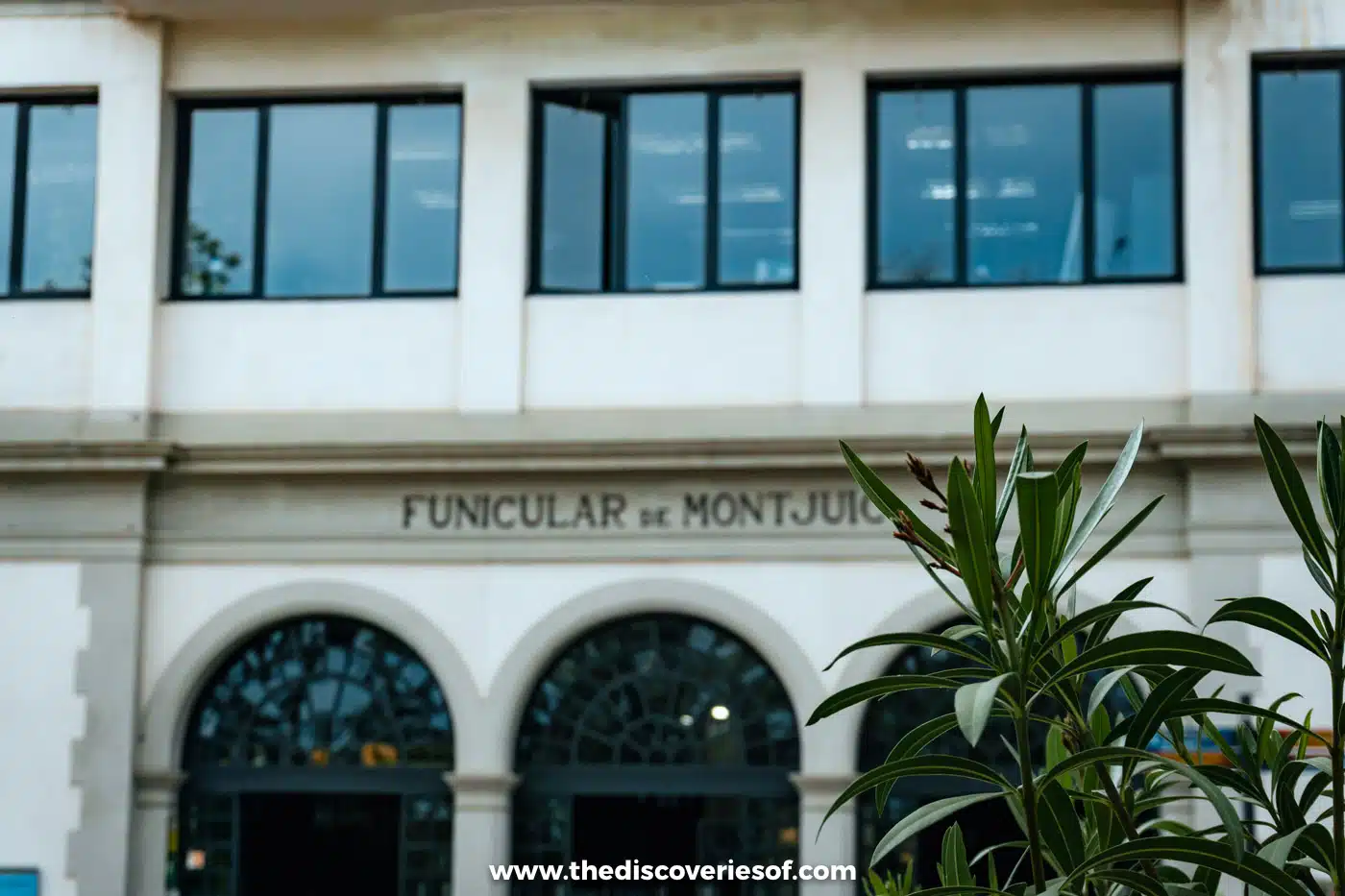
- Funicular: the Funicular de Montjuïc runs from Paral·lel metro station (L2 and L3) to the Parc de Montjuïc station in a couple of minutes, and it’s part of the metro network, so a T-Casual covers it. The cable car to the castle starts right outside.
- Cable car from the port: the Telefèric del Port crosses the harbour from Barceloneta to Miramar, on the slopes of Montjuïc. It’s a spectacular ride, but pricey.
- Bus: bus 150 runs from Plaça d’Espanya up to the castle.
- On foot: from Plaça d’Espanya, outdoor escalators carry you up past MNAC. From Poble-sec, it’s a steep but pretty climb through the gardens.
Tips for visiting Montjuïc
- Go up, walk down: take the funicular and cable car up to the castle, then walk downhill through the Mirador, the gardens and the museums. It’s far easier on the legs.
- Plan around the free hours: the castle is free on Sunday afternoons, MNAC on Saturday afternoons, and both on the first Sunday of the month.
- Bring water and sun cream: it’s a big, exposed hill, and the kiosks are spread out.
- Finish at the fountain: time your walk down to reach the Magic Fountain for its evening show, then take the metro home from Plaça d’Espanya.
- Where to stay: Poble-sec, at the foot of the hill, is great for tapas bars, and the Gothic Quarter is a short metro ride away. See my guide to where to stay in Barcelona.
Read next
- 49 things to do in Barcelona
- Barcelona’s most famous landmarks
- Barcelona street art: a guide and map
- 3 days in Barcelona: the perfect itinerary
Love this? Save and share on Pinterest
Discover the top things to do, insider tips and hidden gems in our Spain Travel Guide.
Read the guides →