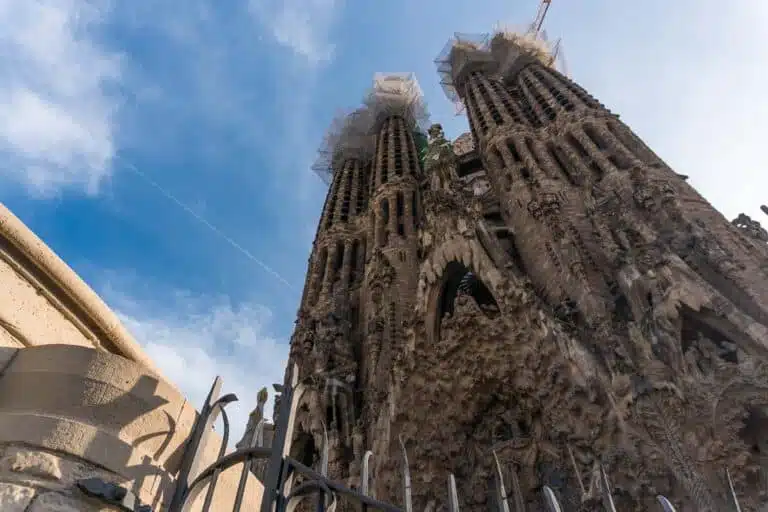
Over 140 years in the making and still not finished, the Sagrada Família is the one sight in Barcelona nobody skips. Which tower to climb, when the light is at its best and how to make sense of what you’re looking at.
Of all the things to rave about in Barcelona, the obvious first-place winner is Gaudí’s basilica. Aside from being the city’s best-known icon, it’s the building that shows Antoni Gaudí’s influence over the city better than any other. And before you brush it off as just another megastructure, treat yourself to a visit: it’s impossible not to be blown away by it when you see it in real life.
I’ve been inside more than once: on my first visit years ago, and again while I lived in Barcelona for three months. I’ve climbed the towers, done the self-guided tour in the app and worked out when the light is at its best, so this guide is everything I’d tell a friend before they go: how to book, which tower to pick, what to look for and the time of day the whole place glows.
Why the Sagrada Família is worth your time
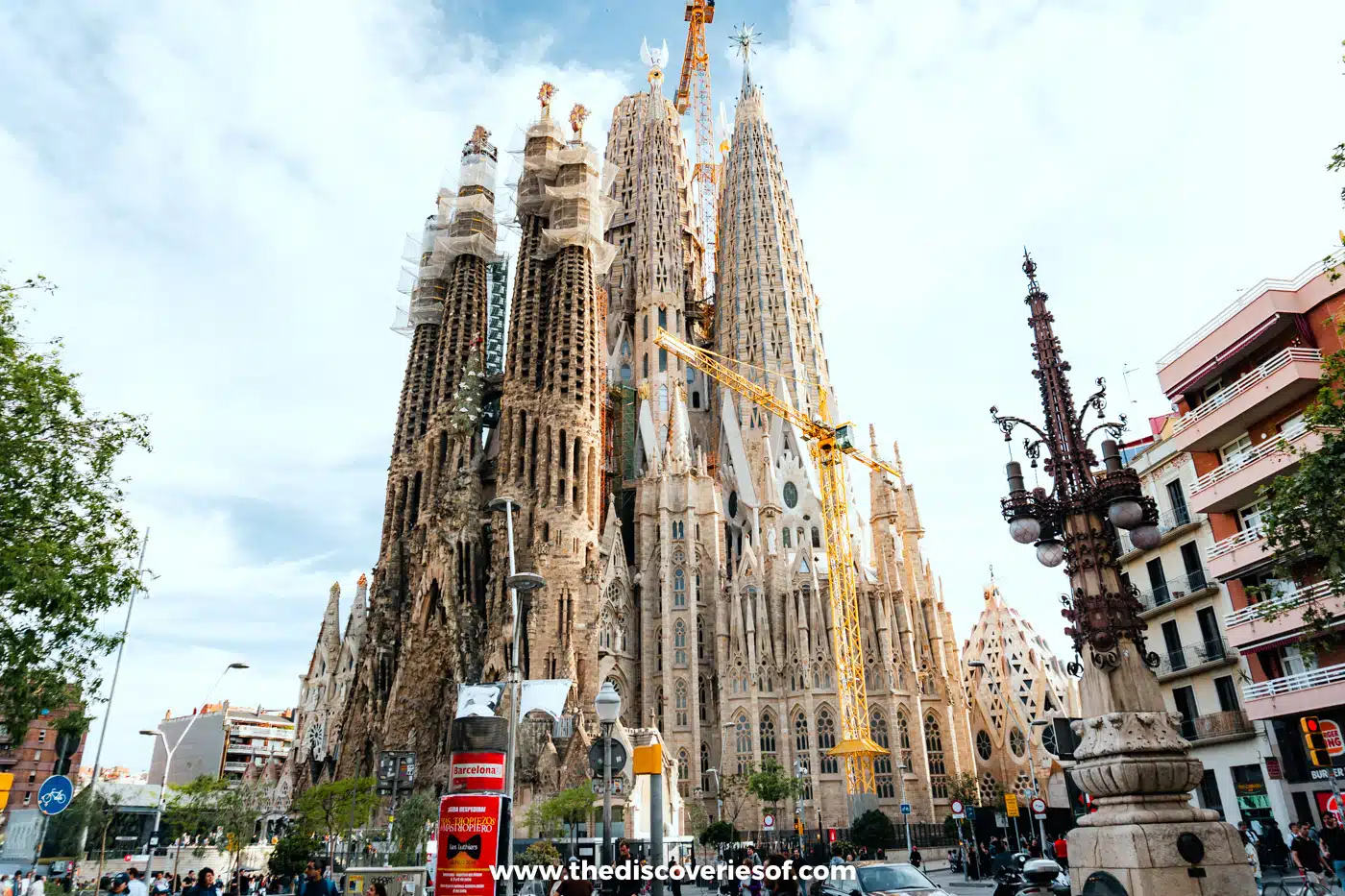
Obviously, this is the best-known landmark in Barcelona, and you should absolutely visit. But it’s not famous just for being big, or unfinished. It’s famous because Gaudí designed every part of it to tell a story, from the carved façades to the way the light moves through the stained glass over the course of a day.
In June 2026, on the centenary of Gaudí’s death, the central Tower of Jesus Christ was blessed, and at 172.5 metres it made the Sagrada Família the tallest church in the world. Gaudí insisted it should stay just below the height of Montjuïc, because his work shouldn’t surpass the work of God. Its Nativity façade and crypt are part of the UNESCO World Heritage listing for Gaudí’s works, along with six of his other buildings in and around the city.
The story behind the basilica
The story of the basilica is an interesting one. It began as the brainchild of a bookseller, Josep Maria Bocabella, who was inspired by a trip to the basilica at Loreto in Italy and started collecting donations for a new church in Barcelona. It’s still funded by donations and ticket sales rather than public money, which is one reason it has taken so long.
Gaudí wasn’t even the original architect. That was Francisco de Paula del Villar, whose Neo-Gothic design was used to start building the church in 1882. Villar quit, and Gaudí was brought on in 1883, officially as architect director in 1884. He threw out most of the original plans and spent the rest of his life on the project, the last 12 years on almost nothing else. He was living in his workshop on site when he was hit by a tram in 1926, and he’s buried in the crypt.
Gaudí only lived to see one of the façades completed, the Nativity façade, and that was a deliberate choice: he wanted a finished example of his style that the architects who came after him could learn from and use to shape the rest of the building. Work stopped during the Spanish Civil War, when his workshop was burned and many of his plans and plaster models were destroyed, and it has taken decades of piecing them back together since. Pope Benedict XVI consecrated it as a basilica in 2010, and work on the main Glory façade carries on today.
How to plan your visit
Tickets
Book tickets as far in advance as you can. Tickets are sold online only, and they sell out days (and quite often weeks) in advance, particularly the ones that include the towers. Each ticket has a timed entry slot.
These are the official prices at the time of writing:
- Basic ticket with the app audio guide: €26
- Guided tour: €30
- Basic ticket with a tower: €36
- Guided tour with a tower: €40
- Reduced tickets: under 30s and students pay €24 for a basic ticket, seniors €21, and children under 11 go free
You can book guided tours both through the Sagrada’s own website and GetYourGuide, but there is a lot of information in the Sagrada Família app, so it’s easy to skip the tour if you want to take things at your own pace. In fact, there’s a self-guided tour in the app. It gets a little dry in places, but it’s a great jumping off point for all the history and architecture nerds out there who want to dig a little deeper into the story of the building (I definitely am one of those nerds). Bring your own earphones.
Do
If you’d rather have a guide and skip the queue at both of Gaudí’s big hitters, this Sagrada Família and Park Güell tour covers both.
Nativity or Passion: which tower should you climb?
A normal ticket doesn’t include the towers: you have to book the specific tickets that do. You’ll have to pick either the Nativity façade or the Passion façade, as no ticket includes both sets of towers.
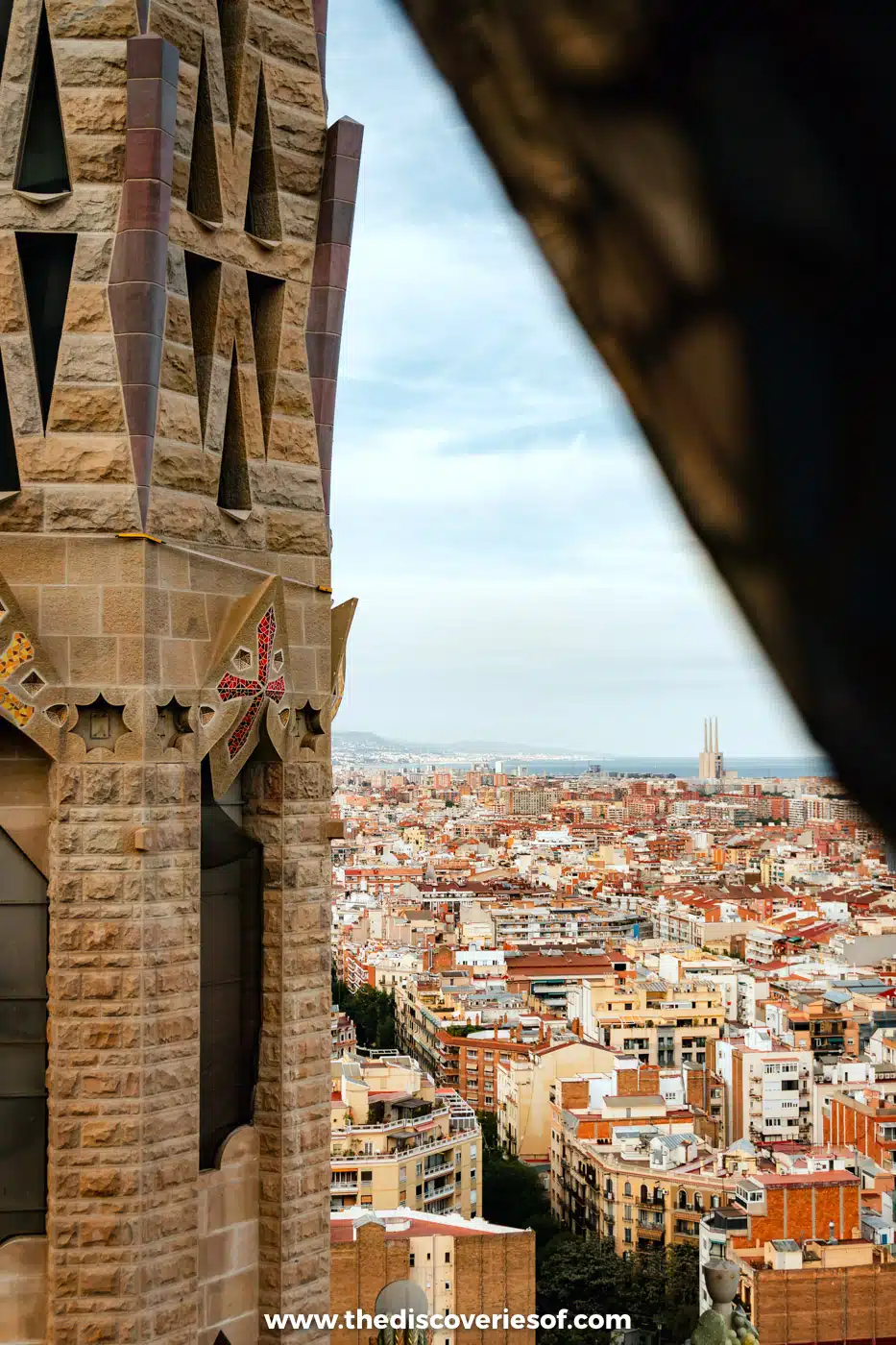
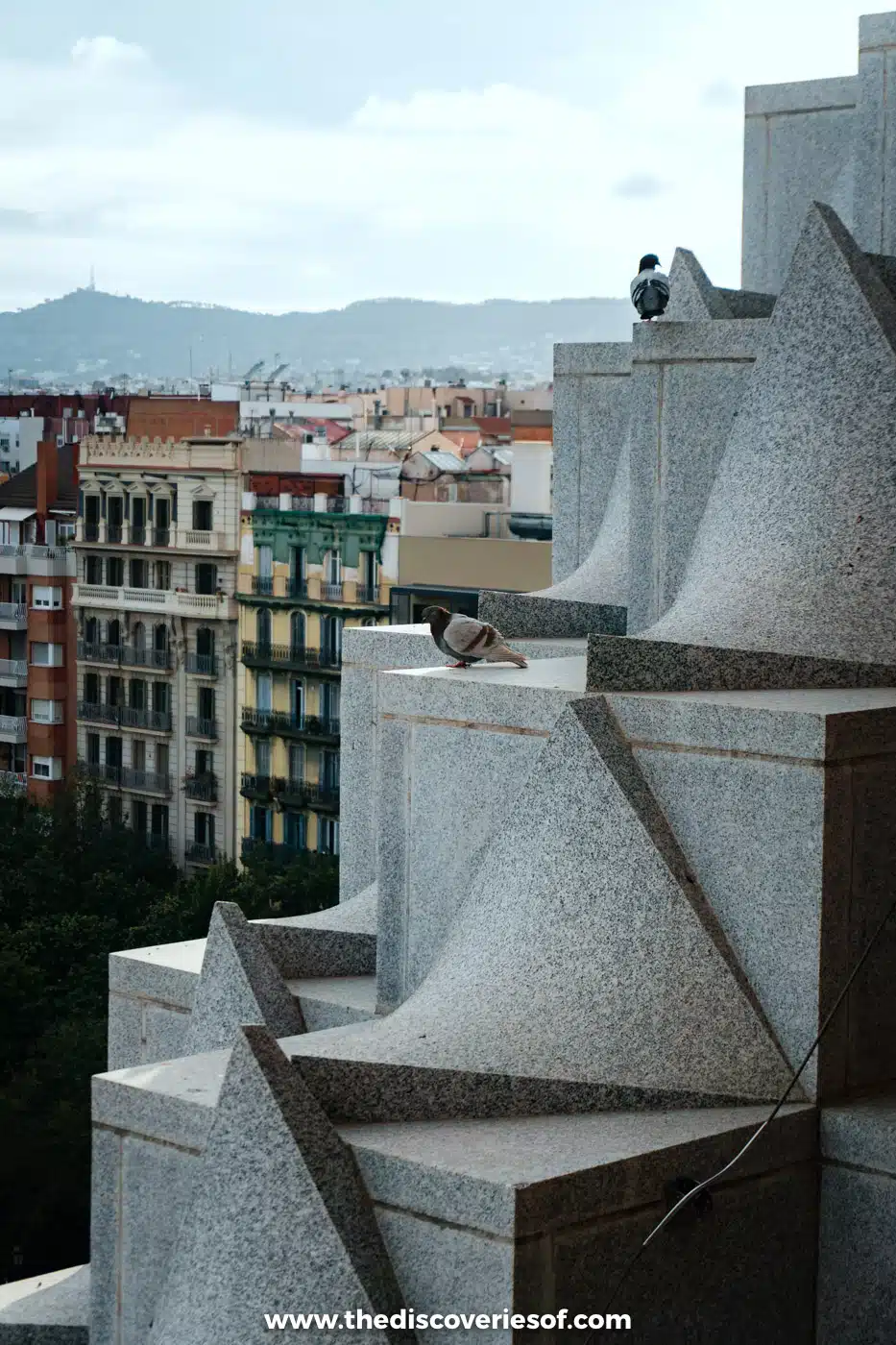
I’ll be honest: there’s not much in it view-wise. Both have spectacular views of the city below. The Nativity towers face east, over the Eixample towards the sea, and you get a close look at the carvings and the fruit-topped pinnacles on the way. The Passion towers face west, towards Montjuïc and the hills,. If you can only book one, go for whichever has the time slot that suits you best.
If you are planning on booking a tower ticket, you have to be comfortable with steps (lots of them). Luckily, you now get a lift to the top. On my first visit years ago, you had to climb up and down via the stairs. But you still come down by a long, narrow spiral staircase, so prepare for the ultimate leg workout. So. many. steps. It’s not too difficult, and there are handrails, but do take it into consideration before you book. Children under six aren’t allowed up, and tower visits can be cancelled in bad weather.
Opening hours
The basilica opens at 9am from Monday to Saturday and at 10.30am on Sunday. It closes at 6pm from November to February, 7pm in March and October, and 8pm from April to September (Saturdays close earlier in the warmer months). The first hour of the morning is now a quiet hour, when audio guides must be used with earphones. Check the official website before you go, as it can close for religious services and special events.
Getting there
The basilica has its own metro station, Sagrada Família, on lines L2 (purple) and L5 (blue), which drops you right outside. It’s also an easy 20-minute walk from Passeig de Gràcia and Casa Milà along the Eixample’s grid.
What to wear
This is a working church, so there’s a dress code: cover your shoulders, and shorts and skirts should reach at least mid-thigh. Pack a light scarf in summer so you’re not turned away at the door.
When to visit for the best light
If you’re horrified by dense crowds, don’t fear. It isn’t too bad here, as the timed entries do a really good job of keeping it busy but not *too* busy. That said, if you really want to catch the church at its quietest, opt for the first set of tickets in the morning.
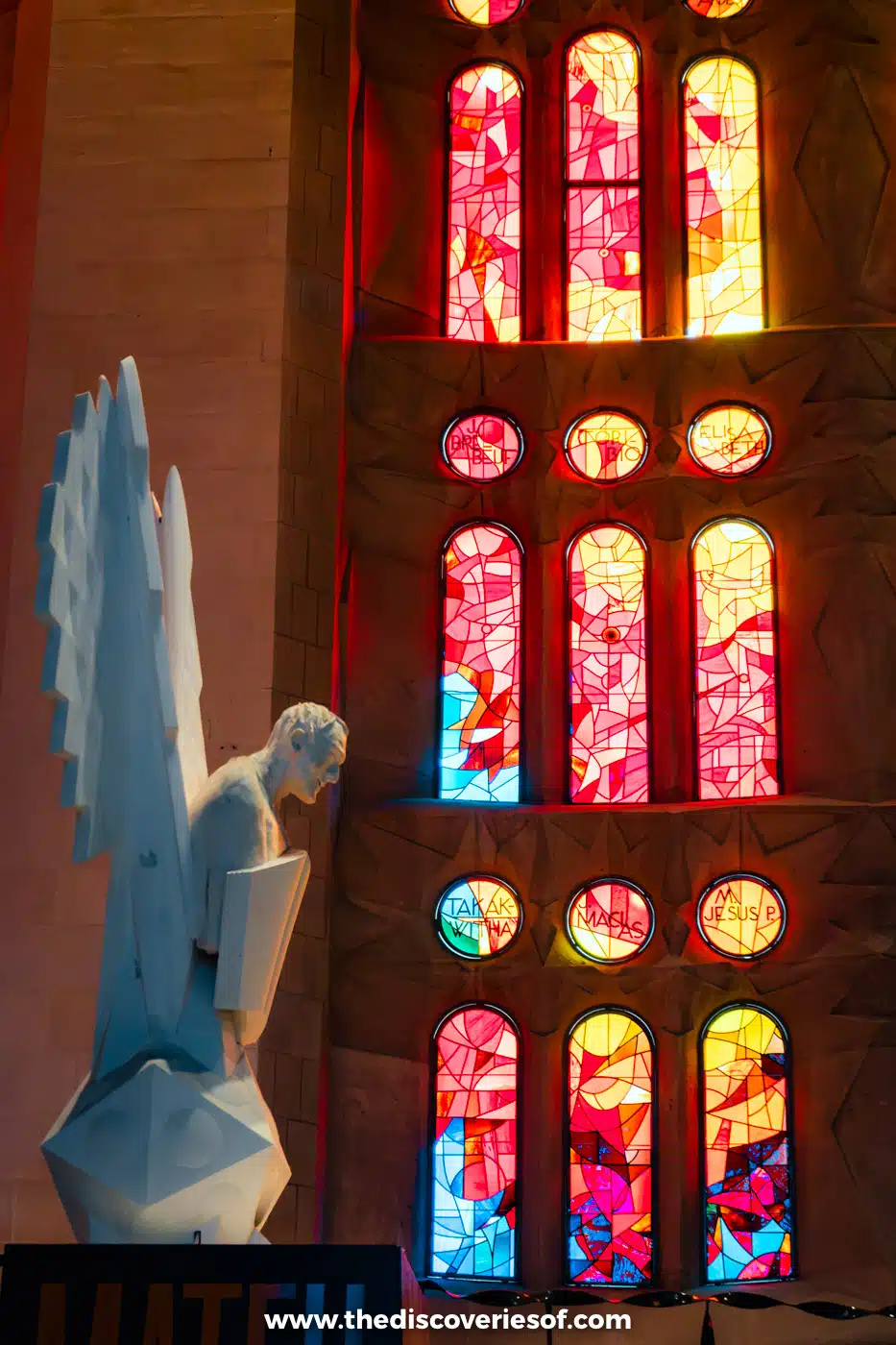
If you want to catch the church in its full glory, visit before 11.30am or between 5 and 6pm. That’s when the rising and falling light streams through the stained glass windows at an angle, casting a distinctly colourful glow inside. The windows were designed to match: those on the Nativity side, which catches the morning sun, are in cool blues and greens, while those on the Passion side, lit up in the afternoon, run through warm reds and oranges. In the middle of the day the light comes from above and you lose that effect, so it’s worth building your day around one of those windows.
What to see inside and out
The Nativity façade
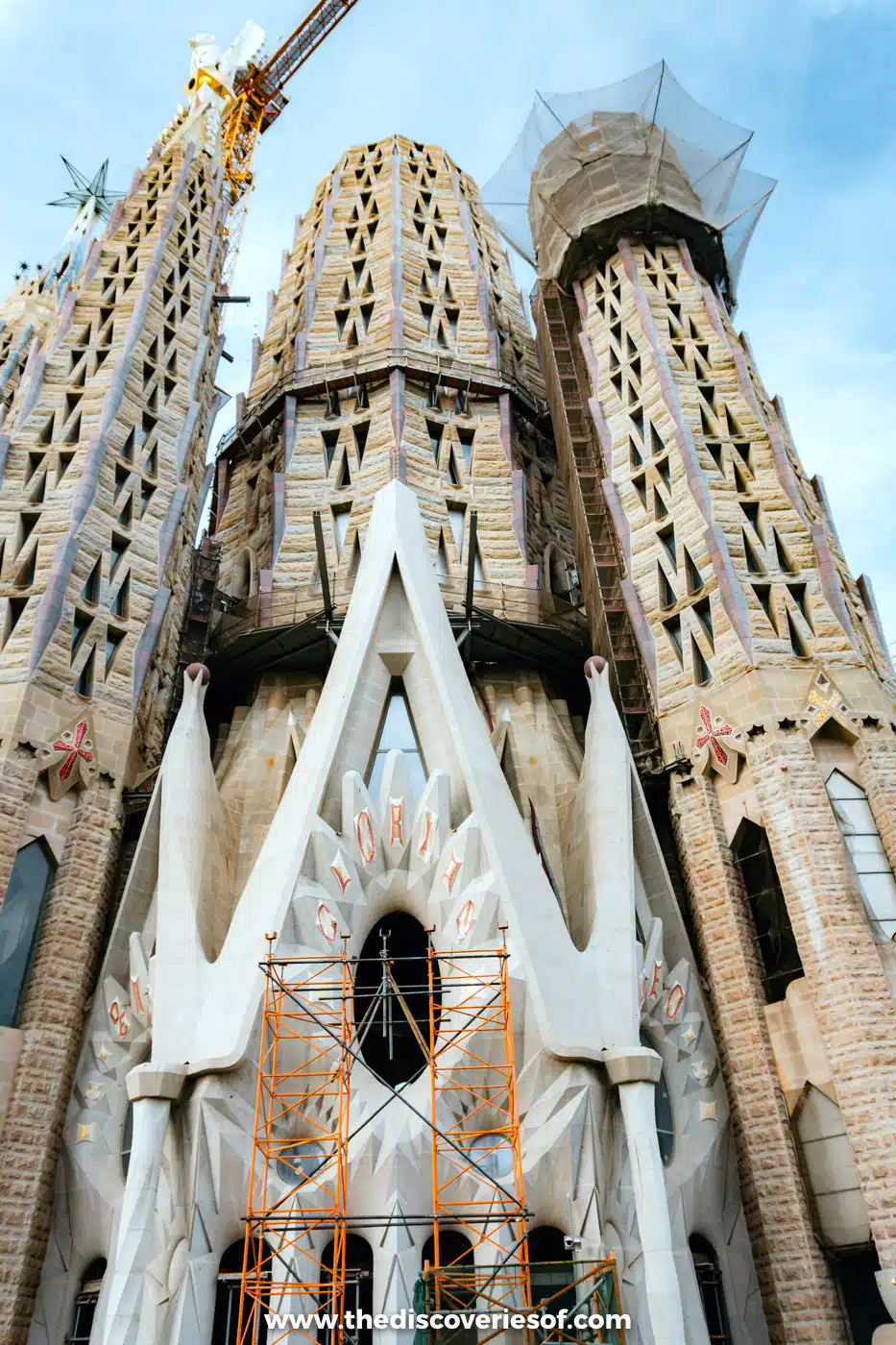
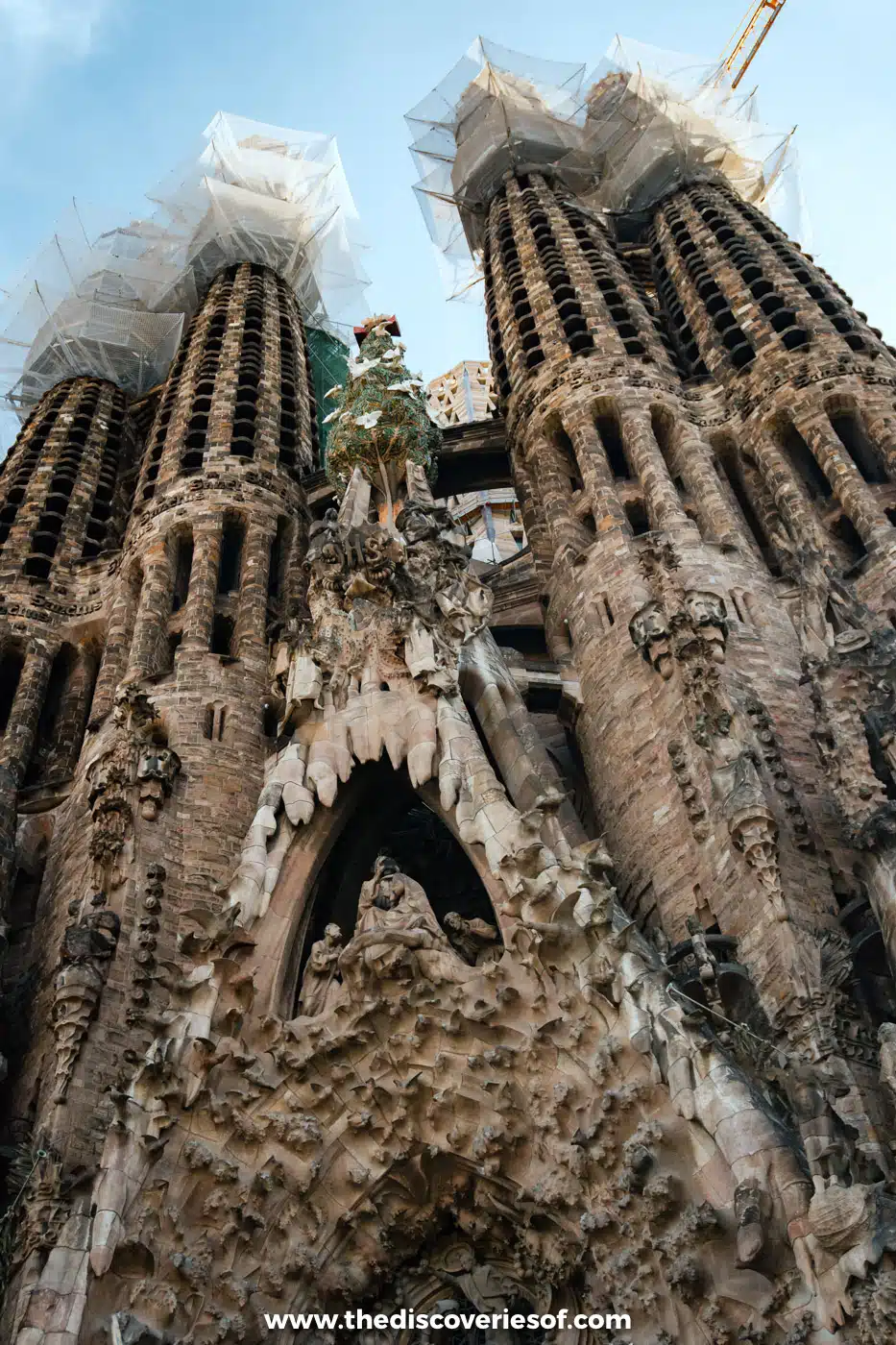
The Nativity façade, on the east side, is the one Gaudí finished himself, and it’s exuberant and full of detail to celebrate the birth of Christ. At the time it was built, most of the population couldn’t read, so he designed it to tell the story of the Nativity in stone: angels, the shepherds, the Holy Family, and so many plants and animals that it can feel like the whole façade is alive. Look for the turtles at the base of the columns and the cypress tree, bursting with doves, at the top.
The Passion façade
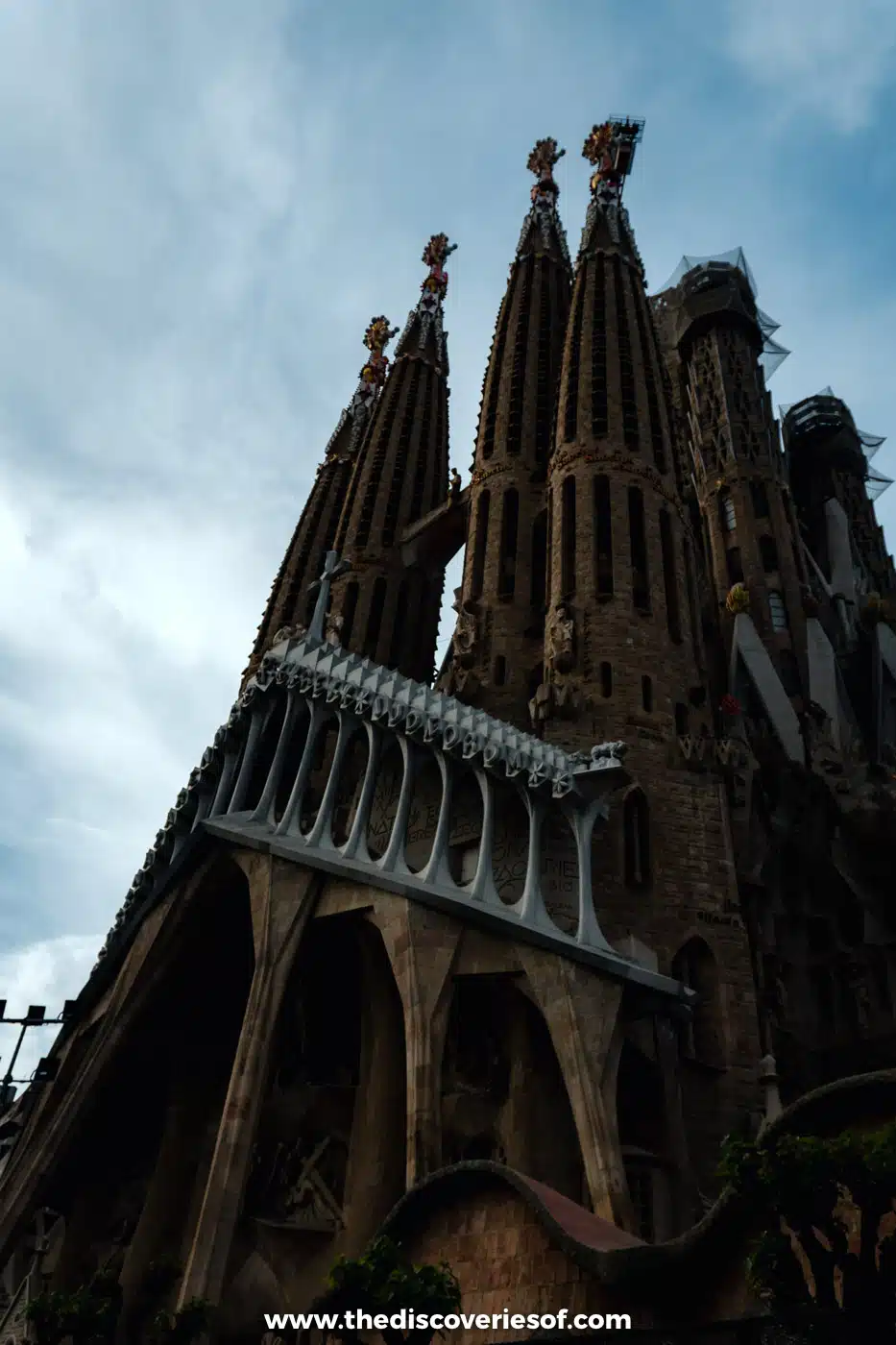
Walk round to the west side and the mood changes completely. Gaudí’s design for the Passion façade is a lot more austere and restrained, to reflect the sombre nature of the events it portrays. Its skeletal columns lean like bones, and the angular sculptures by Josep Maria Subirachs, added from the 1980s, reenact the last days of Christ’s life in an S-shaped path from bottom left to top right. Look for the magic square of numbers, where every line adds up to 33, Christ’s age at his death.
The nave
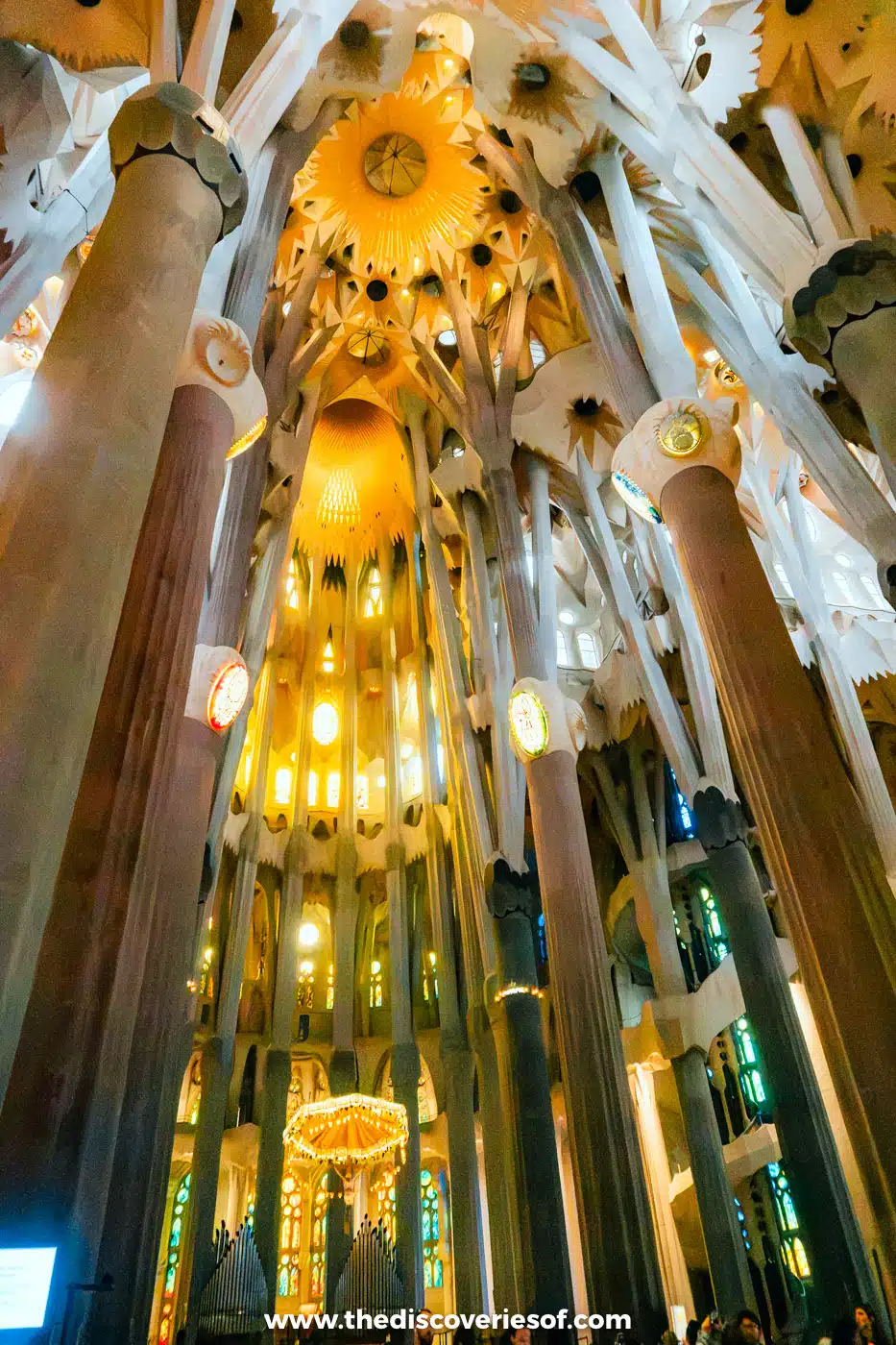
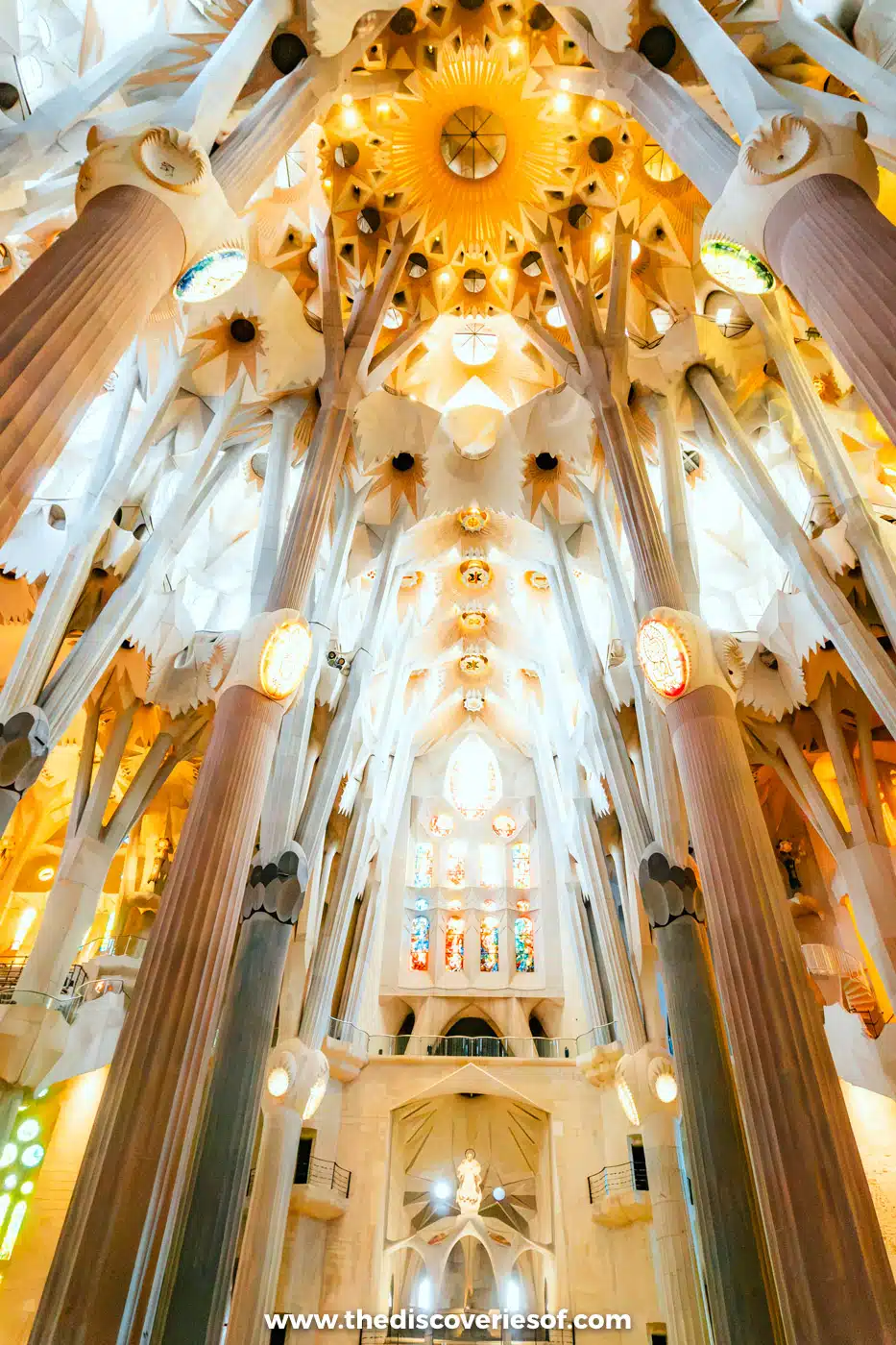
Then you step inside, and it’s like walking into a forest. The columns branch out like trees as they rise, and the ceiling is a canopy of star-like openings that let in light from above. Gaudí wanted the inside to feel like a natural space rather than a building, and it really does. Take a seat on one of the pews for a few minutes and just look up.
The stained glass
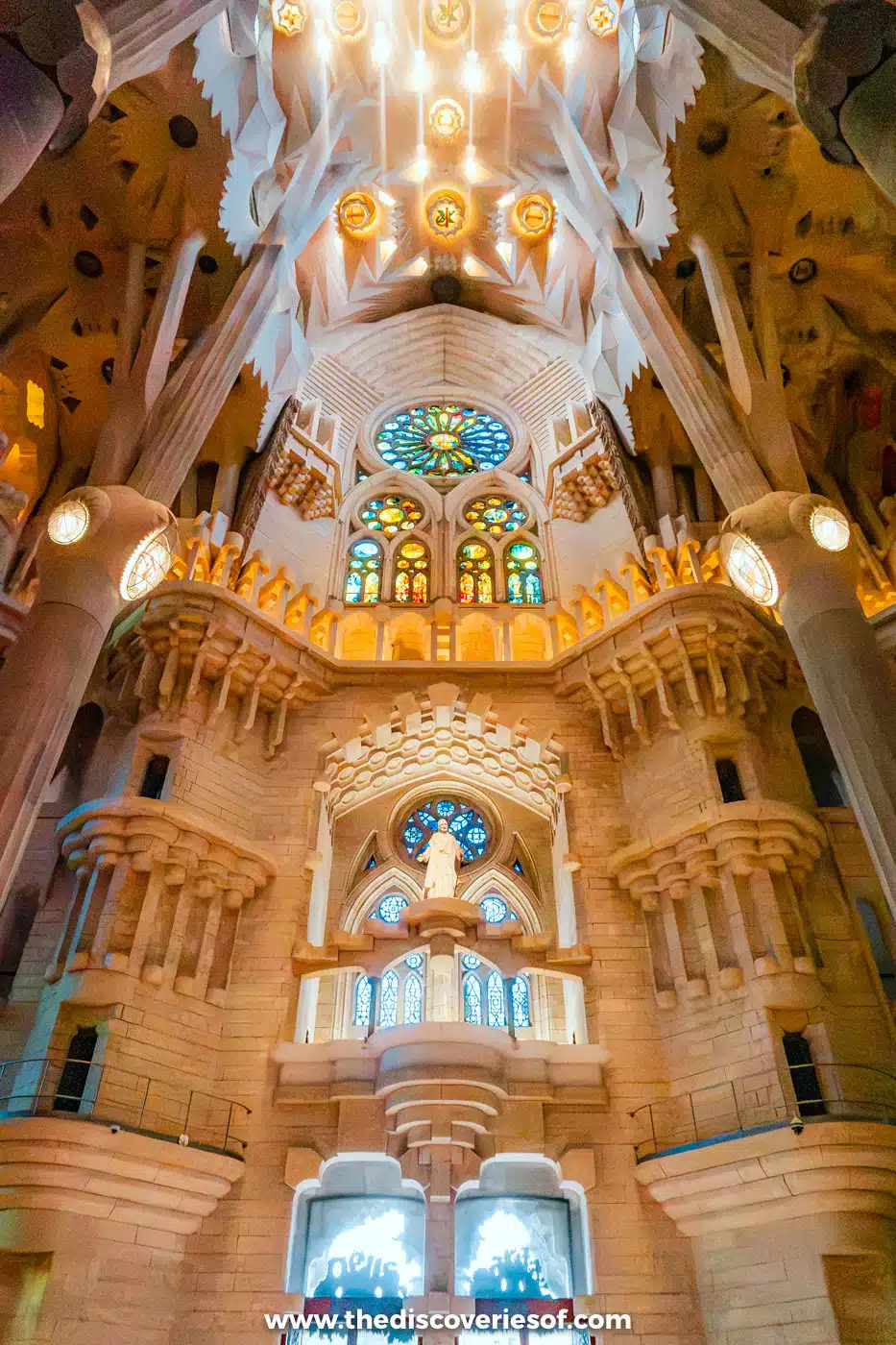
The stained glass windows are what make the inside glow. Most were designed by the artist Joan Vila-Grau, and they shade from cool colours on one side of the church to warm colours on the other, so where you stand changes what you see. The apse, behind the altar, is where you get the best sense of the scale of the place, and where the morning light is at its prettiest.
The museum, the crypt and the schools
Don’t rush out at the end. Below the basilica, the museum tells the story of the building through Gaudí’s plaster models, drawings and photographs of his workshop, and it’s where his ingenious hanging models make sense: he worked out the shape of his arches upside down, with weighted strings. Through a window in the museum, you can look down into the crypt, where Gaudí is buried.
Outside, the little schools building, with its wavy brick roof, was put up by Gaudí in 1909 for the children of the workers and the neighbourhood. It’s included in your ticket and is easy to miss.
Tips for visiting the Sagrada Família
- Book early, then arrive early: Tickets sell out weeks ahead in summer, and you need to be at the entrance a few minutes before your time slot, with your QR code ready.
- Allow time: Give it at least an hour and a half for the basilica and museum, and another 45 minutes if you’re going up a tower.
- Travel light: Large bags aren’t allowed, and there’s no left luggage on site.
- See it from the outside too: For the best photos of the whole building, walk across to Plaça de Gaudí, on the Nativity side, where the pond reflects the towers. And for a sundowner with a view of it, book a table on the rooftop of Bar-Terraza Ayre Rosselló well ahead.
Map
Read next
- 49 things to do in Barcelona
- A guide to Park Güell
- Uncovering Gaudí’s Barcelona: in the footsteps of a Modernist genius
- Where to stay in Barcelona
Love this? Save and share on Pinterest
Discover the top things to do, insider tips and hidden gems in our Spain Travel Guide.
Read the guides →