Orange money paid for the railway over the mountains and the art nouveau mansion that now hangs Miró and Picasso, and a wooden tram still rattles out of the main square and down to the sea every hour.
Sóller sits in a bowl of the Serra de Tramuntana on Mallorca’s north-west coast, and for centuries the mountains cut it off from Palma. It was easier to ship oranges to France than to cart them over the hills, and the profits show everywhere you look, from the carved stone of the church to the modernista houses on its lanes.
I drove over in September from my base at a vineyard near Esporles, took the tram down to Port de Sóller, walked out to the Cap Gros lighthouse and along the cliffs beyond it, and drove up to Fornalutx as the evening light turned the stone gold.
These are the best things to do in Sóller and its port, from the tram and the train to the markets, mountain villages and coast walks, with current fares and the winter closures to know about.
The best things to do in Sóller and Port de Sóller
Ride the wooden tram down to the sea
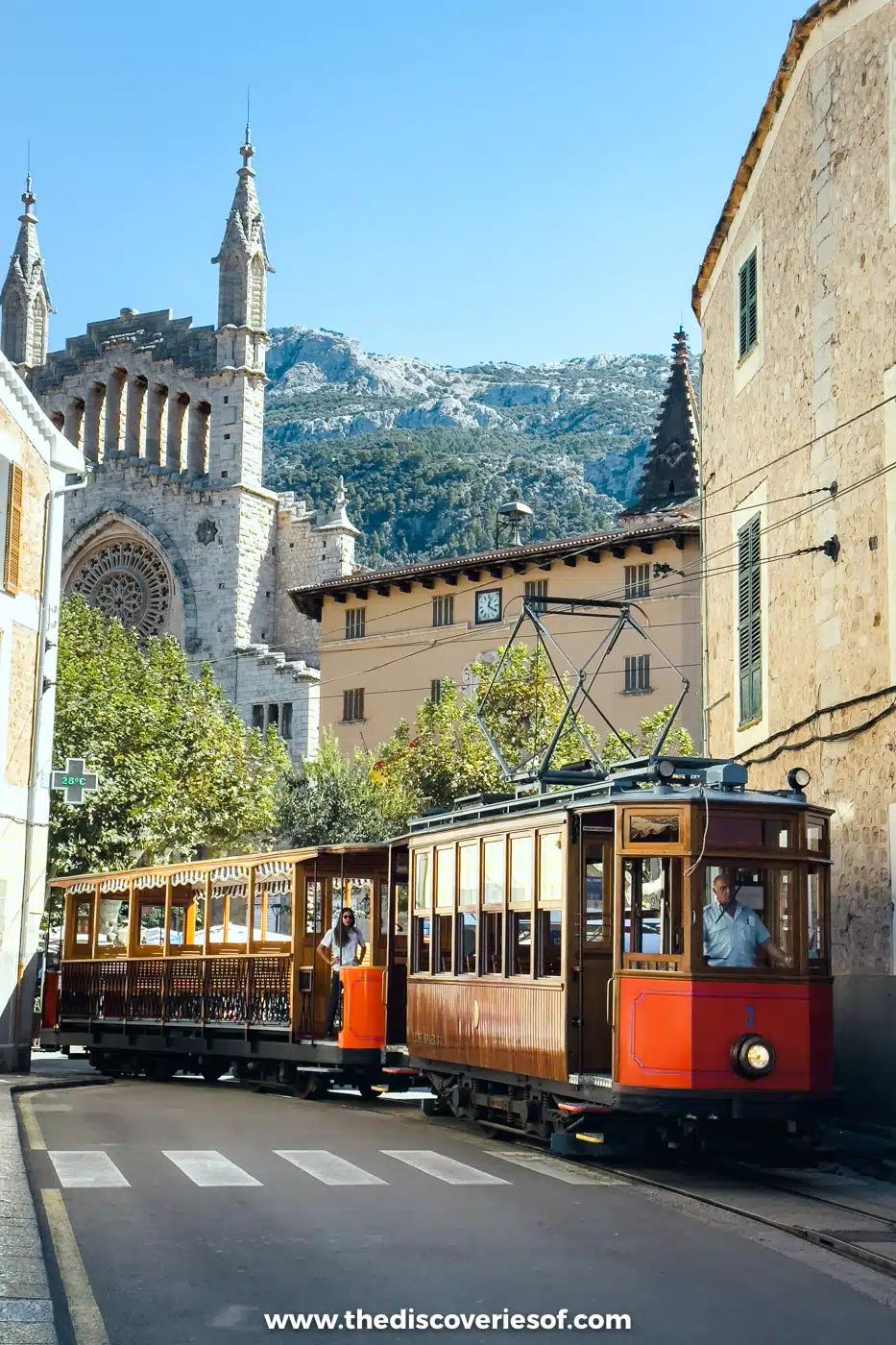
The orange-and-wood tram has run the five kilometres from the town to the port since 1913, and it’s the most fun way to travel between the two. It squeezes through the main square and past the church, trundles out between the orange groves, then runs along the waterfront for the last stretch.
I took it down to the port, and on a warm day it’s worth waiting for a seat in one of the open carriages. The ride takes about 20 minutes and costs €10 each way, paid on board. Trams leave the town on the hour from 8am to 7pm and come back from the port at half past, with extra services when it’s busy.
Top Tip
The tram shuts from 23 November to 22 December 2026 for maintenance, with a replacement bus between the town and the port.
Look up at Sant Bartomeu and the bank next door
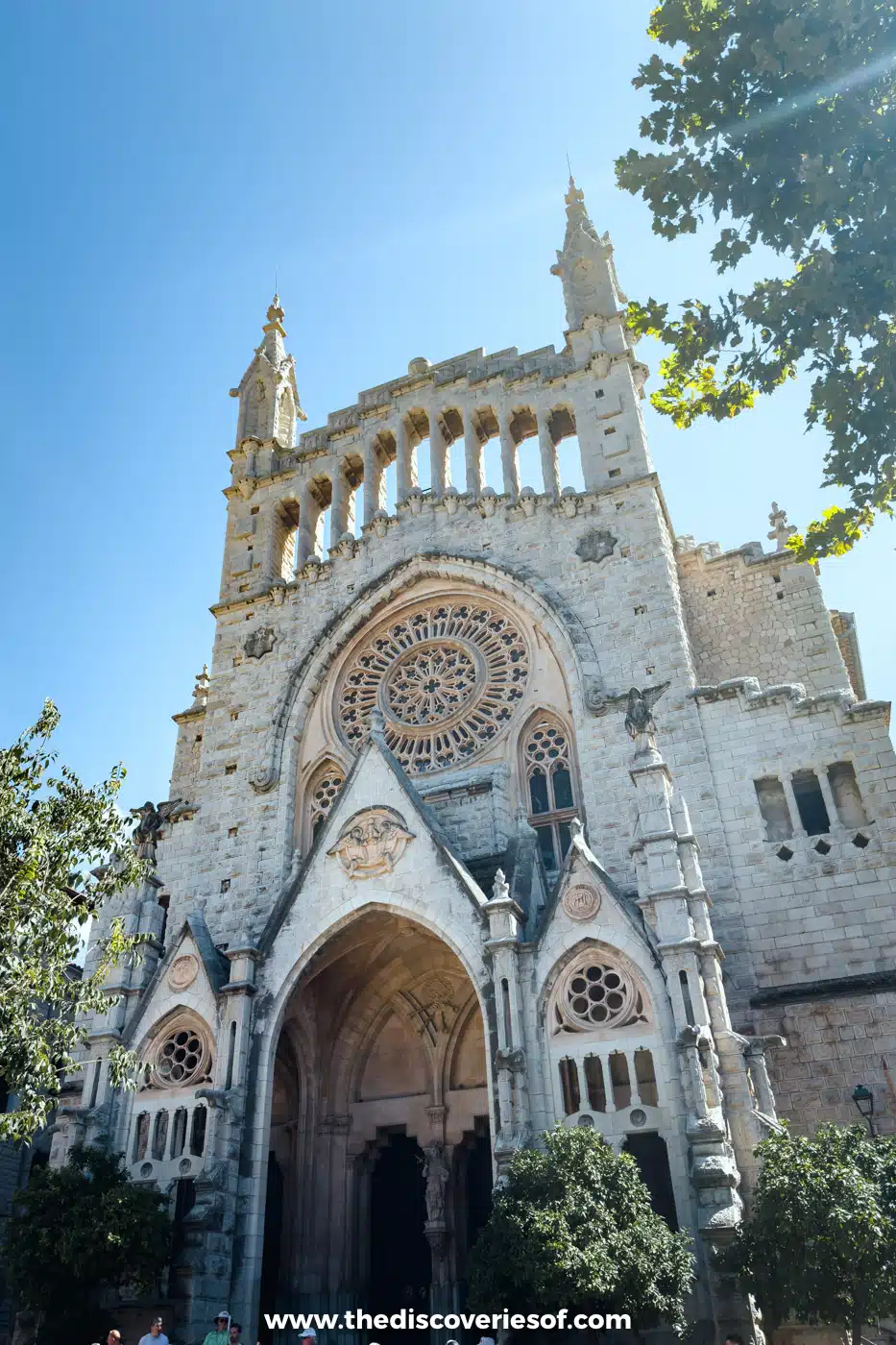
Plaça de sa Constitució is the heart of town, a square of café terraces with the tram running straight through it, and the church of Sant Bartomeu fills one side. The site has held a church since before 1236 and most of the interior is baroque, but the facade is pure modernisme: Joan Rubió, a follower of Gaudí, added it from 1904, along with the neo-Gothic bell tower.
Step inside for the gilded side chapels and the rose window, best seen by walking up towards the altar and turning round. Then look at the building beside it. Rubió also designed the Banco de Sóller, finished in 1912 for a bank founded with money from emigrants who came home rich. Look for the twisting ironwork over its windows; it’s now a branch of Santander.
Shop the Saturday market
Every Saturday from 8am to 1.30pm, stalls spill out of the main square into the streets around it. Come for oranges and lemons from the valley, olive oil, cheese, jams and crafts, and stay for the people watching from a café table on the square. It’s the busiest morning of the week, so arrive early if you’re driving in.
Eat orange ice cream at Sa Fàbrica de Gelats
The easiest way to taste the valley’s oranges is at Sa Fàbrica de Gelats (Gelat Sóller), opposite the market hall on Plaça des Mercat, right beside the tram tracks. Franz Kraus started making ice cream here in 1994 to use up the local citrus, and the orange and lemon sorbets are made with fruit from the valley.
There are around 40 flavours in all, including Mallorcan ones such as ensaïmada and almond. It’s open daily from 10am to 8.30pm in summer, with shorter hours out of season. The business has since grown into Fet a Sóller, whose deli sells fresh juice and valley produce to take home.
See Miró and Picasso at Can Prunera
Can Prunera is the art nouveau mansion built on Carrer de sa Lluna between 1904 and 1911 for Joan Magraner, known as Prunera, and today it’s a museum of modernisme. The house keeps its original woodwork, glass, ceramics and ironwork, so you get a real sense of how the valley’s new money lived.
The Serra Collection is a surprise for a small town, with works by Miró, Picasso, Gauguin, Klimt, Foujita and Miquel Barceló, a room for the local painter Juli Ramis and a sculpture garden outside. It opens Monday to Saturday from 10am to 6pm and Sunday from 10am to 2.30pm, and children under 12 go free.
Wander the lanes through the orange groves
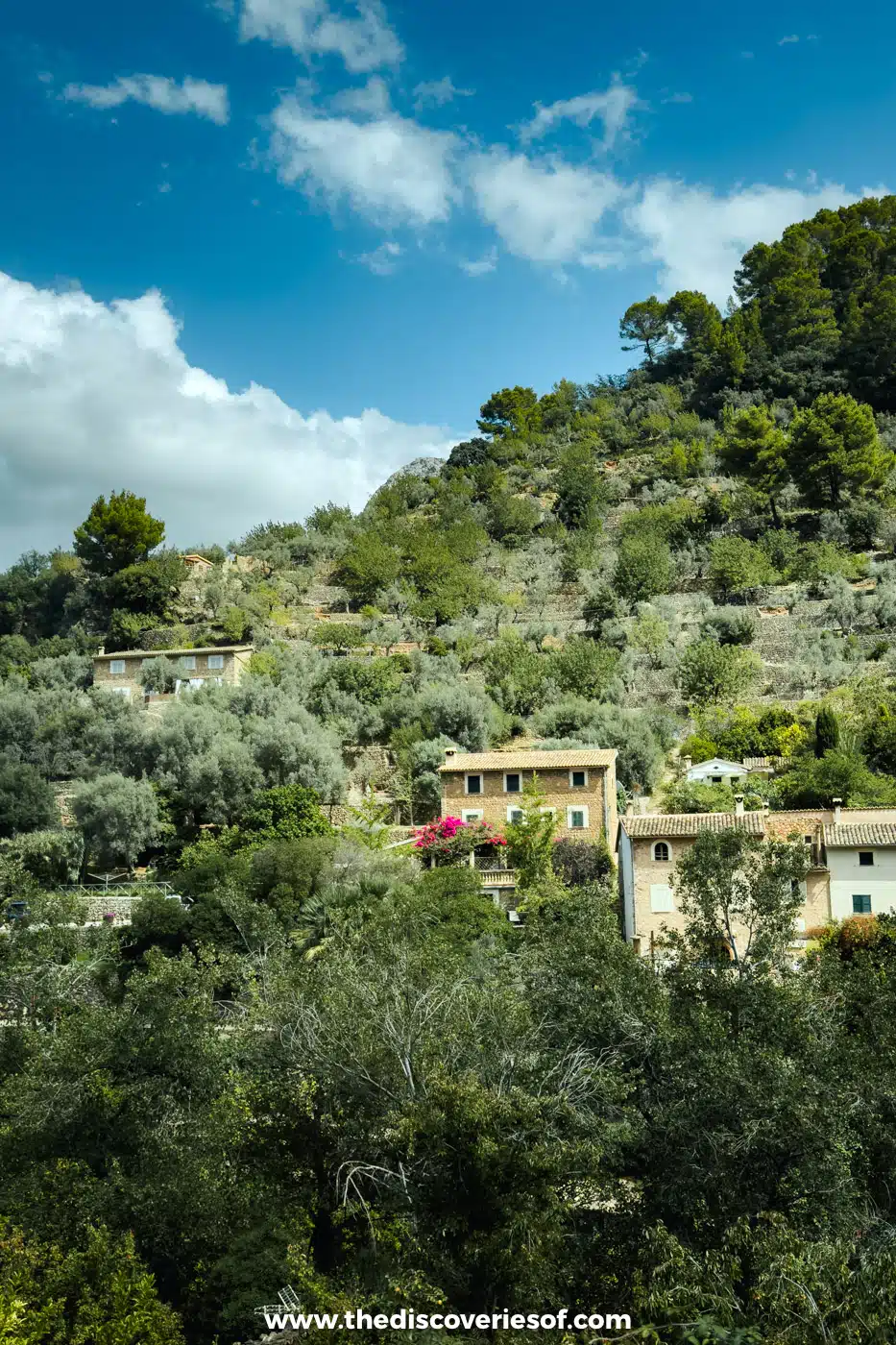
Step a few streets back from the square and the town gives way to walled orchards, olive terraces and honey-coloured farmhouses climbing the slopes. The valley floor is planted with orange and lemon trees, and the fruit hangs on the branches through the winter and spring.
Old stone paths link the town to the hamlets of Binibassi and Biniaraix and on to Fornalutx, so it’s easy to walk out for an hour and back on paths between the orchard walls.
Take the 1912 train over the mountains from Palma
The Sóller railway was paid for with orange money, and it’s still the most memorable way to arrive. The wooden carriages leave Palma’s station near Plaça d’Espanya, stop at Bunyola, then climb through 13 tunnels and over stone viaducts into the mountains, before the line drops down into the valley. The 27km journey takes about an hour.
A single costs €23 and a return €30, or €40 for a return that includes the tram to the port. There are five departures a day each way, from 10am to 6pm from Palma and 9am to 5pm from the town. The line closes from 23 November 2026 to 1 February 2027.
Stroll around the bay at Port de Sóller
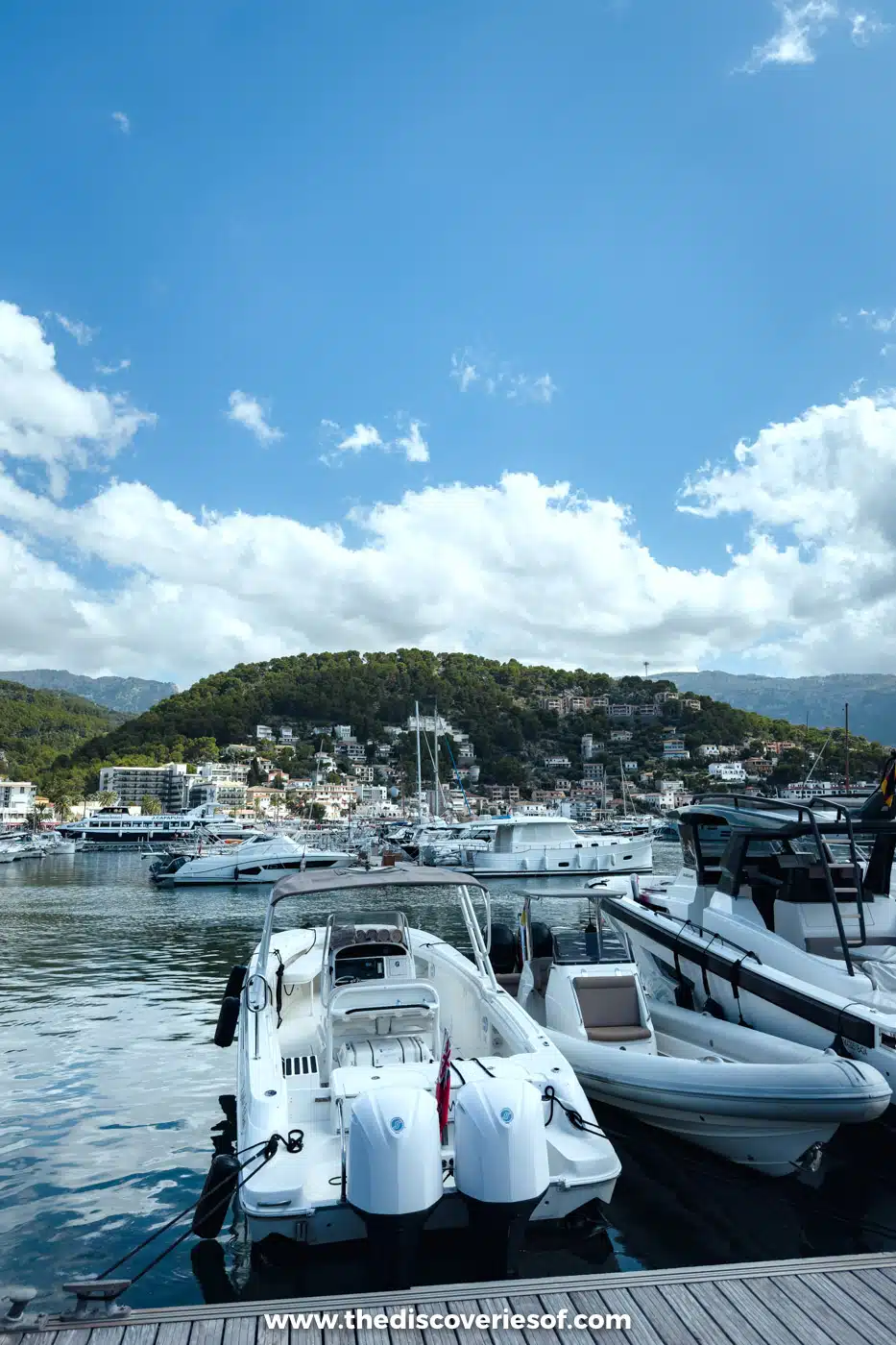
Port de Sóller curls around an almost perfectly round bay, with the mountains rising on every side and a narrow mouth to the open sea, so the water inside is usually calm. A promenade runs right round it, past the fishing boats, the marina and the seafood restaurants.
I wandered along the marina, where day boats and yachts line the pontoons below the green hillside. For more of the port’s story, the small Museu de la Mar sits in the old oratory of Santa Caterina on the hill above the harbour, with boat models, old photographs and a display on the women who kept the coast’s lighthouses. Entry is free, and it opens Tuesday to Saturday from 10am to 5pm and Sunday mornings.
Swim at Platja d’en Repic
The bay has two town beaches. Platja d’en Repic, at the southern end, is about 250 metres of sand and fine gravel that shelves gently into calm, shallow water, with lifeguards, showers, and loungers and pedalos for hire from June to September. Platja des Través, nearer the tram line and the centre, is busier and handy for a quick dip.
Neither is the wild cove of the postcards, so for the island’s big-name sands, from Es Trenc to Cala Mesquida, see my guide to the best beaches in Spain.
Walk out to Cap Gros lighthouse and along the cliffs
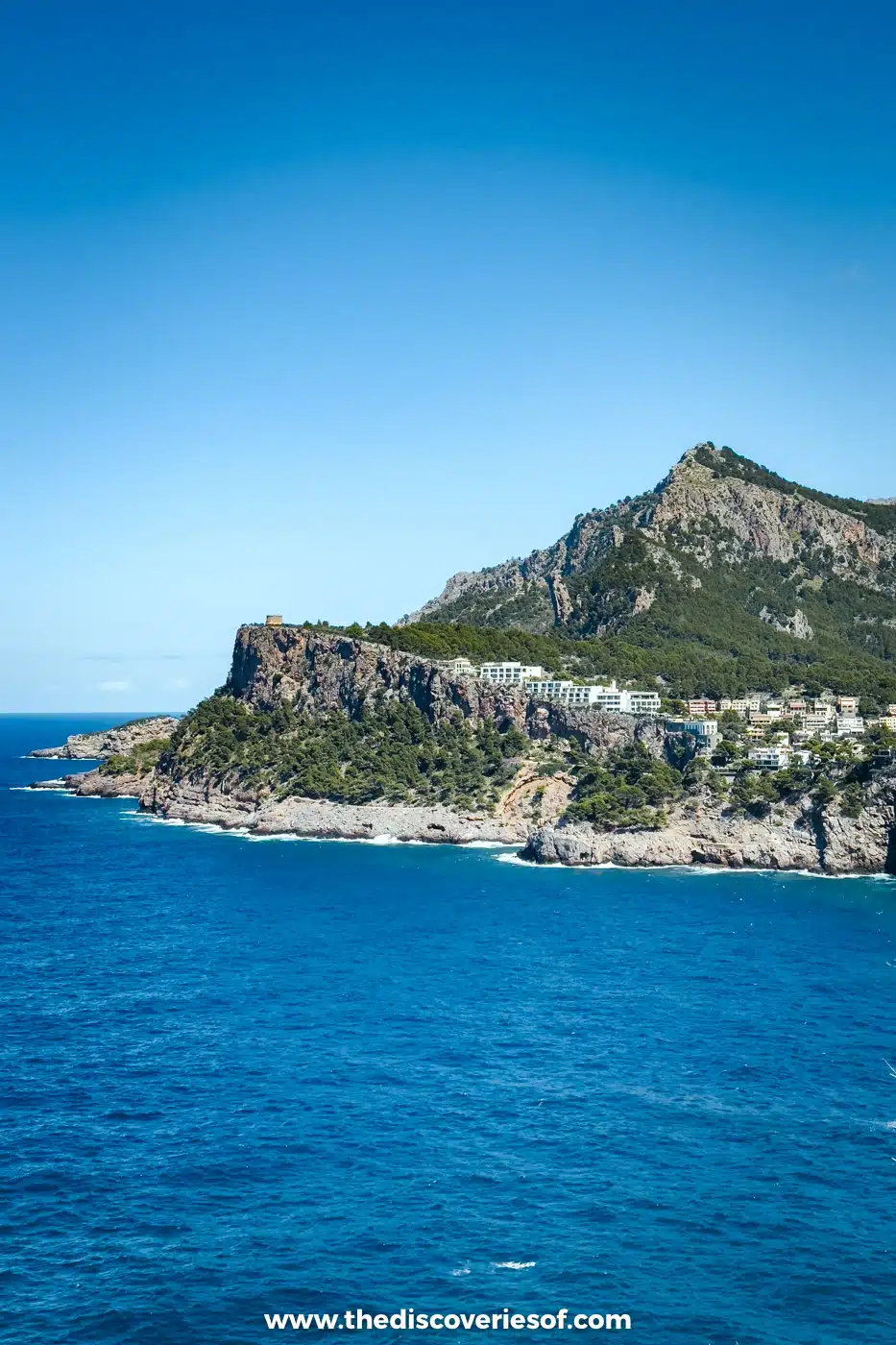
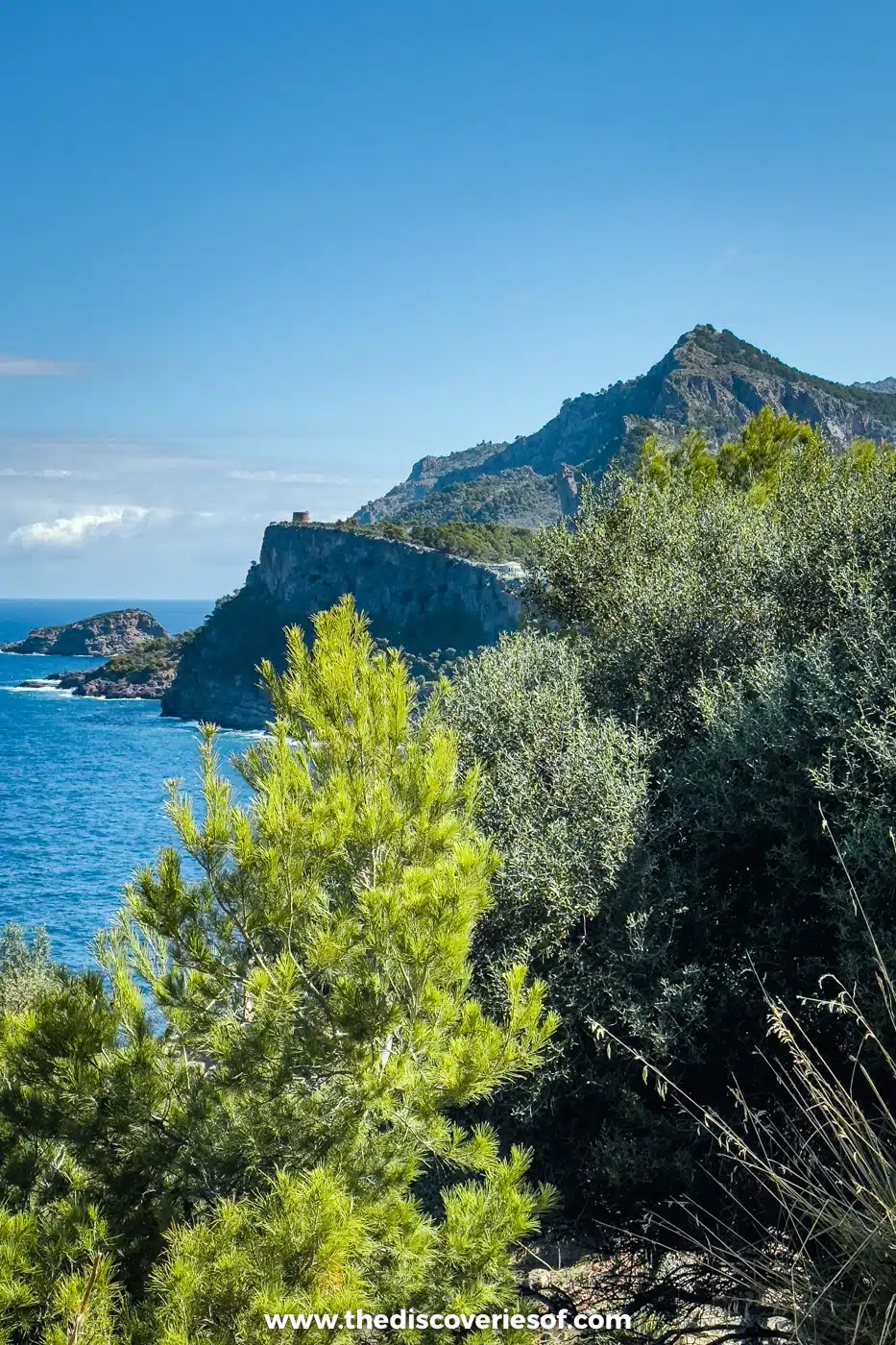
A winding lane, the Camí del Far, climbs from the western side of the bay to the Cap Gros lighthouse, which has guided boats into the harbour since 1859 and is still working. The views back over the port and out along the cliffs are worth the climb on their own, and it’s a classic spot for sunset.
I carried on past the lighthouse and the Refugi de Muleta, a hikers’ refuge beside it with dorm beds and a restaurant, and along the GR221 coast path for a stretch. The path runs through pines and wild olives above deep blue water, with jagged limestone outcrops along the way.
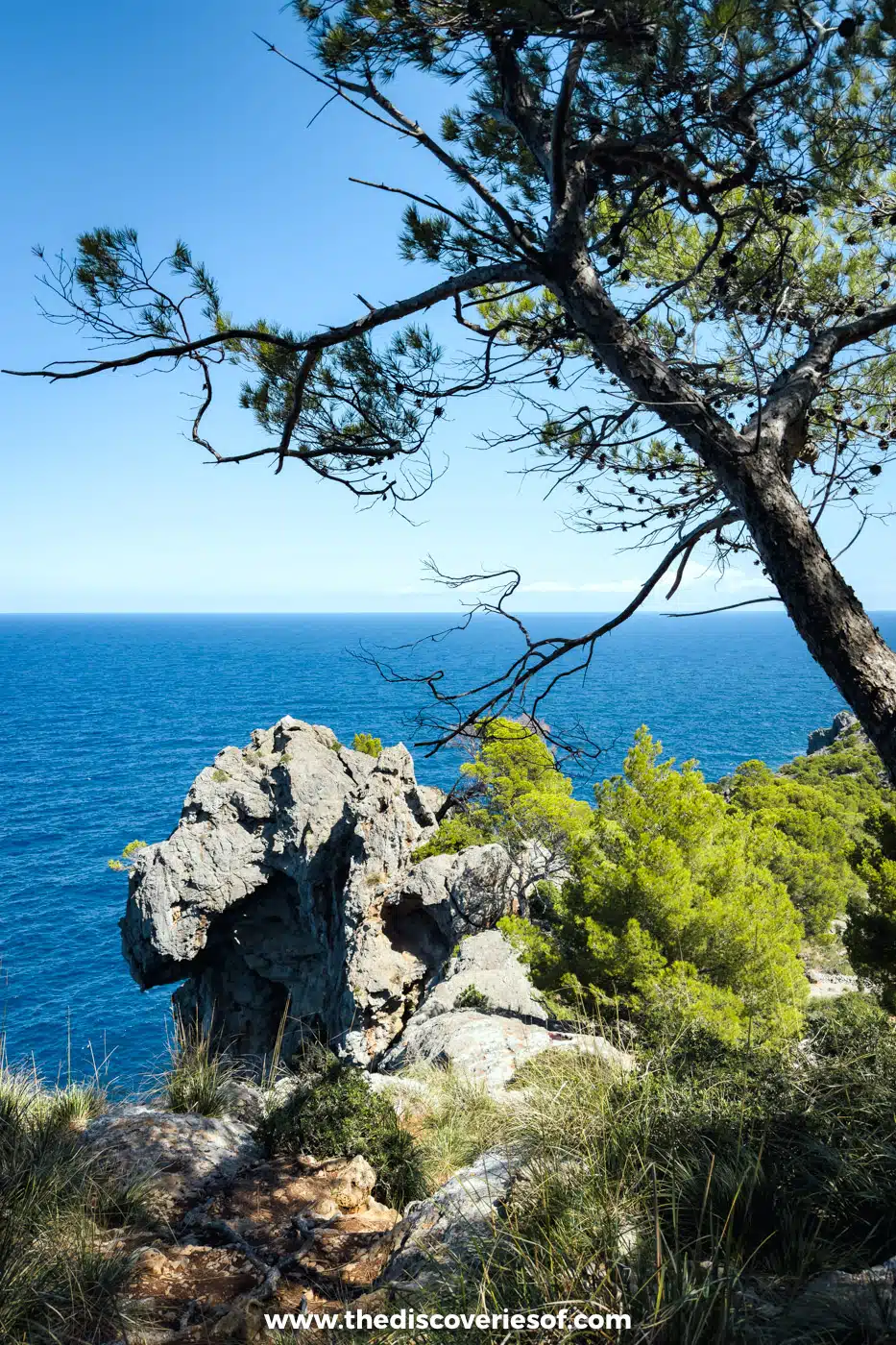
For a longer day, a loop of about 12km continues past the old Muleta farms and back via the hamlet of Bens d’Avall, or you can follow the GR221 all the way to Deià. Take plenty of water.
Take the boat to Sa Calobra
Some of the Tramuntana’s wildest scenery is only really seen from the water. Boats leave Port de Sóller for Sa Calobra several times a day in season, running along a coast of sheer cliffs, sea caves and old watchtowers, and take about an hour each way. From the cove at Sa Calobra, a path through tunnels in the rock leads in about ten minutes to the Torrent de Pareis, a gorge that ends at a pebble beach between towering walls.
Barcos Azules is the main operator, and return tickets start at around €26. Check the return times before you go, as some leave you with not much more than an hour ashore. Sailings are cancelled in rough seas, so confirm the day before.
Watch the light change over Fornalutx
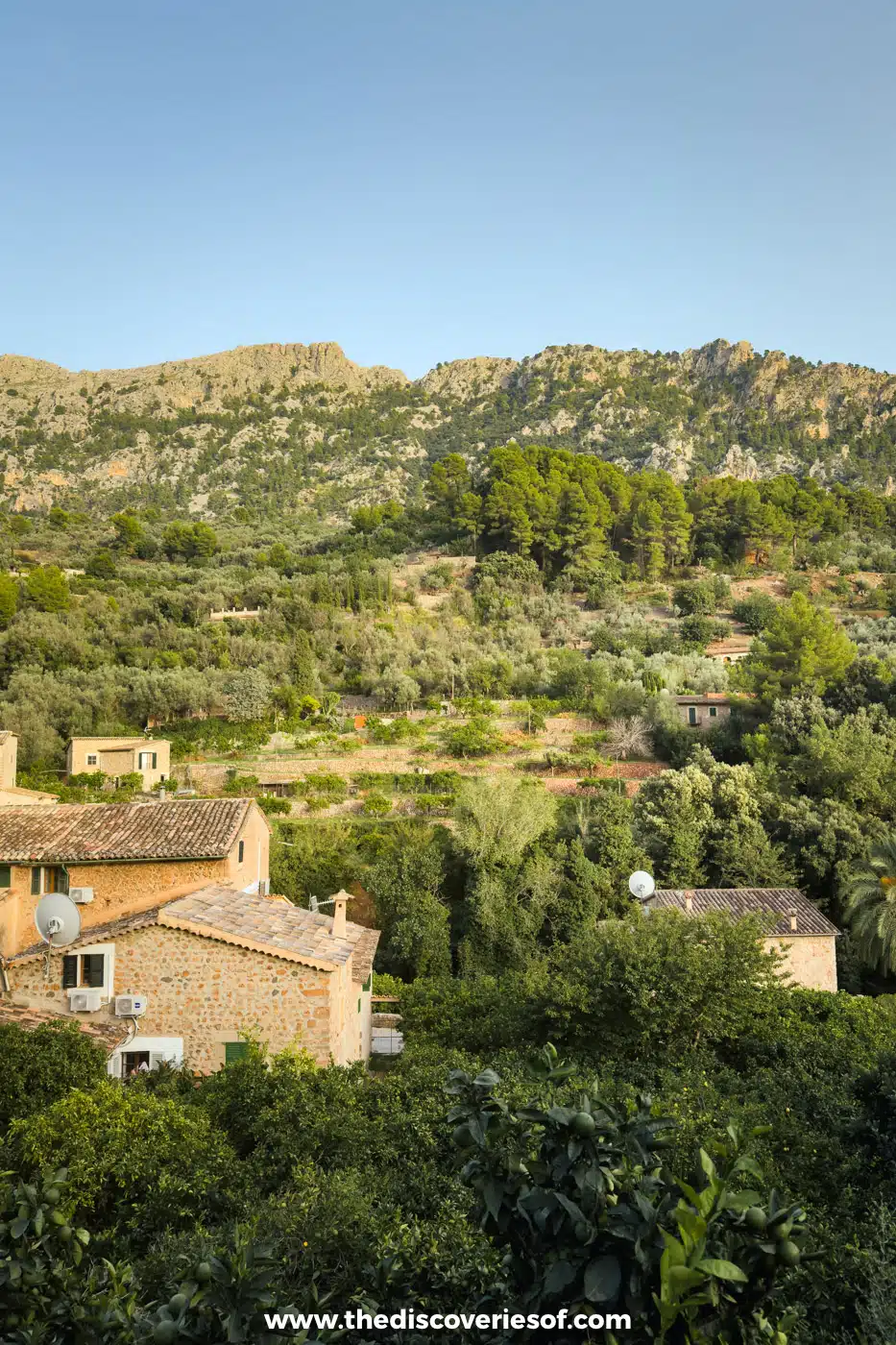
Three kilometres up the valley, Fornalutx is a village of steep stone steps, green shutters and orange terraces under the Tramuntana peaks, and it has been one of Los Pueblos Más Bonitos de España, the club of Spain’s prettiest villages, since 2017.
I drove up in the early evening, when the sun lights up the stone and the mountains behind turn gold, and it’s a lovely time to go, once most of the day trippers have left.
Hike the Barranc de Biniaraix
Halfway between the town and Fornalutx, the hamlet of Biniaraix sits at the foot of one of the best walks in Mallorca. The Barranc de Biniaraix is an old cobbled path of stone steps that zigzags up a gorge between dry-stone terraces, part of the GR221.
The first 2km, to a junction near the farmhouse of Sa Madona des Barranc, take about 45 minutes uphill and give you the best of the gorge. Strong walkers can carry on to the Puig de l’Ofre, about two hours more, or the Cúber reservoir, about three, and arrange a taxi back. Go early, before the heat builds.
Drive the Ma-10 up into the mountains
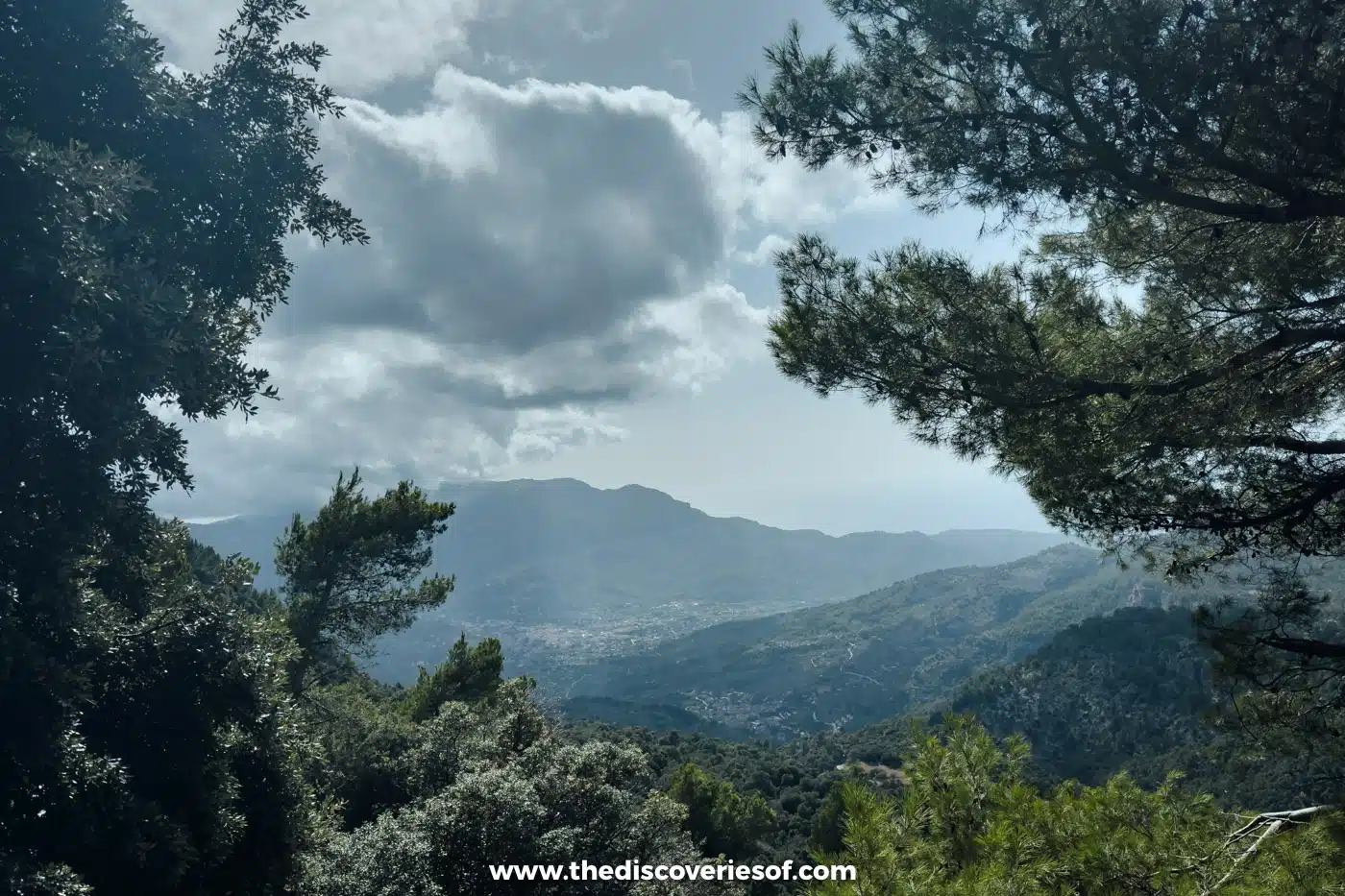
The Ma-10 is the mountain road that runs the length of the Serra de Tramuntana, a UNESCO World Heritage Site since 2011, and the stretch east of town is its most dramatic. It climbs in hairpins past Fornalutx, through a tunnel and into a landscape of bare limestone peaks, holm oaks and two reservoirs, Cúber and Gorg Blau, below the Puig Major, the island’s highest mountain.
I drove it from the reservoirs back towards the valley, and stopped at a pull-off where the whole bowl of the valley opens up below, with the town and the sea in the distance. Allow time for cyclists on the bends, and if you have the nerve, turn off for the hairpins down to Sa Calobra.
Escape the heat in the botanic garden
On the edge of town, the Jardí Botànic de Sóller grows plants from the Balearics and the other Mediterranean islands, many of them rare or endangered, laid out by family and habitat along shady paths. The modernista house in the grounds holds the Museu Balear de Ciències Naturals, with fossils, minerals and local wildlife.
One ticket, about €9, covers both. Hours are shorter in winter and it closes in January, so check before you go.
Follow the coast road to Deià
About 20 minutes west along the Ma-10, Deià is a honey-stone village stacked on a hill below the mountains, long loved by artists and writers. The poet Robert Graves built his house, Ca n’Alluny, just outside the village in the 1930s, and it’s now a museum, open five days a week all year, with its garden restored to how it looked in his day. He’s buried in the churchyard at the top of the village.
Below the village, a lane and a path lead down to Cala Deià, a rocky cove with two restaurants. Ca’s Patró March, on the rocks above the water, is the famous one, so book well ahead in summer.
Getting there, closures and when to go
- Getting there. From Palma, TIB bus 204 runs to the town and the port through the road tunnel in about 40 minutes, and the tunnel has been free to drive since 2017. Parking in the port is tight in summer, so use the car parks at the edge of town and take the tram down.
- Winter closures. The train doesn’t run from 23 November 2026 to 1 February 2027, and the tram is replaced by a bus from 23 November to 22 December 2026.
- When to go. May, June, September and October are best for walking and the sea is warm into the autumn; July and August are hot and busy. In mid-May, Es Firó fills the port with mock battles between Moorish pirates and townspeople, marking a raid in 1561.
- How long to stay. Two or three days covers the town, the port, a walk and a boat trip, and the town makes an easy base for the Tramuntana.
Where to stay in and around Sóller
- Rondaia, Esporles: This is where I stayed, a vineyard stay with a pool just outside Esporles, about 25 minutes’ drive from Sóller. I’d give it four out of five; my one wish was for more food and drink on hand, given how remote it is, and you’ll need a car. Read my full Rondaia review.
- Gran Hotel Sóller: Five stars, a spa and pools, two minutes’ walk from the main square, for staying right in town.
- Jumeirah Mallorca: The splurge, on the clifftop above the port, with mountain and sea views, from about €600 a night. It opens for the season from mid-March.
Map
Read next
- The best beaches in Spain
- Historic castles in Spain you have to visit
- Famous landmarks in Spain
- Things to do in Menorca
- The Spain travel guide
Love this? Save and share on Pinterest
Discover the top things to do, insider tips and hidden gems in our Spain Travel Guide.
Read the guides →