Valencia moved its river after a catastrophic flood, then filled the empty bed with gardens, a zoo and a gleaming white city of the future. Add a Gothic old town, the birthplace of paella and a long sandy beach, and you have one of the most rewarding cities in Spain. Here’s what to see, eat and do, with prices and opening hours checked.
Valencia packs two very different cities into one. One minute you’re under the Gothic arches of the cathedral, the next you’re walking through a palm avenue inside a white steel ribcage that looks like it landed from another planet.
I spent three nights in the city and packed in as much as I could: the City of Arts and Sciences and its aquarium, the cathedral and the old town squares, the medieval gates, the city’s newest art centre and an evening on the beach. I also ate my way around, from a proper paella valenciana to a counter of oysters and a glass of horchata.
My pick of the best things to do in Valencia starts with the places I saw and the food I ate, then adds the markets, gardens and day trips that round out a visit. There’s a short section on where to stay at the end, including an honest word on my own hotel.
The best things to do in Valencia
Walk among Calatrava’s white giants at the City of Arts and Sciences
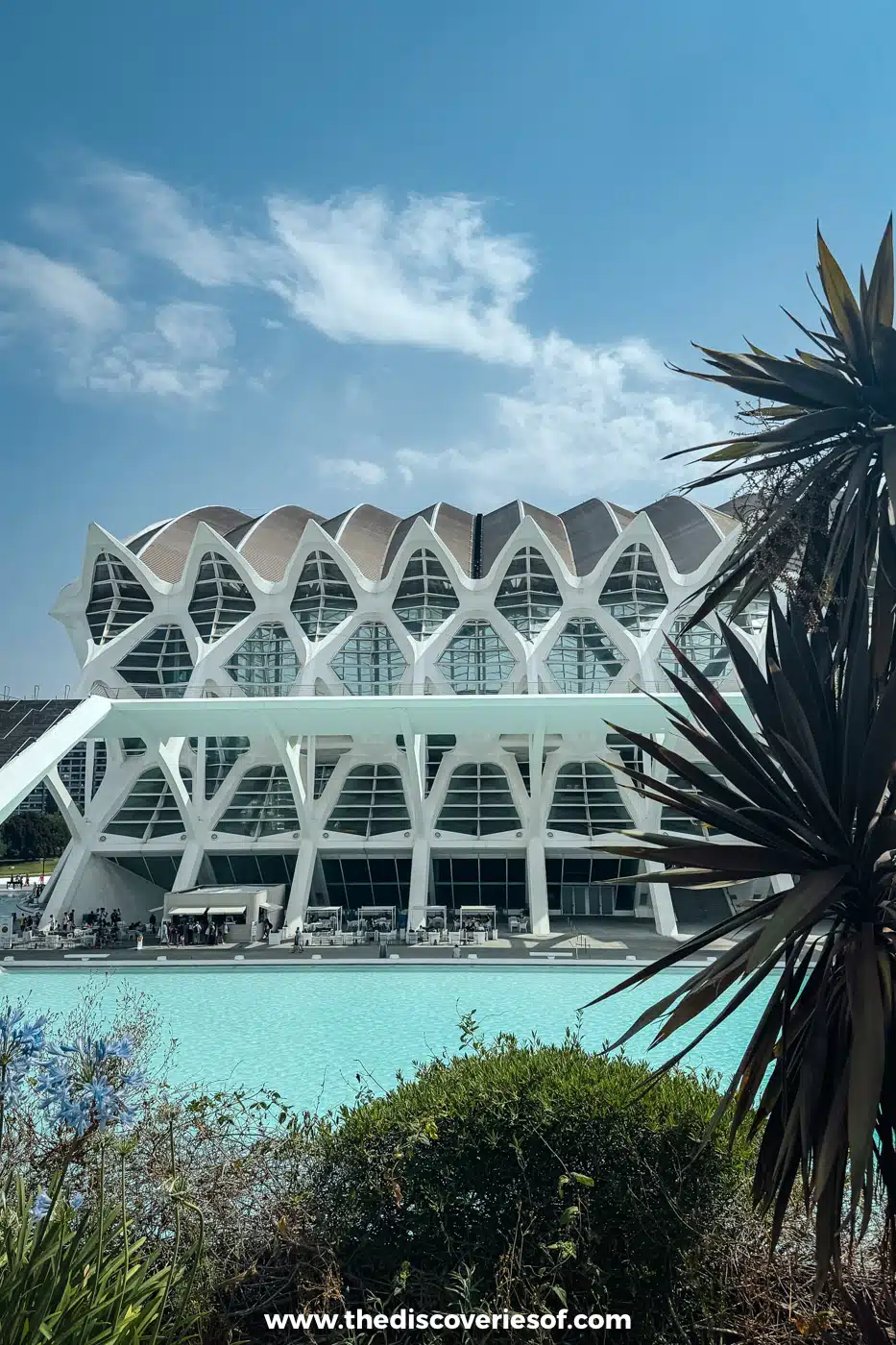
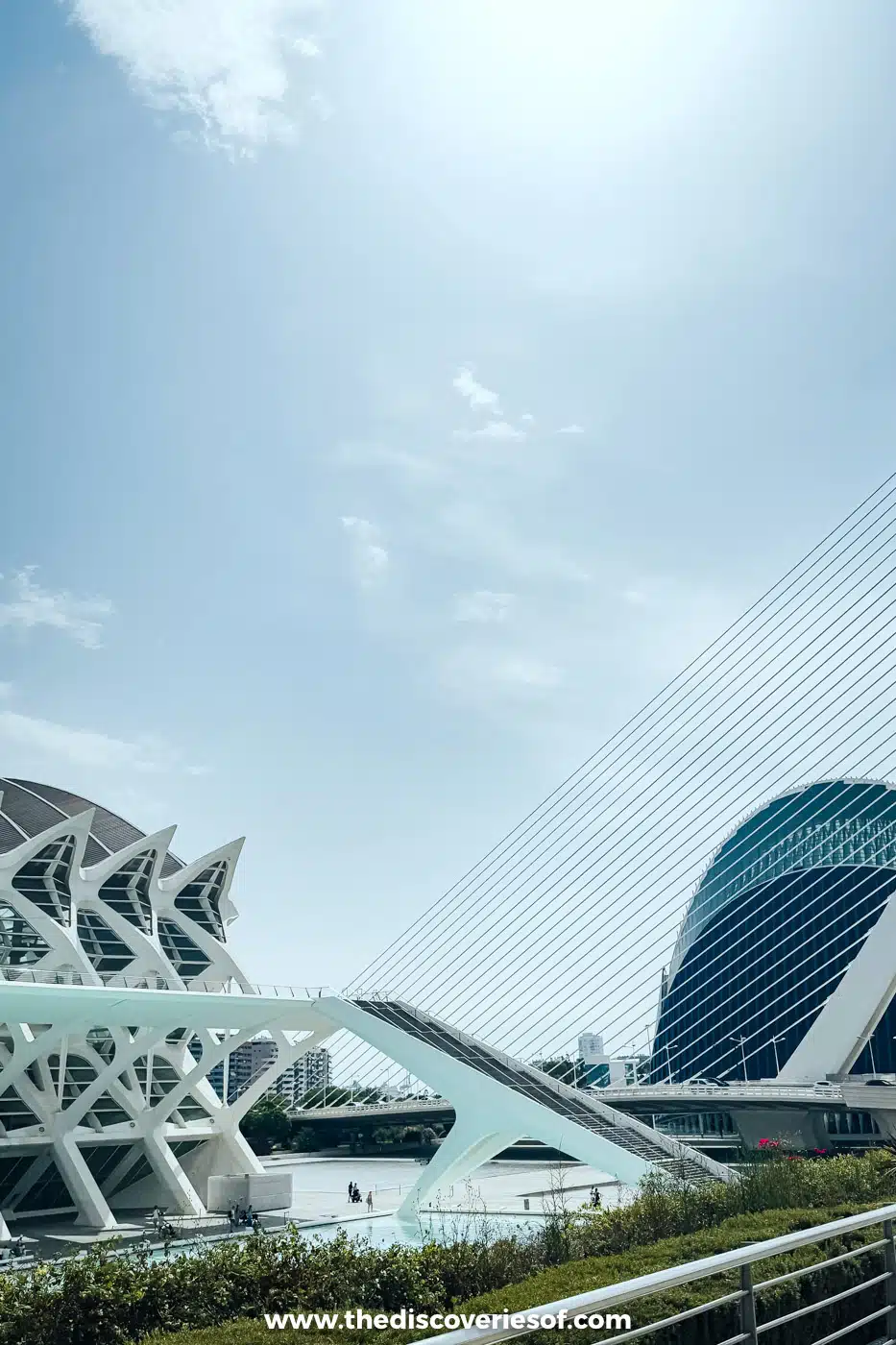
Nothing prepares you for your first sight of the Ciutat de les Arts i les Ciències. Santiago Calatrava, who was born in Valencia, designed most of this two-kilometre run of buildings in the old riverbed, and the result is part science fiction, part skeleton: bleached white curves, glittering trencadís tiles and shallow turquoise pools that reflect it all back.
The Museu de les Ciències, the long building that looks like the ribcage of a whale, is a hands-on science museum whose ground floor is free to wander. The Hemisfèric, shaped like a giant eye that blinks open over its pool, screens films on a huge domed screen roughly every hour from 11am. Beyond them rise the Palau de les Arts opera house, the blue-tiled Agora and the harp-like Assut de l’Or bridge.
Tickets
You can walk around the outside for free. A combined ticket for the Oceanogràfic, the Museu de les Ciències and the Hemisfèric costs €45.55 for adults from the official Visit València shop; children under three go free.
Come in the morning, when the light is soft and the paths are quiet. By midday in summer the white stone throws the heat straight back at you.
Wander the palm avenue of L’Umbracle
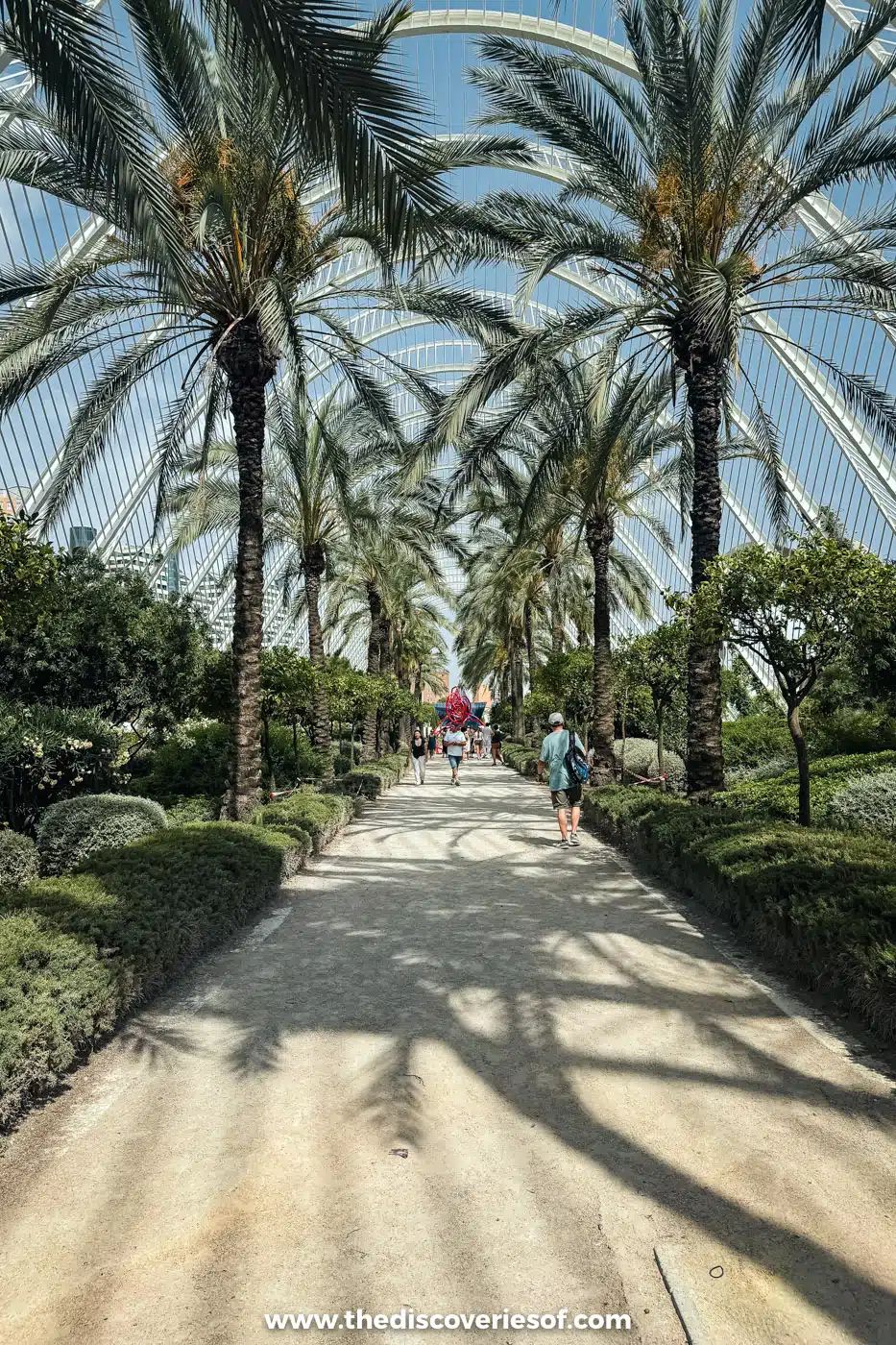
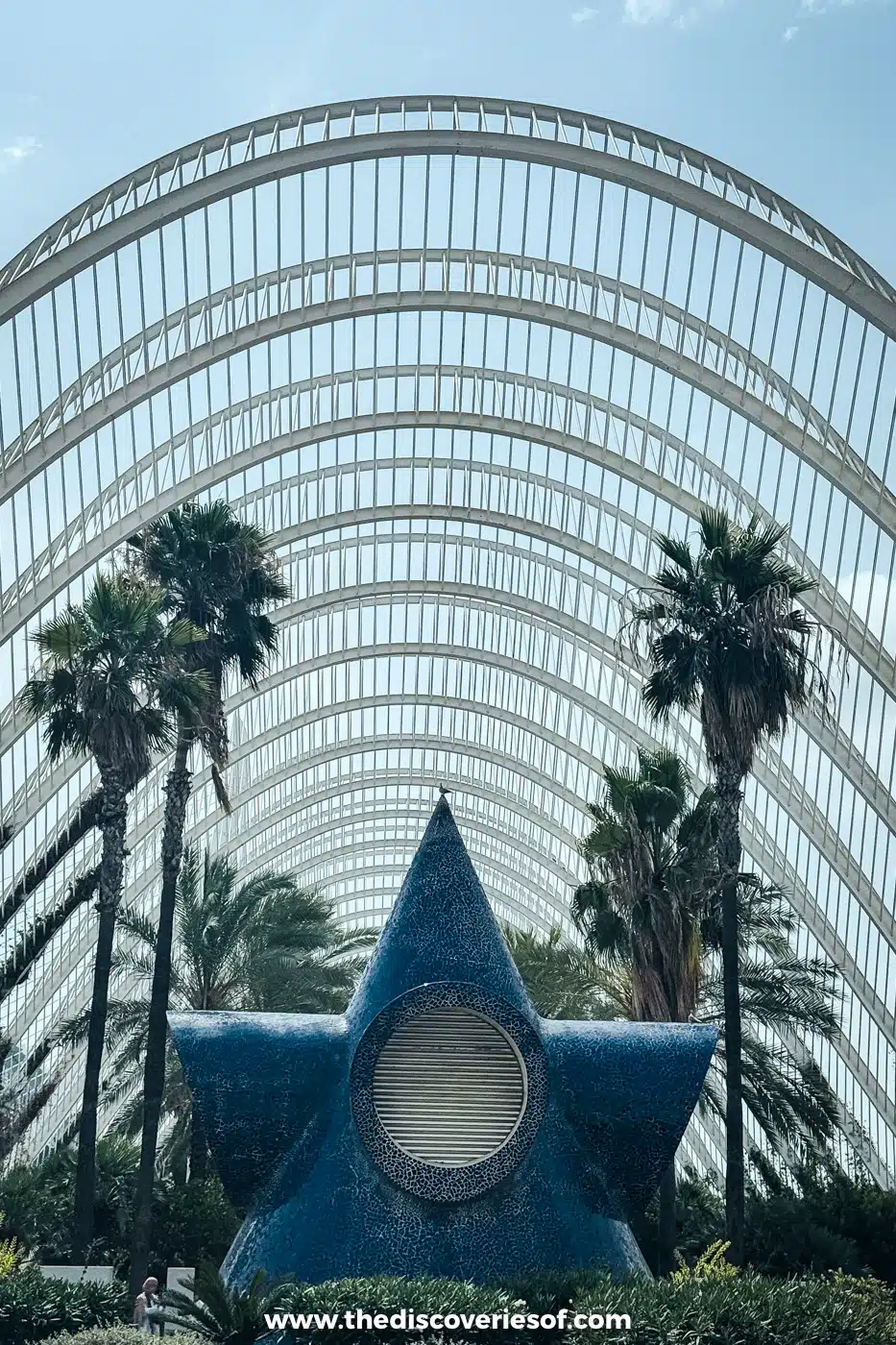
Running along one side of the complex, L’Umbracle is a covered garden walk under a row of white arches, planted with palms, bitter orange trees and Mediterranean shrubs. It’s free and shaded, and it frames the surrounding buildings through its ribs.
Look out for the sculptures dotted along it, including a blue trencadís figure among the palms whose mosaic of broken tiles is a nod to Gaudí. On summer evenings part of L’Umbracle becomes a terrace bar and club, so the same walk feels completely different after dark.
Come face to face with sharks at the Oceanogràfic
At the far end of the complex, the Oceanogràfic bills itself as the largest aquarium in Europe, with seven marine environments and around 45,000 animals from 500 species. Its shark tunnel is the longest underwater tunnel in Europe, and it’s also home to the only belugas on the continent.
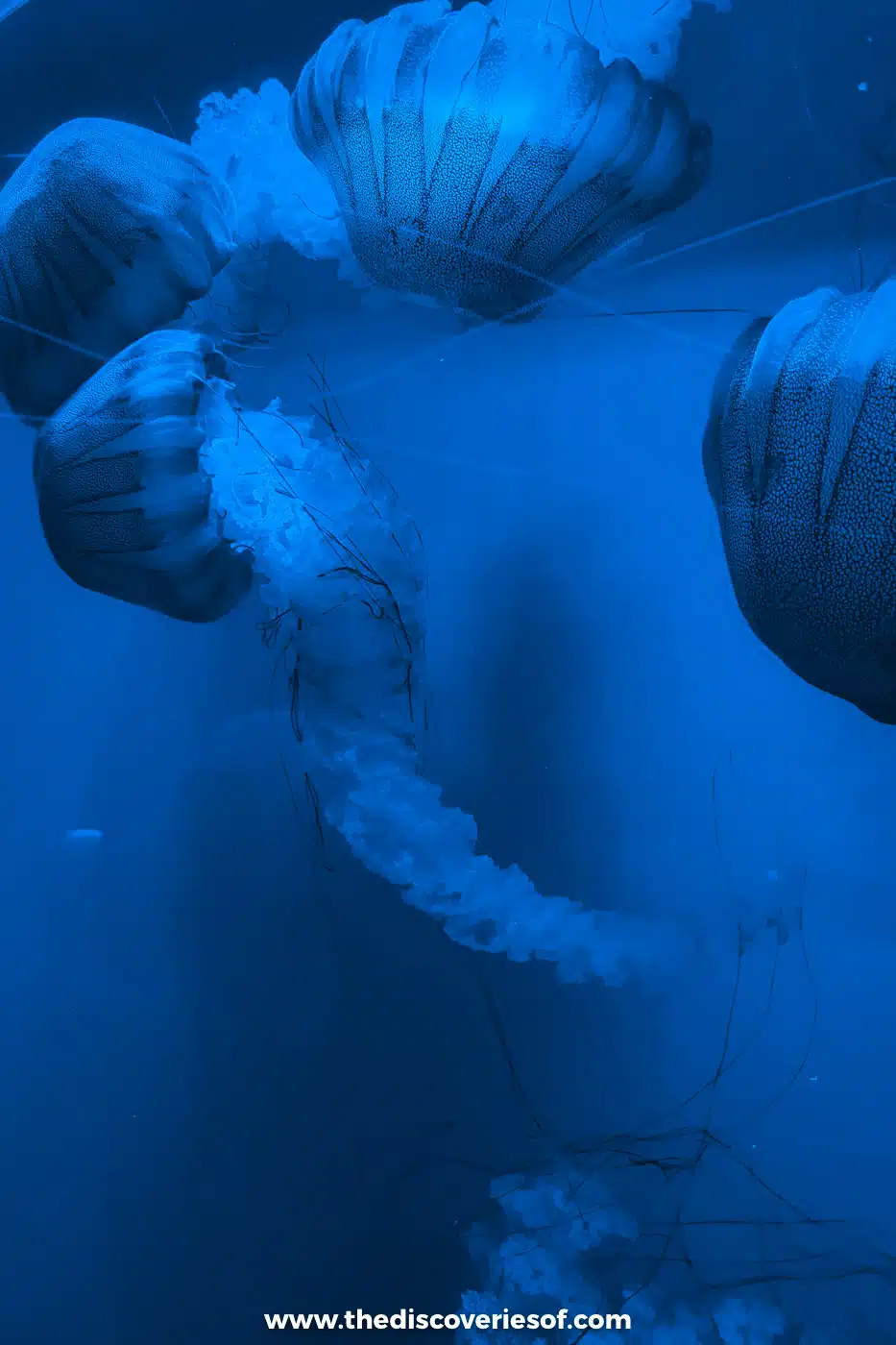
I walked through the shark tunnel, past the batfish, which look permanently surprised, and lingered at the jellyfish, pulsing through their tanks like slow-motion lanterns. Allow at least four hours to do it justice, more if you want to catch the dolphin show (sessions usually run in the morning and afternoon).
Top Tip
Tickets are cheaper online and vary by season, from about €36 to €43 for adults. Arrive at the 10am opening and head straight for the shark tunnel, which gets crowded by midday in high season.
Slurp oysters at Ostras Pedrín Ciencias
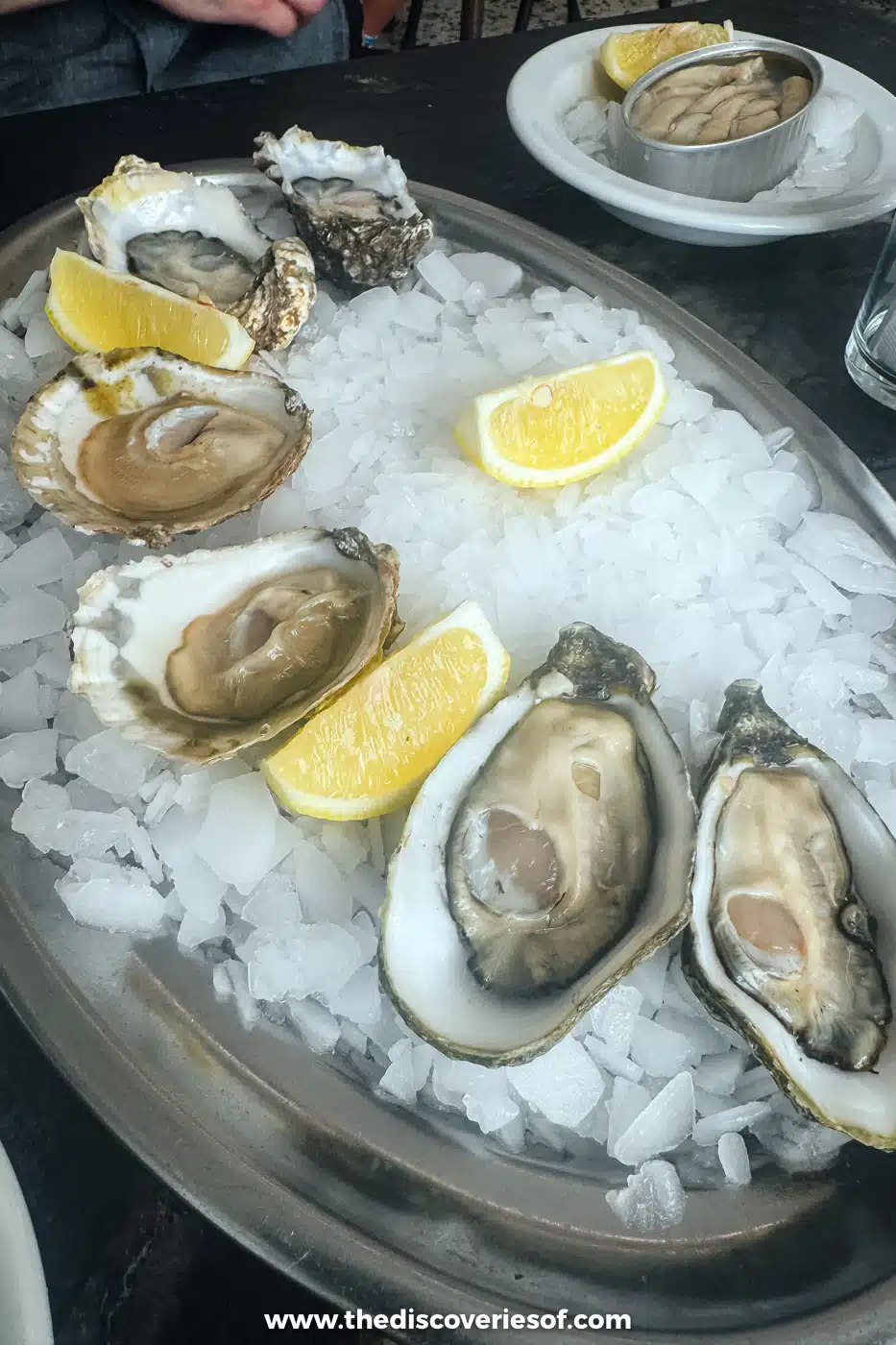
After the aquarium I walked a few minutes up the road for lunch at Ostras Pedrín Ciencias, an oyster bar behind the Paseo de la Alameda, on Calle Escultor Luis Bolinches Compañ. It’s a bright, casual room built around a long counter, and the menu is short and very good at what it does: oysters from Asturias, France and Valencia itself, plus the classic vermouth snacks of tins, cured fish and roe.
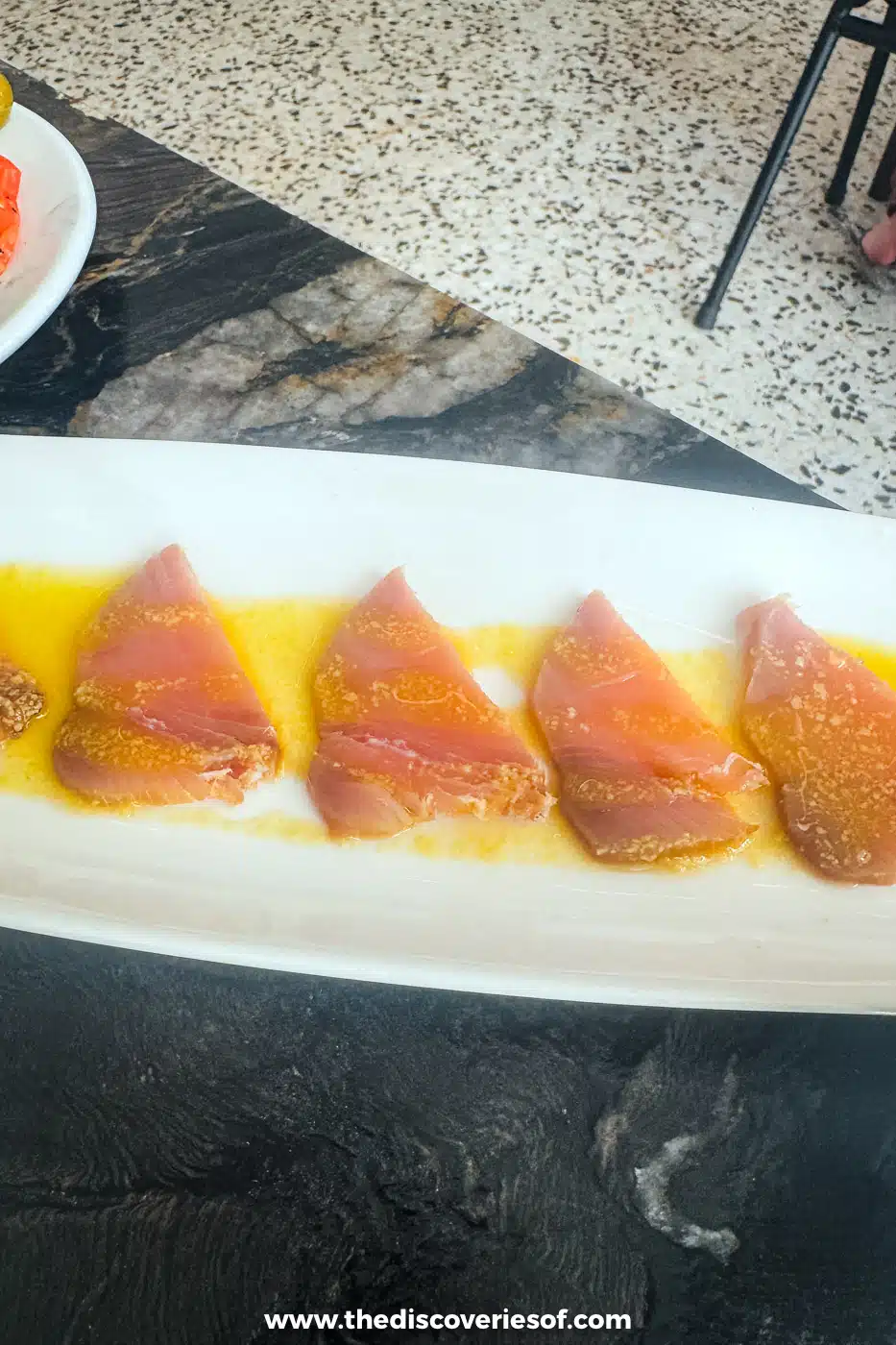
I had a platter of oysters with lemon, slices of tuna in olive oil, tomato toasts and a tin of crab on ice. It’s the second outpost of a bar that opened on Calle Bonaire in the old town in 2015, so if you’re in the centre, that’s the original.
Search for the Holy Grail in Valencia Cathedral
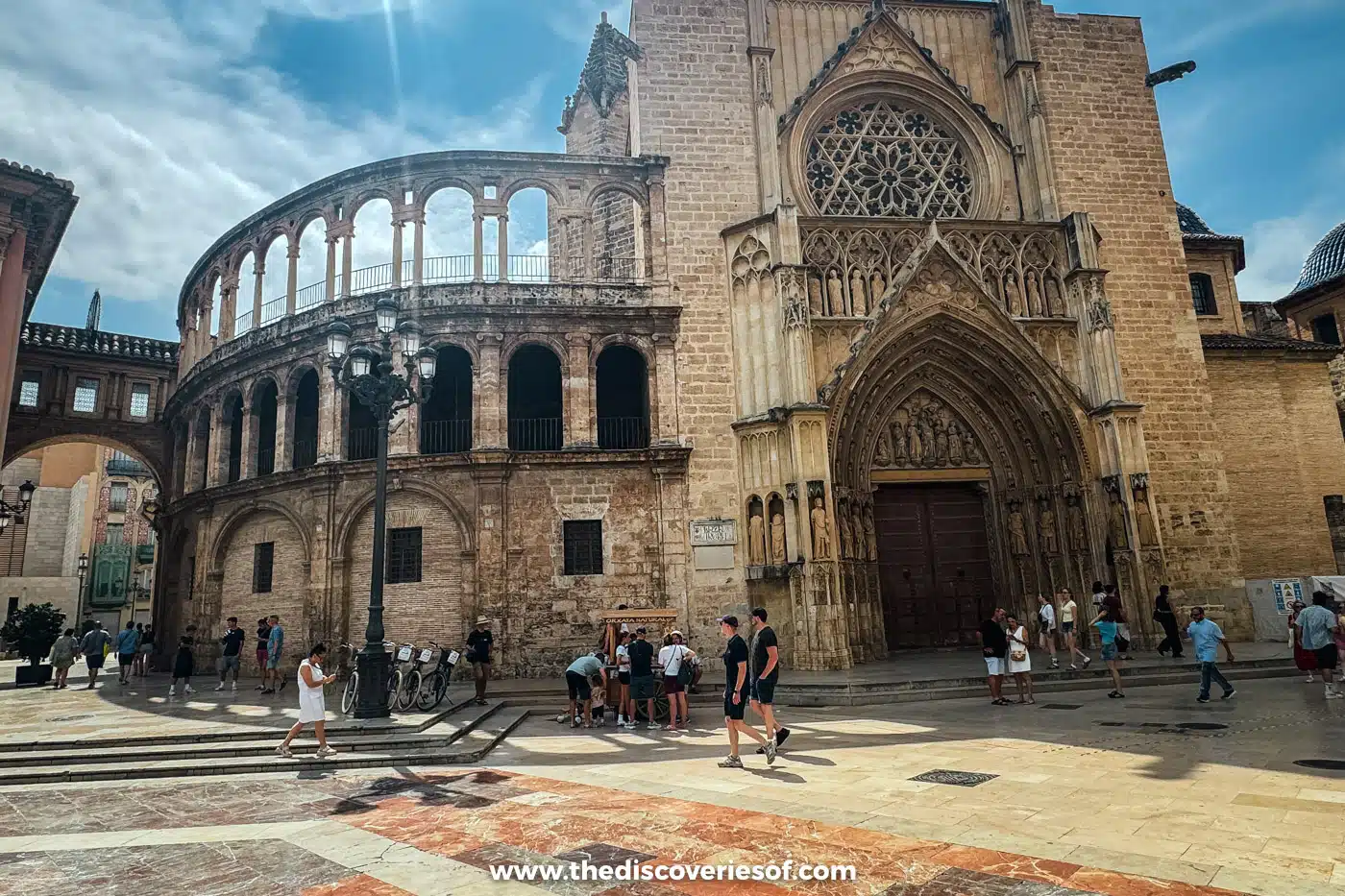
The cathedral was built from 1262 on the site of a mosque, which itself stood on a Roman temple, and it shows. Walk around the outside and you’ll see three doorways in three styles: a Romanesque one, a Gothic one and a Baroque one.
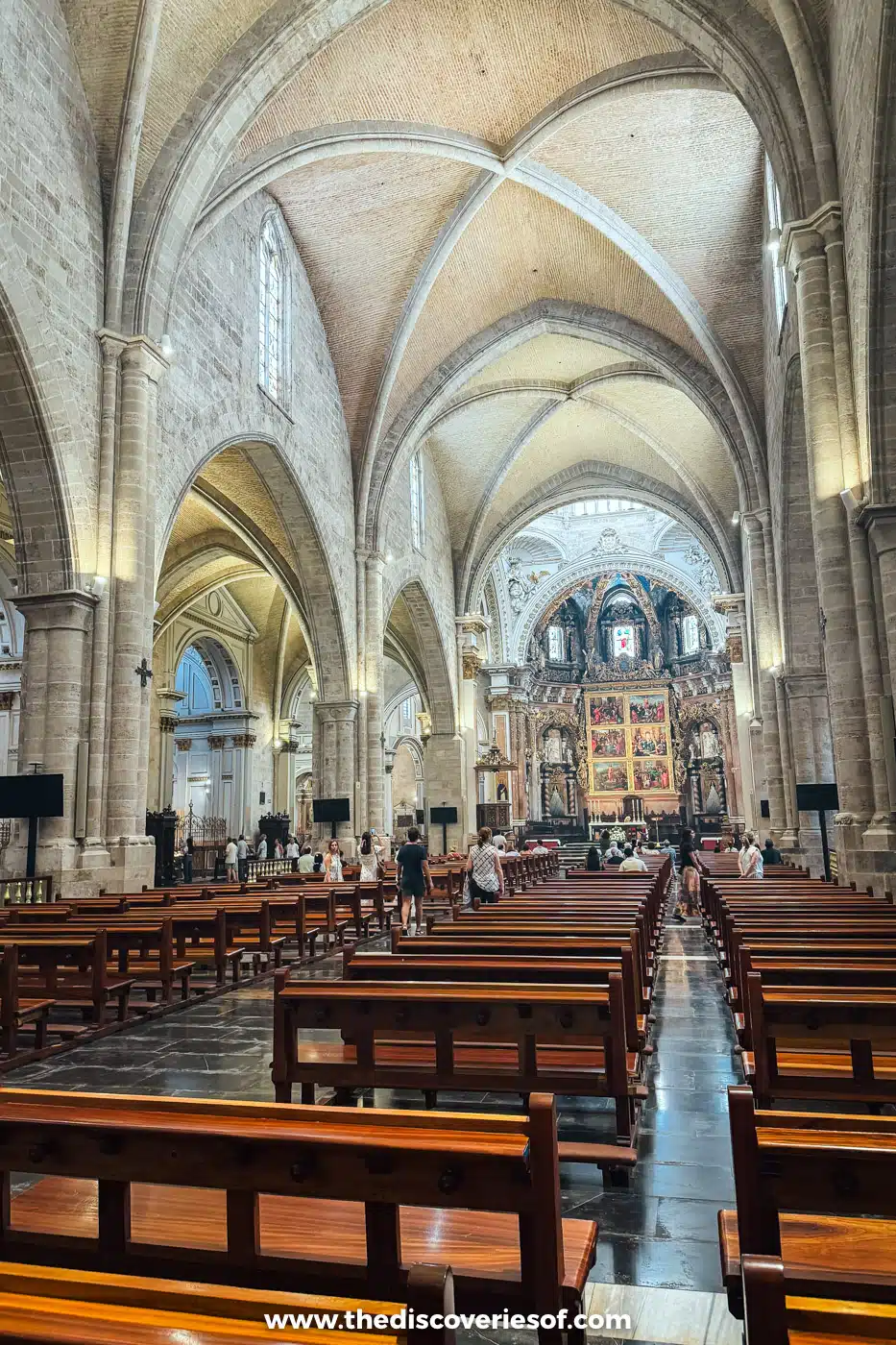
Inside, the big draw is a small agate cup in the Chapel of the Holy Chalice. Tradition holds that it is the cup Christ used at the Last Supper, and it has been kept here since the 15th century. Whether or not you believe it, the chapel is beautiful, and the Gothic nave with its golden altar is worth the visit on its own.
Tickets
€12 (€6 reduced), with an audio guide and the cathedral museum included. Open Monday to Friday 10.30am to 6.30pm, Saturday 10.30am to 5.30pm (6.30pm in summer) and Sunday afternoons from 2pm. Visits take about an hour and a half.
Climb the Micalet for a view over the rooftops
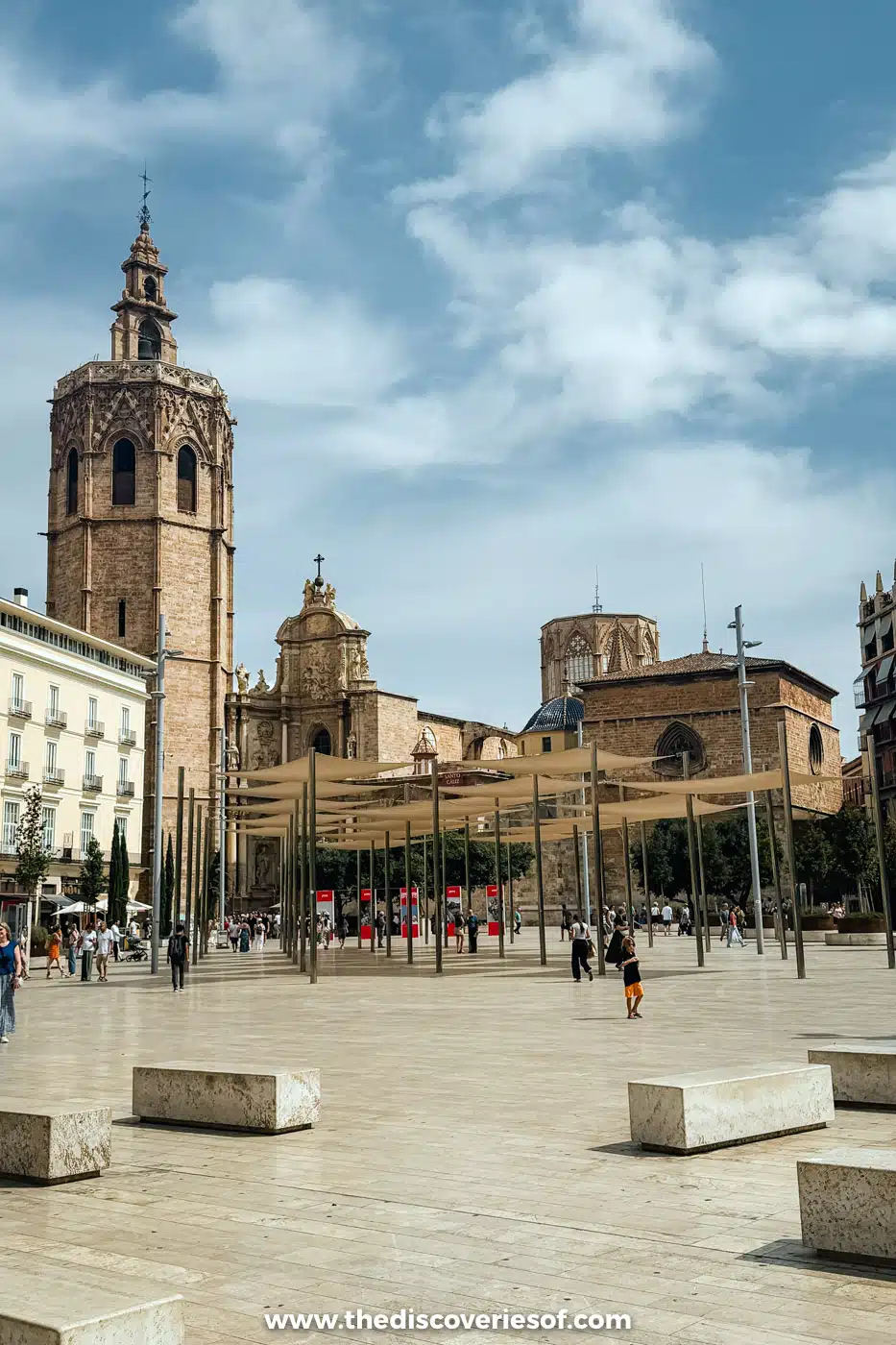
The cathedral’s octagonal bell tower, the Micalet (Miguelete in Spanish), was built between 1381 and 1424 and stands just under 51 metres tall. It dominates Plaza de la Reina, the big open square at the cathedral’s south end, and you’ll use it to find your way around the old town.
There are 207 steps up a tight spiral staircase to the top, and the reward is a 360-degree view over the domes, the old town and out to the sea. It has its own ticket (€3), and it’s open daily from 10am to 6.45pm between March and November, weekdays only in winter.
Catch the Water Tribunal in Plaza de la Virgen
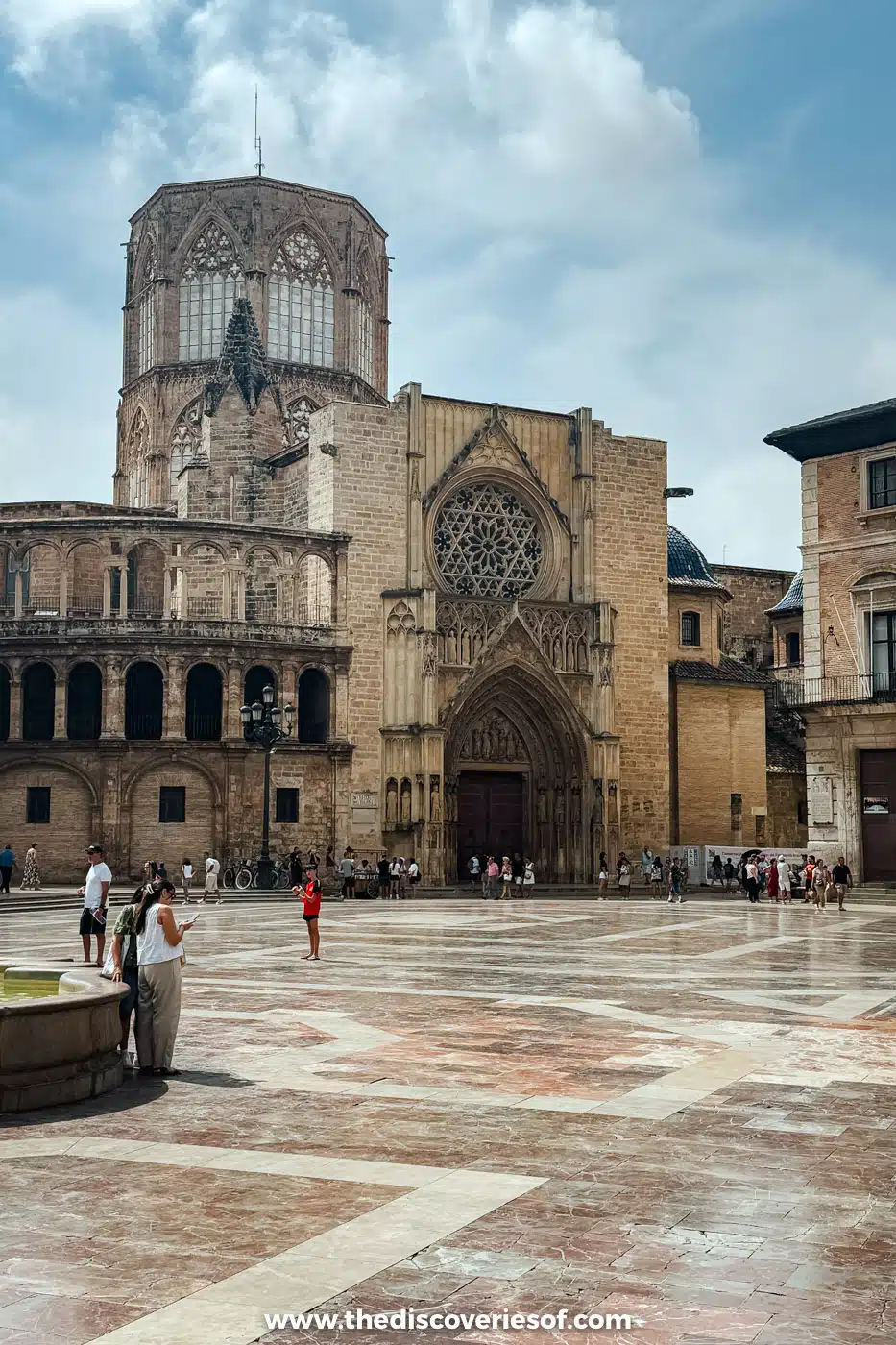
On the cathedral’s north side, Plaza de la Virgen is the prettiest square in the city, with the basilica of the Virgen de los Desamparados on one side and the Turia fountain in the middle.
Come on a Thursday at noon and you’ll see something remarkable. Outside the cathedral’s Puerta de los Apóstoles, eight farmers in black smocks sit in a semicircle as the Tribunal de las Aguas, settling disputes over irrigation water from the canals of the huerta, the market gardens around the city. It has met here for centuries, it speaks in Valencian, and its rulings are given on the spot with no written records. UNESCO added it to its list of intangible heritage in 2009.
See Kiefer and Kapoor in a 17th-century palace at the Centro de Arte Hortensia Herrero
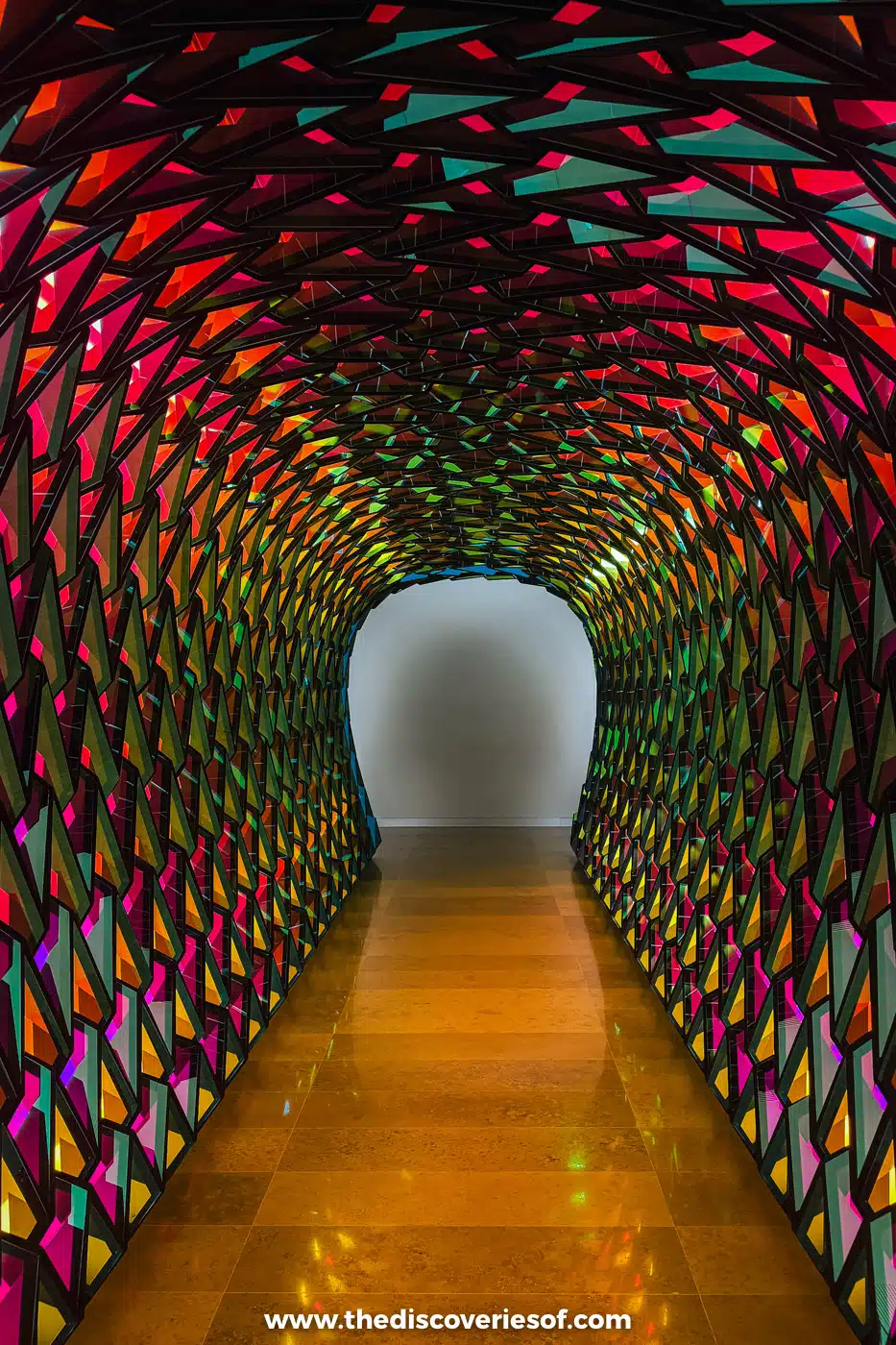
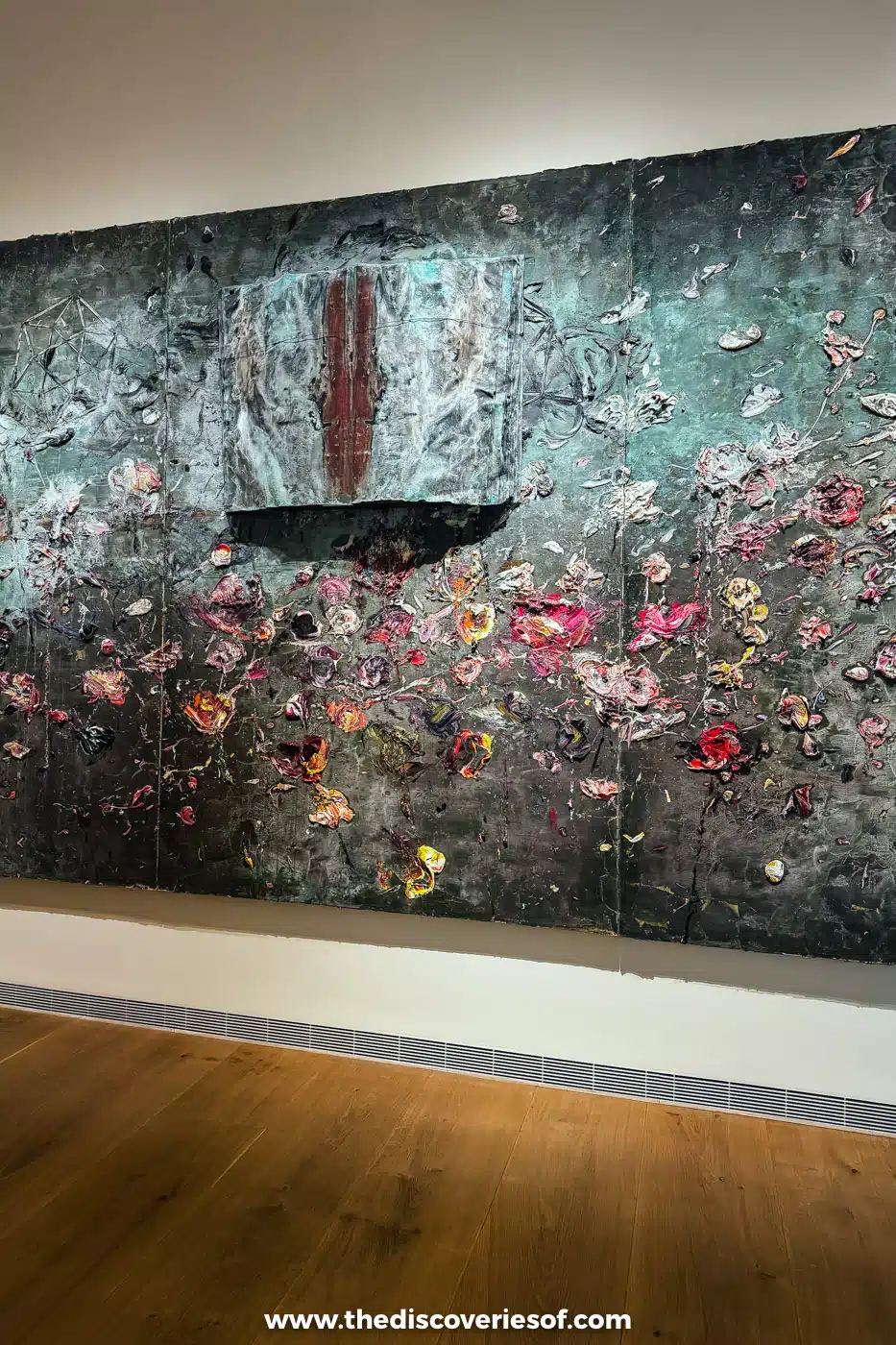
The CAHH opened in late 2023 in the restored Palau Valeriola, a 17th-century palace on Calle del Mar, and it has quickly become one of the city’s most talked-about museums. The collection is private, belonging to the Valencian philanthropist Hortensia Herrero, and it’s full of big names: Anselm Kiefer, Anish Kapoor, Jaume Plensa, Tomás Saraceno, Mat Collishaw and the largest display of Manolo Valdés’s work anywhere.
The piece everyone photographs is Olafur Eliasson’s Tunnel for unfolding time, a kaleidoscope of coloured glass that you walk straight through. Head down to the basement too: during the restoration, the builders found the remains of the city’s Roman circus, now on show beneath the palace.
Tickets
€12, or free on Wednesday afternoons if you reserve ahead. Open Tuesday to Saturday 10am to 8pm and Sunday 10am to 3pm; closed Mondays.
Pass through the old city gate at the Torres de Serranos
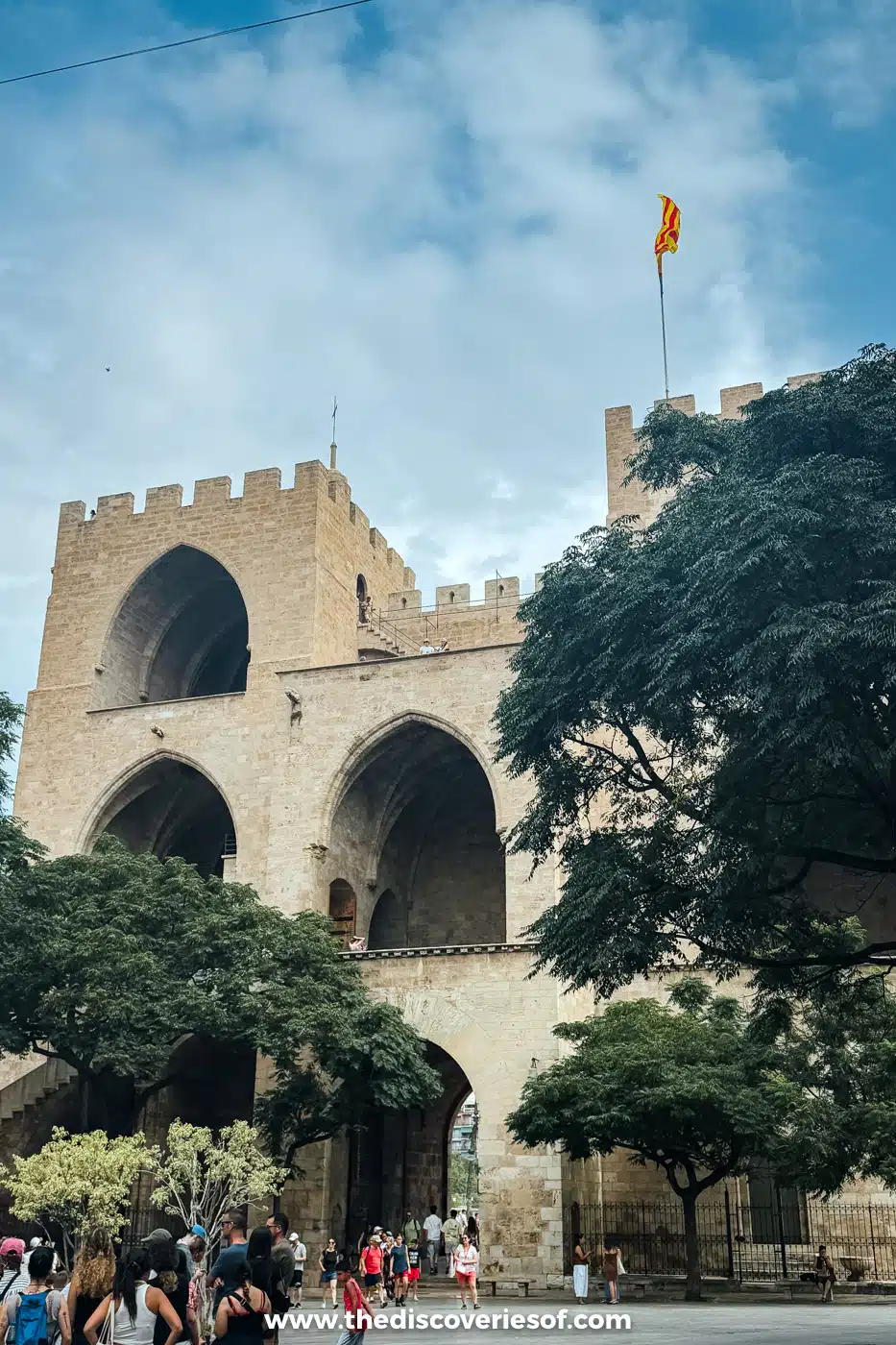
The city walls came down in the 19th century, but two of its great gates survived. The Torres de Serranos, built between 1392 and 1398 by the master builder Pere Balaguer, guarded the road north to Barcelona, and today they stand at the old town’s edge, looking out over the Turia gardens.
You can climb up through the gatehouse to the battlements for a view over the old town and the riverbed. It’s also where the Fallas festival officially begins each year, with the crida from the top of the towers. If medieval fortifications are your thing, my guide to the castles in Spain has plenty more.
Tickets
€2, free on Sundays and public holidays. Open Monday to Saturday 10am to 7pm, Sundays and holidays 10am to 2pm. Visits depend on the weather.
Find the cannonball scars on the Torres de Quart
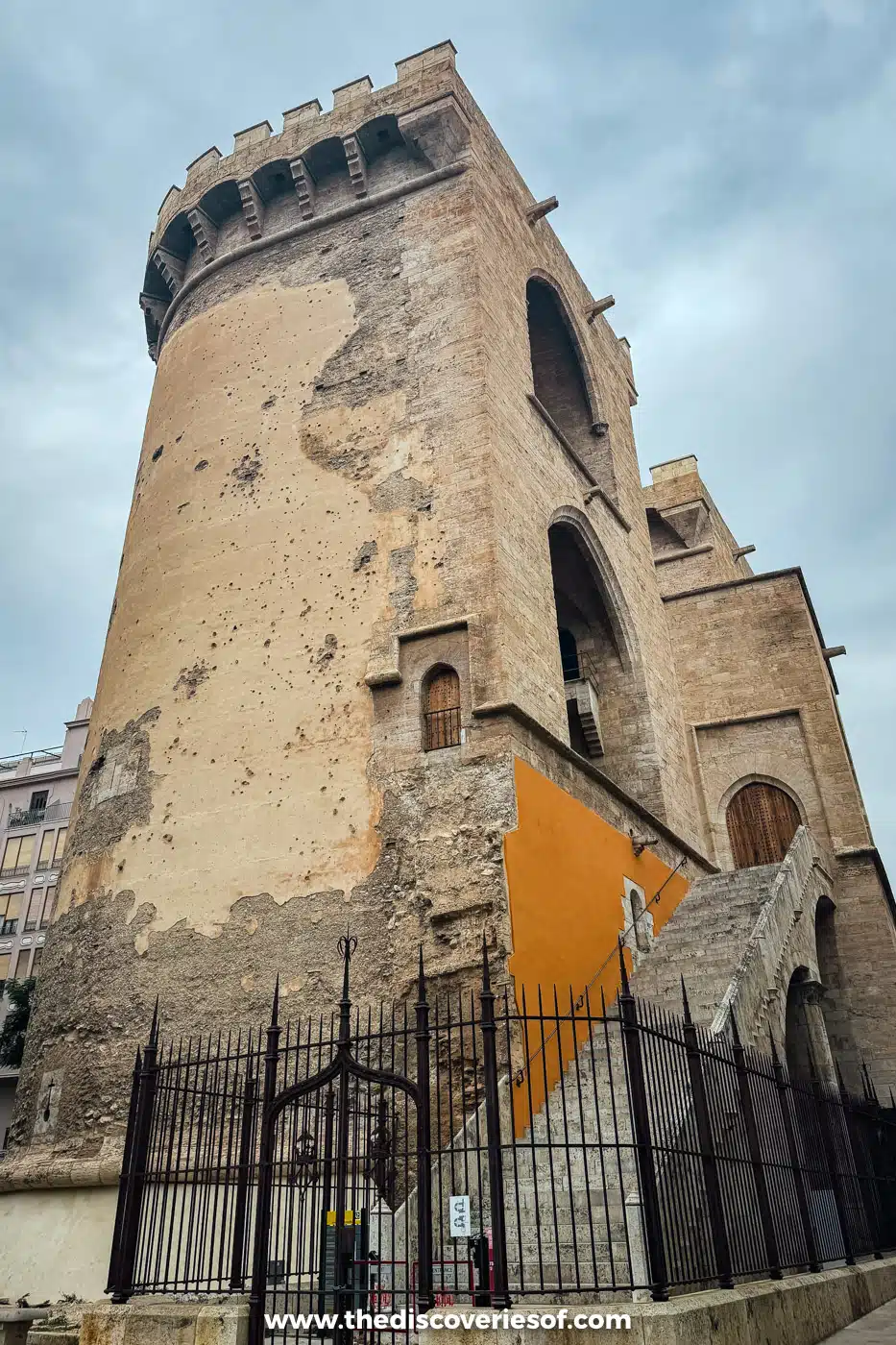
The other surviving gate, on the old town’s western edge, is rougher and in many ways more striking. The Torres de Quart were built in the 15th century, and the stone is still pitted with damage from French cannon during Napoleon’s siege of the city in 1808.
They’re less visited than Serranos, so you may have the climb to the top almost to yourself. Entry is €2, and like Serranos, it’s free on Sundays.
Lose yourself in the lanes of El Carmen
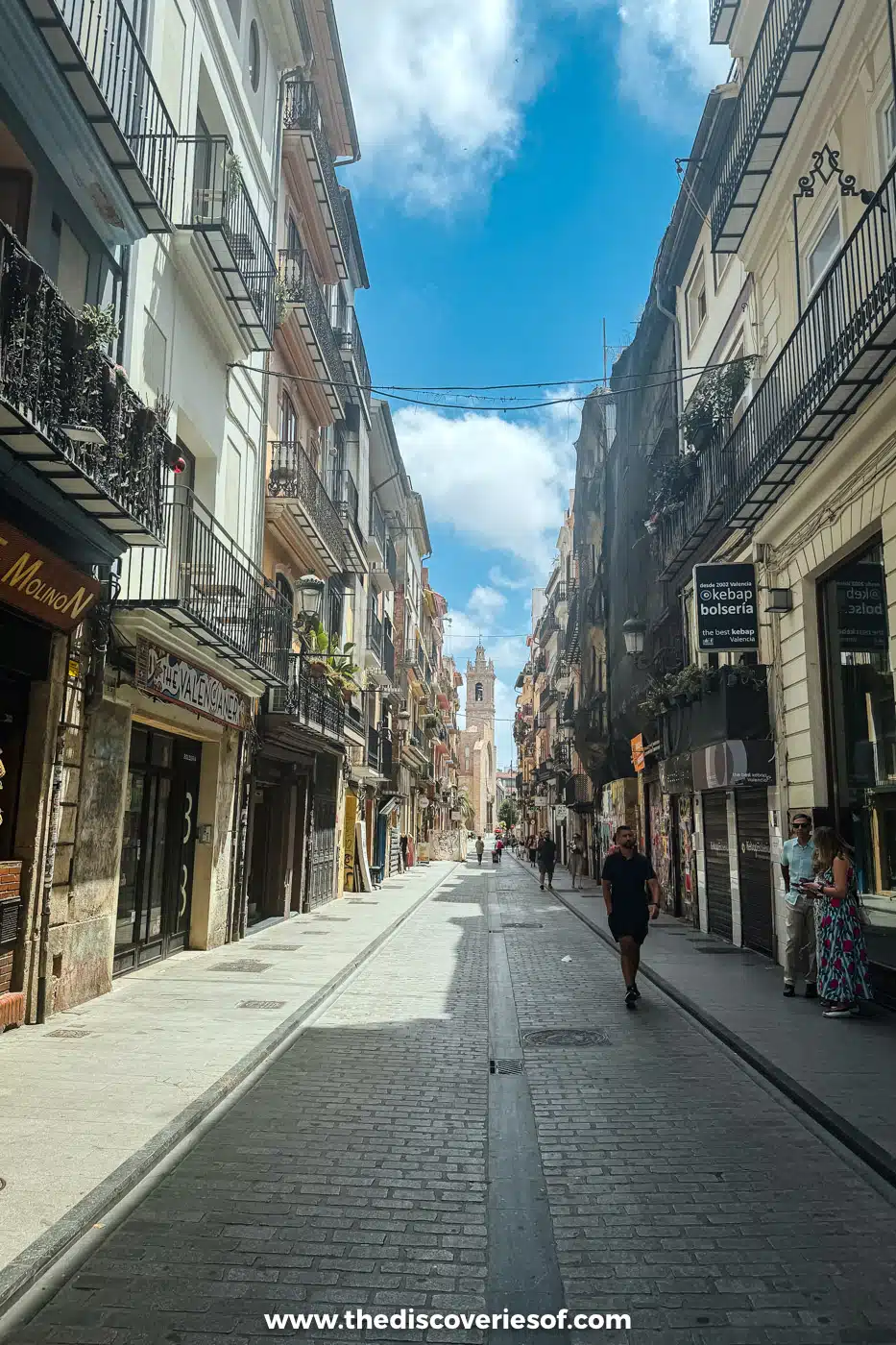
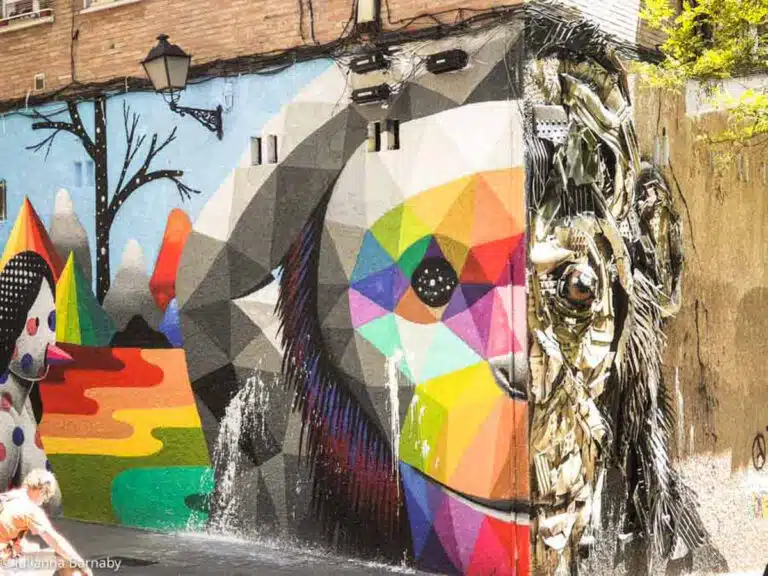
Between the two gates lies El Carmen, the oldest and most atmospheric corner of the old town. Its narrow lanes follow the line of the Muslim and Christian walls, and they’re lined with old balconied houses, independent shops and some of the city’s best street art, painted on shutters and walls on almost every corner.
It’s at its liveliest in the evening, when the tapas bars fill up and Plaza del Tossal becomes the meeting point. Sabaters Vinos y Tapas is a good stop for a glass of wine and a plate or two.
Watch the city at its grandest in Plaza del Ayuntamiento
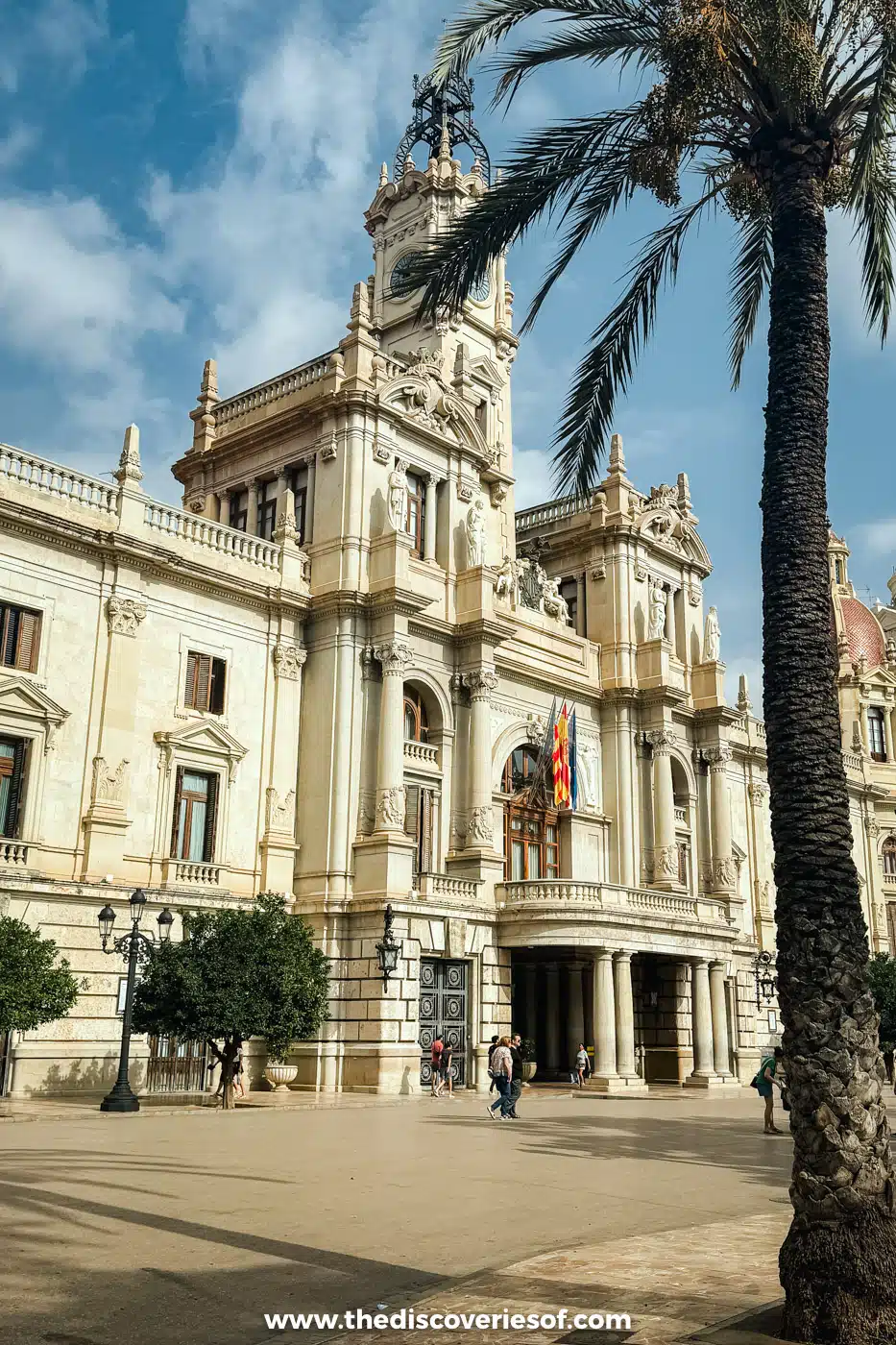
The city’s main square is a wide triangle of early 20th-century grandeur, with the clock-towered City Hall on one side and the Central Post Office, with its glass dome, on the other. It’s the beating heart of the Fallas, when crowds pack in every day at 2pm for the deafening mascletà.
The city was rich at the turn of the 20th century, and the streets around the square are full of modernista buildings with ceramic flourishes and domed corners. Walk five minutes south to the Estació del Nord, the 1917 railway station decorated inside and out with oranges and orange blossom, then east to the Mercado de Colón.
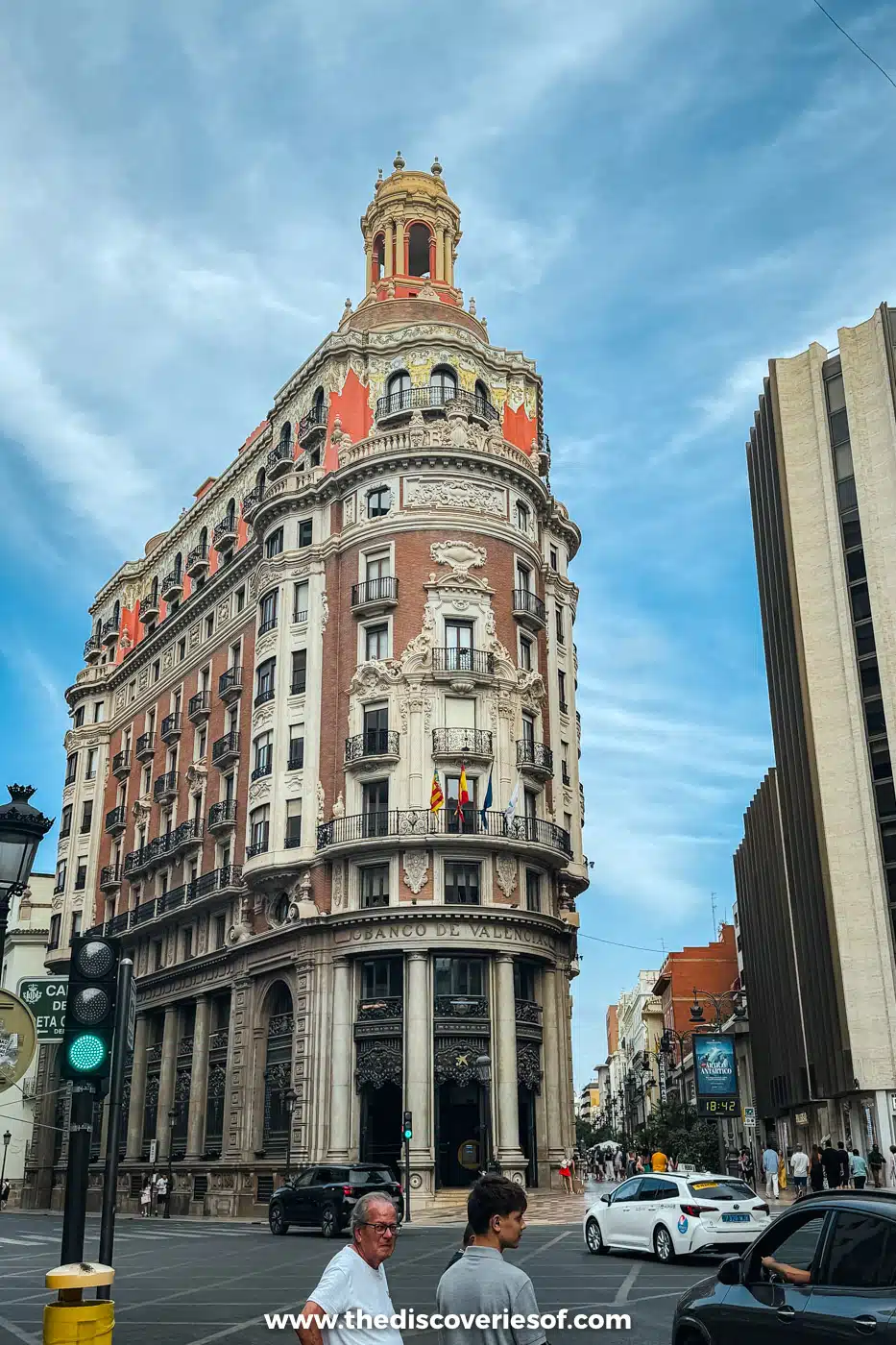
Eat paella valenciana where it belongs
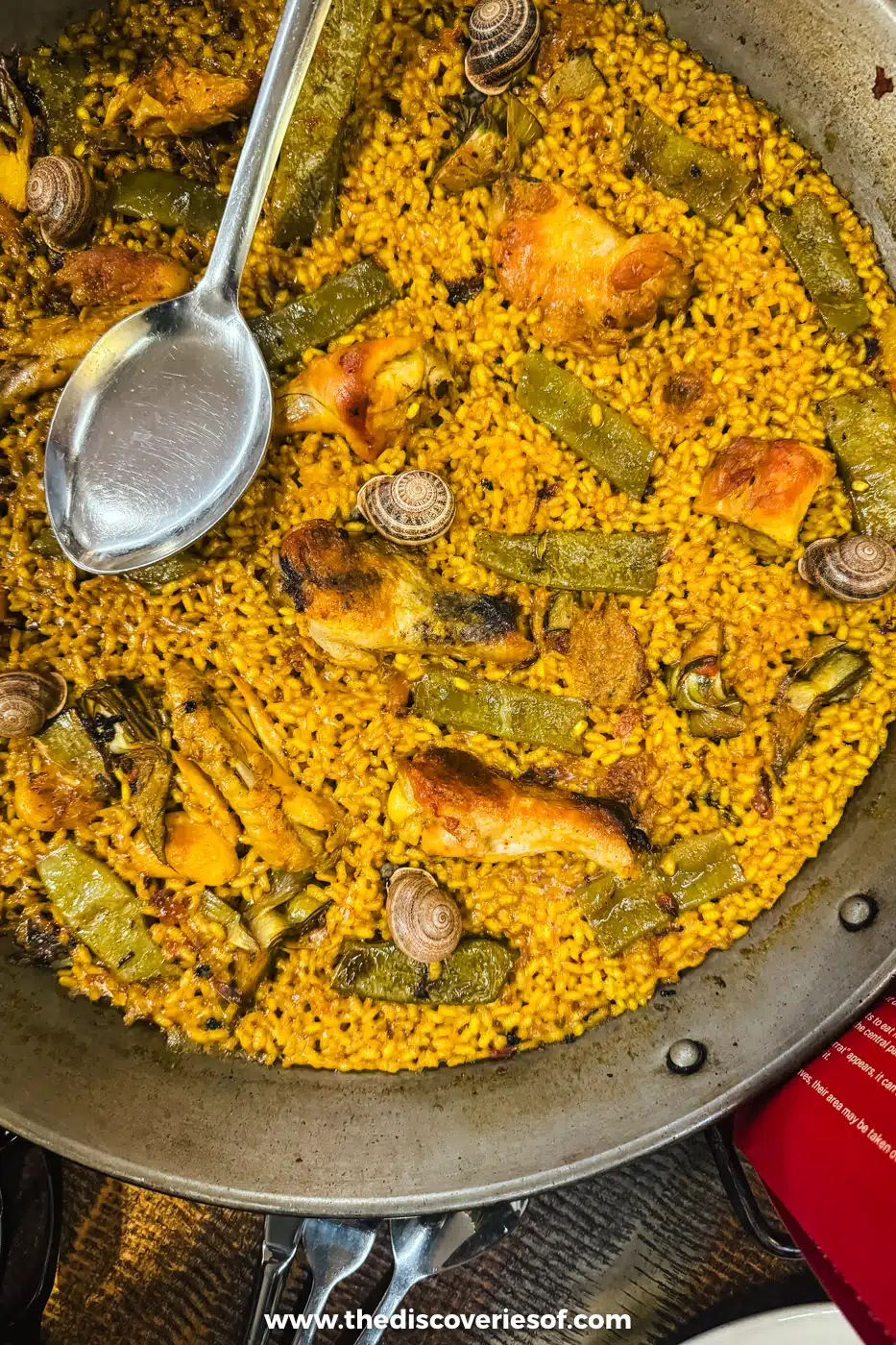
Paella was born in the rice fields around Valencia, and the city takes it seriously. A true paella valenciana has no seafood at all: it’s chicken and rabbit, flat green beans, garrofó (big white butter beans), often snails, and a thin layer of saffron-yellow rice cooked in the wide, shallow pan that gives the dish its name.
I had mine at Los Gómez Correos, a taberna on Calle Correos in the centre, a short walk from Plaza del Ayuntamiento. It came in the traditional way, with chicken, snails and beans, and it’s open every day from noon to midnight, which makes it an easy option, since many paella places serve rice only at lunchtime.
Valencians traditionally eat paella at lunch, and the classic place for it is the seafront. Casa Carmela, open since 1922 near Malvarrosa beach, still cooks its paellas over wood fires (lunch only, Monday to Saturday; book ahead).
Drink horchata at Horchatería Daniel
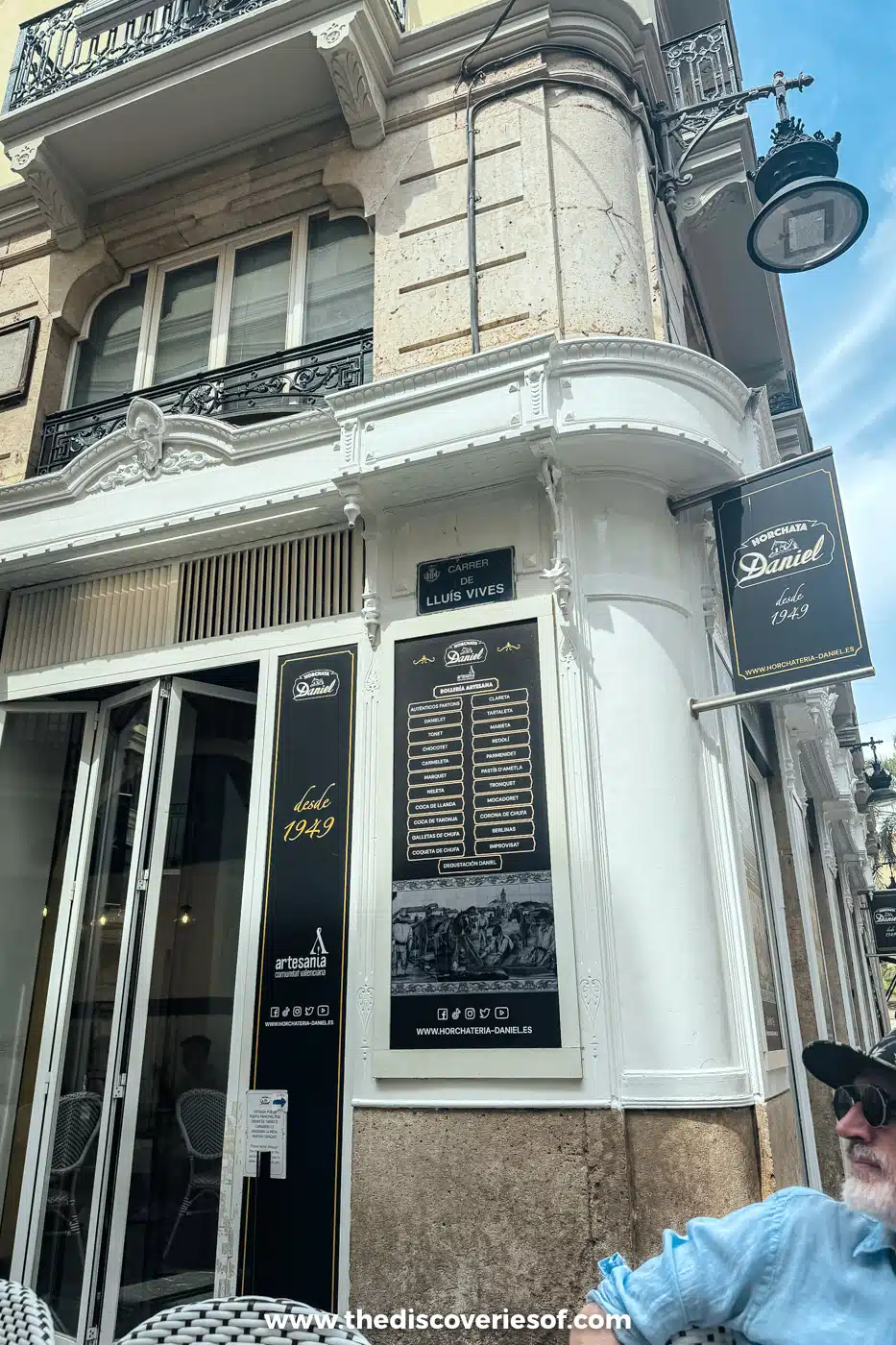
Horchata, the cold, milky drink made from tiger nuts, sugar and water, is the city’s great summer refresher. It’s sweet, nutty and dairy-free, and you dunk fartons, long sugar-glazed buns, into it.
Horchatería Daniel has been making it since 1949, and its original shop is in Alboraya, the village just north of the city where most of Spain’s tiger nuts are grown. It also has shops in town, including the one I stopped at in the old town. Another branch is in the Mercado de Colón, a beautiful modernista market from 1916 by Francisco Mora Berenguer, which is now a covered square of cafés and bars open from breakfast until late.
Watch the sun go down on Las Arenas beach
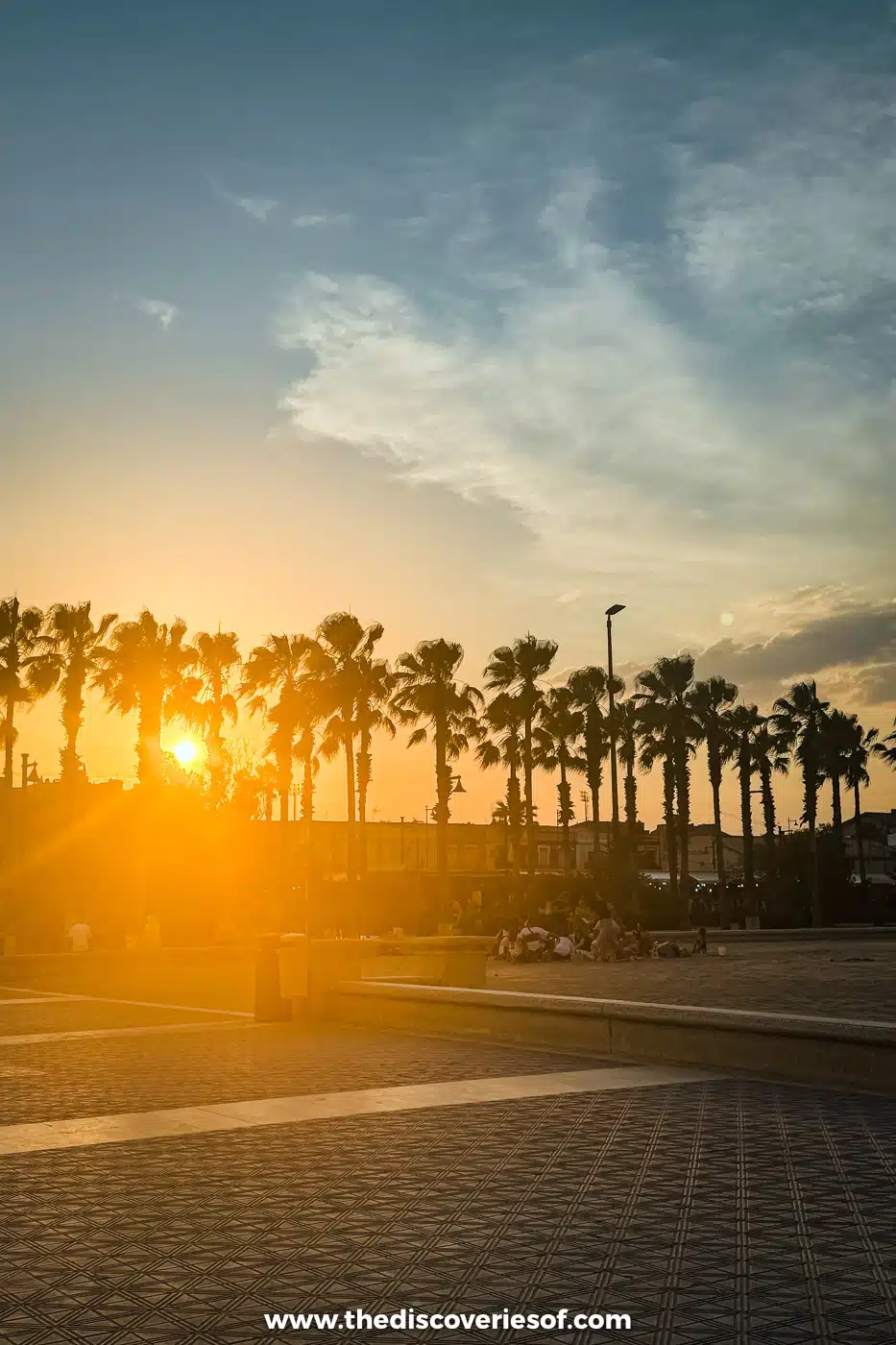
This is a beach city too, and the sand is only about 20 minutes from the centre by tram. I headed out for the evening and walked the palm-lined promenade at Las Arenas as the sun went down, which is exactly what half the city seems to do on a warm night.
Las Arenas runs into Malvarrosa, a long, wide stretch of golden sand with beach bars, restaurants and space even in summer. Behind it is El Cabanyal, the old fishermen’s quarter, whose low houses are covered in colourful tiles. It’s worth a wander before dinner at Bodega Casa Montaña, a tavern open since 1836 with around 600 wines on its list. For more of the coast, Gandia, an hour to the south, is one of the best beaches in Spain for escaping the crowds.
Shop with the locals at the Mercado Central
The Mercado Central is one of the largest food markets in Europe and one of the most beautiful. Opened in 1928, it fills about 8,000 square metres under iron, glass and coloured tiles, topped by a dome with a ceramic parrot weathervane.
Inside, the stalls are piled with oranges, Valencian tomatoes, jamón, salt cod, live snails and every fish the Mediterranean can offer. Come hungry and graze your way round, and go in the morning, when it’s at its busiest. It’s open Monday to Saturday from 7.30am to 3pm and closed on Sundays.
Top Tip
Look for the small round Plaza Redonda nearby, a 19th-century square of shops selling lace, fans and souvenirs.
Look up in the Lonja de la Seda
Across the road from the market, the Lonja de la Seda (the silk exchange) is Valencia’s UNESCO World Heritage Site, listed in 1996, and one of the finest Gothic civic buildings in Europe. It was built from 1482 by Pere Compte, when the city was one of the richest trading cities in the Mediterranean.
The highlight is the Sala de Contratación, the trading hall, where spiral stone columns twist about 17 metres up to the vaulted roof like the trunks of palm trees. Look for the Latin inscription running round the walls, warning merchants to trade honestly. Entry is €2, free on Sundays and holidays, and it’s open Monday to Saturday 10am to 7pm and Sundays 10am to 2pm.
Cycle the Turia gardens
After the floods of 1957, the city diverted the River Turia south of the city and, after a long campaign by its residents, turned the dry riverbed into a park. The Jardín del Turia now runs for more than nine kilometres through the city, from the Bioparc in the west to the City of Arts and Sciences in the east, crossed by 18 bridges from the Gothic Puente de la Trinidad to Calatrava’s Assut de l’Or.
It’s flat and traffic-free, so the best way to see it is by bike: hire one in the centre or use the Valenbisi bike-share. Along the way you’ll pass running tracks, orange groves, sports pitches and the Parque Gulliver, where children climb all over a giant figure of Gulliver.
See the savannah at Bioparc
At the western end of the Turia gardens, Bioparc is a zoo built around the idea of immersion: instead of cages, near-invisible barriers, water and rock separate you from the animals, so giraffes, lemurs, gorillas and elephants seem to roam the same landscape as you.
It’s laid out around African habitats, from the savannah and the wetlands to the equatorial forest and Madagascar, and it’s a great choice if you’re travelling with children. Adult tickets are €31.50 online, and you should allow at least four hours.
Spend an evening in Ruzafa
South of the centre, Ruzafa (Russafa in Valencian) is the city’s creative neighbourhood, full of brunch spots, independent shops, galleries and bars. It’s built around the Mercado de Ruzafa, a neighbourhood market with a famously colourful facade.
Come for the tardeo, the Valencian habit of early-evening drinks on a terrace that rolls into dinner and beyond. The neighbourhood’s restaurants range from cheap tapas bars to Canalla Bistro by the city’s best-known chef, Ricard Camarena.
Gape at the alabaster facade of the Ceramics Museum
The Palacio del Marqués de Dos Aguas is the most extravagant building in town, with an 18th-century alabaster doorway carved with figures of the Turia and Júcar rivers, the “two waters” of its name. Inside, the Museo Nacional de Cerámica holds Valencian tiles and ceramics from the Middle Ages to Picasso, plus opulent Rococo rooms and 18th-century carriages.
Tickets are usually €3, free on Saturday afternoons and Sundays, but entry is free until 10 December 2026 while work on the facades goes on. It’s closed on Mondays.
Plan your trip around Las Fallas
Every March, Valencia sets itself on fire. Las Fallas, listed by UNESCO in 2016, fills the city with hundreds of enormous satirical sculptures of wood, cardboard and polystyrene, some several storeys high, built by neighbourhood groups over the whole year.
The festival runs from 1 to 19 March, with a deafening mascletà of firecrackers in Plaza del Ayuntamiento at 2pm every day, and peaks on the night of 19 March, the cremà, when every falla is burned in the street. Only one ninot (figure) is saved each year by public vote, and you can see the survivors at the Museo Fallero.
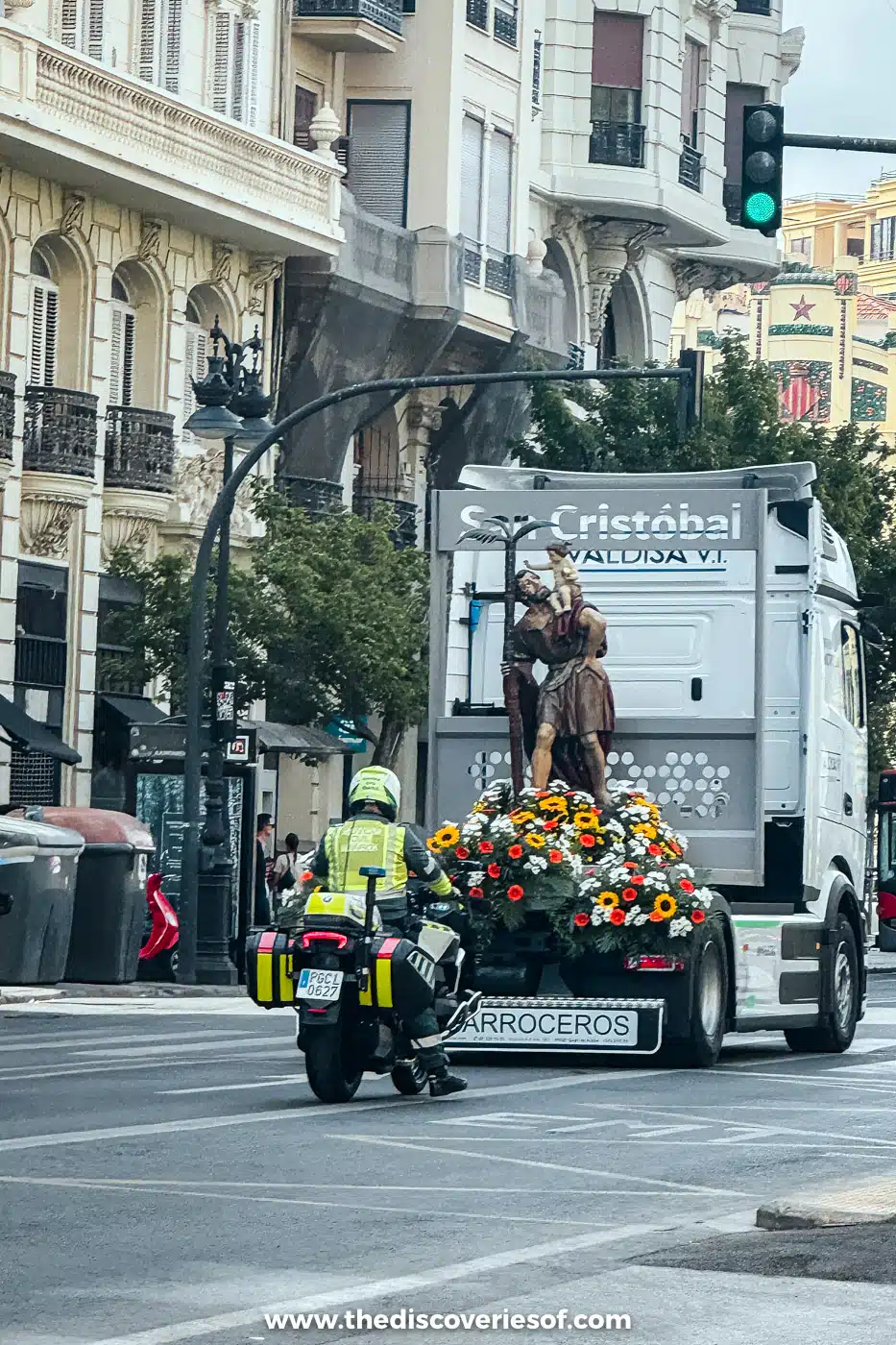
The city loves a celebration all year round. When I was there, I came across a procession for San Cristóbal, the patron saint of drivers, with his statue riding through the streets on the back of a flower-decked lorry.
Take a boat out on the Albufera at sunset
About 10 kilometres south of the city, the Albufera is a huge freshwater lagoon fringed by rice fields, Spain’s largest freshwater lake and the place where paella was invented. It’s a natural park, popular with birdwatchers, and it changes colour through the year as the paddies flood, turn green and are harvested.
Head to the village of El Palmar, take a trip in a flat-bottomed albuferenc boat (about 40 minutes, usually under €10), then stay for paella in one of its rice restaurants. Sunset is the most popular time for the boats, so book ahead. EMT bus 24 runs from the centre to El Palmar in under an hour, or join a tour that combines the boat ride with lunch.
Where to stay in Valencia
- SH Colón Valencia: I stayed three nights at this four-star hotel on Calle Colón, in the shopping streets a few minutes’ walk from the Mercado de Colón and about 15 minutes on foot from the cathedral. I’d give it 3 out of 5. I didn’t have breakfast there, so I can’t comment on it, but there are plenty of cafés nearby.
- Caro Hotel: for something special in the old town, this 26-room hotel fills a Gothic palace that once belonged to the Marquis de Caro, with a 12th-century Arab wall running through its restaurant.
- Las Arenas Balneario Resort: a five-star hotel right on Las Arenas beach, built around the old seaside baths, for a city break with the sand on your doorstep.
Know before you go
- When to go: Spring and autumn are ideal, warm but not scorching. Summer is hot and humid, and good for the beach; March is all about Fallas, so book months ahead if you want to be there for it.
- How long to stay: Three days in Valencia is enough to see the old town, the City of Arts and Sciences and the beach without rushing, with a fourth for the Albufera.
- Getting there and around: Metro lines 3 and 5 run from the airport, 8 kilometres away, to the centre in about 20 minutes (€4.80, plus a reusable card). High-speed trains from Madrid take under two hours, which also makes Valencia one of the best day trips from Madrid. The old town is easy to walk, and trams run out to the beach.
- Save on entry: The Valencia Tourist Card gives free buses and metro, plus discounts on the big sights, from about €15 for 24 hours.
Map
Read next
- 27 brilliant things to do in Spain
- 50 famous landmarks in Spain
- The best beaches in Spain
- Historic castles in Spain you have to visit
- Brilliant day trips from Madrid
- My Spain travel guide
Love this? Save and share on Pinterest
Discover the top things to do, insider tips and hidden gems in our Spain Travel Guide.
Read the guides →