
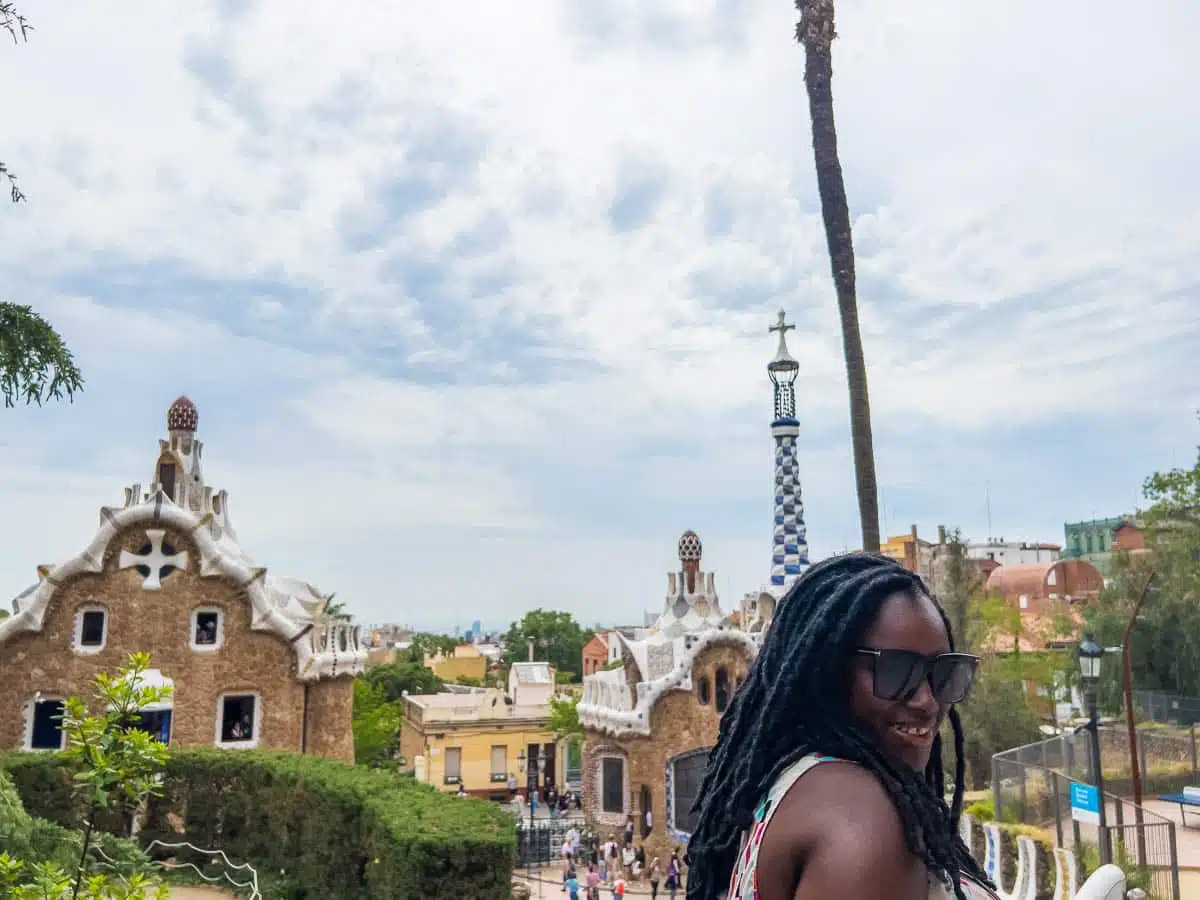

Mosaic dragons, a hall of 86 columns, gingerbread gatehouses and a view that runs all the way to the sea. The park is Gaudí at his most playful, and with timed tickets and a few tricks, it’s still one of the best mornings you can have in Barcelona.
Look, if you plan to tackle the best of Barcelona and don’t include a trip to Park Güell, you’d miss out on one of the city’s most iconic sights. Perched on the hill above Gràcia, it’s another of Antoni Gaudí’s masterpieces and a grand-scale showroom for some of his best ideas.
And if you think of a standard park and have to stifle a yawn, let me stop you there. This is part park, part magical escape into a fairyland studded with mosaic-covered structures, grottos, winding tunnels and pillar-filled halls.
The first time I visited Park Güell, I was 18 and I was completely blown away. Several (and I mean several) years later, that still hasn’t changed. I’ve been back since, including while I lived in Barcelona for three months, and this guide covers what I’d tell anyone going for the first time: how to book, which entrance to use, what not to miss and when to go.
Why Park Güell is worth it

Pretty much one of the best-known things to do in Barcelona, and for good reason. Nowhere else shows Gaudí’s imagination quite so freely. Freed from the limits of a city plot, he built viaducts that look like they grew out of the hillside, a market hall held up by a forest of columns and a terrace wrapped in a bench of broken tiles, all of it designed to sit in the landscape rather than on top of it.
It’s also one of the best viewpoints in the city. The views are *almost* as good as the park itself, and from the top you can see the whole of Barcelona spread out below, the Sagrada Família rising out of the Eixample, all the way to the sea. You could easily spend a whole morning wandering its structures, grottos, winding tunnels and pillar-filled halls.
The park has been a UNESCO World Heritage Site since 1984, as one of the Works of Antoni Gaudí.
A housing estate that nobody bought
Park Güell was never meant to be a park. The industrialist Count Eusebi Güell commissioned Gaudí to design a residential neighbourhood on the hill, a gated garden city that would lure well-off families out of the crowded old town. At the time, it was not a success: only three of the many plots ever sold, and only two houses were built. One of them was bought by Gaudí himself, who lived there for almost 20 years, and it later became the Gaudí House Museum.
Construction started in 1900 and was abandoned in 1914. Güell died in 1918, his family sold the estate to Barcelona City Council, and it opened as a public park in 1926.
Güell and Gaudí worked together on far more than the park. The count also commissioned Palau Güell, his mansion off La Rambla, the Güell wine cellars in Garraf, the Güell Pavilions and the crypt at the Colònia Güell, so if you get hooked, there’s a whole trail to follow.
How to plan your visit
Tickets
Book tickets ahead, as they sell out several days in advance, and even weeks ahead in the peak summer months. The whole park is ticketed now, not just the Monumental Zone, and every ticket has a timed entry slot.
These are the official prices at the time of writing:
- General admission: €18
- Children aged 7 to 12 and over-65s: €13.50
- Children aged 6 and under: free
You have a 30-minute window after your time slot to get in. Once inside, you can stay as long as you like, but you can’t leave and come back in. You can book on the official website or through GetYourGuide, which also has guided tours.
Do
The Park Güell guided tour with skip-the-line access is a good choice if you want the stories behind the mosaics. It’s easy to miss what you’re looking at here without a guide.
Opening hours
Visiting slots for the general public run from 9.30am to 5.30pm. The early morning (from 7am) and evening slots are reserved for local residents with a pass, so the first public slot at 9.30am is the one to aim for. The Gaudí House Museum is closed for maintenance at the moment, so check before you plan around it.
Getting there and which entrance to use
The park sits on a steep hill, so how you arrive makes a real difference. The easiest way is by bus: the 24 and the V19 stop close to the entrance on Carretera del Carmel. From the metro, get off at Lesseps (L3) and walk about 20 minutes uphill, or at Vallcarca (L3), where outdoor escalators on Avinguda del Santuari de Sant Josep de la Muntanya take most of the climb out of it.
The park recommends three entrances: Carretera del Carmel 23, Carrer de Larrard (the closest to the old main gate) and the escalator entrance on Avinguda del Santuari. Avoid the Vallcarca side entrance, which is the most awkward.
When to visit
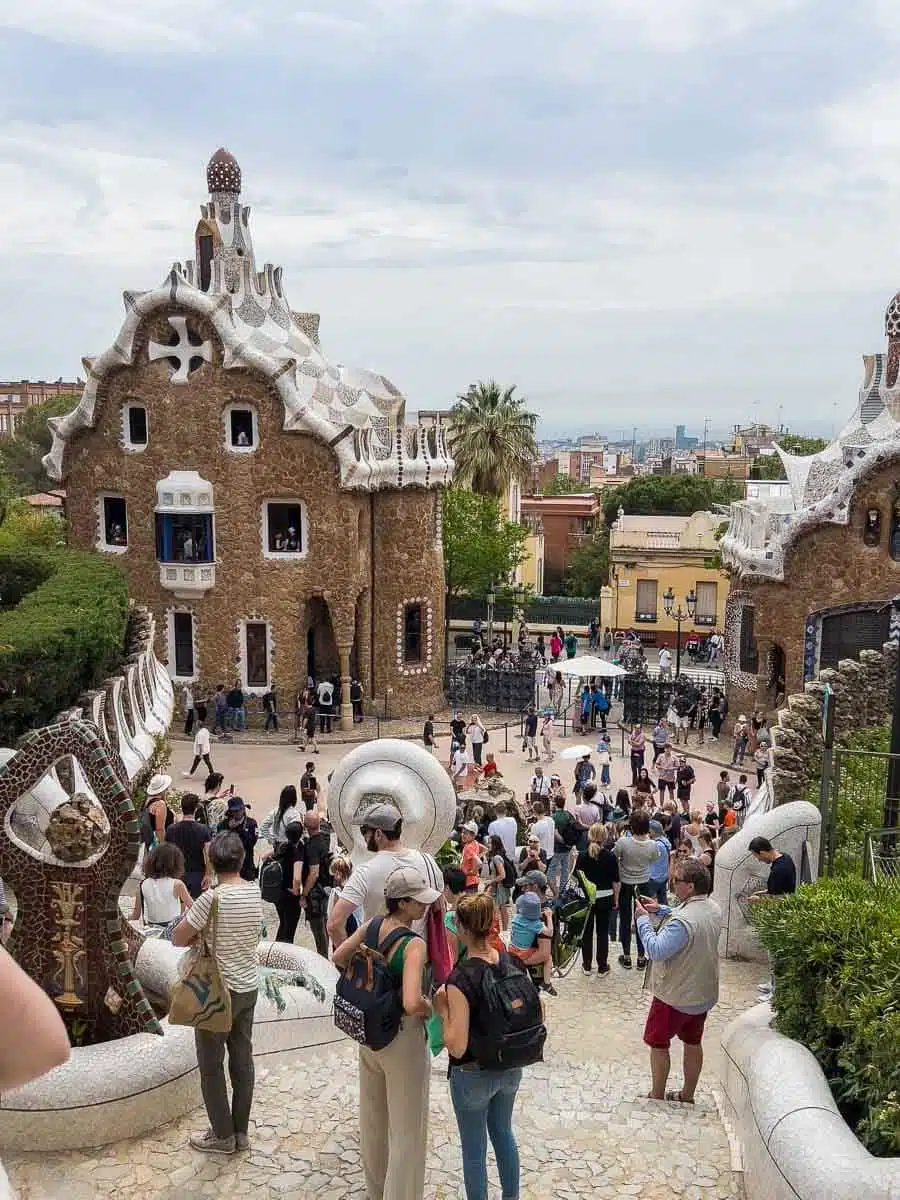
Visit first thing in the morning if you can. The weather is cooler, the light is softer and you get the Monumental Zone before the tour groups arrive. Thank me later.
There’s very little shade on the terrace and the upper paths, so in summer, a midday slot means baking on the mosaics. Late afternoon is the next best option, when the sun drops behind the hill and the city glows below. Spring and autumn are the most comfortable months to visit, but the park is wonderful all year round, and on a clear winter day the views stretch further than ever.
What to see in the park
The gatehouses and the palm-leaf gate
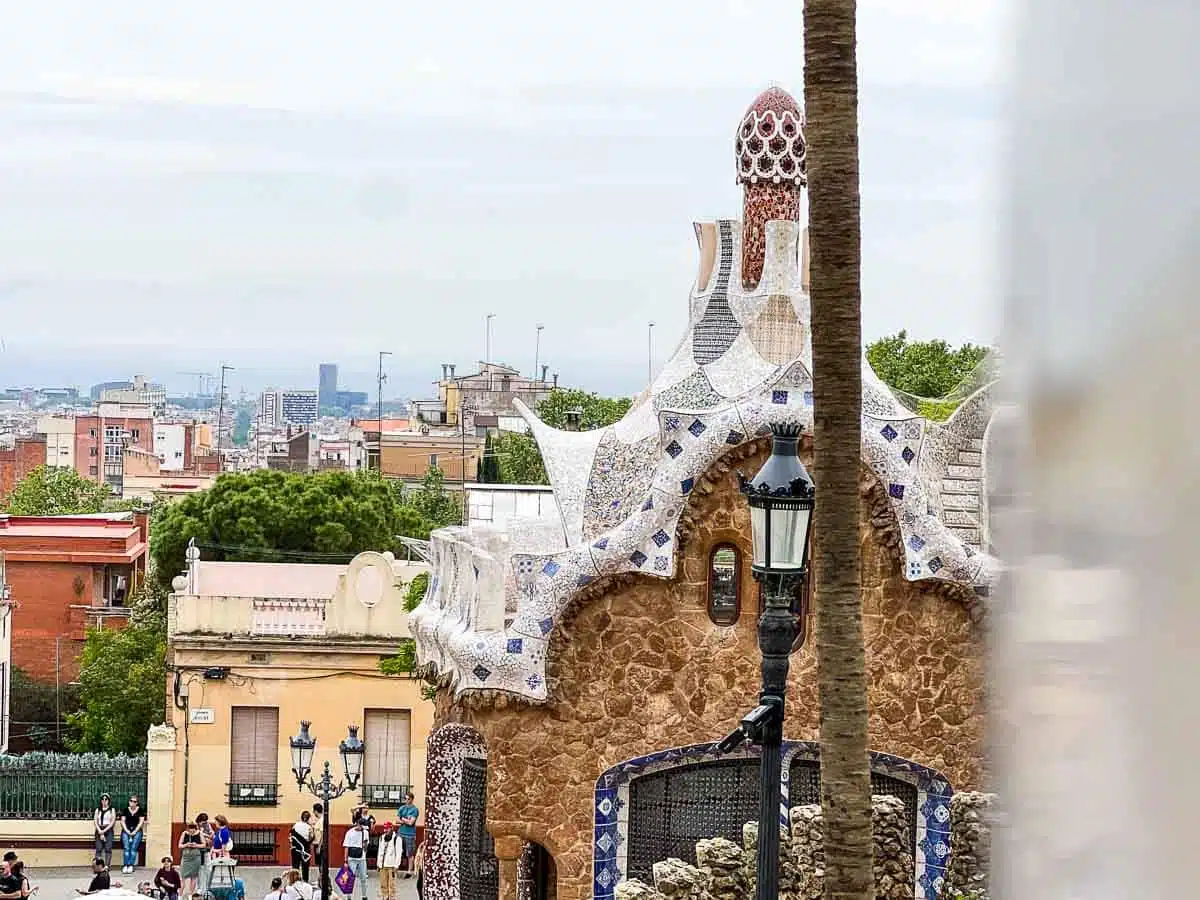
The two little pavilions at the main entrance look like they’ve walked straight out of a fairy tale, with roofs that drip with white tiles like icing. They were built as the porter’s lodge and a waiting room for the estate, and they set the tone for everything beyond.
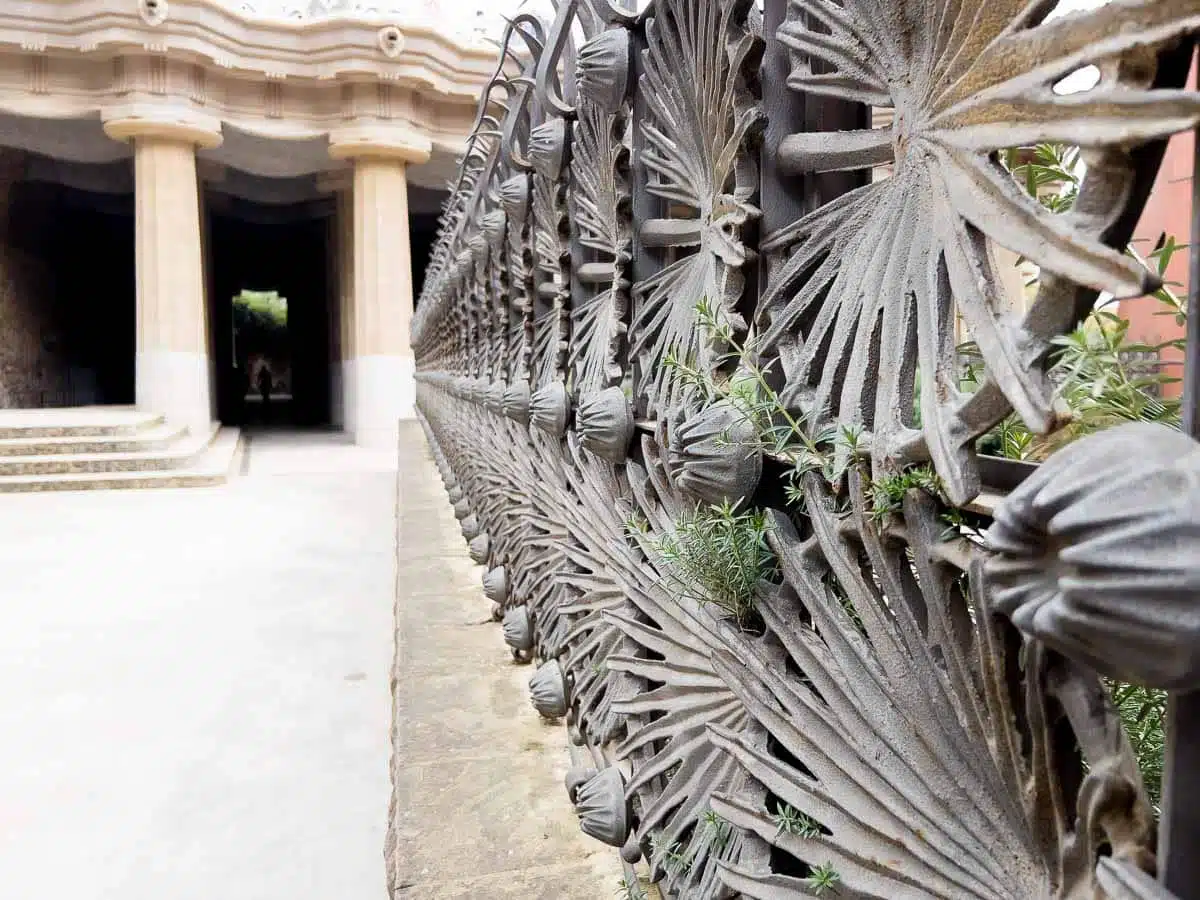
Look out for the wrought iron palm-leaf gates, too. Their fan-shaped leaves are the same pattern Gaudí used years earlier for the fence at Casa Vicens, his first house, and the gates actually came from Casa Vicens, moved to the park in the 1960s.
The dragon stairway
From the entrance, a double staircase climbs between walls of mosaic and grottoes to the most photographed resident of the park: the multicoloured mosaic dragon (some say it’s a salamander) halfway up. It’s a fountain, and it’s almost always surrounded, so if you want a photo without a crowd, this is the first place to head when you arrive.
The Hypostyle Room
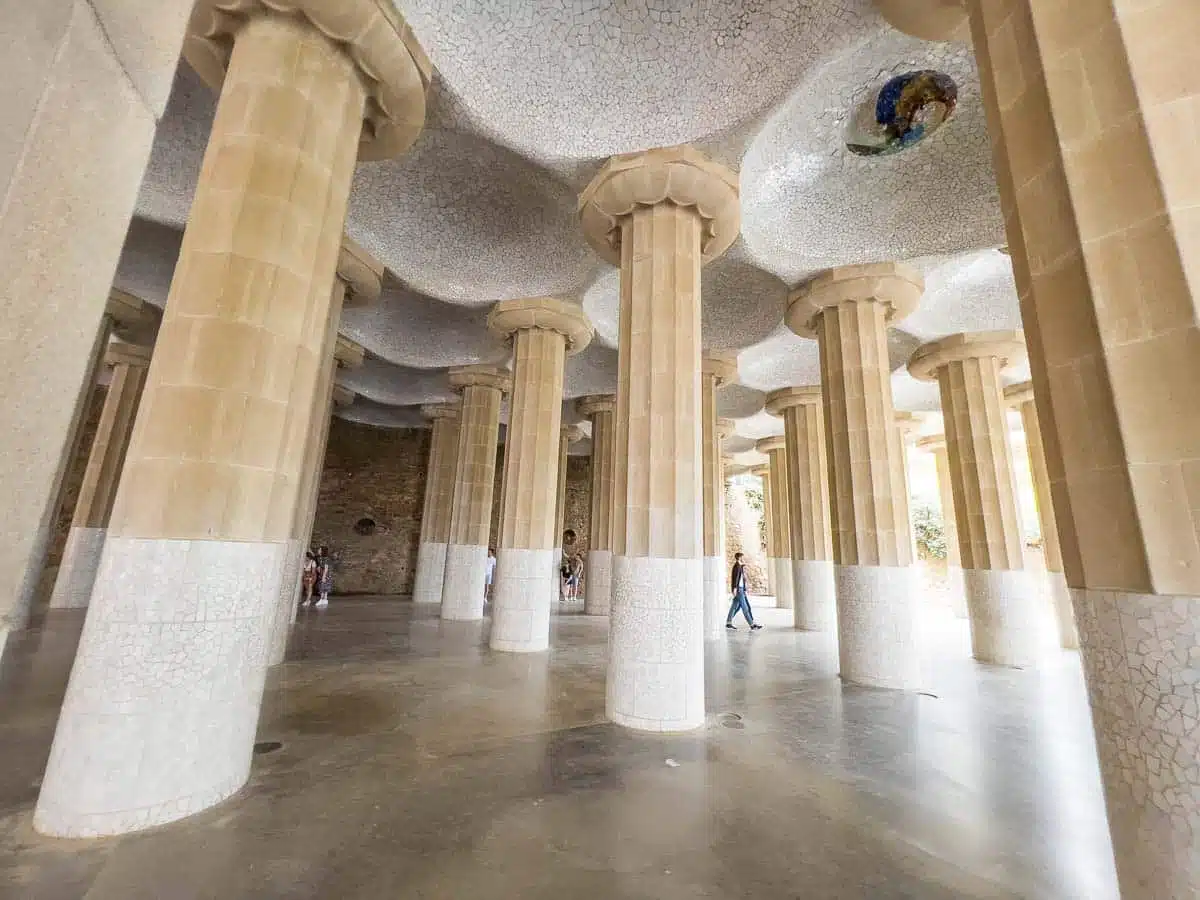
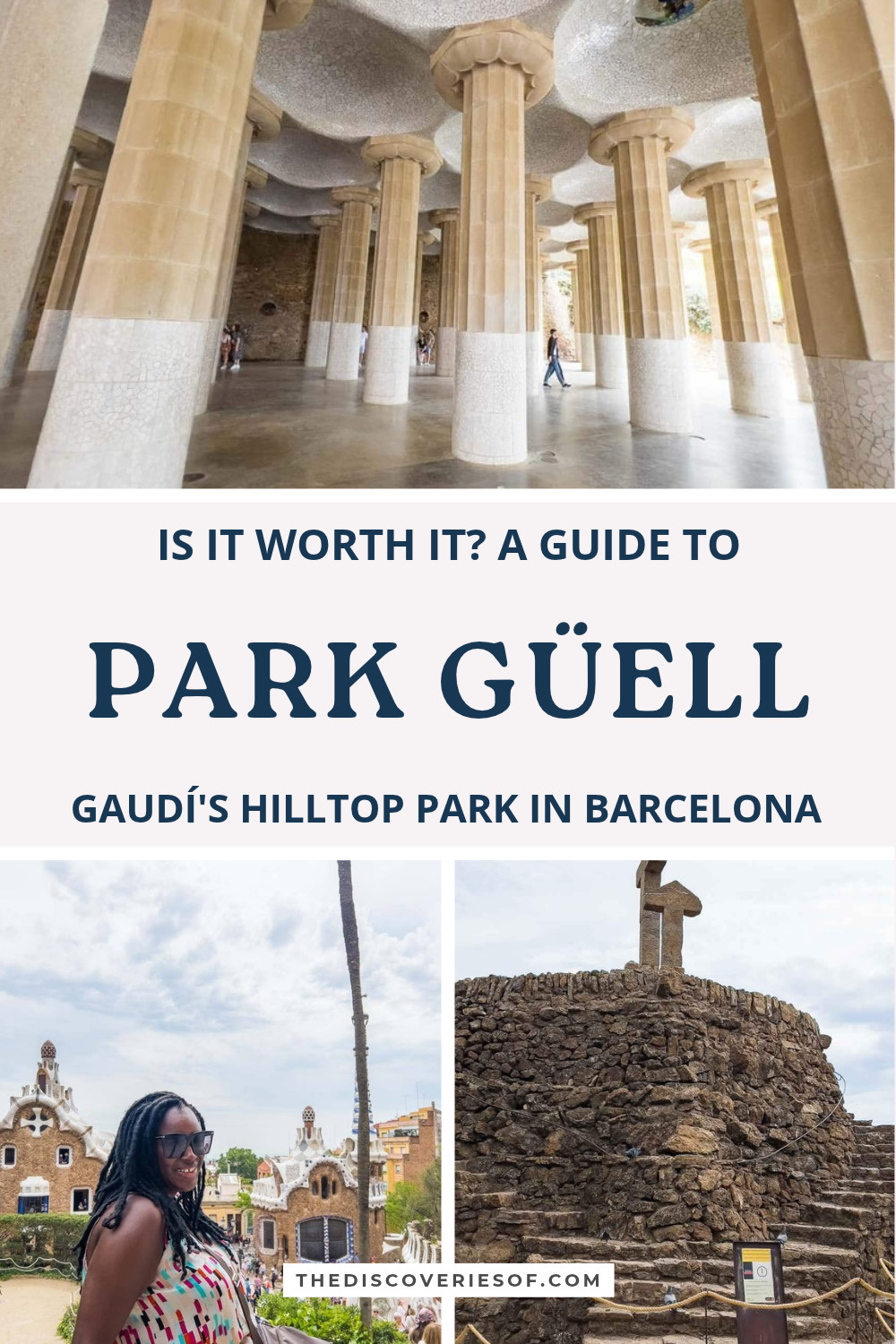
At the top of the stairs is the Hypostyle Room, a hall of 86 columns that was meant to be the estate’s covered market. Look up: the ceiling is studded with mosaic medallions by Josep Maria Jujol, Gaudí’s right-hand man, made from broken tiles, bottles and even pieces of porcelain dolls. The columns aren’t just decorative either. The hall holds up the square above, and rainwater from the terrace runs down through them to a huge cistern below, which feeds the dragon.
The Nature Square and its serpentine bench
Above the Hypostyle Room is the Plaça de la Natura (Nature Square), the big open terrace you’ve probably seen in photos. It’s wrapped in a long, wavy bench covered in trencadís, the broken tile mosaic that became Gaudí’s signature. The curves aren’t just for show: they create little nooks where people could sit and chat, and the bench is said to be shaped to fit the human back. Sit down and you’ll see the gatehouses below and the city stretching to the sea.
The viaducts and the Portico of the Washerwoman

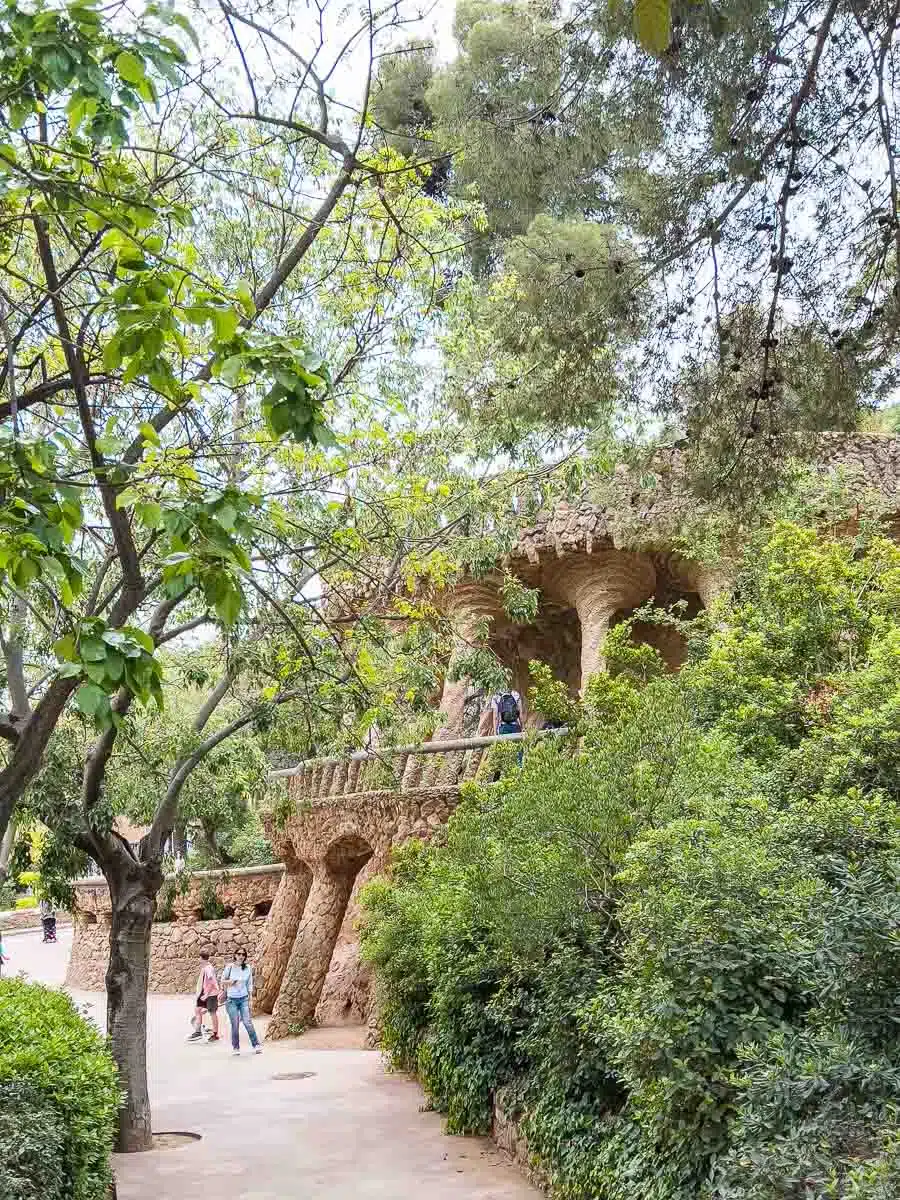
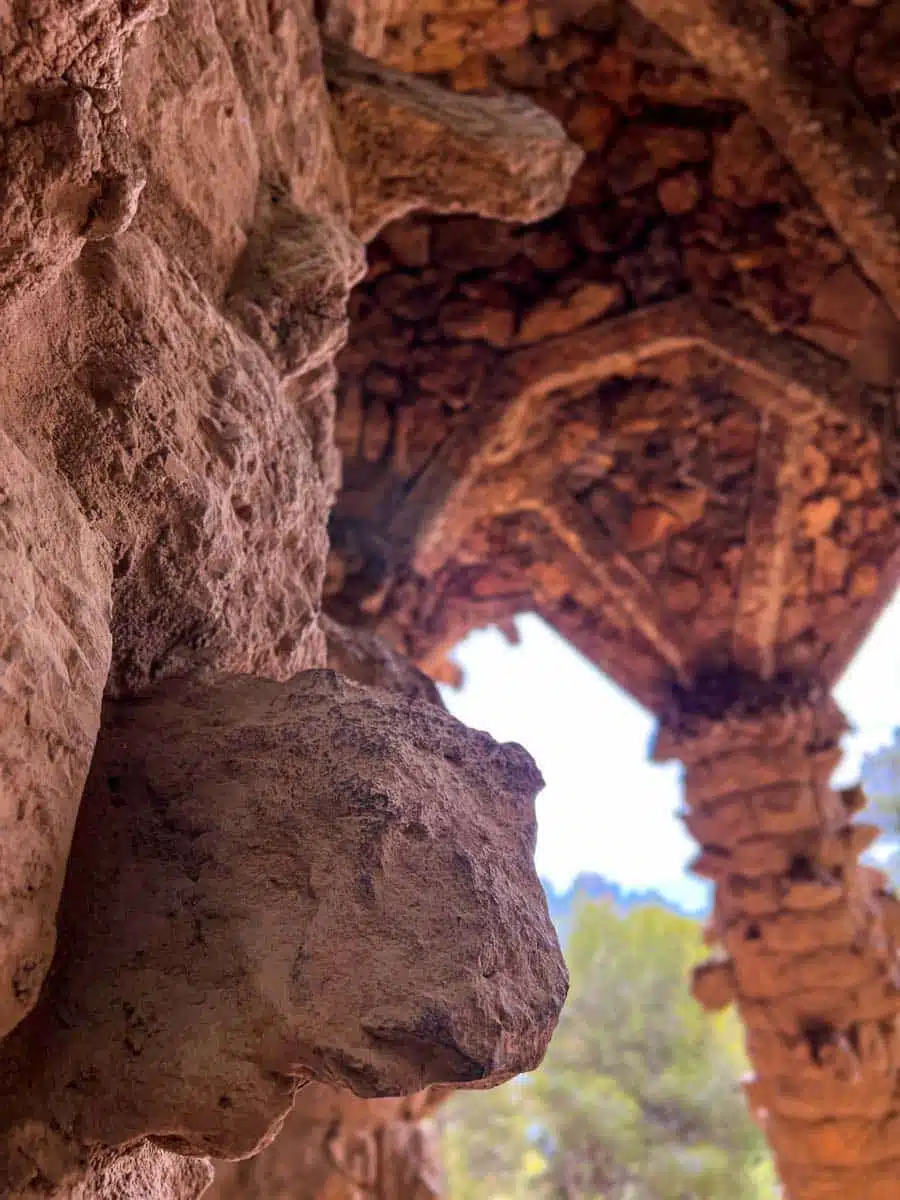
Gaudí built a network of paths and viaducts to carry carriages around the hillside, and they’re some of the most extraordinary parts of the park. The stone columns lean like tree trunks and look as if they’ve grown out of the ground. The most famous section is the Portico of the Washerwoman, named after a carved figure of a woman carrying laundry on her head, which is set into one of its columns.

The Turó de les Tres Creus
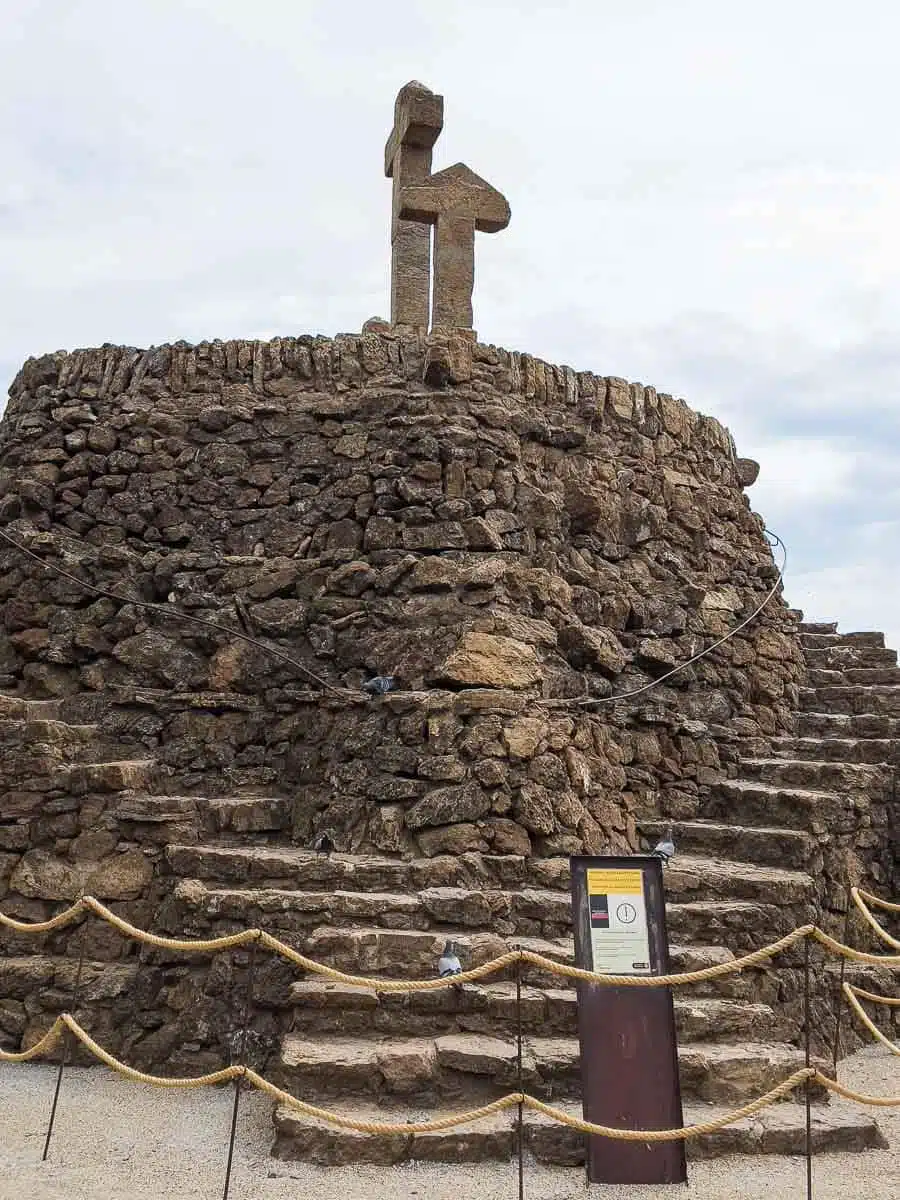
The views are *almost* as good as the park itself. Head to the highest point, the Turó de les Tres Creus (Hill of the Three Crosses), for extensive views of the city spread out below, leading all the way to the sea. Gaudí planned a chapel up here that was never built, and in its place stands a stone mound topped with crosses. It’s a bit of a climb up the steps, but it’s well worth it, and it’s one of the best places in the whole of Barcelona to watch the city at your feet.

The Gaudí House Museum
The pink house with a spire, near the Austria Gardens, is where Gaudí lived from 1906 until shortly before his death in 1926. Inside, it has furniture he designed for Casa Batlló and Casa Calvet, and his own simple bedroom. It’s closed for maintenance at the moment, so check before you plan around it.
Tips for visiting Park Güell
- Do the park in the morning, then Gràcia: Walk down the hill into Gràcia afterwards for lunch. Entrepanes Díaz does gourmet sandwiches in a beautiful setting, or book Besta for Catalan and Galician cooking, and don’t miss Casa Vicens on the way.
- Bring water and sun cream: There’s little shade on the terrace and the upper paths.
- Wear good shoes: The paths are steep and uneven in places, especially up to the Turó de les Tres Creus.
- Add the Bunkers del Carmel: The Civil War bunkers on the Turó de la Rovira are on the next hill, about a half-hour walk away, with an even wider view. They close at 5.30pm in winter and 7.30pm in summer.
Map
Read next
- 49 things to do in Barcelona
- How to visit the Sagrada Família
- Uncovering Gaudí’s Barcelona: in the footsteps of a Modernist genius
- Where to stay in Barcelona
Love this? Save and share on Pinterest
Discover the top things to do, insider tips and hidden gems in our Spain Travel Guide.
Read the guides →




