
The Oceanogràfic is the biggest aquarium in Europe: a park of seas and oceans at the end of the City of Arts and Sciences, with a shark tunnel, belugas, penguins and a restaurant inside a tank. Here’s what to see, what tickets cost and how long to give it.
The Oceanogràfic sits at the eastern end of Valencia’s City of Arts and Sciences, the white complex built in the old bed of the River Turia. It opened in 2003 and is billed as the largest aquarium in Europe, with around 45,000 animals from 500 species spread across buildings themed on the world’s seas and oceans, from the Arctic and Antarctic to the Mediterranean and the tropics.
I spent the morning walking the length of L’Umbracle and wandering between the Calatrava buildings, then went into the Oceanogràfic aquarium before lunch at an oyster bar a few minutes away. I walked through the shark tunnel, past the batfish, which look permanently surprised, and lingered at the jellyfish, pulsing through their tanks like slow-motion lanterns.
This guide covers the main zones, the shark tunnel, the dolphinarium, ticket prices and combined tickets, opening hours, how long to allow and where to eat afterwards.
The Oceanogràfic at a glance
- Where: Carrer d’Eduardo Primo Yúfera 1B, at the eastern end of the City of Arts and Sciences, across the road from the Agora.
- Cost: €37 for adults and €27.45 reduced, booked for a date and time online. Children under 4 go free.
- Opening hours: from 10am every day, closing at 6pm most of the year, 8pm on Saturdays and later in summer.
- Time needed: at least four hours, more with the dolphin show.
- Don’t miss: the shark tunnel, the belugas in the Arctic building and the jellyfish.
Félix Candela’s concrete water lilies
Santiago Calatrava designed most of the City of Arts and Sciences, but the Oceanogràfic is the work of the Spanish-Mexican architect and engineer Félix Candela, who drew it up in 1997, working with the structural engineers Alberto Domingo and Carlos Lázaro. It was his last project, and he died before it was built.
His trademark was the thin concrete shell, and the entrance building and the underwater restaurant sit under roofs shaped like opening water lilies, curving up from the ground in impossibly thin concrete. They’re worth stopping to look at before you go in, especially from the lake at the entrance.
The whole park covers 110,000 square metres and holds 42 million litres of water, pumped in from the sea at Malvarrosa beach. The largest single tank holds 7 million litres, and the dolphinarium another 26 million.
The shark tunnel, the batfish and the jellyfish
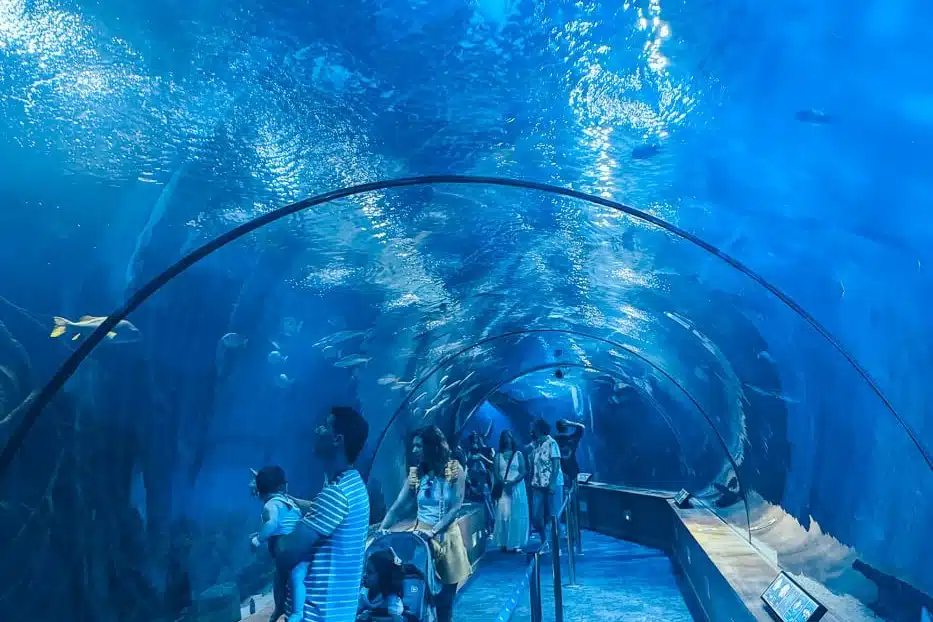
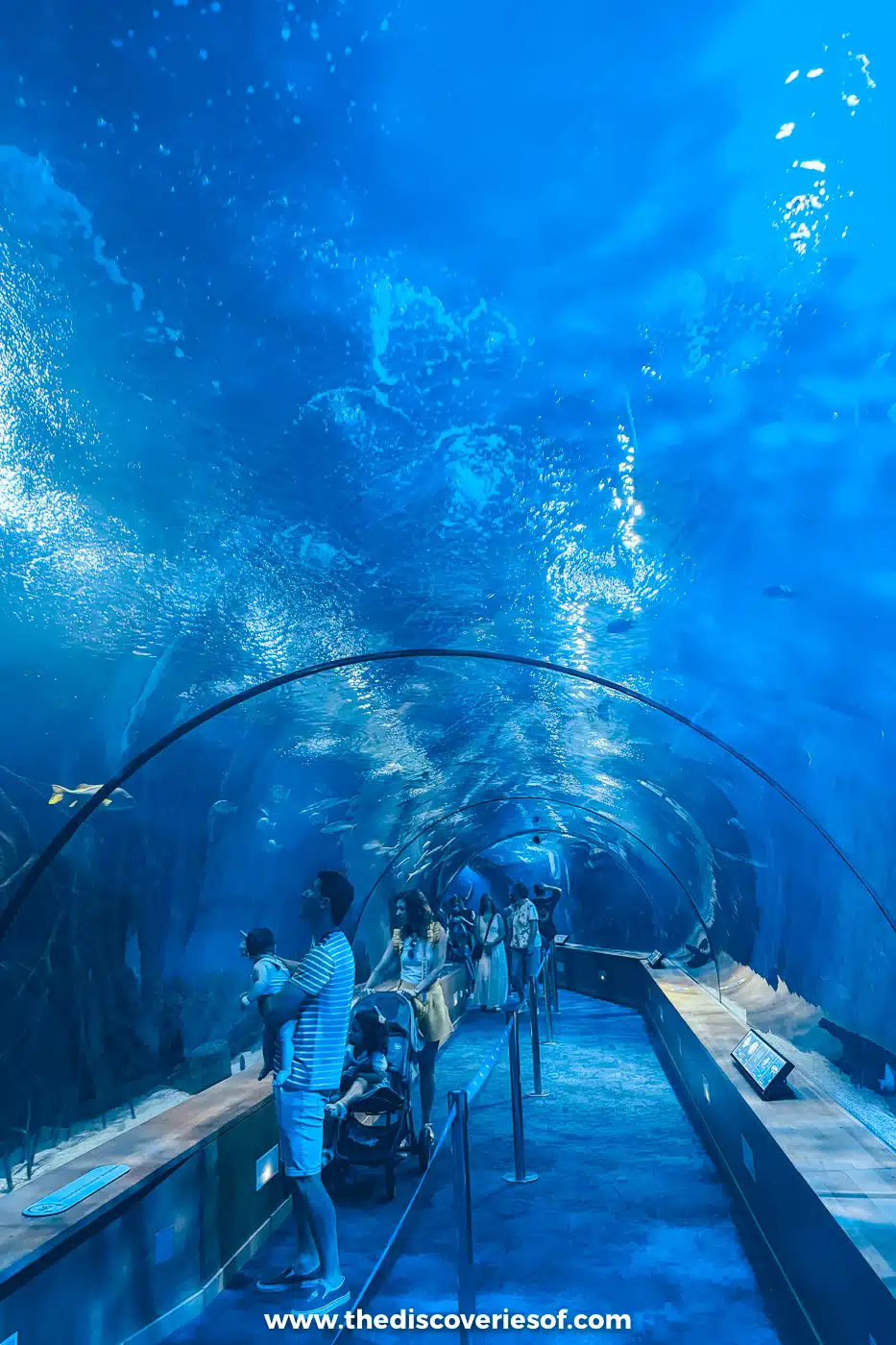
The shark tunnel is the highlight of the Oceanogràfic, and it’s where most people head first. You walk along a glass tube under the water while sharks and shoals of fish glide over your head, and the Oceanogràfic bills its underwater tunnels as the longest in Europe, at around 70 metres. Arrive at the 10am opening and head straight for the shark tunnel, which gets crowded by midday in high season.
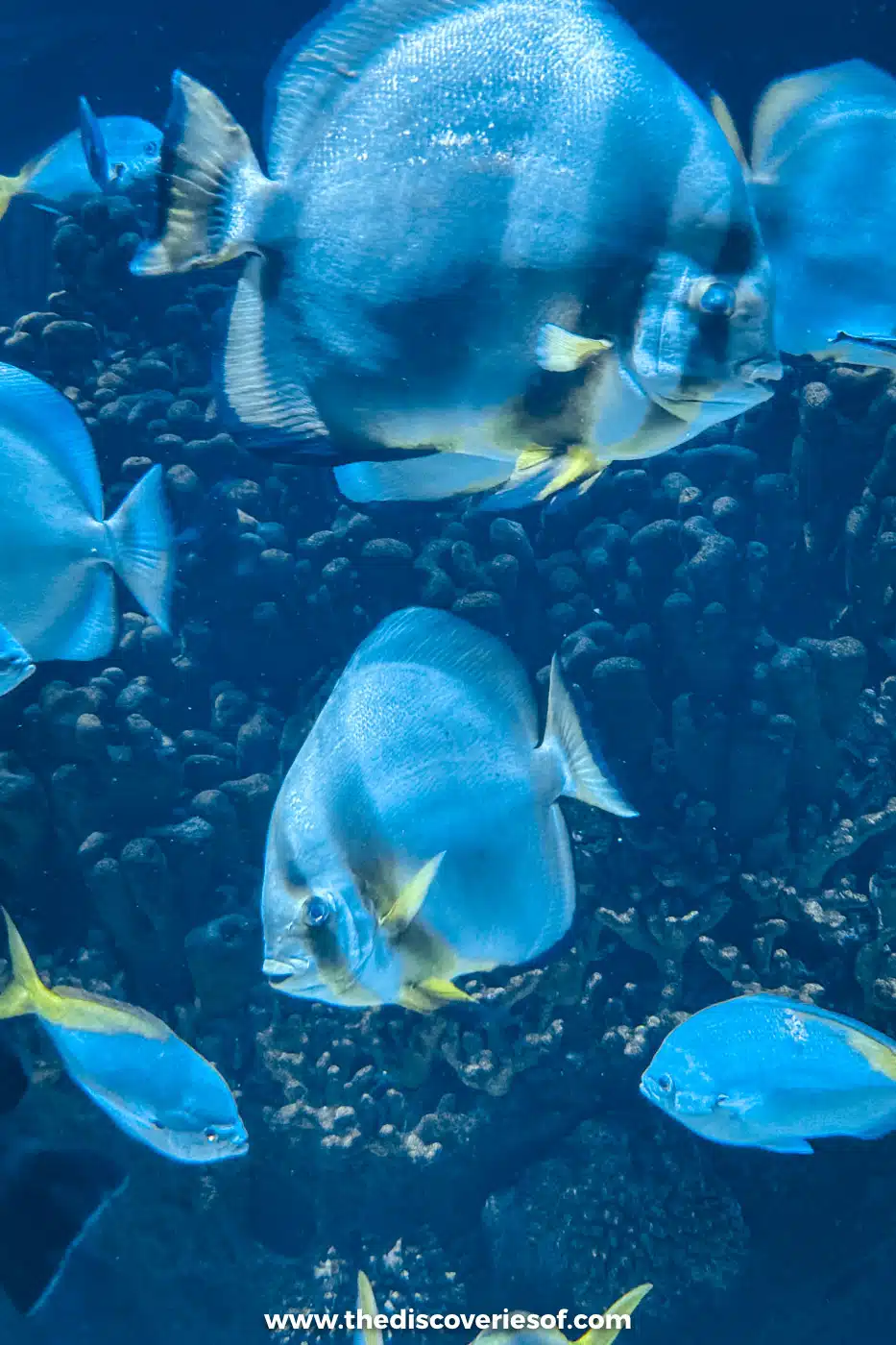
The smaller tanks are just as much of a draw. The batfish drift around in a flat silver shoal, all huge round eyes and open mouths.
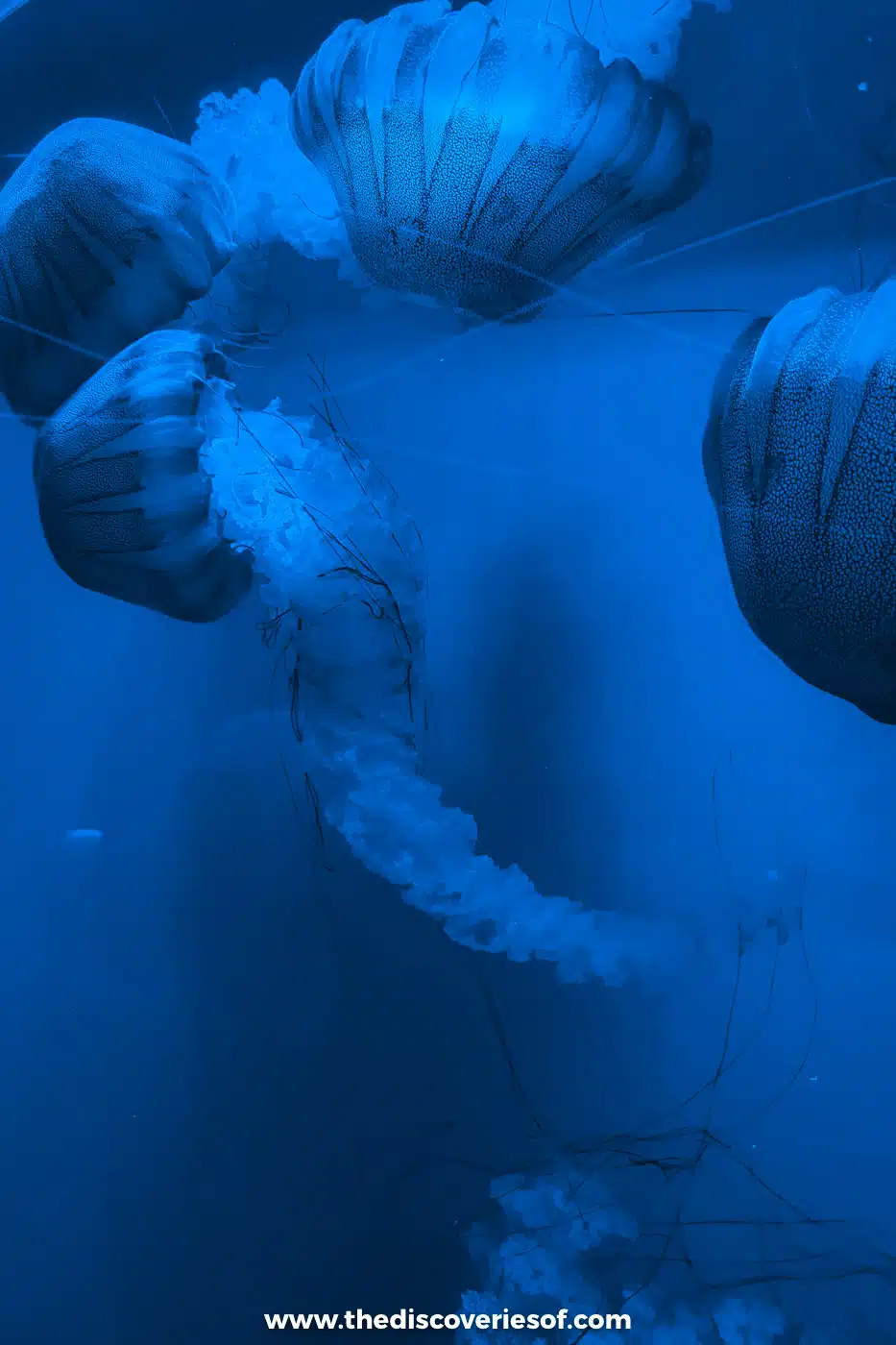
The jellyfish tanks are the calmest corner of the visit. Lit in deep blue, with long trailing tentacles, they’re hypnotic to watch, and a good place to pause when the bigger halls are busy.
The rest of the Oceanogràfic, zone by zone
The park is laid out as a series of buildings and outdoor pools, each themed on a different marine environment. Plan your route around the dolphin show times.
- Arctic: the belugas and walruses, under an igloo-shaped dome. The Oceanogràfic is one of the very few places in Europe where you can see belugas.
- Antarctic: penguins in a chilled, ice-lined enclosure.
- Islands: Patagonian sea lions in outdoor pools.
- Wetlands: a 26-metre sphere recreating mangroves and Mediterranean marshland.
- Mediterranean: nine aquariums holding around 7,400 fish and invertebrates from the sea on Valencia’s doorstep.
- Temperate and tropical seas: coral reefs and the start of the underwater tunnels.
- Oceans: the biggest aquarium in the park, with the tunnel under the sharks, including hammerheads and bull sharks.
- Dolphinarium: an open-air stadium with several dolphin presentations a day. Seats fill up, so get there early.
- Crocodiles: a small enclosure near the Wetlands.
Oceanogràfic tickets and prices
Book your ticket online for a date and an entry time. Entry slots run from 10am until an hour before closing, and the official Visit València shop sells tickets at these prices:
- Adults (13 and over): €37
- Children aged 4 to 12, over 65s and visitors with a disability of 33% or more: €27.45
- Children under 4: free
If you’re planning more of the City of Arts and Sciences, the combined tickets are better value. The Oceanogràfic and the Museu de les Ciències together start at €38.90, and a ticket for the Oceanogràfic, the Museu de les Ciències and the Hemisfèric costs €45.55. If you only have time for one, make it the Oceanogràfic, which is the only paid building most visitors really come for.
Tickets
Buy from the Visit València shop: Oceanogràfic tickets. The Valencia Tourist Card takes 10% off, and there’s a combined Oceanogràfic and 72-hour Tourist Card ticket from €60.30. Tickets are non-refundable, but you can change the date by email with 48 hours’ notice.
Opening hours
- Sunday to Friday: 10am to 6pm
- Saturday: 10am to 8pm
- 15 June to 12 July: 10am to 8pm every day
- 13 July to 31 August: 10am to 9pm every day
- 24 and 31 December: 10am to 4pm
- 25 December and 1 January: 12pm to 6pm
The ticket office closes an hour before the park.
How long to allow
Allow at least four hours to do it justice, more if you want to catch the dolphin show. The buildings are spread across a big site with outdoor walks between them, so it’s not a place to rush, and in summer you’ll want time in the shade between halls.
If you’re short on time, do the Oceans building and the shark tunnel, the Arctic and the Mediterranean, and leave the rest.
Where to eat at the Oceanogràfic
The most famous place to eat is inside the park: the Submarino restaurant, on the lower floor of the central building under one of Candela’s lily roofs, where you eat surrounded by a circular aquarium of more than 10,000 fish. It’s open for lunch every day from 1pm to 3.30pm and for dinner from Monday to Saturday, with an average spend of around €50 a head. Book ahead.
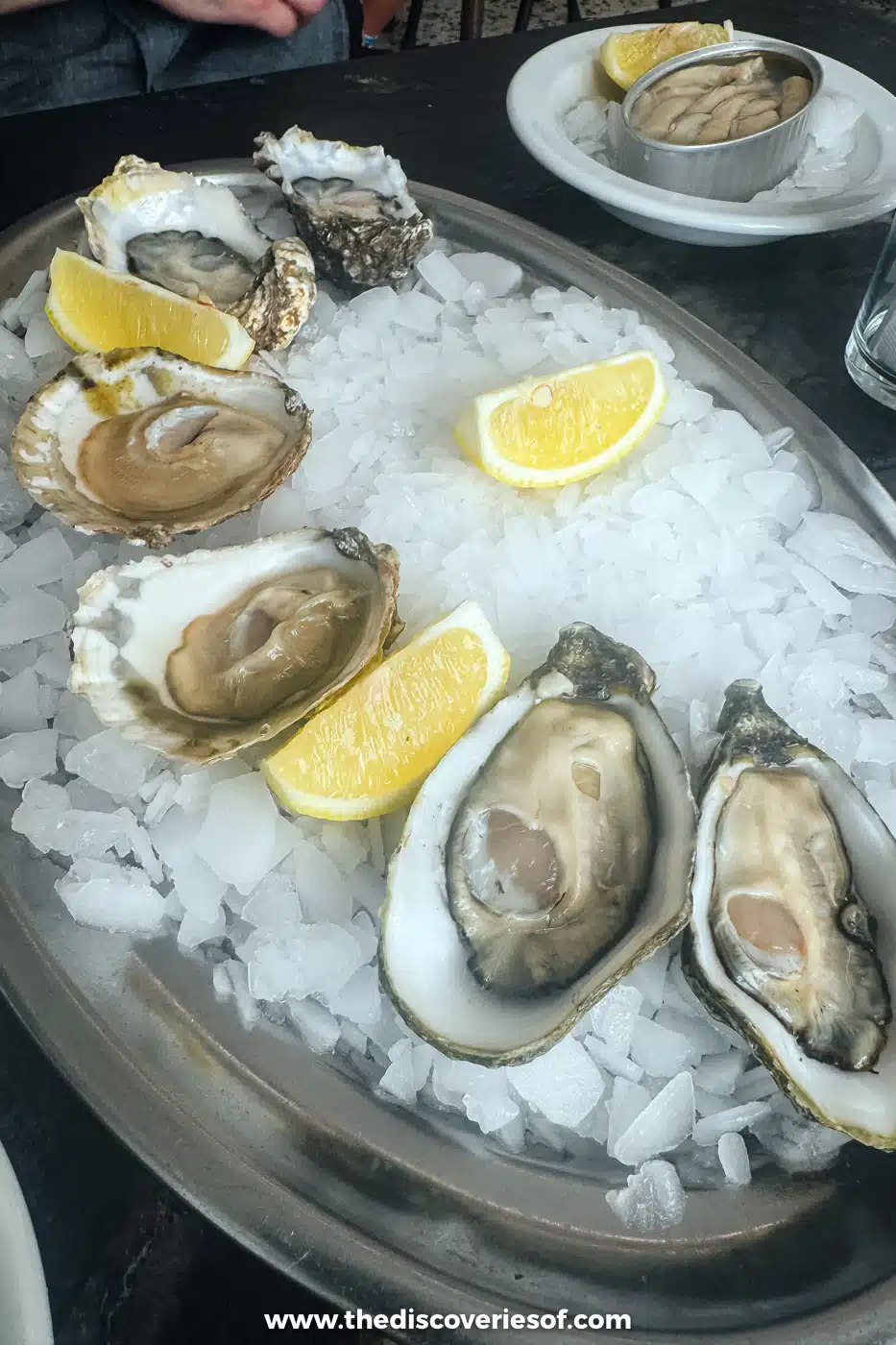
For something more relaxed, walk a few minutes to Ostras Pedrín, the oyster bar where I had lunch straight after my visit. The mojama, oysters and crab were all amazing and there was an extensive wine list with wines to accompany. It was personally one of my favourite meals from the trip. Read my full Ostras Pedrín review.
Getting there
The Oceanogràfic is at the far eastern end of the City of Arts and Sciences, about 3.5 kilometres from the city centre.
Getting There
Metro line 10 stops at Oceanogràfic station, across the road from the entrance, about 15 to 20 minutes from Alacant, Xàtiva or Colón in the centre. EMT bus 95 stops by the Agora. You can also walk it in around 45 minutes through the Turia Gardens, the park in the old riverbed.
Tips for your visit
- Book a morning slot: the shark tunnel and the indoor halls are quietest straight after opening, before tour groups and school trips arrive.
- Check the dolphin show times first: plan the rest of your route around them, and arrive at the dolphinarium early for a seat.
- Pair it with the City of Arts and Sciences: walk the length of the complex first, then finish at the Oceanogràfic for lunch nearby.
- Bring water and sun cream: much of the walking between buildings is outdoors.
For the rest of the complex, see my guide to the City of Arts and Sciences, or find more ideas in my guide to the best things to do in Valencia.
Map
Read next
- A guide to the City of Arts and Sciences
- Ostras Pedrín review
- 23 things to do in Valencia
- 3 days in Valencia: the perfect Valencia itinerary
- A guide to Valencia Cathedral
- My Spain travel guide
Love this? Save and share on Pinterest

Discover the top things to do, insider tips and hidden gems in our Spain Travel Guide.
Read the guides →