
Valencia’s newest art museum fills a restored Baroque palace on Calle del Mar with works by more than 50 contemporary artists and a tunnel of coloured glass you walk straight through, with the remains of the city’s Roman circus underneath. Here’s what to see, what it costs and how to fit it into a morning in the old town.
The Centro de Arte Hortensia Herrero, or CAHH, is a private contemporary art museum in the heart of Valencia’s old town. It opened in late 2023 in the Palau Valeriola, a 17th-century palace that had stood empty for years, and it holds the collection of the Valencian philanthropist Hortensia Herrero: more than 100 works by more than 50 artists, spread over 17 rooms and four floors.
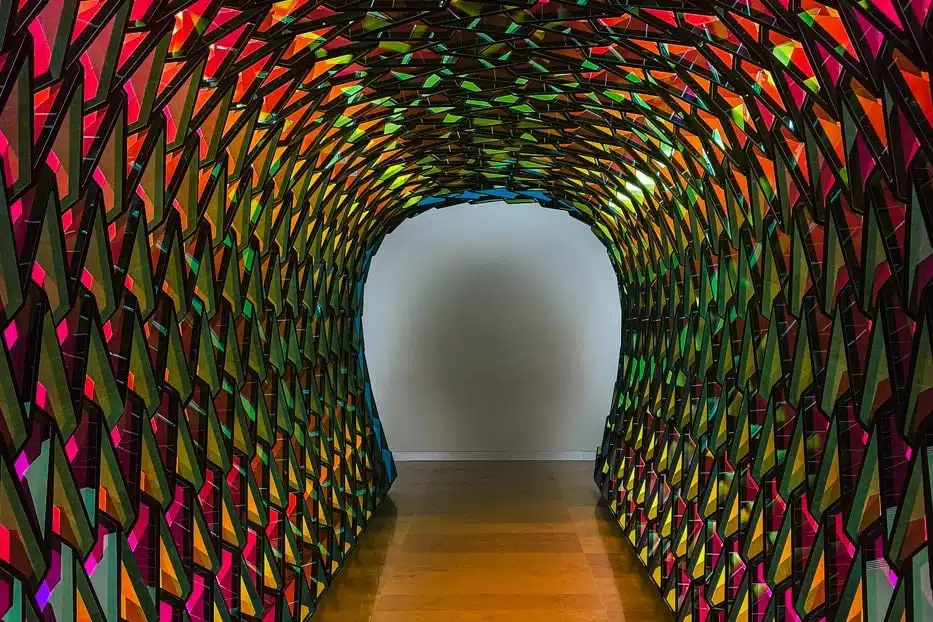
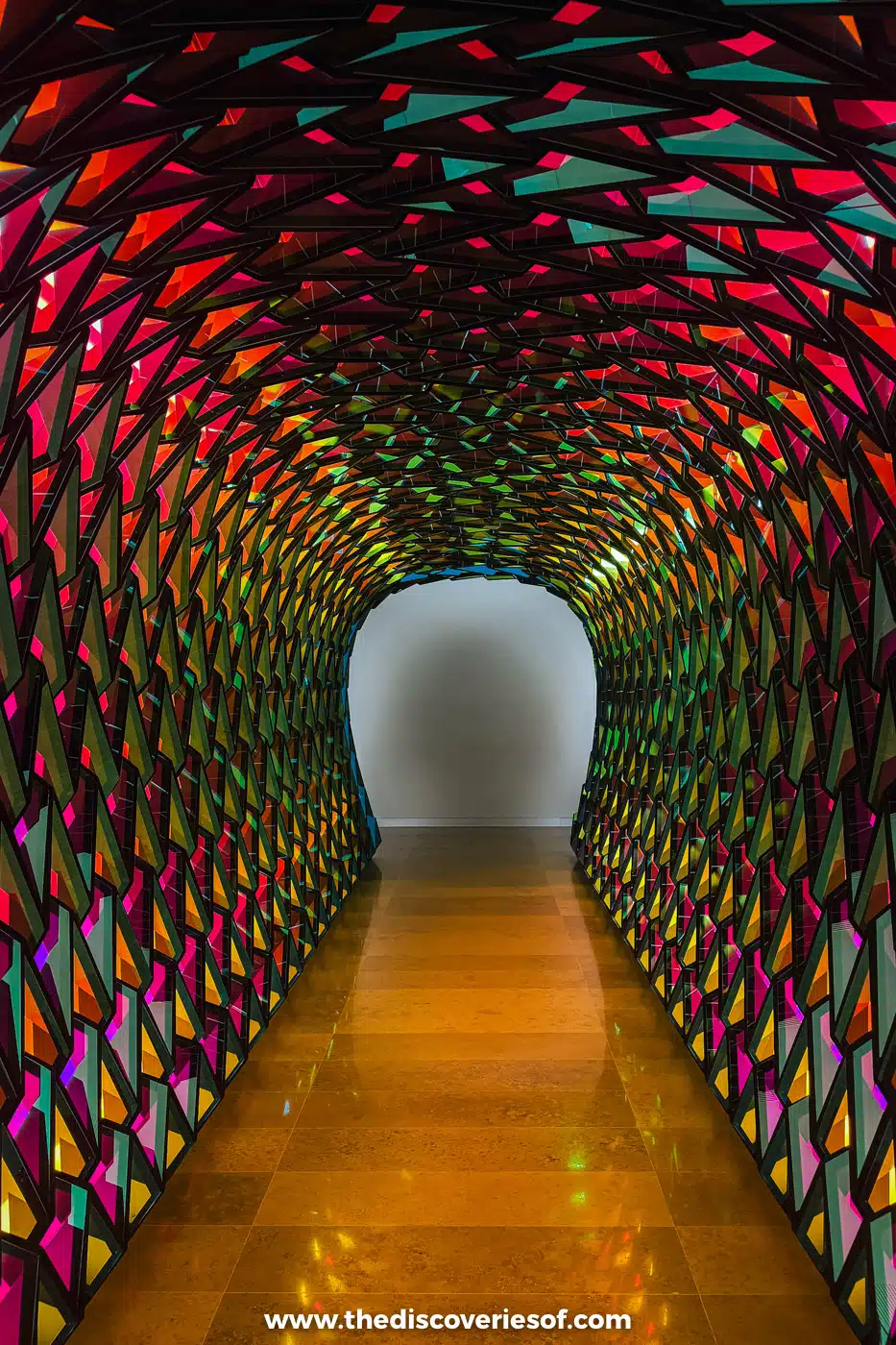
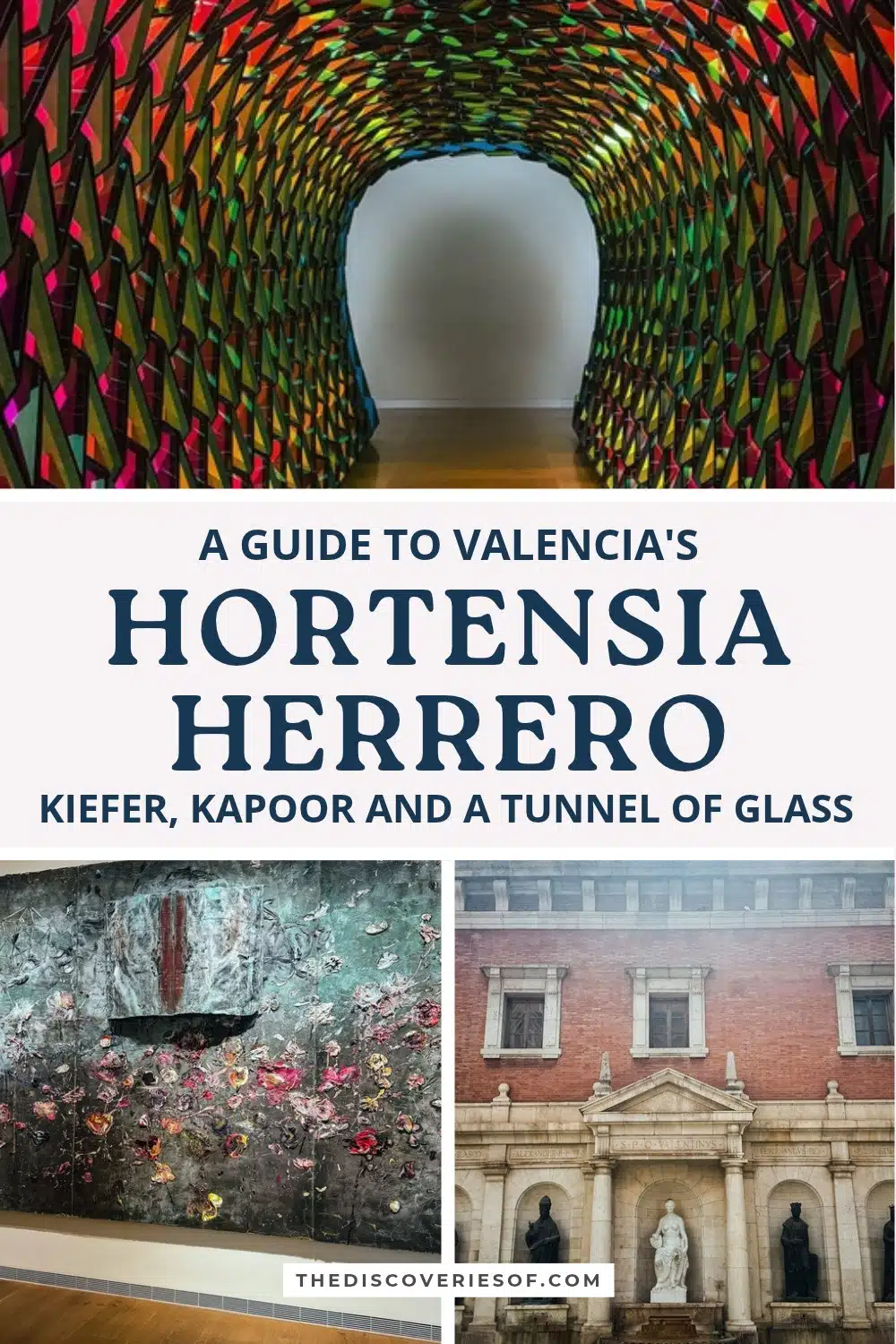
I came from the Mercado Central on my third day in Valencia. From the market, it’s a ten-minute walk to the CAHH, which I visited mid-morning before carrying on to the cathedral. The piece everyone photographs is Olafur Eliasson’s Tunnel for unfolding time, a kaleidoscope of coloured glass that you walk straight through, but the galleries are full of big names: Anselm Kiefer, Anish Kapoor, Jaume Plensa, Tomás Saraceno, Mat Collishaw and the largest display of Manolo Valdés’s work anywhere.
This guide covers the palace and its history, the works to look out for, the Roman remains in the basement, and the tickets and opening hours you need to plan your visit.
The CAHH at a glance
- Where: Calle del Mar 31, in the old town, a few minutes’ walk from Plaza de la Reina and the cathedral.
- Cost: €12, or €8 reduced; free for under-13s and free for everyone on Wednesday afternoons if you book ahead.
- Opening hours: Tuesday to Saturday 10am to 8pm and Sunday 10am to 3pm. Closed on Mondays.
- Time needed: an hour and a half to two hours.
- Don’t miss: the Eliasson tunnel, the courtyard installations and the Roman circus in the basement.
A 17th-century palace with 2,000 years underneath
The Palau Valeriola was built in the 17th century as the home of the Valeriola family, descendants of a medieval Valencian banker. Over the following centuries it had a run of very different lives: it was the offices of the newspaper Las Provincias, then a pub and then a nightclub, Las Ánimas, before it was abandoned.
Hortensia Herrero bought the building in 2015, and the restoration took more than five years. As the builders dug down, they kept finding earlier layers of the city: part of the Roman circus of Valentia, a medieval kiln, an Islamic fountain and an alley from the old Jewish quarter. Rather than cover them over, the architects, ERRE Arquitectura, built the museum around them, so the palace’s coffered ceilings and Valencian tiles sit above remains that go back around 2,000 years.
What to see at the Centro de Arte Hortensia Herrero
Olafur Eliasson’s Tunnel for unfolding time
Eliasson made the tunnel for this building, lining a corridor with more than 1,000 pieces of coloured glass. Walk through it one way and then back the other, and the colours shift, because the glass changes colour depending on the direction you’re walking. It’s the most photographed spot in the museum.
The works made for the palace
Six pieces were made especially for the CAHH, and you meet two of them as soon as you walk in. In the glass-roofed courtyard where you start and finish your visit, Tomás Saraceno’s Corona Australis hangs like an iridescent cloud above the staircase, while Jaume Plensa’s Tempesta wraps letters from different alphabets around one of the doorways.
Further in, Sean Scully has filled the windows of the palace’s old chapel with stained glass, and in the basement Mat Collishaw’s screens show a galloping horse, a nod to the races once held in the Roman circus on this spot.
The collection galleries
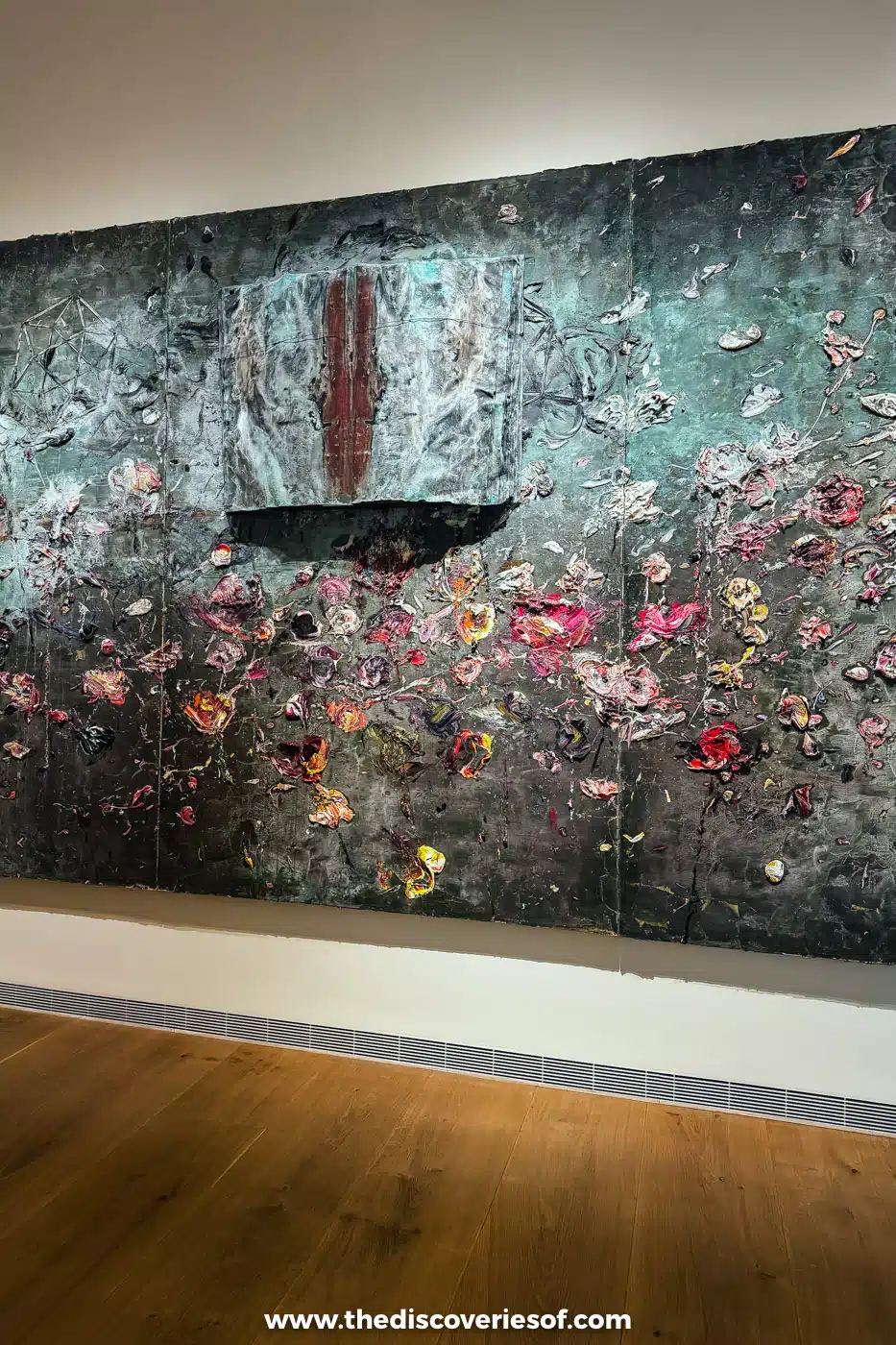
The rest of the palace holds Hortensia Herrero’s collection, and the scale of some pieces is startling. Anselm Kiefer’s works have included a landscape coated in poured lead that weighs around half a tonne, the heaviest piece in the museum. You’ll also find Anish Kapoor’s mirrors, David Hockney’s landscapes on a wall of nine screens and the largest display anywhere of the Valencian artist Manolo Valdés, including his Reina Mariana. Work by Spanish artists, among them Miquel Barceló, Julio González and Joan Miró, rotates through the ground floor.
At the end of October 2026 the centre rehung around three quarters of its rooms, adding more than 40 works by 19 artists not shown here before. The new arrivals include a Yayoi Kusama pumpkin and Maurizio Cattelan’s gold plate pierced by bullets in the upper room of the palace, Antony Gormley’s steel figure HUMAN, a large Jean Dubuffet, a room of its own for Miquel Barceló, Mat Collishaw’s immersive Sordid Earth and a new interactive flower installation by teamLab. Some of the works I saw may since have moved, but the pieces made for the building stay put.
The Roman circus in the basement
Don’t skip the lower floor. During the restoration, the builders found the remains of the city’s Roman circus, the track where chariots once raced, and they’re now on show beneath the palace, alongside the other finds from the dig and a landscaped courtyard.
Tickets
General entry is €12, or €8 for over-65s and pensioners, people with a disability of 33% or more, 13 to 25-year-olds and large families. Under-13s go free, and so does everyone on Wednesday afternoons, as long as you reserve a ticket in advance. Groups of 10 or more pay €10 each, and the Valencia Tourist Card takes 20% off. Book a time slot online at tickets.cahh.es.
Opening hours
- Tuesday to Saturday: 10am to 8pm
- Sunday: 10am to 3pm
- Monday: closed
- Christmas and New Year: closed on 25 December, 1 January and 6 January, and open until 2pm on 24 December, 31 December and 5 January.
Tips for your visit
- Remember the Monday closure: the CAHH is closed on Mondays, and the Mercado Central next door closes on Sundays, so plan your old town day around both.
- Book ahead: entry is by time slot, and the free Wednesday afternoon tickets have to be reserved, so book online rather than turning up.
- Take a guided tour: 90-minute tours in English cost €15, or €12 reduced. Book by emailing [email protected] at least 24 hours ahead.
- Look up the combined ticket: the CAHH sells a combined ticket with the churches of Santos Juanes and San Nicolás, both close by in the old town.
- Combine it with the old town: the Mercado Central is ten minutes’ walk one way and the cathedral a few minutes the other, so it slots neatly into a morning between the two. There’s a café and a shop inside if you need a break.
For more of the old town, and the rest of the city, see my guide to the best things to do in Valencia, or follow my 3 days in Valencia itinerary.
Map
Read next
- 23 things to do in Valencia
- 3 days in Valencia: the perfect Valencia itinerary
- A guide to Valencia Cathedral
- A guide to the City of Arts and Sciences
- Horchata in Valencia: Horchatería Daniel
- My Spain travel guide
Love this? Save and share on Pinterest
Discover the top things to do, insider tips and hidden gems in our Spain Travel Guide.
Read the guides →