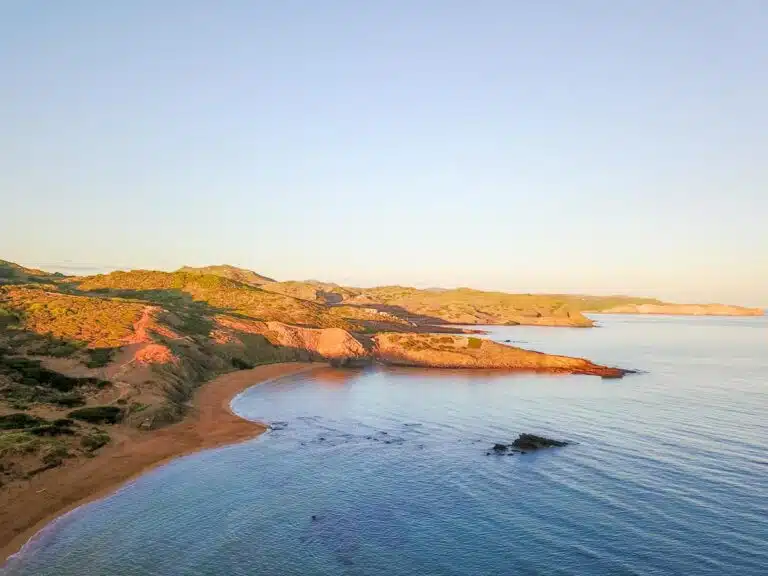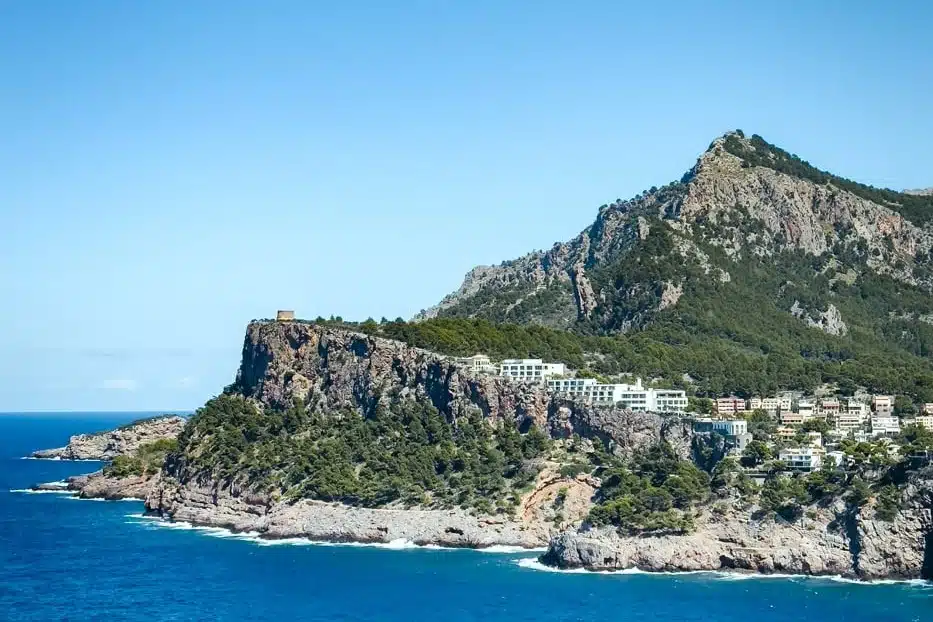

A vineyard to come home to, a wooden tram rattling down to the sea, a lighthouse on the cliffs and a mountain road that crosses the island’s highest peaks: this is Mallorca beyond the beach clubs.
Most people picture Mallorca as beaches and Palma, and with only a few days it’s easy to spend them all on a sunlounger. But the island’s north-west is a different world: the Serra de Tramuntana, a UNESCO-listed wall of limestone peaks, terraced olive groves and stone villages, with a coast of cliffs and coves below it.
I spent four nights at Rondaia, a vineyard stay in the foothills near Esporles, and used it as a base to explore the mountains, the Sóller valley and the coast. This itinerary is built around that trip, with a car and a single base, so you only unpack once.
Over four days you’ll see Palma’s cathedral, Chopin’s monastery in Valldemossa and the poet’s village of Deià, taste wine in Binissalem, drive the mountain road past the reservoirs, ride the tram to Port de Sóller and walk out to the Cap Gros lighthouse.
4 days in Mallorca at a glance
- Day 1: Palma’s cathedral and old town, then the vineyards around Esporles.
- Day 2: Valldemossa, Deià and sunset in Fornalutx.
- Day 3: A wine tasting in Binissalem, then the mountain road over the Tramuntana.
- Day 4: The tram to Port de Sóller, the Cap Gros lighthouse walk and Sóller town.
- Base: one stay in the foothills for all four nights; I stayed at Rondaia, near Esporles, 25 minutes from the airport.
- Getting around: a hire car. Days 2 and 3 are not realistic by bus.
Day 1: Palma and the vineyards around Esporles
Palma is where you’ll land, and it’s worth a few hours before you head for the hills. I only spent a short time in the city, and if your time is short too, give it a morning: the cathedral, the lanes around it and lunch, then out to the countryside in the afternoon.
See La Seu, Palma’s cathedral by the sea
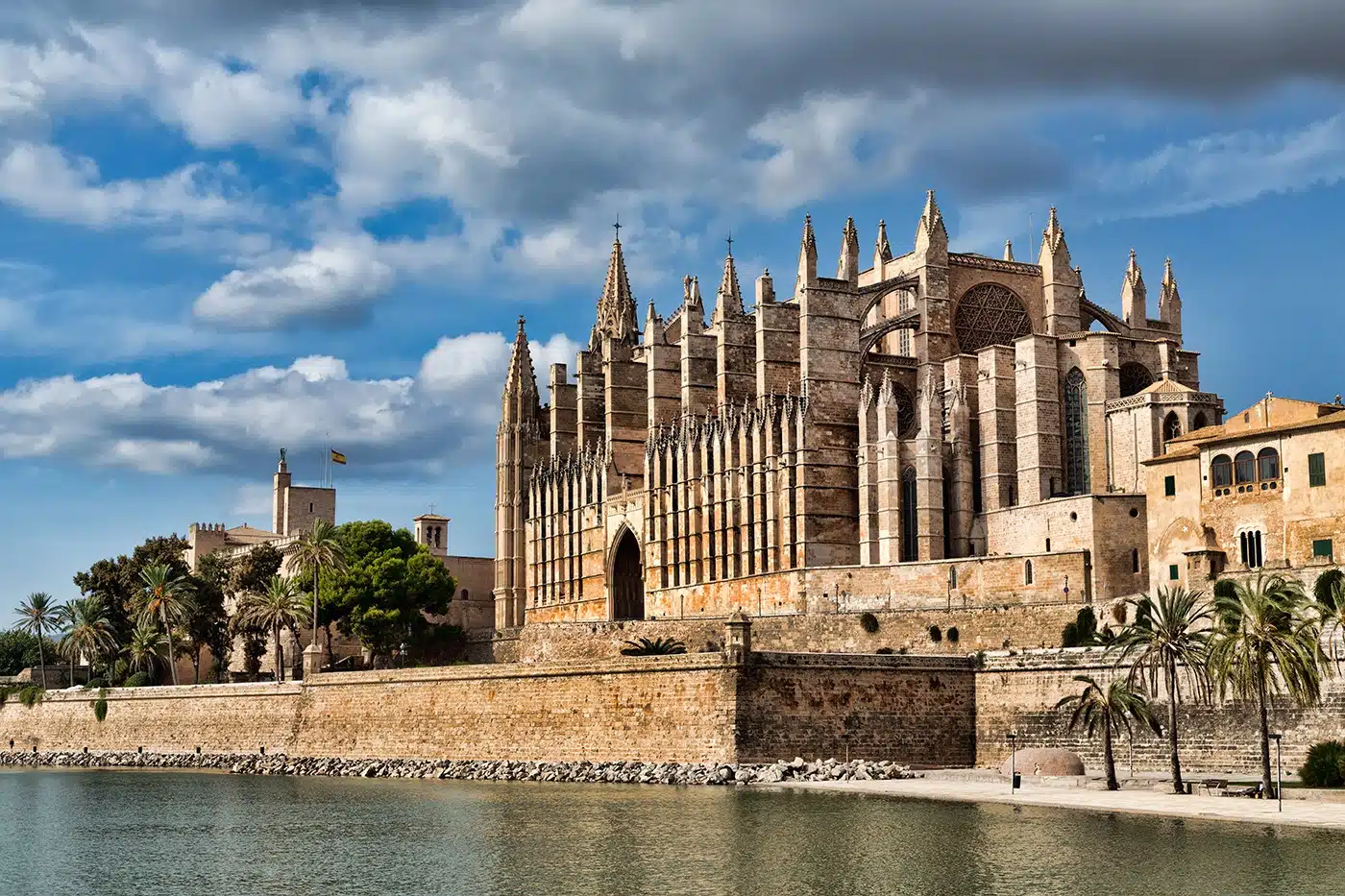
La Seu rises straight up from the old sea walls, a Gothic cathedral begun after Jaume I took the island in 1229 and not finished until the 17th century. Inside, the nave is one of the tallest in Europe, and the great rose window above the altar is among the largest in the Gothic world.
Look out for two later additions. Antoni Gaudí spent ten years reworking the interior from 1904, and his wrought-iron canopy hangs over the altar. In the Chapel of Sant Pere, the Mallorcan artist Miquel Barceló covered the walls in a rippling ceramic of fish, fruit and loaves in 2007.
Tickets
Entry is about €10. The cathedral is open to visitors Monday to Saturday, with shorter hours on Saturdays and in winter, and only for Mass on Sundays. Guided tours of the rooftop terraces run from spring to autumn.
Wander the old town lanes behind it
Next door, the Almudaina Palace began as a Moorish fortress and is still the King of Spain’s official residence on the island. Behind them both, the old town is a tangle of honey-coloured lanes, hidden courtyards and squares. Walk up to Plaça Major, then on to the Mercat de l’Olivar, the city’s main food market, for a plate of jamón or a glass of wine at one of its bars before you leave.
Watch the sun go down over the vines near Esporles
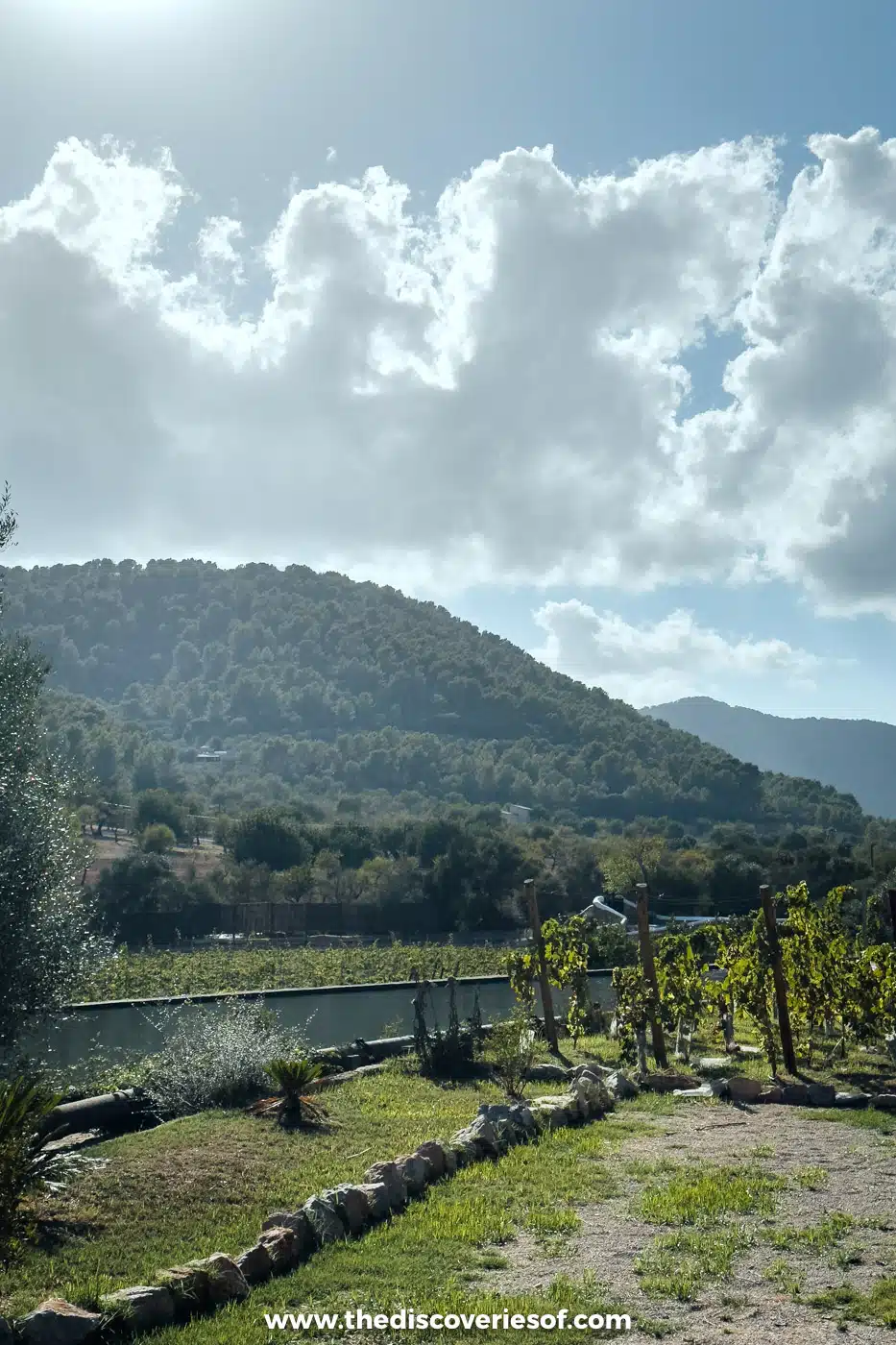
From Palma, it’s about 20 minutes inland to Esporles, a village in a green valley at the foot of the Tramuntana. Rondaia sits in the Sant Pere valley just outside it, an old estate where organic vines now grow where the orange groves once stood.
I arrived in the late afternoon, in time for an evening among the vines with the wooded hills behind them. It’s the kind of place where it’s tempting to stay put, with a renovated 1960s pool, an honesty bar and the estate’s own wine.
Getting There
Palma airport to Esporles is about 25 minutes by car. Pick up your hire car at the airport; you’ll need it for the whole trip.
Suggested stay
I stayed at Rondaia for all four nights, and it’s a lovely base for this route: eight suites and villas, each with a kitchenette and its own terrace, among the vines. I’d give it four out of five. It needed a wider selection of food and drink to hand given the remote location, as there’s no restaurant on site, so stock up in Palma or Esporles on the way in. Read my full Rondaia review for more.
If you’d rather stay in a town, Sóller puts you closer to the tram and the coast, with restaurants on the doorstep.
Day 2: Valldemossa, Deià and sunset in Fornalutx
Day two follows Mallorca’s north-west coast along the Ma-10, from the monastery town of Valldemossa to the artists’ village of Deià and on to Sóller, finishing with sunset in the mountains.
Visit the monastery in Valldemossa
Valldemossa is only 15 minutes from Esporles, which is lucky, because it’s the busiest village on the island and the car parks fill from about 10.30am. Get there first thing.
Its Real Cartuja, the royal Carthusian monastery, is where the composer Frédéric Chopin and the writer George Sand spent the wet winter of 1838 to 1839. Sand wrote about it, not very kindly, in A Winter in Majorca, and Chopin worked on his preludes here. You can see the cells, the monks’ old pharmacy with its painted jars and the library, and short piano recitals of his music are played through the morning.
Afterwards, try a coca de patata, the village’s soft, sugar-dusted potato bun, from one of the bakeries on the main street.
Stop at Son Marroig for the view of Sa Foradada
Between Valldemossa and Deià, Son Marroig was the home of the Austrian Archduke Ludwig Salvator, who fell for this coast in the late 19th century and bought up much of it to protect it. The house is now a small museum, and from its white marble rotunda on the clifftop you look down on Sa Foradada, a rocky headland with a hole about 18 metres across punched right through it.
A path from the estate leads down to the point in 45 minutes to an hour, with a small seasonal restaurant at the bottom. It’s a steep walk back up, so save it for a longer stay if you want to fit everything into today.
Climb to Robert Graves’s grave in Deià
Deià is a village of golden stone stacked on a hill below the mountains, long loved by writers, painters and musicians. The poet Robert Graves lived here from 1929 until his death in 1985, and he’s buried in the little churchyard at the top of the village, with a view straight down the valley to the sea.
His house, Ca n’Alluny, just outside the village on the road to Sóller, is now a museum, open five days a week all year, with his study and printing press as he left them and the garden restored to how it looked in his day.
Below the village, a lane and a path wind down to Cala Deià, a rocky cove with clear water and two restaurants. Ca’s Patró March, on the rocks above the water, is the famous one, so book well ahead in summer.
Catch the evening light in Fornalutx
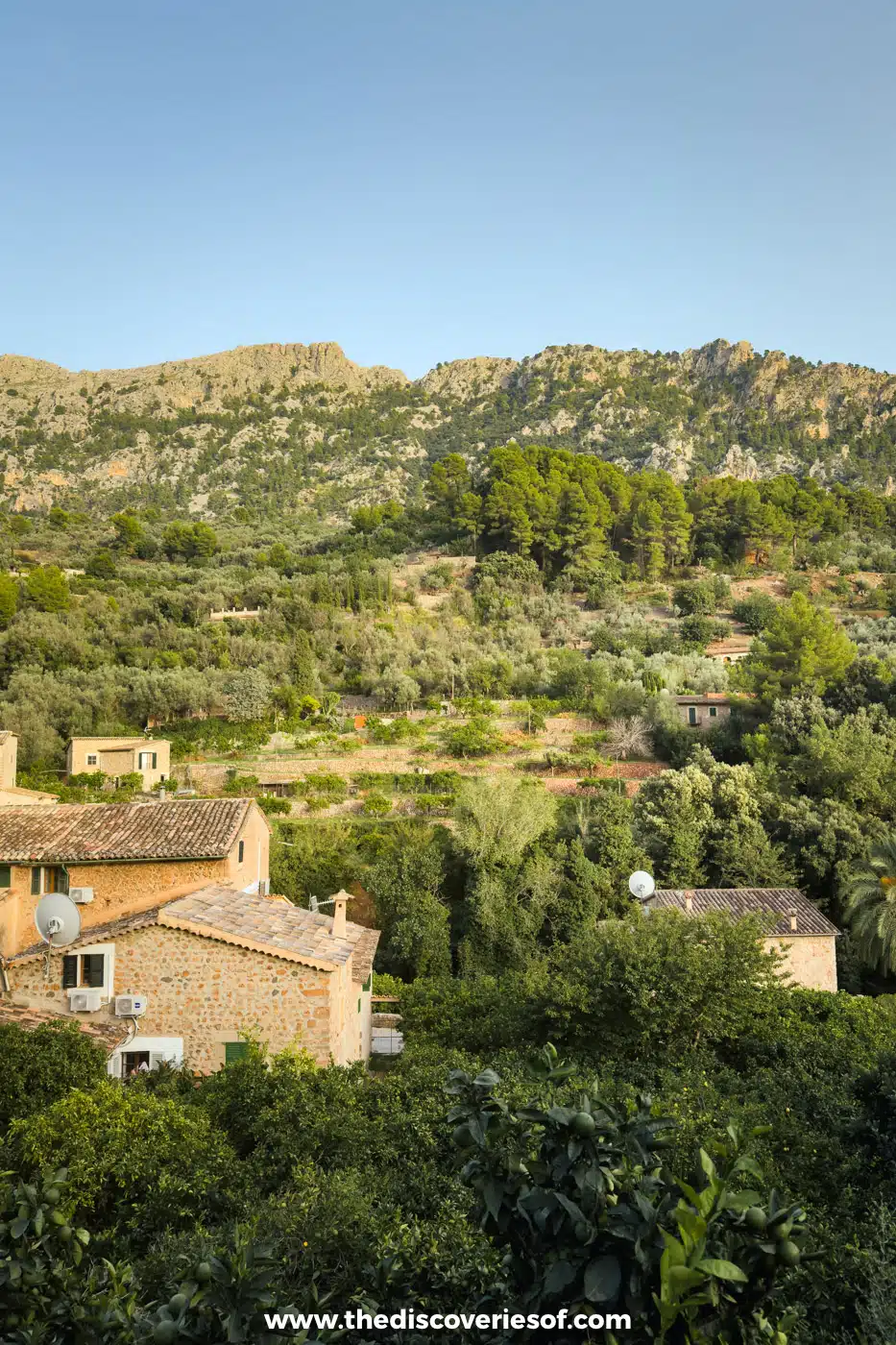
From Deià, follow the road on past Sóller and turn up the valley to Fornalutx, a village of steep stone steps, green shutters and orange terraces under the peaks. It has been one of Los Pueblos Más Bonitos de España, the club of Spain’s prettiest villages, since 2017.
I came up here in the evening, when the low sun lights up the stone and the mountains behind turn gold, and it’s the best time to come, once most of the day trippers have gone. Leave the car on the edge of the village, as the lanes are too narrow to drive, and wander up through the steps to the church.
Getting There
From Fornalutx back to Esporles is about 40 minutes through the Sóller tunnel on the Ma-11, which has been free to drive since 2017.
Day 3: Wine, villages and the mountain road
Day three is the loop I drove through the heart of Mallorca: wine country in the morning, a quiet village after lunch, then up and over the highest stretch of the Tramuntana and down into the Sóller valley as the light softens.
Taste Manto Negro at José L. Ferrer in Binissalem
Binissalem, about 25 minutes north-east of Palma on the Ma-13, is the heart of one of Mallorca’s two wine regions. The local grapes are Manto Negro for the reds and Moll, or Prensal Blanc, for the whites.
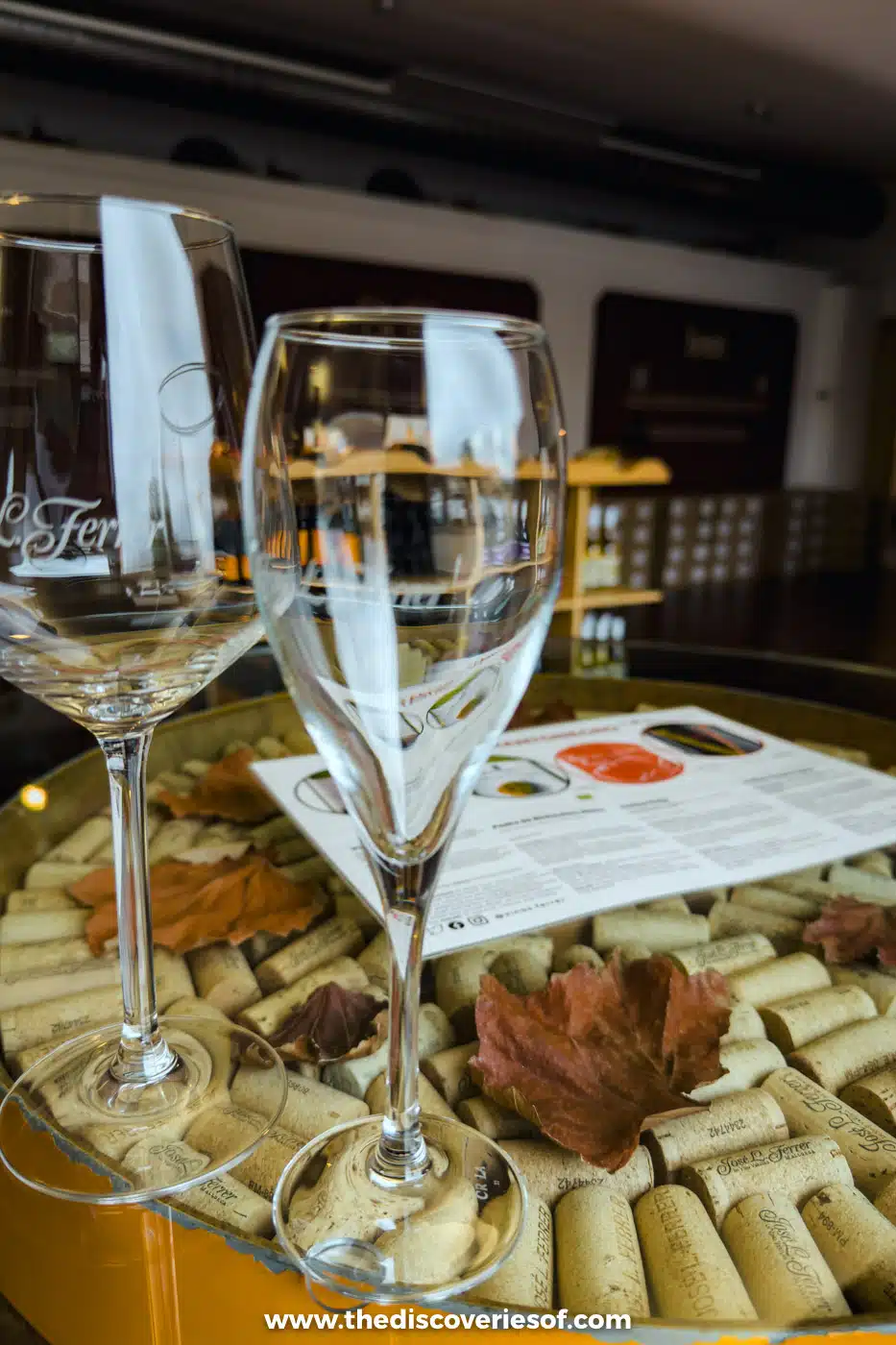
I stopped for a tasting at José L. Ferrer, the town’s best-known winery, founded in 1931, where the tasting tables are filled with old corks under the glass.
Tickets
The Visita Moll, three wines with Mallorcan snacks in about 50 minutes, costs around €21.50; a Wine and Chocolate pairing with four wines costs around €30. The winery opens 10am to 6pm Monday to Saturday and 10am to 4pm on Sunday. Book ahead in summer.
Climb up through Selva and Caimari
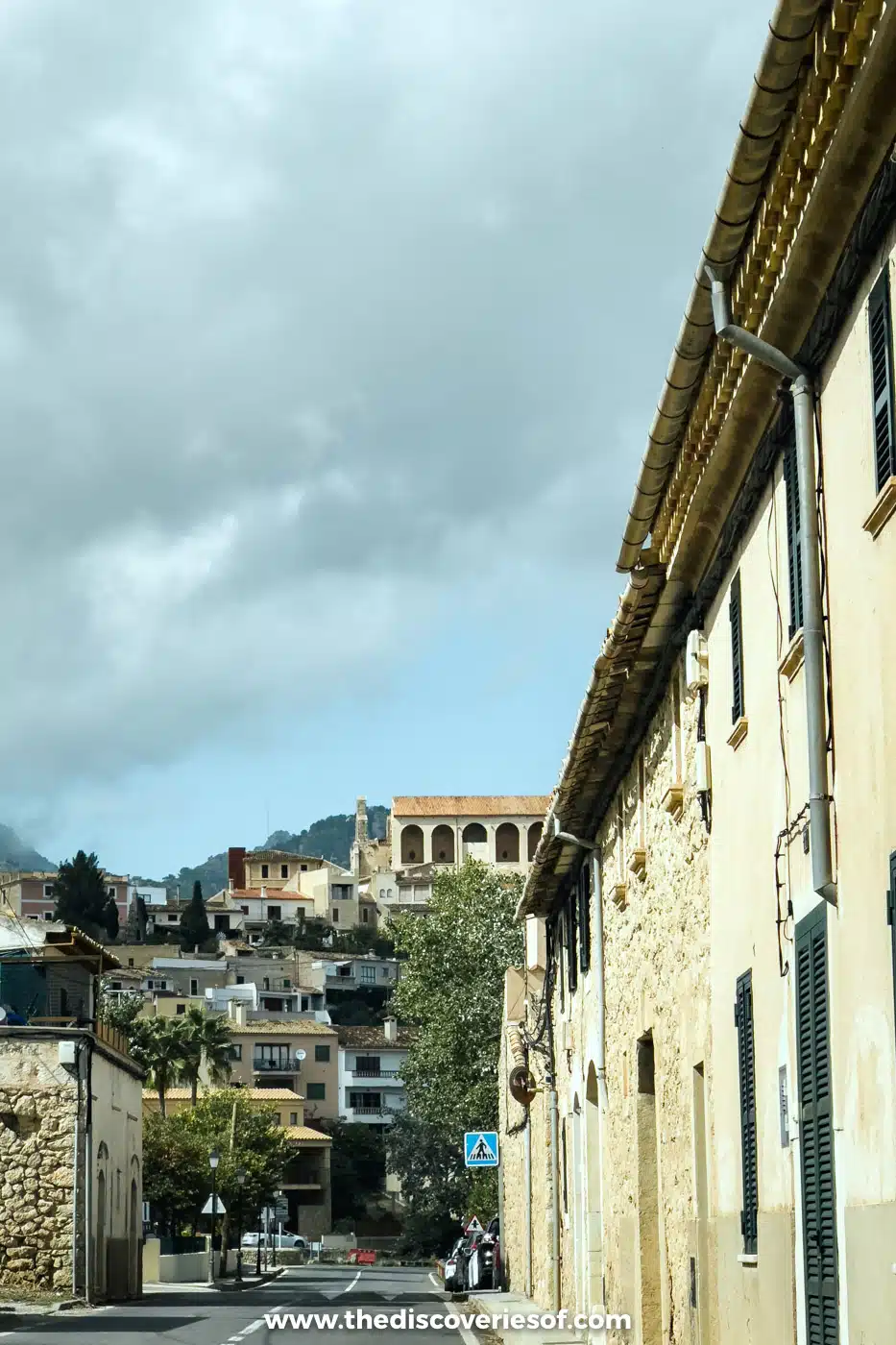
From Binissalem, I carried on to Selva, a hilltop village at the foot of the mountains, its stone houses climbing a steep street towards the church of Sant Llorenç above the plain. It’s a good spot to stretch your legs before the mountains.
Just beyond, Caimari sits among olive terraces, and some of the island’s best olive oil is pressed here. From the village, the Ma-2130 winds up through the trees in tight bends to Lluc.
See Mallorca’s patron saint at Lluc
The Santuari de Lluc sits in a high, wooded valley where the Caimari road meets the Ma-10. It has drawn pilgrims for centuries to see the Mare de Déu de Lluc, a small dark figure of the Virgin, just 61cm tall, known as La Moreneta and venerated as the patron saint of Mallorca.
Lluc is also home to the Blauets, one of Europe’s oldest boys’ choirs, named after the blue cassocks they wear. There’s a museum and a botanic garden, and a café if you need a break before the mountains.
Pull over at the Gorg Blau reservoir
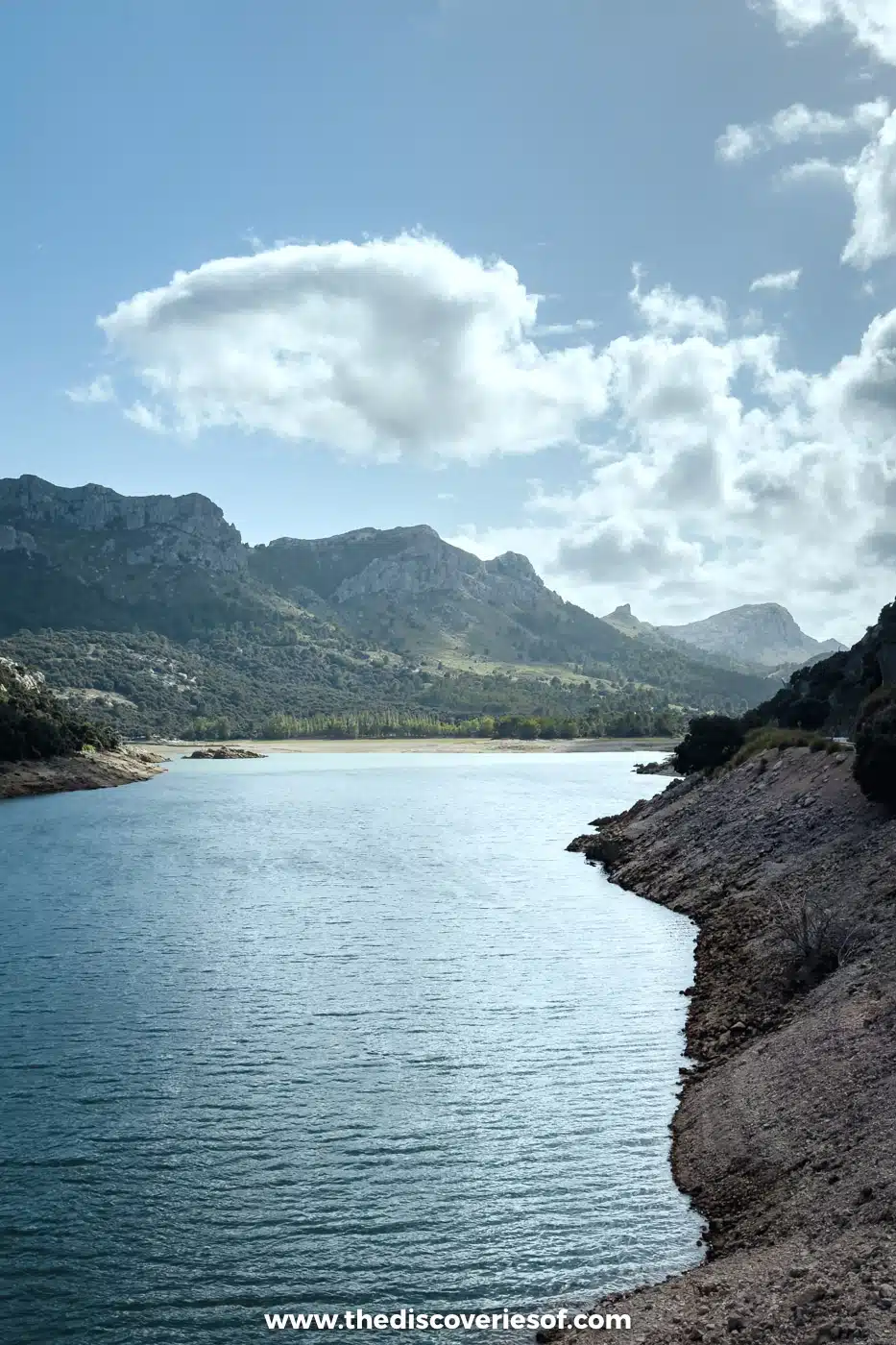
Turn west at Lluc and the road climbs into a landscape of bare grey rock. The Gorg Blau, dammed in 1971, is a long, narrow reservoir in a steep valley, and with the Cúber reservoir a few kilometres on, it’s one of only two on the island.
I pulled over here in the late afternoon: still blue water, pale scree slopes and the peaks rising straight out of it. The road then skirts the Puig Major, Mallorca’s highest mountain at more than 1,400 metres, and runs through a tunnel at its highest point, about 850 metres up.
Top Tip
About 10km beyond Lluc, the Ma-2141 drops 800 metres in 12km of hairpins to the cove of Sa Calobra. It’s one of the great drives in Europe but jams badly in summer; if you want to see it, go early, or take the boat from Port de Sóller instead (see below).
Drop down into the Sóller valley
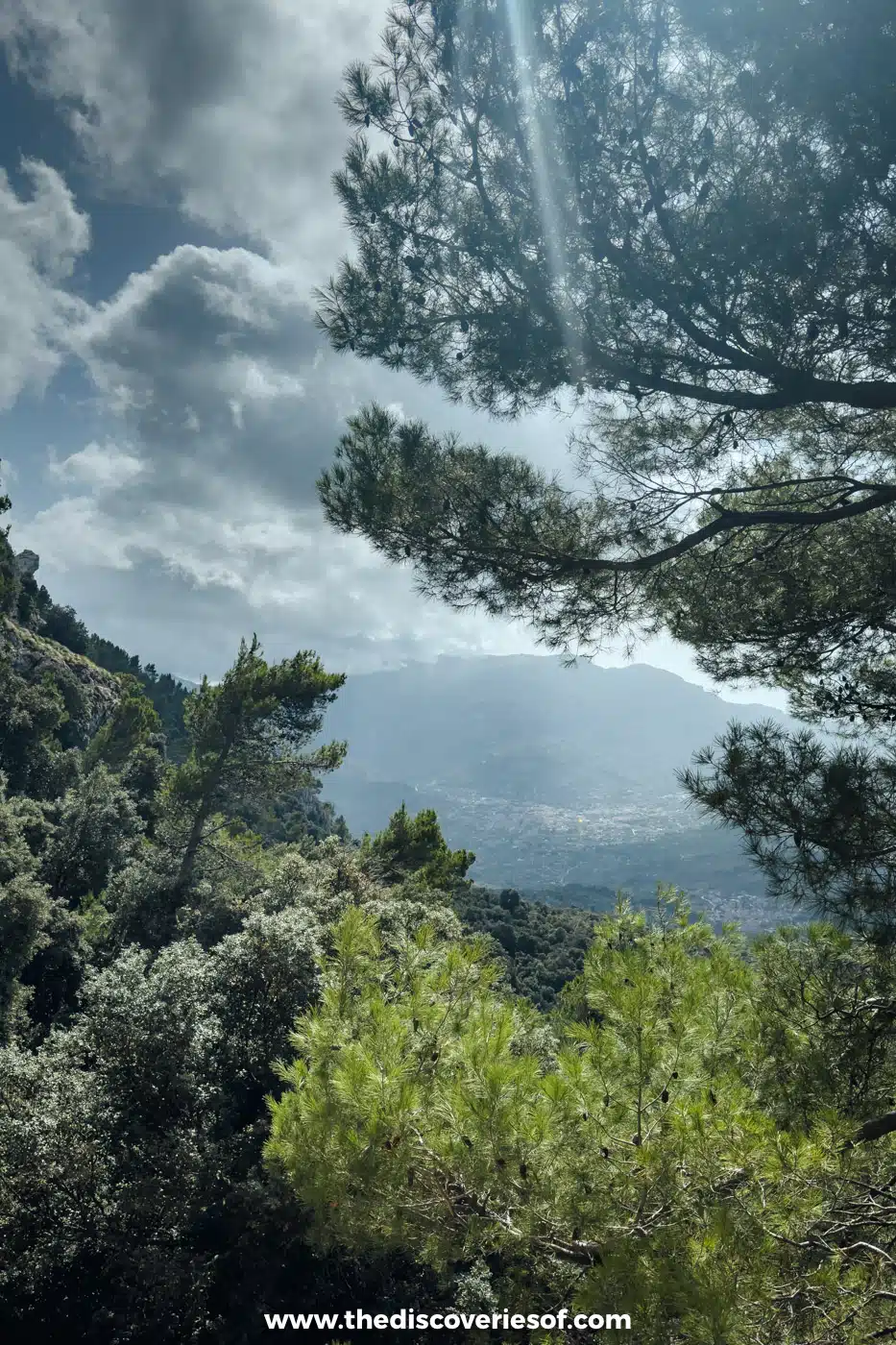
A few minutes below the tunnel, the pines part and the whole bowl of the Sóller valley appears below you, with the town spread across it and the sea in the distance. I stopped at a pull-off here on the way down, just as the late sun broke through the cloud over the valley.
From the valley floor, it’s 30 minutes back to the foothills through the Sóller tunnel. For every stop along the full length of the mountain road, from Pollença to Andratx, see my guide to the Serra de Tramuntana drive.
Day 4: Sóller, Port de Sóller and the Cap Gros lighthouse
Save Sóller for the last day. This town of orange groves and modernist mansions sits in a bowl of mountains three kilometres from the sea, and its wooden tram, a lighthouse walk and the port make an easy, unhurried day to finish on.
Ride the wooden tram down to the sea
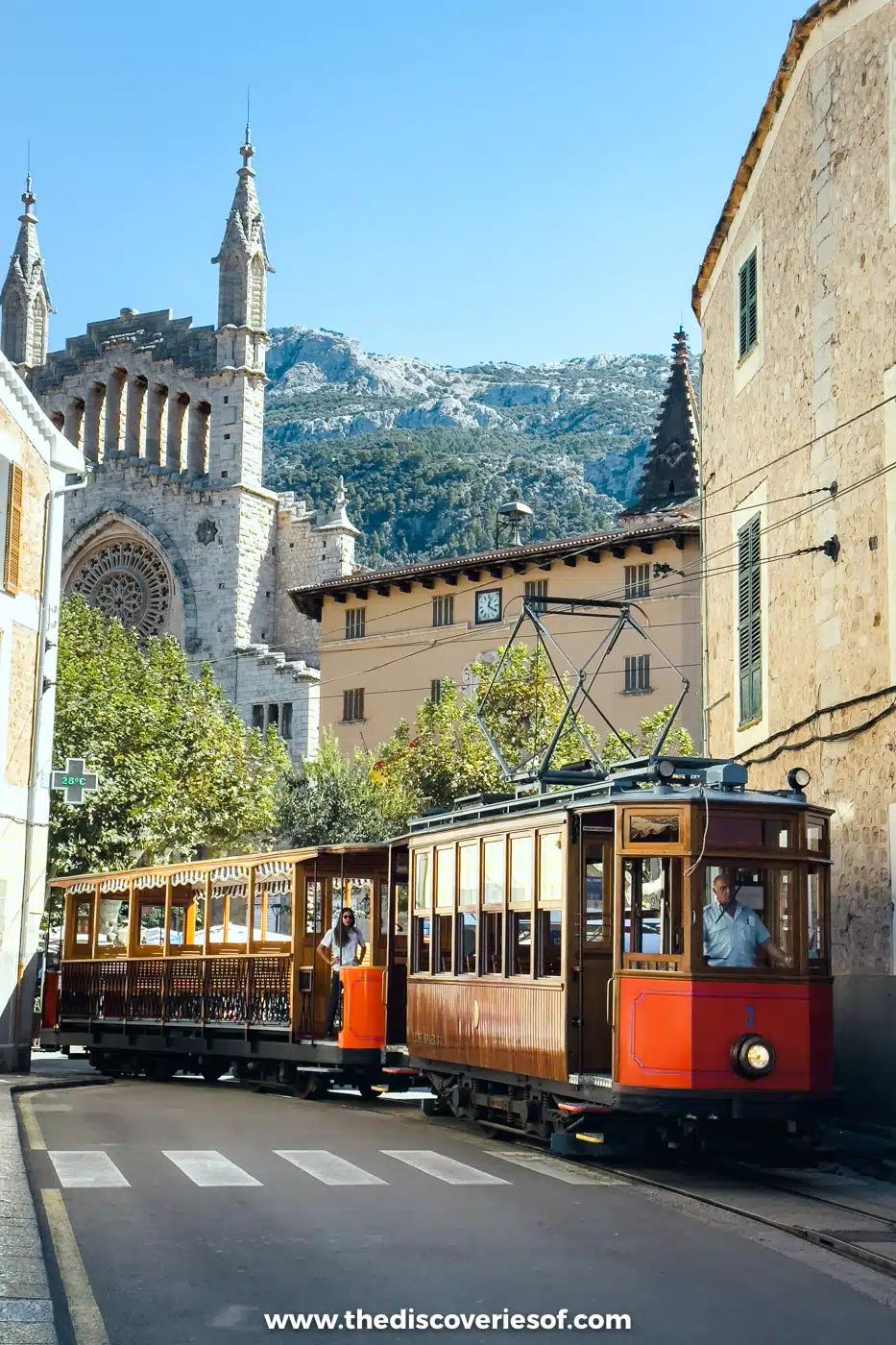
Park on the edge of town and ride the orange-and-wood tram, which has run the five kilometres from the town square to the port since 1913. It squeezes past the church, trundles out between the orange groves and runs along the waterfront for the last stretch. I rode the tram while I was in Sóller, and on a warm day it’s worth waiting for a seat in one of the open carriages.
Tickets
The ride takes about 20 minutes and costs €10 each way, paid on board. Trams leave the town on the hour from 8am to 7pm and come back from the port at half past. From 23 November to 22 December 2026 a replacement bus runs while the tram is maintained.
Walk out to the Cap Gros lighthouse and along the cliffs
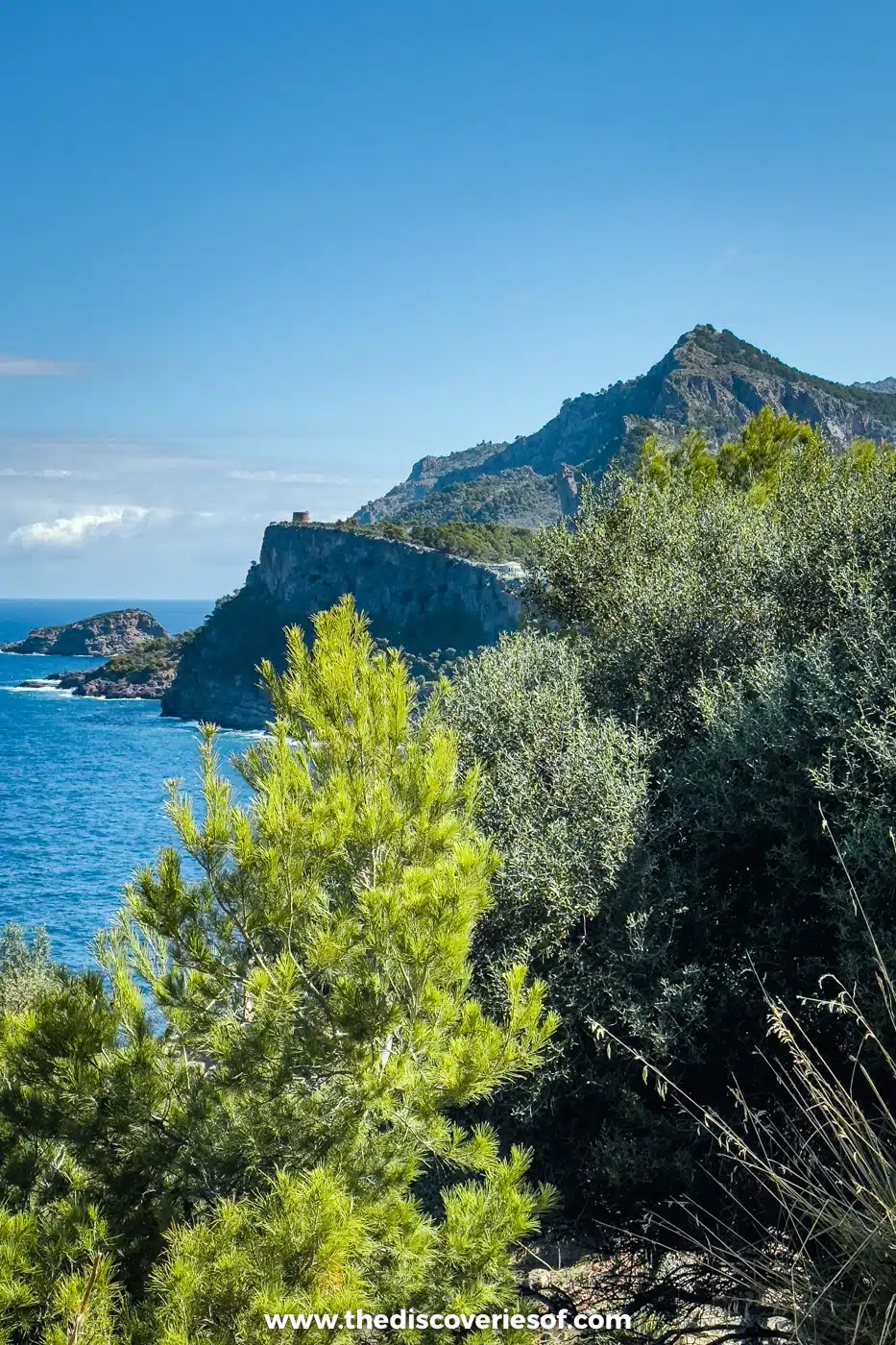
From the western side of the bay, a winding lane, the Camí del Far, climbs to the Cap Gros lighthouse, which has guided boats into the harbour since 1859 and still works. The views back over the round bay and out along the cliffs are worth the climb on their own.
I carried on past the lighthouse and the Refugi de Muleta, a walkers’ refuge where beds and meals are for guests who book ahead, and along the GR221 coast path for a stretch. The path runs through pines and wild olives above deep blue water, with jagged limestone outcrops along the way.
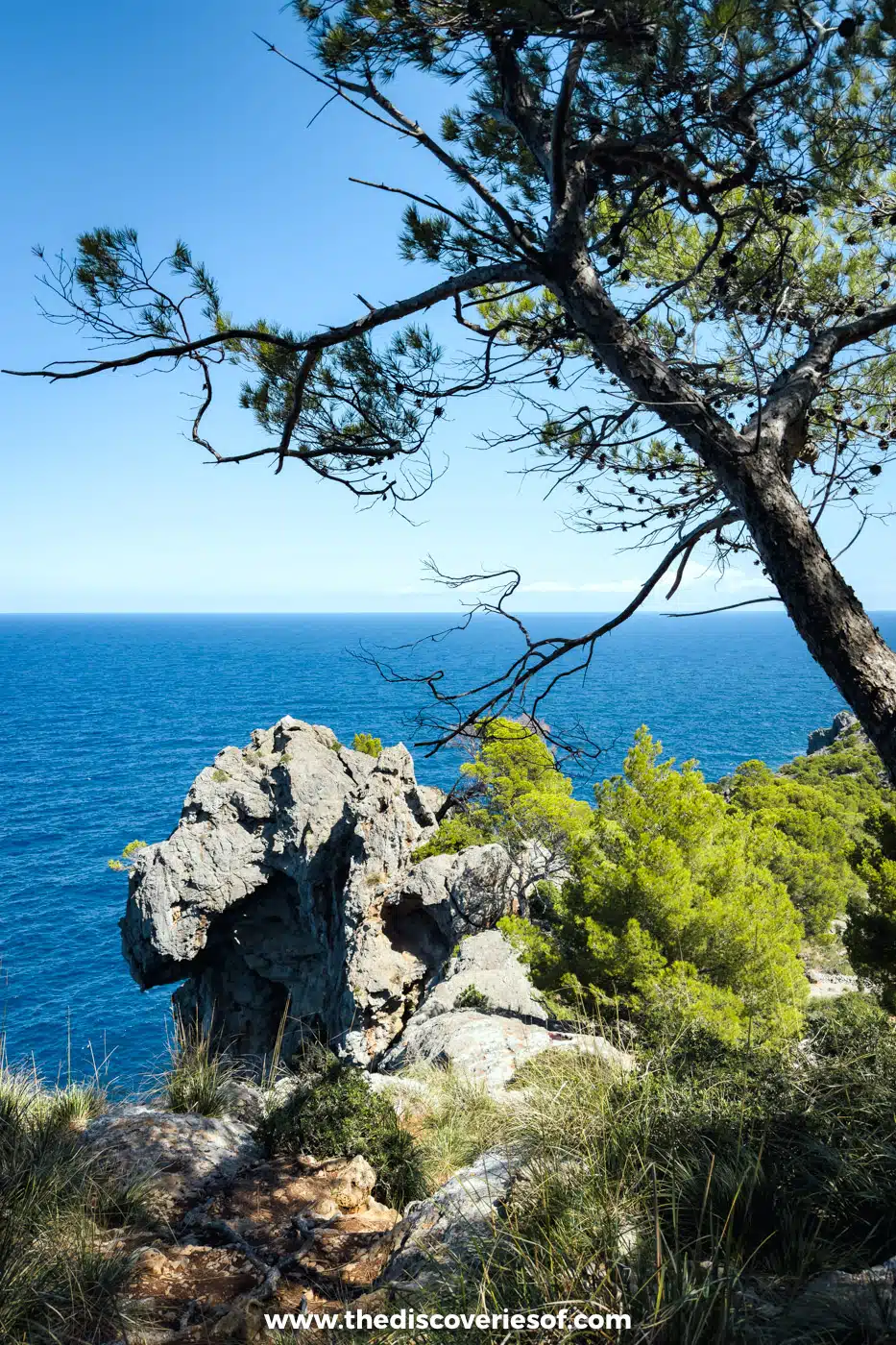
Allow about two hours there and back from the port, with time to stop. For a longer day, a loop of about 12km carries on past the old Muleta farms and back via the hamlet of Bens d’Avall. The route and timings are in my guide to the Port de Sóller lighthouse walk. Take plenty of water, as there’s little shade once you leave the pines.
Wander the marina at Port de Sóller
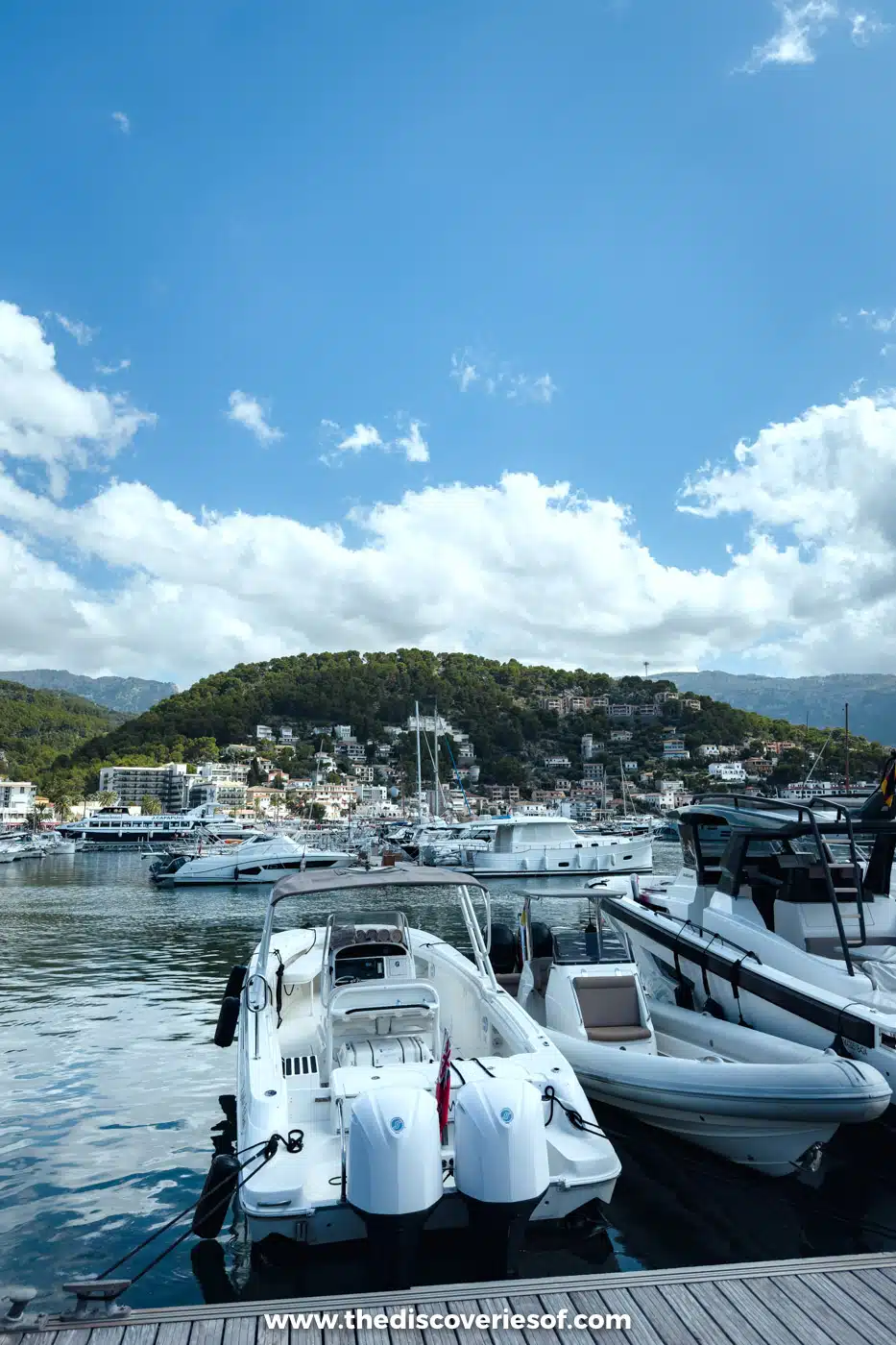
Port de Sóller, one of Mallorca’s prettiest harbours, curls around an almost perfectly round bay with a narrow mouth to the open sea, so the water inside is usually calm. I wandered along the marina, where day boats and yachts line the pontoons below the green hillside. The promenade runs right round the bay, past the fishing boats and the seafood restaurants, and Platja d’en Repic, at the southern end, is the best place for a swim.
Look up at Sant Bartomeu and taste the valley’s oranges
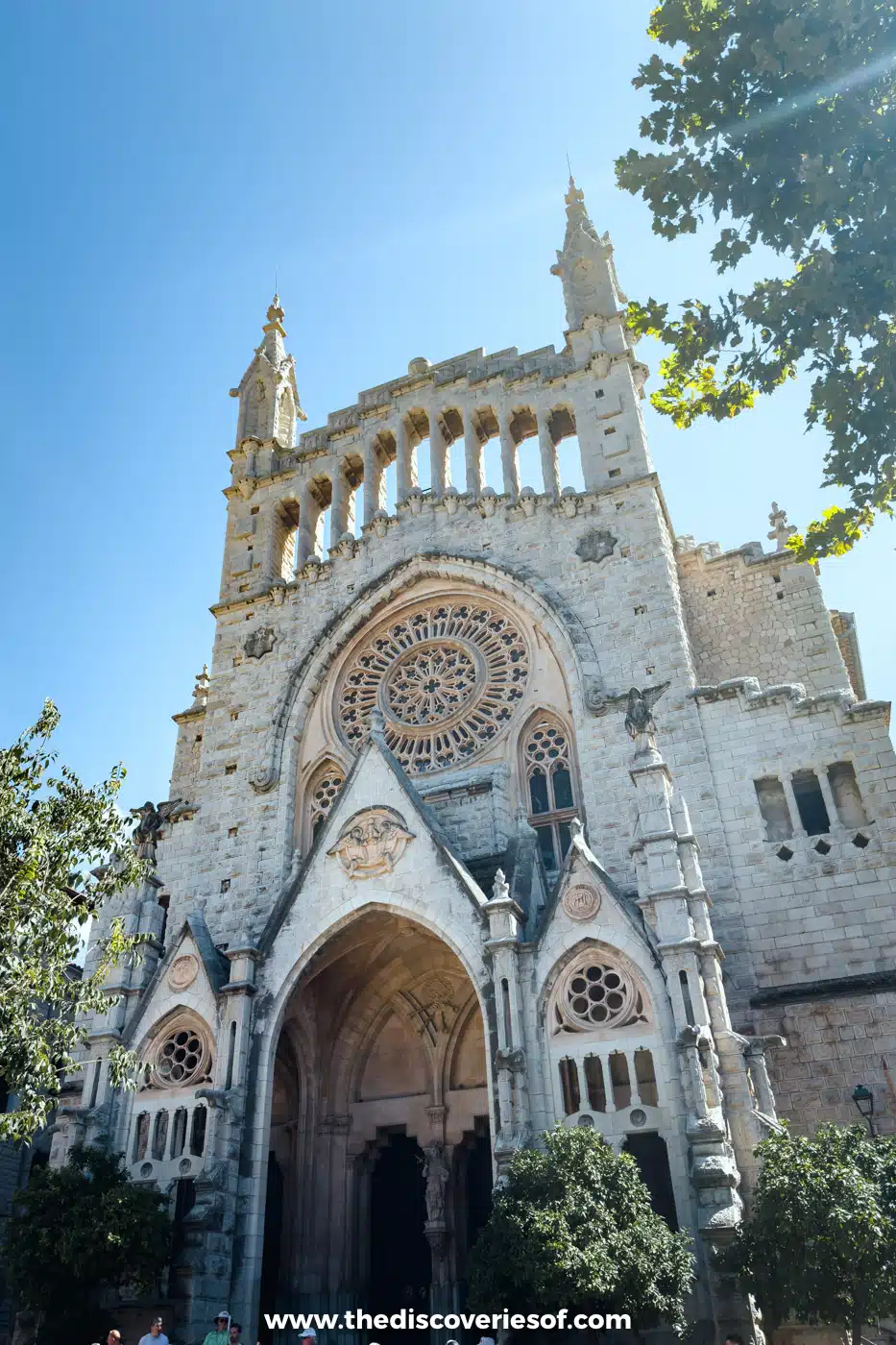
Ride the tram back up to the town for the late afternoon. The church of Sant Bartomeu fills one side of the main square, and its facade is pure modernisme: Joan Rubió, a follower of Gaudí, added it from 1904, along with the neo-Gothic bell tower. Rubió also designed the Banco de Sóller next door, with its twisting ironwork over the windows.
Then taste the oranges that paid for it all. Sa Fàbrica de Gelats, opposite the market hall beside the tram tracks, makes its orange and lemon sorbets with fruit from the valley. If you have time before dinner, Can Prunera, an art nouveau mansion on Carrer de sa Lluna, hangs Miró and Picasso alongside its original tiles and ironwork. For more ideas, see my guide to things to do in Sóller.
Have more time? Add these to your itinerary
Take the boat to Sa Calobra
Some of Mallorca’s wildest scenery can only really be seen from the water. Boats leave Port de Sóller for Sa Calobra several times a day in season, running along a coast of sheer cliffs and sea caves for about an hour each way. From the cove, a path through tunnels in the rock leads to the Torrent de Pareis, where the gorge meets the sea in a pebble beach between walls more than 200 metres high.
Barcos Azules is the main operator, with returns from around €26. Check the return times, as some leave you little more than an hour ashore, and confirm the day before, as sailings are cancelled in rough seas.
Drive out to Pollença and Cap de Formentor
At the north-eastern end of the mountains, Pollença is a handsome inland town where 365 cypress-lined steps climb to the Calvari chapel, with views over the rooftops to the bay. Beyond it, the road to Cap de Formentor twists along a narrow peninsula to a lighthouse at the island’s northern tip.
Private cars are restricted on the Formentor road in high summer, with a shuttle bus instead, so check the rules before you set off. It’s about an hour from Esporles, so it works best as a full extra day.
Spend a day on the south-coast beaches
The Tramuntana coast is mostly cliffs and rocky coves, so for long, white sand, head south. Es Trenc, about an hour from Palma, is a protected stretch of dunes and shallow, clear water with no hotels behind it. Arrive early in summer, as the car parks fill. For more, see my guide to the best beaches in Spain.
Handy tips for planning your 4 days in Mallorca
Top tips
- Hire a car. It’s the only practical way to do days two and three, and it lets you stop at the viewpoints. Book the smallest car you’re comfortable with: the mountain roads are well surfaced but narrow, with tight hairpins.
- Start early at the busy stops. Valldemossa, Deià and Sa Calobra are all far calmer before 10am.
- Leave room for cyclists. The Tramuntana is one of Europe’s great cycling destinations, and Spanish law says you must give at least 1.5 metres when you overtake a rider.
- Stock up if you stay in the countryside. Rural stays like Rondaia have little or no food on site, so shop before you check in.
What to pack for Mallorca
Bring proper walking shoes for the coast path, a layer for the mountains, where it’s noticeably cooler at 850 metres, swimwear and a sun hat. For the full list, see my Spain packing list.
Best time to visit Mallorca
April to June and September to October are best: warm enough to swim, cool enough to walk and quieter than high summer. I went in September, when the sea was still warm and the light on the mountains was beautiful. July and August are hot and busy, and in winter the Sóller train stops running from 23 November 2026 to 1 February 2027.
Getting around Mallorca
Pick up a hire car at Palma airport. Without one, TIB buses run from Palma to Valldemossa, Deià and Sóller, and the bus to Sóller takes 35 to 45 minutes through the tunnel. The old wooden train from Palma to Sóller takes about an hour over the mountains, a lovely trip in itself, but the villages on days two and three are hard to link up without a car.
Map
Read next
- Ride a 1913 tram to the sea, and 15 more things to do in Sóller and Port de Sóller
- The Serra de Tramuntana drive: hairpins, stone villages and sea views on Mallorca’s Ma-10
- Rondaia review: the Mallorca vineyard stay that pours its own Malvasia
- 23 things to do in Valencia, the city that turned its river into a park
- Cool things to do in Menorca
- The perfect Spain itinerary: 10 days in Spain
- Spain travel guide
Love this? Save and share on Pinterest
Discover the top things to do, insider tips and hidden gems in our Spain Travel Guide.
Read the guides →