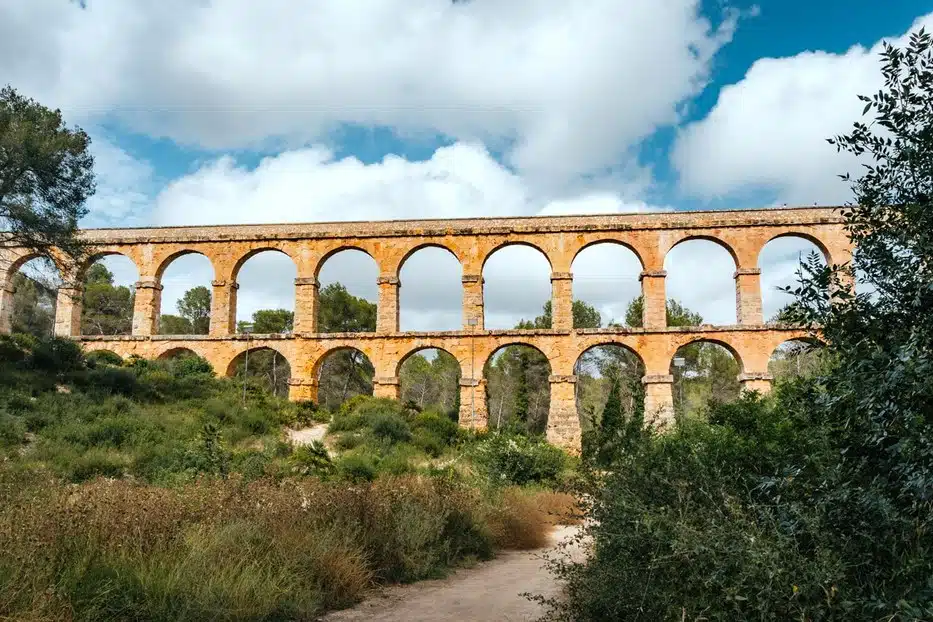

In the pine woods just north of Tarragona, a two-tiered Roman aqueduct still spans its ravine, 2,000 years after it was built, and you can walk along the top of it. Here’s the story of the Pont del Diable, how to get there and what to expect when you arrive.
Tarragona is full of Roman remains, from the amphitheatre above the beach to the walls around the old town, but the Pont del Diable is the one that feels most like a discovery. It stands on its own a few kilometres outside the city, in a quiet wooded valley, and there’s no ticket office or barrier.
I drove out to it in the afternoon, at the end of a day exploring Tarragona, and walked across the top, along the channel that once carried the water.
This guide covers the history, the legend behind the name, walking across the top and how to get there.
If you would rather not drive, this small-group Tarragona and Sitges day trip from Barcelona includes Roman Tarragona and a Roman aqueduct.
Pont del Diable at a glance
- Where: about 4 kilometres north of the centre of Tarragona, off the N-240 road towards Lleida.
- Cost: free.
- Opening hours: it’s an open-air monument with no gates, so you can visit at any time; go in daylight, as the paths aren’t lit.
- Time needed: 30 minutes to an hour, including the walk across the top.
- Getting there: by car, or on city bus 5 or 85 to the Pont del Diable stop.
- Don’t miss: the view of both tiers of arches from the path below, then the walk along the top.
A Roman aqueduct in the woods
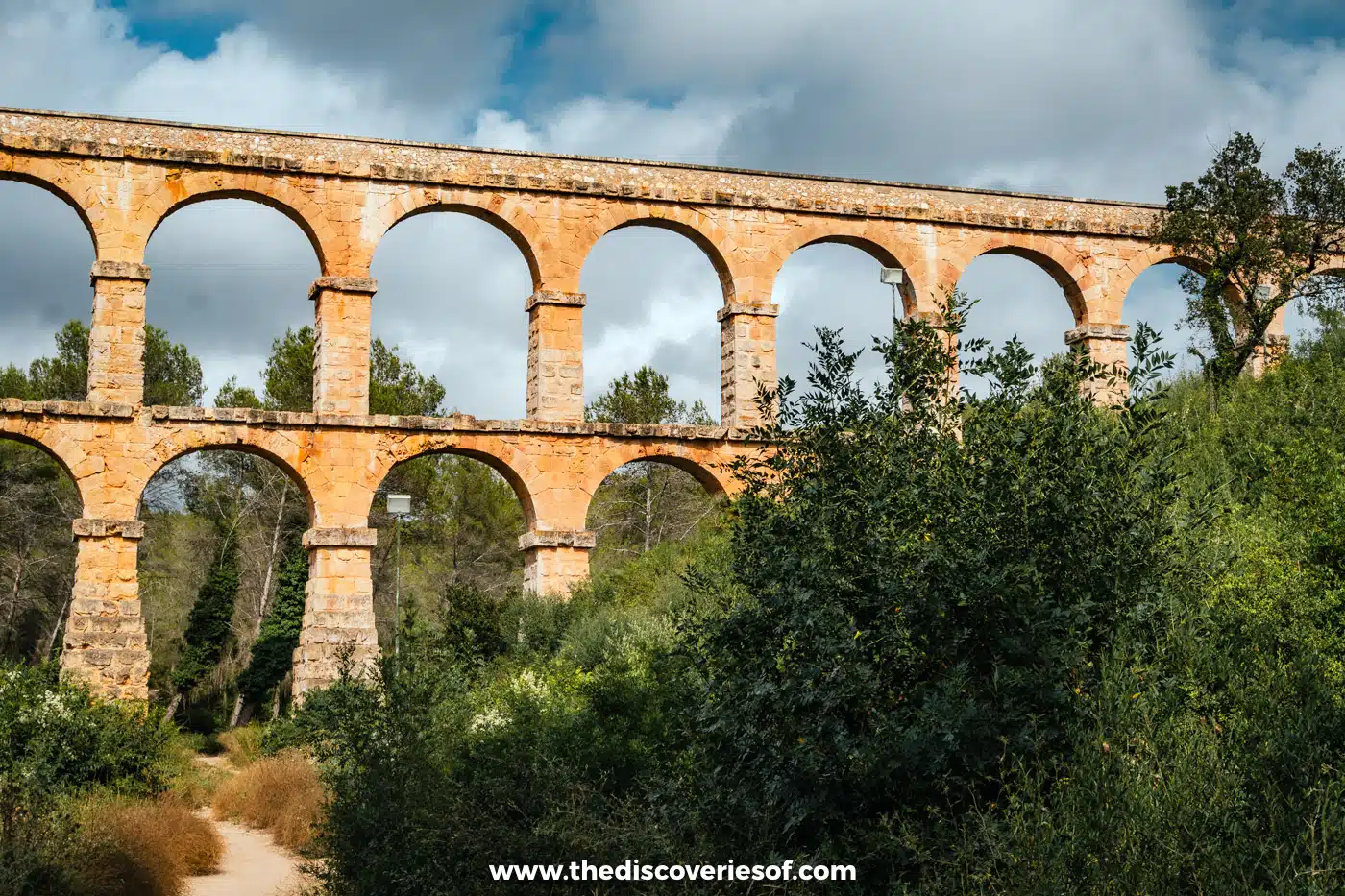
When the Romans made Tarraco the capital of their province of Hispania Citerior, the growing city needed more water than its wells could give it. Two long aqueducts were built to bring it in. One ran from the river Gaià, about 50 kilometres away. The other, around 15 kilometres long, brought water from the river Francolí, and the Pont del Diable is the most spectacular part of it, where the channel had to cross a ravine.
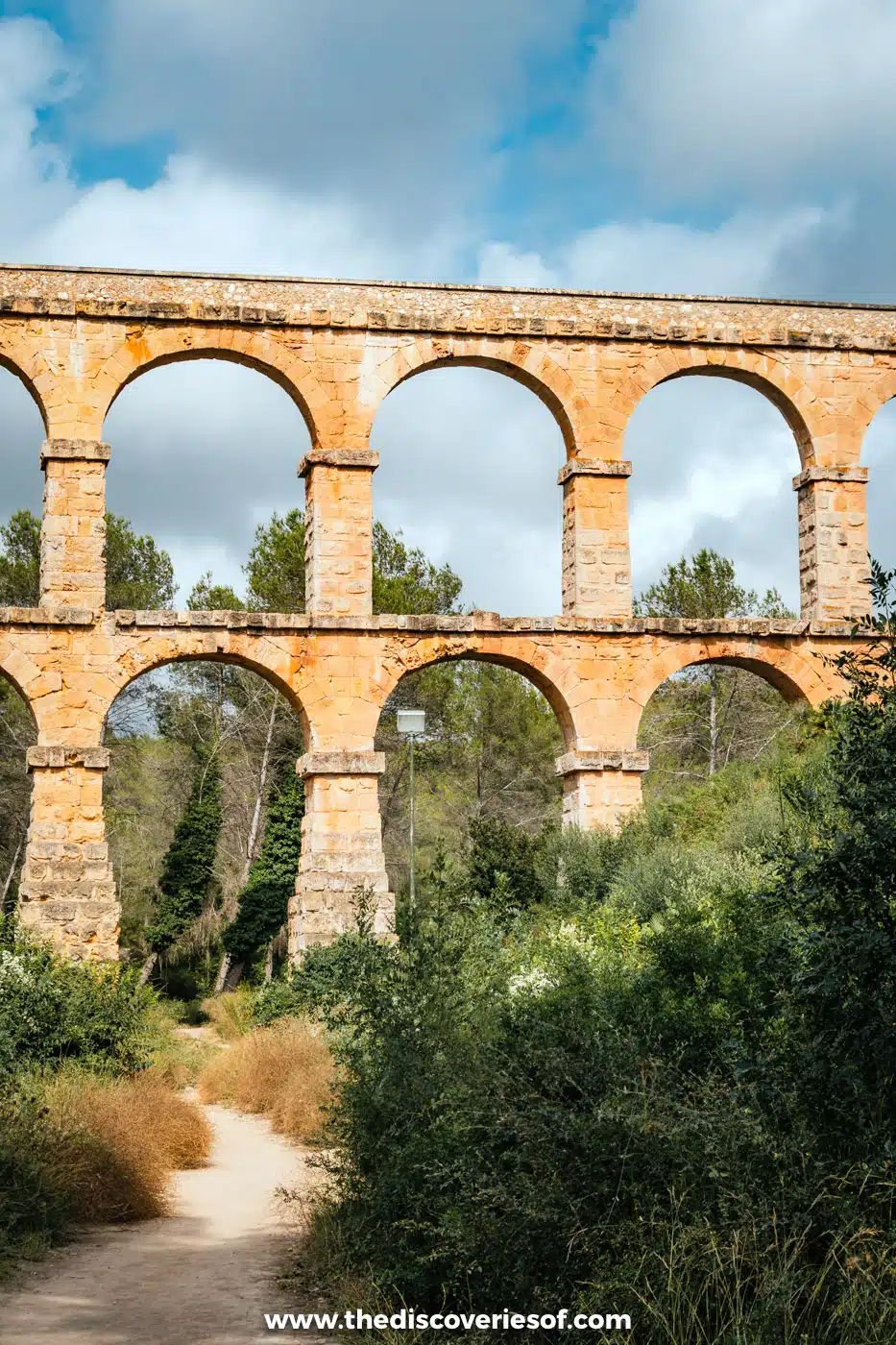
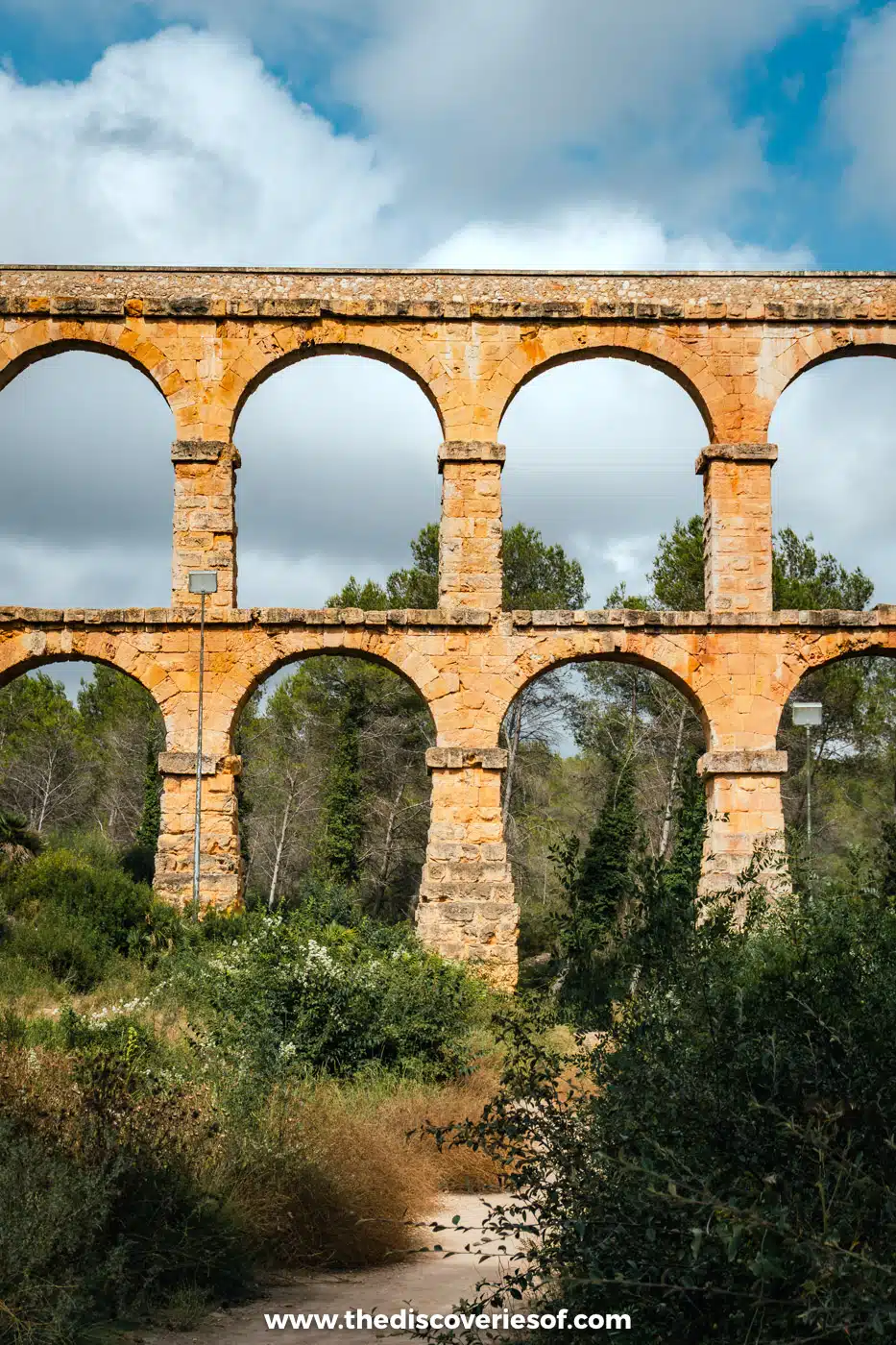
It’s usually dated to the 1st century AD, probably the reign of the emperor Augustus. The bridge is 217 metres long, or 249 metres if you include the sections at each end where the channel runs along a wall, and it stands 27 metres high at its tallest point. There are 11 arches on the lower tier and 25 on the upper one, all built from large blocks of local stone laid without any mortar.
Its official name is the Aqüeducte de les Ferreres, and since 2000 it has been part of the Archaeological Ensemble of Tárraco, the UNESCO World Heritage Site that also covers the amphitheatre, the circus and the walls. The woods around it are protected as the Parc Ecohistòric del Pont del Diable.
The legend of the Devil’s Bridge
Pont del Diable means Devil’s Bridge, a name given to more than one old bridge in Catalonia. The local legends say that no human could have built something so impressive, so it must have been the Devil, working through a single night. In most versions he strikes a bargain, the bridge in return for a soul, and is cheated out of his prize when a cockerel crows at dawn before the last stone is in place. Like most good legends, the details change depending on who’s telling it.
Walking across the top
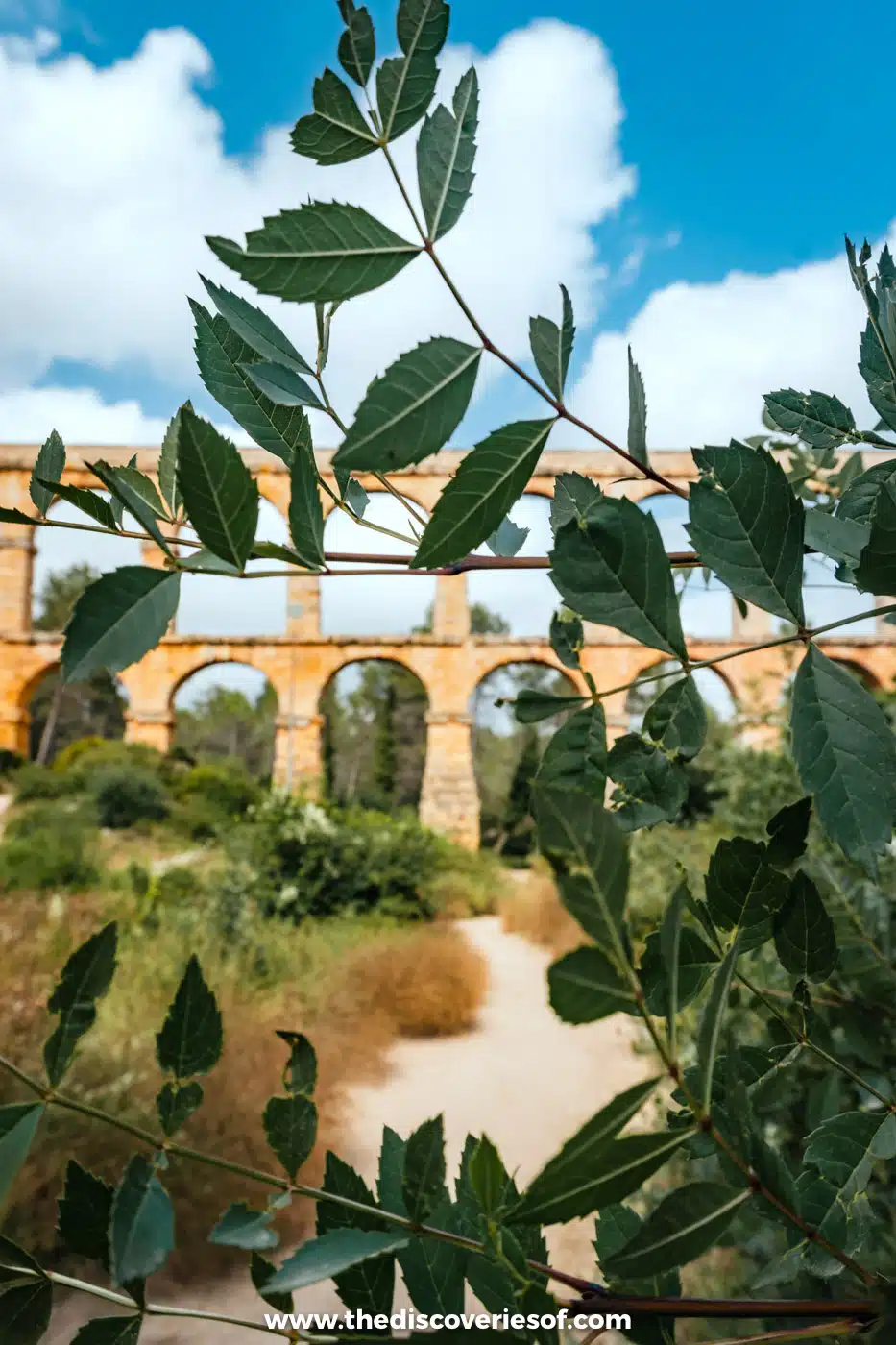
From the road, a dusty path leads down through the pines and scrub to the foot of the arches. It’s worth stopping here first, as this is where you get the best view of the two tiers together.
From there, the path climbs up to the end of the aqueduct, where you can step onto the top and walk across along the old water channel, the specus. It’s narrow, open and uneven, with the ravine dropping away on either side, so take it slowly, keep a hand free and give way to anyone coming the other direction. It’s not one for anyone nervous of heights, and young children will need holding on to. If you’d rather not cross, the views from the paths below and either side are just as good.
Top Tip
Wear shoes with a decent grip. The paths are dusty and loose underfoot, and the stone along the top has been worn smooth in places.
Getting there
The aqueduct is a short drive or bus ride from the centre of Tarragona. It’s signposted from the N-240, and if you’re driving you can park beside the road and follow the path down through the trees.
Getting There
City buses 5 and 85 run from the centre of Tarragona to the Pont del Diable stop, about 4 kilometres north of the city. Trains from Barcelona Sants reach Tarragona in about an hour, so you can combine the aqueduct with a day in the city, as I did. By car, Tarragona is about an hour and a quarter from Barcelona on the AP-7.
Guided Tours
No car? Book this small-group Tarragona and Sitges tour from Barcelona, or explore the Roman city on foot with this Roman heritage walking tour.
When to go
The aqueduct is open all the time, so you can choose your moment. I went in the afternoon, at the end of my day in Tarragona, when the stone takes on a warm honey colour. In summer, avoid the middle of the day, as the valley gets very hot and there’s not much shade on the top.
Where to stay
Most people visit Tarragona as a day trip from Barcelona, but if you’d like more time for the Roman sites, browse places to stay in Tarragona and look for somewhere in the Part Alta, the old town, or near the Rambla Nova.
Tips for your visit
- Pair it with the city: see the amphitheatre and the walls in Tarragona first, then come out to the aqueduct at the end of the day, as I did.
- Take water: there are no cafés or facilities at the site.
- Take your time on the top: the channel is narrow and there are no railings.
- Leave it as you find it: the woods are a protected park, so stick to the paths.
- Make a day of it: pair the aqueduct with the Roman city on this guided walking tour of Roman Tarragona.
For everything else in the city, see my guide to the best things to do in Tarragona, or find more ideas in my guide to the best day trips from Barcelona.
Map
Read next
- 13 things to do in Tarragona
- A guide to Tarragona’s Roman amphitheatre
- Priorat wine day trip from Barcelona
- A guide to the Dalí Theatre-Museum in Figueres
- A guide to Girona Cathedral
- 14 things to do in Girona
- Figueres travel guide
- 25 brilliant day trips from Barcelona
Love this? Save and share on Pinterest
Discover the top things to do, insider tips and hidden gems in our Spain Travel Guide.
Read the guides →