
Salvador Dalí rebuilt the burnt-out theatre in his home town as his own museum, crowned it with giant eggs and chose to be buried under its stage. Here’s what to see inside, what tickets cost, how long to allow and when to go to beat the crowds.
Figueres is a small market town in the north of Catalonia, about 25 kilometres from the French border, and it’s where Salvador Dalí was born, in 1904. The Dalí Theatre-Museum is the reason most people come. Dalí built it on the ruins of the town’s old municipal theatre, designed it down to the last detail and opened it in 1974, and the foundation that runs it calls it the world’s largest surrealist object.
I visited on a day out from Barcelona, after a morning in Girona, and I can’t tell you how much I loved this museum; it’s totally bonkers in the best possible way. I spent two hours here and personally thought it wasn’t enough. It was quite busy, and if I was to do it again, I’d stay in Figueres and go first thing in the morning. I loved the contrast between the huge pieces and the smaller artworks. It’s true multimedia as well, and very engaging.
This guide covers what to see, the jewels, tickets, hours and how long to allow.
Coming from Barcelona? This guided day trip to the Dalí museum, his house and Cadaqués covers the transport and the timed entry.
The Dalí Theatre-Museum at a glance
- Where: Plaça Gala i Salvador Dalí 5, in the old town of Figueres.
- Cost: from €18.50, or from €15 reduced, booked online for a date and time. Children aged 8 and under go free.
- Opening hours: Tuesday to Sunday, from 9am, 9.30am or 10.30am depending on the season, to 6pm. In July and August it opens every day, from 9am to 8pm.
- Time needed: at least two hours, and more if you can.
- Don’t miss: the courtyard and the Rainy Taxi, the stage under the glass dome, the Mae West room, the Palace of the Wind ceiling and the jewels.
From a burnt-out theatre to Dalí’s own stage
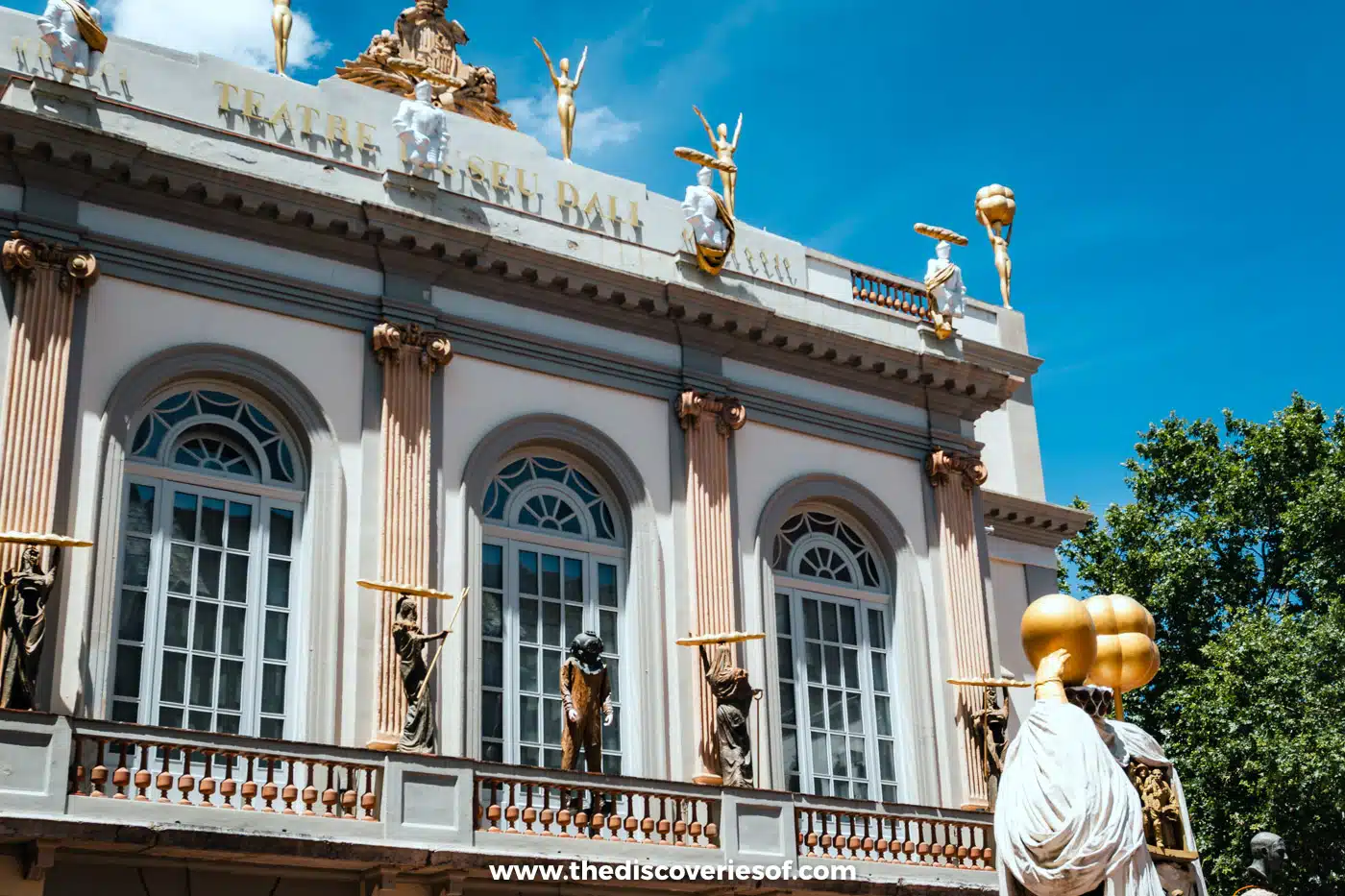
The museum stands on the site of Figueres’s 19th-century municipal theatre, where the young Dalí showed some of his first paintings. The theatre was burnt during the Spanish Civil War and stood in ruins for decades, until Dalí and the town’s mayor agreed in 1960 to rebuild it as a museum. Work started in 1969, and the museum opened on 28 September 1974. Dalí said that the people who came to see it would leave with the sensation of having had a theatrical dream.
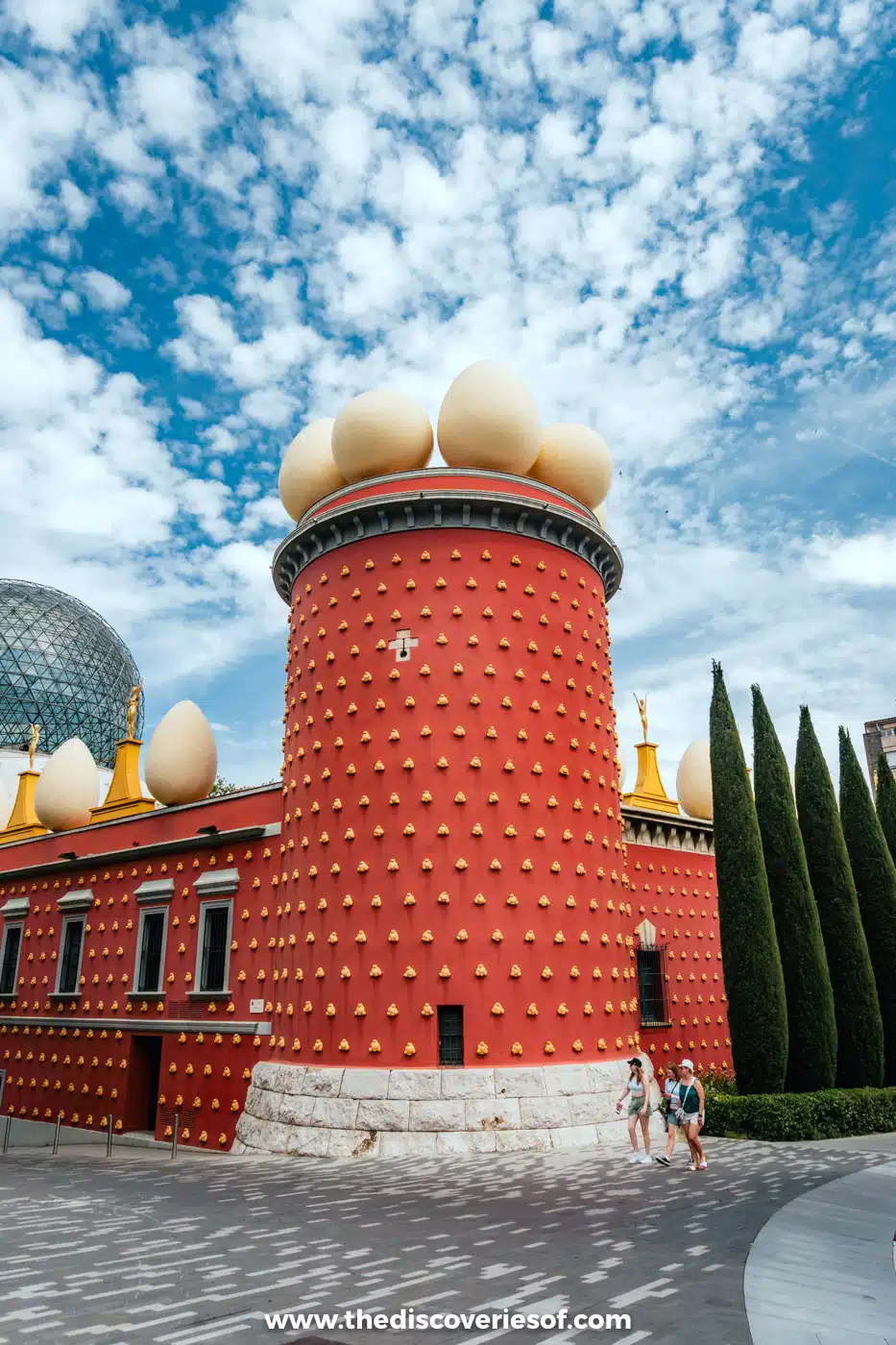
He kept adding to it for the rest of his life. In the 1980s the museum expanded into the neighbouring Torre Gorgot, which he renamed the Galatea Tower after his wife, Gala, painted it red and studded with the three-cornered loaves of Catalan bread. He lived in the tower in his last years, and when he died in 1989 he was buried in a crypt below the museum’s stage.
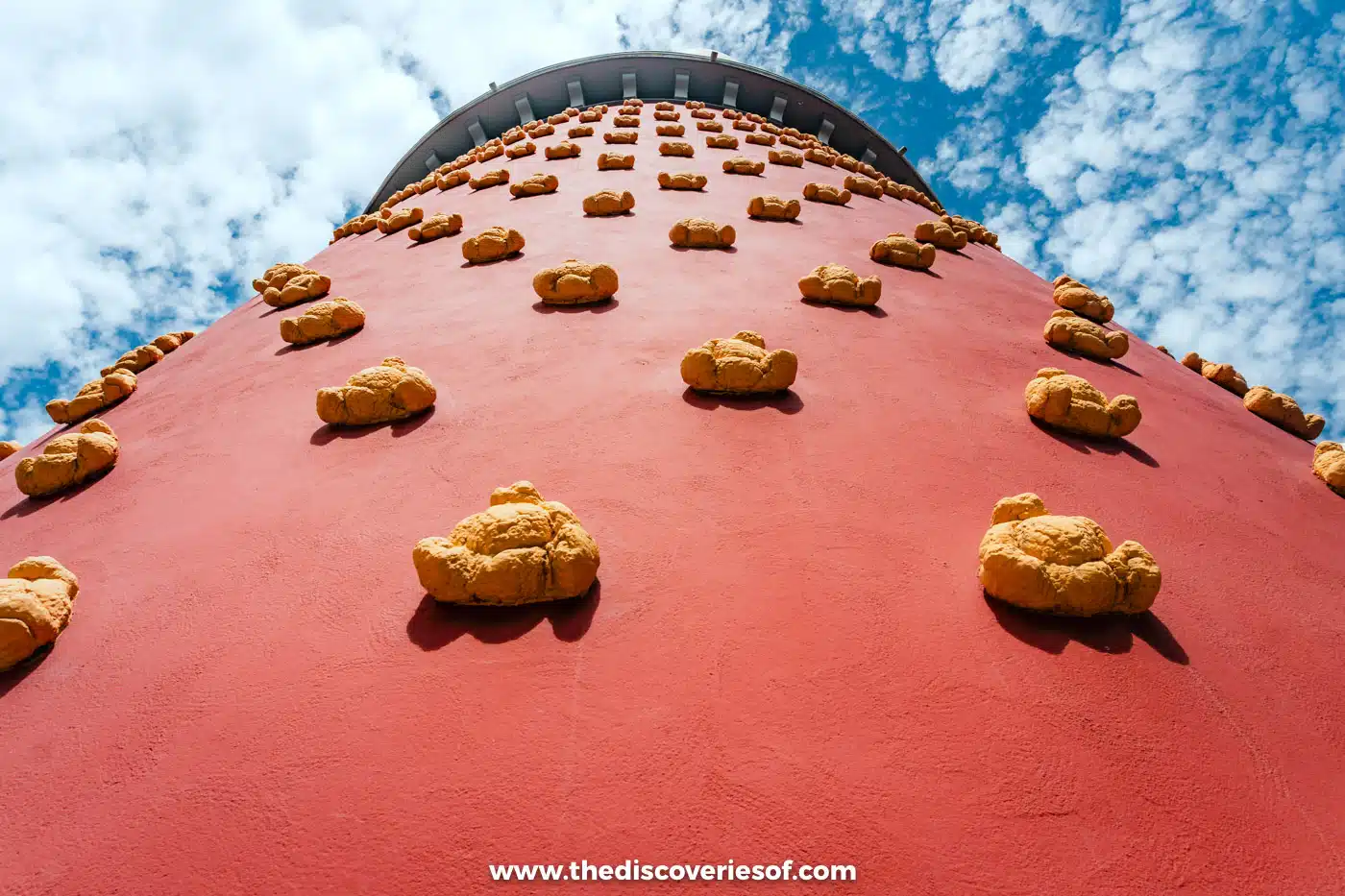
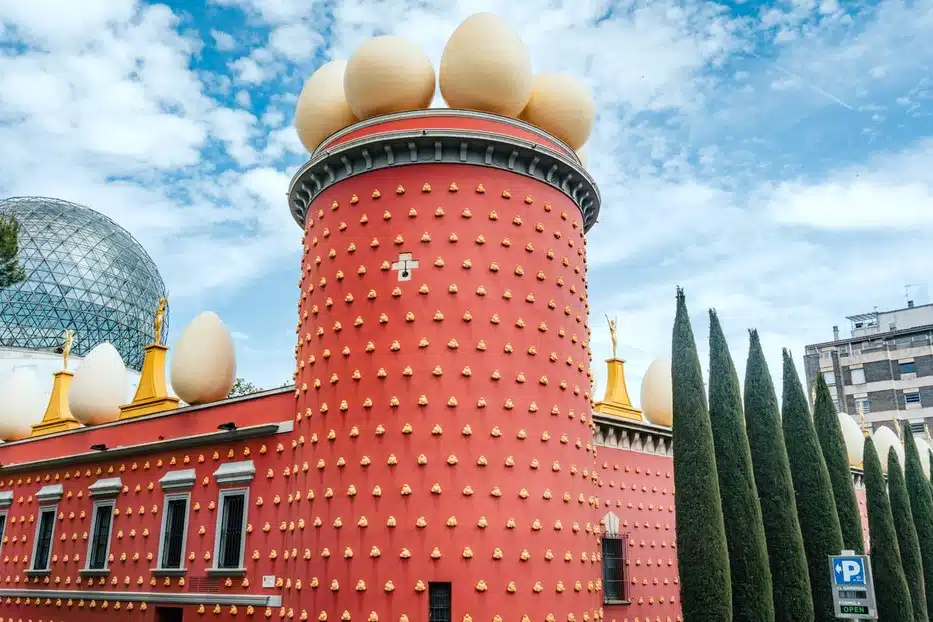
The outside is half the fun, so walk the full circuit before you go in: the red walls, the giant eggs along the roofline, the gold figures between them and the glass dome rising over the stage.
What to see inside
The museum holds more than 1,500 works, from paintings, drawings and sculptures to holograms, photographs and installations, along with pieces by artists Dalí admired. Rooms 1 to 18 make up the old theatre, which is meant to be seen as one single work of art.
The courtyard and the Rainy Taxi
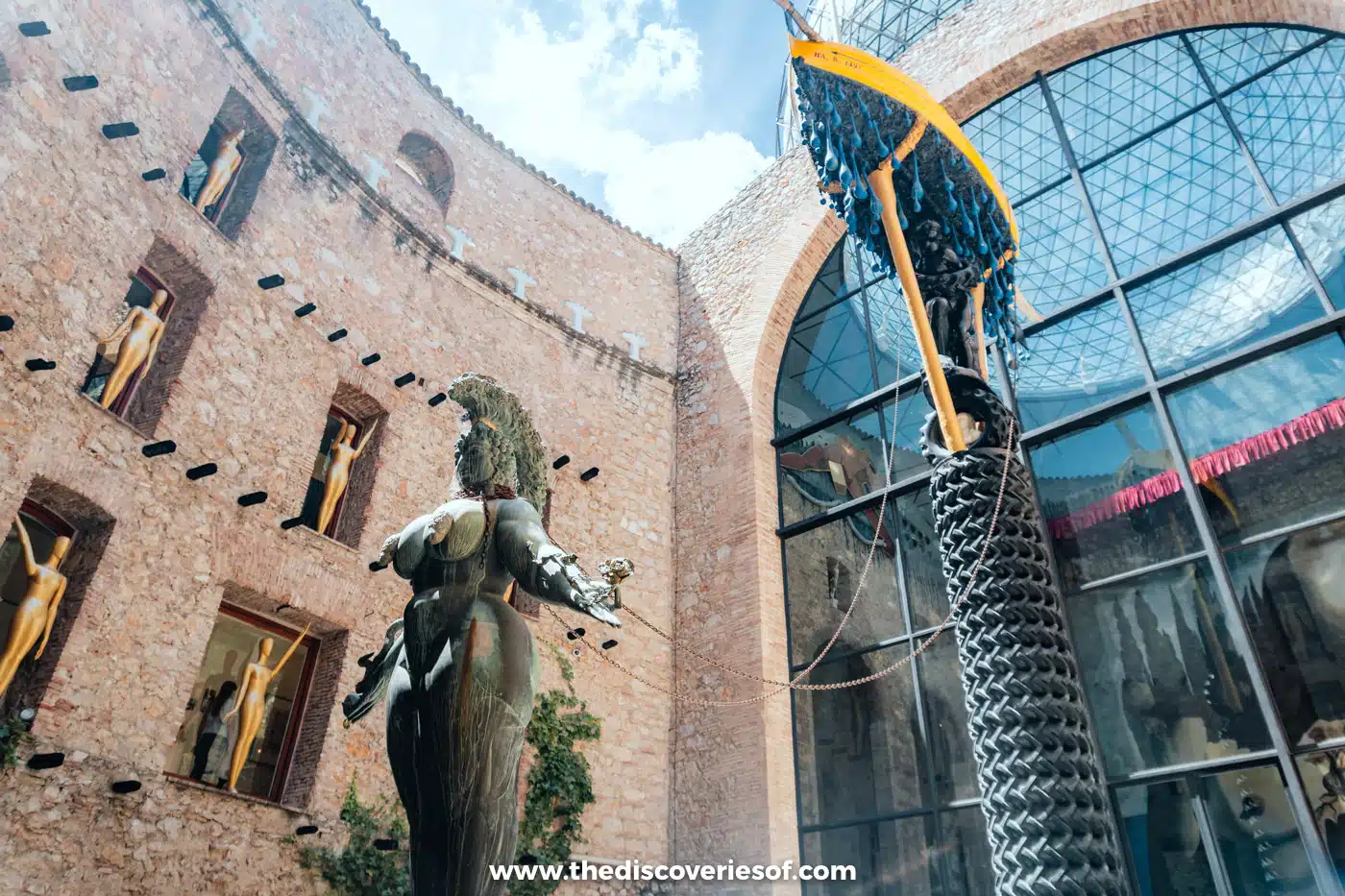
The visit opens in the old theatre’s stalls, now an open-air courtyard lined with gold mannequins in the window niches. In the middle stands the Rainy Taxi, a real car with its own downpour inside, and above it Ernst Fuchs’s statue of Queen Esther and a tower of tyres topped with Gala’s boat, dripping blue.
The stage and the dome
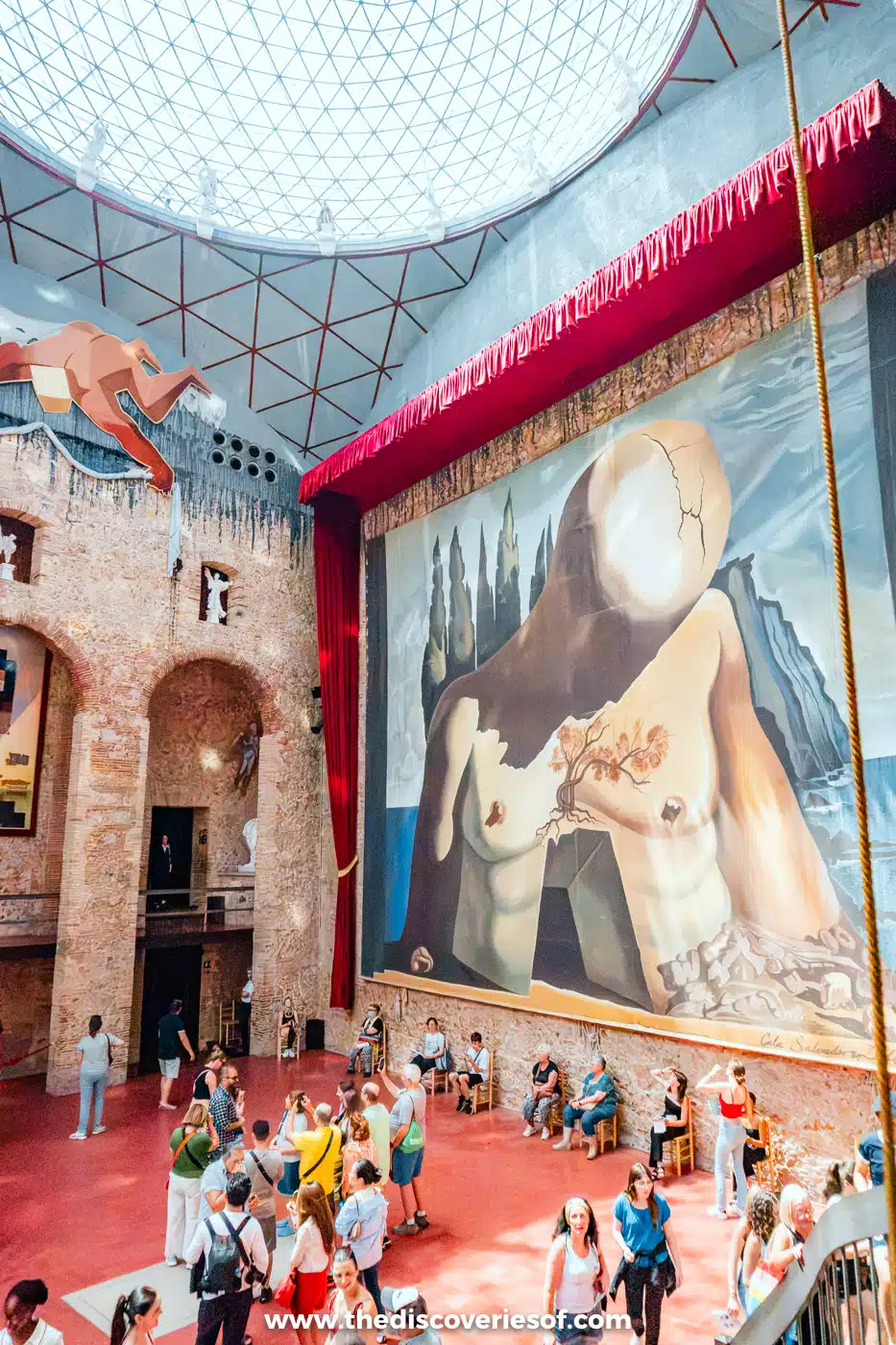
The old stage sits under a glass geodesic dome, with Dalí’s huge backdrop for the ballet Labyrinth hanging across it. Dalí is buried in the crypt below the stage floor.
The Mae West room
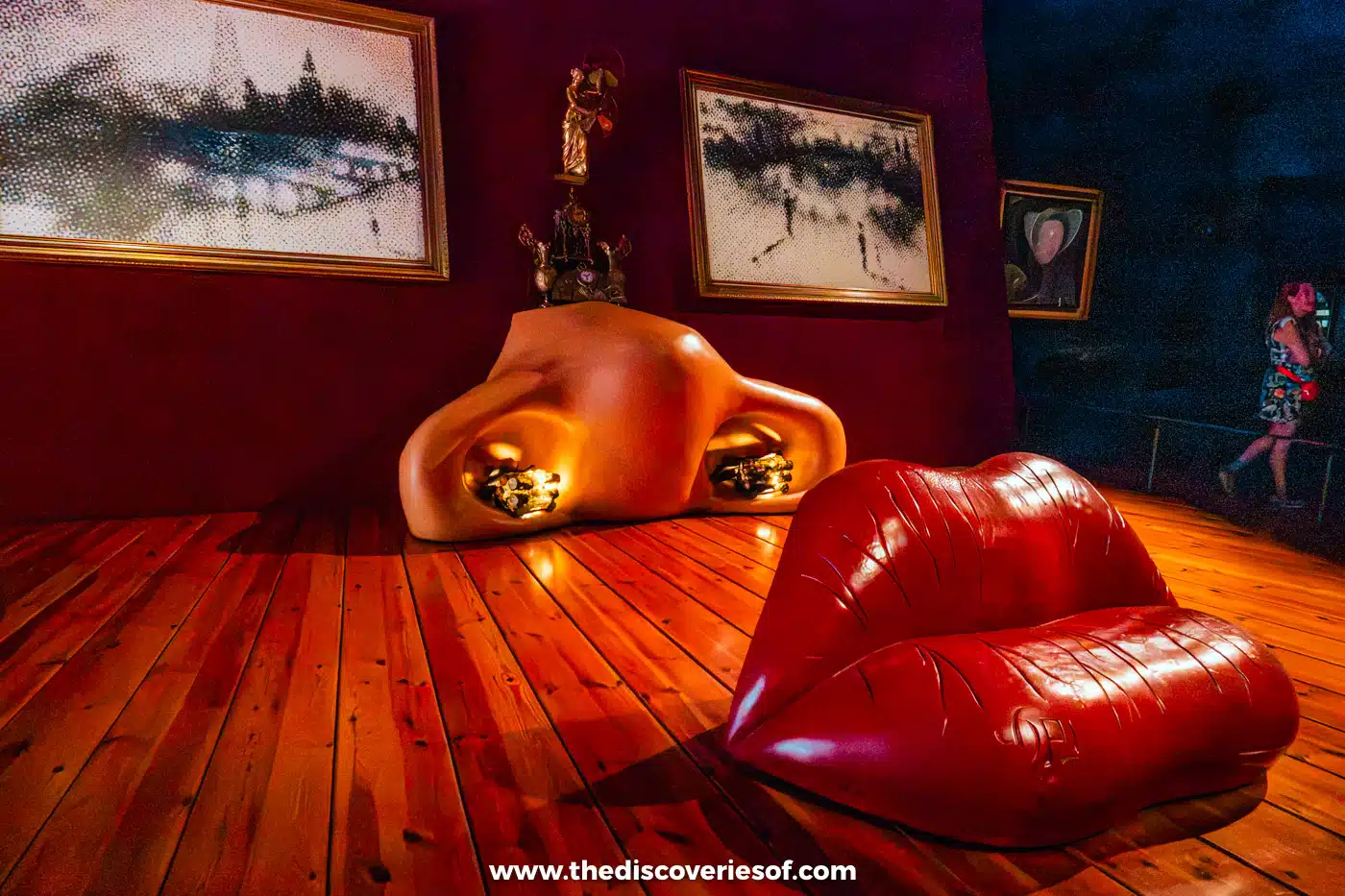
One of the museum’s best-known tricks: a room furnished with a pair of red lips for a sofa, two nostrils for a fireplace and framed pictures for eyes, which turns into the face of the Hollywood actress Mae West when you look at it from the right spot.
The Palace of the Wind
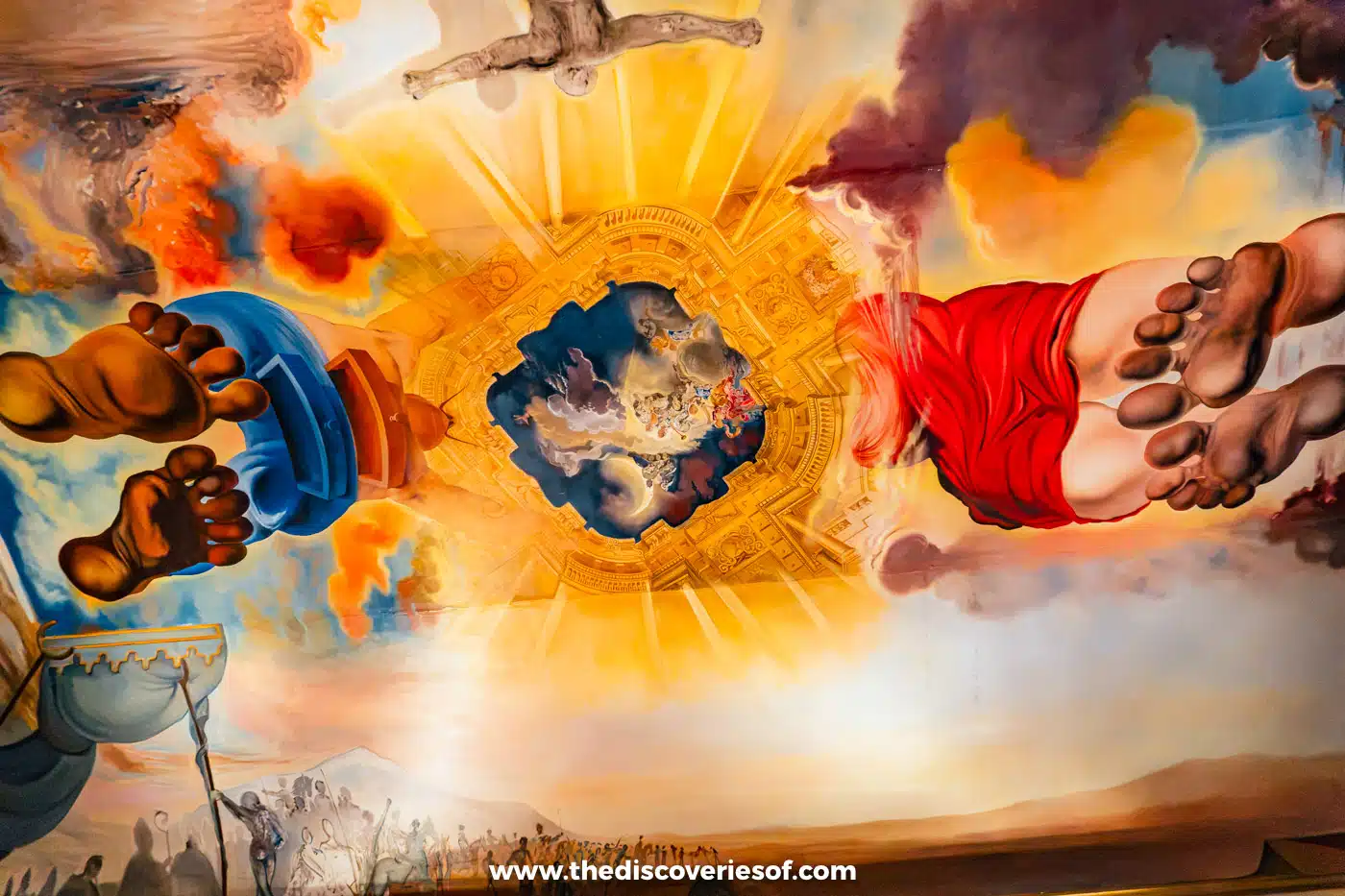
Created especially for the museum, this room has one of its most photographed sights overhead: a painted ceiling where the giant feet of Dalí and Gala rise up into the sky, as if the pair are disappearing into the heavens.
Leda Atomica and the smaller works
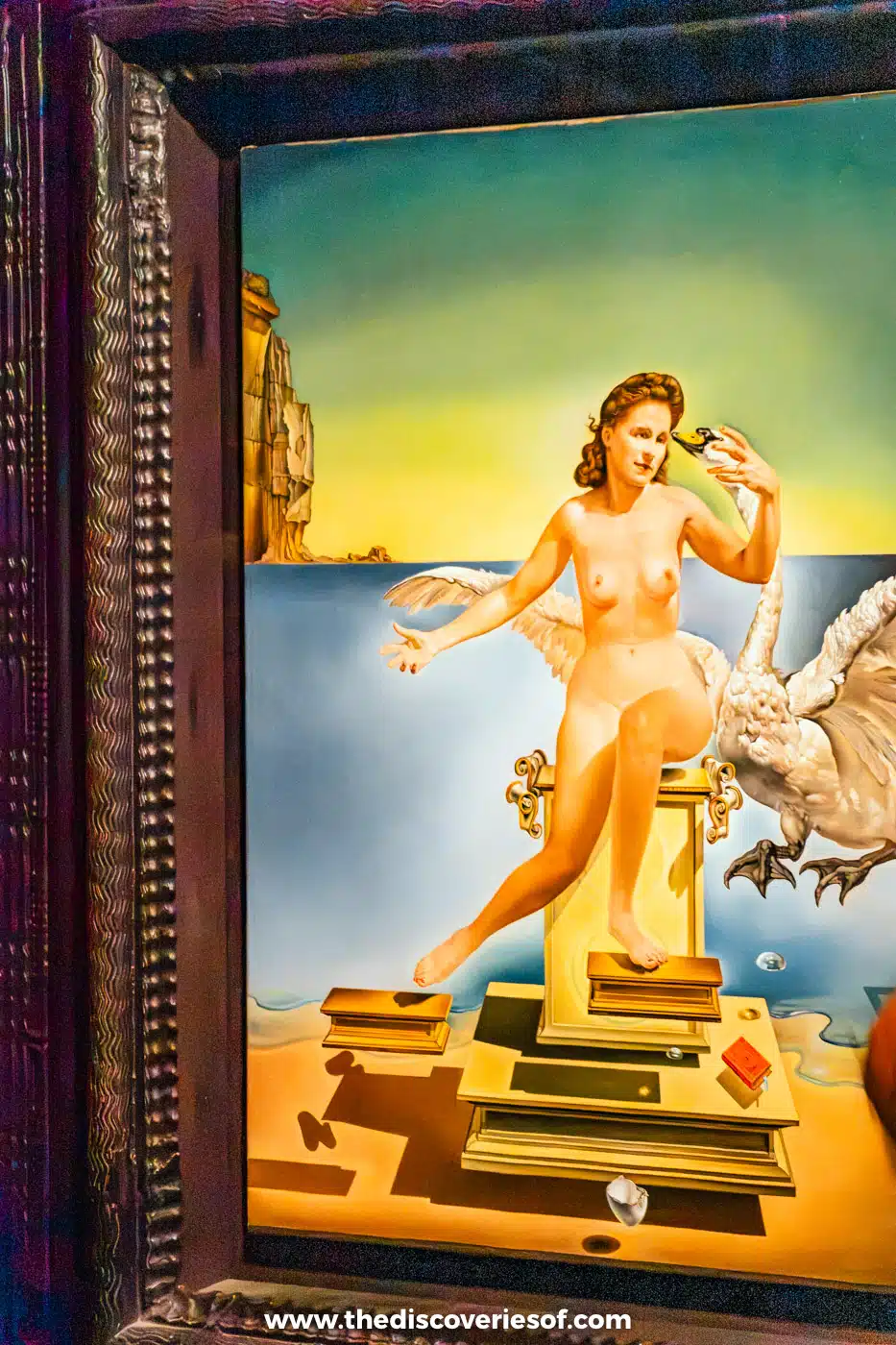
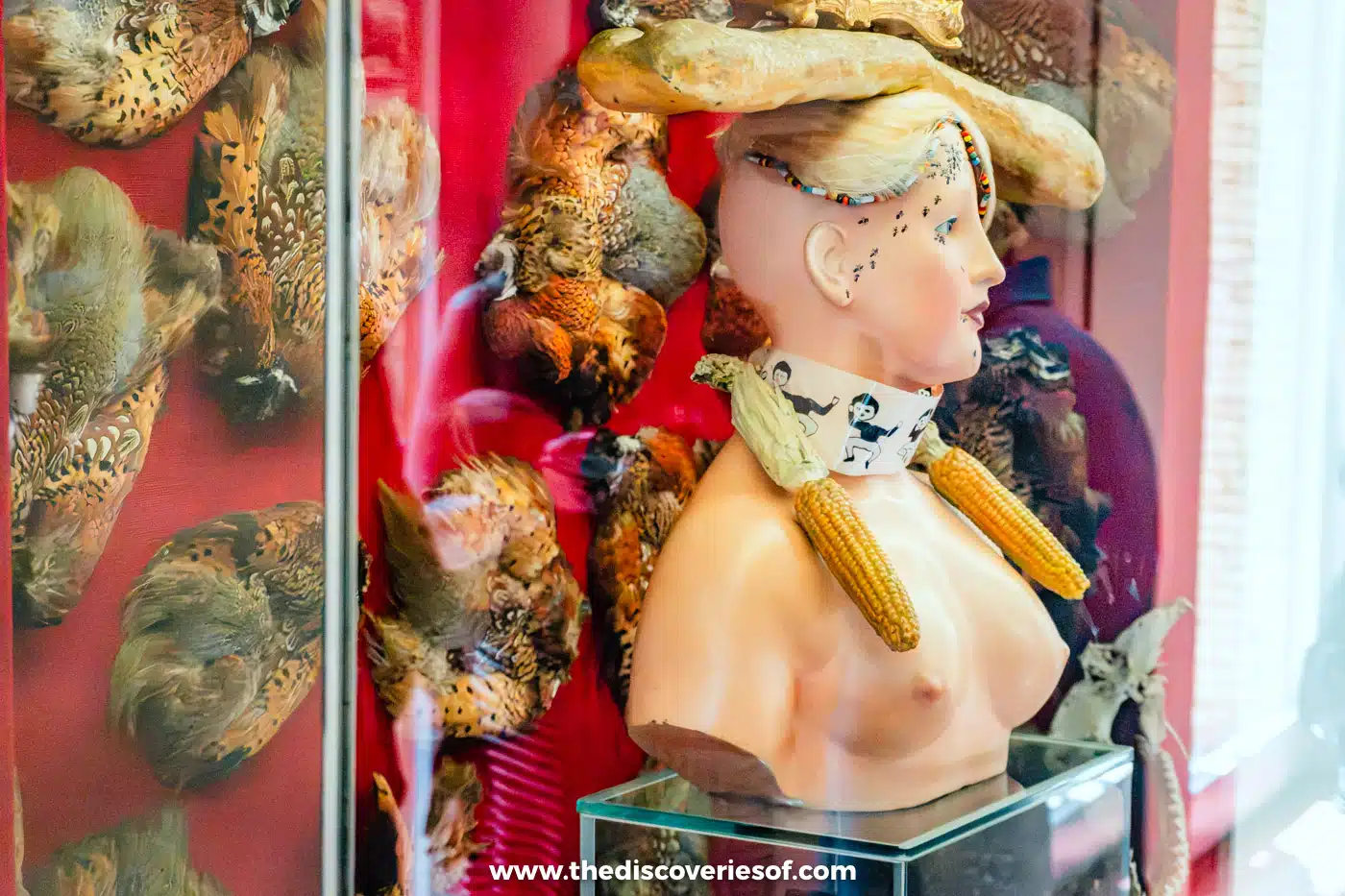
Look out for Leda Atomica (1949), with Gala as Leda, the swan and everything around them floating free of each other, and the Retrospective Bust of a Woman, with a loaf on her head and corn cobs round her neck. It’s the mix of scales that makes the museum: one minute you’re under a stage-sized backdrop, the next you’re peering at a sketch or a tiny object in a case.
Dalí·Joies, the jewels
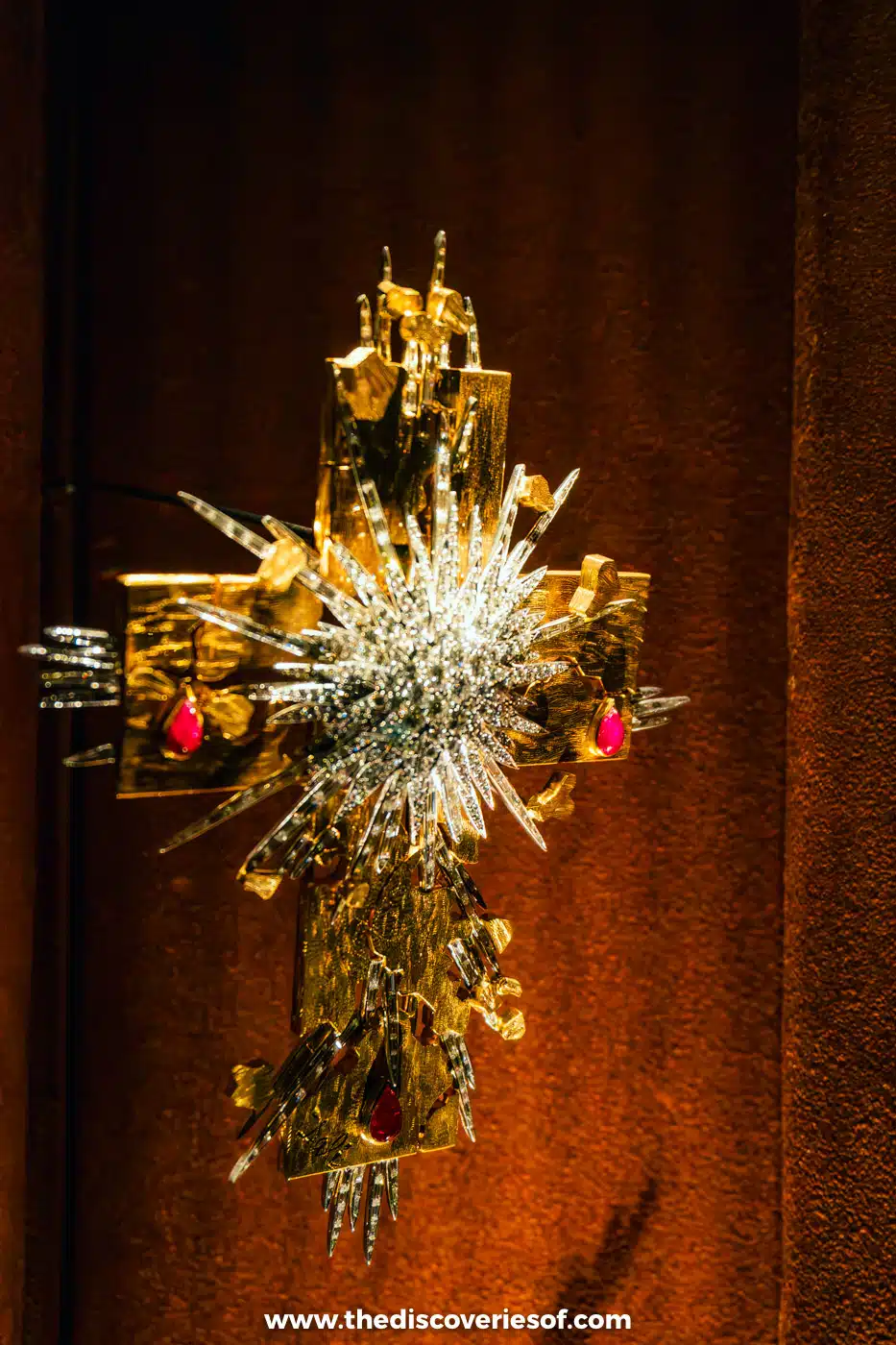
The jewellery collection has its own space on two floors of an annexe next to the museum, with its own entrance. It holds 39 jewels Dalí designed between 1941 and 1970, made in gold, precious stones and coral, together with 27 of his drawings and paintings for them. Look for The Eye of Time, a watch set in a diamond-studded eye, and the Royal Heart, a gold heart set with rubies whose centre really does beat. It’s easy to miss, so leave time to walk over.
Tickets and prices
Buy your ticket online for a date and time slot, and bring the confirmation with you. Prices start at:
- General: €18.50
- Reduced (students over 18, ages 9 to 17, over 65s, visitors with a 33% disability and their companion, and large and single-parent families): €15
- Children aged 8 and under: free
- Guided visit: €26.50, or €23 reduced
Tickets
Book on the museum’s official site: Dalí Theatre-Museum tickets. Prices are “from”, so check the price for your date. There’s also a combined ticket with La Pedrera in Barcelona. Tickets aren’t changed or refunded unless the museum cancels, and you’ll need to show proof for reduced and free entry.
Guided Tours
Want the stories behind the works? Book this guided tour of the Dalí Theatre-Museum, or go from Barcelona on this Dalí museum, house and Cadaqués day trip.
Opening hours
- 1 January to 22 March: Tuesday to Sunday, 10.30am to 6pm
- 23 March to 31 May: Tuesday to Sunday, 9.30am to 6pm
- 1 to 30 June: Tuesday to Sunday, 10.30am to 6pm
- 1 July to 31 August: every day, 9am to 8pm
- September: Tuesday to Sunday, 9.30am to 6pm
- 1 October to 31 December: Tuesday to Sunday, 10.30am to 6pm
It’s closed on Mondays outside July and August, apart from a handful of holiday Mondays, and closed on 1 January and 25 December. The ticket desks close 45 minutes before closing time, and the rooms 15 minutes before.
How long to allow
Give it at least two hours. I spent two hours here and personally thought it wasn’t enough. Leave time for the jewels too.
If you can, stay the night in Figueres and be at the door for opening time. If I was to do it again, that’s exactly what I’d do: day-trippers from Barcelona and the Costa Brava arrive later in the morning, and it was quite busy by the time I was there.
Where to eat

I had a tapas lunch at Sentits Gastrobar on the Rambla, a few minutes’ walk from the museum: pa amb tomàquet, patatas bravas, little fried fish, cured meats and Manchego.
Getting there
The museum is in the centre of Figueres, about 140 kilometres north of Barcelona.
Getting There
High-speed trains run from Barcelona Sants to Figueres Vilafant in about 55 minutes; the station is on the western edge of town, around 25 minutes’ walk or a short taxi ride from the museum. Slower regional trains (R11) run to Figueres station in the centre, about 15 minutes’ walk away. By car, it’s about an hour and a half from Barcelona on the AP-7.
Tips for your visit
- Book ahead: take the earliest slot you can; slots sell out in summer and at weekends.
- Pack light: bags over 35 x 35 x 25 cm, rucksacks worn on your back and pushchairs aren’t allowed in; there’s a cloakroom in the lobby.
- Photography: you can take photos without flash, but tripods are banned, and sharing interior images publicly needs the foundation’s permission.
- Pair it with Girona: Figueres is a short train ride beyond Girona, so the two make an easy day together.
- Hassle-free option: this guided Dalí Theatre-Museum tour includes entry and a guide.
For more of the town, see my Figueres travel guide, or find more ideas in my guide to the best day trips from Barcelona.
Map
Read next
- Girona and Figueres in one day from Barcelona
- Figueres travel guide
- 25 brilliant day trips from Barcelona
- 27 brilliant things to do in Spain
- The perfect Spain itinerary
- My Spain travel guide
Love this? Save and share on Pinterest
Discover the top things to do, insider tips and hidden gems in our Spain Travel Guide.
Read the guides →