
Planning a trip to southern Spain? Mojácar deserves a spot at the top of your list. With an almost obscenely pretty old town, glorious beaches and a rugged shoreline made for adventure, it’s one of Andalucía’s most underrated coastal gems. Here’s my guide to the best things to do in Mojácar.
Mojácar is one of those places most people can’t quite locate on a map, and then never stop recommending once they’ve been. It sits on the Costa de Almería, the quieter, wilder eastern end of Andalucía, where the Cabo de Gata desert landscapes tumble down to some of the clearest water in mainland Spain. If your idea of a good trip involves sunshine, brilliant food and a proper dose of the outdoors, this is the place.
There are really two Mojácars: Mojácar Pueblo, the whitewashed old town clinging to a hilltop a couple of kilometres inland, and Mojácar Playa, the long, low-rise beach strip down on the coast. Between them you’ve got 17 kilometres of coastline, a national park on the doorstep, and enough to fill a genuinely varied few days. Let’s start up in the old town.
Wander Around Mojácar Pueblo (Old Town)
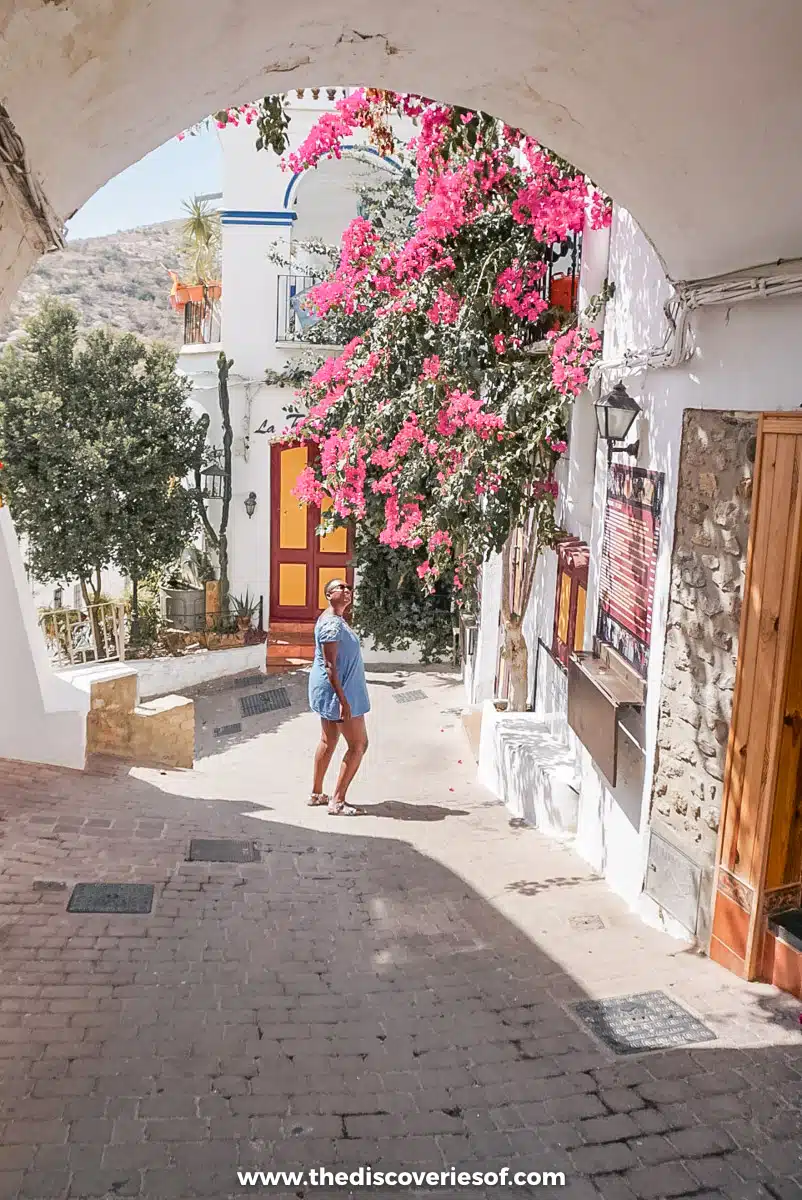
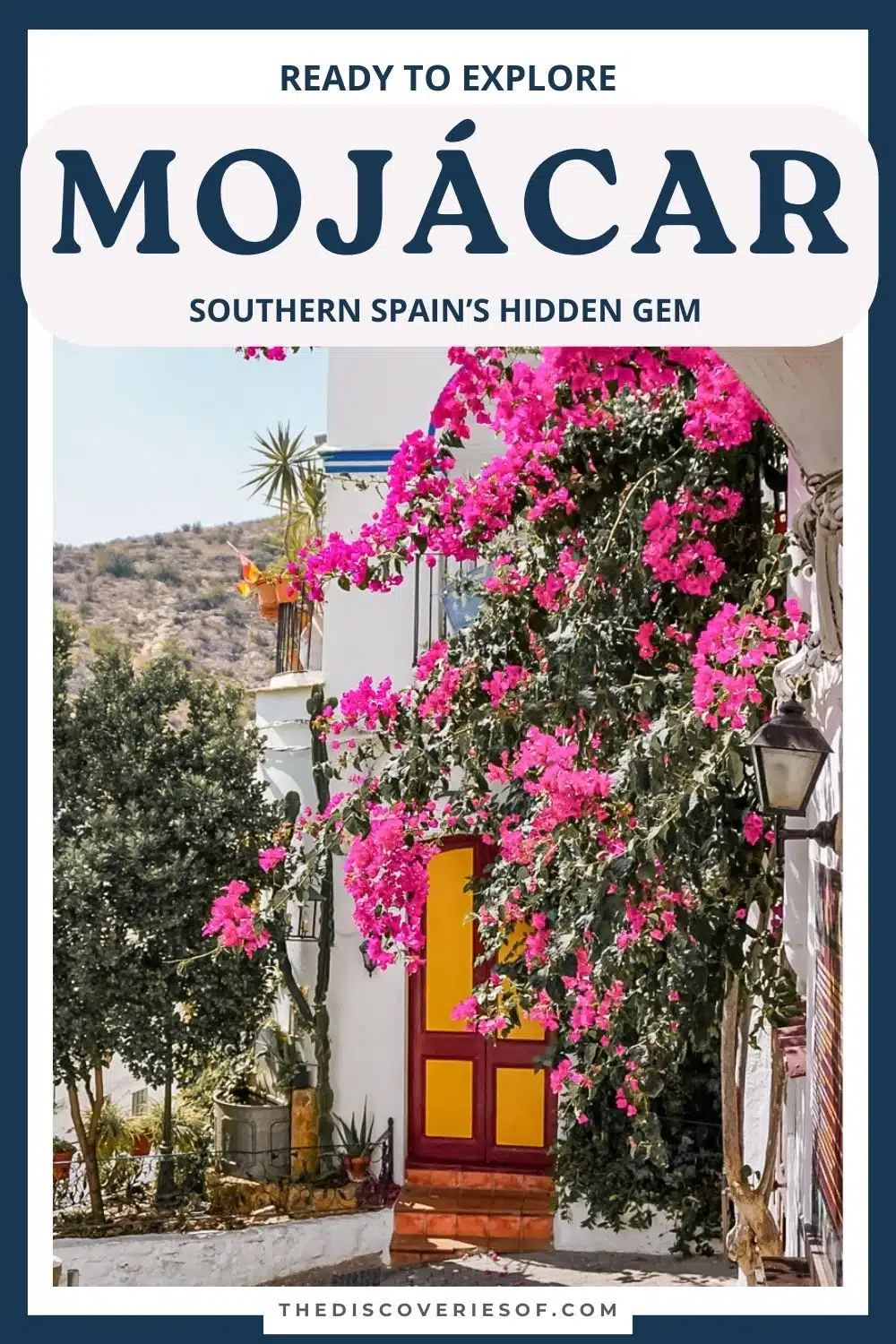
Mojácar Pueblo is the town’s biggest draw, and rightly so. A cluster of whitewashed, Moorish-style houses clinging to a maze of steep, winding streets, it’s the archetypal image of southern Spain brought to life. You know those places so pretty they almost don’t seem real? This is one of them. Every corner is another photo in the making, and I took an absurd number and still didn’t feel I had enough.
But it’s far more than a pretty face. This corner of Spain is soaked in history, and Mojácar wears its past openly. The area was under Moorish rule from the 9th to the 15th centuries, and even after the Reconquest the town held onto its Arab character, its layout of tight, shaded lanes designed to keep the fierce sun at bay. From the 1960s onwards, artists, painters and musicians were drawn here, which is part of why it feels quietly cosmopolitan for such a small hilltop village.
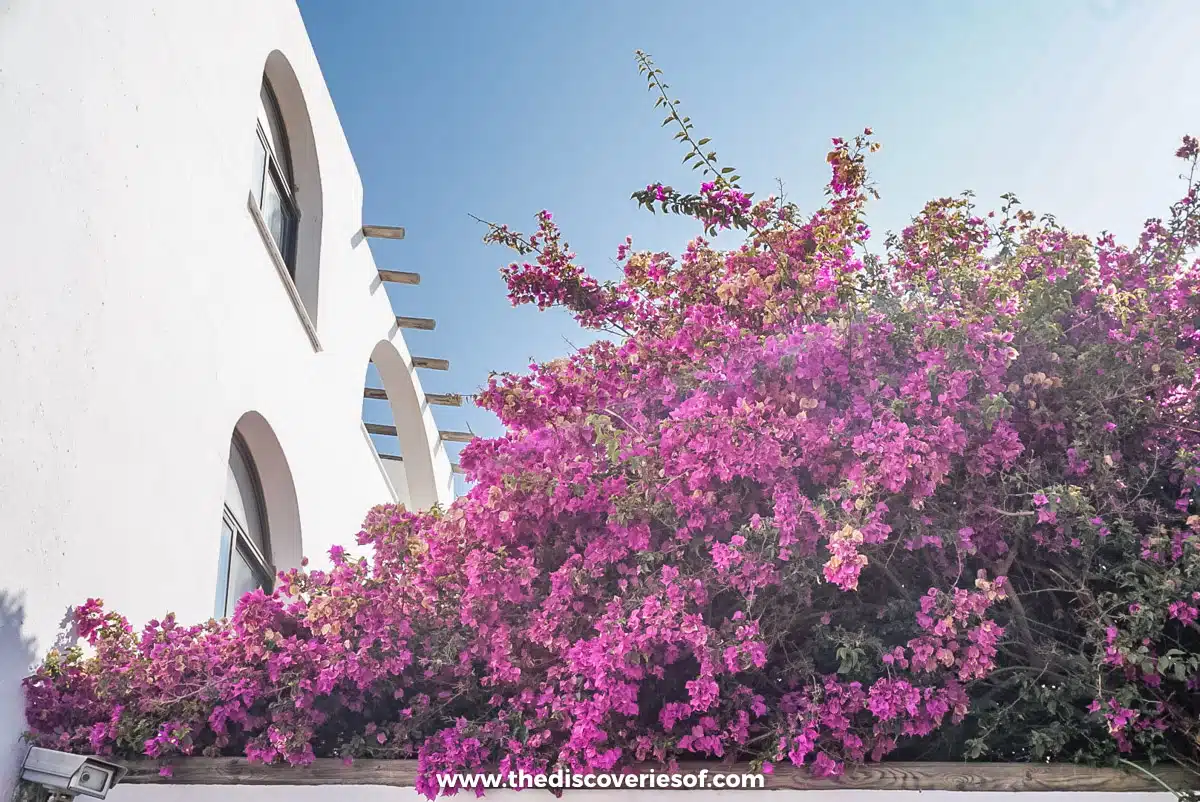
White walls, tiled porches, bougainvillea bursting from every nook. It’s simply gorgeous, and the best way to experience it is to abandon any plan and get pleasantly lost in the lanes. As you wander, though, there are a handful of specific spots genuinely worth seeking out. Here they are.
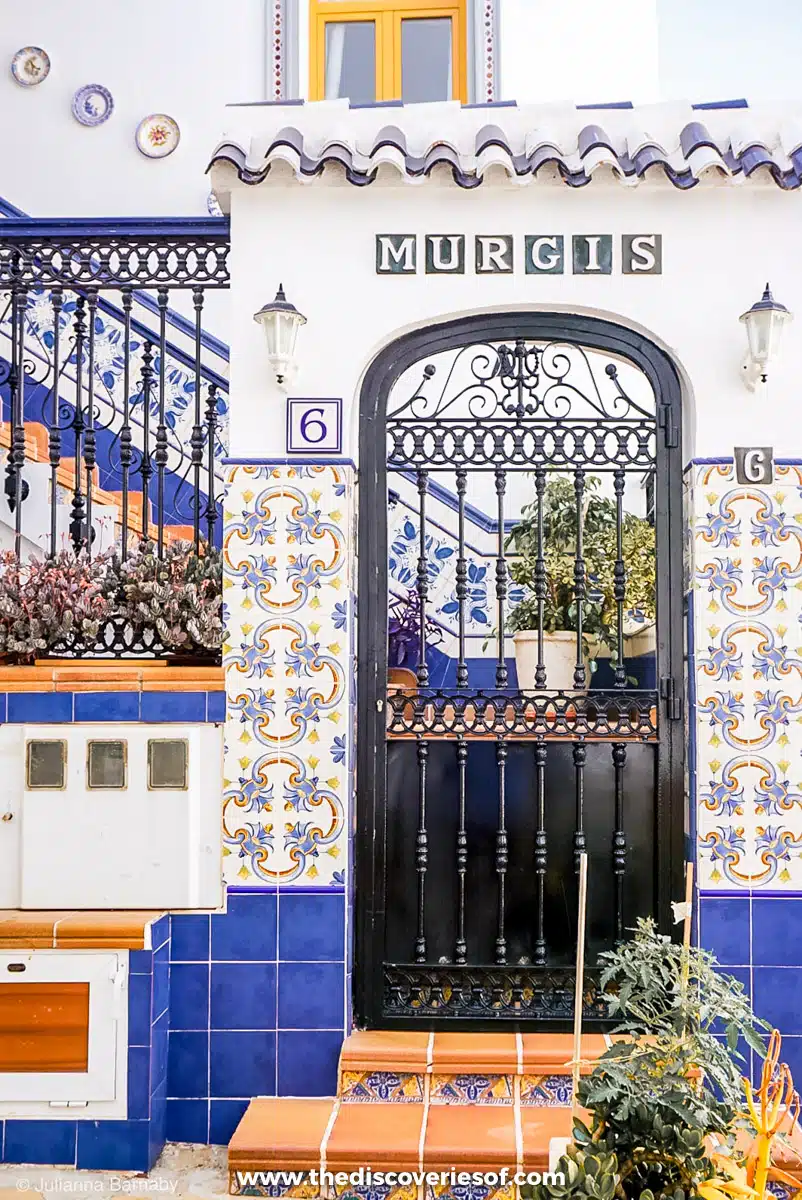
Walk Through the Puerta de la Ciudad
Start at the Puerta de la Ciudad, the old city gate and the natural entrance to the historic heart of the pueblo. Between the 16th and 19th centuries the town was walled, and this handsome white arch is the only one of its gates that survives, built on the site of an even older Moorish gateway. Passing under it, with its decorative tilework and the lanes climbing away beyond, is the proper way to begin exploring the old town, and it’s one of the most photographed spots in Mojácar.
Visit the Iglesia de Santa María
Right in the heart of the village stands the Iglesia de Santa María, and it tells you almost everything about Mojácar’s history in a single building. Built in 1560 over the remains of an earlier mosque, it was designed to serve two purposes at once: a church and a defensive fortress. This was a time of frequent pirate raids along the Almería coast, so the church has thick stone walls, a plain, robust exterior and few of the flourishes you’d expect of a grand cathedral. Its tower was even positioned to connect visually with the coastal watchtowers, part of the warning network against seaborne attack.
Step inside (it’s free if the doors are open) and you’ll find a restrained, whitewashed interior. The original altarpiece was lost during the Civil War, and the church holds images of the village’s two patron saints. It’s small and quickly seen, but it’s one of the most characterful buildings in town.
Take in the View from the Mirador de la Plaza Nueva
Plaza Nueva is the undisputed social heart of the pueblo, a lively square full of atmosphere, café tables and people-watching, and it doubles as one of the town’s best viewpoints. From its mirador you look out over a wide valley ringed by the Cabrera, Bédar and Almagrera mountains. It’s the ideal spot to sit with a drink and watch the sun go down, and the natural place to pause between wanders.
Climb to the Mirador del Castillo
For the very best panorama, keep climbing to the Mirador del Castillo at the highest point of the pueblo. There’s no castle left to see, its walls were toppled by an earthquake back in 1518, but the views more than justify the short, steep walk up. From here you look out across the desert-like landscape on one side and the Mediterranean on the other, from a slightly higher and different angle to Plaza Nueva. It’s one of the town’s most underrated spots, and magical at sunset.
Find La Mojaquera and the Plaza del Parterre
In a pretty corner near the church, in the Plaza del Parterre (which was once a Muslim cemetery), you’ll find the statue of La Mojaquera, “the woman of Mojácar,” depicted in traditional dress carrying a water jug on her head. It’s a nod to the village’s history of women collecting water from the fountain down the hill, and it’s become one of the town’s emblems. Local legend has it that touching the statue means you’ll return to Mojácar one day, so do with that what you will.
Drink from the Fuente Mora
At the foot of the old town sits the Fuente Mora, the Moorish fountain, also known as the Fuente de los Trece Caños after its thirteen spouts. This natural spring was for centuries the practical heart of village life, the place where women came to collect water and wash clothes, and it carries a famous plaque commemorating the Mojácan mayor who peacefully handed the village to the Christians during the Reconquest. It’s a short walk down from the main town, and a lovely, historic spot to round off your exploration of the pueblo.
Catch a Mojácar Festival
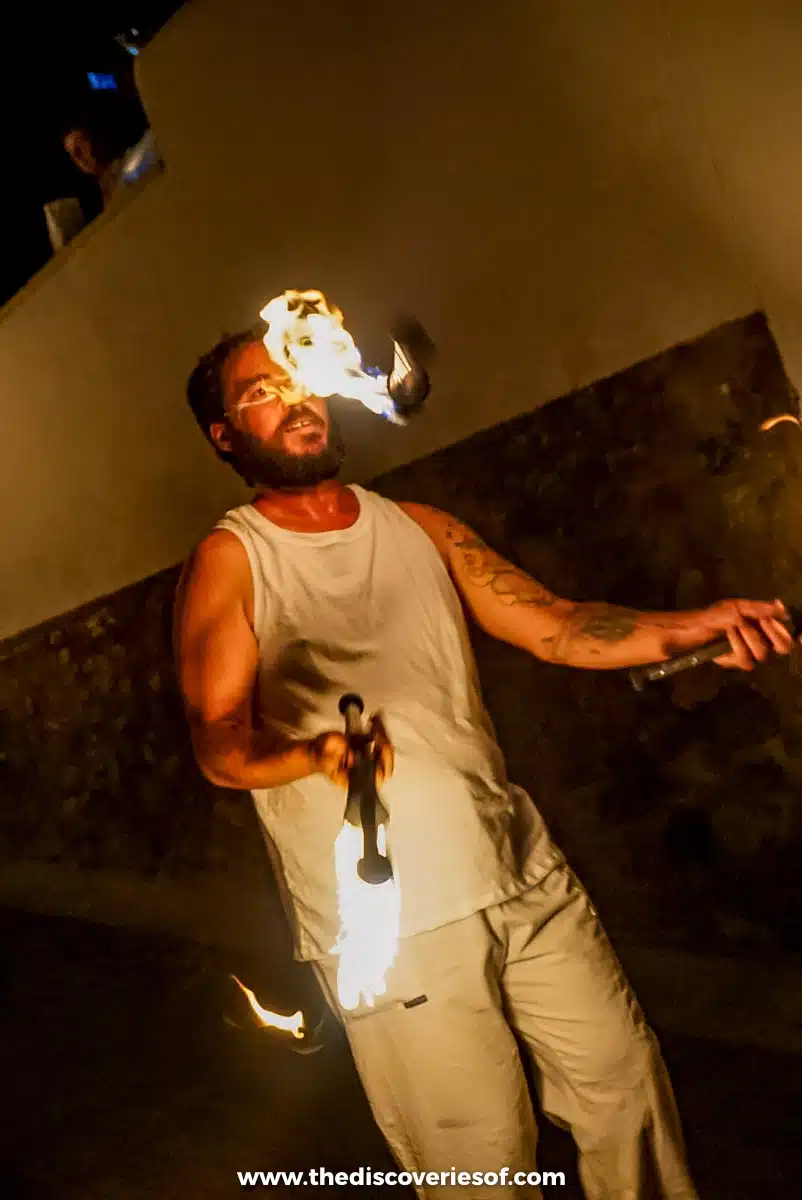
If you can, time your visit around one of the town’s brilliant festivals, when the pueblo comes properly alive. The weekend nearest the 10th of June brings Moors and Christians, a revived tradition in which the whole town dresses up and takes part in a procession commemorating that unique layered history of Moorish and Christian Mojácar.
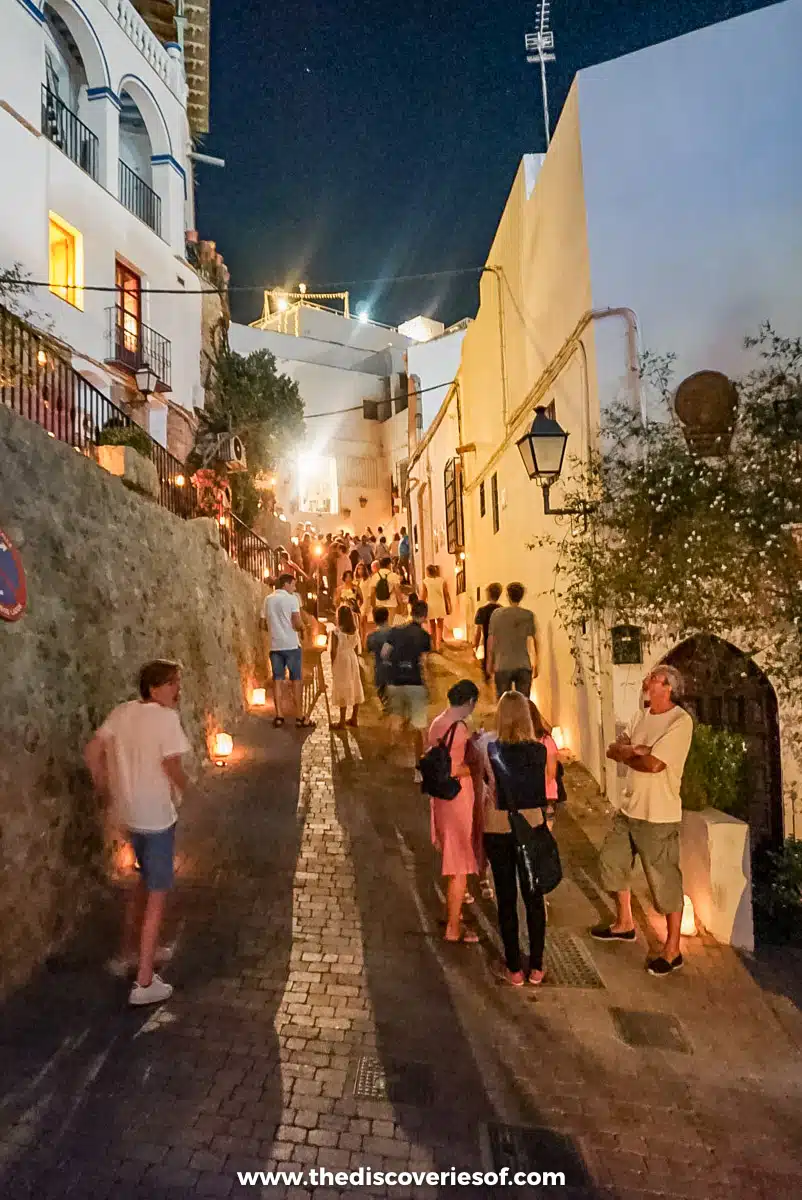
I happened to catch another of the town’s set pieces, the Noche de las Velas (Night of the Candles), when the electric lights are switched off across the old town and replaced with thousands upon thousands of small candles. Live music, fire processions, drumming bands, the whole village transformed. If your trip lines up with either, grab the chance with both hands.
Hike the Coast on the La Mena Footpath
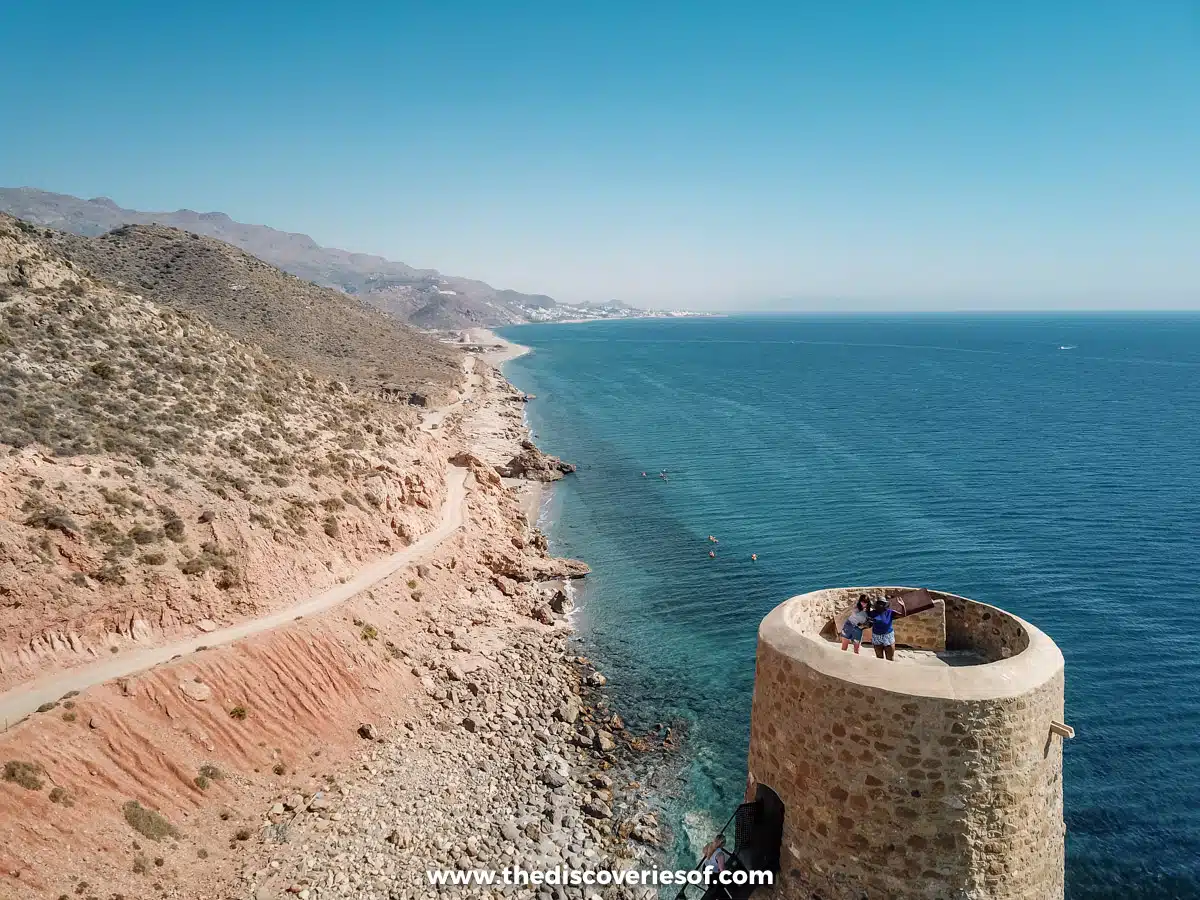
Lace up your boots, because the coastal La Mena hike is too good to miss. If you’re after outdoorsy things to do in Mojácar, this is the first thing I’d point you towards.
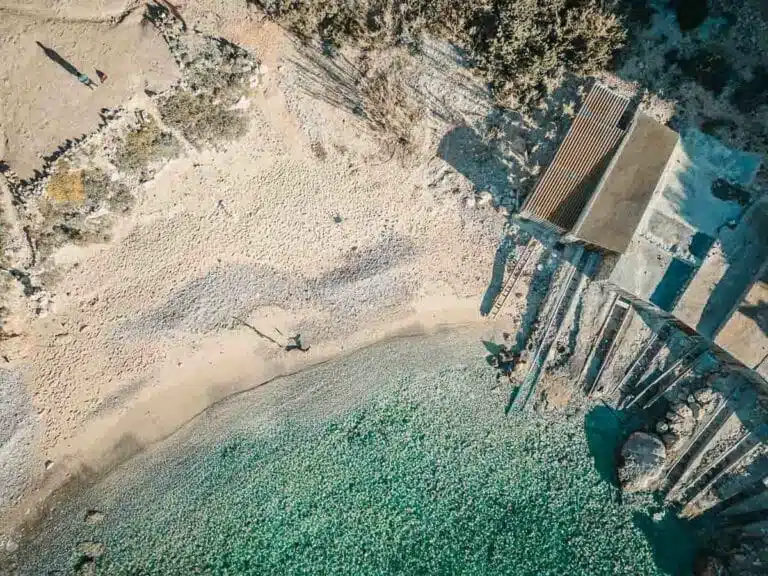
This well-marked, relatively easy trail follows the rugged coastline at the northern edge of the Cabo de Gata-Níjar Natural Park, starting from the southern end of the Mojácar beach strip. After a short uphill stretch, you’re rewarded with views of brilliant blue water fringed by small coves and beaches you can only reach on foot. The beaches stay quiet even in peak season, and I couldn’t resist stopping a couple of times for a swim. Bring your swimmers, or don’t, as this stretch of coast is something of a nudist haven.
Old fortresses and watchtowers punctuate the shoreline. The path takes you towards Macenas Castle and the wonderfully squat Torre de Pirulico, which was my favourite spot on the whole route. Climb the steps to the top of the tower for 180-degree views along the coast in both directions. It’s genuinely spectacular, the kind of scenery that has people double-taking when you tell them it’s mainland Spain.
Top Tip
The full walk is around a 10km round trip. It’s not too tough, but it gets seriously hot during the day and there are no shops, cafés or water stops along the way, so take far more water than you think you’ll need, plus sun cover.
Go Sea Kayaking in the Crystal-Clear Water
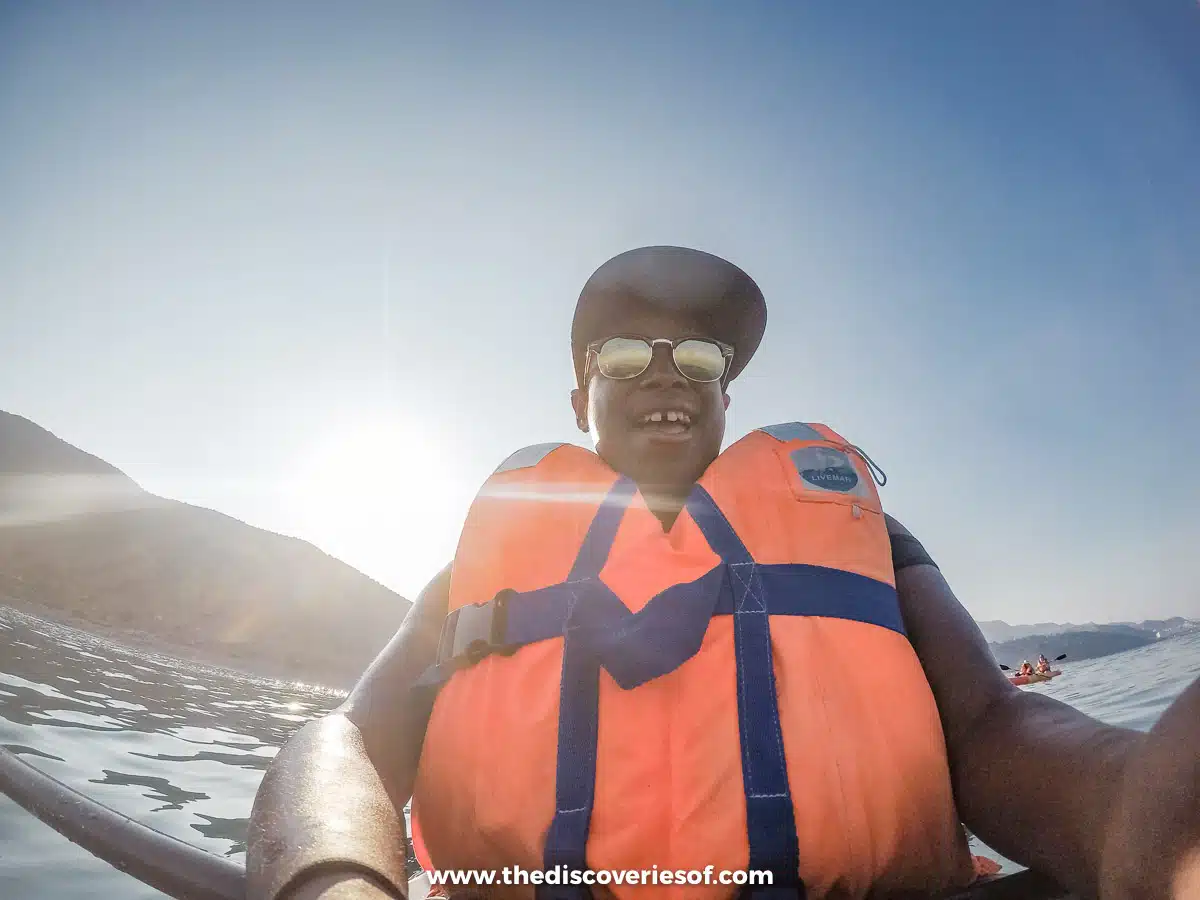
So much of what makes Mojácar special is the natural playground surrounding it, and there’s no better way into it than from the water. I climbed (well, scrambled ungracefully) into a kayak and set off along the coast, and it was one of the highlights of the trip. The water was flat calm and so clear you could see straight down to the sea floor and the marine life drifting below.
If you’ve got the arms for it, book a full-day guided tour that dips into remote coves and stops for a picnic on beaches you’d never otherwise reach. If not, a couple of hours at a gentle pace along the shoreline is just as lovely. Either way, the guides know exactly where to take you.
Find Your Own Hidden Beach
So many people come to Mojácar purely for the beaches that I couldn’t write a things-to-do guide without covering them properly. You could describe Mojácar as a small town with a very large coastline, 17 kilometres of it, around 7 of which are beach.
At the busier end you’ve got the blue-flag Playa de Mojácar (really a string of smaller beaches running along the Paseo Marítimo), backed by beach bars and restaurants and everything you need for an easy day. Further along, Marina de la Torre is a touch quieter. But the real magic, for me, is the string of hidden coves along the Cabo de Gata coast.
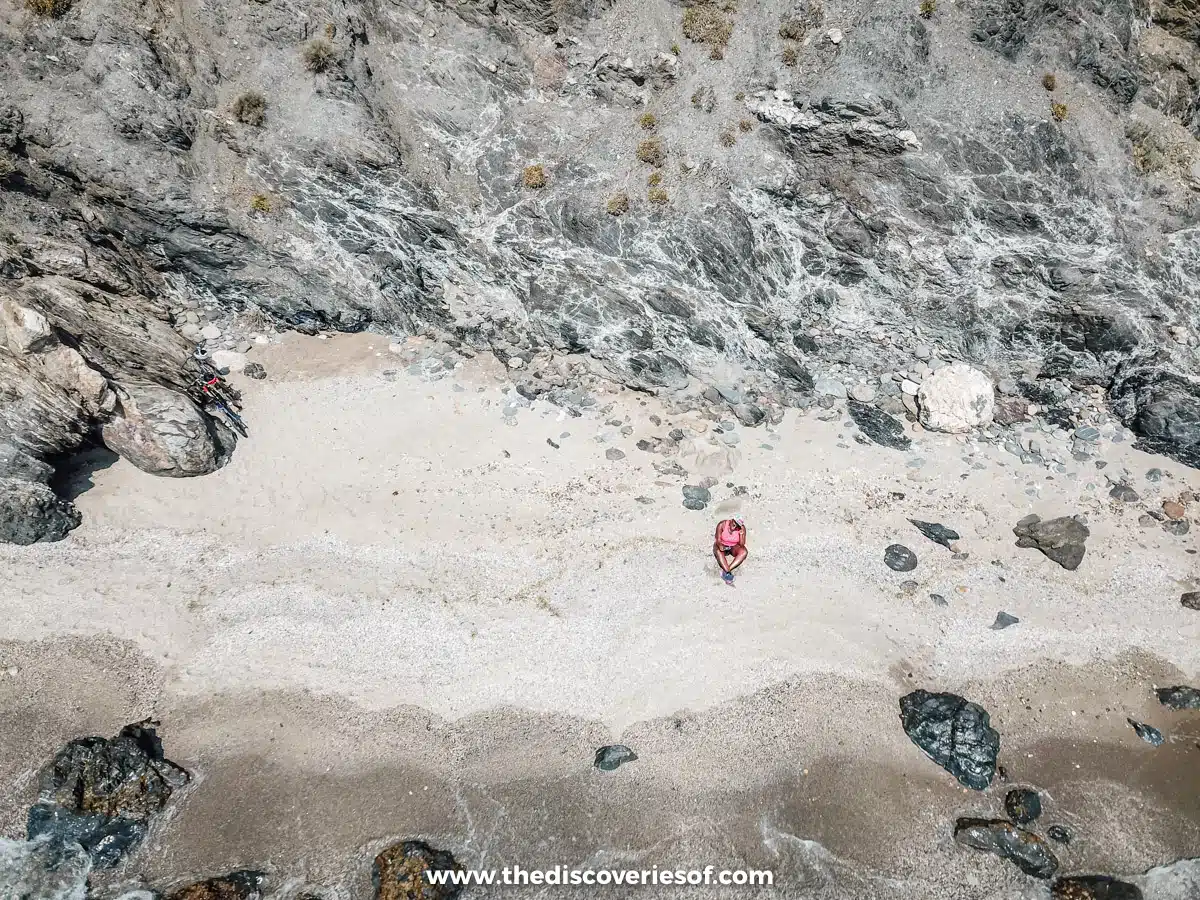
Rather than spend my days on the big beaches, I hopped on the bus (Mojácar has a genuinely reliable service) to the start of the La Mena footpath and walked out to the quieter coves along the trail. They’re every bit as beautiful and a fraction as busy, though you’ll need to bring everything with you, as there are no facilities. If you want that “own private beach” feeling, this is how you get it.
Try Diving in the Cabo de Gata Natural Park
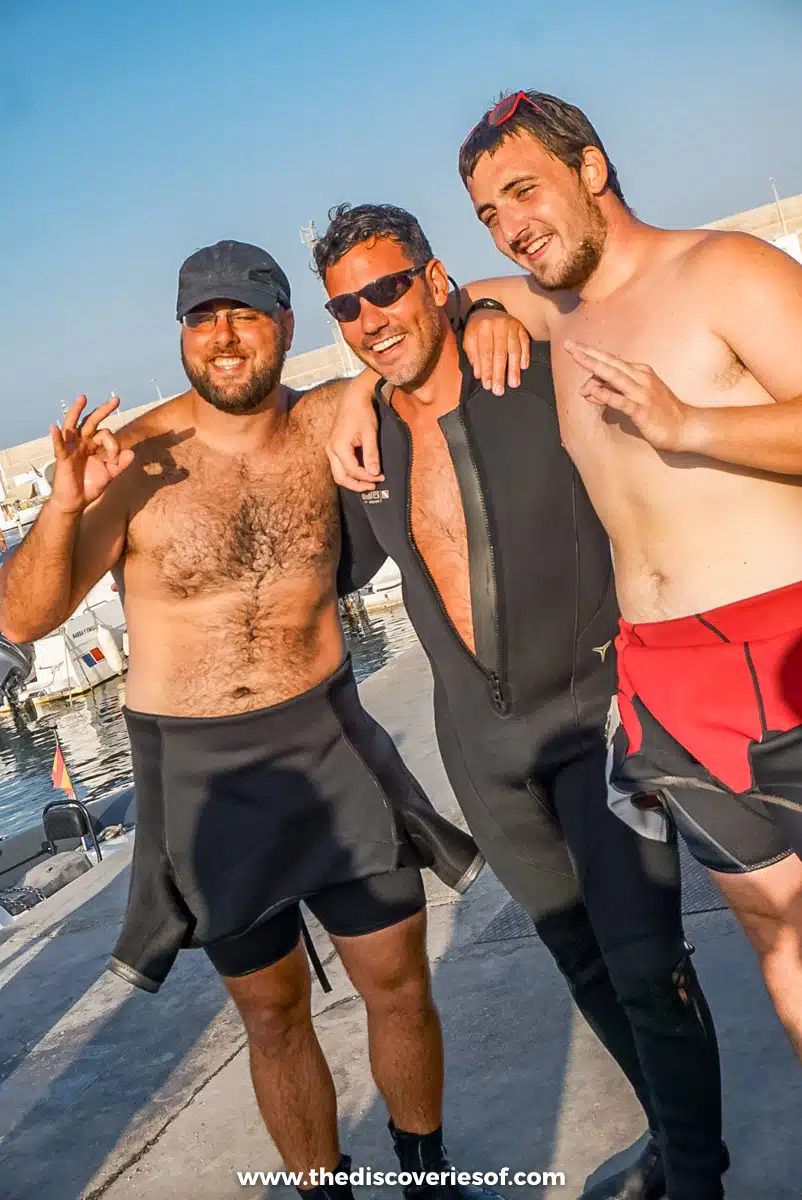
Hands up if you’ve always fancied trying diving but never taken the plunge. I hadn’t really thought of Spain as a diving destination until this trip, but that changed completely when I headed out with the team at Buceo Mojácar.
I’m PADI qualified, but it had been years since my last dive, so I was feeling rusty and happy to be treated like a total beginner: a theory refresher, a run-through of the kit, and a practice session in the pool before we were let loose in the sea the next day. It was fantastic. The team were fun, enthusiastic and genuinely reassuring, and I’ve never felt safer on a dive. The Costa de Almería has great visibility and a lot of marine life, the perfect combination, and my dive buddy pointed out everything as we drifted along, including an octopus tucked on the sea floor. The waters here are part of the protected Cabo de Gata reserve, so the underwater life is genuinely rich. Buceo Mojácar runs year-round and caters to everyone from first-timers doing a discovery dive to full PADI courses.
Work On Your Swing at Marina Golf
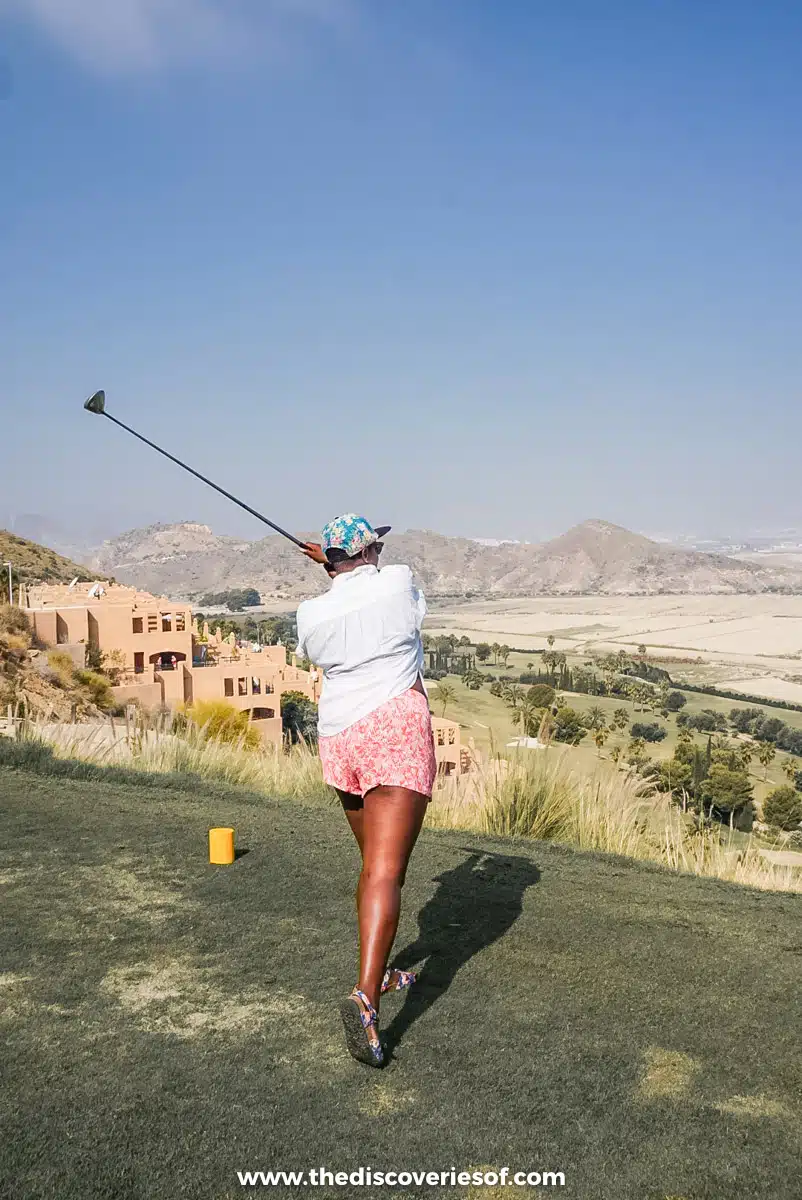
Golf: isn’t that just for retirees and ladies who brunch? Absolutely not, as it turns out. I’d only tried it once before, and I was pretty excited to have a proper lesson with a pro this time round.
We had ours at Marina Golf Mojácar, and it was genuinely good fun. Where else do you get to hammer a buggy up narrow paths and steep slopes, work on your swing, and soak up sweeping coastal views all at once? We finished on the driving range with the pro analysing our swings and offering tips (in my case, mostly “look at the ball”). Ninety minutes wasn’t quite enough to turn me into a natural, but it was a big hit with the whole group, and the setting, with the course rolling down towards the sea, is lovely. Highly recommend, whatever your level.
Feast on Fabulous Food
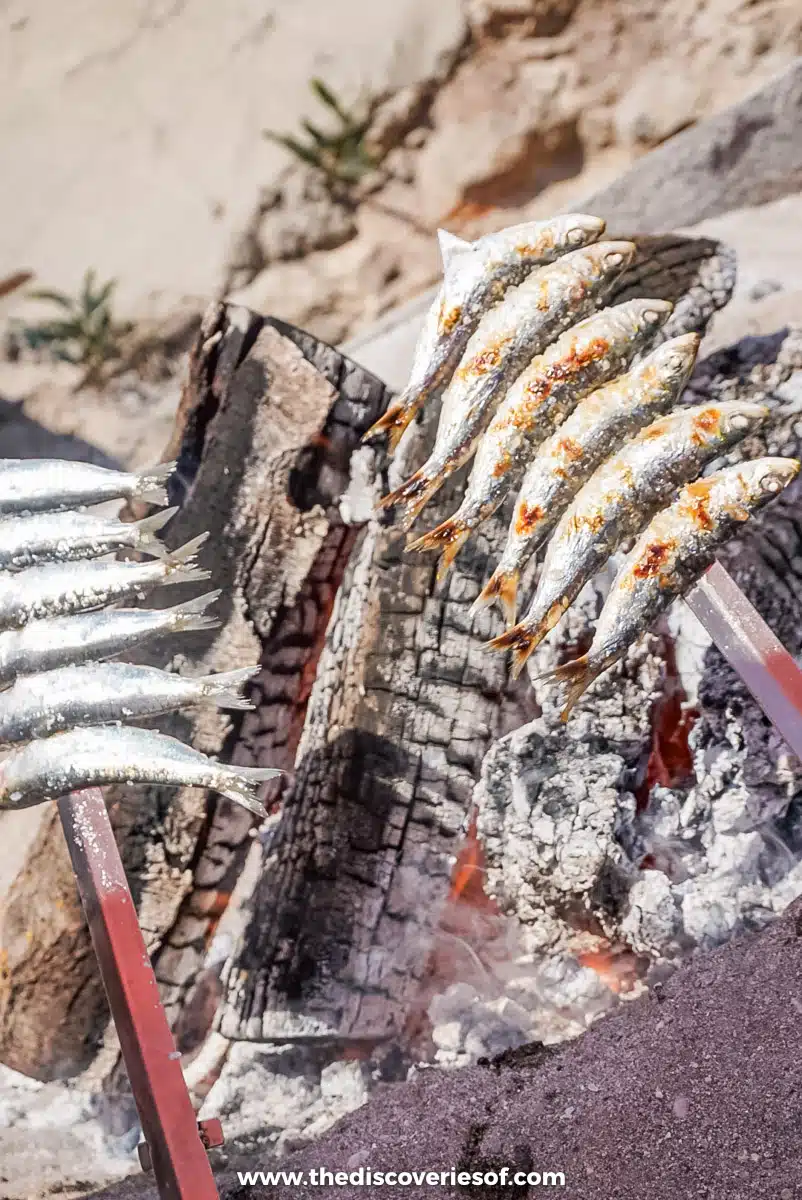
You can’t come to Spain and not eat well, and like much of the Andalucían coast, Mojácar’s kitchen revolves around fish and seafood. Think fresh sardines liberally salted, skewered and grilled over an open wood fire (the espeto), and simply grilled fish glossy with local olive oil. Everything is fresh and full of flavour.
For a relaxed, full-on Andalucían lunch right by the sand, head to the beach bar-restaurant Chiringuito Cala Marina on Marina de la Torre beach, known for its espetos and skewers. For something more special, book Restaurante Cabo Norte, one of the highest-rated restaurants in town and a genuine treat, serving refined, seasonal Mediterranean cooking in a lovely garden setting. I had the bluefin tuna carpaccio and slow-cooked ox cheek in Pedro Ximénez sauce, and I was still dreaming about that meal a month later. It’s deservedly popular, so book ahead.
And of course, don’t leave without doing at least one long, lazy afternoon of tapas and a cold Cruzcampo or a glass of local wine at a beachfront bar. It’s what this coast is made for, and the perfect way to end a day of exploring.
—
So there we are – the coolest things to do in Mojacar. Love it? Read more of my Spain guides:
- Unmissable Things to do in Malaga
- 27 Fun Facts About Spain
- A Step by Step Spain Travel Itinerary
- How to Plan Your Visit to the Real Alcazar of Seville
- Why Menorca is One of Europe’s Hottest Destinations Right Now.
Love this? Save and Share on Pinterest!
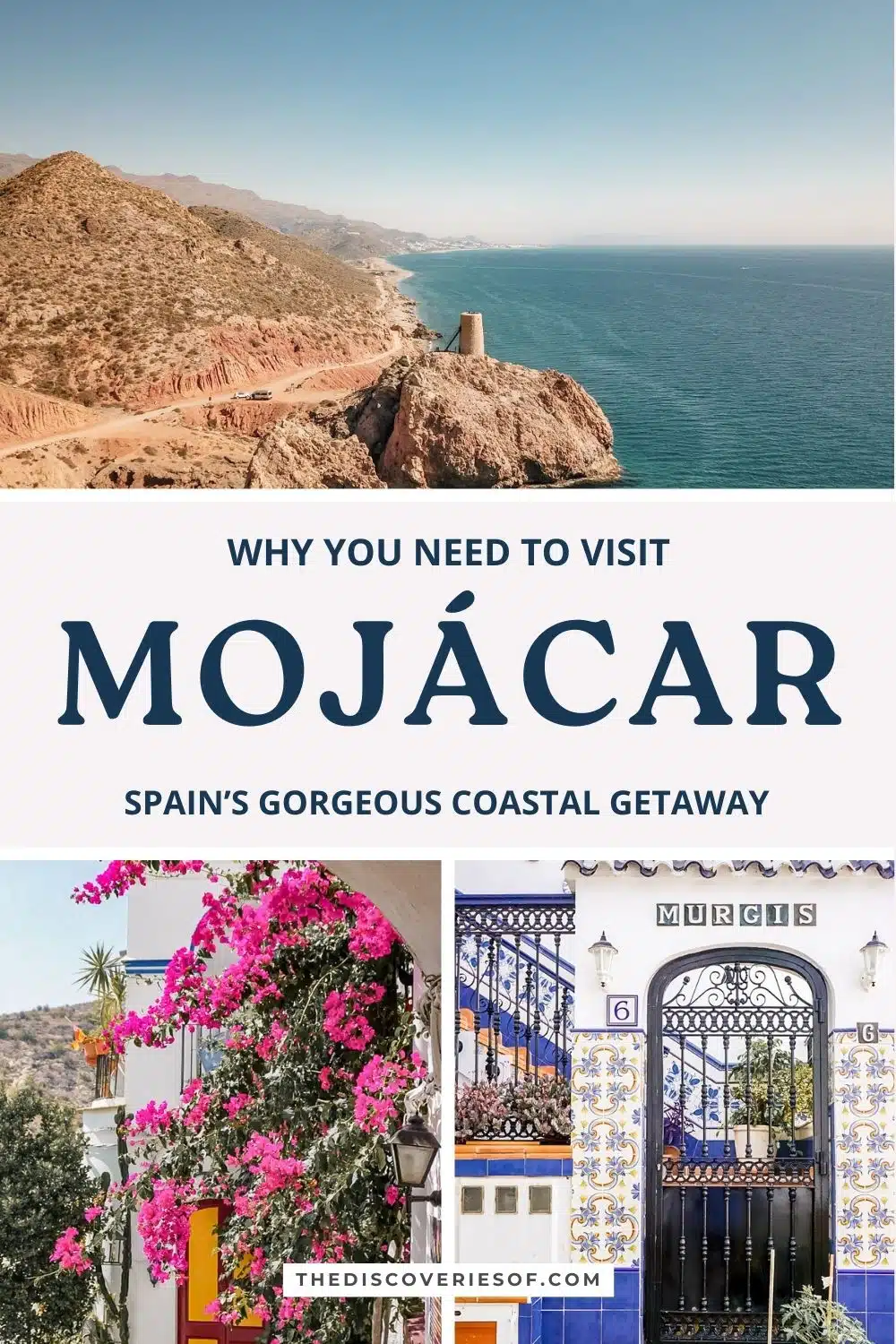
Discover the top things to do, insider tips and hidden gems in our Spain Travel Guide.
Read the guides →
Hi Juliana, what a delightful trip. You covered a lot of ground and experienced such a variety of activities. Very cool you are a listened scuba dive and I’m totally digging the drone work you’ve included in your posts. One of the things that caught my eye visually is the bourganvillae which is also a popular plant in Los Angeles, where I am based. I believe it was brought here by the Spaniards in the 1500s. Crazy to think how very tied we all are here on this planet. Safe travels to you, fellow blogger! ✌️
Hey Jess,
Thank you so much – I’m glad you love the piece. I didn’t know that about the bougainvillea! It’s so true, there are so many ties between different destinations. Hope you are having a wonderful weekend in LA!
i am visiting Mojacar next month, thanks for sharing such an amazing guide