
High above the city, on the site of a medieval king’s palace, Gaudí built a castle of rough green stone with a dragon on its roof. Bellesguard is still a family home, it’s still blissfully quiet, and it’s one of the most rewarding discoveries in Barcelona.
Most people’s Gaudí trail runs from the Sagrada Família to Park Güell, with a stop on Passeig de Gràcia in between. Most people have never even heard of the Gaudí house up in the hills of Sant Gervasi, where a needle-thin spire rises above the treetops and a stone castle sits quietly behind its garden walls.
That castle is Bellesguard, and it’s one of my top picks in the city. I lived in Barcelona for three months and set out to see as many of Gaudí’s buildings as I could, from the big names to the ones most visitors miss. On a clear, blue-sky day I made my way up through the house, from its brick-arched attic to the roof terraces, and stood in an arched stone window looking out over the whole of Barcelona.
It’s Gaudí at his most surprising: restrained on the outside, wildly inventive within, and steeped in a story that goes back more than 600 years.
A castle on a king’s hillside
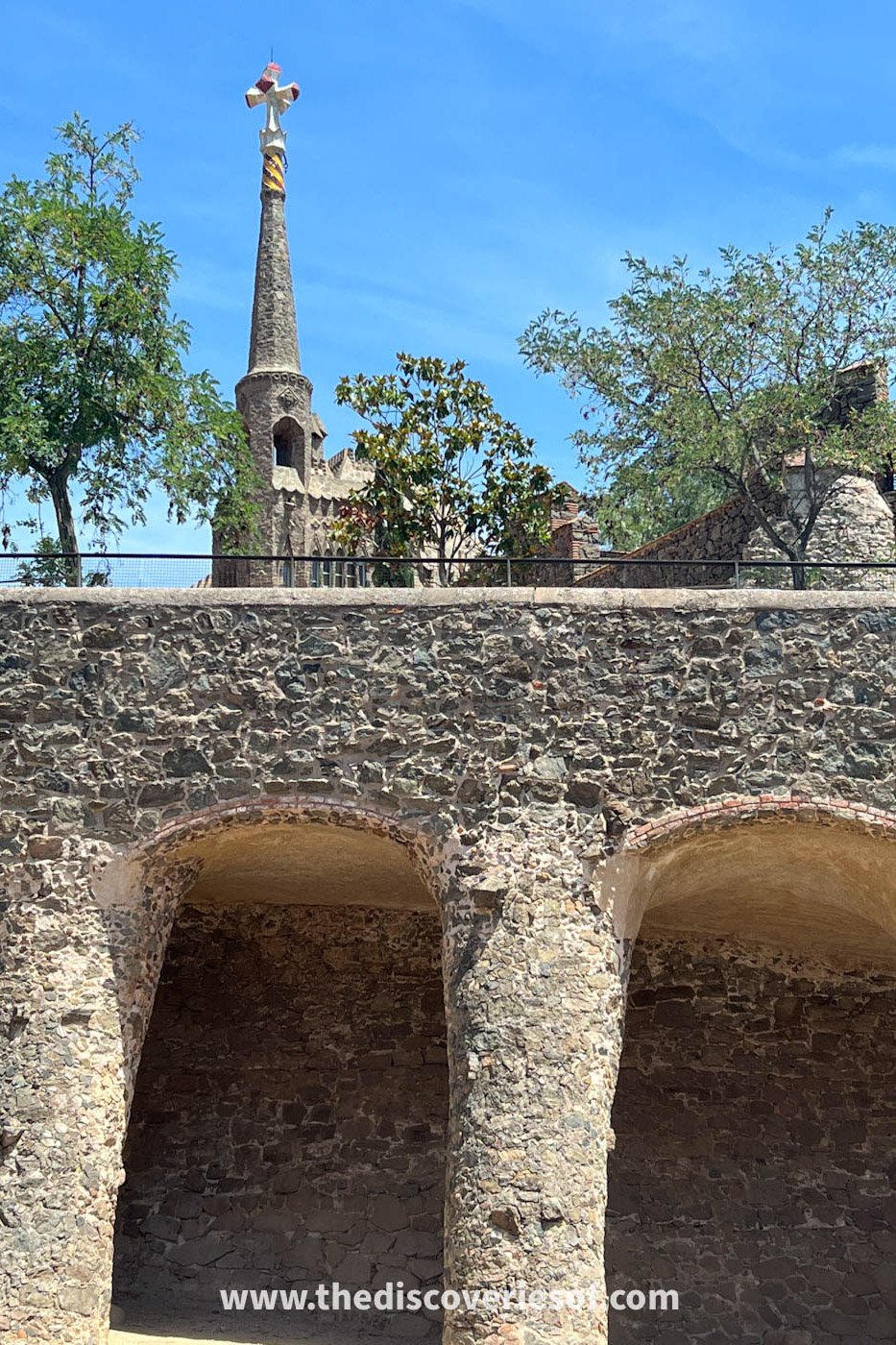
Long before Gaudí, this hillside belonged to Martí l’Humà (Martin the Humane), the last king of the House of Barcelona. The name says it all: Bellesguard means “beautiful view” in Catalan.
The palace was finished in 1409, and Martí died without an heir the following year, ending a dynasty that had ruled for around five centuries. Over the centuries that followed, the palace fell into ruin.
In 1900, Jaume Figueras bought the estate, and his widow, Maria Sagués, asked Gaudí to build a new house there. Rather than sweep the past away, he built a tribute to it: a neo-Gothic manor with battlements, pointed windows and a tower, made from greenish stone quarried on the site so the building seems to grow out of the hillside. It was built between 1900 and 1909, while Gaudí was also working on Park Güell, and the remains of the old palace walls still stand in the garden.
Stone outside, Gaudí within
The tower and its cross
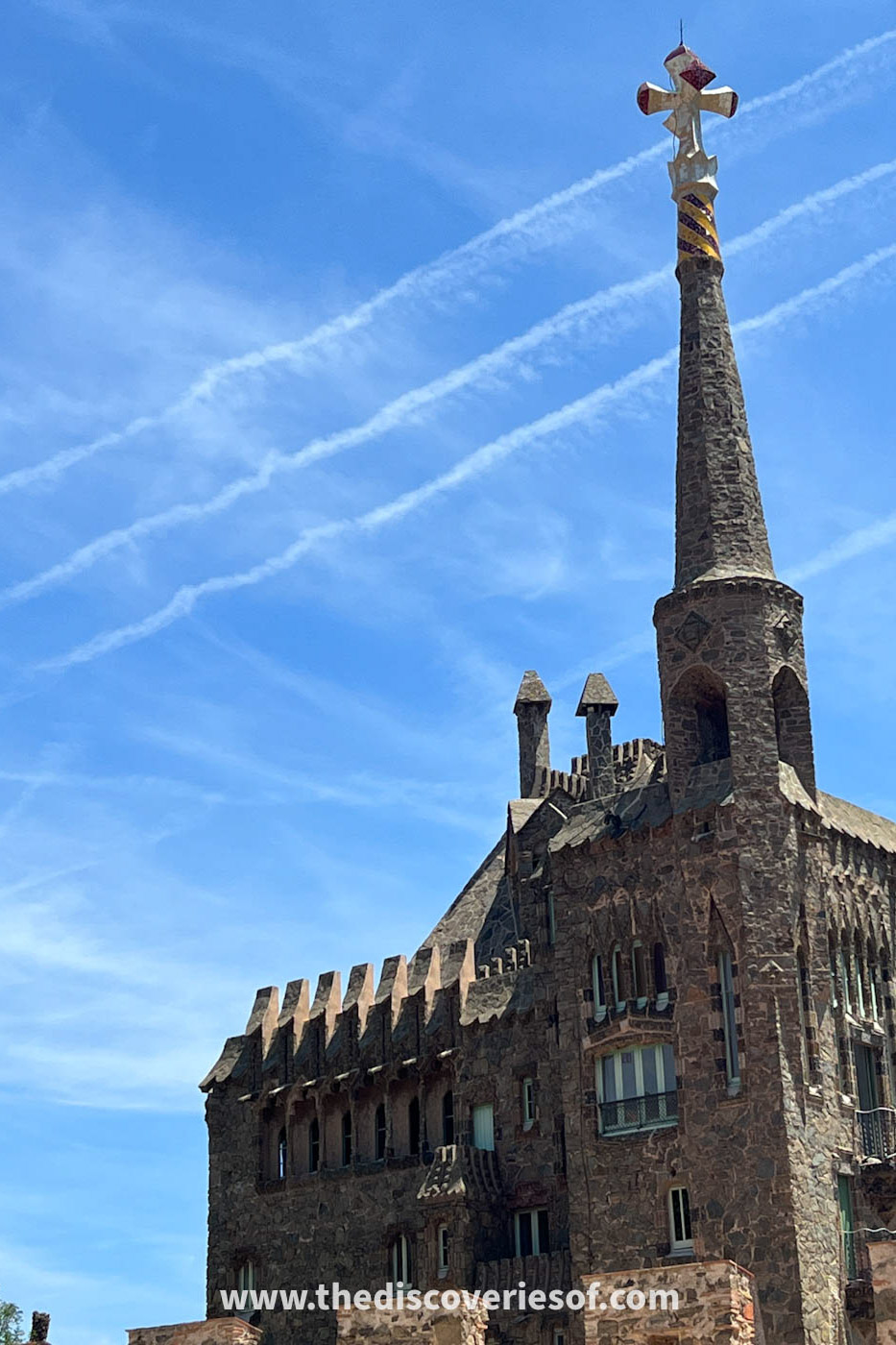
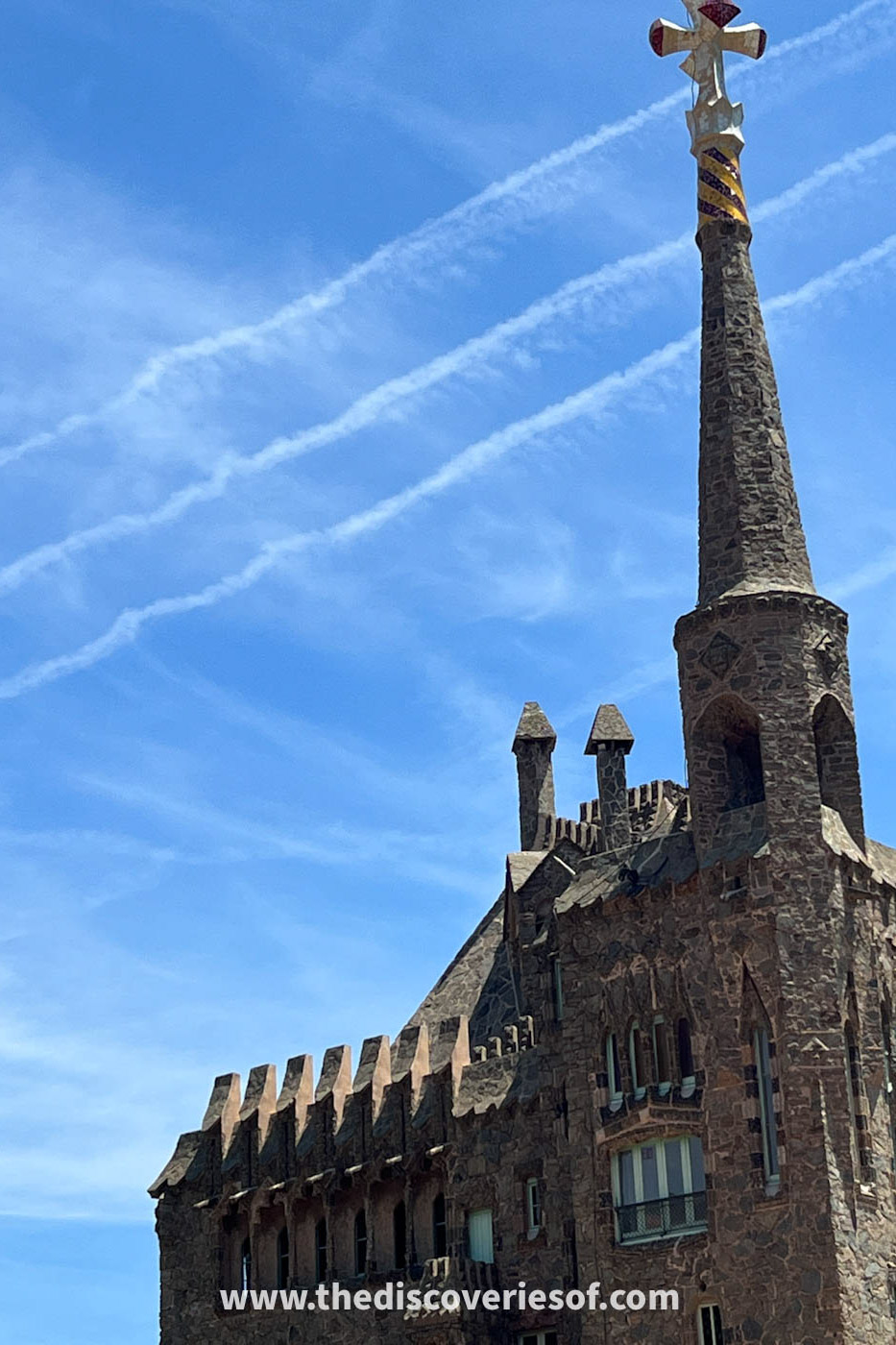
From the outside, Bellesguard looks almost severe, until you start noticing the details. The tower rises from one corner to a spire so slender it barely seems to hold together, and at the very top sits Gaudí’s four-armed cross, decorated with mosaics in the red and yellow of the Catalan flag. The band around the base of the spire is often read as a crown, a nod to the Crown of Aragon.
A star over the door
Above the entrance, look for the stained-glass window shaped like an eight-pointed star, sometimes called the star of Venus. The mosaic benches by the entrance were made by Domènec Sugrañes, one of Gaudí’s assistants, and they’re the first flash of colour against all that stone.
Climbing up to the attic
Step inside and the castle gives way to light, white walls and windows in unexpected places. But the real revelation is at the top of the house.
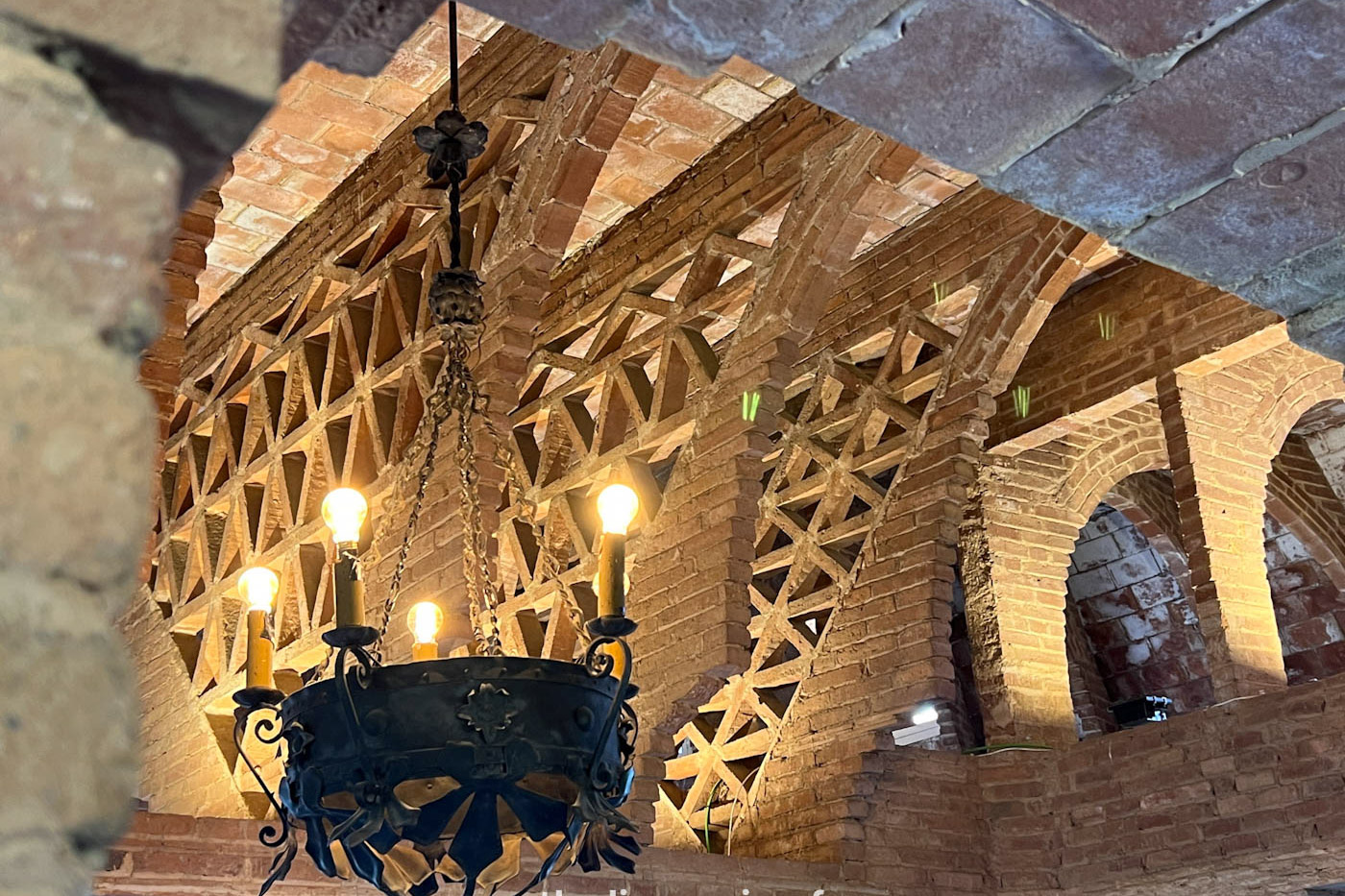
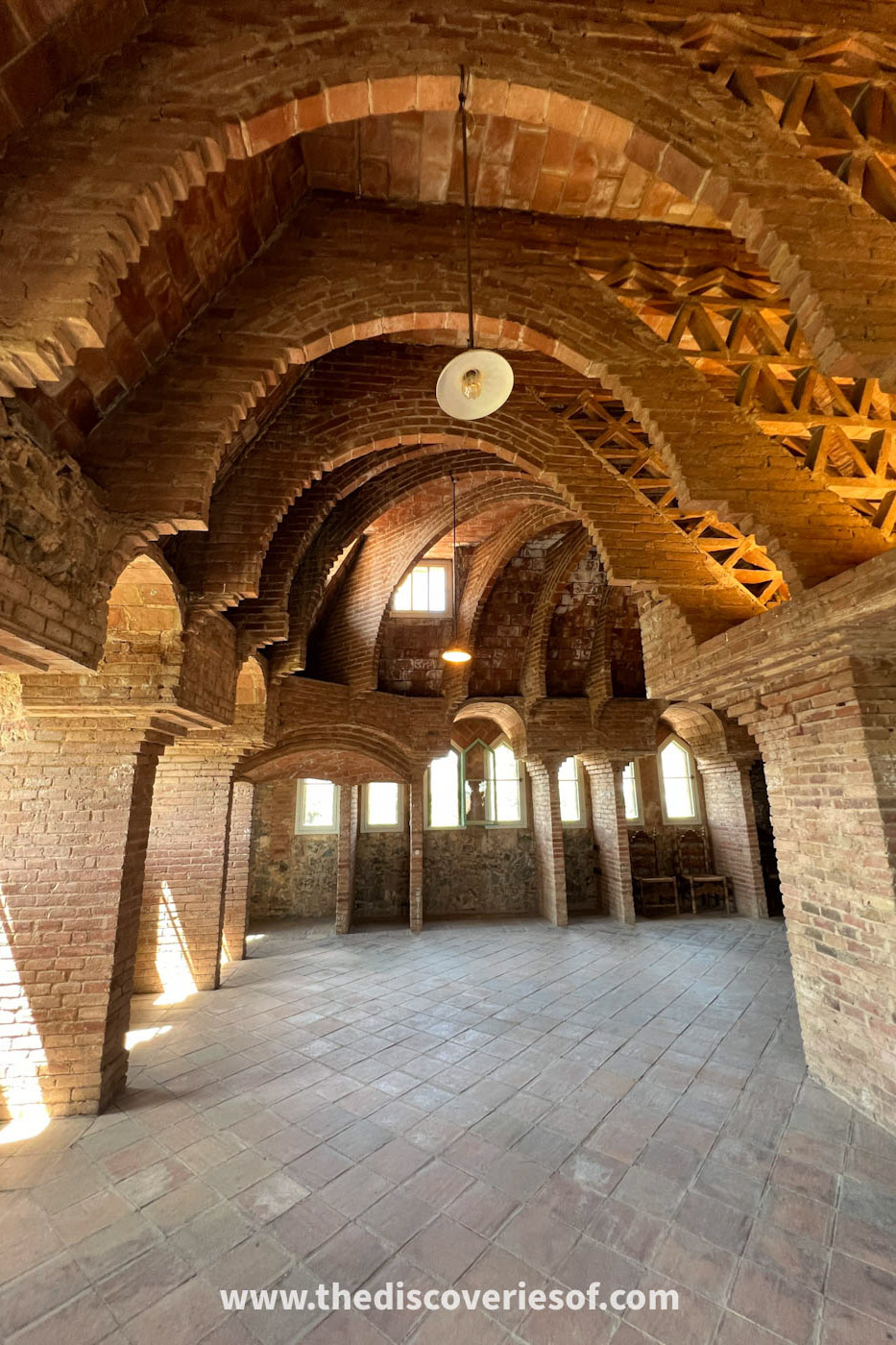
Gaudí roofed Bellesguard with an attic of exposed brick arches and Catalan vaults, made from layers of thin brick, and walking into it feels like stepping inside the ribcage of some huge creature. Light falls through the small windows along the sides, and a wrought-iron chandelier hangs from the centre. It’s one of the most striking rooms Gaudí ever designed, and most people don’t even know it exists.
On the dragon’s back
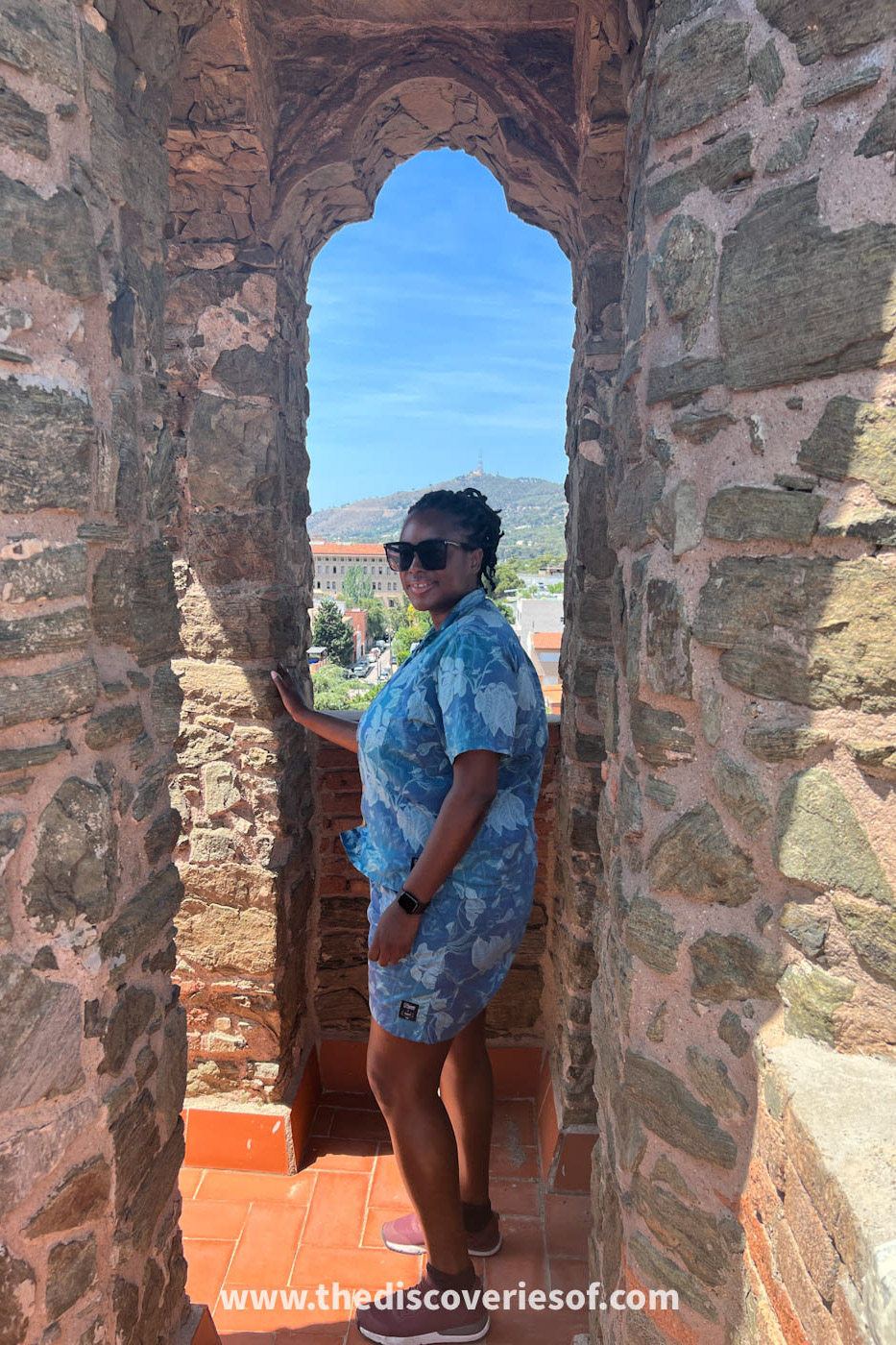
Keep climbing and you come out onto the roof, and onto the back of a dragon. Gaudí shaped the slate roof like one: once you know to look for it, you can make out its scaly spine, its nostrils and two windows for eyes.
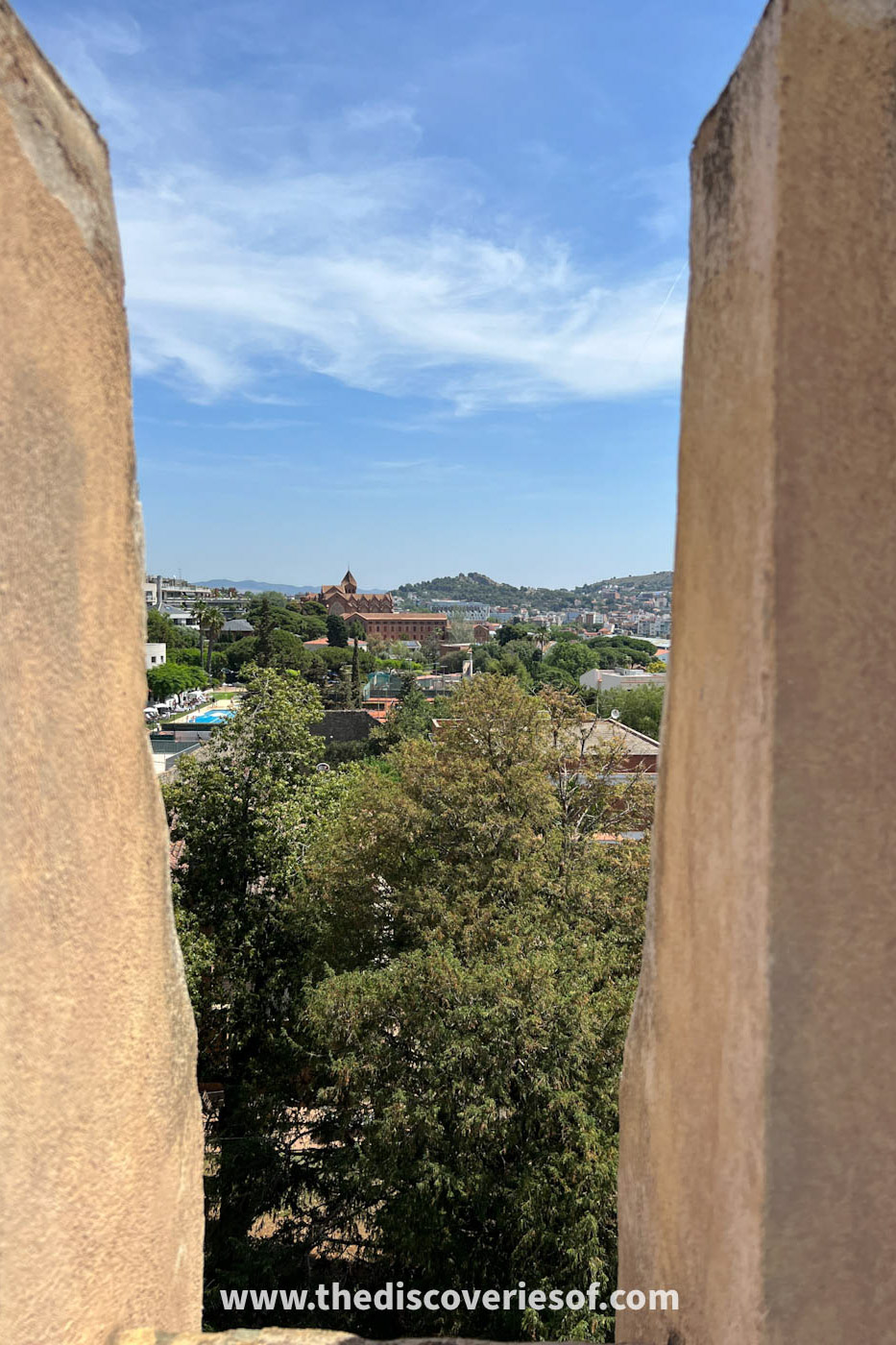
The battlements frame views across the treetops of Sant Gervasi to the rest of the city, and the arched stone windows make the perfect frame for a photo. Standing up here, it’s easy to see why a king chose this hillside.
Lingering in the gardens
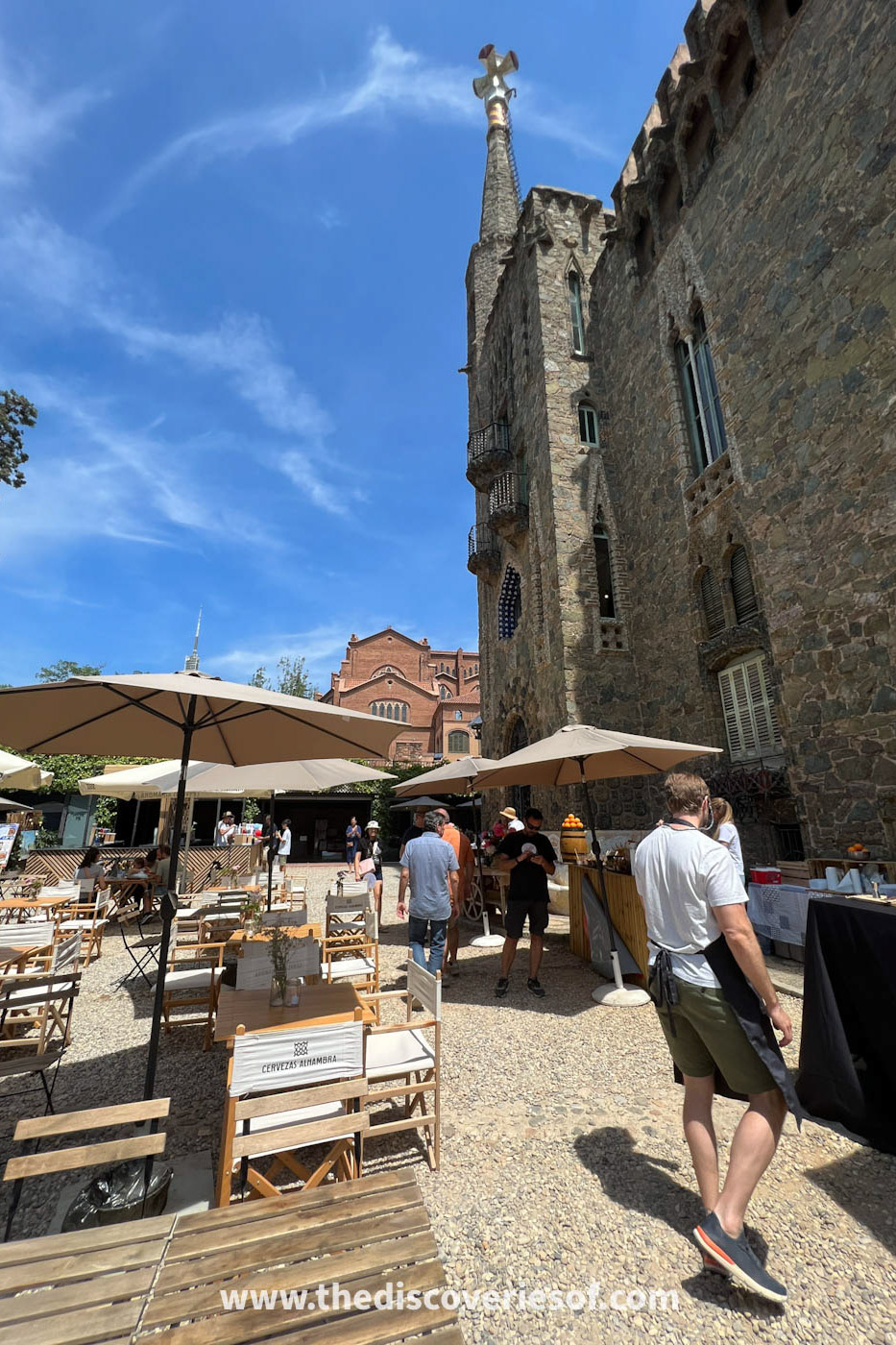
Don’t rush away once you’re back on the ground. The gardens hold what’s left of Martí’s palace walls and some of the best angles on the tower, and on the day I went, there were tables and parasols set out on the terrace in front of the house.
A few minutes’ walk away is the Viaducte de Bellesguard, a stretch of Gaudí’s rough-stone road viaduct. It’s not worth going out of your way for on its own, but if you’ve made it up here, pop down the walkway to take a look.
A house with more than one life
Bellesguard’s story didn’t end with Gaudí. In 1944, the house was bought by the Guilera family, and Dr Lluís Guilera used it as a cancer clinic, which ran until 1974. The Guileras still own Bellesguard and live there, and they first opened it to visitors in 2013. That’s part of what makes a visit feel so different from the big Gaudí sites: you’re a guest in someone’s home, not one of thousands passing through a museum.
Why Bellesguard deserves a place on your Gaudí trail
Bellesguard sits in the middle of Gaudí’s career. It came after Casa Vicens, his first house, and was built at the same time as Park Güell, just before he took on Casa Batlló and Casa Milà. It’s proof that he could be restrained when a site called for it, and still slip a dragon onto the roof.
If you’ve already ticked off the famous names, this is where to go next. My guide to Gaudí’s Barcelona covers the full trail, and if you’d rather see his work on foot, try my self-guided Modernisme walk.
Before you go
- Where: Carrer de Bellesguard 20, in Sant Gervasi. Take the FGC train (L7) from Plaça de Catalunya to Avinguda Tibidabo, then the 196 bus, or walk about 15 minutes uphill. A taxi from the centre takes about 15 minutes.
- When: Tuesday to Sunday from 10am to 3pm, with last entry in the early afternoon. It’s closed on Mondays (except public holidays), 1 and 6 January, and 25 and 26 December.
- Tickets: about €12 with an audio guide (in six languages, including English) or about €20 for a guided tour. English tours run from Thursday to Sunday at set times. You can usually buy a ticket on the day.
- Time: about an hour for the house, plus time in the gardens.
- Good to know: there are plenty of stairs, including the climb to the roof.
Do
Book a guided tour of Bellesguard to hear the stories behind the symbols, from the dragon on the roof to the cross on the spire.
Map
Read next
- Gaudí’s Barcelona
- Casa Vicens, Gaudí’s first house
- Park Güell: how to visit
- Things to do in Barcelona
- How to visit La Pedrera, Gaudí’s stone quarry on Passeig de Gràcia
Love this? Save and share on Pinterest
Discover the top things to do, insider tips and hidden gems in our Spain Travel Guide.
Read the guides →