San Sebastian might be most famous for its food, but its beaches are among the finest in Spain. Here’s my guide to the best stretches of sand the city has to offer, and what each one is actually like.
San Sebastian has a particular hold on me. Of all the cities in Spain, this one manages to be simultaneously world-class in its ambitions and completely unpretentious in its character, the Basque version of sophisticated.
The food culture here is genuinely extraordinary, and I’ve written about it at length elsewhere. But what sometimes gets overlooked is that San Sebastian is also a genuine beach destination, and the beaches aren’t an afterthought. Each has its own distinct character, from the elegant crescent of La Concha to the raw surf breaks of Zurriola, and choosing the right one for your day makes a real difference.
If you’re planning a trip to the Basque Country, do add the beaches to your Spain itinerary, just bring your swimsuit, and probably a light layer for the evening.
Best Beaches in San Sebastian
Playa de la Concha
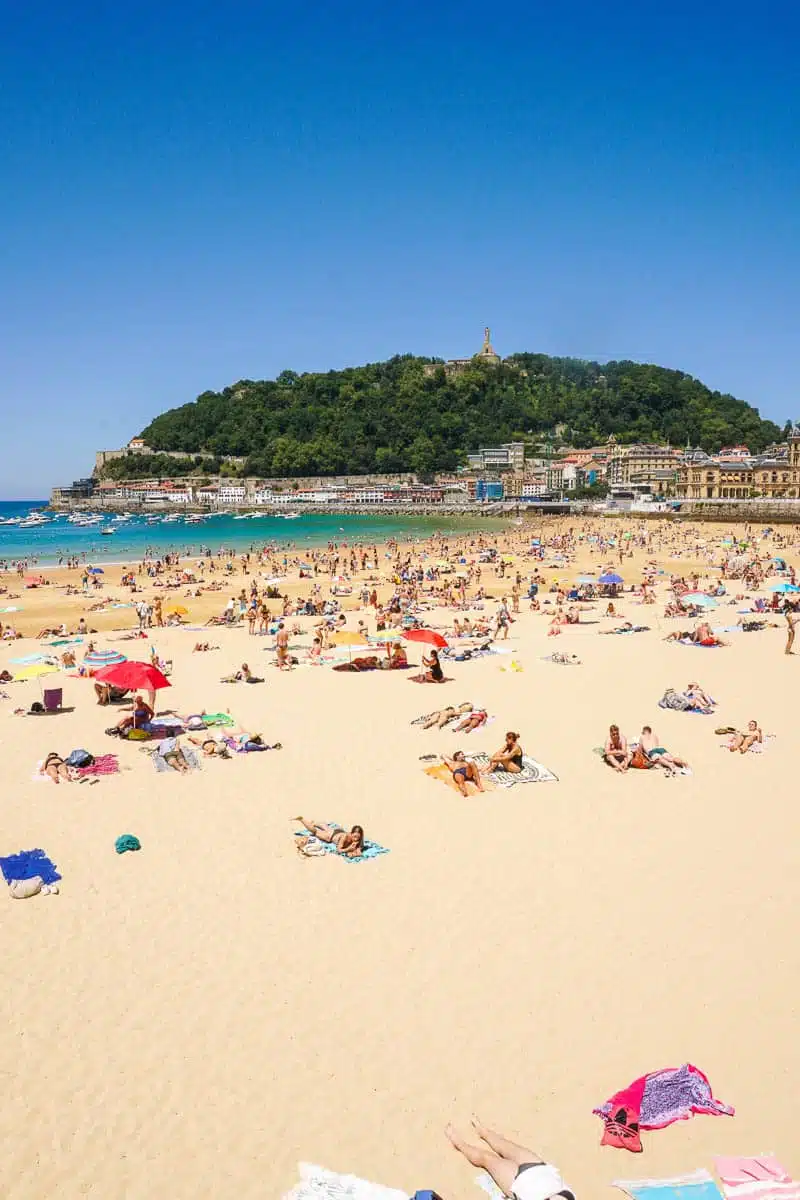
La Concha is the beach that defines San Sebastian’s identity, and it earns the reputation. The crescent of golden sand curves around the bay below the old city, backed by a graceful promenade and the ornate 19th-century architecture of the Belle Époque hotels that line the seafront. The water is calm enough to swim comfortably, and on a clear day the small island of Santa Clara sits in the middle of the bay like a prop from a painting.
It is busy in summer, there is no getting around that. La Concha is one of the most famous urban beaches in Europe and it shows in July and August. But the infrastructure is excellent: showers, changing rooms, lifeguards on duty, and the promenade behind lined with restaurants and pintxos bars. If you want to see San Sebastian at its most quintessentially itself, this is the beach. Go early in the morning, walk the promenade before the crowds arrive, and then settle into the kind of unhurried beach day that Spaniards do better than anyone.
Playa de la Zurriola
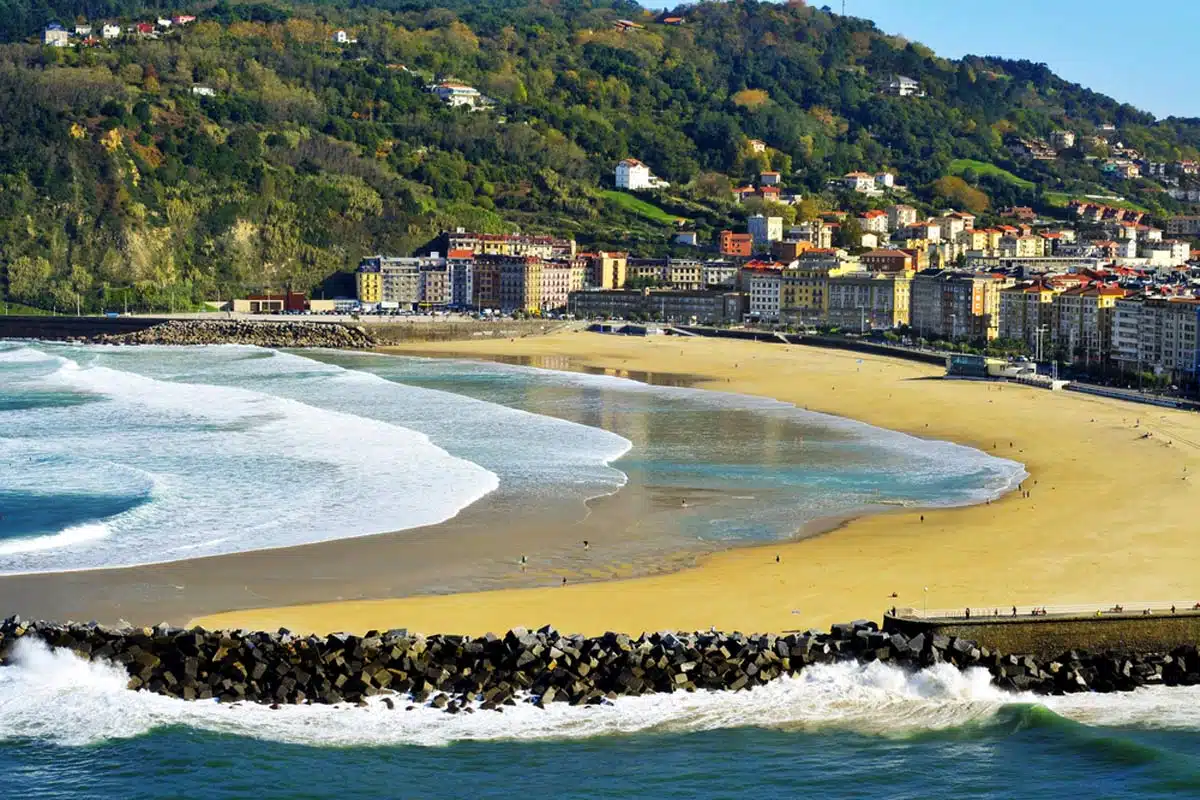
Zurriola is the surfer’s beach, and it wears the identity well. On the eastern side of the Urumea River from La Concha, it attracts a younger and more alternative crowd, surf schools operate from the sand throughout the season, and on a good day you can watch genuinely impressive surfing while having a coffee at one of the nearby bars.
The waves here are bigger and less predictable than at La Concha or Ondarreta, which makes it unsuitable for young children but ideal for anyone who wants to learn or improve. The surrounding Gros neighbourhood, home to some of the best pintxos bars in a city that takes pintxos extremely seriously, makes Zurriola particularly easy to incorporate into a full day. Surf in the morning, eat your way through Gros in the afternoon.
A note on the topless/nudist culture: San Sebastian is notably relaxed about this by Spanish standards. You may encounter topless sunbathing at Zurriola and several other beaches on this list, nobody will make anything of it.
Playa de Ondarreta
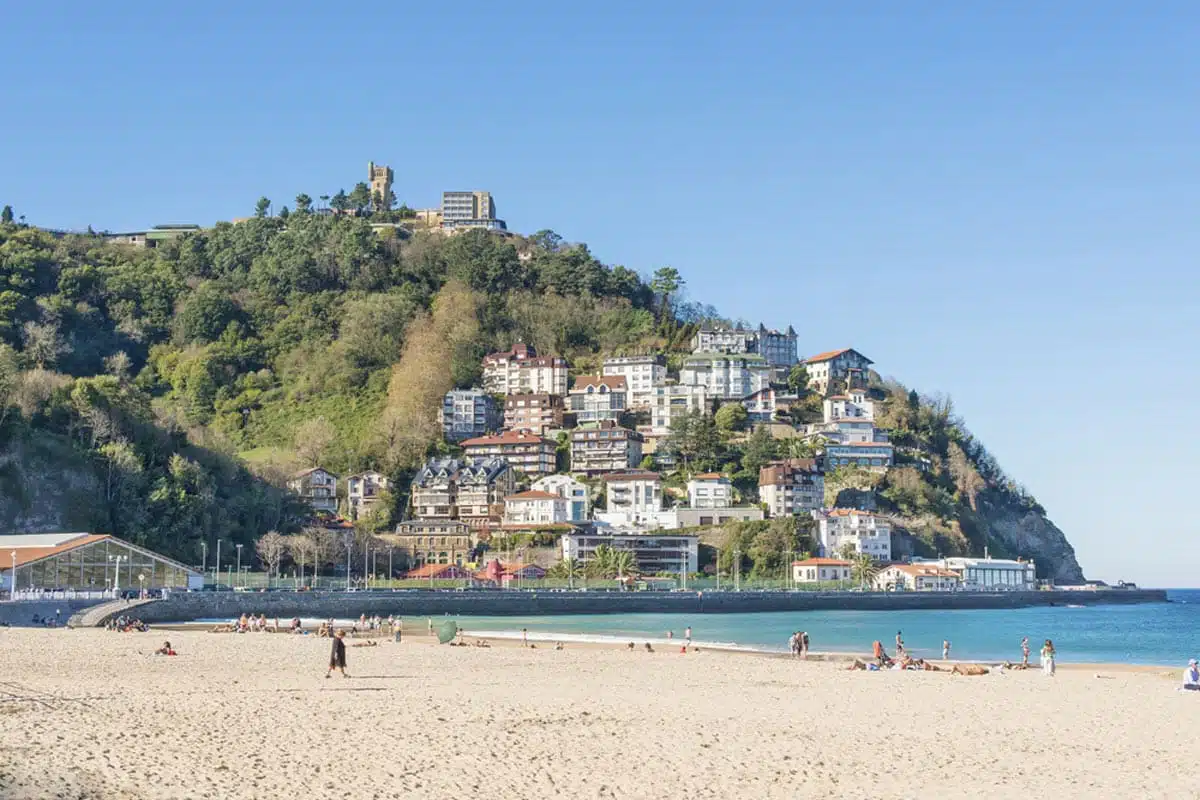
Ondarreta is La Concha’s quieter sibling, separated from it by the rocky outcrop that holds the Palacio de Miramar, the royal summer palace, which sits on the headland between the two beaches and whose gardens are open to the public. The beach is broadly similar in character to La Concha but generally less crowded, the sand slightly firmer, and the atmosphere more local. This is where San Sebastián families go.
It works particularly well for a day with children: the calm water, beach volleyball courts, proper changing facilities and the range of bars and restaurants immediately behind it make it the most practically comfortable beach in the city. The sculpture at the western end of the beach, Eduardo Chillida’s Peine del Viento (Wind Combs), three iron combs embedded in the rock above the sea, is one of the finest pieces of public art in Spain and worth seeing regardless of your beach agenda.
Playa de la Isla Santa Clara
Playa de la Isla Santa Clara is unlike anything else in San Sebastian. The small island in the middle of the bay, which you can see from La Concha, sitting there looking intriguingly inaccessible, has a tiny beach, a small chapel and walking paths through the trees. Getting there means a short boat ride from the main beaches, which is operated by Motoras de la Isla from the eastern end of Monte Urgull near Club Nautico. Sailings run daily from 1 June to 30 September.
The beach is small, and it can feel crowded despite the effort required to reach it, though even a busy day on Isla Santa Clara feels considerably less hectic than the main city beaches in peak season. The appeal is partly the swimming (the water is clean and calm) and partly the sense of mild adventure that comes from being on an island in the middle of a city bay. It is a genuinely unusual experience.
Getting there: Head to the eastern end of Monte Urgull, near Club Nautico. Motoras de la Isla has been operating the ferry service for over 80 years. Daily sailings 1 June to 30 September.
Cala Tximistarri
Looking for something more secluded? Cala Tximistarri, also written Cala Chimistari, is a small bay pressed between limestone cliffs that rise nearly 100 metres on either side. It requires a winding path to reach it, which filters out the crowds, and the reward is a beautiful cove with crystal-clear water and a distinctly different atmosphere from the city’s main beaches.
The path to the beach is part of the experience, steep, and worth wearing proper footwear for. Once you’re there, the scale of the cliffs and the quality of the swimming make the effort worthwhile. There are no facilities to speak of, so come prepared. Arrive early, particularly in summer.
Playa de Zarautz
A little further along the Basque coast, about 20 kilometres west of San Sebastian, Zarautz is worth the extra distance. This is the longest beach in the Basque Country, with excellent consistent waves that attract international surfing competitions and a lively promenade of shops, bars and restaurants running behind the sand.
The surf here can reach impressive heights, and the atmosphere during competition events is electric, if you happen to be in the area when a competition is running, it is absolutely worth watching. On quieter days, the beach is simply a very beautiful place to spend a few hours, with the old fishing village visible on the hill above and the Atlantic stretching out in front.
Getting there: About 30 minutes by local train (Euskotren) from San Sebastián, one of the more enjoyable short train journeys in the Basque Country, running along the coast.
Playa de Gros
The Gros neighbourhood’s beach is technically part of Zurriola, but it has earned a separate identity as the beating heart of San Sebastián’s most interesting neighbourhood. The pintxos bars on Calle Tolosa Lekuona and Calle Mari Kalea are among the finest in the city, this is the area locals point to when they say the food in San Sebastián has moved well beyond the Old Town tourist circuit.
The beach itself is sandier and more sheltered on the Gros side than at the Zurriola surf end. It works well as a base for a relaxed morning swim followed by a long pintxos lunch in the neighbourhood, which is, in my view, the ideal way to spend a Wednesday afternoon in San Sebastián.
Playa de Hendaia
Just across the French border, a 40-minute drive or an easy Euskotren ride, Hendaye has the longest beach on the Basque coast. The Deux Jumeaux (Two Twins) rocks at the southern end of the beach are one of the more distinctive natural features of this stretch of coastline, and the views back toward Spain are excellent.
This is a genuinely beautiful beach and completely different in atmosphere from San Sebastián’s city beaches, wider, less crowded, with a Franco-Basque character that feels distinct from either France or Spain. Bringing a picnic and spending an afternoon here is one of the more rewarding ways to use a day based in San Sebastián, particularly for anyone who wants a beach without the summer crowds of the main city bays.
Getting there: Euskotren from San Sebastián Amara station to Hendaia, about 45 minutes. You cross into France on the train. Bring your passport if you have one.
Practical Tips for Exploring San Sebastian’s Beaches
When to Visit
Summer (June to August) is peak season, warm, busy, full of life, and booked out well in advance. September is genuinely excellent: the water is still warm from the summer, the crowds thin considerably and prices drop. Spring and autumn work well if you’re not coming primarily for swimming but want the city’s character without the queues. Winter is for the serious surfers and the serious eaters.
Where to Stay
For beach access, the Parte Vieja (Old Town), Centro and Gros neighbourhoods are all within walking distance of the main beaches. Gros is my preference, closest to Zurriola, some of the best bars in the city, and a more local character than the Old Town.
Getting Around
Most of San Sebastián’s beaches are within easy walking distance of the city centre. Zurriola is about 20 minutes on foot from the Old Town; La Concha and Ondarreta are even closer. Zarautz and Hendaia are best reached by the Euskotren local railway.
Can You Swim?
Yes, absolutely. La Concha, Ondarreta and Isla Santa Clara all have calm water suitable for swimming. Zurriola is for surfing and should be treated with respect by casual swimmers. Cala Tximistarri and Hendaia are both good for swimming in calm conditions.
San Sebastian Beaches: Map
San Sebastian Beaches: Read More Spain Guides
Love This? Save and Share on Pinterest

Discover the top things to do, insider tips and hidden gems in our Spain Travel Guide.
Read the guides →