From the treasure-packed halls of the Egyptian Museum to the royal mummies at NMEC and Tutankhamun’s gold at the brand-new Grand Egyptian Museum, these are the best museums in Cairo, what each one does best and how to fit them into your trip.
Cairo is a city that rewards museum lovers like few others on earth. Within a few kilometres of each other you’ll find the world’s greatest collection of ancient Egyptian antiquities, a hall of royal mummies that includes Ramses II and Hatshepsut, and a brand-new museum built on the edge of the desert to show off Tutankhamun’s treasure in full.
I’ll be honest: I’m a geek. There’s no niche historical fact I don’t want to know, so I made time for the museums. I spent about three hours in the Egyptian Museum on my first full day, after a morning at the pyramids, then came back to the city at the end of my trip and spent the afternoon at the National Museum of Egyptian Civilisation (NMEC), after a morning in the Citadel and Coptic Cairo.
Things have moved on since then. Tutankhamun’s treasures have left the old museum on Tahrir Square for the Grand Egyptian Museum (GEM) near the pyramids, which finally opened in full in November 2025. So this guide covers the two museums I visited, the GEM as it is now, and three smaller collections that are well worth an hour or two, with what each one does best, tickets and how to plan your days around them.
The best museums in Cairo
Step back 5,000 years at the Egyptian Museum
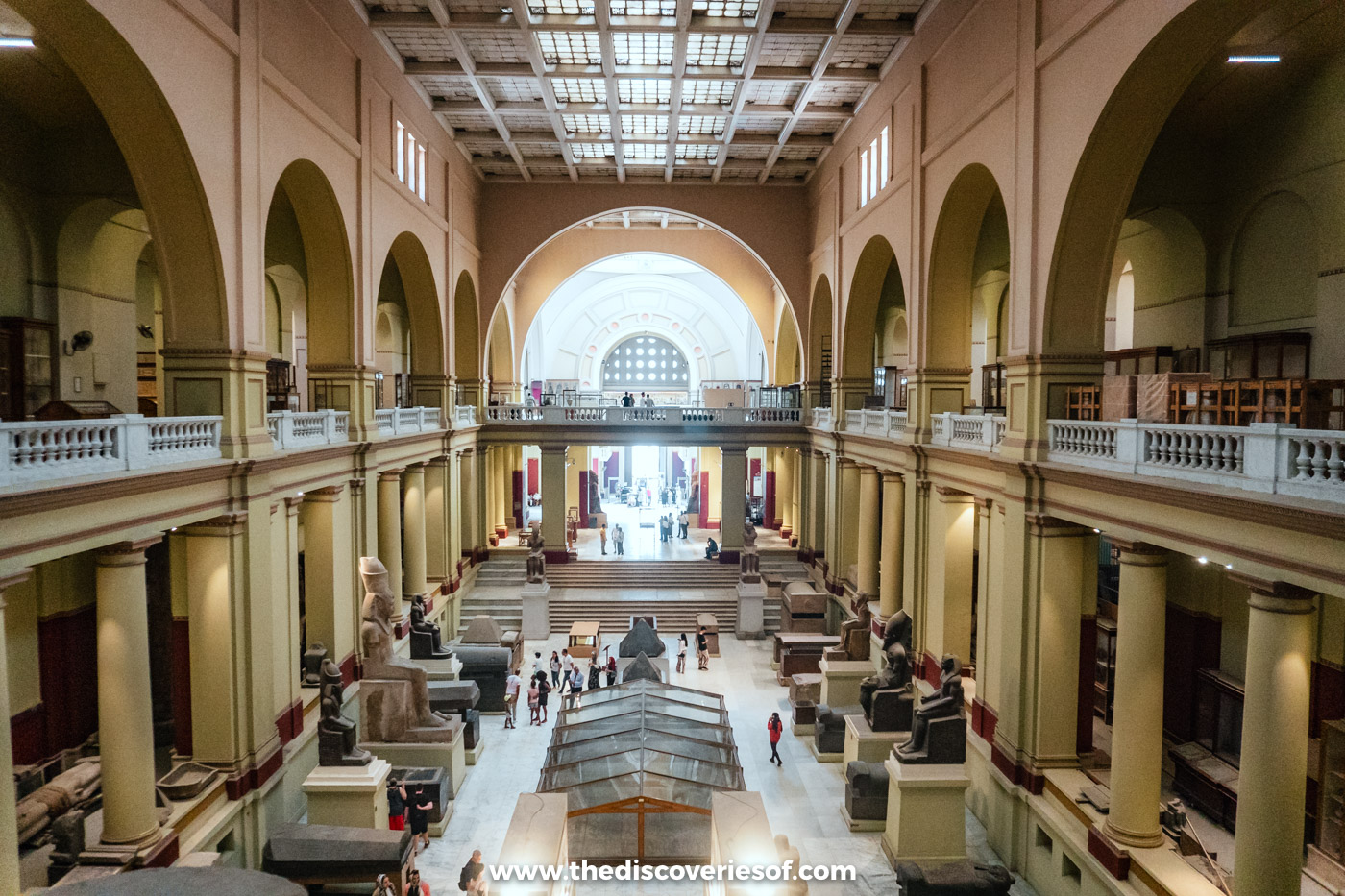
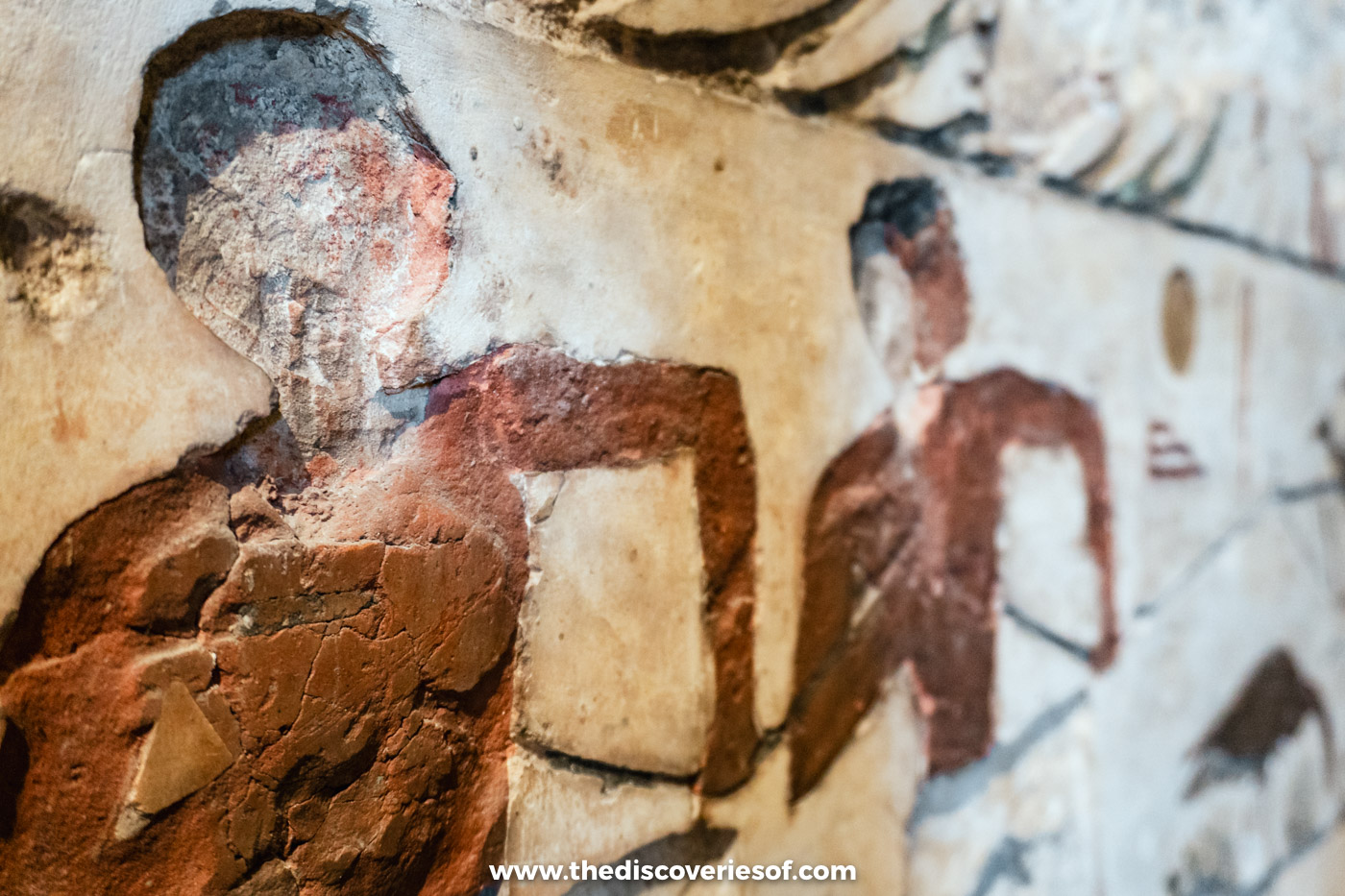
Opened in 1902, the pink neoclassical building on Tahrir Square is the oldest museum of archaeology in the Middle East, and it still holds one of the largest collections of ancient Egyptian antiquities anywhere, more than 120,000 objects from the Predynastic Period to the Greco-Roman era.
I would recommend spending at least a few hours wandering around its cavernous interior. I spent about three hours and would say that was about right, but you could easily spend a whole day here and only scratch the surface. Part of its charm is that it still feels like a museum from another age: wooden cases, hand-typed labels and colossal statues lined up in the galleries as if they had just been unpacked.
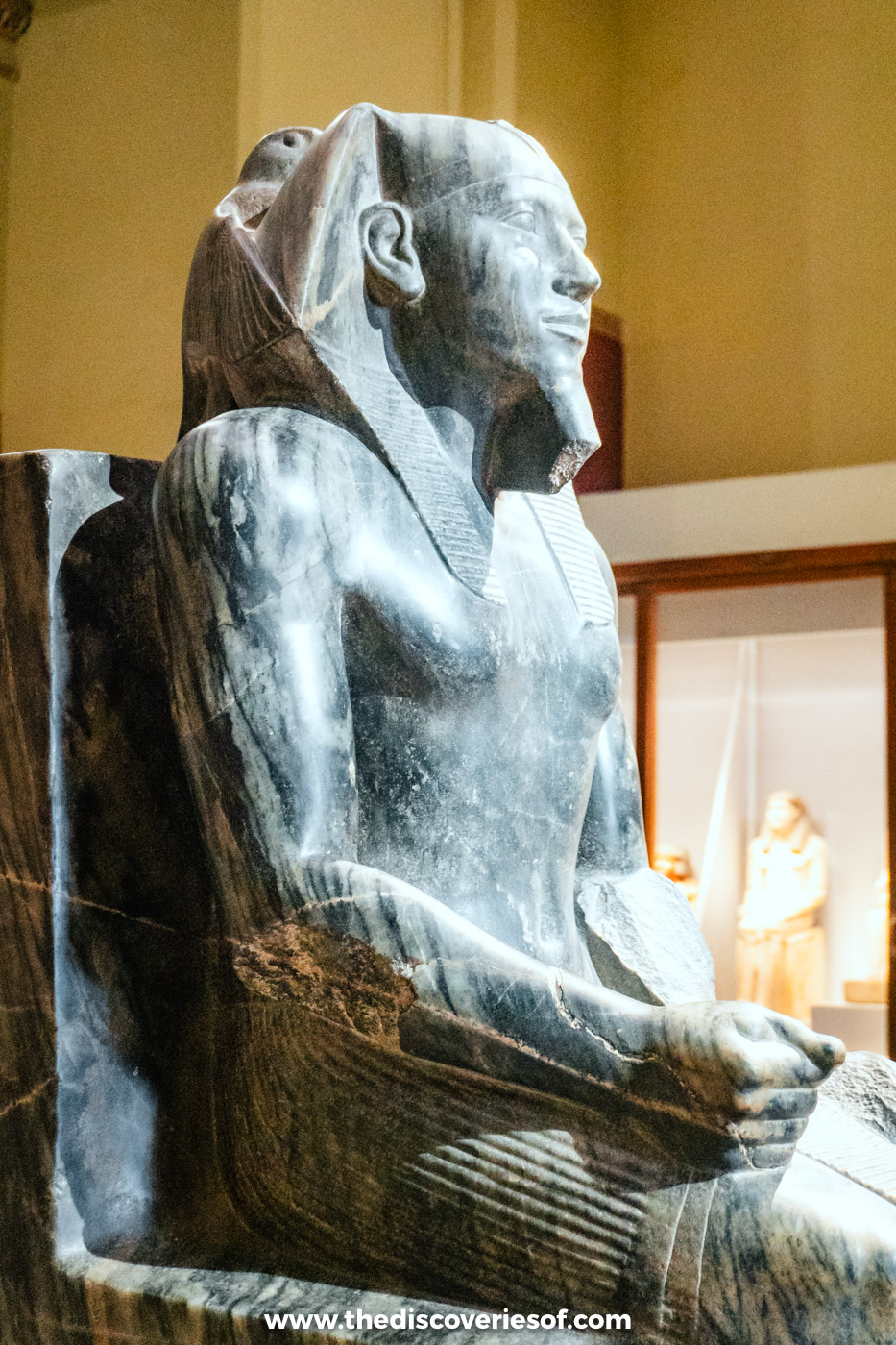
When I visited, the ground floor’s Old Kingdom galleries held statues such as the seated statue of Khafre, the builder of the second pyramid at Giza, and the triads of his successor Menkaure. Some of the museum’s pieces have since moved to the GEM, so it’s worth checking what’s on show before you go.
Tutankhamun’s golden mask and the rest of his treasure are no longer here, and the royal mummies left for NMEC in 2021. But that has left room to appreciate everything else, and the highlights that remain include:
- The Narmer Palette, a carved slate from around 3100 BC thought to record the unification of Upper and Lower Egypt.
- The statue of Djoser, the oldest life-size Egyptian statue ever found, discovered inside his pyramid at Saqqara.
- The treasures of Tanis, including the solid gold funerary mask and the silver coffin of King Psusennes I.
- Yuya and Thuya, the parents of Queen Tiye, whose mummies and gilded masks are still here, along with a Book of the Dead scroll from their tomb that’s around 19 metres long.
- The colossal statue of Amenhotep III and Tiye, about 7 metres tall, and a relief of Akhenaten and Nefertiti worshipping the sun disc with two of their daughters.
The museum is open daily from 9am to 5pm, and adult tickets cost 550 EGP, paid by card. Photography without flash is allowed, though a separate photo ticket has been charged at times, so ask at the desk. It’s a short walk from Downtown and Garden City, and Sadat metro station is right under Tahrir Square.
Top Tip
Labels can be sparse, so it’s worth hiring a guide or downloading a museum guide before you go. Head upstairs early for the Tanis gold and Yuya and Thuya, then work your way through the ground floor chronologically.
Meet the royal mummies at the National Museum of Egyptian Civilisation
I have to be honest: after seeing everything in the Egyptian Museum, I wasn’t sure whether the National Museum of Egyptian Civilisation (NMEC) would really be worth the effort.
It is. The two museums are vastly different, and it’s worth spending time visiting both.
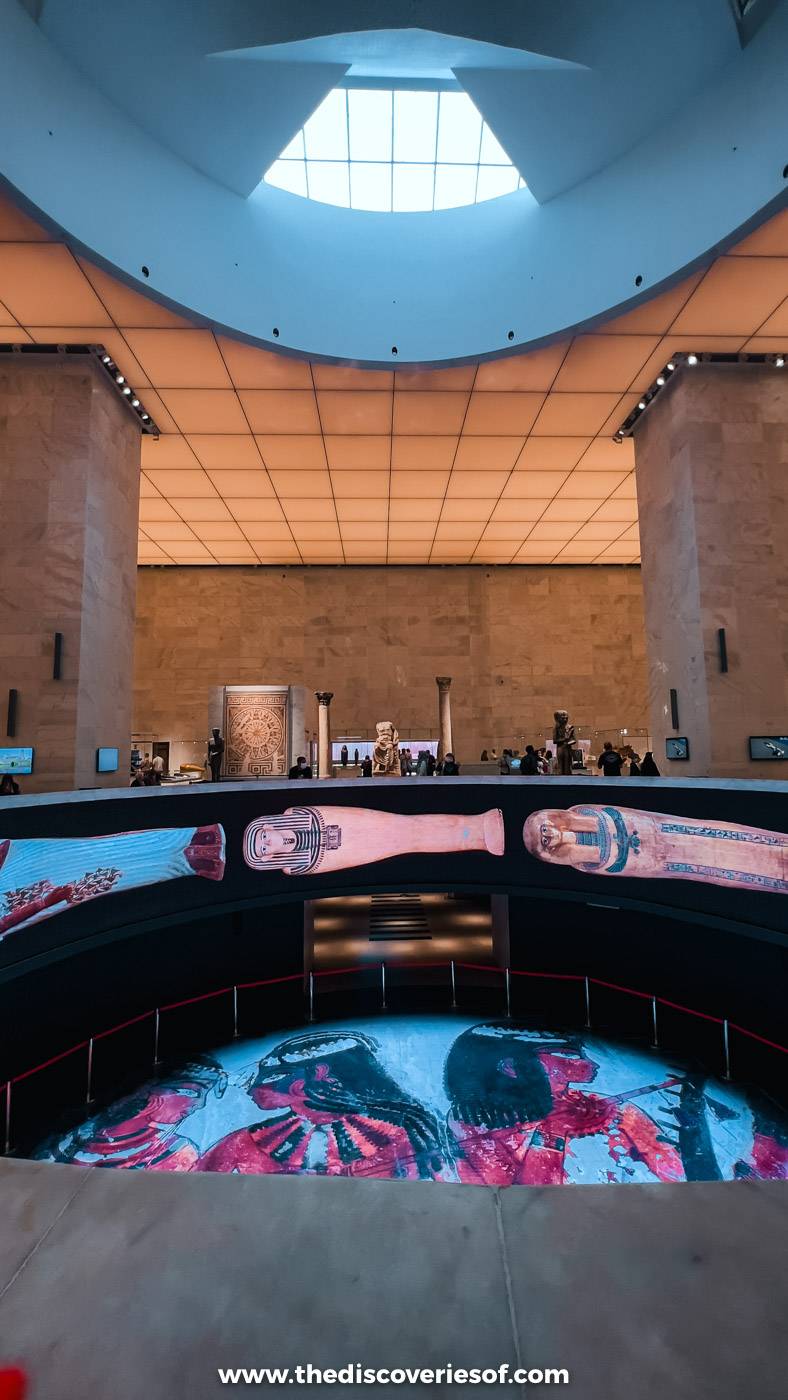
The star is the Royal Mummies Hall. On 3 April 2021, 22 royal mummies, 18 kings and four queens, including Ramses II, Seti I, Hatshepsut and Seqenenre Tao, were carried here from the Egyptian Museum in a televised procession known as the Pharaohs’ Golden Parade. Each one now lies in a dark, quiet maze of rooms with information about who they were and what they did during their lives, a story that winds through the reigns of some of Egypt’s most famous pharaohs. There’s something extraordinary about standing a few feet from a king whose temples you’ve just seen in Luxor or Abu Simbel.
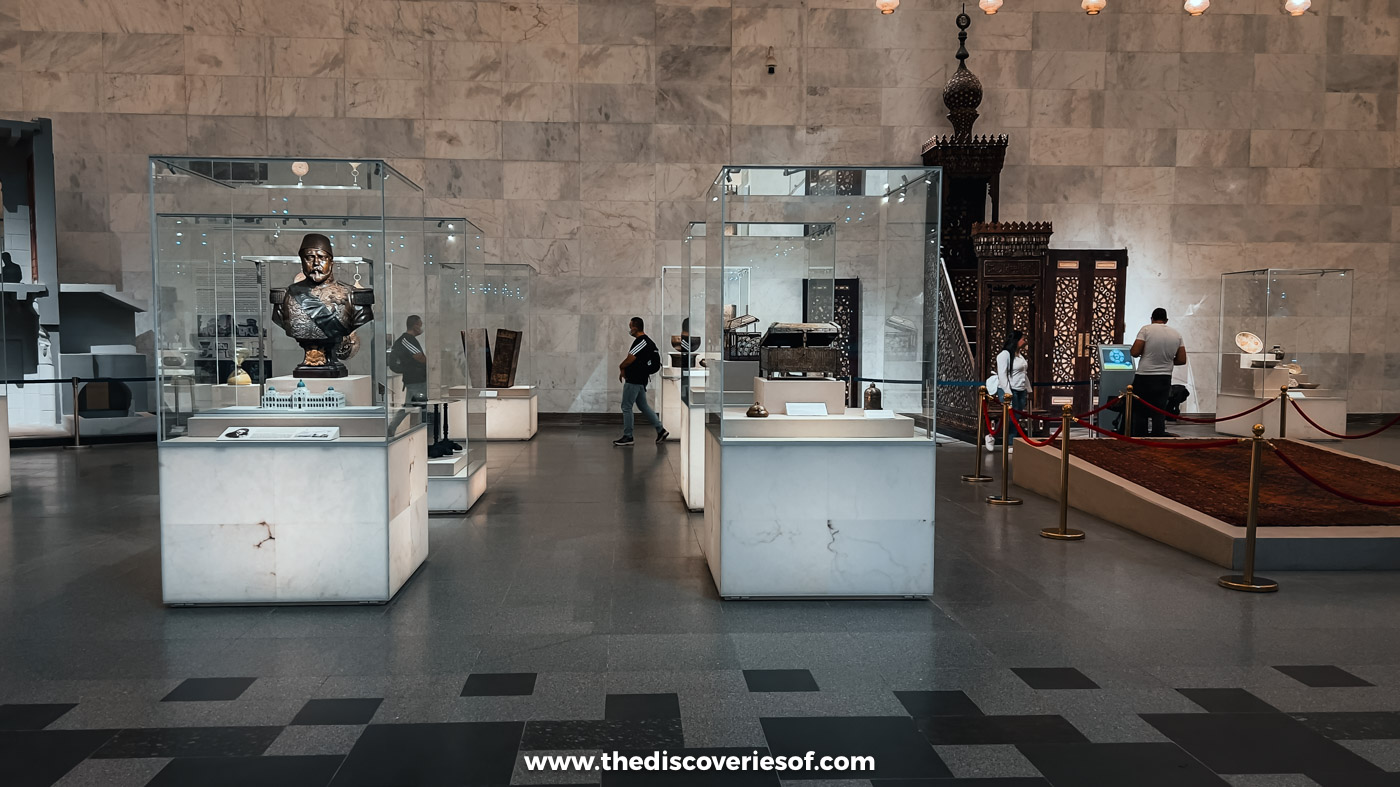
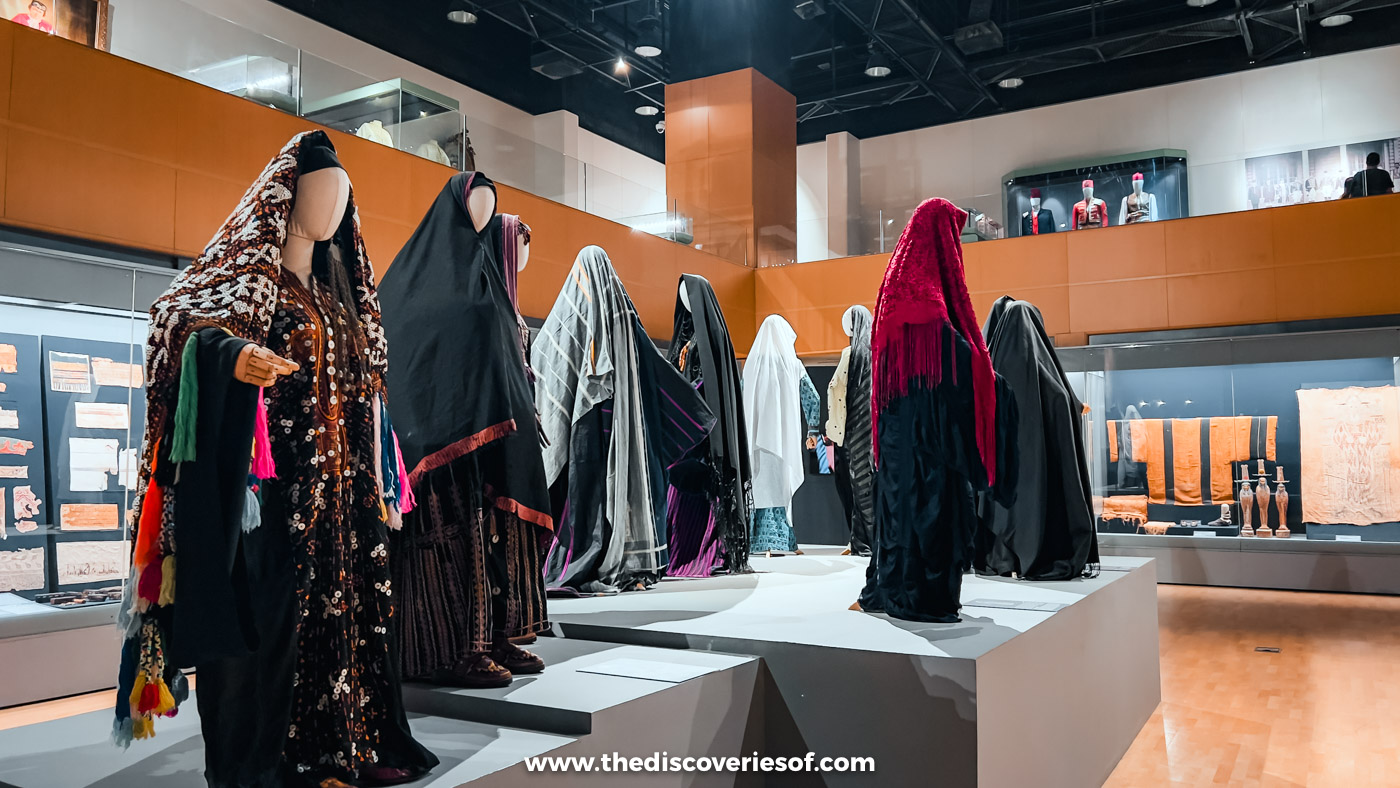
Outside the mummies hall, the main gallery tells the story of Egyptian civilisation from prehistory to the present day, with themed displays on the Nile, writing, crafts, beliefs and society. It’s nowhere near as vast as the Egyptian Museum, which makes it a manageable couple of hours, and the modern, well-lit displays are a welcome contrast with the old museum’s crowded cases. Don’t skip the textiles and costume displays, which carry the story on into the Islamic and modern eras.
The museum is in Fustat, overlooking the lake of Ain el-Sira and a short taxi ride from Coptic Cairo, so the two pair perfectly in one day, which is exactly what I did. It opens daily from 9am to 5pm, with an extra evening session on Fridays. Adult tickets cost 550 EGP; check that yours includes the Royal Mummies Hall, and note that photography isn’t allowed inside it.
See Tutankhamun’s treasures at the Grand Egyptian Museum
On the edge of the desert about 2 km from the pyramids, the Grand Egyptian Museum (GEM) is the largest archaeological museum in the world dedicated to a single civilisation. After more than two decades of construction, it was officially inaugurated on 1 November 2025, opened to the public a few days later, and every gallery is now open.
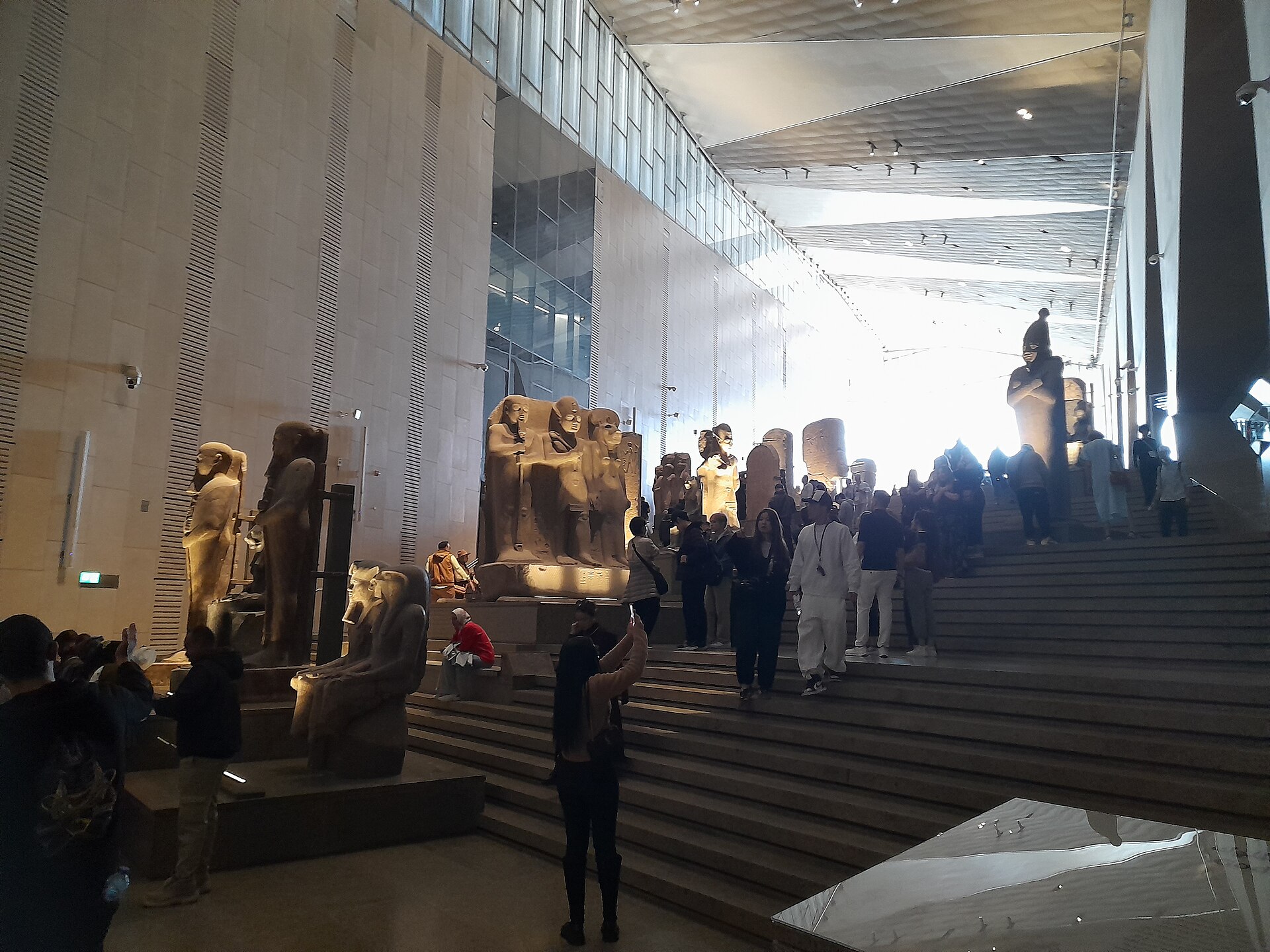
The big draw is the complete treasure of Tutankhamun, more than 5,000 objects from his tomb, displayed together for the first time since Howard Carter found them in 1922. The golden mask, the nested gilded shrines, his thrones, chariots and jewellery fill their own suite of galleries, which deserve at least an hour on their own. If you’ve been to Tutankhamun’s tomb in Luxor, this is where everything that was buried with him ended up.
Elsewhere, the 11-metre granite colossus of Ramses II greets you in the atrium, the Grand Staircase climbs through six floors lined with statues of kings and gods, and 12 chronological galleries take you through around 4,000 years of history. Outside, Khufu’s 4,500-year-old cedar boat, around 43 metres long and found beside the Great Pyramid in 1954, has its own museum building, after it was moved here from the pyramids in 2021.
Tickets are sold online as timed entries through the museum’s official site, at around 1,450 to 1,600 EGP for a foreign adult, and the ticket covers Tutankhamun and the boat museum. The galleries open from 9am to 6pm, with late opening until 9pm on Wednesdays and Saturdays, and last entry an hour before closing. Allow at least three or four hours. It combines easily with the pyramids, either on your own or on this tour of the pyramids, the Sphinx and the Grand Egyptian Museum, one of the best-reviewed tours in the city.
Discover Christian Egypt at the Coptic Museum
Tucked inside the walls of the Roman fortress of Babylon in Coptic Cairo, the Coptic Museum has the world’s largest collection of Coptic Christian art. It was founded in 1910 by Marcus Simaika, and its galleries cover the centuries between the pharaohs and Islam: carved stone, painted icons, textiles, manuscripts and woodwork, including painted apses from the monastery of Bawit and a medieval wall painting of Adam and Eve from the Fayoum.
I squeezed it in on my last day, between the Church of St Sergius and St Bacchus and the Hanging Church, and the building itself is worth a look, with carved wooden ceilings and screens salvaged from old Cairene houses. Tickets cost 280 EGP. See my guide to Coptic Cairo for the churches and synagogue around it.
Marvel at the Museum of Islamic Art
The Museum of Islamic Art holds one of the finest collections of its kind in the world, with around 100,000 objects from across the Islamic world, from India to Spain. Only a few thousand are on display at any one time, so you can see the highlights in a couple of hours: Mamluk enamelled glass mosque lamps, carved wooden doors, ceramics, carpets, astrolabes and manuscripts.
The museum was badly damaged by a car bomb aimed at the police headquarters opposite in 2014 and reopened, restored, in 2017. It’s in Bab al-Khalq, between Downtown and Islamic Cairo, so it fits neatly into a day exploring the Citadel and the old city.
Step inside the Gayer-Anderson Museum
Right next to the Mosque of Ibn Tulun, the Gayer-Anderson Museum fills two 16th and 17th-century houses, joined by a bridge, with the collection of John Gayer-Anderson, a British army doctor who lived here from 1935 to 1942. The real star is the house itself, with its mashrabiya screens, reception halls and rooftop. If it looks familiar, it’s because it appeared in the James Bond film The Spy Who Loved Me. Tickets cost 100 EGP, and you’ll want about an hour.
Egyptian Museum, NMEC or GEM: which should you choose?
If you only have time for one, make it the GEM: it has Tutankhamun, the best displays and the easiest pairing with the pyramids. But the three museums are genuinely different, and each one is worth its time.
- The GEM is the blockbuster: Tutankhamun’s treasure, a modern building and space to breathe. Book a timed ticket and go early or on a late-opening evening.
- The Egyptian Museum is the old-school treasure house, full of masterpieces the GEM doesn’t have, from the Tanis gold to the Narmer Palette. Go if you love history and don’t mind a bit of dust.
- NMEC is the one for the royal mummies, and it’s the most manageable of the three. Pair it with Coptic Cairo.
With two or three days in the city, you can see all three: the GEM with the pyramids, the Egyptian Museum with Downtown and Khan el-Khalili, and NMEC with Coptic Cairo. My two-day Cairo itinerary shows how to fit the highlights into less time.
Tips for visiting the museums
- Bring a card: ticket offices at the major museums are cashless, so carry a Visa or Mastercard, but have small notes for taxis, tips and toilets.
- Go early: the museums are quietest when they open at 9am, before the tour groups arrive. At the GEM, the late openings on Wednesdays and Saturdays are a good alternative.
- Get a guide for the Egyptian Museum: it’s the one where a guide adds the most, as the labelling is patchy and the collection is vast.
- Don’t try to do all three in a day: they’re spread across the city, from Tahrir to Fustat and Giza, and the traffic is legendary. One big museum a day is plenty.
Watch my Egypt video
Subscribe on YouTube and discover new destinations.
Where to stay
Stay in Garden City or Downtown to walk to the Egyptian Museum and be central for NMEC, or in Giza if the GEM and the pyramids are your priority. I spent my last night at the Kempinski Nile Hotel Garden City, about 20 minutes’ walk from Tahrir Square: read my Kempinski Nile Hotel review, or see my guide to the best places to stay in Cairo for more options.
Map
Read next
- The best things to do in Cairo, from royal mummies to medieval bazaars
- 2 days in Cairo: a Cairo itinerary from pyramids to bazaars
- Pyramids of Giza: how to visit (and whether to go inside the Great Pyramid)
- Coptic Cairo: a walking route through its churches
- Cairo Citadel: the Alabaster Mosque, views and what to skip
- Tutankhamun’s tomb in Luxor
- The best day trips from Cairo
Love this? Save and share on Pinterest

Discover the top things to do, insider tips and hidden gems in our Egypt Travel Guide.
Read the guides →