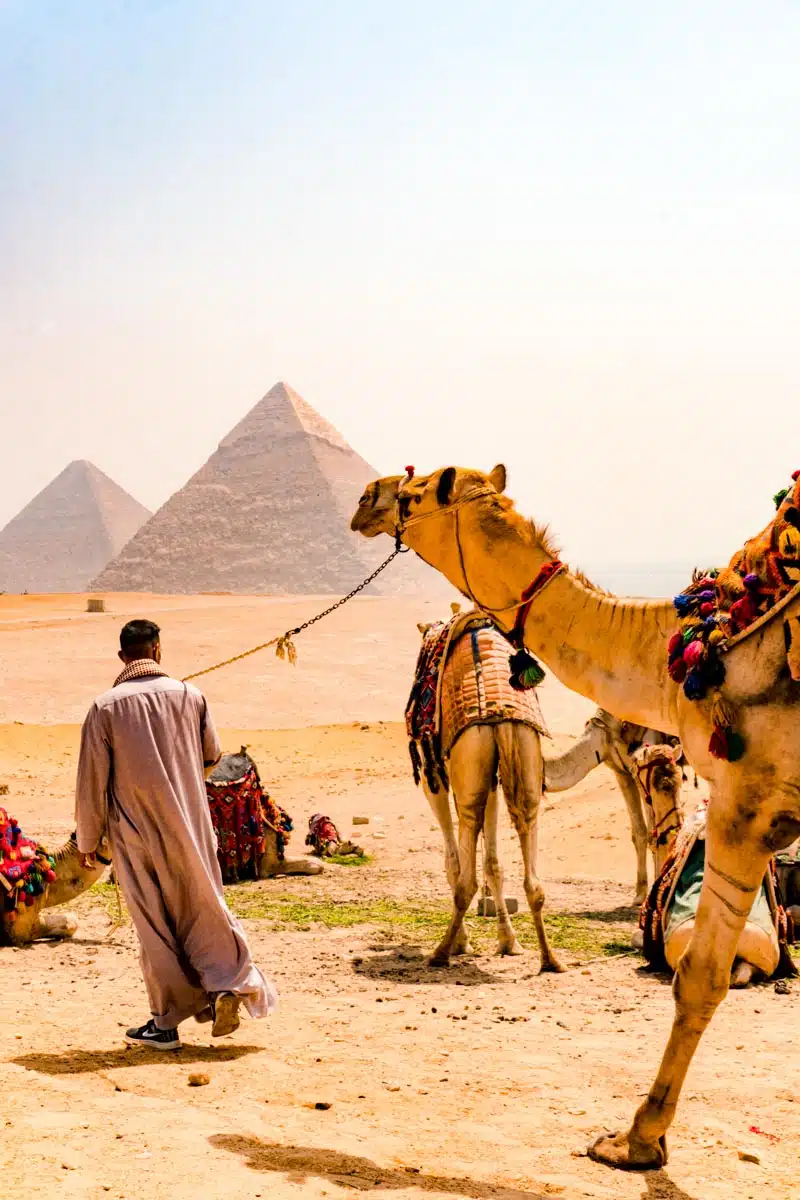
The tomb of Merenptah is one of the longest and deepest on the standard Valley of the Kings ticket, with a steep descent, flood-scarred chambers and a giant granite sarcophagus lid carved with the king’s effigy. Here’s what to see and how to plan your visit.
Merenptah’s tomb is a tomb for people who like a sense of drama. You go down, and down, and down, on long wooden stairways deep into the mountain, past corridors of finely carved hieroglyphs, until you reach a vast pillared burial chamber with the huge granite lid of the king’s sarcophagus at its centre.
It was one of my three tombs on the standard ticket when I visited the Valley of the Kings in June on a private tour, along with Ramses IX (KV6) and the tomb of Tausert and Setnakht (KV14).
Merenptah’s tomb is also one of the best places in the valley to see how much damage time and water can do, and how much still survives.
Tomb of Merenptah at a glance
- Location: in the main part of the Valley of the Kings, off the main path, a few minutes’ walk from the entrance
- Ticket: included in the standard Valley of the Kings ticket (750 EGP for three tombs), when it’s on the open list
- Size: well over 100 metres long, descending steeply to a burial chamber deep underground
- Time needed: 20 to 30 minutes, including the climb back up
- Best time: early morning, before the heat builds, as the climb out is tiring
- Photography: phones are free to use; no flash
Who built KV8?
Merenptah was the 13th son of Ramses II. His father reigned for around 66 years and outlived many of his older sons, so by the time Merenptah came to the throne, around 1213 BC, he was probably in his sixties. He ruled for about ten years.
Despite his age, his reign was eventful. He defended Egypt against an invasion by Libyans and the “Sea Peoples”, and he’s best known today for the Merenptah Stele, a victory inscription found in his mortuary temple in western Thebes in 1896. It contains the earliest known mention of Israel outside the Bible, and it’s now in the Egyptian Museum in Cairo.
Merenptah’s mummy was moved in antiquity and hidden in the tomb of Amenhotep II (KV35), where it was found in 1898. It’s now in the Royal Mummies Hall of the National Museum of Egyptian Civilisation in Cairo.
Why visit the tomb of Merenptah?
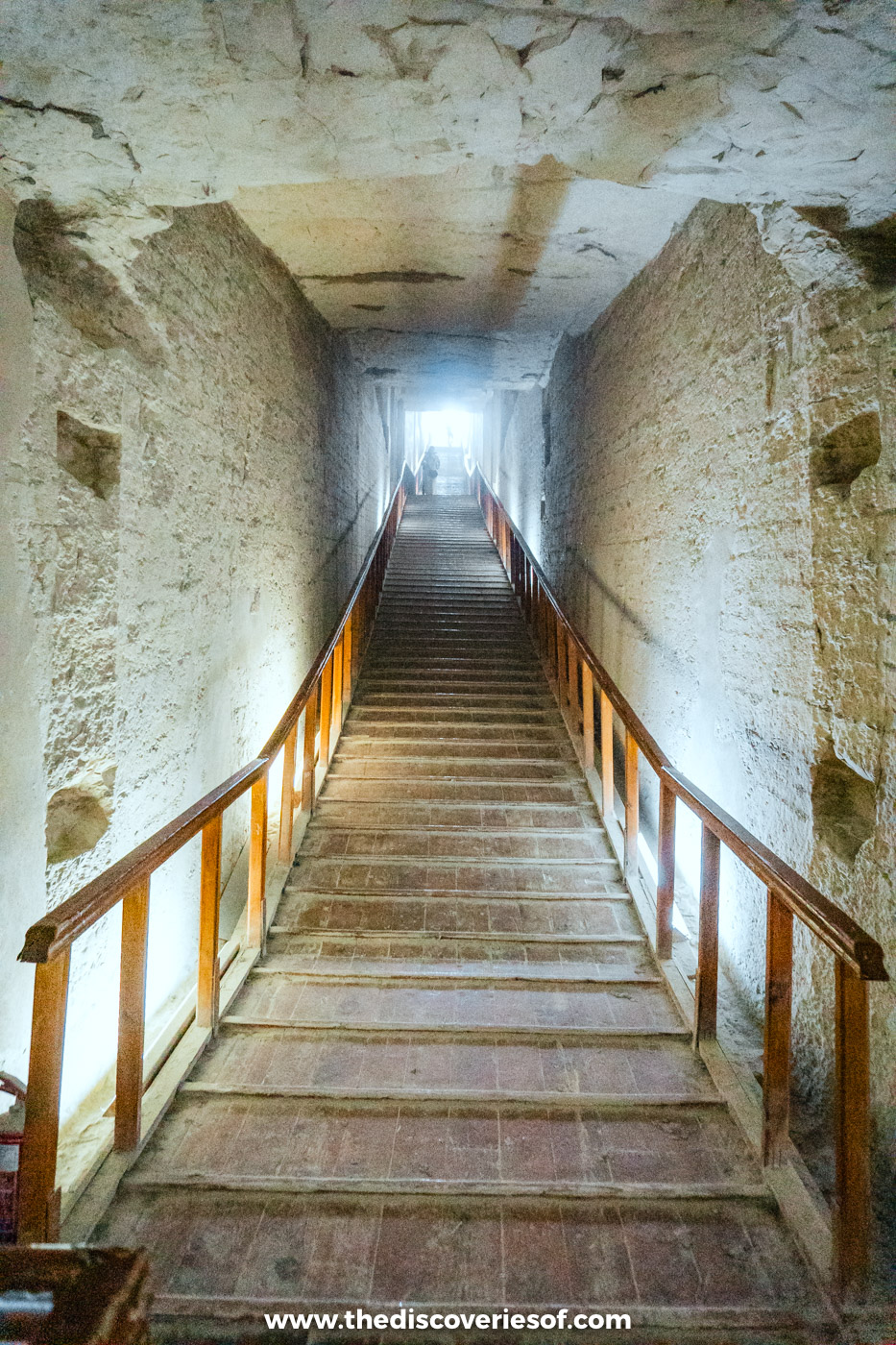
There are two big reasons. The first is the scale. This is the full plan of a great 19th Dynasty royal tomb, with long corridors, a well chamber, a pillared hall and a huge, eight-pillared burial chamber, and walking it gives you a real sense of how deep these tombs go.
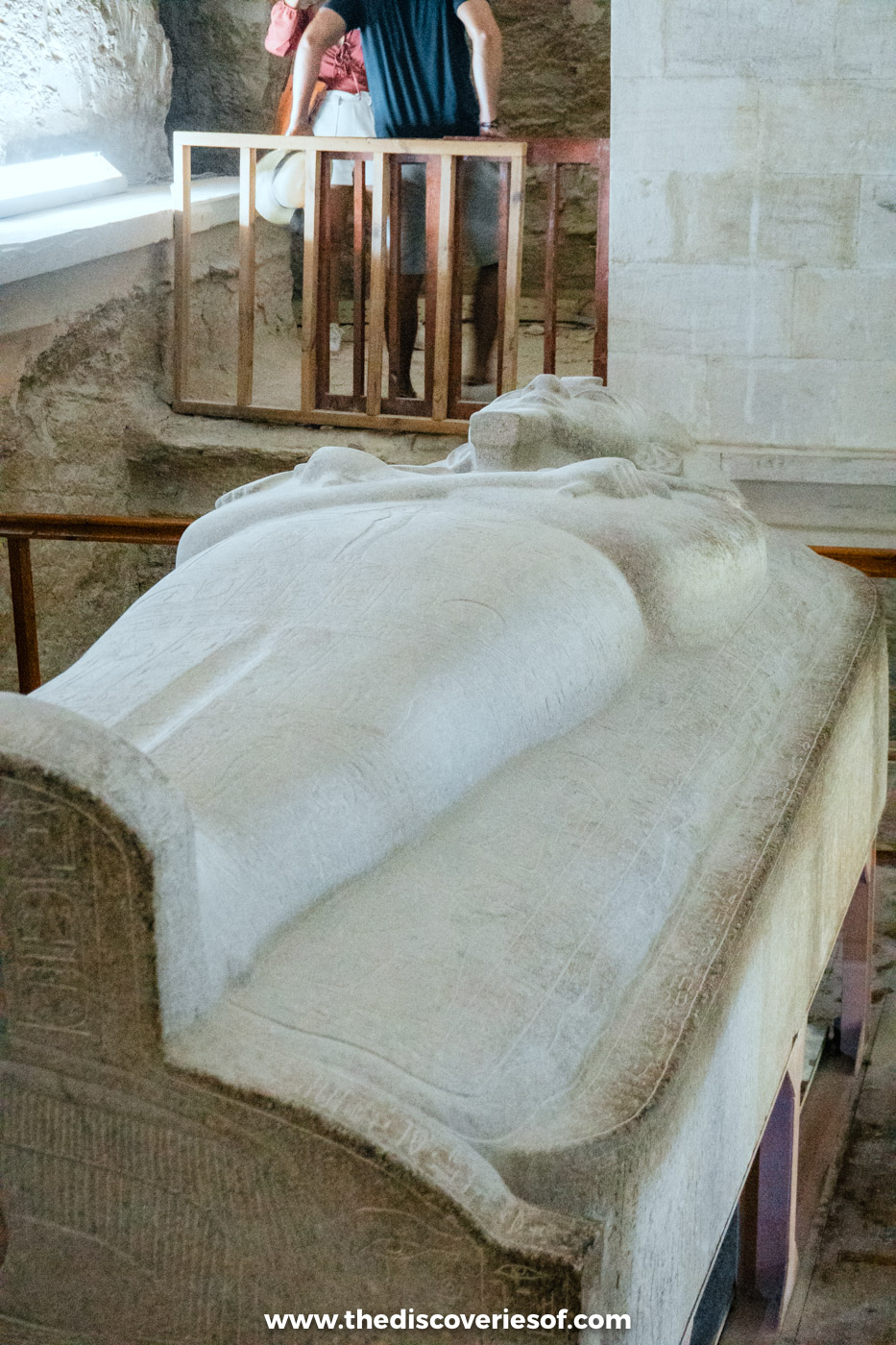
The second is the sarcophagus. Merenptah was buried in four nested sarcophagi, and the lids of two of the granite ones are still in the tomb. The effigy lid in the burial chamber, showing the king as Osiris, is one of the most impressive single objects you can see on the standard ticket.
What you’ll see inside, room by room
The entrance and upper corridors
A modern stairway covers the original stepped entrance. Inside, near the start of the first corridor, Merenptah greets the falcon-headed sun god Ra-Horakhty, one of the best-preserved scenes in the tomb.
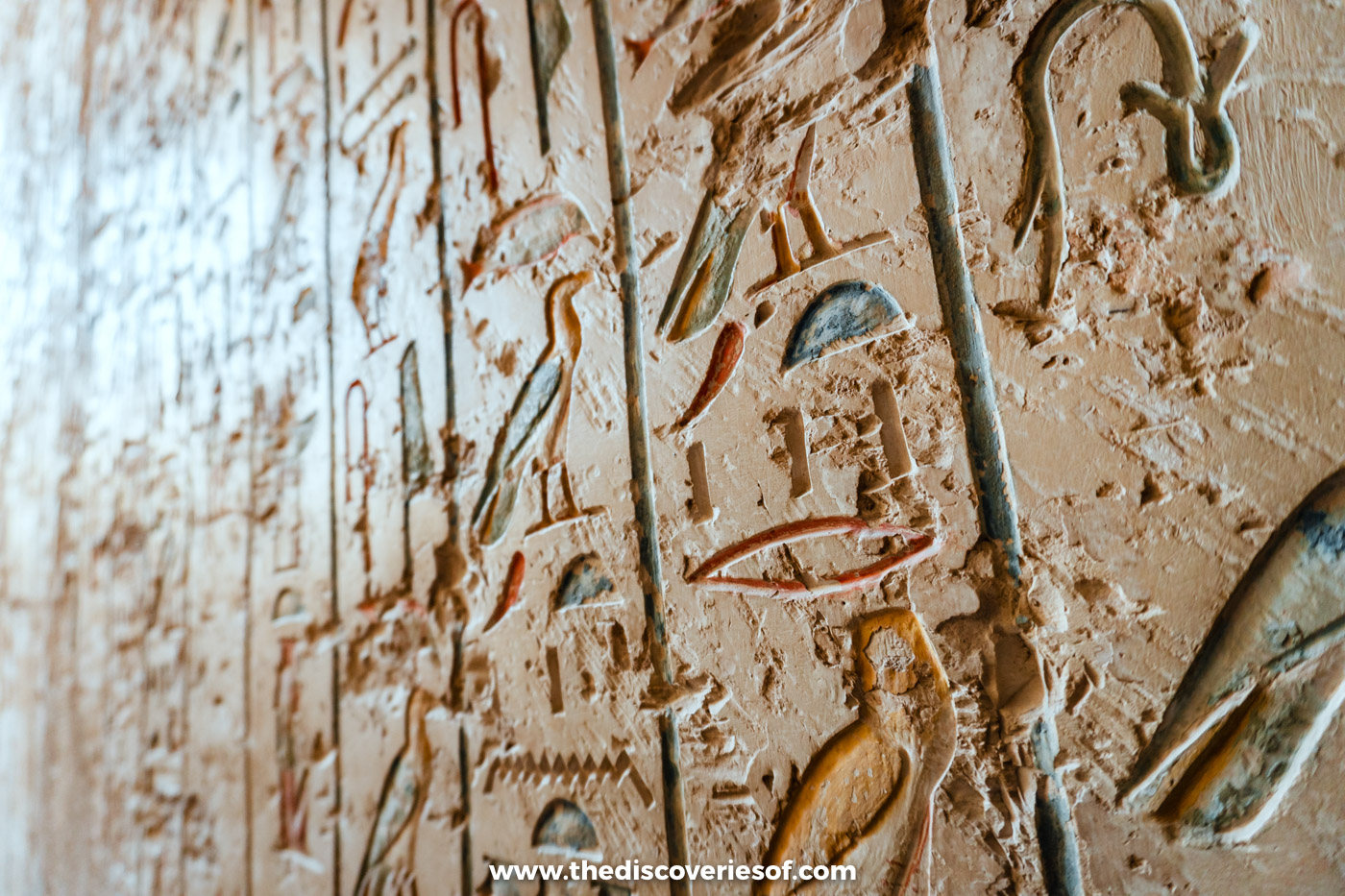
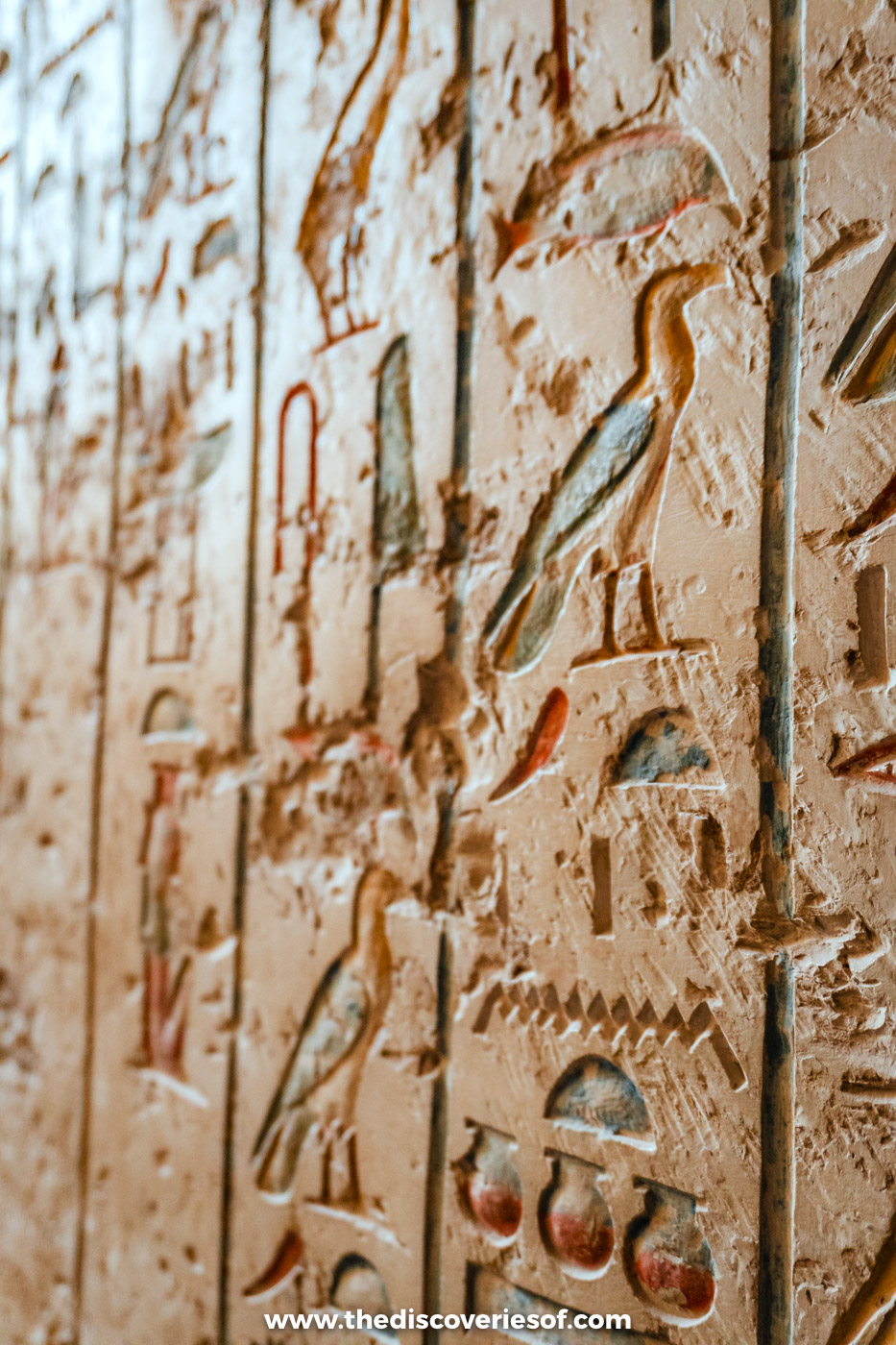
The first two corridors are carved with the Litany of Ra, the hymn to the many forms of the sun god, and the second adds scenes from the Book of Gates, the Amduat and the Book of the Dead. The hieroglyphs are carved in relief and painted, and the detail on the birds and signs is beautiful up close.
The well chamber and pillared hall
The third corridor, with more of the Amduat, leads to the well chamber, where deities and the king appear on the walls. The well shaft in its floor was meant to stop floodwater and robbers; it was later filled in, which let floods carry debris down into the lower chambers.
Next is a pillared hall decorated with the Book of Gates. It originally had more pillars, but some were cut away to get the enormous outer sarcophagus through, and only two were replaced. Graffiti on the walls show that Greek and Roman visitors made it this far.
The long descent
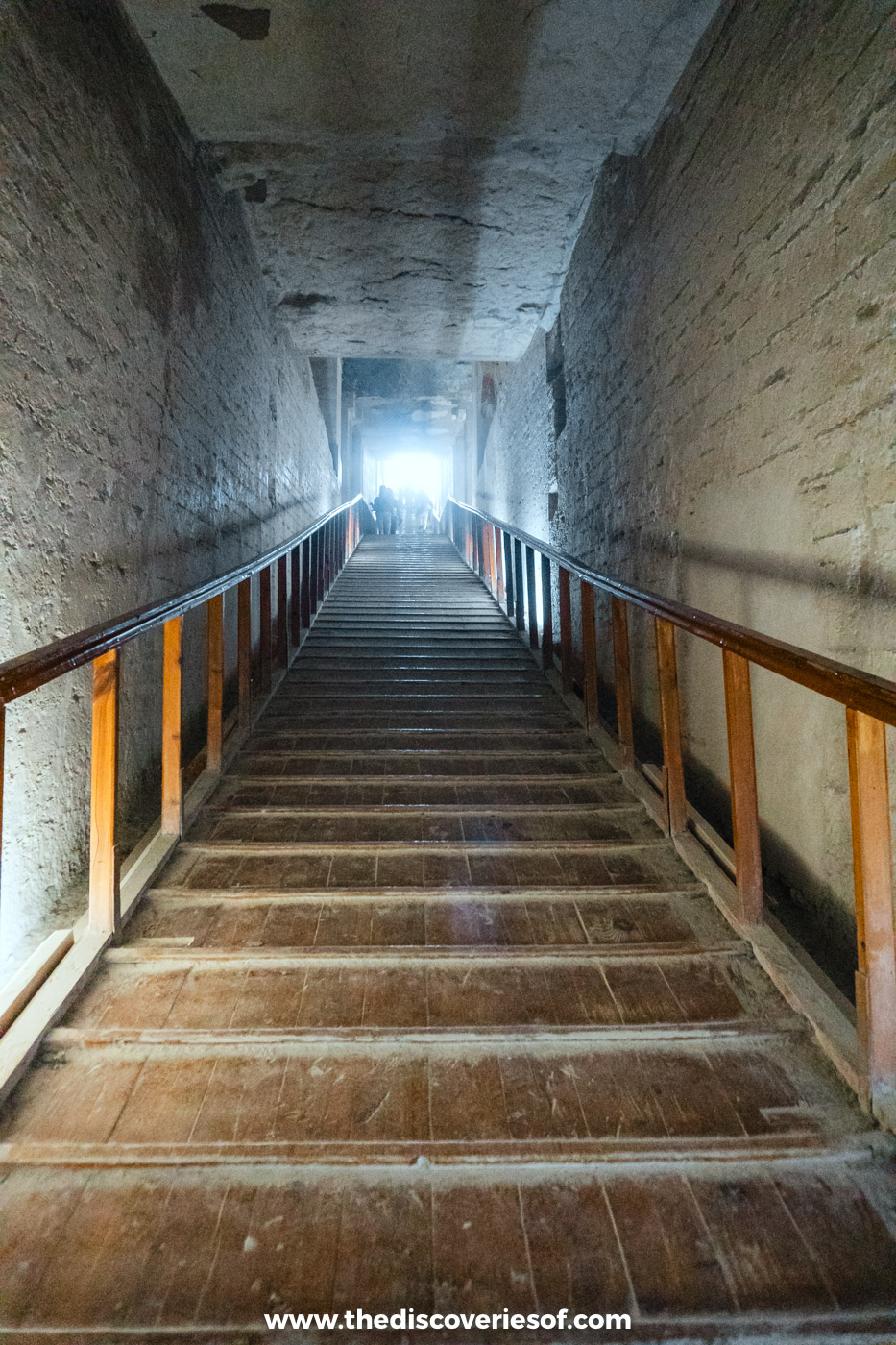
From the pillared hall, a steep ramp with a staircase drops further into the mountain, past a side chamber with a small shrine to Osiris. This is where the tomb starts to show the damage from ancient floods: below here, most of the painted scenes have been washed away.
Look closely at the doorways on your way down. The jambs were cut back late in the building work so that the massive sarcophagus could be dragged through, then rebuilt with sandstone blocks.
The outer sarcophagus lid
In a chamber partway down, you pass the lid of Merenptah’s outer sarcophagus, a huge slab of red granite more than 5 metres long, carved in the shape of a shrine. It gives you an idea of the effort it took to get the burial equipment down here.
The burial chamber
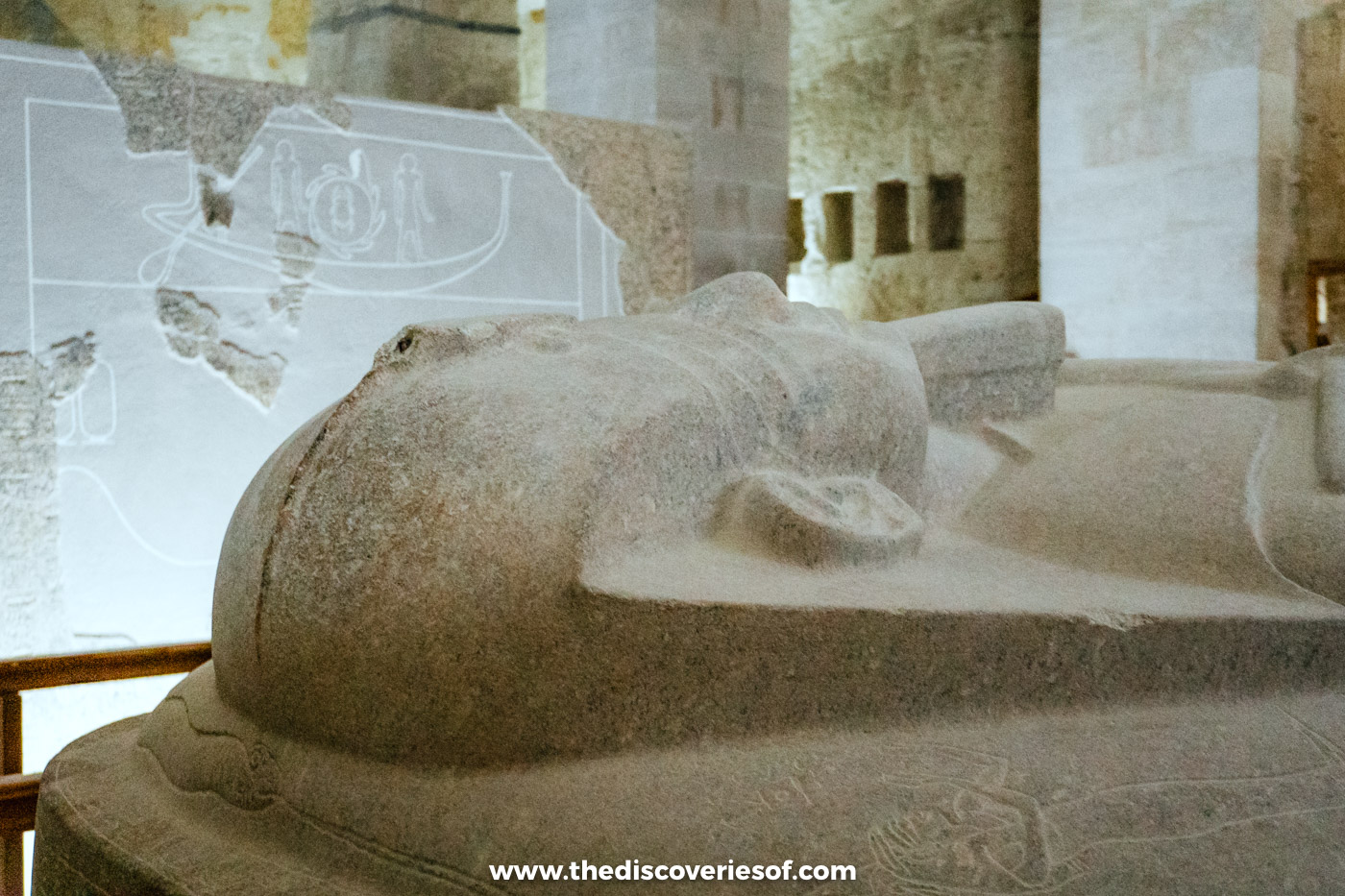
At the bottom, the burial chamber opens out into a vaulted hall almost 15 metres wide, with eight pillars around a sunken floor. Floods badly damaged the pillars and lower walls, but high up on the walls and the vaulted ceiling you can still pick out the Book of the Earth, the Book of Caverns and an astronomical ceiling with constellations and decans.
The star of the show is the lid of Merenptah’s middle sarcophagus, carved from red granite in the shape of a cartouche. On top lies the king as Osiris, arms crossed, with a crook and flail, and the face is remarkably well preserved. The lid now rests on modern supports over the floor pit.
The other sarcophagi didn’t fare so well. The boxes were broken up, and one of the inner sarcophagi was taken north and reused for the burial of the pharaoh Psusennes I at Tanis, where archaeologists found it in 1940. Fragments of the innermost one, made of calcite, are in the British Museum.
Tickets and opening hours
KV8 is included in the standard Valley of the Kings ticket, which costs 750 EGP (375 EGP for students) and covers any three tombs on that day’s open list. Tombs rotate for conservation, so check the list at the ticket office; visitor reports list KV8 as open in 2026.
The valley is open daily from 6am to 5pm (some official listings give a 4pm close in winter). Tickets are paid by bank card at the visitor centre, and the tuff-tuff (tram) to the tombs costs about 20 EGP.
Tickets
KV8 pairs well with two shallower tombs on the standard ticket, such as Ramses IX (KV6) near the entrance and Tausert and Setnakht (KV14) at the top of the valley.
How to get to KV8
From the visitor centre, take the tuff-tuff or walk up to the main part of the valley. KV8 is a few minutes’ walk from the tram stop, along a side path off the main route; follow the signs and the tomb numbers.
The Valley of the Kings is on Luxor’s West Bank, about 40 to 45 minutes by road from the East Bank hotels or a short taxi ride from the West Bank. See my Valley of the Kings guide for how to get there, tours and the other tombs.
Tips for visiting KV8
- Mind the stairs: the descent is long and steep, with handrails, so wear shoes with a good grip, and take your time on the way back up.
- Think about access: if you have trouble with stairs or the heat, a shallower tomb such as Ramses IX (KV6) may be a better choice.
- Bring water: it gets warm and stuffy at the bottom, and the climb out in the heat of the day is hard work.
- Look high: in the burial chamber, the best surviving decoration is high on the walls and ceiling, above the flood line.
- Stay nearby: I stayed at El Mesala Hotel on the West Bank, a short drive from the valley. See my guide to where to stay in Luxor for more.
Watch my Luxor video
Subscribe on YouTube and discover new destinations.
Map
Read next
- Visiting the Valley of the Kings: a practical guide
- Tomb of Tausert and Setnakht (KV14): a visitor’s guide
- Tomb of Ramses IX (KV6): a visitor’s guide
- Visiting the tomb of Tutankhamun in Luxor
- The best things to do in Luxor
- The ultimate Egypt itinerary
Love this? Save and share on Pinterest

Discover the top things to do, insider tips and hidden gems in our Egypt Travel Guide.
Read the guides →