The tomb of Tausert and Setnakht is one of the largest in the Valley of the Kings, the story of a queen who ruled as pharaoh and the king who took her tomb. Here’s what you’ll see inside, room by room, and how to plan your visit.
Of all the tombs on the standard Valley of the Kings ticket, KV14 was my favourite. I visited in June on a private tour of the Valley of the Kings and the Valley of the Queens, and chose it as one of my three tombs, along with Ramses IX and Merenptah.
Unsurprisingly, given that it’s a double tomb, it’s really large, but its location at the top of the valley also meant it was the quietest tomb I visited too. The tombs near the entrance draw the biggest crowds, so up here there’s more space to take in the scenes at your own pace.
It’s also one of the most interesting tombs to understand. It was begun for Tausert, one of the very few women to rule Egypt as pharaoh, and then taken over and extended by Setnakht, the founder of a new dynasty, who painted over her images with his own.
Tomb of Tausert and Setnakht at a glance
- Location: at the far end of the southwest branch of the Valley of the Kings, at the top of the valley, near the tomb of Seti II (KV15)
- Ticket: included in the standard Valley of the Kings ticket (750 EGP for three tombs), when it’s on the open list
- Size: more than 110 metres long, with two burial chambers
- Time needed: 20 to 30 minutes
- Best time: first thing in the morning for the coolest air, though it’s usually quieter than the tombs near the entrance at any time of day
- Photography: phones are free to use; no flash
A queen who became pharaoh, and the king who took her tomb
Tausert, the queen who became pharaoh
Tausert (also spelt Twosret) was the Great Royal Wife of Seti II, at the end of the 19th Dynasty. Work on this tomb began in the second year of Seti II’s reign, as a queen’s tomb.
When Seti II died, the throne passed to Siptah, a young king, possibly the son of another of Seti’s wives, and Tausert ruled alongside him as regent. After Siptah’s death, about six years later, she took the throne herself, with full royal titles, as the last ruler of the 19th Dynasty. As her status grew, so did her tomb: the decoration was updated to show her with royal insignia, and new corridors were cut to turn it into a king’s tomb.
Only a handful of women ruled Egypt as pharaoh in their own right, and Hatshepsut, whose mortuary temple is just over the cliffs from the valley, is the most famous. Tausert’s reign was short, probably only a couple of years, and ended in a period of turmoil.
Setnakht’s takeover
That turmoil brought Setnakht to power, founding the 20th Dynasty. Nobody is quite sure who he was, and he may have seized the throne from Tausert herself.
Setnakht started his own tomb (KV11) but abandoned it when his workmen accidentally broke into the neighbouring tomb of Amenmesse. So he took over Tausert’s tomb instead. Many of her figures were plastered over or erased and replaced with his own image or his cartouches, and he extended the tomb with a longer corridor and a second, larger burial chamber for himself.
His son, Ramses III, later finished KV11 as his own tomb. Tausert’s own granite sarcophagus was moved and reused for a prince in another tomb nearby (KV13), and what happened to her burial is still a mystery.
Why KV14 is the quietest tomb in the valley
Most visitors start with the tombs near the entrance of the valley, such as Ramses IX and Ramses IV, or head straight for Tutankhamun. The tomb sits right at the end of the southwest branch, cut into the base of the cliff, so it’s a walk of several minutes uphill from the busiest part of the valley.
That’s what makes it special. Fewer tour groups make it up here, so the corridors are calmer and you’ll have more time in front of the scenes. If you pick one tomb to visit early, before the heat builds, make it this one.
What you’ll see inside, room by room
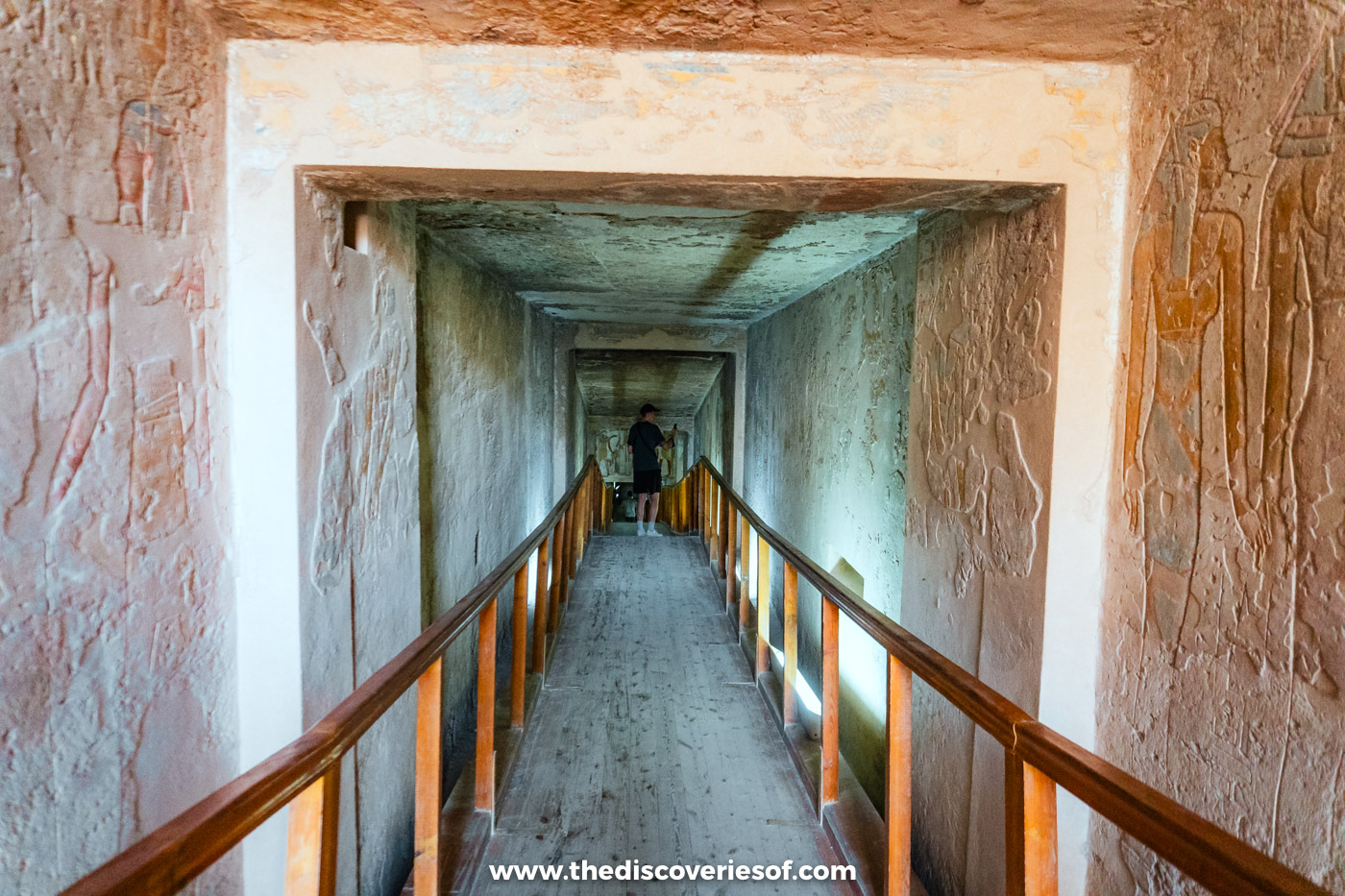
The tomb runs in a straight line deep into the hillside, through a series of corridors and chambers, before opening into the first burial chamber. Here’s what you’ll pass, in the order you walk it.
The entrance and the first corridor
Above the entrance gate, Isis and Nephthys flank the sun disc, with Tausert’s titles, later carved over by Setnakht. The first corridor slopes gently down, and its walls show the tomb’s complicated history best.
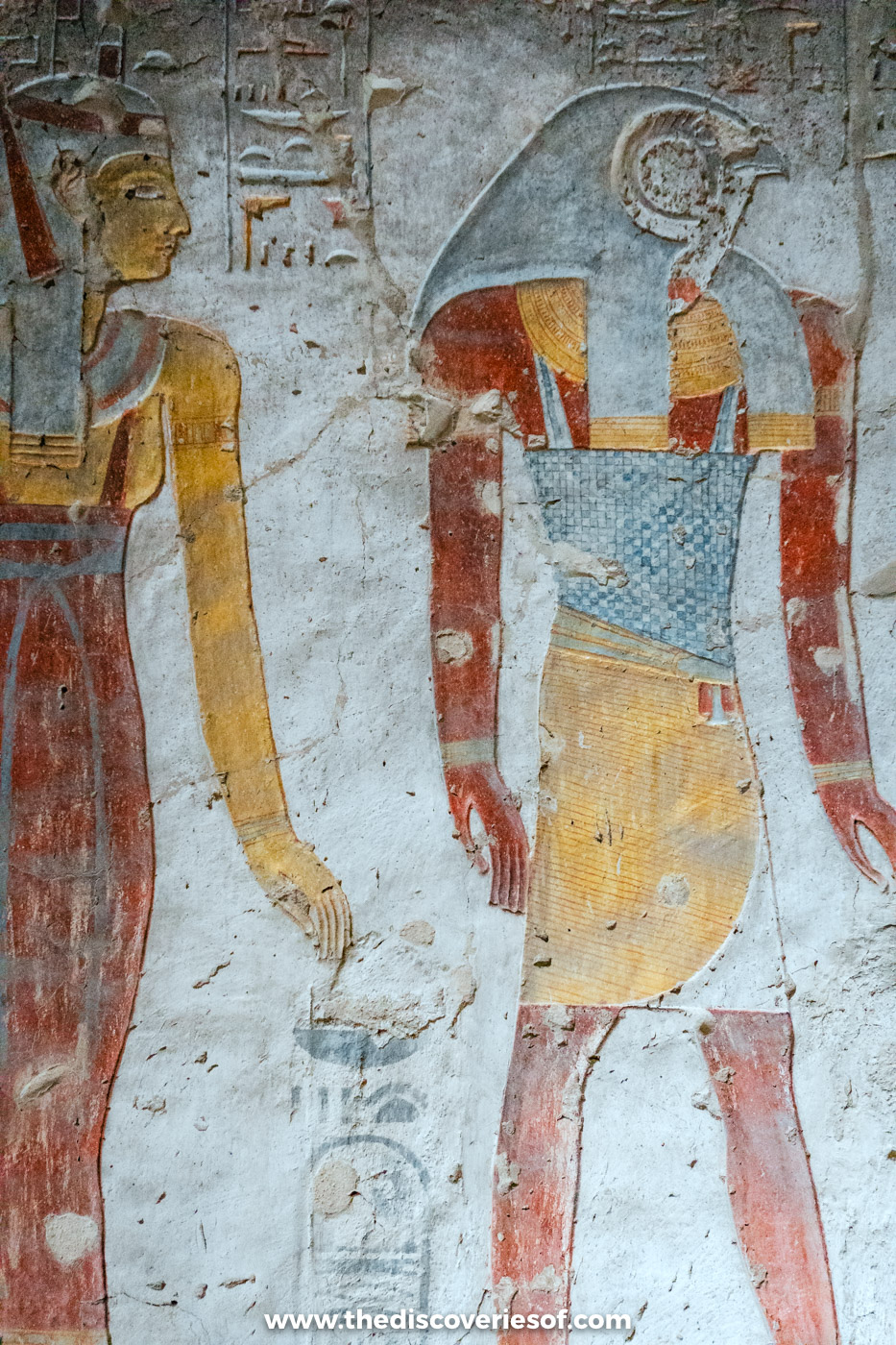
On the left (south) wall, Tausert makes offerings to Ra-Horakhty and Anubis, and Setnakht appears before Horus. On the right (north) wall, she stands before Ptah and Ma’at, then follows the king in offering to the earth god Geb, a scene that’s unique in the valley. Look closely and you can see where names and figures have been changed: Siptah’s names were recut as Seti II’s, and Setnakht’s figure was painted over Tausert’s.
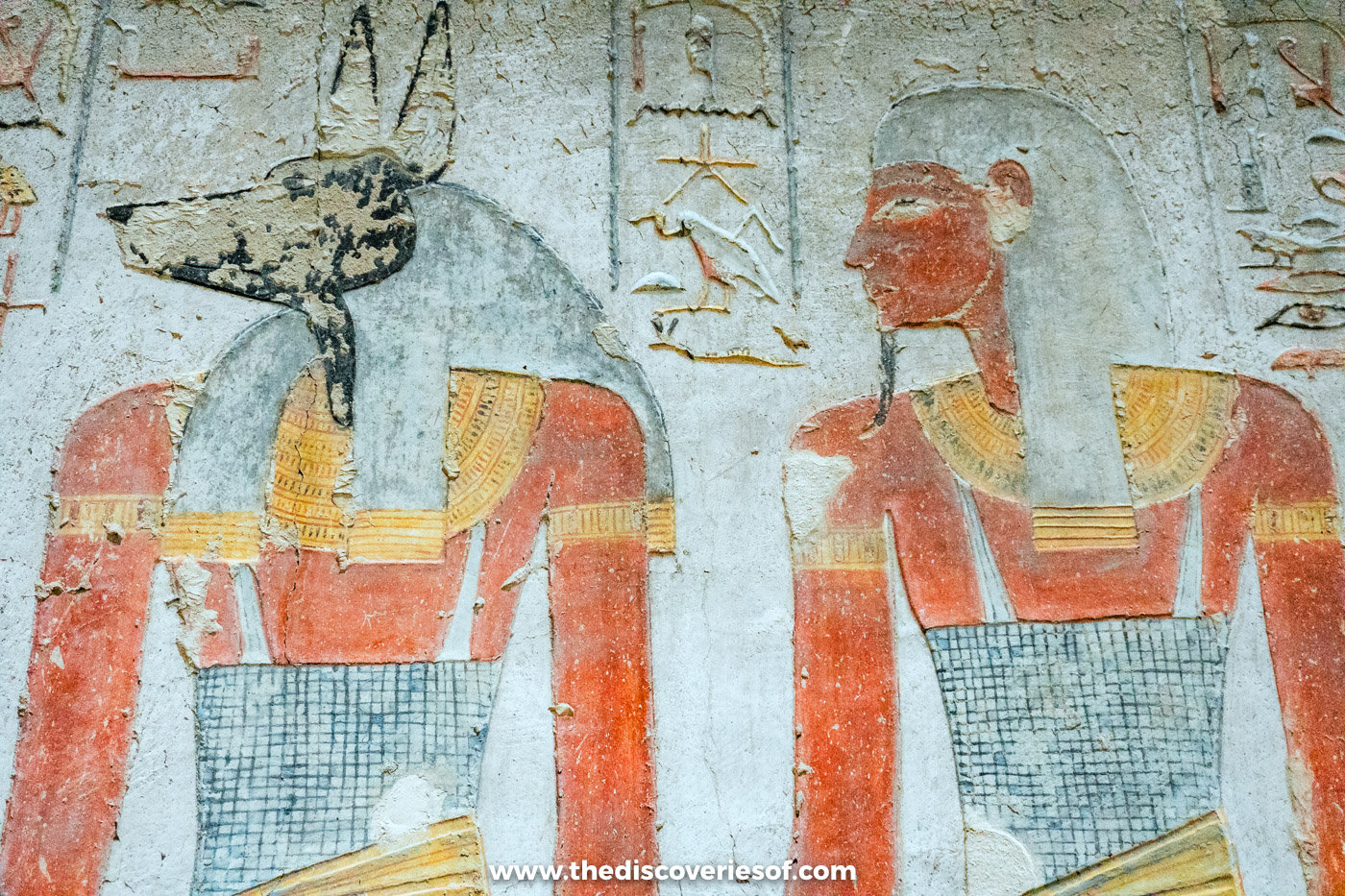
The corridors of the Book of the Dead
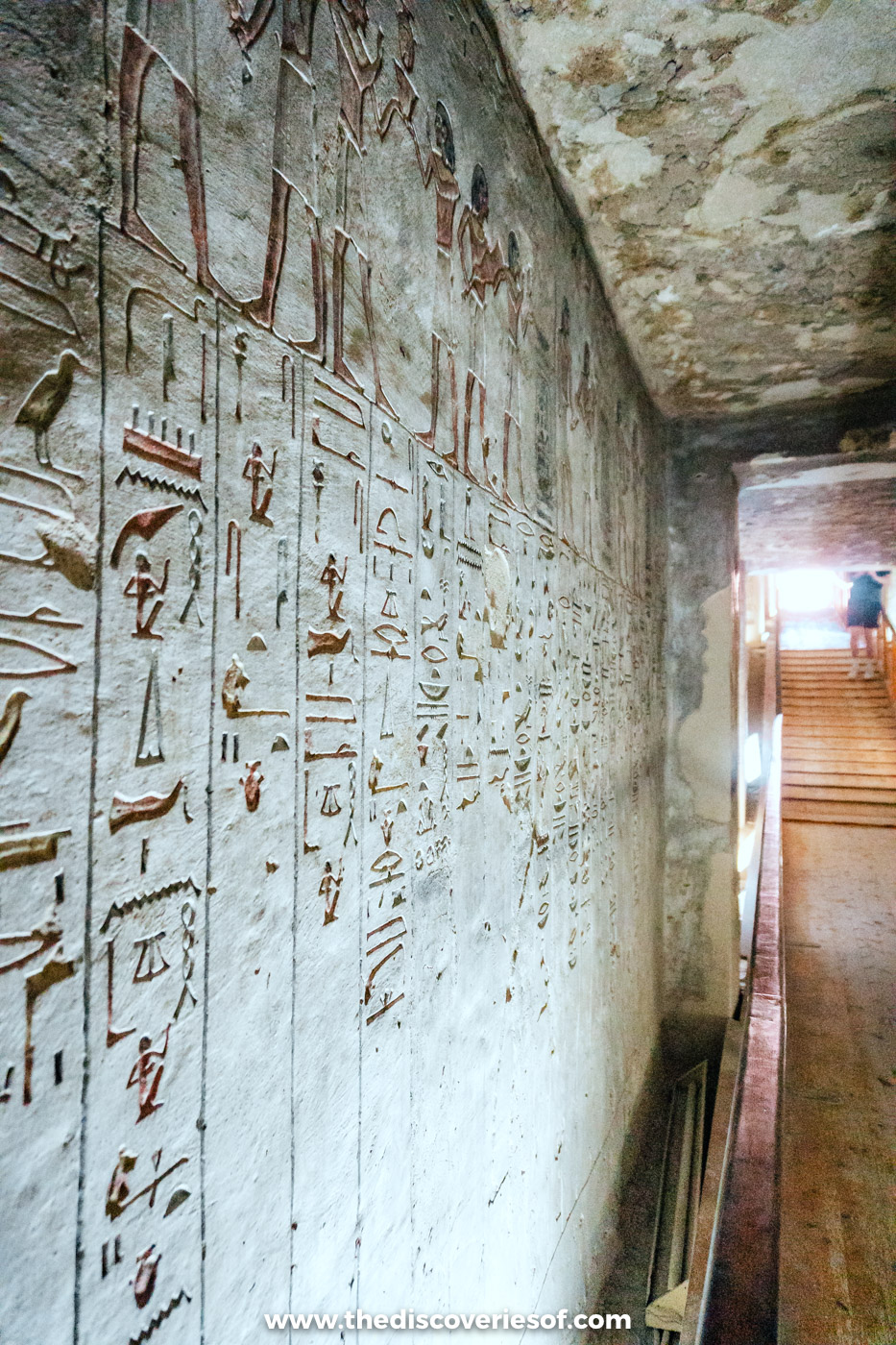
The next two corridors are covered with spells from the Book of the Dead, with knife-wielding guardians of the gates of the underworld. Salt has damaged much of the paint here, but the columns of hieroglyphs are still crisp.
They lead to a small chamber with Osiris, the four Sons of Horus, Anubis, Isis and Nephthys, then to a larger hall with a ramp down the middle. On its walls, Tausert’s figure has been erased and replaced by large cartouches of Setnakht: it’s one of the clearest examples of the takeover.
The Opening of the Mouth corridors
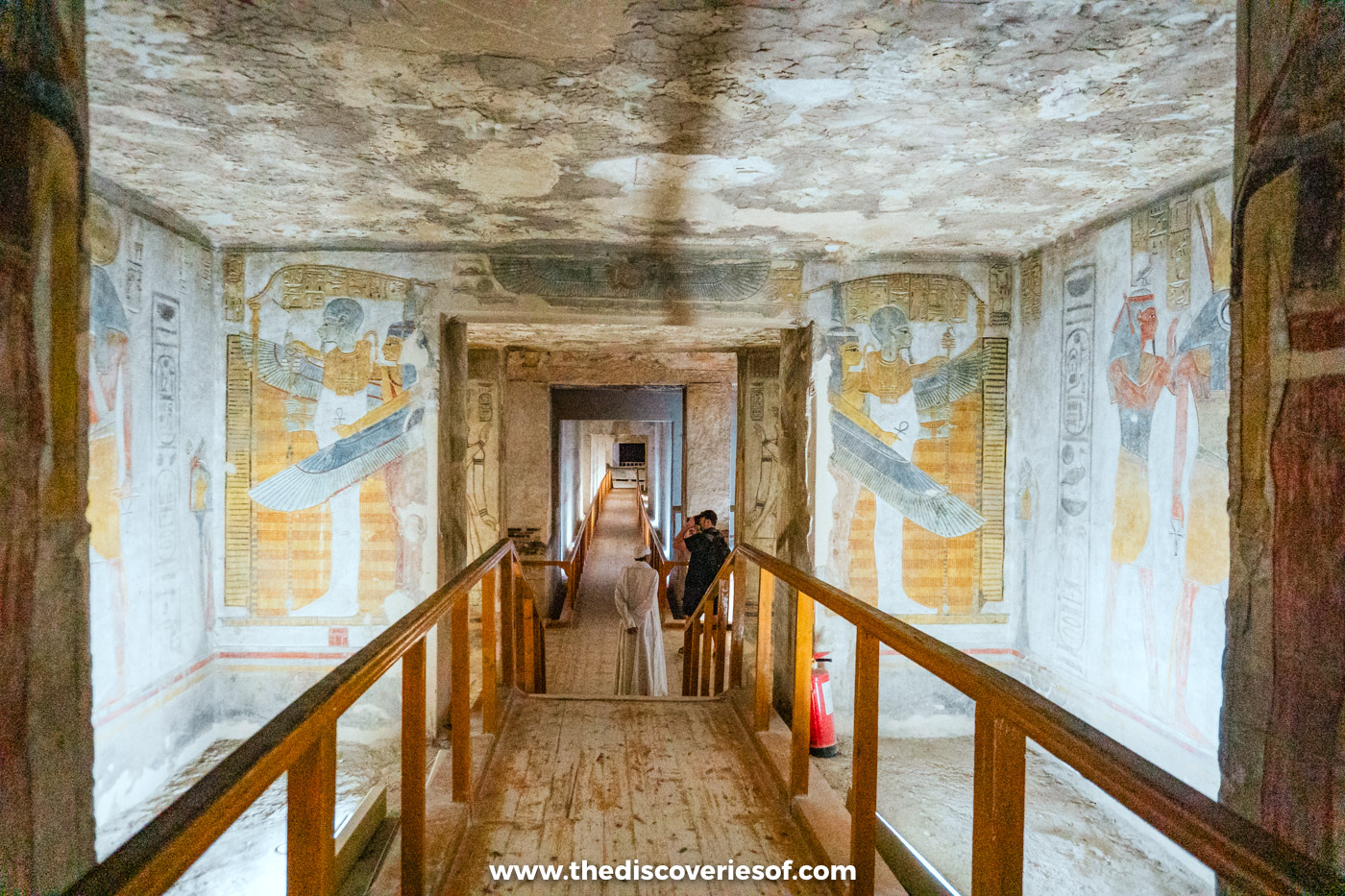
Beyond the ramp, two corridors show the Opening of the Mouth, the ritual that restored the senses of the dead so they could eat, breathe and speak in the afterlife. A side room off the first of these has djed pillars carved beside its entrance, a feature found nowhere else in the valley. Its walls show the king (originally the queen) with the Sons of Horus and Anubis tending a mummy.
The next chamber has more examples of Tausert being written out: an offering table now fills the space where her figure once stood.
Tausert’s burial chamber
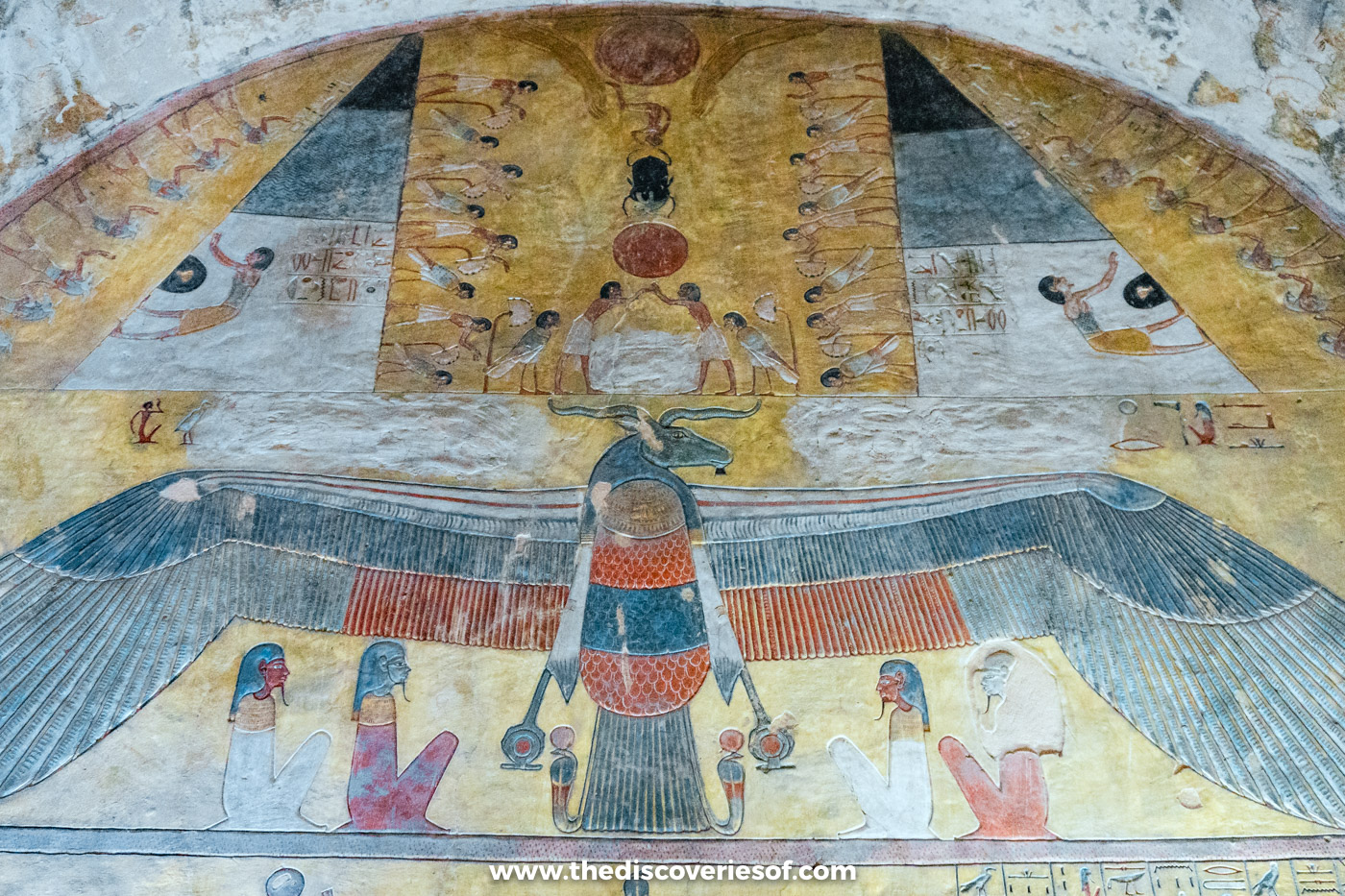
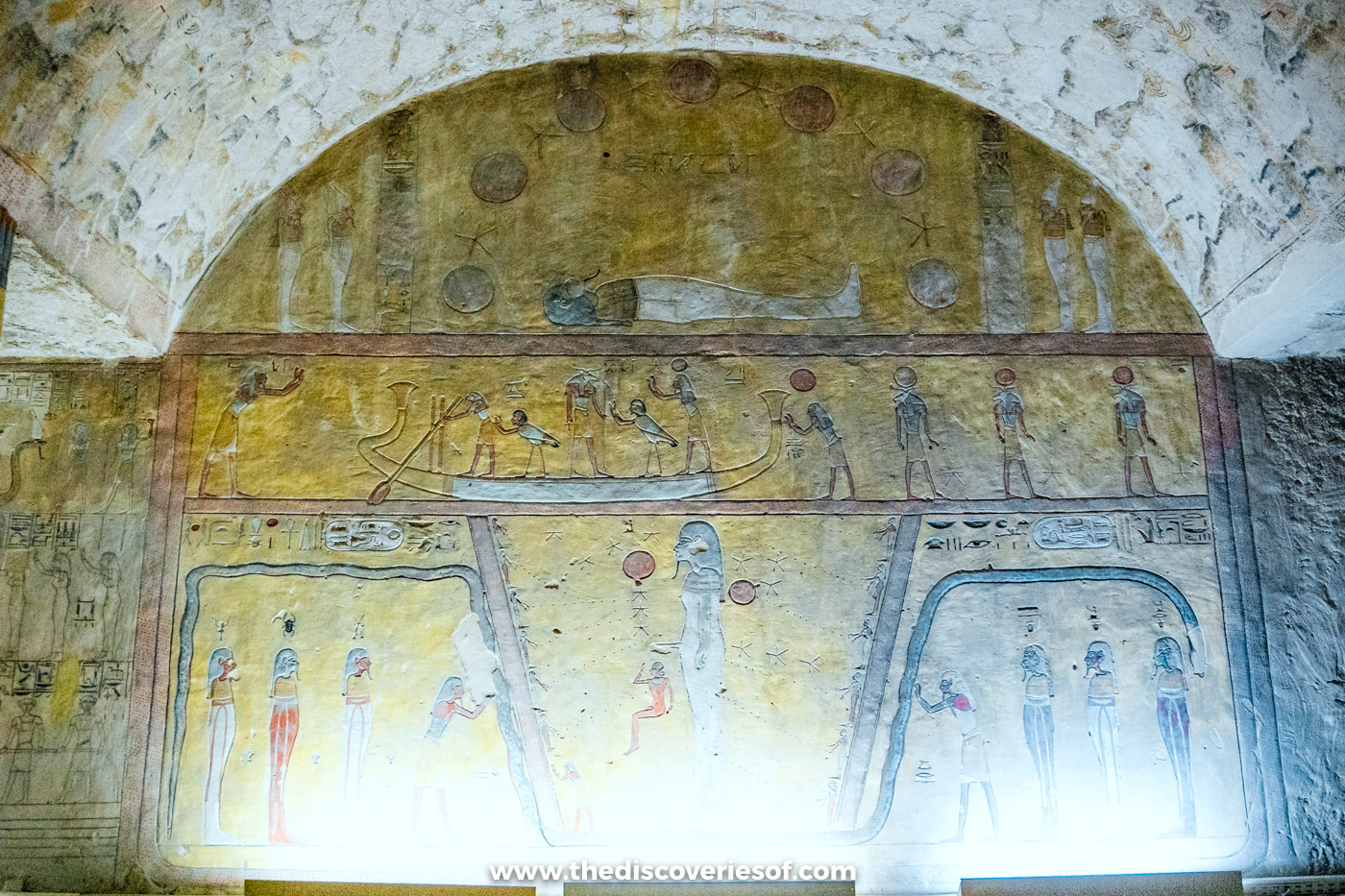
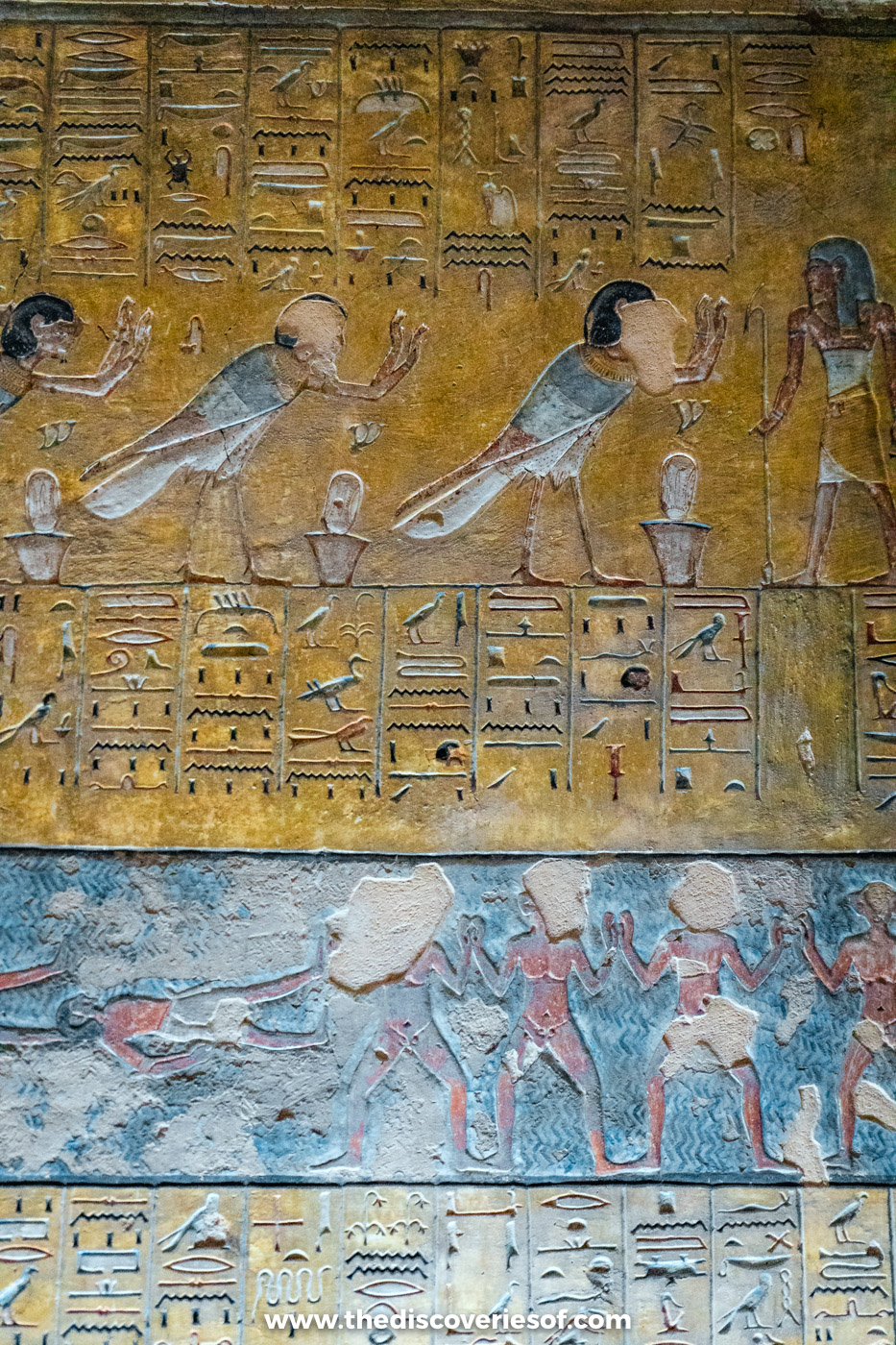
The first burial chamber, built for Tausert, is the highlight. It’s a vaulted hall more than 10 metres wide, turned at right angles to the corridors, with eight pillars and a sunken floor in the middle.
The walls glow with deep yellow paint and scenes from the Book of Gates, the Book of Caverns and the Book of the Earth, and the vaulted ceiling is astronomical. The figures of the king on the pillars were changed or renamed for Setnakht.
Setnakht’s extension
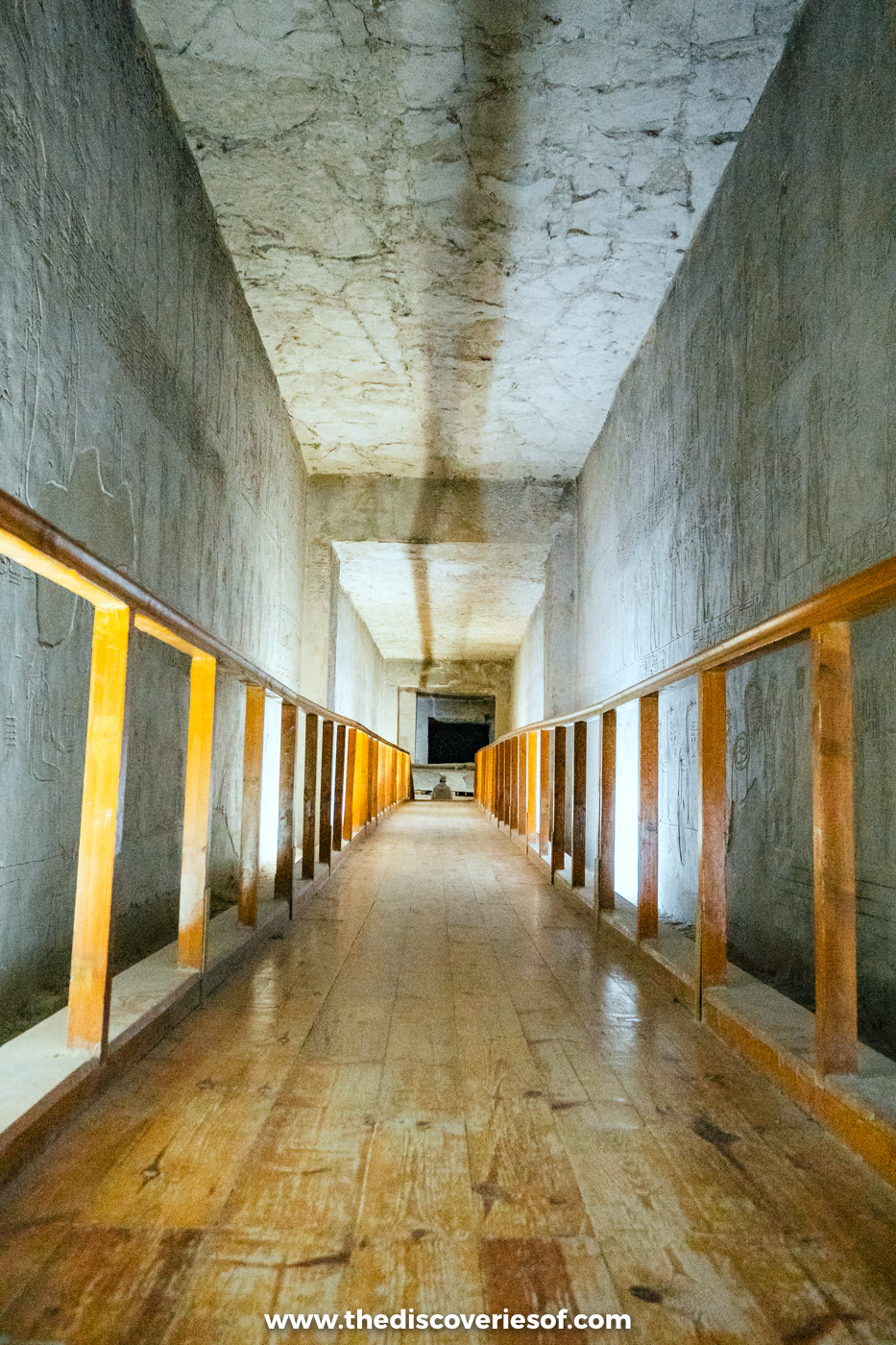
Behind the first burial chamber, the tomb carries on. A corridor almost 15 metres long was originally the start of a second pillared hall, abandoned and turned into a corridor, with two unfinished side rooms.
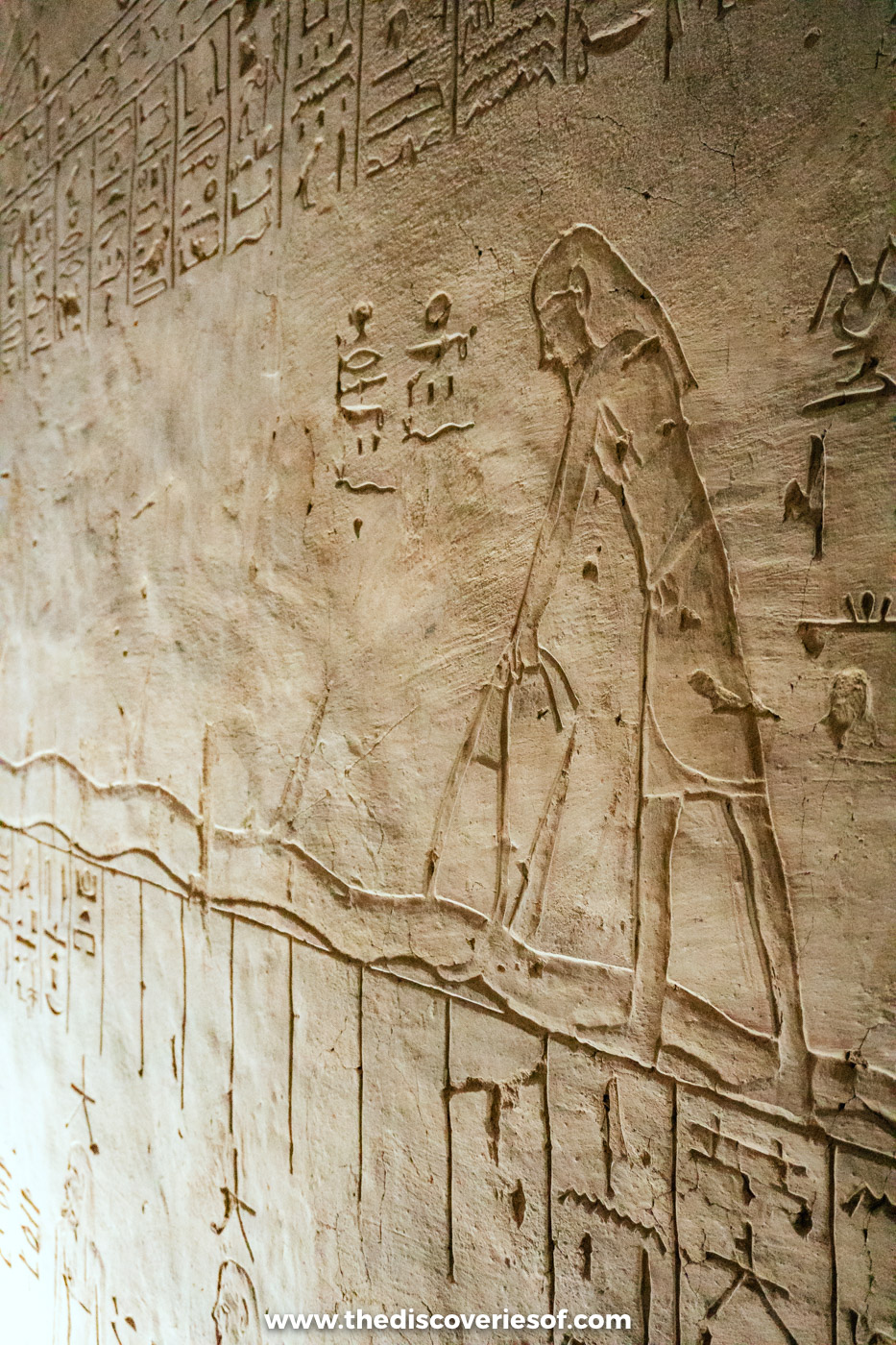
The next corridor shifts slightly off the line of the rest of the tomb, and its walls are carved in sunk relief with scenes from the Amduat, the book of the sun’s journey through the 12 hours of the night. They were never painted, so you can see the sculptors’ work in the bare stone.
Setnakht’s burial chamber and sarcophagus
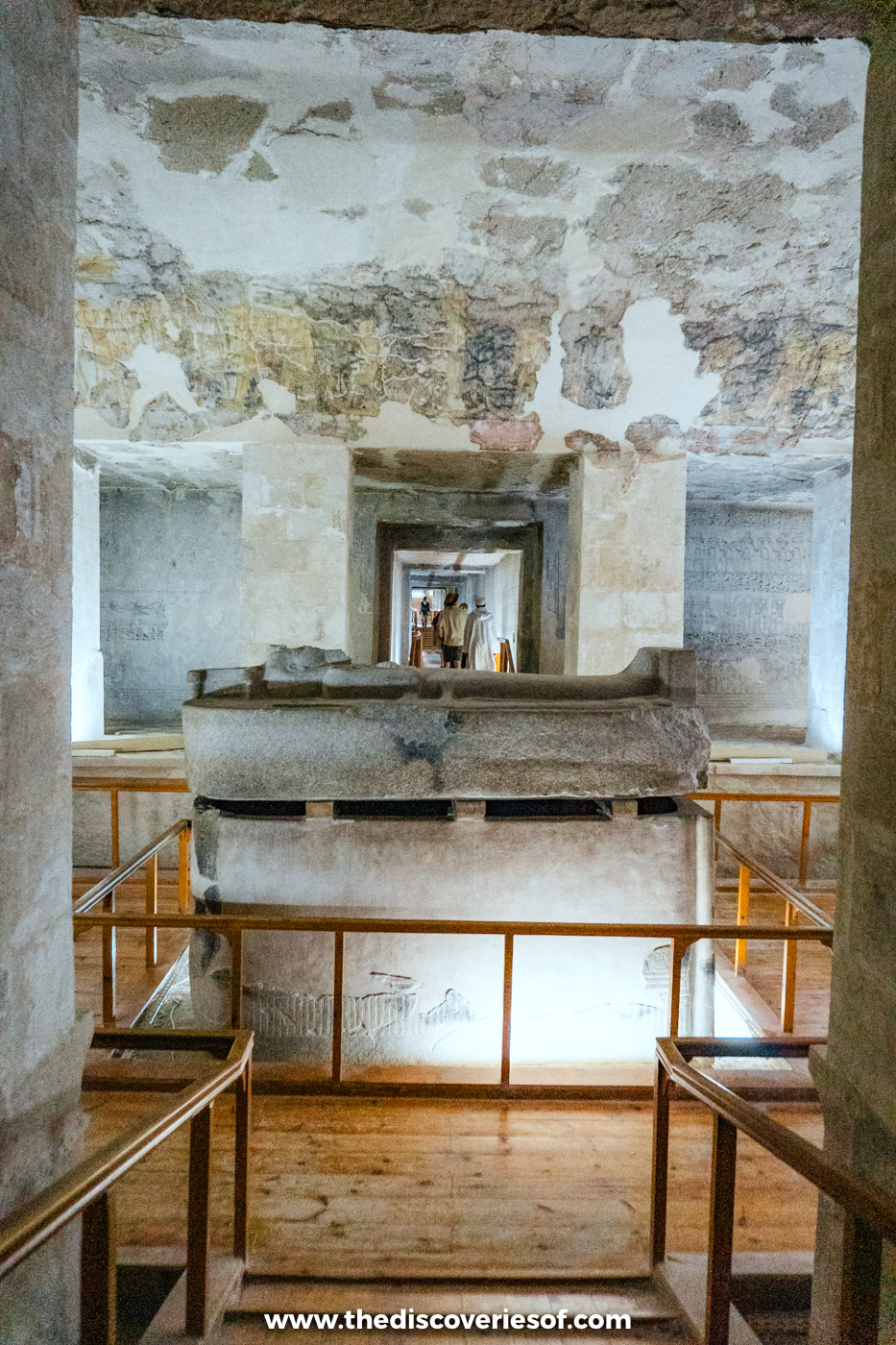
The tomb ends in a second burial chamber, even larger than the first, at more than 13 metres wide and 6 metres high. Only the front half is decorated, with the Book of Gates and an astronomical ceiling, and only one pillar keeps its decoration: Thoth with his writing palette.
In the sunken floor is Setnakht’s sarcophagus, cut from red granite in the shape of a cartouche, with his effigy on the lid. The box was smashed in antiquity and has been partly rebuilt, but the lid is mostly intact.
From here, walk back through the whole tomb, which is a good chance to spot details you missed on the way in.
Tickets and opening hours
The tomb is one of those on the standard ticket, so there’s nothing extra to pay. That ticket costs 750 EGP (375 EGP for students) and includes any three tombs on the open list that day. Tombs rotate for conservation, so check the list at the ticket office: in 2026, visitor reports list it as open.
The valley is open daily from 6am to 5pm (some official listings give a 4pm close in winter). Tickets are paid by bank card at the visitor centre, and the tuff-tuff (tram) to the tombs costs about 20 EGP.
Tickets
Pick KV14 as one of your three standard-ticket tombs and pair it with tombs near the entrance, such as Ramses IX (KV6) and Merenptah (KV8), to see the range of the valley.
Getting there
From the visitor centre, take the tuff-tuff or walk up to the main part of the valley, then follow the path past Tutankhamun’s tomb and keep going to the far end of the southwest branch. KV14 is cut into the base of the cliff there, with Seti II’s tomb (KV15) close by. Allow 10 minutes or so on foot from the tram stop.
The valley is on Luxor’s West Bank, about 40 to 45 minutes by road from the East Bank hotels, or a short taxi ride from the West Bank. Most people visit on a tour or with a driver. See my Valley of the Kings guide for transport, tours and the other tombs.
Tips for your visit
- Go early: start your day here, or come straight up after one tomb near the entrance, to enjoy the tomb at its quietest and coolest.
- Read the walls: look for places where the paint or plaster changes, as these are often where Tausert’s image was replaced with Setnakht’s.
- Pace yourself: it’s a long tomb with two burial chambers, and the second is right at the back, so bring water for the walk up the valley and back.
- Combine it with Seti II: KV15 is next door if you still have a tomb left on your ticket.
- Stay nearby: I stayed at El Mesala Hotel on the West Bank, a short drive from the valley. See my guide to where to stay in Luxor for more.
Watch my Luxor video
Subscribe on YouTube and discover new destinations.
Map
Read next
- Visiting the Valley of the Kings: a practical guide
- Tomb of Ramses IX (KV6): a visitor’s guide
- Tomb of Merenptah (KV8): a visitor’s guide
- Visiting the tomb of Tutankhamun in Luxor
- Visiting the Mortuary Temple of Hatshepsut in Luxor
- The best things to do in Luxor
Love this? Save and share on Pinterest

Discover the top things to do, insider tips and hidden gems in our Egypt Travel Guide.
Read the guides →