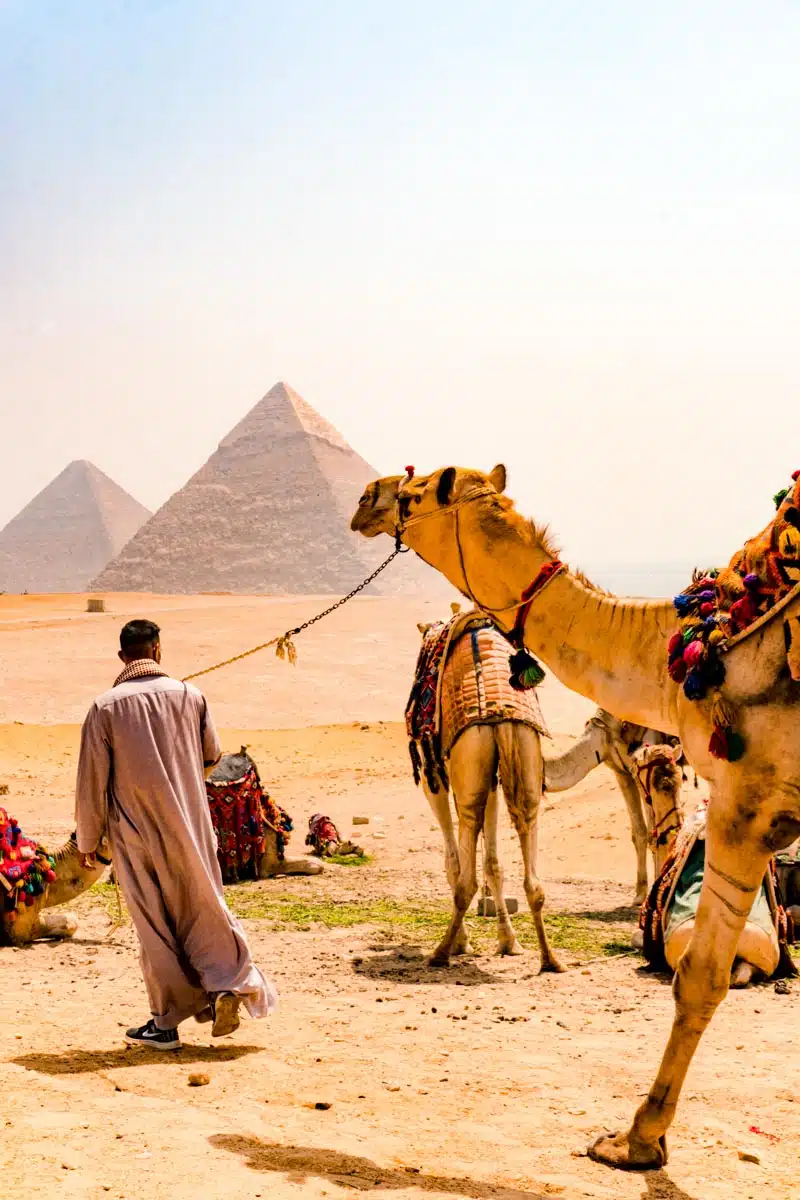
Most visitors come south for the temples, but the Nubian Museum tells the story of the people who lived alongside them for thousands of years, and of the homeland that disappeared under Lake Nasser. Here’s what to see inside, how long to spend and how to plan your visit.
Chances are, you learnt something about the ancient Egyptians at school, but what about the Nubians?
I’ll forgive you if you draw a blank: I certainly did before I visited the city’s stellar Nubian Museum. Nubia, the land along the Nile between Aswan and Sudan, produced kingdoms that traded with the pharaohs, fought them and, for almost a century, ruled Egypt itself. Then, in the 1960s, much of it vanished under the waters of Lake Nasser.
I went on my own in early June, on the afternoon I got back from my day trip to Abu Simbel, which makes a natural pairing: the museum tells the story of the land Ramses II built those temples in, and of what happened to it when the lake rose. I definitely recommend it, especially if you’ve had your fill of temples for the day.
Here’s how to make the most of it, from the colossal statue in the main hall to the dioramas of village life at the end.
At a glance
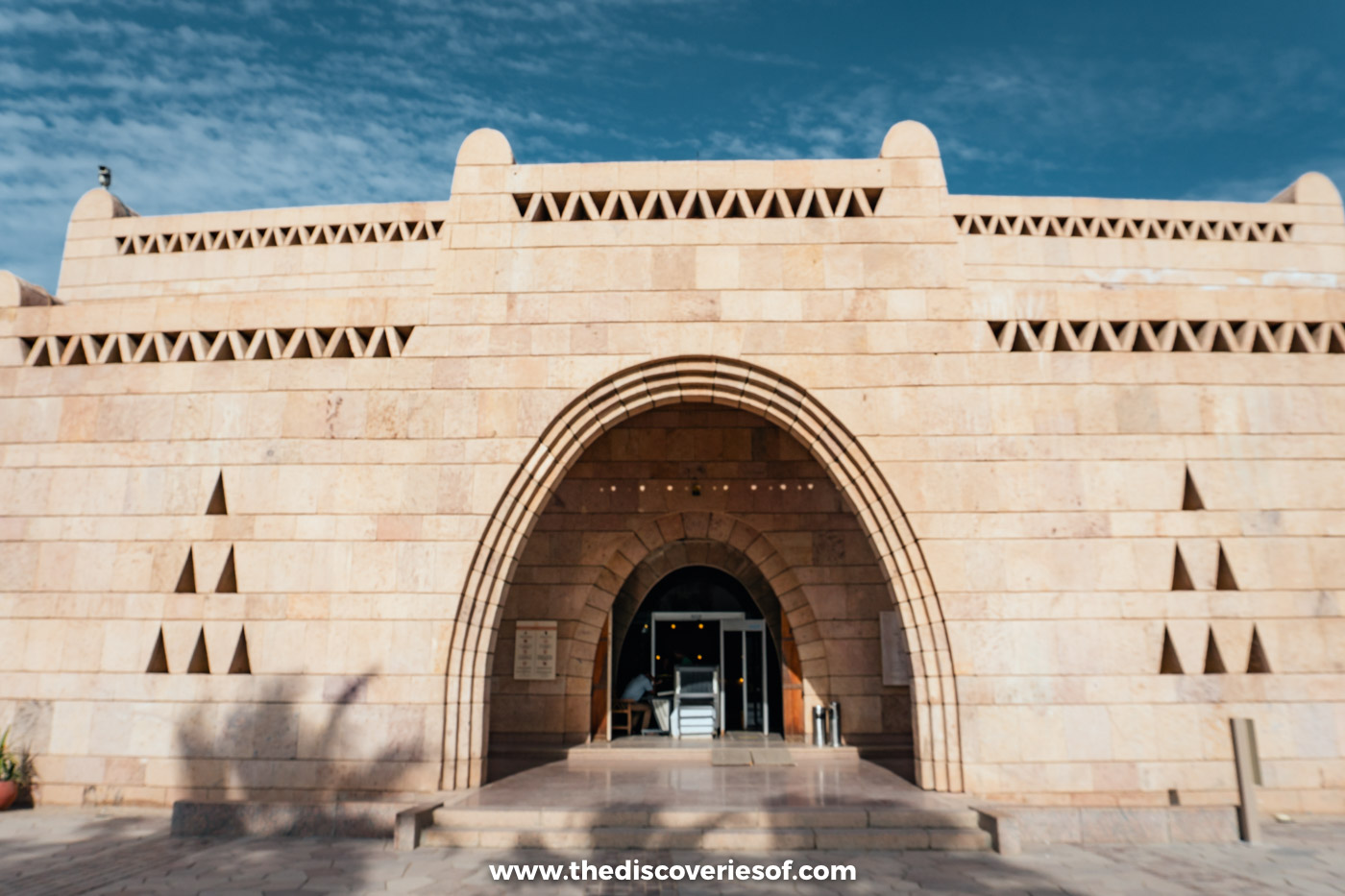
- Where: on a hill at the southern end of the city centre, near the Old Cataract hotel, a short taxi ride or about a 20-minute walk from the souq.
- Opening hours: daily from 9am to 5pm (last tickets at 4pm), with evening opening on Thursdays and Fridays from 6pm to 9pm. During Ramadan, it opens from 9am to 3pm.
- Tickets: 400 EGP for adults and 200 EGP for students. Bring a card, as ticket offices at Egypt’s museums and sites are now largely cashless.
- Time needed: about an hour and a half, or longer if you want to explore the garden.
- Photography: free for personal photos with your phone or camera, but no flash.
- Best for: anyone curious about the history behind Abu Simbel and Philae, and about the Nubian culture you’ll meet all over the city.
Why Nubia matters
For thousands of years, Nubia was Egypt’s neighbour, rival and trading partner. The ancient Egyptians called it Ta-Seti, the “land of the bow”, after its famous archers, and it was the route by which gold, ivory, ebony and incense reached the pharaohs from deeper in Africa.
The relationship swung back and forth. In the New Kingdom, Egypt conquered Nubia and covered it in temples, including the great rock-cut temples at Abu Simbel. Then, in the eighth century BC, the tables turned: kings from Kush, in what is now Sudan, marched north and ruled Egypt as its 25th Dynasty, the so-called black pharaohs.
The 20th century brought the biggest upheaval of all. When the Aswan High Dam was built between 1960 and 1970, the lake that formed behind it flooded Lower Nubia. Tens of thousands of Nubians lost their villages and were resettled, many of them around Kom Ombo, north of the city. UNESCO launched an international campaign to rescue the monuments, which saw more than 20 temples, including Abu Simbel and Philae, dismantled and moved to higher ground.
The museum was one of the campaign’s legacies, built to house the objects found during the rescue excavations and to keep the memory of the lost villages alive. It opened in November 1997.
A building that belongs in its landscape
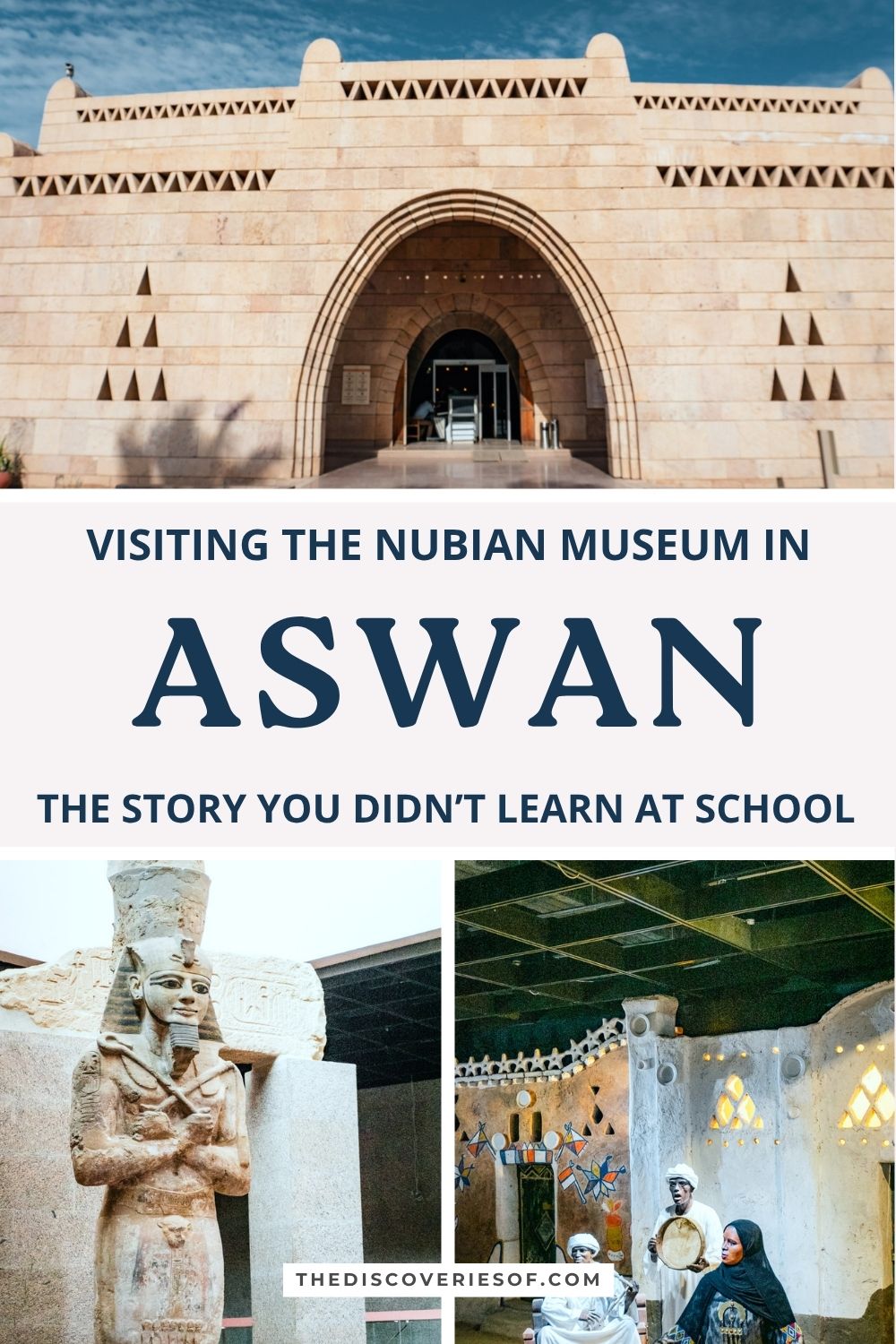
Before you even step inside, take a look at the building. Designed by the Egyptian architect Mahmoud El-Hakim, it’s clad in local sandstone and pink granite, with the decorated parapets and arched doorway of traditional Nubian architecture, so that it blends effortlessly into the hillside as a nod to ancient building styles. The interior was designed by the Mexican architect Pedro Ramírez Vázquez, and the museum won the Aga Khan Award for Architecture in 2001.
Inside, the galleries are laid out over three floors, and the exhibition runs in chronological order, from prehistory to the present day, with more than 2,000 objects on display. The labels are in Arabic and English.
Highlights of the Nubian Museum, from pharaohs to village life
Meet the colossal Ramses II
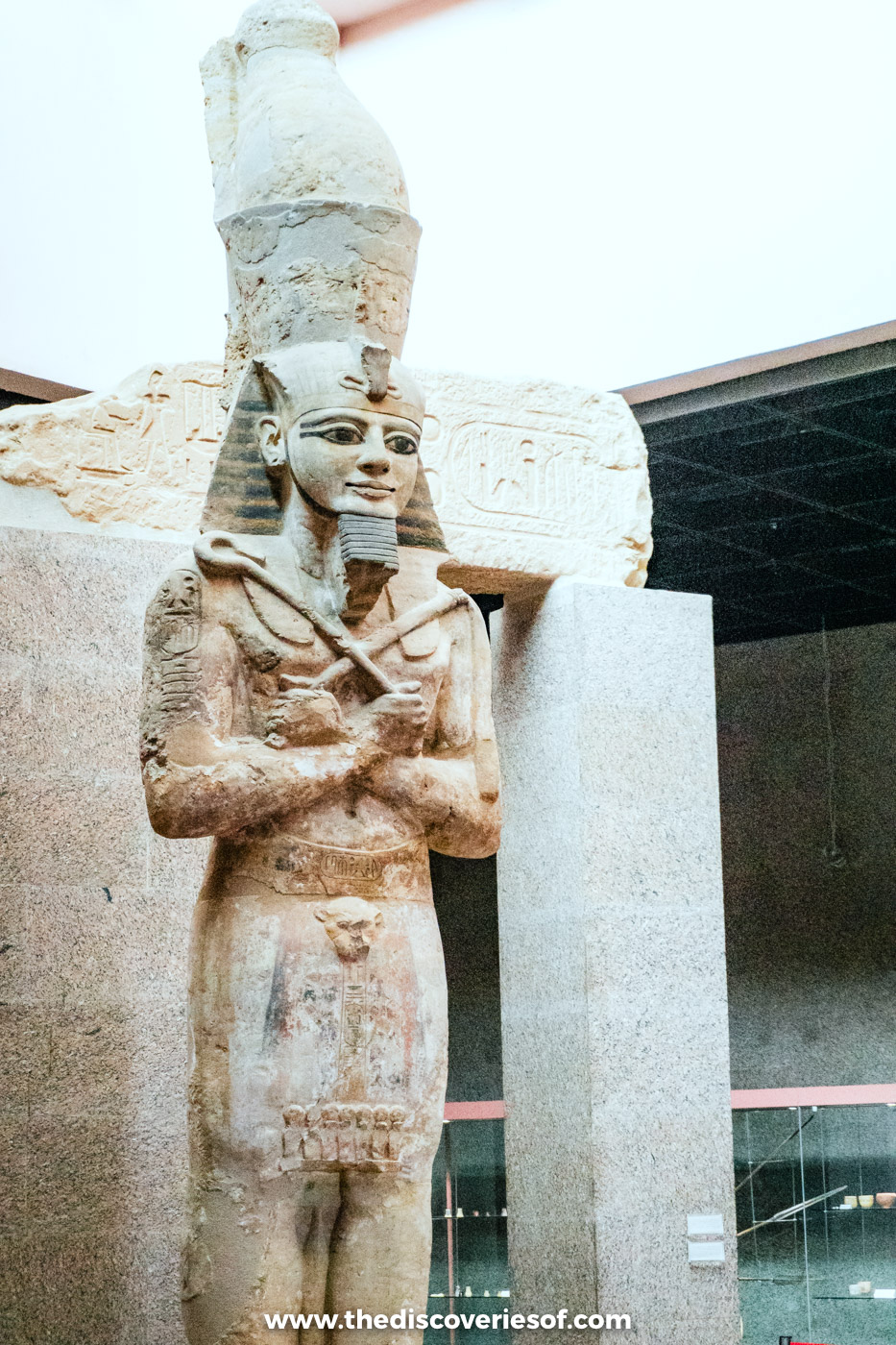
The first thing you’ll see as you enter the main hall is a colossal standing statue of Ramses II, arms crossed over his chest and wearing the double crown of Upper and Lower Egypt. It came from the temple of Gerf Hussein, built for Ramses by his viceroy in Nubia, Setau, and dedicated to the god Ptah.
The statue was one of a row of pillar figures in the temple’s forecourt. When the lake rose, the rock-cut part of the temple was lost, but the forecourt was moved to New Kalabsha, south of the city, and this statue came here. Standing in front of it, it’s hard not to think of the four seated colossi at Abu Simbel: Ramses never did anything by halves.
Nearby, look out for the large model of the Nile Valley, which shows just how many temples once lined the river through Nubia.
Go back 5,000 years with the A-Group
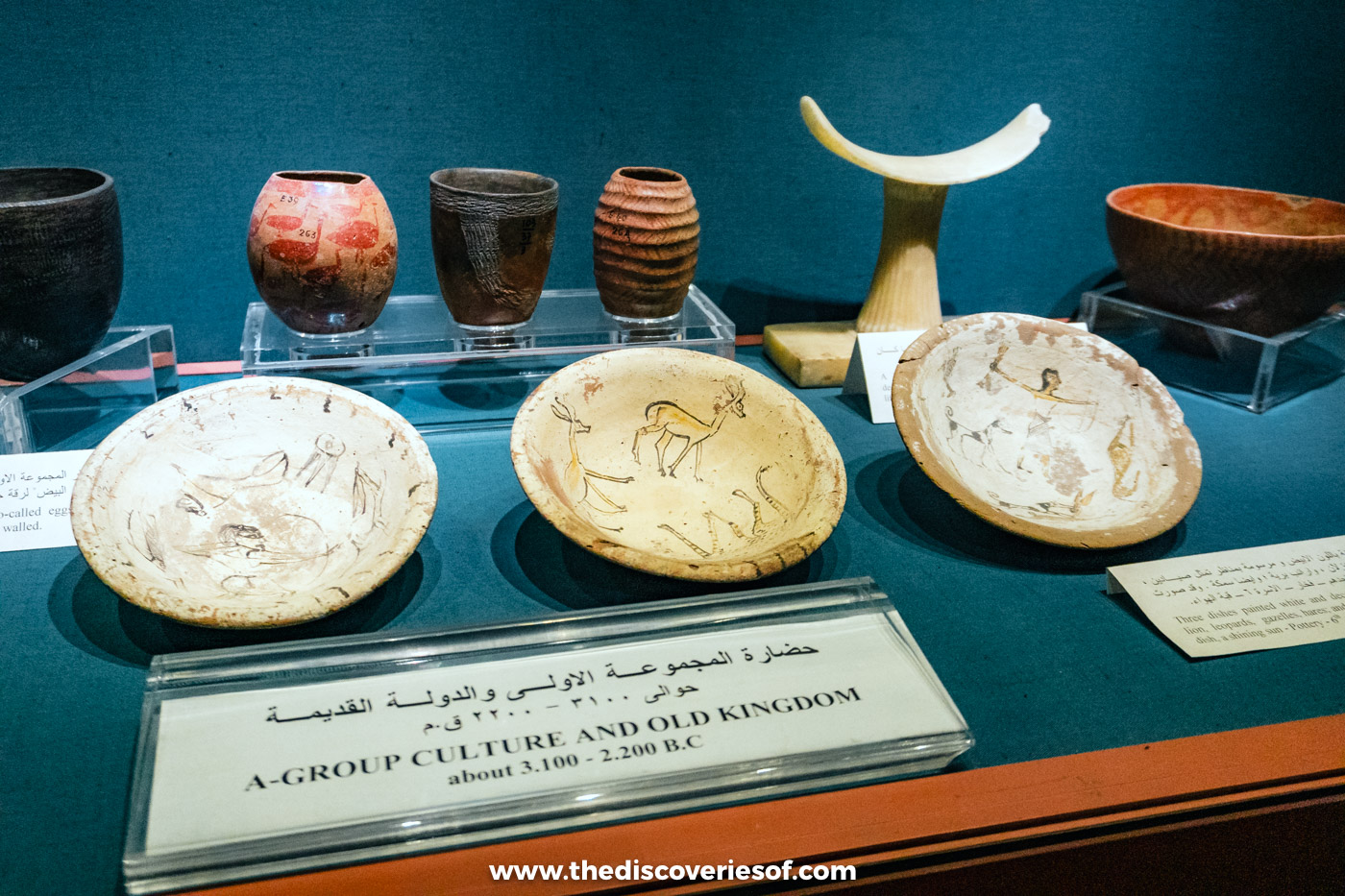
The galleries start long before the pharaohs, with flint tools and rock art from the first hunters and herders in the region. Then come the cultures that archaeologists simply call the A-Group and C-Group, the peoples who lived in Lower Nubia while Egypt was building its first pyramids.
Look out for the A-Group’s finely made pottery, some of it as thin as an eggshell, and the bowls decorated with animals. They’re among the oldest objects in the museum, more than 5,000 years old.
Stelae and treasures rescued from the flood
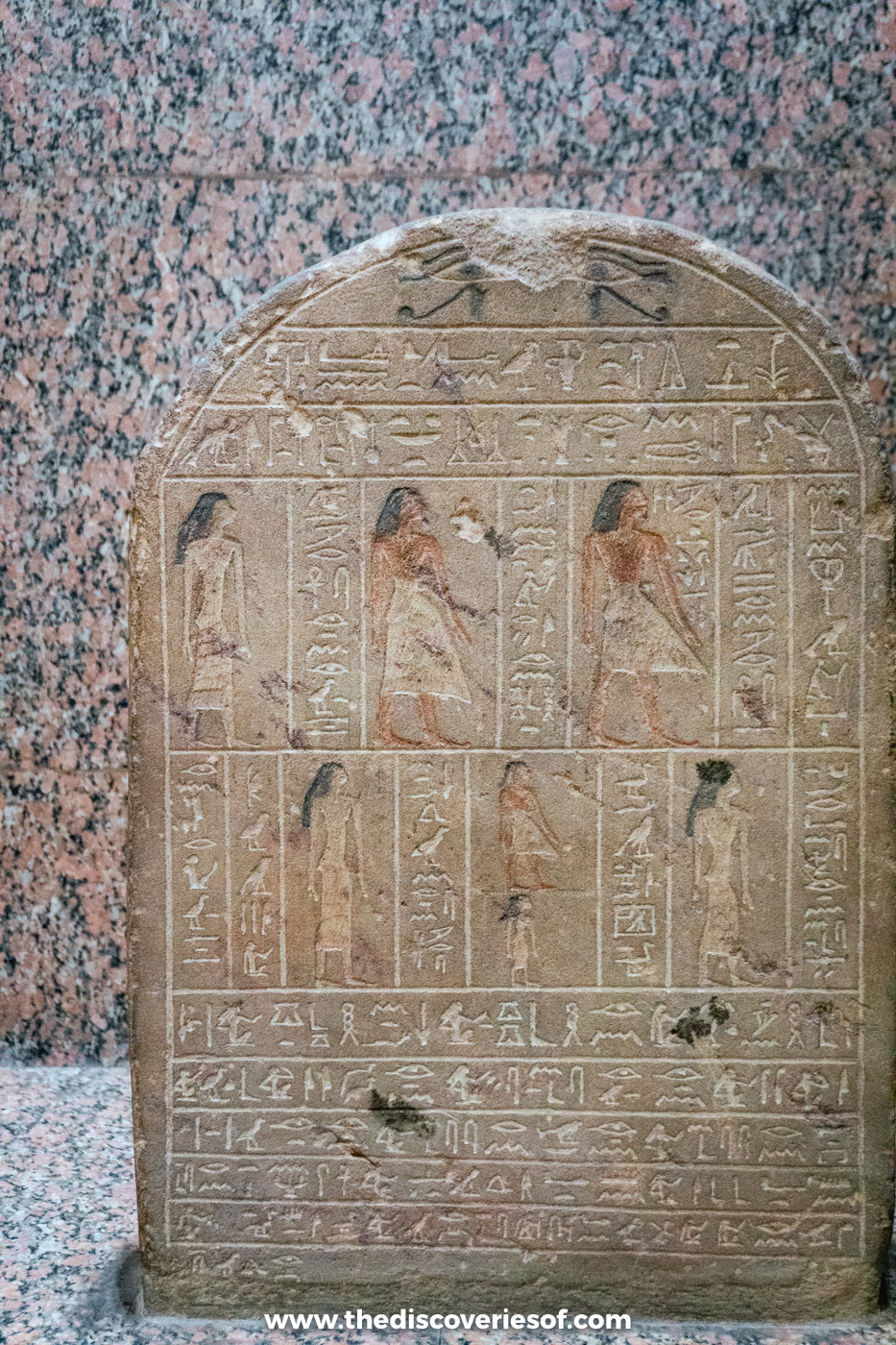
The New Kingdom galleries are full of relics rescued from Nubian sites before the flood: carved stelae, statues and blocks from temples such as Gerf Hussein and Qasr Ibrim, as well as models of the great mudbrick fortresses, like Buhen, that the pharaohs built along the river to control the trade routes.
It’s worth slowing down here: together, these pieces are a vivid reminder that this was a frontier, where Egyptian and Nubian lives were tangled together for centuries.
Come face to face with a Kushite pharaoh
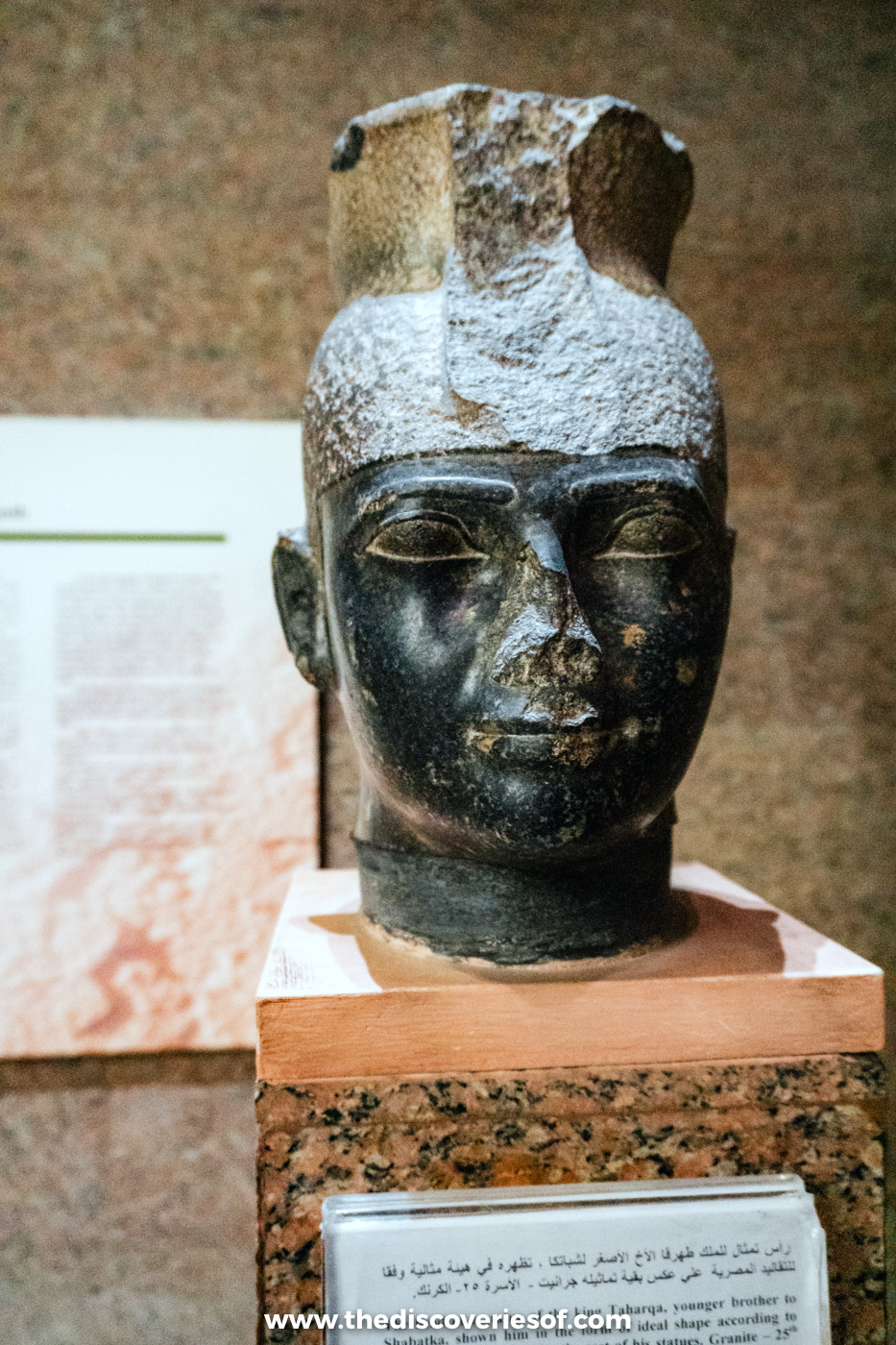
One of the standout pieces is a dark granite head of Taharqa, the most famous of the Kushite kings of the 25th Dynasty. He ruled both Egypt and Nubia from 690 to 664 BC, building monuments from Karnak to Jebel Barkal, in Sudan, and this head was found at Karnak. As the label points out, it shows him idealised in the Egyptian style, quite unlike most of his other statues.
The galleries go on to cover the later kingdoms of Napata and Meroë, whose rulers were buried under steep-sided pyramids in Sudan, and the X-Group, or Ballana culture, whose royal tombs at Ballana and Qustul were filled with jewellery, weapons and horse trappings.
Discover Christian and Islamic Nubia
Nubia’s story didn’t end with the pharaohs. Christianity arrived in the sixth century, and Christian kingdoms flourished here for almost a thousand years, until Islam gradually took over. This part of the museum has wall paintings from Nubian churches, textiles and everyday objects, before the story turns to the High Dam and the UNESCO rescue campaign, with photos of the temples being cut up and moved block by block.
Step into a Nubian village
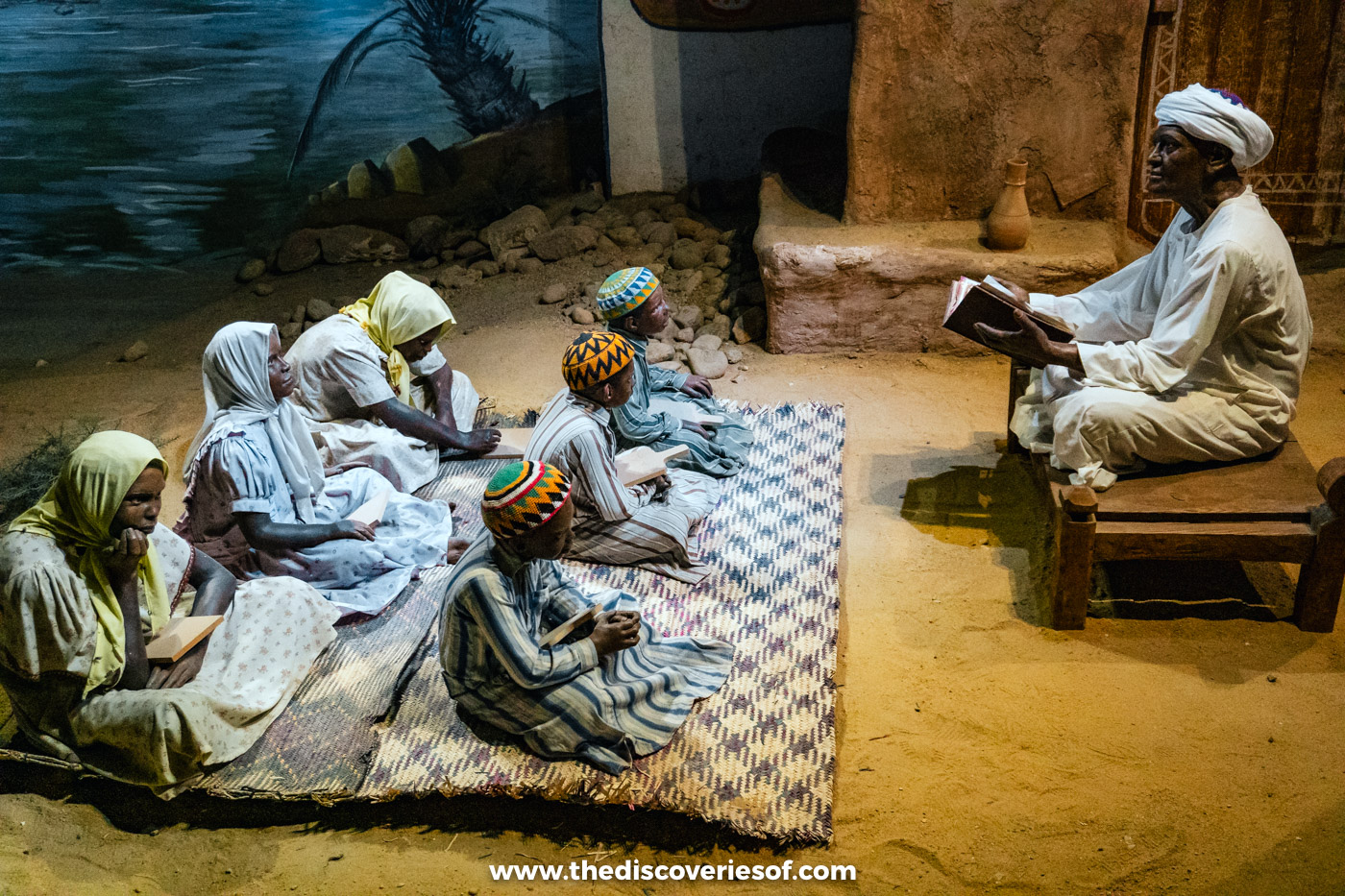
In the final section, life-size dioramas recreate scenes from the villages that were lost to the lake: a Quran school, with children sitting on mats in front of their teacher, a wedding celebration and the brightly painted houses that Nubians are known for.
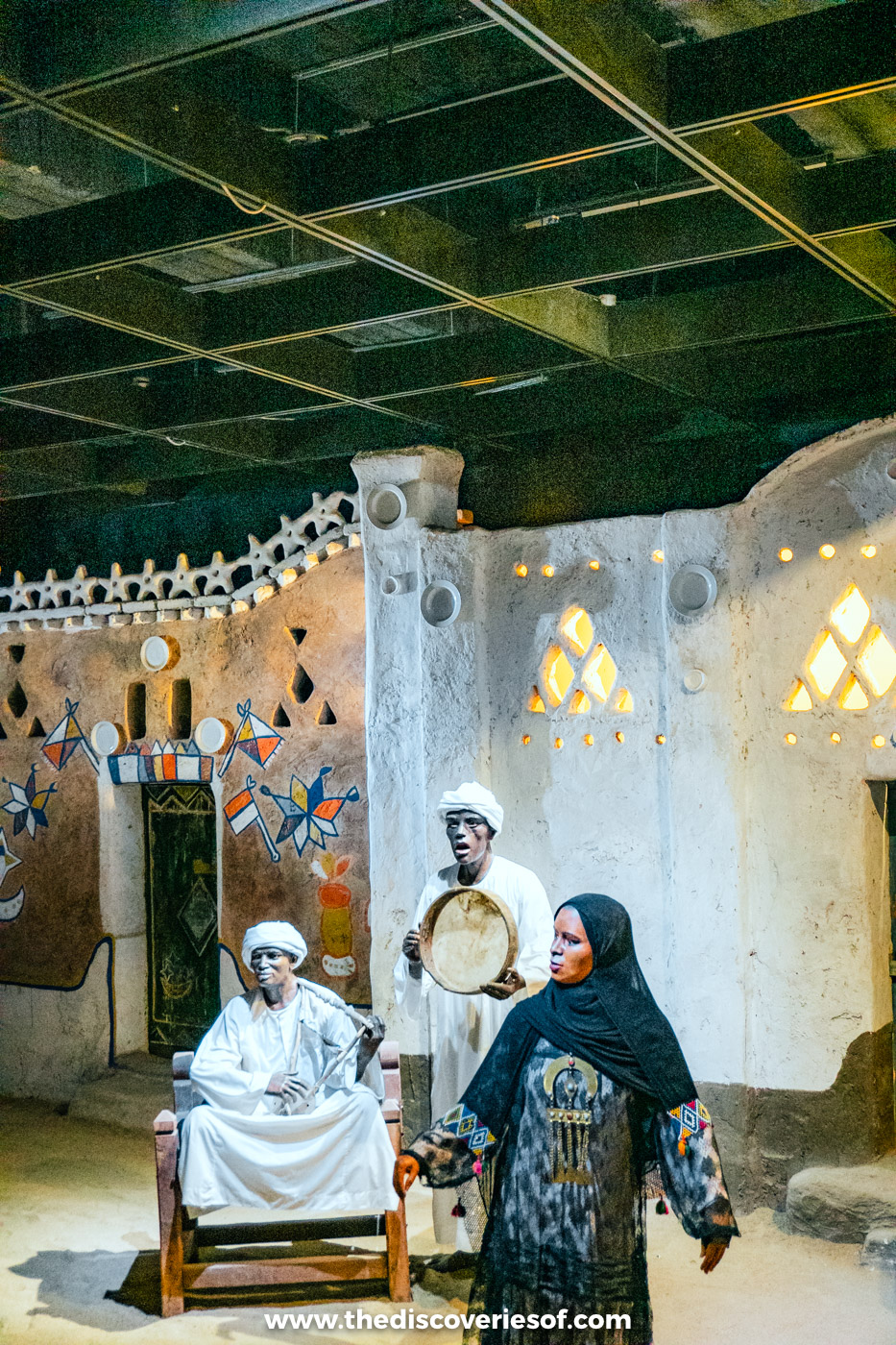
Alongside them are displays of traditional crafts, from baskets and jewellery to clothes and tools. It’s a lovely way to end, and it brings the history back to the present: the Nubian villages you can visit across the river, like Gharb Soheil, are the living version of what you see here.
Wander the garden and the Fatimid cemetery
Don’t leave without a stroll around the museum’s garden, which is an open-air museum of its own. Paths lead past a reconstructed Nubian house, a stream representing the Nile and a small cave with prehistoric rock carvings, and the garden takes in part of a Fatimid cemetery, a collection of domed mudbrick tombs, some more than a thousand years old, that stood on the hillside long before the museum was built.
Tips for getting the most out of your visit
- Pair it with Abu Simbel or Philae: seeing the museum after the temples, as I did, makes both more meaningful, and it’s a calm, air-conditioned place to spend a hot afternoon.
- Go late in the day: the museum is a good choice for the hottest part of the afternoon, and on Thursday and Friday evenings, you can visit after dark.
- Start with the model: the big model of the Nile Valley in the main hall shows where all the sites you’ll read about once stood.
- Bring a card and a little cash: tickets are paid by card, but you’ll want small notes for taxis and tips.
- Make an evening of it: the Corniche and the souq are a short ride away, and afterwards I headed to Makani, one of my favourite places to eat in the city, for an early dinner.
Watch my Aswan video
Subscribe on YouTube and discover new destinations.
Map
Read next
- Things to do in Aswan: temples, Nubian culture and the Nile
- Visiting the temples of Abu Simbel
- Philae Temple: visiting the striking Temple of Isis
- Aswan Botanical Garden: the green island most visitors skip
- Best museums in Cairo: from royal mummies to Tutankhamun
- 11 stunning ancient Egyptian temples you can still see today
Love this? Save and share on Pinterest

Discover the top things to do, insider tips and hidden gems in our Egypt Travel Guide.
Read the guides →