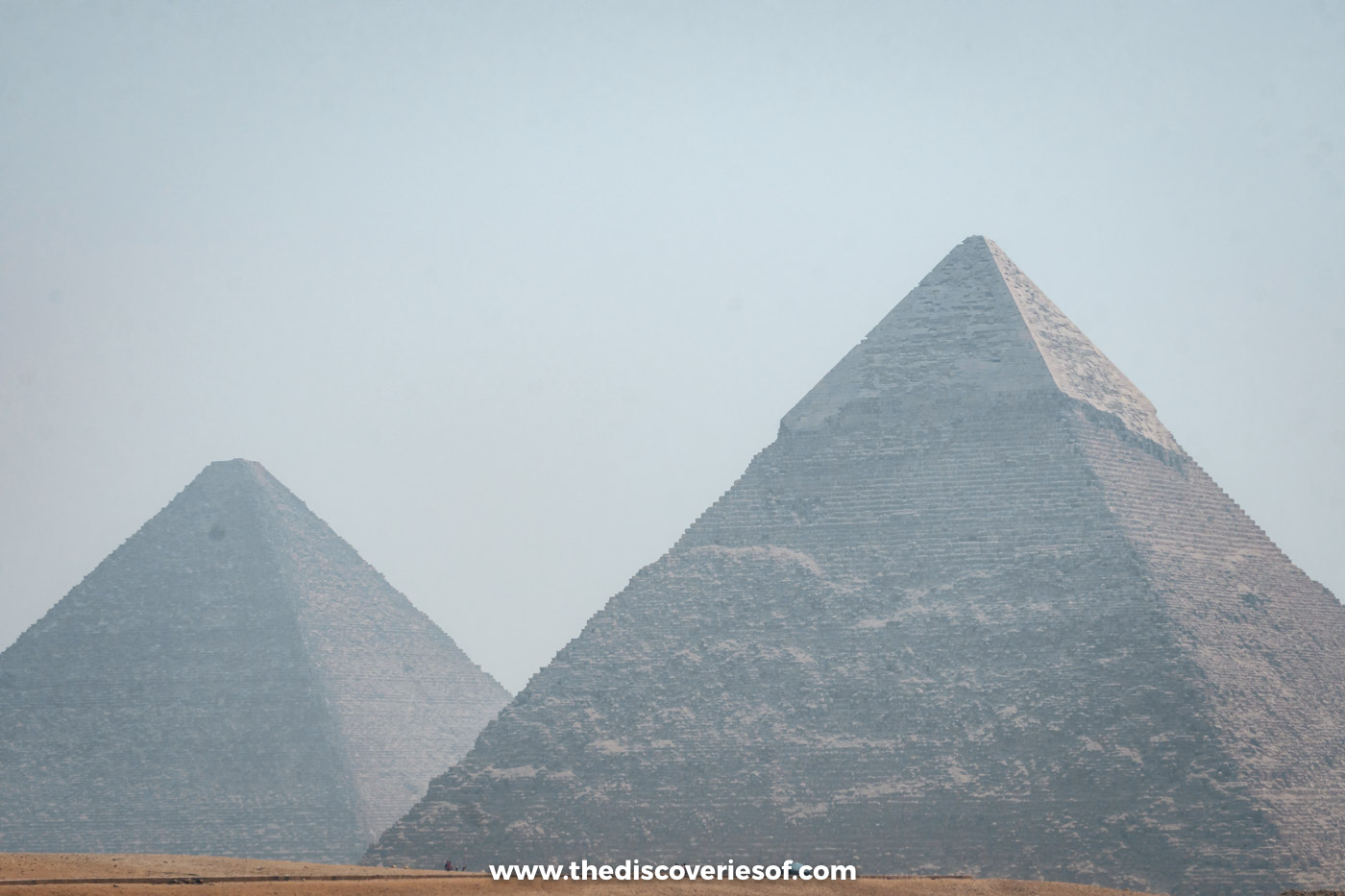

Looking for the best day trips from Cairo? From the pyramids of Saqqara and Dahshur to Alexandria, desert oases and the Red Sea, these are the destinations you can visit from the Egyptian capital in a day, with honest journey times and the easiest way to get there.
Cairo is an ancient city with a modern beating heart. It’s within easy reach of many of the wonders of the ancient world, and it’s a great base from which to explore some of Egypt’s most renowned and lesser-known treasures.
If my two-day itinerary has whetted your appetite and you want to know where else you can go without uprooting yourself from your hotel, read on. Some of these trips are an easy half day from the city. Others, like Luxor, Aswan and Abu Simbel, are only possible in a day if you fly, and I’ll tell you which ones are better with an overnight stay.
I’ve included the places I visited on my own Egypt trip, from crawling inside the Great Pyramid to Abu Simbel, which I reached from Aswan, alongside the best of the rest.
Pull up a pew, open your notepad and read on.
The best day trips from Cairo
Giza: the pyramids and the Sphinx
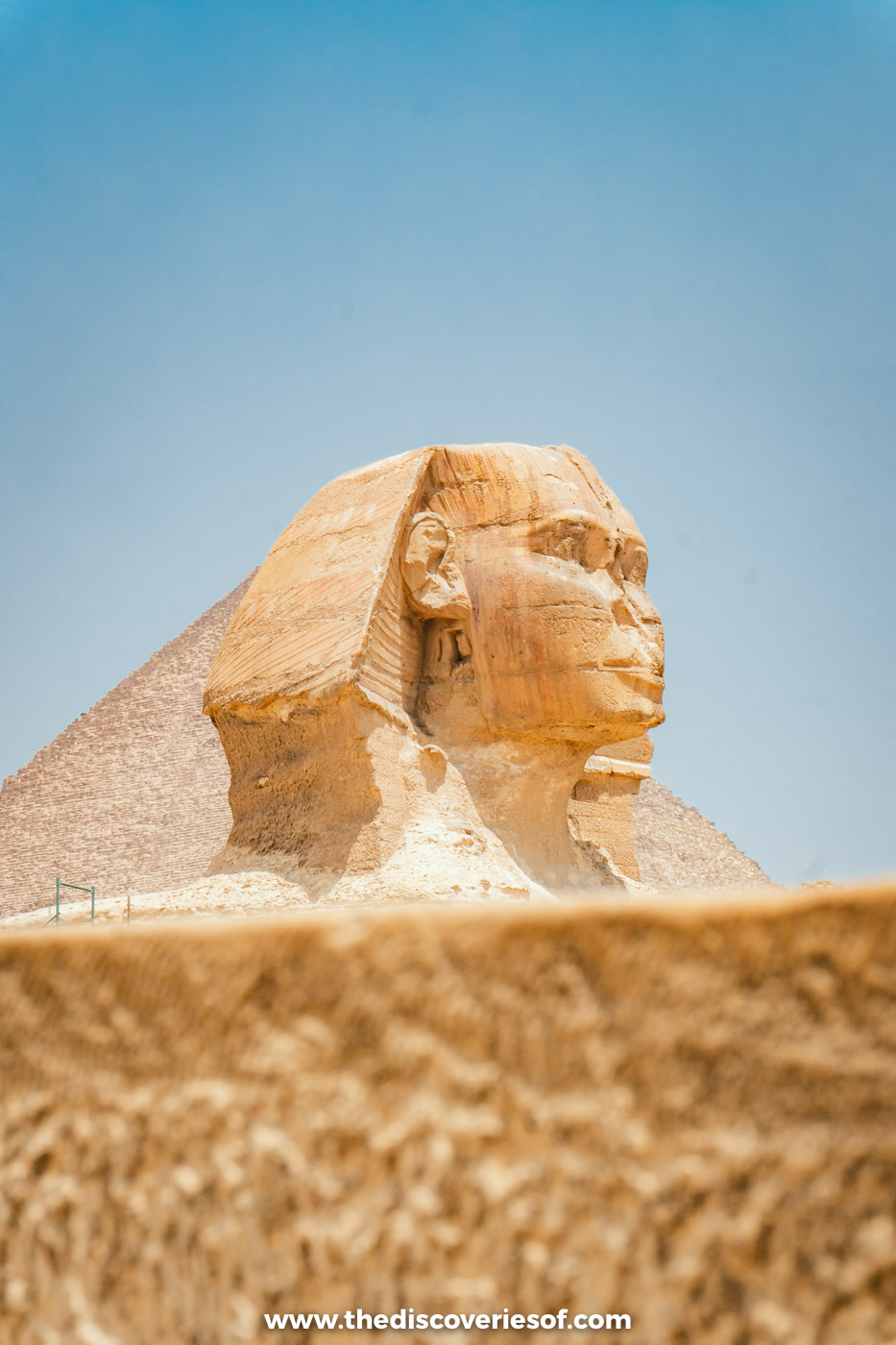
Without question one of the most recognisable sights in the world, the Pyramids of Giza are an indispensable part of any visit to Egypt. They’re across the Nile from the centre of Cairo, on the edge of the desert, and they were one of the many highlights of my trip, along with seeing the famous Sphinx. Did I have a minor “moment” when I first stood in front of them? Yes.
Part of a UNESCO World Heritage Site, Giza is home to the last surviving wonder of the ancient world, the Great Pyramid, built for the pharaoh Khufu, and believe me, it’s a pretty wondrous sight. I paid extra to go inside, which involves crawling up a tunnel about a metre high in the heat, and it’s probably not one for the claustrophobic.
Alongside it sits the Great Sphinx, usually thought to represent the pharaoh Khafre. Make a day of it by adding the Grand Egyptian Museum, which opened fully in November 2025 about 2 kilometres away and displays the complete Tutankhamun collection for the first time.
How to get there: The metro doesn’t reach the pyramids, so the easiest way is by Uber or Careem (about 45 minutes to an hour from the centre). Most visitors now enter through the Pyramids Visitor Centre next to the Grand Egyptian Museum, where free shuttle buses take you around the plateau.
Average journey duration: 45 minutes to an hour
Hassle-free option: Book this pyramids, Sphinx and Grand Egyptian Museum tour with lunch
Saqqara

If architecture is your jam, Saqqara (also spelled Sakkara) is the place for you.
One of the most remarkable archaeological sites in Egypt, which is some going, Saqqara was the main burial ground for the ancient capital of Memphis for more than 3,000 years, and it was a place of pilgrimage long after that.
Its centrepiece is the Step Pyramid of Djoser, designed by the architect Imhotep around 2670 BC. It’s the oldest of Egypt’s pyramids and one of the oldest large stone buildings in the world. Around it, you can explore beautifully carved Old Kingdom tombs, such as those of Mereruka and Ti, and the Serapeum, a vast underground gallery of granite coffins made for the sacred Apis bulls. Archaeologists are still making discoveries here, so there’s often something new to see.
A combined ticket for the main sites costs 1,400 EGP, and the site is open from 8am to 4pm.
How to get there: There’s no direct public transport to Saqqara. The best way to make the journey is to hire a driver for the day, which also lets you combine it with Memphis and Dahshur, or to join a tour.
Average journey duration: about 1 hour
Hassle-free option: Book this pyramids, Saqqara and Memphis tour with lunch
Memphis
If you arrive at the ancient city of Memphis expecting to pay homage to Elvis, you’ve taken a wrong turn and need to redirect to the US state of Tennessee.
The original Memphis was Egypt’s first capital, founded around 3000 BC, and it’s one of the country’s most underrated sights. While the grandeur of this city, which predates rock and roll by a few millennia, has faded, what remains pays homage to the ingenuity of the ancient Egyptians.
Today, the site at Mit Rahina is an open-air museum. Its star is a colossal limestone statue of Ramses II, more than 10 metres long, displayed lying down in its own hall. Outside in the garden, look out for the Alabaster Sphinx, carved from a single block of calcite, alongside statues, stelae and the remains of temples to the creator god Ptah. Tickets cost 200 EGP, and you’ll need about an hour.
How to get there: As with Saqqara, there’s no direct public transport to Memphis. Hire a driver or a taxi for the day and visit it on the way to or from Saqqara, about 10 minutes away.
Average journey duration: 45 minutes to an hour
Hassle-free option: Book this full-day tour of Giza, Saqqara and Memphis
Luxor

As you’ll no doubt have noticed, Egypt is stacked with marvellous sites of the ancient world, and Luxor is no different. Marvel at the Mortuary Temple of Hatshepsut, the Valley of the Kings and Tutankhamun’s tomb, the quieter Valley of the Queens (where Queen Nefertari’s tomb is currently closed) and the vast Karnak Temple in the modern city that grew up on the site of ancient Thebes.
If you can, take a hot air balloon flight over Luxor. It was one of the highlights of my whole trip, and it gives you the full range of sights, from the Valley of the Kings to the Colossi of Memnon, and from the edge of the desert to the green fields along the Nile.
Honestly, though, Luxor is too good for a day trip. It’s about 650 kilometres away by road, and I’d give it at least two or three days. See my guide to where to stay in Luxor if you can stretch your trip.
How to get there: Fly. Flights take just over an hour, and there are several a day. The sleeper and day trains take about 10 hours, and buses even longer, so they only work if you’re staying overnight.
Average journey duration: about 1 hour by plane (about 10 hours by train)
Hassle-free option: Book this private Luxor day trip from Cairo with flights, or this Luxor trip by plane with a hot air balloon flight
Aswan

Aswan was probably the destination on my trip that I knew least about. By the time I came to leave, it was a close contender for my favourite.
For centuries, it was Egypt’s gateway to the rest of Africa, and it’s known for its Nubian culture, though most people today know it for the High Dam that spans the Nile just south of the city.
This friendly, laid-back city will capture a special place in your heart. Its ancient wonders include the Temple of Philae, the Unfinished Obelisk and the Tombs of the Nobles. Take time to learn about the history of the Nubian people at the Nubian Museum, which I visited on my own and definitely recommend, and hop on a boat to the Aswan Botanical Garden on Kitchener’s Island.
Like Luxor, it’s a long way to go for a day: Aswan is about 880 kilometres south of the capital, so it’s far better to stay a few nights.
How to get there: The quickest way is to fly, in about an hour and a half. The overnight sleeper train is cheaper and lets you watch the Egyptian countryside go by: I took it, and I enjoyed it, though I’d fly for the return. Tourists have to board at Giza station rather than Ramses Station in central Cairo.
Average journey duration: about 1 hour 30 minutes by plane (13 to 14 hours by train)
Hassle-free option: Fly down and join this 4-day Nile cruise from Aswan to Luxor with flights from Cairo
Alexandria

Sitting on Egypt’s Mediterranean coast, Alexandria is an alluring mix of modernity and ancient wonders. Founded by Alexander the Great in 331 BC, it has a breezy, faded grandeur all of its own, and plenty for us history nerds to geek out on.
Pompey’s Pillar, a granite column almost 27 metres tall, was put up in honour of the Roman emperor Diocletian around AD 300. Meanwhile, the Catacombs of Kom el-Shoqafa are an incredible (if eerie) burial site carved deep into the rock, decorated with a mix of Egyptian, Greek and Roman motifs.
Other wonders include the modern Bibliotheca Alexandrina, which opened in 2002 in tribute to the great library of the ancient world, the Citadel of Qaitbay, built in the 1470s on the site of the ancient Lighthouse of Alexandria, and the Roman theatre at Kom el-Dikka, the only one of its kind in Egypt.
How to get there: Take an express train from Ramses Station, which takes about two and a half hours and has air conditioning, which you’ll be highly grateful for. Alternatively, Go Bus and other companies run frequent buses on the desert road.
Average journey duration: 2 hours 30 minutes to 3 hours
Hassle-free option: Book this full-day trip to Alexandria with lunch
Fayoum Oasis

Fayoum is one of Egypt’s best-kept secrets. While we get our image of an oasis from film and TV, as a small pool of water in the desert, Fayoum is on a completely different scale.
A vast basin in the Western Desert, west of the Nile, it’s fed by a channel from the river called the Bahr Yussef, which turns the desert into fertile farmland around the saltwater Lake Qarun. The oasis has been farmed since the time of the pharaohs, and it’s on Egypt’s tentative list for UNESCO World Heritage status.
Within the wider Fayoum region is a site that already made the list: Wadi Al-Hitan, the Valley of the Whales, where the fossilised skeletons of 40-million-year-old whales, with tiny back legs, lie in the open desert. If you want your mind blown by a piece of unbelievable natural history, this is it. Add the waterfalls of Wadi El Rayan, the pottery village of Tunis and the old wooden waterwheels in Fayoum city, which still lift water from the Bahr Yussef as they have for centuries.
How to get there: Minibuses and buses run from Giza to Fayoum city, but to see the lakes and Wadi Al-Hitan, you’ll need a driver or a tour (the last stretch to Wadi Al-Hitan is usually done by 4×4).
Average journey duration: 1 hour 30 minutes to 2 hours
Hassle-free option: Book this private day trip to Fayoum, Wadi Al-Hitan and Wadi El Rayan
Dahshur

While the pyramids of Giza are unique, the crowds can take the edge off the experience of visiting them.
No matter: not far away are the pyramids of Dahshur, older and quieter than Giza, out on the edge of the desert and precisely what you’d hope to find on a trip to Egypt.
Dahshur is where the pharaoh Sneferu, Khufu’s father, perfected the pyramid. The Red Pyramid is thought to be the world’s first true, smooth-sided pyramid, and seeing it for the first time is a genuine wow moment. You can climb down inside it, but it can be overwhelming for anyone with claustrophobia.
The other unmissable pyramid, a short drive away, is the Bent Pyramid. Its builders started at an angle of about 54 degrees, then switched to a gentler angle of about 43 degrees partway up, probably because the structure was becoming unstable, which gives it its distinctive shape. Tickets cost 200 EGP.
How to get there: Dahshur is on the west bank of the Nile, about 10 kilometres south of Saqqara, so the easiest way is to hire a driver and combine the two. There’s no useful public transport.
Average journey duration: about 1 hour
Hassle-free option: Explore Dahshur with this tour of the pyramids, Memphis and Saqqara
Petra (Jordan)

You’ll have to cross an international border for this one, which takes you to the iconic UNESCO World Heritage Site of Petra. Once the capital of the Nabataean kingdom, it’s often called the Rose City for the pink rock its tombs and temples are carved from, and people have lived here since at least the 4th century BC.
You can still see stunning sites such as the Treasury, carved into the cliff at the end of the narrow Siq gorge. Despite its name (Bedouin legend held that a pharaoh’s treasure was hidden in the urn at the top), it was probably the tomb of a Nabataean king. Climb the 800 or so steps to the Monastery, too, and look out for the water channels the Nabataeans carved to keep their city alive in the desert.
Be warned: this is the most ambitious trip on the list, and as a day trip it’s a very long fly-in day of around 18 hours. You’ll leave your hotel in the small hours for an early flight to Amman, clear immigration at Queen Alia Airport, then drive around three hours south to Petra, giving you three to four hours on the site before driving back for a late flight to Cairo.
It isn’t cheap, either. Organised one-day tours from Cairo that include the flights start at around US$1,100 per person, and most don’t cover the Jordanian visa (around US$60 on arrival for most nationalities). Day visitors who don’t spend a night in Jordan also pay a higher Petra ticket of 90 JD (about US$127), against 50 JD for those who stay over. If you can, spend at least one night in Wadi Musa, the town at the entrance: it’s cheaper per day and far more comfortable.
How to get there: Fly from Cairo to Amman (about 1 hour 20 minutes, with EgyptAir or Royal Jordanian) and join a tour or hire a driver for the three-hour drive to Petra. Overland, you can travel through Sinai and take the ferry from Nuweiba to Aqaba, but that’s a trip of several days, not one.
Average journey duration: 4 to 5 hours each way (flight and drive)
Hassle-free option: Fly to Amman from Cairo, then take this private full-day Petra tour from the airport
Wadi El Natrun monasteries

The importance of Wadi El Natrun to ancient Egypt can’t be overstated. The valley’s salt lakes were one of the main sources of natron, the salt the ancient Egyptians used to dry out bodies during mummification.
While traces of the salt industry remain, the true wonder of Wadi El Natrun is its monasteries. Christian hermits began settling in the valley in the 4th century, and at its peak, the desert here was home to dozens of monastic communities. Four ancient monasteries survive (St Macarius, St Bishoy, the Syrians and Paromeos), and they’re still home to working communities of monks. Behind their high walls, you’ll find centuries-old churches, wall paintings and the fortified keeps the monks retreated to during raids.
Visiting hours vary, and the monasteries can close to visitors during the Coptic fasting periods, so check before you go.
How to get there: The monasteries are just off the Cairo to Alexandria desert road, about 100 kilometres north-west of the city. Hire a driver or a taxi for the day, or join a tour.
Average journey duration: about 1 hour 30 minutes
Hassle-free option: Take this full-day tour to the Wadi El Natrun monasteries
Sharm el-Sheikh

On the southern tip of the Sinai Peninsula, Sharm el-Sheikh is Egypt’s best-known Red Sea resort, with crystal-clear water, coral reefs and golden beaches. It’s a long way from the capital, so it works best as a short break, but a day trip is possible if you fly.
The big draw is under the water: Ras Mohammed National Park, at the tip of the peninsula, has some of the best snorkelling and diving in the Red Sea. On land, Naama Bay is the lively heart of the resort, Soho Square is the place for an evening out, and the Old Market (Sharm el-Maya), with the ornate Al Sahaba Mosque, is where you can barter to your heart’s content. The Heavenly Cathedral, a Coptic church built in 2010, is covered in vivid ceiling paintings, while Shark’s Bay is one of the best beaches if you just want to wallow in the sunshine.
How to get there: Fly in about an hour. Buses take around seven to eight hours, and the drive through Sinai takes about six, so they’re only worth it if you’re staying a few days.
Average journey duration: about 1 hour by plane (6 to 8 hours by road)
Abu Simbel
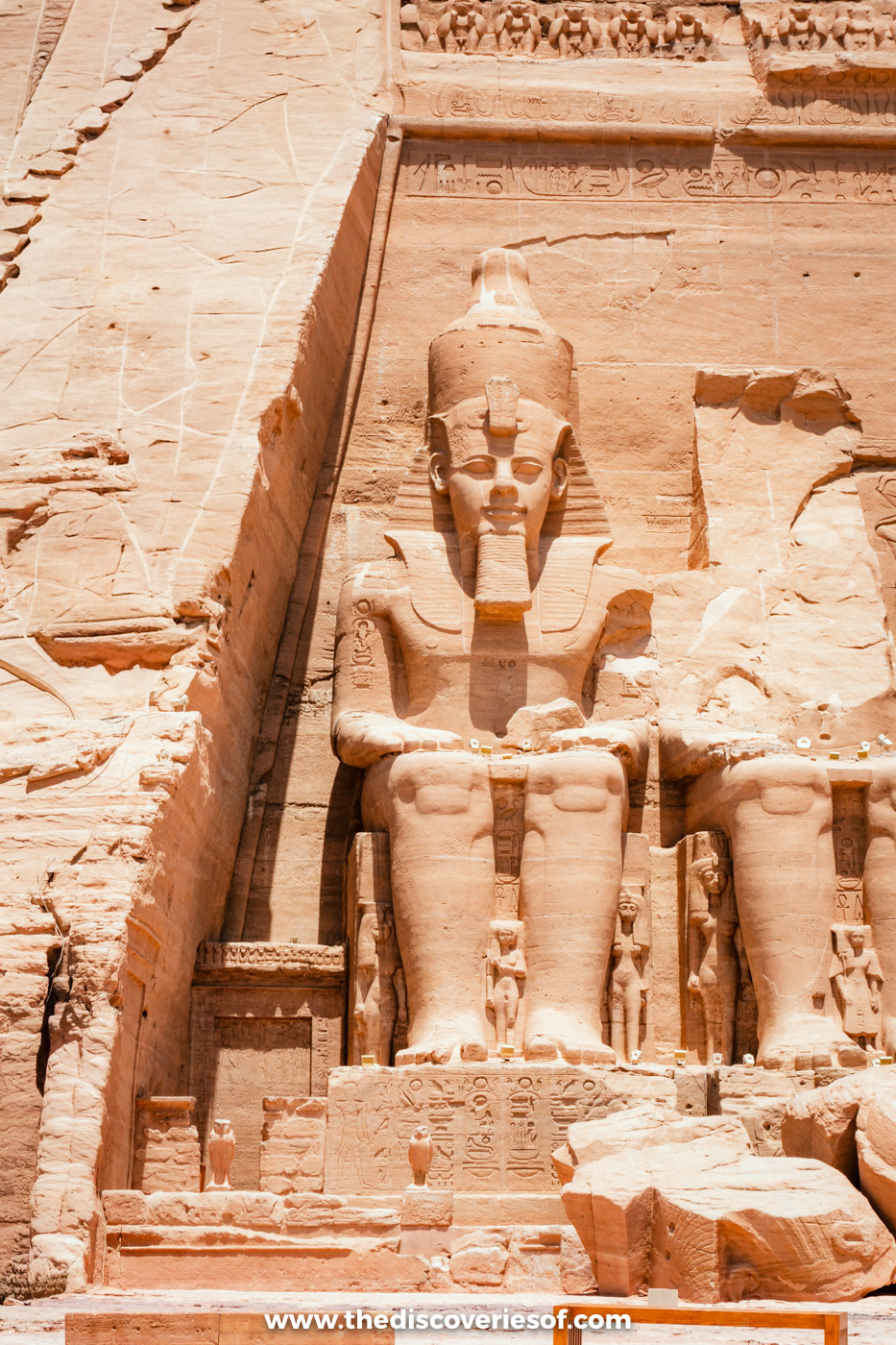
Be warned: you can do Abu Simbel in a day from Cairo, but it will be a very long one, with flights. Otherwise, allow a couple of days and visit from Aswan, which is what I did. Whichever you choose, you won’t be disappointed: going felt like a no-brainer.
Another UNESCO World Heritage Site, Abu Simbel has two of Egypt’s most stunning temples, carved into the cliffs above Lake Nasser by Ramses II and moved, block by block, to higher ground in the 1960s to save them from the rising waters of the High Dam. The facade of the Great Temple is about 30 metres high, with four colossal seated statues of Ramses. Sure, it feels a little bit like an ego-trip. But my god, it’s stunning. Next door, the smaller temple is dedicated to Hathor and to Ramses’ wife, Nefertari.
How to get there: Fly from Cairo to Aswan, then it’s about three and a half hours by road to Abu Simbel. Some tours fly on from Aswan to Abu Simbel instead, which takes about 45 minutes.
Average journey duration: 5 to 6 hours each way
Hassle-free option: Take this full-day tour to Abu Simbel with flights and a private guide
Bahariya Oasis

In Egypt’s Western Desert, Bahariya was an important farming centre in ancient times, famous for its wine. In 1996, the Valley of the Golden Mummies was discovered here, a Greco-Roman cemetery that archaeologists believe may hold as many as 10,000 mummies, some with gilded masks. A few of them are on show in the small museum in the main town, Bawiti.
Beyond the oasis are some stunning natural sights. The Black Desert, scattered with volcanic hills, is on the road south, and further on is the White Desert, where the wind has carved the chalk into giant mushroom and boulder shapes that you’ll be itching to add to your Instagram feed.
Bahariya is about 370 kilometres away, so a day trip is possible but very long. To see the White Desert properly, and to sleep under the stars, take an overnight trip.
How to get there: Bahariya is best reached by car or on a tour. Buses run from the city, but you’ll still need a 4×4 and a driver for the deserts.
Average journey duration: 4 to 5 hours
Hassle-free option: Book this 2-day Bahariya Oasis and desert tour with a night in camp
The Red Sea at Ain Sokhna

The closest stretch of the Red Sea to Cairo, Ain Sokhna is where Cairenes head for a weekend at the beach. Swim in the sky-blue sea, or bask on the sandy beaches under a parasol.
Its name means “hot spring”, after the warm springs at the foot of the Galala mountains, which rise steeply behind the coast. Most visitors come for the resort beaches and day passes at the big hotels, and Porto Sokhna has a marina and a choice of restaurants. If you have a car and a full day, the Monastery of St Anthony, one of the oldest monasteries in the world, is about two hours further south in the Red Sea mountains.
How to get there: Go Bus and other companies run buses from the city, or take a taxi or private driver for the day to save time.
Average journey duration: 1 hour 30 minutes to 2 hours
Hassle-free option: Book this full-day trip to Ain Sokhna with lunch
Practical tips for easy days out
- Wear comfortable shoes. You’ll be walking around ancient sites with uneven surfaces, so choose comfort over style.
- For anywhere without a train, hire a driver for the whole day, or book an organised tour, rather than flagging down taxis. It’s simpler, and it reduces the chances of being taken advantage of. Agree the price, the stops and the time in advance.
- Leave early. Traffic out of the city builds quickly, and the sites are cooler and quieter first thing.
- Dress modestly, especially at monasteries and mosques. Wear loose-fitting clothes to stay cool in the heat, and pack plenty of sun cream and water.
- For anything over about four hours away (Luxor, Aswan, Abu Simbel, Petra and Sharm el-Sheikh), fly, or better still, stay the night.
Watch my Egypt video
Subscribe on YouTube and discover new destinations.
Map
Read more Cairo guides
- The best things to do in Cairo
- 2 days in Cairo: the perfect Cairo itinerary
- Where to stay in Cairo, area by area
- How to visit the Pyramids of Giza
- The best things to do in Luxor
- Visiting the Valley of the Kings
Love this? Save and share on Pinterest

Discover the top things to do, insider tips and hidden gems in our Egypt Travel Guide.
Read the guides →