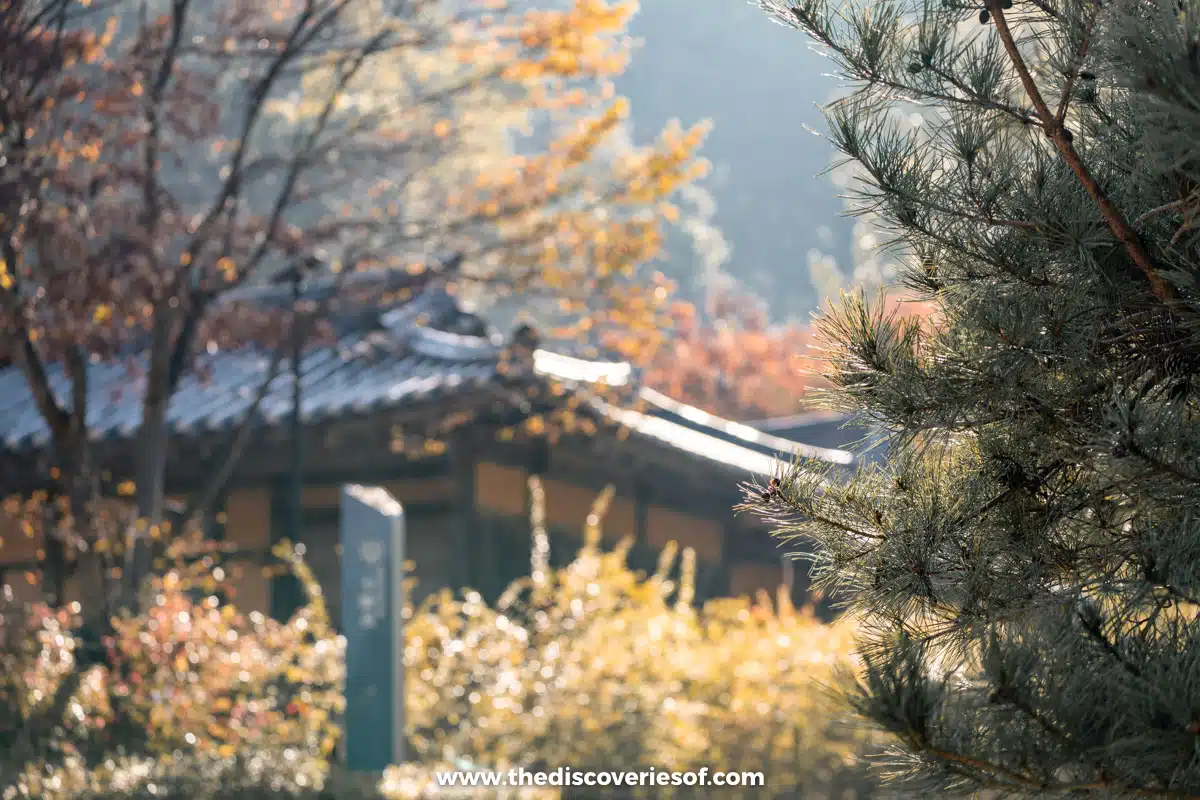

Half a century ago, a handful of Joseon-era houses near Andong were about to vanish beneath a new reservoir. Instead, they were taken down, moved and rebuilt, and today they stand together on a wooded hillside on the edge of the city, with heated floors, private bathrooms and a traditional Korean breakfast. Here’s what a stay at Tradition Resort Gurume is like, what it costs and who it suits.
My route through South Korea in October took me inland from the east coast to Andong, the old scholars’ city in the hills of Gyeongsangbuk-do, and my base there was Tradition Resort Gurume. It’s a beautiful place to stay: a cluster of old hanok houses arranged like a small traditional village, and distinctly Korean in every detail.
You’ll also see it listed as Andong Gurume Resort, or spelt Gureme. In Korean it’s 구름에, which means “in the clouds”, a fair description of the houses on a misty autumn morning.

Quick verdict
Tradition Resort Gurume is one of the most memorable ways to spend a night in Andong: real Joseon-era houses, peaceful grounds and a proper Korean breakfast, with modern bathrooms that make the history easy to live with. It suits couples, friends and small families who want a traditional stay and don’t mind taxis or driving. If you need a raised bed, or want to step out of the door to restaurants and bus stops, stay in the city centre instead.
My rating: 4/5
Tradition Resort Gurume at a glance
- Where: 190 Minsokchon-gil, on the eastern edge of Andong, next to the Andong Folk Village and close to the Andong Dam.
- What it is: a group of restored hanok houses, roughly 150 to 400 years old, rebuilt here and opened as a resort in 2014.
- Rooms: 10, in houses booked whole or split into their main building and side wing, each sleeping three to five people.
- Sleeping: traditional futon mattresses on heated ondol floors, with a private modern bathroom in every unit.
- Breakfast: included, a traditional Andong breakfast served from 8am to 9.30am.
- Price: roughly 140,000 to 270,000 won (about £75 to £145) a night, depending on the house, the day and the season.
- Best for: a night of tradition with a car or a taxi budget, and anyone keen to see Woryeonggyo lit up after dark.
My stay
Houses saved from the water
The story behind the resort is what makes it special. When the Andong Dam was built in the 1970s, the reservoir behind it was set to flood the valleys where a number of old family houses stood. Rather than lose them, the houses were taken apart and moved to the new folk village by the dam, then, in 2005, to the hillside where they stand today.
Restoring them as somewhere you could actually stay was a project led by the SK Happiness Sharing Foundation with the Ministry of Culture, Sports and Tourism, the provincial government and Andong City. A social enterprise, Happy Traditional Village, now runs the resort, which opened in July 2014.
The houses aren’t all the same. Among them are the head houses of noble families, jaesa (halls built for ancestral rites) and pavilions. Gyenam Gotaek is a listed provincial folk heritage site, and Chilgok house was built in the 1800s by a descendant of Yi Hwang, the Confucian scholar behind the academy at Dosanseowon.
Mornings in the grounds
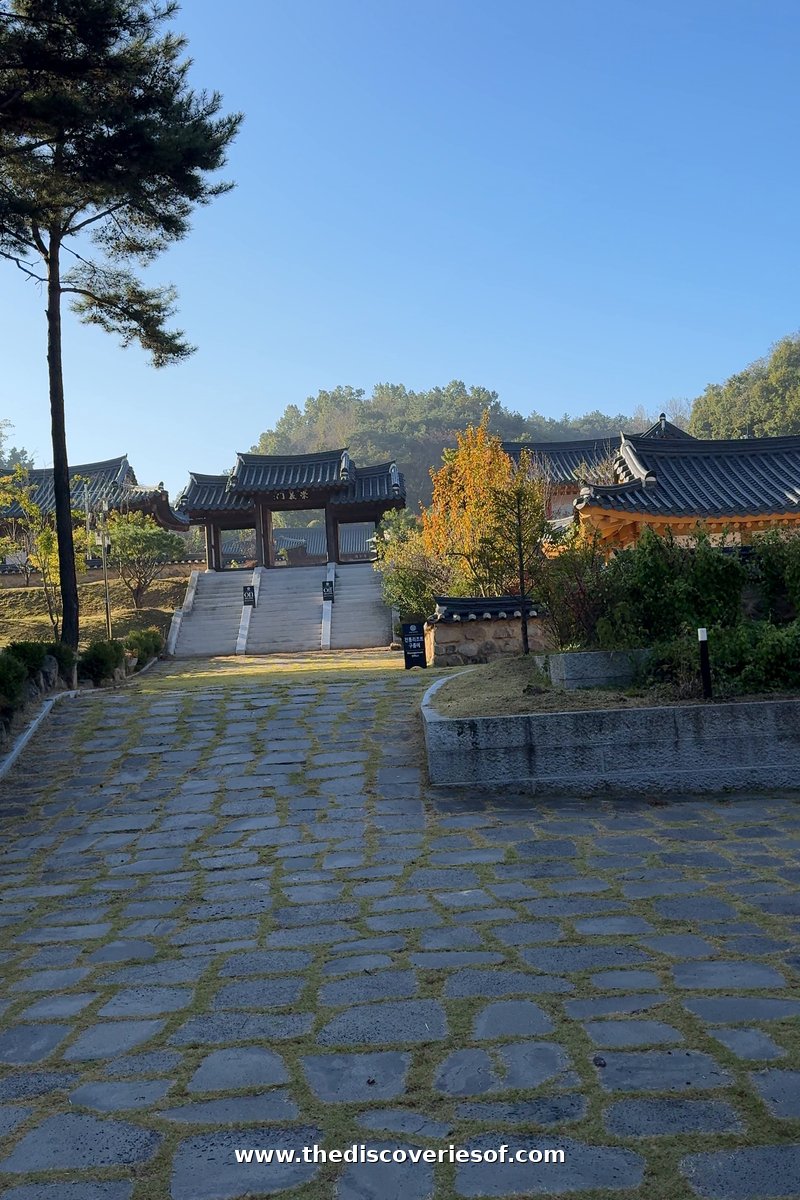
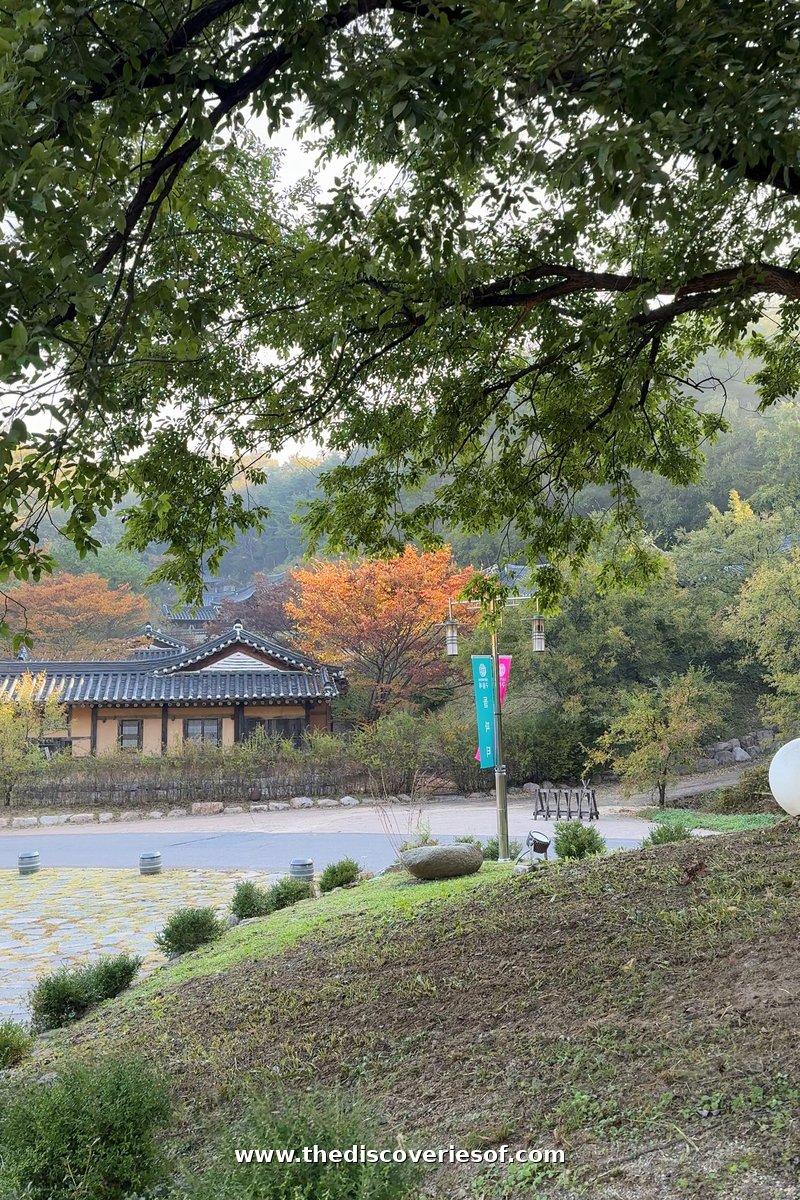
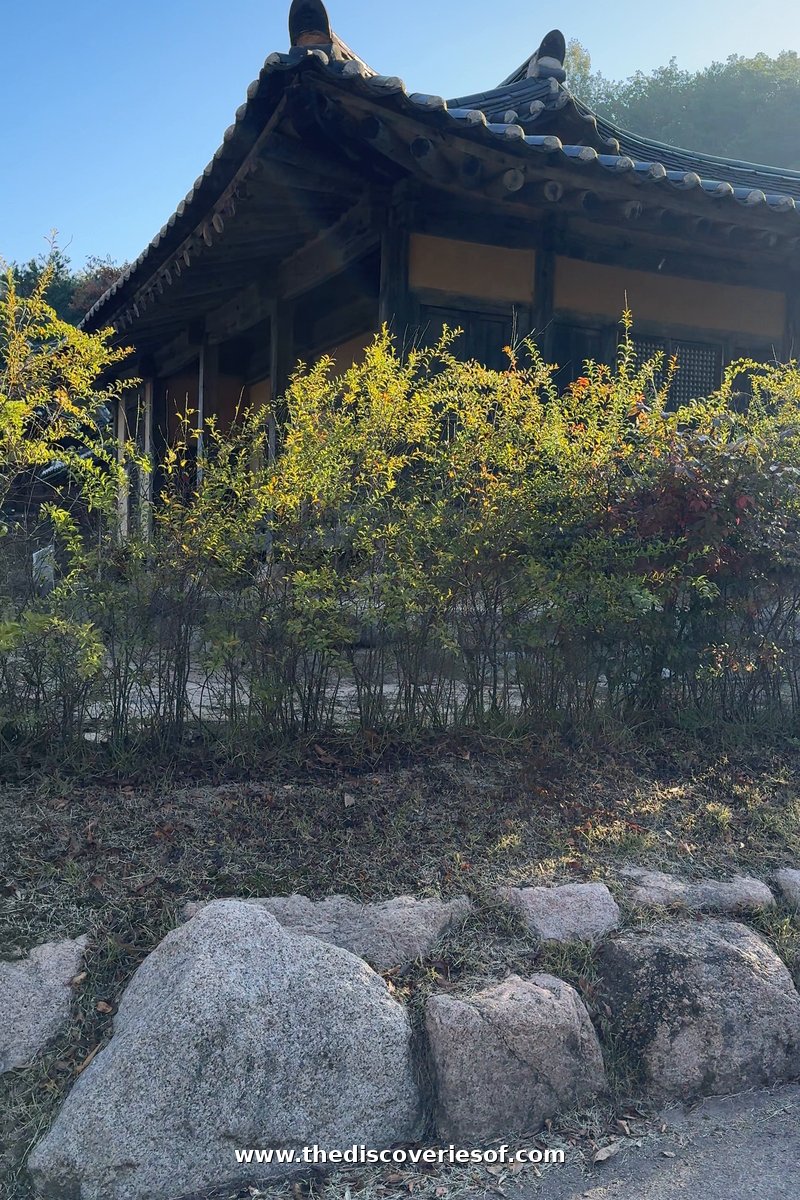
There are no corridors here. The houses are spread out across a hillside of stone-paved courtyards, gates and steps, with pines and maples planted between the tiled roofs, so you walk outside to get anywhere, and that’s a big part of the appeal.
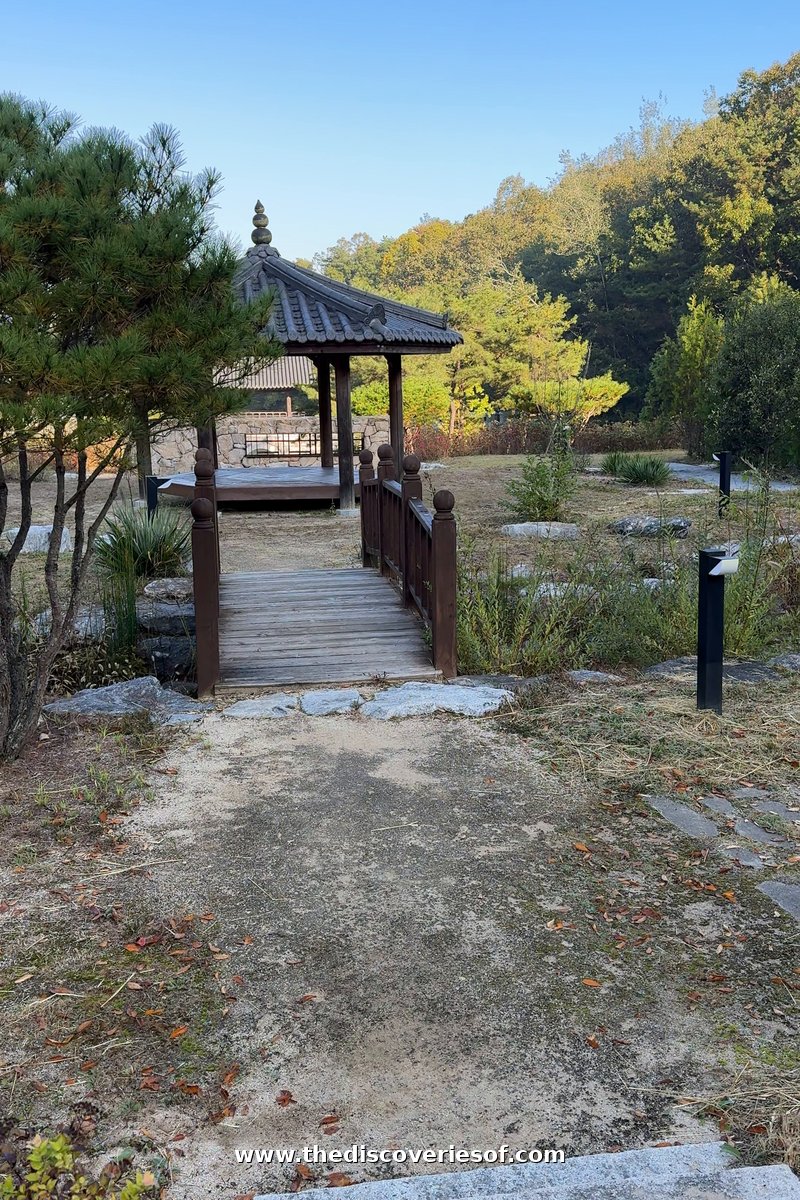
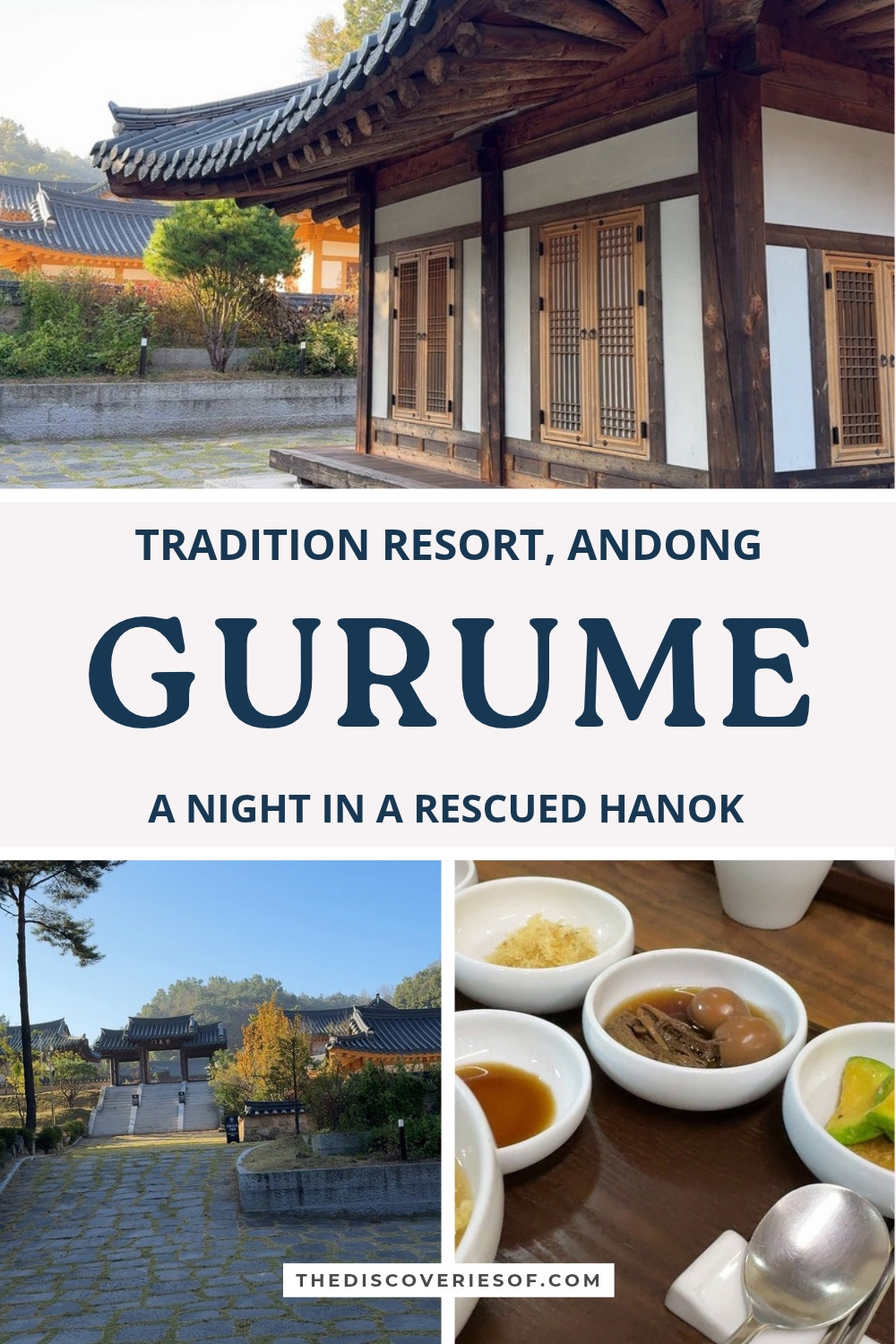
In October, the grounds were at their best. The maples between the houses were turning red, the hedges had gone gold and the pines kept the edges green. After breakfast, I wandered around in the low morning sun, across the courtyard to the gatehouse and up to a little pavilion reached by a wooden footbridge.
A Korean breakfast
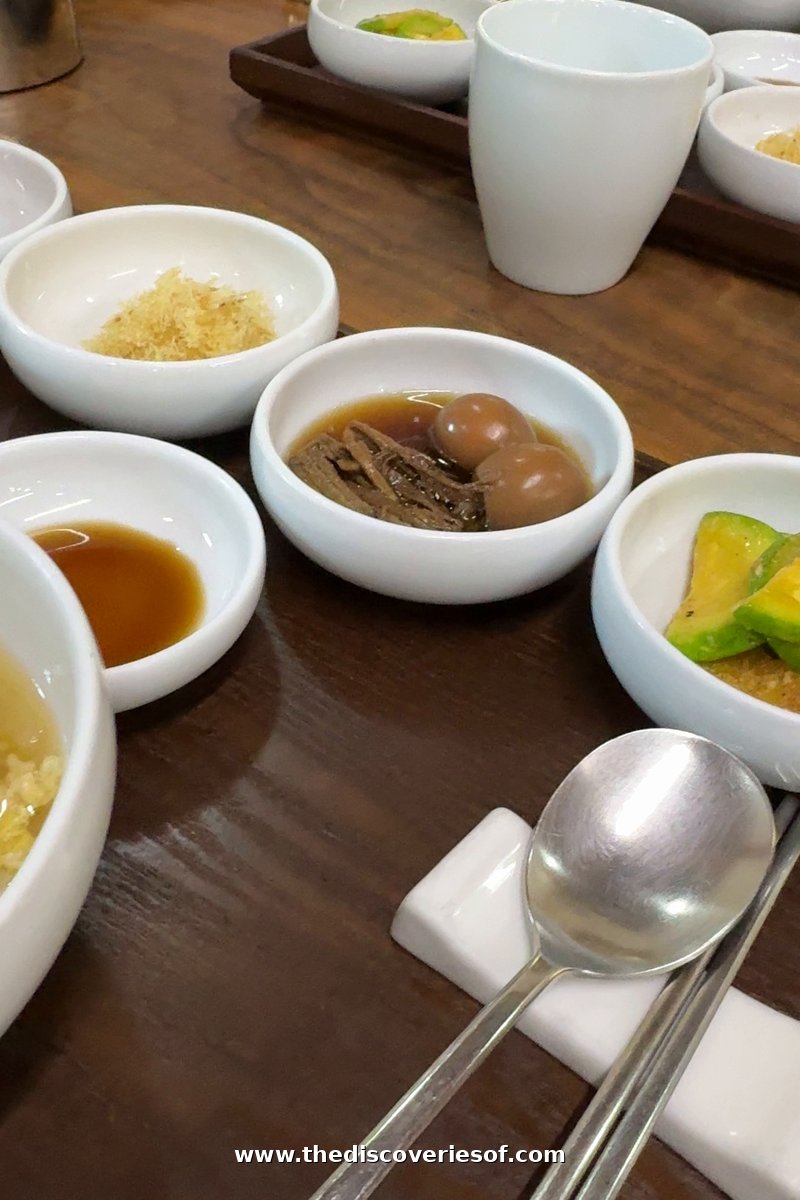
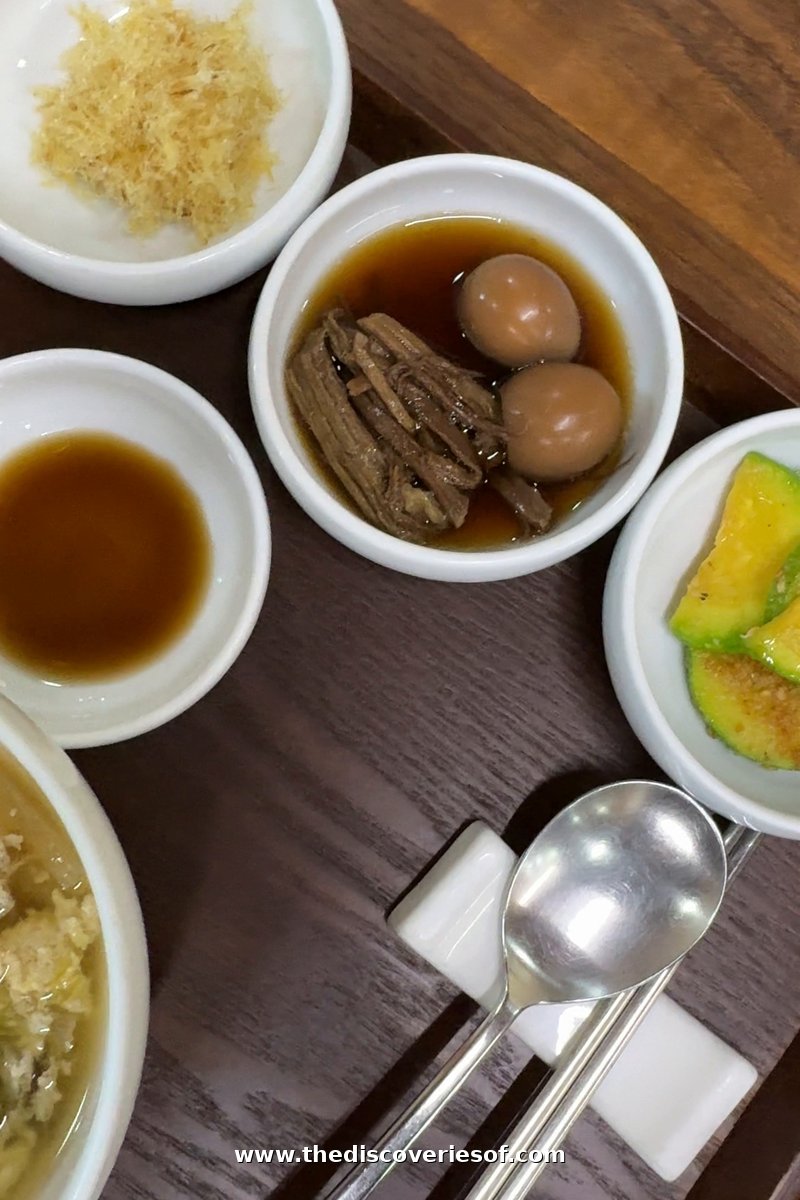
Breakfast is included in the rate, and it’s a traditional one rather than a buffet, made with local Andong produce. Mine arrived as a spread of little white bowls: a big bowl of soup, soy-braised beef with quail eggs (jangjorim) and a selection of banchan, the side dishes that come with every Korean meal. It’s a good introduction to the Korean habit of a savoury breakfast. My guide to what to eat in South Korea explains what’s in those bowls.
The rooms
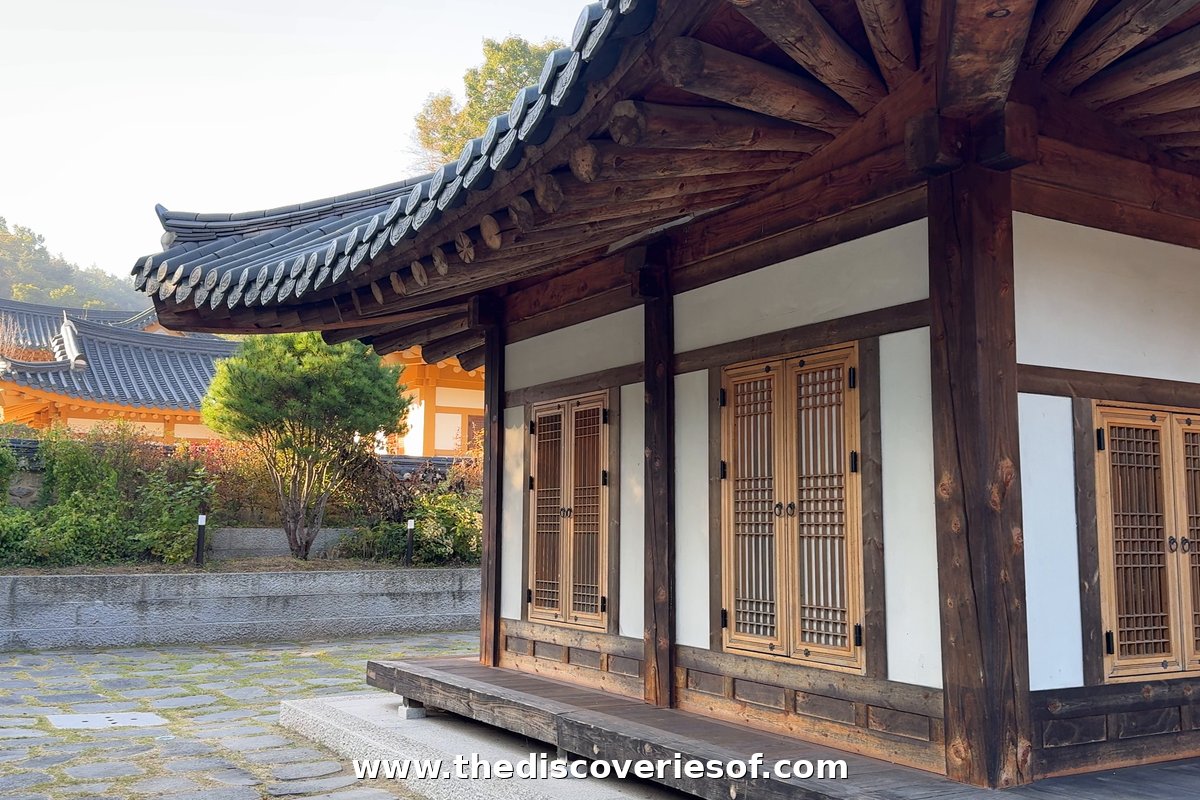
Inside, the houses are traditional, with exposed wooden beams, paper-screened doors and ondol, the heated floor that has kept Korean homes warm for centuries. There are no raised beds: you sleep on yo, futon mattresses unrolled on the warm floor. Everything you’d miss has been added discreetly, though. Each unit has its own modern bathroom, along with air conditioning, Wi-Fi, a fridge, a kettle, a hairdryer and toiletries.
Some houses are let whole, and others as two separate units: the main building and the sarangchae, the wing where the men of the house once received guests. Units range from about 17 to 38 square metres, and one house has a whirlpool bath. For more on staying in a hanok, see my South Korea travel tips.
What I loved
- The setting in autumn: tiled roofs among red maples, gold hedges and pines, all lit by low morning sun.
- Breakfast: a traditional spread of soup, braised beef and banchan, made with local produce.
- The sense of place: distinctly Korean, from the latticed doors and tiled roofs to the courtyards between the houses.
Worth knowing before you book
- It’s a little way out of town. You’ll need your own transport or taxis to reach the market, the restaurants and sights like Dosanseowon and Hahoe. Local buses run, but not often.
- You sleep on the floor. The futons are firm, and some guest reviews say so. If you’ve never slept on a yo before, think of it as part of the experience, or book a central hotel instead.
- Booking takes a little effort. The resort isn’t on Booking.com. Hotels.com and Expedia list it, and Stayfolio, the Korean boutique-stay site, takes requests that are confirmed within 24 hours rather than instantly.
- Breakfast has a short window. It’s served from 8am to 9.30am, so early starts and lie-ins both need a little planning.
Prices and booking
Expect to pay roughly 140,000 to 270,000 won (about £75 to £145) a night, breakfast included. The bigger houses for four or five people sit at the top of that range, and Friday and Saturday nights, the eve of public holidays and peak season cost more than Sunday to Thursday. If you book through Stayfolio, cancellation charges start ten days before arrival, and the day of check-in is non-refundable.
The front desk can also arrange paid workshops, such as making gochujang (red chilli paste) or traditional Andong noodles. There’s a hanok book café on site too, for a coffee in the afternoon.
Practical information
- Address: 190 Minsokchon-gil, Andong-si, Gyeongsangbuk-do. Phone +82 54 823 9001.
- Check-in and check-out: check-in from 3pm to 10pm; check-out by 11am. The front desk is open 24 hours.
- Parking: free, on site.
- House rules: no pets, no smoking and no cooking inside the houses.
- Nearby: Woryeonggyo, the longest wooden footbridge in Korea, is about 800 metres away, roughly a 15-minute walk, so you can stroll down for the lights after dark.
Getting to Tradition Resort Gurume
- From Seoul: fast KTX-Eum trains leave Cheongnyangni Station for Andong Station and take about two hours. The same line runs on to Bujeon in Busan in about two hours more, so Andong slots neatly into a route between the two, as it does in my 10-day South Korea itinerary.
- From Andong Station: a taxi takes about ten minutes. By bus, take the number 3 to the Andong Folk Museum stop and walk for about 15 minutes.
- By car: the resort is next to the Andong Folk Village, and parking is free.
Is Tradition Resort Gurume worth it?
Yes, if you want your night in Andong to feel as historic as the sights you came for. These are real Joseon houses rather than reproductions, the grounds are beautiful in autumn and a traditional breakfast is included. Factor in the taxis, as it’s a little way out of town, and it’s an easy recommendation. For everything else to see and eat in the area, read my Andong travel guide.
My rating: 4/5
Check availability at Tradition Resort Gurume
Map
Read next
- Andong travel guide: Hahoe Folk Village, Confucian academies and the town’s famous braised chicken
- How to spend 10 days in South Korea, from Seoul’s palaces to live octopus in Busan
- Inside Jeonju Hanok Village, where more than 700 traditional houses fill the old town
- 17 dishes to eat in South Korea, and where to try each one
- 30 South Korea travel tips to know before you go, from cash to hidden cameras
Love this? Save and share on Pinterest

Discover the top things to do, insider tips and hidden gems in our South Korea Travel Guide.
Read the guides →