
Out on Korea’s southwest corner, Mokpo is a harbour city that once ranked among the busiest in the country and still wears its history on its streets. Ride a cable car out over the sea to an island where an admiral regrouped his fleet, walk lanes laid out after the port opened in 1897, and eat your way through a city famous across Korea for its seafood.
Most first-timers in South Korea stick to Seoul and Busan, with perhaps a day in a hanok village. The southwest coast rarely makes the cut, which is a shame, because this corner of the country has a character all of its own. Mokpo is a working port city rather than a polished tourist town, and it’s all the more interesting for it.
I stopped here in October, between Busan and Jeonju, and stayed in a hanok hotel just across the water. The city’s story is a fascinating one. Around four-fifths of the city sits on reclaimed land: today’s hills began life as islands, and the flat ground between them was won back from the sea. During the colonial era, its harbours were so busy that they brought in something like a fifth of the country’s revenue.
This Mokpo travel guide rounds up what to see and do, the food to try, a place to stay and the journey here, plus the autumn festival that happened to be on while I was in town.
Mokpo at a glance
- Where: the southwest corner of South Korea, in South Jeolla, where the Yeongsan River meets the Yellow Sea.
- Getting there: about two and a half hours by KTX from Yongsan Station in Seoul.
- How long: one full day covers the cable car and the old town; a second gives you time for the waterfront, a festival or the islands offshore.
- Getting around: the old town is walkable, while taxis and city buses link it with the cable car station and the newer Hadang district.
- Best time to go: spring and autumn, ideally mid to late October for the Mokpo Port Festival.
- Don’t miss: the cable car to Gohado, the old treaty-port streets and a seafood dinner.
- Where I stayed: Hanok Hotel Youngsanjae, a traditional-style hotel across the river in Yeongam.
The best things to do in Mokpo
Cross the sea to Gohado on the Mokpo Marine Cable Car

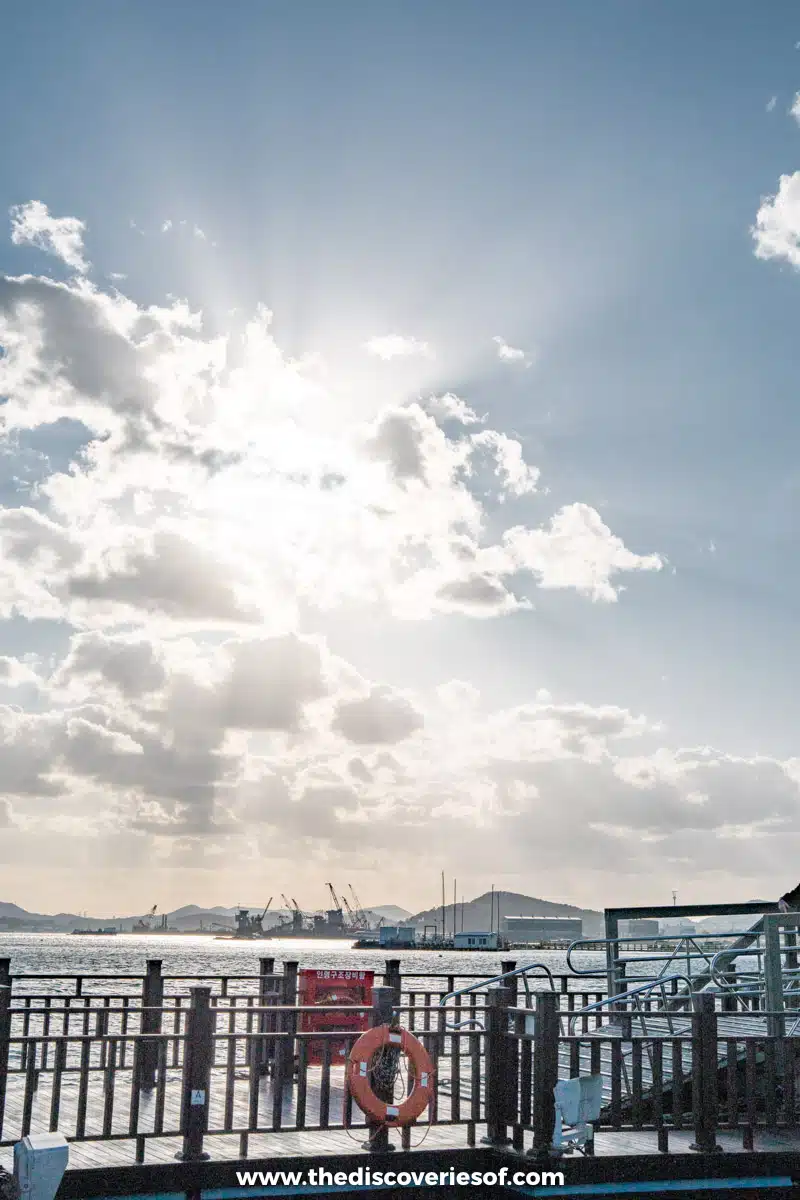
The city’s star attraction opened in 2019, and at 3.23 km it’s billed as the longest cable car in Korea. It starts at Bukhang (North Port) Station, climbs over the rocky ridge of Yudalsan, then swings out across the open sea to Gohado island, reaching about 155 metres at its highest point.
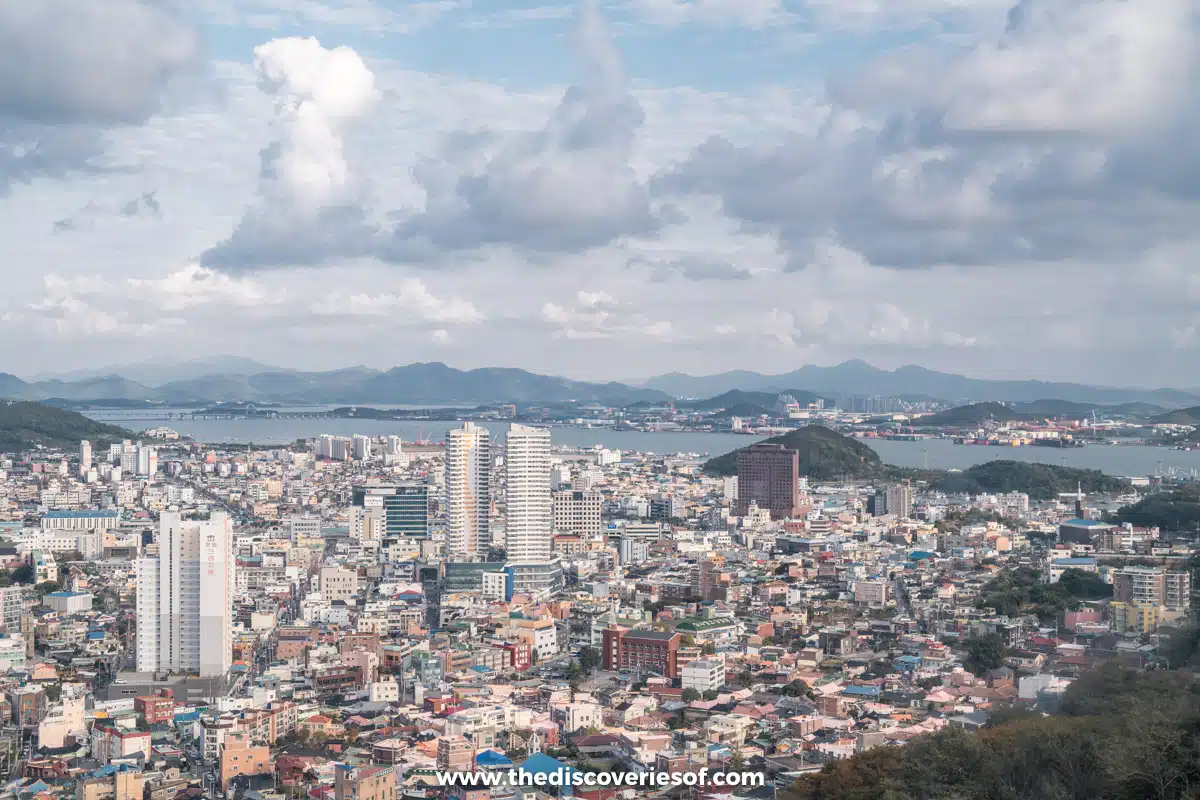
It’s a brilliant way to get your bearings. As my cabin rose over Yudalsan the whole city spread out beneath me: a jumble of low-rise rooftops and apartment towers packed between the hills, with the harbour, the bridges and a scatter of islands beyond. From up here it’s easy to picture those hills as islands, with the sea washing between them.
Crystal cabins with glass floors run alongside the standard ones, if you want to see the water directly beneath your feet. A return trip takes around 40 minutes, longer if you stop to explore Gohado at the far end, which you should.
Tickets
Adults pay 24,000 won (about £14) return in a standard cabin or 29,000 won (about £16) for a crystal cabin, and one-way tickets are sold too. Between spring and autumn it operates from 9am to 8pm Monday to Thursday and to 9pm from Friday to Sunday and on public holidays, closing an hour earlier in winter. Ticket sales stop an hour before closing, the line can close in bad weather, and parking at Bukhang Station is free for three hours with a ticket.
Climb the Gohado Observatory, a tower of stacked warships
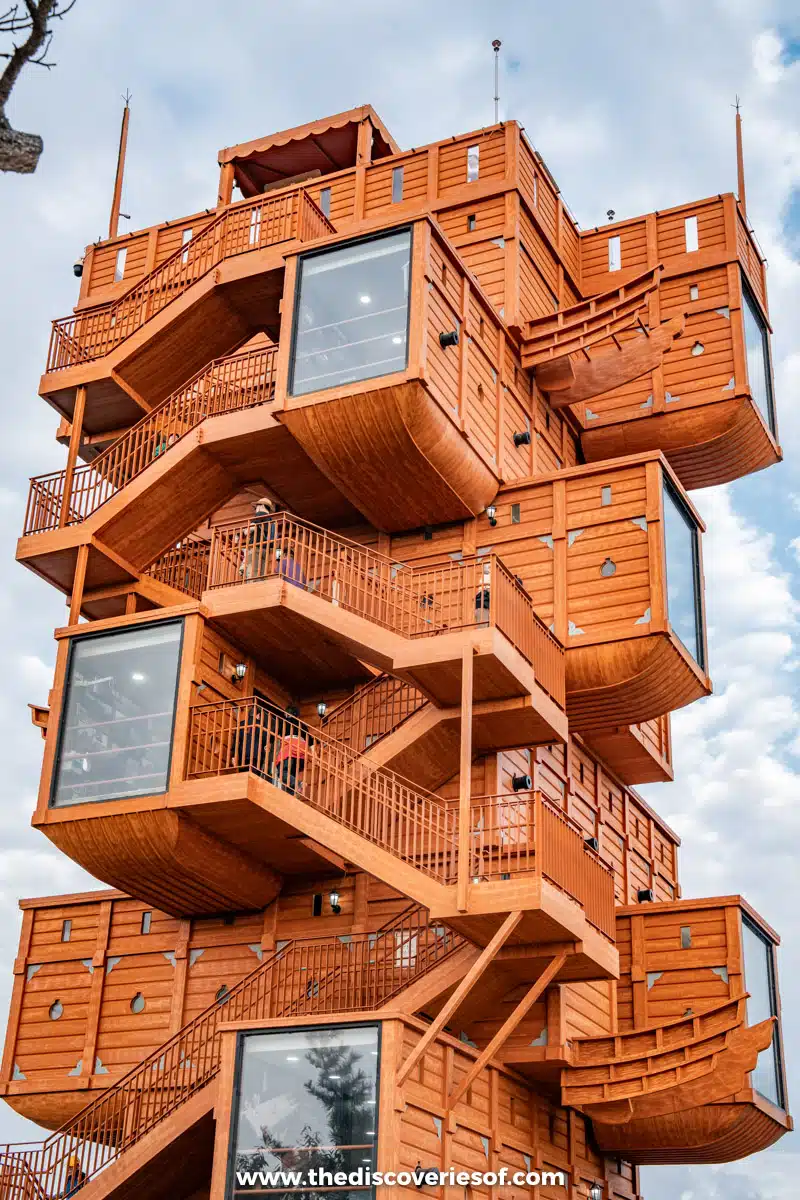

Step off the cable car on Gohado and a short walk brings you to one of the most unusual buildings on the south coast. The observatory is made of 13 wooden boat shapes piled on top of each other, each one modelled on a panokseon, the oar-powered warship of the Joseon navy.
The number isn’t random. In 1597, Admiral Yi Sun-sin beat a far larger Japanese fleet at the Battle of Myeongnyang with just 13 ships, and afterwards he based himself on Gohado for 106 days while he rebuilt his navy. The island is still proud of the connection.
There’s a café on the ground floor, and the four floors above are viewing decks. From the top I looked out over Mokpo Bridge, whose white towers are designed to look like a pair of cranes taking flight, with the wooded edge of the island curling away towards it. Entry is free.
Stroll the sea deck around Gohado
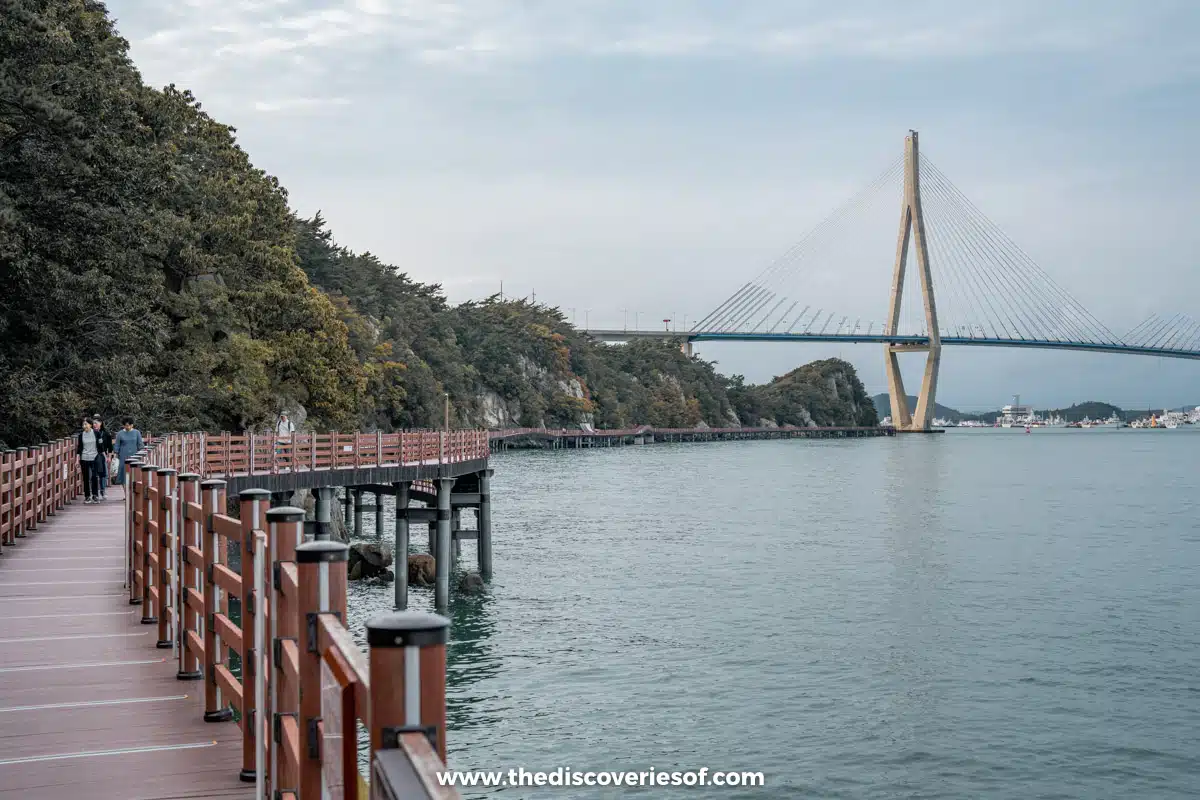
Below the observatory, a wooden walkway of about 1.1 km runs right over the water, hugging the cliffs along the island’s edge. It’s a gentle, flat stroll with views across the strait to Yudalsan and the harbour on one side and up to Mokpo Bridge on the other. I followed it for a stretch after coming down from the tower, with the bridge ahead of me.
Gohado has forest trails too if you have the time. Just keep an eye on the cable car’s closing time if you plan to ride back.
Hike up Yudalsan for the view over the harbour
Yudalsan, the 228-metre hill that the cable car glides over, is the city’s landmark peak and the last summit of the Noryeong mountain range. Its craggy slopes are laced with paths, and five pavilions dotted along the ridge look out over the harbour and the islands. At its foot stands Nojeokbong, a rock that, legend says, Admiral Yi had wrapped in straw so that it looked like a vast stack of rice, to convince the Japanese fleet that his troops were well supplied. There’s a sculpture park on the slopes too. It’s one of the first places on the mainland to flower in spring, so it’s at its prettiest in March and April.
Explore the old treaty-port streets
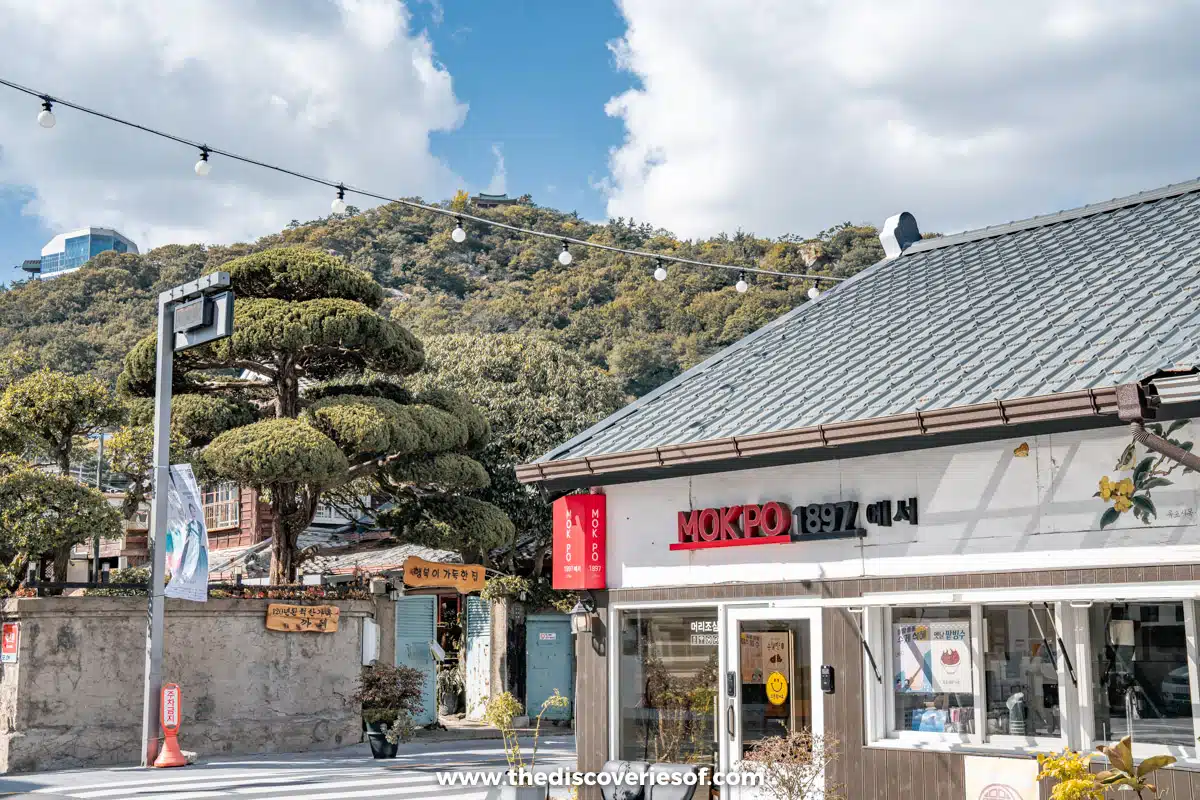
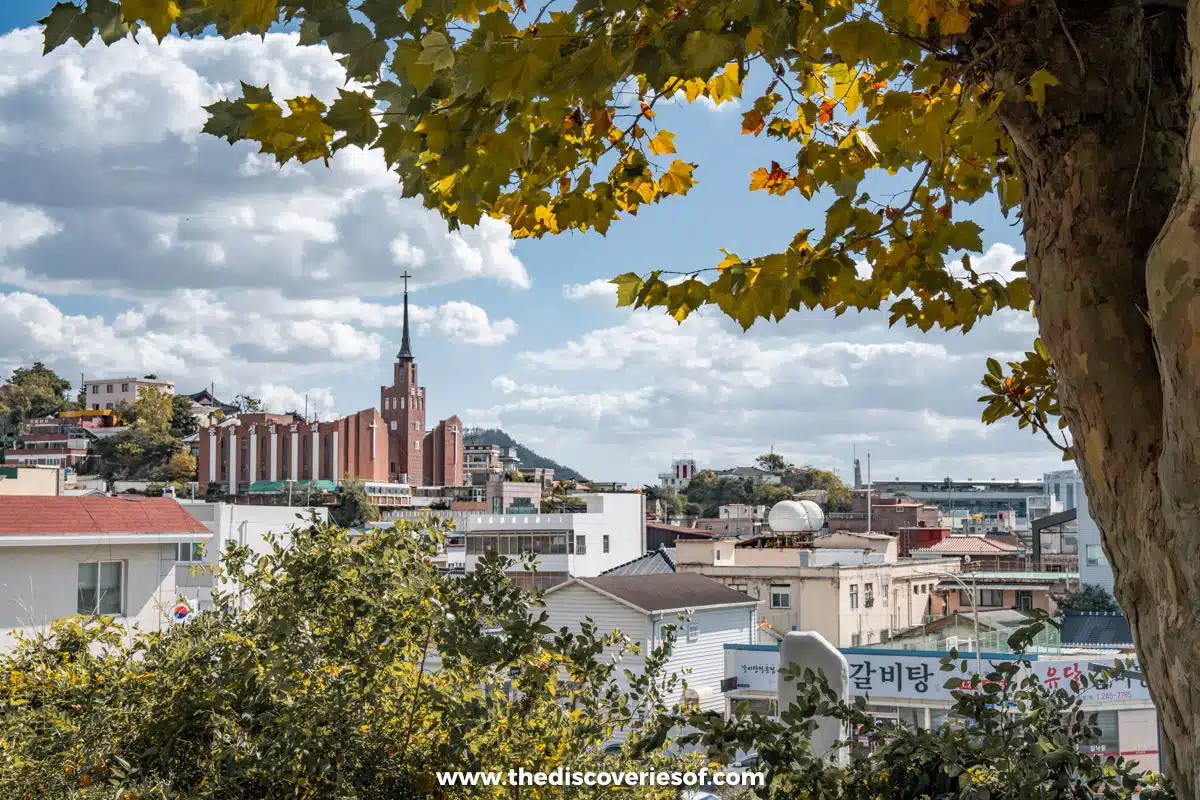
Mokpo opened as a treaty port on 1 October 1897, the fourth in Korea after Busan, Wonsan and Incheon. Trade boomed under Japanese rule, when rice from the plains of Jeolla was shipped out through the harbour to Japan, and by the 1930s the city was counted among Korea’s three great ports and six great cities.
That boom left its mark on the old town at the foot of Yudalsan. Banks, merchants’ houses and Japanese-era homes still line the grid of streets around the 1897 Gaehang Culture Street, and many now house cafés and shops. I wandered these streets with my camera, and it’s an absorbing corner of the city, where you can read the port’s history in its buildings.
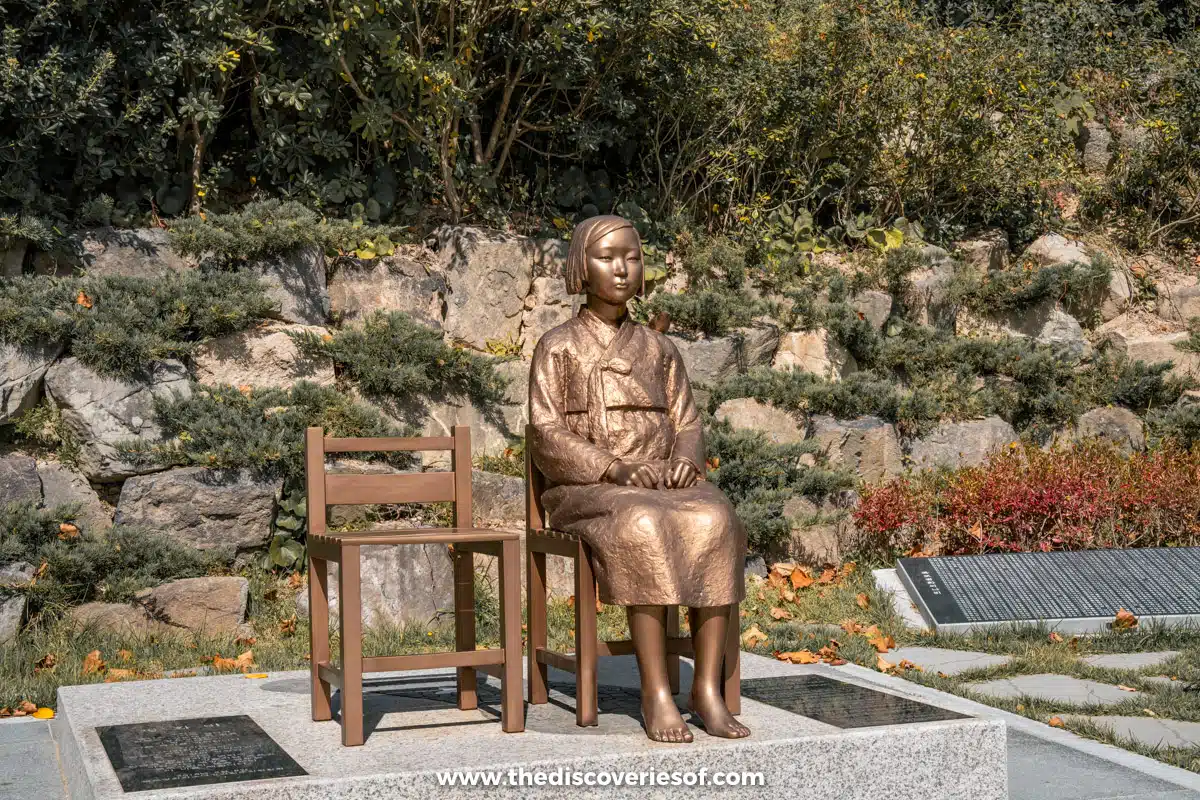
Keep an eye out for the city’s Statue of Peace too. Bronze statues of a young girl in hanbok sitting beside an empty chair stand in towns across South Korea. They remember the women and girls forced into sexual slavery by the Japanese military before and during the Second World War.
Learn the city’s colonial story at the Modern History Museums

The old town’s history comes into focus at the Mokpo Modern History Museum, which is split between two colonial-era buildings a short walk apart.
Building 1 is the red-brick former Japanese consulate, built in 1900 on the slopes of Yudalsan, and later used as the city hall and the city’s cultural centre. Today its two floors trace Mokpo’s story from a Joseon naval outpost to a booming port city. Building 2, the one I visited, is the former Mokpo branch of the Oriental Development Company, the Japanese colonial firm that took control of huge swathes of Korean farmland, completed in 1920. Its exhibits document Japan’s occupation and the Koreans who resisted it, with old photographs that let you compare the city then and now.
Tickets
One ticket of 2,000 won (about £1) covers both buildings. Both are open from 9am to 5.30pm (last entry 5pm) and close on Mondays (the following day if Monday is a public holiday) and on 1 January.
See a century of hats at the Gapjaok Hat Gallery
Gapjaok opened as a hat shop on the old town’s main commercial street in 1927, and it was the only Korean-owned store on that street at the time. It kept trading for most of a century before the city restored the building and turned it into the Mokpo Hat Art Gallery, with an annex in a former outboard motor showroom next door.
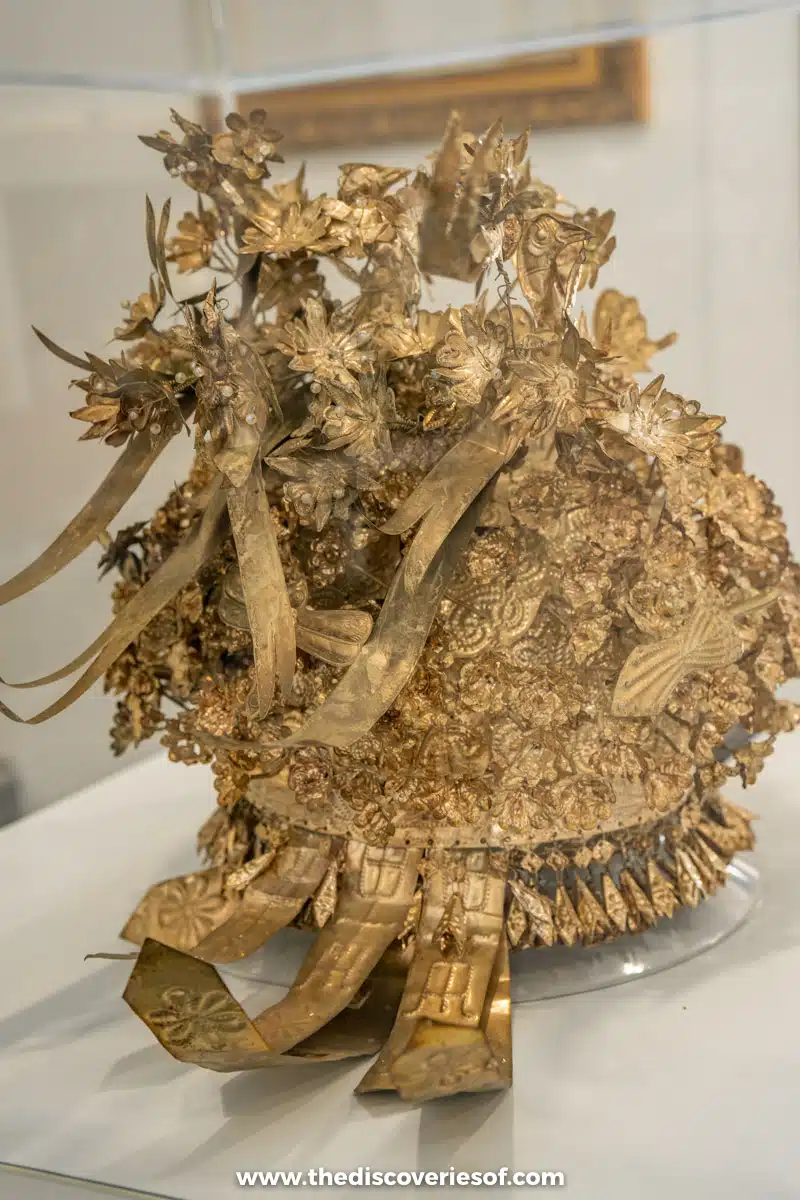
Inside, hats from different eras and countries are arranged by type, from everyday caps to ceremonial pieces, alongside exhibits on how they’re made and used. Among the pieces on show when I visited was a gilded headdress dripping with golden leaves and flowers. There’s media art and hands-on workshops too.
Tickets
Entry is 2,000 won (about £1) for adults. The gallery is open from 9am to 6pm (last entry 5.30pm) and closes on Mondays and on 1 January.
Read poems on the walls of Seosan-dong’s alleys
Southwest of the old town, the old fishing quarter of Seosan-dong climbs up a hillside above the harbour. Its lanes, known as Sihwa Village (sihwa means poetry and painting), are lined with murals and poems written by residents and more than ten local poets. Film fans will recognise Yeonhee’s Supermarket, a corner shop that appeared in the film 1987 and now has a photo zone. At the top, the Borimadang viewpoint looks out over the water. It’s free and open at all times, but it’s a residential neighbourhood, so keep the noise down.
Step out on the Mokpo Skywalk at sunset
Close to the cable car’s Bukhang Station, the Mokpo Skywalk juts out over the sea, with glass panels in parts of the floor. It looks east towards Mokpo Bridge and out over the islets offshore, and it’s at its busiest around sunset, when the light catches the water. Entry is free, and it’s open from 9am until 9pm in summer and 8pm in winter.
Watch the Dancing Sea Fountain at Peace Square
In the newer Hadang district, Peace Square is a long seafront promenade lined with restaurants and cafés. Its big draw is the Dancing Sea Fountain, a floating fountain out in the water that puts on free evening shows of water, music and light. From April to November there are shows at 8pm and 8.30pm (plus 9pm on Fridays, Saturdays and every day in summer), with no shows on Mondays.
Time your visit for the Mokpo Port Festival
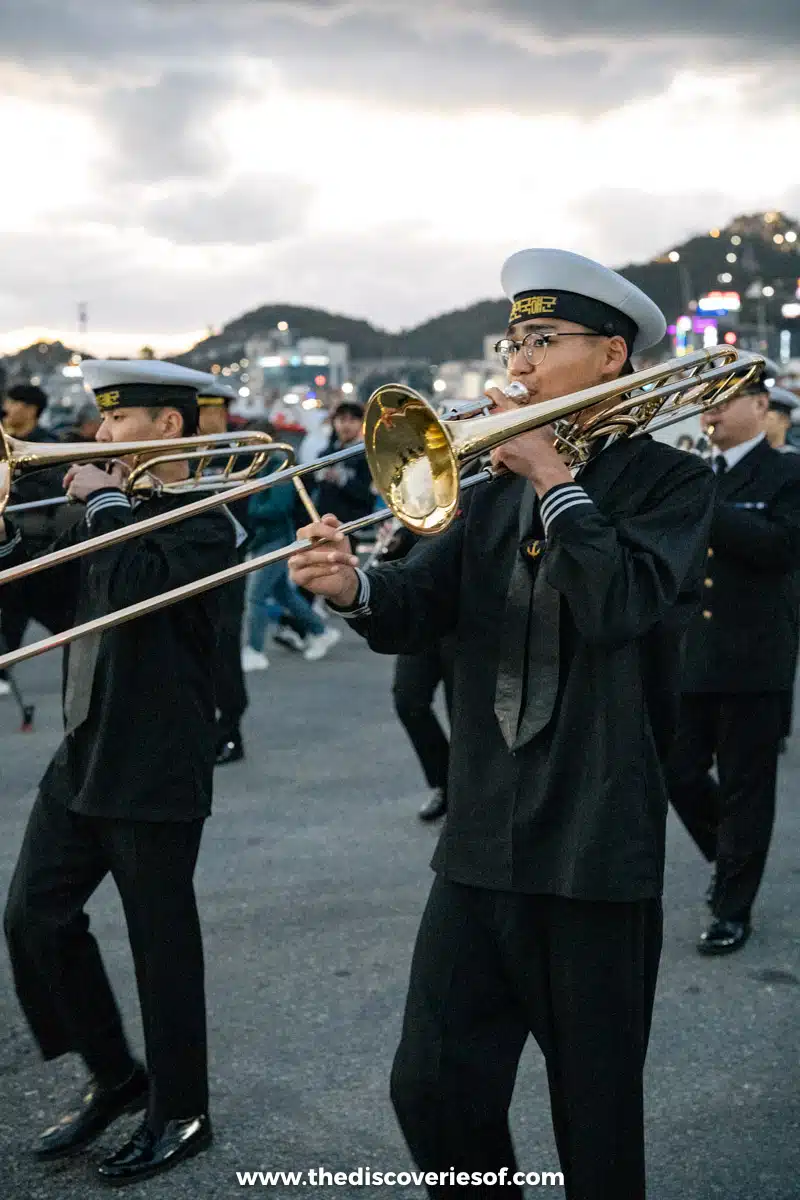
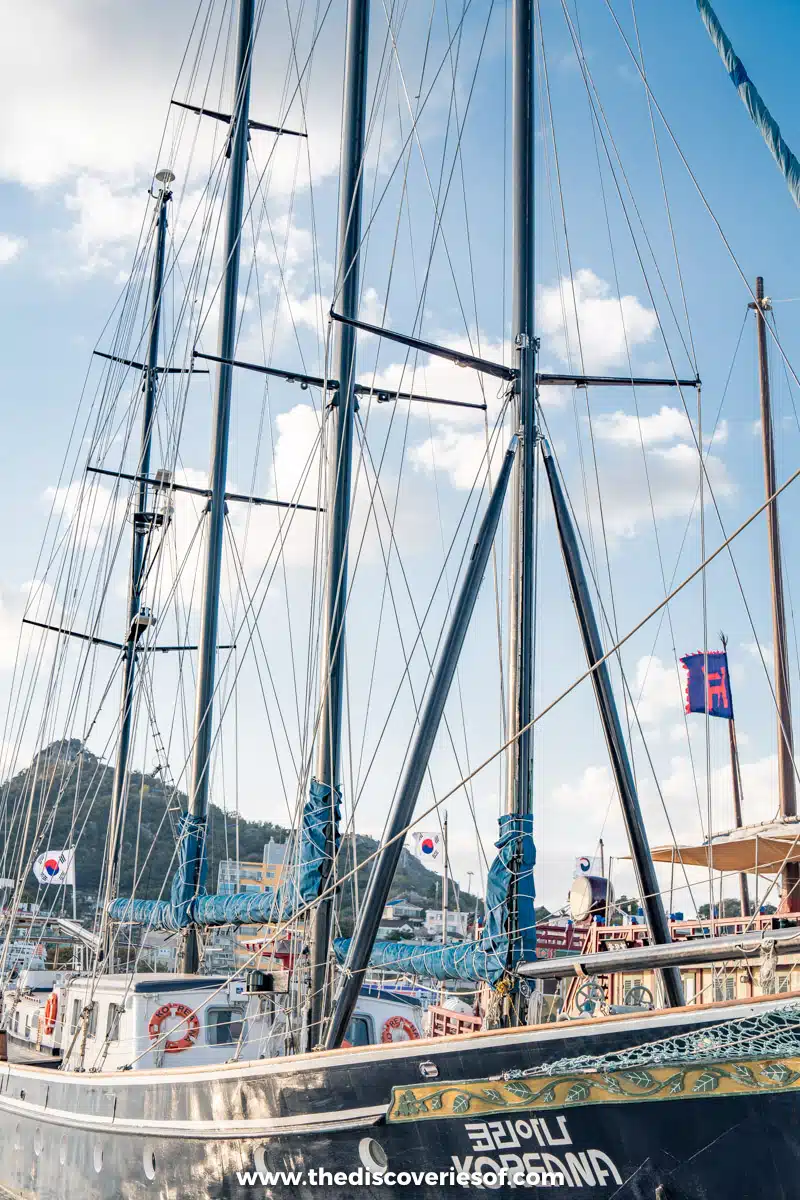
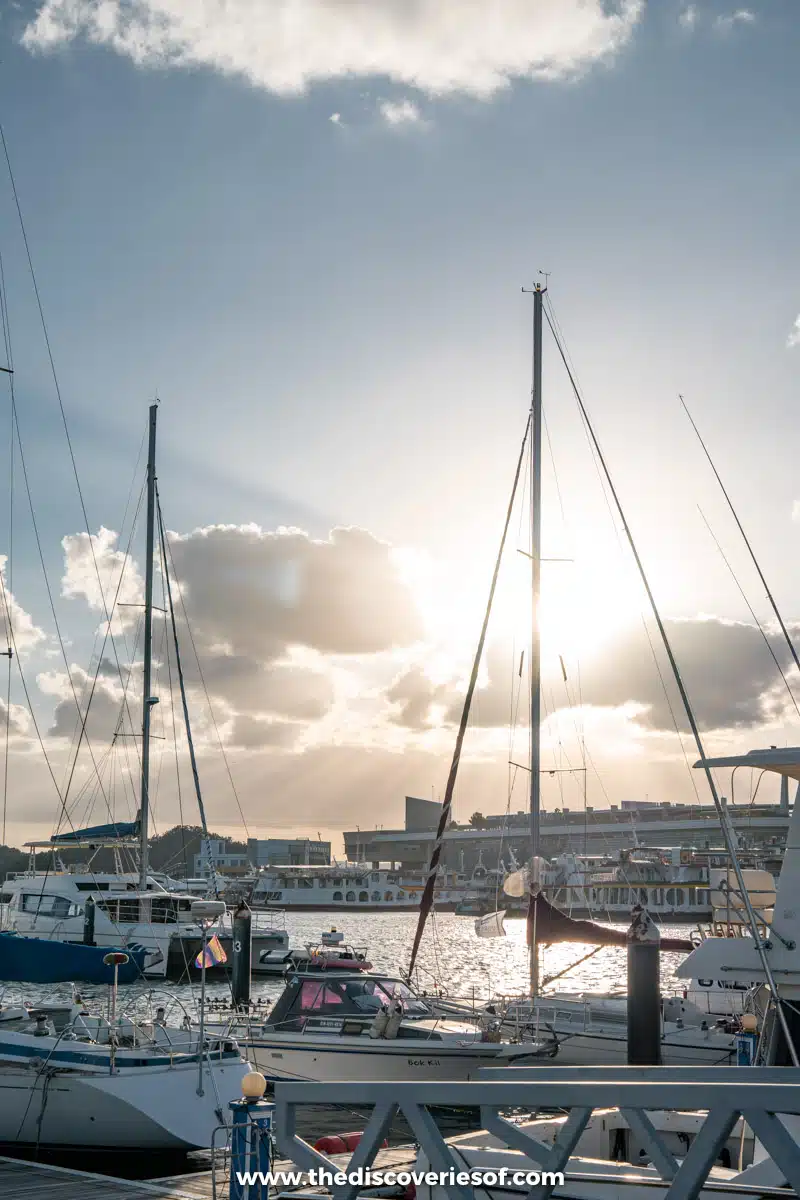
I didn’t plan it, but my visit coincided with the Mokpo Port Festival, which takes over the harbour and the Samhakdo area for three days every October. It celebrates the city’s heyday as a fishing port, when the pasi (floating fish markets) drew boats in from all over the islands.
The marina was strung with flags, a traditional tall ship had tied up to welcome visitors aboard, and stalls were selling seafood along the water. As the light faded, a parade wound through the streets: a naval band in white caps, women dressed in white hanbok, and plenty of people in fancy dress. Crowds lined the pavements to watch.
Expect fish auctions, seafood stalls, music and boat rides. The festival ran from 16 to 18 October in 2026, so check the city’s dates before you book.
What to eat in Mokpo
Mokpo is known across Korea for its seafood, and it promotes nine signature dishes, its “nine flavours”. Top of most lists are sebal nakji, small octopus with thin legs, served raw or lightly seasoned, and hongeo samhap, a trio of fermented skate, boiled pork and aged kimchi with a powerful whiff of ammonia that locals swear by. Look out too for raw minfish (croaker), spicy raw crab, braised hairtail and a clear rockfish soup that’s a famous hangover cure.

Not everything I ate came out of the sea. One evening I tucked into a basket of Korean fried chicken, the twice-fried kind with a thin, crackly crust.

Another dinner was a grill-it-yourself feast: scallops and clams in their shells topped with cheese and corn, rolls of pork belly, octopus and a tray of spicy rice cakes, all cooked at the table.
For more choice, the restaurants along the Peace Square promenade and the old town both have plenty of seafood places, and the market streets around the old town are good for cheap snacks.
Where to stay: a hanok across the river or the city centre
There are two practical bases in the city itself. The old town and the area around Mokpo Station put you within walking distance of the museums, the hat gallery and Seosan-dong, and close to the station for onward trains. Hadang, the newer district around Peace Square, has more modern hotels and the seafront restaurants.
Hanok Hotel Youngsanjae
My base was Hanok Hotel Youngsanjae, in Samho, across the Yeongsan River estuary in Yeongam county. It’s a hotel built in the style of a traditional hanok, with heated floors (ondol rooms are an option), a restaurant and café, gardens and a terrace, and Korean breakfast for an extra charge. It’s about 25 minutes’ drive from Mokpo Station and handy for the Korea International Circuit, but it’s isolated, so you’ll need a car or taxis to get around.
Check all accommodation in Mokpo
Getting there and getting around
- From Seoul: KTX trains from Yongsan Station take about two and a half hours to Mokpo Station, and a standard seat costs around 53,000 won (about £29). Book ahead at weekends.
- From Busan: there’s no direct fast train, so the road is quicker: about four hours by car, or longer by intercity bus. That’s how I travelled on the 10-day South Korea itinerary route.
- On to Jeonju: the drive takes two to three hours, which makes Mokpo a natural stop before Jeonju.
- Getting around: walk the old town, then use taxis (Kakao T works well) or city buses for the cable car stations, Peace Square and the Skywalk. Buses take a T-money card.
The best time to visit
This stretch of coast is at its most comfortable in spring and autumn. In April, the flowers come out early on Yudalsan, and the weather is mild for walking. October brings clear, warm days, cooler evenings and the Mokpo Port Festival. Summers are hot and humid, though the fountain shows and the cable car’s later closing times make for long evenings. Winters are cold and windy by the sea, and the cable car closes earlier.
A few tips before you go
- Avoid Mondays. Both history museum buildings and the hat gallery close on Mondays, and the fountain is dark. My South Korea travel tips cover the rest of what’s useful to know before you go.
- Ride the cable car early or late. It’s busiest in the middle of the day at weekends, when the queues at Bukhang Station can be long.
- Download Naver Map or KakaoMap. Google Maps won’t give you walking directions in South Korea, and the old town’s lanes are easy to get lost in.
- Bring cash for the market. Small seafood stalls and snack sellers prefer won.
For more ideas across the country, browse my pick of things to do in South Korea.
Map
Read next
- How to spend 10 days in South Korea, from Seoul’s palaces to live octopus in Busan
- A Jeonju travel guide, from paper made by hand to a library on a lotus pond
- 22 things to do in South Korea, from a peek into North Korea to a vigorous spa scrub
- 20 things to do in Busan, from a glass-floored cable car to blowfish cooked two ways
- 30 South Korea travel tips to know before you go, from cash to hidden cameras
Love this? Save and share on Pinterest

Discover the top things to do, insider tips and hidden gems in our South Korea Travel Guide.
Read the guides →