South Korea may look small on a map, but make no mistake: it’s packed with history, culture and insanely good food. This 10-day route takes you from royal palaces and market pancakes in Seoul to a Confucian academy in Andong, a war cemetery and a fish market feast in Busan, and the hanok rooftops of Jeonju, with the fast trains that tie it all together.
Few places embrace futuristic design the way that South Korea does in cities like Seoul, with a subway system and buildings like Dongdaemun Design Plaza that look like something straight out of a science fiction epic.
But don’t get it twisted: there’s also a deep commitment to preserving traditional culture in nearly every corner of the country, from the hanbok worn around the old streets of Jeonju to the beautifully preserved palace and gardens at Changdeokgung.
I spent two weeks travelling through the country in October, from Seoul to the east coast, Andong, Busan, Mokpo and Jeonju, before finishing with a few more days in the capital. I filmed and photographed every stop, ate far more than was strictly sensible, and came home with a notebook full of the places worth your time.
This itinerary is the route I’d recommend from that trip: two big cities, two smaller ones that show you a much older Korea, and fast trains in between. Expect an augmented reality banquet in a royal palace, the best mung bean pancakes in Seoul, a light show over a wooden bridge in Andong, sashimi you choose from the tank (and live octopus if you dare), a moju-making class in Jeonju and a proper Korean spa to finish.
My trip was hosted by the Korea Tourism Organization as part of a paid campaign. As always, all views are my own.
Your 10-day South Korea itinerary at a glance
- Days 1 and 2: Seoul. Changdeokgung Palace, the cable car to N Seoul Tower, Gwangjang Market and Bukchon Hanok Village.
- Days 3 and 4: Andong. Dosanseowon Confucian Academy, the view over Hahoe from Buyongdae Cliff, a traditional set menu, a winery, jjimdak at the old market and the lit-up Woryeonggyo Bridge.
- Days 5 to 7: Busan. The UN Memorial Cemetery, sashimi and live octopus, the Busan Air Cruise, Gamcheon Culture Village, paddleboarding at Gwangalli, Korean barbecue, Haedong Yonggungsa Temple and sunset at Huinnyeoul.
- Days 8 and 9: Jeonju. The arboretum, Gyeonggijeon Shrine, a moju-making class, the hanok village, a pork grill dinner and Deokjin Park after dark.
- Day 10: Seoul. Cheonggyecheon Stream, Jogyesa Temple, Yeouido, a bulgogi feast in Insadong and a scrub at a Korean spa before you fly home.
Top Tip
Download Naver Map or KakaoMap before you land. Google Maps doesn’t really work in South Korea, and you’ll want walking and transit directions that do.
Days 1 and 2: Seoul


Few cities in the world balance old and new as well as Seoul does. Facts. So where better to start than in the capital?
In two days you can move from the royal Joseon dynasty palaces to N Seoul Tower, where the views from 237 metres up show you just how far the city sprawls, and still have time to eat your way around one of its oldest markets.
Stroll through the charming Samcheong-dong area between sights for independent shops, galleries and cafés: boutiques selling local art and K-beauty sit happily next to traditional hanok (houses), a few minutes’ walk from the business district. It’s that mix of history, commerce and trend-setting that makes Seoul one of the most interesting cities in the world.
Wander Changdeokgung, the palace with the secret garden


What’s the best way to kick off your time in Seoul? Tap into the history of the city. Seoul has been the seat of power for centuries, and by the early Joseon dynasty it had five grand palaces. Changdeokgung isn’t the most famous of them, but it was my favourite, for a couple of reasons: the sheer number of buildings to explore and the absolutely gorgeous grounds. Built as a secondary royal residence, it later became the heart of the royal court, and it’s now a UNESCO World Heritage Site.
The highlight of my visit was an augmented reality experience that let me “attend” a 60th birthday banquet for the king’s mother as if I were one of the guests. I hadn’t seen anything like it before. You can appreciate old buildings on their own, but seeing the court come to life in front of you gives you a real sense of how the halls were actually used.
Behind the palace lies Huwon, the Secret Garden, with its ponds, pavilions and centuries-old trees. In autumn the whole place glows red and gold.
Tickets
General entry is 3,000 won (about £1.70) for adults, and the palace is closed on Mondays. The Secret Garden can only be visited on a timed tour, which costs an extra 5,000 won (about £2.80) and should be booked ahead, with English-language tours at 10.30am, 11.30am, 2.30pm and 3.30pm from March to November. Donhwamun, the main gate, is closed for repairs, so enter through Geumhomun on the west side. Ask at the entrance whether the AR experience is running when you visit.
Top Tip
If you’d rather see the most famous palace, head to Gyeongbokgung instead, where many of the buildings destroyed under Japanese occupation have been restored. If you have time, do both. Visitors wearing hanbok get into both palaces for free.
Ride the cable car up to N Seoul Tower


If you only make time for one viewpoint, make it the panoramic views from N Seoul Tower, high on Namsan mountain. You can walk up or take the Namsan Cable Car. I’d take the cable car: it’s an easy (cheaty?) way up, and the views start before you even reach the tower. Chances are it will be rammed, so try to elbow your way to a window-side spot. Triumph and you’ll get far-reaching views as you glide to the top.
There’s a large terrace at the base of the tower, and the views from there are pretty cool, so I wondered whether it was worth going up. Let me tell you, it is. The observation deck wraps right around the tower, so you get views of the city in every direction. Disappointingly, there’s not much else up there save for a slightly weird shopping area, but the views are worth the price. And do pop into the toilets: they have floor-to-ceiling windows, so you get a loo with a view.
Tickets
The cable car costs 15,000 won (about £8.50) return or 12,000 won one way for adults, and runs daily from 10am to 11pm. Tickets for the observation deck are sold separately at the tower.
Eat mung bean pancakes at Gwangjang Market


Whether you go for lunch, dinner or both, Gwangjang Market gives you a taste of why Seoul is heaven on earth for food lovers. It has an amazing selection of stalls selling pretty much every kind of Korean food imaginable: try the fish cake soup (eomukguk) and the hand-cut noodles. Some people will tell you that Gwangjang is touristy. Guess what? You’re a tourist, and the food is excellent.
Only have time to try one dish? Make it the mung bean pancakes.
Top Tip
My guide in Seoul, Johan, sent me to Sunhui-ne Bindaetteok, which specialises in one thing: crispy, savoury and outrageously addictive mung bean pancakes. It gets really busy, so go for an early lunch or be prepared to wait.
Get lost in Bukchon Hanok Village

Whether you walk around the peaceful Namsangol Hanok Village or the bustling Bukchon Hanok Village, the traditional homes of wood, stone and tile are another example of how well Seoul has preserved its past. Some of the houses in Bukchon are hundreds of years old, and they now hold museums, shops and tea houses as well as homes.
Don’t go expecting a quiet experience: Bukchon is very firmly on the tourist trail. But it’s an impossibly pretty part of town, with views of the old roofs framed against the modern city. Please remember that people live here, so don’t drape yourself over doorways or sit on people’s windowsills for photos.
Top Tip
Since March 2025, tourists aren’t allowed in the busiest lanes of Bukchon (around Bukchon-ro 11-gil) between 5pm and 10am, and you can be fined 100,000 won for lingering. Go in the late morning or early afternoon.
Read Next
Getting to Seoul

You’re most likely to land at Incheon International Airport, wherever you’re flying from. From the terminal, take the AREX airport railway to Seoul Station, then change to subway line 4 for Myeongdong. It takes about an hour and a half from the terminal to your hotel if you stay in Myeongdong.
Suggested stay: Four Points by Sheraton Josun, Seoul Myeongdong
Base yourself in Myeongdong for easy access to the city’s top sights, restaurants, nightlife and transport. I stayed at the Four Points by Sheraton Josun, Seoul Myeongdong, a well-located (if a tiny bit bland) hotel with cool views of the skyline. The rooms aren’t the most spacious, but they’re clean, comfortable and modern. Breakfast was a highlight, with a big choice of Korean and Western dishes: my favourite was the made-to-order noodle station. I booked fairly last minute and paid about $250 a night.
Check prices and availability at the Four Points by Sheraton Josun, Seoul Myeongdong or check all accommodation in Seoul
Days 3 and 4: Andong

When you arrive in Andong, it’s hard not to notice the contrast with the capital. Where walking through Seoul is an exercise in time travel from past to present to future, Andong is rooted in centuries-old traditions, and it’s known as the home of Korea’s Confucian culture.
I’m not complaining. I found it refreshing to explore UNESCO World Heritage sites like Dosanseowon Confucian Academy and Hahoe Folk Village, to try traditional dishes like Andong jjimdak, and to walk across the Nakdong River on the longest wooden footbridge in the country.
Find some calm at Dosanseowon Confucian Academy


Confucianism is most closely associated with China, but it played a key role in Korean culture too, and Andong was at the heart of it.
Yi Hwang (known by his pen name, Toegye) was one of the most respected Confucian scholars of the Joseon dynasty, and he taught here. After his death in the late 16th century, his students built the academy in his honour, and students came to study and pray here for centuries. It’s a relatively short but pretty walk from the entrance to the academy itself. It’s a peaceful place, and it’s not hard to imagine it as a place of deep learning and deep thinking in its tranquil spot by the lake.
Tickets
Entry costs 2,000 won (about £1.10) for adults. It’s open from 9am to 6pm from February to October and 9am to 5pm from November to January, with last entry 30 minutes before closing. Bus 3 runs here from Andong Station and the bus terminal.
Feast on the set menu at Hansangchaebi


One of my favourite meals of the whole trip was also the most traditional. The Andong Set Menu Restaurant (한상채비, Hansangchaebi) serves a set menu for the whole table, and it was nothing short of stellar: grilled mackerel, beef bulgogi, a few different types of kimchi, jangajji (pickled vegetables) and a tasty omelette. It’s a great introduction to lots of different Korean dishes in one sitting.
It’s a little way out of Andong proper, but the food is well worth the detour.
Start the day at Nakgangmulgil Park
If you think Nakgangmulgil Park looks like a Monet painting, you’re not alone. This small riverside park near Woryeonggyo Bridge has woodland paths, ponds and little bridges, and it’s a lovely, quiet place to wake up and enjoy the scenic side of Andong. Entry is free.
Look down on Hahoe from Buyongdae Cliff

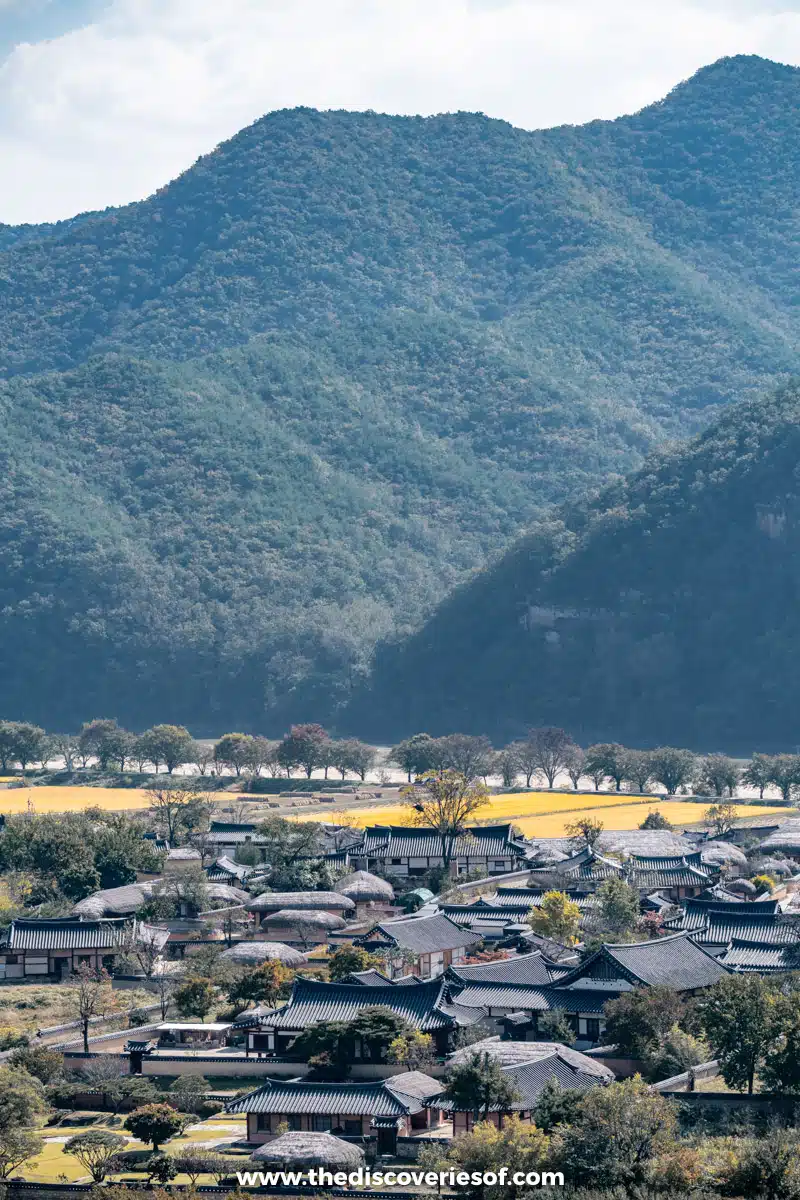
Hahoe Folk Village sits in a loop of the Nakdong River, a clan village of the Ryu family that has been lived in for more than 600 years. Its thatched and tiled houses are still homes, and it’s a UNESCO World Heritage Site along with nearby Yangdong.
For the best view of how the river wraps around it, cross to Buyongdae Cliff on the far bank. The cliff rises about 64 metres above the water, and from the top you look straight down on the village, the sandbanks and the fields. I visited in October, when the rice fields below were turning gold, and it’s the view I come back to most when I think of Andong.
Getting There
Hahoe is about 40 minutes west of central Andong by car or local bus (bus 246 from Andong Station). In season a small ferry crosses from the village to the foot of Buyongdae; otherwise it’s a short drive round to the cliff.
Eat jjimdak at Andong Old Market

Andong Old Market is a traditional market that’s worth a wander, with stalls selling pastries, seafood and fried chicken. The reason to come, though, is jjimdak: chicken braised with vegetables and glass noodles in a sweet and savoury soy sauce. It’s a classic dish all over Korea, and it’s said to have been invented right here, so there’s no better place to try it.
I had dinner at Andong Shinsegae Jjimdak, one of the restaurants on the market’s jjimdak alley. Portions are made to share, so come hungry.
Taste Korean wine at 264 Lee Yuk Sa Winery

Bet you don’t think of wine when you think of South Korea. It’s not a big drink here, but some wineries are out to change that, and 264 Lee Yuk Sa is one of them. The name is a tribute to Lee Yuk-sa, the poet and independence activist from Andong who died in a Beijing prison in 1944 (264 was his prisoner number, and he took it as his pen name).
You can taste a range of wines, from dry to sweet. I liked the dry white: it’s made from Cheongsu, a Korean green grape that is floral but not overwhelmingly so, and it was better than I expected.
Walk the floating bridge at Andong Dam

The Seonseong Susanggil floating bridge is a cool walkway that bobs on the surface of the reservoir behind Andong Dam. It’s near Dosanseowon, about 40 minutes’ drive north of the city, so it pairs well with the academy, and in autumn the hills around the water are a riot of colour.
Catch the light show at Woryeonggyo Bridge


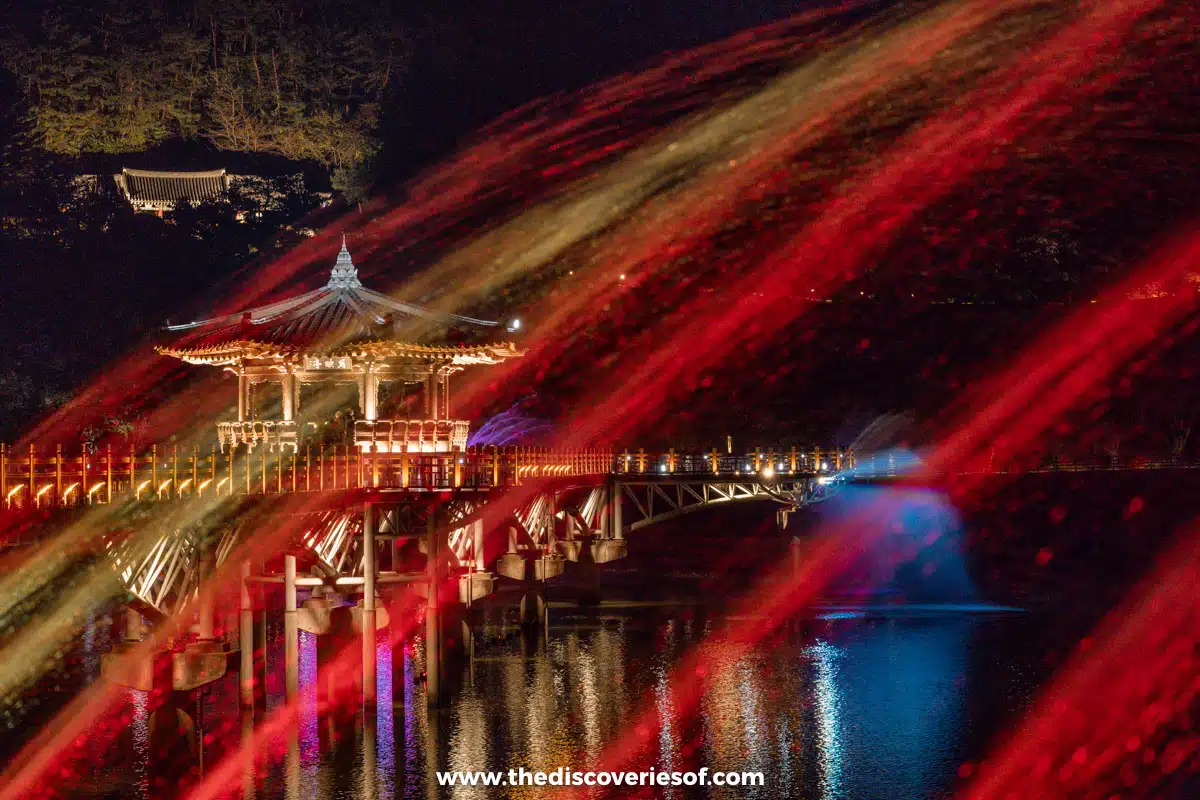
Take a walk on Woryeonggyo, the Moonlight Bridge. At 387 metres it’s the longest wooden footbridge in Korea, with a temple-style pavilion halfway across the Nakdong River. There’s not much to see in the daytime beyond the bridge itself, but it’s striking at night, when it’s lit up in different colours and casts its reflections on the inky water below.
Top Tip
From April to October, fountains along the bridge run four times a day (at 12pm, 2pm, 4pm and 6pm in 2026, with an extra 8pm show from July to September). Time your visit for the last show and stay on as the lights come up.
Getting to Andong
You can reach Andong from Seoul by bus or train. My advice? Take the KTX-Eum high-speed train from Cheongnyangni Station in Seoul, which gets you there in about two hours. You’ll want taxis or a hire car to reach the academies, Hahoe and the dam, as they’re spread out around the city.
Suggested stay: Tradition Resort Gurume

I stayed at Tradition Resort Gurume, a collection of historic hanok houses brought together on a hillside above the river. It’s a beautiful place to stay that’s distinctly Korean, with traditional rooms, breakfast each morning and a hanok café. It’s a little way out of town, so you’ll need a taxi or your own transport to get there.
Check prices and availability at Tradition Resort Gurume or check all accommodation in Andong
Days 5 to 7: Busan

Busan may just have pipped Seoul to the prize for my favourite destination in South Korea. Seoul deserves the hype, but Busan should be anything but an afterthought.
The port city on the south coast is a delight for food lovers and outdoorsy types, and it also has a deep connection to the Korean War. As the country’s second city and one of its most important ports, Busan was the last line of defence in the earliest months of the war, when UN forces held the Pusan Perimeter. Today it’s home to the only UN memorial cemetery in the world.
Pay your respects at the UN Memorial Cemetery


You can’t overstate the importance of Pusan (as it was then) in the Korean War, and the UN Memorial Cemetery paints a tragic but moving picture of the worldwide effort to defend South Korea’s independence. Soldiers from the countries that sent troops are buried here, and it’s a sobering reminder of how bloody the war was.
Start with the introductory film, which explains the war and the scale of the UN effort with the stories of individual soldiers and their sacrifices. I was in tears by the end of it. Then time your visit for the flag raising or lowering ceremony (at 10am and 4pm when I went): it’s an emotional experience to see the soldiers honoured with such respect so many decades after the war ended.
Tickets
Entry is free. The cemetery is open from 9am to 5pm from October to April and until 6pm from May to September. It’s about a 15-minute walk from Daeyeon Station on subway line 2.
Choose your fish for sashimi (and try live octopus if you dare)

I bet when you think of sashimi, you think of Japan. But Koreans eat plenty of it too, and they call it saengseon-hoe. Busan, being a port city, is the place to try it.
The classic way to eat it is above a fish market. I went to Bangpajae Hoetjip, where you choose your fish downstairs and they prepare it and bring it to your table. Jagalchi Market and Millak Raw Fish Town near Gwangalli Beach work the same way.
It’s also the place to try san-nakji, or live octopus. Strictly speaking, the octopus is killed just before it’s served, but the tentacles are still moving when they reach you, dressed with sesame seeds, sesame oil and spring onions. It was actually pretty tasty, but it’s a bit of a weird experience: you have to bite down hard to make sure none of the suckers get stuck to your tongue or throat. Not for the faint of heart.
Ride the Busan Air Cruise

One of the best ways to get to know any city is to see it from above, and the Busan Air Cruise is one of the more impressive rides with a view I’ve taken. The long cable car whisks you out over Songdo Bay, with the rugged cliffs and water right under your feet, and as you walk around the small headland at the far end, the whole city is spread out before you.
There’s a slightly strange rooftop park at the Songdo Sky Park station. Ignore the weird growling gorillas and head upstairs for yet more views of the city. Then walk the Songdo Cloud Walk, a curving walkway out over the sea. Even if you’re a bit funny with heights, it’s not so bad at all.
Tickets
A return trip costs 19,000 won (about £11) in a standard car or 24,000 won (about £14) in a Crystal Cruise car. The Air Cruise opens at 9am and closes at 9pm in spring and autumn, 10pm in July and August and 8pm in winter.
Top Tip
Splurge on the Crystal Cruise ticket: you get a car with a glass floor and more windows. And go early in the morning if you can, when the cloud often sits over the island and gives the Cloud Walk its name.
Explore Gamcheon Culture Village

Start your second day in Gamcheon Culture Village. If you’ve seen any pictures of Busan, you’ve probably seen this one. The hillside neighbourhood was settled by refugees during the Korean War and given an arty makeover from 2009, and its rows of densely packed, colourful houses and painted murals make it one of the most photogenic corners of the city.
Walking around is really the main attraction, and you can rent a hanbok to wear as you stroll. Do climb the steps to the Haneul Maru observation deck for views over the village and out to the bay.
Paddleboard at Gwangalli Beach
Try stand-up paddleboarding at Gwangalli Beach, where you’ll get picture-perfect views of the skyscrapers and the 7.4-kilometre Gwangan Bridge from the water. Busan’s big bay is perfect for paddleboarding. It can get a bit bumpy, but that’s part of the fun.
Stay on the beach after dark, when the bridge is lit up, and you’re well placed for dinner.
Have dinner at Korean Steak Grill

It’s difficult to pick a favourite restaurant in South Korea, but I have to be honest: this was it.
Korean Steak Grill (전설의 우대갈비 해운대직영점), between Haeundae Traditional Market and Haeundae Beach, is what Korean barbecue dreams are made of. The booths are perfect for sharing, and the views from the window seats are great too.
So, what should you order? The steak on the bone is a must. It’s grilled at your table, then cut into small pieces for you to tuck into in sheer bliss. Go hungry.
Visit Haedong Yonggungsa Temple


On your last day in Busan, head out to Haedong Yonggungsa, a Buddhist temple built right on the rocks above the sea, about 25 minutes by bus from Haeundae.
The temple’s history goes back to the 14th century, although most of the buildings you see are much newer (it was rebuilt in the 1970s). Stroll around the halls, which are fine examples of Korean Buddhist architecture, and down to the shoreline for the view back along the coast.
Tickets
Entry is free, and the temple opens at 5am, so you can beat the tour groups. Take bus 181 from Haeundae Station to the Haedong Yonggungsa stop.
Watch the sunset in Huinnyeoul Culture Village


Save time in the afternoon for Huinnyeoul Culture Village on Yeongdo island. It’s nicknamed the Santorini of Korea, and you know what? I don’t hate it. It’s a mishmash of white-walled houses, quirky murals and coastal charm, and the Huinnyeoul coastal trail below it is a perfect spot for sunset. Make your way down to the Huinnyeoul tunnel for the classic shot of Busan framed by the arch.
Getting to Busan

The KTX-Eum train runs from Andong to Busan’s Bujeon Station in about two hours, and since 30 December 2025 some services also stop at Sin Haeundae, which is handy if you’re staying by the beach. Express buses are the alternative and take a little longer.
Suggested stay: Grand Josun Busan
I stayed at Grand Josun Busan, which sits right on Haeundae Beach. Its modern rooms, pool and spa make it a comfortable base, and you’re close to Haeundae Station for the subway and the bus out to Haedong Yonggungsa.
Check prices and availability at Grand Josun Busan or check all accommodation in Busan
Days 8 and 9: Jeonju

If you’re beginning to pick up on a theme in Korea, it’s that the food is absolutely incredible.
I’m not kidding when I tell you that each city I went to left me reeling at how exciting the food scene was. Even so, Jeonju might have been my favourite. You’d expect no less of the place where bibimbap originated, right? It’s also a UNESCO City of Gastronomy.
From making moju to eating more pork in one sitting than I thought possible, food is around every corner here. That said, I was surprised by how much there is to do besides eat.

For starters, free open spaces like Jeonju Arboretum and the lakeside Deokjin Park are a welcome break from the busy streets. There’s also a deep commitment to traditional crafts, which you can try for yourself at a moju class or in the pottery and craft studios around the hanok village, and a library set in a gorgeous hanok on Deokjin pond. All in all, Jeonju is so lovely that I’d say you can’t plan a trip to South Korea without it.
Wander Jeonju Arboretum in autumn

Jeonju Arboretum is one of the most beautiful green spaces in the city, and it’s free to stroll through. The garden was created on land left in poor shape after the building of the nearby expressway, and today it’s a tranquil place of ponds, pavilions and themed gardens. It’s especially beautiful in autumn, when the pink muhly grass is at its peak.
Visit Gyeonggijeon Shrine


The Gyeonggijeon Shrine was built in 1410 to house a portrait of King Taejo, the founder of the Joseon dynasty, and it’s a beautiful example of the period’s architecture. It was damaged during the Japanese invasions of the late 16th century and rebuilt in the early 17th, and today you can see the portraits of Joseon kings in the museum on site. Take your time strolling around: it’s a calm spot with yet more beautiful buildings.
Make your own moju

If you’re looking for a cool activity in Jeonju, try making moju. It’s made with makgeolli (Korean rice wine) brewed with spices, herbs and fruit, which turns it into a sweet, low-alcohol tonic.
I hadn’t tried moju before the class, and it was a fascinating look at how you go from the base ingredients to the finished drink. You get to choose from three different recipes and make your moju to suit, and it was actually pretty tasty. You get to drink what you made, too.
Do
Moju Experience Yeo, on Eunhaeng-ro near the hanok village, runs moju-making sessions for 28,000 won (about £16) a person, daily from lunchtime. Call or message them on Instagram (@moju_yeo) to book.
Explore Jeonju Hanok Village


Jeonju Hanok Village, with more than 700 traditional houses, is popular with local tourists as well as international visitors. One of the most popular things to do is to rent a hanbok and stroll around the village in it, and you can hire one at a local shop.
I’d be lying if I didn’t say I found the experience of renting and walking around in a hanbok awkward. There are questions about whether it’s cultural appreciation or cultural appropriation, and I was very aware of that while I was walking around. It is a unique experience, though, and a different way of interacting with the place. Would I say you have to do it? Absolutely not. It’s one where you have to decide for yourself: for me, that one time was enough.
Top Tip
Time your visit for the Jeonju International Film Festival if you can. It’s held over ten days from late April (the 2026 festival opened on 29 April) and brings a place that’s already brimming with tradition to life.
Have dinner at a pork grill restaurant

Had plenty of grilled meat? Make room for more. This excellent restaurant (경성금돼지, which translates as Pork Grill Restaurant) serves unctuous cuts of pork grilled to perfection at your table. The prices are reasonable and the atmosphere is festive and social, so come hungry and enjoy cold noodles and kimchi alongside more meat than one person can comfortably take down.
See Deokjin Park at night
After dinner, head to Deokjin Park to see why locals love this green space after the sun goes down. The pond is famous for its lotus flowers in summer, and the lights along the walkways reflect in the water at night. Still, it’s the Yeonhwajeong library, with its traditional hanok front, that really lights up the park after dark. Much of the appeal is just walking around and soaking up the views.
Read Next
Getting to Jeonju

The easiest way from Busan to Jeonju is the express bus from Busan Seobu Bus Terminal (by Sasang Station), which takes about three and a quarter hours and runs roughly hourly. Trains need at least one change and are no quicker.
Suggested stay: Lahan Hotel Jeonju
I stayed at the Lahan Hotel Jeonju, a modern hotel looking out over the city and the hanok village. The rooms are large and the location is perfect for exploring the old town on foot.
Check prices and availability at the Lahan Hotel Jeonju or check all accommodation in Jeonju
Day 10: Seoul


Now that you’ve ticked off a few of Seoul’s most popular sights, it’s time to see the city more like a local, with a temple, a stream, a long lunch and a trip to a Korean spa before your flight home.
Walk along Cheonggyecheon Stream

Start at Cheonggyecheon Stream, a 10.9-kilometre slice of nature in the middle of the city. For decades it was covered over by roads, until a restoration project in the early 2000s turned it into the urban park it is now, where locals hang out by the water. Look out for the street art, the bridges and the spiralling Spring sculpture at its start near Gwanghwamun.
Step inside Jogyesa Temple

After all the palaces of your first days, visit something a little different: Jogyesa, the chief temple of Korea’s largest Buddhist order, right in the heart of downtown. It’s colourful, it’s free and it’s a working temple, so expect chanting and worshippers in the main hall. In October the courtyard fills with chrysanthemums.
Walk around Yeouido Hangang Park and The Hyundai
Next, head to Yeouido Hangang Park on the Han River, where you can take a stroll, hire a bicycle or snap a selfie with the city skyline behind you. Then visit The Hyundai Seoul, a department store with an indoor garden and a constantly changing line-up of pop-ups, including some from the most well-loved fashion brands and K-pop stars.
After that, check out the vendors at Gwangjang Market again or explore the shopping and dining in Myeongdong. Once you start digging deeper into things to do in Seoul, you probably won’t want to leave.
Dine at Insadong Hangane Bulgogi Jumak

There are some cities where you need to hop around as many restaurants as possible until you’re uncomfortably full. Seoul is one.
But if you only have time for one, have the bulgogi set menu at Insadong Hangane Bulgogi Jumak. Mine cost 18,000 won (about £10) and came with soup, rice and pickled vegetables. It’s all great, but the real star of the show is the beef bulgogi: rich, densely flavoured and an absolute must on your last day in the city.
Top Tip
It’s a small place, so be prepared to wait at busy times. You can often get seated sooner by nabbing a spot at one of the traditional tables on the raised deck, where you sit on a mat on the floor. Recent listings show it open on weekdays only, so check before you go.
End with a scrub at Spa Lei
Be sure to finish with a Korean spa. Spa Lei, in Sinsa-dong, is a women-only jjimjilbang (Korean bathhouse), and it’s a great choice for a first time as it’s welcoming to Western visitors.
Be warned: you do the whole thing completely naked, and it’s more of a functional spa than a relaxing one. You move between baths that range from ice cold to barely bearably hot, have your treatment, then finish in a separate relaxation room. I’ve had a lot of scrubs before, but this one was vigorous, and I came out feeling like a brand new person before my long flight home.
Top Tip
Entry was about £25 when I went, payable by card, but you need cash for treatments: my hour-long scrub and massage combination cost about £70. Spend at least 30 minutes in the warm baths before a scrub, as it softens your skin.
Getting back to Seoul

From Jeonju, the KTX high-speed train takes you to Yongsan Station in Seoul in as little as an hour and three quarters. I took the bullet train between Jeonju and Seoul, and it was so comfortable, with great views along the way.
Suggested stay: Nine Tree by Parnas Seoul Insadong
If you’d like to stay in a different part of town for your last night, Insadong is a good alternative to Myeongdong: it’s walkable to the palaces, Jogyesa and the tea houses of Insadong-gil.
Nine Tree by Parnas Seoul Insadong (formerly the Nine Tree Premier Hotel Insadong) has comfortable rooms, a 24-hour front desk and the subway a short walk from the lobby.
Check prices and availability at Nine Tree by Parnas Seoul Insadong or check all accommodation in Seoul
Have more time? Add these to your itinerary
Gangneung


If you have more time, add a couple of days in Gangneung, on the east coast. The KTX gets you there from Seoul Station in about two hours, and pretty much every market and restaurant I tried there was seriously good.
Gangneung is known as Korea’s city of coffee, as almost every café on its coffee street roasts its own beans. Don’t miss Gangneung Jungang Market, which has a traditional market upstairs and a fish market underground: get the Korean fried chicken from Baenni, an explosion of flavours and textures that was straight-up delightful.

And if you only have time for one meal, make it Owole Chodang (오월에 초당). Its thick pancakes are bursting with fresh vegetables and seafood: crunchy on the outside, soft on the inside, and one of my favourite dishes of the trip.
Want to see some of the coast between meals? Ride the Jeongdongjin Railbike along the old railway by the sea, or spend an afternoon on Gyeongpo Beach, with its white sand backed by fragrant pines.
Mokpo

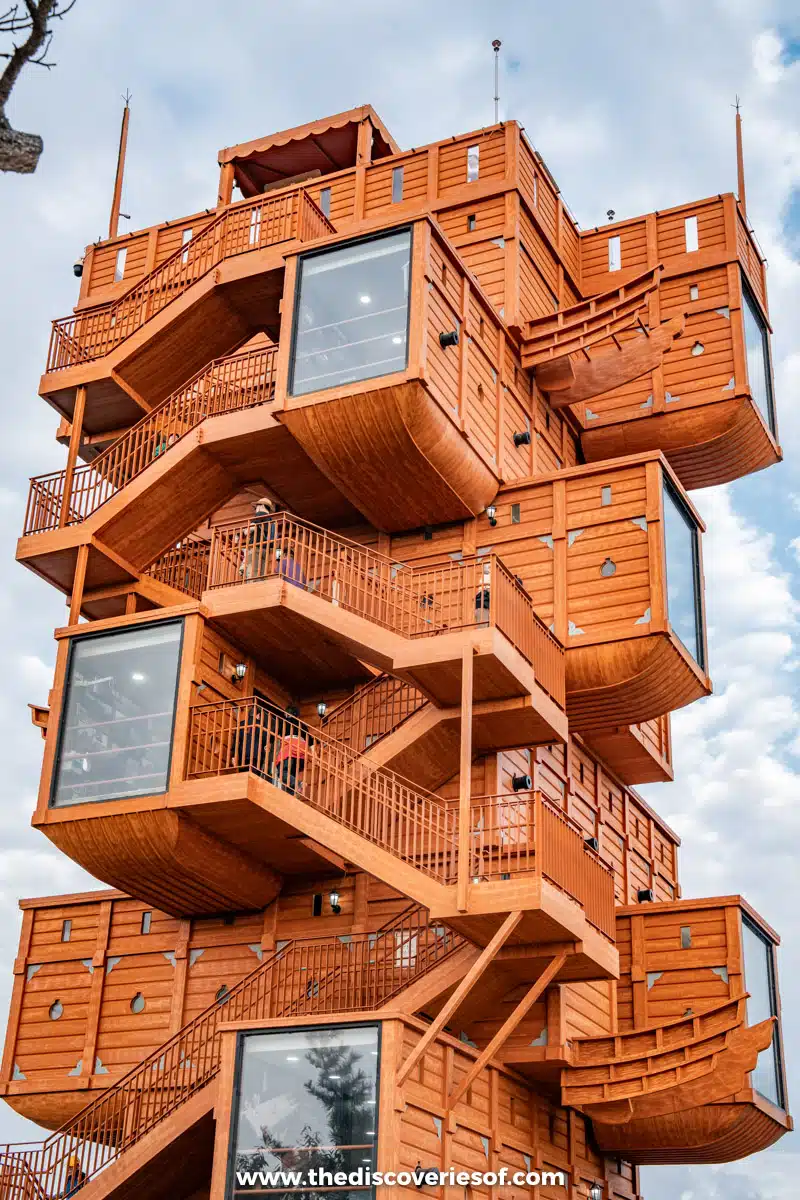
On the south-west tip of the peninsula, Mokpo is a port city with a surprising history. Around 80% of the land it stands on is reclaimed: where you see hills today were once islands. In the early 20th century its harbour was so busy that it generated a big share of the country’s revenue.
Ride the Mokpo Marine Cable Car out over the sea to Gohado island and its observatory, then explore the old streets around the Mokpo Modern History Museum and the Gapjaok Hat Gallery. I stayed at the Hanok Hotel Youngsanjae, which gives you another chance to sleep in a traditional house. The KTX takes about two and a half hours from Seoul’s Yongsan Station, so Mokpo also fits neatly between Busan and Jeonju if you’re happy to drive.
Watch my South Korea video
Subscribe on YouTube and discover new destinations.
Map
Handy tips for planning your 10 days in South Korea
Top tips
- Entry rules: UK, US and Australian passport holders, among others, don’t need a K-ETA (electronic travel authorisation) for trips until 31 December 2026, under a temporary exemption. If you don’t have a K-ETA, you must fill in the free e-Arrival Card online (e-arrivalcard.go.kr) within the 72 hours before you land, as paper arrival cards have been phased out. Check the official K-ETA website before you book, as the exemption may not be extended.
- Transport cards: buy a T-money card at a convenience store, charge it up and tap in and out on buses and the subway. It’s the easiest way to get around every city on this route.
- Maps: use Naver Map or KakaoMap, not Google Maps, for walking and transit directions.
- Cash: cards are accepted almost everywhere, but carry some cash for market stalls and spa treatments.
- Tax refunds: at Olive Young’s flagship in Myeongdong (the place to stock up on K-beauty), show your passport and they’ll take the tax off your bill. Otherwise keep your receipts and reclaim it at the airport: when I did that, it took about five minutes from start to finish.
- Tipping: it isn’t expected in South Korea, so don’t feel you need to leave extra. Read more in my South Korea travel tips.
What to pack

You’ll need to decide when you’re going before you plan your wardrobe, as the weather is completely different in July from January. Winters are cold, with temperatures often below freezing, while summer highs often top 30°C and the monsoon rains arrive in late June and July.
Whenever you visit, pack something smart for restaurants and lean a little towards modest clothing, especially for temples and smaller towns. Bring a reliable pair of trainers for the city streets and subway stairs, a small suitcase or underseat bag that’s easy to carry on and off trains, and a mix of casual and dressier clothes for sightseeing and dinners. If you’re heading to the beaches in summer, a one-piece or shorts and a cover-up won’t look out of place.
Best time to visit

Spring (April and May) and autumn (late September to early November) are the best times for this itinerary, when the weather is mild and dry enough for long days on foot. I went in October, and it was glorious: autumn colour in the palace gardens of Seoul, pink muhly at Jeonju Arboretum, golden rice fields around Hahoe and days warm enough to be out until dark. Spring brings cherry blossom instead, from late March in Busan and early April in Seoul.
Getting around
Public transport in South Korea is excellent. The KTX and KTX-Eum high-speed trains link every stop on this route except the Busan to Jeonju leg, where the express bus is the easy option, and you can book seats on the Korail website or app. A first-class (특실) seat costs a little more and gives you wider seats with more legroom, which is worth it on the longer journeys.
Buses fill the gaps between cities, with several companies running regular services: check the T-money Bus or Kobus apps for routes and times. For the sights outside Andong, a taxi (book one through the Kakao T app) or a hire car makes life much easier.
Tour or independent?

I travelled most of this route as part of a small group with a guide, then spent my last days in Seoul on my own. Both work. If it’s your first time in the country and you don’t speak Korean, a guide makes the most of the history at sites like the palaces and Dosanseowon. But everything on this itinerary is easy to do independently, with fast trains between the cities and taxis for the countryside, so you can take your time and add your own discoveries along the way.
Read next
- Unmissable things to do in South Korea
- How to spend 3 perfect days in Seoul
- Unmissable things to do in Busan
- A complete guide to travelling to Jeonju
- A complete traveller’s guide to Gangneung
- Insider South Korea travel tips for your trip
Love this? Save and share on Pinterest

Discover the top things to do, insider tips and hidden gems in our South Korea Travel Guide.
Read the guides →