In recent years South Korea has stepped into the spotlight as one of Asia’s hottest destinations. Don’t miss these top things to do in South Korea for your trip.
For a relatively small country, South Korea is a magical place where the food, music and technology aren’t only a significant part of the local culture, they increasingly inspire people around the world.
Walking through the futuristic streets of Seoul, sitting down to a feast of grilled meats and pickled vegetables, and immersing yourself in a Korean spa are all experiences that are nothing short of transformative.
If you think that’s a bit dramatic, it’s not. I spent two weeks travelling around South Korea in October, from Seoul to the east coast, Andong, Busan, Mokpo and Jeonju, and looking back on my trip reminds me how each city, village and street had stories to tell.
To really experience South Korea means to understand both the rich, complicated history and the forward-thinking residents who make it one of the most exciting places in the world right now.
Because there is so much to see and do, narrowing down what you should experience and where to go may feel overwhelming. No need to worry. I’ll help you choose the best things to do and places to visit in South Korea.
Best things to do in South Korea
Head to Gyeongbokgung Palace in Seoul


Historical reminders pop up on nearly every corner of Seoul, but the ancient palace grounds of Gyeongbokgung Palace offer some of the most visually striking reminders of the Joseon dynasty. It was one of the most fascinating places I visited during my time in the capital.
Gyeongbokgung Palace was originally the most important of the five grand palaces and was the royal family’s palace from 1395 until 1592, when it burned down during a Japanese invasion. It was rebuilt in the 1860s, then largely torn down under Japanese occupation in the 20th century, and only since the early 1990s has there been an active effort to recreate the beauty of the palace grounds.
Touring Gyeongbokgung Palace allows you to see dozens of royal buildings and the iconic Gwanghwamun gate, with its ornate wooden details welcoming you into the palace grounds. Inside, don’t miss Gyeonghoeru, the banquet pavilion that seems to float on its lotus pond, and the beautifully carved Heungbokjeon Hall.
Tickets
Entry costs 3,000 won (about £1.70), and it’s free if you’re wearing a hanbok, the traditional Korean dress. The palace is closed on Tuesdays, and the changing of the royal guard takes place at the main gate at 10am and 2pm.
Read Next
Take in the views of Busan from the Busan Air Cruise cable car

If Seoul often steals the limelight, then trust me, Busan is hot on its heels: it may just have pipped the capital to the prize for my favourite destination in South Korea. This stunning city in the south-eastern corner of the country is surrounded by water, so it’s no surprise you can enjoy some magical views when you visit.
I made my way to the boarding station before hopping on board to be whisked out over the cliffs and the water of Songdo Bay on the Busan Air Cruise. It’s a stunning way to look out over the sea and South Korea’s second-largest city from above.
The views over Songdo Beach and across to the port district of Yeongdo from the top were seriously impressive. Seeing the sprawling metropolis from above really puts things into perspective. When you get to Songdo Sky Park Station at the far end, there’s a slightly strange rooftop park (ignore the weird growling gorillas), but head upstairs for more great views of the city from there.
Top Tip
A premium ticket is worth the extra money. You’ll get a Crystal Cruise car with a glass floor and more windows, so you get better views from every angle, and a shorter queue at the start. A return trip costs 19,000 won (about £11) in a standard car or 24,000 won (about £14) in a Crystal car.
Try traditional Korean food


Sampling traditional Korean food takes you on an odyssey through centuries of local and international ingredients, techniques and traditions. Was it the part of the trip I was most looking forward to? Yes. Did it disappoint? Not for a second.
Visit local markets and restaurants to try fresh produce, jangajji (pickled vegetables), meats and seafood. Sample noodle dishes that range from traditional Korean knife-cut noodles (kalguksu) to wheat noodle dishes such as milmyeon, which evolved during the Korean War when the UN brought in wheat to make up for the rice that local farmers could no longer produce.
Even a dish like bibimbap shows a rich array of ingredients and styles, where the bowl of rice, egg, vegetables and meat can change from one restaurant to the next.

But one thing remains consistent from city to city and restaurant to restaurant: the quality of the meat and vegetables is extraordinary. Try classics like beef bulgogi, thin slices of beef in a seductive marinade of soy sauce, sesame, garlic and sugar, whose roots go back to maekjeok, the skewered marinated meat of the Goguryeo kingdom (37 BC to AD 668).
Top Tip
Insadong Hangane Bulgogi Jumak in Seoul is the place to try beef bulgogi. It’s brilliant, and the set menu is great value too: mine cost 18,000 won and came with soup, rice and more banchan (side dishes) than I knew what to do with. It’s around 19,000 won now, and the restaurant opens on weekdays only.
Visit the DMZ

The Korean Demilitarized Zone is one of the most interesting places to go in South Korea, and well worth a visit if you have the chance. The 4 km (2.5 mi) by 250 km (160 mi) strip has been a buffer between North and South ever since the Korean Armistice Agreement of 1953 brought the fighting in the Korean War to an end.
A guided tour allows you to explore some important sites like the 150-metre (492-foot) Gamaksan Suspension Bridge or the Third Infiltration Tunnel, which North Korea dug under the border after the armistice as a way to launch an attack on South Korea, and which South Korea discovered in 1978. Bring your passport: you’ll need it at the checkpoints.

So far, nothing new, but if you want an alternative to a traditional tour, visit Aegibong Peace Ecopark, about a 1.5-hour drive from Seoul. It only opened in October 2021 and offers a completely different take on the DMZ.
Head up to the observation deck, where on a clear day you can look across the river to North Korean villages and hillsides about 1.4 km away (you can’t see Pyongyang, the North Korean capital, which is well over 150 km away). It was pretty misty during my visit, so I couldn’t see much across the water, but the views were pretty stunning nonetheless.
Tickets
Entry to Aegibong costs 3,000 won and includes the shuttle bus up the hill. It’s open from 9.30am to 5.30pm. It’s in a civilian control zone, so bring your passport, and book ahead at busy times, as daily numbers are capped.
Walk through the Dosanseowon Confucian Academy in Andong

One of the more enlightening experiences I had during my trip to South Korea was learning about the importance of Confucianism, not only in China but in South Korea as well.
If you want to learn more about the philosophy of accountability and goodwill and its impact in Korea, the Dosanseowon Confucian Academy in Andong is the place to go. Legendary teacher Yi Hwang (whom many consider Korea’s most influential philosopher) opened the Dosanseodang lecture hall late in his career. His followers built the academy around it after his death in 1570, and it became an important place of learning through the Joseon dynasty. It’s a peaceful place, and it’s not hard to imagine it as a place of deep learning and deep thinking in its tranquil spot by the lake.
Top Tip
Not heading to Andong? Visit Jeonju Hyanggyo Local Confucian School instead. Founded in the early 15th century and rebuilt on its current site in 1603, it has beautiful Joseon-era buildings and ancient ginkgo trees, and it’s one of the most celebrated historic sites in Jeonju.
Learn how to make moju in Jeonju

Of all the places that really took me by surprise, Jeonju was one of my absolute favourites. The city is a member of the UNESCO Creative Cities Network and has a longstanding tradition as a creative hub for food, arts and crafts. I strongly recommend visiting Jeonju on your visit to South Korea and scheduling a class to learn some of the local customs. The UNESCO City of Gastronomy is particularly famous for food and drink, so a cooking class is a wonderful option. In October, I made moju in a class in Jeonju. To make the drink, you take makgeolli (rice wine) and brew it with spices, herbs and fruit, which turns it into a sweet, low-alcohol tonic. It was actually pretty tasty.

You choose from three different recipes and make your moju to suit, and I hadn’t tried moju before the class, so it was fascinating to see how you go from the base ingredients to the finished drink. You get to drink what you made, too.
Do
Moju Experience Yeo, on Eunhaeng-ro near the hanok village, runs moju-making sessions for 28,000 won (about £16) a person, daily from lunchtime. Message them on Instagram (@moju_yeo) to book.
Get a spa treatment at Spa Lei in Seoul
Korean bathhouses (jjimjilbang) are a unique experience I’d encourage anyone to try when visiting South Korea. First up, I’ll kick off by saying that although bathhouses are kind of like spas, they’re actually pretty different from any other spa I’ve visited: it’s more a functional experience than a relaxing one. For example, you need to be completely nude during the bathhouse experience, so be warned. I found Spa Lei, a jjimjilbang in Sinsa-dong in Seoul, very accessible for Westerners, and it’s women-only. So what should you expect? You’ll spend hours moving between baths that range from ice cold to barely bearably hot, getting massages, and even getting a full body scrub, then relaxing in a separate relaxation room. You come out feeling like a brand new person.
Entry was payable by card, but you need cash for treatments inside: I opted for the hour-long scrub and massage combo, which came to around £70, and I thought it was well worth it.
Top Tip
Definitely spend at least 30 minutes moving between the warm baths before a scrub. It helps soften your skin, which you’ll absolutely need, because this treatment was vigorous. Spa Lei is open 24 hours (except for maintenance on Tuesday mornings), entry costs 22,000 won (about £12), and it’s a few minutes’ walk from Sinsa station, exit 5.
Visit Arte Museum Valley in Gangneung
South Korea has a rich art history spanning thousands of years and all kinds of mediums.
If you’re more interested in modern art than art history, Arte Museum Valley in Gangneung is a great choice. It features a remarkable digital collection near Gyeongpo Lake that was one of the highlights of my trip. What makes it particularly unique is the immersive exhibits, which put you inside large-scale digital landscapes inspired by the valleys, forests and coast of Gangwon-do, with lots of movement and colour.
You can visit any day of the week from 10am to 8pm (last entry 7pm). Go in the morning, when you can still see many of the exhibits without large crowds.
Tickets
Adult tickets cost 19,000 won (about £11). Reserve your tickets for Arte Museum Valley now.
Try mung bean pancakes at Gwangjang Market, Seoul

From big cities to smaller villages, markets are an important part of life in South Korea and brilliant places to try local specialities. Gwangjang Market in Seoul has stalls selling just about any type of South Korean food you can dream up, but the mung bean pancakes stole my heart. The pan-fried pancakes (bindaetteok) are a staple in Seoul, and you’ll know why the minute you bite into the savoury filling of pork, kimchi and vegetables, with an addictive and crispy exterior. It’s an affordable snack, which may be filling enough to consider a meal, and will set you back around 6,000 won (about £3.40).

Sunhui-ne Bindaetteok is the place to get mung bean pancakes in Gwangjang Market: my guide in Seoul sent me there, and I’d send you there too. But arrive early, or be prepared to wait. This place gets crazy busy.
Stroll through Jeonju Hanok Village

Walking through the narrow rows of charming homes and businesses in a traditional hanok village is something you just have to do when you’re in South Korea. Jeonju Hanok Village is my favourite, with more than 700 traditional homes. Take a walk through the village, which grew up in the early 20th century after the old city walls came down, and be sure to check out the impressive details of the roofs and the heated floors, which use an ancient technique (ondol) to heat the rooms where residents eat and sleep.
Also, watch for locals and tourists in traditional dress (hanbok). Lots of visitors rent one to stroll around the village in, and you get some great photos. I tried it, and I’ll be honest: I found it awkward, and I was very aware of the question of whether it’s cultural appreciation or appropriation. It’s a unique experience, but for me, that one time was enough.

It’s fun to visit any time, but if you go during a festival, you can watch the village come alive with celebrations of music, art and bibimbap (Jeonju is the city most associated with the dish).
Top Tip
When you visit hanok villages, be respectful. People still live in these neighbourhoods and have to contend with the foot traffic and noise.
Walk on clouds in Busan


Here’s another great way to take in the scenery of South Korea’s second-largest city, and it’s a particularly unique one. Ever wanted to know what it feels like to walk in the clouds? This is as close as you’ll ever get.
The Songdo Cloud Trail in Busan is a 365-metre (1,200-foot) walkway curving out over the sea from Songdo Beach, with glass-floored sections that give you ocean views right under your feet, all the way to the little island of Geobukseom. Even if you’re a bit funny with heights, it’s not so bad at all.
Wondering how to get there? If you’re looking at Songdo Bay from the beach, head to your left until you see the skywalk entrance near the Air Cruise’s Songdo Bay Station. There’s no fee to enter, and it’s open from 6am to 11pm.
Top Tip
Looking for the best time to go? Plan your walk early in the morning, when the island is often immersed in cloud. Hence the name.
Visit the only UN Memorial Cemetery in the world in Busan


Once you’re back down on the ground in Busan, I can’t recommend visiting the UN Memorial Cemetery enough. I spent a long time here, and it turned out to be one of the most significant stops of my whole trip. If you haven’t learned about the Korean War of 1950 to 1953, this is the place to do it. Busan played a vital role in the war, and you learn about just how important the UN effort was to preserving South Korea’s independence and the lives lost along the way.
It’s the only United Nations cemetery anywhere in the world. More than 2,300 people are buried here, most of them soldiers from the countries that sent troops to defend the South, and the Wall of Remembrance carries the names of more than 40,000 UN soldiers who died in the conflict, including those with no known grave.

Start in the Memorial Service Hall with the short documentary (about 12 minutes, shown in English as well as Korean). It delves into the Korean War and the scale of the UN effort, with the stories of individual soldiers and their sacrifices, and it taught me a lot about the conflict and just how many lives were lost. I was in tears by the end of it.
Then take your time walking the grounds, past the rows of graves, the flags of the UN nations and the long Wall of Remembrance. It’s a sombre space, and one that still resonates with locals as much as visitors. Time your visit for the UN flag raising at 10am (there was a lowering ceremony at 4pm when I went too). To see the soldiers honoured with the utmost respect so many decades after the war ended is an emotional experience, and both humbling and uplifting.
Entry is free, and the cemetery is open every day from 9am to 5pm from October to April and until 6pm from May to September. It’s about a 15-minute walk from Daeyeon Station on subway line 2.
Top Tip
You can find specific graves and names on the Wall of Remembrance here if you want to pay respects to any family member or friend buried there.
Walk across the longest wooden footbridge in Korea, in Andong

Andong is a beautiful historic city that has a much more laid-back feel than larger cities like Seoul.
It’s a lovely place to walk around, with green spaces like Nakgangmulgil Park and its woodland paths, ponds and little bridges. But my favourite stroll was across Woryeonggyo Bridge, the longest wooden footbridge in Korea. The 387-metre (1,270-foot) bridge crosses the Nakdong River, with a temple-style pavilion halfway across, and connects the city to the wooded hills on the far bank. The bridge’s design is a nod to mituri, traditional hemp sandals, and an homage to the story of a local woman who made a pair of sandals for her dying husband using her own hair.
Top Tip
Visit after dark, when the bridge and pavilion are lit in different colours, reflecting on the inky waters below. From April to October, fountains along the bridge run at 12pm, 2pm, 4pm and 6pm, with an extra 8pm show from July to September. My 10-day South Korea itinerary has two days in Andong.
See Seoul from N Seoul Tower


N Seoul Tower is a 236-metre (774-foot) tower known to tourists and locals alike for its incredible panoramic views of Seoul. I took the Namsan cable car up, which is an easy (some might say cheaty) way to the top: elbow your way to a window and you’ll get far-reaching views as you glide up the mountain. It costs 29,000 won (about £16) to go up to the observation deck, which is well worth it for the views from the top. There’s also a loo with a view, with floor-to-ceiling windows in the bathroom, which is really cool, if a bit weird at first.
There’s not a whole lot to do once you’re up there besides a slightly odd shopping area and n.GRILL, a revolving French restaurant on the floor above the deck, which serves lunch and dinner courses and needs booking ahead. My 3 days in Seoul itinerary has the tower, the cable car and the rest of Namsan.
Tickets
Buy your tickets for the observation deck on the official N Seoul Tower website. The Namsan cable car costs 15,000 won (about £8.50) return and runs daily from 10am to 11pm.
Visit the city of coffee

Korea takes its food and drink seriously, so it’s no surprise that cafés serve up some delicious coffee throughout the country. Gangneung is known as the “city of coffee”, as almost every café roasts its own beans, and it even has a Coffee Street by Anmok Beach lined with dozens of places to try a fresh brew. Stroll along the seafront and try local gems, then make the trip out to Terarosa’s original roastery and coffee museum in Gujeong-myeon, where they’ll treat you to incredible espressos and hand drips. My guide to Gangneung has more on the street and the city’s food.
Top Tip
Iced coffees are the go-to order for many locals, but baristas will happily pour you something piping hot if you’re feeling chilly.
Stand up paddleboard at Gwangalli Beach
South Korea is surrounded by the sea on three sides, so coastal areas are perfect for exploring the water. Busan offers a few places to enjoy the sandy shores along the East Sea, but Gwangalli Beach is my favourite. Spend the day swimming, sunbathing or stand-up paddleboarding and experience one of the best beaches in South Korea. Busan’s big bay is perfect for paddleboarding: it can get a bit bumpy, but that’s part of the fun.
Nearby Haeundae Beach may be more popular, but if you rent a paddleboard around sunset, you’ll see why the bright city lights shimmering off the 7.4-kilometre Gwangan Bridge and Busan Bay are something everyone needs to experience at least once.
Stock up on K-beauty products
Be sure to pack light and save some extra room in your luggage: shopping is a big deal in Korea. And honestly, the K-beauty products in Seoul are worth bringing an empty extra suitcase to fill up. K-beauty has taken the world by storm, and the natural plant and even snail-based (really) products aren’t just unique; they work wonders on making your skin look and feel younger. Head to Olive Young’s flagship in Myeongdong for the most popular skincare, make-up and masks in Seoul. The best part? When you buy beauty products, you can skip the tax if you bring your passport to the store, as they’ll take it off your bill at the till.
Top Tip
Left your passport in your hotel? Not to worry. Keep your receipt and claim the tax back at the refund kiosks at the airport. I did, and it took around five minutes from start to finish.
Soar above Mokpo in a cable car

If you’re interested in learning more about South Korea’s history, Mokpo is another excellent choice for visitors to explore. Located about two and a half hours from Seoul by KTX, it’s an important port city that’s played a role in Korean and Japanese trade for centuries and, at one point, its harbours generated around 20% of the country’s revenue. Around 80% of the land the city stands on is reclaimed: the hills you see today were once islands. Visit Mokpo Modern History Museum II to discover more about the city under Japanese occupation and check out the fountains and art installations at Peace Square, but make sure to save time to ride the Mokpo Marine Cable Car for stunning sea and city views.

If you decide to take the Mokpo Marine Cable Car, you’re really in for a treat. The 3.23 km (2-mile) ride, billed as the longest sea-crossing cable car in Korea, swoops from Yudalsan mountain out over the water to Gohado island, reaching nearly 150 metres (492 feet) at its highest point.
Top Tip
Riding at dusk offers some of the most striking views of the sunset and city lights. The cable car runs from 9am to 8pm (9pm on Saturdays and public holidays), with the last tickets sold an hour before closing. A return trip costs 24,000 won (about £14), or 29,000 won (about £16) in a glass-floored crystal cabin.
Go to a K-pop pop-up in Seoul
OK, if you haven’t heard about K-pop by now, it’s time. The genre has been around for a long time, but it’s really taken off worldwide over the past decade. You can get into the fun of the songs, dance, costumes and overall experience in a few ways in Seoul. The pop-ups at The Hyundai Seoul are some of the best. Check out the rotating line-up at the trendy department store near Yeouido Hangang Park. Iconic K-pop bands often put up artistic scenes in kiosks and stores, and you may even be able to buy some merch to take home.
There are also occasional planned and impromptu K-pop events throughout the city, so always check what’s on before your trip. Even BTS marked their comeback with a free concert in Gwanghwamun Square in March 2026.
Do
Looking for another way to check out the K-pop scene? Try this immersive K-pop tour with art and music for a unique experience in Seoul.
See the pink muhly bloom at Jeonju Arboretum

When you think of beautiful shades of pink filling gardens in East Asia, the lovely cherry blossom trees that bloom in Japan and South Korea are likely the first images to pop up. But if you head to Jeonju Arboretum when the pink muhly blooms in autumn, you’ll see waves of rose-coloured grass dancing along the pathways in what is one of the most beautiful scenes anywhere in South Korea. The arboretum is a lovely stretch of green space, created beside the expressway on land left behind by its construction, and seeing the pink, feather-like flowers on the tall grasses is a welcome reception on your walk through the park. Entry is free.
Top Tip
Autumn is the best time to see pink muhly, usually from late September to October, so plan accordingly.
Attend a royal reception at Changgyeonggung Palace

Walking the palace and garden grounds of Changgyeonggung Palace was a highlight of my trip. Built as a home for the dowager queens, with the oldest throne hall in Seoul and a pond ringed with old trees at the back, it was full of incredible architecture and history. But my favourite part was “attending” a historical 60th birthday party for the king’s mother as if I were one of the guests. How? Ah, the wonders of augmented reality.
Seeing the celebration play out inside one of the halls gives you a real sense of how the buildings were once used. Ask at the entrance whether the AR experience is running when you visit, and read my guide to Changgyeonggung Palace before you go.
Tickets
Palace entry is 1,000 won (free in hanbok), it’s open until 9pm, and it’s closed on Mondays.
Take a ride on the Jeongdongjin Railbike
I’m up for any excuse to explore the coast, and the Jeongdongjin Railbike is an enjoyable way to take in ocean views when you’re visiting Gangneung.
The two- or four-person bikes skirt alongside the East Sea shores and honestly went a lot faster than I expected. They’re a lot of fun and don’t really require much effort, as the semi-powered engines do a fair amount of the work on the 45-minute route. The ride is relatively inexpensive, at 25,000 won (about £14) for a two-seater or 35,000 won (about £20) for a four-seater.
Getting There
Head to Jeongdongjin Station (17 Jeongdongyeok-gil, Gangneung-si, Gangwon-do), where you can buy tickets for a one-way or round-trip ride. Departures run roughly every hour through the day.
Practical tips for your South Korea trip


If you’re taking intercity buses, the Kobus and Bustago apps show routes and times and let you book seats, and Rome2Rio is handy for comparing buses and trains. The KTX bullet train system is also trustworthy, comfortable and scenic. As far as navigating the streets on foot, I found Naver or Kakao were much more reliable than Google Maps for getting around.
Other top tips for your visit
- If you begin your trip in Seoul, find a bank or ATM in Myeongdong and take out cash before visiting market stalls and smaller shops.
- When you plan to take the bus or subway, simply charge your T-money card and use it to tap in and out.
- Buy a SIM card for your trip. You have a few options, but LG U+ is considered one of the fastest.
- Locals don’t tip in South Korea. Don’t feel you need to: good service is simply expected, and a tip can cause confusion.
How long to visit South Korea?

I spent two weeks travelling around the country, and I think you can cover many of the most popular South Korea activities and learn more about the local culture and cuisine in 10 to 14 days.
Best time to visit

If you want to avoid crowds but enjoy nice weather, plan your holiday for September or October. I went in October, when the palace gardens were turning red and gold.
Where should I stay in South Korea?
Four Points by Sheraton Josun, Seoul Myeongdong (mid-range)
Four Points by Sheraton Josun, Seoul Myeongdong is a nice option with reasonable rates for staying in the Myeongdong area of Seoul, and it’s where I stayed. Rooms aren’t large, but they’re clean, comfortable and modern, with cool views over the city skyline, and the breakfast is great, with a made-to-order noodle station.
Check prices and availability for Four Points by Sheraton Josun, Seoul Myeongdong
Grand Josun Busan (luxury)
Grand Josun Busan boasts elegant design and sea views right on popular Haeundae Beach, and it was my base in Busan.
There’s enough space to relax in an armchair by the window, plan your next activities at the desk, or freshen up before you head out for the afternoon, and the subway at Haeundae Station is a short walk away.
Check prices and availability for Grand Josun Busan
Recommended tours


Tour and history lesson in the DMZ

Map
Explore more South Korea guides
- Insider’s South Korea travel guide
- 10 days in South Korea: the perfect South Korea itinerary
- How to spend 3 days in Seoul
- The best things to do in Seoul
- The best things to do in Busan
- A complete guide to visiting Jeonju
- A complete guide to visiting Gangneung
- South Korea travel tips
Love this? Save and share on Pinterest
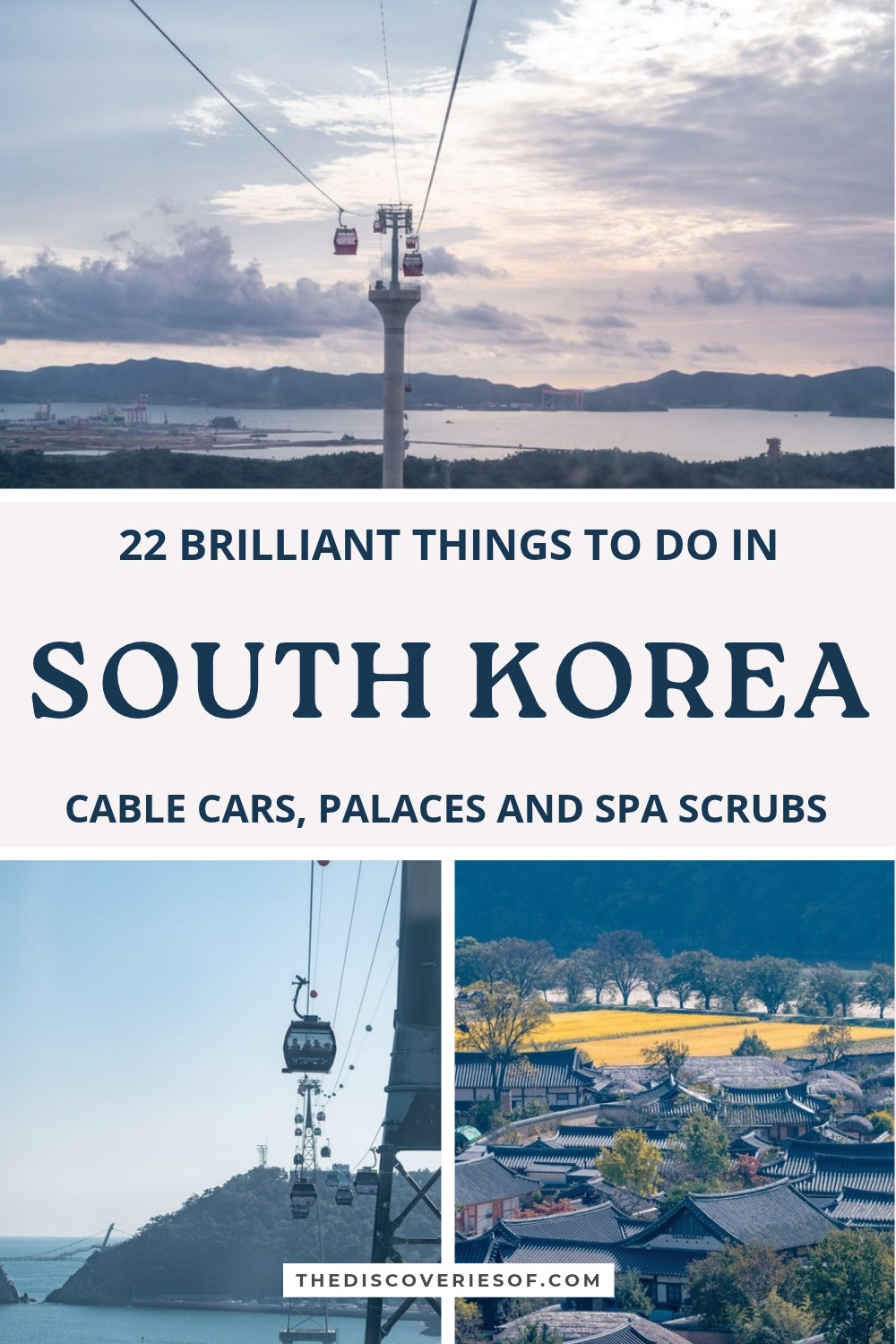

Discover the top things to do, insider tips and hidden gems in our South Korea Travel Guide.
Read the guides →