Outside Korea, Korean food tends to mean barbecue, fried chicken and a jar of kimchi. In the country itself, almost every city has a dish it claims as its own, from braised chicken born in a market alley to cold noodles invented by wartime refugees, and some of the best meals are only a short train ride apart.
I ate my way across six cities in October, from Seoul to Gangneung on the east coast, then down through Andong, Busan, Mokpo and Jeonju. Food was the part of the trip I was looking forward to most, and it still managed to surprise me at almost every stop. I ate a fish that can kill you if it’s badly prepared, picked my own lunch from a tank and tried octopus that was still moving on the plate.
If I had to choose one meal, it would be steak on the bone, grilled at my table in Busan. But the dish I’d tell anyone to plan a day around depends on where they are, which is why this guide is organised by dish rather than by city.
For each one you’ll find what it is, how it’s eaten, and the restaurant or market stall where I had it, with prices and opening details checked.
The dishes at a glance
| Dish | What it is | Where I had it |
|---|---|---|
| Bulgogi | Marinated beef, cooked on a hot plate | Insadong Hangane Bulgogi Jumak, Seoul |
| Bindaetteok | Crispy mung bean pancakes | Sunhui-ne Bindaetteok, Gwangjang Market, Seoul |
| Yukhoe | Seasoned raw beef | Gwangjang Market, Seoul |
| Udaegalbi | Beef short ribs on the bone | Korean Steak Grill, Busan |
| Pork barbecue | Pork grilled at the table | Pork Grill Restaurant, Jeonju; Gangnamchon, Gangneung |
| Saengseon-hoe | Korean sashimi | Bangpajae Hoetjip, Busan |
| San-nakji | Freshly chopped raw octopus | Bangpajae Hoetjip, Busan |
| Pajeon | Savoury pancake with seafood | Owole Chodang, Gangneung |
| Bok | Blowfish | Geumsubokguk, Busan |
| Milmyeon | Cold wheat noodles | Choryang Milmyeon, Busan |
| Andong jjimdak | Braised chicken with glass noodles | Andong Shinsegae Jjimdak, Andong |
| Salted mackerel | Andong’s grilled gan-godeungeo | Hansangchaebi, Andong |
| Jeonju bibimbap | Mixed rice in a brass bowl | Jeonju |
| Korean fried chicken | Twice-fried, often glazed | Baenni, Gangneung; Mokpo |
| Grilled seafood | Shellfish on a tabletop grill | Mokpo |
| Sukiyaki | Japanese beef hotpot | Chodang-Og, Gangneung |
| Kimchi and banchan | The side dishes at every meal | Everywhere |
The best food to eat in South Korea, dish by dish
Bulgogi: sweet, smoky beef from a hot plate

Bulgogi means “fire meat”, and its roots go back centuries: thin slices of beef marinated in soy sauce, sugar, sesame oil and garlic, often with grated Korean pear to tenderise it, then cooked fast over a flame or on a hot plate until the edges catch and caramelise.
My bulgogi was in Seoul, at Insadong Hangane Bulgogi Jumak, a tiny old-style tavern (jumak) in Insadong. The set cost me 18,000 won and turned up as a spread: soup, rice, pickled vegetables and so many small dishes I lost count. All of it was good, but the beef was the reason to come, deep and rich and full of flavour.
It’s a small room and there’s often a wait. If you don’t mind sitting on the floor, ask for a low table up on the raised floor in the corner. Those seats often free up first.
Top Tip
The set costs about 19,000 won (around £11) now. Hangane opens on weekdays only, from 11am until about 8.20pm, so plan a weekend in Seoul around something else.
Bindaetteok, the crispy mung bean pancakes of Gwangjang Market

Bindaetteok is made from mung beans soaked overnight and ground into a coarse batter, then mixed with bean sprouts, kimchi and minced pork and shallow-fried in plenty of oil until the outside shatters. It began as cheap, filling street food, and it’s still best eaten hot with a glass of makgeolli.
The place to eat it is Gwangjang Market, and the stall everyone heads for is Sunhui-ne Bindaetteok, where staff grind the beans and fry the pancakes in full view. My guide in Seoul, Johan, sent me there, and I’m very glad he did. The pancakes were crisp and savoury and dangerously easy to keep eating. I added a plate of mayak gimbap, the little seaweed rice rolls the market is known for, served with a mustard and soy dip (“mayak” means drug, because they’re said to be addictive).
Go for an early lunch or mid-afternoon. By noon the queue snakes into the alley.

Yukhoe, Korea’s take on raw beef
Yukhoe is raw beef cut into fine strips and dressed with sesame oil, soy, garlic and a little sugar, then served on a bed of shredded Korean pear with a raw egg yolk on top. Mix it all together and the yolk and pear make it silky and sweet.
I had it at Gwangjang too. The market has a whole alley of yukhoe restaurants just off the main food crossroads, the best known of which is Buchon Yukhoe, which has a Michelin Bib Gourmand. If raw beef on its own sounds like a lot, order yukhoe bibimbap, which puts it on top of a bowl of rice and vegetables.
Udaegalbi: beef short ribs grilled at the table

Galbi is the Korean name for short ribs, and udaegalbi is the big version: a long slab of beef rib left on the bone, grilled whole at the table and then cut into bite-sized pieces with scissors at the table. Staff do the cooking, which is just as well, because getting a rib that size right takes practice.
Choosing one meal above all the others is tough, but this would be it. Korean Steak Grill (전설의 우대갈비 해운대직영점, the Haeundae branch of Jeonseorui Udaegalbi) sits between Haeundae Traditional Market and the beach in Busan, and it’s loud, busy and fun. The steak came to the table on the bone, was grilled in front of me and then snipped into small pieces to eat straight from the grill. The booths are made for sharing with a few friends, so go hungry and go in a group if you can.
Tickets
Find it on the third floor of the Daom building, 277 Haeundaehaebyeon-ro. It opens from late morning until about 10pm (last orders at about 9.10pm). A 370 g portion of rib costs 42,000 won (about £24), and you need to order at least two.
Pork barbecue with a side of grilled garlic

If beef is the special occasion, pork is everyday Korean barbecue. Samgyeopsal, thick strips of pork belly, is the classic order, cooked on a grill set into the table, cut with scissors as it crisps and wrapped in a lettuce or perilla leaf with ssamjang (a thick, savoury bean and chilli paste), garlic and a slice of green chilli. Eat each parcel in one bite.
I had two memorable barbecue dinners. In Gangneung, Gangnamchon brought a selection of raw meats for me to cook myself, with kimchi, pickles, fresh vegetables and rice on the side. My favourite touch was the pile of raw garlic cloves to throw on the grill alongside the meat, which turn soft and sweet in the heat.
Then, near the end of the trip, I somehow found room for more at 경성금돼지 in Jeonju, whose name translates as Pork Grill Restaurant. The cuts are thick and unctuous and grilled at the table until they’re just right. Thought you’d had enough grilled meat by then? So did I.
Saengseon-hoe: sashimi picked from the tank

Sashimi sounds Japanese, but Koreans have been eating raw fish for centuries and call it saengseon-hoe, or just hoe. It’s served thicker and chewier than Japanese sashimi, and it’s eaten differently too: dipped in cho-gochujang (a sweet, vinegary chilli sauce) or soy with wasabi, then wrapped in lettuce or perilla with garlic and chilli. Many restaurants turn the leftover bones into maeuntang, a spicy fish stew, to finish.
The best way to eat it is over a fish market, and that’s how I had it at Bangpajae Hoetjip, near Gwangalli Beach. You walk through the market downstairs, point at the fish you want in the tanks, hand it over, and head upstairs to wait. It came back sliced and arranged with fresh vegetables and herbs, alongside a crisp seafood pancake.

San-nakji, the octopus that’s still moving

San-nakji means “live small octopus”. The octopus is killed and chopped seconds before it reaches you, so the pieces keep twitching on the plate, dressed with sesame oil, sesame seeds and spring onion. The movement is nerve endings at work, not a living animal, but it’s still quite a sight.
I tried it at the same lunch at Bangpajae, and I’ll be honest: it was actually pretty tasty. The texture is the hard part. The suckers grip whatever they touch, so you have to bite down firmly and chew well to stop one sticking to your tongue or throat. It’s not for the faint of heart, and the choking risk is real, so take small pieces, dip them in the oil (which helps) and don’t rush.
Pajeon: savoury pancakes packed with seafood

Jeon covers anything coated in batter and pan-fried, and pajeon is the version built on spring onions. Add squid, prawns and clams and it becomes haemul pajeon. Koreans traditionally make it on rainy days, apparently because the sizzle in the pan sounds like rain on a roof, and wash it down with makgeolli.
My best one was at Owole Chodang (오월에 초당) in Gangneung, where I had noodles and a squid pancake for dinner. The pancakes here are closer to a thick omelette than a crêpe, bursting with seafood and vegetables, crunchy outside and soft within. It ended up as one of the best things I ate in Korea.
Top Tip
The squid pancake is 15,000 won (about £8.50), with noodles from around 8,000 won. Owole Chodang closes on Wednesdays and takes a break from 2.30pm to 5pm. It’s in Chodang, the neighbourhood famous for soft tofu, so come back for a bowl of sundubu another day.
Bok: blowfish, cooked by chefs with a licence

Bok, the blowfish (fugu in Japanese), carries a toxin in its organs that can kill. In Korea, only chefs who hold a national blowfish cooking licence are allowed to prepare it, so in a proper restaurant you’re in safe hands. Busan’s classic is bokguk, a clear, mild soup of blowfish and bean sprouts that the city swears by the morning after a night out.
I had mine in Haeundae at Geumsubokguk, which has specialised in blowfish since 1970. I tried it two ways. The clear broth was fine, but it didn’t win me over. The other, coated in a sticky, teriyaki-style glaze, was a revelation: the fish is meaty enough to hold its own against a strong sauce. A tray of fried blowfish came too, with a fiery salad on the side.
Tickets
Geumsubokguk’s Haeundae head store is open around the clock, a few minutes’ walk from Haeundae station. Bokguk starts at about 14,000 won (around £8) a bowl and rises to about 24,000 won for the premium types of blowfish.
Milmyeon, Busan’s wartime wheat noodles

Busan’s signature noodles were born out of the Korean War. Refugees who fled south to the city missed the cold buckwheat noodles they had grown up with. Buckwheat was hard to find, but wheat flour was arriving as aid, so they made the noodles from wheat instead. The name simply means “wheat noodles”. Today you can order it as mul milmyeon, in an icy beef broth, or bibim milmyeon, tossed in a spicy sauce.
Choryang Milmyeon, near Busan Station, is a neighbourhood favourite. It’s a bit of a trek from Gamcheon, but the detour pays off. My bowl came with chewy noodles under a spicy red sauce, plus a jug of hot broth to pour over as I went. It cost under £10 a head, and it’s a definite yes from me. Don’t leave without the dumplings, which are huge.

Tickets
Choryang Milmyeon is at 225 Jungang-daero. Noodles cost 7,000 to 8,000 won (around £4) and a plate of dumplings is about 7,000 won.
Andong jjimdak, braised chicken from the old market

Jjimdak is chicken braised in a soy-based sauce with potatoes, carrots, dried chillies and a tangle of chewy glass noodles, sweet and savoury with a slow heat. It’s eaten all over Korea now, but it comes from Andong, where it’s said to have been created in the old market in the 1980s. One story has the cooks there throwing together whatever ingredients their customers asked for.
You’ll find a whole alley of jjimdak restaurants in Andong‘s old market, and I had dinner at one of them, Andong Shinsegae Jjimdak. It arrives on a huge platter to share, and the noodles soak up most of the sauce, so get to them early.
Tickets
A medium dish is 32,000 won (about £18) and is enough for two; a large is 48,000 won.
Salted mackerel and the Andong set meal

Andong sits a long way inland, which makes its best-known fish a surprise. Before refrigeration, mackerel was carried more than 80 km on foot from Yeongdeok on the east coast, and salt was the only way to stop it spoiling on the journey. The salting stuck, and Andong gan-godeungeo, salted mackerel grilled until the skin crackles, is now the city’s signature.
The best way to try it is as part of a full table of dishes, and that’s how I had it, at Hansangchaebi (한상채비), a little way out of the city. It serves one set menu for the whole table, and mine was nothing short of stellar. Out came grilled mackerel, bulgogi, several kinds of kimchi and a tasty omelette. If you want to taste a lot of Korean food in one sitting, this is a very good way to do it.
Jeonju bibimbap in a brass bowl
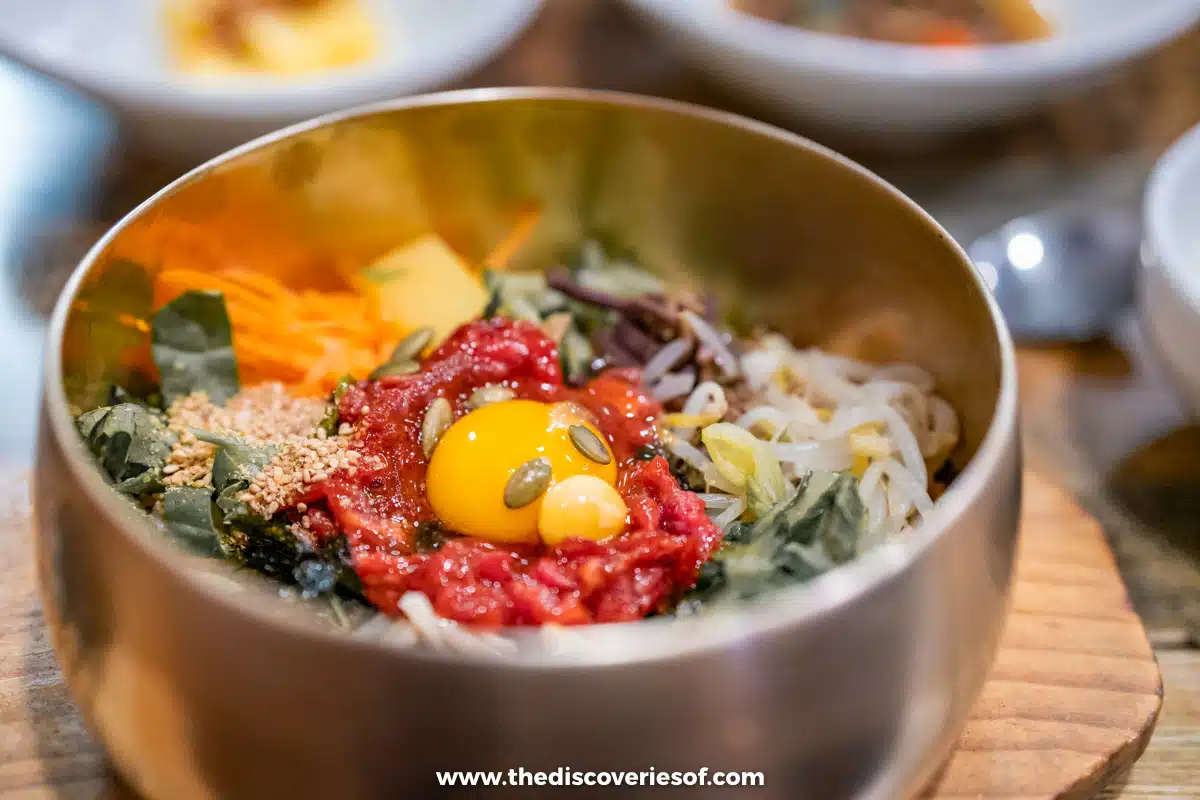
Bibimbap means “mixed rice”, and Jeonju is the city that made it famous. Jeonju became a UNESCO City of Gastronomy in 2012, and its bibimbap is the reason most people come hungry. The Jeonju style starts with rice cooked in beef bone broth, then piles on bean sprouts, seasoned greens, mushrooms, cubes of yellow mung bean jelly and, in many versions, raw beef and an egg yolk. You stir in gochujang (red chilli paste) and mix the whole lot together before eating.
I had mine in Jeonju, a yukhoe bibimbap served in a gleaming brass bowl, with the raw beef and yolk sitting on top waiting to be mixed. Brass keeps the rice warm without letting it burn, and it’s part of what makes the Jeonju version feel special. Hankook Jib, near Gyeonggijeon Shrine, has served bibimbap since 1952 and is one of the oldest names in town.
Korean fried chicken, sticky or crisp
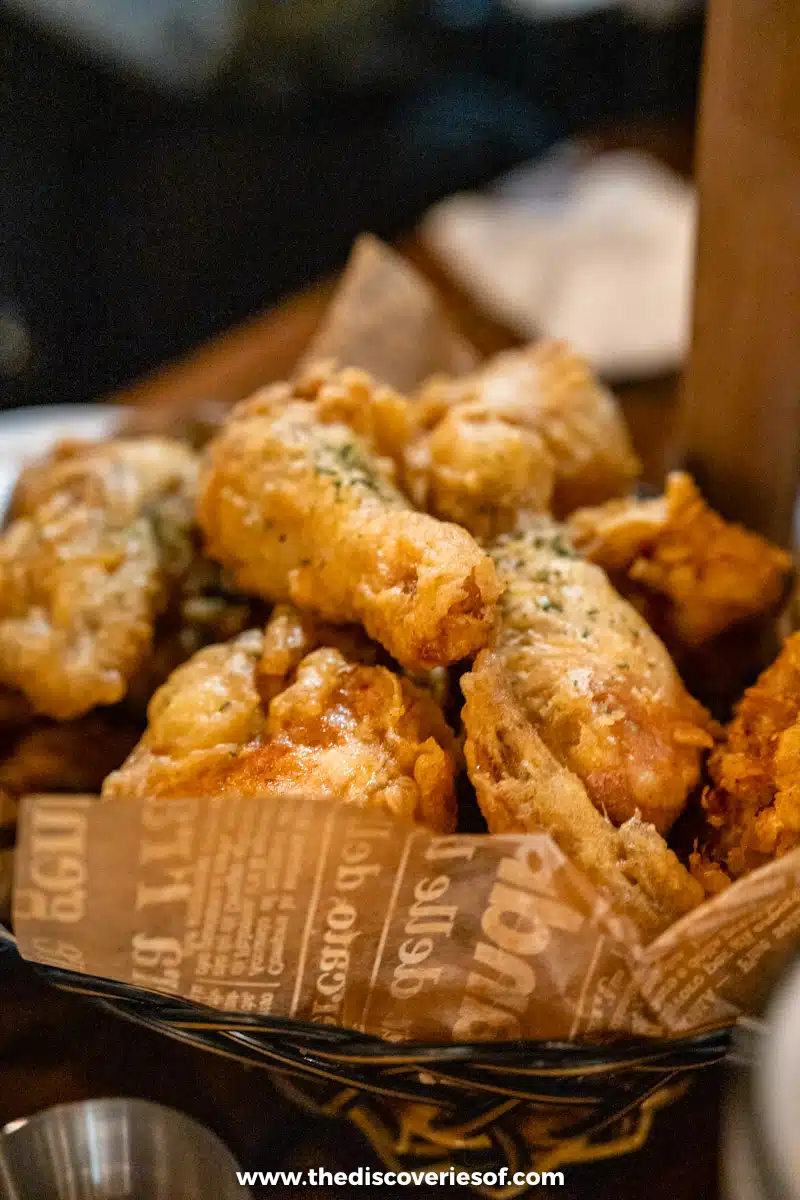
Korean fried chicken is fried twice, which is what gives it a thin, glassy crust that stays crunchy even under sauce. Order huraideu for plain, crisp chicken, yangnyeom for a sweet and spicy glaze, or dakgangjeong, bite-sized boneless pieces tossed in a sticky sauce, usually sold by the box in markets. It comes with pickled radish cubes, and the classic pairing is a cold beer, known as chimaek.
The dakgangjeong at Baenni, in Gangneung’s Jungang Market, was a highlight of the trip: a riot of flavour and texture, and straight up delightful. Then in Mokpo, a basket of crisp, golden chicken was a reminder that you’re never far from a good one anywhere in the country.
A seafood grill in Mokpo

Mokpo is a port city in the far south-west of the country, and seafood is what it does best. Its best-known specialities are sebal-nakji, a small octopus with long, thin legs, and hongeo, fermented skate with a famously pungent smell. Jogae-gui, shellfish grilled at the table, is the friendlier way in.
My dinner in Mokpo was a seafood grill, and the tray that arrived had something of everything: scallops topped with cheese, prawns, octopus, abalone, thin slices of meat and a pan of tteokbokki (rice cakes in chilli sauce), all to cook on the grill in the middle of the table. The scallops bubbled away in their shells until the cheese melted, a favourite at seafood grills up and down the coast.
Sukiyaki, the Japanese hotpot Gangneung does brilliantly

Not every great meal in Korea is Korean. Sukiyaki is a Japanese hotpot, and it’s popular across Korea: thin slices of marbled beef cooked at the table in a sweet soy broth with mushrooms, tofu and vegetables, then dipped in raw egg before eating.
I had it for lunch at Chodang-Og in Gangneung. The beef went into a big pot with mushrooms, bean sprouts and tofu in a simmering broth, and each piece then went into a bowl of raw egg mixed with sesame oil and spring onion. Honestly, it was mind-blowingly delicious, and excellent value too.
Tickets
Chodang-Og is at 40 Chodangsundubu-gil, and sukiyaki costs 25,000 won (about £14) a head.
Kimchi, banchan and a bowl of galbitang

Whatever you order, it arrives with banchan, the small side dishes that cover the table at every Korean meal. Expect kimchi, of course, plus seasoned spinach, bean sprouts, pickled radish, fish cake and whatever else is in season. They’re free, and refills are too: just ask.
Kimchi itself comes in hundreds of forms, from the familiar fermented napa cabbage to radish cubes (kkakdugi) and cucumber. Making it together in autumn, known as kimjang, is so central to Korean life that UNESCO added it to its list of intangible cultural heritage in 2013. Across the trip, my favourite tables were the ones with the most of it: the spread at Hangane in Seoul, the several kimchis on the Andong set menu, and the pickles and fresh vegetables around the barbecue in Gangneung.

Soups come with almost every meal too. One of my meals was galbitang, a clear, gently flavoured soup made by simmering beef short ribs for hours, piled high with spring onion and served with kimchi. It’s comfort food, and a good antidote to a few days of barbecue.
Two drinks to try
Moju, Jeonju’s spiced rice wine tonic

Moju is Jeonju’s own drink. It starts as makgeolli, the milky rice wine, which is heated slowly with cinnamon, ginger, dried jujubes and other herbs and fruit until most of the alcohol cooks off, leaving a sweet, warming tonic. It’s traditionally drunk as a hangover cure, often with bean sprout soup.
I’d never tasted it before a moju class in Jeonju, and it was fascinating to watch the base ingredients turn into a finished drink. I could pick from three recipes and adjust mine to taste, and the best part was drinking what I’d made. It was genuinely tasty. The class is one of the highlights of a visit to Jeonju Hanok Village.
Do
Classes at Moju Experience Yeo, close to the hanok village on Eunhaeng-ro, cost 28,000 won (about £16) each and run every day from lunchtime. Book via Instagram (@moju_yeo).
Dry white wine from an Andong grape

Soju and makgeolli are the drinks you’ll see on every table, but Korea makes wine too, and 264 Lee Yuk Sa Winery near Andong is one of the producers trying to win people over. It makes its whites from Cheongsu, a green grape bred in Korea and grown nearby, in styles from dry to sweet.
My pick at the tasting was the dry, made from a very floral grape but not overwhelmingly so. It’s a lovely surprise in a country better known for its spirits, and a good bottle to take home.
Tips for eating out in South Korea
- Go in a group if you can. Barbecue restaurants and jjimdak places often expect at least two portions, and many dishes are served on one platter for the table.
- Beat the queues. The famous places get busy fast. Arrive before noon for lunch, and ask about floor seating, which often frees up first.
- Check the day. Plenty of restaurants close one day a week (Hangane at weekends, Owole Chodang on Wednesdays), so check before you cross town.
- Search in Korean. Google Maps is patchy here, so use Naver Map or KakaoMap and search the restaurant’s Korean name, which I’ve added where it helps. My South Korea travel tips cover the apps, cash and cards.
- Plan your meals around your route. Every dish here sits on the route of my 10-day South Korea itinerary, so you can eat your way down the country stop by stop.
Map
Read next
- 22 things to do in South Korea, from a peek into North Korea to a vigorous spa scrub
- Eat your way around Gwangjang Market, Seoul’s century-old food market
- 20 things to do in Busan, from a glass-floored cable car to blowfish cooked two ways
- Andong travel guide: Hahoe Folk Village, Confucian academies and the town’s famous braised chicken
- A Jeonju travel guide, from paper made by hand to a library on a lotus pond
Love this? Save and share on Pinterest

Discover the top things to do, insider tips and hidden gems in our South Korea Travel Guide.
Read the guides →