
Two hours from Seoul by fast train, Andong moves at a completely different pace. Scholars studied by its lakes for centuries, a clan village still sits in a bend of the river, and after dark a wooden bridge glows over the water. Come for the history, stay for a table of grilled mackerel and the braised chicken this city gave the rest of the country.
Andong feels a world away from the capital. Seoul is all about time travel, from palace to glass tower in a few blocks. Here, centuries-old traditions are still the main event, and the city calls itself the capital of Korean spirit and culture, thanks to the Confucian scholars and noble clans who made their homes in the hills around it.
I travelled through Andong in October, between the east coast and Busan, and stayed in a cluster of old hanok houses on the edge of town. I found the change of pace refreshing. In a single day I went from a Confucian academy beside a lake to a winery making dry white wine from a Korean grape, across a bridge that floats on a reservoir, to a plate of jjimdak in the old market and a bridge lit up at night.
This Andong travel guide rounds up the best things to do, what to eat, where to stay and how to get around a city whose sights are spread out across the countryside.
Andong at a glance
- Where: Gyeongsangbuk-do, in the southeast of South Korea, roughly halfway between Seoul and Busan.
- Getting there: about two hours by KTX-Eum from Cheongnyangni Station in Seoul, and about two hours from Busan on the same line.
- How long: two days covers the main sights without rushing; one is possible with a car or taxi.
- Getting around: the sights sit up to 30 km out of the centre, so plan on taxis, local buses or a hire car.
- Best time to go: October, for autumn colour, golden rice fields and the mask dance festival at the turn of the month.
- Don’t miss: Dosanseowon, the view of Hahoe from Buyongdae Cliff, jjimdak at the old market and Woryeonggyo after dark.
- Where I stayed: Tradition Resort Gurume, a group of historic hanok houses on the edge of the city.
The best things to do in Andong
Find some calm at Dosanseowon Confucian Academy
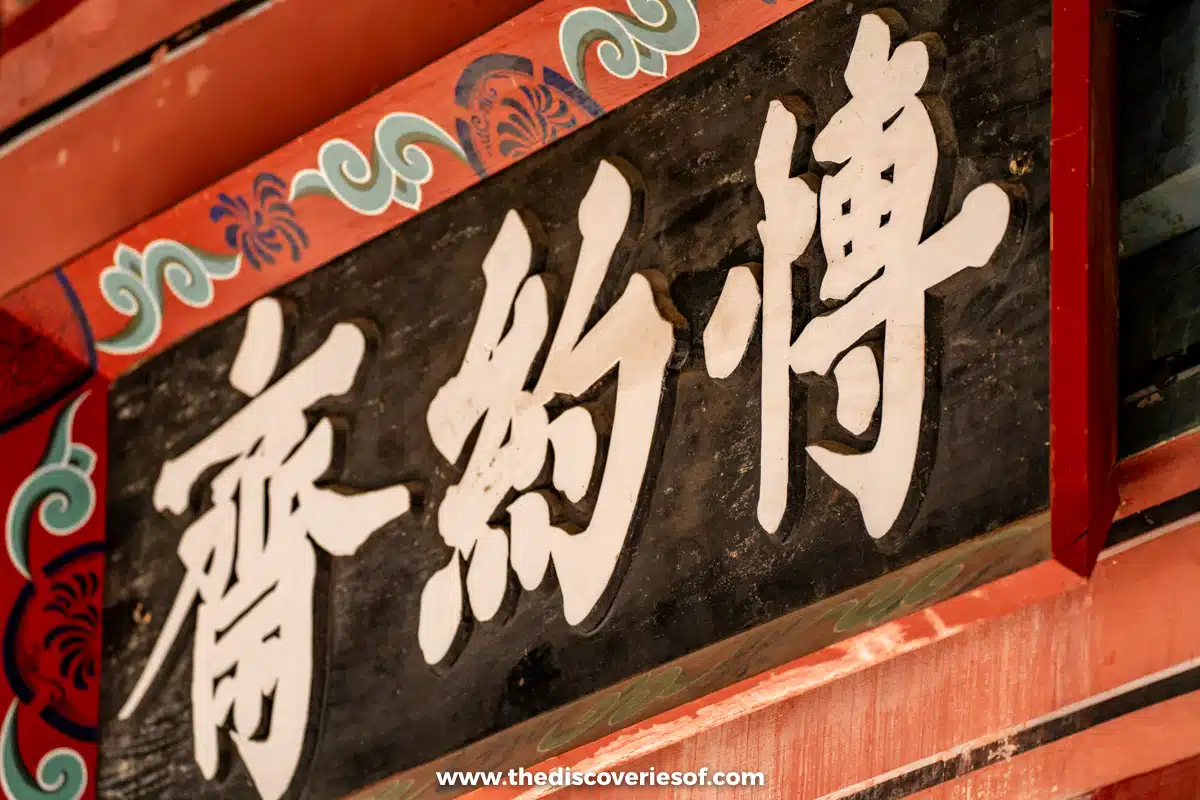
Confucianism started in China, but it shaped Korea just as deeply, and nowhere more than here. Yi Hwang, who wrote under the pen name Toegye, ranks among the great Confucian thinkers of the Joseon dynasty (you’ll find his face on the 1,000 won note). In 1561 he built a small lecture hall, Dosanseodang, by the river to teach in his retirement. After his death in 1570, his students built the academy around it, and by 1576 it was complete. Scholars came here to study and pay their respects to him for centuries afterwards.
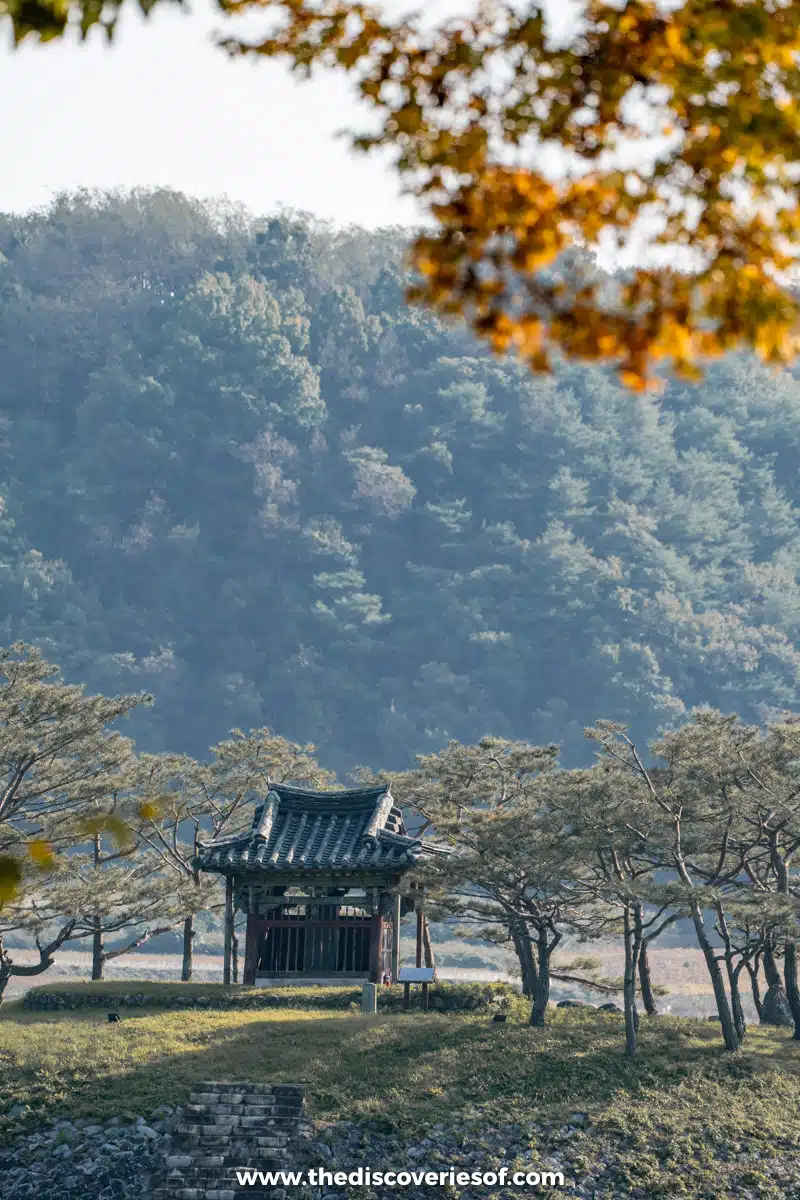
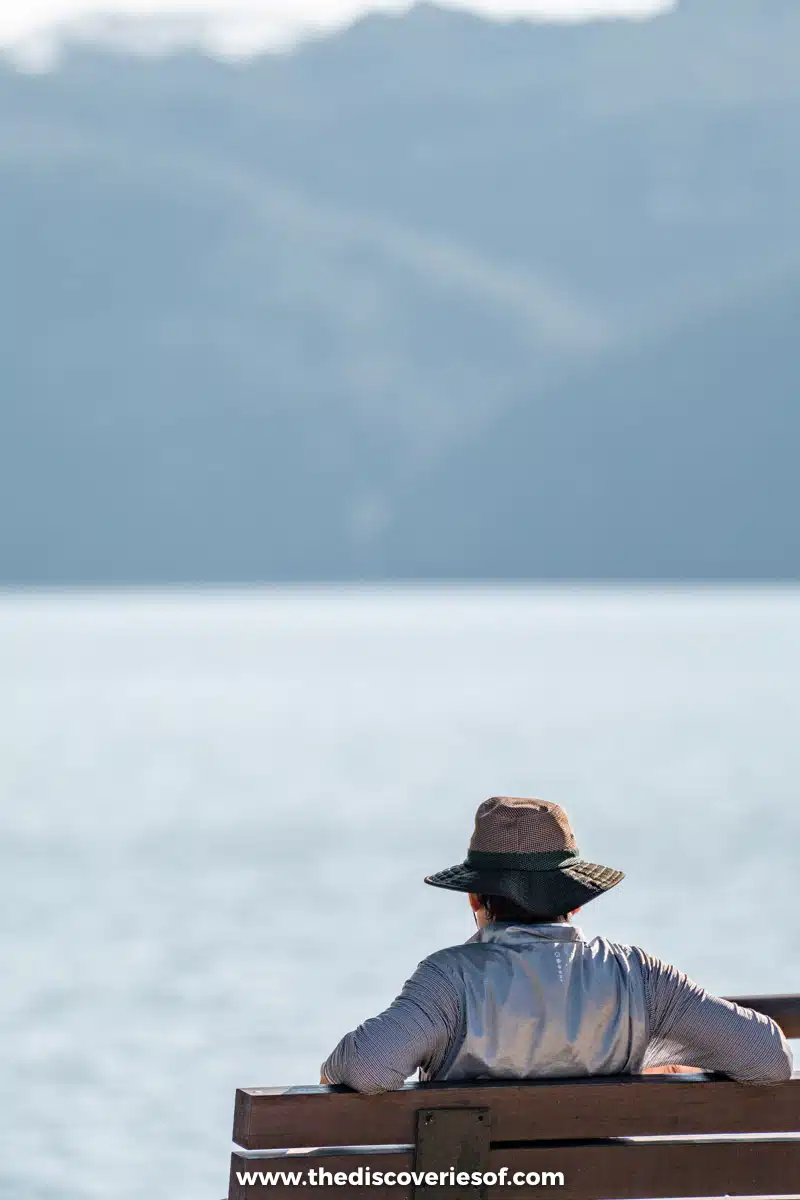
The academy is about 28 km north of the city, and from the car park it’s a fairly short, pretty walk beside the water to the gate. Take it slowly. It’s a peaceful spot, and sitting by the lake under the pines, I could easily picture it as somewhere for deep learning and deep thinking. In October the trees around the tiled roofs were turning orange and gold.
Look across the water to the little pavilion on its island of pines. That’s Sisadan, which marks the spot where King Jeongjo held a special state examination in 1792 in Yi Hwang’s honour. When the Andong Dam raised the water level in the 1970s, the site was lifted onto the mound you see today.
Dosanseowon is one of nine Korean Neo-Confucian academies that UNESCO inscribed as a World Heritage Site in 2019, alongside Byeongsanseowon near Hahoe.
Tickets
Adults pay 2,000 won (about £1.10). The academy opens daily, until 6pm between February and October and until 5pm between November and January (from 9am), and the gate closes to new arrivals half an hour before closing time. Express bus 3 links it with Andong Station and the bus terminal, and parking is free.
Walk across the Seonseong floating bridge
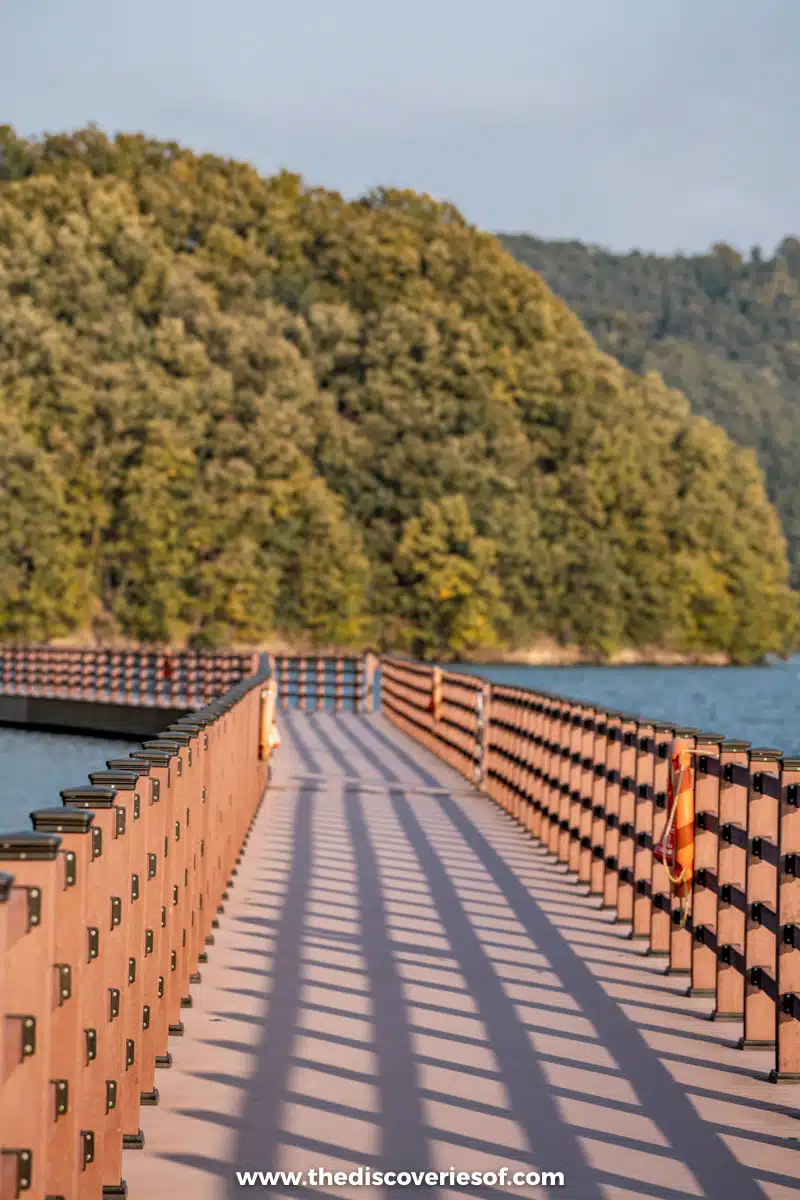
Close to Dosanseowon, the Seonseong Susanggil is a one-kilometre wooden walkway that floats on the surface of Andong Lake, the reservoir behind the Andong Dam. It moves gently under your feet as you walk, which is half the fun. When I visited, the wooded hills around the water were just starting to turn.
The walkway links the Seonseonghyeon Culture Complex with the lakeside park on the far side. Halfway across, old black-and-white photographs remember Yean Elementary School, one of the places lost beneath the water when the dam was finished in the 1970s. Entry is free, and the walkway is open from sunrise to sunset.
Taste a dry white at 264 Lee Yuk Sa Winery

Wine probably isn’t the first thing that springs to mind when you picture South Korea. It isn’t much drunk here, but a handful of wineries are working to change that, and this one in Dosan-myeon, not far from the academy, is among them.
The name honours Lee Yuk-sa, the Andong-born poet and independence activist who took his pen name from his prison number, 264, and died in a Beijing prison in 1944. His poem Cheongpodo (green grapes) inspired the winery, and its whites are made from Cheongsu, a Korean green grape grown locally. Each bottle is named after one of his poems.
There’s a range to taste, sweet through to dry, and the dry was my pick: the grape is very floral, but the flowers never take over.
Look down on Hahoe Folk Village from Buyongdae Cliff

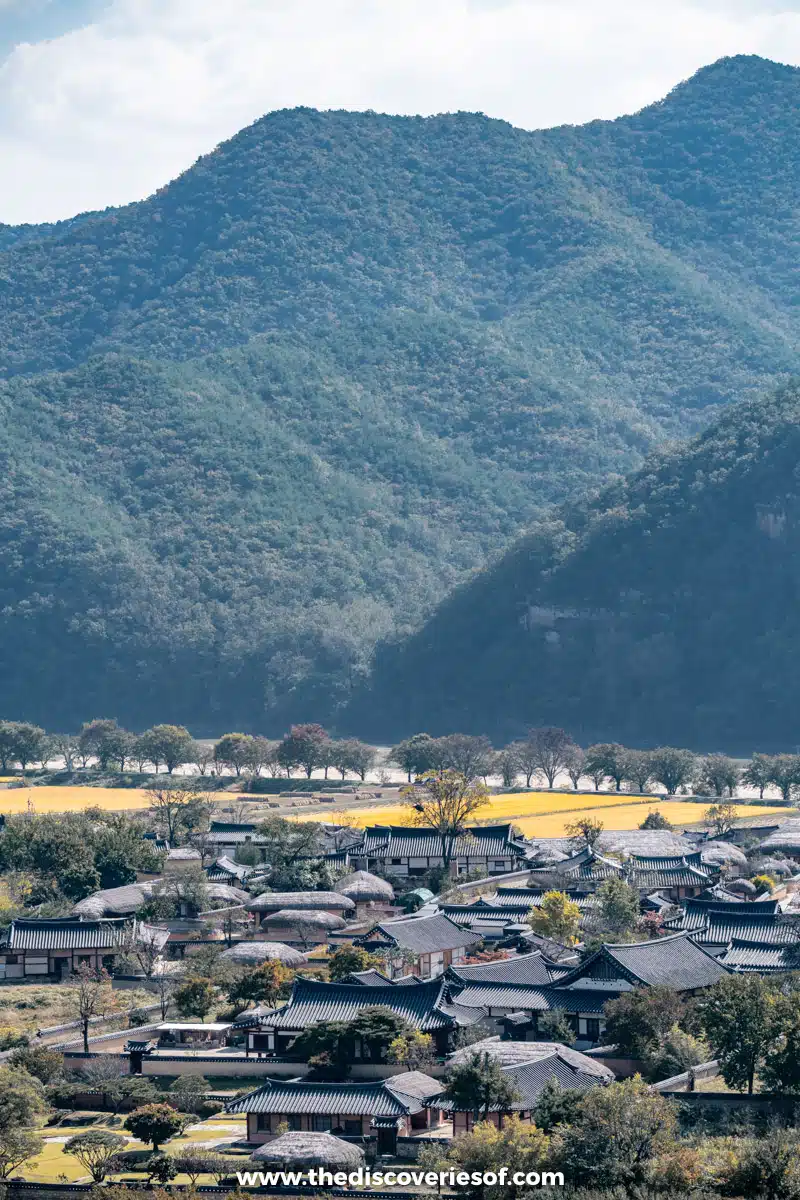
Hahoe means “the river turns around”, and the name says it all: the village sits in an S-shaped loop of the Nakdong River, with the mountains rising behind. The Pungsan Ryu clan has lived here for around 600 years, and its tiled houses for the noble families and thatched cottages for the commoners are still lived in today. Hahoe and Yangdong, near Gyeongju, were inscribed together by UNESCO as the Historic Villages of Korea in 2010. Queen Elizabeth II came here in 1999 and celebrated her birthday in the village.
The best way to understand that loop is from above. Buyongdae, a cliff about 64 metres high on the opposite bank, gazes down over the rooftops, the sandbanks and the fields. I went up in October, when the rice around the village had turned gold. My drone picked out just how far those fields stretch towards the hills.
Down in the village, the thing to see is the Hahoe Byeolsingut Talnori, a masked dance drama that mocks the aristocracy and the clergy and has been performed here for centuries. There’s a free show at the performance hall by the ticket office, usually at 2pm from Tuesday to Sunday between March and December (weekends only in January and February). The Hahoe masks are famous in their own right, and you’ll see them on souvenirs all over the city.
Tickets
Entry to Hahoe costs 5,000 won (about £3) for adults. It’s open every day, 9am to 6pm from April to September and 9am to 5pm from October to March, with last entry 30 minutes before closing. A free shuttle runs the last 1.2 km from the ticket office to the village. Bus 210 runs from Andong Station, but it’s infrequent, so check the timetable first. A small ferry crosses the river to the foot of Buyongdae when the water level allows.
Add Byeongsanseowon to your Hahoe trip
About 15 minutes’ drive from Hahoe, Byeongsanseowon is the area’s other academy on the UNESCO list. It was dedicated to Ryu Seong-ryong, the most famous son of Hahoe’s Ryu clan, a scholar and chief minister who steered Korea through the Japanese invasions of the 1590s. It’s smaller and quieter than Dosanseowon, and the long Mandaeru pavilion, open on all sides, frames the river and the cliffs opposite. Entry is free. Public transport is thin out here, so a taxi from Hahoe is the easy option.
Watch the bridge light up at Woryeonggyo

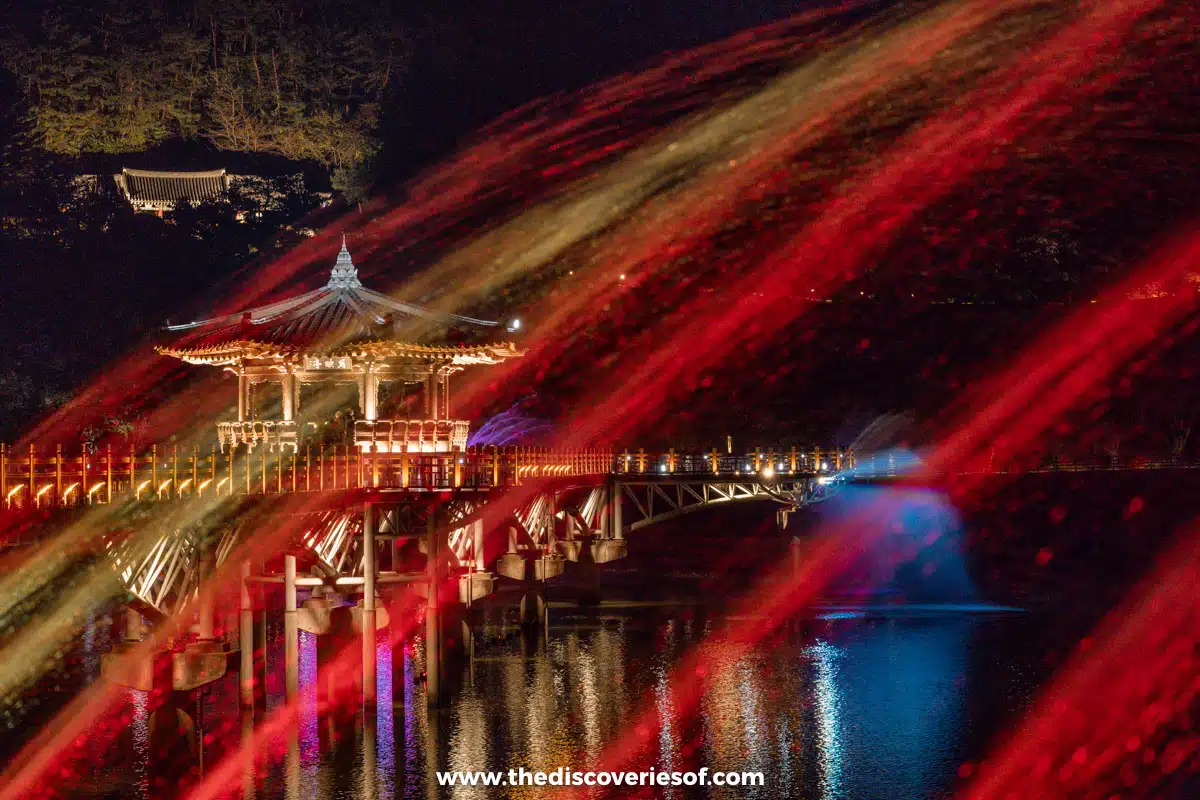
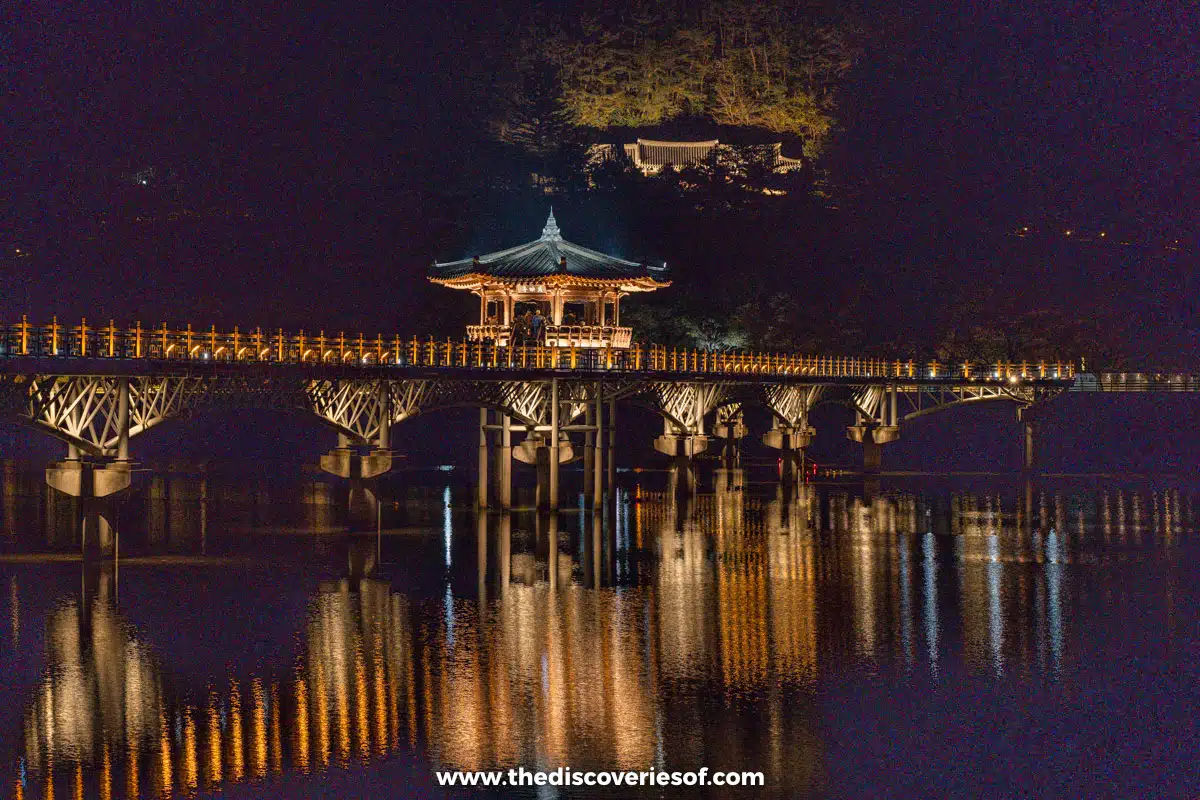
Woryeonggyo is the longest wooden footbridge in Korea, 387 metres from bank to bank over the Nakdong River, with a pavilion in the style of a temple at its midpoint. It was built in 2003, and its curving shape has a story behind it. In 1998, a 16th-century local grave was moved and found to hold a letter from a young widow to her husband, a scholar who died in 1586, along with a pair of sandals she had woven from her own hair. The bridge’s design echoes those sandals, and couples cross it hand in hand for love that lasts.
There’s honestly not much to see here in the daytime beyond the bridge itself. Come after dark instead. The bridge and pavilion are lit up in different colours, and their reflections stretch out across the inky water below.
Nakgangmulgil Park, a small riverside park with woodland paths, ponds and little bridges, sits a short way along the river and makes a good stroll before the lights come on.
Top Tip
Between April and October, the fountains on either side of the bridge play for 10 minutes four times a day, at noon, 2pm, 4pm and 6pm, plus 8pm from July to September. In October the 6pm show comes around sunset, so time your visit for it and linger while the lights come on.
What to eat: jjimdak, mackerel and more
This landlocked city has two famous dishes, and both are worth the trip on their own.
Eat jjimdak at Andong Old Market

Jjimdak is chicken braised with potatoes, vegetables and glass noodles in a sweet, savoury soy sauce with a kick of dried chilli. You’ll find it all over Korea now, but it’s said to have started in the restaurants of the city’s old market (Gu Market) in the 1980s, and a whole alley of them still serves almost nothing else.
The market itself is a traditional one that’s worth a wander for its stalls of pastries, seafood and fried chicken. My dinner was at Andong Shinsegae Jjimdak, just off the alley. A medium dish costs 32,000 won (about £18) and feeds two hungry people, so come with company or an appetite.
Book the set menu at Hansangchaebi

For a traditional meal, head to Hansangchaebi (한상채비). It sits a little way out of the city proper, but the food makes the detour worthwhile. You order one set for the whole table, and out come grilled mackerel and beef bulgogi with several kinds of kimchi, pickled vegetables and a tasty omelette. It was nothing short of stellar, and an easy way to try a whole range of Korean food at once.
The mackerel is a local speciality, oddly enough for a city so far from the sea. Fish from the east coast used to take days to reach the city by cart, so traders salted it to make the journey, and gangodeungeo (salted mackerel) has been the city’s signature ever since.
What else to try
Andong soju is the old, distilled kind, much stronger than the green bottles you’ll see in every convenience store, and the city has been making it for centuries. Heotjesatbap, a bibimbap of rice and seasoned vegetables served with soy sauce rather than chilli paste, comes from the scholars’ ancestral rites. And don’t leave without trying the local beef: the city is known across Korea for its hanu.
Where to stay: a hanok or the city centre
The centre, around Andong Station and the old market, is the practical base for restaurants and buses. For something more memorable, stay in a hanok.
Tradition Resort Gurume

My base was Tradition Resort Gurume, a group of historic hanok houses gathered like a traditional village on a wooded hillside at the edge of the city. It’s a beautiful, unmistakably Korean place to stay, with floor-heated rooms, breakfast each morning and a café. I’d give it 4 out of 5. Woryeonggyo is within walking distance, but the resort is a little out of town, so for everything else you’ll want a taxi or a car of your own.
Rakkojae Hahoe Hanok Hotel
If you’d like to wake up inside Hahoe itself, Rakkojae Hahoe Hanok Hotel has traditional rooms in the village, so you have the lanes and the river to yourself once the day visitors have gone.
Goodstay Andong Park Hotel
For a simple, central base close to the old market and the bus stops, Goodstay Andong Park Hotel is a well-reviewed, good-value choice.
Check all accommodation in Andong
Getting there and getting around
- From Seoul: the KTX-Eum from Cheongnyangni Station takes about two hours to Andong Station. Express buses from Dong Seoul Bus Terminal take three to three and a half hours.
- From Busan: the same Jungang line runs to Bujeon Station in Busan in about two hours, so it slots neatly between the two. That’s the order my 10-day South Korea itinerary takes.
- From Gangneung: the drive takes about three hours, which is how I came down from the east coast.
- Getting around: local buses take a T-money card, but the routes out to Dosanseowon, Hahoe and Byeongsanseowon run infrequently. A hire car, or taxis booked through Kakao T, makes a day of sightseeing far easier.
The best time to visit
Autumn is the time to go. In October the hills around the lake turn red and gold, the rice around Hahoe ripens, and the days are dry and comfortable for walking. The Andong International Maskdance Festival runs every year from late September into early October (in 2026 it ran from 24 September to 4 October), with performances in the city centre and at Hahoe. Expect the city to be busy, and book a room early if your dates overlap.
Spring brings cherry blossom along the lakeside roads, usually in early April. Summers are hot and humid, though the extra evening fountain show at Woryeonggyo runs from July to September. Winters are cold and dry, with shorter opening hours at the main sights.
A few tips before you go
- Get Naver Map or KakaoMap before you arrive. Google Maps is little use in South Korea, and these apps give you bus times out to the villages.
- Carry some cash. The market stalls, the Hahoe ferry and small restaurants are easier with won in your pocket. My South Korea travel tips cover money, T-money cards and the rest.
- Group your sights. Dosanseowon, the floating bridge and the winery are close together in the north; Hahoe, Buyongdae and Byeongsanseowon are together in the west. Give each group its own half day, and save Woryeonggyo for the evening.
- Share your jjimdak. Portions in the market alley are made for two or more, so go with at least one other person if you can, or order the smallest size.
Building a longer trip? My round-up of things to do in South Korea has plenty more ideas for the rest of the country.
Map
Read next
- How to spend 10 days in South Korea, from Seoul’s palaces to live octopus in Busan
- 22 things to do in South Korea, from a peek into North Korea to a vigorous spa scrub
- A complete guide to Gangneung, South Korea
- 20 things to do in Busan, from a glass-floored cable car to blowfish cooked two ways
- A Jeonju travel guide, from paper made by hand to a library on a lotus pond
- 30 South Korea travel tips to know before you go, from cash to hidden cameras
Love this? Save and share on Pinterest

Discover the top things to do, insider tips and hidden gems in our South Korea Travel Guide.
Read the guides →