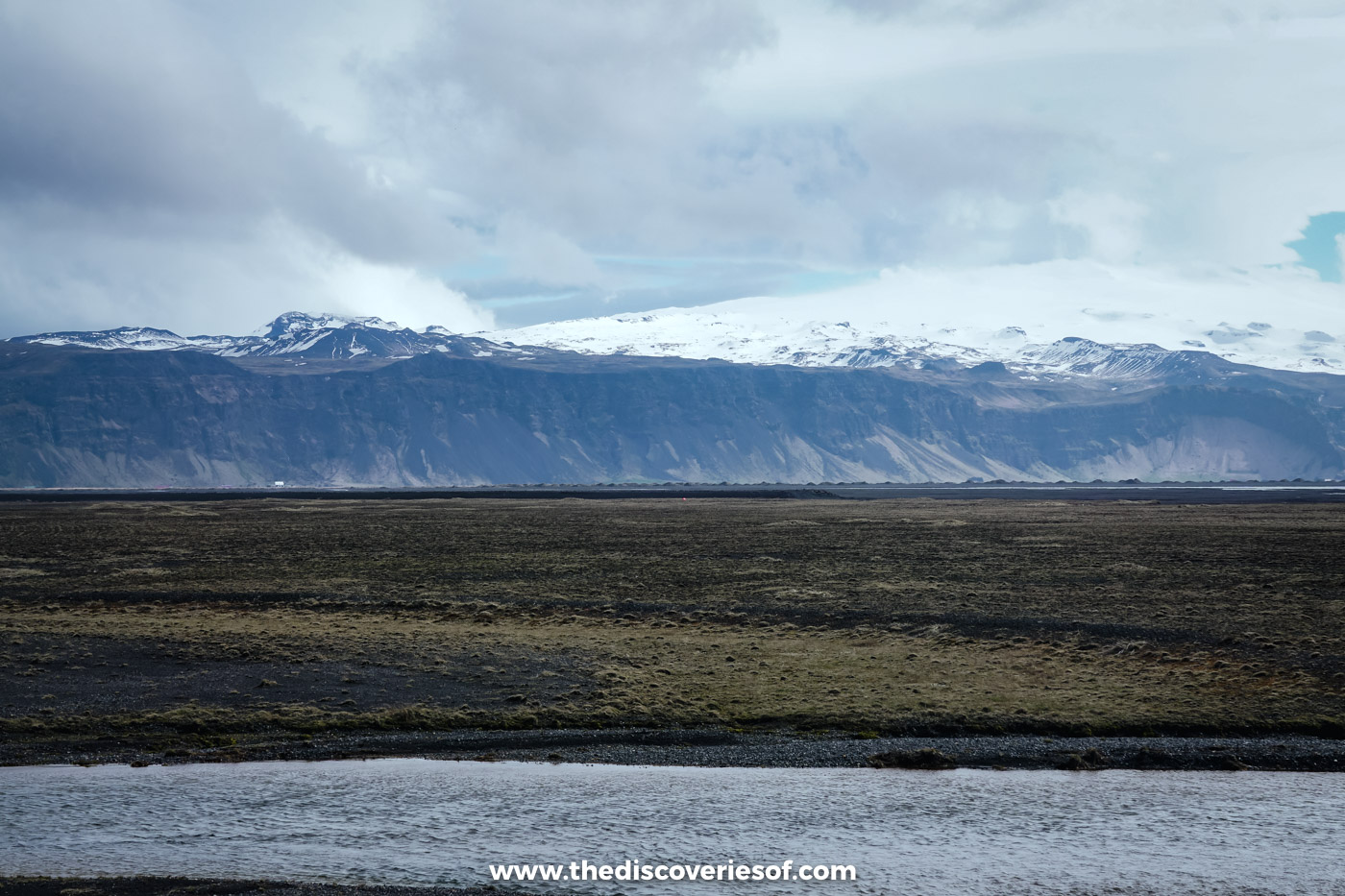

May is the month the light comes back for good. The days stretch from 17 hours to 20, the waterfalls are swollen with snowmelt and the summer crowds haven’t landed yet, but the nights are too bright for the aurora and the highlands are still snowed in. Here’s what Iceland in May is really like: the weather, the light, the wildlife, what’s open and what isn’t, and what it costs.
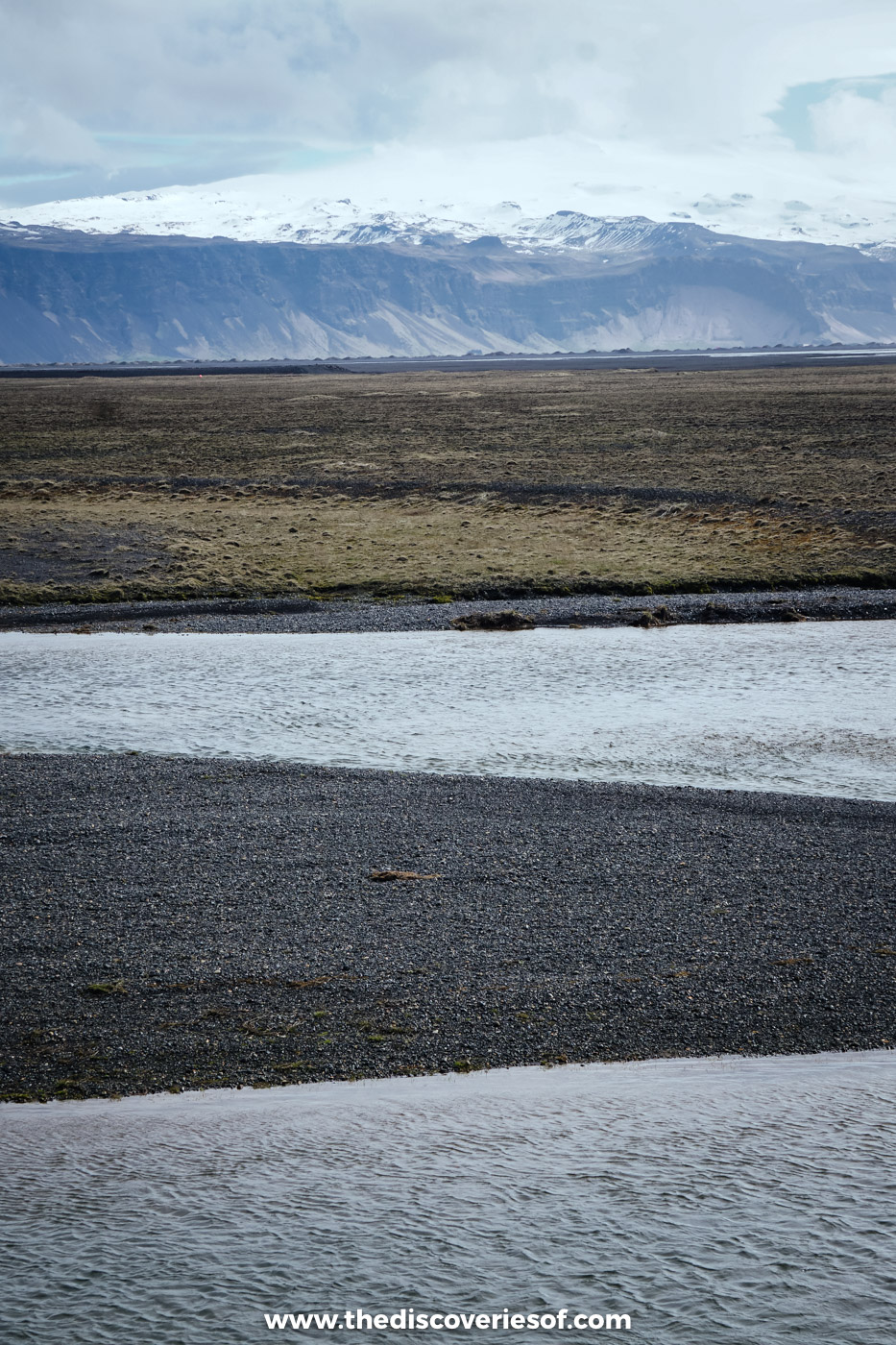
My first trip to Iceland was in early May, and I still think it’s one of the most underrated months to go. The ridges and ice caps along the south coast were capped in white, the lowlands hadn’t quite decided to turn green, and every river and waterfall I stood beside was running high. What I never got was a properly dark night. That’s the deal May offers, and for most kinds of trip it’s a very good one.
I based myself at Hotel Rangá near Hella and spent most of my time out with local guides: a day around the Golden Circle, a day in a super jeep that ended up deep in the canyons of Þórsmörk, and the farms, pools and breweries of the south in between.
This guide covers the practical side of a May trip: the weather and daylight, your (slim) chances of the Northern Lights, the birds and whales arriving, which roads and tours are running, the crowds and prices, what to pack and the events worth timing a trip around.
Iceland in May at a glance
- Weather: expect daytime highs of about 10°C in Reykjavik and lows of about 4°C, with rain on around 11 days. Snow can still fall, especially in the north and on high ground.
- Daylight: about 17 hours on 1 May, rising to 20 by the end of the month in Reykjavik. It never gets fully dark.
- Northern Lights: realistically, no. The sky is too bright.
- Wildlife: Arctic terns and puffins arrive from late April into May, and the whale-watching season in the north is under way.
- Roads: the Ring Road and the main routes around the south are all open. The highland F-roads stay closed, usually until June or later.
- Crowds: about 163,000 foreign visitors flew home from Keflavík in May 2026, against about 293,000 in July.
- Best for: waterfalls, road trips, birdwatching and long sightseeing days without the summer queues.
Is May a good time to visit Iceland?
Yes, with two big exceptions. When I wrote up that first trip, I put May joint top of my list of months to visit, level with September.
It suits you if you want long days for sightseeing and driving, waterfalls at their most dramatic, seabirds coming back to the cliffs and shoulder-season prices. It’s also a gentle introduction to driving here: the main roads are clear of winter ice, and with up to 20 hours between sunrise and sunset you’ll never be rushing to beat the dark.
It doesn’t suit you if the aurora is the point of the trip, or if you’ve set your heart on the interior. Landmannalaugar, the Laugavegur trail and the mountain roads across the middle of the country are still under snow, and the roads in usually don’t open until June. If either of those is a deal-breaker, my guide to the best time to visit Iceland will point you to a better month.
What’s the weather like in May?
Cool, bright and changeable. Over 1991 to 2020, Reykjavik’s May averages were a daytime high of 10.1°C, a night-time low of 4.0°C and a daily mean of 6.7°C, according to the Icelandic Met Office. Akureyri, in the north, is about as warm by day but chillier at night, with an average low of 3.2°C.
Here’s the surprise: May is Reykjavik’s sunniest month of the year, with an average of 209 hours of sunshine, more than June or July. It’s drier than April and far drier than September too, with around 53 millimetres of rain spread over about 11 days. The north is drier still, at around 24 millimetres for the month.
None of that means it’s warm. Wind is the thing that catches people out, and on an exposed headland or a glacier viewpoint a 10°C day can feel close to freezing. Snow is still possible, particularly in the north and east and over mountain passes, and Reykjavik’s record May low is -7.7°C. The Met Office forecasts on vedur.is are the ones to trust, umferdin.is shows live road conditions (snow included), and safetravel.is posts any warnings.
Snow above, spring below
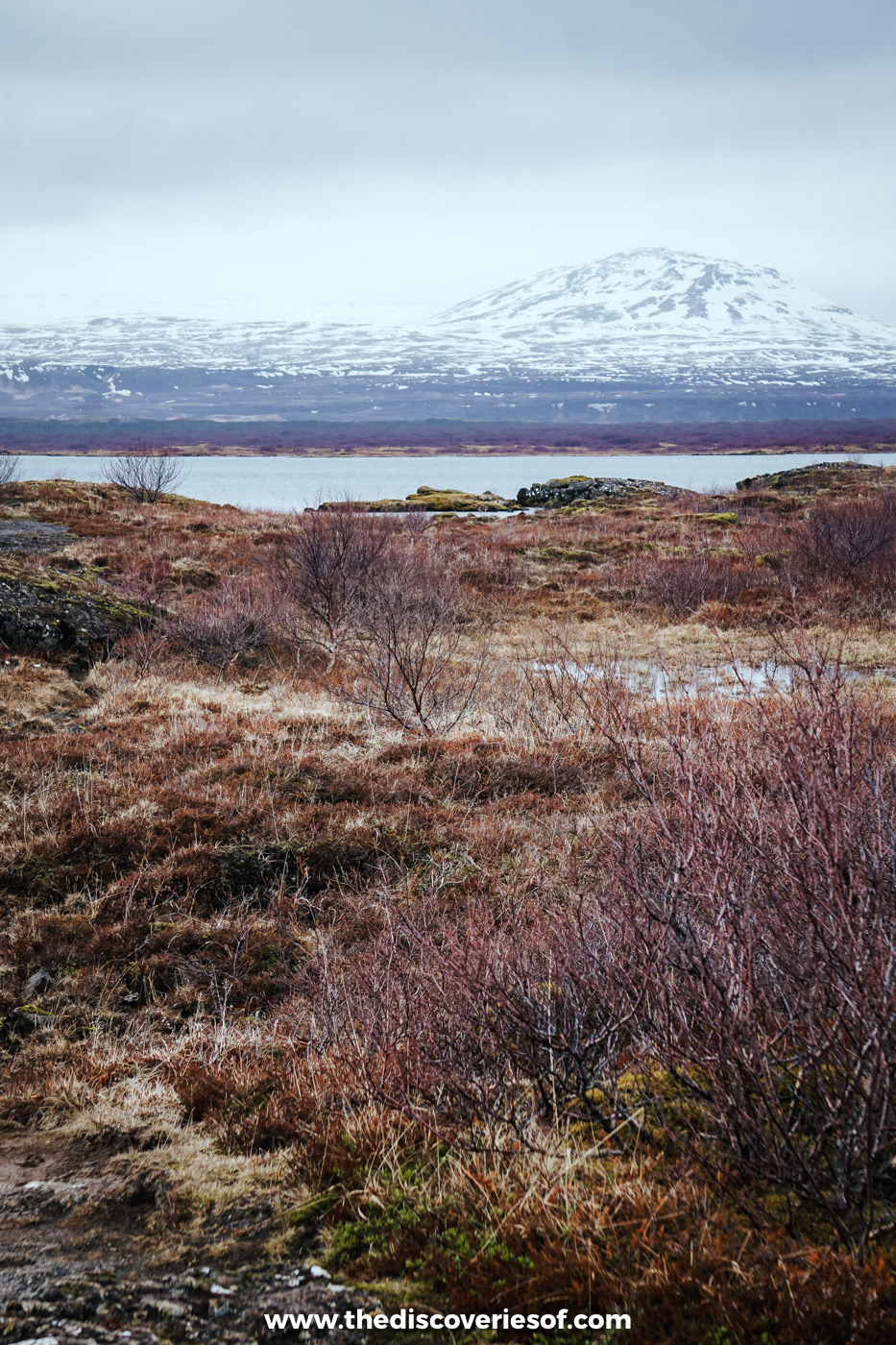
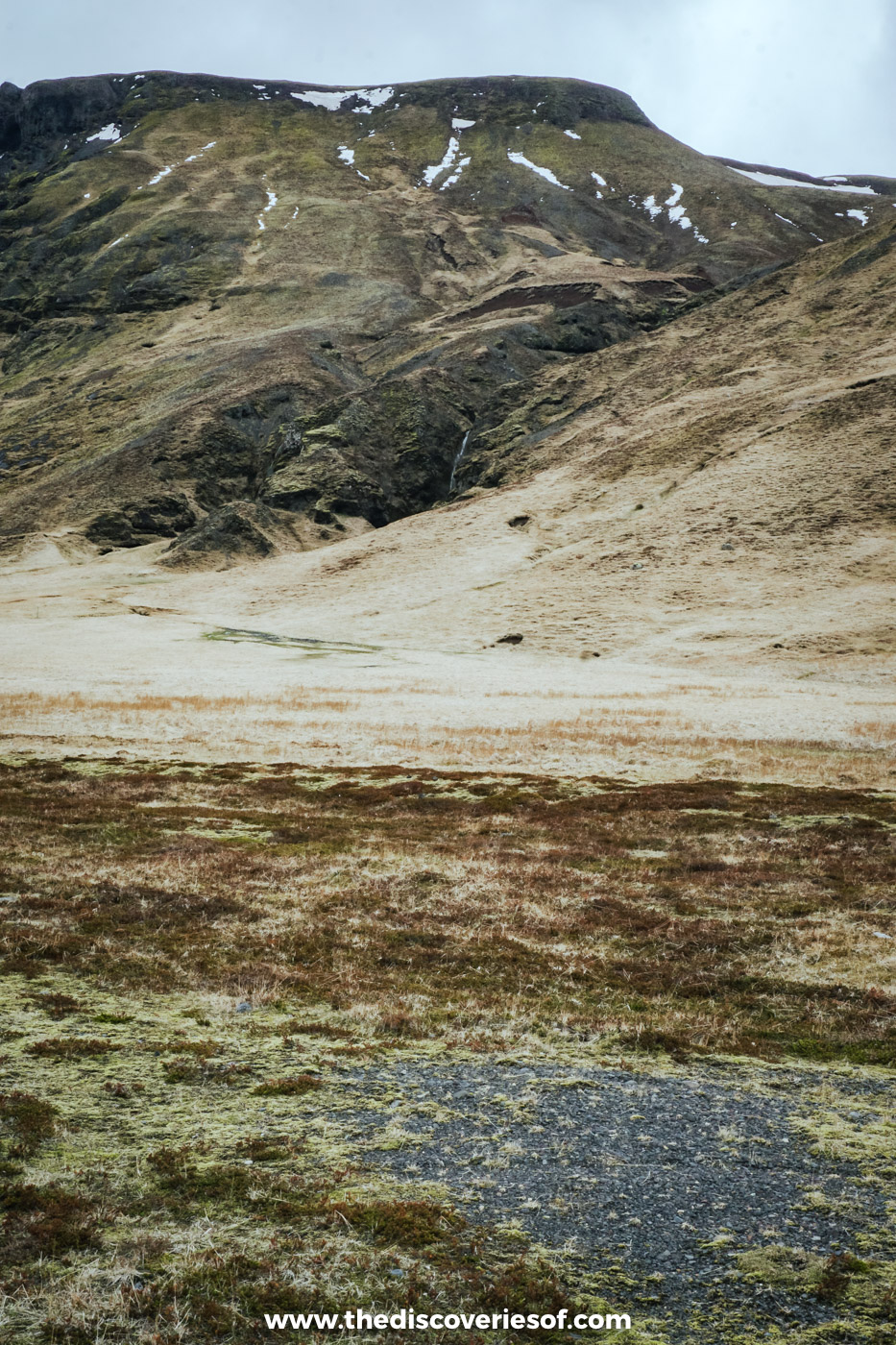
The landscape is in between seasons, and that’s a big part of the appeal. On my trip there was snow on every summit, the heath around Þingvallavatn was patched with rust and olive, and the moss on the lava fields was still more khaki than green. The valleys green up as the month goes on, but the purple lupins that cover the roadsides don’t usually peak until mid-June.
How long are the days in May?
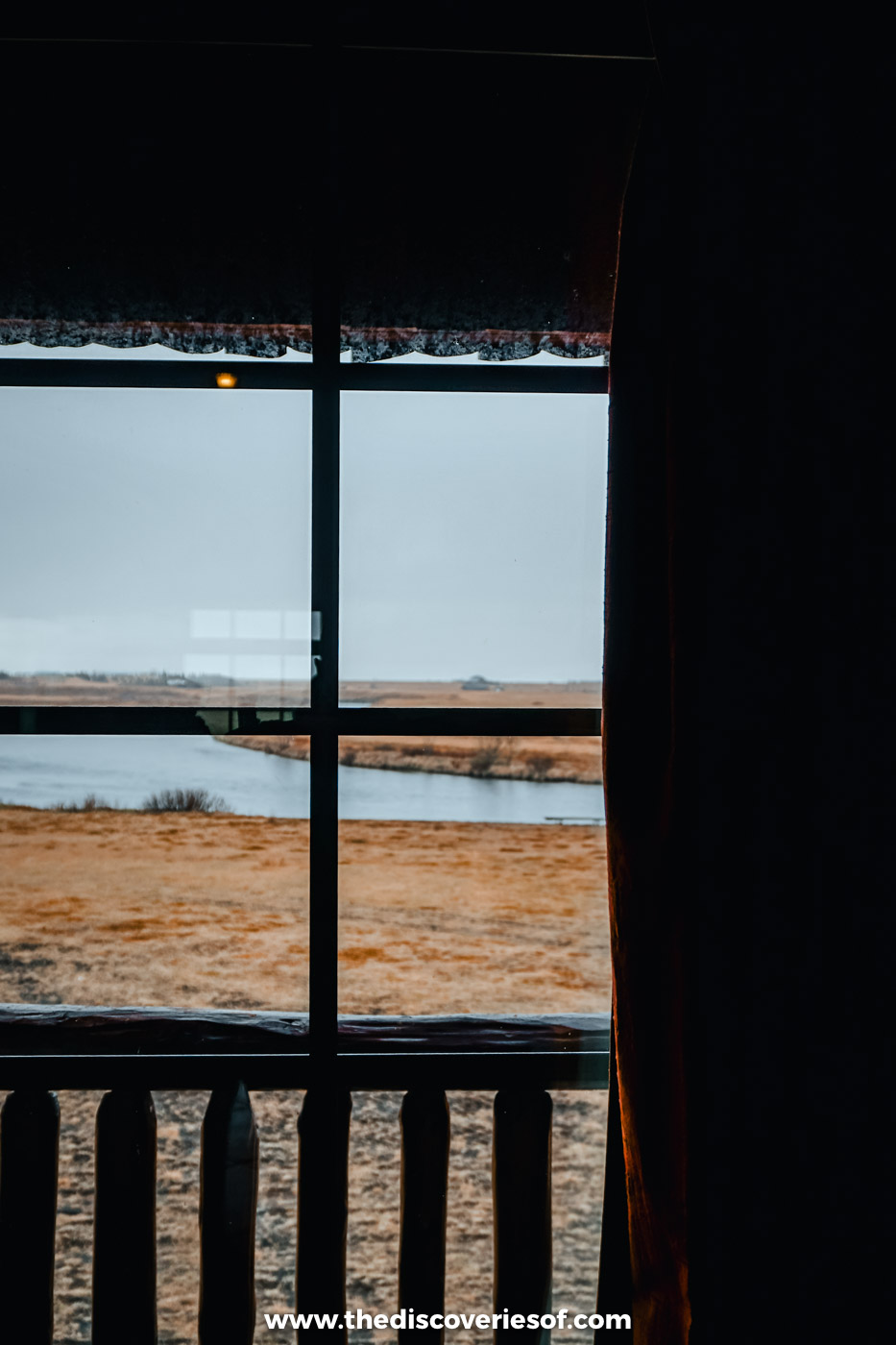
Very long, and getting longer by about six minutes a day. The country keeps the same clock all year (it doesn’t change for summer time), so these are the times you’ll see on your phone. Rounded, for Reykjavik:
| Date | Sunrise | Sunset | Daylight |
|---|---|---|---|
| 1 May | 05:00 | 21:50 | about 17 hours |
| 15 May | 04:15 | 22:35 | about 18 and a half hours |
| 31 May | 03:25 | 23:25 | about 20 hours |
Akureyri, further north, gets more than 21 hours of daylight by the end of the month.
The nights are only half nights. Even on 1 May the sun dips just 11 degrees or so below the horizon in Reykjavik, and from around 20 May it never goes more than 6 degrees below, so dusk runs straight into dawn. By the last week of the month you could read a book outside at midnight.
Use it. Coach tours run to a timetable, and the light doesn’t care, so the honeypot stops (Seljalandsfoss, Strokkur, Gullfoss) are at their quietest early in the morning and in the evening, once the day tours have gone back to Reykjavik. If you’re a light sleeper, an eye mask is the one thing you’ll be glad you packed.
Can you see the Northern Lights in Iceland in May?
Not in any realistic sense. The aurora doesn’t switch off in summer, but you need a dark sky to see it, and from late April onwards there simply isn’t one. By the time I arrived in early May, there was no chance at all.
That was the one gap in an otherwise brilliant trip, and it’s the reason my second visit was timed for the September equinox instead. The aurora season runs from roughly September to mid-April, so if the lights matter to you, aim for those months. My guide to the best time to see the Northern Lights in Iceland goes through the odds month by month.
Waterfalls swollen with snowmelt
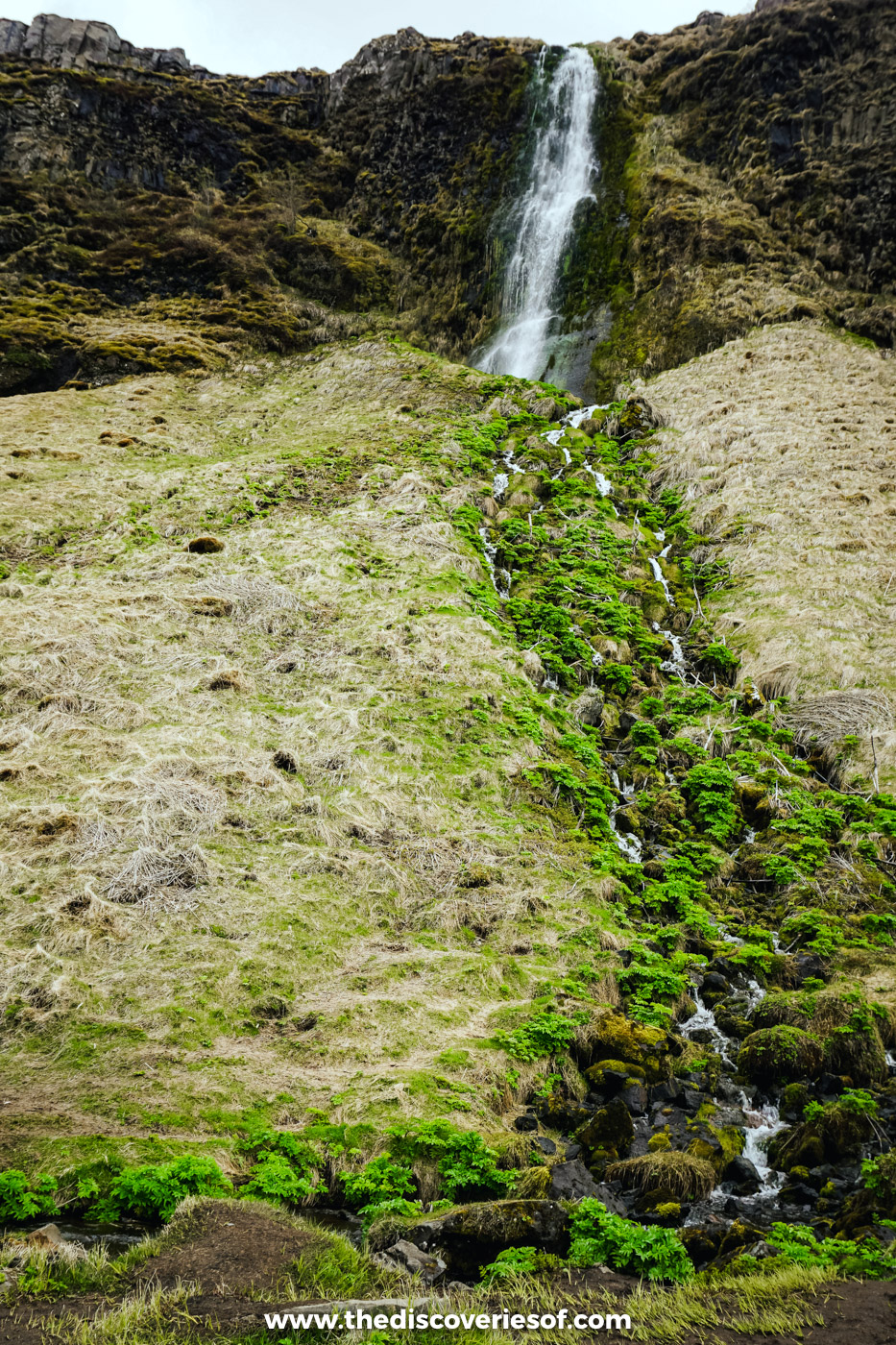
If May has a signature, it’s water. As the snow melts off the ice caps and the highlands, the rivers rise, and the falls along the south coast and the Golden Circle carry far more water than they will in late summer. Paths that close when they’re icy, like the one behind Seljalandsfoss, are usually open again by May.
These are the ones I saw in May, each with its own guide:
- Seljalandsfoss: the classic walk round the back of the falls, which I did in May and again in September.
- Gljúfrabúi: a few minutes’ walk north along the cliff, hidden in a cleft in the rock. I followed my guide along the stepping stones into the chamber the water falls into.
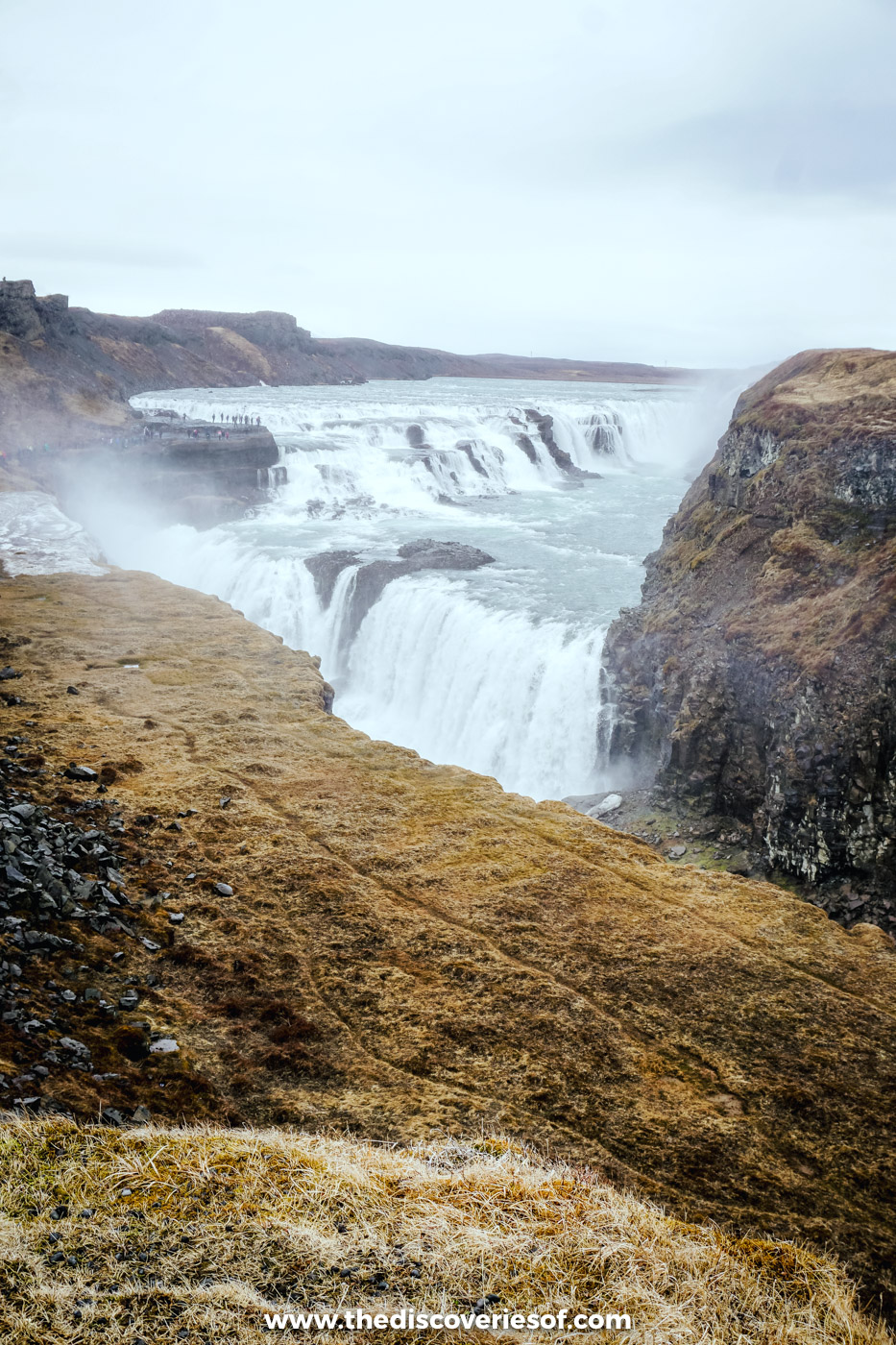
- Gullfoss: grey and moody under a heavy sky on my Golden Circle day, with the canyon walls still flecked with snow.
- Gluggafoss: easily one of the strangest waterfalls I saw, pouring through holes (the “windows” of its name) in the rock. It’s in my guide to the country’s hidden gems.
Further east, the path up to Svartifoss and the steps beside Skógafoss are normally clear by May too. My round-up of Iceland waterfalls has 25 of the best.
Terns, puffins and whales: wildlife in May
May is when the birds come home, and that’s the best wildlife reason to pick this month over September.
Arctic terns
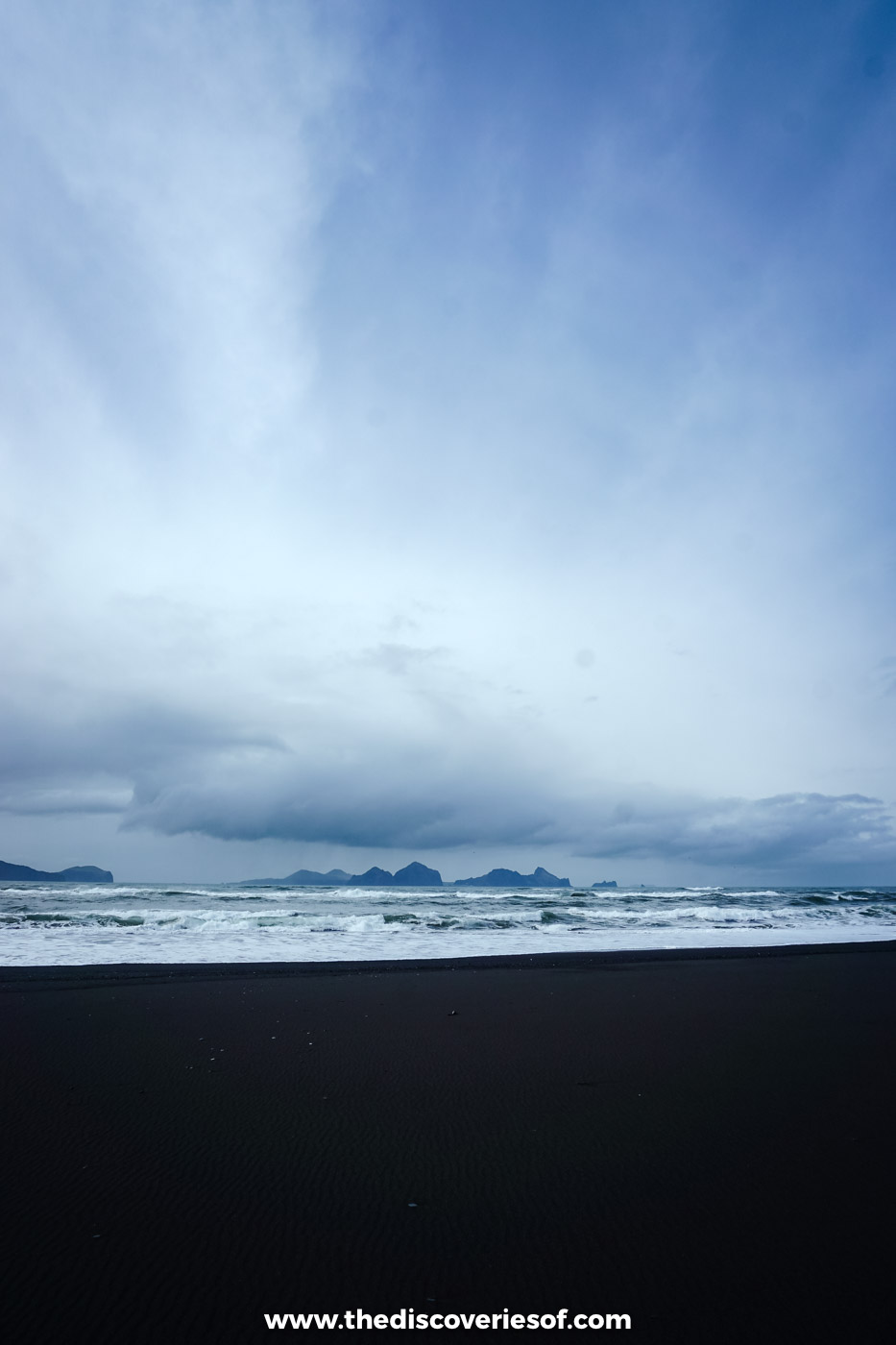
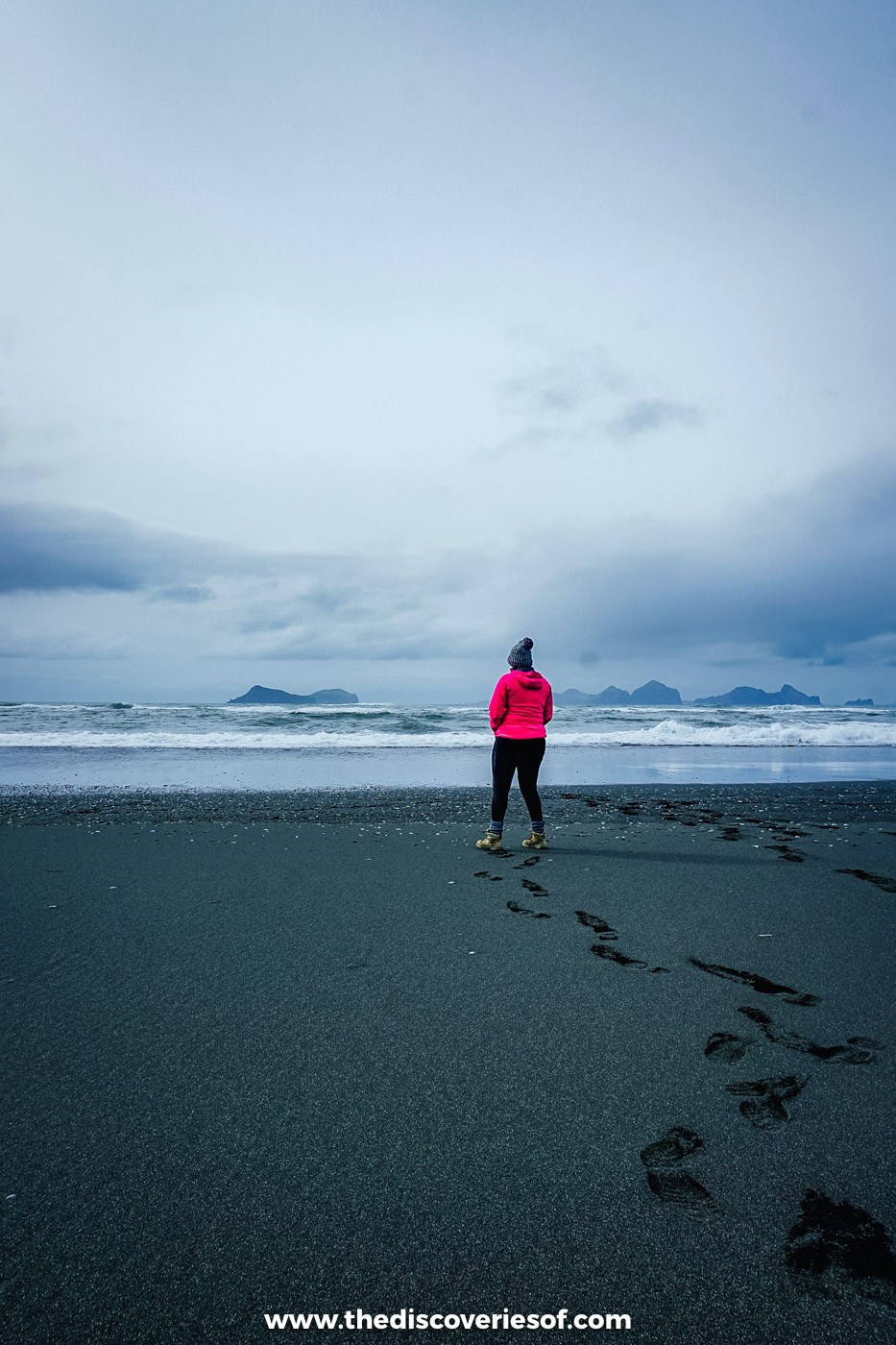
Terns fly back in April and May from the far south, at the end of the longest migration of any bird: around 70,000 kilometres a year between the Arctic and the Antarctic. Plenty were already back by the time I landed in early May, and I saw them on that trip. Other seabirds had already claimed the ledges on the coastal cliffs. Out on the black sand at Landeyjafjara, on my super jeep day, there were flocks of returning birds and even a couple of seals.
Once terns start nesting, from late May, they defend their colonies by dive-bombing anyone who wanders too close. Stick to the paths, and if you walk near a colony, a hat helps.
Puffins
Puffins start arriving from late April into May and stay until August, so late May is a much safer bet than the first few days of the month. In the south, the best places to see them are:
- The Westman Islands: the biggest puffin colony in the world, an easy ferry ride from Landeyjahöfn.
- Dyrhólaey: the headland near Vík, where parts of the reserve close between 1 May and 25 June while the birds nest. When it’s open, it’s usually during the day only.
- The cliffs above Reynisfjara: watch from the beach or the paths. My guide to Reynisfjara has the safety rules for the waves.
- From Reykjavik: puffin boat trips around the islands in the bay start in May. Wake Up Reykjavik’s classic tour runs from 1 May to 20 August and costs ISK 8,300.
Whales and horses
Whale-watching tours from Húsavík in the north run from April to October, with humpbacks, minke whales and white-beaked dolphins all likely in May and the first chance of blue whales from late May. From Reykjavik’s Old Harbour, minke whales are seen all year.
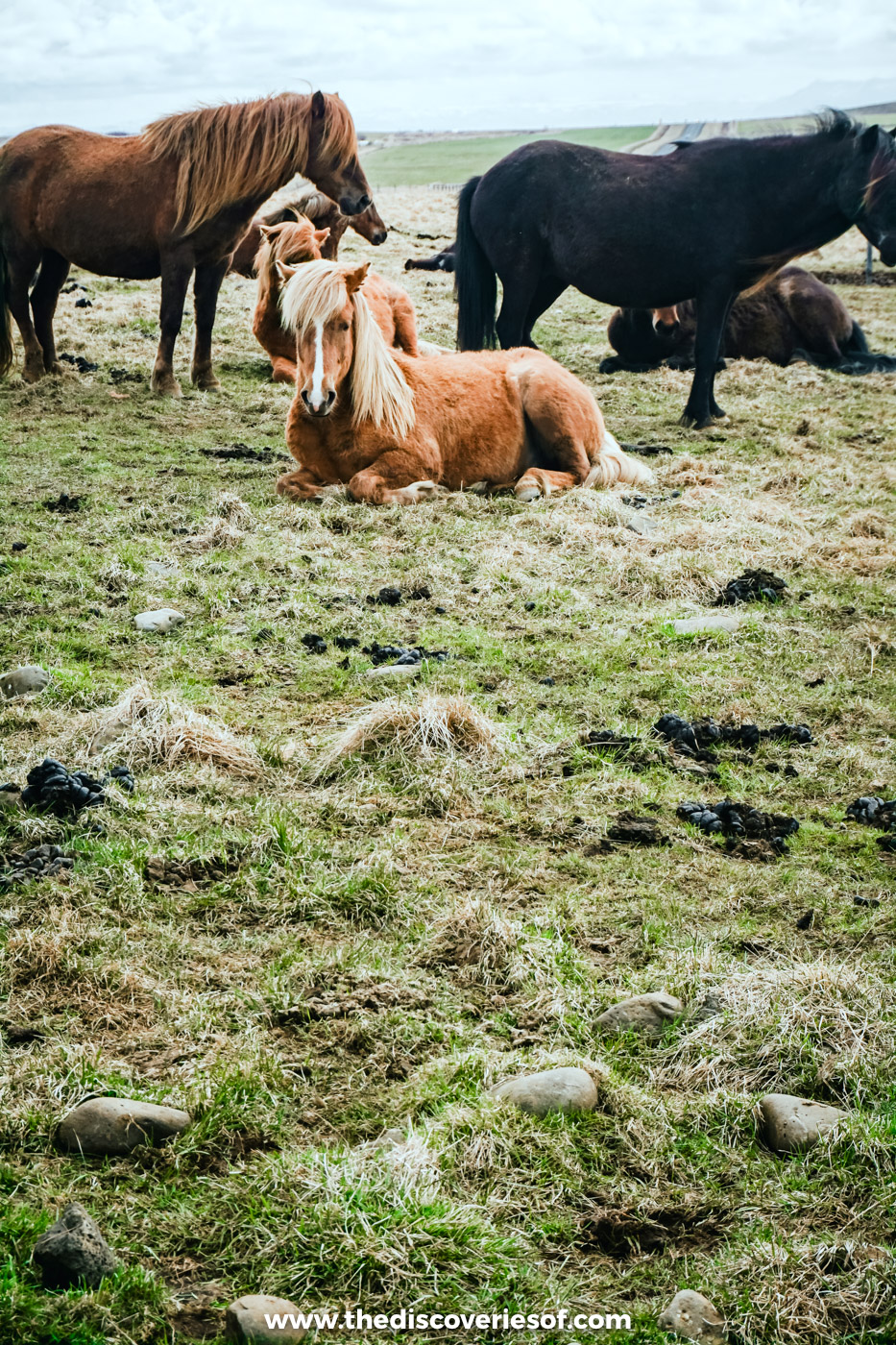
Closer to the road, look out for Icelandic horses. They were grazing in fields all over the south on my trip, still in their shaggy winter coats.
What’s open and what’s still closed in May
May is mostly open for business, but the highlands are a different story.
Open and running:
- The Ring Road and the big-name sights. Everything on the main tourist routes is accessible, and the Golden Circle works as a day trip from Reykjavik or the south.
- Super jeep tours into Þórsmörk. These run all year, and they’re the way into the valley before the buses start. Mine went where no hire car could, into the slot canyons around its edge. My Þórsmörk guide covers how to get there.
- Boat trips on Jökulsárlón. Both the amphibians and the Zodiacs usually start in early May, from ISK 7,100 and ISK 16,600 for adults. More in my Jökulsárlón guide.
- Whale and puffin tours, as above.
Closed or limited:
- Highland F-roads. The Road and Coastal Administration’s figures for 2021 to 2025 show average openings of 1 June for Kjölur from Gullfoss to Hveravellir, 2 June for the road into Landmannalaugar (the earliest was 23 May) and 6 July for Sprengisandur. Check umferdin.is before you plan anything inland.
- Highland buses and the Laugavegur. The bus into Þórsmörk starts on 1 June, and the Laugavegur trail from Landmannalaugar is normally open to walkers only between late June and early September.
- Natural ice caves. The caves under Vatnajökull close to tours over the summer, so May is too late. Tours into the Katla ice cave, in Kötlujökull above Vík, run in every season.
- Fragile beauty spots. The rim path at Fjaðrárgljúfur canyon can close during the spring thaw to protect the ground, so check before you drive out.
The best things to do in May
These are the May days I’d happily repeat, each one or two lines with a link to the full story:
- Take a guide around the Golden Circle. On mine I walked down to the lake shore at Þingvellir, waited, camera up, for Strokkur to blow, and stood over the canyon at Gullfoss.
- Go off-road in a super jeep. Black sand, river crossings and a squeeze through the rock made it one of the highlights of the trip. Start with Þórsmörk.
- Order the bloody mary at Friðheimar. It’s made with tomatoes grown in the geothermal greenhouse around you, and I still think about it. It’s in my guide to things to do in Iceland, along with the Ölvisholt beer tasting.
- Swim like a local. I chose the public pool in Hella over the Blue Lagoon and happily stayed for a couple of hours. A local pool is the cheapest way to warm up on a cold May day.
- Drive the south coast in the long light. With 18 hours or more of daylight, you can fit in Seljalandsfoss, Skógafoss, Reynisfjara and Vík in a day without rushing. My seven-day itinerary shows how to pace it.
- Stop at Gunnuhver on the way to the airport. I saw its steam vents on my last day, and the Reykjanes peninsula is a short drive from Keflavík.
Crowds and prices in May
May is properly quiet by summer standards. In May 2026 about 163,000 foreign passengers flew out of Keflavík, according to the Icelandic Tourist Board, compared with about 293,000 in July 2026. That’s roughly 130,000 fewer people at the same waterfalls.
Fewer visitors means more choice. Hotels, hire cars and many tours price to demand, so you’ll usually pay less than in July and August and have more rooms to choose from, especially in the busy spots between Vík and Jökulsárlón. It’s still an expensive country to travel in, but May takes some of the sting out.
What to pack for May
You need layers for weather that changes by the hour, not a full winter kit. My Iceland packing list goes into detail, but for May the essentials are:
- A waterproof jacket over warm layers. I lived in my pink Berghaus softshell and a bobble hat, and needed both.
- Waterproof boots. I came out of Gljúfrabúi with wet feet, and the spray at the big falls soaks everything.
- Sunglasses and an eye mask. It’s the sunniest month in Reykjavik, and the nights are bright.
- A swimsuit. Every town has a geothermal pool.
Events and holidays in May
- Labour Day (1 May): a public holiday, marked with a union march through central Reykjavik.
- Ascension Day and Whit Monday: public holidays whose dates move with Easter. Ascension Day almost always falls in May, and Whit Monday often does. Banks and many shops close, and pools and museums may keep holiday hours.
- DesignMarch: Reykjavik’s design festival, with exhibitions and open studios across the city. Despite the name, the 2026 festival ran from 6 to 10 May, so check the dates for your year.
- Reykjavík Arts Festival: held every two years, in even-numbered years, opening around the end of May and running into June. The 2026 edition ran from 30 May to 14 June.
- Seamen’s Day (Sjómannadagurinn): the first Sunday in June, with harbour festivities in Reykjavik and the fishing towns, if your trip runs into the start of the month.
Read next
- The best time to visit, season by season
- When to see the Northern Lights
- The Golden Circle, stop by stop
- Þórsmörk: slot canyons and the valley no hire car can reach
- How to walk behind Seljalandsfoss
- Gljúfrabúi, the waterfall hidden in a gorge
- Hotel Rangá review
- What to pack, month by month
- Is Iceland expensive?
Love this? Save and share on Pinterest

Discover the top things to do, insider tips and hidden gems in our Iceland Travel Guide.
Read the guides →