
From the island temple of Philae and a day trip to Abu Simbel to the Nubian Museum, a boat ride to the Botanical Gardens and dinner with a Nubian family, these are the best things to do in Aswan, starting with the ones I loved most.
Set along the east bank of the Nile, at the point where the river squeezes between granite boulders and golden dunes, Aswan is a laid-back and friendly city that will capture your heart, not to mention your imagination.
I’ll admit it: aside from its proximity to Abu Simbel, Aswan was probably the destination on my Egypt trip that I knew least about. Spoiler alert: by the time I came to leave, it was a close contender for my favourite spot on the trip, and it was the place that surprised me the most.
It has always been an important city, for centuries Egypt’s gateway to the rest of Africa, and it’s famous for its distinct Nubian culture. It’s also a lot smaller than Cairo, and a lot hotter. I arrived on the overnight sleeper train in early June and spent three days here, with a morning at Philae, a day trip to Abu Simbel, an afternoon at the Nubian Museum, a boat ride to the Botanical Gardens and an evening at a Nubian family’s home, before sailing north on a felucca towards Luxor.
Throw in a few show-stopping landmarks, a rich heritage and a jaw-dropping location on the Nile, and you’ll start to understand why it earns a special place in so many people’s memories. Here’s my pick of the best, starting with the things I did, followed by the other sights worth your time.
The best things to do in Aswan
Fall for Philae Temple
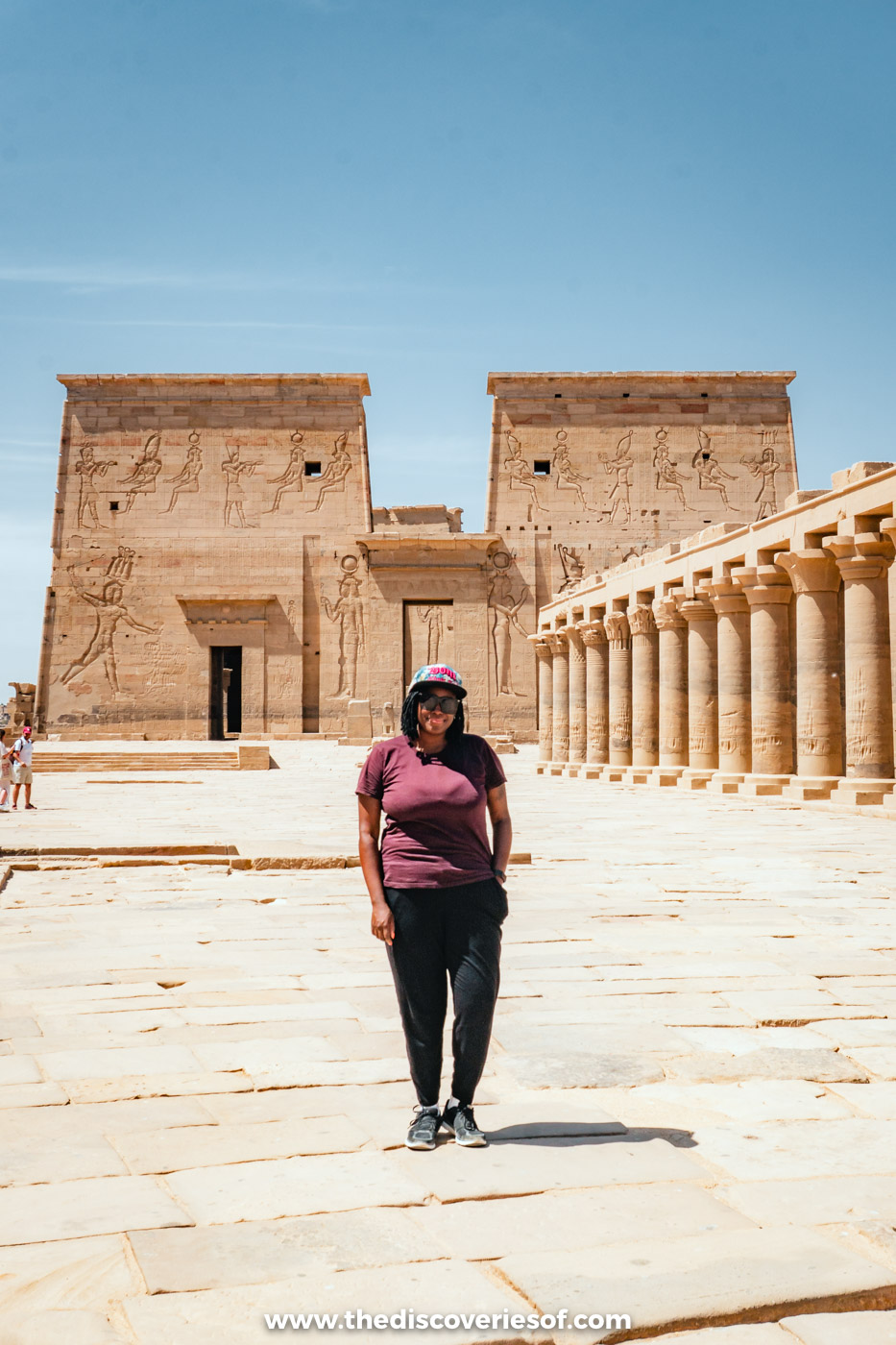
Sitting pretty on its own island, Philae Temple is one of the best-preserved temples of the Ptolemaic era, and one of my own personal favourite sights here.
To put it quite bluntly: it is stunning. The only way to reach it is by boat, and I promise that the first glimpse of Philae, its golden columns surrounded by the striking blue of water and sky, will be one to remember.
There are a couple of reasons why Philae looks quite different to the other temples you’ll see in Egypt. The first is its age: at just over 2,000 years old, it’s one of the youngest ancient Egyptian temples still standing. The second is who built it. Under the Ptolemies, Macedonian Greeks ruled Egypt as pharaohs, and the architecture from this period, with its flowery column capitals, is distinctly different to that of earlier eras.
Dedicated to Isis, along with Osiris and Horus, Philae is jaw-dropping, not only in its scale but in the intricacy of the hieroglyphs that cover every available surface. It was one of the last strongholds of the old religion: the last known hieroglyphic inscription anywhere in Egypt was carved here in AD 394, and the temple wasn’t closed until the reign of the Byzantine emperor Justinian, in the sixth century.
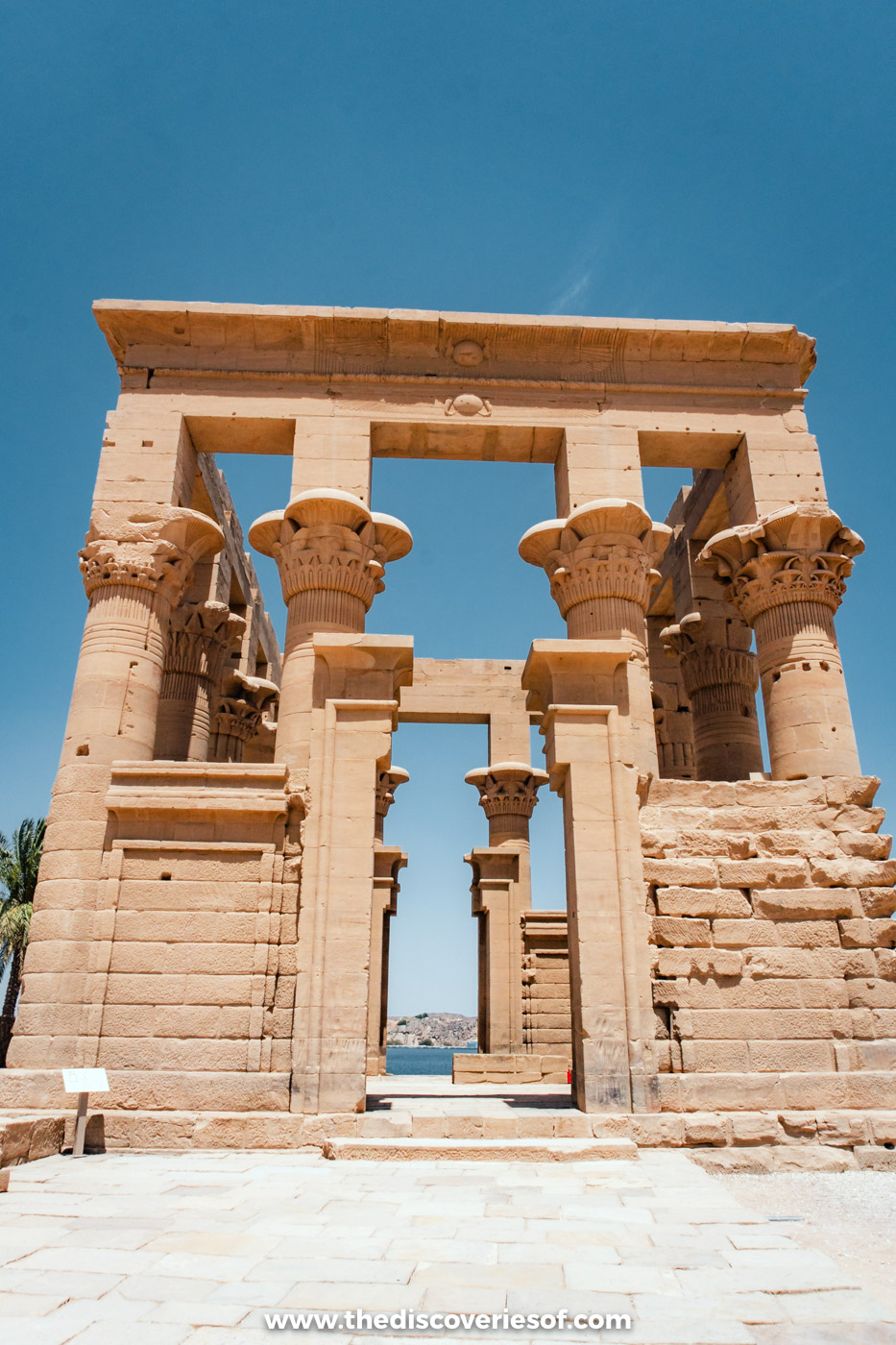
Stunning as it is today, the island you find it on isn’t the one its builders chose. Philae was partly submerged after the first Aswan Dam was built in 1902, and the High Dam would have drowned it for good, so between 1972 and 1980, UNESCO and the Egyptian government took it apart, block by block, and rebuilt it on the higher island of Agilkia. If the tale sounds familiar, the same thing happened at Abu Simbel, while other temples, like Debod, were given to the countries that helped (Debod went to Spain and is one of my favourite spots in Madrid).
Want to take a sneak peek?
Boats leave from the Shellal marina, south of the city; agree the fare for the boat before you set off. Tickets for the temple cost 550 EGP, paid by card, and it opens from 7am. The easiest way to visit is on a guided half-day tour of Philae, or combine it with the High Dam and the Unfinished Obelisk on a private tour.
Discover Nubian culture at the Nubian Museum
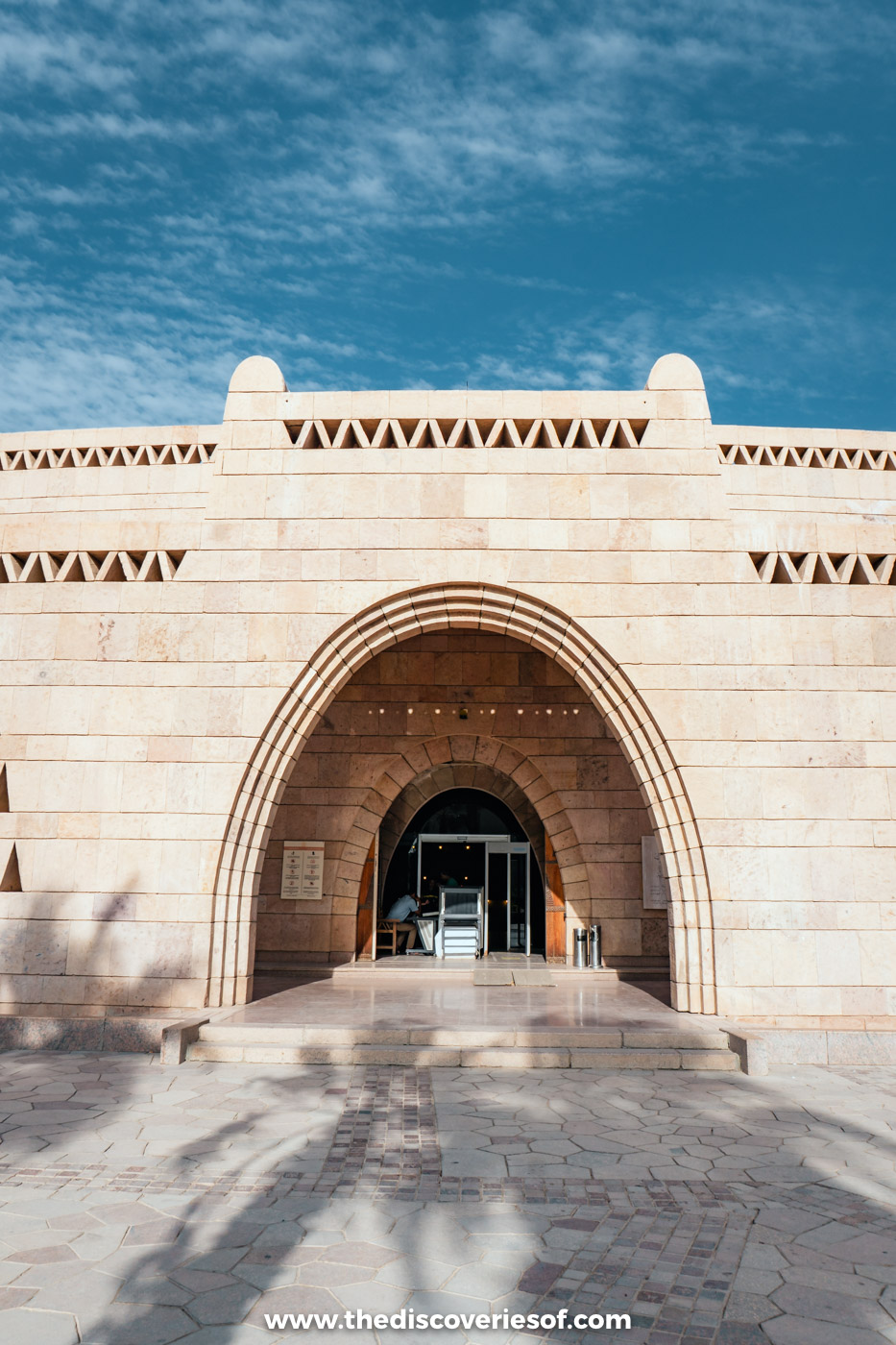
Chances are, you learnt something about the ancient Egyptians at school, but what about the Nubians? I’ll forgive you if you draw a blank: I certainly did before I visited the city’s stellar Nubian Museum.
Opened in 1997, the museum was built to tell the story of Nubia, the land along the Nile between Aswan and Sudan, much of which disappeared under Lake Nasser when the High Dam was built. Its sandstone and granite building blends effortlessly into the hillside as a nod to ancient building styles, and it won the Aga Khan Award for Architecture in 2001.
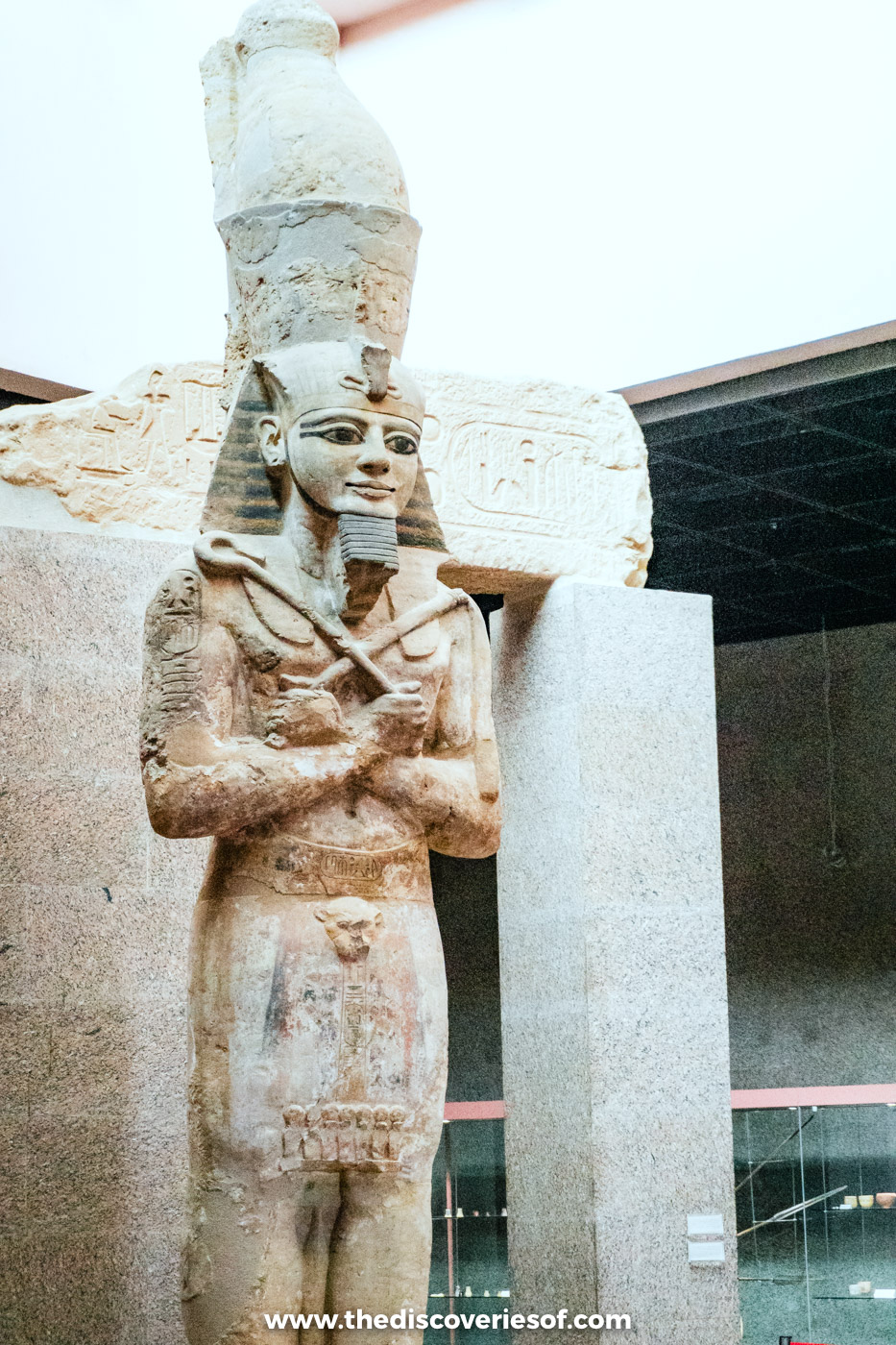
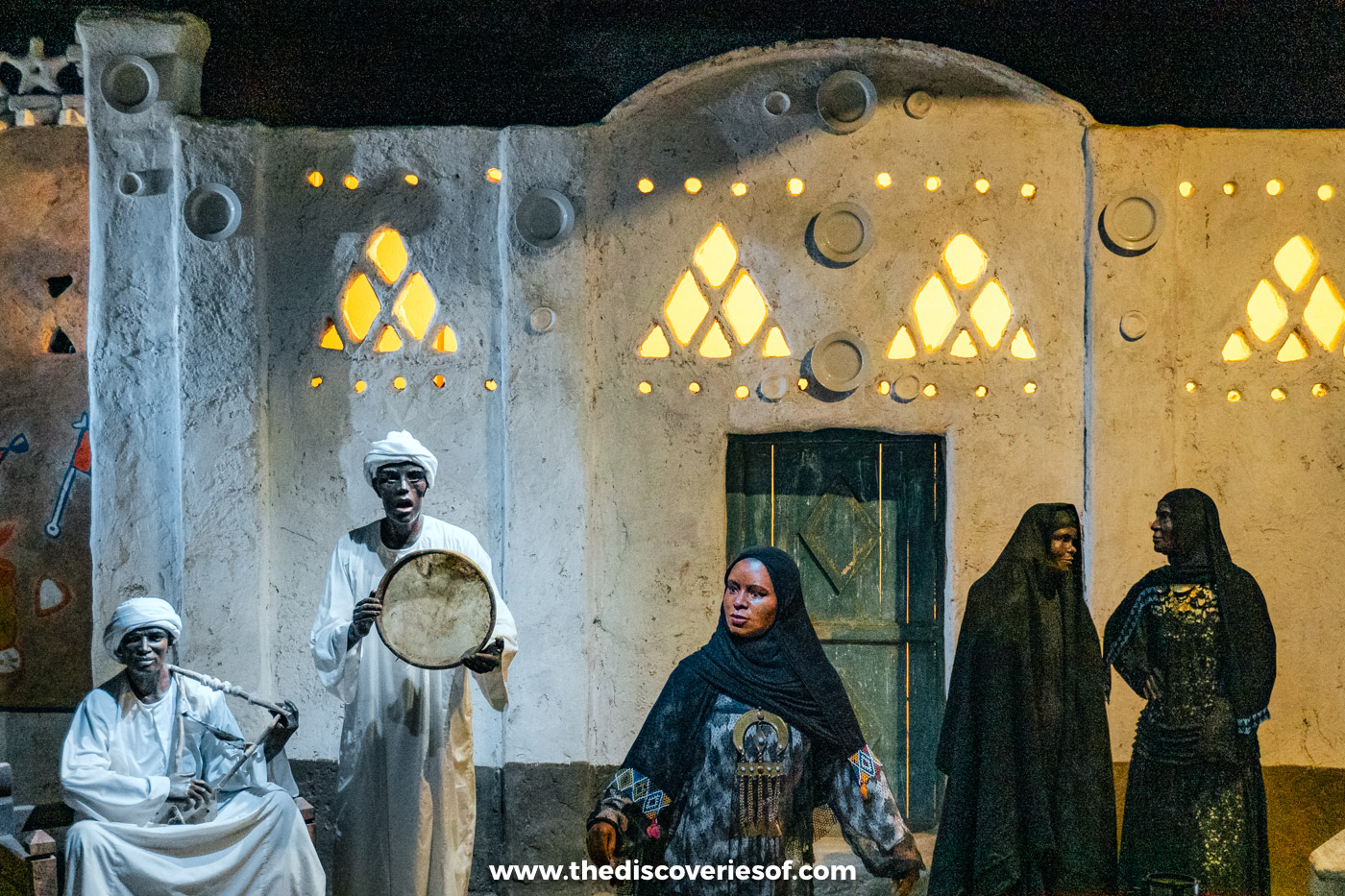
Although the galleries contain plenty of relics, from prehistoric pottery to statues of the pharaohs and treasures rescued from the flooded temples, the museum focuses a lot on life in Nubia: the trading routes that linked Egypt with the rest of Africa, the relationship between the Nubians and the people of southern Egypt, and the villages that were lost to the lake. The life-size dioramas of village life, from a Quran school to a wedding celebration, are a highlight.
I visited on my own, and I definitely recommend it. Allow about an hour and a half. Tickets cost around 400 EGP, and it opens daily from 9am to 5pm, with late opening on some evenings. Just behind the museum is the Fatimid Cemetery, a striking collection of domed mud-brick tombs, some dating back more than a thousand years.
Take a boat to the Botanical Gardens on Kitchener’s Island
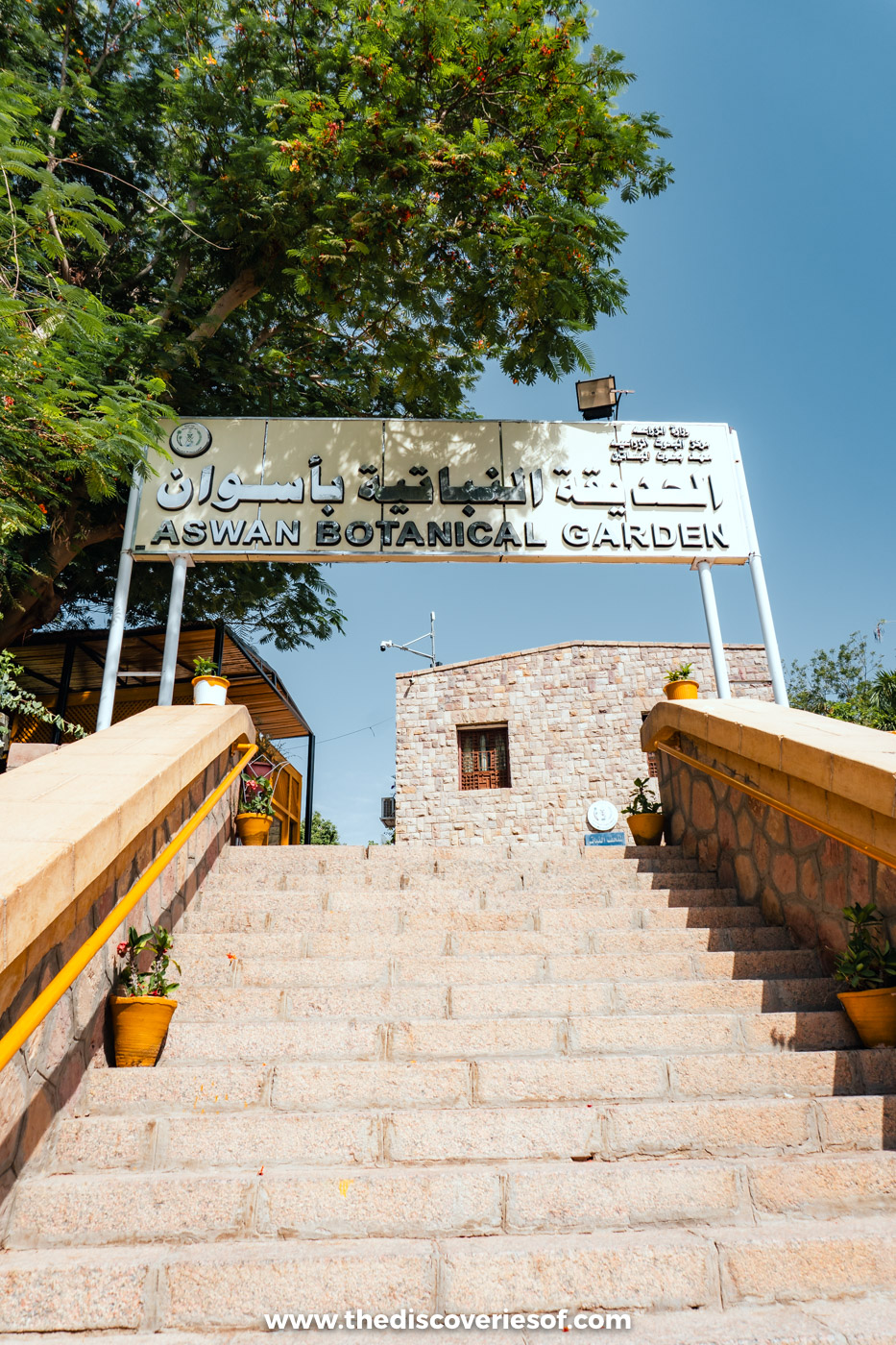
The city’s southerly location means it’s nothing short of sweltering, so the lush expanse of the Aswan Botanical Garden comes as even more of a surprise. I didn’t find many people recommending Kitchener’s Island and the gardens when I was researching what to do here, which is a real shame, as it’s one of the most peaceful spots in the city. I went early in the morning, on my own.
The island takes its name from Lord Kitchener, who was given it in the 1890s while he commanded the Egyptian army and filled it with exotic plants. The garden came under the Ministry of Agriculture in 1928 and now covers about 6.8 hectares, with hundreds of plant species from Egypt, other parts of Africa and Asia. You’ll also find a variety of birds and plenty of peaceful spots to admire the river. It’s a popular picnic spot for local families, especially on Fridays and weekends.
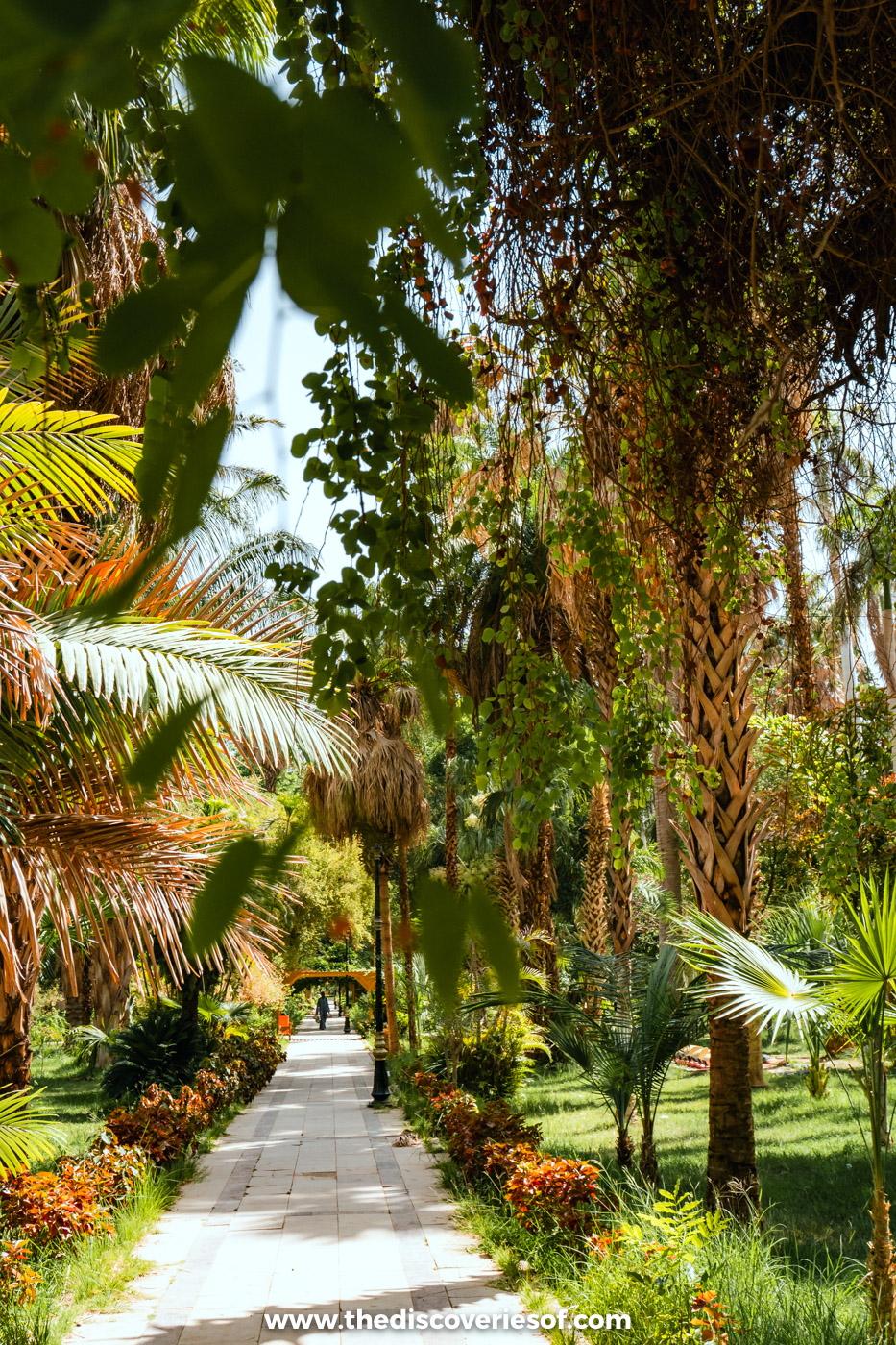
To get there, catch a boat from the jetty next to the McDonald’s on the Corniche. Check how much you should pay with your hotel before you go: as with so much in Egypt, you’ll have to barter to agree your fare, and make sure the boat waits for the return journey. Entry costs about 50 EGP, and this is one of the few sites in the city that still takes cash.
Spend an evening with a Nubian family
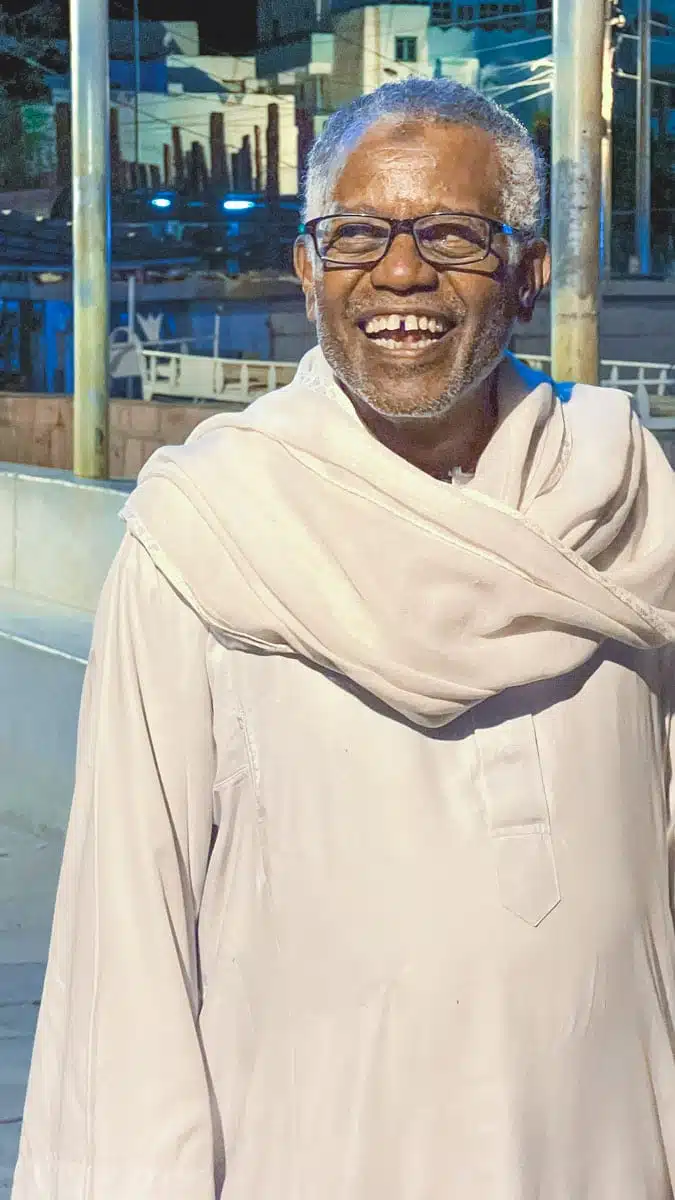
Set across the Nile from the city centre, the Nubian villages on the West Bank, such as Gharb Soheil, are home to the area’s sizeable Nubian population. These colourful villages are packed with jewel-toned homes, souvenir shops, restaurants and guesthouses.
I spent an evening having a traditional dinner at a Nubian family’s home, which I would recommend if you can: it’s a chance to learn about Nubian culture from the source (and eat some very tasty food as you do). But even a short stroll around one of the villages makes for an interesting contrast with the city centre. Most visits go by boat, and this Nubian village tour by motorboat includes a visit to a local home for tea.
Take a day trip to Abu Simbel
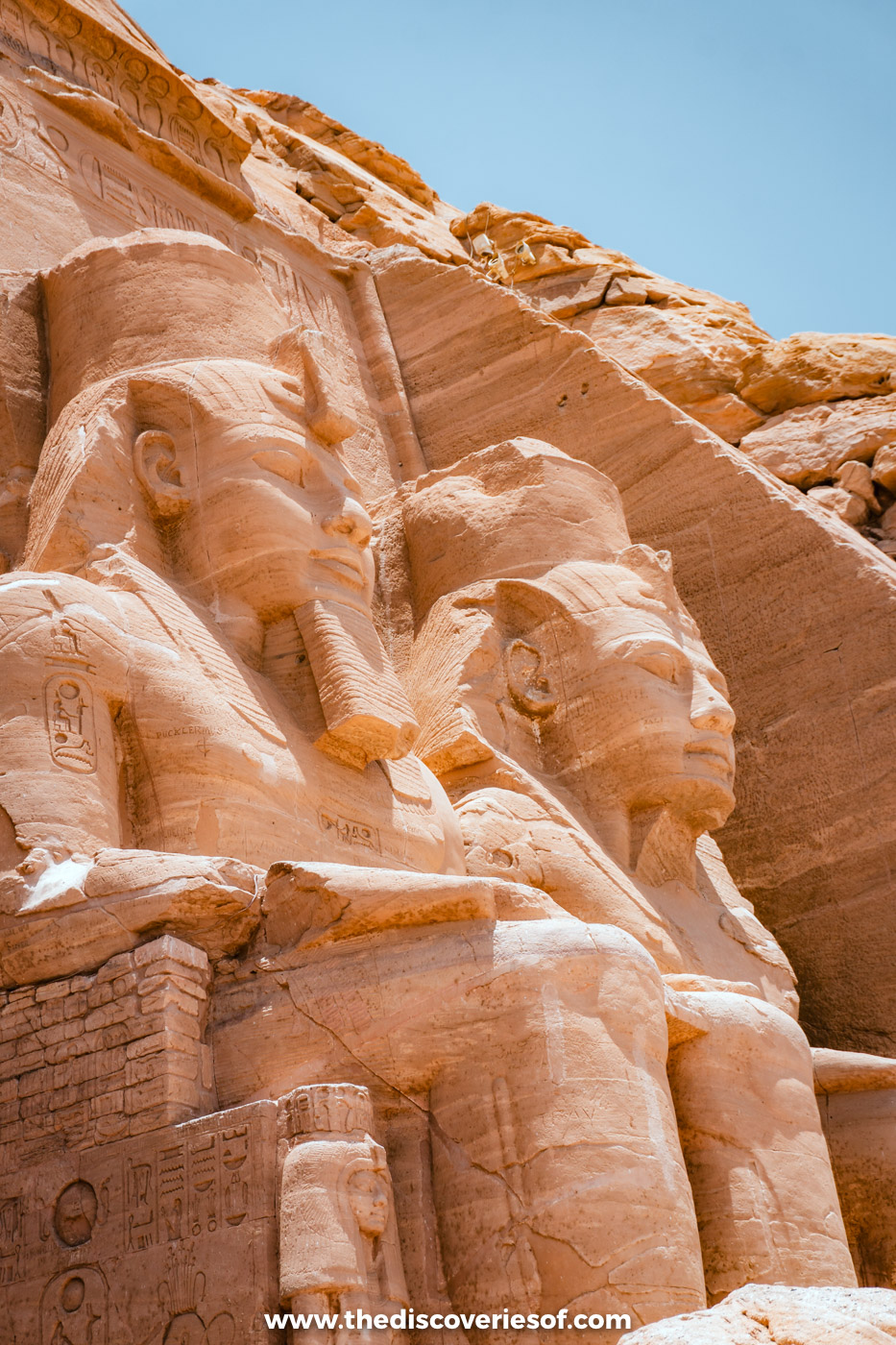
You didn’t think you’d come this far south and not take a trip to one of Egypt’s most iconic landmarks, did you? I’m talking about Abu Simbel, a magnificent complex of two temples built by Ramses II close to the Sudanese border, looking out over Lake Nasser. It was an optional extra on my trip, and going felt like a no-brainer.
Sure, the Great Temple feels a little bit like an ego-trip. Think four colossal 20-metre statues of the king at the entrance and so many carvings of Ramses’ exploits inside that it’s impossible to keep track of them. But my god, it’s stunning. Don’t skip the smaller temple next door, dedicated to the goddess Hathor and to Ramses’ wife, Nefertari, which is distinctly different inside.
Like Philae, both temples were cut into blocks and moved to higher ground in the 1960s to save them from the rising waters of Lake Nasser. Twice a year, around 22 February and 22 October, the rising sun shines right through the Great Temple to light up the statues in its inner sanctuary.
Look, I’ll level with you: a day trip to Abu Simbel involves either a horrendously early start or a kind of early start, depending on whether you go by road or fly. Either way, don’t question it: it will be worth it. It’s about 280 kilometres south, which is three and a half hours each way by road, with most tours leaving around 4am, or about 45 minutes by plane. This group tour with a guide and entrance fees is the best-reviewed way to go by road, or there’s a private day trip with a guide and car.
Have lunch on the Nile at Salahaddin
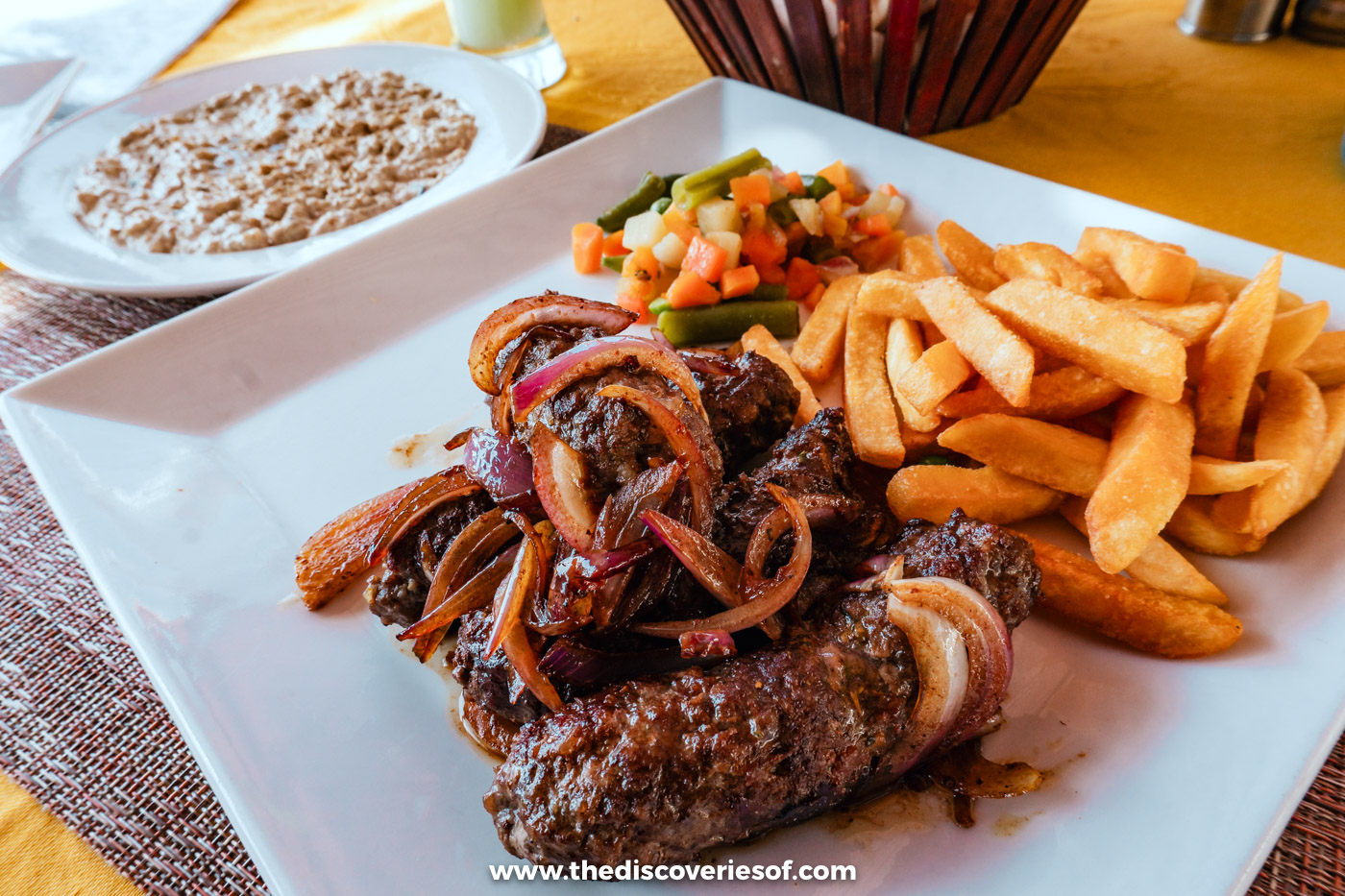
There’s no better way to experience a city than through its food, and you can do just that at Salahaddin (also spelt Salah el-Din). It’s one of the best restaurants in town, right on the Corniche, with several terraces looking out over the Nile.
They serve an interesting mix of Egyptian, Nubian and international dishes, and it was one of my favourite dining spots in Egypt. I stopped for lunch here after my morning at Philae.
Feast on traditional Egyptian food at Makani
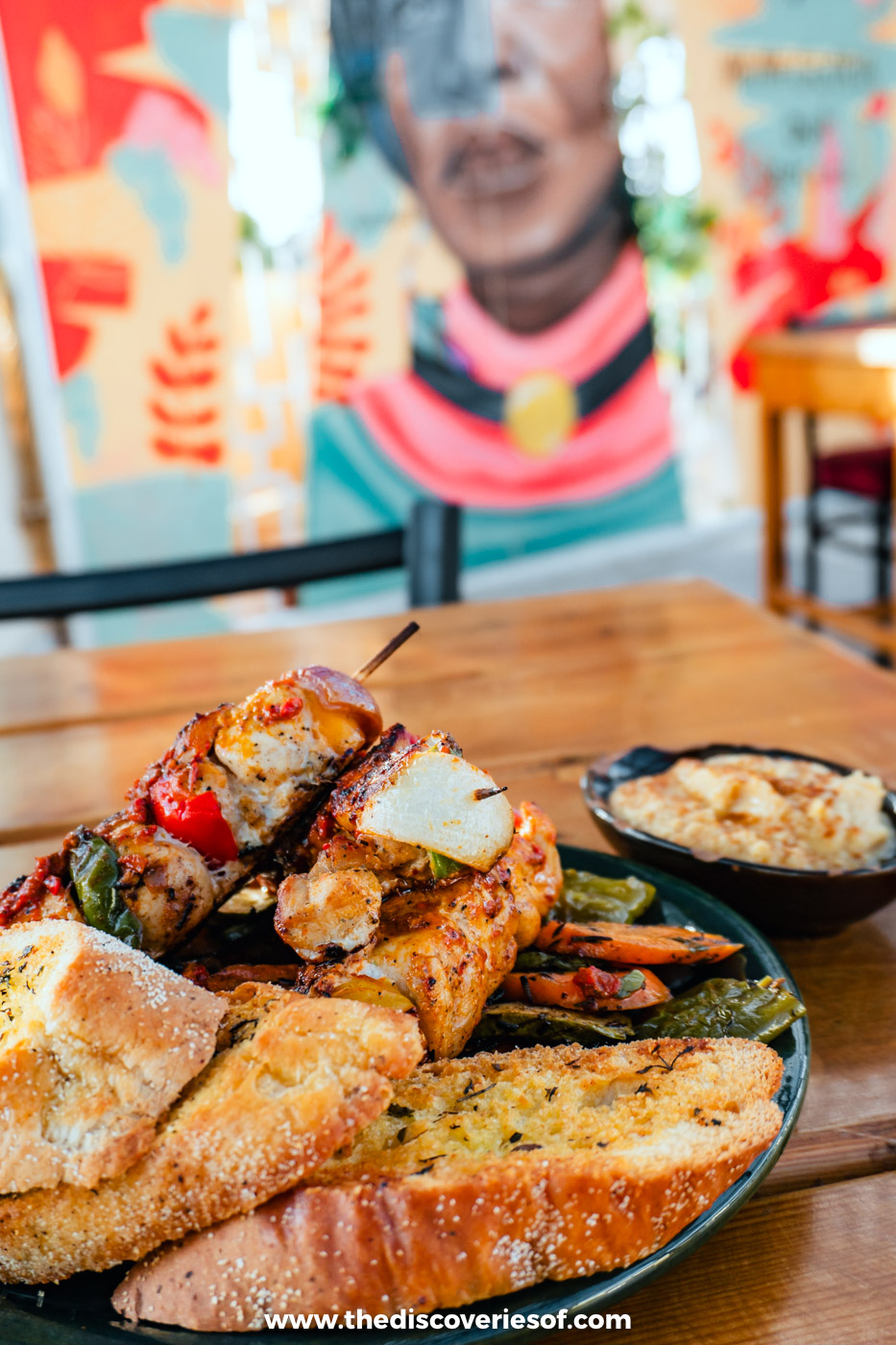
Makani was another of my favourite places to eat here. Serving traditional Egyptian food with a view of the Nile, it’s a lovely spot for lunch or dinner, and the owner is super-friendly and helpful too. It’s open daily from 10am to 11pm; bring cash, as cards aren’t always accepted.
Stroll along the Corniche at sunset
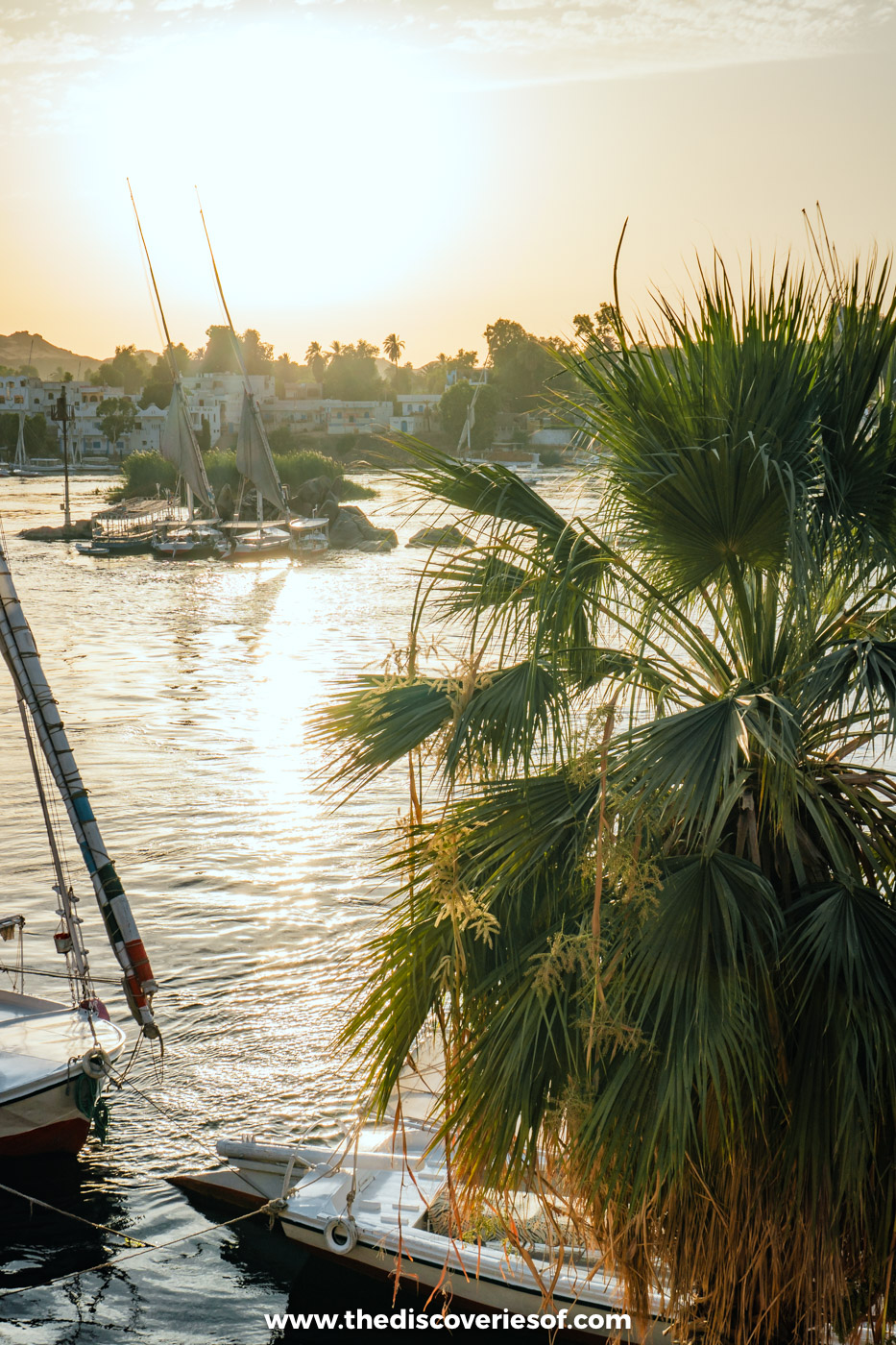
The undeniably pretty Corniche is the perfect place for a sunset riverside stroll. Expect around 3.7 kilometres of Nile views, punctuated by cafés where you can cool off with a refreshing glass of lemon and mint, and a glimpse of the cruise boats that ply the route between here and Luxor. All of it is set against the magnificent backdrop of the desert, the rock-cut Tombs of the Nobles and the islands on the other side of the river.
Shop at the souq
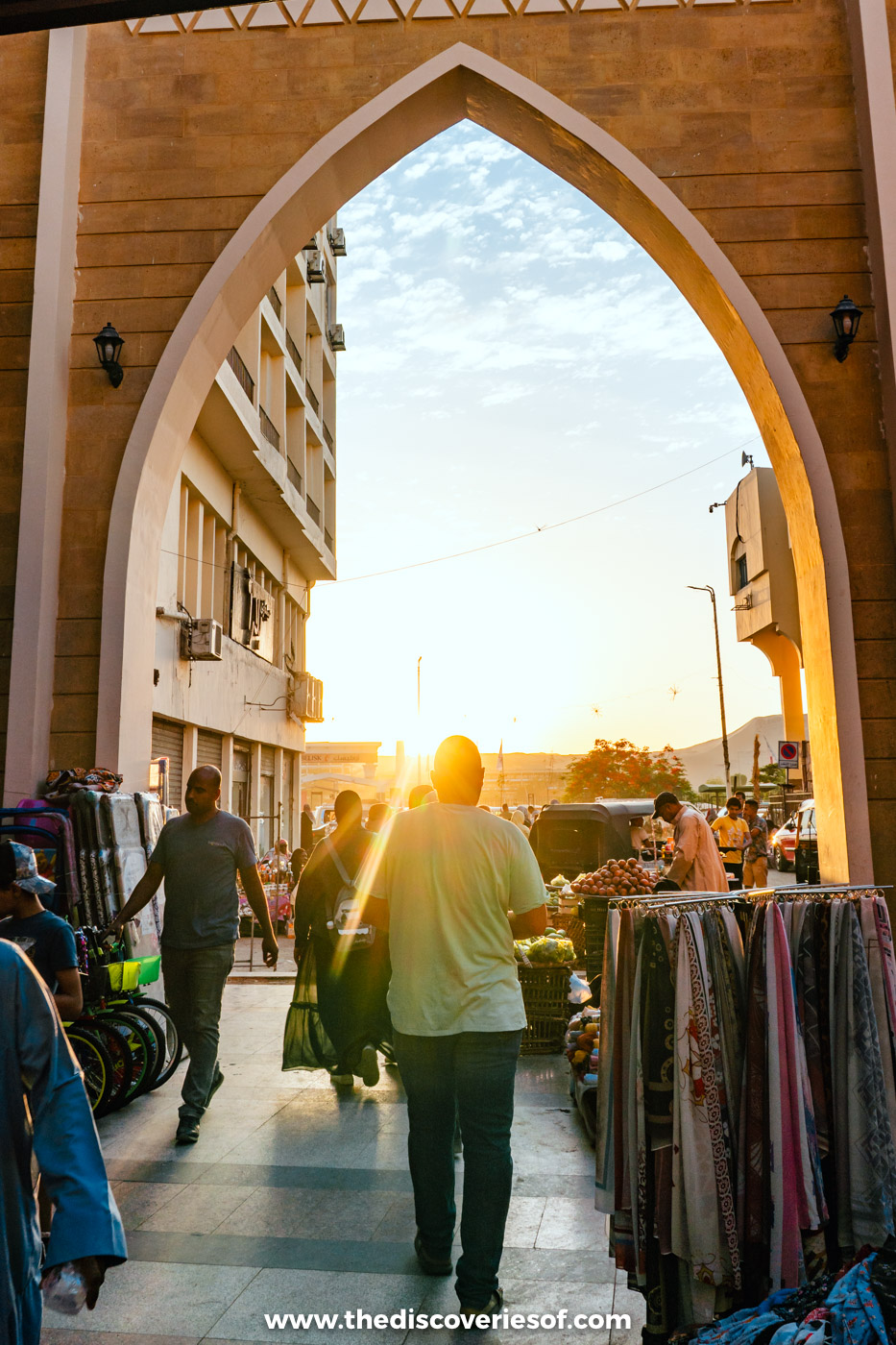
Running parallel to the Corniche, the souq is a shopaholic’s dream. You’ll find everything from jewellery and textiles to spices, perfume oils, baskets and Egyptian cotton. It’s also a great place to try local favourites like karkadeh, a refreshing drink made from dried hibiscus flowers.
It makes a refreshing change from temples and monuments, and it’s a great place to pick up something to remember your trip. Like most souqs in Egypt, it stays open late, so if you’re not keen on walking around in the heat of the day, go exploring in the evening, when it’s at its liveliest. Haggle, but do it with a smile.
See the Unfinished Obelisk
It would have been the largest obelisk ever made in ancient Egypt, had it ever been finished. Instead, the granite giant still lies where the stonemasons left it in the Northern Quarry, a few minutes from the city centre, still attached to the bedrock.
Had it been completed, it would have stood about 42 metres tall and weighed around 1,100 tonnes, nearly a third taller than any obelisk the Egyptians ever raised. It’s thought it may have been ordered by Hatshepsut, but cracks appeared in the granite as it was being carved, and the project was abandoned. Look out for the tool marks left by the workers, who pounded the stone with balls of dolerite.
I’d probably rate it as quite interesting on a scale of boring to must-see, but it’s worth popping into if you have a spare hour. Tickets cost 220 EGP.
Sail on a felucca at sunset (or all the way to Luxor)
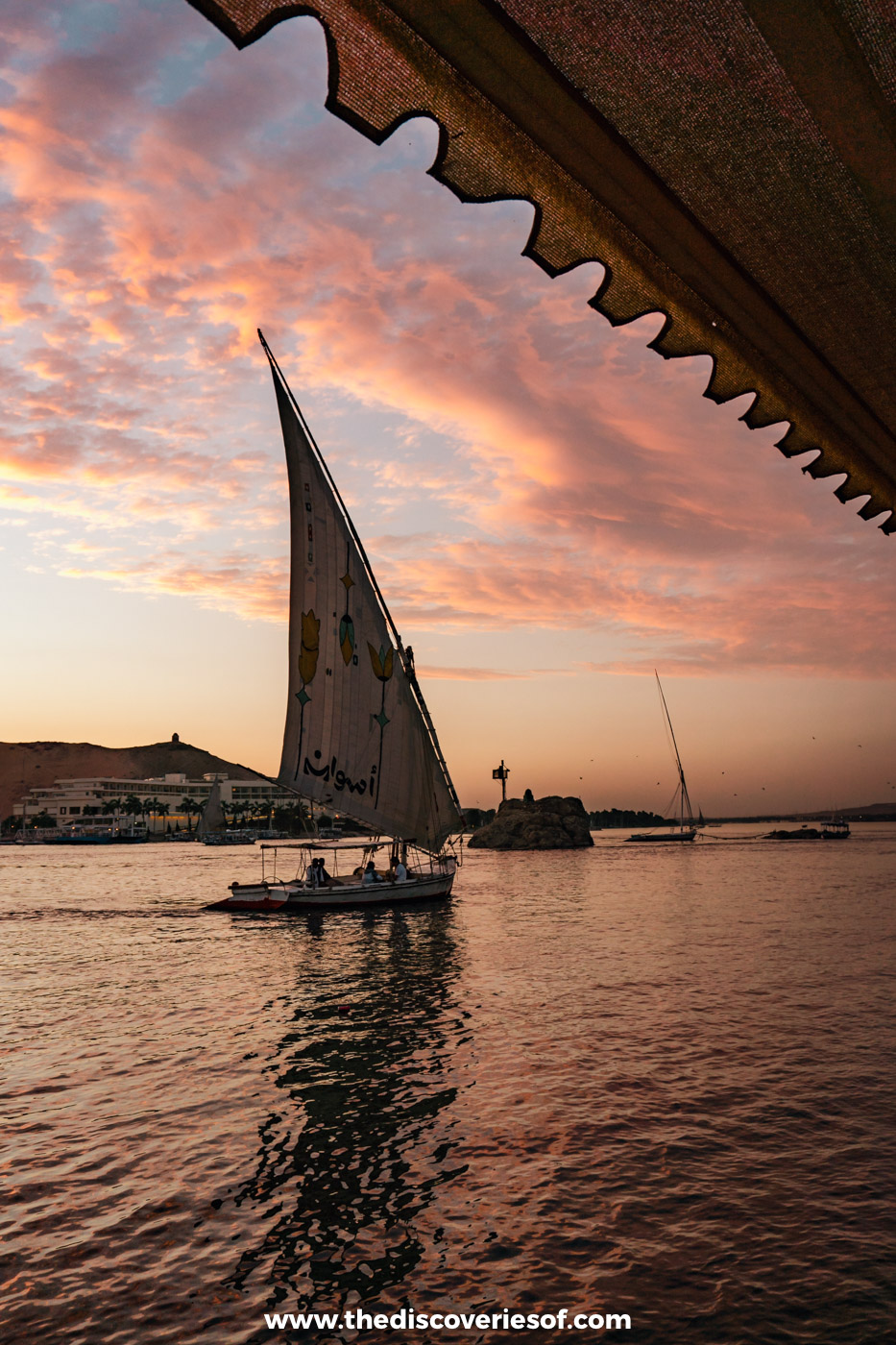
A felucca ride is lovely during the day, but it’s even more magical just as the sun sets. Feluccas, the traditional wooden sailing boats with tall white sails, wait for passengers along the Corniche. A ride usually lasts an hour or two and takes you around the islands in the river, and you hire the whole boat, so agree the price before you set off.
If you’ve got more time, sail north instead. I left the city on an overnight felucca towards Luxor, sleeping on deck, and waking up on a remote part of the Nile as the sun rose over the desert was worth the trip alone. Check the facilities and reviews first, preferably for one with a Nubian crew. Feluccas can’t use the lock at Esna, so most trips end with a minibus transfer to Luxor. My guide to Nile cruises covers the options.
Explore the Tombs of the Nobles
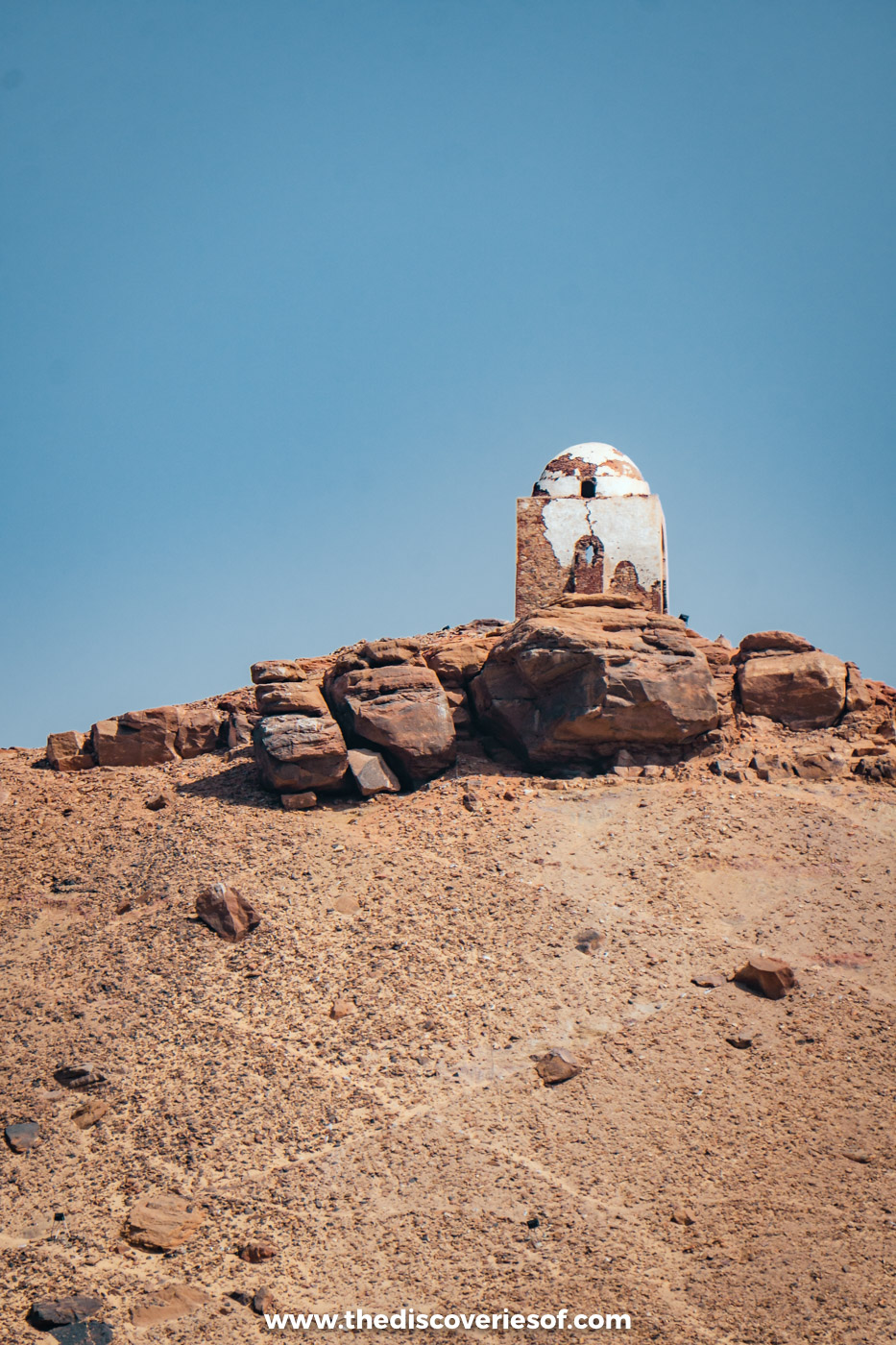
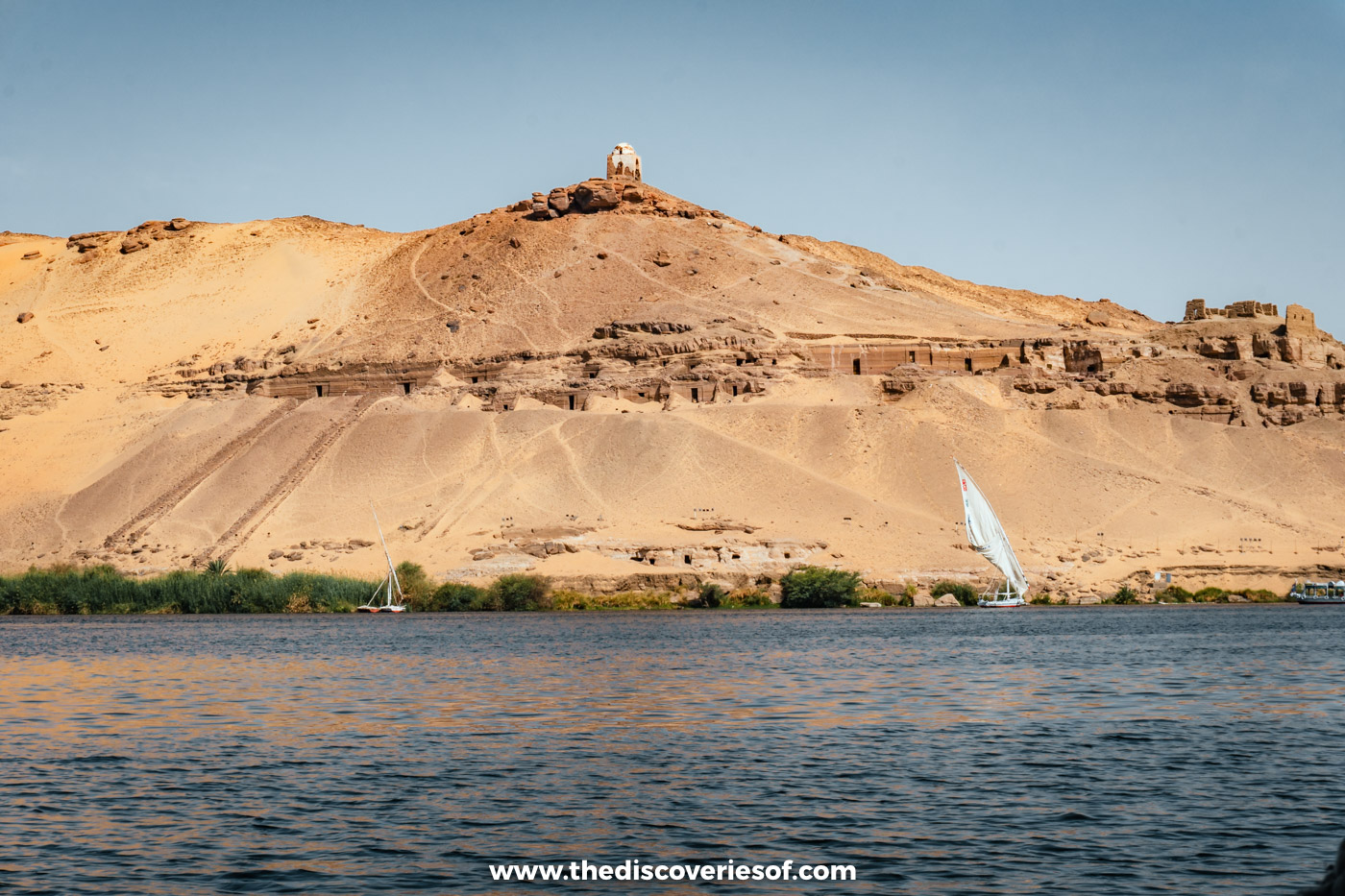
High on the cliffs of the West Bank, the Tombs of the Nobles are a set of rock-cut tombs where the governors and officials of ancient Aswan were laid to rest, from the Old and Middle Kingdoms, more than 4,000 years ago. You’ll see them from all over the city, and I had a good look at them from the boat on my way to Kitchener’s Island.
You reach them up a steep staircase from the boat landing on the West Bank. It’s quite a trek to the top, but it’s worth the effort, both for the views and for the tombs themselves. Don’t miss the tomb of Sirenput II (Tomb 31), the best preserved on the cliffs, with its painted pillars, or the tomb of Harkhuf, whose walls record a letter from the boy king Pepi II, excited about the dancing pygmy Harkhuf was bringing back from his expedition. The small dome on the summit, the Qubbet el-Hawa (dome of the wind), is the tomb of a local holy man.
Walk around Elephantine Island
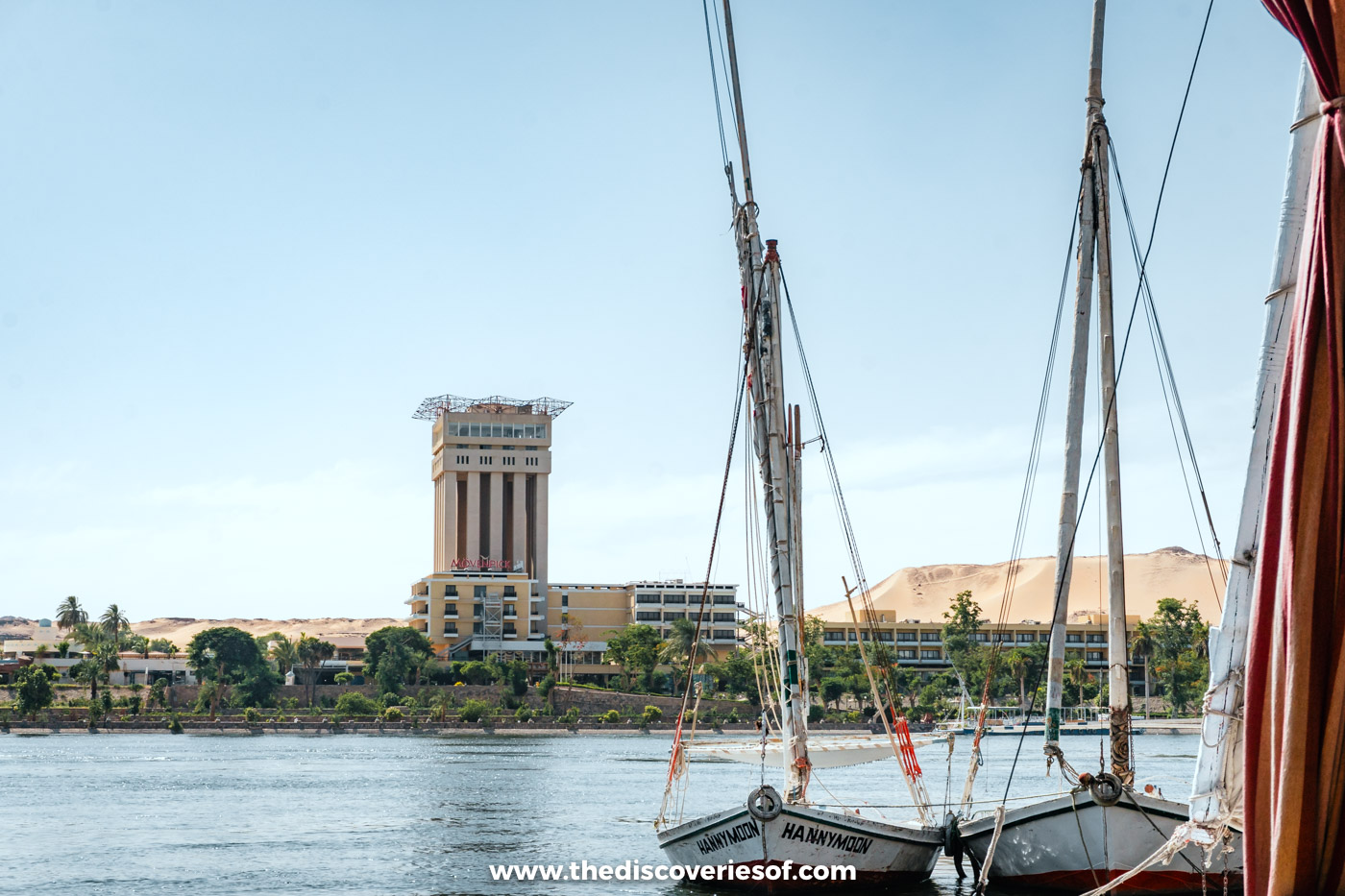
Right in the middle of the Nile, opposite the Corniche, Elephantine Island is sprinkled with palm trees and is one of the most scenic places in the city. It was known to the ancient Egyptians as Abu, and it has been inhabited for more than 5,000 years.
The southern end of the island is an open-air archaeological site, with the ruins of the ancient town and the temples of Khnum, the ram-headed god of the Nile’s source, and of the goddess Satet. Her temple was founded around 3000 BC and rebuilt many times over the following 3,000 years, and part of it has been reconstructed. Nearby is the Nilometer, a stairway down to the river with markings used to measure the height of the flood, and the island’s museum, which is housed in a 19th-century villa.
If history isn’t for you, take a stroll past the colourful houses of the Nubian villages of Siou and Koti, in the middle of the island. A public ferry crosses from the Corniche throughout the day, and the archaeological site costs around 200 EGP.
Visit the Monastery of St Simeon
On the desert plateau of the West Bank, the Monastery of St Simeon is one of the largest and best-preserved Coptic monasteries in Egypt. It was founded around the seventh century, rebuilt in the 10th, and abandoned in the 13th century, but its fortress-like walls, church and monks’ cells still stand. Reach it on foot or by camel, about 25 minutes uphill from the boat landing near the Mausoleum of the Aga Khan (which is closed to visitors). Go early, as there’s no shade.
See the High Dam and Lake Nasser
Built between 1960 and 1970 with Soviet help, the Aswan High Dam is 3.8 km long and 111 metres high, and it created Lake Nasser, one of the largest artificial lakes in the world, stretching about 500 km south into Sudan. The dam ended the Nile’s annual flood and transformed Egypt’s farming and power supply, at the cost of flooding Nubia. There’s not a lot to see beyond the view, but it’s included on most city tours.
From the western end of the dam, boats cross to New Kalabsha, where the Roman-era Temple of Kalabsha was moved in the 1960s to save it from the lake. It’s often blissfully empty.
Take a day trip to Kom Ombo and Edfu

You can skip this one if you’re taking a Nile cruise between Luxor and here, as most cruises stop at both Kom Ombo and Edfu along the way. If you’re not, a day trip to the two temples is a great option for seeing two very different kinds of temple.
Kom Ombo

About 50 kilometres north, Kom Ombo is a rare double temple, with two of everything, dedicated to the crocodile god Sobek and the falcon-headed Haroeris (Horus the Elder). Built under the Ptolemies, it stands on a bend of the river, and the reliefs include a famous panel of surgical instruments and scenes of the Egyptian calendar. Next door, the Crocodile Museum displays mummified crocodiles from a nearby cemetery. Tickets cost 450 EGP.
Edfu

About 110 kilometres north, the Temple of Horus at Edfu, built between 237 and 57 BC, is the best-preserved temple in Egypt, with its towering pylon, roofs and sanctuary still intact. Tickets cost 550 EGP. This day tour of Edfu and Kom Ombo takes in both and drops you in Luxor at the end, which saves a journey if you’re heading north.
Take afternoon tea at the Old Cataract
Afternoon tea might be quintessentially British, but the one on the terrace of the Old Cataract is an institution. The hotel opened in 1899, built by Thomas Cook to house his Nile travellers, and it has hosted everyone from Winston Churchill to Agatha Christie, who stayed in 1933; the hotel appears in her novel Death on the Nile.
Settle in on the terrace with views over the Nile, the granite boulders of Elephantine Island and the West Bank, ideally just before sunset. Non-guests should book ahead.
See the Philae sound and light show
One of the most popular things to do here at night is the sound and light show at Philae, when the temple is lit up after dark and the story of Isis and Osiris is told as you walk through it. It’s a completely different way to see the temple, though reviews of the show are mixed, so go for the atmosphere rather than the script.
Tips for visiting Aswan
- How long to stay: two to three days is enough to see most of the city’s attractions, and definitely three if you plan to spend a day going to Abu Simbel.
- When to go: the best time to visit is from October to April, when the weather is relatively mild. I went in early June, and there were points where I was so hot I didn’t know what to do with myself, but the upside was fewer crowds and lower prices.
- Bring a card and cash: the ticket offices at the major sites are cashless, so carry a Visa or Mastercard, but you’ll need cash for boats, the Botanical Garden, tips and many restaurants.
- Getting there: fly from Cairo in about an hour and 20 minutes, or take the overnight sleeper train, which is what I did. Tourists have to board at Giza station, not Cairo, so triple check before you book.
- Agree prices first: for boats, taxis and calèches, agree the fare before you get on, and check with your hotel what’s reasonable.
Watch my Aswan video
Subscribe on YouTube and discover new destinations.
Where to stay
Stay on or near the Corniche, or on one of the islands, for Nile views and easy access to the boats.
- Obelisk Nile Hotel (budget): where I stayed in Aswan. It’s on the Corniche by the Nile, a more affordable but still very comfortable option, with an outdoor pool.
- Old Cataract Aswan (luxury, now operated by Mandarin Oriental): the ultimate place for a luxurious stay, sitting opposite Elephantine Island, with a Victorian-era palace building, several restaurants and bars, a spa and an incredible pool.
- Pyramisa Island Hotel Aswan (mid-range): a resort on its own island in the Nile, with beautiful gardens and panoramic views of the river and the city.
Map
Read next
- Philae Temple: visiting the striking Temple of Isis
- Visiting the temples of Abu Simbel
- 23 best things to do in Luxor, from sunrise balloons to painted tombs
- The best things to do in Cairo, from royal mummies to medieval bazaars
- The ultimate Egypt itinerary
- What to do in Egypt: a bucket list
- Egypt travel guide
- Egypt travel tips to help you plan your trip
- What to wear in Egypt
Love this? Save and share on Pinterest

Discover the top things to do, insider tips and hidden gems in our Egypt Travel Guide.
Read the guides →